
Frederick II’s reign marks the end of Norman empire-building. The Normans had now transformed politics and society across France, Italy, the British Isles, the Middle East, Iberia and (increasingly) Germany. There was scarcely a region of Europe and the Mediterranean where the descendants of Rollo were not to be found. And even where they were no longer present, their legacy could be seen.
By accident and intention, the Normans had completely redrawn the map of western Eurasia. They’d integrated England into a sprawling (if now shrinking) continental empire and extended its frontiers deep into Wales and Ireland. Further north, they’d established the noble lines that would rule Scotland up to the Act of Union in 1707 – and in so doing, laid the foundations of the later United Kingdom. In France, by contrast, the Normans had forged one of the king-dom’s most powerful duchies, which at first hindered, then later helped, the ascent of the Capetian kings of the era. And finally, under Frederick II, the Normans had brought new attitudes to law and justice to large parts of Germany.
Further south, the Norman impact was no less pronounced. In Iberia, the Normans had played an important part in the early expansion of the Portuguese realm; and in assisting at the siege of Tortosa (1148), they’d strengthened the union of Catalonia with the crown of Aragon. (When combined with that of Castile in 1469, this would go on to form Spain as we know it.) The Norman influence on Italy was even greater. Here, the northern settlers had unified the southern half of the peninsula, bringing Apulia, Calabria, Campania and Sicily under a single banner. The resulting Kingdom of Sicily would survive until Italian political unification (the Risorgimento) in the late nineteenth century. As importantly, Italo-Norman freebooters had helped undermine Byzantine rule in western and central Anatolia at a crucial moment, putting in train developments which would culminate in the First Crusade – a movement to which they also contributed directly. It’s no exaggeration to say that the modern world would be unrecognisable had it not been for the Normans.
Yet if the Normans were everywhere, they were also nowhere. In each of these regions, they’d settled and put down roots. Norman influence was ubiquitous, but it was also increasingly hard to pin down. Frederick would not have identified as Norman, nor did most of the Norman diaspora elsewhere. Those who’d settled England, Wales and Ireland were now English, while their counterparts north of the Firth of Forth increasingly identified as Scots. In Iberia and the Holy Land, these processes had been even quicker: here the Normans had long since become Catalans, Spaniards and Franks/French. By the mid-thirteenth century, there were scarcely any Normans left outside the duchy. Robert the Bruce may have been of Norman blood, but it’s as the ‘Flower of Scotland’ that he’s celebrated in modern song.
Normandy itself was not spared these changes. Following the duchy’s conquest in 1204, it was integrated – reintegrated, from a French perspective – into Philip Augustus’ rapidly expanding realm. Norman distinctiveness did not die overnight. But there was now little to distinguish the duchy from the many other principalities over which Philip and his heirs asserted their authority. Like the Poitevins and Angevins to their south, the Normans were simply gardenvariety Frenchmen. In the coming years, they were frequently on the opposite sides of political conflicts to their sometime countrymen in Britain and Ireland. The diaspora had decisively split.
Dramatic though these developments were, they are unsurprising. From the start, Norman identity had been a moving target. The earliest Normans were simply Viking Northmen – a Scandinavian intrusion into northern France, whose presence continued to arouse comment a century later. By the mid-eleventh century, conflict had given way to accommodation. The Normans now became culturally and linguistically French; and the ethnic designation might be applied to all inhabitants of the duchy, including those peasants and lower aristocrats of largely Frankish/French stock. The fiction was sometimes maintained that they were all descendants of Rollo’s original pirates. But in practice, it was appreciated that the Normans had been a disparate group from the start. Dudo’s account of the foundation of the duchy emphasises precisely this. It is only at the moment of Rollo’s conversion and settlement that his motley crew of raiders become a unified people – no longer Northmen but Normans.1
As their descendants made careers outside the duchy, a diaspora emerged, defined by ties to a shared homeland and claims to descent (real or imagined) from the Scandinavian north. Yet just as Norman identity had been evolving in and around Rouen, so it also evolved as Norman aristocrats settled abroad. They not only came and conquered; they settled and put down roots. Sometimes these connections were very personal, such as when the Normans took native wives in Italy (Sichelgaita), Wales (Nest) and Ireland (Aífe).2 At others, they were less tangible, but no less significant, such as when the earls of Hereford named their new castle Montgomery, after their original Norman home, or when Guiscard gave his eldest son the Greek name Mark. Slowly but surely, the Normans were becoming English, Scottish and Sicilian.
This was partly a matter of numbers. In none of the regions they settled were the Normans a majority; and integration was quickest in places such as Catalonia and Italy, where they were considerably outnumbered by the locals. As important, however, was their very ubiquity. Because the Normans were everywhere, Norman identity itself meant relatively little. More important became local affinities – to Sicily, the March and (above all) England and Scotland.
The historical Normans are, therefore, remarkably slippery subjects. It’s partly for this reason that modern historians have sometimes spoken of a ‘Norman myth’: the idea, actively propagated by historians of the Middle Ages, that the Norman conquests were part of a unified process, the expression of an innate will to dominate. For such scholars, Norman unity is largely illusory, a figment of the fertile Norman imagination.3 Yet if the Normans were a product of their own mythmaking, they were far from unique in this regard. The same is true of the English, Welsh and French – indeed all national identities of the Middle Ages.4 What distinguished Norman identity, however, is that it was tied to a region in which most Normans no longer lived. It’s this that made it so influential and ultimately so short-lived.
The most lasting legacy of the Normans lies in connecting and integrating large parts of Europe and the Mediterranean. Thanks to the Normans, this was a world in which members of the same family could be found in Wales, Italy and the Holy Land. To England, Ireland, Wales and Scotland the Normans brought castles, knight service and chivalric culture, immersing these regions in the political and cultural practices of mainland Europe. To Sicily and southern Italy, they brought closer ties to the pope and Rome, ensuring that these regions would form part of Catholic western Europe, rather than of the Islamic and Orthodox worlds of the southern and eastern Mediterranean.5
In the end, the Normans were victims of their own success. They became so much a part of the fabric of European society that they scarcely occasioned note. They were gone – and soon, forgotten.

Queen Emma and King Cnut give a cross to the New Minster in Winchester.
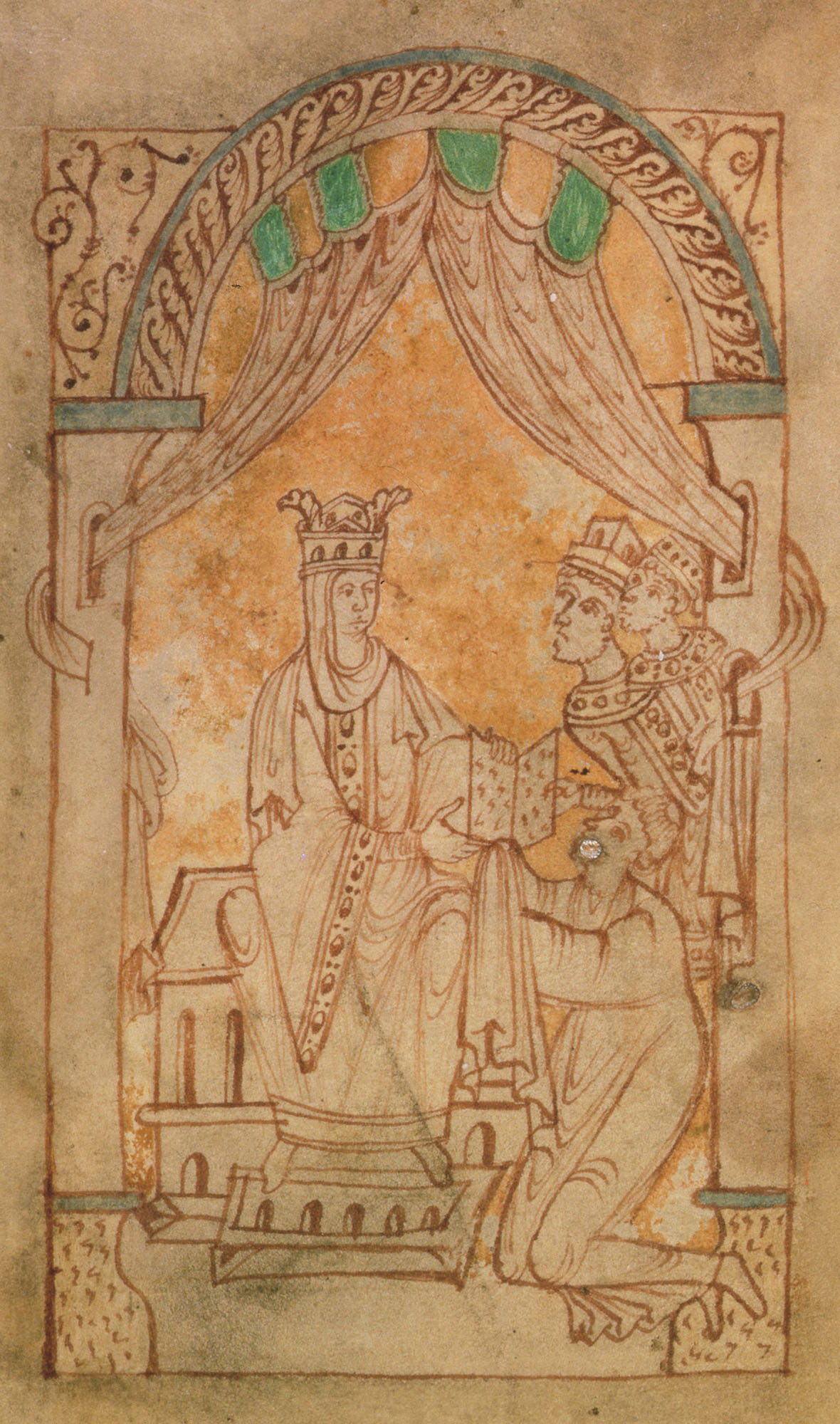
The anonymous author of the Encommium Emmae presents his work to Queen Emma. Her two sons, Harthacnut and Edward, are waiting in the wings.
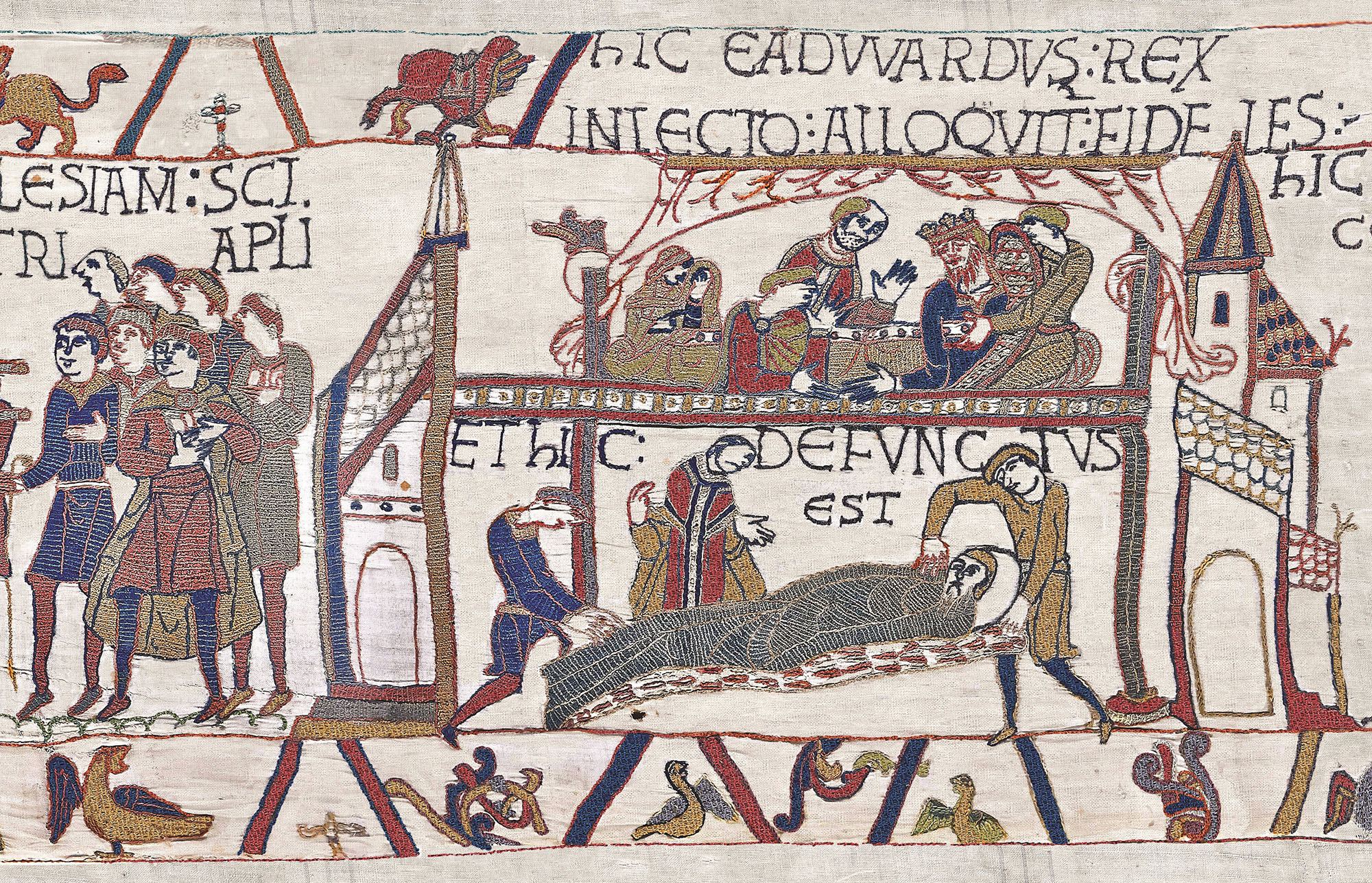
Edward the Confessor’s death, as depicted in the Bayeux Tapestry. Harold Godwinson and Queen Edith are among those at his bedside.

Edward’s funeral cortège en route to the newly constructed abbey church of Westminster.

The Tapestry’s vivid portrayal of the Norman fleet crossing the Channel.

Harold’s death scene. Is he the man with an arrow in his eye, or the one being hacked down by a Norman knight?

Great Domesday, the most impressive product of the Conqueror’s massive survey of 1086.
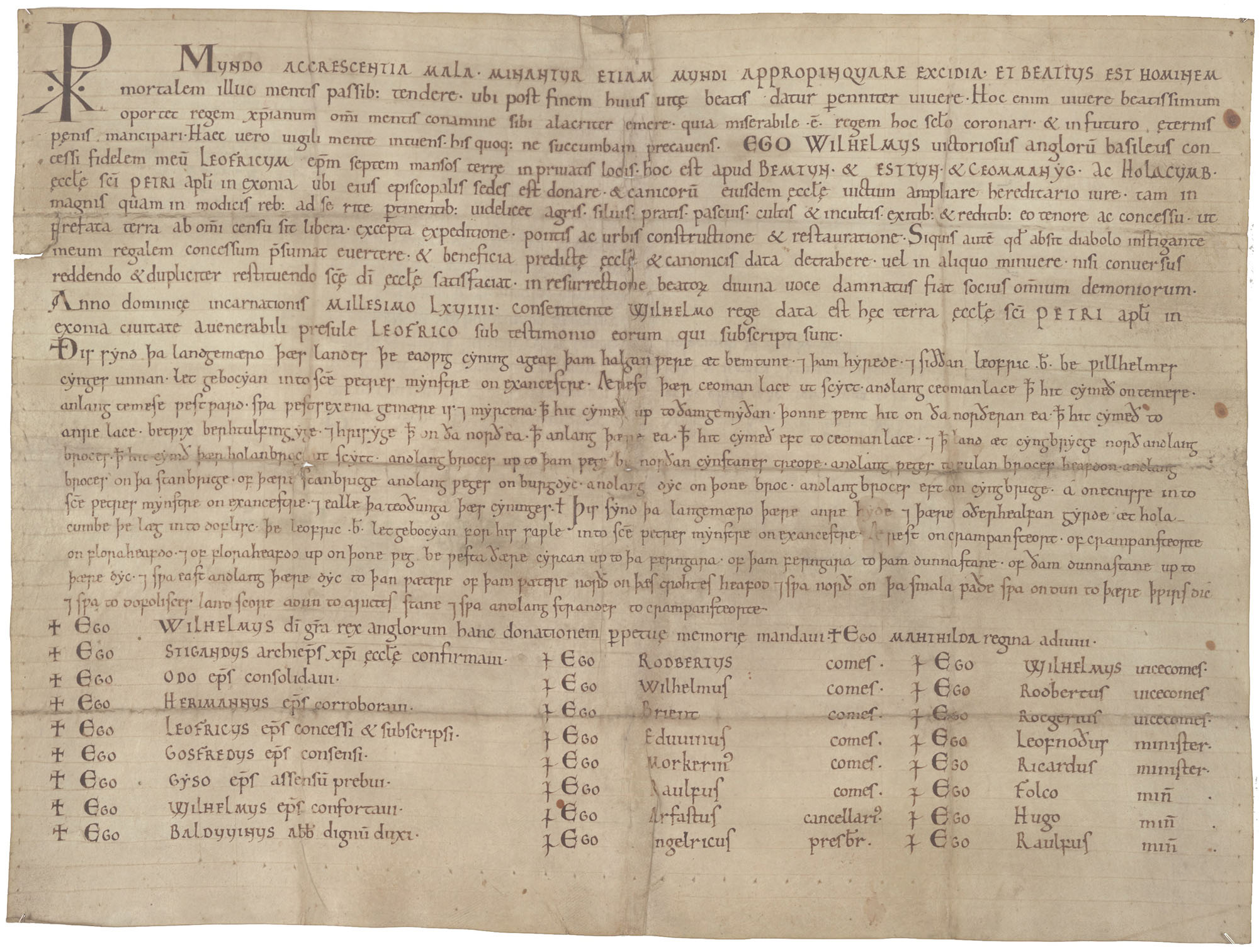
The Conqueror’s charter for the bishopric of Exeter (1069). In appearance and layout it looks every inch a pre-Conquest document, yet the names of the senior witnesses are all Norman.

The interior of Durham Cathedral. Note the distinctive mouldings on the arches and the ribbed vaulting.
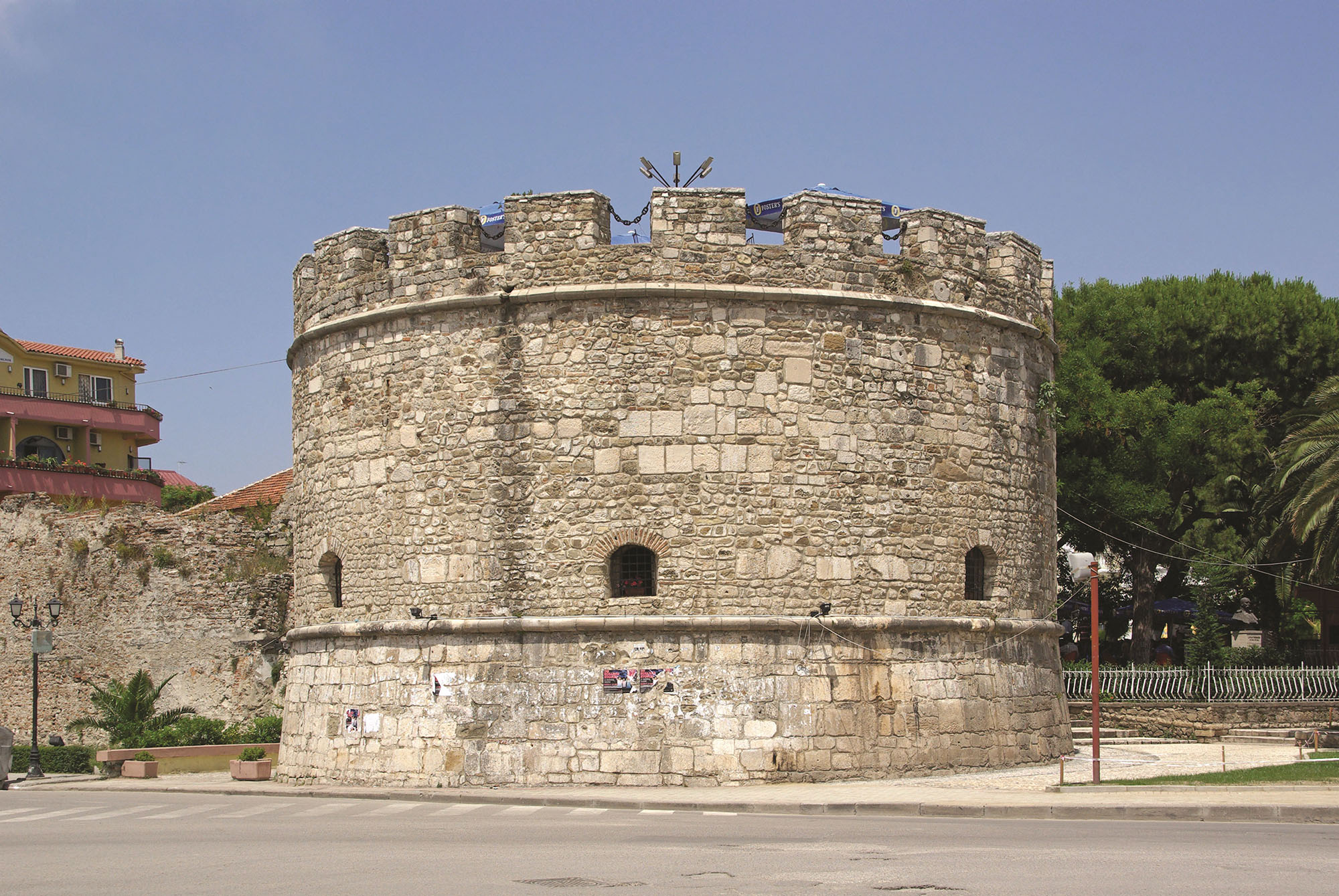
The walls of Dyrrachion (modern Durrës), which held out valiantly against Robert Guiscard and Bohemond.

Roger II being crowned by Christ. Mosaic panel in Santa Maria dell’Ammiraglio, Palermo.
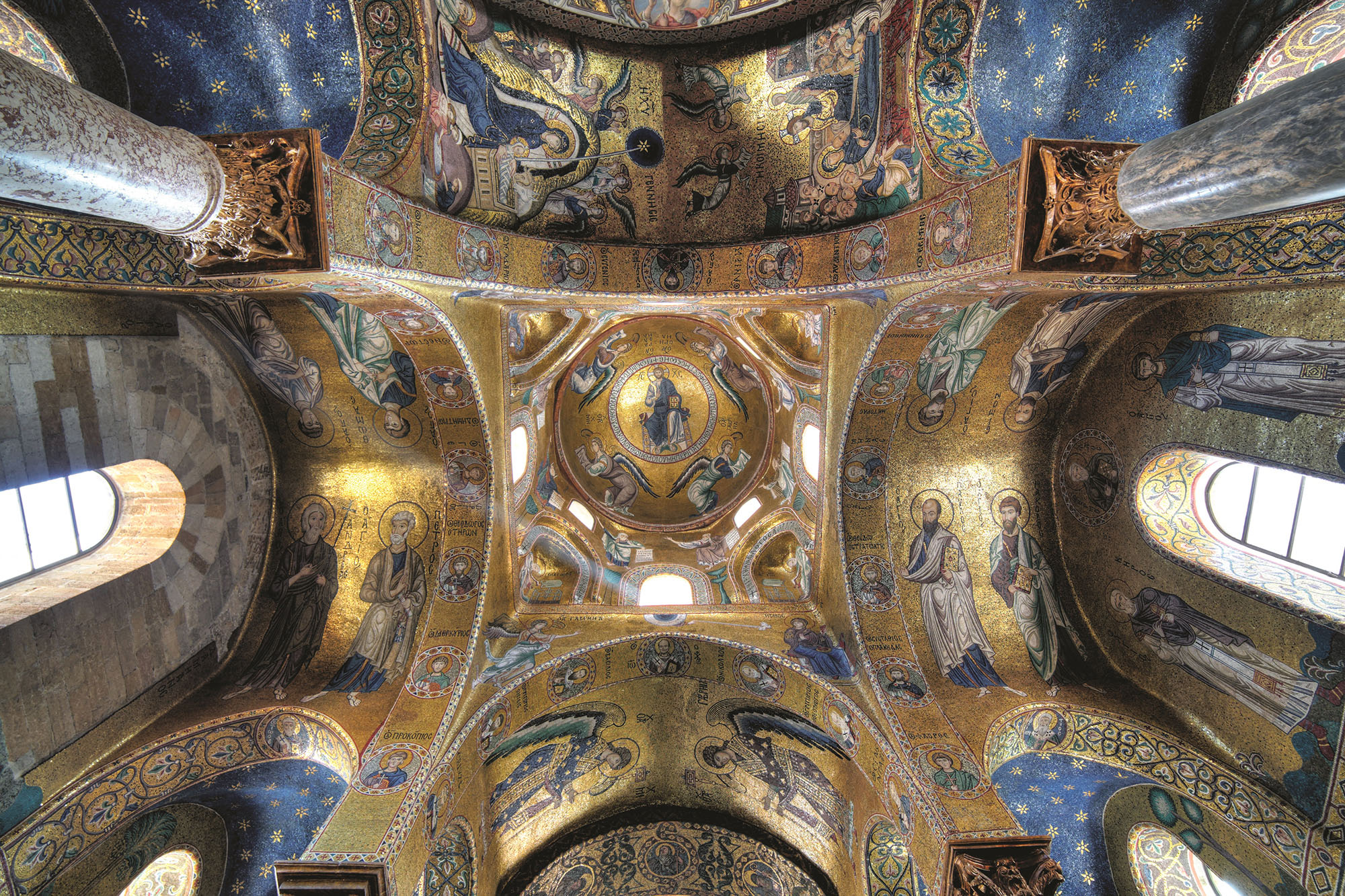
The apse of Santa Maria dell’Ammiraglio, the leading church of Roger II’s new Kingdom of Sicily.
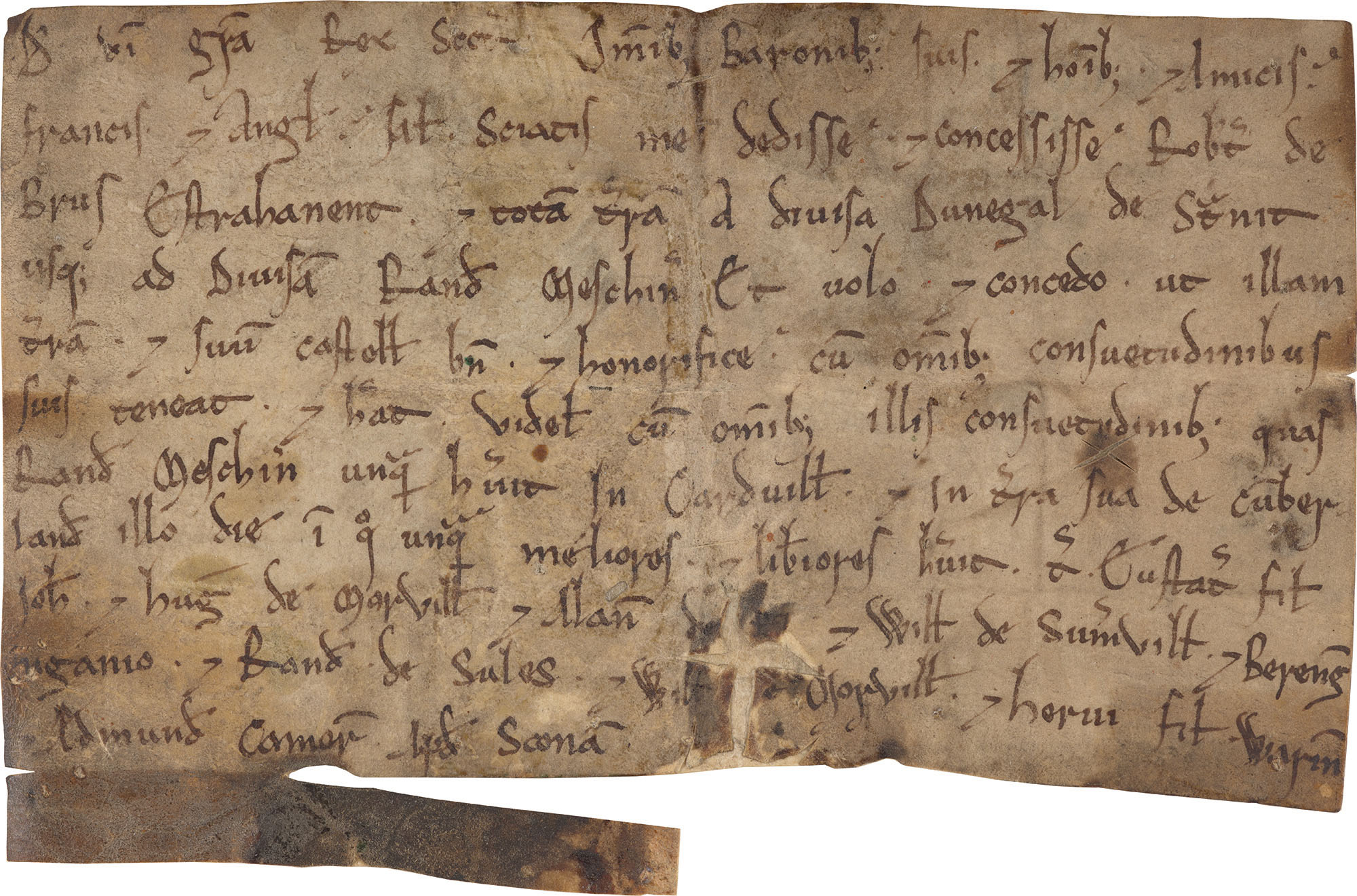
David I of Scotland’s charter granting Annandale to Robert I de Brus (1124).

Château Gaillard, Richard Lionheart’s impregnable castle.
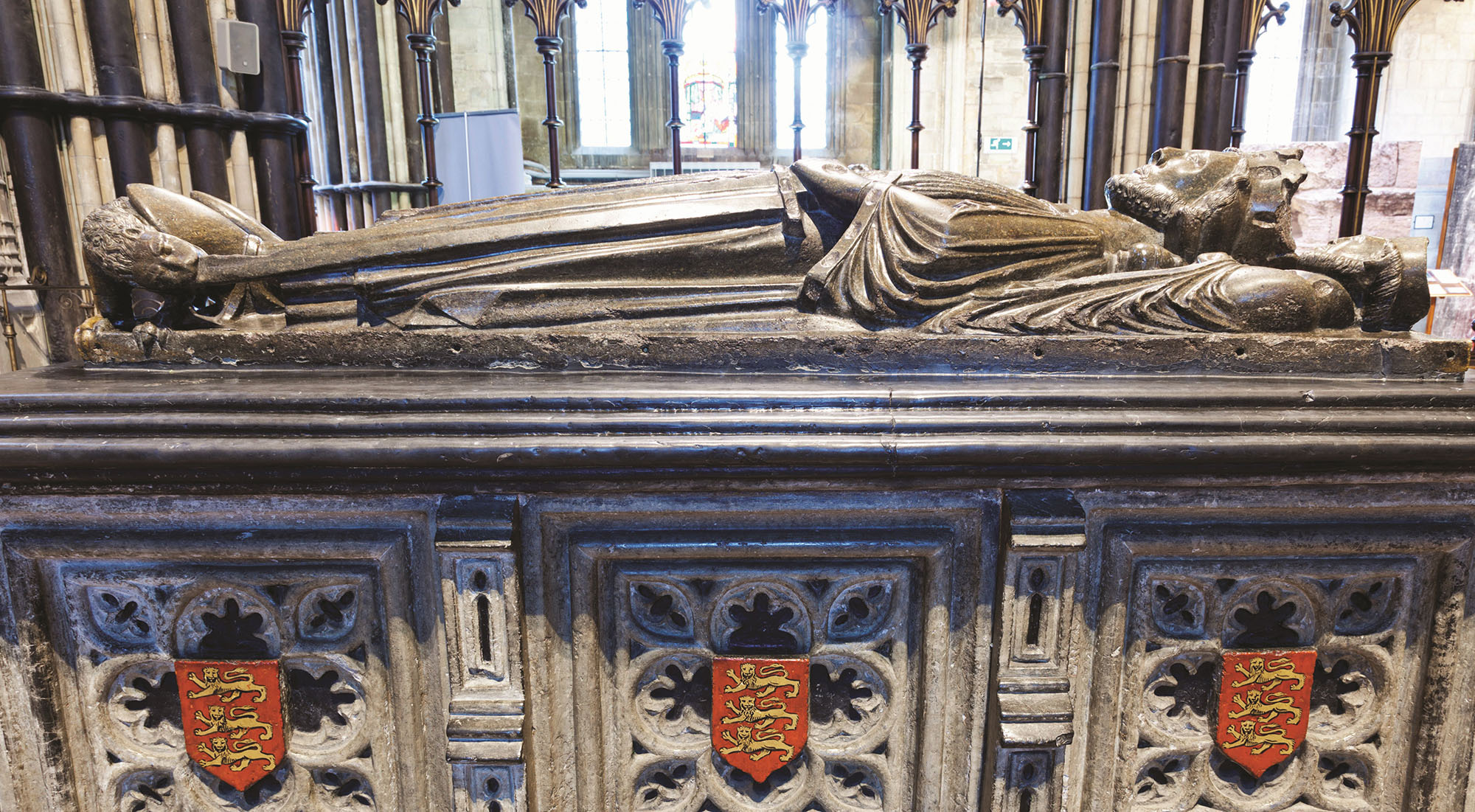
The tomb of King John, Worcester Cathedral. The lion at his feet bends the sword with his jaws in a possible play on John’s nickname, ‘softsword’.

Emperor Frederick II seated in majesty, from an early manuscript of his treatise on falconry.
Acknowledgements
While a book may bear the name of a single author, writing is inevitably something of a team effort, and I have been exceptionally fortunate in my team. Thanks must go first to my sometime agent Tessa David, who first encouraged me to try my hand at popular writing and whose input helped shape the project in its crucial early months. I hope the finished product lives up to her lofty expectations. I am similarly grateful to Laurie Robertson, who took over from Tessa, first as a maternity cover and then on a permanent basis. My editor at John Murray, Joe Zigmond, showed early enthusiasm for the project and has done much to assist in the process of writing and revision. My copy-editor, Candida Brazil, likewise worked wonders with a rather rough manuscript, while Joe’s colleague Caroline Westmore stepped in valiantly to see the text into production. I am likewise thankful to the many academic colleagues who have shared thoughts, comments and work in progress. Particular thanks go to those who read and commented on individual chapters: Marc Morris, Graham Loud, Gregory Lippiatt, Lizzie Boyle, Colin Veach, Ben Guy, Alice Taylor, Matthew Hammond, Andrew Buc, Mike Humphreys and Lucas Villegas-Aristizábal.
As ever, my greatest debt is to my family. My wife, Catherine Flavelle, has advised me every step of the way, including helping with urgent last-minute revisions. The tolerance she has shown to a husband undertaking yet another book project has been nothing short of remarkable. I am equally grateful to our daughters, Clara and Lettie, whose smiles and laughter (and occasional shrieks and howls) have accompanied the writing process from the start. I dedicate the book to them, in the hope that someday they may read it.