
Chapter 18
Marzena Liedke and Piotr Guzowski
Introduction
As for present-day discussions on economic development, religion constitutes an important institution (Acemoglu & Robinson 2012; Rubin 2017). Protestantism, in this context, is of particular importance (Becker, Pfaff & Rubin 2016) as a significant element explaining differences between regions in Europe (van Zanden et al. 2012). Max Weber pointed it out in his well-known work The Protestant Ethic and the Spirit of Capitalism (2005) that Protestant theologians (in comparison with the Catholic Church) developed different attitudes towards the role of usury, work, and profit.
The aforementioned theses became arguments in the discussion aiming at answering the general question, if the changes in Christianity affected forming capitalism as a dominating economic system, or the economic transformations at the end of the Middle Ages and the beginning of the modern era affected the new religious currents.
In this discussion, so far, there has quite seldom been taken up an attempt to study activities of economic institutions of religious nature, functioning in religiously differentiated communities. Researchers try to compare countries dominated by reformed denominations with Catholic regions and if someone takes up studies including religiously complicated political structures, they do it with econometric methods using models which considerably simplify the historical past and consider phenomena in the macro scale (Nunziata & Rocco 2018). However, it is worth considering what signs of Weber’s protestant ethic can be traced in societies of diverse denominational composition in their day-to-day functioning. To what extent can we observe the ethic described by Weber in the countries where the Protestants made up a minority and had to adapt themselves to the socio-economic circumstances where other Christian denominations dominated? An example of such a country is the Polish-Lithuanian Commonwealth (hereinafter: PLC) where basically existed freedom of religion, although not all religions or denominations enjoyed the same social status. In political sense, as well as regarding the number of followers, the Catholic Church dominated but, in various regions of the country, denominations prevailing in the population were Lutherans (Pomerania), the Orthodox or the Uniates (Ukrainian lands, most of the territory of the Grand Duchy of Lithuania). An important element of the religious landscape was a very numerous Jewish minority settling all over the country.
Among Protestant denominations of the PLC, representatives of the Evangelical Reformed Church were of particular importance. They were not numerous but followers of this branch of Protestantism were representatives of the noble elite or, as in the case of the Grand Duchy of Lithuania (hereinafter: GDL), also the wealthiest magnates: mainly the members of the extremely politically and economically powerful Radziwiłł family (whose members used the title of dukes) who protected and financially supported the Evangelicals.
The Evangelical Reformed Church in GDL (called Jednota) was organized within a synodal-presbyterian system, with the provincial synod as the principal authority, consisting of clergy and lay members of the community. For most of the 17th century, the provincial synod of the Lithuanian Calvinists gathered every year in Vilna and was attended by representatives of ca 110 parishes. The highest position in the clergy hierarchy occupied the so-called superintendents who supervised particular districts grouping a few parishes. The Jednota was organized in six districts: Vilnian, Zawilejski, Samogitian, Novogrodek, Ruthenian, and Podlasie. The actor, that is a lay officially responsible for legal, administrative, and financial management of the whole Calvinist community was of almost equally high importance.
The aim and sources
The objective of this chapter is an attempt to present the results of a search for Weber’s capitalist protestant ethic in the credit activities of the Calvinist Church in the GDL.
Financial settlements presented to the Synod annually by actor, bills and acts of provincial synods themselves constitute a source basis for this chapter (Akta synodów, 1915; Akta synodów, 2011; LLAS, f. 40, man. 1136). The latter show that economic problems concerned the Evangelical elite no less than theological or disciplinary questions. Nearly a half of canons referred to financial and economic questions and, in 1642, it was explicitly said ‘That bills are anima of all affairs discussed at the Synod’ (LLAS, f. 40, man. 1136, p. 48). Two financial documents were also analysed in more detail: to the canons of 1668 of the Vilna provincial synod, the register called ‘District sums of the churches of the GDL’ was added, containing data from four districts: Samogitian, Novogrodek, Zawilejski, and Ruthenian (LLAS, f. 40, man. 1136, pp. 303–6); therefore, another document called ‘Sums of the Vilna district’ of 1674 is an important supplement to our knowledge (LLAS, f. 40, man. 168, k. 59). Although we do not have data for the sixth district in the framework of the Jednota – Podlasie, we may outline a general financial situation of the Calvinist Church in the GDL.
The Calvinists’ approach to usury
Although Weber himself in his book did not start a large discussion on usury and credit (Kaelber 2007, pp. 59–86), he mentioned, as a side note, Calvin’s little more liberal attitude towards the problem (Weber 2005, p. 149, note 29). The followers of his studies often underscored the significance of the turn in this matter which had taken place in the Geneva community. The progressing commercialization of economy required evolution in the moral assessment of banking. The Catholic Church throughout the Middle Ages was not able to cope with the problem of usury and despite the theoretically clearly negative attitude towards it, from the days of Thomas Aquinas onwards, there always remained a certain margin for free interpretation which enabled banking activities (Wood 2004). Lithuanian Evangelicals also dealt with a similar problem.
Protestants gathered in 1621 at the synod of Vilna expressed their opinion in the canon ‘On Usurers’: ‘It is certain that any usury is prohibited in the Word of God, and it does not become a Christian man to deal therewith; on the contrary, he should help his neighbor in need with his property and goods…’ (Akta synodów, 1915, p. 62). This statement shows an attempt to maintain the tradition, characteristic of all Christianity, of condemning usury activities, and simultaneously a will to leave a way out enabling running necessary lending activity which was visible in the views of Calvin (Schultze 2000, pp. 198–211; Kerridge 2002). Calvin’s seemingly precise guidelines left, however, much room for interpretation and the criteria of just profit did not have to be readable for an average follower of Reformation views in other countries. Members of the Polish-Lithuanian protestant community realized that economic life without credit would not have been possible, hence the synod did not reject the credit activity completely but only imposed certain restrictions. A potential moral dilemma of the Evangelicals was to be solved by a clergyman.
The financial situation of the Jednota in the 17th century
Over the 17th century, the situation of the Evangelical Reformed Church in the PLC worsened along with the political and demographic situation. The counter-Reformation action resulted in taking over Calvinist temples, especially those which used to be Catholic churches. The Catholics also took churches built from scratch which were located in the estates of their patrons who decided to convert into Catholicism. Those processes naturally resulted in the deterioration of the financial situation of the Lithuanian Calvinist religious community. Therefore, affairs connected with the material functioning of the Jednota had to take quite a great deal of time during the debates of provincial synods.
The material and financial basis of the Jednota in the GDL were private foundations of churches, as well as material and financial legacies. Among the latter, there occurred land estates and urban immovable properties, and also smaller donations in the form of money or silver and gold items. A certain variety of such donations was fundraising (kolekta) among the faithful, initiated in synods and organized in particular intentions or for particular people. An additional position in the Jednota’s revenues was profits from managing immovable property: from leasing manor farms or renting town houses. Income, at least theoretically, also came from capital turnovers and providing loans.
The material situation of the Lithuanian Evangelical Reformed community in the 17th century is also reflected in two financial documents from 1668 and 1674. The resources registered in both are the sums to which the Jednota was legally entitled: foundation bequest, confirmation of the legacy (donation), a bond guaranteeing the return of the loan with the interest, or a mortgage loan collateral (Figure 18.2). A part of them are legacies (12.9% of the value) which were donated to particular churches and meant an obligation to pay a certain amount of money in the future in total or in instalments. In practice, donators could manage them as amounts of the capital from which the endowed churches were paid a yearly rent. The tentative analysis of the legacies for the Jednota in the files of provincial synods in 1611–1655 demonstrates that merely 32% of the declared donations were paid out immediately at the moment of the bequest (Liedke & Guzowski 2017, p. 124). Widowed spouses or children were often not very willing to give away the legacies of the dead spouses or parents. Realization of most of them required many years, efforts and legal operations.
The vast majority of the bequeathed sums (65.3%) were the loans secured in two ways (Figure 18.1): either on immobile property (27.4%) or a bond (37.9%). The former form of guarantee was derived from the concept of purchasing a rent which, in our case, meant a transaction, the result of which was that the immovable property owner sold the Jednota a particular regular income from the property for a certain amount of money. The other form meant an ordinary money loan secured by bond. Also, foundation bequests were secured by immovable property income (16% of the value of the bequeathed sums). Because of the laconic form of the source, it was impossible to reconstruct the nature of a group of bequests (5.8% of value).
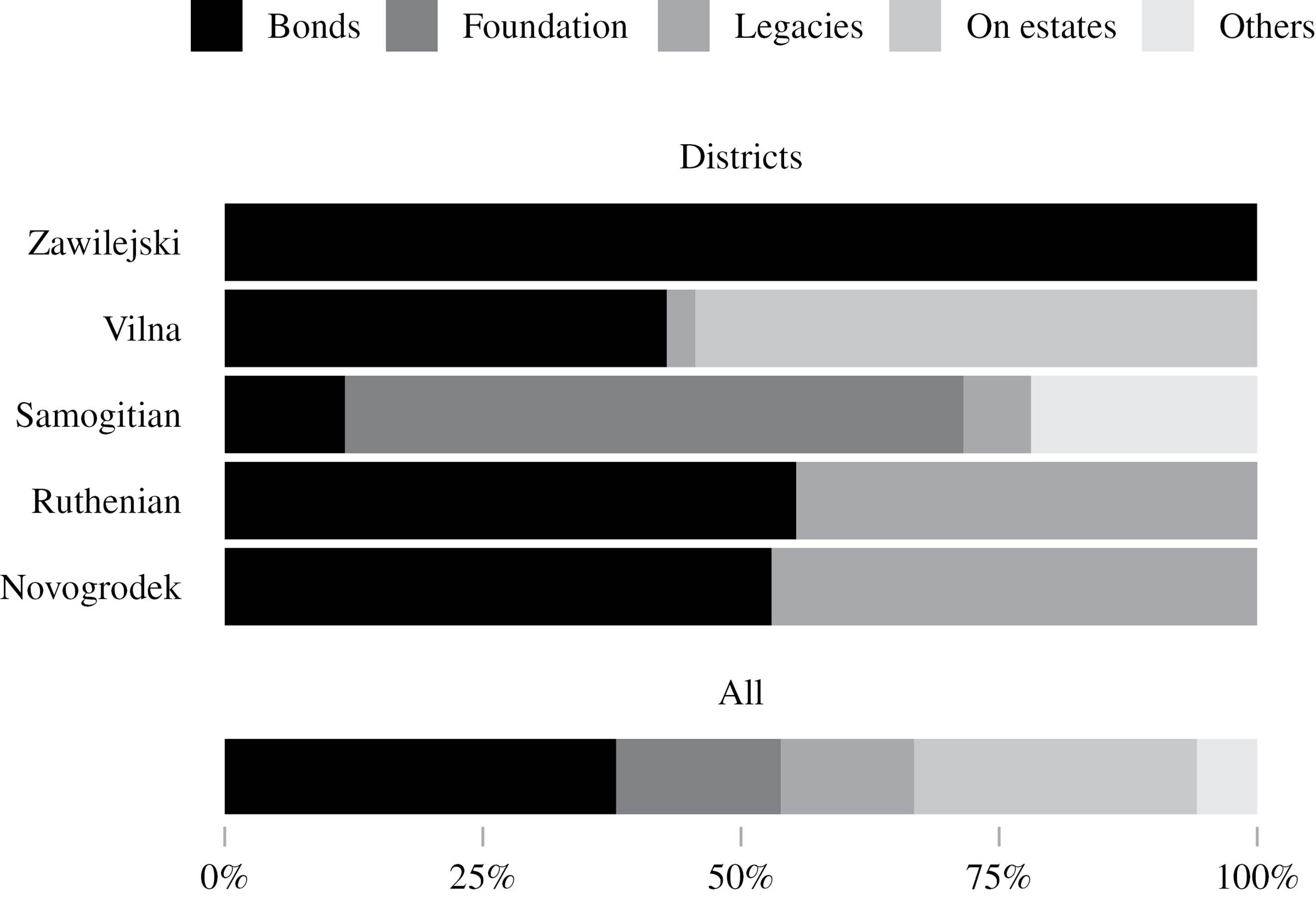
Figure 18.1The nature of the sums to which particular districts were entitled.
Source: LLAS, fond 40, man. 1136, pp. 303–306; fond 40, man. 168, p. 59r.
The analysis of the two documents under scrutiny shows that bequests connected with the Vilna district were of the highest value, over 123,000 zlotys, which should not come across as surprising because of its exceptional, capital character, the importance of the Jednota, as well as a pursuit, so visible over the 17th century, of creating a central archive of the Evangelical Reformed Church in Vilna (Figure 18.2). Monetary legacies for the Vilna church came from not only people who had their estates in that district. Many inhabitants of lands belonging to the other districts, beside donations for churches in their maternal district, made bequests for the community in Vilna. Nearly half as much of the value of legacies (65,100 zlotys) was noted in the case of the Samogitian District, to which belonged the churches of the magnates: the Radziwiłłs (Kiejdany) or rich noblemen (Dziewałtów). After all, the affluent and middle Samogitian nobility remained religiously active in the period under examination, whereas, among the magnates, only the Radziwiłł family still protected Calvinism in Lithuania. Furthermore, a half of the value of Samogitian bequests were registered at the Novogrodek District (32,125 zlotys), and of considerably smaller value are the sums of the Ruthenian District (19,600 zlotys) and the Zawilejski District (4,512 zlotys). The particularly poor resources of the vast Ruthenian District could result from a considerably lower number of affluent Evangelical noblemen settled in the most easternmost areas of the GDL.
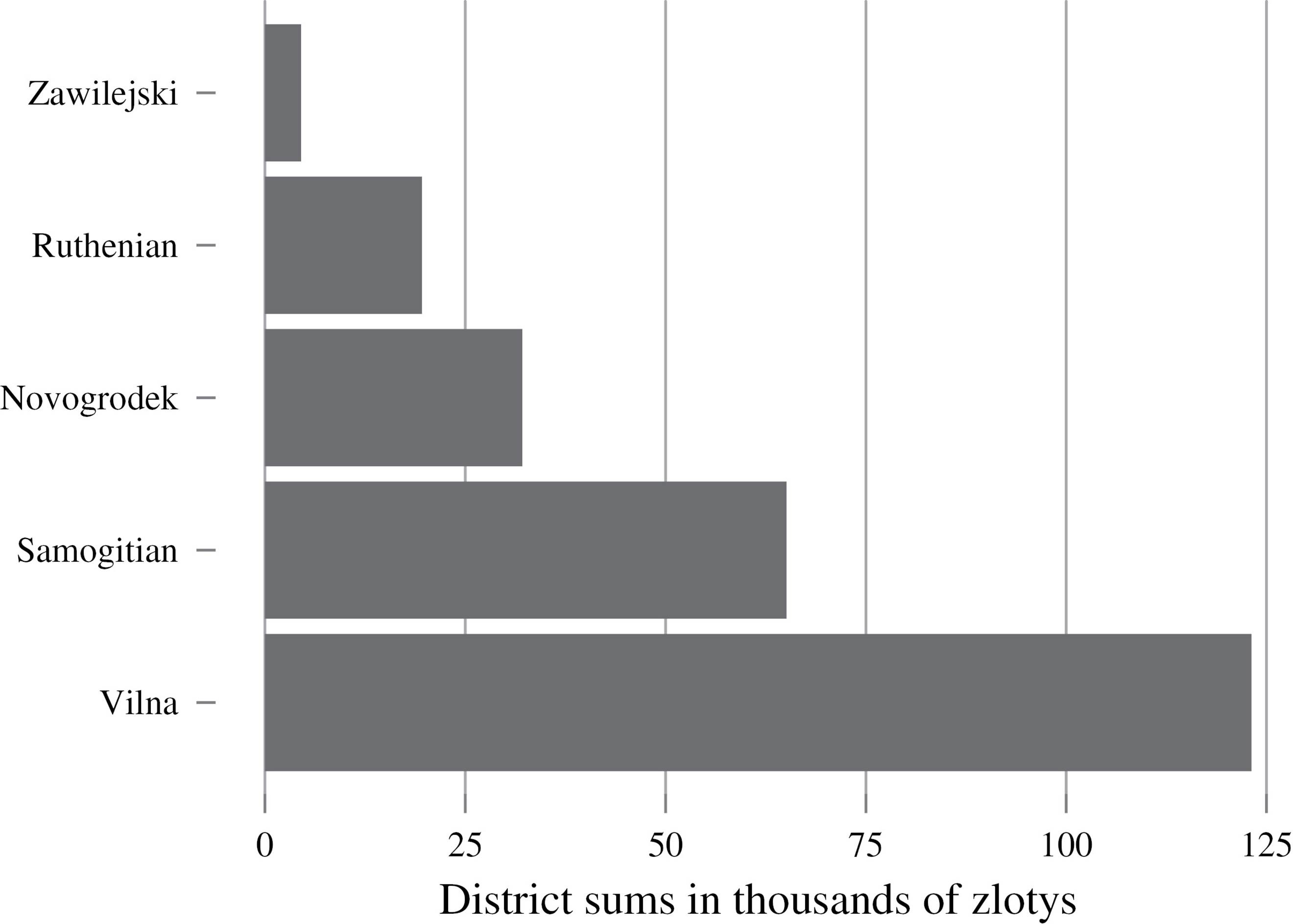
Figure 18.2Value of the sums to which particular districts were entitled.
Source: LLAS, fond 40, man. 1136, pp. 303–306; fond 40, man. 168, p. 59r.
Rent purchase
Although legacies, in respect of value, make up the smallest of the categories of sums recorded in the source that we distinguished, undoubtedly resulted from the donors’ piety. Among the issuers of charity obligations in favour of the Jednota, mentioned in the two documents we analysed, dominates middle nobility. However, there also occur representatives of poorer noblemen, burghers, and even foreigners. In the group of the most generous donors, eight people, usually members of the middle nobility, bequeathed 1,000 zlotys and more.
Similar to legacies, which probably resulted from primarily spiritual needs, are high bequeathed foundation sums connected with the church in Kiejdany (25,000 zlotys) and Dziewałtów (14,000 zlotys). The former is part of the foundation of Krzysztof Radziwiłł and his wife Anna who granted resources to build a new church, preachers’ lodgings and school buildings in 1631 (LLAS, f. 40 nr 1, pp. 1–7). The latter, in turn, was connected with the donation (before 1630) of 10,000 by Brasław marshal Jerzy Podbereski. The history of foundations is similar to that of legacies, the enforcement of which was not easy, as in the case of the sums, mentioned in the list of 1668, donated both by the mother and the sister of Nowogródek ensign Stefan Frąckiewicz Radzimiński. The synod eventually left them in his hands, probably not wanting to annoy one of the most prominent co-religionists of that time.
We can guess that the sums of legacies and foundations recorded in the sources, or basically rents derived from them every year, served current needs of particular churches. The foundation document of a new Kiejdany church shows that from 25,000 zlotys donated by the Radziwiłł family, ‘a ready rent of 2,500 Polish zlotys’ (VUL, f. 4, man. 16408, p. 4) were paid for the needs of the church, the school, and the hospital. The acquired funds could be and probably often were a source of capital saved by particular communities and secondarily allocated for the credit market.
Loans
Even though the aforementioned canon of the Synod in Vilna in 1621 pointed at somewhat negative attitude towards usury, it does not mean aversion to capital turnover. Among the tasks of the church actor defined by the Synod of 1644, were, as it was written:
So that, over the expensa and expenditures, for the working at different churches, for buildings and rights some of the aforementioned benefits were left, the actor is expected to preserve fideliter in integro, and if someone well-settled and reliable occurred, he is supposed to provide profits.
(LLAS, f. 40, man. 1136, p. 69)
It was no novelty. Even earlier the synods formulated instructions for the supervisors of the church material property, as in 1629, recommending the actor and his assistants ‘not to lend money sums, especially those larger, on bonds but on a secure bequest of a secure and legally reliable property’ (Akta synodów, 2011, p. 53).
The two collations of district sums we analyse confirm the little effectiveness of the synod’s recommendations as regards the loans, since only four (absolute minority) were secured on estates (in comparison with 45 secured by bond). However, their amounts were high. Among them, there were loans granted to Jerzy Wolan (7,000 zlotys), Elżbieta Abramowicz (7,000 zlotys), and the amount of 5,000 zlotys to be paid off by Marcjan Ogiński (the only borrower who was not Calvinist). A particular role in the Jednota’s financial fate was also played by a loan provided for Krzysztof Radziwiłł (48,000 zlotys).
The synod had such serious problems with reclaiming the first two sums, as well as the interest therefrom, that in 1654, a special canon was adopted ordering the church actor: ‘if the aforementioned debtors refused to return the sums sponte and in a friendly manner, His Grace the actor legally bring the satisfaction and immediately, if God allows for that, presented the future Synod with the sum’ (LLAS, f. 40, man. 1136, p. 191). Within a year, however, they did not manage to reclaim both sums and again the actor was ordered to ‘proceed legally after still friendly and second requisition’ (LLAS, f. 40, man. 1136, p. 205). The following war turmoil was not conducive to paying off the liabilities. Still, the Synod of 1665 recommended the actor to reclaim the sum from Lady Abramowicz (LLAS, f. 40, man. 1136, p. 257) and, in the following year, they proposed she has to pay five zlotys from a hundred, or in various grain being in trade or in ready money (LLAS, f. 40, man. 1136, p. 271).
The largest liability recorded in both sources was a loan of 48,000 zlotys granted in 1636 to Vilna voivode, Krzysztof II Radziwiłł. As the borrower confirmed himself in the Vilna Tribunal books: ‘being in need for a sum of money, I took the sum of ready money of forty and eight thousand Polish zlotys from the churche’s own treasury’ (NLL, fond 93, man. 1, p. 135 v.). With the borrowed sum, Radziwiłł was expected to pay an annual rent of 3,360 zlotys in two instalments and the loan was secured on his estates. After Krzysztof II Radziwiłł’s death in 1640, his liabilities were inherited by his son Janusz but he did not meet them according to the agreement. In 1643, the Synod asked him for regular payments or, at least, giving them another estate as a collateral guaranteeing the inflow of cash to the Jednota’s treasury (LLAS, f. 40, man. 1136, p. 59). In subsequent years, Janusz’s financial obligations to the Evangelicals increased. Their scale is recorded in the files of provincial synod of 1650. According to them, it was necessary to add to the old loan of 48,000 zlotys another sum of 13,250 from which the combined annual rent should bring the Church 4,277.5 zlotys (7% per year) and was to be returned to the Vilna church.
Moreover, Janusz Radziwiłł brought in bonds for 13,600 zlotys for the unpaid rent of the previous years which was to be paid off after three years (without interest). The remaining liabilities, which Radziwiłł had promised to pay back ‘without fail’, were 4,992 zlotys (LLAS, f. 40, man. 1136, p. 150).
To a certain degree, Janusz settled the arrears in 1651 when he paid to the Vilna Evangelicals 5,000 zlotys and 3,570 zlotys in the next year (LLAS, f 40, man. 711, p. 1). The capital, however, was paid off neither by Janusz Radziwiłł nor his son-in-law and nephew Bogusław Radziwiłł. There were also more and more problems with reclaiming the interest from the loan. In 1663 the Synod asked to return ‘both repurchase and bond sums being in His Grace the Duke’s hands […] to the Vilna church’ (LLAS, f 40, man. 1136, p. 223). A year later, the synod ordered the Samogitian superintendent ‘to write to His Grace the Duke with a fervent request so that he ordered to return the sum of 2,000 to the seniors of the Kiejdany church’ (LLAS, f. 40, man. 1136, p. 230). In response to the demand from the synod, Bogusław wrote a letter informing that from the capital sum secured on Kiejdany ‘I assign 3,000 Polish zlotys for each year […] They are supposed to be returned to the hands of the seniors of the Vilna church’ (LLAS, f. 40, man. 711, p. 2). Unfortunately, this liability also had probably no chance for being paid off since the synod of 1666 received another declaration of Radziwiłł that the duke equerry wants, in return for ‘the interest from the sums, to give an estate in possession to the God’s Church’ (LLAS, f. 40, man. 1136, p. 265). This did not come to force and Bogusław Radziwiłł’s death at the end of 1669 undermined the stability of financial relations between the Radziwiłłs and the Evangelicals even more. In 1672, stewards of Ludwika Karolina (Bogusław’s daughter) ‘declared [to the Synod] to return the bond sums (…) next year’ (LLAS, f. 40, man. 1136, p. 342) but, in 1675, the synod ordered the church actor to legally assert the sums remaining with the duchess (LLAS, f. 40, man. 1136, p. 382). The register of the sums belonging to the Vilna church of 1674 shows that the Radziwiłłs, altogether, beside 48,000 secured on the estates, owed additionally 39,150 zlotys guaranteed by bonds. Part of the bond sums was paid off in the subsequent years but, in 1687, their debt (resulting from the loans) to the Vilna church was still 61,000 zlotys, the interest from which was 4,400 zlotys a year (NLL, f. 93 man. 8, pp. 1–2). The capital sums were practically not returned, whereas, at least theoretically, they guaranteed a stable income. The interest registered in 1687 was slightly above 7.2% a year and did not differ considerably from that determined at the moment of signing the agreements between the Evangelicals and Krzysztof II and Janusz Radziwiłł (7%) in the first half of the 17th century. A simple economic calculation shows that, for instance, 48,000 zlotys lent in 1636 should be returned to the Evangelicals as soon as in nearly 15 years, which is before the war with Moscow and Sweden (1654/55), but the problems with the enforcement of the interest, signalled by the Synod, show that this certainly did not happen. The warfare, political turmoil connected with the Radziwiłłs, and the crisis in managing their property in the second half of the 17th century resulted in no growth in effectiveness of reclaiming the income from the lent resources. Meanwhile, there also occurred a considerable fall in the money value. At the moment of taking the resources by Krzysztof II Radziwiłł, the ducat rate was maximum 180 zlotys and when Karolina Ludwika issued her document, over a half century later, nearly 400 zlotys were paid for one ducat. From a purely financial point of view, the loans granted by the Evangelicals to Krzysztof and Janusz Radziwiłł and never paid back were an unsuccessful venture. However, maybe the aim of the Lithuanian Evangelicals was not a financial profit but a guarantee of political protection from the mighty family and survival of the whole religious community.
In the case of other borrowers, those who secured their debts with bonds only, the Jednota’s debt collection was no much more successful, even though the group was dominated by wealthy and moderate well-off nobility. In the period of the deep economic crisis mostly resulting from warfare (1654–1667), the authorities of the Jednota came to the conclusion that it is more beneficial to gather resources than their turnover. In 1665, the Synod decided that: ‘The church sums, when reclaimed are not to be lent to anyone against the bond, or a collateral, but will remain in loco certo, because temporum experiencia demonstrated how difficultates their parties were and still are’ (LLAS, f. 40, man. 1136, p. 241).
A certain chance of improving the debt collectability was seen in manipulating the interest rate. A normal rate with loans was 7% but, in 1666, they decided to lower it for the people in arrears down to 5%, especially in the lands conquered by the enemy (LLAS, f. 40, man. 1136, p. 272). A year later, the Synod came to the conclusion that after the cessation of hostilities in the GDL, the economic situation would improve and decided: ‘Now, at the peace decision, Their Graces Lords debtors should pay the interest ab hinc octo pro centum from the church sums’ (LLAS, f. 40, man. 1136, p. 279). Thus, it was an ordinary rate, not different from the market rate. More or less at the time when Krzysztof II Radziwiłł borrowed 48,000 zlotys from Jednota (1636), he also signed a contract with the Stołpec Dominicans (1639) by virtue of which he took 10,000 zlotys. He secured the loan against the estate Ostaszyn and promised to pay an annual rent worth 8% of the loan value (CAHRW, AR, dz. VIII, man. 557, p. 1). In the 1660s, Bogusław Radziwiłł borrowed money at the same rate several times from the Minsk Dominicans (CAHRW, AR, dz. VIII, man. 248, pp. 2–14). In both cases: ‘Catolic’ loans, likewise ‘Evangelical’ loans, the capital sums were not paid off by the debtors and the rent from them was still paid by Ludwika Karolina (CAHRW, AR, dz. VIII, man. 248, p. 60; man. 557, pp. 5, 7). We can also note that the contracting parties ignored the Parliament Act of 1635, which pointed out that ‘We guarantee for the future repurchase rents to churches, orders, hospitals, colleges and other clergy persons […] seven zlotys from a hundred’ (Volumina Constitutionum, vol. 3, part 2, 2013, p. 259).
Conclusion
It is difficult to find Weber’s spirit of capitalism in the sources produced by the authorities of the Evangelical Reformed Church in the GDL. Indeed, concern of the material security of the temples and the faithful occurs in the synod files quite frequently but it does not differ from the Roman Catholic Church documentation. Evangelical clergymen and lay patrons of churches were not more open to the phenomenon of usury than Catholic or Orthodox clergymen and they ran credit business because it did not require from the community members the involvement that would be necessary in, for example, managing estates. Moreover, it is difficult to talk about full opening to market mechanisms and not all loans were granted by the Calvinist Church voluntarily. It is obvious that it was impossible to refuse the needs of the most prominent patrons from the Radziwiłł family but also in the case of other sums registered in both documents the circumstances of the liabilities considerably exceeded the principles of a market contract. Almost all debtors (except one) were Reformed Evangelicals but the analysis of provincial synod files, beside many examples of successful financial operations, also delivers information about several problems.
The involvement of church institutions in credit market is the evidence of its poor development mainly based on private credit without strong public banking institutions. The backwardness in this matter probably resulted from not only economic, but also doctrinal reasons common to all Christian denominations. As in the case of the activities of Catholic monasteries, in the sources under discussion, we deal with the repurchase rent. However, it is interesting that, against Calvin’s suggestions and in certain situations, the Lithuanian Evangelicals demanded higher interest rates than the state regulations allowed for. In the case of pious legacies and foundations, the benefactors were usually to deduct 10% of their value a year to the churches of the Jednota and the interest rate of the loans secured by bonds was between 5% and 8% per year. Despite the problems the Jednota actors had with reclaiming the sums ‘kept’ by Church members, the trust in the co-religionists was so high that the prohibitions of bond loans repeated by the Synod were ignored.
The observations of other aspects of the economic activity of the Evangelical Reformed Church in Lithuania (Liedke & Guzowski 2017) demonstrate that the financial activity yielded higher revenues than potential investments in purchasing property. Besides, the Calvinist Church was not always good at managing estates; therefore, they rather tried to find effective tenants, according to the rule that ‘the estate was leased to a viro integro of our religion’. A serious obstacle in achieving profits from agricultural and breeding economy at the beginning of the second half of the 17th century was the occupation of the country by foreign troops. Thus, the circumstances forced the Evangelical community to undertake the credit activity, even though it was connected with visible risks. This, however, was not far from the practice of other religious institutions, especially Catholic ones, in that period.
Funding
The research for this chapter was financed from the grant received from the Ministry of Science and Higher Education of the Republic of Poland, through the National Programme for the Development of the Humanities for the years 2016–21 (nr 11H16019684).
References
Acemoglu, D. & Robinson, J. A. (2012). Why Nations Fail: The Origins of Power, Prosperity, and Poverty. New York: Crown.
Becker, S. O., Pfaff, S. & Rubin, J. (2016). Causes and Consequences of the Protestant Reformation. Explorations in Economic History, 62, pp. 1–25.
CAHRW (The Central Archives of Historical Records in Warsaw), AR (Archiwum Radziwiłłów), dz. VIII, manuscripts 248, 557.
Grodziski, P., Kwiecień, M. & Karowicz, A., eds. (2013). Volumina Constitutionum, vol. 3 (1611–1640), part 2. (2013). Warszawa: Wydawnictwo Sejmowe.
Grużewski, B. et al., eds. (1915). Akta synodów prowincjalnych Jednoty Litewskiej 1611–1625. Wilno: E. Wende i SP.
Kaelber, L. (2007). Max Weber and usury: implications for historical research. In Armstrong, L., Elbl, J. & Elbl, M., eds. Money, Markets and Trade in Late Medieval Europe. Leiden-Boston: MA, pp. 59–86.
Kerridge, E. (2002). Usury, Interest and the Reformation. Aldershot: Ashgate.
Liedke, M. & Guzowski, P., eds. (2011). Akta synodów prowincjonalnych Jednoty Litewskiej 1626–1637. Warszawa: Semper.
Liedke, M. & Guzowski, P. (2017). Problemy finansowe ewangelickiej Jednoty Litewskiej w pierwszej połowie XVII w. w świetle akt synodów prowincjonalnych. Roczniki Dziejów Społecznych i Gospodarczych, 78, pp. 95–130.
LLAS (The Wróblewski Library of the Lithuanian Academy of Sciences), fond 40, manuscripts: 1, 168, 711, 1136.
Nunziata, L. & Rocco, K. (2018). The Protestant ethic and entrepreneurship: Evidence from religious minorities in the former Holy Roman Empire. European Journal of Political Economy, 51, pp. 27–43.
NLL (Martynas Mażvydas National Library of Lithuania), fond 93, manuscripts 1, 8.
Rubin, J. (2017). Rulers, Religion, and Riches. Why the West Got Rich and the Middle East Did Not. Cambridge: CUP.
Schultze, L. (2000). Calvin’s view on Interest and Usury. Studia Historiae Ecclesiasticae, 26, pp. 198–211.
van Zanden, J. L., Buringh, E. & Bosker, M. (2012). The rise and decline of European Parliaments, 1188–1789. Economic History Review, 65, pp. 835–61.
VUL (Vilnius University Library), fond 4, manuscript 16408.
Weber, M. (2005). The Protestant Ethic and the Spirit of Capitalism. London: Routledge.
Wood, D. (2004). Medieval Economic Thought. Cambridge: Cambridge University Press.