
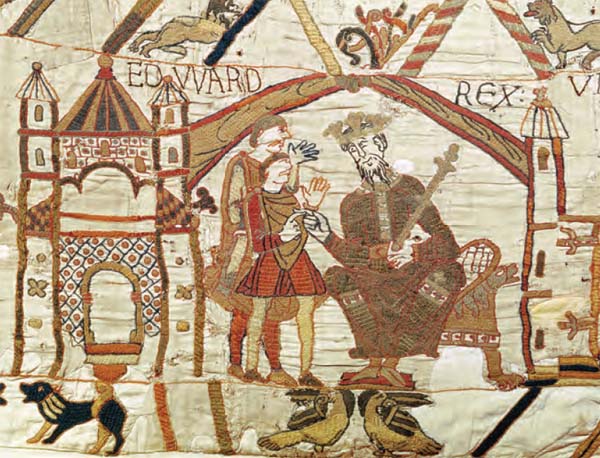
Edward the Confessor at the beginning of the Bayeux Tapestry.
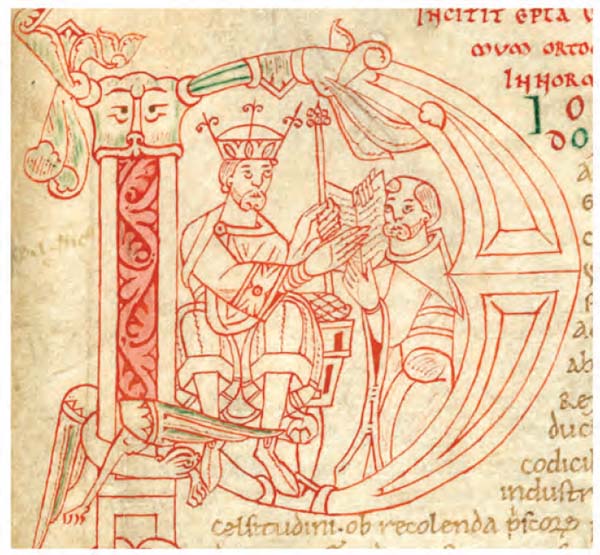
William of Jumièges presents his history to William the Conqueror (from a twelfth-century copy of the manuscript)
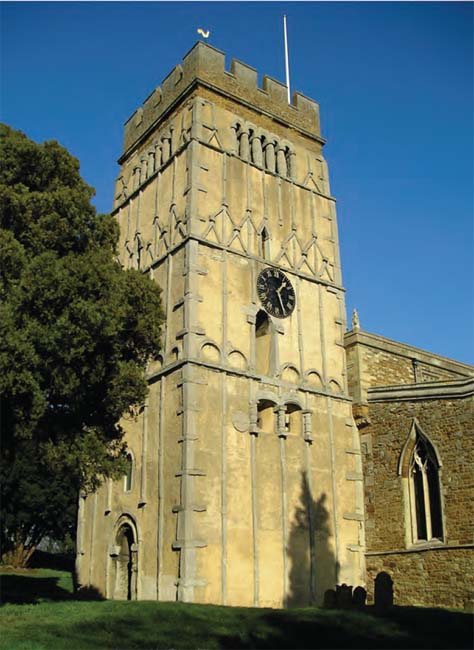
English architecture before 1066. The early eleventh-century church tower at Earls Barton, Northamptonshire, shows how decoration took precedence over the order and precision of line beginning to be used on the Continent.
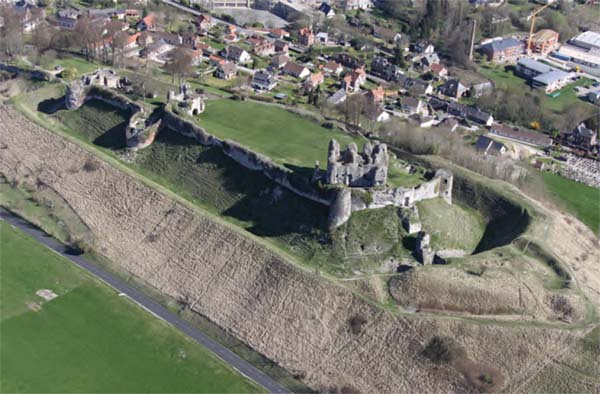
The mighty castle at Arques, established during William’s minority. The surviving masonry dates from the twelfth century.
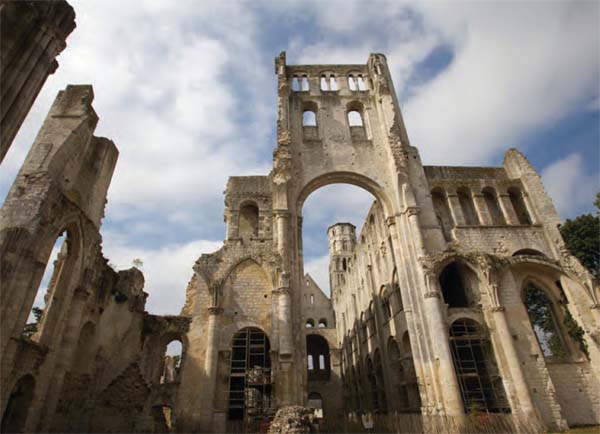
Norman architecture before 1066: the Romanesque abbey churches of Jumièges, begun c. 1040.
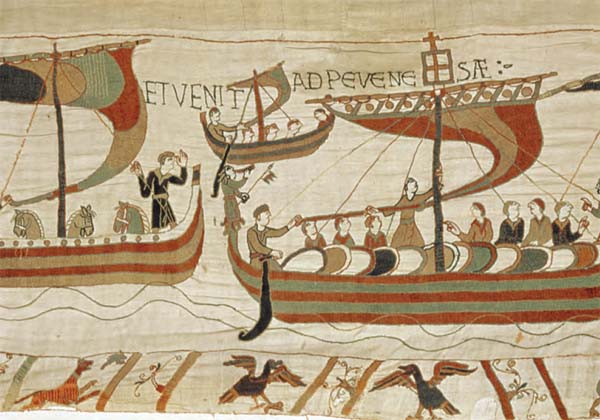
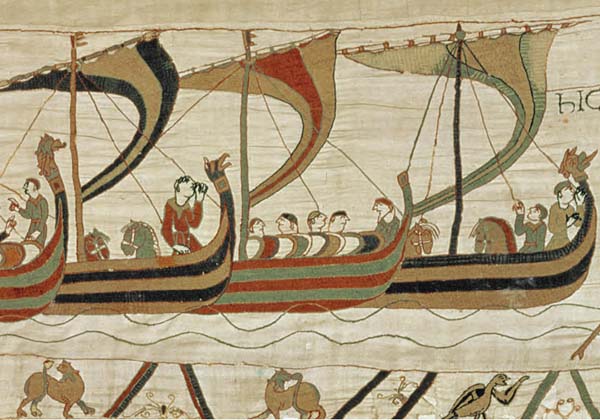
The Norman invasion fleet crosses the Channel. The ship with the lantern on its mast is probably William’s flagship, the Mora.
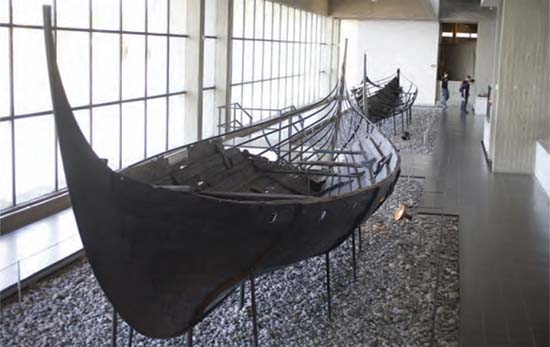
‘Skuldelev 3’, datable to the eleventh century, on display in the Viking Ship Museum, Roskilde, Denmark.
Imperial Grandeur.
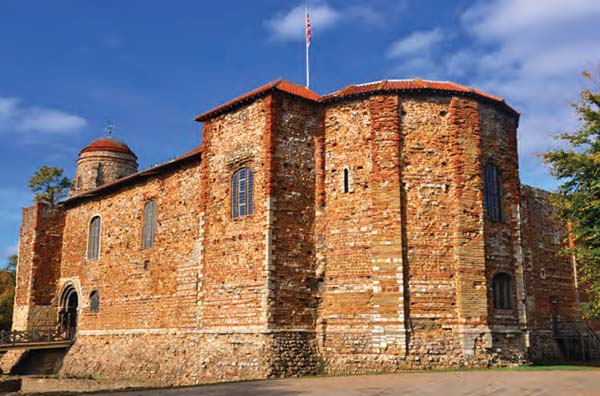
The great towers begun by the Conqueror at
Colchester and London
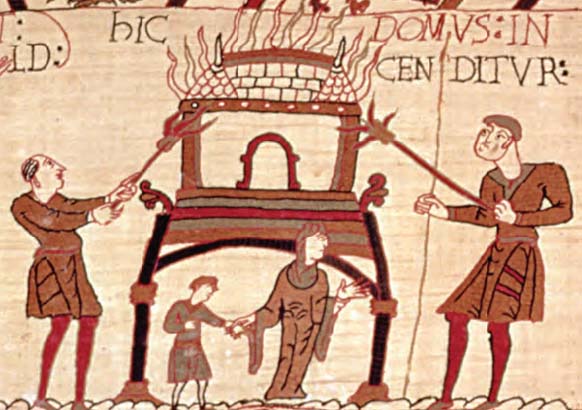
Harrying in action: two Normans set fire to a house from which a woman and child flee.
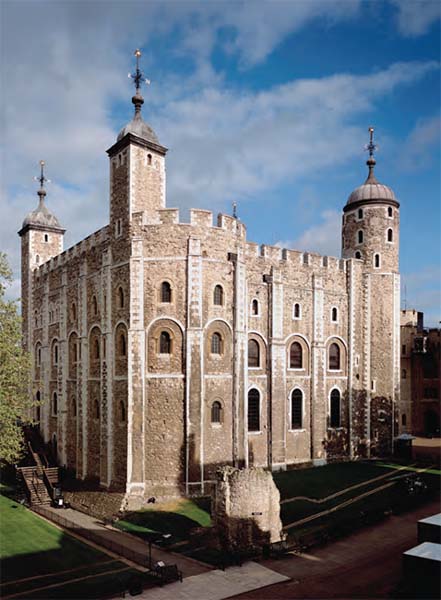
show similarities in design.
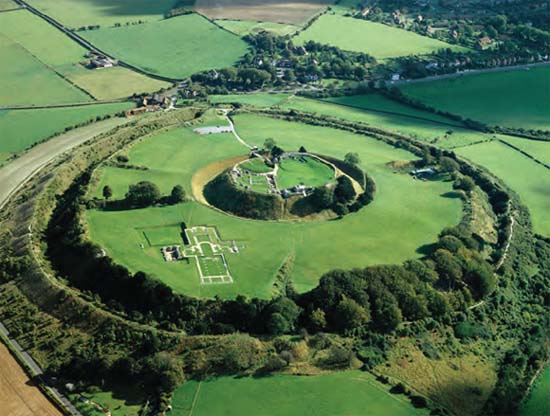
Old Sarum, Wiltshire. The earthworks of William’s castle and the foundations of the Norman cathedral are clearly visible within the perimeter of the Iron Age hill fort.
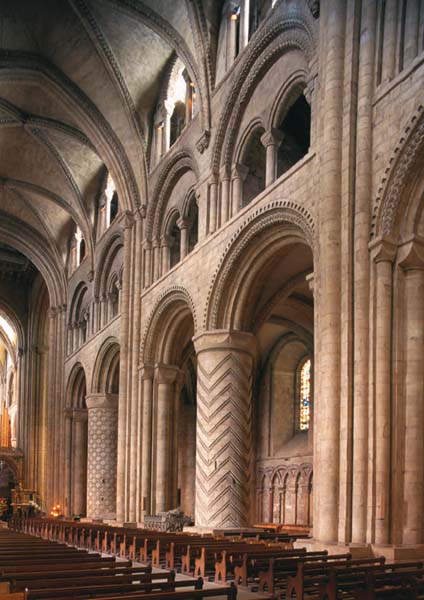
Post-Conquest fusion. The nave of Durham Cathedral, begun after 1093, combines Norman Romanesque grandeur with English decoration.