
Bannockburn established the military ascendency of the Scots over the English that was maintained for the rest of King Robert’s reign. The battles of Myton-on-Swale in 1319, Old Byland in 1322 and the affair of Stanhope Park in 1327 inflicted humiliating reverses on the English. These were small-scale affairs that relied on surprise, mobility and the mercurial leadership of Bruce and his lieutenants for their success. The Scots leaders nevertheless knew that the victory at Bannockburn had been due to a combination of pikemen, archers and light cavalry acting in concert on favourable ground and continued to exploit this knowledge. King Robert died in 1329, James Douglas was killed in Spain in 1330 and with the passing of Moray in 1332 the Old Guard was no more. The lesson of Bannockburn became clouded and the Scottish leadership put their faith in the unsupported charge of the schiltrons of pikemen alone. But the English, who had learned the hard way, had learned well, as Sir Andrew Harcla demonstrated at Boroughbridge in 1322. Harcla dismounted his knights and men-at-arms and formed them into a schiltron, flanked by archers. The Lanercost chronicler observed at the time that Harcla fought in the ‘Scottish fashion’, but soon this irresistible combination of archers and dismounted men-at-arms would become known as the English manner of fighting. When Edward III ascended the throne of England in 1328 war was soon resumed with the Scots, who realised to their cost that it was the English that had taken the lessons of Bannockburn to heart. Never again were the ill-disciplined English cavalry to charge headlong on to the pikes of the Scottish schiltrons. The Scottish debacle at Dupplin Moor in 1322 was not only a forerunner of the even greater disaster of Halidon Hill the following year but heralded years of defeat at the hands of the English. At Halidon Hill the fully-developed tactical combination of archers and dismounted knights and men-at-arms, in a carefully chosen position and led by the King himself, came into its own. The onslaught of the schiltrons of pikemen stalled in the face of the storm of arrows from the wedges of English bowmen and with their ranks decimated they recoiled and fell back as the English men-at-arms remounted and charged, turning bloody defeat into a headlong rout. English battlefield tactics had in less than 20 years evolved into a battle-winning formula that would be repeated in France during the Hundred Years War. The Scots, meanwhile, had forgotten the lessons of Robert Bruce and the years of victory.
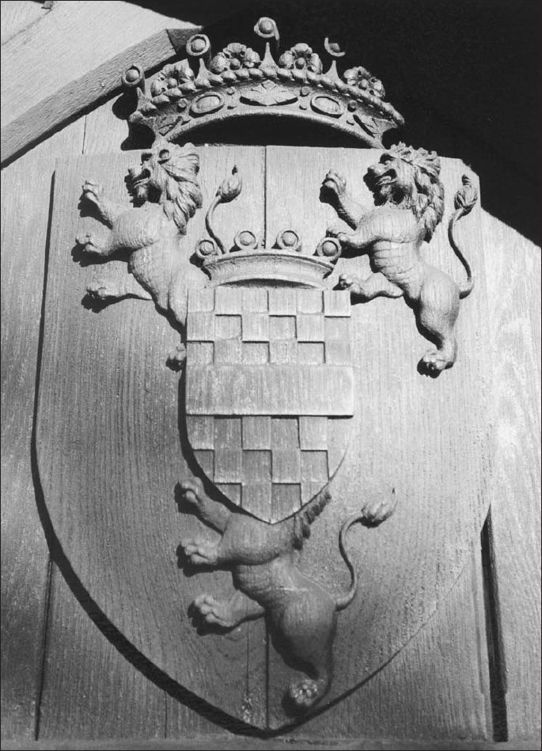
The arms of Sir Robert Clifford, displayed on an ancient building in Appleby, remind visitors to the old town of its Clifford connections.