
Germany’s victory on the Eastern Front had been in doubt from the day of Sixth Army’s surrender at Stalingrad in early February 1943. Recovery from this disaster was temporary, however, as the failure of the Axis offensive at Kursk in July 1943 placed the initiative firmly in the hands of the USSR.
In January 1944 Hitler’s forces on the Eastern Front were divided into three sections. Army Group North was responsible for the line from the Baltic coast in suburban Leningrad south to Vitebsk, where the forces of Army Group Centre took over as far as a point north-west of liberated Kiev. Here was the scene of the severest fighting of spring 1944 as Army Group South fell back, leaving the Crimea isolated and Romania threatened.
Army Group North was driven back from Leningrad into Estonia during early 1944. Axis success between 1941 and 1943 had generated a new wave of recruits from the Baltic States of Estonia and Latvia as well as hundreds of thousands of disaffected individuals from various parts of the Soviet empire. Ukrainians, Cossacks and Russians who preferred the ‘delights’ of Nazism to the known horrors of Stalinist dictatorship signed up to serve in national formations, attached themselves to regular Axis units or joined Ost (East) battalions. In late 1943 many of the latter were sent to serve in western Europe at the same time as the Italian and Spanish troops were returning home. The support of the Finns, Hungarians and Slovaks was questionable and only the Romanians who formed a large part of Army Group South appeared to be reliable.
Following the Allied invasion of Italy during the summer of 1943 Hitler’s attention turned more and more to the west. In November that year he issued Directive 51 stating that the Western Front would have priority in arms, men and equipment as it would be possible ‘to lose ground [in the east], even on a large scale, without a fatal blow being struck to the nervous system of Germany.’ On 26 March 1944 Soviet forces reached the 1940 border with Romania, threatening Germany’s best source of oil at Ploesti. With the coming of the thaw, operations on the Eastern Front ground to a halt in the morass of the rasputitsa – the muddy season. Both Axis and Soviet forces now prepared themselves for the summer’s operations.
However, before the Red Army could unleash its greatest operation of the war to date – Operation Bagration – the Western Allies invaded France, the long-anticipated Second Front was a reality and brought with it Hitler’s nightmare scenario, war on two fronts.
Operation Bagration began on 23 June 1944 and within a month had virtually destroyed Army Group Centre, almost isolated Army Group North on the Baltic coast and pushed the front line forward by 560km. The Soviet advance had almost reached East Prussia and men were massing within sight of Warsaw and the tops of the Carpathian Mountains, beyond which lay Slovakia and Hungary. As the summer drew on, Romania was invaded, changed sides and was abandoned by Army Group South. During the course of the next two months Greece and Bulgaria were evacuated and a pro-Allied coup in Slovakia broke out. The fate of the Slovaks who revolted was similar to that of the Polish partisans in Warsaw; they were crushed after a heroic effort. Hungary, ruled by a pro-German fascist regime since May that year, was Germany’s only remaining ally as the Finns had also turned on their erstwhile partners during the summer. With the loss of Romania’s oil resources Germany was now reliant on synthetic oil production or the tiny oilfield west of Budapest in Hungary. Hitler regarded the retention of Hungary’s oil as vital. During the autumn of 1944 Soviet efforts were concentrated in pushing through the Balkans to link up with Tito’s partisan movement in Yugoslavia, the push into eastern Hungary and Slovakia and the retention of the their bridgeheads over the Vistula river, which were subjected to furious attacks.
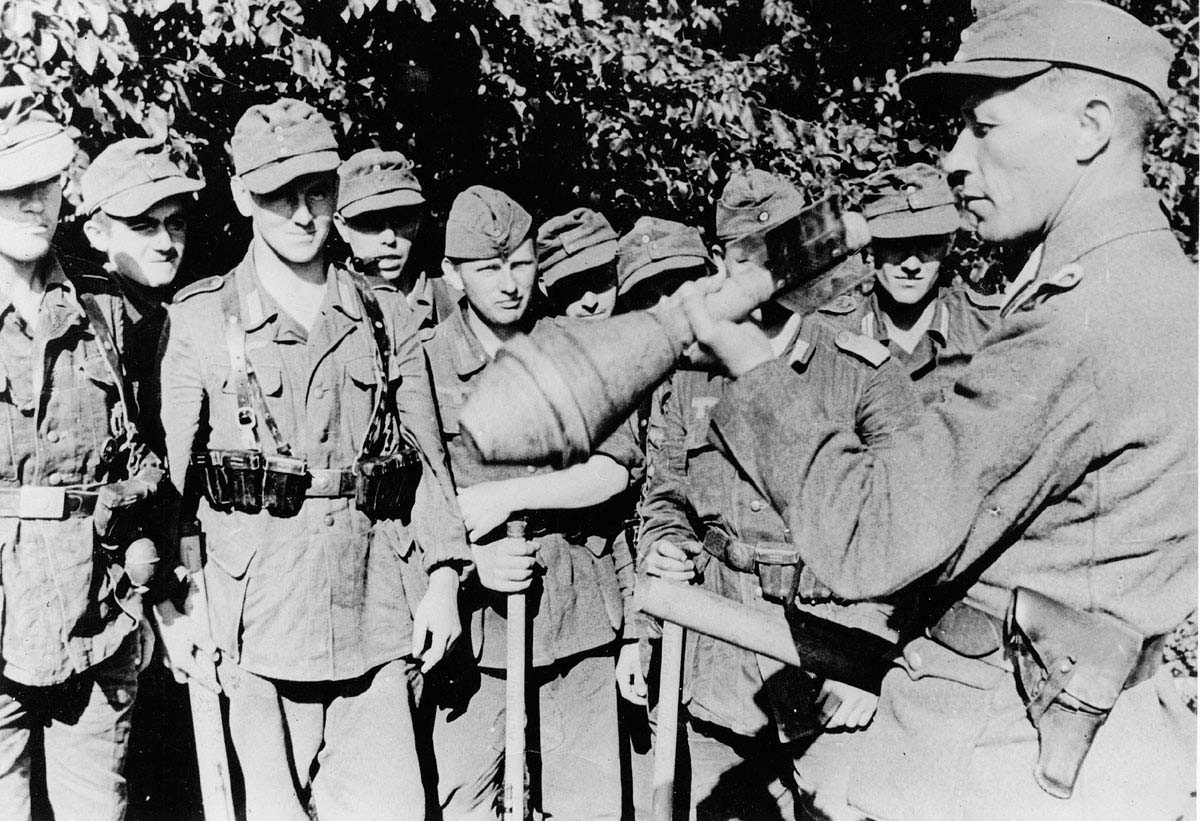
By the middle of 1944 Germany was reduced to calling for 16-year-old volunteers from the Hitler Youth organisation to fill the ranks of its depleted infantry divisions. Youths such as these were drafted into units, such as Volksgrenadier formations, to bring devotion and enthusiasm to the ranks. The Volksgrenadier divisions were supposed to undertake a defensive role. The trainer is showing the recruits how to operate a Panzerfaust anti-tank weapon.
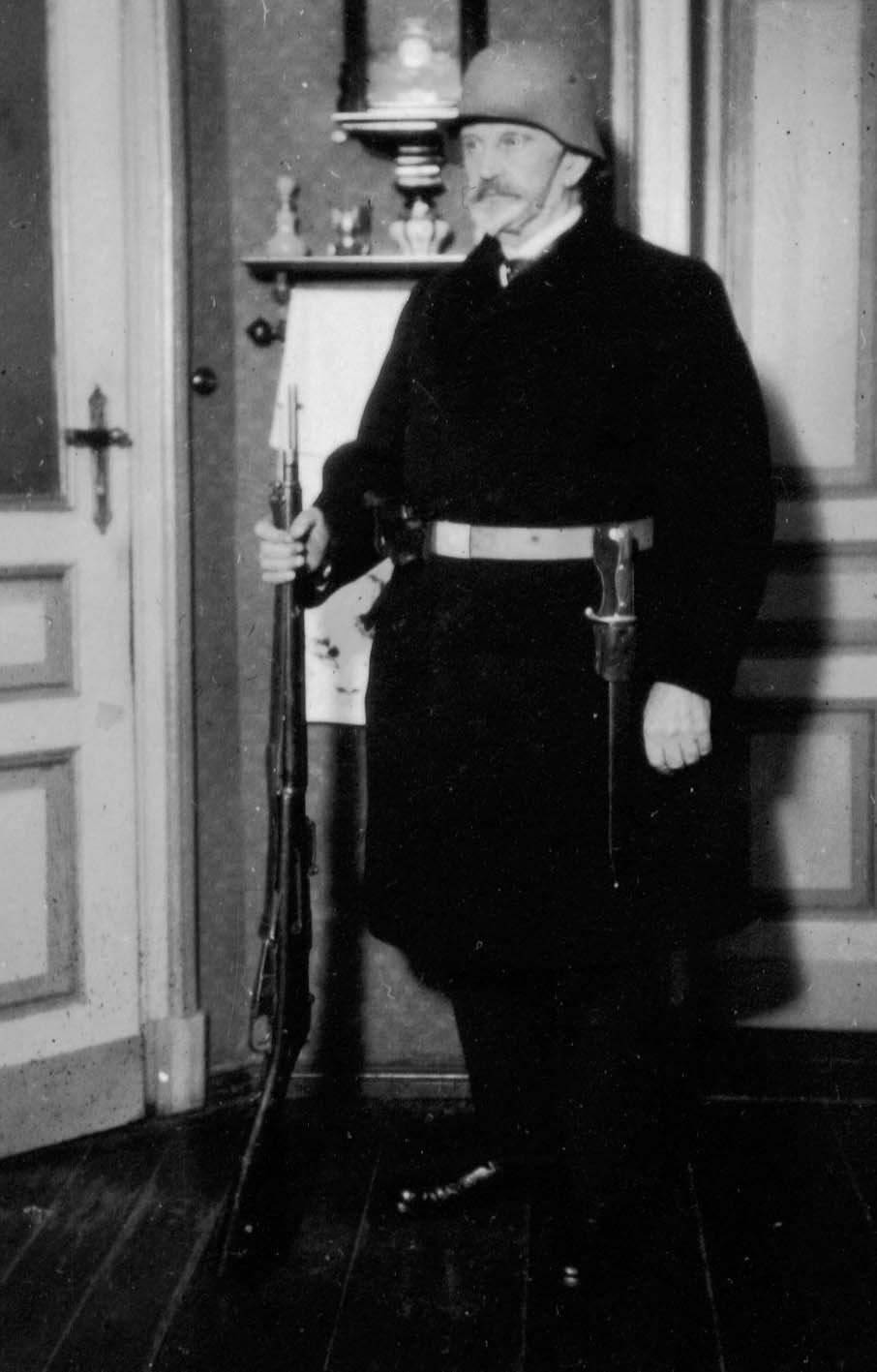
In late September 1944 conscription was extended to include those up to the age of 60. Dozens of so-called Volkssturm battalions were formed. Lacking uniforms, the men were issued with brassards to give them some semblance of belonging to the army. From the outset the Volkssturm was subject to the authority of the Nazi party. Armament was a matter of what was available locally.
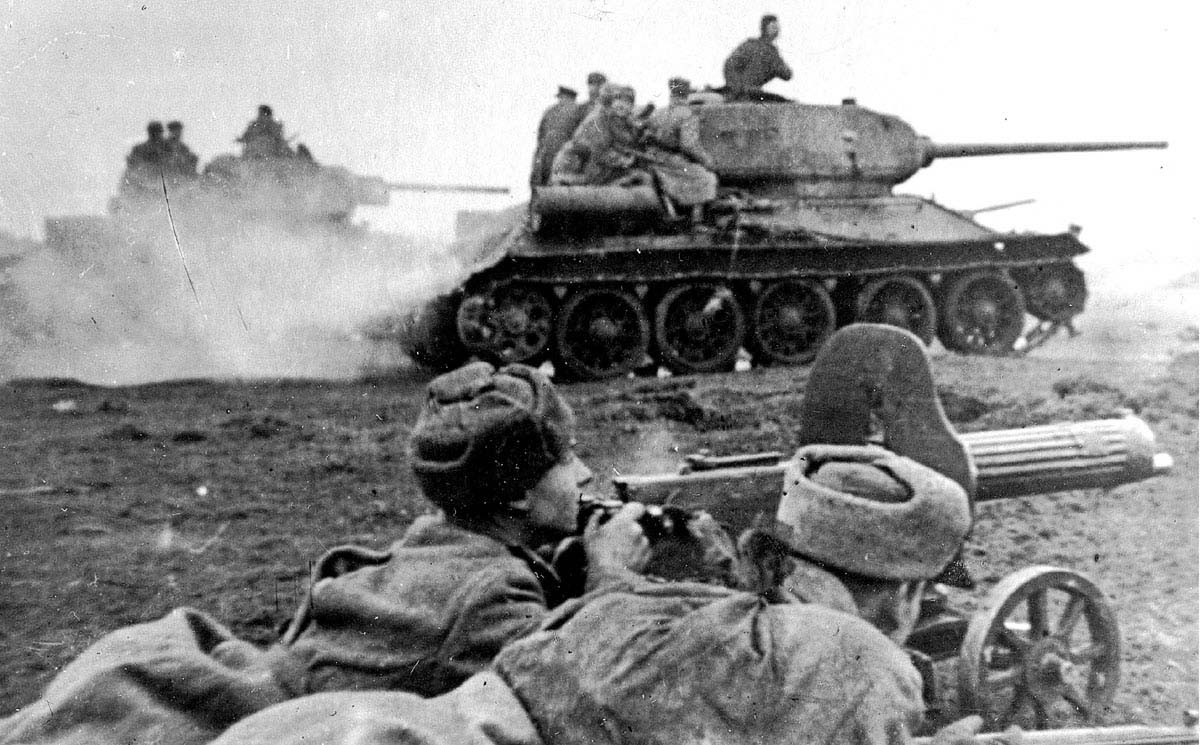
With tank desant men clustered behind its turret a T-34 with a long 85mm gun gathers speed during a Soviet operation in the Balkans. Introduced in 1943, the T-34/85 was the equal of Germany’s Panther and perfectly capable of destroying the Tiger I. Tank desant men were expected to jump from the tank and engage enemy infantry or gun positions.
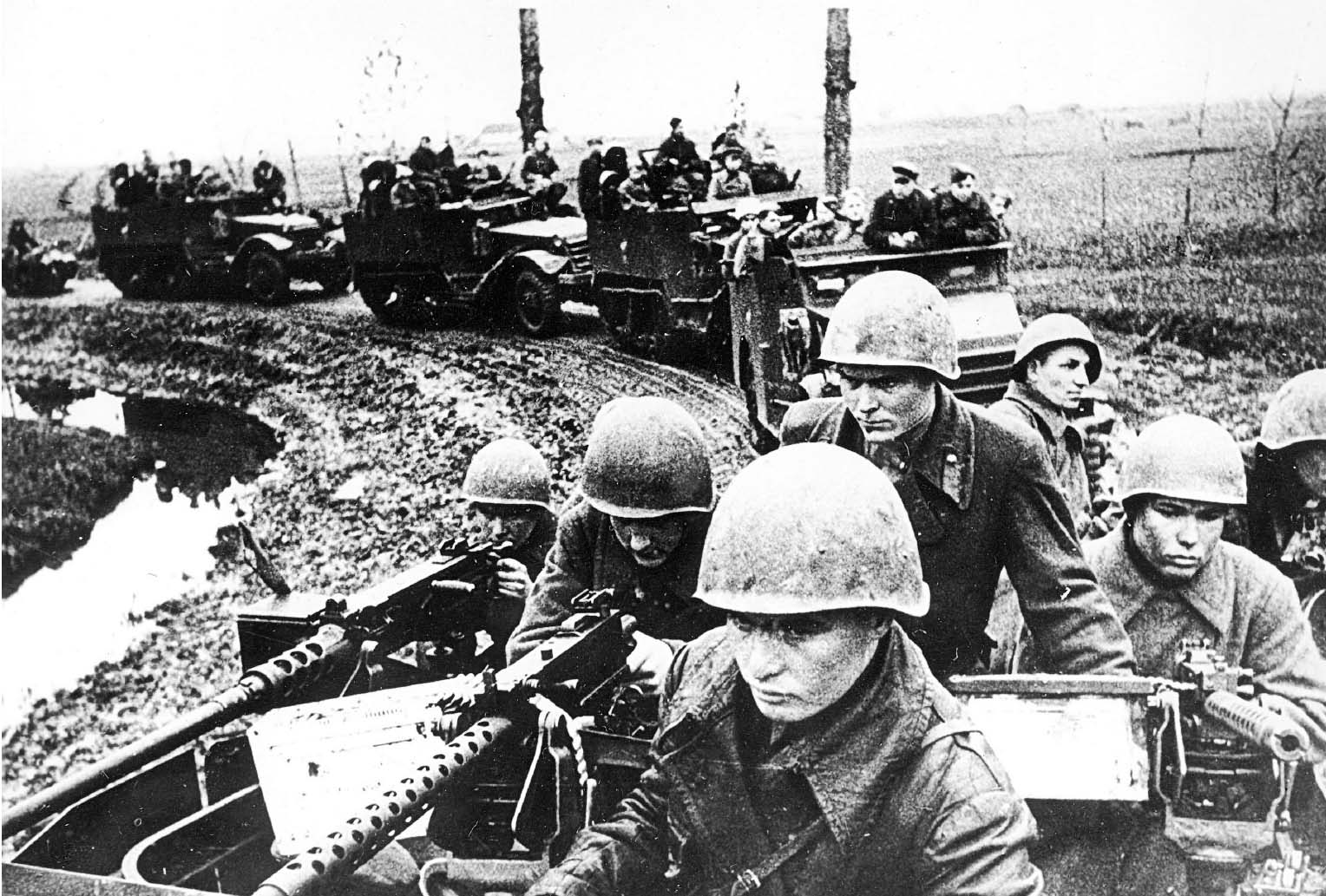
Soviet paratroopers, mounted in Lend-Lease US-built M3 half-tracks, set off on a reconnaissance in force somewhere in Poland. The vast number of lorries and vehicles such as these shown gave the Red Army the ability to operate and maintain supply lines over far greater distances than could their Axis opponents. Soviet paratroopers were by 1944 used exclusively for ground operations.
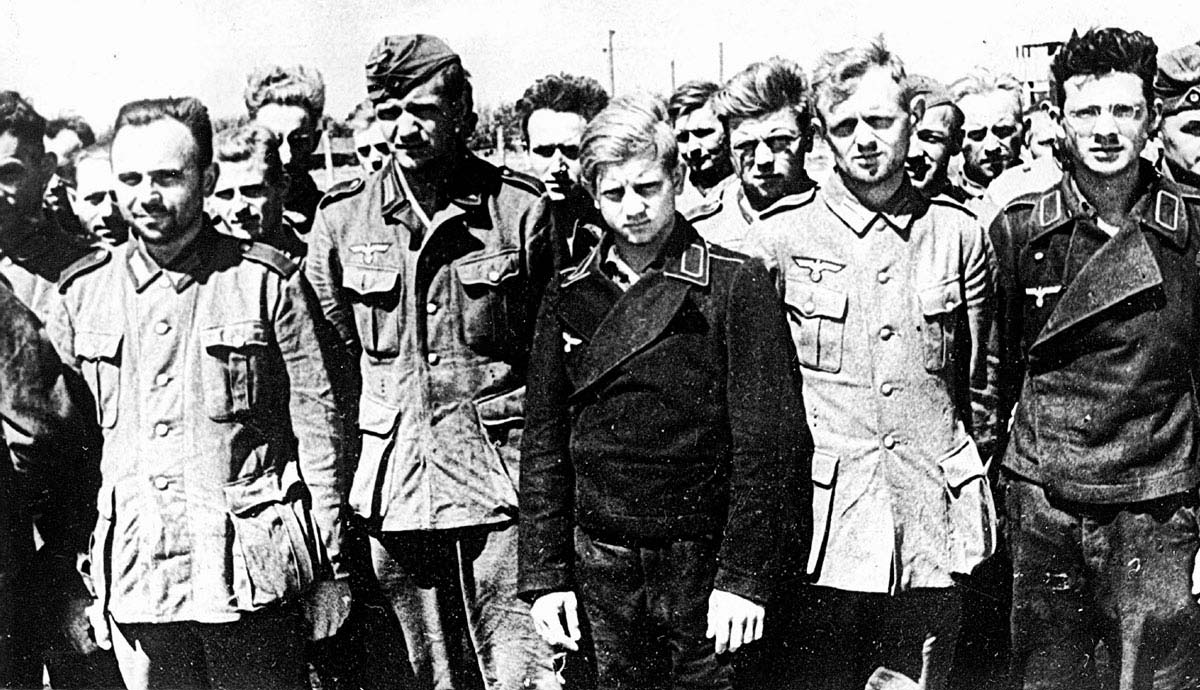
German prisoners of war (POWs) seen during the summer fighting on the Eastern Front. Many would work rebuilding the shattered infrastructure of the USSR for the next decade.
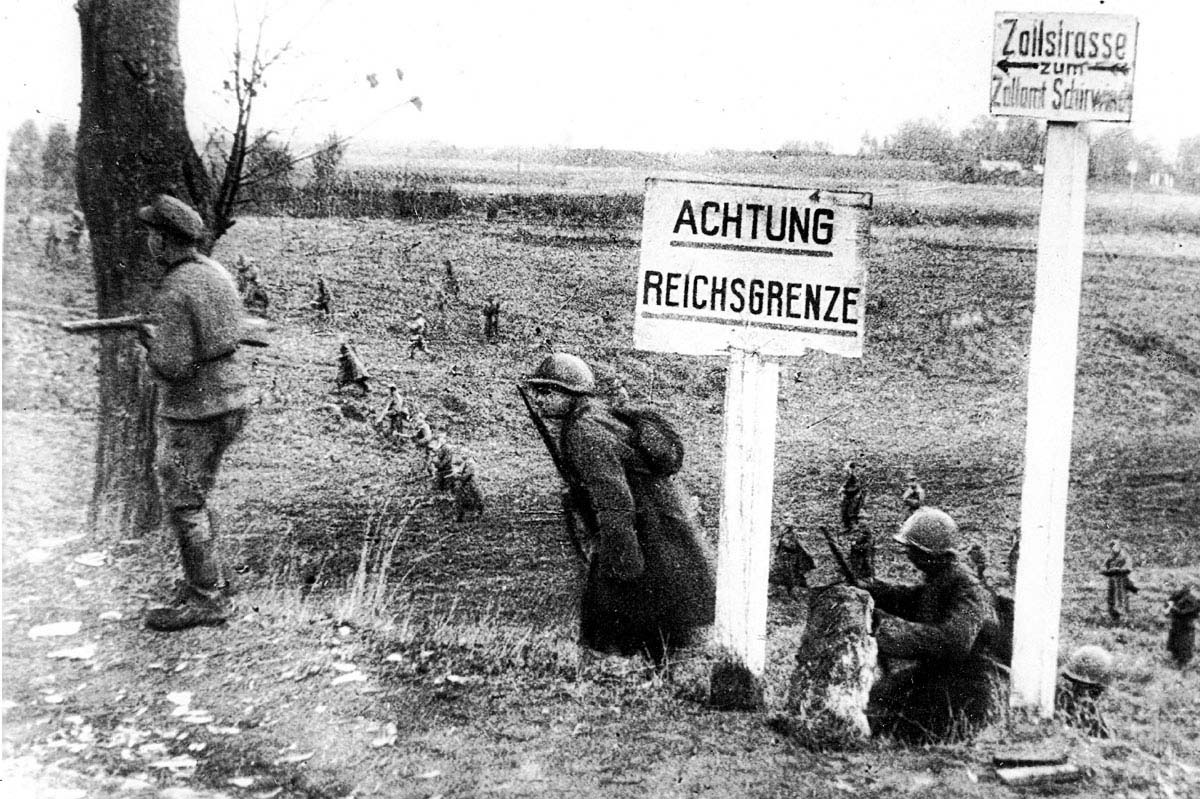
The Red Army crossed the German border, as re-enacted here, briefly in August 1944 but it was not until mid-October that serious fighting began in East Prussia. The Soviets were rebuffed but news of the atrocities committed there was trumpeted far and wide in an attempt to bolster German determination to fight on.