
Chapter One
Ranged along the Eastern Front, from the East Prussian coast to the borders of Yugoslavia, the Red Army presented a series of fronts (army groups). From north to south these were as follows: First Baltic Front, Third Belorussian Front, Second Belorussian Front, First Belorussian Front, First Ukrainian Front, Fourth Ukrainian Front, Second Ukrainian Front and Third Ukrainian Front. Facing them were Germany’s Army Group Centre, Army Group A, Army Group Heinrici, Army Group South and Second Panzer Army. Army Group South included the bulk of the Hungarian Army.
During 1943–4 Stalin, as Supreme Commander, had allowed his Front commanders increased autonomy but, as the borders of the Reich hove into sight, he began to reassert his own authority and that of his General Staff (Stavka) as well as increasing the influence of the political commissars (politruk). Stalin was dedicated to assuring the USSR was rewarded for its human and economic losses over the past 42 months. The crucial element in that compound was drawing the Balkan and central European states into his sphere of influence. But overriding those factors was the capture of Berlin and the destruction of Nazi Germany.
Hitler, on the other hand, had increased his direct influence on operations at the front, insisting that no ground be given up, even temporarily, but also withdrawing further and further into a world of fantasy where powerful secret weapons would snatch victory from the jaws of defeat. Focussed as he was on events on the Western Front, Hitler had blinded himself to events in the east.
Planning the breaching of Germany’s defences and its ultimate destruction was carefully undertaken. Stalin had learned from his mistakes earlier in the war that it was essential not to overextend the supply lines. Therefore, before any operation began it was vital to rebuild and upgrade the transport infrastructure behind the lines. Consequently, hundreds of thousands of POWs and civilians were put to work repairing the destruction wreaked by the retreating Germans. Nothing was to be left to chance as Stavka was convinced that the Germans would fight with fanatical fury once their homeland was in danger.
During October 1944 Stalin began to plan for the invasion of Germany. The Soviets had the choice of two routes. From the south Second, Third and Fourth Ukrainian fronts could take Budapest, Vienna and Prague, and advance from Bohemia west of the Oder river to Berlin.
However, this would involve much mountainous terrain and horrifically extended supply lines. Fourth Ukrainian Front’s slow progress through Slovakia was demonstrating how difficult such a course of action could be. The alternative, using First, Second and Third Belorussian and First Ukrainian fronts driving westwards across Poland and East Prussia, seemed a more feasible route as the land was flatter and the infrastructure already in place. Furthermore, the troops of the latter fronts were rested, having seen action less recently than those to the south.
Following discussions with Zhukov and Rokossovsky at the end of October Stalin concluded that the main blow would be struck to the north and south of Warsaw. Therefore, it was to this end that First Ukrainian and First Belorussian fronts, commanded by marshals Konev and, from November, Zhukov, respectively, would be built up on an unprecedented scale. First Belorussian Front would then attack towards Poznan and First Ukrainian Front would push towards the Oder river north of Breslau. Simultaneously, Third Belorussian Front, supported by Second Belorussian Front, would drive into East Prussia. Both Konev and Zhukov would have to attack out of the three bridgeheads they held across the Vistula river.
In mid-November Stalin informed the relevant Front commanders that the Polish operation would begin between 15 and 20 January 1945 and that they would, having been given their objectives, plan their strategies. Stalin himself took responsibility for co-ordinating all the fronts involved.
As December began so did the movement of men and munitions into the assembly areas of First Belorussian and First Ukrainian fronts. During the next few weeks both fronts were reinforced to an overwhelming degree. By the eve of the offensive the combined strength of both First Ukrainian and First Belorussian fronts was a massive 2,200,000 troops, 4529 tanks, 2500 assault guns, over 28,000 field guns and mortars, almost 5000 anti-tank guns, 2200 Katyusha rocket launchers and some 5000 aircraft.
Ranged against this, Guderian could muster along Army Group A’s 700km front, from north of Warsaw into the Carpathian and Beskid mountains, 400,000 men, 5000 guns and mortars, less than 1200 tanks and assault guns and 515 aircraft. When Hitler said, ‘The Eastern Front has never before possessed such a strong reserve as now’, on 9 January, he was looking at a map dotted with flags indicating burned-out, under-strength, poorly equipped formations that were divisions and corps in name only. Volksgrenadier formations, formed from combed-out factory workers during the summer of 1944, and foreign units such as Vlasov’s Russian Liberation Army, made up much of the paper strength that the Fuhrer alluded to.
The commander of Army Group A, General Harpe, led a force that comprised three groups from north to south, Ninth Army, Fourth Panzer, and Army Group Heinrici, which included First Panzer and First Hungarian armies, and Eighteenth Army.
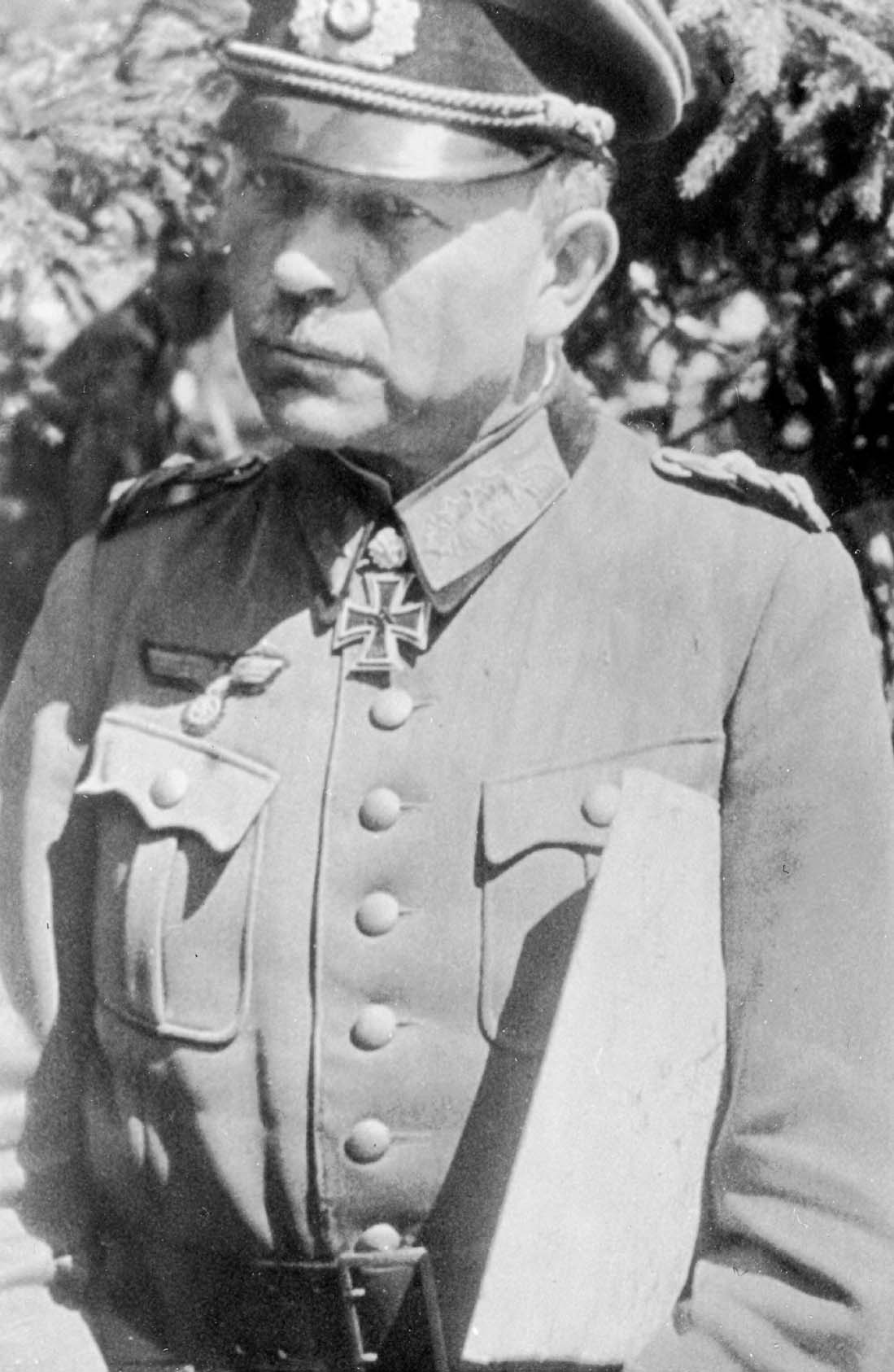
An image of Colonel General Heinz Guderian, Chief of Staff of the Army General Staff (OKH), taken in less onerous times for Germany. Guderian was responsible for the Eastern Front from 21 July 1944 until 28 March 1945 when Hitler ordered him to take six weeks’ sick leave. A master of armoured warfare, Guderian surrendered to the Americans.
East Prussia and north-eastern Poland was defended by the remains of the old Army Group Centre under General Reinhardt with almost 600,000 men, 700 armoured vehicles and 500 aircraft. It was believed that the heavily fortified and wooded ground of this region would go some way towards offsetting the weakness in armour.
Hitler, frustrated by the failure of the Ardennes offensive, was convinced there would be no Soviet offensive in Poland and was not prepared to believe the intelligence reports of the Red Army’s build-up. Indeed, he was preoccupied with the fate of Fortress Budapest and the tiny oilfield to the west of that city. It was to raise the siege of Budapest that he, without discussing the matter with Guderian, transferred IV SS Panzer Corps to Hungary from its position in reserve north of Warsaw.
Whereas the Soviet plan was to attack, the German plan was simply to survive by defending as furiously as possible. But the weakened front was not allowed the privilege of arranging its own defence. The front line was to be thickly held and the reserves, including armoured formations, were to be no more than 25km behind the front line. This was not defence in depth; it was merely a brittle line and one that the Soviets intended to snap in short order.
On 11 January the Germans intercepted a Soviet radio transmission that ominously declared, ‘Everything ready’. Indeed, it was.

The Soviet infantry along the Vistula river passed a reasonably quiet New Year. As one veteran recalled, time was spent, ‘making up for lost sleep, examining the weapons for any possible faults...there was no training of any kind.’ Here a group of men enjoys a mid-day meal and relatively clement weather.

A German infantry unit moves into its positions near the front line in a forested area along the banks of the Vistula river south of Warsaw during January 1945. The men are collecting their weapons from a pair of the ubiquitous panje wagons that supplemented the Wehrmacht’s motorised transport due to their unrivalled ability to negotiate the brutal off-road conditions in the east.
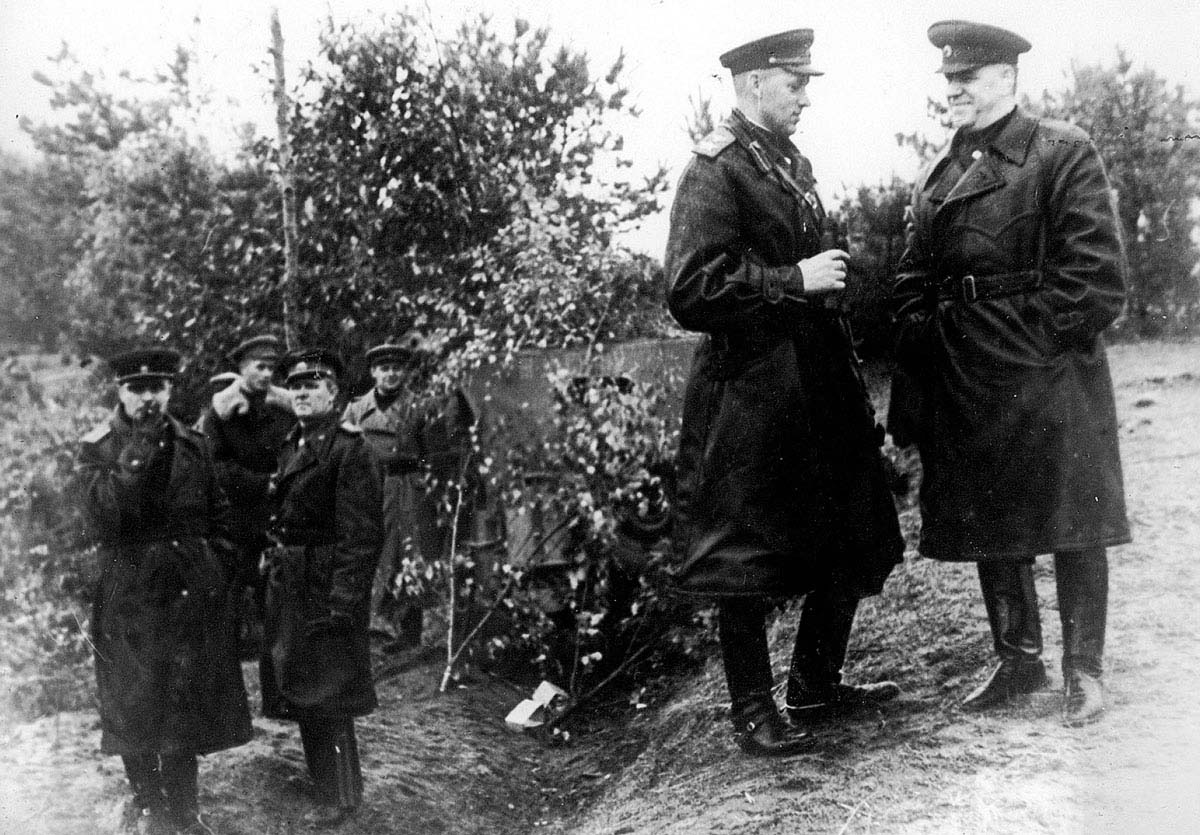
Rokossovsky and Zhukov converse, with Konev in the background. These three marshals of the Soviet Union were veterans of the Tsarist Army and upon enrolment in the Red Army had climbed the promotion ladder. As a Pole Rokossovsky was sidelined during the final advance on Berlin as Stalin exploited the rivalry between Konev and Zhukov. Both Rokossovsky and Zhukov were cavalrymen, whereas Konev was a gunner.

The continual stream of reinforcements and material into the rear areas of both First Ukrainian and First Belorussian fronts turned the snow-covered ground into a morass of mud. The strain that movement in such conditions placed on both men and machines is clear from this image. Around-the-clock work to reinstate the railways did somewhat alleviate such problems.
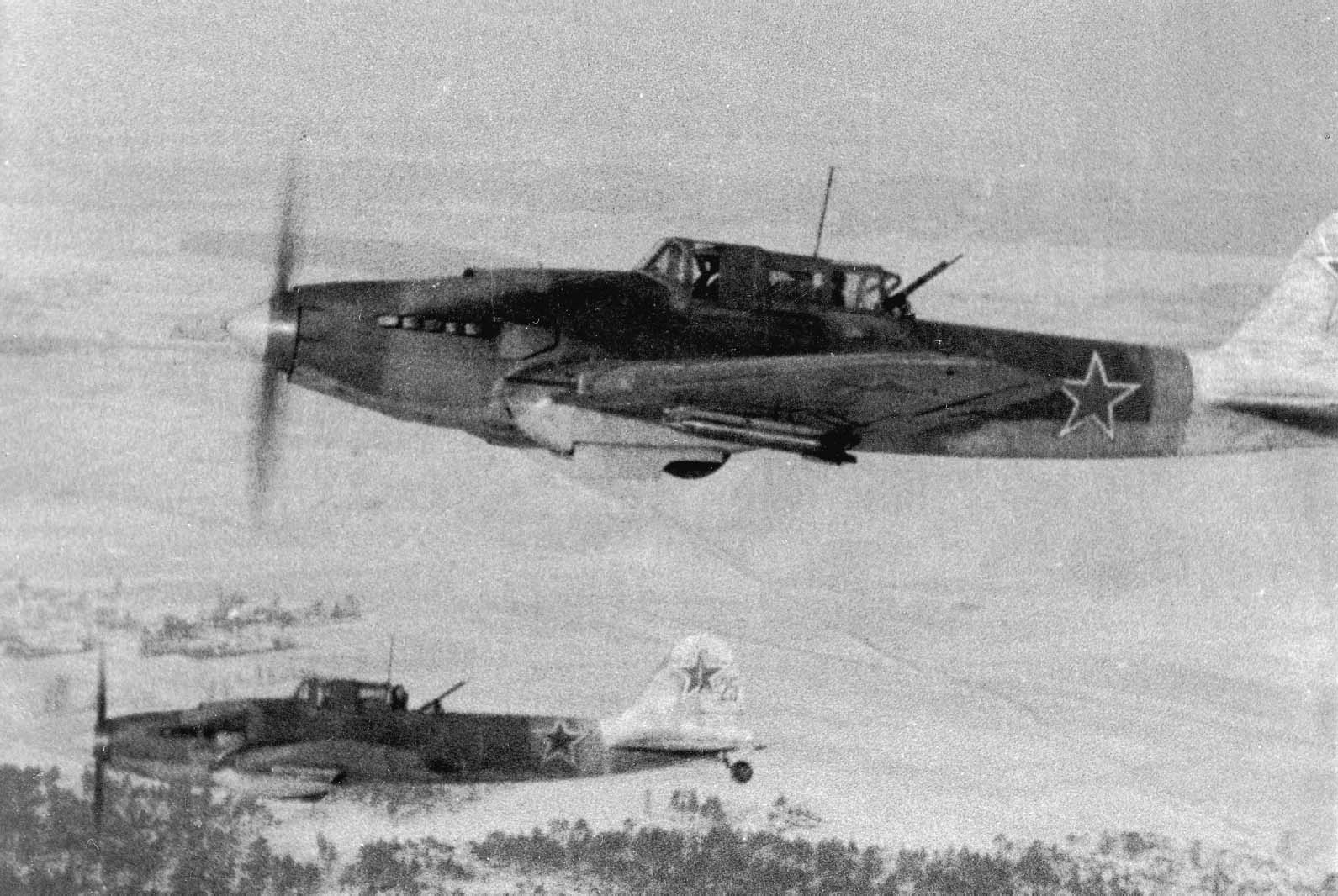
By 1945 the Red Air Force controlled the skies over the Eastern Front. The withdrawal of Luftwaffe units to protect the cities of Germany from the Anglo–American bomber offensive, and the lack of aviation fuel, gave the Soviets the freedom to fly at will and to provide total air cover to the build-up for the offensive. Here a pair of Il-2M Shturmovik aircraft fly over Poland. Both are armed with eight RS-82 rockets for a ground-attack mission, one of which was capable of knocking out a Tiger I or a Panther.
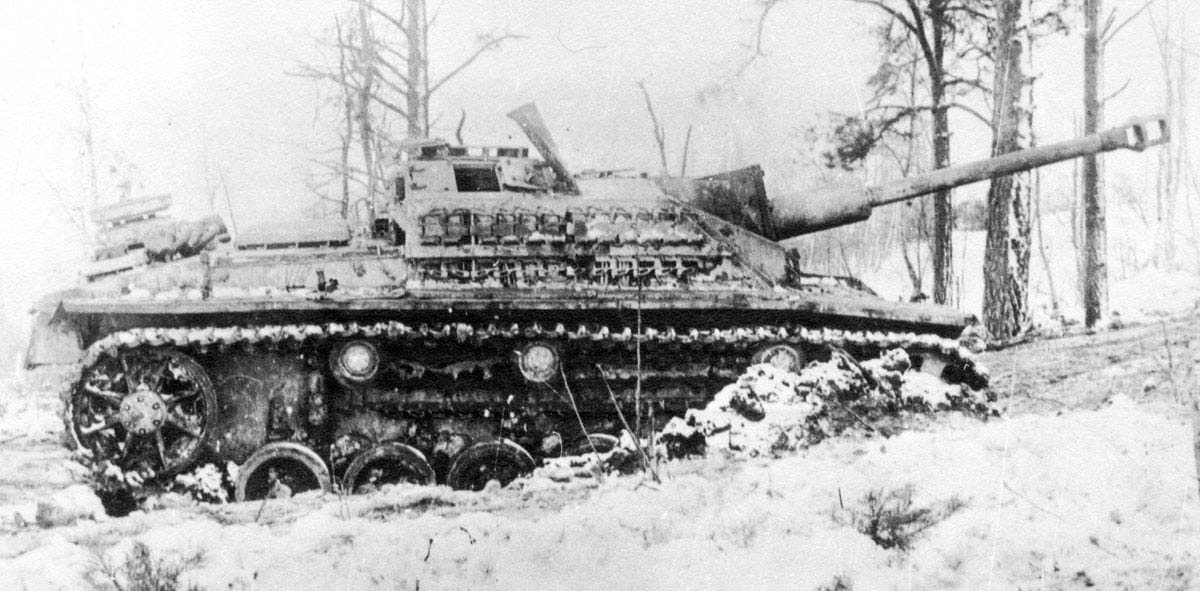
A StuG III Armoured Fighting Vehicle (AFV), partially dug-in on a reverse slope. The side armour skirts have been removed to prevent the tracks and bogie wheels from jamming up with mud and slush. Armed with a high-velocity dual-purpose 75mm gun, it was, in the hands of an experienced crew, an excellent tank-hunter. However, by January 1945 shortages of armoured vehicles had led to an increasing number of such vehicles being included on the roster of the Panzer divisions.
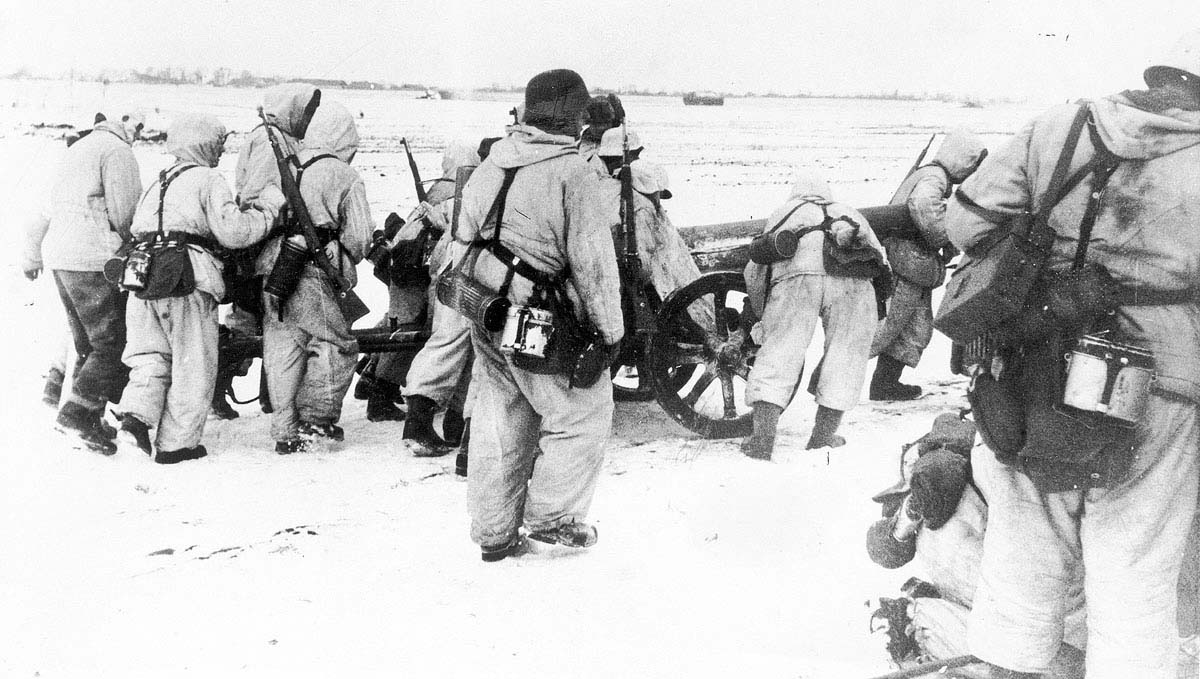
As well as a shortfall in the armour available to them at the Eastern Front, the Germans had a chronic shortage of infantrymen. Those shown here are manhandling a French 75mm gun converted for an anti-tank role.

Despite the relative quiet of the Eastern Front during early January 1945 scouting and reconnaissance continued apace. Here members of the elite razvedchiki (scouts) pose for the camera, re-enacting a mission undertaken in advance of the Magnuszew bridgehead, one of the jump-off points for Zhukov’s First Belorussian Front, the other being Pulawy, to the south.
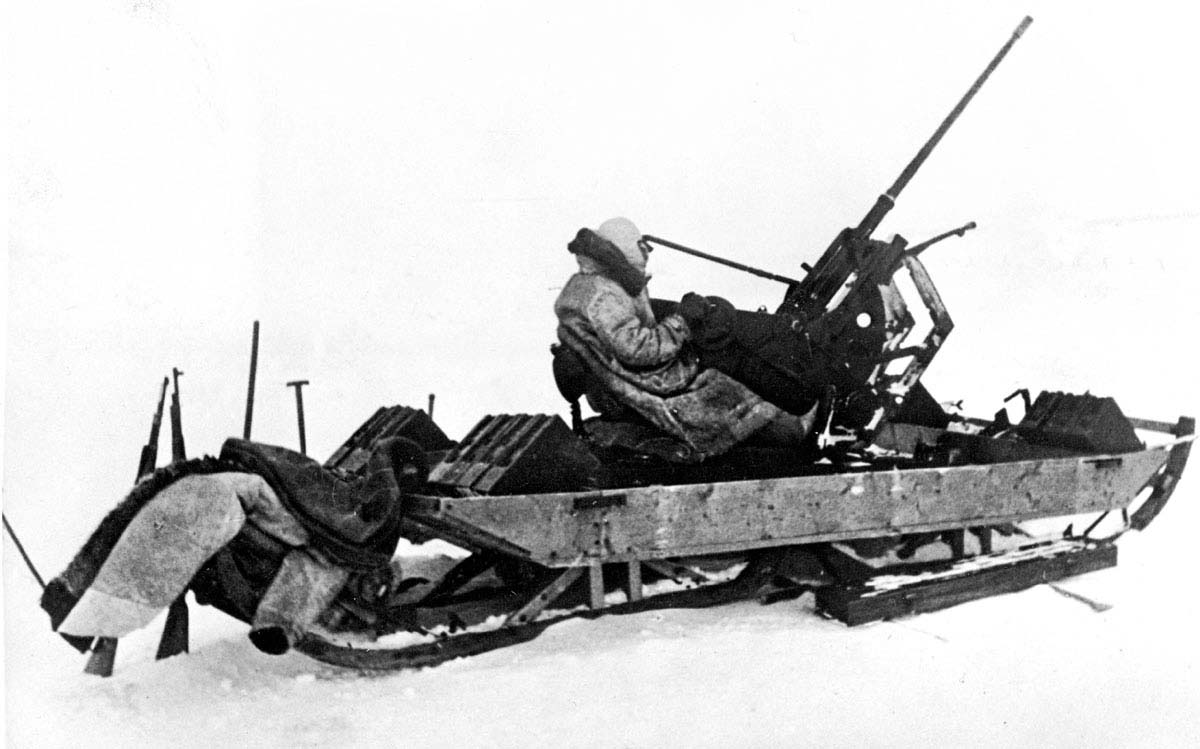
A novel way of providing mobility to a German 20mm anti-aircraft gun is shown here. Warmly dressed in a Russian-style shuba sheepskin jacket, the gunner has no shield to protect him, nor any visible means of shifting position. Nevertheless he is well-provided with ammunition.
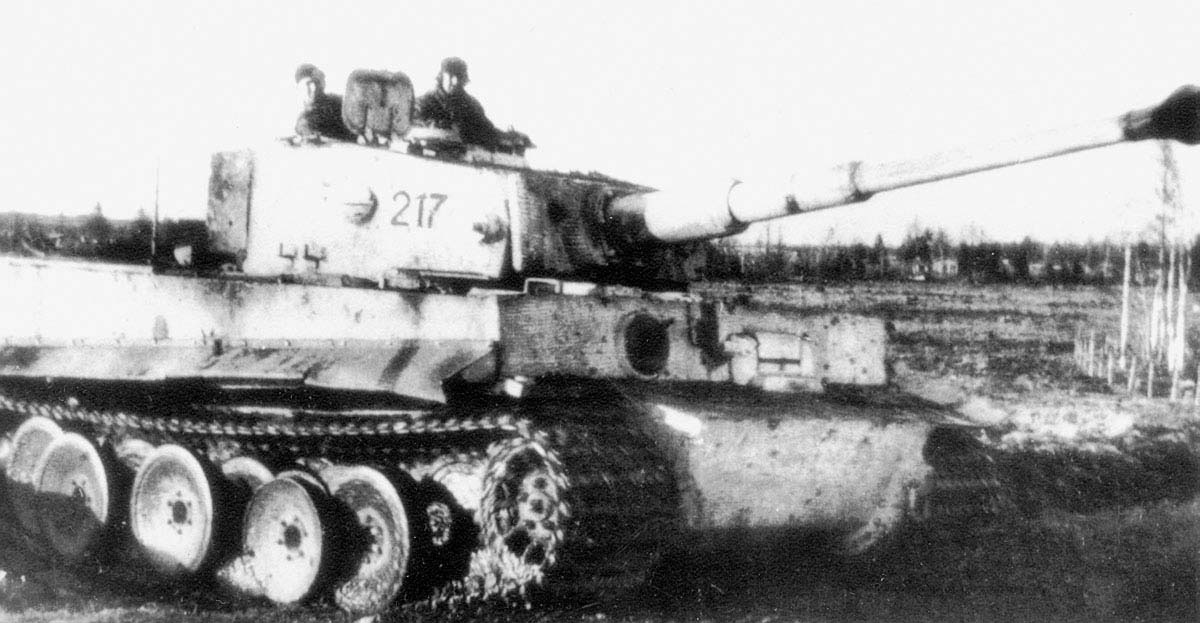
A Tiger I negotiates muddy terrain during one of the three operations mounted in Hungary to raise the siege of Budapest by IV SS Panzer Corps. The 3rd and 5th SS Panzer divisions (Totenkopf and Wiking respectively), which made up this formation, were relatively well equipped. Their withdrawal from Army Group A on Christmas Day 1944 weakened that area significantly.

A unit of line cavalry, accompanied by their wagon-mounted machine-guns (Tachanka), rides past Second Ukrainian Front commander Marshal R.Y. Malinovsky. Part of V Guards Cavalry Corps, these men were in part responsible for stopping the third and final German effort to relieve Budapest in late January 1945.

An artillery unit, part of General I. E. Petrov’s Fourth Ukrainian Front, slogs its way up a wooded mountainside somewhere in the Beskid Mountains in north-western Slovakia. The progress of this front had been painfully slow. Petrov’s Thirty-Eighth Army was earmarked to give support to the attack on Cracow by First Ukrainian Front, reducing his front’s effectiveness. In the face of determined German opposition the operations in Slovakia declined to a stalemate for several weeks.
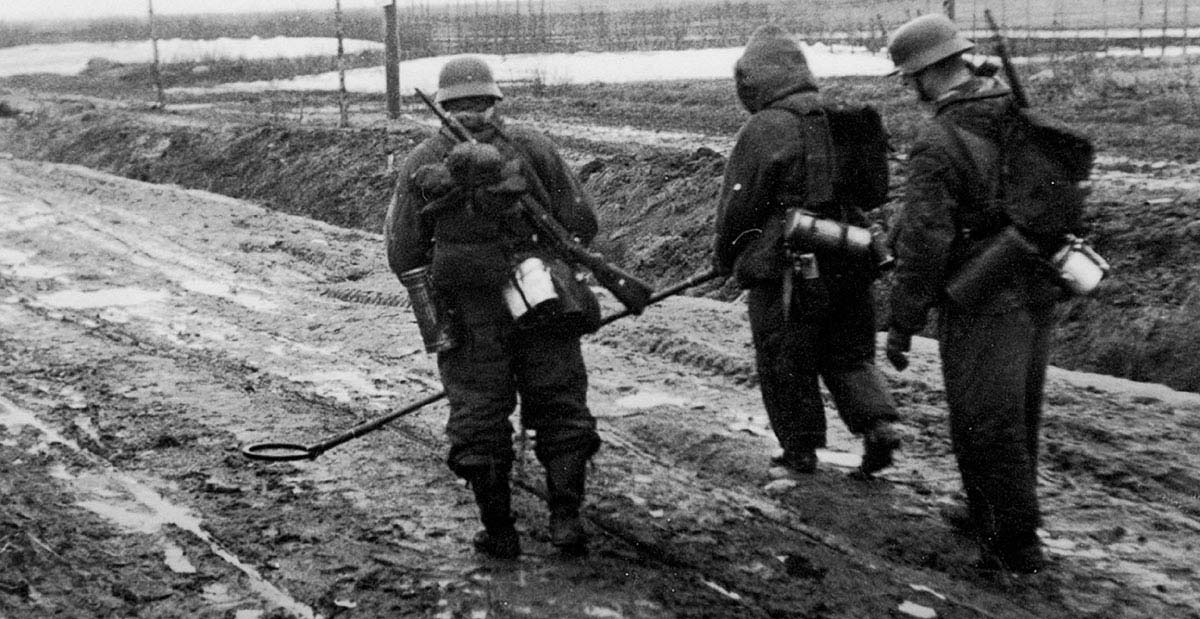
It was always necessary for the German forces in Poland to be alert to the possibility of partisans mining the roads and railways on which they depended. This was particularly important during periods of thaw as mines laid in better weather were likely to rise to the surface. Here a mine-detecting team proceeds cautiously along a road west of Cracow.
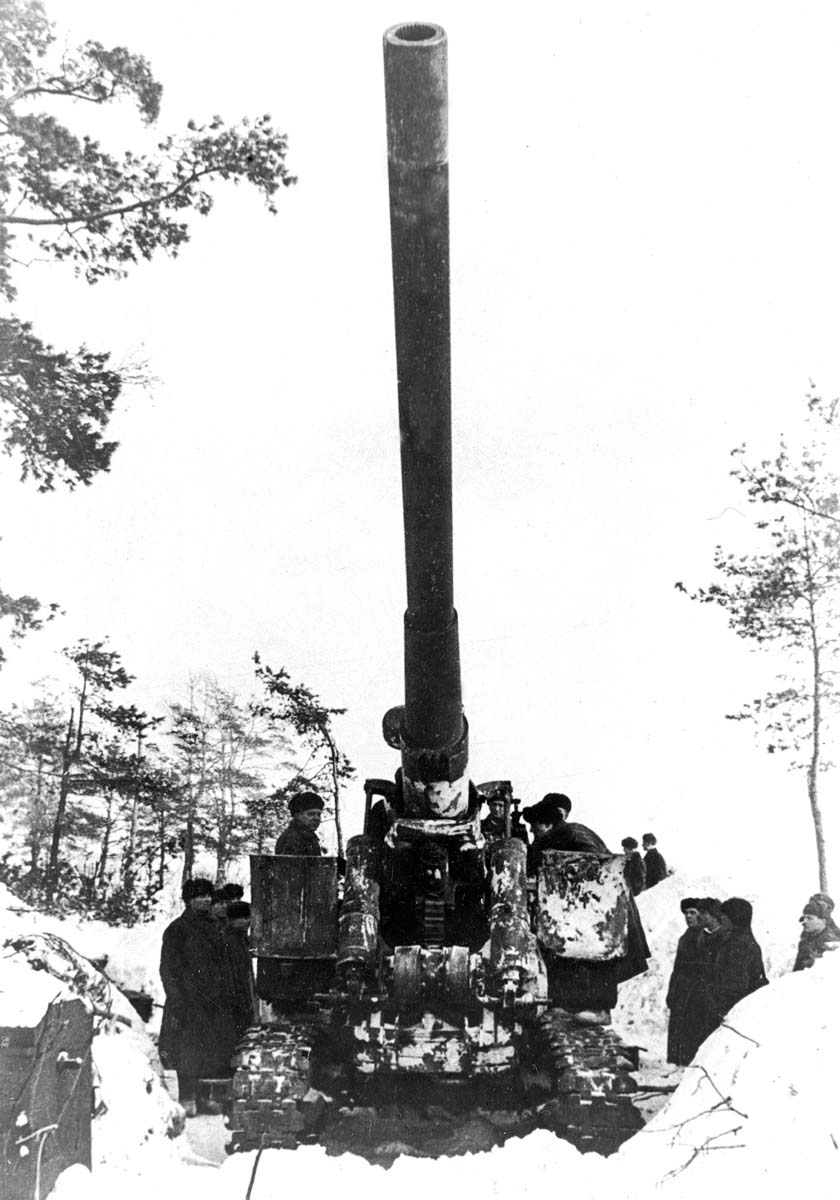
A 152mm Model 1936 gun at maximum elevation prepares to fire a ranging shot. Such heavy artillery pieces were grouped together in specialist formations known as Breakthrough Artillery Divisions. These units were provided with dedicated transport, supply, observation and defensive assets, and operated solely in support of major offensives. The concept of such divisions dated back to the Tsarist army of the First World War.
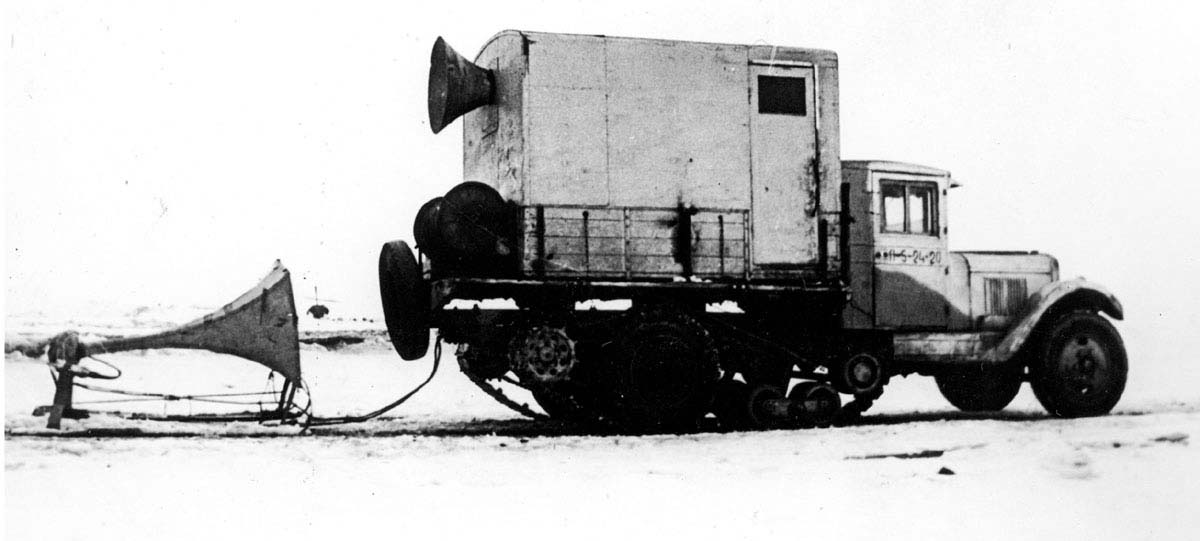
Mobile broadcasting vehicles such as this one were widely used by Soviet propaganda companies to undermine the morale of German troops. Often their broadcasts consisted of monotonous, mind-numbing recordings designed to lull the opposition into a state of catatonia. Alternatively, captured letters were read out describing conditions on the German home front and detailing the loss of loved ones.
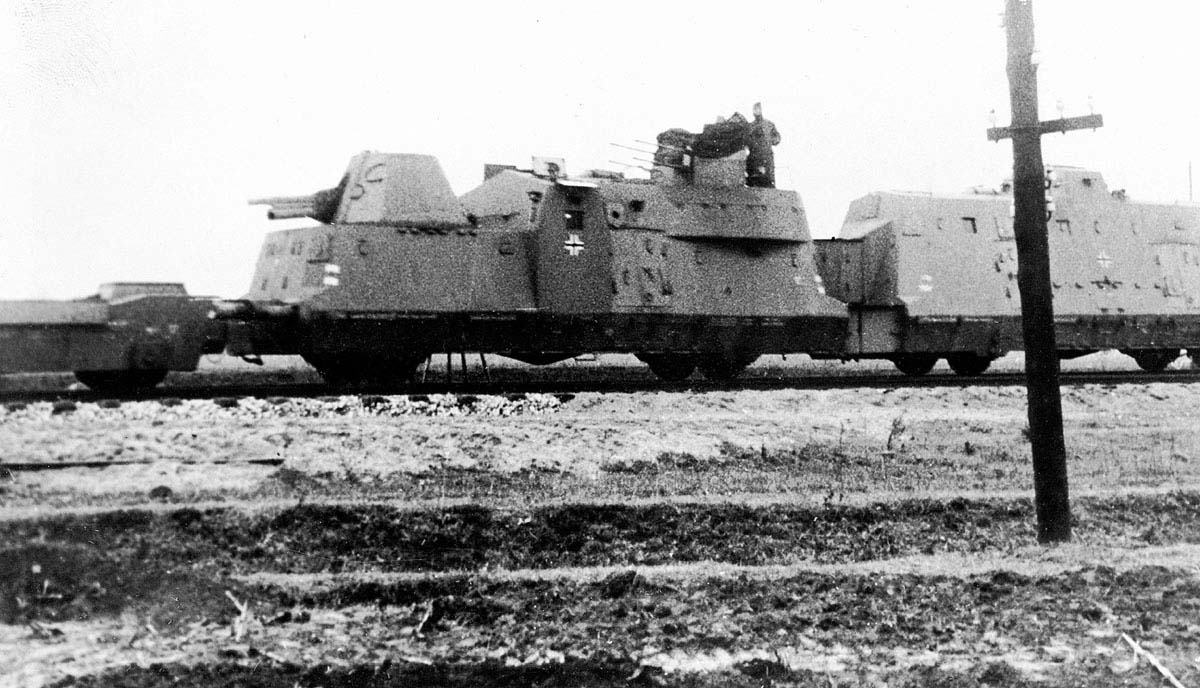
Armoured trains featured in both the Red Army’s and the Wehrmacht’s inventories. This German model BP-42 is patrolling the rear area of Army Group Centre in East Prussia during January 1945. The value of such weapons systems was debatable in times of fluid warfare due to their obvious limitations and vulnerability.
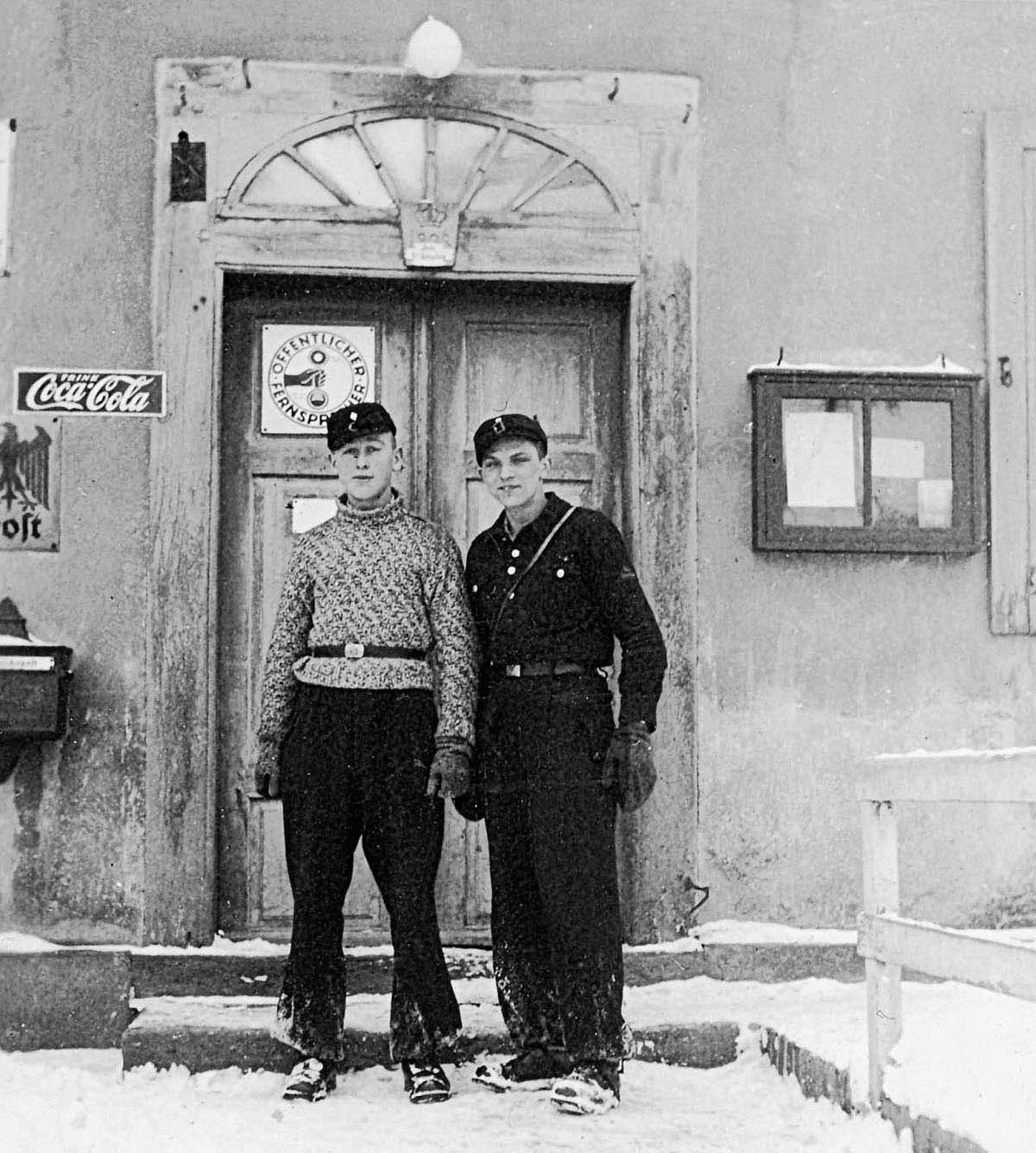
Such was Germany’s manpower crisis that Hitler Youths, such as the pair pictured here, were pressed into the armed forces. In many cases they proved as brave as the hardened veterans whom they served alongside.
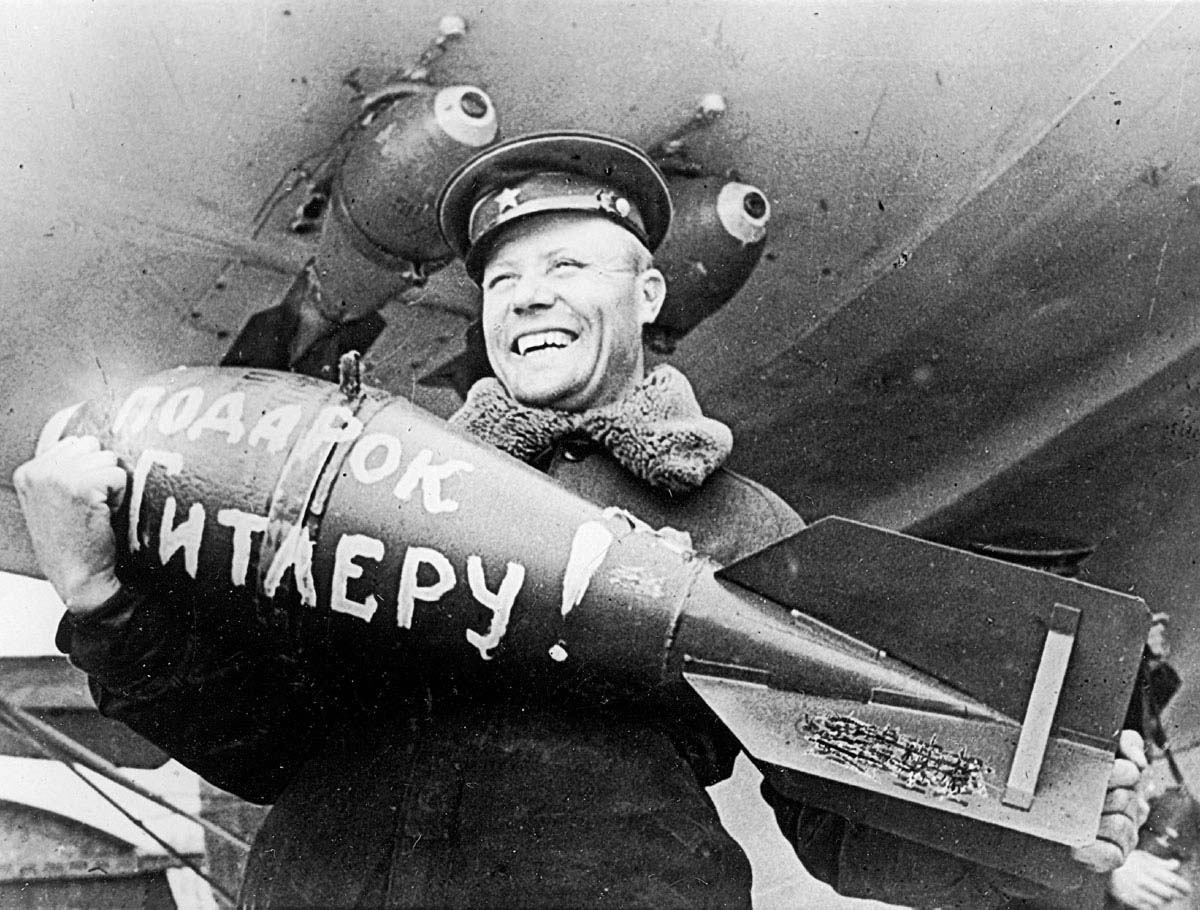
‘A present for Hitler!’