
Chapter Nine
Weidling had surrendered to General Chuikov, entirely appropriately in the minds of many, as it was his valiant defence of Stalingrad that had turned the tide on the Eastern Front, but there were other armies’ surrenders to consider, especially now that Berlin had capitulated, in particular, Army Group Centre in Czechoslovakia.
General Field Marshal Schorner, a particularly devoted Nazi, had signalled Doenitz on 2 May that Army Group Centre was well supplied with munitions and fuel and would head for the Elbe river. However, events overtook Schorner as Konev’s First Ukrainian and Malinovsky’s Fourth Ukrainian fronts bore down on his forces threatening them with encirclement. Then, on 4 May, the population of Prague rose up and broadcast appeals in English and Russian for help in ridding their country of the Germans. Schorner attempted to regain control of the city but at this point the Russians intervened. However, these were not Stalin’s men but Vlasov’s renegade Russian Liberation Army, which had regrouped around Prague after the debacle on the Oder. Having briefly supported the insurgents, the newly convened Czech National Council told Vlasov and his men to go. With the Soviets closing in, representatives of Army Group Centre surrendered to the Czechs in preference to Konev. Caught completely off balance, Moscow only ordered Konev and Malinovsky to move on 6 May. When Soviet overtures to Army Group Centre went unanswered a brief battle took place and on 9 May First Ukrainian and Fourth Ukrainian fronts linked up in Prague. Army Group Centre surrendered the same day, as did German units isolated at the mouth of the Vistula river.
Back in Berlin the days immediately following the garrison’s surrender had been busy ones for the city’s new masters. In keeping with Russian military tradition the general commanding the first troops into a city became its governor. Therefore, this honour fell to General Nikolai Berzarin, commander of Fifth Shock Army, who was appointed to the post by Zhukov on 26 April. What Zhukov and Berzarin did not know was that the city was to become an NKVD fiefdom and the NKVD owed its allegiance to Stalin and not the Red Army. Indeed, it was NKVD and SMERSH operatives from Third Shock Army, chosen to avoid any connection with Berzarin, who took responsibility for the hunt for Hitler and other high-ranking Nazis. Information regarding this matter was denied to Zhukov and his staff.
The bodies of Hitler and his wife were finally discovered on 5 May and promptly smuggled out of Berlin to a SMERSH forensic unit. Dental records confirmed the cadavers’ identities two days later.
As the NKVD combed Berlin for Nazis, great and small, Berzarin busied himself with governing the city. With an army to feed and house he was remarkably tolerant towards the German population. Hospitals were opened, the utilities were restored and civilians cleared the rubble-filled streets, and corpses were buried to prevent the spread of disease as summer drew on. Indeed, when Berzarin was killed in a motoring accident the sadness of Berliners was genuine.
As well as the NKVD being beyond the control of the Red Army so too were the ministerial representatives from Moscow who arrived in Berlin tasked with the removal of as much of Germany’s industrial equipment as could be taken as reparations. Entire factories were shipped to the USSR, many simply to rot by the railways in Siberia. However, alongside the nuts and bolts, intellectual property and, more importantly, the ore to produce atomic weapons were at the top of Stalin’s list. Operation Borodino, the Soviet atomic research programme, was to benefit from the capture of the scientists and the plant and research undertaken at a facility south-west of Berlin, but the Soviet scientists’ particular need was uranium. The home of Germany’s atomic research was the Kaiser Wilhelm Institute, which was captured on 25 April. Although much had already been evacuated before the NKVD cordoned the area off, ‘250kgs of metallic uranium, three tons of uranium oxide and 20 litres of heavy water’ were discovered there, which amounts were adequate for the Soviets’ immediate requirements. Other sources of uranium lay in Saxony and Czechoslovakia, now also accessible to the USSR, but only after the peace treaties had been signed.
During 2 May on Germany’s Western Front the provisional German government under Grand Admiral Doenitz published directives that continued the war against the Soviets with the simple intention of allowing as many Germans as possible to escape to the west. War with the Western Allies would continue only where they disturbed this policy. The same day the remains of Army Group Vistula surrendered. The next day Ninth and Twelfth German armies east of the Elbe river opened negotiations with American Ninth Army and began to cross to the west in significant number on 4 May. Simultaneously, Field Marshal Montgomery accepted the surrender of all German forces in Holland, Denmark and northern Germany. General Field Marshal Jodl, as Doenitz’s representative, was sent to meet with Eisenhower at his HQ in Rheims. Unable to avoid unconditional surrender, Doenitz ordered Jodl to sign a total capitulation document with effect from midnight on 8 May. At midday on 7 May Doenitz ordered all commanders on the Eastern Front to ‘fight their way through the Russians if they had to’ but above all to head for the west as soon as possible. Furthermore, all hostilities against the Western Allies were to cease. Jodl also obtained a statement from Eisenhower’s Chief of Staff that the Wehrmacht High Command would not be held accountable should ‘individual soldiers and some units’ disobey the surrender order.
Signatures were affixed at 02.41, one of which was that of General I. Susloparov, the Soviet representative attached to Eisenhower.
Livid, Stalin insisted on a ceremony in Berlin as the Red Army was still fighting Army Group North in Courland and Army Group Centre in Czechoslovakia.
On 8 May Britain’s Air Chief Marshal Sir Arthur Tedder, with Lieutenant General Carl Spaatz from the USA and General de Lattre de Tassigny, representing France, arrived in Berlin at the same time as Jodl and the German delegation. At Zhukov’s HQ the Allies signed the act of surrender, followed by the Germans, who then left the city. The deed was done and the celebrations began; the battle for Berlin and Europe ended at 23.01 hrs on 8 May 1945.
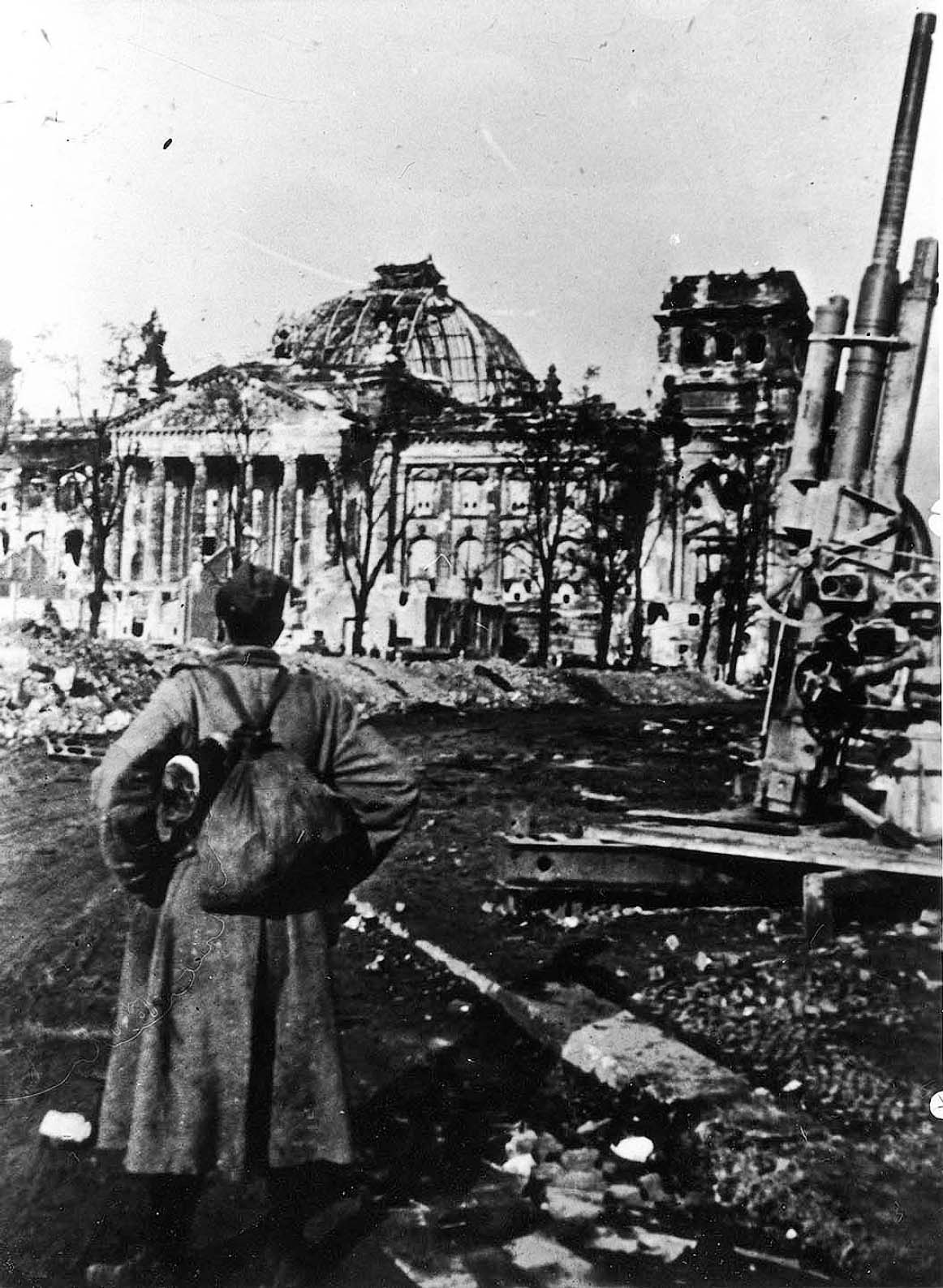
A lone Soviet soldier stands and considers the view. As the original Soviet caption says, ‘So here it is, the f*****g Reichstag.’
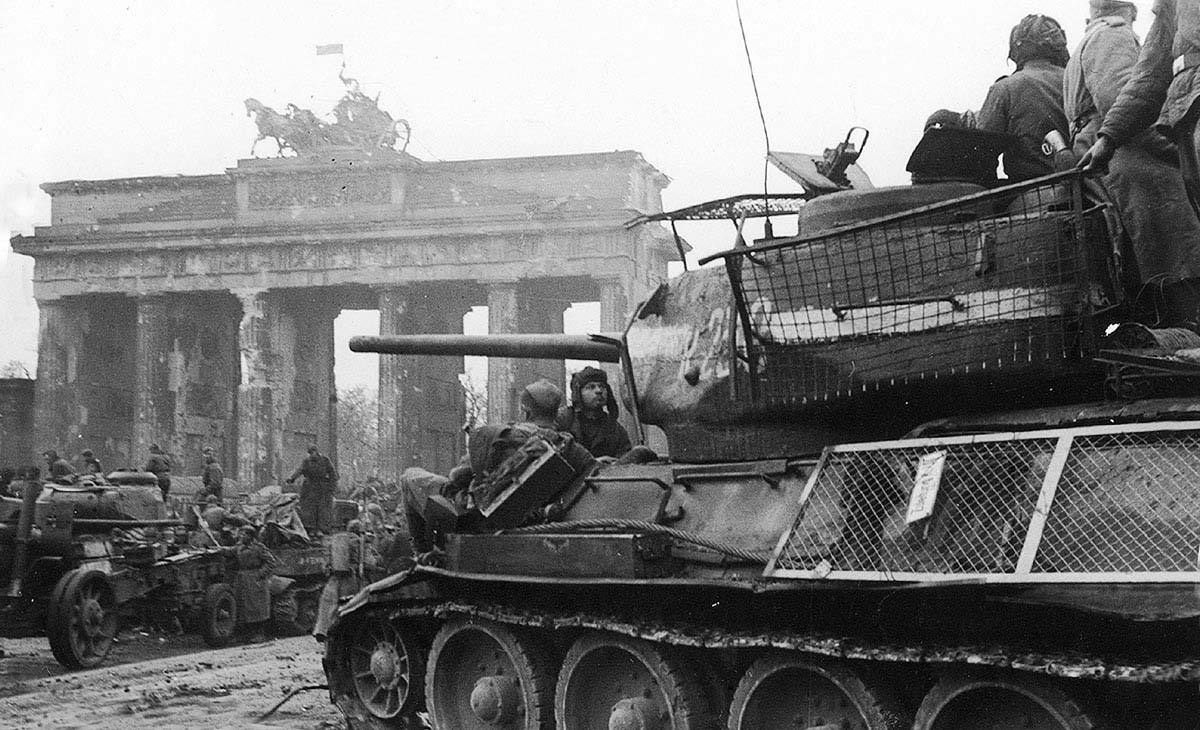
A T-34/85, festooned with sprung metal frames to repel or detonate Panzerfaust rounds, and displaying its Allied air recognition markings, joins a traffic jam at the Brandenburg Gate. The post-battle silence led to many men having difficulty sleeping until they adjusted to the new conditions.
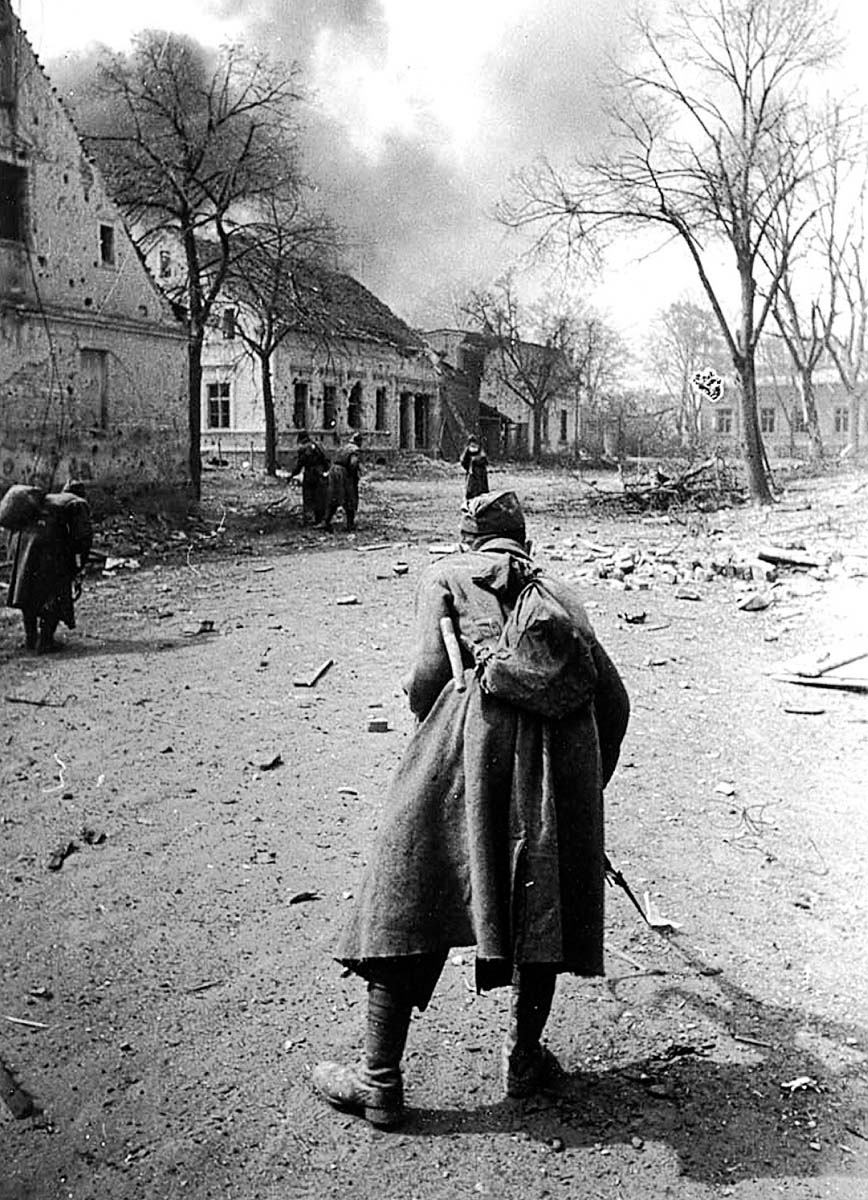
The business of mine and munitions clearance went on for weeks after the fighting had ended. Soviet engineers are seen here cautiously working their way up a street using the tips of their bayonets to check the ground. Soviet troops were very wary of German booby-traps, and their propaganda units had been at pains to warn the men about casually selecting souvenirs to send home in their monthly 5kg parcels.

Two NCOs pose for the camera having re-enacted the raising of the Red Flag over the Reichstag. M. Kantaria and M.Yegorov, shown here, were suitably cleaned up for the photo shoot. The entrance to the building shows the scars of battle clearly.
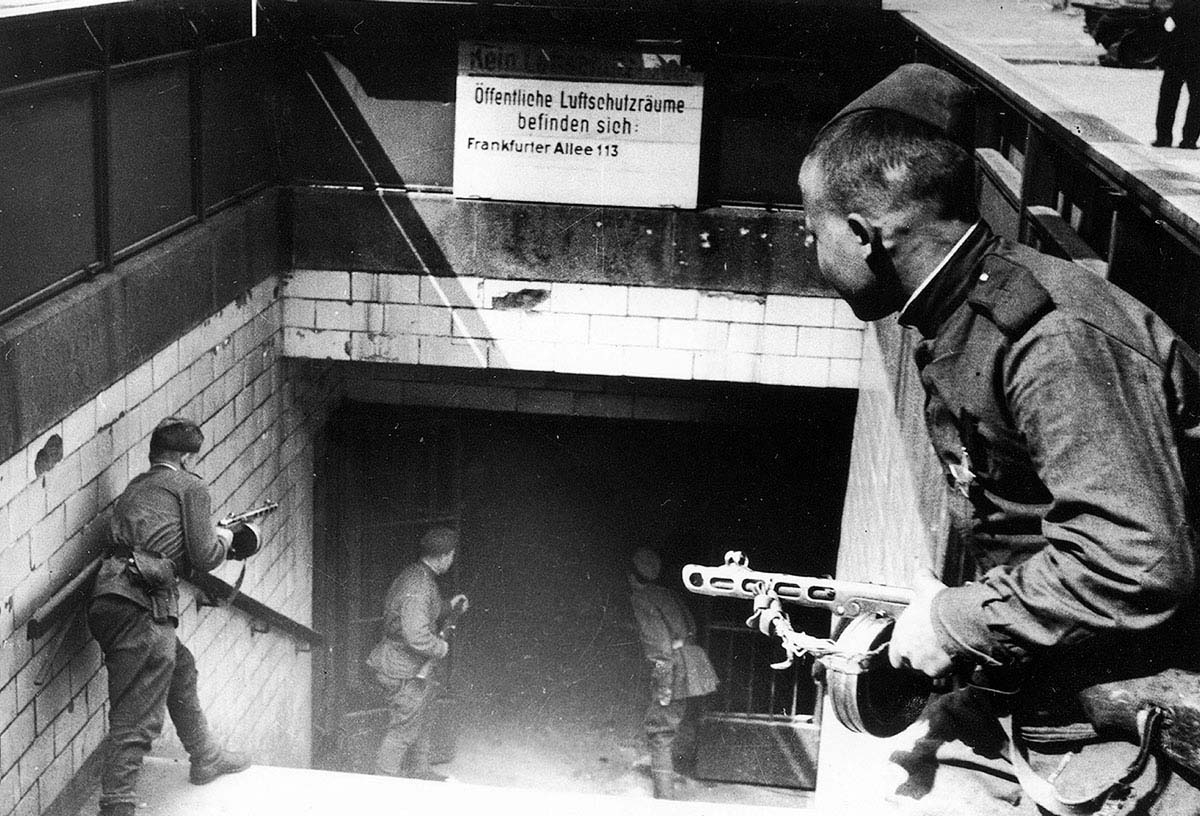
Soviet troops were very wary when entering any underground structures for fear of ambush. These men are seen at the entrance to an underground railway station on Frankfurter Allee. The sign is directing people to an air-raid shelter nearby. For homeless Berliners the air raid shelters provided welcome accommodation.

The bodies of the Goebbels family were discovered by the SMERSH unit from Third Shock Army on 2 May. Goebbels was identified by his orthopaedic shoe. Their six children were all poisoned on 1 May. Their deaths were swiftly followed by their parents’ suicide and cremation.
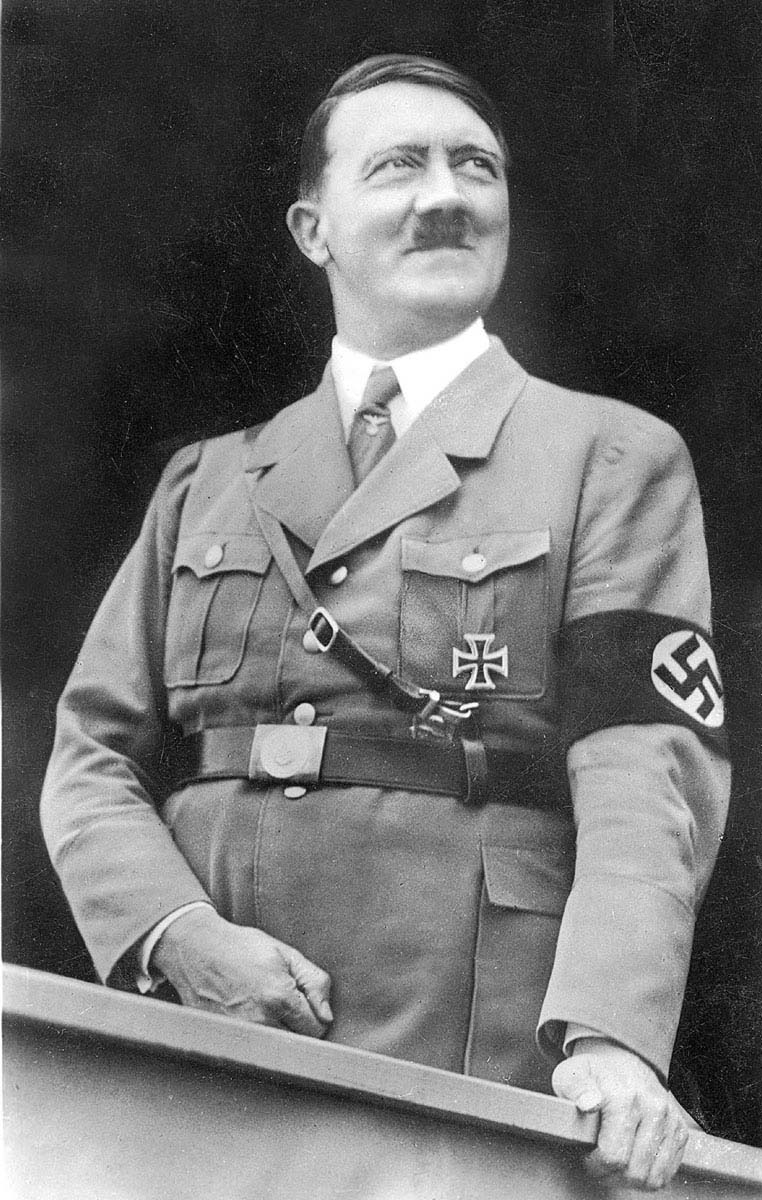
Der Fuhrer, Adolph Hitler, pictured here in happier times, was by April 1945 a shadow of his former self. Portrayed in his ‘Political Uniform’, he proudly displays his Iron Cross 1st Class awarded in August 1918 when serving in the German Army. Unlike Stalin, Hitler had bitter experience of front-line service.
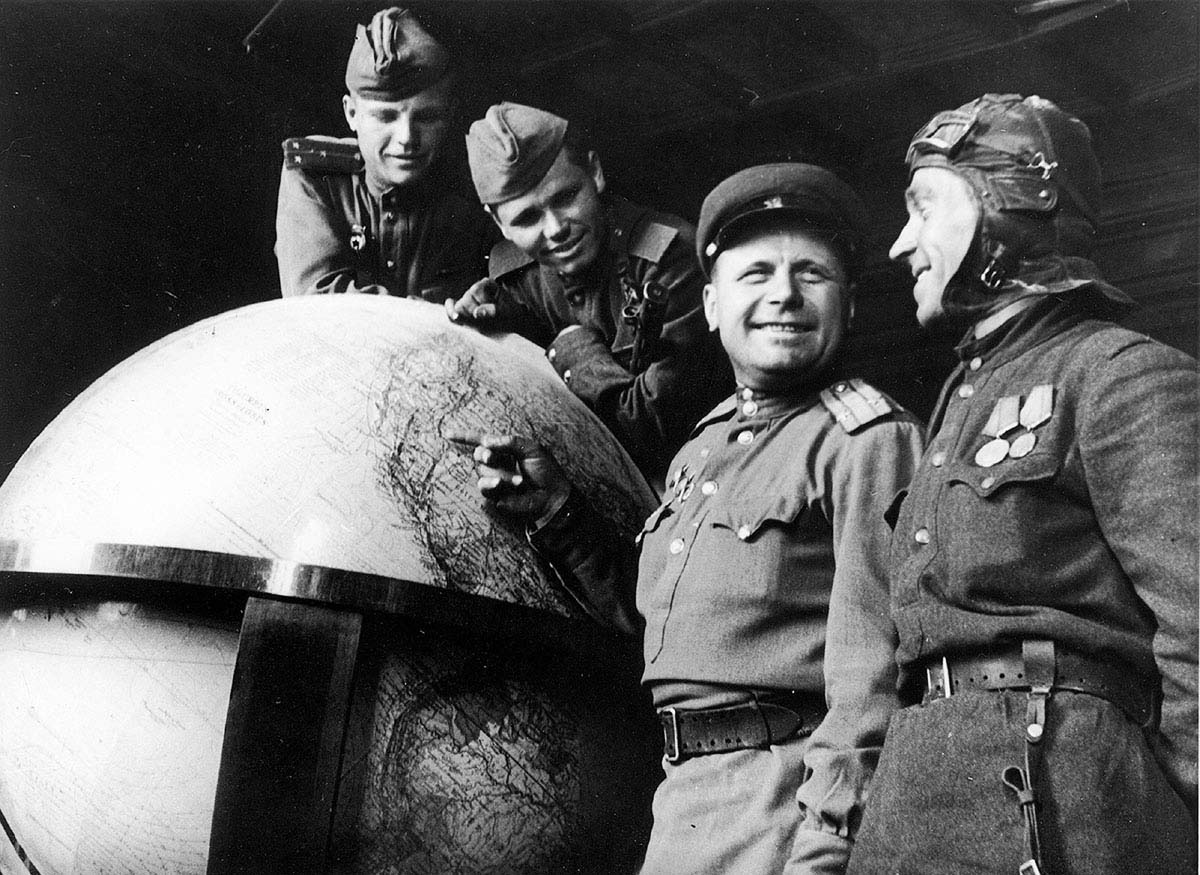
Soviet officers inspect what is described as ‘Hitler’s globe’. The area of interest is Africa. Sightseeing generated anger in the minds of many Soviet troops as they found it hard to understand how such comfortably off, well-fed people as the Germans obviously were should want to invade the USSR, where the standard of living was considerably lower.
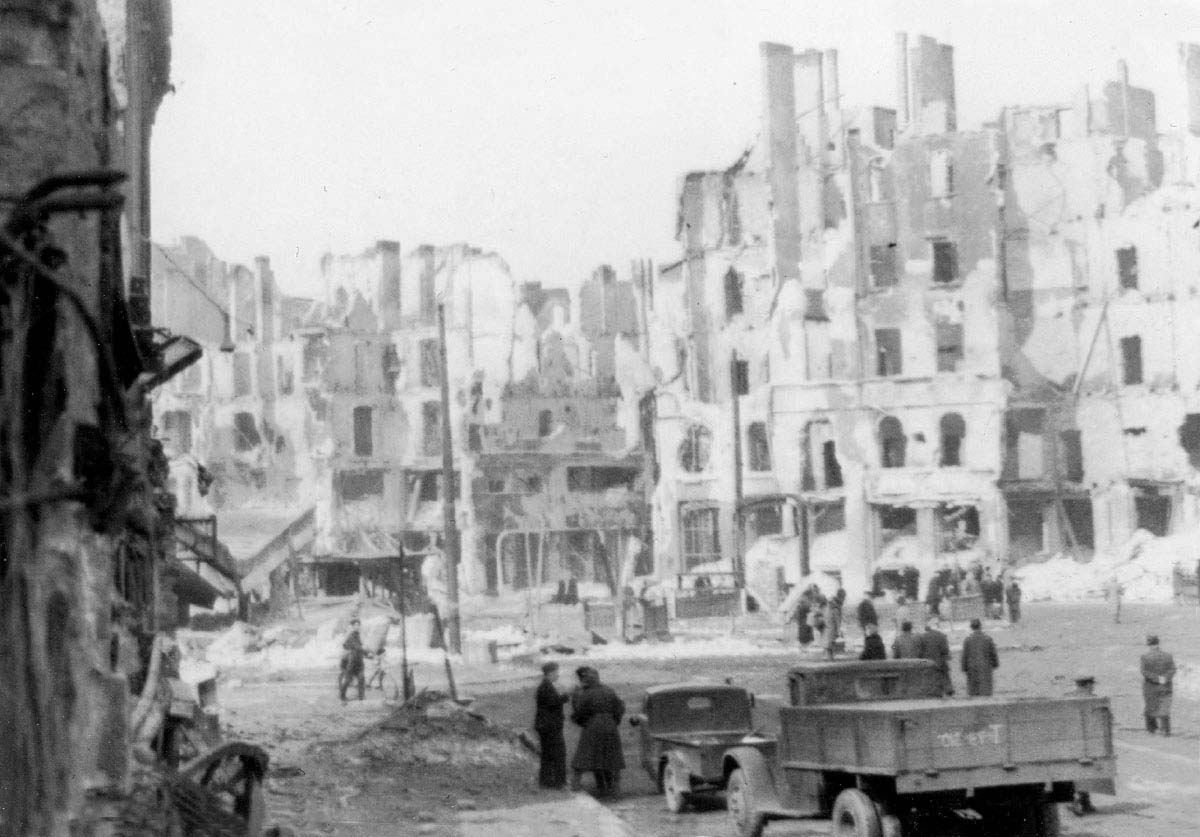
The streets of Berlin presented a grim contrast with the city’s pre-war splendour.

This wounded, elderly German, possibly clutching goods bought at the black market that flourished near the Brandenburg Gate (to his rear), watches with resignation as a column of Soviet tanks rolls down the Unter den Linden. The lead vehicle is an IS-1 with a 122mm gun.

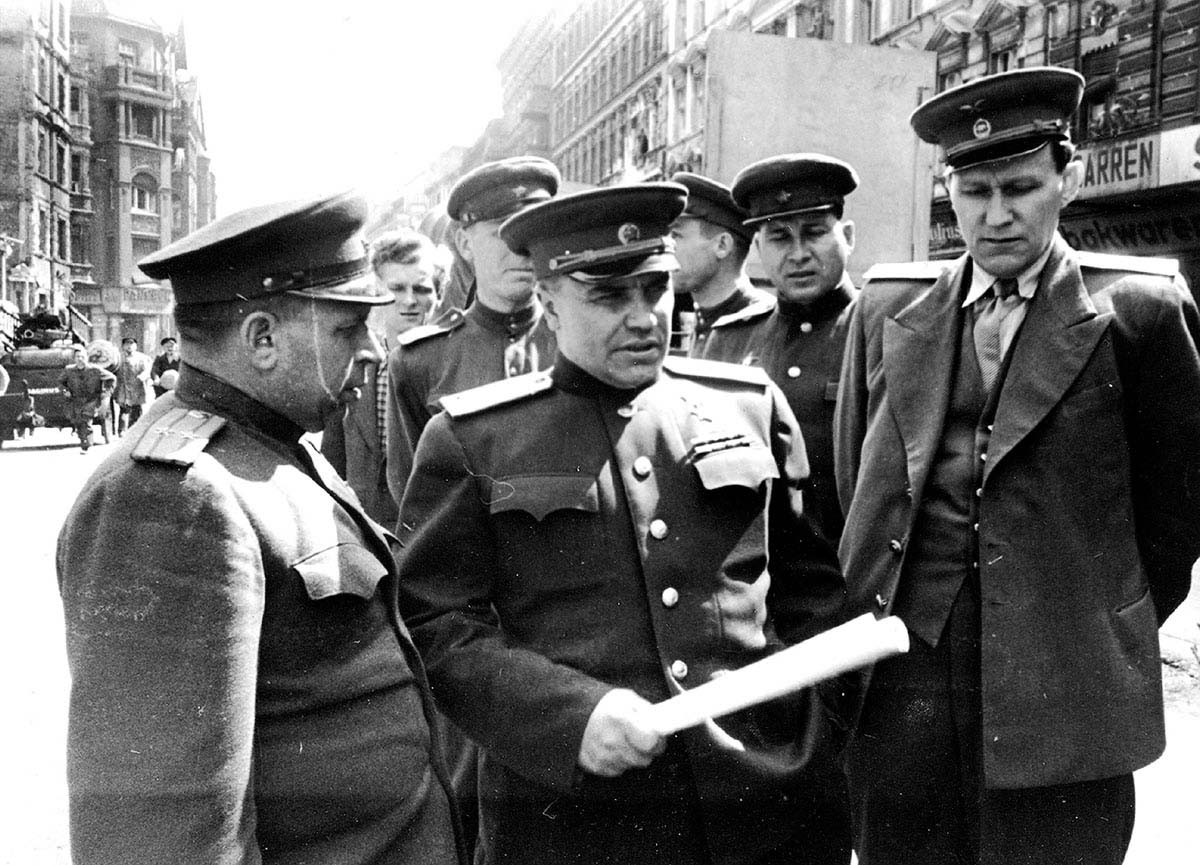
The Military Governor of Berlin, General Berzarin, in the centre of the group, was liked and respected by Berliners. He was described by one commentator as, ‘fat, with sly, brown eyes and prematurely white hair. He is very clever, very balanced and crafty.’ He was obviously an ideal candidate for the position. Rumour laid his ‘accidental’ death at the door of the NKVD.
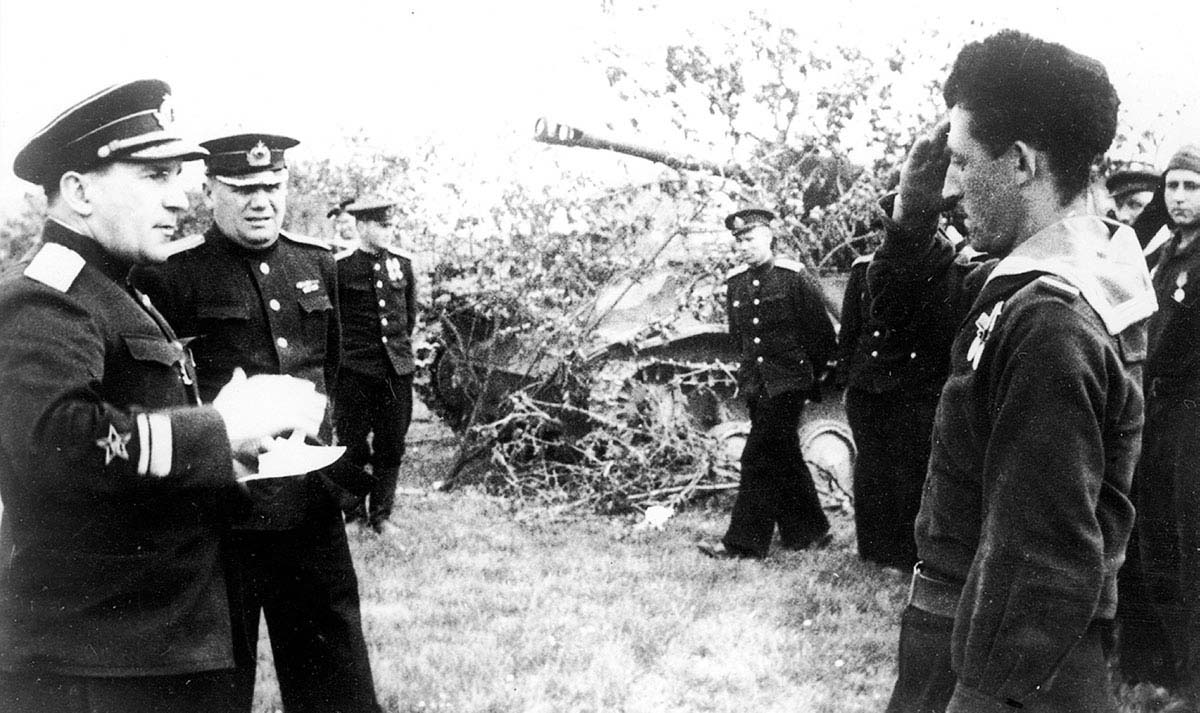
As peace spread, so did the rewards for men of the Soviet Armed Forces. Here members of the Dnieper River Flotilla are presented with medals by a senior naval officer.
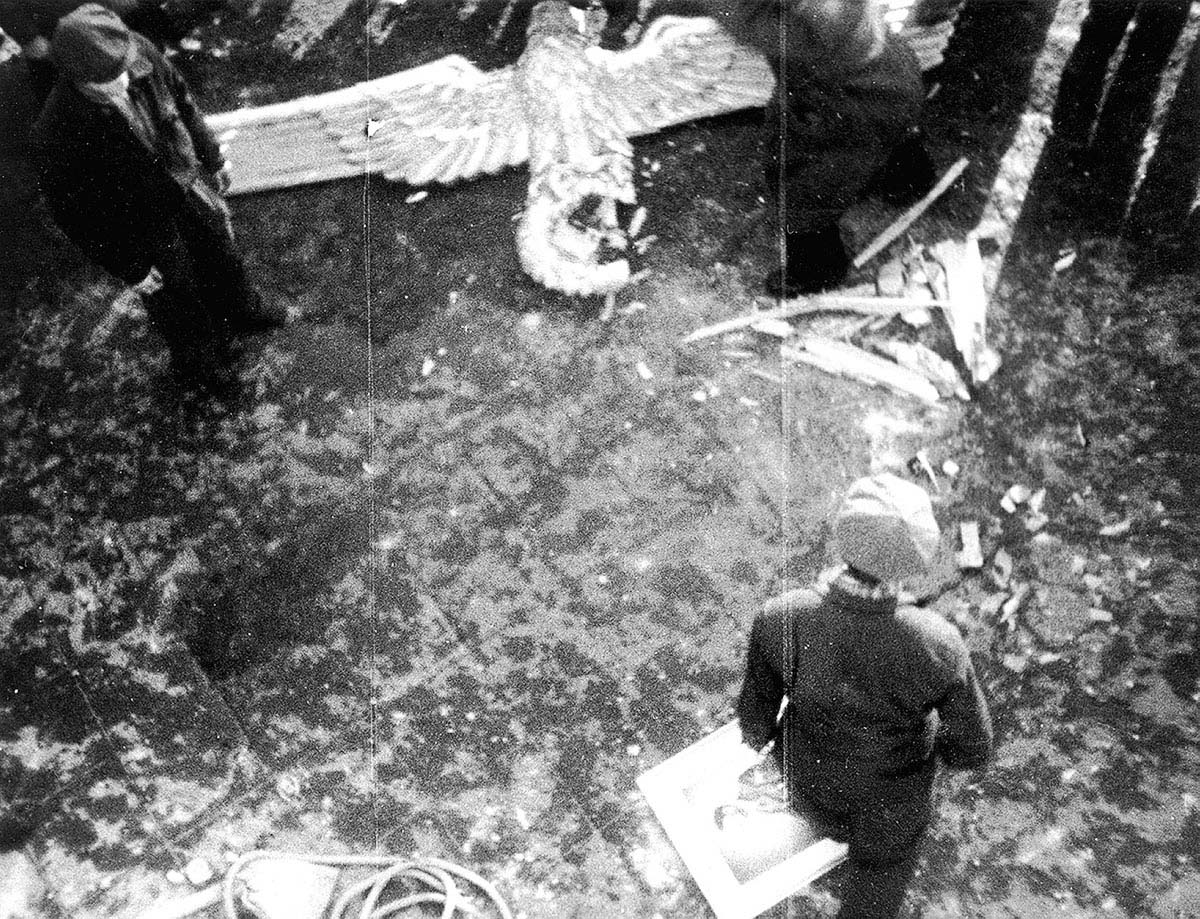
Soviet officials view a fallen Nazi eagle while treading on a photograph of Hitler.

One of the more gruesome relics of Hitler’s rule was this execution block discovered in the Gestapo offices when Poznan fell to Chuikov.
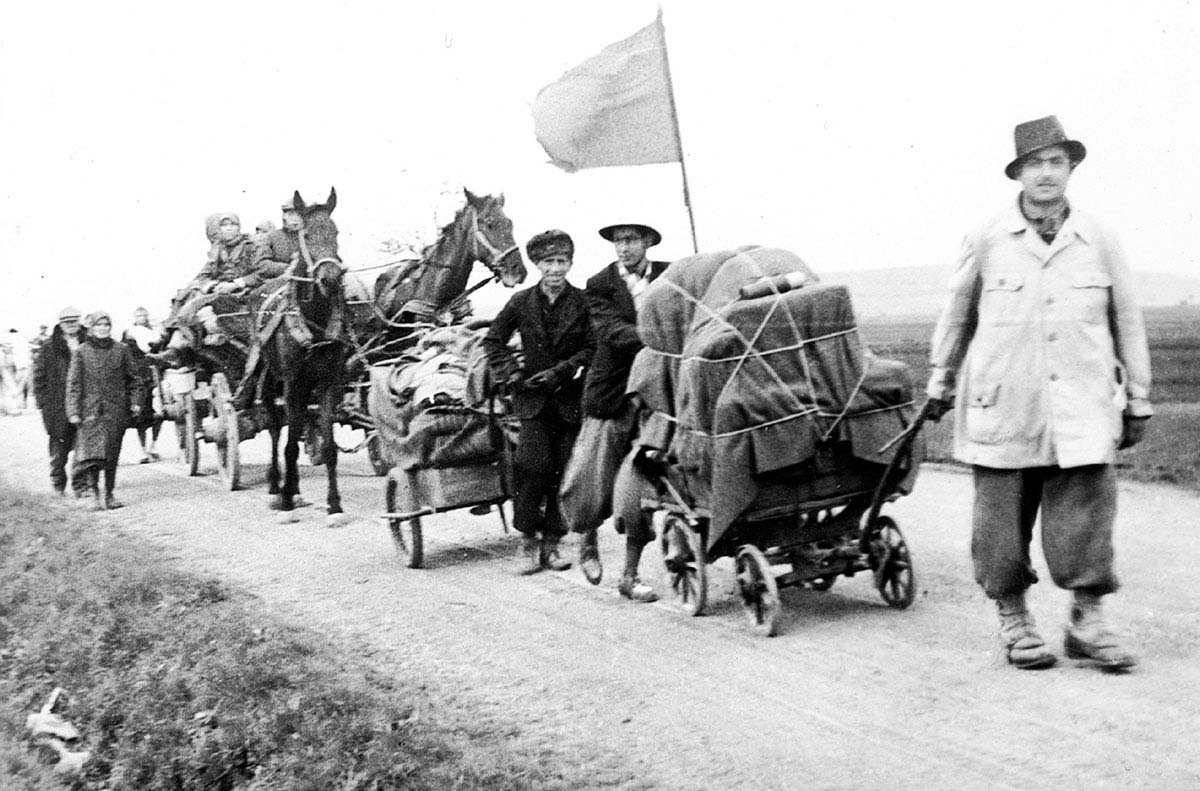
A common sight across Europe in the spring of 1945: a group of displaced persons trekking somewhere under the flimsy protection of a white flag.

Reprisals were not limited to Germany. This public summary execution was carried out in Belgrade.

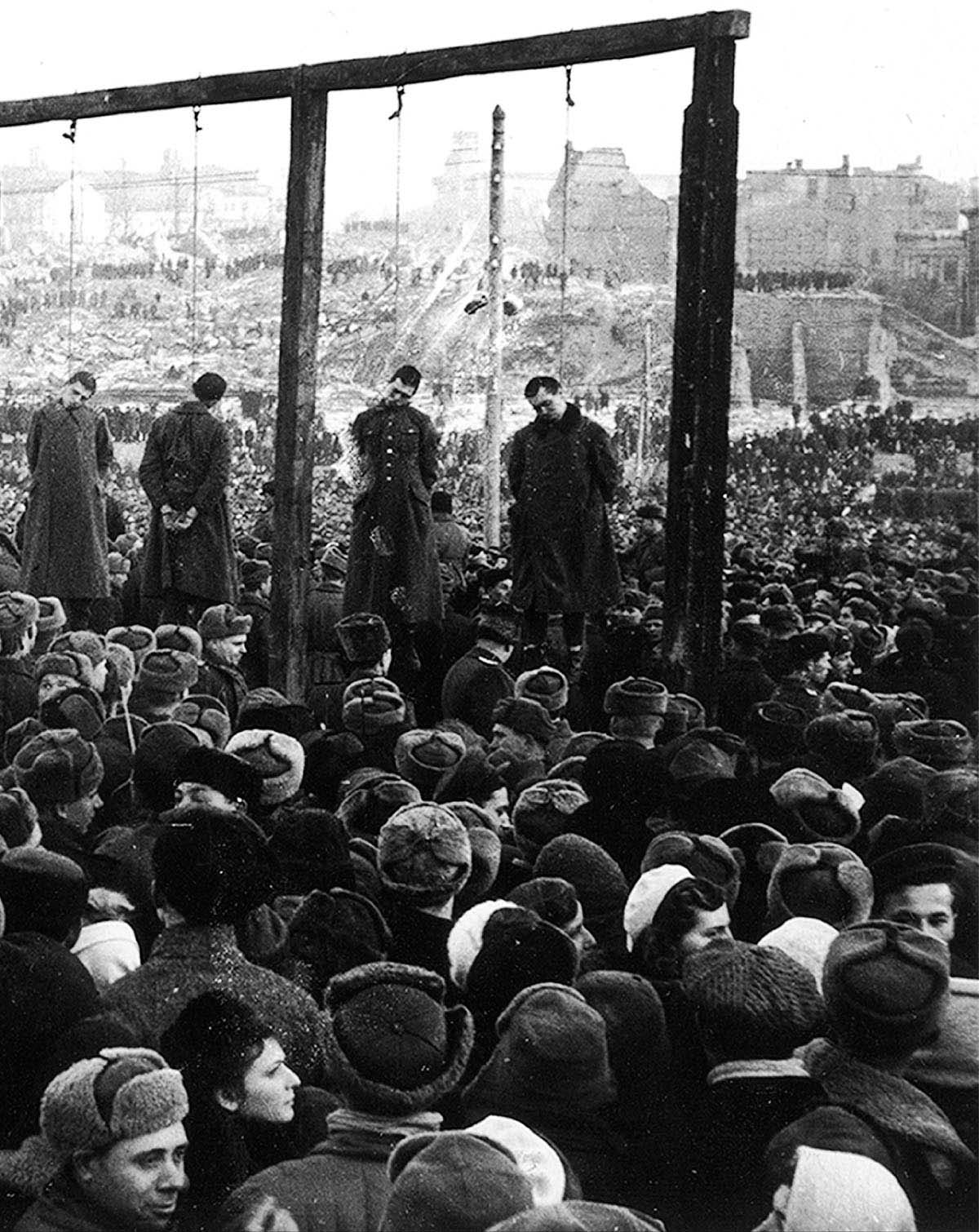
Alleged German war criminals, when located, were often returned to the town or city where they had carried out their crimes. One such group is being hanged in front of a large crowd. Justice was being seen to be done.

In their hundreds of thousands German POWs marched east. Some would not return to their homes for a decade. As well as coping with POWs the Soviet government was faced with the task of repatriating an estimated 4,000,000 former Red Army troops and civilians deported to the Reich as slave labourers. Stalin’s son Yakov, captured in 1941, was not among them.

Zhukov signs the German surrender document in Berlin on 8 May 1945. The bespectacled man is Andrei Vyshinsky, the USSR’s Deputy Foreign Minister, better known as the prosecutor at the Moscow show trials of the late 1930s that so damaged the Red Army immediately prior to the outbreak of war.
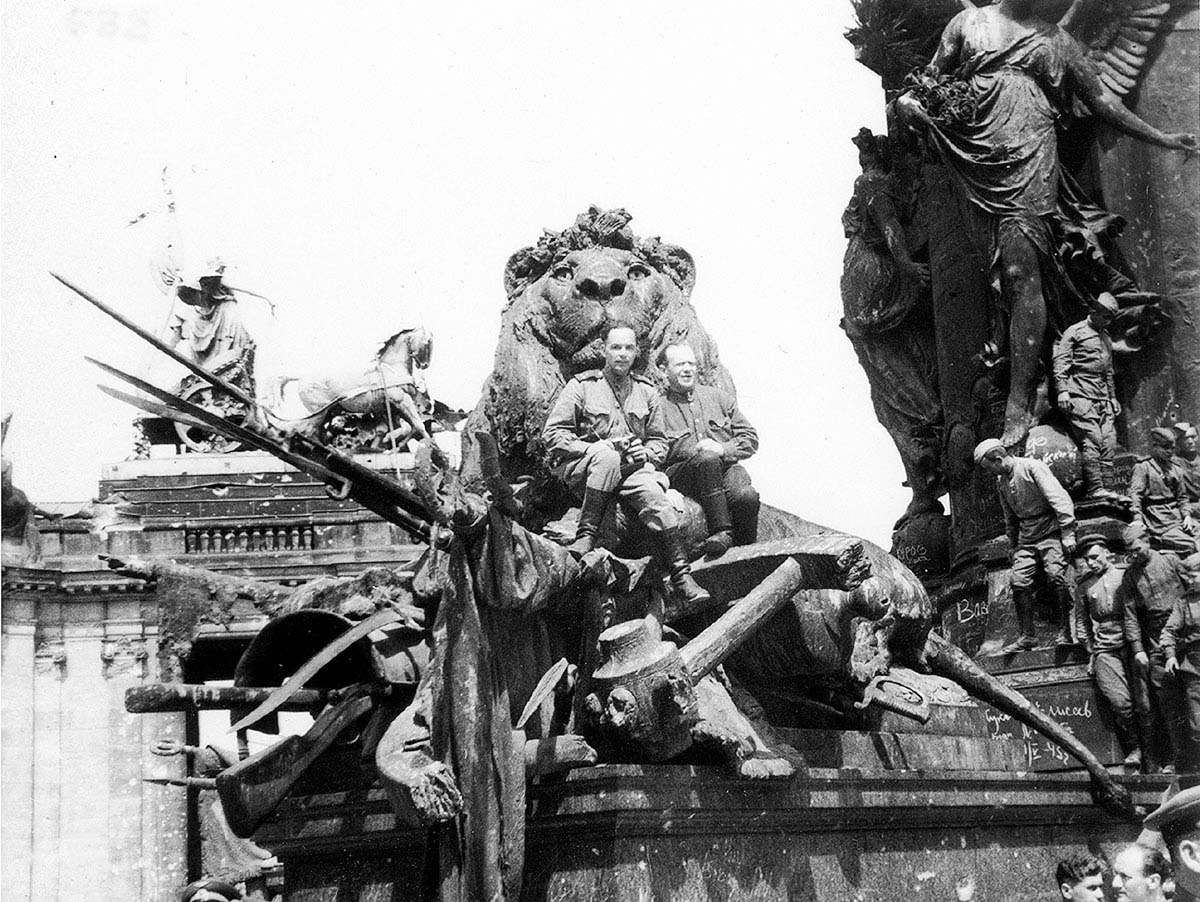
Red Army men sit comfortably on part of one of the monuments near the Brandenburg Gate. For some of them it was the end of an odyssey that had started on the banks of the Volga river in Stalingrad.
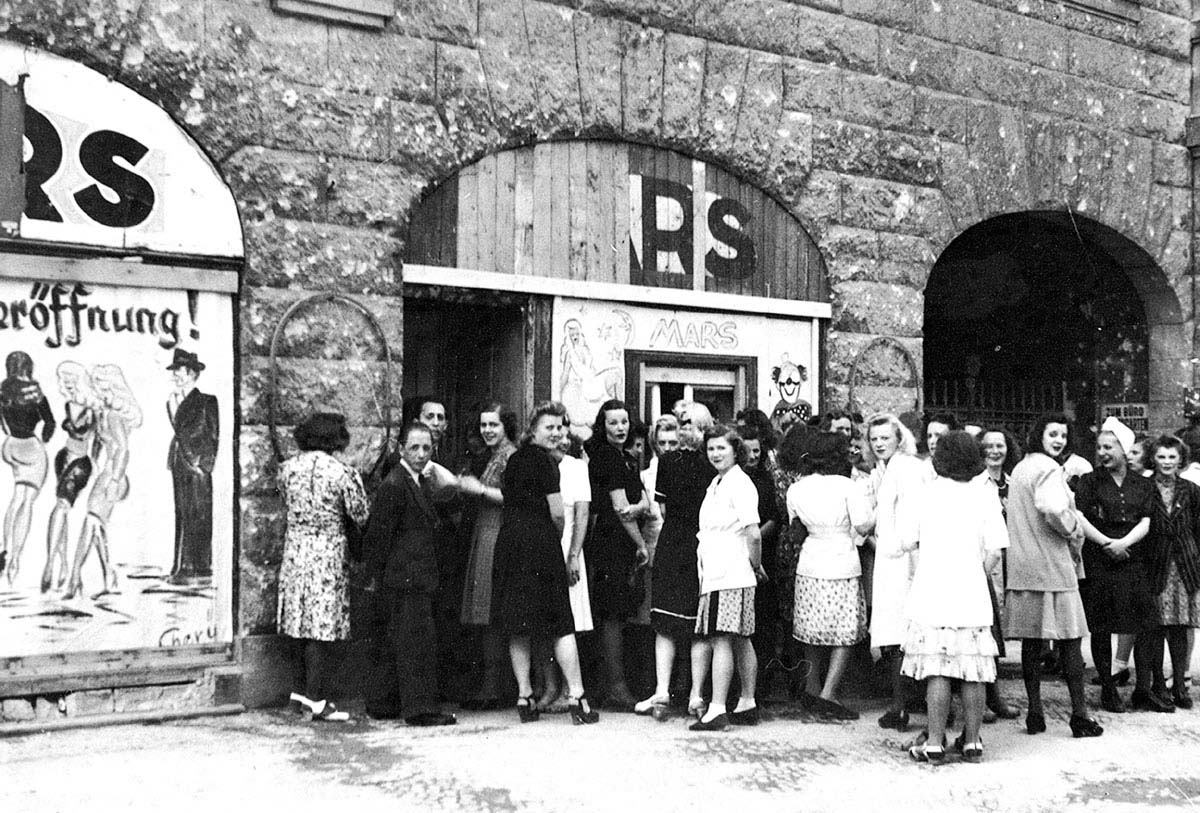
German women queue for work as nightclub hostesses in a newly reopened bar. Possibly the poster gives some indication of their duties.

Sitting in the May sunshine a group of German POWs awaits shipment east.
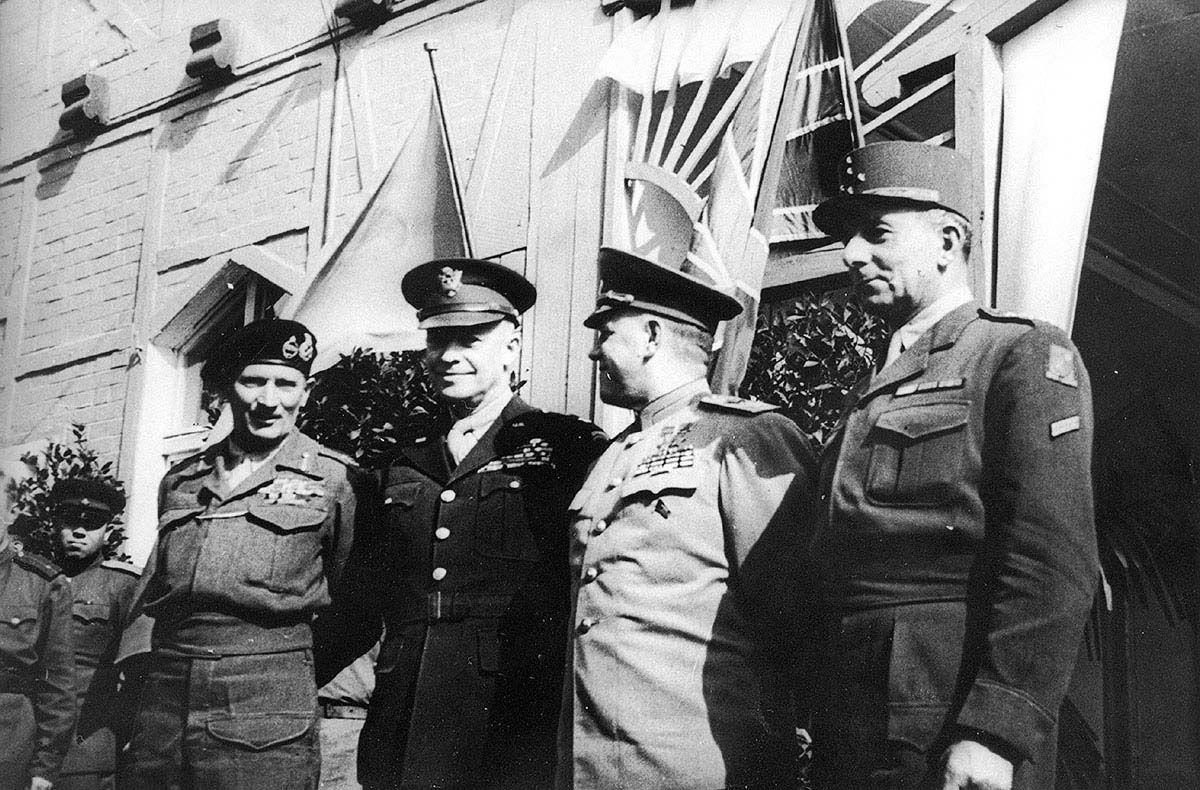
Montgomery, Eisenhower, Zhukov and de Lattre de Tassigny in Berlin for the victory parade.
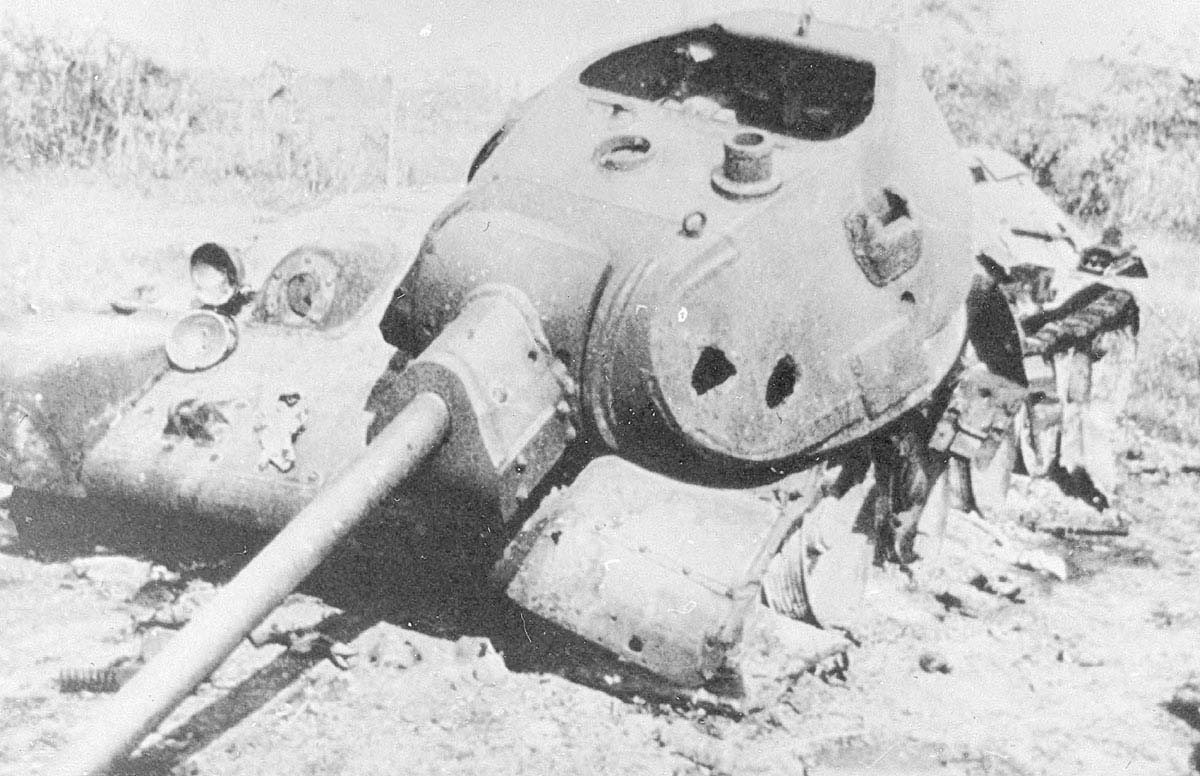
This shattered T34/76, probably built between 1941 and 1942, has fallen victim to some of Berlin’s anti-tank defences.

On one of Berlin’s waterways or lakes a group of German combat engineers prepares for a hit-and-run mission against Soviet forces. The weapon held by the central figure is an M44 assault rifle.
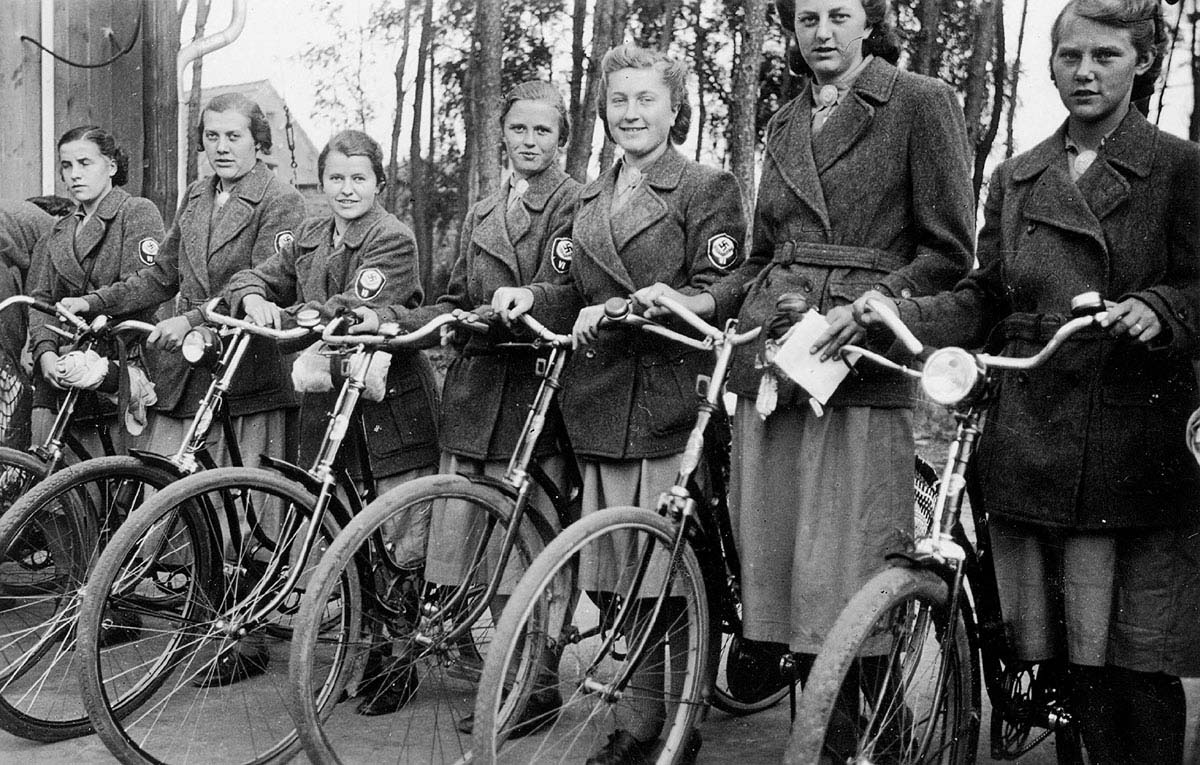
With mixed facial expressions denoting their emotions members of a section of the National Labour Service’s female branch (RADwJ) prepare to mount their bicycles and support their male defenders by delivering messages or other tasks. Wartime conditions resulted in members of the RADwJ remaining with this organisation longer than in earlier years.