
3
Naturally, there were Polish spies in the Soviet Union in the 1930s, some of them on a rather unusual assignment. On June 8, 1935, Polish military intelligence ordered its officers in Soviet Ukraine to make tours of all the battlefields of the Polish-Bolshevik War of 1919–1920. Their task was not to prepare some new campaign, but to commemorate a past one. Józef Piłsudski had died the month before, and a small bag of earth from each of the battle sites was to be discreetly gathered for his burial mound.
The end of a political life reopened the issue of the character of the Polish state. Piłsudski’s authority had been personal, and the old comrades (“the colonels”) who wished to succeed him had to contend with popular politics at a time of economic depression. Piłsudski’s old enemies, the National Democrats, chose to exploit popular antisemitism to mount a challenge to the regime that his associates established after his death. Their encouragement of pogroms, at the same time an act of racism and a violation of the law, was understood by both sides as an attack on the state. The new regime enjoyed greater formal powers than had Piłsudski himself, since it exploited an authoritarian constitution that had been conceived while he was still alive. Although most of his successors were not antisemitic by conviction themselves, they tried to ride out the challenge from the National Democrats by adopting antisemitic public policy. In so doing, Piłsudski’s successors compromised the basic moral premise of his politics: that Poland was a state and not a race.
In 1935, responsibility for Jewish affairs was transferred from the ministry of internal affairs to the ministry of foreign affairs. Jews were no longer normal citizens to be integrated and protected by the state, but somehow aliens: a matter for the world at large, objects whose future might be negotiated with foreign officials. Piłsudski’s electoral organization, which had been popular with Jews, was replaced by a party of power which excluded them. This new Camp of National Unity (Obóz Zjednoczenia Narodowego, OZON), created in 1937, announced its preference for the emigration of about ninety percent of Poland’s Jews. Such policies, regarded as a loathsome betrayal of tradition and principle by much of the Polish Center and Left, were meant to prevent the pogroms organized by nationalists. The leader of OZON had a Jewish wife, something unthinkable for a Nazi. Nevertheless, by the standards of previous Polish practice, the change after 1935 was fundamental and unmistakable.
The man responsible for Jewish policy was Wiktor Tomir Drymmer, a close collaborator of Polish foreign minister Józef Beck. With a background in military intelligence, Drymmer was formally in charge of both personnel and consular affairs in the foreign ministry. He was also the head of its emigration office, charged with arranging the exit of citizens. Poland’s official position was that European maritime empires should either permit Poland access to resources in their overseas colonies or allow Polish citizens to migrate to such places. This analysis had a force that went beyond Jewish policy. At a time when rural unemployment exceeded fifty percent, Warsaw was pushing for the right of all of its citizens to emigrate. In the case of Jews, Polish diplomats pointed to the dramatic consequences of frozen migration routes. Before the First World War, roughly 150,000 Jews left Europe each year; in the 1930s the figure was a small fraction of this. In “trying to find an outlet for its surplus population” the Polish government had “in mind the Jews first of all.”
—
The question of the settlement of European Jews was a general European one, in which Poland occupied a position somewhere between the Nazi one (Jews must be eliminated, and emigration seemed the practical way to achieve this) and the Zionist one (Jews had a right to a state, which would have to be created from an existing colony).
The question of where European Jews might settle had been open since the nineteenth century, and very different sorts of politicians and ideologues proposed the same places. The island of Madagascar, a colonial French possession off the southeast African coast in the Indian Ocean, was introduced to the discussion by the antisemite Paul de Lagarde (actually a German named Bötticher) in 1885. This idea could be considered with greater or lesser hostility or sympathy. It had supporters in Great Britain and, of course, among Germans, including the Nazi leadership. Only in French could one say “Madagassez les Juifs,” but not all of those who considered the idea in France were enemies of the Jews. Zionists also considered Madagascar, although most rejected it.
Polish authorities also allowed themselves to be tempted by the prospect of colonizing Madagascar. The idea of settling Madagascar with Polish citizens was first raised in 1926; at that time the idea was the emigration of Polish peasants from the overpopulated countryside. A decade later, after Piłsudski’s death, the idea returned in a Jewish variant. Beck proposed the emigration of Polish Jews to Madagascar to French prime minister Léon Blum in October 1936, and Blum allowed the Poles to send a three-man exploratory delegation to the island. The representative of the Polish government thought that about fifty thousand Jews could be settled immediately—a significant number, but not one that would have affected the population balance in Poland. The delegate from the Jewish Emigration Association thought that four hundred families might settle. The agricultural expert from Palestine thought that even this was too much. The inhabitants of Madagascar rejected any settlement from Poland. French nationalists, for their part, were concerned that the Polish colonization project would succeed and that the island would become Polish. Meanwhile, the pro-Madagascar propaganda of the Polish regime backfired: When told that the island was suitable for colonization, Polish nationalists demanded “Madagascar only for the Poles!”
Beck and Drymmer expressed a special interest in the future of Palestine, a former Ottoman possession that was under British authority. The decline and fall of the Ottoman Empire had been a lesson for many European statesmen. Whereas Hitler tended to see the creation of Balkan nation-states from the Ottoman Empire as a positive example of militarism, Poles understood the same history as national liberation that would spread from Europe to Asia. Whereas European territories taken from empires after the First World War generally became nation-states, Asian territories tended to become part of the French or British empires, sometimes in the form of “mandates” from the League of Nations. These were places judged not ready for sovereignty, and thus allotted to the great powers for political tutoring. Palestine, taken from the defunct Ottoman district of South Syria, was such a mandate. Although the territory had a rather small Jewish minority when the British took control in 1920, British policy presented Palestine as a future Jewish National Home. This was in line with the hopes of Zionists, who hoped that one day a deal for full statehood could be struck.
Hitler’s Jewish policy forced all of the powers to clarify their position on the future of Palestine. About 130,000 German Jews emigrated in the years after Hitler came to power, some fifty thousand of them settling in Palestine. Their arrival reduced the demographic advantage of local Arabs, who tended to consider Palestine as part of some larger Arab homeland. Thinking that a continuation of Jewish immigration could lead to the success of Zionism, Arab leaders organized political action: first riots in April 1936, then the formation of strike committees and a general strike that lasted through October. This meant that 1937 was the moment of truth for the European states with a declared interest in the future of Palestine: Great Britain, Nazi Germany, and Poland.
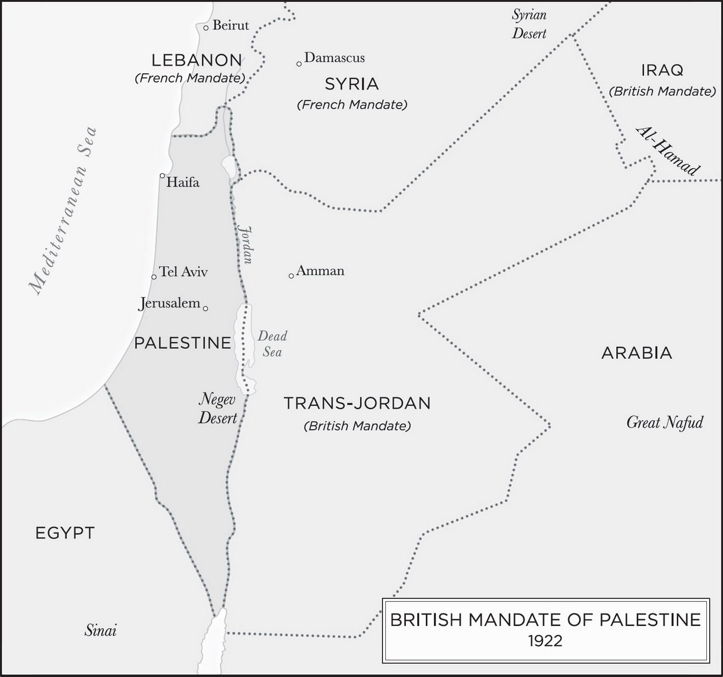
London at first reacted to the Arab disturbances with a proposal for the partition of Palestine. When this led to further political chaos, the British restricted Jewish immigration to a quota. As the world was seen from London, Palestine was only a tiny part of the vast Arab and Muslim territories of the British Empire. Pleasing Jews over Palestine could mean alienating Muslims throughout the Near East and southern Asia. Berlin specified in 1937 its own attitude toward Zionism and a possible State of Israel. Palestine had appealed to the Nazi regime as a place where Jews could settle so long as this had no clear political implications for the Near East. But in spring 1937 the German consul in Jerusalem was concerned lest the creation of a State of Israel from Palestine weaken Germany’s position in the world. The German foreign minister circulated the official position to all embassies and consulates that June: Jewish statehood in Palestine was to be opposed, as a State of Israel would become a node in the world Jewish conspiracy.
The Polish position differed from both the British and the German. London favored Jewish statehood (at some distant and undefined point) but opposed much further Jewish migration for the time being. Berlin opposed Jewish statehood, but wanted Jews to leave Germany as soon as possible for some distant and undefined place. Warsaw wanted both massive emigration of Jews from Europe and a Jewish state in Palestine. In public the Polish foreign minister and other diplomats called upon the British to ease immigration restrictions and create a Jewish National Home as soon as possible. The Poles had very specific ideas of what such an entity should be: “A Jewish, independent Palestine, as large as possible, with access to the Red Sea.” This meant both sides of the River Jordan; in private, Polish diplomats even raised with British colleagues the issue of the Sinai Peninsula, in Egypt. In 1937, the Polish armed forces began to offer arms and training to the Haganah, the main Zionist self-defense force in Palestine.
—
Zionism was the Jewish political movement, active for half a century, whose advocates identified the future of the Jewish people with the settlement of Palestine and the establishment of a state. As a general matter, Zionists believed that this would be achieved through cooperation with the British Empire and other great powers. Although its advocates held a variety of political positions and its factions were many, many Zionists in the 1930s were left-wing, envisaging agricultural communes that would transform both the ancient Jewish land and the modern Jewish people. In Poland, Zionism was the ideology of a whole range of political parties, from extreme Left through extreme Right. Much to the dismay of Zionist leaders in London and New York, the direction of the overall movement was much affected by the politics of Zionism within Poland.
The world Zionist movement split in September 1935, just as Polish policy on Jews was revised by Piłsudski’s successors. Vladimir Jabotinsky emerged then from the General Zionist movement with a program of Revisionist Zionism. He urged Jews in Europe to consider massive and rapid emigration while calling for the immediate creation of a State of Israel in the Mandates of both Palestine and Trans-Jordan. This version of Zionism spoke to Poland’s new leaders. In June 1936, Jabotinsky presented his “evacuation plan” to the Polish foreign ministry. He claimed that Palestine, over time, could absorb eight million Jews. When his initiative was announced in the Polish press a few weeks later, the specified goal was the settlement of Palestine on both sides of the River Jordan by 1.5 million Jews in the course of the following ten years.
Jabotinsky wanted Poland to inherit the Mandate of Palestine from Great Britain. He even proposed that Poland be given the Mandate of Syria, which it could then trade for the Mandate of Palestine or use as leverage against the Arabs generally. This sort of thinking about foreign policy was very much in the Polish diplomatic tradition: an imaginative attempt to turn nothing into leverage. Indeed, the easy agreement between Jabotinsky and Polish leaders was not simply a matter of common interests. Although Jabotinsky spoke French when he made his case in Warsaw, he like most Polish leaders was born a Russian imperial subject and had been educated in the Russian language. The idea of building a nation-state from empires that partitioned historic national lands was a common one.
Jabotinsky’s power base by 1936 was Polish. Revisionism was a movement of youth, based in paramilitary organizations. By far the largest of these was Betar, the right-wing Jewish youth paramilitary in Poland, whose members promised to devote their lives “to the revival of the Jewish state with a Jewish majority on both sides of the Jordan.” Betar’s model was the Polish Legions of the First World War, which in the favorable conditions of war among empires had prepared the way for Polish independence. Like the Poles of the Legions, the Jews of Betar trained with weapons and awaited the opportune moment of general conflict. The vast majority of Betar members were products of the Polish school system, and imbibed its core message of secular messianism (“Our dream: to die for our people!”). When Betar brawled with Jewish leftist organizations, its members sang Polish patriotic songs—in Polish. Uniformed Betar members bearing firearms marched and performed at Polish public ceremonies alongside Polish scouts and Polish soldiers. Their weapons training was organized by Polish state institutions and provided by Polish army officers. Menachem Begin, one of Betar’s leaders, called upon Betar members to defend the borders of Poland in the event of war. Betar members wrote in their newspapers of their two fatherlands, Palestine and Poland. They flew two flags, the Zionist and the Polish, until the end of their existence in Poland—in the ghetto uprising of 1943 they raised both banners from Warsaw’s tallest building.
Both Menachem Begin and another promising Betar activist, Yitzhak Shamir, treasured the Polish Romantic poets of the nineteenth century and quoted them at Jewish gatherings. The great poet of the new Jewish Right, Uri Zvi Greenberg, spent the 1930s in Poland. The secular messianism of Begin and Shamir and the Betar movement bore a strong resemblance to the Polish version, developed during Poland’s long period of statelessness in the nineteenth century: sacrifice on this earth for change on this earth.
—
After Piłsudski’s death in May 1935, Polish spies were not the only ones sent on long missions to find the symbolically appropriate soil for his commemoration. Members of Betar brought clumps of earth from their own sacred site, Tel Hai in Palestine, where their own hero, Joseph Trumpeldor, had been killed by Arabs. (“Betar” was the site of the last stand in the Third Roman-Jewish War; the name was later reimagined as a Hebrew acronym for “Covenant of Joseph Trumpeldor.”) In life, both Trumpeldor and Piłsudski had been subjects of the Russian Empire; both struggled to reconcile national and social justice; and both commanded legions that were meant to cultivate cadres for national armies and national states. Piłsudski had been victorious in his war of liberation against the Soviet Union in 1920; Trumpeldor was killed that same year. So their unity after death was perhaps not so strange. Betar members attended Piłsudski’s open-air memorial service in large numbers, arriving in precision formation on motorcycles bearing Polish and Zionist flags. Jabotinsky spoke of “eternal, indestructible sacrifices on the altar of the fatherland.” Piłsudski became a central cult figure of both traditions, that of Polish leaders and Jewish revolutionaries.
Yet disagreement about the meaning of Piłsudski’s legacy was inevitable. Piłsudski had led a colorful life and had deployed violence in various settings. Which Piłsudski was the model for the Jewish future? Was it the Piłsudski of the Legions, nominally loyal to an empire, and preparing for a war in which that empire would have to make concessions? This was how Jabotinsky saw matters, and at first his vision defined that of Betar. As time passed, however, the Piłsudski of the Polish Military Organization, exploiting terror and propaganda, was ever more appealing to Jewish rebels. Each of these approaches has a political logic; each depends upon a judgment of the historical conjuncture. The logic of legions is that supporting an empire in times of war creates debts to be repaid in times of peace. The logic of terrorism is that fear can destroy a weak system and make way for a new one. In the late 1930s, Menachem Begin mounted a challenge to Jabotinsky, supporting political terrorism rather than legions. At a Betar congress in Warsaw in September 1938, Begin openly criticized Jabotinsky’s judgment.
By 1938, the Polish ruling elite was supporting the most radical available option among the Revisionist Zionists, a conspiratorial National Military Organization operating in Palestine that favored terrorism to provoke the conjuncture rather than waiting for it. After the Arab riots and general strike of 1936, and the British concessions to the Arabs in 1937, members of the Haganah disagreed about the future. Younger, more right-wing, and more radical individuals left the Haganah to form the Irgun Tzvai Leumi, or National Military Organization, named and modeled after the Polish Military Organization, and usually known as Irgun. The core of the new Irgun were Jews from Poland who had been members of Betar. Under Begin, the leader of Betar in Poland from March 1939, the organization was increasingly a front for Irgun.
Irgun liaised with the Polish government through the Polish consul in Jerusalem, Witold Hulanicki. His general instructions were to present himself as “the representative of a state that has interests that are similar to Zionist aspirations and that can contribute to the realization of those aspirations.” Hulanicki tended to know about Irgun’s actions before they took place. From his perspective, Irgun was a “very comfortable and very much needed (by me) political instrument” and Avraham Stern, one of its leaders, was a Polish agent.
—
Avraham Stern was a child of revolution. He was born in Suwałki in 1907, in a Jewish-Polish town near the Augustów Forest in the western reaches of the Russian Empire. Deported as a boy along with his family and hundreds of thousands of other Jews, he became one of the young Jewish men radicalized by the Russian imperial collapse. He lived with his family in Bashkiria for about six years, then saw the great cities of postrevolutionary Russia and became a communist before returning to Suwałki in what had meanwhile become independent Poland. Stern came to revere Piłsudski and his new Polish state much as he had admired Lenin and his new Soviet state. He immigrated to Palestine in the 1920s, and began studies at the Hebrew University of Jerusalem. He was regarded by his professors as one of the great hopes of Jewish humanist studies. But he was without any means of subsistence, and in 1929 he was going hungry.
Although he was a talented linguist and writer, Stern opted in the 1930s for politics over literature. He traveled in Europe seeking support for an independent Jewish state, first from Mussolini’s Italy and then in Piłsudski’s Poland. Although he was an early emigrant from Poland and thus not a product of Betar, he was very comfortable in Polish culture. He wrote romantic poems about arousing hearts of stone and raising the dead—in Polish. As exercises for himself he composed poems simultaneously in his three revolutionary languages: Russian, Hebrew, and Polish. In a poem in Hebrew and Polish, he wrote of the tears shed for his happy childhood, his troubled youth, and his failed manhood. Stern grew to maturity in the middle of the great east European revolutionary forces: communist revolution, Polish state building, Zionism. He was a child of revolution who wanted to be a father of revolution. “Reality is not what it appears to be,” he wrote, “but what force of will and longing for a goal make it.”
Hulanicki, the Polish consul in Jerusalem, described Stern to his superiors in the foreign ministry as the “ideological leader” of the “extreme elements” of Irgun. In February 1938, Hulanicki wrote to Drymmer in Warsaw, asking him to meet Stern. The proposal that Stern brought to Drymmer, with Hulanicki’s support, was that Poland train instructors for Irgun. The Irgun elites trained by Poland would then become the officer corps of a future Jewish revolutionary army that would conquer Palestine. The soldiers would be thousands of trained Betar fighters brought from Poland. One of the Irgun men imagined “armed soldiers, entire battalions from many ships, landing simultaneously at various points along the coast of Eretz Israel.”
Drymmer endorsed the idea. Field training in the southeastern Polish region of Volhynia (where Betar had been trained by the Polish army for years) and staff training at Rembertów (a military base just outside of Warsaw) began within a few months. Volhynia became a staging area for the clandestine and illegal emigration of revolutionary Jews with military training to the British Mandate of Palestine. In Volhynia, where more than two-thirds of Jewish students attended Zionist schools, the regional governor, Henryk Józewski, was a sympathizer of Revisionist Zionism.
—
The first major encounter between German Jewish policy and Polish Jewish policy was not in Europe but in Asia. Nazi oppression led to the immigration of German Jews to Palestine, which led to the Arab riots that radicalized right-wing Zionism and created a new possibility for Polish foreign policy: the support of Irgun.
Although Polish leaders were responding to British, German, Arab, and Jewish actions over which they had little influence, their own policy did follow something like a consistent line. In a sense, the small group of Poles who made foreign policy after 1935 were shifting from one form of Prometheanism to another. The initial Prometheanism, under Piłsudski, presumed that Warsaw could aid neighboring peoples to the east, above all Ukrainians, to gain their freedom from the dominion of Moscow. The emerging variant involved support of the Jewish nation against British rule in Palestine. As Polish authorities abandoned the anti-Soviet line that Hitler admired, they shifted to a pro-Zionist conspiracy that the Nazis would have found incomprehensible—had they known anything about it.
There was some continuity in personnel from the first to the second Prometheanism. The Volhynian governor who supported Revisionist Zionism, Józewski, had been the most important Promethean activist. His heroes were Piłsudski and Jabotinsky, whom he called “an apostle of the Jewish world.” His province had been a departure point for Ukrainian spies in the early 1930s; it became a training ground for Jewish revolutionaries in the late 1930s. Drymmer, the high official of the foreign ministry charged with the Jewish question, had been a Polish Military Organization operative in Ukraine and a Promethean. Tadeusz Pełczyński, the director of Polish military intelligence who organized the training courses for Irgun, was also a veteran of the Polish Military Organization and a Promethean. Witold Hulanicki, the Polish consul in Jerusalem, was one more product of the Polish Military Organization.
The continuities were ideological as well as personal. For the men in power in Warsaw, supporting right-wing Jews meant supporting fellow anti-communists. Revisionist Zionists might one day lead millions of Polish Jews to Palestine; in the meantime they drew some young Jewish hotheads away from communism, beat up in brawls the young Jewish men who did opt for the Far Left, and supported the Polish government against the Soviet Union. All of these veterans of Polish conspiracy could see that Jews needed statehood as Poles once did. The younger Jewish men whom they supported and sometimes befriended were looking forward to statehood just as the older Poles were looking back nostalgically to its creation. Jewish Prometheanism was thus a chance for Poles to relive a youth whose accomplishments now seemed endangered. As one Polish diplomat explained the endorsement of the Revisionists to a bemused supporter of mainstream Zionism, “Emotionally, they appeal to us the most.” From the Ukrainian to the Jewish Prometheanism extended the basic optimism that the liberation of nations from empires was a good to be expected from history. Poles preserved the same fundamental tradition of using the weapons of the weak to oppose empires and create states. They still embodied a certain elite romanticism of politics, the belief that deft techniques of state creation were a matter for the sensitive and courageous few, who would bring along the masses later, in good time. And they maintained the same preference for secret measures.
Yet there were some telling differences between the first and the second Prometheanism, corresponding to the fundamental shift in Polish Jewish policy in 1935. After 1935, the regime was much more pessimistic about the possibility for change in the Soviet Union. Poles who had worked for the Promethean movement either became liberal critics of the new regime or tacked to the new right-wing version of the idea. The first Prometheanism saw national minorities in someone else’s country as a problem for that other country—the major example being Ukrainians in the Soviet Union. The first Prometheanism had also involved the Muslim nations of the USSR. Insofar as Prometheans had engaged Jerusalem before 1935, it was as a center of Islamic national movements. The second Prometheanism regarded a national minority in Poland as a burden for Poland. Jews were no longer seen as citizens of a republic, but a national problem that might be resolved here or there, or perhaps a national force that might be deployed abroad. Jerusalem was no longer a city of Muslims today but a city of (Polish) Jews tomorrow. There was no longer the solidarity expressed by the slogan “For your freedom and ours!” The slogan of the second Prometheanism might have been: “For our freedom from you!”
In the first Prometheanism, Poland was to endorse minority rights to set an example and destabilize neighboring regimes that did not. In the second Prometheanism, it was legitimate to create conditions under which Poland’s own citizens would wish to emigrate. The Polish authoritarian regime after 1935 countenanced the use of economic pressure to encourage Jews to leave the country. The police stopped attempts at pogroms but treated boycotts of Jewish businesses as a legitimate economic choice. The parliament passed a ban on kosher slaughter, though it was never implemented. Civil society was moving in the same direction. Professional organizations in which Jews were prominent had to reregister their members. Most universities did nothing as Jewish students were beaten and intimidated until they sat in the last rows of the lecture halls, called “ghetto benches.” Much of the clergy of the Roman Catholic Church, in Poland as elsewhere in Europe, continued to explain that Jews were responsible for the evils of modernity in general and communism in particular.
Unlike the Nazi regime, the Polish government did not present Jews as the hidden hand responsible for global crises and therefore for all of Poland’s woes. Jews were portrayed, rather, as human beings whose presence was economically and politically undesirable. The vision of a future Poland without most of its Jews was certainly antisemitic, but this was not an antisemitism that identified Jews with the fundamental ecological or metaphysical evils of the planet. Unlike in Germany, there was meaningful opposition. The Polish Socialist Party, the largest political party in Warsaw, opposed the government line, as did the mayor of Warsaw. The Jewish political party known as the Bund, committed to socialism in Europe and to Jews remaining in Poland, did extremely well in the 1938 local elections. For that matter, the Jewish share in the Polish economy was greater in 1938 than it had been when the Great Depression began. The undeniable liveliness of Jewish commerce and politics as the 1930s came to an end made Poland quite different from Germany.
—
Nazi leaders saw in Poland what they wanted to see. A certain amount of misperception in Berlin was perhaps inevitable. Local Jewish success in Poland was invisible from Berlin, whereas official Polish restrictions on Jewish life were reported favorably in the German press. The more ambitious elements of Polish pro-Zionism were clandestine, whereas the official antisemitism was open. The Nazi leadership could read the evidence from Poland as a sign that the friendly German foreign policy initiated in 1934 had worked and could be extended.
This was a misunderstanding, although one that Polish diplomats, lacking any better ideas, cultivated for as long as they could. The German-Polish nonaggression declaration of January 1934 was for Piłsudski and then for Beck a counterpoint to the July 1932 treaty of nonaggression with the USSR. For Hitler, it was a platform for recruitment to a future anti-Soviet crusade. Like most of Hitler’s policies in the 1930s, it was significant for what it promised about the future. In May 1934, Hitler was already wondering aloud what sort of commitment Poland would need to join in an alliance against the Soviet Union. Speaking to the Polish ambassador Józef Lipski that August, Hitler called Poland Germany’s “shield in the east.” The following January he pronounced that Germany and Poland would be compelled to make war together against the USSR. As Hitler explained to Beck later in 1935, the German-Polish declaration was to be understood as part of a German grand design.
It quickly became obvious in Warsaw what that design entailed. Hermann Göring, Hitler’s plenipotentiary on Polish matters, was quite forthcoming with his Polish interlocutors. On a hunting trip in the Białowieża Forest with Polish officials in January 1935, Göring unveiled the grand scheme of a German-Polish invasion of the USSR, with Poland to get the spoils of Ukraine. Lipski, the Polish ambassador to Berlin, found this implausible and asked Göring not to repeat such ideas to Piłsudski when they all returned to Warsaw. Göring did so anyway, but was ignored; Piłsudski was in any event very ill. Göring made similar approaches on at least four more occasions after Piłsudski’s death, sometimes offering land to the Poles from Soviet Ukraine, sometimes from northern Soviet Russia. No one in Warsaw would ever be persuaded by any of this, though the barrage of proposals from Göring and others continued for years.
Göring would later return to Białowieża to hunt—after the war began, after Poland was destroyed, after the SS cleared the woods of Jews.
—
Cults of personality are open to postmortem interpretation. Piłsudski’s successors struggled to preserve the status quo by realizing what they saw as his political testament of 1932–1934: a diplomatic balance between Nazi Germany and the Soviet Union. People who wanted to change Europe recalled the young Piłsudski: Betar saw the legionary of the First World War in 1918, Irgun the conspiratorial state builder of the Polish Military Organization of 1919—and the Nazis the military commander who had beaten the Red Army in 1920. Hitler saw Piłsudski as the “great patriot and statesman” who having defeated the Bolsheviks once would surely have seized the chance to do so again. The Polish leadership, although happy to dabble in Jewish revolution in Palestine, had a much more conservative understanding of Piłsudski’s European prescription for the 1930s. Poland was to keep an equal distance from both mortal threats, Nazi Germany and the Soviet Union.
The hope was that if Poland could stay neutral between what Piłsudski had called “totalistic states,” no war could take place. Any war, the Poles liked to think, would have to involve Poland as an ally of either the Soviets or the Germans, since any war that involved them would have to take place on Polish territory. The plan was to stop all wars by refusing to join in them, to halt two mobile forces by standing still between them. Although Piłsudski himself understood that this was at best a strategy for a few years, his successors became attached to the leverage of neutrality and saw it as a doctrine. This prevented them from recognizing the scale of Hitler’s ambition and from grasping that Stalin had dismissed the Polish state and was awaiting an offer from Hitler.
Right after Piłsudski’s death, Göring proposed a common German-Polish invasion of the Soviet Union, an offer he repeated in February 1936. Throughout that year, Hitler made similar appeals to the Poles. Jan Szembek, Beck’s number two in the Polish foreign ministry, reported upon his extensive conversations with Hitler at the Berlin Olympics of August 1936: “Hitler’s policy to us is dictated by the conviction that Poland will be his natural ally in future conflicts with the Soviets and communism.” That November, Germany and Japan initiated the Anti-Comintern Pact. Though ostensibly a defensive arrangement against international communism, this rather quickly became the basis for a military alliance. Berlin asked Warsaw to join the Pact in February 1937, a full six months before Italy became its third member. Warsaw refused this proposal then, as it did on at least five occasions thereafter.
This was a trying time for Polish diplomats. Unlike the Germans, Japanese, and Italians, the Poles had experience with communist power and a sense of what a conflict with the USSR would mean. Many of the Poles running the country in the late 1930s had fought the Soviets in 1919–1920 and had lost comrades to the Red Army and to the Soviet secret state police, back then called the Cheka. Some of them had seen the tortured bodies of friends and relatives in mass graves; such things were not forgotten. In 1936, Polish diplomats serving in the Soviet Union received instructions about how to comport themselves in the event of arrest by the NKVD, as the Soviet secret state police was by then known. Beginning in 1937, Polish diplomats were filing or reading reports about the distressing number of ethnic Poles disappearing from Soviet Ukraine, Soviet Belarus, and the large cities of Soviet Russia.
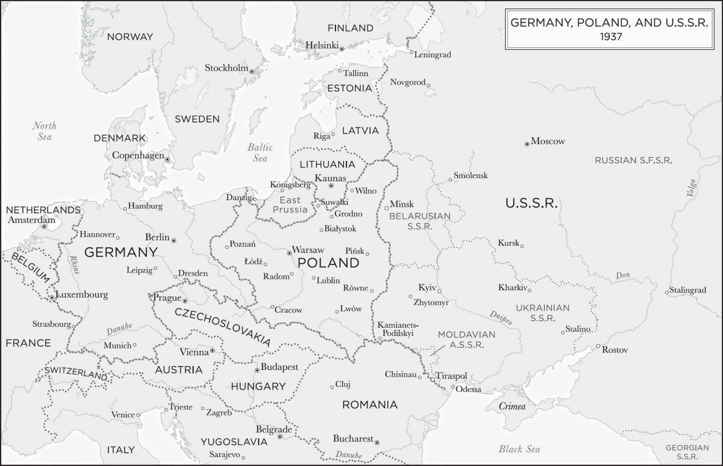
General instructions from the Warsaw headquarters of Polish military intelligence made clear that the disastrous Polish position in the Soviet Union could not be improved by a German invasion. Poland had no capacity to intervene on Soviet territory, and a German intervention would only make matters worse. Poland’s policy of equal distance meant that its territory was not only Germany’s shield to the east, but the USSR’s shield to the west. It was a dire situation, whose logic Polish diplomats, of course, did not explain to their German colleagues. They tried, as diplomats do, to make the most of what their interlocutors wanted, without acceding to it. When asked about a German-Polish alliance against the Soviet Union, they evaded the issue for as long as possible. When finally forced to issue a categorical response, they categorically refused.
In summer 1938, Göring was once again trying to tempt the Poles with the fertile soil of Ukraine. Matters came to a head that October, when Hitler presented the Poles with a “comprehensive solution” to all of the problems in German-Polish relations. Such a grand stroke was very much Hitler’s style, and he could believe that he was offering Poland a more than reasonable arrangement. The claims he made on Poland’s territory were mild by comparison with the German mainstream: that Danzig, a free city on the Baltic coast, be allowed to return to Germany; and that German authorities be allowed to build an extraterritorial autobahn across Polish territory between the main body of German territory and its noncontiguous Prussian districts. These two issues were negotiable, and indeed were negotiated. The real problem was what Poland would get “in return.” As German foreign minister Joachim von Ribbentrop explained to Ambassador Lipski, the Germans envisioned for the near future “joint action in colonial matters, the emigration of Jews from Poland, and a joint policy to Russia on the basis of the Anti-Comintern Pact.”
Ribbentrop made much of the gains of Ukrainian territory that Poland would supposedly win in the conquered Soviet Union. This fell on deaf ears. The decision against intervening in the Soviet Union had been made in Warsaw in 1933. Polish leaders had ceased to believe that Ukraine could be transformed easily by outside actors. They calculated that the Germans might take Moscow with Polish help, but did not see how a political victory could follow. They were keenly aware that a joint German-Polish invasion of the USSR would involve massive German troop movements around or through Poland, and anticipated that any such war would leave Poland a German satellite.
The side talk between German and Polish leaders during the critical weeks of late 1938 was about the Jewish question. Hitler had explained to Lipski in September that he anticipated a common anti-Jewish action by Germany, Poland, and Romania. In November, Hitler praised Polish authorities for undertaking the vital struggle against the Jews. At the time of his proposal of a “comprehensive solution” and in subsequent discussions with Polish diplomats, Hitler stressed the positive connection between an anti-Soviet alliance and the removal of the Jews from Europe, in the first instance from Poland and Romania. In his mind, the destruction of the Soviet Union was part of a larger campaign against the planetary Jewish threat. His Polish interlocutors did not follow this chain of reasoning.
In these negotiations the Germans and Poles seemed to be discussing the same desired outcome: an emigration of millions of European Jews to Madagascar. Although the two sides were apparently referring to the same island and the same action, something very different was meant. The Germans were perfectly correct that the Polish leadership feared the Soviet Union and wanted to be rid of most Polish Jews. The Poles saw these as distinct problems, where the attempt to solve one might create problems for the other. They were opposed to a war of aggression against the Soviet Union in any case. And they simply could not understand how the Germans meant to invade the Soviet Union while deporting the Jews of Europe. Any such mass deportation would have required the cooperation of the colonial powers, the British and the French, which would obviously not be proffered to countries that were trying to alter the world order by force. In simple logistical terms the idea also seemed to make no sense. How could Poland arrange a deportation of millions of Jews while the country was mobilized for war? Should the tens of thousands of Jewish officers and soldiers be pulled from the ranks of the Polish army? Insofar as the Poles understood German intentions, they were wary.
Most important was what the Poles did not understand. They could not grasp a special feature of Nazi thought: the aim to do something difficult or even impossible, in the secret knowledge that failure would prepare the way to something still more radical. The geopolitical vision of the Poles failed them here. They could not see that for the Nazis “Madagascar” was not simply a place, but a label, a bookmark in a burning book. It was synonymous with a Final Solution; or, in Himmler’s words, with “the complete extirpation of the concept of Jews.” For the Poles, Madagascar was an actual island in the actual Indian Ocean, an actual possession of the actual French empire, an actual site of an actual exploratory mission, a subject of actual political discussions, one of two places (along with Palestine) that were seriously considered as destination points for a mass migration of Polish Jewry. Polish leaders did not grasp that for the Nazis the issue was not the feasibility of one deportation plan, but the creation of general conditions under which Jews could be destroyed one way or another. Given their own obsession with the idea of statehood, Poles could not see that a bloody whirlwind of improvisation was coming, where German aggression would destroy polities, opening pathways toward the unthinkable. German leaders would later continue to speak of “Madagascar” even after their men had killed the Jews who were supposed to emigrate there.
—
Warsaw’s political vision reached as far as the idea of a State of Israel. If a European crisis was coming, perhaps Jewish rebels such as Avraham Stern would be able to organize a revolt—one that would lead to a Jewish state that would welcome millions of Polish Jews. Polish officers had already begun to train the rebels of Irgun who were to lead such a revolt, and the young men of Betar who were to be its soldiers. As Hitler and Ribbentrop were pressing their “comprehensive solution” in December 1938, Drymmer issued instructions that made explicit the final purpose of Polish policy toward Betar and Irgun. Warsaw was supporting Irgun and Betar so that they would be ready to press forward with violence to Jewish statehood when the crisis came.
Over the course of 1938, European states were already collapsing under Nazi pressure. As the year came to an end, the crisis seemed to be coming.