
MANY FAMILIES THROUGHOUT Carmarthenshire felt the loss of relatives during the four years of the war. The cessation of hostilities brought great joy to the population, but it also brought much bitterness. There were many cases in the county of families losing several sons while other families lost none, and instead of feeling gratitude that these men were spared, many bereaved parents felt a sense of unfairness that their sons had died while others had returned safely home. The five sons of Benjamin Lewis of Carmarthen all safely returned home after the Armistice, but other families in the town lost two, even three, sons, and their resentment was sometimes openly aired.
Several families from towns and villages throughout the county lost two or more sons during the course of the war, among which were, according to the relevant war memorials:
Ammanford: The brother and sister Charles Isgar Fletcher and Emma Grace Fletcher, the son and daughter of Thomas and Eliza Fletcher, of 27, College Street, Ammanford; Reginald Williams and John Williams, the sons of John and Winifred Williams, of Fairview, Walters Road, Ammanford.
Brynamman: Evan Moses and Lewis John Moses, the sons of Evan and Margaret Moses, of 18, Tinman’s Row, Brynamman; Arthur Powney and George Henry Powney, the sons of John and Elizabeth Powney.
Burry Port: Ernest Newton Cole and Victor James Cole, the sons of George and Elizabeth Martha Cole, of 2, Tyle Leg, Garden Suburb, Burry Port.
Caio: David Thomas and Johnny Thomas, the sons of Isaac Thomas, of Llwynhelig, Farmers.
Carmarthen: Thomas John Bowen and William Henry Bowen, the sons of Thomas and Elizabeth Bowen of 46, Lammas Street, Carmarthen; George Harold Chadwick and Thomas Louis Chadwick. George was the husband of Mary Elizabeth Chadwick, of 6, Parade Road, Carmarthen; [His brother, Thomas Louis Chadwick, lived in Manchester] Arthur Davies and James Davies, the sons of Henry and M. A. Davies, of 38, Water Street, Carmarthen; Evan and Thomas Davies, the sons of Daniel and Rosamond Davies; Isaiah and William Evans, the sons of John and Sarah Evans, of 115, Priory Street, Carmarthen; David John Fear and Sydney Fear, the sons of Frederick and Maria Fear; Cyril Mortimer Green and Hugh Mortimer Green, the sons of Thomas Mortimer Green and Catherine Green, of Aberystwyth, and former Carmarthen College graduates; David George Jones and John Daniel Jones, the sons of George and Sophia Jones, of 4, Shaws Lane, Carmarthen; Edward Owen Jones and Frederick Walwyn Jones, the sons of Robert Owen and Elizabeth Jones, of Oak House, Carmarthen; Arthur James Price and Thomas Henry Price, the sons of Thomas and Caroline Price, of 13, Blue Street, Carmarthen; Frederick George Tansill and William James Tansill, the sons of George and Catherine Tansill, of Towy Villa, Old Station Road, Carmarthen; Robert Thomas and David Thomas, the sons of George Thomas, of 28, Orchard Street, Carmarthen.
Conwil Elfed: Evan Holmes and George Henry Holmes, the sons of Josiah and Mary Holmes; Ebenezer James Owen and Thomas Arthur Owen, the sons of Evan and Hetty Owen, of Tymawr, Conwil Elfed.
Cross Hands: Daniel Mainwaring and William Mainwaring, the sons of Daniel and Hannah Mainwaring, of Glangwili Villa, Cross Hands.
Cwmmaman: Llewelyn Davies and Richard Davies, the sons of Henry and Anne Davies, of Glynaber, Twyn, Garnant; David Thomas and William Michael Thomas, the sons of David and Elizabeth Thomas, of Areulfa, Garnant; David Morgan Thomas and William Thomas, the sons of David and Ann Thomas of Maesywernen, Glanamman.
Gelliwen: Benjamin Simon Rees and David John Rees, the sons of Samuel and Margaret Rees, of Tyriet, Gelliwen.
Golden Grove: Alcquin Christmas Evans and Evan Evans, the sons of David and Harriet Evans, of Caefadog, Llanarthney.
Kidwelly: Mervyn Jones and Oliver Jones, the sons of David and Mary Ann Jones, of 33, Lady Street, Kidwelly
Laugharne: John Ritso Nelson Bolton and Stuart Bladen Nelson Bolton, the sons of Lieutenant Colonel Arthur Heely Bolton and Mary Bolton of Elm House, Laugharne; Kenrick Watcyn Brinley Richard Cook and Henry John Hugh Cook, the sons of Henry and Elizabeth Frances Cook (nee Hugh), of The Outfall Works, Roxley, West Ewell, Epsom, Surrey [whose mother was from Laugharne]; Robert Craig David and Thomas Jackson David, whose parents Robert Protheroe David and Agnes David had emigrated to Queensland, Australia from Laugharne; David Thomas John and John James John, the sons of William and Eliza John, of Bwlchnewydd, Laugharne.
Llanboidy: George Powell Roch and William Protheroe Roch, the sons of William Francis Roch, and Emily Catherine Roch, the daughter of Walter Rice Howell Powell, MP, of Maesgwynne, Whitland.
Llandybie: Ernest Thomas Dallen and William Edwin Dallen, the sons of Edwin William and Clara Dallen, of 4, Thomas Terrace, Llandybie.
Llandefeilog: George Beynon and William Richard Beynon, the sons of Walter and Elizabeth Beynon, of Tyrefail, Llandefeilog.
Llandeilo: Edgar Frederick Watts and William Arthur Watts, the sons of Edgar Frederick and Mary Anne Watts, of 15, Railway Terrace, Llandeilo; George William Wilson and Henry George Wilson, the sons of Mansel and Elizabeth Wilson, of Wyvern, Latimer Road, Llandeilo.
Llandovery: David Rice Evans and Gwilym Daniel Evans, the sons of Rees and Mary Evans, of 45, Stone Street, Llandovery; David John Jones and Goronwy Jones, the sons of John and Mary Jones; James Jones and John Jones, brothers who were killed together, the sons of Daniel and Mary Jane Jones, of 4, Towy Avenue, Llandovery; Edward Redding and John Redding, two brothers from London who had lived at Llandovery for several years prior to the war; Albert Lloyd Rees and John Cyril Rees, the sons of John and Charlotte Rees, of Y Fron, Llandovery.
Llanedi: David John Evans and Trevor Lewis Evans, the sons of David and Anne Evans, of 1, Sawel Terrace, Llanedi; Griffith Elphin Jones and Richard Alun Jones, the sons of Reverend Griffith and Catherine Jones, of Capel Newydd, Hendy.
Llanelli: Matthew Cheevers and Patrick Cheevers, the sons of James and Catherine Cheevers (nee Hanlon), of Horeswood, Campile, Co Wexford, who had both worked at Llanelli prior to the war; John Rees Davies and William Davies, the sons of William and Janet Davies, of 28, Mill Lane, Llanelli; David Rees Evans and Richard William Evans, the sons of John Vaughan Evans and Margaret Jane Evans, of Murray House, Llanelli; James Harland and William Joseph Harland, the sons of Marshal and Caroline Harland, of Long Row, Llanelli; Brynmor James and David Idwal James, the sons of David and Mary Ann James, of 19, Greenway Street, Llanelli; Frederick George Jayne and Walter Havard Joseph Jayne, the sons of Frederick William and Sarah Ann Jayne, of Crumlin, Coleshill Terrace, Llanelli; Ernest Pritchard and Arthur Thomas Pritchard, the sons of John Pritchard, of Abberley View, Wilden, Stourport, Worcs, who had both worked at Llanelli prior to the war; David Prothero and Thomas Prothero, the sons of David and Dinah Prothero, of 75, Berry Street, Workington, who had both worked at the Morfa Tinplate Works; Harold West and Thomas Henry West, the sons of Henry George West and Elizabeth West, of 10, Burlington Street, Barry Dock, who had both worked at Llanelli.
Llangain: John Davies and William Charles Davies, the sons of John and Mary Davies, of Factory Road, Llansteffan.
Llangennech: Vivian Guest Rees and Ivor Guest Rees, the sons of William and Annie Rees of 5, Goring Terrace, Llanelli; William John Close and Evan James Close, the sons of John and Gwen Close, of Bridge Street, Llangennech.
Llanglydwen: David Samson and Benjamin Samson, the sons of David Samson, of Trefedw, Hebron.
Llangynog: Thomas Ernald Davies and Edgar George Rees, the adopted son and son of Thomas Vicary Rees and Annie Mary Rees, of School House, Llangunnor.
Llansteffan: William Howells and Thomas Howells, the sons of John and Mary Howells, of Llain, Llanybri.
Maesycrugiau: Duncan Ian Bowen Lloyd and Gwion Llewellyn Bowen Lloyd, the sons of Charles and Margaret M. Lloyd (née Campbell), of Waunifor, Maesycrugiau.
Newcastle Emlyn: Charles Robertson Morris and Robert Parry Morris, MC, the sons of Henry Charles and Marjorie Hunter Morris, of the Metropolitan Bank, Newcastle Emlyn.
Penygroes: Emrys Roberts and Evan Roberts, the sons of John and Catherine Roberts, of Tyuchaf, Penygroes.
Ponthenry: Cecil Owen Maple and Reginald John Maple, the sons of George and Elizabeth Maple; Cecil John Clark and Sidney Herbert Clark, the sons of John and Albina Elizabeth Clark, of 111, Devon Road, Lower Easton, Easton, Bristol, who both worked at Ponthenry prior to the war.
Pontyberem: John Rees Thomas and Walter Rees Thomas, the sons of David and Mary Ann Thomas, of Park House, New Road, Pontyberem.
Pwll: Benjamin Davies and Thomas Davies, the sons of David and Esther Davies, of 4, Thomas Terrace, Pwll.
St Clears: David George Perkins and Ebenezer Perkins, the sons of George Perkins, of the White Lion Hotel, Pwll Trap; Evan Salmon and David Salmon, the sons of John and Sarah Salmon, of Lowlands, Narberth.
Taliaris: Alan Ralph Peel and Robert Lloyd Peel, the sons of Herbert and Mary Peel of Taliaris.
Talley: John Talley Evans and Thomas Evans, the sons of John and Elizabeth Evans of Halfway, Talley; James Arthur Parry and Thomas Peter Parry, the sons of John and Gwen Parry, of Parcbach, Cwmdu.
Newcastle Emlyn: Charles Robertson Morris and Robert Parry Morris, the sons of Henry Charles and Marjorie Hunter Morris, of the Metropolitan Bank, Newcastle Emlyn.
Trelech: Geoffrey Thyrkel Trafford and Edmund Thyrkel Trafford, the sons of William Thyrkel Trafford, of Plas Pant Howell, Trelech.
Whitland: Thomas Aston Phillips and William Lewis Phillips, the sons of Benjamin and Phoebe Phillips.
There were even tragic cases of families in the county losing three sons:
Carmarthen: Arthur Howie Evans, David George Evans, and William Archibald Evans the sons of David Evans, of 18, Parcmain Street, Carmarthen.
Dafen: Josiah and Mary Harries of Dafen lost their three sons, Joseph, Josiah and William Harries.
Llandybie: Thomas and Anne Hughes of Llandybie lost their three sons, Thomas John, Walter Grismond and William Hughes.
Kidwelly: John and Margaret Hughes of Kidwelly lost their three sons David, Samuel and William Henry Hughes.
Llandeilo: John and Mary Ann Scott, of Llandeilo, lost two sons, George Edward Scott and John Scott. Sadly, Mary Ann would also lose her husband John Scott due to the war.
Llandovery College: Two groups of three brothers with ties to Llandovery College fell during the war; David Jones Capenhurst Jenkins, Richard Jenkins and Morgan Jones Jenkins, the sons of Reverend John Jenkins, and Florence Jenkins, of Wellfield, Llantwit Vardre, Pontypridd; Henry Russell Weeks, Herbert Ward Meredith Weeks and Robert Percival Weeks, the sons of Alfred and Ada Weeks, of 75, Connaught Road, Cardiff.
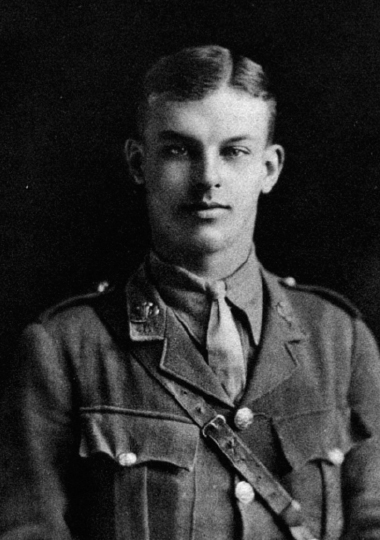
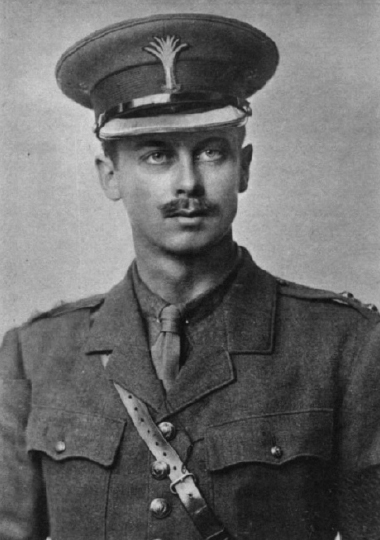
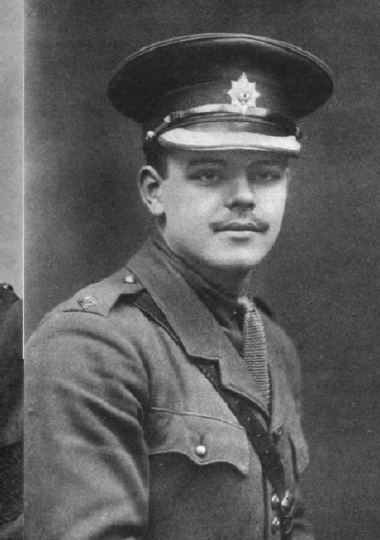
The Roderick brothers, Alan, Hume and John, all local solicitors and with bright futures ahead of them.
Pembrey: William and Ella Roderick of Pembrey lost three sons, all officers, Allan Whitlock Nicholl Roderick, Hume Buckley Roderick and John Victor Tweed Roderick.
The loss of sons, husbands and fathers proved a tremendous blow to families during the war, but the horror of losing two or three brothers, even a father and brother, in the same family must have been terrible. Many of the above losses wiped out the male heirs of many local families. Eliza John never got over the loss of her two sons, just over a decade after her husband William was drowned at Pendine. William and Ella Roderick of Burry Port must have been distraught at the loss of their three sons, all officers with bright futures.
During the years which followed the Armistice, the communities in Carmarthenshire, as did communities throughout Britain, strived to commemorate their fallen. After the final casualty toll had been finalised, often many months after the war due to the large numbers of men reported as missing, campaigns began around the county to erect war memorials, and as a result local War Memorial Committees were formed, tasked with raising funds and for formalising what names would be included on that memorial. As a result of all of this work there are a large number of fine war memorials around Carmarthenshire, taking all manner of forms. Many churches and chapels commemorated their parishioners on plain marble memorials, whilst families with enough money often commissioned private memorials to their sons and daughters, more often than not in the form of engraved brass or marble plaques or even magnificent stained glass windows. Villages and communities often raised memorials with statues of servicemen stood on a marble or granite plinth, while some, such as Ammanford, built clock towers. Communities also built Memorial Halls to commemorate the fallen with something which would be of practical use to the community.
There were also memorials erected by local businesses who had lost large numbers of their workforce, such as Buckley’s Brewery Roll of Honour at Llanelli; Cleeve’s Western Anthracite Company, who produced a photograph album; The Old Castle Tinplate Works at Llanelli; Morfa Tinplate Works at Llanelli; and the Morlais Tinplate Company, the last three of which are held at Kidwelly Industrial Museum.
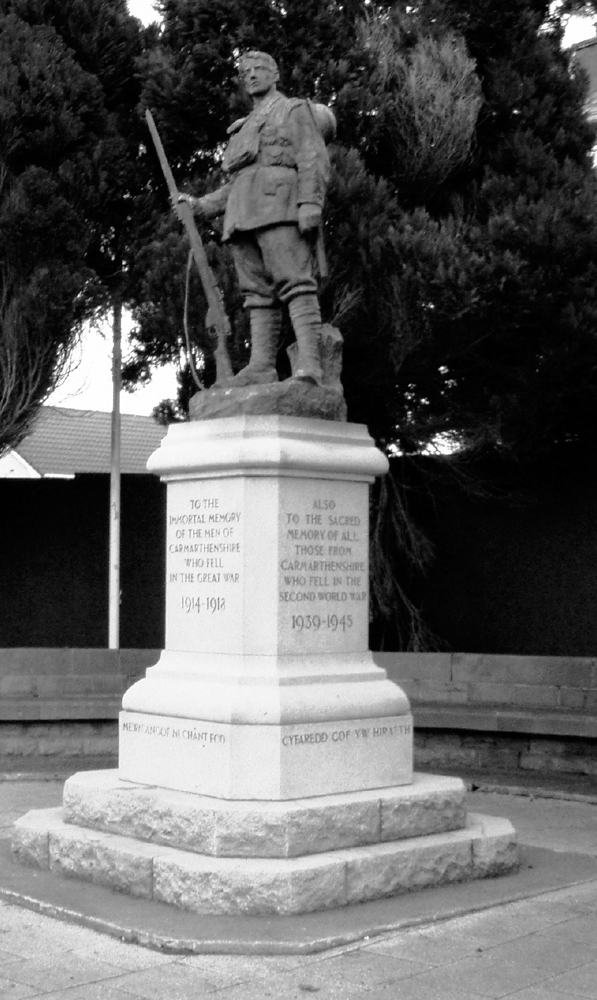
Carmarthen County War Memorial, designed by Sir Goscombe John, the intended centrepiece for commemoration in the county.
The Guildhall at Carmarthen is the location of the Memorial to the Welsh Field Company, Royal Engineers, a unit that did such good service in Gallipoli, Egypt and Palestine; while Llanelli is home to a Memorial Cross which commemorates the fallen members of the 4th Welsh.
Many local schools also commemorated their fallen. There are known memorials at Carmarthen, Whitland, Pwll, Llandyssul, Llandeilo and Llandovery Schools which commemorate fallen pupils and there are doubtless more which the author has yet to trace.
In May 1921, the Mayor of Carmarthen held a meeting to consider the question of a Borough War Memorial. The Lord Lieutenant of Carmarthenshire had already suggested the idea of a County War Memorial. After much discussion and many arguments about the form and location of a War Memorial to commemorate the fallen of the County of Carmarthenshire during the Great War, it was decided that it should be built and installed in the County Town of Carmarthen, outside the front of the Priory Street Hospital. The eminent Welsh sculptor, Sir William Goscombe John, was commissioned to create the memorial in bronze and it was to sit on a plinth of granite, with the simple inscription:
“TO THE IMMORTAL MEMORY OF THE MEN OF CARMARTHENSHIRE WHO FELL IN THE GREAT WAR, 1914-1918”.
On Thursday 4 September 1924 the Memorial was unveiled, following a service at nearby St Peter’s Church and a procession, led by the Guard of Honour of the 4th Welch, Colonel John Vaughan Campbell VC, CMG, DSO, ADC, had the honour of unveiling the War Memorial in front of a huge crowd of thousands of bereaved families from the county and the ceremony was concluded with prayers, speeches and the Last Post.
A Memorial booklet was published to commemorate the memory of the fallen of the Great War; it held the names of the 1,913 fallen, including three nurses, 123 officers, 254 non commissioned Officers and 1,533 other ranks.
Although it is outside the scope of this work to republish these names, they can be found on the author’s website: www.wwwmp.co.uk
Recent research has been carried out using modern database compiling which suggests that over 2,798 men and women from the county actually lost their lives as a result of the Great War. There are an additional 200 names on memorials throughout the county who have not presently been positively identified, so the total may well reach the 3,000 mark. A government survey at the beginning of the war published a total of 20,506 men of military age in the county, with an additional 5,706 men aged 36 to 40. At the outbreak of war around 14,000 of these men were working in the collieries in the Llanelli and Burry Port area and the Gwendraeth and Amman valleys, many of these in reserved occupations. There was substantial employment around Llanelli in the steel and tinplate industries and tinplate works had also been developed at Pontardulais, Kidwelly and Burry Port. There was also a large agricultural workforce at the time and surrounding the area around Drefach Velindre was a thriving woollen industry.
These industries all began to suffer after the Great War when the entire country fell into recession and, after a brief resurgence due to the rising profits in tinplate, by 1921 almost all of the tinplate works in the county were idle. The coal industry survived until the mass closures of the mines in the 1960s and the woollen industry has all but vanished from the county.
The breakdown of the locations of the burials Carmarthenshire men and women who fell during the Great War are: one in Australia; 519 in Belgium; four in Canada; one in Cyprus; four in East Africa; eighty in Egypt; 128 buried or commemorated in England; 1,355 in France; 171 in Gallipoli; eleven in Germany; five in Gibraltar; sixty-five in Greece; one in Hong Kong; fourteen in India; forty-eight in Iraq; five in Ireland; 105 in Israel; fifteen in Italy; one in Macedonia; twelve in Malta; one in Poland; three in Scotland; three in South Africa; one in Sudan; one in Syria; one in the U.S.A.; 216 in Wales and one in Yemen. As stated earlier, over 200 men are not accounted for or are not identifiable from the surviving records.