
Chapter Five
A LARGE NUMBER of local men had the good fortune to be given leave over Christmas and spent precious time at home with their families. Most of the newspaper columns were filled with tales of returned servicemen, along with news of several who had been awarded gallantry medals during the fighting over the previous months. However, as the new year opened, the good fortune of having sons and husbands home for Christmas was tempered by the continual reports in the newspapers of fresh casualties, whilst the introduction of meat rationing would cause more anguish to the civilian population.
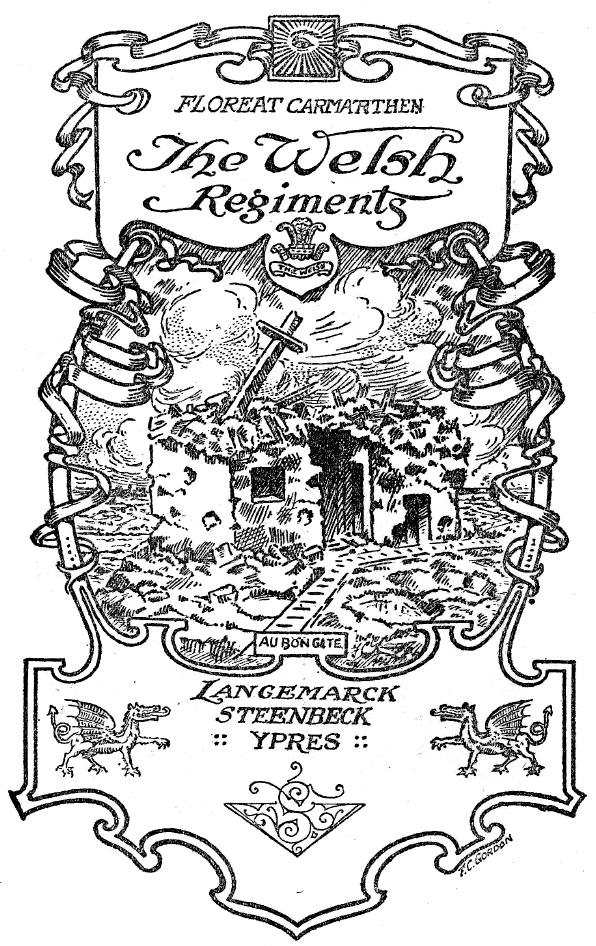
Floreat Carmarthen, a page from the 1917 Souvenir of the Welsh Division.
The 38th (Welsh) Division printed a 1917 New Year souvenir book over Christmas, the frontispiece depicting a drawing of a pill box, named ‘Au Bon Gite’, which was headquarters for the 38th Division during the Battle of Pilckem Ridge, beneath the title ‘Floreat Carmarthen’ (May Carmarthen Flourish). The book was filled with sketches, mostly drawn by the well known Borth artist Howard Lloyd Roberts, a member of 129 Field Ambulance, along with articles, ditties, poems and songs written by its troops, most of which centred on their successful capture of Pilckem Ridge:
On Pilckem Ridge’s battered clay,
In Hell’s own fury
The victors and their trophies stay
To tell the story;
But those that lie, their conflict done,
Took Death a captive;
To them the honour, for they won
Life’s grand objective.
Concerts were held all around the county to celebrate the safe return home of local heroes, many of whom were presented with personal items, ranging from purses of money to items such as engraved watches, snuff boxes and cigarette cases. However sad news reached the small village of Llanddowror that its local blacksmith, Sergeant David James, was reported as missing. He had been on leave during December 1917, before returning to Egypt aboard the troopship Aragon. On 30 December 1917, the SS Aragon arrived close to Alexandria Harbour, having sailed from Marseilles almost two weeks previously, laden with around 2,700 troops and nurses. As Aragon neared port she slowed down to await her escort, but was torpedoed and sunk by the German Submarine UC-34, with the loss of 610 lives. Also among the dead was Private David Bowen Jones of Llandefeilog, serving with the Royal Scots Fusiliers.

Corporal David John Thomas MM, a gallant Pontyates marine.
Although small scale fighting continued during the early months of 1918, the campaign in Palestine was nearing its end. News reached Ponthenry during February that Corporal David John Thomas, a Royal Marine, had been awarded the MM for rescuing wounded men under fire at Cambrai. The gallant marine was a former collier and a member of Ponthenry St John’s Ambulance Division.
The reality of war was felt in the county when a lifeboat containing the body of a sailor washed ashore at Laugharne on 8 February. The body was wearing a lifebelt and inside a pocket was an identity certificate bearing the name of Dominzo Mobilo, with a Cardiff address. Two months later another boat washed ashore at Lacques Farm, Llansteffan, containing the badly decomposed body of a sailor.
Casualties were still being suffered at a steady rate on the various fronts, with fifteen Carmarthenshire men falling during January 1918 and a further fourteen during February. Among those on the casualty lists was William Henry Harries, of Tumble. He was the son of David and Margaret Harries. He married Lizzie A. Morgan early in 1912 and the couple set up home at Aubrey House, Bethesda Road, Tumble, where their son Frederick Lewis Harries was born on 16 November 1912. William worked at Llanelli in the Locomotive and Carriage Department of the Great Western Railway and enlisted at Tumble in the Royal Engineers. He saw action at Loos and at Passchendaele before being wounded and invalided home, where he died on 16 January 1918, aged 27, and is buried in Tumble (Bethania) Congregational Chapelyard.

William Henry Harries of Tumble, an employee of the Great Western Railway.
These two months, however, were only a lull in the ferocity of the war. As March began, rumours of an impending German offensive circulated among the allied defenders of the Western Front. On the misty morning of 21 March 1918 the British lines on the Somme were hit by the most intense artillery barrage the British had ever seen and out of the fog appeared scores of well armed German troops, amongst them infamous Storm Troopers.
This offensive, known by the Germans as Operation Michael and the nick-name ‘Kaiserschlacht’, or Kaiser’s Battle, was launched against the British on a wide front running from Arras to La Fére and caused considerable concern amongst the Allies, with major losses suffered by the British until the Germans were finally stopped on 5 April 1918. By then the British had lost all of the ground gained since the launching of the Somme offensive in July 1916 and had suffered 177,739 killed, wounded and missing (90,882 of them in Gough’s Fifth Army and 78,860 in Byng’s Third Army); of these, just under 15,000 died, most with no known grave. In total the Allies had lost 255,000 men. At the heart of a desperate defensive action, which centred around the village of Beugny, was the 9th Welsh, which gained a special mention in despatches for its efforts in holding the village while the rest of the British troops in the area retreated.
Almost eighty Carmarthenshire men were killed during the desperate fighting to stem the German attack on the Somme between 21 March and 6 April 1918. These men were from all over the county, serving with a multitude of units. Amongst the fallen was Private Joseph Johnson, the son of James Henry Johnson and Emma Johnson, of London. He moved to West Wales and settled at Llanddowror, marrying Mary Phillips, the daughter of Oliver and Martha Phillips of Danypound, on 25 October 1913 and the couple then went to live at Woodhouse Cottage, Laugharne. He enlisted in Carmarthen on 11 March 1915 and joined the Army Service Corps as a driver, but was later transferred to the 1st Battalion, East Yorkshire Regiment. Johnson was killed in action on 31 March 1918; however nothing at all was heard of him by his family until Christmas Day 1919, when his wife Mary received a telegram from the War Office saying that he was confirmed as killed. Joseph left two children; Oliver Henry Johnson was born on 2 March 1915 and Joseph Randall Johnson on 20 July 1917. Sadly, his widow Mary died after a short illness on 10 February 1920, leaving the two boys orphaned.
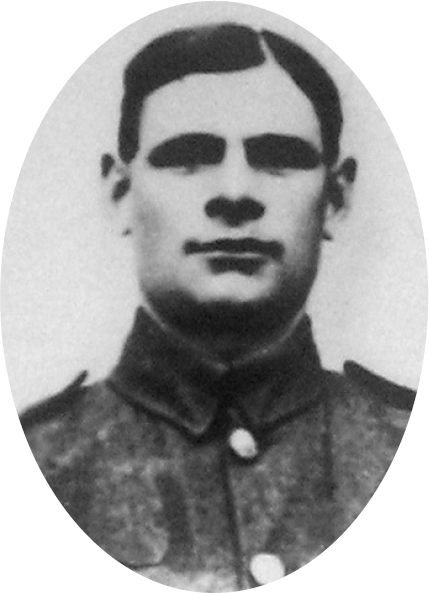
Private John Johnson, of Llanddowror, whose death took so long to be confirmed, the news of which caused his widow’s premature death.
The British rushed troops to the Somme to help plug gaps in the line which had been left after the near destruction of several divisions and at the end of March the 38th (Welsh) Division moved south, taking up positions north of Albert and facing the valley of the River Ancre. Several of the battered divisions were moved north to recover from the fighting, one of which was the 19th Division, which included the 9th Welsh and 9th RWF, who took up positions north of Ploegsteert near Messines Ridge.
The Germans had not given up on their offensive plans, and merely switched their focus north, with a major attack on the Lys. They intended to break through the lines, at the time partially held by the Portuguese, and force their way through towards the channel ports, cutting off the British lines of supply.
Following the same pattern as Operation Michael the previous month, on the evening of 7 April 1918 the Germans attacked the Allied line between Armentières and Festubert behind an intense artillery barrage. The centre of the attack broke through the Portuguese and threw the defence into disarray. On 10 April the Germans attacked Messines and hit the 19th Division hard, causing major casualties. The 40th Division was also hard hit. Both divisions had scores of Carmarthenshire men serving in their Welsh battalions.
While the British were fighting desperately in France and Belgium, news reached Carmarthen that one of its local heroes had been killed in Palestine. Sergeant James Alexander Orman was the son of James Henry and Emily Orman, of Southampton and the husband of Emma Jane Orman, of 6, Glannant Road, Carmarthen. He had worked as a collier at Dynant Colliery at Tumble prior to the war. He served with the 1/4th Welsh and had won the DCM at Gallipoli on 11 August 1915, ‘For conspicuous gallantry on 9th August 1915, near Anzac, when, although wounded early in the day, he remained with his Company until dark, displaying great courage and resource.’ He was killed while the battalion was taking part in operations in the Jordan Valley on 9 March 1918 and is buried in Jerusalem War Cemetery.
During a meeting held at Carmarthen during the month by the Carmarthen Food Committee, Alderman W. Evans brought up the matter of an Order of the Food Controller authorising: ‘the use of any methods or appliances for the purpose of taking freshwater fish, the use of which would otherwise be illegal’. As a result of this somewhat foolish order, some people in Carmarthenshire had been left under the impression that anybody could fish in any waters, preserved and unpreserved and even use salmon paste, lime or dynamite! The Executive Officer said the Food Controller would not allow the use of any of these extreme fishing methods, and anyone using them would no doubt be prosecuted.
At the end of March The Amman Valley Chronicle was sent a copy of a letter from a local soldier, Leslie Woodford Stone, who wrote home chronicling some of the heavy fighting in France. The letter gives an insight into the resolution of the British soldier in the face of adversity;
‘...Men and women get killed and maimed, scarcely a house in the whole town which has not at some time or other been struck with fragments of bomb or shell and always the anxiety and yet it all goes on apparently without a murmur. I often think of these people and their wonderful fortitude and then contrast them with some of our own people, who know absolutely nothing of war, cannot even imagine it and yet cry out for a peace at any price, just for some trifle which they cannot get at the moment, or because something is going to be different in Britain to what it was in pre-war days. Here in the war stricken area is their object lesson. But, perhaps, the condition in which we now see Russia will open their eyes and show them that the only way to have peace, I mean a peace worth having, a peace, which we must have if we mean our comrades who have fallen to be honoured, is to defeat the Germans and bring them to our terms and there is no possible way of there being any half-way in doing so.
‘Speaking personally, I should not like to return thinking I had thrown nearly four years of the best part of my life for nothing, or worse than nothing. No, we must simply carry on and keep smiling; well, as much as possible.
‘I am afraid I am not quite such an optimist as I was, for I really cannot imagine the end coming this year, even though we have the entry of America. Of course, anything may happen and of a certainty we all hope for the speediest and best ending.’
Seventy more Carmarthenshire men were killed during the heavy fighting on the Lys and with the situation becoming desperate in France, on 11 April 1918 Sir Douglas Haig issued his famous ‘Backs to the Wall’ letter to his troops, which caused mixed emotions of resolve, fear, anger and even amusement amongst them;
‘Three weeks ago today the enemy began his terrific attacks against us on a fifty mile front. His objects are to separate us from the French, to take the Channel Ports and destroy the British Army.
‘In spite of throwing already 106 Divisions into the battle and enduring the most reckless sacrifice of human life, he has as yet made little progress towards his goals.
‘We owe this to the determined fighting and self-sacrifice of our troops. Words fail me to express the admiration which I feel for the splendid resistance offered by all ranks of our Army under the most trying circumstances.
‘Many amongst us now are tired. To those I would say that Victory will belong to the side which holds out the longest. The French Army is moving rapidly and in great force to our support.
‘There is no other course open to us but to fight it out. Every position must be held to the last man: there must be no retirement. With our backs to the wall and believing in the justice of our cause, each one of us must fight on to the end. The safety of our homes and the Freedom of mankind alike depend upon the conduct of each one of us at this critical moment.’
Although the ‘backs to the wall letter’ was meant to promote a more vigorous defence of the Western Front, many of the soldiers there were not impressed by Haig’s words. The response of Private William Shanahan of the 15th Welsh, from Llanelli was: ‘Well that’s it boys. Hearts is Trumps!’ as he sat in his dugout near Martinsart and continued playing his game of cards! A common comment among the troops was, ‘What Bloody Wall?’
The government, which had been holding back the flow of reinforcements to France, now began to see how serious the situation was and began releasing thousands of men, mostly 19 year olds, who arrived at Étaples before being posted to whichever unit needed them most. Advertisements for more men often filled all of the local newspapers during April and bitterness towards the miners became outspoken;
‘A lot of young miners had enlisted during the War and others had been conscripted. Some of the publicans, business men and outdoor workers, who were too old for active service but young enough for home service, now rushed to the mines and got work which exempted them from home service. Here they were doing “Work of National Importance” and they were too windy even to join their own town guard. There were a few exceptions, who wouldn’t even go down the mines: they had been exempted at umpteen tribunals until the men who sat on the Tribunal Boards were ashamed to exempt them anymore and at last they were forced to go.’ [Old Soldier’s Never Die, Frank Richards, DCM, MM.]
Many of these men felt no shame. To read any issue of any local newspaper at the time gives one a sense of the scale of people attempting to avoid conscription. County Tribunals sat in every town throughout Carmarthenshire at weekly intervals and their minutes are crammed with details of people trying to appeal their call-up:
‘We are really quite at a loss to understand the attitude of the young unmarried miners, in face of the appalling sacrifices made by men in all other occupations and at a time when the destiny of our country is in the balance. We cannot believe that adequate measures have been taken to educate the rank and file of the miners in these matters. They take their lead from the most extreme Socialist leaders...’
This crisis in manpower was now manifesting itself in many different ways. A dozen local servicemen were sent home in March to work at the Kidwelly Brickworks, but within weeks were drafted back to France. The townspeople were outraged at this, as many of the men were married with children, and one, Joseph Parry, was 56 years old and had served during the Boer War!
During a speech at Whitehall during April, which covered the crisis in manpower, Lloyd George said: ‘We must keep up our strength to the end, whatever the strain on our resources. We had already raised in this country for military and naval purposes very nearly six millions of men and it was a fundamental condition of success for the Allies that the Navy and shipping must come first. Avery strict comb-out was being made in some of the essential industries. About 100,000 Grade 1 men had been taken from the munitions works. A call of 50,000 men had been made on the coal mining industry and another call of an equal number would be made. The transport services had been called on to supply fit men as well as the Civil Service. No fit men below the age of 25 were to remain in the Civil Service and that would apply to other industries.’

Welshman David Lloyd George, the Prime Minister who took a dislike to Douglas Haig, and kept reinforcements from the BEF in early 1918.
The main items within the speech covered: New Sources of Manpower - Age limit to be raised to 50 and in certain specified cases to 55, the age at which men may be sent to the front reduced from 19 to 18 and a half, ministers of religion for non-combatant service, conscription for Ireland; Old Sources - A clean cut in the Civil Service of fit men below 25 years of age, a comb-out among Civil servants beyond that age, cancellation of all exemptions on occupational grounds, restriction of the right of appeal to medical grounds only; Age Limit - Doctors to be included among the specific cases of men between 50 and 55, estimate of the proportion of fighting men to be obtained between ages of forty two and fifty (seven per cent), men of 45 to 50 to be taken for home defence, lads of 18 and a half to go out only if they have had six months training; The Comb Out - Fifty thousand more men to be taken from the mines, essential industries to be very strictly combed, transport services to release the greatest possible number of picked men.
Towards the end of April the comb out began in the Gwendraeth and Amman Valleys. During the first week the tribunal worked through the men at Tumble, New Dynant, Blaenhirwaun, Cross Hands and other collieries in the Gwendraeth Valley, then a second week was spent at Glanamman, Brynamman and the surrounding districts of the Amman Valley. Hundreds of miners were given their call up papers and by the end of April were on their way to training battalions.
By now the German offensive on the Lys was halted, the battle officially ending on 29 April 1918. One of the greatest soldiers to come out of Carmarthenshire was killed towards the end of the battle. Henry Percy Bright Gough was the son of Frederick George and Sarah Ann Gough, of Llanelli and the husband of Martha Reid Gough (née Fullerton). Henry was educated at Llandovery College and Cambridge, playing rugby and hockey for the University. On leaving Cambridge he continued playing rugby, at half-back, both for Llanelli and Vale of Lune, Lancaster. At the outbreak of war he was a science master at Oakham Grammar School, but left to enlist in the 14th Welsh. During 1915 he was commissioned and posted to the 17th Welsh and rose to the rank of captain before the battalion left for France. Harry had proved his courage and leadership skills many times during the war and had been awarded the MC twice, the first at La Vacquerie: ‘For conspicuous gallantry and devotion to duty. He has done splendid work when in charge of parties recovering mines. He was also instrumental in rescuing eight men from a demolished cellar. This work was accomplished under heavy fire and occupied several hours.’ He was awarded his second MC for his gallant leadership when the battalion was virtually annihilated at Bourlon Wood in December 1917 and Harry found himself in command of the survivors. The division was caught up in heavy fighting during the spring of 1918 during the German Offensive on the Lys and were in positions near Mont de Cats, near Ypres. He was sent to command a section of the East Surrey Regiment, which was defending a support trench system running north to south through Strazeelle, but was severely wounded when shell splinters struck him in the groin. Gough died at the 62nd London Casualty Clearing Station on 22 April and is buried at Arneke British Cemetery.

William Archibald Thomas ‘Archie’ Morris DCM, the first Carmarthen man to win the Distinguished Conduct Medal.
The battered 19th Division was moved south to the Champagne region to rest after fighting in both Operation Michael and Operation Georgette. The 38th Division, meanwhile, began to make its presence felt on the Somme, capturing Bouzincourt Ridge during a costly action on 22 April, in which five Carmarthenshire men were killed.
The funeral of Sergeant William Archibald Morris DCM, in Carmarthen attracted massive crowds on the streets of the town on 7 May. He was the first man from the town to win the DCM and had proved his gallantry time and time again with the 2nd Welsh until mortally wounded during the German offensive on the Lys, dying at the 1st Southern Military hospital, Birmingham, on 2 May. ‘Archie’ is buried in St David’s Churchyard, Carmarthen. The Chief Constable of Carmarthenshire Constabulary, Herbert Hilton passed away on the same day and was afforded a lengthy obituary in The Carmarthen Journal, alongside the obituary of Archie Morris.
The horrific find of another badly decomposed body washed ashore at Llansteffan made the headlines of The Welshman in April. Also filling the pages were details of a meeting at Carmarthen County Hall, which covered such topics as county archaeology and town burgesses. Lists of wounded soldiers and news of several men home on leave were also published, including news of David Brigstocke of Bridge Street, St Clears, a bugler with the 24th Welsh, wounded in Palestine and captured by the Turks.
In May 1918 the teachers of Carmarthenshire went on strike in protest about their pay. An assistant teacher in the county earned little more than £2 a week, while a colliery labourer could expect to earn £3 to £4 per week. A meeting at Pontyberem early in the month discussed the pay of teachers at Llanelli, who were paid more than teachers in the rest of the county. Members of the Labour Party were in attendance in support of the teachers’ demands, sticking more knives into the Liberal Party, whose popularity in their one time heartland was dwindling fast. To add insult to injury, a week later the calling up of teachers into the army began.

Trooper David Brigstocke of St Clears, a young member of the Pembroke Yeomanry, who was captured by the Turks in Palestine.
An abortive assault by the 15th Welsh on Aveluy Wood on 10 May cost the battalion twenty-three men killed and over a hundred wounded. Amongst the dead were three Carmarthenshire men: Corporal Thomas Husband of St Clears; Private Evan Thomas Davies of Llangunnor and Private Thomas Sydney Williams of Llanelli.
There was, however, some good news. In front of crowds of thousands in Carmarthen on Wednesday 15 July, John Hinds MP bestowed the Order of the British Empire medal at the request of the King to fourteen workers who had braved a fire at Pembrey Munitions Factory in December 1917 and doused the flames, saving the factory from a cataclysmic explosion. One of the young women, 15-year-old Violet Ann Davies, was from Llanelli, and the crowd roared their appreciation of her bravery when John Hinds pinned the medal onto her blouse.

Miss Violet Annie Davies, one of the heroines of the Pembrey Munition Works fire.
On 20 May a German prisoner of war, Franz Sauter, escaped from a camp at Llandybie. The man was a fluent English speaker and made his way to Grovesend, hoping to steal a boat at Swansea. He was caught by the police within two days. On the same day that Sauter escaped, thousands of people from the area assembled around the Town Hall in Laugharne, gathering to enjoy the fun of the Common Walk, which takes place every leap year. The walk is also known as the ‘Beating of the Bounds’ and was led by Tom John, a miner who had returned to Laugharne from Abergwynfi especially for the occasion. After breakfast in the streets, the assembly started off from the Grist square at 7 am for their day of fun, which saw them walk the twenty plus mile boundary of Laugharne. The main party returned to Laugharne by 4 pm, and, after confirming that the boundaries had not been encroached upon, the pubs were drunk dry!
On 27 May the Germans launched the third of their offensives of 1918. Almost the last gamble, Operation Blucher-Yorke, aimed at Paris, began with the capture of the Chemin des Dames. The 19th Division was again hit during desperate fighting around Bligny and suffered considerable casualties for the third time in as many months. April had cost Carmarthenshire 105 men killed, whilst May would add another sixty men to the total.
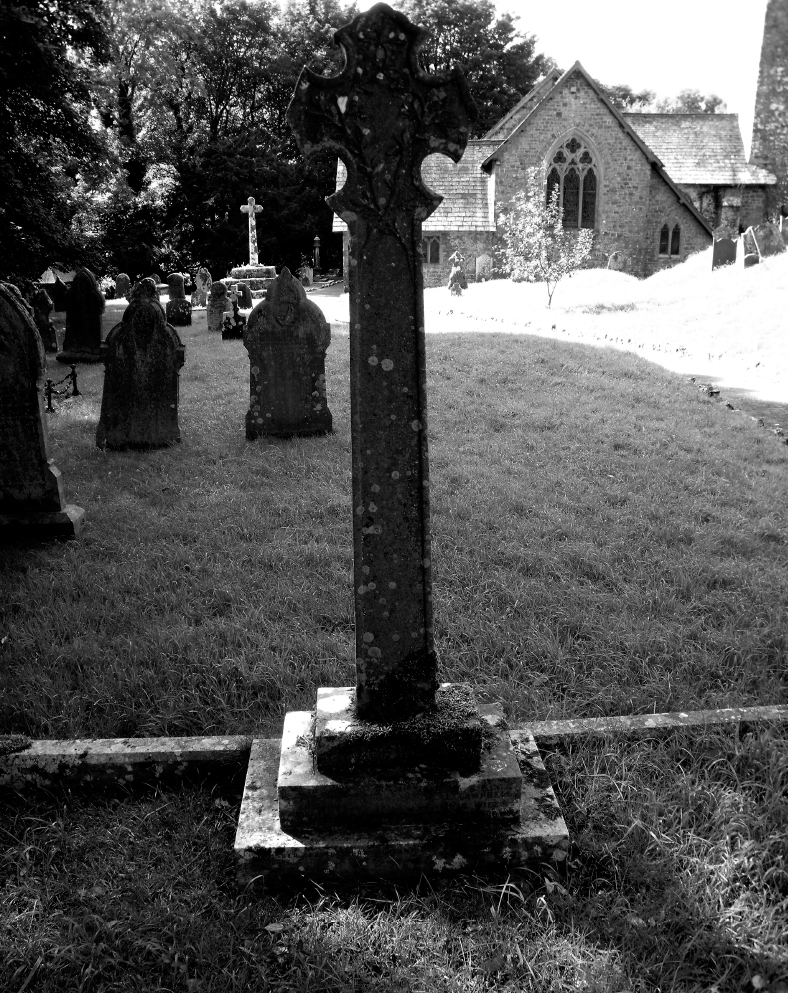
The Campbell family grave at Stackpole Elidor Churchyard in Pembrokeshire.
Among the county casualties for April was the distinguished name of Lieutenant Colonel Eric Octavius Campbell, DSO. He was the youngest son of Frederick Archibald Vaughan Campbell, 3rd Earl Cawdor and Countess Cawdor, of Golden Grove, Stackpole Elidor and Cawdor Castle, Nairnshire. He had been in the army since leaving Eton in 1905, when he was commissioned in the Seaforth Highlanders. He served in France with distinction, was wounded several times and awarded the DSO twice before becoming Brigade Major of 44 Infantry Brigade. He died of a cerebral haemorrhage on 4 June in hospital in London and was buried in the Cawdor Plot of Stackpole Elidor Churchyard, Pembrokeshire.
By 6 June the German offensive had been halted on the Aisne by a combined French, British and American effort. The Americans had joined the fray at a late stage but had proved themselves gallant soldiers. During this period the 53rd (Welsh) and 74th (Yeomanry) Divisions carried on with their offensive under Allenby in Palestine, but due to the precarious situation in France the 74th Division was recalled to the Western Front, arriving at Marseilles on 7 May. It then entrained for northern France and moved to positions on the Lys. Out of the original three county infantry battalions, the 24th Welsh were now in France as well as the 15th Welsh. The 1/4th Welsh remained in Palestine with the 53rd Division, as did the Welsh Field Company, Royal Engineers.
Although minor engagements would involve men from the county, June and July were relatively quiet, with twenty-three county casualties during June and thirty five during July.
While the Carmarthenshire teachers remained out on strike during June the miners at Tirydail decided to strike at the beginning of the month. Almost 600 men laid down their tools in protest at the sacking of some of their fellow workers. The owners, Cleeve’s Western Anthracite, re-instated the men and the colliers went back to work.
Land workers throughout the county were called up during June and at a meeting of the Carmarthenshire Farmers’ Union on 8 June the figure of 1,000 workers called up in the county was given to the large crowd in attendance, but this was later revised down to 500. The timing could not have been worse, as harvest time was about to begin and labour was needed to bring in the crops. The month also saw claims by county roadmen for an increase in wages. At a meeting of the Carmarthenshire Main Roads Committee the motion was passed to award the roadmen an extra three shillings. The county teachers strike was in its seventh week by 15 June, and there was no sign of an agreement being reached.
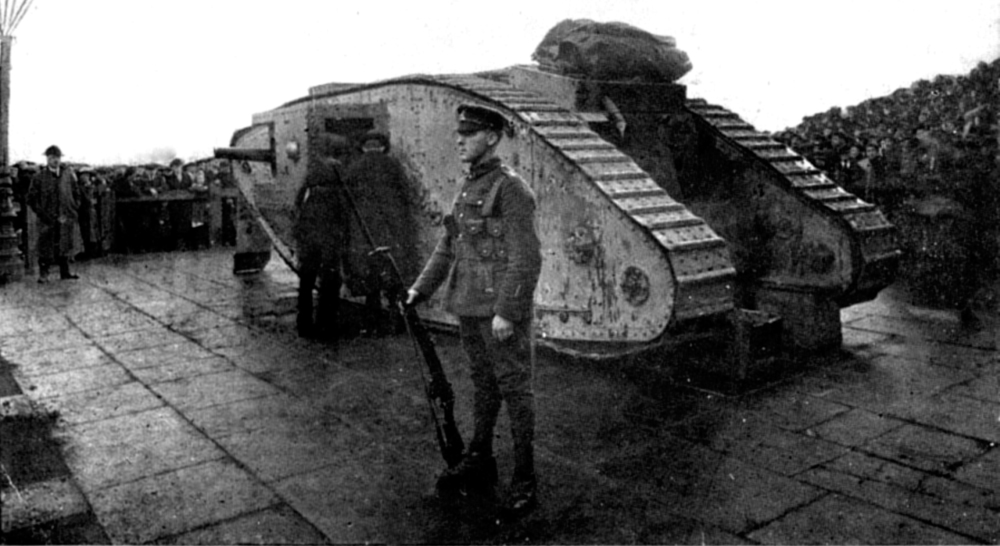
Julian the Tank at Carmarthen, parked where the 15th Welsh recruiting car had parked two years earlier.
No doubt many of the strikers found time to visit Llanelli, where a Mark I tank, named Julian, was on display throughout June. To allow the government to borrow more money to help fund the Great War, War Bonds and Savings Certificates were introduced and businesses and members of the public were encouraged to invest to help the War Effort. The tank arrived on 10 June and was driven to the main entrance gates of the town hall, where it was parked up and opened up for three days for members of the public to look around it. The tank drew great crowds of people, who were fascinated by the giant ‘landship’ of which they had heard so much during its actions on the Somme and at Cambrai. Over £100,000 was collected at Llanelli on the first day, and by the end of its stay the tank had generated money amounting to £309,406. The chief investors were:
Lloyds Bank £25,000
The Stepney Spare Wheel Co Ltd £5,000
Prudential Assurance Co Ltd £5,000
Pearl Assurance Co Ltd £2,500
Pioneer Life £1,000
The Old Castle Tinplate Workmen £2,500
T. M. Davies Highfield £5,000
Richard Thomas & Co Joint War Relief Fund £1,000
Money was still being collected there on the Wednesday evening when the tank left for Carmarthen, and was displayed at the Guildhall Square on Thursday 13 June. The total money raised in Wales during the first two weeks of the tour was £1,937,593.
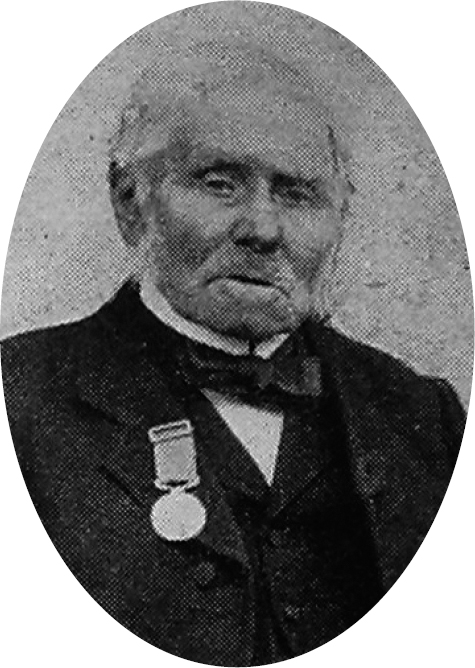
Thomas Jones of Myddfai, a veteran of the Crimean War.
On 9 July one of Carmarthenshire’s oldest residents passed away. Thomas Jones was 93 years old, and had fought in the Crimean War. His purse for the campaign was enough to buy a farmstead, Llwyn Meredydd, in the parish of Myddfai, where his descendants still farm today. The old soldier was buried at Bethania Methodist Chapel, Myddfai.
The strike at Tirydail Colliery might have been settled, but the teachers were still out, with fifty four schools affected around the county. More positively, the village of Llansteffan saw record numbers of visitors during the month and Ferryside’s annual carnival was its most successful to date.
August 1918 was to prove to be the turning point of the war. The first week proved to be relatively peaceful, but had still seen nine local men killed. Amongst them were:
Lieutenant Charles Vincent Todman of 16 Squadron, Royal Air Force, was killed in France on 3 August. He was from Laugharne, a former pupil of Whitland Grammar School, and worked as a teacher in London prior to being commissioned into Queen Victoria’s Rifles. He was wounded at Ypres earlier in the war and on recovery volunteered to serve with the Royal Flying Corps. He was killed in after his F.E.2b. aircraft was shot down by the redoubtable German ace, Paul Billick, of Jasta 52, and is buried alongside his pilot in Aubigny Communal Cemetery Extension.
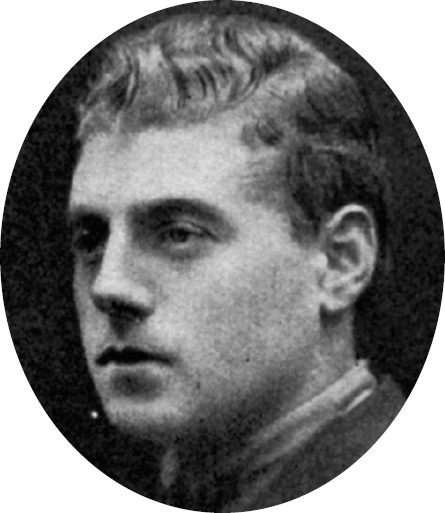
Captain Walter Henry Lloyd RAMC, the Carmarthen doctor.
Captain Walter Henry Lloyd, of the Royal Army Medical Corps. He was the son of Walter and Sarah Lloyd, of 12, Lammas Street, Carmarthen. He trained as a Surgeon in London, gaining an MB, and BS from London University, and had served at the Wandsworth Military Hospital for nine months, prior to volunteering to serve on the Western Front. He was commissioned in the Royal Army Medical Corps in February 1916, joining the 1/20th Battalion, London Regiment, attached to 5 Brigade, 2nd (London) Division. The division was on the Somme throughout the summer of 1918, and it was here that he was killed on 4 August, aged 27; he is buried in Contay British Cemetery.
On 8 August 1918, at the start of what has become known as the ‘Hundred Days’, a combined British, Canadian, Australian and French offensive astride the Amiens to Péronne Road at Villers-Brettoneux broke the German lines, prompting the German commander Ludendorff to call it The Black day of the German Army. The fighting here lasted until 13 August and resulted in three county men being killed: Lieutenant Robert Hugh Owen Roberts, 41st Battalion A.I.F., of Llandovery; Captain John Lewis Lloyd, 102nd Battalion CEF, of Llandyssul; and Private Hugo Robert Arthur, 43rd Battalion AIF, of Burry Port.
Roberts was the youngest son of Lewis Roberts, of The Golden Lion, Stone Street, Llandovery. He was born in Australia but was educated at Llandovery College, returning to Australia, where he qualified as a teacher. He was the head of Gleneden State School at Goodna near Brisbane when war broke out and enlisted in the 41st Battalion at Victoria. Known as ‘Bluey’ to his men, he swiftly rose through the ranks and was a lieutenant by the time of the Battle of Amiens. He was fatally wounded and died near Cérisy, in the Somme Valley, on 8 August. He was buried by Reverend Pugh at Neaivaue Wood Cemetery, but his grave was moved after the war and Robert now lies at Villers Brettonneux Military Cemetery. His battalion history notes of him as “among the noble company who lay forever by the Somme, we left our favourite officer ‘Bluey’ Roberts”.

Robert Hugh Owen ‘Bluey’ Roberts, a Llandovery man who emigrated to Australia, and served with the Australians in the war.
The Third Battle of the Somme opened on 21 August. Men from the county were in action along the length of the Western Front, but the main centre of interest was on the Somme, where the 38th (Welsh) Division forded the flooded River Ancre and fought its way across Thiepval and Poziéres Ridge, capturing in two days what the Somme offensive of 1916 had taken months to achieve. The 15th Welsh was at the forefront of the assault, but there were by now many county men scattered around all of the units within the 38th Division. Sixty-seven local men were killed during August but the German line was now crumbling and it fell back to the safety of the Hindenburg Line and its outer defensive works. By the end of August the 38th Division had made its way completely across the old Somme battlefields and recaptured Mametz Wood, Poziéres, Longueval and Delville Wood and stormed the village of Morval, all famous names from 1916.
At home there was now a pressing need for miners and soldiers who were deemed unfit for front line service were released for work in the mines. It was estimated that the industry was some 400,000 miners short of its pre-war level. Meetings were held in the Gwendraeth Valley to demand eight hour shifts in the collieries and a motion passed that if their demands were not met, the Gwendraeth Valley miners would strike on 21 October.
September saw the Allies pressing on towards the Canal du Nord, which was the outer defensive line guarding the approaches to the main Hindenburg Line. The 74th Division moved south to join in the offensive and Carmarthenshire now had two local battalions on the Somme, the 15th and 24th Welsh. Over the coming days the Germans fought a steady rearguard action; on 18 September the Allies attacked the outer Hindenburg Line defences at the Battle of Épehy. Up until then there had been a steady stream of Carmarthenshire men falling during the advance but Épehy saw ten county men killed on the one day, mostly from the 38th Division. One of the men killed during this fighting was John Bowen from Whitland. A very well known man in the county, he is commemorated on war memorials at Whitland, Pontardulais, Henllan Amgoed and Llandyssilio. John was the son of Thomas and Mary Bowen, of Maes-y-Bryn, Clynderwen. He worked at Pontardulais prior to the war and enlisted there into the 2nd Battalion, Royal Welsh Fusiliers. He was killed on 12 September and is buried in Gouzeaucourt New British Cemetery.
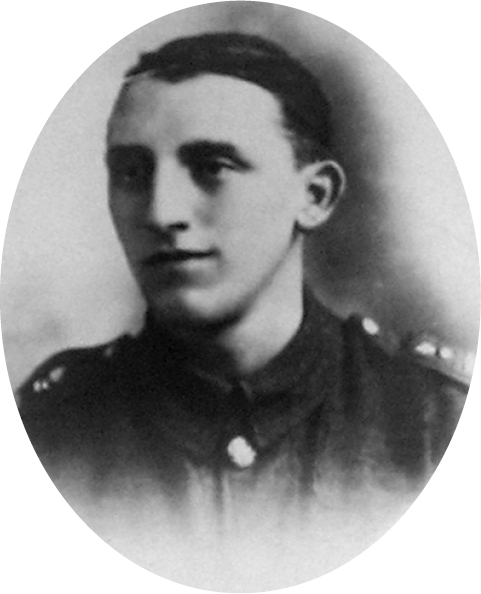
Private John Bowen of Whitland and Pontardulais, killed during the 38th Division’s attack on Gouzeaucourt.
In the meantime Turkey had all but collapsed and the l/4th Welsh (now merged with the l/5th Welsh to form the 4/5th Welsh) made good progress as part of the British advance north of Jerusalem. In Salonika, although there had been several set piece battles, September saw a major action, the Third Battle of Doiran. The Greeks, British, French and Serbs launched their attack on 18 September; after two days’ bloody fighting, they had made no real impression; however the Bulgarians decided enough was enough and began to retreat. On 30 September the Bulgarians surrendered, thus closing another front. Over twenty men from Carmarthenshire were killed during this final phase of the Salonika campaign, the majority of whom served with the 11th Welsh and 11th RWF. Among the dead was Private Dan Thomas of Myddfai. His is an interesting case.
He was born at Eglwysfair-Y-Churig in 1884, the son of James Thomas, Tailor and Draper, and Hannah Thomas of Parky Llain Isha, Eglwysfair. He resided at Penybryn, Cross Hands prior to the war with his wife, Gwenllian Thomas, and he worked as a stoker at the Cross Hands Colliery. He enlisted at Llanelli in the 11th Welsh and was killed in action during the Second Battle of Doiran on 18 September 1918. He was 35-years-old. He was forgotten for almost ninety-four years, but on Tuesday, 22 March 2012, he was accepted for commemoration by the CWGC, who will add his name to the Addenda Panel of the Doiran Memorial, Greece. Thomas seems to have been forgotten for all of these years; perhaps it was an error due to the fact that on the same day another Private D. Thomas in the same battalion was killed. This man was Private David Thomas, of Bangor, North Wales and his number was 203441, very similar to Dan’s number of 204371.
On 21 September the 74th (Yeomanry) Division was thrown into action at Épehy, tasked with the capture of the German stronghold at Gillemont Farm. The 24th Welsh got bogged down fighting on the line from Lempire and Ronssoy to Gillemont Farm and suffered heavy casualties. Some ten county men were killed in the attack on the farm, six of whom were 24th Welsh men. Four of these men were from the original Pembroke Yeomanry contingent who had arrived in Egypt in 1916: Private David John Dawson, of Carmarthen; Private John James John, of Laugharne; Private David Williams, of Caio; and Private Edward Clifford Rockingham, of Abergwili. John James John was the brother of David Thomas John, killed on the Somme in 1916. He is buried at Unicorn British Cemetery. He was the second son of Eliza John, who was widowed in 1903 when her husband William drowned while bathing at Pendine.
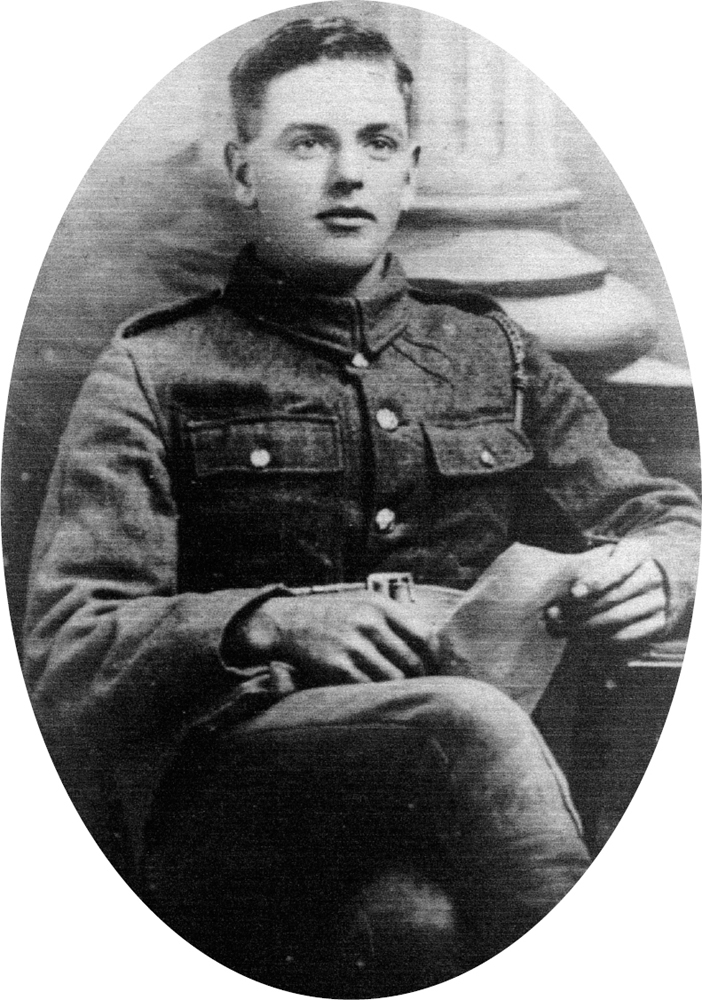
Private John James John, 24th Welsh, the brother of David Thomas John of Laugharne, who was killed during the attack on Gillemont Farm.
Edward Rockingham is another man who was forgotten for over ninety-four years. He was born at Norwood, Surrey. He was orphaned at an early age and came to Abergwili, where he worked for Mrs Rees, Penybont. He enlisted at Carmarthen in the Pembroke Yeomanry, transferring to the 24th Welsh in March 1917. He was killed during heavy fighting at Gillemont Farm on 21 September; he was accepted for commemoration by the CWGC on 20 July 2009 and his name will be added to the Addenda Panel of the Vis-en-Artois Memorial.

Private Edward Rockingham, 24th Welsh, a farm servant from Abergwili, who until recently had been forgotten, until his case was presented to the CWGC.
While these young men were falling on the battlefield, militancy was the order of the day back at home; farmers in Carmarthenshire campaigned against reduced hours of labour and craftsmen and surface workers in the Amman, Dulais and Gwendraeth Valleys agitated for an eight hour day, including meal breaks. Glowing reports of the advance in France were published daily and at last thoughts of a possible end to the war were nurtured by the population.
Former miners serving with the Royal Navy were released for work in the mines towards the end of September, with the government announcing the discharge of 2,000 ratings per day to help ease the coal shortage situation. However a further blow hit the home front when the railway workers went on strike on 23 September for more pay, the Amman Valley Miners following suit yet again. The shortage of coal was also felt in France, where the service battalions of the Welsh Regiment struggled to get reinforcements due to miners being kept at work in the collieries.
During the first week of October a double tragedy struck the Broadway Estate at Laugharne, which was owned by the South Wales businessman Herbert Eccles. While the workers on the estate were taking in the news that the head gardener’s son, Arthur William Cooper, was killed in France on 3 October while serving with the King’s Shropshire Light Infantry, the discovery of the body of the head gamekeeper of the estate was found buried in sand at Laugharne Marsh after he went missing overnight. The gamekeeper, John Garstone, had been hunting for rabbits and he was digging a burrow in a sand dune when it collapsed on him. The unfortunate man was found with just his feet sticking out from the dune and was declared dead when pulled out. Herbert Eccles had also lost a nephew during the war, Second Lieutenant John Herbert Morris, who was killed on 21 September 1916 while serving with the 6th Welsh.
The advance in France and Salonika during September had cost the county 155 more men, but October would be no easier as, even though the Salonika campaign had ended, there was still minor fighting in Palestine and Mesopotamia and the major obstacle of the Hindenburg Line was within reach of the troops in France. October also saw the Allies breaking out from the Ypres Salient; after four long years of war the heights overlooking Ypres were at last in Allied hands.
Between 27 September and 1 October the Canal du Nord was forced by the Allies, with the 38th Division playing a major part, and the mighty Hindenburg Line had been breached. Now there was little to stop the Allied war machine from rolling the Germans out of France once and for all; except a still resolute defence and the problem of maintaining supplies over increasingly long lines of communication.
After the Hindenburg Line was broken the 38th Division drove onward towards Le Cateau and the Forest of Mormal. On 8 October it took part in heavy fighting around Villers-Outreaux; fifteen Carmarthenshire men were killed that day whilst serving with the 38th Division alone. On 17 October the Battle of the Selle forced the crossing of the River Selle and still the Allies kept advancing. The 38th Division, Guards Division and 19th Division fought almost side by side in the direction of the Forest of Mormal and beyond and still took heavy casualties. Altogether 129 Carmarthenshire men were killed during October 1918 but at last the end was in sight as the German High Command was in disarray; Erich Ludendorff resigned on 26 October and handed power over the armies to the government.

William Thomas John DCM, a heroic soldier from Llanelli who was killed during the Battle of the Selle.
The beginning of November saw the 38th Division near the town of Forest-en-Cambrésis. On 3 November another local hero, Sergeant William Thomas John, of Llanelli, was killed. He was serving with the 15th Welsh and had been awarded the DCM for the crossing of the River Selle just days previously. His Commanding Officer, Lieutenant Colonel Ernest Helme, wrote to his parents;
‘It goes to my heart, to announce that your splendid lad died of wounds. A braver, finer, more popular soldier never fought in this war. If only he could have lived to know that the day before yesterday he was awarded the DCM, the next highest honour to the VC open to him. Nobly he deserved it by his loyal devotion to duty. Never has any lad’s death been more deeply felt in the Carmarthenshire Battalion than that of your lad. As his Commanding Officer, I was so proud of him. His DCM was awarded for bravely dashing into the river Selle and leading his men under heavy fire, capturing two trench guns and going on and making good his objective. We have lost a brave comrade and a true heart.’
Over fifty more Carmarthenshire men died during the final days of the war, most of them during the advance through the Forest of Mormal by the 38th Division. Three local men were killed during the sinking of HMS Ascot on 10 November: William James Price, of Pontardulais; Matthew George Jones and James Price, both of Llanedi. Ascot was a paddle minesweeper and was operating off the Farne Islands when she was torpedoed and sunk by the German submarine UB-67. She was the last Royal Navy vessel to be sunk during the Great War.

Lieutenant Noel Everard Evans, a former Llandovery College student, who died on Armistice Day, 11 November 1918.
The last county man to die before the armistice was Second Lieutenant Noel Everard Evans, a former Llandovery College pupil, who died of wounds in Rouen on 11 November. The unfortunate Evans had been wounded on 8 November, just days after arriving at the front.
Over the coming months at least 120 more Carmarthenshire men would die because of wounds suffered during the war or from the Spanish Influenza epidemic, which swept across Europe during the winter of 1918-1919. Presently twenty-one men out of this total are not commemorated as official war casualties by the Commonwealth War Graves Commission, although work is under way to try and correct at least some of these omissions. Hundreds more would die as a consequence of war service in the years following the official closure date for commemoration for Great War casualties, 31 August 1921.
The last official war casualty in the county is Gunner Joseph Hoare of Llansteffan, the son of a local policemen, who died on 10 June 1921. The last man of the county to be buried beneath a CWGC headstone, although not an official casualty, was Private Evan Moses of Brynamman, who died on 15 December 1922 and was buried in his brother Samuel’s grave, who was a soldier with the 15th Welsh.
Out of this total of post Great War casualties, one man is buried in Australia [Sapper David Howell Griffiths, of Llanarthney]; two are buried in Belgium; two in Canada; eight in Egypt; eleven in England; eighteen in France; five in Germany; one in Gibraltar; two in Greece; one apiece in India, Mesopotamia, Ireland, Israel and Italy; seventy-one in Wales.
At least one of these men who died after the war committed suicide. John Archibald Thomas was born at Talley in 1897. He emigrated to Australia in 1908, where he worked as a farmer. He enlisted at the outbreak of war into the Australian Imperial Force. He survived the war and was demobilised in Britain. He returned to west Wales and set up home temporarily at 2, Claremont Villas, Carmarthen, while he awaited a chance to return to Australia. Thomas suffered from depression after leaving the army and was said to be worried about being able to return to Australia. He was discovered dead at Capel Evan, near Wellfield Road, Carmarthen on Monday 22 September 1919; he had killed himself by cutting his own throat with a razor. He was 30 years old and was buried in Carmarthen.
Another local military hero, mentioned earlier in this book, was murdered by the IRA in Dublin. Parcell Rees Bowen was the fourth son of Mr and Mrs Josiah Bowen, of Pantyglien, Abergwili. Parcell was a student at St David’s College, Lampeter when he enlisted at the outbreak of war, becoming a private in the Army Service Corps. He spent the winter of 1914/15 in France, but in February 1915 was sent home with badly frostbitten feet. In July that year he was commissioned as a second lieutenant into the 5th Welsh and embarked with the battalion for Gallipoli. After the evacuation of Gallipoli, Parcell fought in the Palestine Campaign, where he transferred into the Machine Gun Corps. It was with them that he was awarded his first decoration, the MC. Parcell then transferred to the Royal Air Force on 10 January 1918, becoming an observer. He gained his second decoration during the air war in Egypt, the Distinguished Flying Cross (DFC). After the Armistice on 11 November 1918, Parcell served in Salonika and Mesopotamia, before being placed on the unemployed list. He yearned for more adventure and volunteered for further service with the RAF in the war in North Russia, fighting for the White Russians. On 17 July 1919 Parcell arrived at Archangel, where he met his old compatriot from Carmarthen, Ira ‘Taffy’ Jones. In Ira Jones’s book, An Airfighter’s Scrapbook, Ira writes glowing reports of Parcell, glad to see another Welsh warrior in his Squadron. A long passage from the book tells of an incident that earned Parcell a Bar to his DFC.

Private Evan John Moses, of Brynamman, the last Great War casualty from the county to be buried under a CWGC headstone.
Parcell and his pilot were carrying out a bombing mission when they came across a superior force of Russian aircraft. Being the men they were, they agreed to attack the Russians, who dispersed in chaos when these two madmen plunged into their midst. The Russians took flight, but one fired a burst of rounds at the British pair and both Parcell and his pilot were hit. The pilot fainted at the controls of the aeroplane and Parcell only had one good arm, but he leaned over his colleague and piloted the aeroplane back nearly a 100 miles to base. Parcell was sent home wounded and again placed on the Unemployed List, so volunteered for a commission in the newly created Lithuanian Army, with which he served until July 1920, when he accepted a British government post.
This post was top secret and involved going undercover in Dublin at the time when the troubles were at a peak. Due to the secrecy of the work being carried out in Ireland, nothing much is known about the operations in which Parcell was engaged. What is known is that he was lodging with a fellow officer at 28, Upper Fitzwilliam Street, Dublin and the two spent the afternoon of 27 October 1920 watching a football match at Donnybrook. After the match, Parcell could not be found, until his lifeless body was discovered, lying face down, in Merrion Street. He had been shot in the back by an IRA assassin, the bullet hitting his spine.
Bowen’s body was brought back to Carmarthen, where he was buried with full military honours in Abergwili Churchyard. Within a month, on ‘Bloody Sunday’, 21 November 1920, fourteen British agents were murdered in Dublin by the IRA, led by Michael Collins. The British army retaliated by storming into a Gaelic football match at Croke Park in Dublin and fired into the crowd to avenge their murdered colleagues, inflicting many casualties, with fourteen men and children dead. Later that night, three IRA prisoners died in captivity in suspicious circumstances in Dublin Castle and the situation swiftly escalated. The Irish public quickly turned against the British and peace negotiations ensued, resulting in a truce being declared on 11 July 1921. Another local man, Private William Jones of Conwil Elfed, had also been murdered by the IRA, in Fermoy on 7 September 1919.
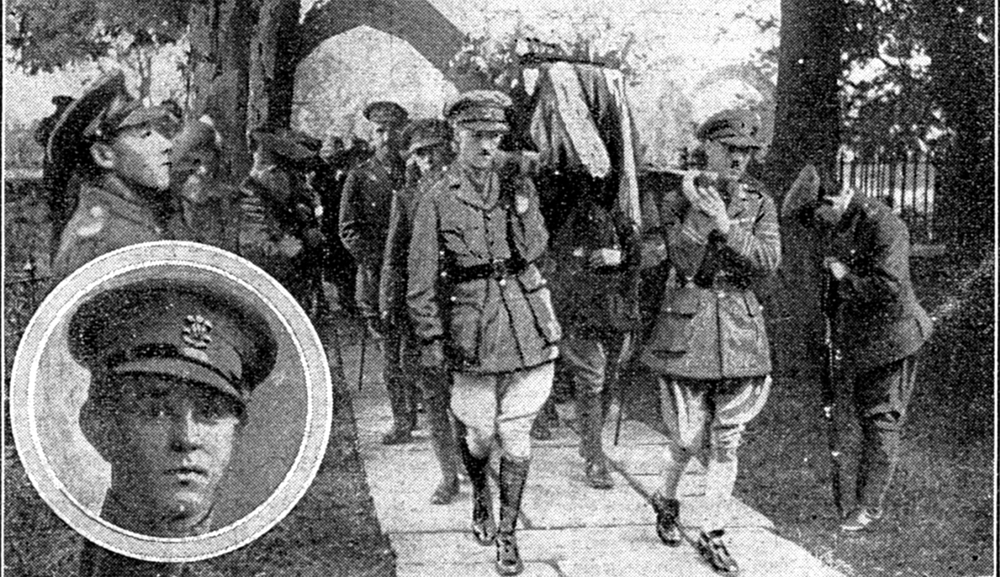
Parcell Rees Bowen, MC, DFC and Bar, the Welsh war hero from Abergwili who was murdered by the IRA.
In the newspaper columns at home there was plenty of good news for local families as the demobilisation of troops began in December and former prisoners of war began to be repatriated. However, this was tempered by news of the influenza epidemic sweeping through the county, with fresh deaths being reported in every town and village almost daily.
The Carmarthen War Pensions Committee busied itself resolving the many cases of widowed women and their children, administering money where widows were still battling the state for their pensions. Headlining the Laugharne Notes and News column on 20 December 1918 was the tale of a young couple holidaying in Pendine. The couple were walking along the beach when they spotted a cask which must have come from a sunken vessel. In an excited state the couple uncorked the cask, each taking a good long swig of the contents. The column went on to state; ‘Result medical treatment, which continues at time of writing’!
The same column also carried news of another memorial service at St Martin’s Church, a list of men home on leave and the news of the death of a local serviceman, Private Daniel John Richards, who died of cirrhosis. The cessation of hostilities meant the running down of the munitions factory at Pembrey. On Wednesday 11 December the Superintendent of the works, Walter R. Moore, was presented with a large framed photograph of his staff during a well attended presentation at the factory. Moore had run the factory for over three years and now returned to his native Scotland. On that same day, two policemen at St Clears apprehended three suspicious looking men, who turned out to be German PoWs who had escaped from Gormwood PoW Camp at Llawhaden.
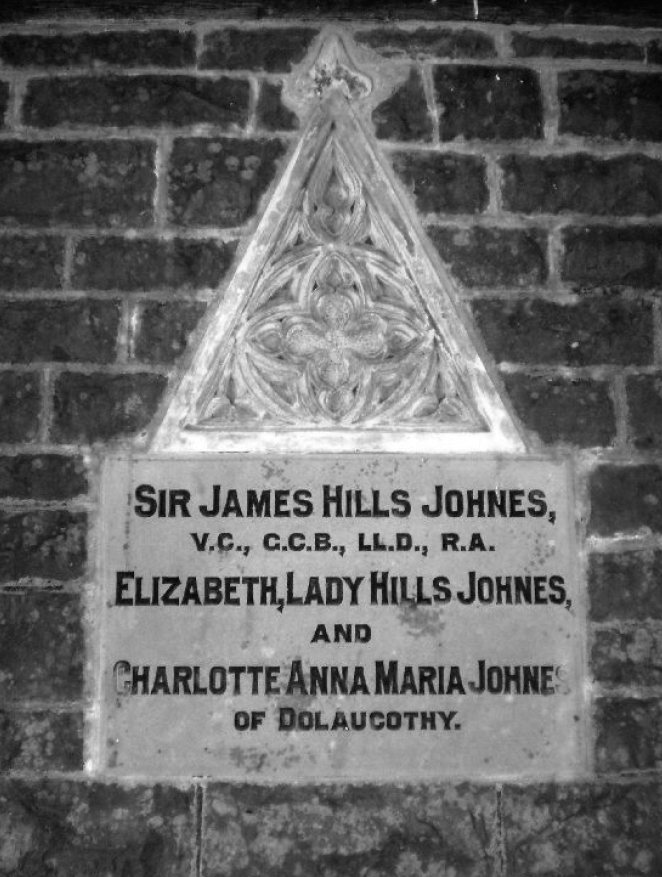
The memorial to Sir James Hills-Johnes VC, at Dolaucothi.
The running down of the munitions factory meant that a lot of the work there involved defusing a large number of stockpiled shells. On 8 January 1919, Gwendoline Williams, of Kidwelly, was working on removing fuses from some of these shells. One shell had a fuse which refused to come out with her screwdriver, so she took to it with a mechanical drill, a standard procedure in this case. The shell, however, exploded, killing Williams and Sarah Jane Thomas of Cwmbwrla, and badly injuring Minnie Bevan, of Swansea, who were working nearby.
During the weeks following the Armistice, among the returning servicemen and former prisoners of war, was Private William Jones of Talog. The young man had been serving with the 4th Battalion, King’s Shropshire Light Infantry, when he was captured by the Germans during the battalion’s epic defence of Mont Bligny on 6 June 1918.
‘I was forced, with several others, to march without food for three days. Those who lagged behind or fell were butted with the rifle. Prisoners had to drink what filthy water they could find. For three months I was employed behind the German lines, where intolerable conditions prevailed. On one occasion I had a tooth drawn so I could ask for special rations. These consisted of bran and potato peelings. Later, when I was transferred to Munster, Westphalia, I worked in a German coal mine where I was better off...’
When the cadres of two of the local battalions, the 15th Welsh and 24th Welsh, returned home in 1919, the respective colours of each battalion were paraded through the town before being laid up in St Peter’s Church. The 15th Welsh paraded at the end of May 1919 whilst the 24th Welsh paraded at the end of July 1919. Neither of these battalions saw active service during the Second World War. The 24th Welsh was never reformed but the Pembroke Yeomanry, one of its constituent parts, fought in North Africa and Italy as a Royal Artillery unit. The 15th Welsh reformed but remained on Home Service in the Orkneys, being used as a recruiting and training battalion.
As a final note, the man who probably did more for the local recruitment effort during the war was Sir James Hills-Johnes VC. The elderly gentleman survived the demands of the war, which had seen him attend more meetings and ceremonies than anyone else in the county, but passed away at Dolaucothi on 3 January 1919, aged 85, a victim of influenza. An impressive funeral took place at Caio Churchyard, where Britain’s oldest VC winner and a great man was buried. Just the previous week he had unveiled one of the earliest village war memorials, at Manordeilo.