
14
DECEMBER 1942
AS NOVEMBER TURNED to December 1942, the days grew shorter, the nights colder, the survivors’ hopes dimmer. The six icebound members of the PN9E crew, now joined by Don Tetley, faced the awful truth that their two best chances for rescue had gone down with Max Demorest’s motorsled and John Pritchard’s Duck.
Their spirits fell even lower during the first week of the new month. Heavy storms with windblown snow made it almost impossible to leave the bomber’s tail. Rations ran low as no supply planes could reach them.
In addition to Tetley, the remaining men trapped on the ice were pilot Armand Monteverde; copilot Harry Spencer; navigator William “Bill” O’Hara; engineer Paul Spina; passenger Clarence Wedel; and volunteer searcher Alfred “Clint” Best.
Time and hardship had revealed Monteverde to be confident enough to take advice freely and to give orders only when necessary. Spina considered “Lieutenant Monty” to be a hero for the way he held them together.
Although Spencer was the youngest crew member, he had the traits and the touch of a natural leader. Even after falling into the crevasse, he was the strongest and most capable among them, a likable fellow with sensitive radar for when one of his crewmates needed an extra ration or a supportive shoulder.
To a man, they admired O’Hara for his tough-guy stoicism, even as his numb, discolored feet worsened and the blackness spread up his legs.
They valued Spina for his relentless good cheer despite his injuries and agonizing frostbite. Even when Spina moaned about pain in his hands and feet, he did so with the timing of a vaudeville comic. Spina’s comfort in tight quarters might be traced to the fact that he was the third of seven children of a homemaker and an Italian immigrant factory worker.
Wedel, a stranger to the others just weeks earlier, had earned respect for his mechanical ingenuity, somehow fixing their temperamental generator despite frozen parts. Powerfully built, with dark, wavy hair, a cleft chin, and bright blue eyes, the thirty-five-year-old Wedel was one of the more unusual privates in the U.S. Army.
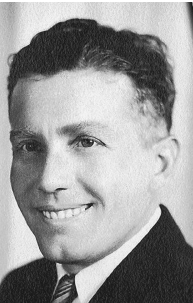
PRIVATE CLARENCE WEDEL. (COURTESY OF REBA GREATHEAD.)
Born on a Kansas farm, the eldest of ten children, he was raised a Dunkard, a tiny Christian denomination of pacifists whose members, like Mennonites and Quakers, could claim exemption from military service. But Wedel believed that it was wrong to use his religion to avoid the war. Six months after Pearl Harbor, Wedel left the welding business he owned with his father and enlisted. He left behind his pregnant wife, Helen, a violinist ten years his junior whom he’d married on Christmas Day 1941. The two shared a love of dancing, and they’d spent their honeymoon in the “big city” of Wichita, at a nightclub named after their favorite song, “Blue Moon.”
Clint Best was easygoing and introverted. He had no bluster or bravado, and he won praise for mixing the crew’s monotonous rations into creative meals. But Best was no outdoorsman, and he was perhaps the least suited among them for the deprivations of Arctic survival. The son of a traveling shoe salesman turned grocer, Best was happiest working inside with numbers. Equipped with a layer of padding from years at a desk, the brown-haired, blue-eyed Best had worked as a bookkeeper for a wholesale distribution company in Memphis before the war. During the five months he’d been in Greenland, cracking codes in a heated office at Bluie West One had been a perfect fit. Being cold, hungry, and trapped in an oversize icebox, watching men disappear into crevasses and going down in airplanes, was torment for the cryptographer turned volunteer searcher. As days passed, Best retreated into his own thoughts.
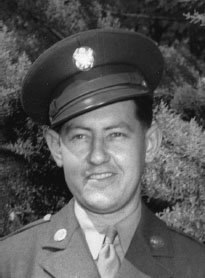
TECH SERGEANT ALFRED “CLINT” BEST. (COURTESY OF ROBERT BEST.)
The newest member of their band was Tetley, a wiry Texan who fit the stereotype of the quiet cowboy. After Demorest’s death, Tetley drove his motorsled over the crevasse-free ski tracks and parked alongside the wrecked PN9E. He’d been trained by Demorest in Arctic life, and even a short time in the cramped tail section made him seek alternative lodgings. It wasn’t the crowding—he was used to that from living at Beach Head Station and Ice Cap Station—it was the precarious position of the fuselage. Although secured with ropes to the front half of the plane, the tail perched over an expanding crevasse similar to the one that killed Demorest. On Tetley’s first night in the fuselage, he was startled when the tail section shifted. Fearful of sliding into the abyss, he climbed out of his sleeping bag and declared: “I’m going out and dig myself a hole [to] crawl in.”
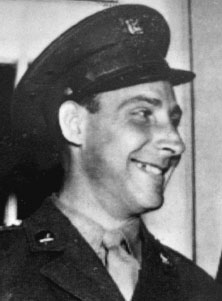
SERGEANT DON TETLEY. (U.S. COAST GUARD PHOTOGRAPH.)
WITH MORE STRENGTH and energy than the others, Tetley dedicated himself to the tasks of improving their lodgings and plotting a way out. He converted the metal cover of the PN9E’s Norden Bombsight into a crude saw and carved out blocks of snow under the bomber’s unbroken right wing. Spencer and Wedel pitched in, using a jungle knife, a shovel from Tetley’s supplies, and tools from their mess kits.
Within several days they’d dug a “room” with walls of ice about fifteen feet long, eight feet wide, and more than four feet high. The roof was the metal underside of the wing. They couldn’t stand straight, but at least they could stop living like sardines and crevasse-bait. Upon moving from the tail section to the underwing snow cave, the seven men spread out sleeping bags to their full length. One drawback was that the ice underneath them melted from their body heat, soaking the sleeping bags with no way to dry them.
When they’d all moved in, Tetley set up his stove in the cave. The men held their breath when he lit it, fearing the fuel-filled wing above them. The metal pinged and moaned when it first heated, but it posed no danger. Wedel made the cave homier by stringing a lightbulb on a wire from his generator. The well-lit, white-walled room brightened their spirits.
With Howarth gone, Tetley became the new radioman, with Best as his assistant. They lacked Howarth’s communications knowledge, so they couldn’t get the transmitter to achieve its full range. They could send messages only by Morse code, but they could receive incoming voice transmissions. Despite Wedel’s unceasing efforts, the generator was unreliable, so the radio and the light were on-and-off pleasures.
The men blamed mechanical woes, missing items, and other unexplained troubles on “Glacier Worms.” There were, in fact, creatures called ice worms that lived in glaciers, though not in Greenland. But in the stranded men’s imaginations, Glacier Worms became the ice cap equivalent of gremlins: mischievous, mythical beasts that bedeviled airplanes in flight and, now, on the ice.
With their new quarters complete, the PN9E survivors cut the lines securing the bomber’s tail section. Their home for the previous four weeks slid into the crevasse with a thunderous roar and disappeared from sight.
AFTER SEVERAL DAYS of hoping the Duck might return, the men of the PN9E cast aside lingering dreams of being airlifted to safety. Winter was closing in and the cavalry wasn’t on the way. They reported a temperature of 16 degrees Fahrenheit and sent requests via the Northland for supply drops: “We need food. . . . Everyone OK, but weak.” They made other requests, as well: “If [supply] plane comes . . . we need flashlight batteries, laxatives, bandages, candles, and reading material.”
The supplies arrived in an airdrop from the B-17 flown by Captain Kenneth Turner. A Salt Lake City native approaching his fortieth birthday, Turner was mature, balding, and composed. He seemed ancient to the young flight crews he worked with, so everyone called him “Pappy.” Like the PN9E, Turner’s B-17 was in the temporary possession of the Air Transport Command on its way to England. Also like the PN9E, it had been diverted from its destiny as a weapon into the role of a search-and-supply lifesaver.
Supply drops by Turner and his crew satisfied the immediate needs of the men on the ice, but they couldn’t stop O’Hara from getting worse by the day. As Monteverde changed the dressings on the navigator’s feet, he grew convinced that little chance remained of saving them. O’Hara also was losing more weight than the rest of them. He could stomach only a few drops of thin soup. Spina needed expert medical care, as well, and the others worried that neither man might last long.
Despite the commitment by Pappy Turner and his crew to drop supplies whenever possible, the men in the snow cave feared that the approach of winter might block resupply efforts for weeks. While O’Hara was asleep, Tetley told the others that they were gambling with the navigator’s life if they thought they could spend the winter relying on supply drops and waiting for a rescue party. Monteverde agreed, so Tetley radioed the Northland with the first draft of a plan to take matters into their own hands.
“In case of emergency, we could travel light,” he tapped out in code. “We believe that our seven-man party could reach Ice Cap Station on our one motorsled. Would travel slightly altered course to avoid crevasses in this area. Could meet dogsled on trail.”
Initially, the ship instructed Tetley to sit tight and await another dogsled team heading their way. In the meantime, the Northland would send ashore its hospital corpsman to provide medical aid if the PN9E crew could reach Ice Cap Station or Beach Head Station with help from the dogsled team. But that plan soon changed. Again the dogsled turned back, unable to make it through the driving, drifting snow. So the men under the wing of the PN9E plotted to save themselves.
On December 7, the one-year anniversary of the United States’ entrance into the war, the weather broke. The sun shone and the wind died down. Such a rare fine day in Greenland might not appear again until spring. Monteverde concluded that O’Hara could wait no longer. He reasoned that hauling all seven of them to Ice Cap Station on the one remaining motorsled would be difficult at best, suicide at worst. But if they split up, maybe two smaller crews could survive separate trips.
At first, Monteverde wanted both O’Hara and Spina on the first outbound motorsled. But after discussions with Spencer, Tetley, and the others, he abandoned the idea of sending the two most seriously injured men onto the ice cap at the same time. Monteverde decided instead that the first group would be a four-man team: O’Hara, wrapped in a sleeping bag, would be strapped on the supply sled towed by the motorsled; Tetley would drive because he knew the machine and the route; Wedel would provide strength and mechanical skills if the sled broke down; and Spencer would be in command, doubling as the navigator if they got lost. With three able-bodied men and one badly injured man, Monteverde reasoned, they’d have enough muscle to push or tow the motorsled out of a snowbank. As soon as the weather allowed, Tetley would return on the motorsled for the three remaining men: Monteverde, Spina, and Best.
With an escape plan in place, they gathered for a group prayer. They offered the travelers good tidings; wished the men remaining behind a short stay; and whispered blessings for Demorest, Pritchard, Bottoms, and Howarth.
Tetley radioed their revised plan to the Northland: “Lieutenant O’Hara very ill. Leaving with him . . . within an hour.” He didn’t wait for approval, and he never formally received it. But he did get tacit support when the Northland instructed the men at Ice Cap Station to turn on their lights as a beacon.
Having already traveled the thirty miles between the PN9E and Ice Cap Station, Tetley thought they could make the trip in a single day. This time, though, he’d follow a route recommended by Colonel Balchen, who’d mapped it out from the air. Balchen’s course steered them to the north, away from the crevasses. In case the trip took longer than he anticipated, Tetley gathered three days’ rations, sleeping bags, a shovel, and a tent. That left the men in the snow cave equipped with Tetley’s stove, fuel, a second shovel, his walkie-talkie, and other supplies if his return was delayed. One piece of bad news was that Wedel couldn’t start the generator, so he couldn’t leave the cave dwellers with three fully charged batteries for the radio, as he’d hoped.
The thought of taking action energized them all. Before they parted, they joked around and wished each other well. Tetley and Spencer said they’d be back within two days, to celebrate Monteverde’s twenty-eighth birthday on December 9.
Shortly before the foursome left, Spina spotted a plane circling in the distance, to the south of their location. He and the others thought it was a plane to guide the travel group toward Ice Cap Station. But when Tetley radioed the Northland, he was told that the plane was Pappy Turner’s B-17, circling over the wrecked Duck in an unsuccessful search for signs of life.
The men at the PN9E stood in silence until Tetley said it was time to leave. Monteverde, Best, and Spina watched until they were out of sight.
THE FOUR TRAVELERS set off with Spencer out front on snowshoes, like a point man on jungle patrol. Before each step, he tapped the ground to search for ice bridges. Spencer was ideal for the job, knowing the danger they posed. Behind him, Tetley drove the motorsled, pulling O’Hara and their supplies on the attached tow sled. Wedel walked behind or alongside them on snowshoes. To play it safe, they plowed slowly for about a mile and a half through what they thought was the most heavily crevassed area. They stopped at a steep rise with an ice trough beyond it. Tetley believed that this marked the end of the crevasse field.
Tetley announced that he would gun the motorsled’s engine and race up the slope, so it wouldn’t stall and slide backward. He wanted Spencer and Wedel to join O’Hara on the tow sled, to spare them a difficult climb. Several yards out front, Spencer knelt to unstrap his snowshoes. Tetley climbed off the motorsled to one side, while Wedel removed his snowshoes near O’Hara and the tow sled.
Tetley told the others that he, Wedel, and Spencer would give the motorsled a hard push, after which Tetley would climb aboard. Spencer and Wedel would hop onto the trailing tow sled, like a bobsled team. Before getting started, Tetley and Wedel talked with O’Hara on the tow sled, as they waited for Spencer to join them.
Unknowingly, Tetley had parked the tow sled atop a crevasse covered by an ice bridge two feet thick, too thick for Spencer to have discovered it with his tapping and poking method. An ice bridge that thick has areas of varying strength, some able to carry weight and some not.
Spencer had walked over the bridge without incident. The motorsled had driven over it safely, and the tow sled had stopped on a solid area of the bridge. But as Wedel moved into position for the uphill charge, he stepped on a weak spot. Making matters worse, he had just removed the snowshoes that distributed his weight over a larger area.
Without warning, the ice bridge gave way, opening like a trapdoor beneath Wedel’s feet. He screamed and grasped for something to hold on to. Realizing what was happening, O’Hara yelled for help. He felt Wedel’s mittened hands slide desperately over his legs but was unable to grab him. For an instant, Wedel gained a tenuous grip on the tow sled, but it wasn’t enough. He dropped through the hole and into the waiting crevasse.
Tetley leaped onto the motorsled and drove forward to get the tow sled off the snow bridge. He and Spencer roped themselves to the motorsled and crawled on their stomachs to the edge of the hole. A short way down, they could see dark marks on a narrow ledge and more on the opposite wall. Wedel had apparently bounced from one side of the crevasse to the other on his way down. The two men stared and called into the abyss but couldn’t see Wedel and couldn’t tell how deep the crevasse went. It looked bottomless to Spencer.
They remained there for more than an hour, yelling for Wedel. No response. As the ranking officer, Spencer decided that they couldn’t risk trying to climb down into the crevasse. There was nothing more they could do. It was time to leave.
Greenland had claimed its second victim from the B-17 PN9E crew, its tenth overall since the crash of the C-53. The death roll now read McDowell, Springer, Manahan, Everett, and Johannessen from the C-53; Pritchard, Bottoms, and Howarth from the Duck; and Demorest and Wedel from falling into crevasses.
Clarence Wedel had boarded the bomber as a passenger en route to England. He had kept the downed plane’s generator working beyond all expectations. He would never celebrate his first wedding anniversary, on Christmas, less than three weeks away. He’d never meet his daughter, Reba, who’d be born the following month. As a toddler in May 1944, she’d sit on her mother’s lap when her father would posthumously receive the Legion of Merit. The medal honored Wedel for “his initiative and perseverance under most difficult climatic conditions” and for displaying “a high devotion to duty and complete disregard for his own safety.”
DOWNHEARTED, DON TETLEY, Harry Spencer, and Bill O’Hara discussed returning to the PN9E and taking another man to replace Wedel. But that would eat up time and require another trip across the crevasse field. Also, it might leave them shorthanded for the second trip between the bomber and Ice Cap Station. Spencer decided that they should stick to the task of getting O’Hara help as soon as possible. They pressed on.
The trio moved tentatively, fearful of more hidden crevasses. The terrain was tougher, too, and they stopped frequently. Each time, Tetley killed the motorsled’s engine to save gasoline. Soon, however, he had trouble starting it again. Without Wedel’s mechanical wizardry, the motorsled became increasingly stubborn. The machine’s lubricating oil grew thick from the cold, and soon it congealed. The oil line to the engine broke.
Tetley had been worried about the oil even before leaving the PN9E, and he’d requested that a gallon of a different grade of lubricating oil be dropped during a supply run. The oil hadn’t arrived, but they’d left anyway because of the break in the weather. As he tried to fix the oil line, Tetley damaged the sled’s gas line. They were about six miles northeast of the PN9E when the motorsled’s engine quit altogether.
Now there were two groups of stranded men, three in the igloo under the wing of the PN9E, unaware that they were waiting for a motorsled that would never return; and three six miles away on the ice cap, one of them gravely ill and unable to move on his own. Any thought of carrying O’Hara back to the bomber was dismissed as folly. They’d stay put.
So much had happened in the month since the crash, and so much of it bad, that Spencer, Tetley, and O’Hara saw no point in bemoaning their new plight: no shelter, no radio, no walkie-talkie, no stove, few rations, and a crippled man who needed immediate aid to save his feet and perhaps his life. Plus, a blizzard was bearing down on them, a fitting start to Greenland’s killing season. They focused on the lone piece of good news: they were alive. With a new storm and long hours of darkness descending, Spencer and Tetley went to work to stay that way.
First, Spencer set up a tent and carried O’Hara inside it with him. Tetley dug himself a hole in the snow and crawled in.
BACK AT THE bomber, in the ice cave under the wing, Monteverde’s birthday came and went, unmarked by the celebration they’d hoped for. Without the generator, they had no light. The radio batteries grew weak. By December 11, four days after the others left, the batteries were dead, cutting their radio lifeline to Pappy Turner’s supply plane and the Bluie Army bases. The walkie-talkie that Tetley had left behind was tuned to the wrong frequency, with no way to adjust it.
Clint Best was the least injured of the three, but the weeks of isolation had left him deeply depressed. Monteverde could move around, though he suffered from painful bouts of frostbite on his hands and feet. The breaks in Spina’s arm, still not healed, slowed circulation in his right hand, making him susceptible to sharp aches from the merciless cold. The fingernails on his right hand had fallen off, leaving him sensitive to pain. There was little for them to do but collect supplies, tend to their injuries, and keep each other from going stir-crazy. At least they could try.