
Chapter 1: A Child of War
1. Rudolf Witzig, ‘Rudolf Friedrich Witzig’, Ahnen-tafel Witzig mit Anlagen.
2. Holger H. Herwig, The First World War. Germany and Austria-Hungary 1914– 1918, pp. 295–6.
3. Rudolf Witzig, ‘Rudolf Friedrich Witzig’, Ahnen-tafel Witzig mit Anlagen.
4. Ibid.
5. Rudolf Witzig, ‘Amanda Henriette Adolphine Ziehn’, Ahnen-tafel Witzig mit Anlagen.
6. Rudolf Witzig, ‘Rudolf Friedrich Witzig’, Ahnen-tafel Witzig mit Anlagen.
7. Rudolf Witzig, ‘Rudolf Witzig’, Ahnen-tafel Witzig mit Anlagen.
8. Rudolf Witzig, ‘Amanda Henriette Adolphine Ziehn’, Ahnen-tafel Witzig mit Anlagen.
9. Ibid.
10. Ibid.
11. Ibid.
12. Evans, The Coming of the Third Reich, pp. 389–90.
13. Ibid., p. 83.
14. Kennedy, The German Campaign in Poland (1939), p. 3.
15. Ibid., pp. 17–19.
16. Metelmann, A Hitler Youth, pp. 53–4.
17. Ibid., p. 54.
18. Ibid., p. 80.
19. Rudolf Witzig, ‘Rudolf Witzig’, Ahnen-tafel Witzig mit Anlagen.
20. ‘Bündische Jugend’, in Kirk, Cassell’s Dictionary of Modern German History, p. 73; Kater, Hitler Youth, p. 16.
21. ‘Deutsches Jungvolk’, in Kirk, Cassell’s Dictionary of Modern German History, p. 96.
22. Kater, Hitler Youth, p. 19.
23. Rudolf Witzig, ‘Rudolf Witzig’, Ahnen-tafel Witzig mit Anlagen.
24. Bessel, Nazism and War, p. 28. The Nazi Party also managed to attract workers, Catholics, women, urban dwellers and the older in greater numbers than any other political party in Germany had done previously.
25. Kater, The Nazi Party. A Social Profile of Members and Leaders 1919–1945, p. 44.
26. Jürgen Witzig to Gilberto Villahermosa, ‘Rudolf Witzig’, 23 August 2005.
27. Villahermosa, ‘Interview with Colonel Jürgen Witzig’, 31 March 2005; Villahermosa, ‘Interview with Hanna and Jürgen Witzig’, 14 May 2005.
Chapter 2: Fallschirmjäger
1. Müller-Hillebrand, Das Heer 1933–1945, Vol. 1, p. 253.
2. Parker, Monte Cassino, p. 46.
3. Kennedy, The German Campaign in Poland (1939), p. 23.
4. Technical Manual E 30-451 Handbook on German Military Forces, p. I-4.
5. Kennedy, The German Campaign in Poland (1939), p. 22.
6. Ibid., p. 75.
7. Showalter, Patton and Rommel. Men of War in the Twentieth Century, p. 159.
8. Hart, Hart and Hughes, The German Soldier in World War II, p. 8.
9. Ibid., p. 9.
10. TM E 30-451 Handbook on German Military Forces, p. I-75.
11. ‘Rhineland, demilitarization of the’, Tim Kirk, Cassell’s Dictionary of Modern German History, pp. 287–8.
12. TM E 30-451 Handbook on German Military Forces, p. I-75.
13. Rudolf Witzig, ‘Hanna Witzig’, Ahnen-tafel Witzig mit Anlagen.
14. McNab, German Paratroopers. The Illustrated History of the Fallschirmjäger in World War II, p. 19.
15. ‘Bruno Oswald Bräuer’, in Kurowski, Knights of the Wehrmacht: Knight’s Cross Holders of the Fallschirmjäger, p. 33.
16. Gespräck mit Rudolf Witzig Am 14 September 2001.
17. Department of the Army Pamphlet No. 20-232 Airborne Operations. A German Appraisal, p. 2.
18. ‘Kurt Student’, in Hildebrand, Die Generale der Deutschen Luftwaffe, Vol. 3, pp. 363-5; Farrar Hockley, Student.
19. Kuhn, German Paratroopers in World War II, p. 18.
20. Airborne Operations. A German Appraisal, p. 5.
21. Kuhn, German Paratroopers in World War II, p. 16
22. Otway, The Second World War 1939–1945: Army Airborne Forces, pp. 6–7.
23. Von der Heydte, Daedalus Returned, p. 25.
24. Ibid., p. 26.
25. Ibid.
26. McNab, German Paratroopers, p. 26.
27. Pöppel, Heaven and Hell: The War Diary of a German Paratrooper, p. 10.
28. Parker, Monte Cassino, p. 248.
29. Ibid.
30. McNab, German Paratroopers, p. 28.
31. Ibid., pp. 30–1.
32. McGuirl and Feist, Fallschirmjäger, pp. 12–13.
33. Forty, Battle of Crete, p. 47; Lagarde, German Soldiers of World War II, pp. 14–15.
34. ‘Richard Heidrich’, in Kurowski, Knights of the Wehrmacht, p. 83.
35. Gespräck mit Rudolf Witzig Am 14 September 2001.
36. Maier et al., German and the Second World War, Vol. II: Germany’s Initial Conquests in Europe, pp. 90, 101, 123; Kennedy, The German Campaign in Poland (1939), pp. 88, 125.
37. Kuhn, German Paratroopers in World War II, p. 20.
38. Gespräck mit Rudolf Witzig Am 14 September 2001.
39. ‘Walter Koch’, in Kurowski, Knights of the Wehrmacht, p. 117.
40. Kuhn, German Paratroopers in World War II, p. 21.
Chapter 3: Eben Emael
1. Department of the Army Publication No. 20-271 The German Northern Theater of Operations 1940–1945, pp. 3–17.
2. Vliegen, Fort Eben Emael, p. 23.
3. Ibid., p. 23.
4. Le Comité de l’Amicale du Fort D’Eben-Emael, Ceux du Fort D’Eben Emael, pp. 9–11; Vliegen, Fort Eben Emael, pp. 29–30.
5. Vliegen, Fort Eben Emael, pp. 24, 46; Ceux du Fort D’Eben Emael, p. 19 3n.
6. Ceux du Fort D’Eben Emael, pp. 123–4.
7. Vliegen, Fort Eben Emael, pp. 29–30.
8. Ibid.
9. Kuhn, German Paratroopers in World War II, p. 21.
10. Kuhn, German Paratroopers in World War II, p. 21.
11. U.S. Army Center of Military History, Attack on Eben Emael by Oberst a. D. Rudolf Witzig, pp. 20–1.
12. U.S. Army Center of Military History, Attack on Eben Emael, pp. 2–3.
13. Ibid., p. 3.
14. Ibid., pp. 21–2.
15. Ibid., p. 4.
16. Ibid., p. 5.
17. Ibid., pp. 5–6.
18. War Diary, Sturmabteilung Koch der Flieger-Division 7, Witzig Collection.
19. Ibid.
20. Ibid.
21. Witzig, ‘Coup from the air; the capture of Fort Eben Emael’, History of the Second World War, Part 4, p. 109.
22. U.S. Army Center of Military History, Attack on Eben Emael, p. 8.
23. Ibid. pp. 23–4.
24. Ibid., p. 8.
25. Ibid., p. 23.
26. Ibid., p. 18
27. Gespräck mit Rudolf Witzig Am 14 September 2001
28. U.S. Army Center of Military History, Attack on Eben Emael, p. 9.
29. Ibid., pp. 9–10.
30. Ibid., pp. 10–11.
31. Ibid., p. 11.
32. Ibid., p. 12.
33. Ibid., pp. 14–15.
34. Witzig, ‘Coup from the air,’ p. 109.
35. Gespräck mit Rudolf Witzig Am 14 September 2001.
36. Ibid.
37. Witzig, ‘Coup from the air’, p. 109.
38. Ibid.
39. Nowarra, German Gliders.
40. War Diary, Sturmabteilung Koch der Flieger-Division 7, Witzig Collection
41. U.S. Army Center of Military History, Attack on Eben Emael, p. 17.
42. Witzig, ‘Coup from the air’, p. 109.
43. U.S. Army Center of Military History, Attack on Eben Emael, pp. 17–18.
44. Ibid., p. 18.
45. Below, At Hitler’s Side, p. 57.
46. Gespräck mit Rudolf Witzig Am 14 September 2001
47. Kuhn, German Paratroopers in World War II, p. 33.
48. Ibid.
49. Gespräck mit Rudolf Witzig Am 14 September 2001
50. Witzig, ‘Coup from the air’, p. 109.
51. Gespräck mit Rudolf Witzig Am 14 September 2001
52. Witzig, ‘Coup from the air’, p. 109.
53. Ibid.
54. U.S. Army Center of Military History, Attack on Eben Emael, p. 50.
55. Gespräck mit Rudolf Witzig Am 14 September 2001
56. Witzig, ‘Coup from the air’, p. 109.
57. Gespräck mit Rudolf Witzig Am 14 September 2001
58. U.S. Army Center of Military History, Attack on Eben Emael, p. 46.
59. Witzig, ‘Coup from the air’, pp. 109–10.
60. Ibid., p. 110.
61. Ceux du Fort D’Eben Emael
62. Vliegen, Fort Eben Emael, p. 43.
63. U.S. Army Center of Military History, Attack on Eben Emael, p. 47.
64. Witzig, ‘Coup from the air’, p. 109.
65. U.S. Army Center of Military History, Attack on Eben Emael, pp. 49–50.
66. Witzig, ‘Coup from the air: the capture of Fort Eben Emael’, History of the Second World War, Second Edition, Part 4, p. 11.
67. Ibid., pp. 110–11.
68. Official Report of Captain Rudolf Witzig, ‘Albert-Kanal und Eben-Emael’, reprinted in Der Deutsche Fallschirmjäger, No. 1, January 1961, pp. 11–12.
69. Witzig, ‘Coup from the air; the capture of Fort Eben-Emael’, p. 111.
70. U.S. Army Center of Military History, Attack on Eben Emael, p. 46.
71. Villahermosa, ‘Interview with Colonel Jürgen Witzig’, 27 May 2004.
72. Witzig, ‘Coup from the air’, p. 110–11.
73. U.S. Army Center of Military History, Attack on Eben Emael, pp. 51–2.
74. De Vos, La Belgique et la Seconde Guerre Mondiale, p. 58–9.
75. Ibid.
76. Witzig, ‘Coup from the air’, p. 110–11.
77. Kuhn, German Paratroopers in World War II, p. 47.
78. See, for example, Mrazek, The Fall of Eben Emael.
79. Airborne Operations. A German Appraisal, p. 18.
80. Ibid., p. 17.
81. Brongers, The Battle for the Hague, 1940, pp. 267–8.
82. U.S. Department of the Army, MS # P-105 Evaluation of German Airborne Operations by Hellmuth Reinhardt, Generalmajor a. D., p. 42.
83. Ibid., p. 48.
84. U.S. Army Center of Military History, Attack on Eben Emael, p. 43.
85. Airborne Operations. A German Appraisal, pp. 18–19.
86. Villahermosa, ‘Interview with Hanna and Jürgen Witzig’.
87. Ibid.
Chapter 4: Crete
1. MS # P-105 Evaluation of German Airborne Operations, p. 87.
2. Weinberg, A World at Arms, p. 678n.
3. MS # P-105 Evaluation of German Airborne Operations, p. 21.
4. Ibid., p. 88 35n
5. MS # P-105 Evaluation of German Airborne Operations, p. 88 35n
6. Weinberg, A World at Arms, pp. 88–90.
7. Department of the Army, ETHINT 31 – An Interview with Reichsmarshall Hermann Goering. German Military Strategy (1939–1941), pp. 9–10.
8. Villahermosa, ‘Interview with Hanna and Jürgen Witzig’.
9. Trevor Roper, Hitler’s War Directives 1939–1945, pp. 82–3.
10. U.S. Department of the Army, MS # C-065 Operation Felix by Helmuth Greiner, p. 20.
11. Harclerode, Wings of War. Airborne Warfare 1918–1945, p. 58; MS # P-105 Evaluation of German Airborne Operations, pp. 47–8.
12. ‘Eugen Meindl’, in Hildebrand, Die Generale der deutschen Luftwaffe, vol. 2, pp. 372–3; ‘Eugen Meindl’, in Kurowski, Knights of the Wehrmacht, p. 145.
13. Playfair., History of the Second World War. The Mediterranean and Middle East, Vol. 2: The Germans Come to the Help of Their Ally (1941), p. 128.
14. Gespräck mit Rudolf Witzig Am 14 September 2001
15. Department of the Army, Pamphlet 20-260 The German Campaigns in the Balkans (Spring 1941), p.121; Forty, Battle of Crete, p. 14.
16. Department of the Army, MS # B-646 Capture of Crete (May 1941) by Julius Ringel, General der Gebirgstruppen a.D., p. 22.
17. ‘Alexander Löhr’, in Hildebrand, Die Generale der deutschen Luftwaffe, vol. 2, pp. 307–8.
18. Playfair, The Germans Come to the Help of Their Ally, p. 129.
19. Ibid., pp. 128–9.
20. Nasse, Green Devils! German Paratroopers 1939–45, p. 20.
21. MS # B-646 Capture of Crete, p. 29.
22. Kuhn, German Paratroopers in World War II, pp. 64–5.
23. Von der Heydte, ‘Crete: The German Viewpoint’, History of the Second World War, Part 18, p. 502.
24. Cunningham, Commander-in-Chief Mediterranean, ‘The Battle of Crete’, Supplement to the London Gazette, 24 May 1948, p. 3105.
25. MacDonald, The Lost Battle, p. 149.
26. Ibid, p. 153; Forty, Battle of Crete, p. 7.
27. Cunningham, ‘The Battle of Crete’, p. 3105.
28. U.S. Military Intelligence Service, ‘Rations as a Factor in Parachute Efficiency’, Intelligence Bulletin, June 1944.
29. U.S. Military Intelligence Service, ‘Parachutists (German)’, Intelligence Bulletin, September 1942.
30. MS # B-646 Capture of Crete, p. 30.
31. Kuhn, German Paratroopers in World War II, p. 70.
32. Ibid.
33. Gespräck mit Rudolf Witzig Am 14 September 2001
34. MS # B-646 Capture of Crete, p. 26.
35. Ibid., pp. 46–7.
36. Nasse, Green Devils! p. 44.
37. Lagarde, ‘Paratrooper, Crete, 1941’, in German Soldiers of World War II, pp. 14–15.
38. ‘Parachutists (German)’, Intelligence Bulletin, September 1942; ‘Parachute Troops (German)’; U.S. Military Intelligence Service, Intelligence Bulletin, May 1943.
39. Ibid., p. 47.
40. Davin, Appendix IV: Summary Strength of All British and Greek Forces in Crete, 20 May 1941, Official History of New Zealand in the Second World War 1939–45. Crete, p. 480.
41. Davin, Crete, p. 123.
42. Beevor, Crete, p. 111.
43. Davin, ‘Battle of Crete, Phase 1’, History of the Second World War, Part 18, p. 486.
44. Gespräck mit Rudolf Witzig Am 14 September 2001
45. MacDonald, The Lost Battle. Crete 1941, p. 175
46. Forty, Battle of Crete, p. 9.
47. The German Campaign in the Balkans, p. 130.
48. Ibid., p. 132.
49. MS # B-646 Capture of Crete, p. 40.
50. ‘Bernard Ramcke’, in Hildebrand, Die Generale der deutschen Luftwaffe, vol. 3, pp. 76–7; ‘Bernard Hermann Ramcke’, in Kurowski, Knights of the Wehrmacht, p. 175.
51. MS # B-646 Capture of Crete, p. 44.
52. Gespräck mit Rudolf Witzig Am 14 September 2001
53. MS # B-646 Capture of Crete, p. 68.
54. Forty, ‘Chronology of Major Events’, Battle of Crete, pp. 9–10.
55. MS # B-646 Capture of Crete, p. 101.
Chapter 5: The Spearhead Shattered
1. Kuhn, German Paratroopers, p. 131.
2. The German Campaign in the Balkans, p. 147.
3. ‘Wolfgang Lebrecht Graf Blücher’, in Kurowski, Knights of the Wehrmacht, p. 27; Beevor, Crete, pp. 177–8.
4. MS # B-646 Capture of Crete, p. 105.
5. Department of the Army, MS # C-100 Der Deutsche Feldzug in Griechenland und Auf Kreta by E. Mueller-Hillerbrand, Generalmajor a.D., p. 61.
6. MS # B-646 Capture of Crete, p. 104.
7. ‘Eine Insel wird aus der Luft erobert’, Der Deutsche Fallschirmjäger, No 5. May 1961, p. 7.
8. MS # B-646 Capture of Crete, p. 34.
9. Ibid., p. 103; The German authors of MS # P-105 Evaluation of German Airborne Operations cite a figure of 260 aircraft.
10. Department of the Army, MS # B-250 Answers to the Questions Concerning Greece, Crete and Russia by General Warlimont, p. 1.
11. ETHINT 31 – An Interview with Reichsmarshall Hermann Goering, p. 11.
12. Schrieber et al., Germany and the Second World War, Vol. III: The Mediterranean and South-east Europe, and North Africa 1939–1941, p. 552.
13. Pöppel, Heaven and Hell, p. 67
14. Churchill, The Grand Alliance, p. 301.
15. Ibid., p. 302.
16. Davin, Appendix V: Casualties, Crete, p. 486; The German Campaign in the Balkans, p. 139.
17. Ibid., Appendix VI: Summary of Strength of All British and Greek Forces in Crete, 20 May 1941, p. 480.
18. Gespräck mit Rudolf Witzig Am 14 September 2001
19. Ibid., p. 145.
20. The German Campaign in the Balkans, pp. 144–7.
21. Gespräck mit Rudolf Witzig Am 14 September 2001
22. The German Campaign in the Balkans, p. 147.
23. Von der Heydte, Daedalus Returned, pp. 180–1.
24. Airborne Operations. A German Appraisal, p. 19.
25. Von der Heydte, ‘Crete: The German Viewpoint’, p. 504.
26. Ibid.
27. Gespräck mit Rudolf Witzig Am 14 September 2001
28. Airborne Operations. A German Appraisal, p. 13.
29. Von der Heydte, ‘Crete: The German Viewpoint’, p. 504.
30. See Thomas Fleming, ‘The Man Who Saved Korea’, in Cowley, The Cold War: A Military History, p. 109.
31. MS # B-646 Capture of Crete, p. 101.
32. Schrieber et al., Germany and the Second World War, Vol. III: The Mediterranean and South-east Europe, and North Africa, p. 552.
33. Villahermosa, ‘Interview with Hanna and Jürgen Witzig’.
34. See ‘German Manpower. A Study of the Employment of German Manpower from 1933–1945’, in MS # P-105 Evaluation of German Airborne Operations, p. 19.
35. Burdick and Jacobsen, eds., The Halder War Diary 1939–1942, entry for 3 July 1941, p. 446.
36. Ibid., entry for 29 August 1941, p. 521.
37. Weinberg, A World at Arms, p. 284.
38. ‘Erich Petersen’, in Hildebrand, Die Generale der deutschen Luftwaffe, Vol. 3, pp. 23–4.
39. Kuhn, German Paratroopers, pp. 133–8.
40. ‘Richard Heidrich’, in Hildebrand, Die Generale der deutschen Luftwaffe, Vol. 2, pp. 47–8.
41. Ahnen-tafel Witzig mit Anlagen.
42. Ibid.
43. ‘RAD’, in Kirk, Cassell’s Dictionary of Modern German History, p. 272.
44. Ahnen-tafel Witzig mit Anlagen.
45. Ibid.
46. Villahermosa, ‘Interview with Hanna and Jürgen Witzig’.
47. Engel, At the Heart of the Reich, p. 82.
48. Witzig, Das Korps Fallschirm-Pionierbataillon und I./Fallschirm-Pionierregiment 21.
Chapter 6: North Africa: First Battles
1. MS # P-105 Evaluation of German Airborne Operations, p. 20.
2. Ibid., pp. 51–5.
3. MS # P-105 Evaluation of German Airborne Operations, pp. 90–1.
4. MS # D-094 Preparations for the Capture of Malta by Conrad Seibt General Major, p. 2; Kesselring’s Plan for the Invasion of Malta, 31 May 1942, RG 549, NARA, pp. 2–7.
5. MS # P-105 Evaluation of German Airborne Operations, p. 91.
6. MS # D-094 Preparations for the Capture of Malta, p. 2; Kesselring’s Plan for the Invasion of Malta, 31 May 1942, pp. 2–7.
7. Ibid.
8. MS # P-105 Evaluation of German Airborne Operations, pp. 92–4.
9. Holland, Fortress Malta, p. 265.
10. Ibid., pp. 280–1.
11. The Future of German Paratrooper and Airborne Operations. A Report Addressed to Goering by General Student, 10 November 1942, RG 549, NARA.
12. Ibid.
13. Witzig, Das Korps Fallschirm-Pionierbataillon und I./Fallschirm-Pionierregiment 21.
14. Ibid, p. 3.
15. ‘El Alamein’, in Dear and Foot, The Oxford Campanion to World War II, pp. 326–8.
16. Witzig, Das Korps Fallschirm-Pionierbataillon und I./Fallschirm-Pionierregiment 21.
17. Howe, United States Army in World War II. The Mediterranean Theater of Operations. Northwest Africa: Seizing the Initiative in the West, pp. 3–4.
18. Ibid., p. 21.
19. Schrieber et al., Germany and the Second World War, Vol VI: The Global War, pp. 792–3.
20. ETHINT 31 – An Interview with Reichsmarshall Hermann Goering, p. 8.
21. MS # D-066 Situation in OKW (October–December 1942) by Generalmajor Christian Eckhard, p. 4.
22. Ibid., p. 6.
23. Ibid., p. 7.
24. Schrieber et al., The Global War, p. 794.
25. Playfair, The Destruction of the Axis Forces in Africa, pp. 170–1.
26. Schrieber et al., The Global War, pp. 792–3; Farrar-Hockley, ‘The Follow-Up to Torch’, History of the Second World War, Vol. 3, No. 41, p. 1140.
27. MS # P-105 Evaluation of German Airborne Operations, p. 84.
28. Schrieber et al., The Global War, pp. 792–3; Farrar-Hockley, ‘The Follow-Up to Torch’, p. 1140.
29. ‘Walter Koch’, in Kurowski, Knights of the Wehrmacht, p. 117.
30. Nasse, Green Devils!, p. 72.
31. Gespräck mit Rudolf Witzig Am 14 September 2001
32. War Office, ‘Corps Parachute Engineer Company’, Pocket Book of the German Army 1943, p. 104, Table 60.
33. Witzig, F.Pi.11. Am Div. v. Broich E.O., 11 Januar 1943, p. 1.
34. Witzig, Das Korps Fallschirm-Pionierbataillon und I./Fallschirm-Pionierregiment 21.
35. Nasse, Green Devils!, p. 72.
36. Ibid., p. 72.
37. Wenzel, Auszug aus dem Kriegstagebuch von Helmut Wenzel Einsatz Tunesien, 16 November 1942 – 23 February 1943, p. 1.
38. MS # D-147 The First Phase of the Battle in Tunisia by Walter Nehring, General der Panzer-Truppe a. D., p. 1.
39. Ibid, pp. 1–2.
40. Ibid., p. 8.
41. Howe, Northwest Africa: Seizing the Initiative in the West, p. 286, 286n.
42. Nasse, Green Devils!, p. 72.
43. Anderson, ‘Operations in North West Africa’, p. 5463.
44. U.S. War Department, ‘Germany’s Replacement Army May be in Last Battle’, Tactical and Technical Trends, No. 51, October 1944.
45. MS # D-147 The First Phase of the Battle in Tunisia by Walter Nehring, p. 3.
46. MS # C-098 Recollections of Tunisia by General Hans Jürgen von Arnim, p. 121.
47. Playfair, The Destruction of the Axis Forces in Africa, p. 172.
48. MS # C-098 Recollections of Tunisia by General Hans Jürgen von Arnim, p. 121.
49. Anderson, ‘Operations in North West Africa’, pp. 5453, 5463.
50. MS # C-098 Recollections of Tunisia by General Hans Jürgen von Arnim, p. 10.
51. Anderson, ‘Operations in North West Africa’, p. 5452.
52. Ibid., pp. 5450–1.
53. Witzig, Das Korps Fallschirm-Pionierbataillon und I./Fallschirm-Pionierregiment 21.
54. Witzig, F.Pi.11. Am Div. v. Broich E.O., 11 Januar 1943.
55. Villahermosa, ‘Interview with Matthias Scheurer’, 27 August, 2005.
56. Witzig, Das Korps Fallschirm-Pionierbataillon und I./Fallschirm-Pionierregiment 21.
57. Ibid.
58. Ferrar-Hockley, ‘The Follow-Up to Torch’.
59. Wenzel, Auszug aus dem Kriegstagebuch von Helmut Wenzel Einsatz Tunesien, entry for 18 Nov. 1942.
60. Witzig, F.Pi.11. Am Div. v. Broich E.O., 11 Januar 1943.
61. Anderson, ‘Operations in North West Africa’, p. 5453.
62. Witzig, F.Pi.11. Am Div. v. Broich E.O., 11 Januar 1943.
63. Wenzel, Auszug aus dem Kriegstagebuch von Helmut Wenzel Einsatz Tunesien, entry for 19 Nov. 1942.
64. Witzig, F.Pi.11. Am Div. v. Broich E.O., 11 Januar 1943.
65. Harclerode, Wings of War, pp. 20–1.
66. Villahermosa, ‘Interview with Matthias Scheurer’.
67. Witzig, F.Pi.11. Am Div. v. Broich E.O., 11 Januar 1943.
68. Witzig, F.Pi.11. Am Div. v. Broich E.O., 11 Januar 1943; Witzig, Das Korps Fallschirm-Pionierbataillon und I./Fallschirm-Pionierregiment 21.
69. Nasse, Green Devils!, p. 74.
70. ‘S-Mine’, TM-E 30-451 Handbook on German Military Forces, pp. 486–7.
71. Nasse, Green Devils!, p. 74.
72. Ibid., pp. 74, 76.
73. Witzig, F.Pi.11. Am Div. v. Broich E.O., 11 Januar 1943; Witzig, Das Korps Fallschirm-Pionierbataillon und I./Fallschirm-Pionierregiment 21.
74. Anderson, ‘Operations in North West Africa’, p. 5450.
75. Witzig, F.Pi.11. Am Div. v. Broich E.O., 11 Januar 1943.
76. Atkinson, An Army at Dawn, p. 213.
Chapter 7: North Africa: To the Last Man
1. Atkinson, An Army at Dawn, pp. 239–40.
2. Witzig, Das Korps Fallschirm-Pionierbataillon und I./Fallschirm-Pionierregiment 21.
3. Weinberg, A World at Arms, p. xvi.
4. Witzig, Das Korps Fallschirm-Pionierbataillon und I./Fallschirm-Pionierregiment 21, p. 4.
5. Nasse, Green Devils!, p. 75.
6. Witzig, F.Pi.11. Am Div. v. Broich E.O., 11 Januar 1943.
7. MS # P-105 Evaluation of German Airborne Operations, p. 83.
8. Nasse, Green Devils!, p. 78.
9. ‘Tellermine’, TM-E 30-451 Handbook on German Military Forces, pp. 491–2.
10. Witzig, F.Pi.11. Am Div. v. Broich E.O., 11 Januar 1943; Handbook of the German Army 1940, pp. 135–6.
11. Nasse, Green Devils!, p. 75.
12. Witzig, F.Pi.11. Am Div. v. Broich E.O., 11 Januar 1943.
13. Ibid.
14. Ibid.
15. Witzig, Das Korps Fallschirm-Pionierbataillon und I./Fallschirm-Pionierregiment 21.
16. Ibid.
17. Witzig, F.Pi.11. Am Div. v. Broich E.O., 11 Januar 1943.
18. Villahermosa, ‘Interview with Hanna and Jürgen Witzig’.
19. Hart, Hart and Hughes, The German Soldier in World War II, p. 16.
20. Witzig, F.Pi.11. Am Div. v. Broich E.O., 11 Januar 1943.
21. Ibid.
22. Witzig, Das Korps Fallschirm-Pionierbataillon und I./Fallschirm-Pionierregiment 21.
23. Witzig, F.Pi.11. Am Div. v. Broich E.O., 11 Januar 1943.
24. Ibid.
25. Ibid.
26. Ibid.
27. MS # C-098 Recollections of Tunisia by General Hans Jürgen von Arnim, p. 19.
28. Anderson, ‘Operations in North West Africa’, pp. 5463–4.
29. MS # P-105 Evaluation of German Airborne Operations, p. 49.
30. Anderson, ‘Operations in North West Africa’, p. 5464.
31. MS # C-098 Recollections of Tunisia, p. 10.
32. Ibid.
33. Ibid, p. 6.
34. MS # B-270 Questions Regarding the General Strategy During the Italian Campaign by Field Marshal Kesselring and General Westphal, p. 49.
35. Ibid., p. 51.
36. Ibid., pp. 51–2.
37. Ibid., pp. 53–4.
38. Witzig, F.Pi.11. Am Div. v. Broich E.O., 11 Januar 1943.
39. Ibid.
40. Earl Ziemke, ‘Stalingrad, Battle of’, in Dear and Foot, The Oxford Companion to World War II, pp. 1057–9.
41. Ziemke and Bauer, Moscow to Stalingrad. Decision in the East, p. 501.
42. Beevor, Stalingrad, p. 398.
43. Trevor-Roper, Final Entries 1945: The Diaries of Joseph Goebbels, p. xxiii.
44. Warlimont, Inside Hitler’s Headquarters, p. 267.
45. Schramm, Hitler: The Man and Military Leader, p. 27.
46. Macksey, Kesselring, p. 132.
47. Witzig, F.Pi.11. Am Div. v. Broich E.O., 11 Januar 1943.
48. Witzig, Das Korps Fallschirm-Pionierbataillon und I./Fallschirm-Pionierregiment 21.
49. Ibid., p. 6.
50. Ibid.
51. Ibid.
52. Witzig, ‘Ernst-Georg Witzig’, Ahnen-tafel Witzig mit Anlagen.
53. Witzig, Das Korps Fallschirm-Pionierbataillon und I./Fallschirm-Pionierregiment 21.
54. Ibid., pp. 6–7.
55. Ibid., p. 7.
56. Entry of 7 May 1943, in Lochner, The Goebbels Diaries, pp. 394–5.
57. Warlimont, Inside Hitler’s Headquarters, p. 313.
58. Anderson, ‘Operations in North West Africa’, p. 5462.
59. Churchill, The Second World War, Vol. 4: The Hinge of Fate, p. 780.
60. ‘May 9, 1943’, in Lochner, The Goebbels Diaries, p. 405.
61. Warlimont, Inside Hitler’s Headquarters, pp. 332–3.
62. Playfair, The Destruction of the Axis Forces in Africa, p. 460.
63. Villahermosa, ‘Interview with Matthias Scheurer’, 27 August 2005.
64. Rudolf Witzig’s name is not found on a database of some 11 million Nazi Party members held at the U.S. National Archives and Records Administration.
65. Witzig, Das Korps Fallschirm-Pionierbataillon und I./Fallschirm-Pionierregiment 21.
66. Stimpel, Die deutsche Fallschirmtruppe 1942–1945. Einsätze auf Kriegsschauplätzen im Süden, p. 136. This includes the men of the Hermann Göring Division.
67. Witzig, Das Korps Fallschirm-Pionierbataillon und I./Fallschirm-Pionierregiment 21.
68. Ibid.
69. MS # P-105 Evaluation of German Airborne Operations, pp. 16–18.
Chapter 8: From Partisans to the Red Army
1. Weinberg, A World at Arms, pp. 602–3; Dupuy and Martell, Great Battles of the Eastern Front, pp. 79, 91–5; Krivosheev, Soviet Casualties and Combat Losses in the Twentieth Century, pp. 132–3.
2. Eberle and Uhl, The Hitler Book, p. 119.
3. Gespräck mit Rudolf Witzig Am 14 September 2001
4. Witzig, Das Korps Fallschirm-Pionierbataillon und I./Fallschirm-Pionierregiment 21.
5. Villahermosa, ‘Interview with Karl-Heinz Hammerschlag’, 27 August 2005.
6. Witzig, Das Korps Fallschirm-Pionierbataillon und I./Fallschirm-Pionierregiment 21.
7. Villahermosa, ‘Interview with Karl-Heinz Hammerschlag’, 27 August 2005.
8. Witzig, Das Korps Fallschirm-Pionierbataillon und I./Fallschirm-Pionierregiment 21.
9. ‘Overlord’, in Dear and Foot, The Oxford Companion to World War II, pp. 848–53; Man, The D-Day Atlas, p. 43.
10. Kuhn, German Paratroopers, pp. 208–9; Stimpel, Die deutsche Fallschirmtruppe 1942–1945, p. 586.
11. Ustinov et al., Istoriya Vtoroi Mirovoi Boiny 1939–1945, Vol. 10: Osvobozhedenie Territorii SSSR I Evropeiskikh Stran. Voina na Tikhoi Okeane i v Azii, pp. 42–7.
12. Carlo D’Este, ‘Model’, in Correlli Barnett ed., Hitler’s Generals, p. 319.
13. Appendix D: Directive No. 51, Fuehrer Headquarters, 3 November 1943, Harrison, United States Army in World War II. The European Theater of Operations. Cross Channel Attack, p. 464.
14. Weinberg, A World at Arms, p. 667.
15. Witzig, Das Korps Fallschirm-Pionierbataillon und I./Fallschirm-Pionierregiment 21, p. 39.
16. ‘Gerhart Schirmer’, in Kurowski, Knights of the Wehrmacht, p. 203.
17. Stimpel, Die deutsche Fallschirmtruppe 1942–1945, p. 298.
18. Kuhn, German Paratroopers in World War II, p. 236; Witzig, Das Korps Fallschirm-Pionierbataillon und I./Fallschirm-Pionierregiment 21, p. 39.
19. Haupt, Army Group Center: The Wehrmacht in Russia 1941–1945, p. 205
20. Stimpel, Die deutsche Fallschirmtruppe 1942–1945, p. 299.
21. Ustinov, Osvobozhedenie Territorii SSSR I Evropeiskikh Stran, p. 57.
22. Haupt, Army Group Center, p. 205.
23. Stimpel, Die deutsche Fallschirmtruppe 1942–1945, p. 303; Witzig, Das Korps Fallschirm-Pionierbataillon und I./Fallschirm-Pionierregiment 21, pp. 39–40.
24. Ibid.
25. Villahermosa, ‘Interview with Karl-Heinz Hammerschlag’, 27 August 2005.
26. Witzig, Das Korps Fallschirm-Pionierbataillon und I./Fallschirm-Pionierregiment 21.
27. Fellgiebel, Elite of the Third Reich, p. 34.
28. Witzig, Das Korps Fallschirm-Pionierbataillon und I./Fallschirm-Pionierregiment 21, p. 39.
29. ‘Panzerfaust’ and ‘Panzerschreck’, TM-E 30-451 Handbook on German Military Forces, pp. 318–19.
30. In three weeks of fighting in Middle Franconia some 300 American vehicles fell victim to German soldiers and Hitler Youth wielding Panzerfausts. See Fritz, Endkampf: Soldiers, Civilians, and The Death of the Third Reich, p. 94.
31. Witzig, Das Korps Fallschirm-Pionierbataillon und I./Fallschirm-Pionierregiment 21.
32. Ibid., pp. 40–1.
33. Ibid., p. 41.
34. Ibid., pp. 40–1.
35. Ibid., p. 43.
36. Ibid., p. 45.
37. Ibid.
38. Ibid., p. 47.
39. Witzig, Das Korps Fallschirm-Pionierbataillon und I./Fallschirm-Pionierregiment 21; Stimpel, Die deutsche Fallschirmtruppe 1942–1945, p. 305.
40. Villahermosa, ‘Interview with Karl-Heinz Hammerschlag’, 27 August 2005.
41. Witzig, Das Korps Fallschirm-Pionierbataillon und I./Fallschirm-Pionierregiment 21
42. Gespräck mit Rudolf Witzig Am 14 September 2001
43. Overmans, Deutsche militärische Verluste im Zweiten Weltkrieg, pp. 278–9.
44. Warlimont, Inside Hitler’s Headquarters, p. 467.
45. Krivosheev, Soviet Casualties and Combat Losses, pp. 145–6.
46. Goerlitz, History of the German General Staff 1657–1945, p. 489.
47. Merridale, Ivan’s War, p. 260.
Chapter 9: Holland: ‘No Longer War’
1. MS # A-964, MS # A-965 Report of the Chief of Staff Army Group B (25 January 1945 – 21 March 1945) by General Major Carl Wagener, p. 53.
2. Schramm, Kriegstagebuch des Oberkommandos der Wehrmacht 1940–1945, Vol. 7, Part I, pp. 376–88; Weinberg, A World at Arms, p. 750.
3. Ellis, History of the Second World War. Victory in the West, Vol. II: The Defeat of Germany, p. 10, 10n.
4. Ibid, p. 11.
5. Yeide, The Longest Battle, p. 7.
6. Weinberg, A World at Arms, p. 578.
7. MS # B-701 Summary of A Gp B Engagements From the Middle of Oct 44 Until the Middle of Apr 45, p. 2.
8. Ibid., pp. 2–3.
9. My Opinions with Regard to Reports 1 (MS # B-238) and 2 (MS # B-348) by General Major Heuser, p. 1.
10. Engel, At the Heart of the Reich, p. 96.
11. Ibid.
12. Engel, At the Heart of the Reich, p. 96.
13. Weinberg, A World at Arms, p. 466.
14. For the figure of Red Army soldiers executed during the war, see Merridale, Ivan’s War, p. 136. The final figure for Red Army soldiers executed by the state during the war is probably, like its German counterpart, considerably higher and awaits further research by scholars. For the figure of those who died in punishment units, see Beevor and Vinogradova, A Writer at War: Vasily Grossman with the Red Army 1941–1945, p. 73.
15. Eberle and Uhl, The Hitler Book, p. 161n.
16. Shirer, The Rise and Fall of the Third Reich, pp. 1411–13.
17. Dallas, 1945. The War That Never Ended, p. 372.
18. ‘Blaskowitz, Johannes’, in Boatner, The Biographical Dictionary of World War II, pp. 45–6.
19. ‘Rundstedt, Karl Rudolf Gerd von’, in ibid., p. 476.
20. ‘Alfred Schlemm’, in Hildebrand, Die Generale der deutschen Luftwaffe, pp. 192–3; ‘Alfred Schlemm’, in Kurowski, Knights of the Wehrmacht, p. 205; Whiting, Hunters from the Sky, p. 218.
21. Canadian Army Headquarters, Report No. 19 Operation ‘PLUNDER’, p. 23.
22. Hildebrand, Die Generale der deutschen Luftwaffe, pp. 372–3.
23. MS # B-084 First Parachute Army (20 Nov 44 – 21 Mar 45) by Alfred Schlemm, General of Fallschirmtruppen a. D., pp. 1–2.
24. Report No. 19 Operation ‘PLUNDER’, p. 24.
25. MS # B-084 First Parachute Army, pp. 1–2.
26. Ibid.
27. Airborne Operations. A German Appraisal, p. 13.
28. MS # A-956 Kamfhandlungen Nordfrankreich 1944 Der 6. Fallschirmjaeger Division by Generalleutnant von Heyking; MS # A-898 Kampfhandlungen in Nordfrankreich 1944 der 6. Fallschirmjaeger Dviision. II. Teil. Kampf an der Seine und Rueckzugsbewegungen durch Nordfrankreich by Generalleutnant von Heyking; Blumenson, United States Army in World War II. The European Theater of Operations. Breakout and Pursuit, pp. 498–500, 503, 575–8, 671, 683.
29. MS # B-368 6th Parachute Division (19 Nov 44 – 10 May 45) by Rudolf Langhaeuser, Generalmajor a. D., p. 1.
30. TM-E 30-451 Handbook on German Military Forces, p. 86.
31. MS # B-368 6th Parachute Division (19 Nov 44 – 10 May 45), p. 1.
32. Ibid., p. 2.
33. Report No. 19 Operation ‘PLUNDER’, pp. 24–5.
34. Ibid.
35. ‘Hermann Plocher’, in Hildebrand, Die Generale der deutschen Luftwaffe, Vol. 3, pp. 46–7.
36. Report No. 19 Operation ‘PLUNDER’, p. 24.
37. MS # B-368 6th Parachute Division (19 Nov 44 – 10 May 45), pp. 3–5.
38. Ibid., pp. 5–6.
39. Ibid., pp. 6–7.
40. Ibid., pp. 7–8.
41. Ibid., pp. 8–9.
42. Ellis and Warhurst, History of the Second World War, Victory in the West, Vol. II: The Defeat of Germany, pp. 237–9.
43. MS # P-105 Evaluation of German Airborne Operations, pp. 82–3.
44. Weinberg, A World at Arms, pp. 239–40.
45. MS # B-368 6th Parachute Division (19 Nov 44 – 10 May 45), pp. 8–9.
46. Dupuy and Martell, Great Battles of the Eastern Front, pp. 193–209.
47. Ellis and Warhurst, The Defeat of Germany, p. 241.
48. Ahnen-tafel Witzig mit Anlagen.
49. Villahermosa, ‘Interview with Hanna and Jürgen Witzig’.
50. MS # B-084 First Parachute Army (20 Nov 44 – 21 Mar 45), pp. 1–2.
51. Ellis and Warhurst, The Defeat of Germany, p. 254.
52. Ibid.
53. Hastings, Armageddon, p. 349.
54. MS # B-084 First Parachute Army (20 Nov 44 – 21 Mar 45), p. 4.
55. Ellis and Warhurst, The Defeat of Germany, pp. 257–63.
56. MS # B-084 First Parachute Army (20 Nov 44 – 21 Mar 45), pp. 9–10.
57. MS # B-368 6th Parachute Division (19 Nov 44 – 10 May 45), pp. 12–13.
58. Ibid., p. 13.
59. Ibid.
60. Ibid.
61. Ellis and Warhurst, The Defeat of Germany, p. 271.
62. Ibid., pp. 275–6.
63. MS # B-084 First Parachute Army (20 Nov 44 – 21 Mar 45), pp. 2–3.
64. Ibid., p. 4.
65. Report No. 19 Operation ‘PLUNDER’, p. 25.
66. Ibid.
67. Ibid, p. 5.
68. Whiting, Hunters from the Sky, p. 215.
69. MS # B-084 First Parachute Army (20 Nov 44 – 21 Mar 45), pp. 10–11.
70. Ibid., pp. 12–13.
71. Ibid., pp. 13–14.
72. Ibid., p. 16.
73. MS # B-368 6th Parachute Division (19 Nov 44 – 10 May 45), pp. 13–14.
74. MS # B-084 First Parachute Army (20 Nov 44 – 21 Mar 45), p. 16.
75. Report No. 19 Operation ‘PLUNDER’, p. 21.
Chapter 10: Holland: Last Battles
1. MS # B-580 6th Parachute Division, p. 1.
2. Report No. 19 Operation ‘PLUNDER’, p. 21; MS # B-580 6th Parachute Division, p. 2.
3. MS # B-580 6th Parachute Division, pp. 17–19.
4. MS # B-354 First Parachute Army (28 Mar – 9 Apr 45) by Guenther Blumentritt, General der Infanterie a.D., p. 8.
5. Ibid., p. 9.
6. Ibid., pp. 10–12.
7. Ibid., p. 12.
8. Morelock, ‘Walk Where They Fought: Teutoburger Wald. Arminius vs. Varus, 9 AD’, Armchair General, November 2005, p. 82.
9. MS # B-354 First Parachute Army, p. 15.
10. Ibid., pp. 15–17.
11. Ibid., pp. 21–22.
12. MS # B-580 6th Parachute Division, p. 3.
13. Ibid.
14. Canadian Army Headquarters, Report No. 32: The Concluding Phase of Operations by the First Canadian Army. Part I: The Operations of First Canadian Army, 2–11 April 1945, pp. 53–4.
15. MS # B-580 6th Parachute Division, p. 4.
16. Report No. 32: The Concluding Phase of Operations by the First Canadian Army, p. 54.
17. Ibid., p. 54.
18. Report No. 32: The Concluding Phase of Operations by the First Canadian Army, pp. 55–6.
19. ‘Busch, Ernst’, in Boatner, The Biographical Dictionary of World War II, pp. 70–1.
20. MS # B-354 First Parachute Army, p. 8.
21. MS # B-580 6th Parachute Division, pp. 4–5.
22. Ibid., pp. 5–6.
23. Ibid., pp. 6–7.
24. Ibid., p. 8.
25. Ibid., p. 9.
26. Ibid., pp. 9–10.
27. Warlimont, Inside Hitler’s Headquarters, p. 497.
28. Dupuy and Martell, Great Battles of the Eastern Front, pp. 219–22.
29. MS # B-580 6th Parachute Division, pp. 10–11.
30. Stacey, Report No. 56. The German Surrender, May 1945, p. 126.
31. Ibid., pp. 126, 128.
32. Ibid.
33. See for example Hart, Montgomery and ‘Colossal Cracks’, and Buckley, British Armour in the Normandy Campaign.
34. Report No. 174: The Canadian Army Occupation Force in Germany May 1945 to June 1946, p. 88.
35. Ibid., pp. 89–90.
36. Bessel, Nazism and War, p. 156.
37. Villahermosa, ‘Interview with Hanna and Jürgen Witzig’.
38. The Canadian Army Occupation Force in Germany, p. 40.
39. Ibid.
40. Villahermosa, ‘Interview with Hanna and Jürgen Witzig’.
41. Ibid.
42. The Canadian Army Occupation Force in Germany, p. 41.
43. Ibid.
44. Villahermosa, ‘Interview with Rudi Valentine’, 27 August 2005.
45. Jürgen Witzig to Gilberto Villahermosa, ‘Rudolf Witzig’, 23 August 2005.
46. Ibid.
47. Ibid.
48. Witzig, ‘Rudolf Witzig’, Ahnen-tafel Witzig mit Anlagen.
Chapter 11: The New German Army and Retirement
1. ‘Richard Heidrich’, in Kurowski, Knights of the Wehrmacht, p. 83.
2. ‘Gerhart Schirmer’, in Kurowski, Knights of the Wehrmacht, p. 203.
3. ‘Bruno Oswald Bräuer’, in Kurowski, Knights of the Wehrmacht, p. 33.
4. Beevor, Crete, p. 342.
5. Ibid., p. 235.
6. Ibid., p. 236.
7. ‘Kurt Student’ in Hildebrand, Die Generale der Deutschen Luftwaffe, Vol. 3, pp. 363–5.
8. ‘Hermann Bernhard Ramcke’, in Hildebrand, Die Generale der Deutschen Luftwaffe, Vol. 3, pp. 76–7; Boatner, The Biographical Dictionary of World War II, p. 444; Whiting, Hunters from the Sky, p. 175n.
9. ‘Walter Barenthin’, in Hildebrand, Die Generale der Deutschen Luftwaffe, vol. 1, pp. 45–6.
10. ‘Friedrich Freiherr von Broich’, in Hildebrand, Die Generale des Heeres 1921– 1945, vol. 2, pp. 279–80.
11. ‘Alfred Schlemm’, in Hildebrand, Die Generale der Deutschen Luftwaffe, vol. 3, pp. 192–3.
12. ‘Eugen Meindl’, in Hildebrand, Die Generale der Deutschen Luftwaffe, vol. 2, pp. 372–3.
13. ‘Hermann Plocher’, in Hildebrand, Die Generale der Deutschen Luftwaffe, Band, pp. 46–46
14. ‘Friedrich August Freiherr von der Heydte’, in Kurowski, Knights of the Wehrmacht, pp. 95–6.
15. Beevor, Crete, p. 342.
16. Bessel, Nazism and War, p. 161.
17. Jürgen Witzig to Gilberto Villahermosa ‘Rudolf Witzig’, 23 August 2005.
18. Villahermosa, ‘Interview with Hanna and Jürgen Witzig’, 14 May 2005.
19. Bessel, Nazism and War, p. 127 77n.
20. Ibid, p. 162.
21. Jürgen Witzig to Gilberto Villahermosa, ‘Rudolf Witzig’, 23 August 2005.
22. Ibid.
23. Bessel, Nazism and War, p. 164.
24. Ibid.
25. Ibid., p. 166.
26. Ibid., pp. 166–7.
27. Witzig, Das Korps Fallschirm-Pionierbataillon und I./Fallschirm-Pionierregiment 21.
28. Ibid., pp. 41–2.
29. Villahermosa, ‘Meeting with Jürgen Witzig’, 23 March 2006.
30. Villahermosa, ‘Interview with Jürgen Witzig’, 17 August 2005.
31. Ibid.
32. Villahermosa, ‘Interview with Hanna and Jürgen Witzig’, 14 May 2005.
33. Villahermosa, ‘Interview with Jürgen Witzig’, 17 August 2005.
34. Villahermosa, ‘Interview with Hanna and Jürgen Witzig’, 14 May 2005.
35. Forty, Battle of Crete, p. 165.
36. Witzig, ‘Fallschirmjäger-Denkmal in Chania “außer Deinst gestellt”’, Der Deutsche Fallschirmjäger, No. 3, 2001, p. 14.
37. Ibid.
38. Ibid.
39. Ibid.
40. Gespräck mit Rudolf Witzig Am 14 September 2001.
41. Witzig, ‘Fallschirmjäger-Denkmal in Chania “außer Deinst gestellt”’, p. 14.
42. Villahermosa, ‘Interview with Jürgen Witzig’, 17 August 2005.
43. Ibid.
44. Ibid.
BIBLIOGRAPHY
Witzig Family Interviews
‘Interview with Colonel Jürgen Witzig, Headquarters CIMIC Group North’, Budel, The Netherlands, 27 May 2004. Colonel Witzig possesses all his father’s wartime papers, including planning files and after-action reports, unit and personal diaries, maps and photographs, and articles written by and about his father, all of which he graciously made available to the author prior to depositing them in the Bundesarchiv.
‘Interview with Colonel Jürgen Witzig’, Budel, 21 July 2004
‘Interview with Colonel Jürgen Witzig’, Budel, 31 March 2005
‘Interview with Hanna and Jürgen Witzig’, Mainz, Germany, 14 May 2005
‘Interview with Jürgen Witzig’, Budel, 17 August 2005
‘Meeting with Jürgen Witzig’, Brunssum, The Netherlands, 23 March 2006
Other Interviews
‘Interview with Siegfried Josef Gerstner’, Wallerfangen, Germany, 27 August 2005. Gerstner won the Knight’s Cross at Brest.
‘Interview with Karl-Heinz Hammerschlag’, Wallerfangen, Germany, 27 August 2005. Hammerschlage served in Witzig’s battalion in France and Lithuania.
‘Interview with Matthias Scheurer’, Wallerfangen, Germany, 27 August 2005. Scheurer served with Witzig’s battalion in North Africa.
‘Interview with Rudi Valentine’, Wallerfangen, Germany, 27 August 2005. Valentine fought as a parachute engineer at Monte Cassino.
Private Correspondence
Jürgen Witzig to Gilberto Villahermosa, 23 August 2005
Rudolf Witzig Collection
Sturmabteilung Koch der Flieger-Division 7. Enstatehung der Sturmabteilung (Versuchsabteilung Friedrichshafen) und Auszug aus dem Kriegstagebuch (Hildesheim – Summer 1940) [Geheime Kommandosache!]
Hauptmann Rudolf Witzig, Verwendung von Luftlandeeinheiten zur Eninahme von Gibraltar (Berlin, 1 August 1940). Translated by Barbara Seiber.
Major Rudolf Witzig, F.Pi.11. Am Div. v. Broich E.O.,11 Januar 1943
Major and Battalion Commander Rudolf Witzig, F. Pi. 11. Br.B.Nr. 141/43 Betr.: Mannschaftsersatz. Am Div. V. Manteuffel, 13 Fev. 1943
Rudolf Witzig, Militärisches Leben Rudolf Witzig 1935–1974/Pensionszeit 1974–1988
Rudolf Witzig, Das Korps Fallschirm-Pionierbataillon und I./Fallschirm-Pionierregiment 21. Januar 1942–Oktober 1944 (February 1991)
Rudolf Witzig, Ahnen-tafel Witzig mit Anlagen (Oberschleißheim 1994)
Rudolf Witzig, Gespräck mit Rudolf Witzig Am 14 September 2001
Other Papers
Militärgeschichtliches Forschungsamt, Eben Emael un die Brücken (Freiburg im Breisgau, undated)
Helmut Wenzel, Auszug aus dem Kriegstagebuch von Helmut Wenzel Einsatz Tunesien, 16 November 1942 – 23 February 1943 (undated)
World War II Official Histories
Germany
Wilhelm Deist, Manfred Messerschmidt, Hans-Erich Volkmann, Wolfram Wette, Germany and the Second World War, Vol. I: The Build-up of German Aggression (Clarendon Press, 1990)
Klaus A. Maier, Horst Rohde, Bernd Stegemann, Hans Umbreit, Germany and the Second World War, Vol. II: Germany’s Initial Conquests in Europe (Clarendon Press, 2003)
Gerhard Schrieber, Bernd Stegemann, Detlef Vogel, Germany and the Second World War, Vol. III: The Mediterranean, South-east Europe, and North Africa 1939–1941 (Clarendon Press, 1995)
Horst Boog, Werner Rahn, Reinhard Stumpf, and Bernd Wegner, Germany and the Second World War, Vol. VI: The Global War (Clarendon Press, 2004)
New Zealand
D. M. Davin, Official History of New Zealand in the Second World War 1939-45: Crete. (The Imperial War Museum, 1953)
United Kingdom
Major L. F. Ellis, with Lt-Col A. E. Warhurst, History of the Second World War. United Kingdom Military Series. Victory in the West, Vol. II: The Defeat of Germany (HMSO 1968)
Maj-Gen I. S. O. Playfair, History of the Second World War. United Kingdom Military Series. The Mediterranean and Middle East, Vol. II: The Germans Come to the Help of Their Ally (1941) (HMSO 1956)
Maj-Gen I. S. O. Playfair et al., History of the Second World War. United Kingdom Military Series. The Mediterranean and Middle East, Vol. IV: The Destruction of the Axis Forces in North Africa (HMSO 1966)
United States
Martin Blumenson, United States Army in World War II. The European Theater of Operations. Breakout and Pursuit (U.S. Army Center of Military History, 1961)
Hugh M. Cole, United States Army in World War II. The European Theater of Operations. The Ardennes: Battle of the Bulge (U.S. Army Center of Military History, 1994)
Gordon A. Harrison, United States Army in World War II. The European Theater of Operations. Cross Channel Attack (U.S. Army Center of Military History, 1989)
George F. Howe, United States Army in World War II. The Mediterranean Theater of Operations. Northwest Africa. Seizing the Initiative in the West (U.S. Army Center of Military History, 1957)
Soviet Union
D. F. Ustinov et al., Istoriya Vtoroi Mirovoi Boiny 1939–1945, Vol. 10: Osvobozhedenie Territorii SSSR I Evropeiskikh Stran. Voina na Tikhoi Okeane i v Azii (Voenizdat, 1978)
Official Reports and Publications
Canada
Canadian Army Headquarters, Report No. 19: Operation ‘PLUNDER’: The Canadian Participation in the Assault Across the Rhine and the Expansion of the Bridgehead by 2 Canadian Corps 23/24 March – 1 April 45 (General Staff Historical Section, 1948)
Canadian Army Headquarters, Report No. 32: The Concluding Phase of Operations by the First Canadian Army. Part I: The Operations of First Canadian Army, 2–11 April 1945 (General Staff Historical Section, 1949)
Canadian Army Headquarters, Report No. 39: Operations of 1 Cdn Corps in North-West Europe, 15 Mar – 5 May 1945 (General Staff Historical Section, 1950)
Canadian Army, Headquarters, Report No. 56: The German Surrender, May 1945 (General Staff Historical Section, 1958)
Canadian Army Headquarters, Report No. 77: The Campaign in North-West Europe (Information from German Sources) (General Staff Historical Section, 1958)
Canadian Army Headquarters, Report No. 174: The Canadian Army Occupation Force in Germany (General Staff Historical Section, 1946)
Great Britain
U.K. War Office, Handbook of the German Army (War Office, 1940)
U.K. War Office, Notes on the German Preparation for Invasion of the United Kingdom 2nd Edition (War Office, 1942).
U.K. War Office, Pocket Book of the German Army 1943 (War Office, 1943)
Lt-Gen K. A. N. Anderson, Commander-in-Chief, First Army, ‘Operations in North West Africa from 8th November 1942 to 13 May 1943’, Dispatch dated 7 June 1943, Supplement to the London Gazette (War Office, 1946)
Admiral Sir A. B. Cunningham, Commander-in-Chief Mediterranean, ‘The Battle of Crete’, Dispatch dated 4 August 1941, Supplement to the London Gazette, (War Office, 1948)
United States
Department of the Army, Department of the Army Pamphlet No. 20-261a The German Campaign in Russia – Planning and Operations (1955)
——, Department of the Army Pamphlet No. 20-232 Airborne Operations. A German Appraisal (1951)
——, Department of the Army Publication No. 20-260 The German Campaign in the Balkans (Spring 1941) (1953)
——, Department of the Army Publication No. 20-271 The German Northern Theater of Operations 1940–1945 (1959)
Headquarters U.S. Army Europe, ETHINT-31 An Interview with Reichsmarshall Hermann Goering. German Military Strategy (1939–1941) (Historical Division, Foreign Military Studies Branch, 1948), RG 549, National Archives and Records Administration, College Park, Maryland (hereafter NARA)
——, MS # A-250 Answers to the Questions Concerning Greece, Crete and Russia by General Warlimont, Artillery (Historical Division, Foreign Military Studies Branch, 1946), U.S. Army Military History Institute, Carlisle, Pennsylvania (hereafter MHI)
——, MS # A-898 Kampfhandlungen in Nordfrankreich 1944 der 6. Fallschirm jaeger Dviision. II. Teil. Kampf an der Seine und Rueckzugs bewegungen durch Nordfrankreich by Generalleutnant von Heyking (Historical Division, Foreign Military Studies Branch, 1950), RG 549, NARA
——, MS # A-923 II. Teil. Nordfrankreich 25. Juli bis 14. Sept. 1944 by General der Fallschirmtruppe Eugen Meindl Komm. General des II/Fallsch. Korps (Historical Division, Foreign Military Studies Branch, 1946), RG 549, NARA
——, MS # A-956 Kamfhandlungen Nordfrankreich 1944 Der 6. Fallschirmjaeger Division by Generalleutnant von Heyking (Historical Division, Foreign Military Studies Branch 1946), RG 549, NARA
——, MS # A-964, MS # A-965 Report of the Chief of Staff Army Group B (25 January 1945 – 21 March 1945) by General Major Carl Wagener (Historical Division, Foreign Military Studies Branch, 1946), U.S. Army MHI
——, MS # B-034 OKW War Diary (1 April – 18 December 1944) by Major Percy Ernst Schramm (Historical Division, Foreign Military Studies Branch, undated), RG 549, NARA
——, MS # B-084 First Parachute Army (20 November 44 – 21 March 45) by Alfred Schlemm, General of Fallschirmtruppen a. D. (Historical Division, Foreign Military Studies Branch, 1946), U.S. Army MHI
——, MS # B-270 Questions Regarding the General Strategy During the Italian Campaign by Field Marshal Kesselring And General Westphal (Historical Division, Foreign Military Studies Branch, 1950), RG 549, NARA
——, MS # B-349 My Opinions with Regard to Reports 1 (MS # B-238) and 2 (MS # B-348) by General Major Heuser (Chief of General Staff of the First Army) (Historical Division, Foreign Military Studies Branch, 1951), RG 549, NARA
——, MS # B-354 First Parachute Army (28 March – 9 April 45) by Guenther Blumentritt, General der Infanterie a.D. (Historical Division, Foreign Military Studies Branch, 1947), U.S. Army MHI
——, MS # B-368 6th Parachute Division (19 Nov 44 – 10 May 45) by Rudolf Langhaeuser, Generalmajor a.D. (Historical Division, Foreign Military Studies Branch, 1947), U.S. Army MHI
——, MS # B-381 Employment of the 16th Luftwaffen-felddivion in Holland from 1 Nov 1943 till 1 June 1944 (Historical Division, Foreign Military Studies Branch), RG 549, NARA
——, MS # B-580 6th Parachute Division (1 April – 10 May 1945) by Rudolf Langhaeuser, Generalmajor a. D. (Historical Division, Foreign Military Studies Branch, 1947), U.S. Army MHI
——, MS # B-641 The Crete Operation by Conrad Seibt, Generalmajor a.D. (Historical Division, Foreign Military Studies Branch), RG 549, NARA
——, MS # B-646 Capture of Crete (May 1941) by Julius Ringel, General der Gebirgstruppen a.D. (Historical Division, Foreign Military Studies Branch), U.S. Army MHI
——, MS # B-701 Summary of Army Group B Engagements From the Middle of Oct 44 Until the Middle of Apr 45 (Historical Division, Foreign Military Studies Branch, 1947), RG 549, NARA
——, MS # C-065 Operation Felix by Helmuth Greiner (Historical Division, Foreign Military Studies Branch, 1945), U.S. Army MHI
——, MS # C-098 Recollections of Tunisia by General Hans Jürgen von Arnim (Historical Division, Foreign Military Studies Branch, 1951), U.S. Army MHI
——, MS # C-100 Der Deutsche Feldzug in Griechenland Und Auf Kreta by B. Mueller-Hillebrand Generalmajor a.D. (Historical Division, Foreign Military Studies Branch, 1951), U.S. Army MHI
——, MS # D-066 Situation in OKW (October – December 1942) by Generalmajor Christian Eckhard (Historical Division, Foreign Military Studies Branch, 3 March 1947), U.S. Army MHI
——, MS # D-094 Preparations for the Capture of Malta by Conrad Seibt General Major (Historical Division, Foreign Military Studies Branch, 1947), U.S. Army MHI
——, MS # D-120 The Development of the Situation in North Africa by Walter Nehring, General der Panzer-Truppe (Historical Division, Foreign Military Studies Branch, 1947), U.S. Army MHI, Carlisle
——, MS # D-147 The First Phase of the Battle in Tunisia by Walter Nehring, General der Panzer-Truppe a. D. (Foreign Military Studies Branch,1947). U.S. Army MHI
——, MS # P-105 Evaluation of German Airborne Operations by Hellmuth Reinhardt, Generalmajor a. D. (Historical Division, Foreign Military Studies Branch, undated), U.S. Army MHI
——, Kesselring’s Plan for the Invasion of Malta, 31 May 1942, RG 549, NARA
——, The Future of German Paratrooper and Airborne Operations. A Report Addressed to Goering by General Student, 10 November 1942, RG 549, NARA
U.S. Army Center of Military History, Attack on Eben Emael by Oberst a. D. Rudolf Witzig, Oberschleißheim, West Germany, 10 October 1988, HRC 2, 314.8 Interviews (Office of the Chief of Military History)
U.S. War Department, ‘Parachutists (German)’, Intelligence Bulletin, (U.S. Intelligence Service, 1942)
‘Parachute Troops (German)’, Intelligence Bulletin, (U.S. Military Intelligence Service, 1943)
‘Rations as a Factor in Parachute Efficiency’, Intelligence Bulletin, (U.S. Intelligence Service, 1944)
‘German Antitank Weapons’, Intelligence Bulletin, (U.S. Intelligence Service, 1944)
‘What Jerry Thinks of Us . . . and Himself’, Intelligence Bulletin, (U.S. Intelligence Service, 1944)
‘Fortress Battalions . . . and How They Are Used’, Intelligence Bulletin, (U.S. Intelligence Service, 1945)
‘Von Rundstedt Explains’, Intelligence Bulletin, (U.S. Intelligence Service, 1946)
‘German Horse Cavalry and Transport’, Intelligence Bulletin (U.S. Military Intelligence Service, 1946)
U.S. War Department, ‘Junkers 52’, Tactical and Technical Trends, No. 31, 12 August 1943
——, ‘Construction of a German Battalion Defense Area in North Africa’, Tactical and Technical Trends, No. 31, 12 August 1943
——, ‘Army Medical Conditions in North Africa’, Tactical and Technical Trends, No. 33, 9 September 1943
——, ‘German Infantry Division Cut to Meet Manpower Shortage’, Tactical and Technical Trends, no. 51, October 1944
——, ‘Germany’s Replacement Army May be in Last Battle’, Tactical and Technical Trends, No. 51, October 1944
——, ‘Notes on German Division Artillery’, Tactical and Technical Trends, No. 6, 27 August, 1942
——, ‘West Wall, Springboard of 1940, Assumes Defensive Role’, Tactical and Technical Trends, No. 51, October 1944
——, Technical Manual TM-E 30-451 Handbook on German Military Forces (War Department, 15 March 1945)
——, Technical Manual TM 30-430 Handbook on U.S.S.R. Military Forces (War Department, 15 November 1945)
Books
Peter D. Antill and Howard Gerrard, Crete 1941: Germany’s Lightning Airborne Assault (Osprey, 2005)
Michael Armitage, et al., World War II Day by Day (Dorling Kindersley, 2001)
Rick Atkinson, An Army at Dawn: The War in North Africa, 1942–1943 (Henry Holt, 2002)
Heintz Austermann, Von Eben Emael bis Edewechter Damm. Fallschirm jäger Fallschirmpioniere. Berichte und Dokumente über den Einsatz der Fallshirmpioniere (Verlag der Fallschirmpionier-Gemeinschaft, 1971)
Correlli Barnett, Hitler’s Generals (Grove Weidenfeld, 1989)
Antony Beevor, Crete: The Battle and the Resistance (Westview Press, 1994)
——, Stalingrad: The Fateful Siege: 1942–1943 (Viking, 1998)
Antony Beevor and Luba Vinogradova, A Writer at War: Vasily Grossman with the Red Army 1941–1945 (Pantheon, 2005)
Nicolaus von Below, At Hitler’s Side: The Memoirs of Hitler’s Luftwaffe Adjutant 1937–1945 (Greenhill, 2001)
Richard Bessel, Nazism and War (Weidenfeld & Nicolson, 2004)
Mark M. Boatner, The Biographical Dictionary of World War II (Presidio, 1996)
Dermot Bradley, Karl-Friedrich Hildebrand, Markus-Rövekamp, Deutschlands Generale und Admirale. Die General des Heeres 1921–1945. Die militärischen Werdegänge der Generale, sowie der Ärzte, Veterinäre, Intendanten, Richter und Ministerialbeamten im Generalsrang, Vols 1–4. (Biblio Verlag 1993–6)
E. H. Brongers, The Battle for the Hague, 1940 (Aspekt, 2004)
Alex Buchner, Weapons and Equipment of the German Fallschirmtruppe 1935–1945 (Schiffer, 1996)
John Buckley, British Armour in the Normandy Campaign (Frank Cass, 2004)
Charles Burdick and Hans-Adolf Jacobsen, eds., The Halder War Diary 1939–1942 (Presido, 1988)
Paul Carell, Scorched Earth: The Russian-German War 1943–1944 (Schiffer, 1994)
Winston S. Churchill, The Second World War, Vol. 3: The Grand Alliance (Houghton Mifflin, 1950)
——, The Second World War, Vol. 4: The Hinge of Fate (Houghton Mifflin, 1950),
Le Comité de l’Amicale du Fort D’Eben-Emael, Ceux du Fort D’Eben Emael (FLEMAL 1995)
Robert Cowley, ed., The Cold War: A Military History (Random House, 2005)
H. P. Dabrowski, Messerschmitt Me 321/323: Giants of the Luftwaffe (Schiffer, 1994)
Gregor Dallas, 1945: The War That Never Ended (Yale UP, 2005)
I. C. B. Dear and M. R. D. Foot, eds., The Oxford Companion to World War II (OUP, 1995)
James M. Diehl, The Thanks of the Fatherland: German Veterans After the Second World War (University of North Carolina Press, 1993)
Simon Dunstan and Hugh Johnson, Fort Eben Emael: The Key to Hitler’s Victory in the West (Osprey, 2005)
Luc De Vos, La Belgique et la Seconde Guerre Mondiale (Racine, 2004)
T. N. Dupuy and Paul Martell, Great Battles of the Eastern Front: The Soviet–German War 1941–1945 (Bobbs-Merril, 1982)
Henrik Eberle and Matthias Uhl, eds., The Hitler Book: The Secret Dossier Prepared for Stalin From the Interrogations of Hitler’s Personal Aides (Public Affairs, 2005)
Chris Ellis, 7th Flieger Division – Student’s Fallschirm jäger Elite (Ian Allan, 2002)
Major Gerhard Engel, At the Heart of the Reich: The Secret Diary of Hitler’s Army Adjutant (Greenhill, 2005)
Richard Evans, The Coming of the Third Reich (2003)
——, The Third Reich in Power (2005)
——, The Third Reich at War (2008)
Anthony Farrar-Hockley, Student (Ballantine, 1973)
Aalther-Peer Fellgiebel, Elite of the Third Reich: The Recipients of the Knight’s Cross of the Iron Cross 1939–45, A Reference (Helion, 2003)
Peter Fleming, Operation Sea Lion (Pan, 2003)
George Forty, Battle of Crete (Ian Allan, 2001)
Stephen G. Fritz, Endkampf: Soldiers, Civilians, and The Death of the Third Reich (University of Kentucky Press, 2004)
Karl-Heinz Frieser, The Blitzkrieg Legend: The 1940 Campaign in the West (Naval Institute Press, 2005)
Klaus Gerbet and David Johnston, eds., Generalfeldmarschall Fedor von Bock: The War Diary 1939–1945 (Schiffer, 1996)
Martin Gilbert, The Second World War: A Complete History (Henry Holt, 1989)
Walter Goerlitz, History of the German General Staff 1657–1945 (Barnes & Noble, 1995)
Helmuth Greiner and Percy Ernst Schramm, Kriegstagebuch des Oberkommandos der Wehrmacht (Wehrmachtführungsstab) 1940–1945 (Bernard & Graefe, 1982), Vols. 1–8
Peter Harclerode, Para! Fifty Years of the Parachute Regiment (Arms and Armour, 1992)
——, Wings of War. Airborne Warfare 1918–1945 (Weidenfeld & Nicolson, 2005)
Stephen A. Hart, Montgomery and ‘Colossal Cracks: The 21st Army Group in Northwest Europe, 1944–45 (Praeger, 2000)
Stephen Hart, Russell Hart and Matthew Hughes, The German Soldier in World War II (Spellmount, 2000)
Max Hastings, Armageddon: The Battle for Germany, 1944–1945 (Alfred A. Knopf, 2004)
Werner Haupt, Army Group Center: The Wehrmacht in Russia 1941–1945 (Schiffer, 1997)
Holger H. Herwig, The First World War: Germany and Austria-Hungary 1914–1918 (Arnold, 1997)
Robin Higham and Stephan J. Harris, eds., Why Air Forces Fail: The Anatomy of Defeat (University of Kentucky Press, 2006)
Karl Friedrich Hildebrand, Die Generale der deutschen Luftwaffe 1935–1945, 3 vols. (Biblio Verlag, 1990–2)
James Holland, Fortress Malta: An Island Under Siege 1940–1943 (Orion, 2003)
Irmgard A. Hunt, On Hitler’s Mountain: Overcoming the Legacy of a Nazi Childhood (HarperCollins, 2005)
Michael H. Kater, The Nazi Party: A Social Profile of Members and Leaders 1919–1945 (OUP, 1983)
——, Hitler Youth (Harvard UP, 2004)
David M. Kennedy, ed., The Library of Congress World War II Companion (Simon & Schuster, 2007)
Tim Kirk, Cassell’s Dictionary of Modern German History (Cassell, 2002)
MacGregor Knox, ‘The Italian Armed Forces 1940–43’, in Allan R. Millet and Williamson Murray, eds., Military Effectiveness, Vol. III: The Second World War (Unwin Hyman, 1988)
——, Hitler’s Italian Allies. Royal Armed Forces, Fascist Regime, and the War of 1940–1943 (CUP, 2000)
G. F. Krivosheev, Soviet Casualties and Combat Losses in the Twentieth Century (Greenhill, 1997)
I. E. Krupchenko, et al., Sovetskie Tankovye Voiska 1941–1945 (Voenizdat, 1973)
Volkmar Kühn, Deutsche Fallschirm jäger im Zweiten Weltkrieg. Grüne Teufel im Sprungeinsatz und Erdkamp 1939–1945 (Motorbuch Verlag, 1974)
——, German Paratroopers in World War II (Ian Allan, 1978)
Franz Kurowski, Knights of the Wehrmacht: Knight’s Cross Holders of the Fallschirm jäger (Schiffer, 1995)
——, Jump into Hell: German Paratroopers in World War II (Stackpole, 2010)
Jean de Lagarde, German Soldiers of World War II (Histoire & Collections, 2005)
Louis P. Lochner, ed. and trans., The Goebbels Diaries (Doubleday, 1948)
James Lucas, Storming Eagles: German Airborne Forces in World War Two (Arms and Armour, 1988)
Callum MacDonald, The Lost Battle: Crete 1941 (Macmillan, 1993)
Thomas McGuirl and Uwe Feist, Fallschirm jäger (Feist Publications, 1993)
Kenneth Macksey, Kesselring: German Master Strategist of the Second World War (Greenhill, 1996)
Chris McNab, German Paratroopers: The Illustrated History of the Fallschirm jäger in World War II (MBI, 2000)
John Man, The D-Day Atlas: The Definitive Account of the Allied Invasion of Normandy (Facts on File, 1994)
Roger Manvell and Heinrich Fraenkel, Goering (Greenhill, 2005)
Evan Mawdsley, Thunder in the East: The Nazi-Soviet War 1941–1945 (Hodder Arnold, 2005)
Catherine Merridale, Ivan’s War: The Red Army 1939–45 (Faber and Faber, 2005)
Henry Metelmann, A Hitler Youth: Growing Up in Germany in the 1930s (Spellmount, 2004)
Allan R. Millet and Williamson Murray, eds., Military Effectiveness, Vol. III, The Second World War (Unwin Hyman, 1988)
James E. Mrazek, The Fall of Eben Emael: The Daring Airborne Assault That Sealed the Fate of France, May 1940 (Ballantine, 1970)
Burkhart Müller-Hillebrand, Das Heer 1933–1945, (E. S. Mittler, 1954)
Jean-Ives Nasse, Green Devils! German Paratroopers 1939–45, (Histoire & Collections, 1997)
——, Fallschirm jäger in Crete: German Parachutists in Crete 20 May 1941 – June 1941 (Histoire & Collections, 2002)
Jeremy Noakes, Nazism 1919–1945, Vol. 4: The German Home Front in World War II: A Documentary Reader (University of Exeter Press, 1998)
Heinz J. Nowarra, German Gliders in World War II: DFS 230, DFS 331, Go 242, Go 345, Ka 430, Me 321, Ju 322 (Schiffer, 1991)
T. B. H. Otway, The Second World War 1939–1945: Army Airborne Forces (Imperial War Museum, 1990)
Rüdiger Overmans, Deutsche militärische Verluste im Zweiten Weltkrieg (R. Oldenbourg, 2004)
R. J. Overy, The Penguin Historical Atlas of the Third Reich (Penguin: 1996)
——, Interrogations: The Nazi Elite in Allied Hands, 1945 (Viking, 2001)
Matthew Parker, Monte Cassino: The Story of the Hardest-Fought Battle of World War Two (Headline, 2003)
Martin Pegg, Luftwaffe Transport Units 1937–1943. Volume I (Classic, 2006)
Martin Pöppel, Heaven & Hell: The War Diary of a German Paratrooper (Spellmount, 1988)
Bruce Quarrie, Fallschirm jäger: German Paratroopers 1935–45 (Osprey, 2001)
——, German Airborne Divisions. Blitzkrieg 1940-1941 (Osprey, 2004)
——, German Airborne Divisions: Mediterranean Theatre 1942–45 (Osprey, 2005)
Bruce Quarrie and Mike Chappell, German Airborne Troops 1939–45 (Osprey, 1983)
——, The Rise and Fall of the German Air Force 1933–1945 (St Martin’s, 1983)
Kevin Conley Ruffner, Luftwaffe Field Divisions 1941–1945 (Osprey, 1990)
Percy Ernst Schramm, Hitler: The Man and Military Leader (Quadrangle Books, 1971)
William L. Shirer, The Rise and Fall of the Third Reich (Fawcett Crest, 1983)
Dennis Showalter, Patton and Rommel: Men of War in the Twentieth Century (Berkley Caliber, 2005)
C. P. Stacey, The Canadian Army 1939–1945: An Official History (Edmond Cloutier, 1948)
Hans-Martin Stimpel, Die deutsche Fallschirmtruppe 1942–1945. Einsätze auf Kriegsschauplätzen im Süden (E. S. Mittler & Sohn, 1998)
——, Die deutsche Fallschirmtruppe 1942–1945. Einsätze auf Kriegsschauplätzen im Osten und Westen (E. S. Mittler & Sohn, 2001)
Fredrick Taylor, Dresden: Tuesday, February 13, 1945 (HarperCollins, 2004)
Hugh Trevor-Roper, ed., Final Entries 1945: The Diaries of Joseph Goebbels (G. P. Putnam’s Sons, 1978)
——, ed., Hitler’s War Directives 1939–1945 (Birlinn, 2004)
Gerd R. Ueberschär and Winfried Vogel, Dienen und Verdienen: Hitlers Geschenke an seine Eliten (S. Fischer, 2000)
René Vliegen, Fort Eben Emael (Maastricht: 1993)
Baron F. A. von der Heydte, Daedalus Returned (Hutchinson, 2001)
Walter Warlimont, Inside Hitler’s Headquarters 1939–1945 (Presidio, 1990)
Gerhard L. Weinberg, A World at Arms: A Global History of World War II (CUP, 2005)
Peter Wende, A History of Germany (Palgrave MacMillan, 2005)
Wolfram Wette, The Wehrmacht: History, Myth, Reality (Harvard University Press, 2006)
Charles Whiting, Hunters from the Sky: The German Parachute Corps, 1940–1945 (Cooper Square Press, 2001)
Gordon Williamson, Knight’s Cross and Oak-Leaves Recipients 1941–1945 (Osprey, 2005)
Martin Windrow and Michael Roffe, Luftwaffe Airborne and Field Units (Osprey, 1972)
World War II Day by Day (Dorling Kindersley, 2001)
World War II Decisive Battles of the Soviet Army (Progress Publishers, 1984)
Harry Yeide, The Longest Battle, September 1944 to February 1945: From Aachen to the Roer and Across (Zennith Press, 2005)
Niklas Zetterling, Normandy 1944: German Military Organization, Combat Power and Organizational Effectiveness (J. J. Fedorowicz, 2000)
Earl F. Ziemke and Magna E. Bauer, Moscow to Stalingrad: Decision in the East (Military Heritage Press, 1988)
Mark Zuehlke, Terrible Victory: First Canadian Army and the Scheldt Estuary Campaign, September 13 – November 6, 1944 (Douglas & McIntyre, 2007)
Magazine Articles
‘Eine Insel wird aus der Luft erobert’, Der Deutsche Fallschirm jäger, No. 5, May 1961, pp. 5–7.
‘Bald finden sie die ewige Ruhe. Die toten Kreta-Kämpfer warten in einem kretischen Kloster’, Der Deutsche Fallschirm jäger, No. 5, May 1961, p. 15.
D. M. Davin, ‘Battle of Crete, Phase 1’, History of the Second World War (Marshall Cavendish, 1972), Part 18, p. 486.
Anthony Farrar-Hockley, ‘The Follow-Up to Torch’, History of the Second World War (Marshall Cavendish, 1974) Vol. 3, No. 41.
Jerry D. Morelock, ‘Walk Where They Fought: Teutoburger Wald. Arminius vs. Varus, 9 A.D.’, Armchair General, November 2005, pp. 80–7.
Richard Rule, ‘Göring at Nuremburg’, WWII History, July 2005, pp 38–45.
F. A. von der Heydte, ‘Crete: The German Viewpoint’, History of the Second World War (Marshall Cavendish, 1972), Part 18, p. 502.
Rudolf Witzig, ‘Die Einnahme von Eben-Emael’, Wehrkunde, May 1945.
——, ‘Albert-Kanal und Eben Emael’, Der Deutsche Fallschirm jäger, No. 9, September 1960, pp. 8–10.
——, ‘Albert-Kanal und Eben Emael’, Der Deutsche Fallschirm jäger, No. 10, October 1960, pp. 8–10.
——, ‘Albert-Kanal und Eben-Emael’, Der Deutsche Fallschirm jäger, No. 1, January 1961, pp. 11–12.
——, ‘Coup from the air: the capture of Fort Eben Emael’, History of the Second World War, Second Edition, Part 4 (Marshall Cavendish, 1973), pp. 106–11.
——, ‘Fallschirm jäger-Denkmal in Chania “außer Deinst gestellt”’, Der Deutsche Fallschirm jäger, No. 3, March 2001, p. 14.

Rudolf Witzig, the Eagle of Eben Emael, wearing the Knight’s Cross presented to him by Adolf Hitler. Witzig is wearing the distinctive field-grey paratrooper’s helmet and olive green jump smock. His helmet has been smeared with mud as camouflage.

Rudolf Witzig and companions marching in a 16th Engineer Battalion sports competition in Höxter in 1935. The battalion was part of III Motorized Corps.

Rudolf Witzig (second from the right) and fellow soldiers from the 16th Engineer Battalion, III Motorized Corps, performing physical exercises with their rifles in Höxter in 1935.

Rudolf Witzig (front left) and friends enjoying themselves on a rowing boat in 1936.

Cadet Rudolf Witzig studying in his barracks room while at the Kreigsschule in Dresden in 1936. The soldiers of Hitler’s new Wehrmacht were housed in modern stone barracks.
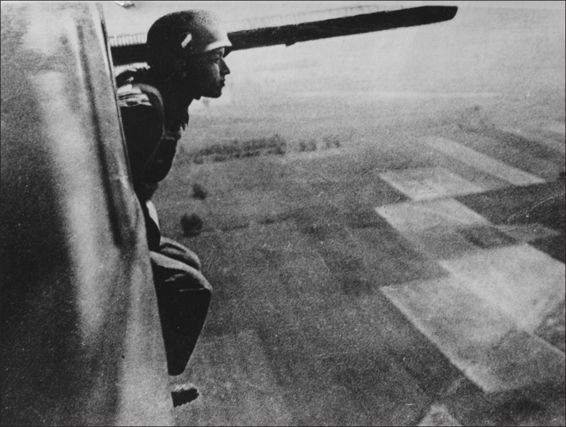
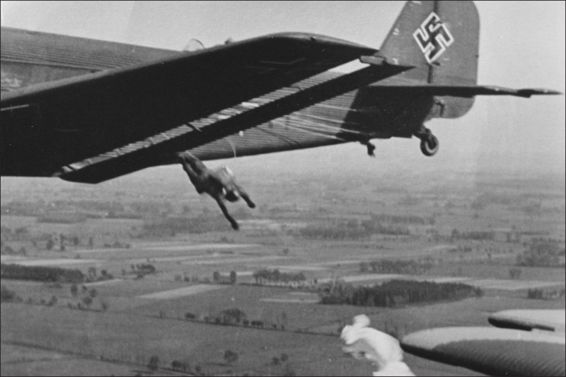
Both above: German Airborne School, Stendal, 1938. Practice jumps from a Ju-52.
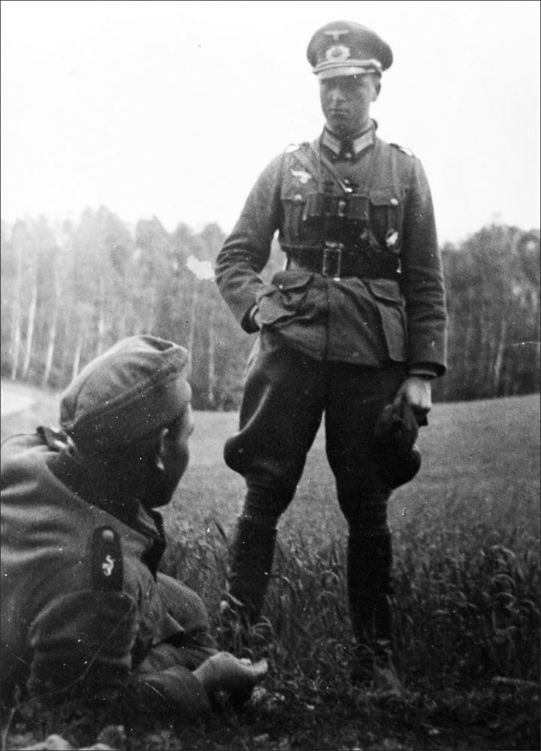
Rudolf Witzig with one of his soldiers in the field. Both are from the Engineer Platoon, Parachute Battalion, 1st Parachute Regiment, 7th Airborne Division. Witzig served with the unit from November 1938 to May 1940.

An aerial view of Fort Eben Emael with all the major works and objectives marked.
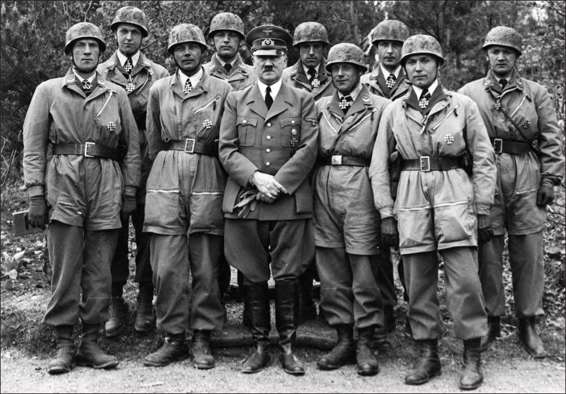
Hitler with the conquerors of Eben Emael. Rudolf Witzig is on the left in the back row.

Witzig briefing Hermann Göring in May 1940. Witzig served briefly as Göring’s aide. Although he found Göring to be an interesting individual, Witzig believed the Reichsmarschall was a ‘salon soldier’ in self-designed uniforms of white and powder blue.

General Rudolf Schmundt and Nicolaus von Below, Hitler’s aides, with Captain Koch and Lieutenant Witzig.
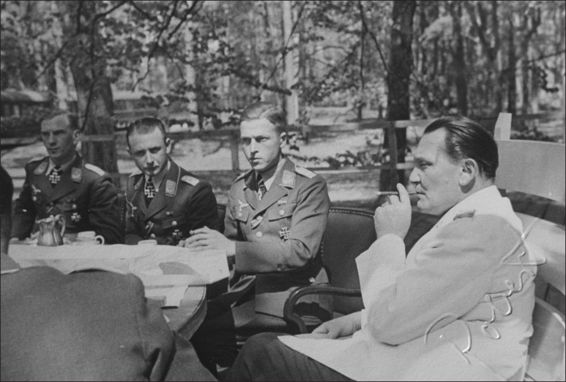
Hermann Göring with Rudolf Witzig, May 1940.

Göring with General Milch and Rudolf Witzig, May 1940.

Hitler walking with Hermann Göring, the Commander of the Luftwaffe. The Führer’s valet, Heinz Linge, follows behind.
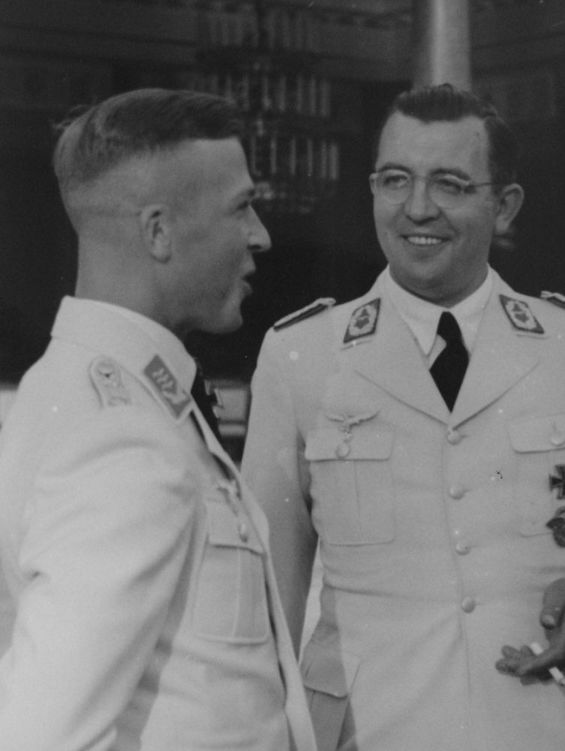
Captain Rudolf Witzig with Göring’s chief aide, Erich Gritzbach. Gritzbach was chief of Göring’s personal staff and in charge of all business connected with his art purchases. As Chief of the Prussian Press Bureau, Gritzbach became Göring’s official biographer in 1939. Göring used Gritzbach as an intermediary to seize works of art from Jews and others, thus distancing himself from illegal transactions.


An overworked Rudolf Witzig, aide to Reichsmarschall Hermann Göring, asleep in Göring’s Ju-52 some time between May and August 1940.
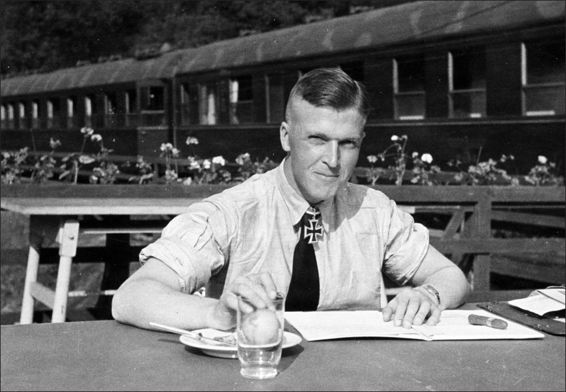
Captain Rudolf Witzig relaxing outside Göring’s train near Dinant, Belgium in August 1940.
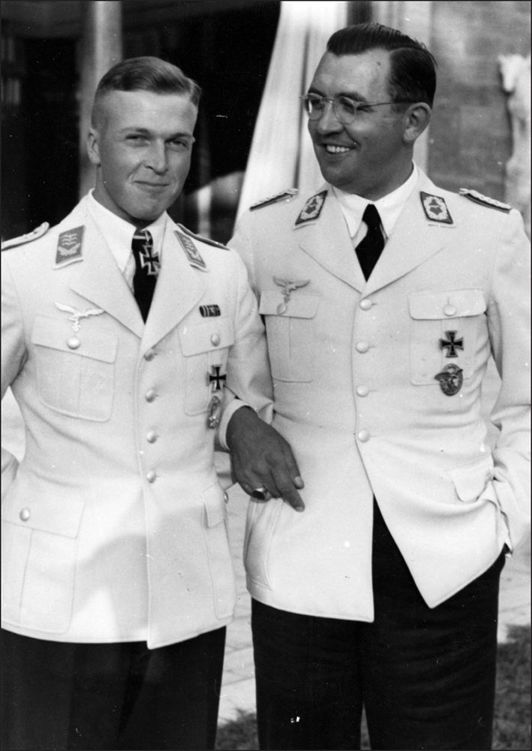
Rudolf Witzig with Göring’s chief aide, Erich Gritzback, August 1940.

Rudolf Witzig standing in front of one of the fortifications at Eben Emael some time after the end of the Wehrmacht’s campaign in the West. Witzig would repeatedly visit Eben Emael, the site of his greatest victory.

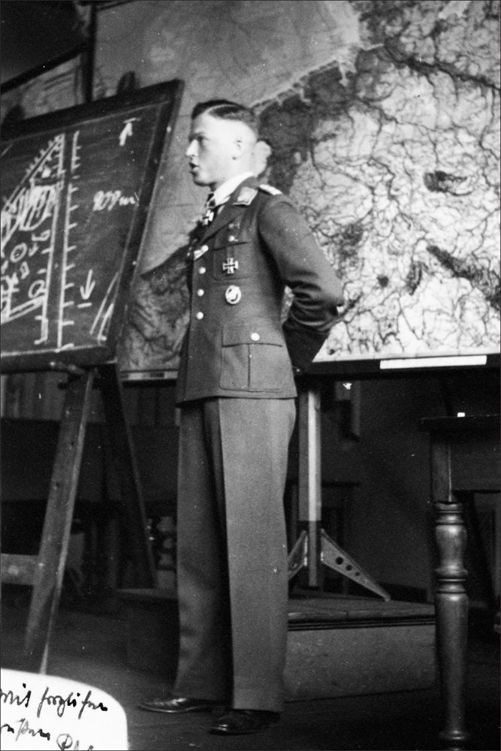
Major Rudolf Witzig briefing a group of young German students on 25 March 1941 on the assault on Eben Emael. Witzig was frequently called upon to inspire students and soldiers alike with his exploits.
Rudolf Witzig in battle dress back in Düsseldorf following the successful attack on Eben Emael.

Witzig’s airborne engineers tearing up railway track in Jefna. They used the materials to strengthen their defensive positions, digging them deep and with strong overhead cover as protection against the accurate British guns.

Witzig at Jefna, in his soft cap. Witzig seldom wore a helmet, even in combat. On his left breast can be seen his Iron Cross and below that the Screaming Eagle emblem of the Fallschirmjäger.

A German propaganda photo showing German paratroopers under their parachute canopies in the air and on the ground with their weapons. Above them fly the Luftwaffe’s ubiquitous Ju-52, the workhorse of Hitler’s airborne forces.

Witzig and one of his lieutenants in North Africa.