
Chapter Two
In 1913, the Friedrichshafen naval shipyards on Lake Constance were building a whole manner of different vehicles, including the early seaplanes that were nicknamed ‘the ploughmen of the seas’. In 1914, a runway was constructed near the naval yards and aeronautical activity would be expanded during the First World War, although by the end of the war, financial difficulties saw the company filing for bankruptcy. In 1921, Heinrich Lübbe, a businessman with a passion for aviation, took over the company and created ‘Arado Handelsgesellschaft’. The choice of name, although seemingly trivial, was not entirely without reason; during these years, Germany had had to submit to the restrictions placed upon it as a result of the Treaty of Versailles, and was consequently unable to develop its aeronautical industry. By choosing this name, with its mixed origins(arare in Spanish, araire in old French, meaning plough), Lübbe wanted to give the impression of an agricultural company, although he deceived no one. He also planned on developing his export activities towards South America and even installing an aeroplane making factory in Ikarus, Yugoslavia.
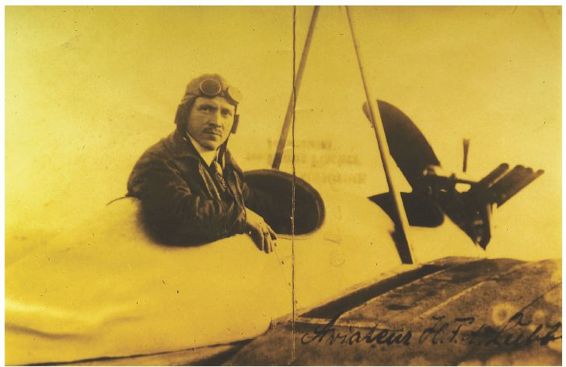
The saviour of the Arado company at the beginning of the 1920s, Heinrich Lübbe had an early passion for aviation and was taught to fly by Roland Garros. (Armin Kranzhoff Collection)
Heinrich Lübbe was born in Nienburg, Lower-Saxony on 12 January 1884. Working in marine imports and exports, he became interested in aviation in 1909, travelling to Paris to meet pioneering aviators Edmund Audemar and Louis Blériot. Once there, he was taught to fly by Roland Garros, making him the first German to obtain a pilot’s license. In 1912 he completed a tour of Argentina aboard a Rumpler Taube, accompanied by his wife. Using the same aeroplane, he beat the world record for flying over water with a passenger on 6 January 1913, flying from Buenos Aires to Montevideo.
Reunion at the Front with his friend Roland Garros
Returning to Germany at the outbreak of war, Lübbe took a job with Dutch aircraft manufacturer Fokker. In 1915 he met up with Roland Garros after the latter had been forced to make an emergency landing behind German lines. Amongst the wreckage, Lübbe discovered the famous device that could shoot through the propellers, that had been invented by his French friend. He would perfect this feature whilst working at Fokker, notably equipping the plane of Manfred von Richthofen ‘the Red Baron’ with it. This German flying ace was the creme de la creme of the German Luftwaffe in the Great War, with eighty confirmed kills. Thanks to the development of this technological innovation, Heinrich Lübbe would be covered in glory after the First World War.
Afterwards, in order to get the Friedrichshafen yards working again, he firstly brought in Walter Rethel, a colleague at Fokker, then Walter Blume, a flying ace with twenty-eight victories and holder of the order of merit ‘Blauer Max’ (Blue Max); the highest Prussian military decoration that could be awarded between 1740 and 1918.
After the relaxing of some of the terms of the Treaty of Versailles, Arado became Flugzeugwerke (aeronautical factory) and became a prosperous company amounting to around 14,000 employees (more than five times that of American aircraft company Lockheed), producing more than 1,500 aeroplanes. After refusing to join the Nazi Party in 1936, Lübbe’s company was seized and he was arrested. Ruined, he died in Berlin on 14 March 1940, never knowing the further developments that his colleagues had made.
During this time, Arado created the famous training biplane Ar 96, producing 12,000 of them, as well as the reconnaissance seaplane Ar 196, which was able to fly from ocean liners.
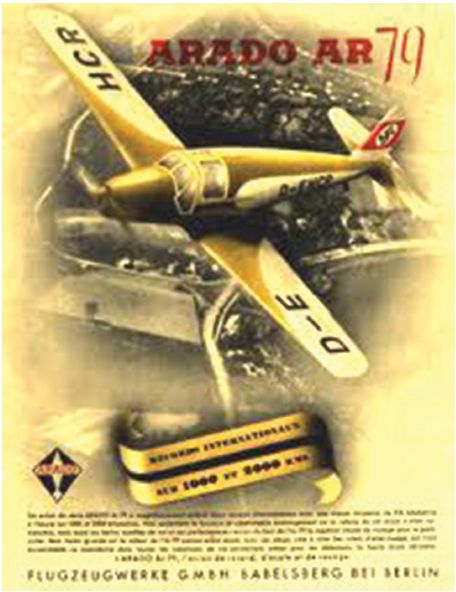
1939 advert for the Arado Ar 79. Used as a two- seater training craft and for tourist trips, it would continue to be used in one form or another until 1967. (Document Arado Flugzeuge Gmbh)
Before his eviction from the business, Lübbe knew to instil in these planes the values of innovation and excellence, characteristics which would eventually lead to the creation of the first jet aeroplane to operate in a war: the Arado 234. 210 models of this revolutionary aeroplane would be created, with two different objectives: reconnaissance and bombing.
In 1945, the now nationalised company was completely liquidated. Its technological assets would delight the victorious Allies, but also benefit its German competitors such as Messerschmitt, Junkers, Heinkel and BMW. As these companies had not been nationalised, they were able to plunder Arado’s achievements with complete freedom and today they all form a part of the European consortium, Airbus.
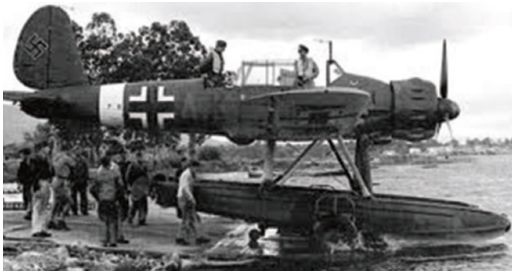
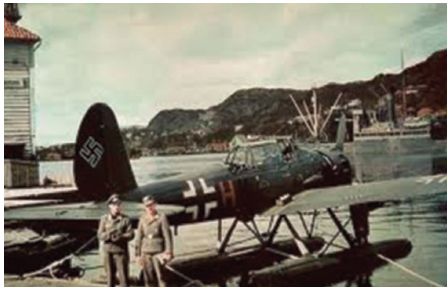
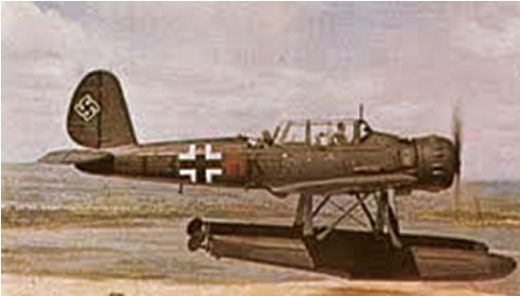
Amongst the numerous seaplanes produced by Arado, the most well known was the Ar 196, the standard aerial reconnaissance aeroplane used by the German Navy in the Second World War.