
Chapter Seven
On Wednesday 2 August 1944, the weather at Juvincourt was good and the order was given to carry out the first reconnaissance mission. The weather over the intended targets had to be perfect, and in this instance, that meant over the port at Arromanches and the aerodromes at the Allied beachheads; the quality of the photographs depended on it.
Oberleutnant Erich Sommer climbed into his plane using the window on the right-hand side. The aircraft had been hoisted onto it’s takeoff trolley and as the technicians inspected the final details, the hatches were closed. Just as before, it was pulled along aRollstrasse (access route to the runway, or ‘taxiway’) from it’s hanger towards the concrete runway. At it’s side, the Bf109 and Focke-Wulf 190 fighters from IV./JG24 and I./JGII squadron started their engines. They were there to escort the Arado during it’s takeoff and landing as these were the two moments when the plane was at it’s most vulnerable to Allied aircraft. Once he had arrived at the starting point at the top of the runway, Erich Sommer, assisted once more by the technicians, started the jet engines with the help of an auxiliary Riedel AK11 engine, which helped to start the blades.
Men armed with fire hoses were ready to intervene in case of any problems. Sommer had little room to manoeuvre in this jet. On his left were the two controllers, including the ‘hand of an angel’, which were used to control the engines. He checked his air flaps one last time, as well as his rudder and elevator control. A brief glance outside told him everything was alright. The radio plugged in, he followed the instructions from the control tower.
Everything was set for takeoff. Slowly, the plane began to whistle and shake. The inhabitants of Juvincourt, used to the sound of propellers, watched from afar as the aircraft soared towards the west. After a short shake, the takeoff carriage unhooked itself and fell away, slowed by it’s parachute. In case of a missed takeoff, the three landing wheels remained on the outside for security. As Sommer continued, he saw the German fighters on either side of him. While continuing to check all his instruments, he climbed upwards until he reached 12,000m. At this height he was untouchable; neither the Flak (Flug Abwer-Kanonen gun) nor any fighter - except certain high altitude surveillance aircraft such as the Spitfire - could reach him.
Travelling at 800-900km/h it did not take him long to reach Normandy from Aisne. Before reaching his objective, the pilot prepared his camera, an Rb 50/30. In front of him, a periscope allowed him to monitor the vapour trails. This was very important as they would certainly attract the attention of the DCA.
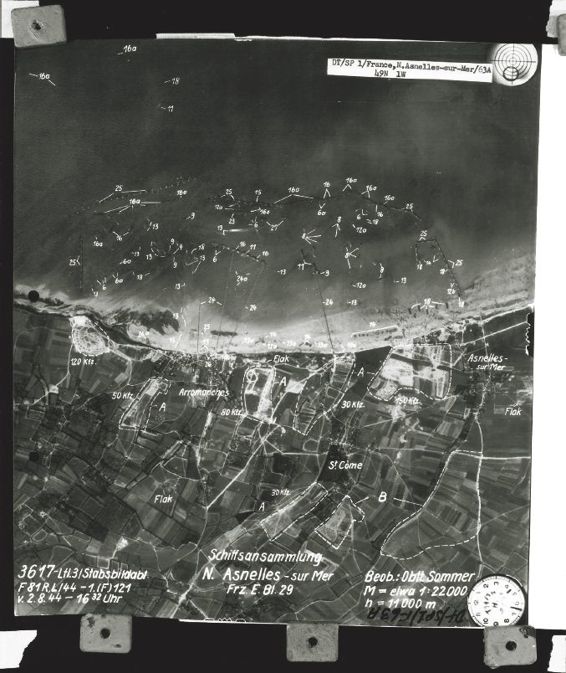
Wednesday 2 August 1944, 16:32hr. Erich Sommer photographed the artificial port atArromanches from a height of 11,000m. The picture, likely to be transmitted to the German High Command by belinograph, shows the floating pontoons and more than 300 ships. (NARA)
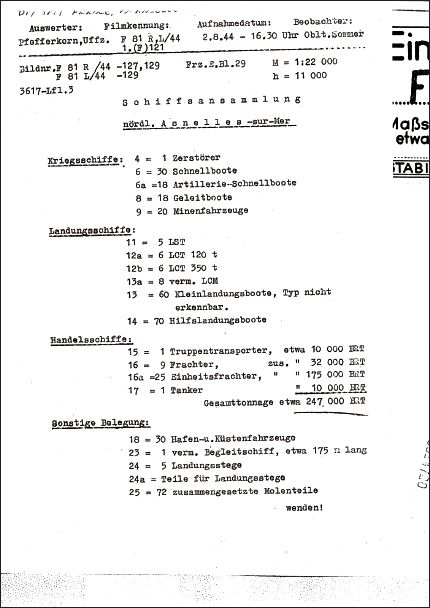
The interpretation report for this aerial photograph. Note that the interpreter belonged to the I.(F)/I2I, the first long-range reconnaissance squadron (F = Fern) de Aufklärungsgruppe 121 based at Toussus-le- Buc, then at Florennes in August 1944. (NARA)
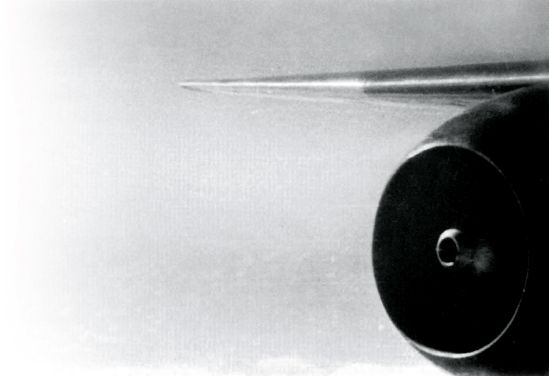
A photograph taken by Erich Sommer at high altitude, during the first combat flight of the world’s first jet aeroplane on 2 August 1944. It is a rare photograph, as a pilot was strictly forbidden from carrying a camera on a flight. Above the Cherbourg peninsula, he changed course and dipped slightly, to reach a speed of around 740km/h before levelling out and maintaining course and altitude, and deploying the photographic equipment. The first run covered the coastal strip where the Allies disembarked nearly two months earlier. Sommer turned due west again, this time to cover a 10km strip further inland, then finally a third pass along the same course. The pilot then began his return towards Juvincourt, once the apparatus had indicated the end of the film. (Erich Sommer)
Sommer checked his map and started taking his shots. Down below, the area around Arromanches was no longer just a logistics base, but an essential cog in the Allied war effort. The German pilot meticulously photographed everything over three passes: the aerodrome where the famous ‘Typhoon’ tank-killer aeroplanes were based, troop transports, ships and even a few orchards that had withstood the assault back in June. It was time to return to base. Due to the pressures that flying at such high altitude placed upon the aircraft, Sommer made a long turn so as not to weaken it’s structure and headed east, towards Juvincourt. Everything went by without any difficulty. Above Soissons, the Arado rejoined the protective fighter planes as it began to lose altitude.
As Juvincourt came into view, Sommer lowered the long central landing pad, as well as the others under the engines. Opening his landing flaps, he reduced speed. He had been gone an hour and a half. Slowly, no doubt in radio contact with the man charged with guiding him towards the grass runway, he descended steadily: two hundred, a hundred, fifty metres, then twenty, ten until he finally cut the engines. Thanks to a film found in the Luftwaffe archives, we can see that the impact was huge, with the plane sliding quickly. The pilot released the braking parachute, before finally coming to a stop at the end of the grassy road. The three landing skates had worked!
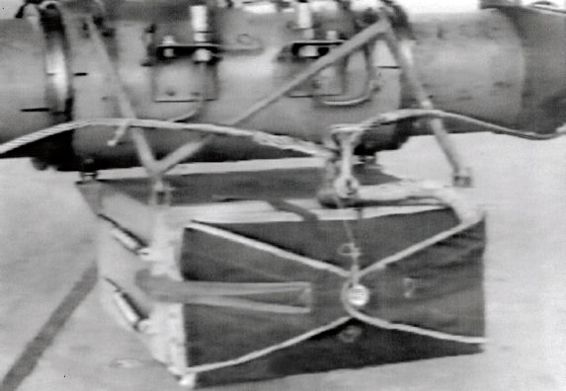
Close-up photograph of the takeoff trolley’s breaking parachute. (DR)
Men rushed towards the immobilised plane. In his cabin, Sommer undid his oxygen mask, then took a deep breath as he remained in his seat. He could see his comrades smiling at him through the window. Helped by one of the Arado technicians, he removed the harness that had kept him tightly secured throughout the flight.
On the outside of the plane, the sun dazzled him for a moment and a few men came up to shake his hand. After all, was this not the world’s very first aerial reconnaissance mission in a jet aeroplane? Not to mention the first ‘combat’ mission of the war for this kind of aircraft.
This mission would be repeated several times between 2 August and 12 August 1944, each time by Erich Sommer and Horst Götz. In the evenings, as they flew over their heads, the Allied airmen would say ‘It’s time for bed, Charlie...’ But ‘Charlie’ continued to get away with it.
At Juvincourt, twelve aerial interpretation officers began to analyse the photographs as soon as Erich Sommer’s Arado had returned. Complementing the information they already had in their possession, it is possible to say that on the evening of 2 August 1944, the Germans knew all the Allied plans, as well as the location of various air bases armed with the redoubtable Typhoon, the ‘tank-killer’: B3, Sainte-Croix; B5, Le Fresne-Camily; B7, Martragny; B8, Sommervieu; B9, Lantheuil; B10, Plumetot and B15, Ryes.
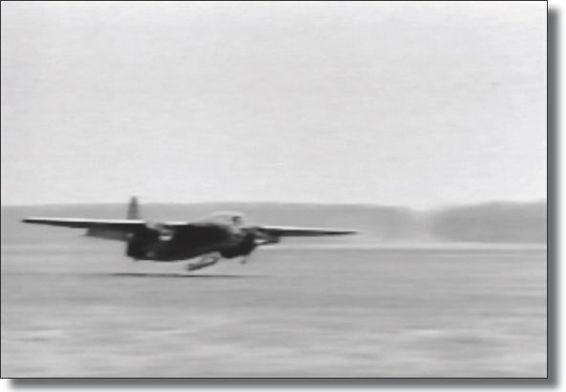
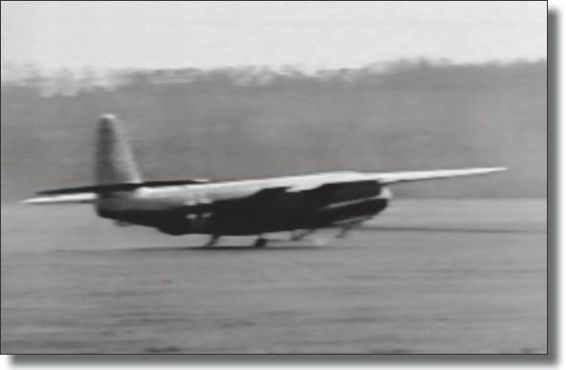
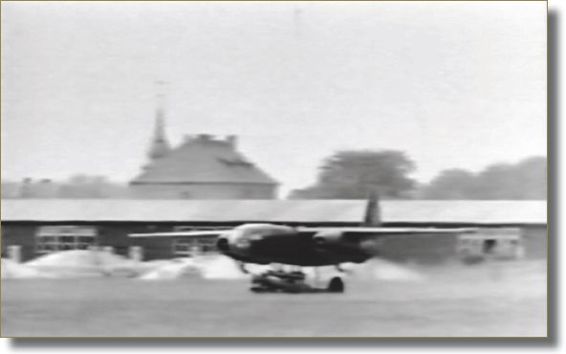
The different landing methods of the Ar 234; one on it’s skates, the other on a grass runway. (DR)
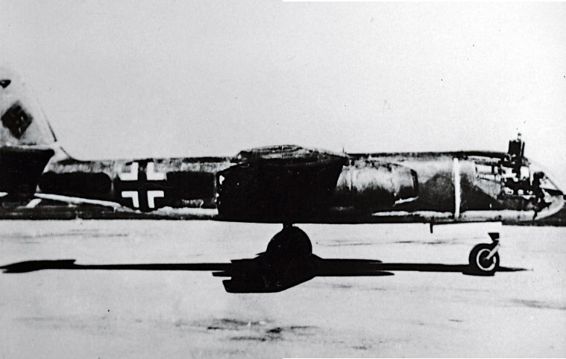
In this photograph of an Arado 234, you can see the periscope at the front, invented by Sommer for monitoring the vapour trails out of the back of the aircraft. (DR)
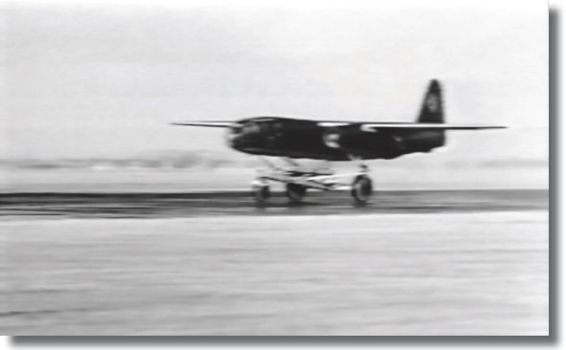
Images taken from a film showing an Arado Ar 234 taking off. (DR)
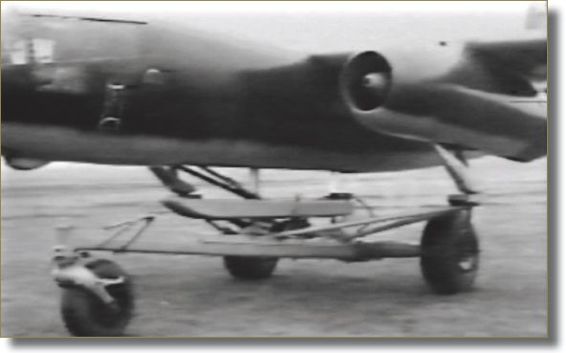
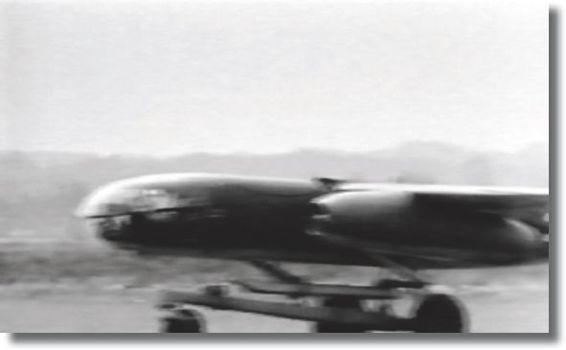
Close-up of the takeoff trolley.
Taxiing the aircraft.
Testing the speed of the aircraft.
Ready for the separation of the trolley.
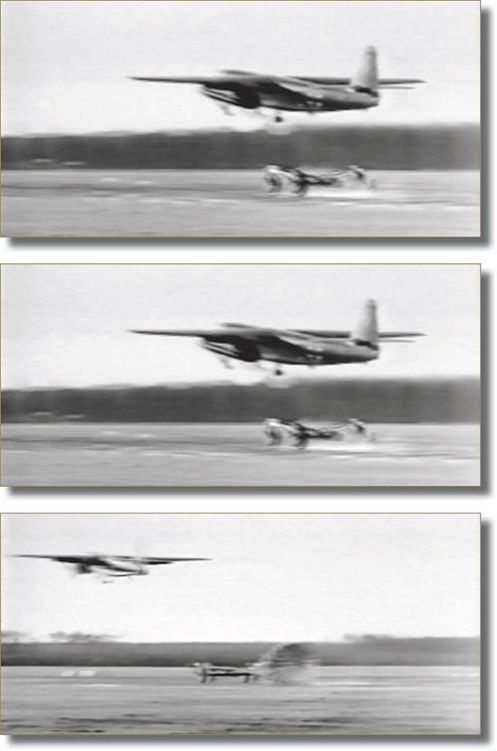
The actual take off of the Ar 234.
The quality of theses 32x32 photographs is incredible. For example, on 12 August 1944 at Coulombs, they counted no less than seventy-five Typhoons at the 300 hectare RAF base. At Arromanches, the interpreter identified and listed thirty- six freighters amongst more than 300 ships. What’s more, all the fuel depots were marked down, as well as the locations of the DCA.
During the Arado’s first operational sortie, the Luftwaffe had collected more information than in the previous two months. One can logically deduce that on the evening of 2 August, Hitler had recommended the use of the V2 rockets, even if they were not yet ready. Fortunately for the Allies, the Fuhrer had then decided not to do so.
The photographs taken above Normandy by Sommer and Götz were archived at Berlin-Templehof, just like all the other Luftwaffe negatives. They were seized by the Soviet Army in 1945 and stored in barges in order so that they could be subsequently made use of in the USSR. After the German capital was divided into four sectors, the barges in question ended up in the US zone and were consequently seized by the Americans as part of Operation Dick Tracy and were transferred to the United States.
Later, when the Soviet authorities demanded the negatives, they were told that the barges had been inadvertently destroyed by fire and sunk. Hidden in the National Archives in Washington, I only discovered them there after the fall of the Berlin Wall. Of the roughly 5000 photographs taken over thirteen missions to Normandy and Brittany during the summer of 1944, only around thirty remained in the Archives. It’s likely that the US Air Force still has a few here or there...
An unplanned flight over London
After having left Juvincourt on 28 August 1944, the two aeroplanes of Kommando Götz landed at Chievres in Belgium, with thirteen completed reconnaissance missions over Normandy under their belt. Later they would move on to Volkel in Holland and afterwards Rhein near Osnabrück in September.
On 9 September, Erich Sommer received the order to carry out a reconnaissance mission over the Thames estuary the following day. The temptation was too strong for Sommer who could not resist flying over London to look at the damage caused by the VI and V2 rockets. This action was prohibited, as the Arado wasn’t allowed to fly over any terrain where it couldn’t land safely and as a result, the pilot found himself appearing before a Court Martial. Added to this was the fact that the photographs showed that the V2s had not reached their targets anyway. Following the direct intervention of his comrade Horst Götz (acting under the orders of Göring), the procedure was finally annulled.
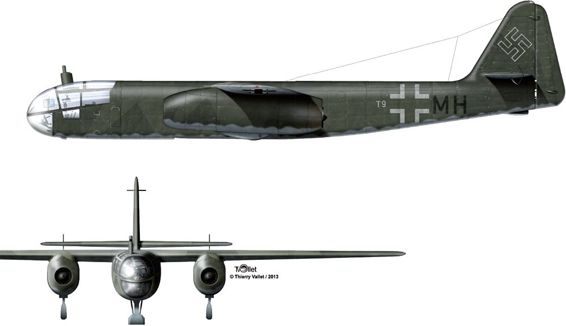
Erich Sommer’s Arado 234 profile T9+MH over Normandy.