
9
‘No State shall resist the power of Rome.’
Eugenio Cardinal Pacelli, Vatican secretary
of state, 23 February 1936
Lying in hospital in Addis Ababa, the viceroy was an angry man. In considerable pain, he was nonetheless able to dictate a telegram that would achieve infamy as evidence for the UN war crimes trials. Addressed to General Nasi, it began by reiterating the policy of killing prisoners of war: ‘[Concerning] the surrender of numerous Amhara notables and ex-army officers. I order that they all be shot immediately according to the direction of the Duce repeated a thousand times and yet little observed by many. It is time to put an end to it.’
Moving on to the subject of the attack at the Governo Generale, he widened the net from the ‘Amhara’ to ‘Abyssinian chiefs and notables’ in general: ‘Keep in mind also that here I have already aimed at the total destruction of Abyssinian chiefs and notables and that similar measures should be carried out in your territories.’ Then, in a telling passage that made it clear that he planned to use the attack as an excuse for an expanded pogrom, he added, ‘A better opportunity could not be found to get rid of them.’1
The following day Nasi passed on Graziani’s instructions to his subordinates, widening the net still further: ‘I give you orders to shoot all—I say all—rebels, notables, chiefs, followers either captured in action or giving themselves up … or cunning elements hiding among the local populations.’2
By 20 March, Mussolini himself had thrown his full support behind Graziani’s pogrom: ‘Approve of your action re soothsayers, storytellers and witch doctors. Vital extirpate dangerous elements and maintain absolute law and order.’3 The northern Italy evening edition of Secolo la Sera interpreted the order with a hypocritical perspective, echoing the crusading spirit of the Italian clerics: ‘Italy will continue unperturbed her work of civilisation and of redemption of the people liberated from the tyranny and barbarism of the Negus.’4
Thus it was that a campaign of death and destruction was unleashed against Ethiopian civilians of any standing, particularly priests, community leaders and elders. The South African journalist George Steer reported, ‘Orders were sent out from Addis Ababa to shoot all the surviving Amhara chiefs in southern and western Abyssinia, and to cleanse with machine-gun the most important of the national monasteries.’5
Much of the offensive against the Ethiopian Church was conducted under these directives, which brought the pogroms of the Italian occupation close to genocide. Numerous military ‘tribunals’ embarked on a macabre tour of the countryside, carrying with them portable gallows, rounding up and hanging notables in public, in village after village, town after town. Thousands of innocents died in the slaughter, which would continue for much of 1937.6
Onslaught in the North
Tigray had been the first diocese to be penetrated by the Italians when they crossed the Eritrean border in October 1935. It was an almost surreal situation, for Emperor Haile Selassie had held back from moving his troops to the border, keen as he was to show the League of Nations that Ethiopia was not the aggressor. Thus the Italians had at first encountered virtually no resistance. However, the situation had changed dramatically since then. By 1937 northern Ethiopia was suffering bombardments of both civilians and the military, was now fully engaged in the war, and its churches were falling victim to Graziani’s persecutions. Many churches and monasteries were attacked; here we mention just a few of those that suffered.
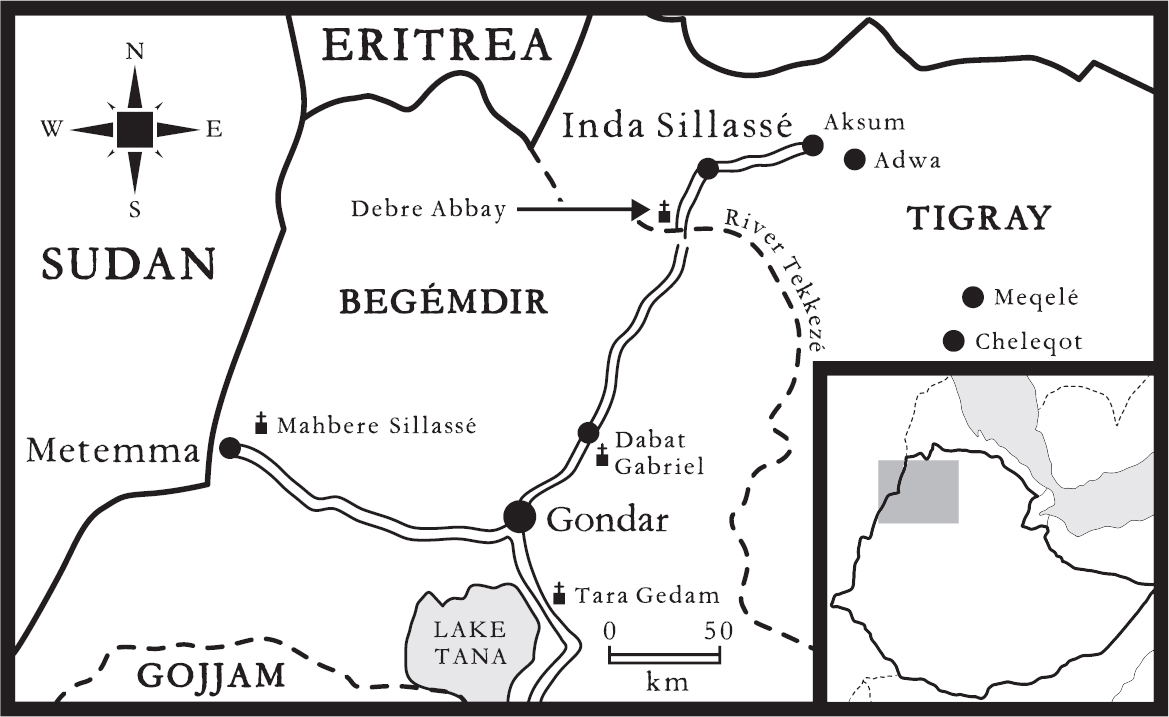
Map 9: Northern Ethiopia: Begémdir and Western Tigray (© Ian Campbell)
In the diocese of Begémdir, south-west of Tigray and close to the border with the Sudan, near Metemma, lies Mahbere Sillassé, an ancient monastery whose foundation is traditionally ascribed to kings Abriha and Atsbiha, who are revered in the Ethiopian Church as 4th-century Christian sovereigns. St Frumentius is believed to have had a vision of the Holy Trinity at the site of the monastery, the plan of which forms a circle. The monks, who live in simple thatched houses around the monastery church, follow the rules of a 17th-century monk named Amde Sillassé. These rules constitute one of the world’s strictest monastic orders, prescribing a community-oriented form of asceticism forbidding any form of private property.7
One of the monasteries of Begémdir targeted by the Italians, Mahbere Sillassé had been richly endowed by the 17th-century Emperor Fasiledes. On 24 March 1937 the Regia Aeronautica bombed the monastery, destroying the monastery church of the Holy Trinity and killing between 24 and 50 monks.8
On the same day the nearby 14th-century monastery of Debre Abbay on the northern banks of the Tekkezé River, which had been bombed during the invasion, was raided by ground troops.9 Diocesan records show that on this occasion the Italians sought out and shot dead the head of the monastery, Meggabi Gebre-Maryam, who was in hiding. The killing was carried out by Eritrean askaris from Keren, which indicates that they were almost certainly members of one of Graziani’s Muslim battalions. When Father Gebre-Maryam was shot, one of the bullets passed through his body, killing one of the soldiers.10
In the bombing attacks and the raid of 1937 many of the monastery’s rare artefacts were destroyed or looted. However, a 14th-century illustrated parchment prayer book—one of the community’s most valuable treasures, which was apparently hidden—survived, and can be seen at the monastery today.
An Apostolic Delegate
Archbishop Castellani’s strategy to ensure his own rapid return to Addis Ababa bore fruit. On 25 March 1937, apparently confident that the coast would soon be clear for a programme of evangelisation and proselytisation, Pope Pius XI appointed the pro-Fascist cleric as apostolic delegate for what the Italian government now called Italian East Africa. This was the prelate who had ingratiated himself with Graziani and the Fascist Party officials in Addis Ababa during his earlier trip to Ethiopia, following which he had announced that the Italians had achieved a beautiful conquest, referring to the clergy of the Ethiopian Church as a previously ‘impassable obstacle’ for the Roman Church—a problem that would now be resolved as a result of ‘the changed circumstances’.
Castellani embarked for Ethiopia with a large contingent of Catholic personnel.11 By that time Mussolini’s ‘reprisals without mercy’ had been stepped up, military commander Ras Desta had been captured and executed, 20,000–30,000 civilians had been slaughtered with impunity in the February 1937 massacres in Addis Ababa and the secondary towns, and thousands of religious and community leaders were being hanged in public in towns and villages across Ethiopia.
During the first half of 1937, Italian military actions against civilians were focused principally on Northern Shewa. Though still in hospital, Graziani was able to assure Mussolini that through these ‘police operations’, as he called them, he had succeeded in unleashing terror on a massive scale. On the very day that Monsignor Castellani was preparing for his journey to the reportedly tranquil land of Ethiopia, following Italy’s ‘beautiful conquest’, the viceroy was reassuring Rome that his troops were busy, day after day, depopulating Northern Shewa, leaving desolation in their wake:
News March 25th: Tegulet has received the treatment it deserved … we proceeded with fire and sword. For more than 25 kilometres not a stone remained. More than 40 villages destroyed, more than 4,000 tukuls [thatched cottages] burned; our losses—killed 31, wounded 38. Enemy losses: killed in battle 212, shot 396 … On the 24th in the Fiché sector … Tullu village, which had supported the rebels, has been razed to the ground.12
Meanwhile, the apostolic delegate was met by an enthusiastic Fascist reception committee, and was granted one of the finest houses in town. The former American legation building, a villa built in classical Greek revival style standing in extensive parkland in a western suburb of the city, had been built by Emperor Menelik’s prime minister and minister of war, Fitawrari Habte-Giyorgis.
Martyrs of Gojjam
In Gojjam, north of Shewa, which is enclosed by the great bend of the Blue Nile, the Italians were attacking many of the thousands of churches located in that diocese. The Italians came to refer to the ‘Gojjam revolt’ as having begun in the second half of 1937, but in fact reprisals and attacks of exemplary repression were common months before then in this ancient region of Ethiopian Christendom.13
Although it was Tigray where Ethiopian Christian monasticism first proliferated, it was Gojjam that became in many ways the cultural heartland of the Ethiopian Church before the Ahmed Grañ jihad of the early 16th century. Here arose the great scriptoria and royal churches of the medieval period, and many aspects of the ancient Christian culture of Gojjam have proved remarkably resilient. Indeed, Gojjam is today perhaps the only place in the world where monks and priests can still be found producing Christian parchment manuscripts in the time-honoured manner.
Under the ruthless General Alessandro Pirzio-Biroli, the Italian Governorate of Amhara, which incorporated Gojjam, was the scene of brutal repression during late 1936 and early 1937, as the Italians struggled to gain control over the inhabitants. Entire villages were destroyed by flame and sword.
Mertule Maryam, a well-known monastery with strong historical connections with Ethiopian royalty, and with origins reaching back to the 14th century, lies inside the bend of the Abbay (the Blue Nile) as it turns south to begin its encirclement of Gojjam (Map 10). Empress Iléni founded a royal monastery on the site between 1490 and 1522, and had a beautifully ornamented church built there. The edifice was, however, destroyed by the troops of Ahmed Grañ in 1535–6, in the same jihad that spurred Father Tesfa Siyon and his compatriots to move to Rome.
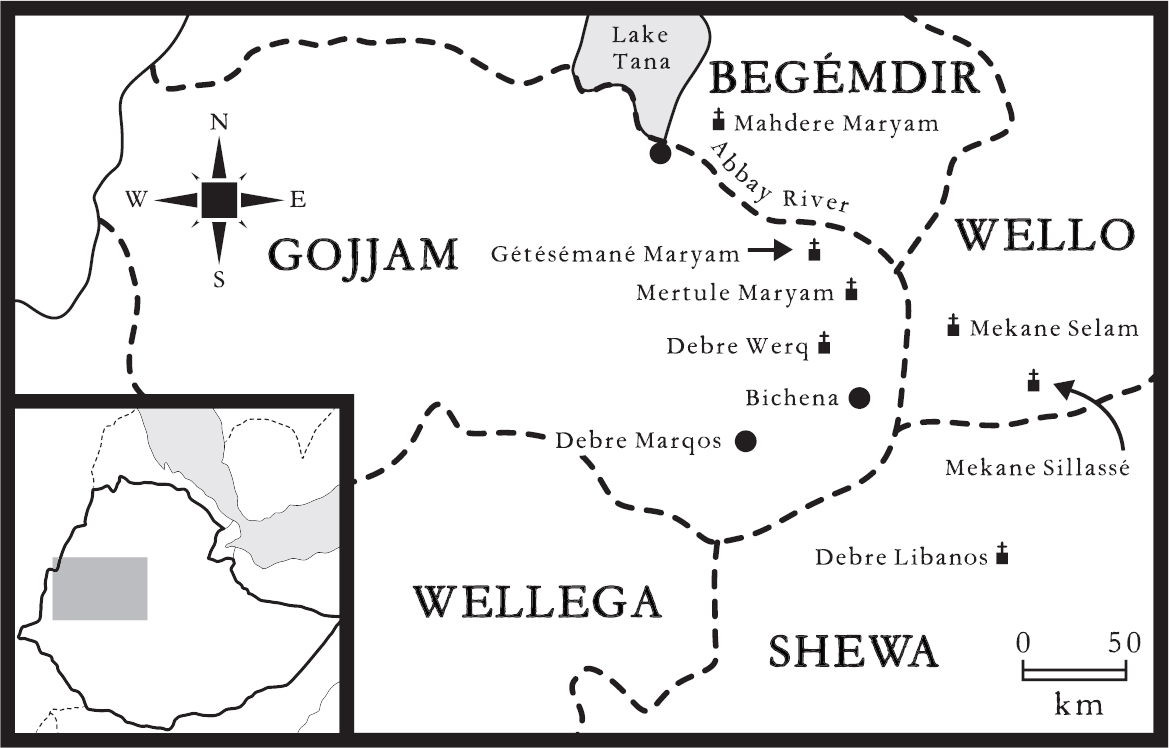
Map 10: Gojjam and the Blue Nile (© Ian Campbell)
Nonetheless, under Emperor Susinyos in the early 17th century a group of Italian Jesuits under the direction of Father Bruno Bruni set out to replace the ruins of Empress Iléni’s church with a magnificent basilica on the same site.14 Unfortunately the project, which involved craftsmanship of outstanding quality and probably incorporated some of the material from the earlier church, was never completed, leaving the monastery dominated by massive imposing but unfinished masonry.
Seltene Seyoum identifies Mertule Maryam as one of the religious centres where clerics were massacred by the Italians in the pogroms that followed the attack on Graziani in February 1937.15 This is confirmed by Father Kefyalew Mehari, who found that on 26 and 28 April 1937 the Italians killed a total of no less than 363 priests at the churches of Mertule Maryam and Tedbabe Maryam (see below).16 It seems that the clergy at Mertule Maryam hid their treasures from the Italians, for most of the artefacts survived. The Italians did, however, steal some ancient manuscripts.17
It was ironic that the Italians should strike at Mertule Maryam, for that magnificent edifice, though unfinished, was one of a number of great monuments to the history of collaboration between the Ethiopian and Roman Churches.

Another historic institution that lost many of its clergy to the Italian onslaught is the church of Tedbabe Maryam, across the Blue Nile gorge from Mertule Maryam (see Map 10). Founded by Emperor Claudius (Gelawdéwos) in 1552, it stands in splendid isolation, almost inaccessible to any but the most intrepid pilgrims, on the summit of a remote flat-topped mountain, or amba. During the reign of Emperor Susinyos the clergy adopted the Latin rite, and maintained it until the restoration of Orthodoxy in 1633.18
One of Gojjam’s most illustrious monasteries is Debre Werq (‘Mount of Gold’), built on a low hill overlooking the town of the same name in East Gojjam, on the western side of the Blue Nile gorge (see Map 10). The monastery is generally believed to have been founded in the 15th century, though there are indications that it may date back to the 11th century.19
The monastery church, devoted to the Mother of Christ, was regarded by the Jesuits in the early 17th century as one of Ethiopia’s most important churches.20 It was a traditional circular, three-division church consisting of two concentric ambulatories with the holy of holies, or meqdes, in the centre.
The Italians, who established a garrison near Debre Werq town, positioned artillery on one of the hills nearby, and fired a mortar bomb to burn the church down. Clearly visible across the valley, the church of Debre Werq Maryam was an easy target. The bomb penetrated the outer wall, passed through the ambulatory, and continued through the wall of the inner aisle, lodging itself in the wall of the inner sanctum. Although the walls suffered considerable damage, the bomb reportedly failed to explode.
Present at the time was a member of the church, Father Igwale Jenberu, who later became a renowned teacher of Digwa, the liturgical book of the Ethiopian Church containing the hymns and troparies for the Divine Office,21 earning himself the title of YeDigwa Merigéta. In due course Father Igwale shared his testimony with Father Bi’isé Tiruneh, a monk of Debre Werq with the title of aqqabé, who recounted the incident for the benefit of the present author.22
The church continued in use with the damaged section cordoned off until reconstruction following a visit to the church by the emperor in 1969–70.
Fortunately, it appears that no one was killed in the attack on Debre Werq Maryam. Had the bomb exploded, a significant part of the patrimony of the Ethiopian Church might have been lost. Whether any of the artefacts had been hidden we do not know, but in the possession of the church was—and fortunately still is—a rich collection of treasures, including an icon attributed to St Luke, and a Gospel book with images by the Venetian Nicoló Brancaleon, who was employed as a herald and painter by the imperial Ethiopian court in the 15th and early 16th centuries.23 Today the remains of the bomb are preserved at the church.
Following the attack on the Governo Generale in February 1937 there were also massacres of unknown numbers of Ethiopian clergy north of the Blue Nile in Begémdir at the 16th-century churches of Qworata and Mahdere Maryam (see Map 10).24