
PART FOUR
15
‘Hatred is the coward’s revenge for being intimidated.’
George Bernard Shaw
The massacre of Debre Libanos sent a shock wave through Ethiopian Christendom. The greatest sanctuary of the Church had been despoiled and pillaged, the holy places desecrated, and the monks and priests murdered. Yet Graziani’s ‘No trace remains’ report to Rome did not mark the end of the suppression of the Debre Libanos community. The viceroy was on the warpath. Those who had survived the massacre owing to their absence on St Tekle Haymanot Day were imprisoned, along with many others.1 He also had residents of nearby areas such as Chagel, with its close associations with Ras Kassa, dragged from their houses, never to return. Graziani’s paranoia ensured a continuous programme, over several months, of harassment, repression, imprisonment and execution of those with even the remotest connection with Debre Libanos.
Next to be targeted were the families of anyone with land at Debre Libanos. Graziani had them rounded up, and around a hundred of them were imprisoned at Debre Birhan, where six died.2
While the viceroy was conducting his vendetta, his troops were carrying out his orders for ‘terror and extermination’ and ‘the destruction of everything’. After the slaughter at Laga Weldé, General Maletti continued his pogrom through Northern Shewa. Moving on with the 20th and 45th Colonial Battalions, he resumed his scorched-earth policy with fire and sword en route to the rugged countryside of Moret, north-west of Debre Birhan (see Map 15).3 And in nearby Denneba, where the Regia Aeronautica was having a field day, thousands of Ethiopians were suffering an onslaught far beyond anything they had suffered before Mussolini proclaimed ‘War is over’. Apparently forgetting his plans to ‘liberate Ethiopians from tyranny and barbarism’, Graziani informed Lessona: ‘Debre Brehan [sic] sector. From today the air force will hammer unceasingly the rebel stronghold in the Denneba zone in order to destroy, burn, terrorise. It will, moreover, study the possibility of flooding the stronghold with yperite.’4
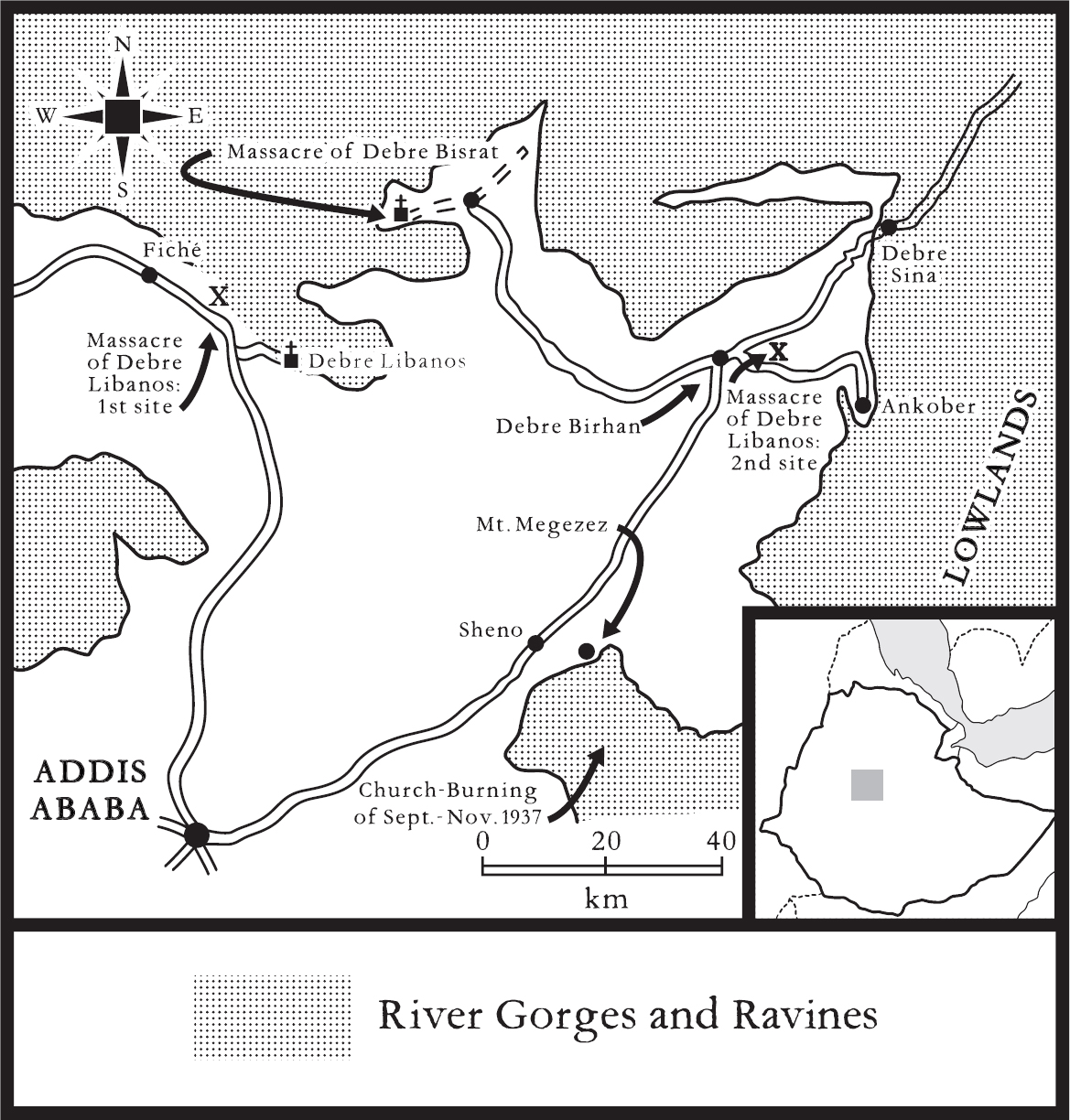
Map 13: Central Ethiopia: Northern Shewa (© Ian Campbell)
As Professor Angelo Del Boca observes, following the massacre of Debre Libanos, the pursuit of the Orthodox clergy was extended to all parts of Ethiopia.5 The next step in that escalation was to extend the persecution of the House of Tekle Haymanot beyond the Siga Wedem gorge. Tekle Haymanot was a leading monastic order, with rules followed by several monasteries throughout Ethiopia, and any devotees of the saint—even if they had never been to Debre Libanos or were situated far away—were now at risk of incarceration and death. Although some distance from the parent monastery, the parishes of Moret were very much within the spiritual compass of Debre Libanos.
The Massacre of Debre Bisrat
The district of Moret in the diocese of Shewa consists of a rocky escarpment surrounded by deep valleys. As the topography precluded motorable roads, the area was almost impenetrable to the average traveller, and the population lived largely in scattered and remote settlements. But hidden away on the terraces of the great gorges could be found churches of early foundation, one of the most notable being the 14th-century church of Zéna Marqos situated within the monastery of Debre Bisrat (see Map 13).
The monastery stood on a rocky eminence in a rugged environment that for centuries had kept the community inviolate. The founder of Debre Bisrat, a monk named Zéna Marqos, was a cousin of St Tekle Haymanot, and Zéna’s mother had been buried at Debre Libanos alongside the tomb of the saint. As a young man Zéna had evangelised with his older relative in the wilds of Moret, and he had decided to build his church there.6
Debre Bisrat was in General Maletti’s sights, for it was the second most important monastery of the House of Tekle Haymanot after Debre Libanos itself. Debre Libanos had been liquidated; now it was the turn of Debre Bisrat. Thus on 1 June 1937 the general dispatched his ‘ferocious castrators’—the 45th Colonial Battalion, which had just carried out the massacre of Debre Libanos at Laga Weldé—instructing them to ‘destroy, burn and terrorise’, as Graziani required, in Moret.7
On 5 June the officers and askaris of the 45th arrived at Debre Bisrat, which could only be reached by a three-hour walk along a narrow ridge from the town of Inawari. It seems that some of the monks or priests saw them coming, and managed to escape, for Graziani reported that those killed by his troops were ‘the remaining monks’.8
When the Italians arrived with their askaris, Abbot Welde-Mikaél (‘Son of St Michael’) was conducting Mass in the monastery church of Zéna Marqos.9 The marauding soldiers burst into the church, killed the abbot, and started rounding up the priests and monks, as other askaris began to drench the church with petrol. One 80-year-old priest named Welde-Ammanuel (‘Son of Emanuel’), who was living in the churchyard as an anchorite, was murdered on the spot for refusing to move away from the fire.10 In all, no less than 43 clergymen were reportedly slaughtered at this holiest of sites, and the valuable artefacts were either looted or burned with thechurch.11
The Destruction of Debre Assebot
Another important contribution to the suppression of the House of Tekle Haymanot was made by General Guglielmo Nasi, who had been appointed governor of Harar province. He discovered that one of the few Christian monasteries in his overwhelmingly Muslim province followed the order of Debre Libanos. Thus, hard on the heels of the atrocities at Zéna Marqos came the destruction of yet another celebrated foundation of the House of Tekle Haymanot: the monastery of Debre Assebot.
Also known as Assebot Sillassé Debre Wegeg (‘Place of Wisdom and Light’),12 Debre Assebot was some two hundred kilometres from Addis Ababa, about half-way between the capital city and Dire Dawa (see Map 14). Consisting of communities of both monks and nuns, each with their own church, it had been founded in the 14th century by the much-revered Father Samuél of Debre Wegeg, who, like Zéna Marqos, was a disciple of St Tekle Haymanot. Destroyed by the forces of Ahmed Grañ in the 16th century, the monks’ church of the Holy Trinity had been recently restored under the patronage of Empress Zewditu.13 There being no road, and as access was possible only by climbing for more than an hour up a forested mountainside, it was ‘well isolated from noises and contacts with the world … an oasis of asceticism and study’.14
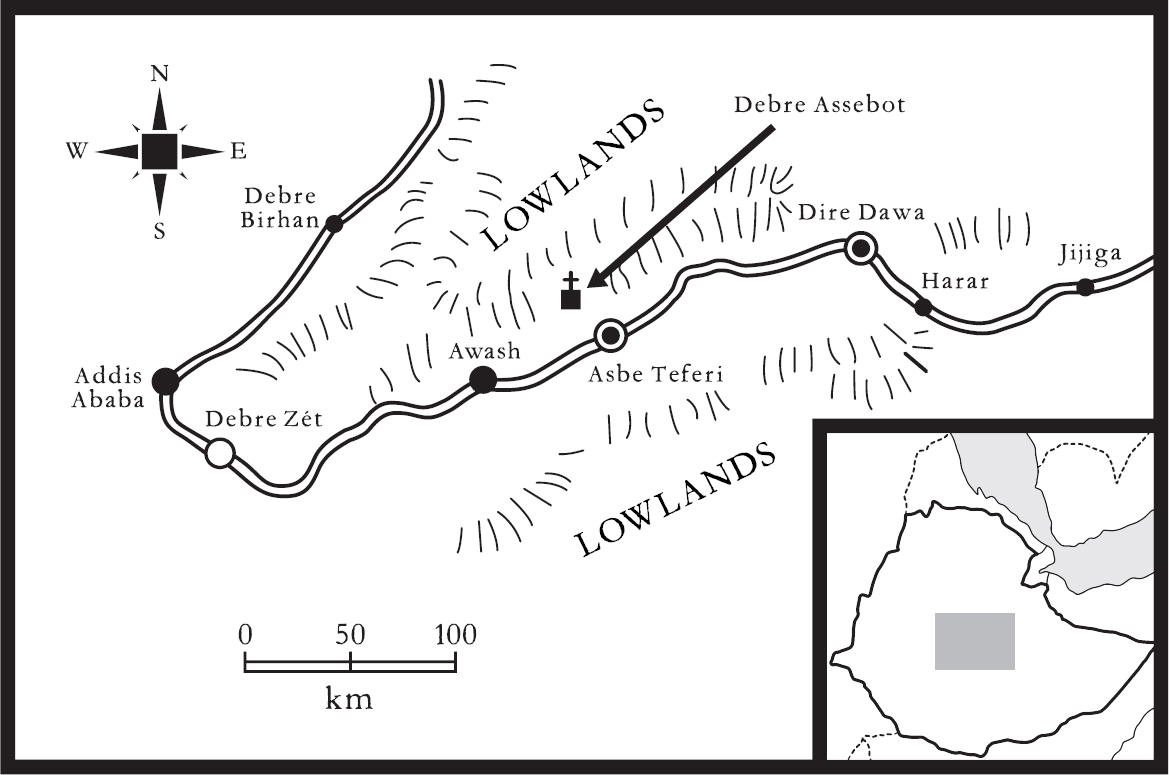
Map 14. Addis Ababa, Dire Dawa and Harar (© Ian Campbell)
On Wednesday, 2 June—only 24 hours after Maletti’s burning of the church of Zéna Marqos at Debre Bisrat—Graziani was agreeing with General Nasi’s recommendations for the liquidation of Debre Assebot. The delighted viceroy concurred without hesitation, saying that he fully approved ‘adoption of this measure for the monastery of Assebot’, and ordered him to hold the monks and deacons ‘in confinement at Itala in Somalia’.15
Clearly proud of Nasi’s initiative, and pleased that another of his commanders was now engaged in the quest to liquidate the Ethiopian Church’s leading monastic order, the viceroy immediately telegraphed Minister Lessona in Rome, telling him that ‘at the suggestion of General Nasi’, the monastery of Assebot, ‘belonging to the monastic order of Debre Libanos’, was now closed, adding that ten monks and forty deacons, representing what he called ‘an accolta [bunch] of brigands and disruptors of public order’, were on their way to incarceration in Somalia.16
It is difficult to imagine how a community of Christian ascetics living in such an isolated location inside an overwhelmingly Muslim area, surrounded by eleven thousand hectares of forests filled with wildlife including prowling lions, and with virtually no communication with the outside world, could have been disruptors of public order.
Nonetheless, the Italians carried out a large-scale massacre at the monastery, slaughtering 91 members of the community.17 This has been confirmed by the head of the church of St Mary at Addis Alem, who had spent many years as a monk at Debre Assebot. He informed the present author that the Italians killed the majority of the community, and sent those remaining alive to a sweltering prison in Mogadishu, on the tropical Somali coast, where several of them subsequently died.18 This is consistent with Graziani’s report that by 2 June General Nasi’s forces had raided the monastery and closed it down, and that ten monks and forty deacons who survived the massacre were to be imprisoned.
There were two churches at Debre Assebot: the church of the Holy Trinity, for the monks, and the original church of Father Samuél for the nuns. The Italians destroyed the church of the Holy Trinity, but the nuns’ church survived intact.19
A Deadly Census
Weeks after the massacre of Debre Libanos, Graziani was still obsessed with the monastery. The ‘nest of serpents’ that he had targeted had been eliminated, but the viceroy was not satisfied. The next category of those to be hounded was anyone related to, or who had been friendly with, any of the victims of the massacre of Debre Libanos. Such people were more difficult to identify than those having membership of a monastic order, or farming land in a specific area. Consequently, house-to-house checks would have to be carried out to weed out the supposedly dangerous elements for whom the viceroy’s heart was filled with hatred.
However, by July 1937 there was also another factor coming into play. Lessona was actively trying to have Graziani removed from the viceroy’s seat, and since Yekatit 12 he had been making headway with Mussolini in that respect. Furthermore, not only were there plans afoot to replace the marshal, but there was also talk of a potential change in the stance of the Italian government towards the Ethiopian Church. Some of Mussolini’s officials in Rome had realised that the viceroy’s excesses were strengthening the resistance to the occupation, and they were contemplating a dramatic change of policy: to switch from attempting to destroy the Church, to supporting it, so as to be able to use its influence as a tool of Fascist propaganda. The proposal included rehabilitation of the destroyed churches and monasteries, including Debre Libanos. The very idea was, of course, anathema to the viceroy, obsessed as he was with vengeance against the monastery and all that it stood for, and having proudly announced only a few weeks before that it no longer existed. Furthermore, if the Governo Generale started bringing in ‘new’ monks to the monastery while relatives of the massacre victims were still around, the latter would meet the new arrivals, and word of the secret massacre at Borale and the full extent of the executions at Laga Weldé might get out. So the viceroy had reason to eliminate, or at least take out of circulation, all those with even the remotest connection with the victims at both execution sites. He had to work fast, and his actions had to maintain a low profile.
Consequently, in the early evening of 18 July, General Pietro Maletti, the staunch Graziani loyalist who had taken personal responsibility for the liquidation of the monastery of Debre Libanos, sent coded instructions from Debre Birhan via the Governo Generale, for onward transmission by air to Major Spinelli at Fiché, telling him of the decision to conduct a census of all those connected with the clergy executed in the massacre at the monastery. The elaborate precautions Maletti took to code the text, and to choose not to send the message through the normal channels, show that this was an undercover operation, to be hidden even from his own colleagues in the military. ‘Include even monks and priests returning to Debre Libanos after the cleansing’, Maletti instructed, noting that Hayle-Maryam Gazmu, who was working for the Italian military, had already been briefed verbally about the assignment while in Addis Ababa.20
It was an irregular arrangement, and was clearly to be carried out for the sake of Graziani alone, for the general ended his orders with the instructions, ‘Proceed with swiftness, secrecy, and in a clandestine manner’.21 Finally, the military were to report back with the code word ‘censimento’ (census).
The exercise was apparently launched immediately, for, as we shall see, in addition to the people living near the monastery who had already been detained, hundreds of visitors to the Debre Libanos district, and relatives of the executed clergy, largely women and children, were tracked down, rounded up and imprisoned at Debre Birhan. This, however, turned out to be only a temporary arrangement. The unsuspecting victims were actually in transit, to a far more distant destination of which most of them knew nothing: Danane.
‘For Purposes of Repression’
The Italians had built a prison camp at Akaki, on the outskirts of Addis Ababa, on the road heading south-east to the lakes of the Great Rift Valley. Under Commandant Stappacchetti, the occupying forces used Akaki both for political prisoners and as a transit camp for detainees en route to other concentration camps. After the attack on the Governo Generale, some 3,000 prisoners were held at Akaki in tents, cells and barracks surrounded by barbed wire, and the eyewitness accounts make horrifying reading. At 2 pm each day the Italians took detainees by truck for execution, and sometimes relatives who brought food for prisoners were seized and flogged.22
But it was Danane concentration camp that Graziani selected for the families and friends of the clergy of the House of Tekle Haymanot. The torrid, disease-infested concentration camp in the tropical coastal belt south of Mogadishu, the capital of Italian Somaliland, was the destination—and, in many cases, proved to be the final resting place—of hundreds of innocent men, women and children from the villages of the valleys, plains and gorges of Northern Shewa.23
Prisoners interned in Italy’s concentration camps were typically forced to live in appalling conditions, with punishments, executions and death by starvation being daily occurrences. Explaining the principle that subject populations were expendable, Badoglio’s rationale in the Italian colony of Libya had been:
Above all a broad and clear territorial separation must be created between the rebel formation and the subject populations. I do not deny the extent and gravity of the decision which will amount to the ruin of the so-called subject population. But by now the path has been marked out and we must follow it to the end even if the whole population of Cyrenaica should perish.24
Graziani applied his experience as military commander in Libya to occupied Ethiopia, and in due course the same methods would be applied in the other countries Mussolini would decide to invade, notably Yugoslavia, where thousands would be brutally killed.
There were two categories of concentration camp in the Italian penal system. Danane was a camp per scopi repressivi (‘for the purposes of repression’), as opposed to the somewhat milder category, a scopo protettivo (‘for the purposes of protection’).25 Yet those sent from Debre Libanos to Danane were overwhelmingly neither combatants nor even activists; they were simply people whom Graziani did not want to be at liberty—typically for no particular reason. Indeed, a large proportion consisted of women and children. The Italians transported their prisoners to Danane in covered trucks, leaving Addis Ababa by night to avoid them being seen.26 By the time they arrived, several captives in each truck had typically died of disease and hardships along the way.27
Although built to accommodate 400 prisoners, Danane, located on a coast road connecting it with Genale, a large commercial plantation, actually held between 1,500 and 6,500 at various times during the Italian occupation, in conditions of great inhumanity.28 Accommodation was provided mainly in huts, with special buildings for interrogation and punishment.
Several officers of the Italian administration, which is well known to have been riddled with corruption, had extensive and lucrative banana and sugar-cane concessions at Genale, which they ran using forced labour from Danane. On Graziani’s orders the prisoners were organised in gangs of 150 ‘to earn their food and lodgings’, as he put it, thus introducing Ethiopians to industrial-scale slavery.29
For Ethiopians from the haven of Debre Libanos, accustomed to the mild climate of the highlands, the tropical conditions in the Danane–Genale complex were unbearable. They were kept barely alive by rations of dry biscuits infested with worms. According to the sworn testimony of surviving inmates, some 51 per cent of the prisoners at Danane died there. Malaria was endemic; almost everyone suffered from gastrointestinal disorders, and, in the absence of potable water, many were obliged to drink seawater.30
Those lucky enough to survive would never forget the horrors of Danane. Testimony provided in preparation for the UN War Crimes trials included the killing of sick prisoners and forced medical operations by the camp doctor.31
More Agony at the House of Abo
While the persecution of the House of Tekle Haymanot was proceeding at fever pitch, the hounding of members of Ethiopia’s next most important monastic order—that of Gebre Menfes Qiddus, or Abo—continued. The reader may recall that the holy monk’s first place of residence was Midr Kebd (see Map 6), where clergy were killed early in the occupation. On 11 June 1937 the Italians struck again, slaughtering 60 of the monks only a few days before the second bombing of the ‘sister’ monastery of Ziqwala.32 It is thus possible that some of the monks were killed by aerial bombing, because, apart from the slaughter at the monastery, the Italian Air Force also bombed the general area around Midr Kebd, killing several people at the local market.33
On 19 June aerial bombardment at Ziqwala destroyed monastic buildings on the mountain, massacring monks and laypeople in the process.34 One report claimed that no less than 211 monks who were in prayer at the time were killed.35
The present author was told that several of the survivors at Ziqwala who were removed from the monastery died later in custody, and this is confirmed in a 1950 affidavit submitted for the war crimes trials, in which Blatta Hayle Welde-Kidan, president of the Land Court of Ethiopia, testified: ‘In the month of Hamlé, 1929 E.C. [July–August 1937], the Italians brought monks, nuns, aged, deacons and feeble persons by donkey from Ziqwala to Mojo [see Map 6]. There they were put in an enclosure near the river without shelter from the rain and on marshy ground. For this reason many of them died from sickness, and the rest were shot.’36 The horrors of that tragic event are so ingrained in the institutional memory at Ziqwala that today they are still spoken of by the clergy.

During mid-1937 the Houses of Tekle Haymanot and Abo were being mercilessly persecuted. Yet while these horrors were being perpetrated, Maletti’s forces were conducting another shocking campaign against the Ethiopian Church elsewhere in Northern Shewa.