
Chapter One
The Start of the War
At the beginning of the Second World War, in Kentish cities, towns and villages there were still many tangible legacies of the Great War that had only ended twenty-one years previously. In November 1916 the War Trophies Committee was formed, its terms of reference being ‘to deal with all questions in regard to the distribution of trophies and watch the interests of the Imperial War Museum’. A committee was formed comprising of individuals representing British and Commonwealth countries to distribute these war trophies. The word ‘trophy’ was defined as ‘including all articles of captured enemy equipment, but such articles that were only to be considered as trophies for distribution during the war, if unserviceable or not required for conversion’. A large number of trophies, especially guns, had rival claimants, and the rule was laid down that in such cases, claims for trophies would be decided by the War Office. When a claim had been substantiated, the proviso was that it went to a Regimental Depot, a recognized public body, or a museum. Some 3,595 guns, 15,044 machine guns, 75,824 small arms and 7,887 other trophies were distributed. Large numbers of applications were received for allotment from county authorities, mayors and corporations of cities and towns, urban and parish councils, and other communities. The Committee decided that allotment of the trophies to which no formal claim within the recognised parameters had been substantiated, would be decided in conjunction with the Lord Lieutenant of the county. Many of these war trophies were allocated to various cities, towns and villages in Kent, one example of which was the village of Yalding where a German 7.7cm Feldkanone 16 was displayed in the High Street.
After the war, the Treasury donated 264 British tanks to towns that had raised money for the war effort. Tank ‘131’ was allocated to Royal Tunbridge Wells. It was placed outside the old post office, but time, rust and the need for scrap metal during World War Two, led to its removal. A number of towns around the country, including Canterbury, Maidstone and Folkestone also received tanks.
Remarkably the only survivor of these tanks still resides in Ashford. Mark IV tank 245 was presented to the town in August 1919 by Captain Ferrar of the Army Council, in recognition of the people’s generous response to the National War Savings Appeals.
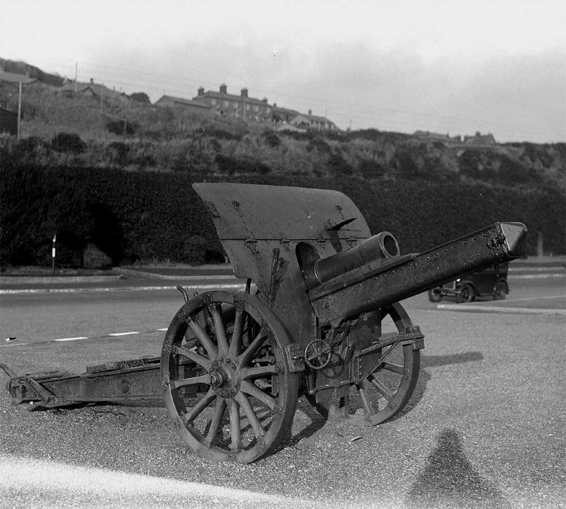
A German 150mm sFH 13 L/14 Howitzer made by Krupp c.1915. Battery Point Sandgate. (WanPs-2482)
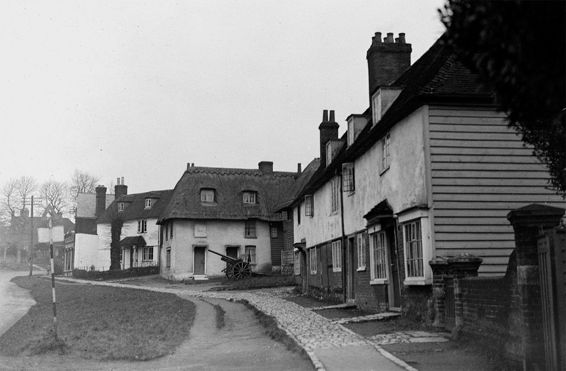
A German 7.7cm Feldkanone 16 displayed in the Yalding High Street photographed from the B2010 looking north east, c.1935. The village of Yalding has another link with the First World War – one of the famous war poets Edmund Blunden lived in the village before the war. He volunteered for war service, joined the 11th Batallion, Royal Sussex Regiment, served in France and was awarded the Military Cross. (WanPs-3758)
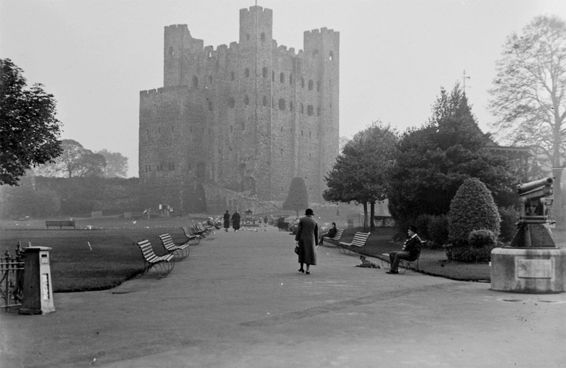
This photograph shows the contrast of old and new. Rochester Castle with its keep built in Norman times, contrasting with the war souvenir mounted in its grounds on a plinth on the right of the photograph: the barrel and recuperator mechanism of German First World War 7.7cm Feldkanone 96 neuer Art (7.7cm FK 96 n.A.). (WanPs-3642)
Evacuees in Kent
With the advent of German bombing, many children from London were evacuated to Kent. By April 1940, the Kent Education Committee reported that the number of evacuees attending elementary schools in the county was 11,498. This figure was down from 17,483 in November 1939. Whilst many individual children were evacuated to Kent, in some instances entire schools were relocated. An example of this was Kings Warren LCC School in Plumstead, which relocated to Maidstone, where it shared the new buildings of the Maidstone Grammar School. As the German bombing campaign developed in 1940, Maidstone became a target. Between July and October 1940, fifty-three people died as a result of German bombing. The worst day for casualties was 27 September 1940, subsequently named ‘Black Friday’, when twenty-two people were killed in as little as two minutes during the attack. In another incident a single bomber appeared from the clouds over Mill Street on 31 October 1940 and dropped its bombs killing six people in the immediate area. The increase in bombing of Maidstone eventually necessitated the evacuation of some children, with some actually returning to London.
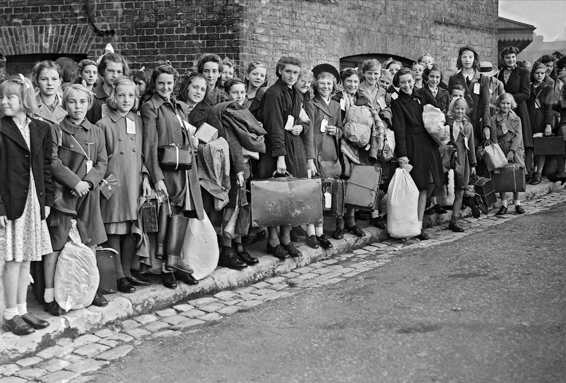
Children awaiting evacuation at Maidstone West Station, c.1940. (WanPs-0186)
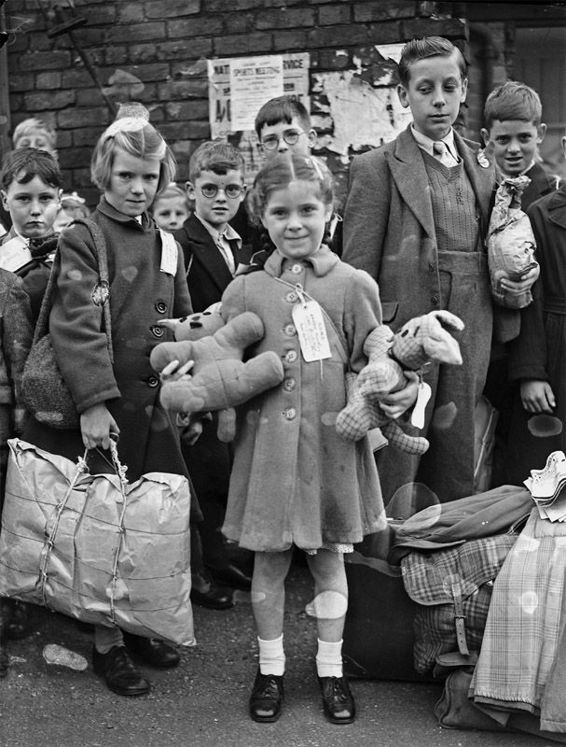
This photograph shows Dorothy Harris aged 6, with her two dolls Jimmy and Pongo waiting to be evacuated at Maidstone station in 1940. (WanPs-0037)
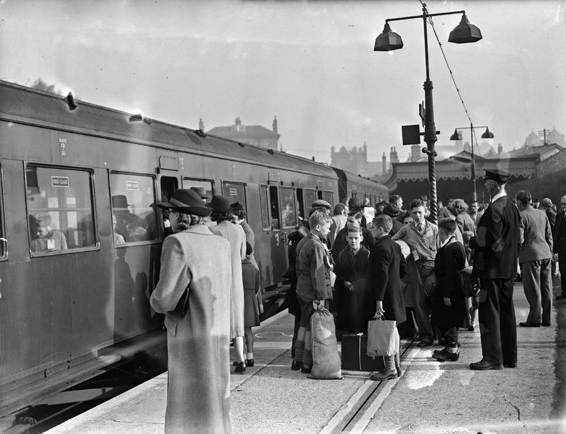
Children being evacuated from what is believed to be Maidstone West Station, c.1940. (WanPs-0036)
Dunkirk: June 1940
On 10 May 1940 Hitler’s armies struck westwards across Europe. Within three weeks Holland and Belgium had surrendered and the German Army had driven a wedge between the British and French armies. The British Expeditionary Force (BEF) and a substantial number of French troops were trapped in a diminishing pocket of land centred on the port of Dunkirk. On 25 May, Boulogne was captured and on the following day Calais fell. That evening the Admiralty signalled the start of Operation Dynamo – the evacuation of the troops stranded on the beaches at Dunkirk. The County of Kent would play a major part in the evacuation. Thousands of men were disembarked in the Port of Dover and the Southern Railway helped evacuate the tired and battered men evacuated from the Dunkirk beaches. They received help and kindness from the people of Kent as they stopped at stations and were fed and watered. The Women’s Voluntary Service (WVS) opened canteens at many stations. Trains arrived at the rate of six an hour. Arrangements were made with the Post Office for the despatch of postcards which men left as they passed through. WVS members and local people helped to send thousands of these postcards to the relatives of soldiers, letting them know that they were safe. On 14 June 1940, the Secretary of State for War, Oliver Stanley, issued an official thanks to the people of Kent as a result of this:
The Dunkirk Evacuation Official Thanks to Kent
The Secretary of State for War desires to thank most sincerely those citizens who on the occasion of the return of B.E.F. personnel to this country, so generously undertook, at their own expense, to despatch from railway stations at which troops trains had halted, telegrams, letters, and postcards to the men’s homes announcing their safe arrival in this country.
Sir Auckland Geddes, Regional Commissioner, South-Eastern Region, and the General Officer Commanding the troops in Kent have expressed their great appreciation of splendid help given by the people of Kent in the evacuation of the B.E.F.
A key part was played by Dover Command. In June 1940 the Admiralty issued a statement:
The Board of The Admiralty congratulate all concerned in the successful evacuation of the British Expeditionary Force and the soldiers of the Allied Armies from the Dunkirk area.
Their lordships also realize that the success was only rendered possible by the great effort made by all shore establishments, and in particular by the Dover Command, who were responsible for the organisation and direction of this difficult operation.
Amongst the fleet of little ships was an array of other types of ships. One of these iconic ships was the Paddle Steamer Medway Queen. She was built at Troon in 1924 specially for the New Medway Steam Packet Company for operation on the River Medway. During the 1920s and 1930s she transported holiday makers on excursions from the Medway Towns.
The P.S. Medway Queen was called up for war service in the autumn of 1939. Her black, white and cream peacetime livery was changed to battleship grey, armament was fitted, modifications were made to fit minesweeping gear and she became HMS Medway Queen.
She spent the early part of the 1940s patrolling the Straits of Dover. On 27 May 1940 she received orders to head to the beaches of Dunkirk to help embark troops of the BEF. The Medway Queen continued to evacuate troops until Monday, 3 June. She was one of the first vessels to reach the beaches and she was one of the last to leave. As a result of actions during the Dunkirk evacuation several of her crew were decorated for bravery. Overall she is credited with rescuing over 7,000 men, and also with having shot down three German aircraft. Damaged by a collision during the evacuation, she limped into Dover harbour, where she was welcomed by the sound of the sirens from all the ships in the harbour and a signal from Vice Admiral Ramsey: ‘Well Done Medway Queen’. After the war, she returned to operation with her original owners, the Medway Steam Packet Company, providing excursions once again to the seaside resorts of Southend and Herne Bay. The Medway Queen is still in existence today, being owned by the New Medway Steam Packet Company Ltd.
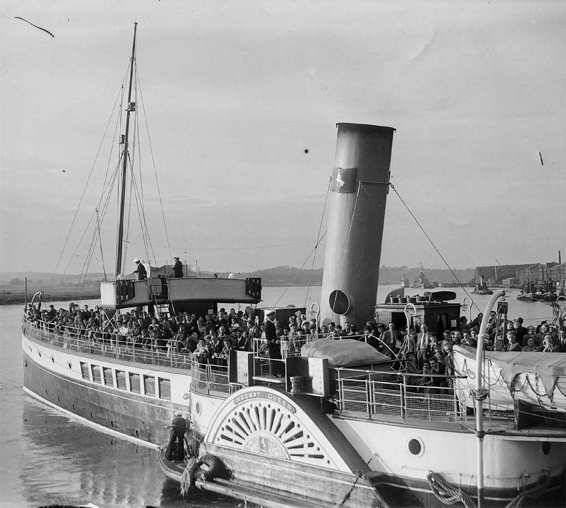
The Medway Queen at Chatham, c.1950. Returned to her civilian livery, she is once more taking holiday makers on summer excursions – a very different role to that which she played only five years previously. (WanPs-1739)
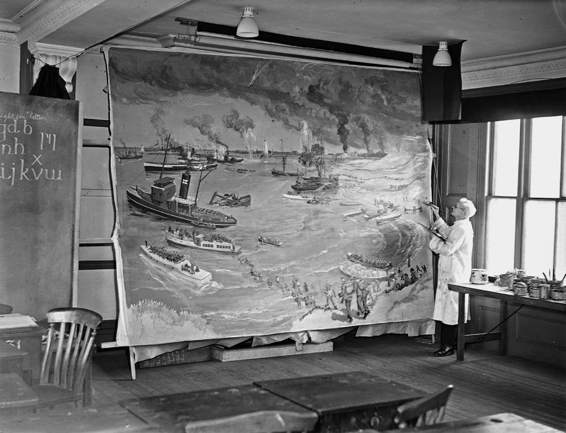
The artist W.O. Miller painting The End of Dunkirk. (WanPs-0156)
Invasion Defences
After the withdrawal from Dunkirk, the threat of German invasion seemed inevitable. The Kent coast was the nearest part of mainland Great Britain to the coast of mainland Europe and desparately needed to be defended. Initially, simple improvised defences were set up. Pillboxes, anti-tank fortifications, gun emplacements and an array of defensive fortifications began to appear around the county’s landscape. Key points in the defensive plan, such as Canterbury, Maidstone, Chatham and the Royal Military Canal, became heavily fortified. In July 1940 stop-lines were set up to divide England into several small defended areas surrounded by anti-tank obstacles which were planned to be strongly defended using natural landscape features. Pillboxes formed a major part of the Second World War defensive strategy of Britain. This strategy was created by General Sir Edmund Ironside and led to the setting up of networks of pillboxes which were constructed to house machine guns and anti-tank guns, and to provide maximum protection to those who manned these structures. The lines of defence followed points of weakness and strategic importance such as coastal areas, railways, roads, canals and rivers. The design of the structures made use of shuttered concrete construction techniques, and so the buildings were quick, easy and cheap to build – essential qualities in wartime.
On 25 June 1940, General Paget, Chief of Staff to the Commander-in-Chief Home Forces, submitted General Ironside’s anti-invasion plan to the War Cabinet. As a result of this, a number of defensive networks were set up in Kent. The defensive line became known as ‘Ironside’s Line’.
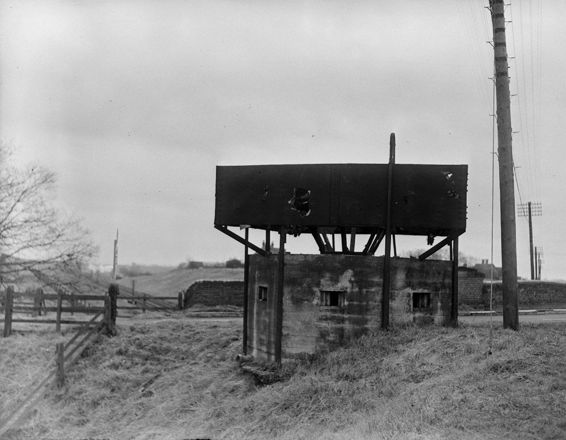
A pillbox at a railway bridge near the A20 at Westwell Leacon. It is believed that this pillbox formed part of the defences specifically designed to protect the nearby Maidstone to London railway line. The defences here comprised two ‘Type 24’ pillboxes: six-sided structures with one doorway, flanked by two windows. The remaining walls included a central window providing all-round visibility. These structures were demolished as part of the construction of the Channel Tunnel Rail Link, the new line running parallel to the existing rail line. The site here was formally recorded prior to demolition to ensure that the historical details were not lost – part of the remit of the Channel Tunnel Rail Link project. (WanPs-0344)
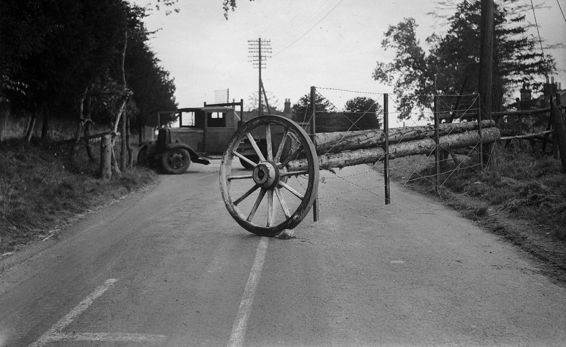
A temporary roadblock set up somewhere in Kent, using an old lorry and a makeshift barrier, c.1940. (WanPs-0073)
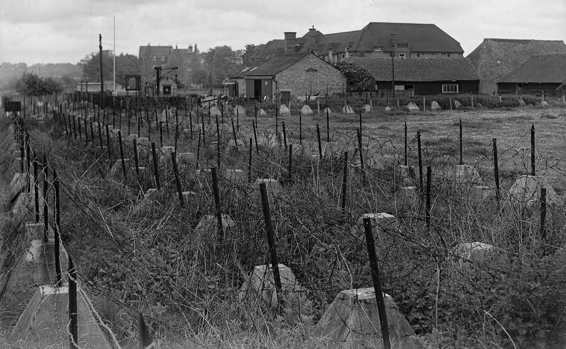
Barbed wire defences at Ashford, with 4ft reinforced concrete cubes, often referred to as ‘pimples’. (WanPs-0225)
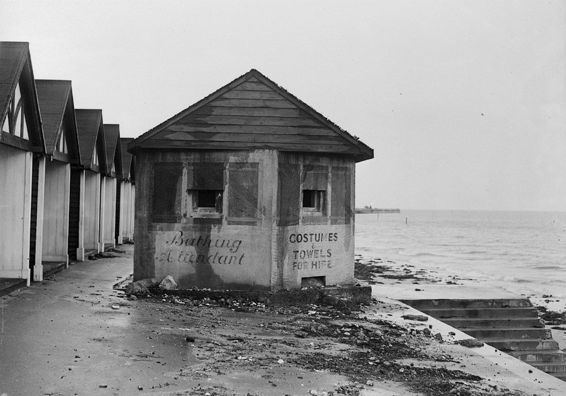
A disguised pillbox located at Western Undercliff, St Lawrence, Ramsgate. This pillbox formed part of the coastal defences at Pegwell Bay. Most of the western undercliff has been extensively redeveloped since the war; the bathing huts here have long since disappeared. (WanPs-0346)
War-time Scrap Drives
Throughout the war there was a focus on utilising scrap metal as salvage. In July 1940, an appeal led to members of the public donating thousands of tons of aluminium to help the war effort. The appeal for pots and pans and other aluminium household articles in July 1940, the collection of aluminium from fallen German aircraft, and the careful sorting and melting of manufacturers’ scrap yielded a substantial amount. Virtually all of the output of aluminium was absorbed for aircraft and naval construction. The WVS helped with collecting the donated metal by setting up receiving centres and organising collections.
At one such centre in Hythe the following conversation was recorded between a centre organiser and a small boy who had brought along some aluminium pots and pans: ‘And are all these pans you’ve brought to be made into a bomber?’ The small boy retorted, ‘rather not – into a FIGHTER’
A second major scrap drive was launched in 1942, this time for iron and steel. The entry of Japan into the war had meant the supply of steel from America reduced significantly as it was now needed by the Americans themselves. It was recognised that enormous quantities of scrap metal were still available in Great Britain. A plan to collect 43,000 tons per week was issued by the Ministry of Supply.
Throughout the country people everywhere responded to this initiative by looking for and collecting scrap metal. Much of this was metal being used for ‘non-essential purposes’. In Royal Tunbridge Wells one such location where metal was removed was from Woodbury Park cemetery where many of the handsome wrought iron railings and chains marking out family graves were removed. An indignant letter from a Tunbridge Wells local, W.C. Cripps the younger, dated July 1942, demanded ‘compensation from the Council for the damage done by clumsy workmen’ to the kerbstones of his family’s grave – these had just been restored – when the railings were removed as scrap to make munitions. It is understood that Mr Cripps, being both a lawyer and former town clerk, got his compensation.
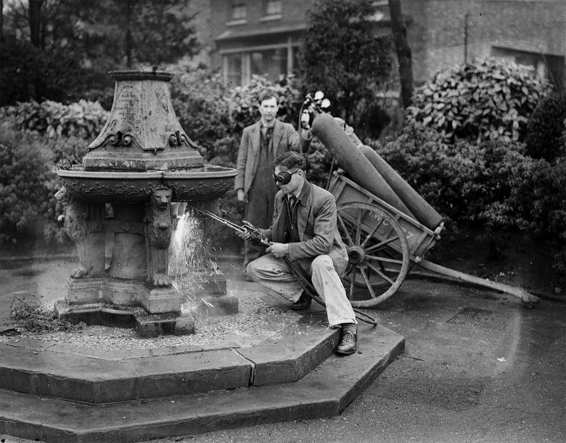
This photograph shows scrap metal being collected for the war effort in Tunbridge Wells. (WanPs-2413)
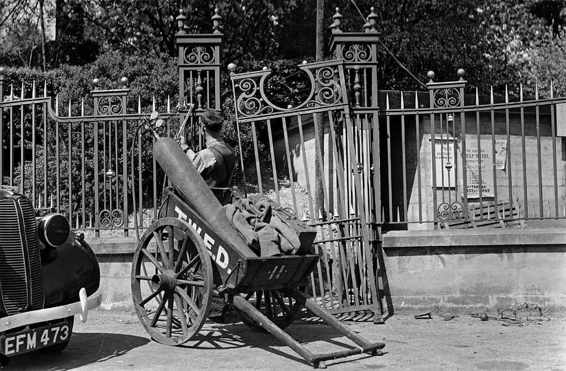
Another photograph showing scrap metal being collected in Tunbridge Wells. In this image some iron railings are being removed. (WanPs-2414)
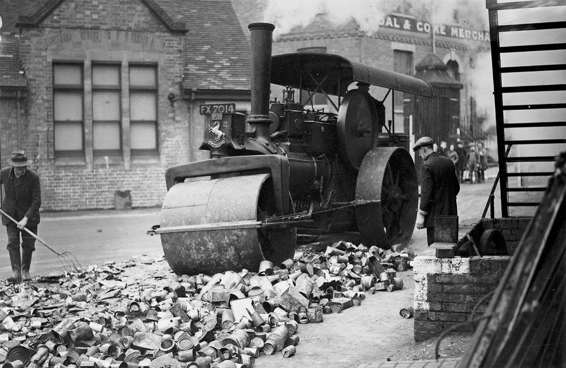
Crushing scrap metal collected for the war effort. This photograph was taken in front of the Medway Coal Company Depot at 160 St James Road, Tunbridge Wells, c.1941. The road roller No. 8097 was built in Kent by Aveling & Porter in 1913 and still exists today, beautifully restored, named Moby Dick, and painted in the colours of Tunbridge Wells Borough Council. (WanPs-2523)
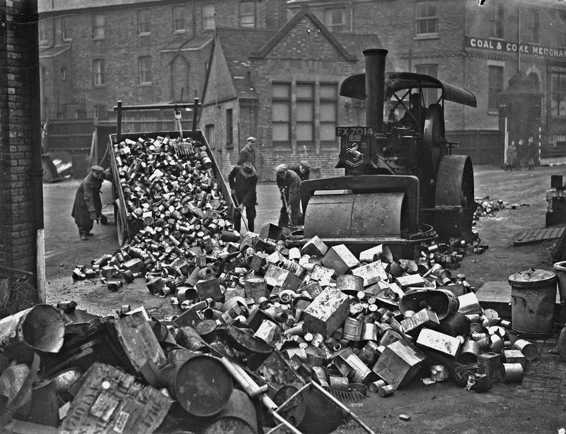
Another shot showing the Tunbridge Wells Borough Council road roller No. 8097 crushing scrap metal outside the Medway Coal Company Depot. (WanPs-0139)