
Japan
Japan’s military police force, the Kempeitai (literally ‘Corps of Law Soldiers’) was founded in 1881. It initially consisted of just 349 men, but by the end of the Second World War had expanded to at least 36,000 plus several thousand auxiliaries.
Although the Imperial Japanese Navy maintained its own very small police branch, known as the Tokkeitai, a reciprocal arrangement between the various braches of the armed forces allowed the Kempeitai authority over all military personnel. The Tokkeitai seems to have been used by the navy principally to prevent the army interfering in matters the navy considered its own.
Organisation
Area Headquarters
A Kempeitai headquarters, commanded by a Major-General (Shosho) with a full Colonel (Taisa) as his second in command, was co-located with each army which was nominally in control of a specific area. Each area headquarters was then in charge of three field offices.
Field Office
The Kempeitai field office was commanded by a Lieutenant-Colonel (Chusa), with a Major (Shosa) as his second in command. Each field office controlled approximately 375 Kempei. The field offices were in turn sub-divided into sections.
Sections
The Kempeitai section (Buntai) was commanded by a captain (Tai-i) with a first- lieutenant (Chu-i) as second in command. Each section fielded around 65 Kempei. The Sections were further sub-divided into detachments.
Detachments
The Kempeitai detachment (Bunkentai) was normally commanded by a second- lieutenant (Sho-i) with a warrant officer (Junshikan) as second in command. Each detachment consisted of around 20 Kempei divided between three squads.
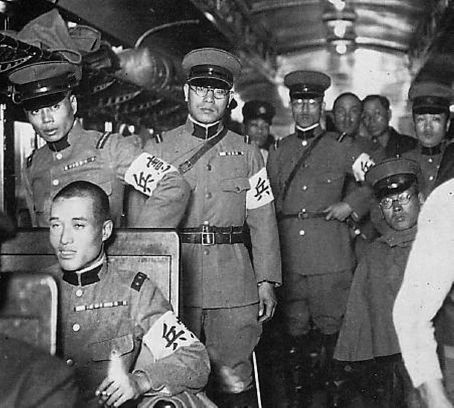
Kempei Tai troops, all wearing the distinctive armband.
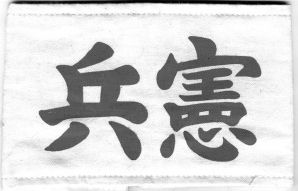
Japanese Kempei Tai armband, the Kanji represent the words ‘Law Soldier’
Squads
Three types of squad were to be found in each detachment, the police squad (keimu han), the admin squad (naikin han) and a special duties squad (Tokumu han). Auxiliaries were not permitted to rise above the rank of sergeant-major (Shocho).
Duties
The principal duties of the Kempeitai were as follows:
|
a) |
Issuing and controlling travel passes |
|
b) |
Recruitment of local labour. |
|
c) |
Counter Intelligence |
|
d) |
Propaganda and counter-propaganda |
|
e) |
Security in rear areas |
|
f) |
Psychological warfare |
Uniforms
Members of the Kempeitai most commonly wore the standard M1930 (M90) or M1938 (M98) uniform in the field, although civilian clothing was also authorized for wear in certain circumstances. On the earlier M1930 uniforms, branch of service was shown by the colour of the swallow-tail shaped collar tabs, black in the case of the Kempeitai, with ranks bars being worn on the shoulder.
On the M1938 uniform jacket the Kempeitai wore a branch of service insignia in the form of a inverted black double chevron above the breast pocket of the tunic. In both cases a white armband with Japanese ‘Kanji’ characters for ‘Ken’ (Law) and ‘Hei’ (Soldier) was worn by non-commissioned ranks.
A small gilt metal eight-pointed sunburst was also introduced to be worn just behind the collar rank by officers on the M1938 tunic.
Generic badges of rank were worn on the collar.
Armament
Typical weapons carried by Officers were the Katana sword as well as a pistol, and a pistol with bayonet for junior ranks. In addition, NCOs often carried a wooden Kendo sword (Shinai), this being used as a form of club to administer beatings to prisoners.
Italy
The military police function for the Italian armed forces was performed by the Corps of Royal Carabinieri, a formation which had been created in July 1814 by Royal Patent. In somewhat similar fashion to the Gendarmerie in France, the Carabinieri had wide ranging powers and operated in both civil and military matters. During the Second World War, Carabinieri were active in the military police role in all areas where the Italian Army was engaged. Like their German counterparts in the Feldgendarmerie, the Carabinieri were involved both in the purely military support role, but also in the war against the partisans, most prominently during the occupation of the Balkans.
Special uniform distinctions included an old Napolenic style bicorn hat known as the Lucerna which carried a large vertical plume. On operational duties the plume was removed and the hat normally covered with a grey-green cloth cover. The Carabinieri badge consisted of a large silvered metal flaming grenade emblem bearing the initials ‘VE’ for King Victor Emmanuel.
Carabinieri also wore distinctive collar patches but the basic field service uniform was the same as worn by other Italian army troops.
Following the armistice with the Allies, both the new Government forces in the south and the fascist regime in the north fielded Carabinieri units, the latter being used in anti-partisan operations. In October 1943, the Germans attempted to disband these units, having no trust in them, and deport their members to German as forced labour. This simply resulted in thousands of Carabinieri deserting to the resistance. Over 9,000 Carabinieri were either killed or wounded fighting alongside the partisans against the Germans.
Hungary
As a member of the Axis since aligning itself with Germany and Italy in November 1940, Hungary fielded considerable numbers of troops on the Eastern Front following the German invasion of the Soviet Union. Along with their regular formations, the Hungarian army fielded units of the Csendőrség or Gendarmerie. These troops were recruited directly from the army (Honvédség) into the Gendarmerie in the first place so when the Field Gendarmerie was created and troops assigned back for service with the army, they were already trained soldiers who were then given the additional training required to perform their military police duties.
Normal Gendarmerie wore a gorget with the Hungarian coat of arms over a banner with the legend ‘Csendor’ whilst the field security troops wore a similar gorget with the banner bearing the legend ‘Tabori Biztonsag’
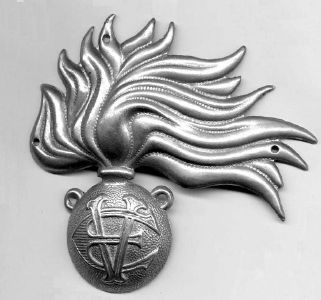
Carabinieri Cap Badge, the Second World War period with ‘VE’ (Victor Emmanuel) cipher.
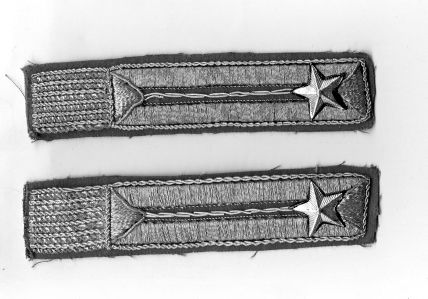
Collar badges for Carabinieri NCO for the grey green service tunic.
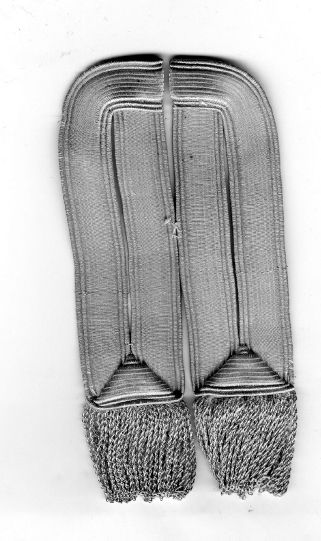
Collar badges for senior Carabinieri ranks for the double breasted dress blue uniform.
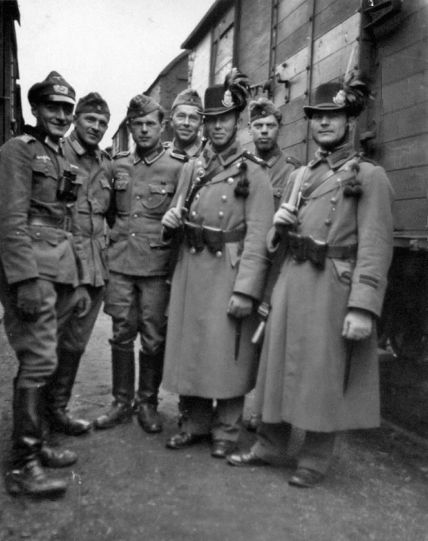
Hungarian Gendarmerie, with their distinctive headgear. Note the circular patrol Leader’s badge just at the point of the coat collar of the Gendarme in the centre.
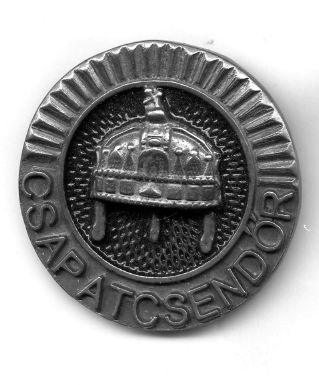
Breast badge for a patrol leader of the Hungarian Field Police. The reverse has a clip fitting to allow it to be clipped to the right breast pocket.
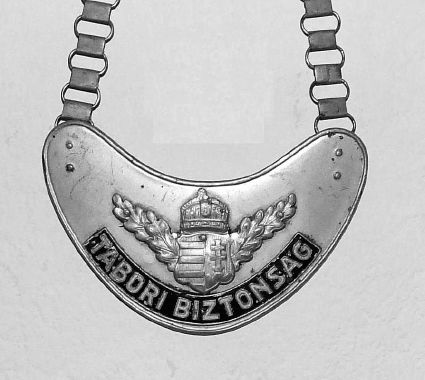
Hungarian Field Police gorget.
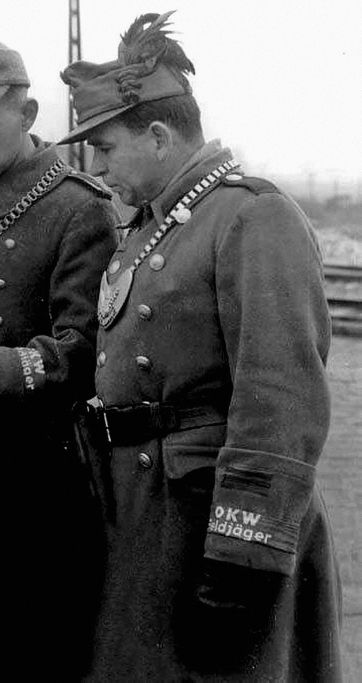
A member of the Hungarian Field Police operating with the German Feldjägerkorps. Note the Hungarian gorget being worn. (Otto Spronk Photo Files)
Romania
Romanian forces fighting alongside their German allies on the Eastern Front from June 1941 included units of the Gendarmerie/military police who performed following main activities:
|
a) |
Preventing partisan activities; |
|
b) |
guarding civilian and military installations; |
|
c) |
maintaining law and order; |
|
d) |
repel attacks by enemy airborne and paratroopers; |
|
e) |
monitoring of political opponents/resistance. |
The Romanian Gendarmerie was declared a military corps by a law passed in April 1943 which stipulated that it would perform the function of both civilian and military police and was subordinated directly to the war ministry though its services could also be called upon by the interior ministry.
On 23 August 1944, Romania changed sides, and from then on the functions of its MPs included:
|
a) |
to locate and neutralise enemy soldiers as well as their ammunition and weapons depots; |
|
b) |
to block enemy movement along supply routes; |
|
c) |
to disarm small groups of enemy soldiers; |
|
d) |
to arrest or eliminate enemy airborne troops; |
|
e) |
to secure captured enemy depots; |
|
f) |
to arrests of enemy troops and pro Nazi elements; |
|
g) |
to arrest and eliminate pro-Nazi partisans in Transylvania; |
|
h) |
to find and destroy pro-Nazi propaganda; Gendarmerie units also acted in an infantry role when required. |
Bulgaria
A grey- green four patch-pocket tunic with high collar not dissimilar to those worn by German troops but with extremely long ‘points’ to the scallops on the pocket flaps was used, generally with six button fastening to the front. Collar patches were German style ‘Litzen’ but with wide Imperial Russian style shoulder straps.
For military police personnel, a heavy metal shield shaped Gorget bearing a rampant lion under the legend ‘Voenna Politsiya’ (military police) , all topped by the Royal Crown was worn. The Gorget was silvered finish for lower ranks and gilt for officers.
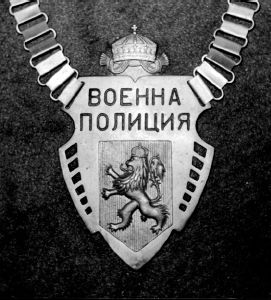
Very rare gorget as worn by Bulgarian Military Police. (Peter Groch)
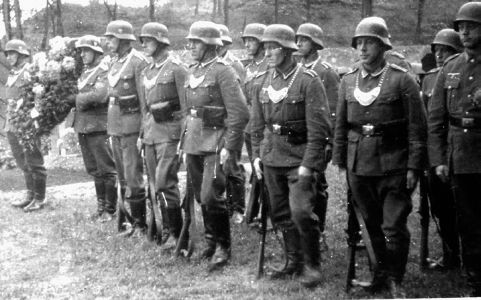
A Feldgendarmerie-Trupp assembled for a wreath laying ceremony at the funeral of a comrade.
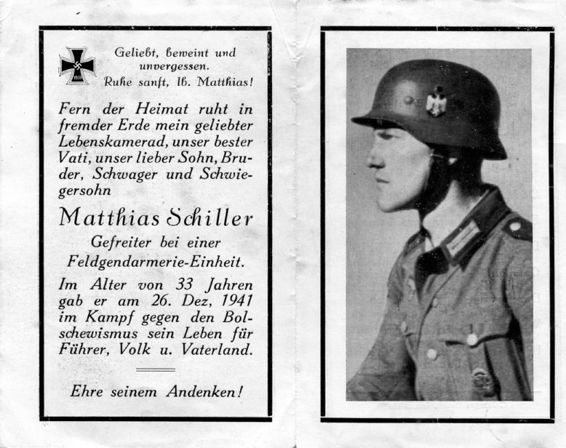
Obituary card for Gefreiter Matthias Schiller, klilled in action on the Eastern Front on 26 December 1941 in the ‘battle against Bolshevism’!
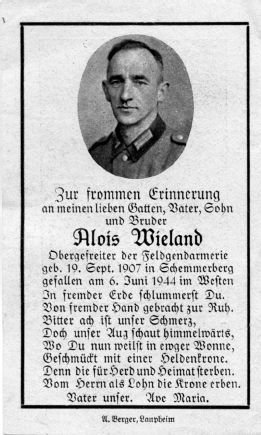
Obituary card for Obergefreiter Alois Wieland, killed in action on the Western Front on D-Day, 6 June 1944.

Obituary card for Gefreiter Jakob Hunglinger, surveyor with a Feldgendarmerie Abteilung, killed in action in Russia 26 December 1941.
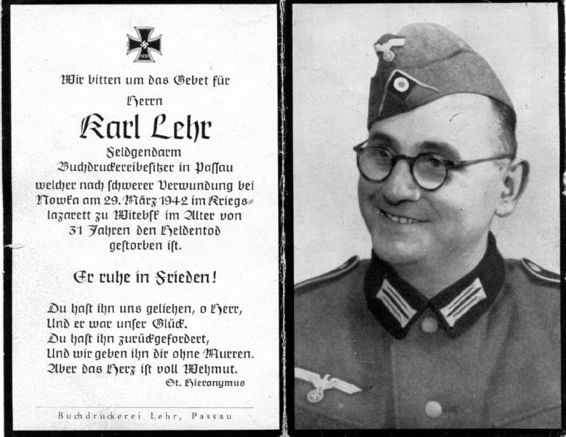
Obituary card for Feldgendarm Karl Lehr, who died on 29 March 1942 of wounds received in battle near Nowka.
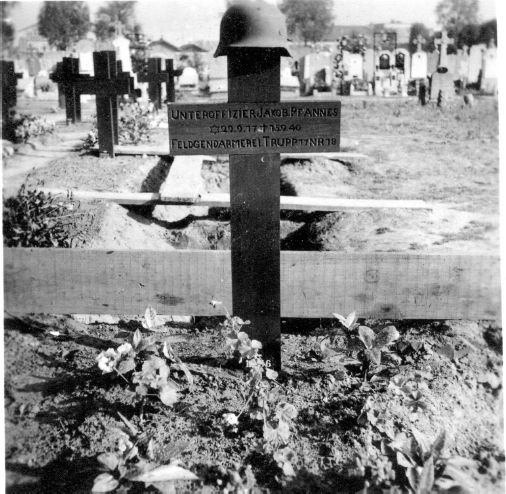
This was the fate that many Feldgendarmen would share with their counterparts in the combat arms.
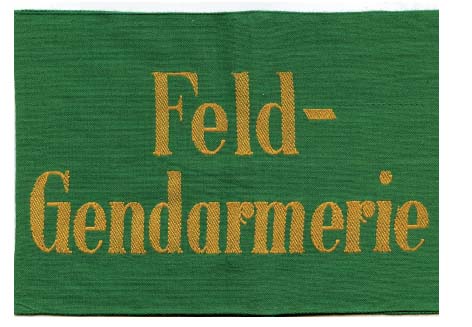
The armband worn by those acting as temporary Feldgendarmen, machine woven version.
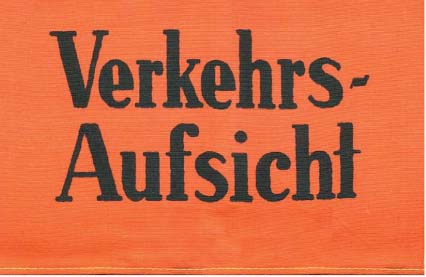
Armband worn by Military Police acting as traffic controllers, printed version.
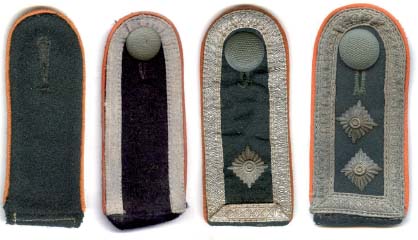
Shoulder straps worn by Feldgendarmerie non-commissioned ranks. From Left to Right: Schutz (Private), Unteroffizier, Feldwebel, Oberfeldwebel.
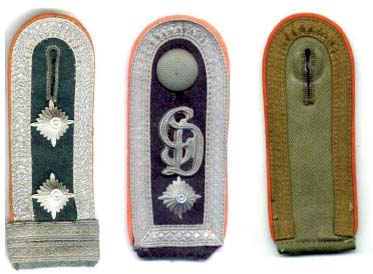
Feldgendarmerie shoulder straps. From Left to Right: Fahnenjunkeroberfeldwebel (senior Officer candidate), Feldwebel of the Grossdeutschland Division, Unteroffizier for tropical uniform.
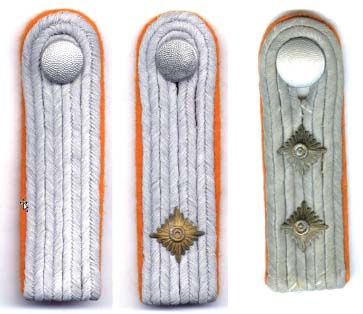
Feldgendarmerie junior officers shoulder straps. From Left to Right: Leutnant, Oberleutnant, Hauptmann.
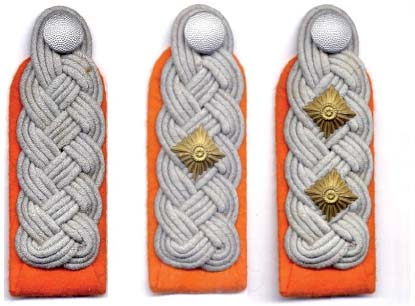
Senior officer’s shoulder straps. From Left to Right: Major, Oberstleutnant, Oberst.
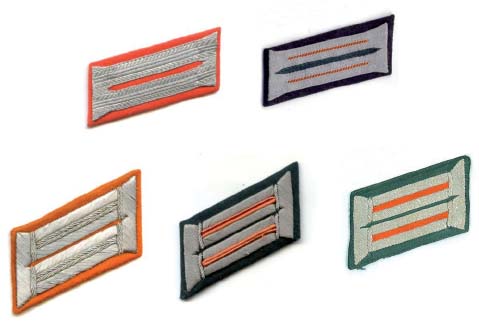
Feldgendarmerie collar tabs. From Left to Right from top: Lower ranks parade tunic, lower ranks field blouse, officer parade tunic, officer field blouse, late pattern woven officers.
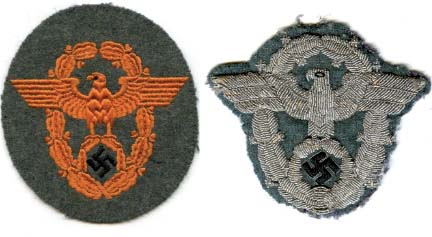
Feldgendarmerie sleeve eagle for lower ranks (left) and officers (right).
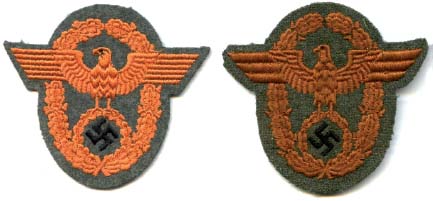
Standard pattern Feldgendarmerie sleeve eagle (left) and variant with three wing segments (right).
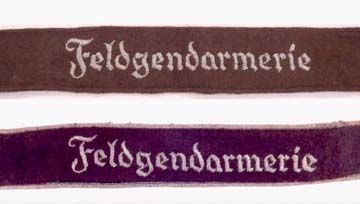
Aluminium thread hand embroidered variants of the Feldgendarmerie cufftitle.
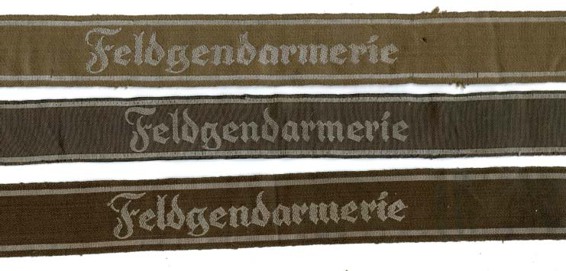
The three known woven variants of original wartime Feldgendarmerie cufftitles. All are similar though minor detail differences may be seen on close examination.
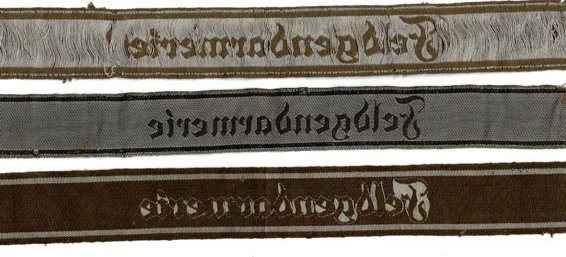
The reverse faces of the machine woven bands show very different manufacturing techniques.
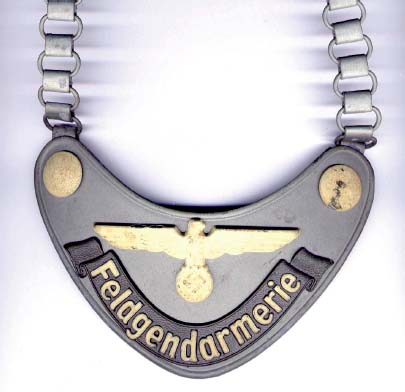
The Feldgendarmerie gorget as worn by Feldgendarmen of the Heer, Waffen-SS and many Luftwaffe units. The buttons, eagle and lettering are luminous. This example, by the Assmann firm has a dark grey finish.
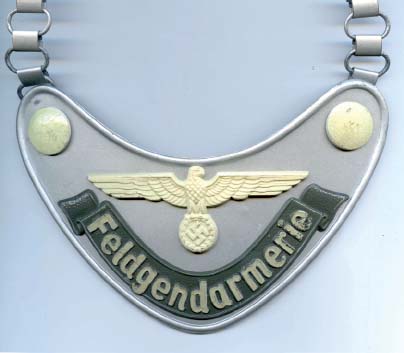
A further example of the Feldgendarmerie gorget, by the Maedicke firm of Berlin has the more typical silvered finish.
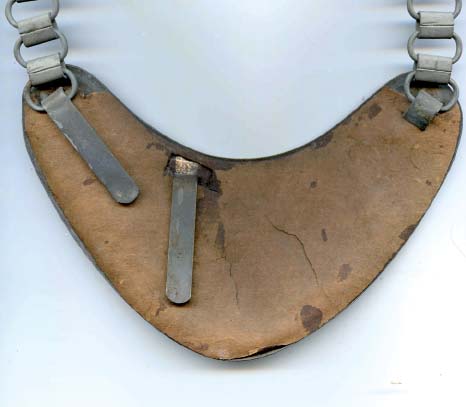
Reverse of the Feldgendarmerie gorget. The central prong was slotted into the tunic buttonhole to prevent it from swinging around when the wearer moved.
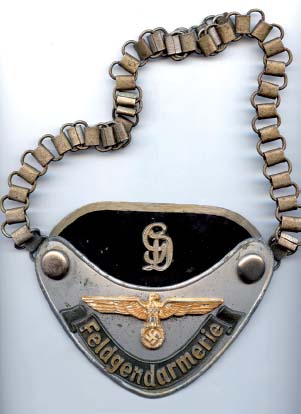
The exceptionally rare variant of the gorget worn by Feldgendarmerie in the Grossdeutschland Division. One of only a handful known to still exist.
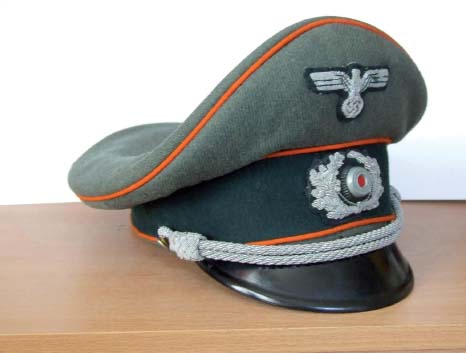
Feldgendarmerie officer’s orange piped visor cap by the well-known firm of Clemens Wagner.
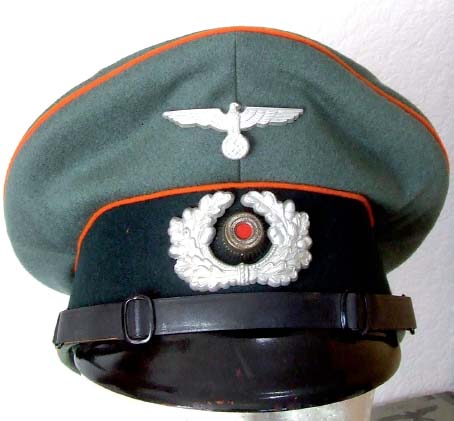
Visor cap for enlisted and NCO ranks of the Feldgendarmerie distinguished by the use of a leather chinstrap rather than aluminium thread cords.
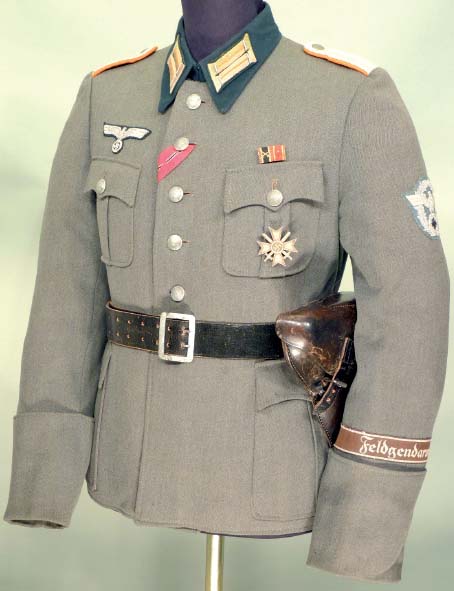
Officer’s tunic for a Leutnant of Feldgendarmerie.

NCO field blouse for an Oberfeldwebel of Feldgendarmerie.
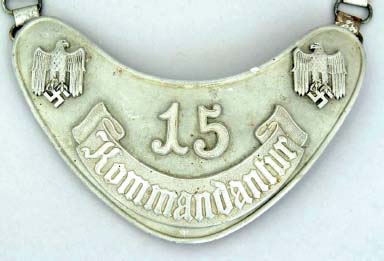
Gorget worn by members of patrol groups from the local military headquarters or Kommandantur. (Firma Helmut Weitze, Photo by Christoph Schultz)
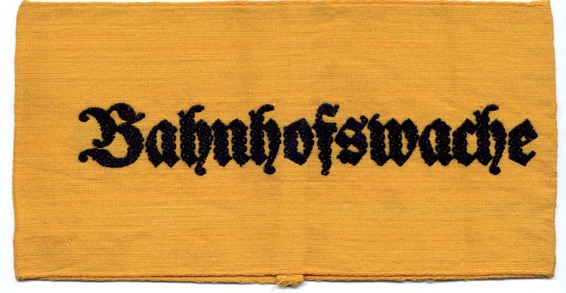
Armband worn by members of the Bahnhofswache prior to the introduction of the gorget.
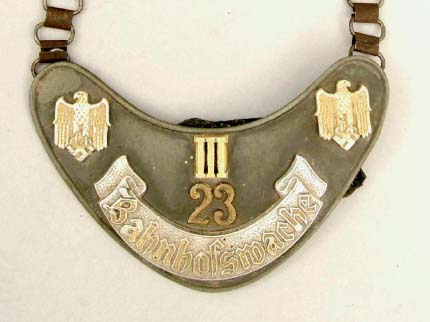
Bahnhofswache gorget. The Roman numeral is the Wehrkreis or Military District number. (Firma Helmut Weitze, Photo by Christoph Schultz)
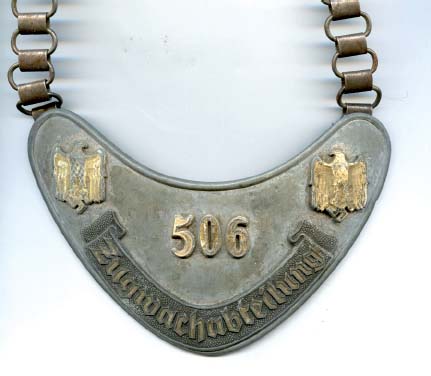
Gorget worn by members of the Zugwache. The numerals in the centre represent the Abteilung number.
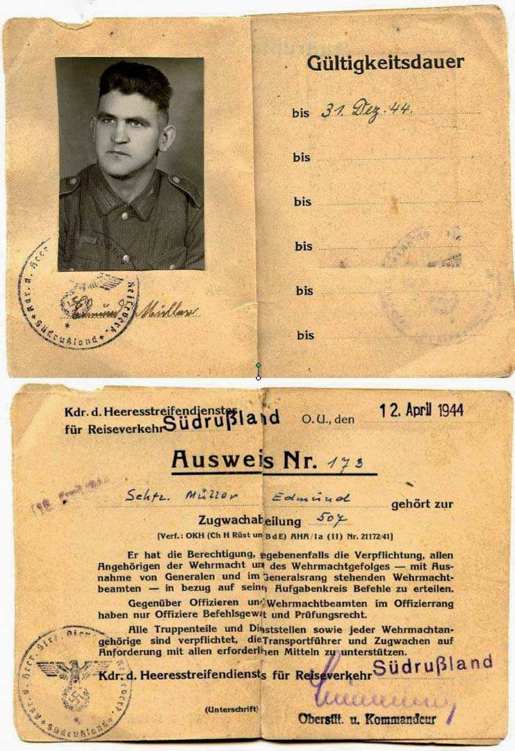
Zugwache Ausweis for a member of Zugwachabteilung 507 serving on the Eastern Front.
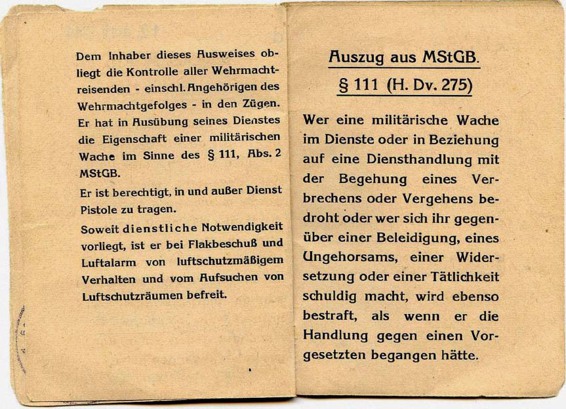
The Zugwache Ausweis details the authority of the bearer and includes an extract from the German Military Penal Code.
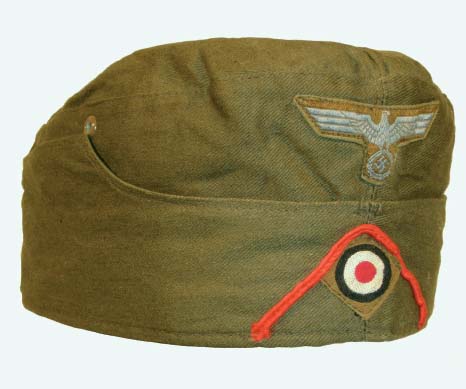
Rare tropical issue field cap with Feldgendarmerie orange-red soutache over the national cockade. (David Bunch)
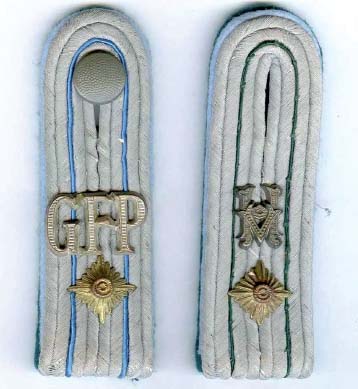
At left is a shoulder strap for a Feldpolizeiinspektor of the Geheimefeldpolizei. At right is a strap for an army Justice Official with the rank of Heeresjustizinspektor. Both feature the same light blue underlay but note that the GFP strap also has a thin blue cord between the braid, as opposed to a dark green cord for the Justice official.
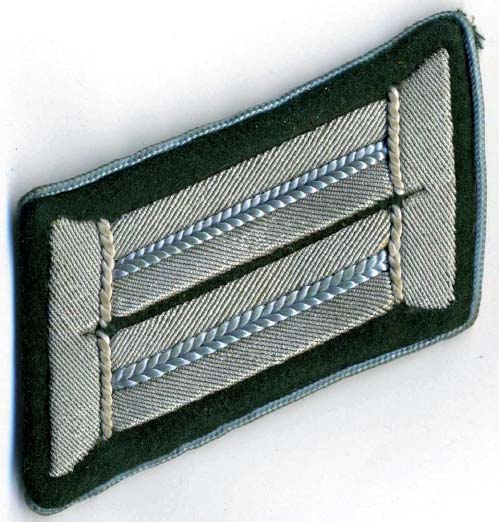
The collar patch for junior GFP Officers also featured light blue centres to the collar ‘Litzen’ and piping around the rear, top and bottom edges, but not to the front. (Courtesy Lundström Collection)
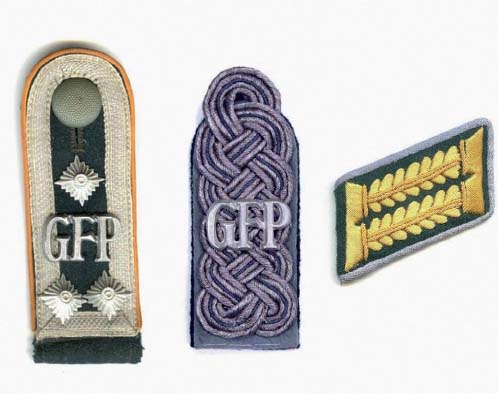
from left to right: Shoulder strap for Stabsfeldwebel of Feldgendarmerie attached to the GFP, shoulder strap for Feldpolizeidirektor of GFP and collar tab for senior ranks in the GFP. Feldpolizeidirektor strap. (Courtesy Peter Whamond/Collectors Guild)
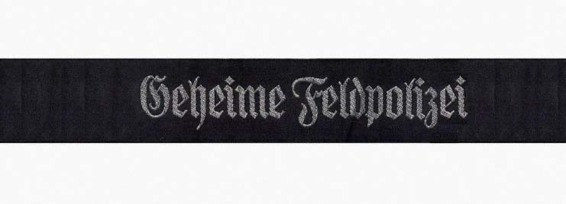
The cufftitle authorised and manufactured for the GFP, but probably never worn.
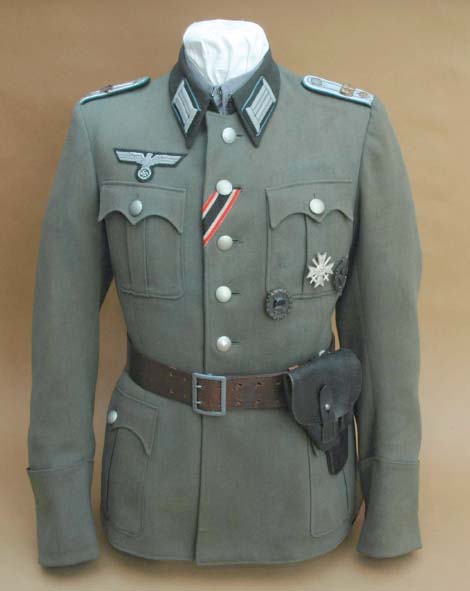
Extremely rare original tunic for a Feldpolizeiobersekretär of the Geheime Feldpolizei. (Brecht Schotte)

Collar patch and shoulder strap for Feldpolizeidirektor of Luftwaffe GFP.
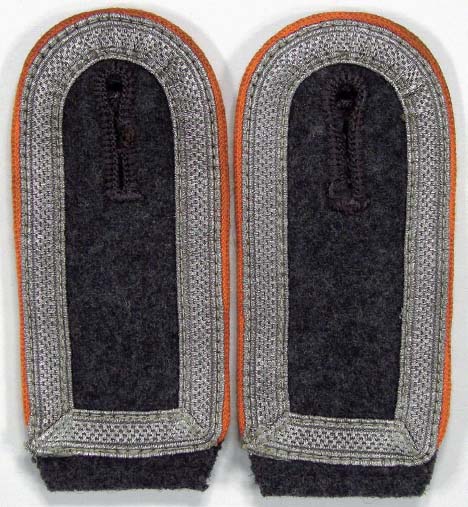
Shoulder straps for an Unterfeldwebel of Luftwaffe Feldgendarmerie, post June 1943.
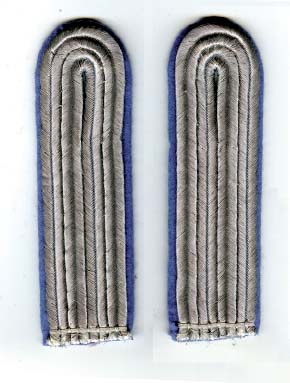
Shoulder straps for a Luftwaffe Hauptmann of Feldgendarmeriue, post June 1943.
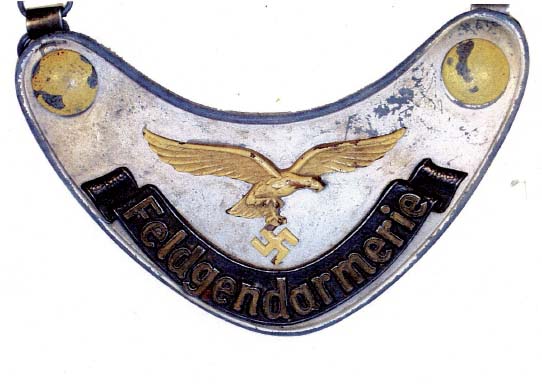
Luftwaffe Feldgendarmerie gorget. (George Petersen)
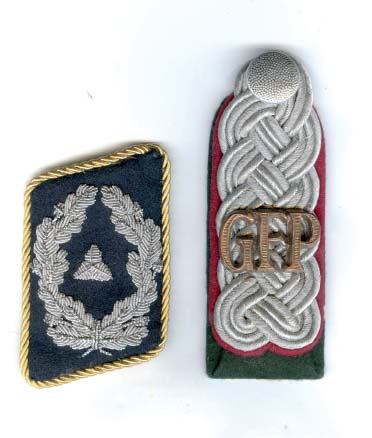
Shoulder straps as worn by a Luftwaffe Leutnant of Feldgendarmerie, pre-June 1943 with light blue underlay.
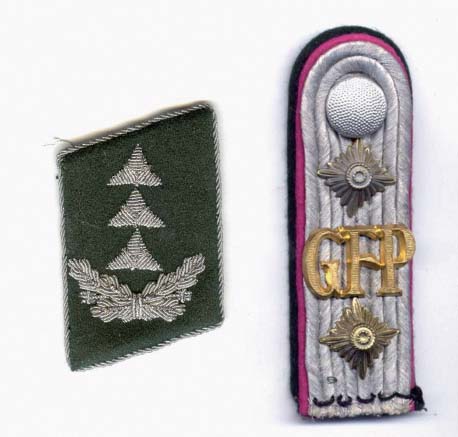
Collar patch and shoulder strap for a Feldpolizeikomissar of Luftwaffe GFP.
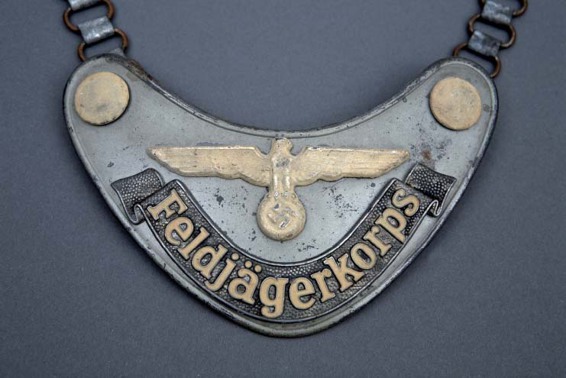
An original gorget of the Feldjägerkorps. (Bill Shea)
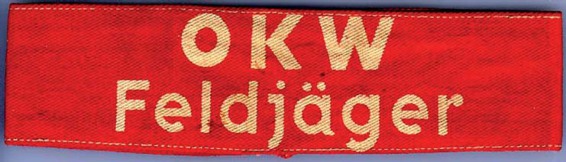
One of the two known designs of armband worn by the Feldjäger.
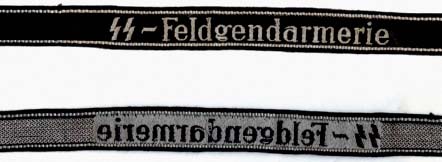
Machine woven cufftitle worn by the SS-Feldgendarmerie from 1942–1944.
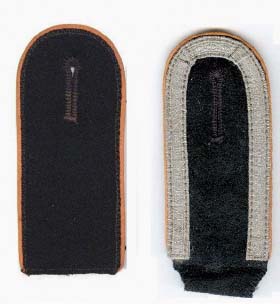
Shoulder straps for a Schutze and Unterscharführer of SS-Feldgendarmerie. Schutze strap. (Courtesy Peter Whamond/ Collectors Guild)
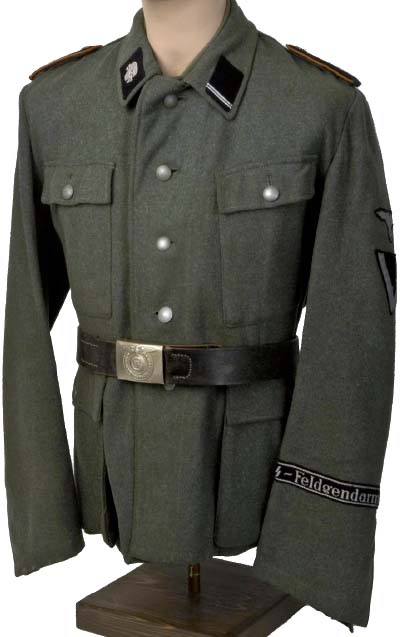
Tunic of an SS-Feldgendarmerie Sturmmann of the 3rd SS-Panzer Division Totenkopf. (Courtesy of Willi Schumacher)
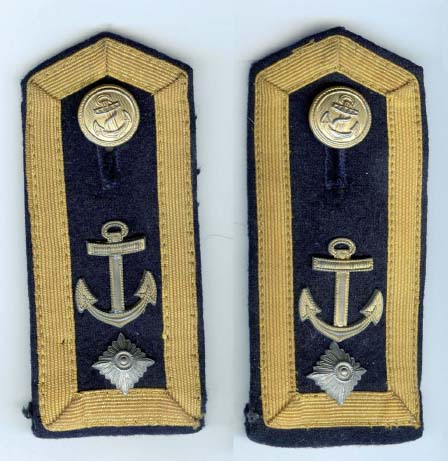
Shoulder straps for a Feldwebel of MKP.
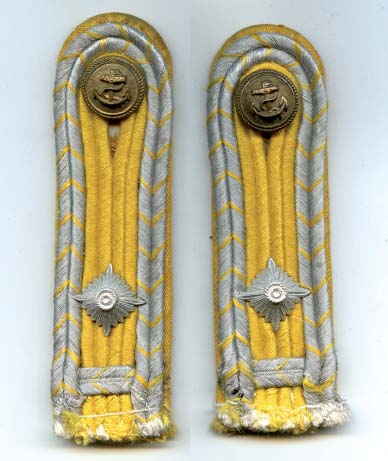
Wasserschutzpolizei pattern shoulder straps for a Revier-Oberwachtmeister.
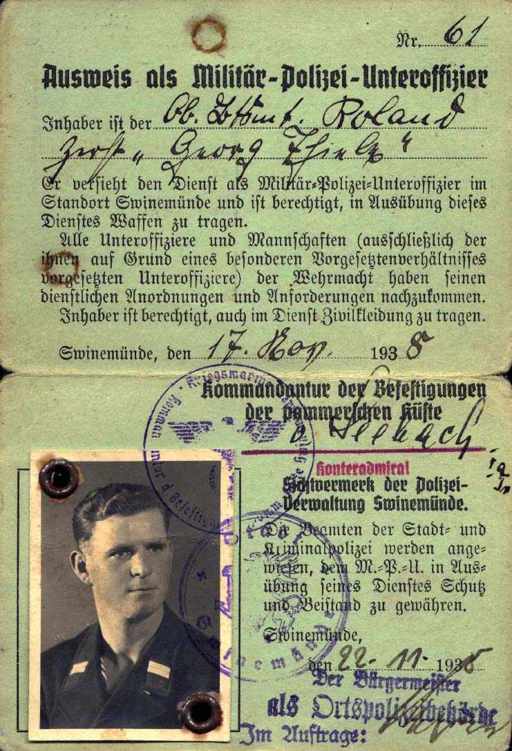
A pre-war Ausweis for a naval NCO serving as a military policeman.

Marineküstenpolizei cufftitle.
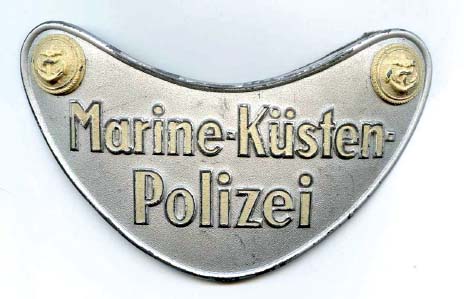
Gorget of the Marineküstenpolizei
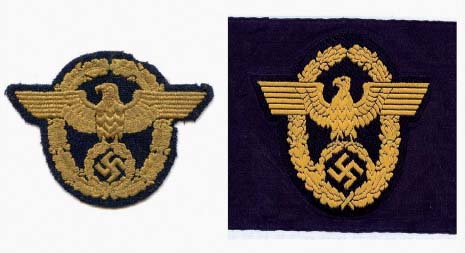
Police pattern sleeve eagles in embroidered and machine woven form as worn by the MKP.
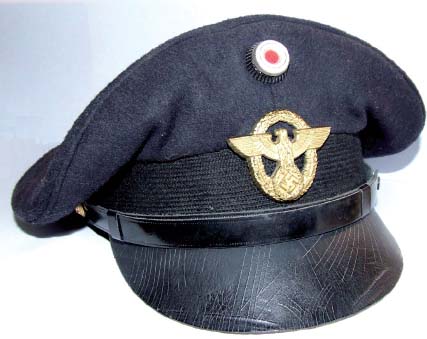
Naval pattern visor cap with WSP insignia as worn by MKP NCOs during the transitional period before the use of full Kriegsmarine insignia.