

In April 1940 a force of fifty-two Ju 52s transported a company of Fallschirmjäger, shown left, in Operation Weserübung, the airborne attack on Denmark and Norway. Hundreds more were used to transport conventional troops in the first few days of the campaign. The map, published in Signal, shows the extent of the official german claims for its ‘superior’ airforce’s attacks on aerodromes, anti-aircraft defences, roads, railways and Allied troop transport ships.


German paratroopers landing in the snow during the invasion of Norway, and also Denmark, on 9 April 1940. The code name for the assault, Unternehmen Weserübung, means Operation Weser-Exercise, the Weser being a river in Germany.


The invasion of Norway and Denmark had, claimed the Germans, been carried out to protect those countries’ neutrality against Franco-British aggression.

View from a German aircraft flying over Norway. The alternate spans on this bridge have been destroyed to prevent its use by the enemy.

The rocky shoreline of Crete, looking across the corrugated metal-skinned wing of a Ju 52.
The Battle of Crete
Ju 52s were also used in the invasion of the Greek island of Crete in May 1941, for dropping paratroops and delivering supplies, but their slow speed, 165 mph, made them vulnerable to fighter attack. This was to be a far bigger assault than the invasion of Norway and Denmark, and for the Luftwaffe’s commanders Crete represented an opportunity to regain some prestige following the disastrous outcome of the Battle of Britain. The paratroops were to capture key points, including airfields which could be used to maintain the supply chain. However, the Allied commanders were aware of the imminent invasion through the interception of Ultra-coded messages, and the German paratroops encountered widespread fierce resistance from the island’s civilian population in addition to a large contingent of British and Commonwealth troops.
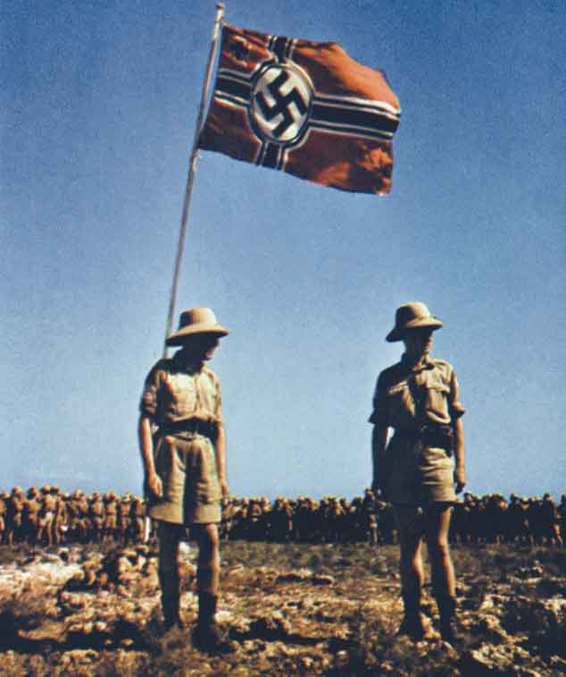
A German flag flies over Crete, but the airborne landing by glider and paratroops had met fierce resistance and cost them dearly.
The German paratroops landing on Crete were further hampered by the method of dropping their weapons in individual canisters and also by the poor steering characteristics of their chutes. Consequently many were left only lightly armed in the crucial period immediately after landing. As a result of the high level of German casualties, this was to be the last time Hitler sanctioned such a large-scale airborne operation. In retaliation the Germans responded with extreme brutality, and more than 500 civilians were killed, their villages torched and the crops destroyed.

The paratroops relax after the heavy fighting encountered on the island, but the airborne assault had been no holiday in the sun.
