
Chapter Two
Almost all of the SS commands as concentration camp commandants came from middle class backgrounds. Their fathers were often salesmen, shop owners and/or bank managers. The majority of them had finished secondary school, some had been privately schooled, some had been to university. Most were Nazi party members in the ranks of the SS or SA. Generally though, most were from a similar social background and were regarded as above average in the realms of the SS. They were generally posted across the concentration camp system because of their exceptional qualities or characteristics. Most of the staff were married and held no criminal record. In the main they knew what to expect: they were being sent to administer labour, concentration or death camps. But what is sinister is the fact that almost all kept their posting secret from their families and to other families. They reasoned that while they were on duty, whatever appalling acts they were performing, they were doing so under order and that they had to obey the law. Equally, they knew that they had a choice – either be posted to a concentration camp, or else fight on the battlefield with a military unit and face a high risk of death or injury. Also the commandants received special inducements for their work, such as extra pay, privileges for private schooling or tutors for their children, and rent free living, normally in the commandant’s villa residence, which was often on site at the edge of the concentration camp.
Many had already bloodied their hands, and were somewhat accustomed to the tasks they would be performing. They looked upon their duties, however brutal or psychologically disturbing, merely as a job, and performed all their tasks hiding behind the facade that ‘they were only following orders’. In this way they were able to exhibit cruelty towards their victims and think that they would somehow not be accountable for their actions. By blaming the system they believed they could do almost anything and need not feel a conscience.
A number of them had already used their own initiative to help devise methods by which to kill large numbers of people. Whilst in meetings with their staff they spoke openly without emotion about the killing of men, women, and children. The systematic murder of the Jews was a new order and they saw it as a new enterprise to be carried out with maximum efficiency: the creating of killing factories or work camps where they would work the inmates to death. It was a new concept; one which they hoped would bring bigger and better results, and brought brutality to a new level. The commandants knew the task ahead would not be without its difficulties, but they had sworn an oath with the motto, ‘My loyalty is my honour’. They would have to prove their loyalty by doing the task which was given to them.
They were aware that their job was secret, and that their relatives, their friends, and their loved ones were not to be told anything about their job. Every SS man that came into the concentration camp system was determined from the outset to conceal as much of the gruesome knowledge as possible from the outside world. It was not just that they were being faithful to their oaths, but they were protecting their own credentials as human beings. In order to make it easier for them and lessen the physiological impact, they separated their families and loved ones from the gruesome tasks they performed. Once in their role they were able to embark on the mechanised extermination of literally hundreds of thousands of men, women, and children.
For the commandants being posted for the first time in a concentration camp there was no feeling of despondency or apprehension of what may be in store for them. They arrived at their new specially prepared quarters knowing that they had an important job to undertake. They had been trained in the teachings of Eicke, and followed his doctrine of being hard and ruthless. As if it were an industrial operation, they undertook wholesale murder by ensuring that the trains sent the victims on schedule and that the gas chambers worked in complete synchronization and could cope with the vast volumes of new arrivals.
The commandant of Auschwitz, Rudolf Höss, was no ruthless SS soldier like Eicke, who was both feared and revered by his men. Höss was a man who always appeared calm and collected and rarely openly denounced his enemies with anger or recrimination. For him it was not just a personal crusade to rid the world of the enemies of the state, as it was for Eicke and for other high ranking SS, but more a matter of an ardent desire to be part of the membership of a privileged order, such as the SS was, based on command and obedience. In the realms of the SS he was resolute in carrying out with maximum efficiency any orders laid down, no matter how brutal they were.
When Höss got his first command as commandant of Auschwitz in the spring of 1940 he never quite envisaged what his bosses had in store for him just two years later. The camp evolved from holding political prisoners to Jews. Unbeknown to the commandant, Auschwitz would soon be turned from a concentration camp to a murder and labour camp – the largest in the Nazi domain.
By the summer of 1941 Höss was given plans for an improved killing facility at the camp which would be capable of exterminating larger numbers of inmates. Since early summer Höss had been aware of growing plans to systematically murder prisoners at Auschwitz. Initially the condemned had been only the sick and disabled, now the Reichsführer Heinrich Himmler had decided on grander plans, to produce a factory-like killing installation that was capable of removing in large numbers those considered a threat to the Reich or those unfit for slave labour.
The first experiments of mass execution at the camp were with crystallized prussic acid, which was sold in tins marked with the name Zyklon B. Over 900 Russian prisoners were gassed using this new innovative method of systematic murder.
The gassing had been a complete success. No longer would the killers have to look into the eyes of their victims as they murdered them. Now they could transport their victims straight into a specially adapted gas chamber and have them killed all together, sparing, as Höss called it, a bloodbath. This new procedure appealed greatly to Höss. He found that with this innovation the new arrivals could quite easily be led into the crematorium not knowing they were going to be killed, but simply told they were to be disinfected by taking a shower. It had proven very easy to get inmates into the gas chamber by deception rather than using of force. This was all less stressful for the guards who were assigned to these murderous duties.
Höss expected more shipments of POWs to be killed in this manner, but his concern was now not the killing process, but the problems of storage and incineration of the corpses. These difficulties would soon be overcome by a new site constructed near the main camp of Auschwitz, called Birkenau.
Plans for a new crematorium had already been drawn up in late 1941, and it was expected to arrive very soon. Höss had found the perfect killing installation. The crematorium process at Auschwitz I had been inadequate; here at Birkenau he did not have the same disadvantages. Those unfit for work could now be taken away with ease, their death agonies would not disturb the local surroundings, and their bodies could be disposed of en masse and in secrecy.
Here at Birkenau the site would soon be able to house literally thousands of inmates, many of them Jews. In Höss’s eyes the Jews who could work were a valuable resource. Those considered unfit for work would be sent to the specially erected gas chamber, and given ‘special treatment’. Although Birkenau appeared to be the ideal solution for a vast slave labour pool, Höss had been aware for some weeks of newer harsher policies against the Jews. He also received reports that other camps in Poland were under construction near the villages of Belzec, Sobibor and Treblinka, which were to include their own crematoria as well. It appeared all Jews would be sent to these camps. The future for these hapless people looked bleaker than ever before.
Himmler’s decree that the Jews were to be exterminated was in Höss’s and all the commandants’ minds, binding. After all, they had placed themselves in the phalanx of the SS and had been trained to blindly follow any orders given to them. Since the order had come down the command chain to murder the Jews many of the commandants had been at their most creative and imaginative, finding ways to help kill the prisoners on a larger scale using gas. These men who had been given the death camps to command had effectively become executives for the mass murder of Jews. For them, murder was to be an administrative procedure, and they assumed their mission of liquidating the Jews in a businesslike manner. They saw their positions like directors of corporations, managing the supply of raw materials to a factory, where they were monitored for quality and then processed through the plant. In front of their superiors they saw themselves as reliable obedient officers whose energy, determination and innovative skills would ensure that their camps were successful and effective killing factories.
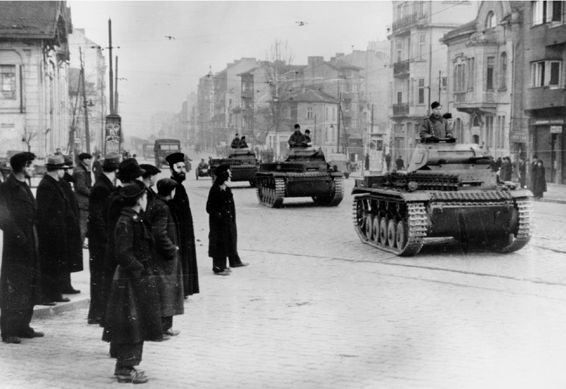
A column of Pz.Kpfw.IIs roll through a Soviet town during the initial stages of the invasion of Russia. Looking on from the side of the road is a group of Jews, not knowing their fate in the hands of their invaders. The Nazis saw the Soviet Union as a land ripe for plunder and were determined to bring down the Soviet regime, destroy its army, murder those regarded hostile to the Reich, and to eliminate the Jews.

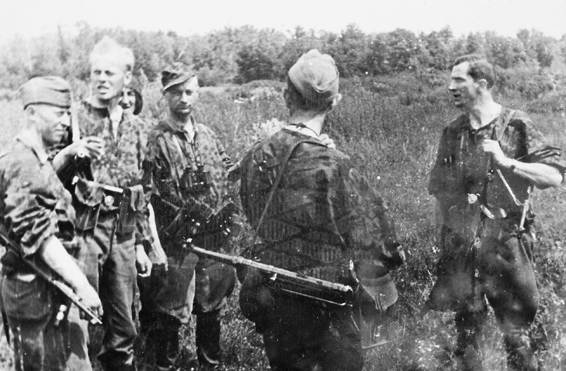
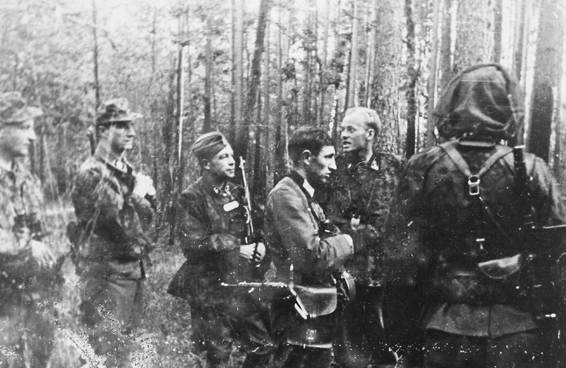
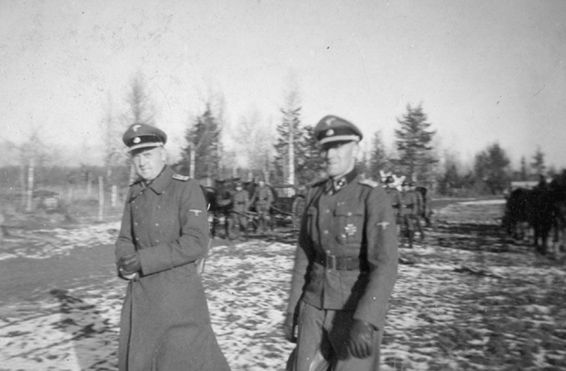
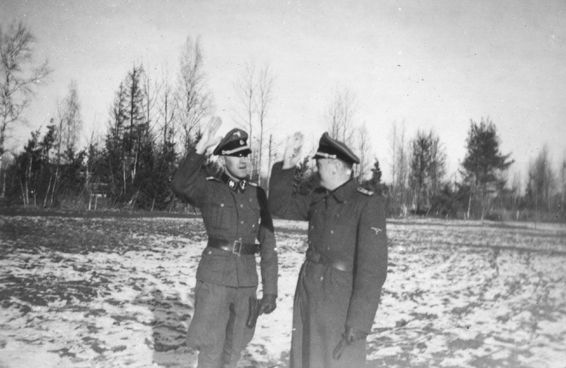
Five photographs showing a German police unit in the rear areas of the Soviet Union. When the Germans unleashed their attack against the Soviet Union on 22 June 1941, the Jewish problem escalated further. For the Nazi empire the prospect of a war against Russia entailed a transition from one policy of murder to another. This in effect brought into being the most radical ideas imaginable of the SS. As Hitler had explained to his generals a few months before the invasion, the war would be no normal war: it was an ‘ideological war of extermination’. In the eyes of Hitler the Soviet Union represented the home of Bolshevism and of international Jewry, both of which needed to be rooted out and destroyed. To deal with the Jews in Russia, four Einsatzgruppen (Action Groups) were formed that consisted of Sipo-SD personnel, Waffen-SS units, and police.
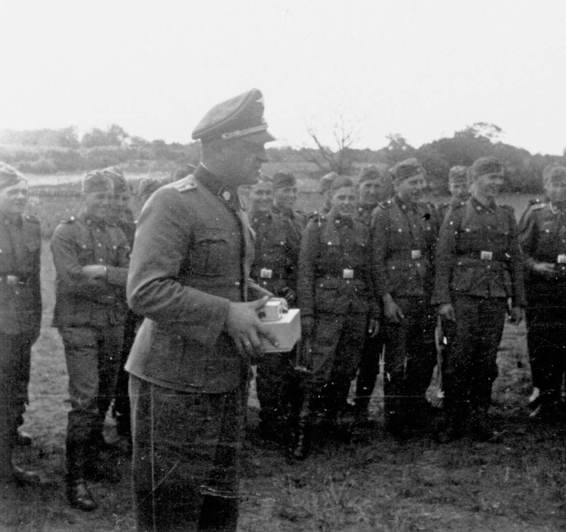
A Totenkopf commanding officer during a presentation ceremony out in the field during combat operations in Russia. Progress through the Soviet heartlands was swift, and a blood bath against the Jewish population ensued.
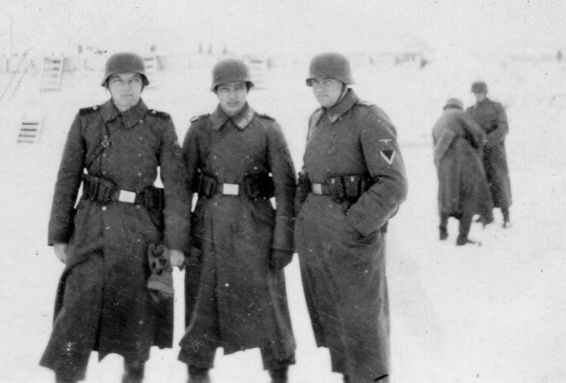
A flak crew poses for the camera in the Russian winter of 1941. Although fighting stagnated along the Eastern Front, policies against the Soviet population and the Jews continued with unabated ferocity.
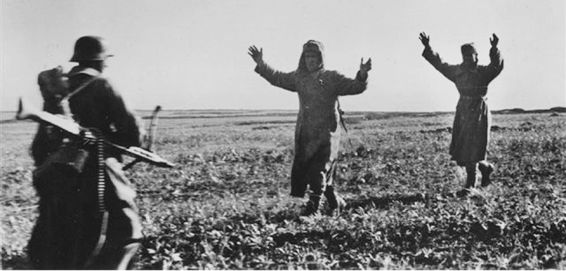
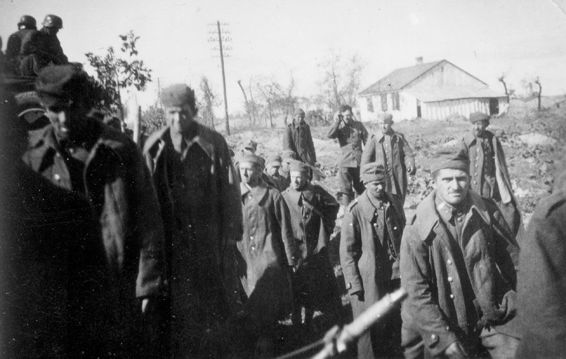
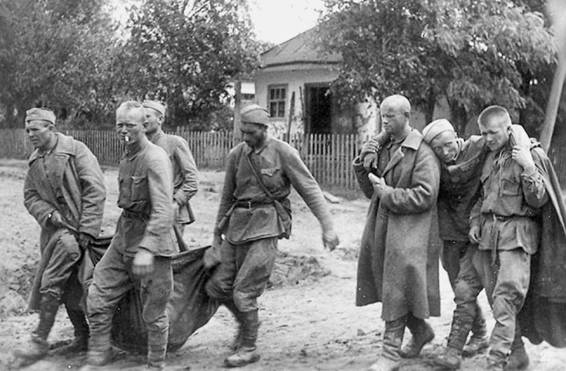
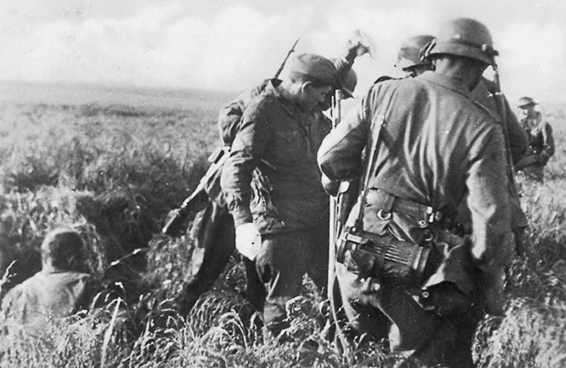

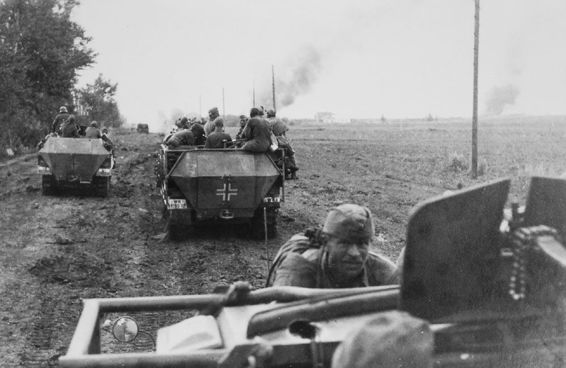
Six photographs showing Russian soldiers being captured by both SS and Wehrmacht forces. All over Russia, as the Germans advanced deeper into the Soviet heartlands, ruthless actions against Russian Jews, Communist politicians and political commissars continued. In Poland, concentration camps that had been erected all over the country were made ready to receive these Russian POWs. Many of them never arrived at their designated camps: they were either murdered by firing squad, starved to death in the POW holding camps, or died en-route on death marches to Poland. Conditions for the Soviet prisoners were appalling.
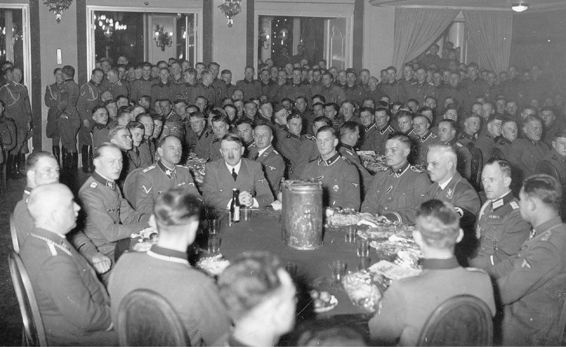
At a luncheon Hitler sits with his commanding officers. By this period the German war machine was invading Russia and it seemed it would soon defeat the Soviet enemy. In conquered Poland the Poles were already experiencing what the Nazis intended to inflict on the Russians. Throughout the country there was more or less unrestrained terror, particularly in the incorporated territories. The area not incorporated, with a population of some eleven million, consisted of the Polish province of Lublin and parts of the provinces of Warsaw and Krakow, and was named the ‘General Government’. This large area became the dumping ground for all undesirables and those deemed enemies of the State. It was to here that the first deportations of Poles and Jews were sent in their thousands. In the General Government the Germans created ghettos where they could contain the Jews before they were transported direct to one of the many new concentration camps being constructed.
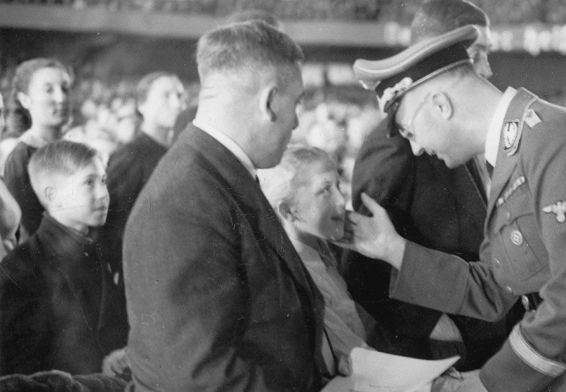
SS-Reichsführer Heinrich Himmler was known as the architect of genocide. In this photograph he feebly touches the cheek of a young German child. Behind this façade Himmler was already putting into effect the wholesale liquidation of the Jewish population.
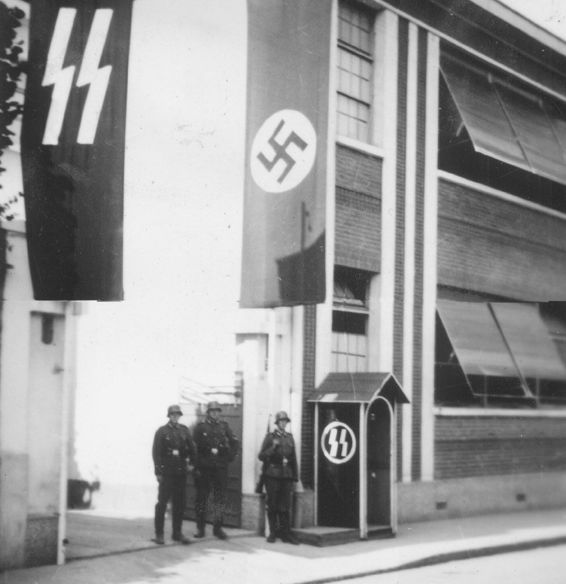
An SS sentry box with SS guards outside an administration building.
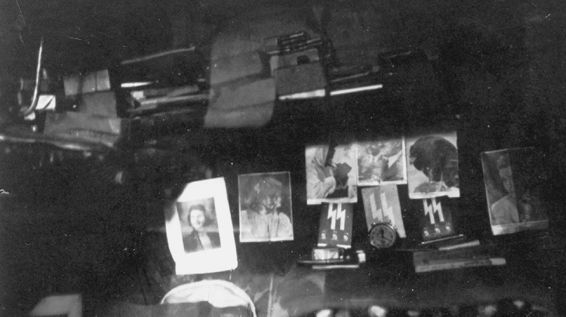
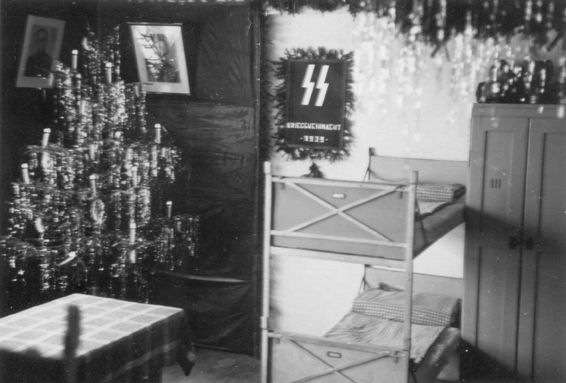
Two photographs showing a typical SS mess, complete with bunk and SS insignia plastered across the walls. Generally the barracks and mess was where most of the personnel spent their time, eating, drinking and playing cards. For these men, however callous and evil some of them were, they felt that the confines of these buildings were a kind of sanctuary from their daily duty of killing and torturing.
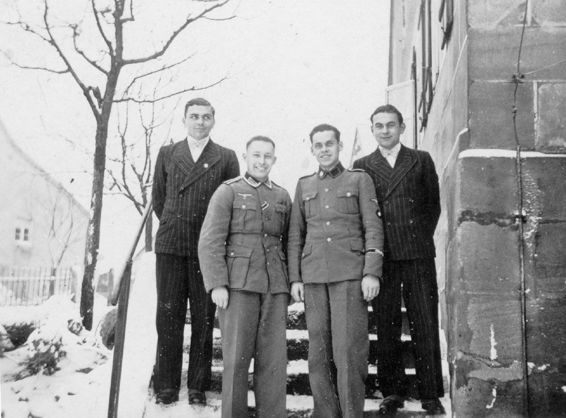
An interesting photograph showing an SS and Wehrmacht soldier smiling with two concentration camp officials in the General Government of Poland at Christmas 1942. The original caption reads ‘camp official brothers with their fighting comrades at Christmas in Poland 1942’.
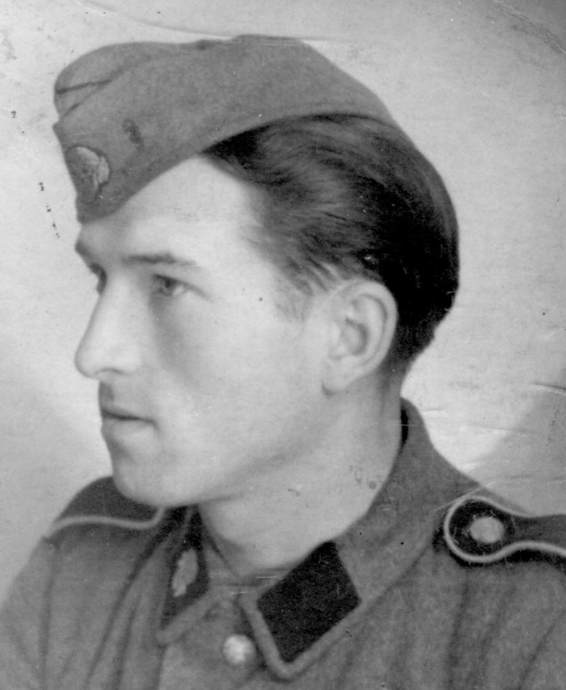
A portrait photograph of a member of the SS-Totenkopf wearing his field cap with infamous death head badge.
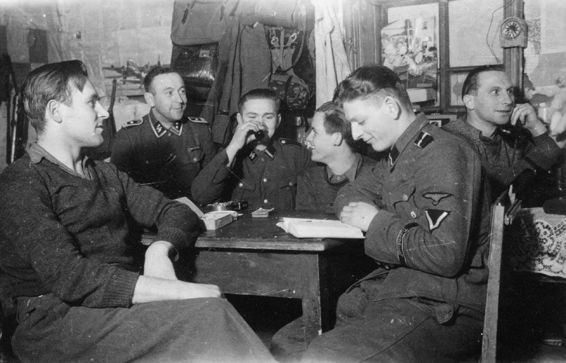
Members of the Totenkopf drinking and relaxing in their mess.
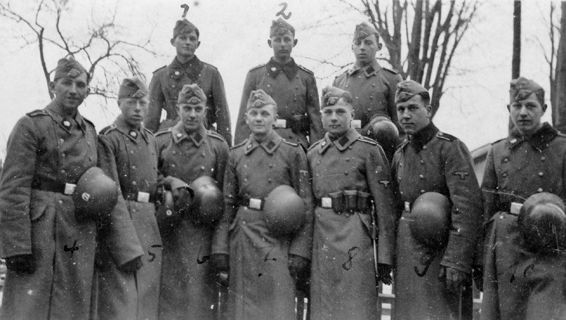
A group photograph showing members of the Totenkopf, probably during the early winter of 1942 on the Eastern Front.
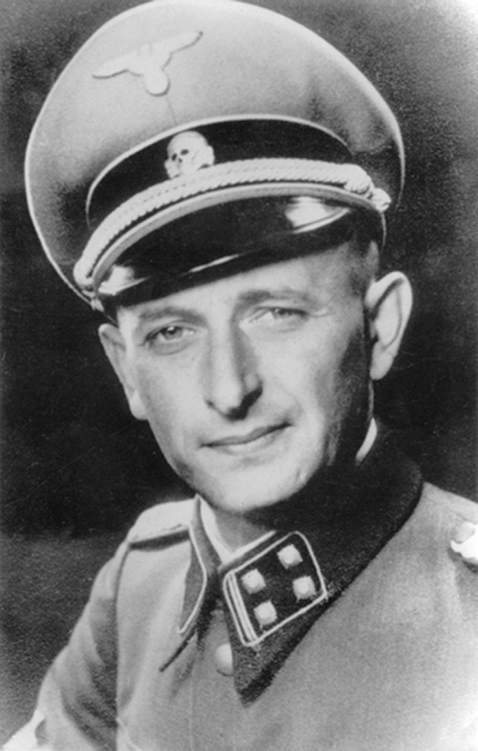
A portrait photograph of SS-Obersturmbannführer Adolf Eichmann – a Jewish emigration specialist who had been given the task of facilitating and managing the logistics of mass deportations of Jews to ghettos and concentration camps in Nazi-occupied Eastern Europe.
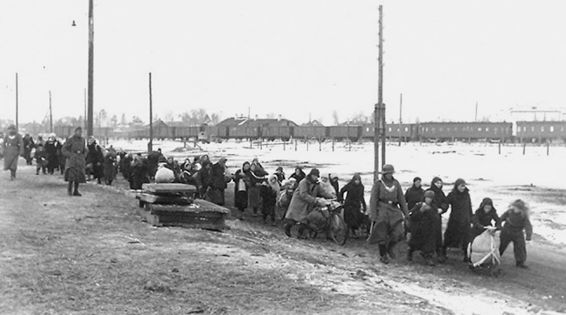
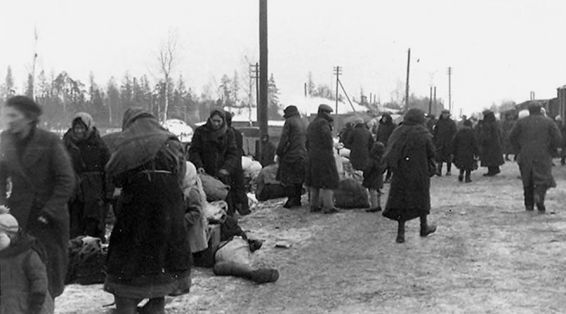
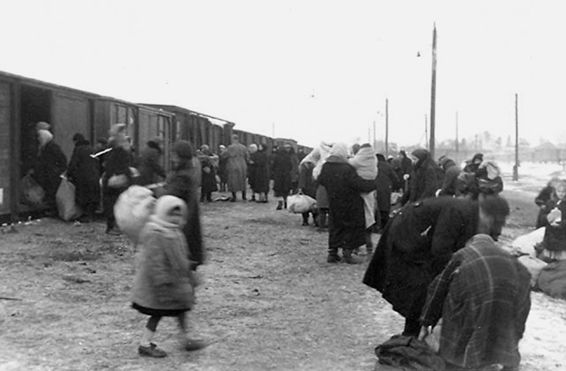
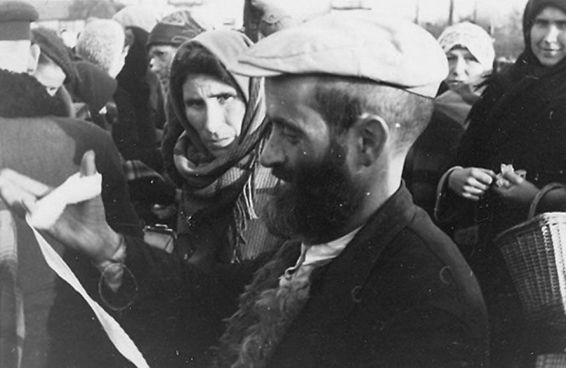
Four photographs showing the deportation of Jews probably during the winter of 1942. At the Wannsee conference held in Berlin in January 1942, Nazi officials gathered to consider the fate of the Jewish population. With many of the concentration camps already constructed it was agreed that it would be the Jews in the General Government of Poland who would be dealt with first. The Nazi leadership was under no illusion that it would require all of their organisational skills to bring about mass murder on the scale they intended. Already a pool of experts had been drafted in to undertake this mammoth task and plans for death camps had already been proposed.
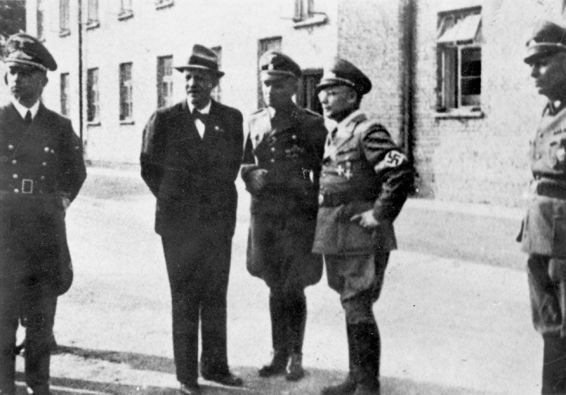
A photograph of Auschwitz camp commandant Rudolf Höss, seen standing in the middle of a delegation of Nazi officials that has visited the camp. Within three years of becoming commandant Höss had turned previously quiet and secluded Auschwitz into the largest mass murder factory in the history of the world. As commandant he had the entire camp under his control, and was only ever answerable to his superiors in Berlin. Like all other concentration camp commandants he had more or less unlimited power. He would issue orders daily to his officers, who would in turn read out these orders to the prisoners during their morning roll call. Höss normally gave written orders direct to his subordinates, and would supervise a particular department if he were required to. It was normally down to the commandant to issue punishments to any SS man that broke the rules in the camp, and could at any time have a member of staff replaced. (Auschwitz Birkenau Museum)
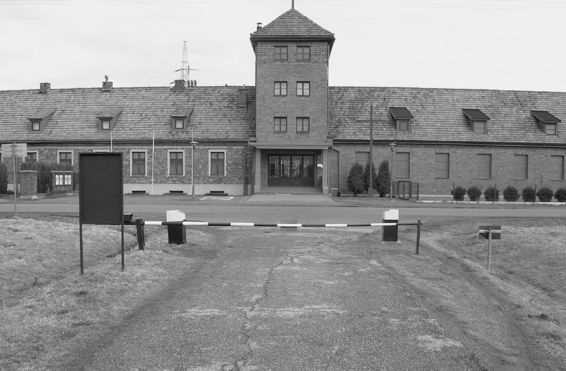
A recent photograph taken of the old SS barracks outside the Auschwitz II camp, or Birkenau. (HITM, courtesy of Auschwitz Birkenau Museum)
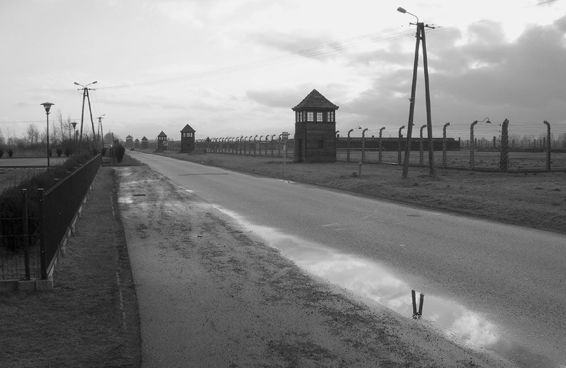
This recent photograph shows the main road running along the Birkenau camp from the SS barracks. Note the wooden watch towers along the perimeter of the camp. (HITM, courtesy of Auschwitz Birkenau Museum)

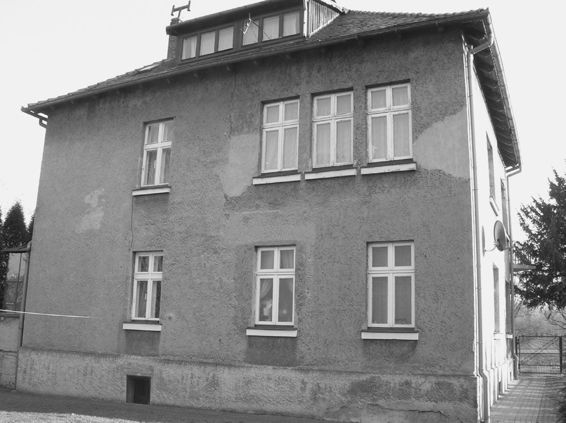
Two recent photographs taken by the author of camp commandant Rudolf Höss’s residence at Auschwitz, commonly known as the Höss villa. The house was an imposing two storey stucco building situated in the north-eastern corner of the camp. The front of the building, with its large windows and small terrace, overlooked the Rajsko to Auschwitz road (seen here with the author’s friend Kevin Bowden and Polish taxi driver and guide Halina Kapka). There was a little garden to the front with a small brick wall and gate to the main entrance to the house. To the side of the building there was a double gate with a drive where vehicles could access the property. On the opposite side of the house, reached by a concrete path, was the tradesman’s entrance, which consisted of a flight of concrete steps leading to the side door with a porch, which overlooked the garden. The garden itself was predominantly situated to the side of the house and consisted of a number of trees and shrubs from the previous occupants. A fence with barbed wire was erected around the perimeter of the garden and the house, in order to divide it from the main camp. In November 1942 a new high concrete fencing was constructed and topped with barbed wire to replace the old fencing around the entire boundary of the camp. The new fencing was also installed at the rear and the sides of the Höss villa, making the house completely separated from the camp and virtually invisible from the garden, except for the roofs and chimneys of the Commandant’s office and administration buildings. The fence to the rear of the house, which hid the Commandant’s office, administration offices, SS guardhouse and the newly constructed crematorium, was further hidden by a large mound of earth placed behind the fence, and trees planted. Höss had been particularly insistent on trying to conceal the villa from the camp as much as possible, and made it known that he wanted his family to live in absolute privacy. (HITM, courtesy of Auschwitz Birkenau Museum)
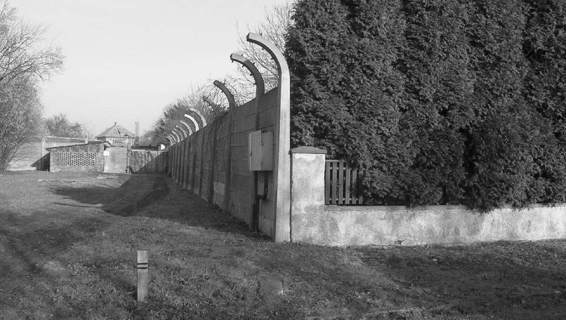
A rear view of the Höss villa showing how enclosed the garden was from the main camp. It was not unusual for officers and their families to be assigned houses like this. Throughout the summer and early autumn of 1942 at Auschwitz many officers and their families were housed either in the centre of the town or in the immediate vicinity of the main camp. They all enjoyed a far more comfortable lifestyle than any they could have achieved fighting on the frontline. It soon became a close-knit community where wives would visit each other, gossip, hold afternoon tea parties, and invite their husbands along for evening drinks and dinner. As for the children they would either attend private schools in Kattowitz and surrounding areas, or privately hire a governess. When the children were not attending school, they were looked after by domestic slaves who cooked meals and cleaned their nicely furnished homes. Initially a great number of servants employed were Polish prisoners, but many German families thought that the Poles were too inferior to make good servants, or else they were worried they might try to attack them. (HITM, courtesy of Auschwitz Birkenau Museum)
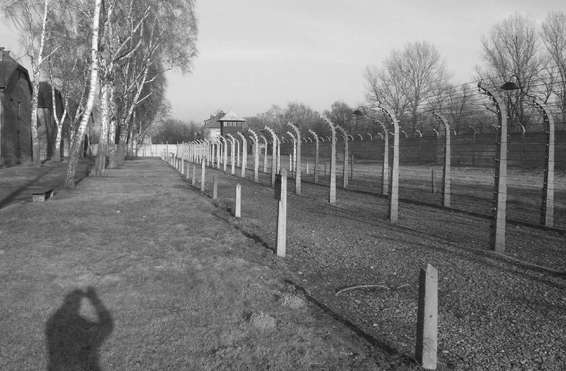
A recent photograph taken from within the compound of Auschwitz main camp, showing on the left some of the brick buildings that housed prisoners, ringed by an electric fence and overlooked by a watch tower. Note behind the watch tower, the ‘Höss villa’. (HITM, courtesy of Auschwitz Birkenau Museum)
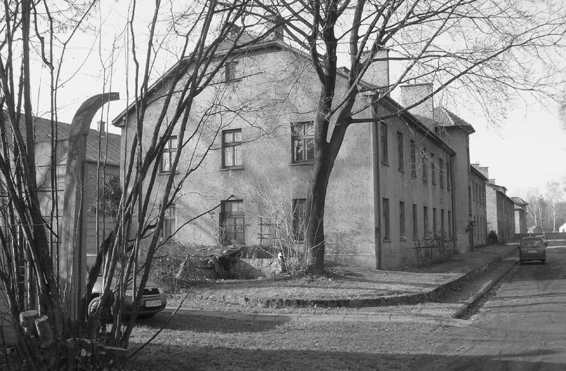
A recent photograph showing the commandant’s office at Auschwitz main camp. This rather large imposing brick building generally dealt with matters that affected the SS staff. It was primarily responsible for keeping all records and for supplying the garrison with weapons and other important military equipment. All transport and communications were controlled from this office. The office was divided into a number of different sections which included: Office Supply, Communications Office, Judicial Affairs, Weapons, Military Supplies, and the Engineers Office. Each morning, camp commandant Rudolf Höss would walk across to Department I, the Commandant’s office, and would converse with his office secretaries, answer any urgent messages or telegrams, and issue his daily written orders to his subordinates. The letters, telegrams, various telephone call messages and other paper work that were classed not as urgent were regularly taken home to be dealt with in his study. When he was not in his office or at home in his study, he was often seen strolling in the camp, ensuring that everything was being run efficiently. He would converse with officers, making sure commands were being adhered to. (HITM, courtesy of Auschwitz Birkenau Museum)
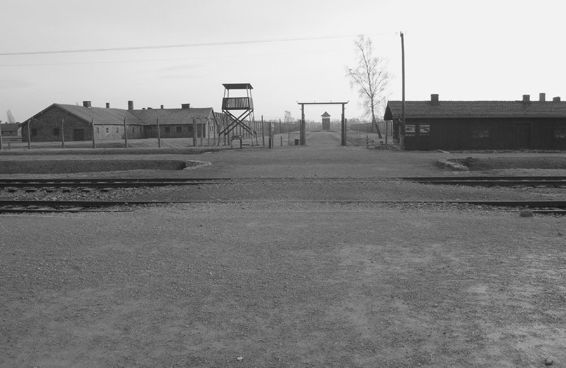
Here a recent photograph shows one of the main debarkation areas for unloading Jews by train, mainly Hungarian, in the summer of 1944. It was intended that many Hungarian Jews were to be transported to Auschwitz where they would be selected for slave labour. Once they arrived at Birkenau, the Germans would separate those Jews who could serve the German war effort through work, and those unfit for labour, including children and their mothers, who would be immediately sent to the gas chambers and murdered. Adolf Eichmann was in charge of transporting the Hungarian Jews directly to Auschwitz, and negotiated with the Hungarian police, who helped organise the so-called ghettoisation of the Jewish population in Hungary. Whilst plans had been put into place to select the Hungarian Jews for slave labour when they arrived at Birkenau, many in fact were simply sent straight to the gas chambers in what the camp commandant called ‘special treatment’. Almost 350,000 Hungarians were murdered over the course of several weeks in the summer of 1944. (HITM, courtesy of Auschwitz Birkenau Museum)
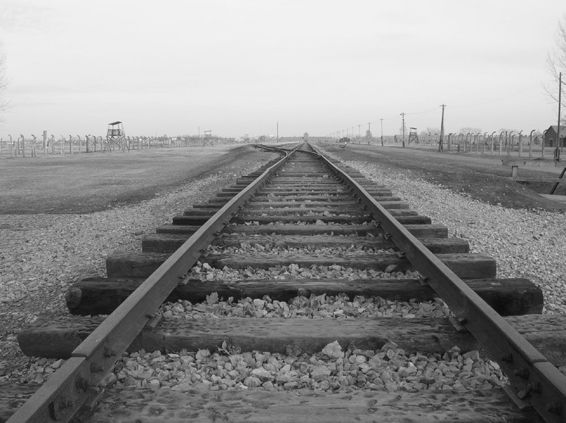
A recent photograph showing the infamous rail line in Birkenau. This line was built mainly for the sole purpose of transporting Hungarian Jews direct to the camp. The first major Hungarian transports steamed their way through to Auschwitz on 15 May 1944. Once they arrived, the train pulled over the new spur through the gate into Birkenau and halted at the ramps. Here at the ramps ‘Aktion Höss’, as it was known, was put into operation. First, the Jews were unloaded from the cattle cars. Next, they were separated into two columns, one of women and children; the other of men. A selection was then carried out by one or two SS medical doctors, and the two columns were divided into four columns: two of women and children, and two of men. Those unfit for labour were sent straight ahead toward the crematoria, whilst all able-bodied workers were interned in Auschwitz, or were retained ready at a moment’s notice to be transferred to other camps in the Reich. The selection for labour in each transport varied daily. Sometimes it was as low as 10 per cent, sometimes as high as 50 per cent. But the majority of Jews who arrived through the gates of Birkenau were quickly sent through to the ‘bathhouses’ to their deaths. There were roughly 3,300 people per day arriving, sometimes that figure rising to 4,300. (HITM, courtesy of Auschwitz Birkenau Museum)
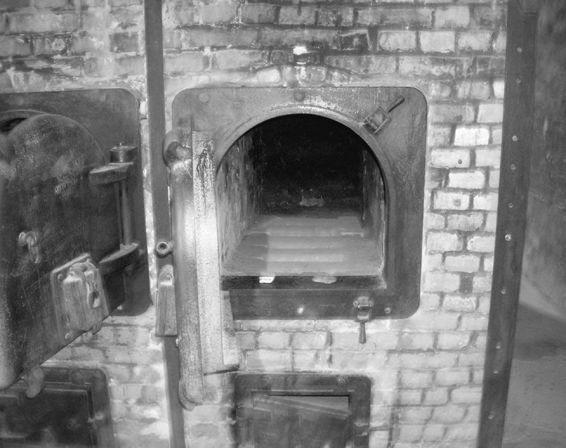
A recent photograph showing the furnace in the former powder magazine store in Auschwitz I. This store was first modified to be used for delousing purposes, but was modified again in the summer of 1940 and turned into a crematorium for the incineration of prisoners who died in the camp. Before the crematorium was in operation those who died were transported to Gliwice and incinerated in the municipal crematorium. The installation was undertaken by J.A. Topf and Sons of Erfurt, a company with a section specialising in the manufacture and installation of crematorium furnaces, headed by chief engineer Kurt Prüfer. In order to conceal the crematorium from view a one-storey building housing the SS hospital was constructed nearby, along with the camp workshops and the barracks of the political department. By late 1940 or early 1941 the crematoria were becoming overworked with the large numbers being killed inside the camp or dying from disease. By this period further plans were being considered for the disposal of the dead. Early on in Auschwitz corpses were buried in mass pits or burned on huge outside fire incinerators. Once Birkenau had been built and the huge crematoria erected, this generally alleviated the problems of mass corpse disposal. (HITM, courtesy of Auschwitz Birkenau Museum)

A photograph taken in the summer of 1944 showing (from left to right) Rudolf Höss, SS-Hauptsturmführer Josef Kramer, and SS-Obersturmführer Anton Thumann. In May 1944, roughly when this photograph was taken, Kramer was put in charge of the gas chambers in Auschwitz. He was to hold that position until December 1944, when he was transferred and appointed as Commandant of Belsen. As For Anton Thumann, he had been Protective Custody Camp Leader at the Majdanek concentration camp and was known by the prisoners as the ‘Hangman of Majdanek’. At the time of this photograph he had been appointed Protective Custody Camp Leader at Neuengamme concentration camp, a position he held until the end of the war. (Courtesy of USHMM Archives)
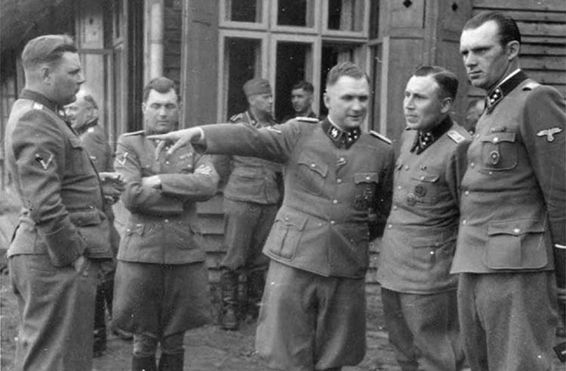
A group of SS officers gather in front of a building at Solahütte, the SS retreat outside Auschwitz. From left to right are Josef Kramer, Dr Josef Mengele, Richard Baer, Karl Hocker and Walter Schmidetzki, SS-Sturmbannführer and commander of Auschwitz I from May 1944 to February 1945. SS-Obersturmführer Karl Hocker was adjutant to Richard Baer. As for SS-Hauptsturmführer Dr Josef Mengele, he had won the Iron Cross 1st Class and was the most highly decorated SS officer at Auschwitz. He had volunteered to come to Auschwitz to establish an experimental physiology and pathology department. After his arrival it was not long before he was revelling in his power to carry out his extreme ideas without mercy. (Courtesy of USHMM archives)

SS officers at an unknown railway terminal stand in front of cattle cars similar to those used for transporting Jews to the concentration camps. The seizure and deportation of thousands of Jews to the concentration camps had not been an easy task. There had been problems with rail lines and railcars moving across Europe to the East and the unexpected military setbacks on the Eastern Front had represented a number of difficult circumstances for the rolling stock. But the Nazis were determined that the war would not influence the successful outcome of the ‘Final Solution’.
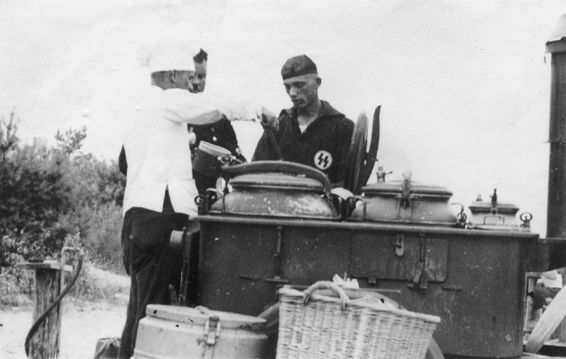
At an unknown location two SS men are seen being given their rations from a mobile kitchen. These mobile kitchens were used extensively by both Wehrmacht and Waffen-SS troops on the front lines. They were also used at camps under construction where kitchens had not yet been built.
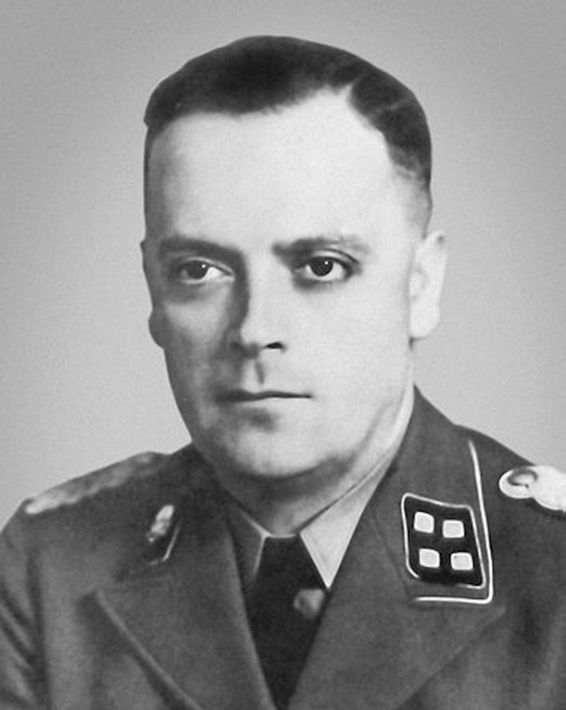
A portrait of SS-Sturmbannführer Arthur Liebehenschel. On 1 December 1943, he was appointed commandant of Auschwitz, succeeding Rudolf Höss. When Höss returned to Auschwitz, Liebehenschel was replaced as commandant on 8 May 1944 and appointed commandant of the Majdanek extermination camp on 19 May 1944, succeeding Martin Gottfried Weiss.

A photograph of SS-Hauptsturmführer Hans Bothmann. Bothmann was the last commandant of the Chelmno extermination camp from 1942, and commander of the SS Special Detachment. Bothmann was responsible for the extermination of Jews from the Lodz Ghetto. He was able to boast that Chelmno had murdered 180,000 Jews from the summer of 1942 until the camp was finally closed in March 1943. Bothmann was dispatched to Yugoslavia, but a year later he was summoned back to Poznań to command a renewed killing operation at Chelmno. In this final phase of the camp operation some 25,000 victims were murdered under the supervision of Bothmann. However, with the continued deportation of Jews from the East and other victims regarded as hostile to the Reich, in mid-July 1944 the SS and police began deporting the remaining inhabitants of the Lodz ghetto to Auschwitz for immediate destruction. (Courtesy of M. Kaldow)
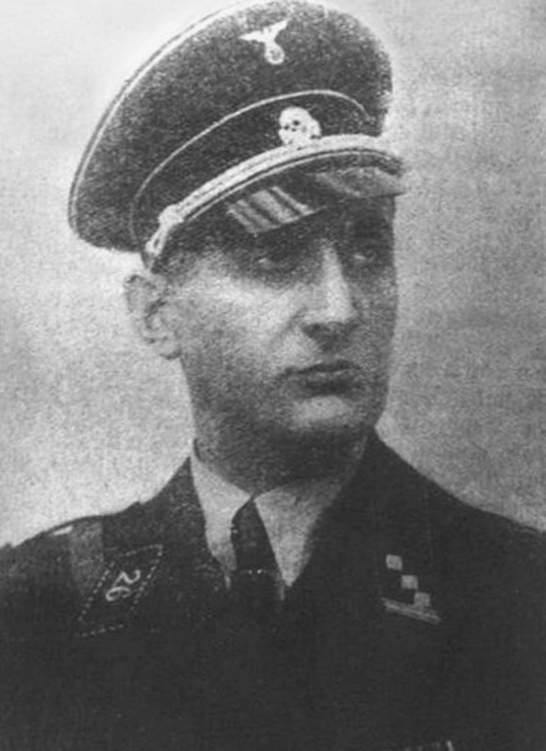
SS-Standartenführer Arthur Hermann Florstedt. He initially served at Sachsenhausen concentration camp from 1940 until 1942 when he was transferred to Majdanek extermination camp to replace SS-Sturmbannführer Max Koegel. Florstedt ruled the camp with an iron fist from October 1942. However, later in the war he was replaced by the interim commander Martin Gottfried Weiss after the SS charged Florstedt with embezzlement and widespread stealing. In fact, many commandants found it tempting to steal and sell their goods on the black market. The camps were literally a treasure trove to members of the SS. They had seen nothing like it before, and many of them were unable to resist the temptation provided by these ‘riches’. Supervision was surprisingly slack and as a result many actively participated in theft. Stealing and corruption was rife amongst the SS in the camps, and the black market thrived. Many of the commandants personally benefitted. Diamonds, gold, coins, dollars, and foreign currency from all over Europe were stolen. Large amounts of food and alcohol too were taken for personal use and sold on the black market. Items of clothing and furniture were also pilfered by the SS, benefitting from the dead.
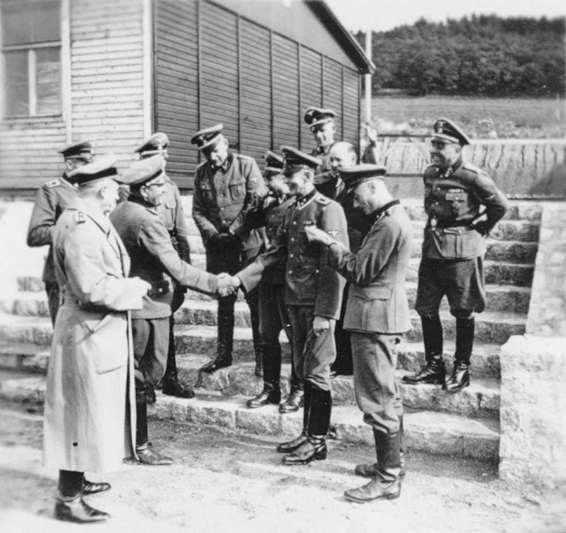
A photograph taken in the summer of 1941 showing SS officers in Gross-Rosen bidding farewell to SS platoon Commander Hafer who was responsible for the building. Gross-Rosen was constructed in the summer of 1940 as a satellite camp of the Sachsenhausen complex. In May 1941 it became an independent slave labour camp with prisoners being forced to work in a huge stone quarry owned by the SS-Deutsche Erd- und Steinwerke GmbH (SS-German Earth and Stone Works). (USHMM 55776, provenance: Martin Mansson)
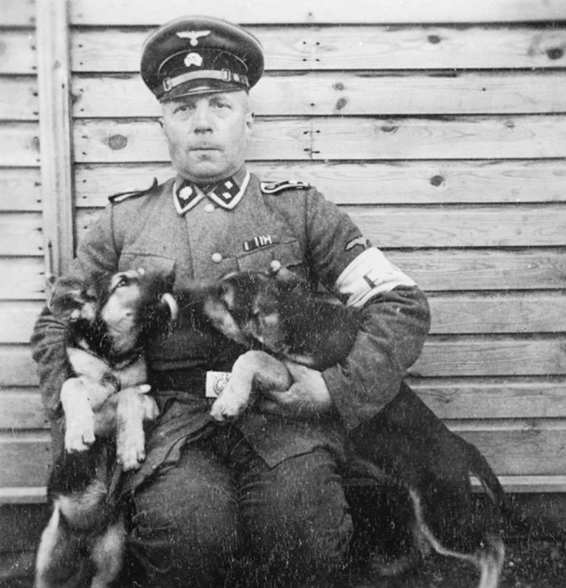
SS man Papka poses with two puppies in the Gross-Rosen concentration camp. At its peak of activity in 1944, the Gross-Rosen complex had around 100 sub-camps. Almost 130,000 various nationalities, including Soviet POWs, were sent to the complex as slave labourers. Some 40,000 people died there. (USHMM 55790)
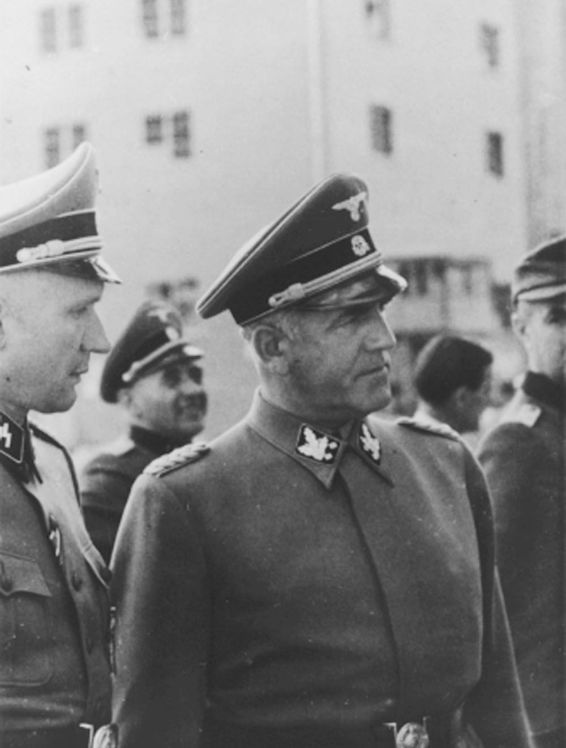
SS-General Oswald Pohl pays an official visit to Auschwitz, accompanied by Auschwitz Commandant Richard Baer who had previously served as his adjutant. Pohl oversaw the organisation of the concentration camps system, and was responsible for deciding which detainees would be transported to the various camps for slave labour. In the summer of 1944 Pohl also directed the management of the extermination of the Hungarian Jews at Auschwitz. (USHMM 34591)
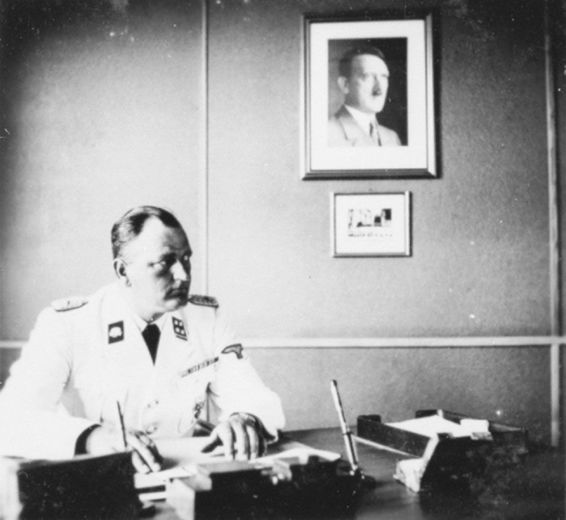
The commander of Gross-Rosen, SS-Obersturmbannführer Arthur Rödl sits at his desk in his office with a photograph of Adolf Hitler hanging on the wall. (USHMM 36214, provenance: Martin Mansson)
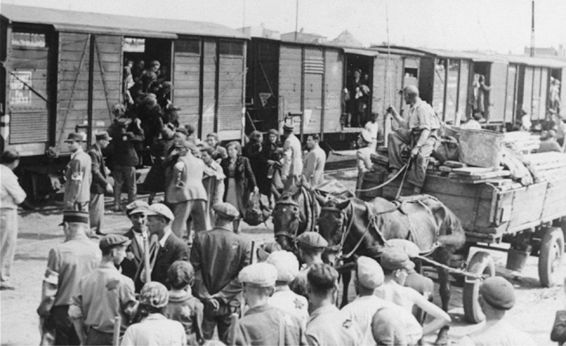
Jews from the Lodz ghetto board deportation trains for the Chelmno death camp. The camp operated from 8 December 1941 to March 1943 during Aktion Reinhard, and from June 1944 to 18 January 1945. Its primary function was to exterminate Jews of the Lodz Ghetto and the local Polish inhabitants in surrounding areas. (USHMM 02625, courtesy of National Museum of American Jewish History)
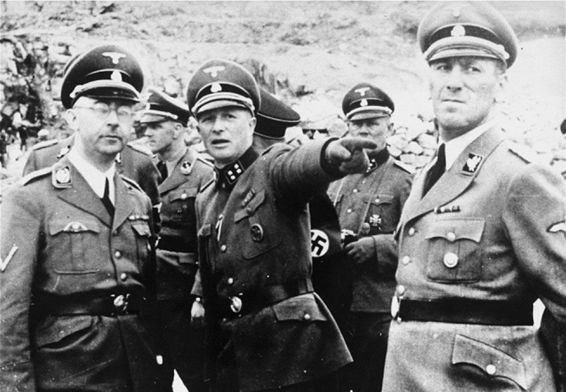
Commandant Franz Ziereis points out something to SS-Reichsführer Heinrich Himmler and other SS officials while viewing the quarry during an inspection tour of the Mauthausen concentration camp. Pictured in front, from left to right, are: Heinrich Himmler, Franz Ziereis and Ernst Kaltenbrunner. To the right of Kaltenbrunner is Josef Kiermaier. (USHMM 12059, courtesy of Archiv der KZ-Gedenkstaette Mauthausen)
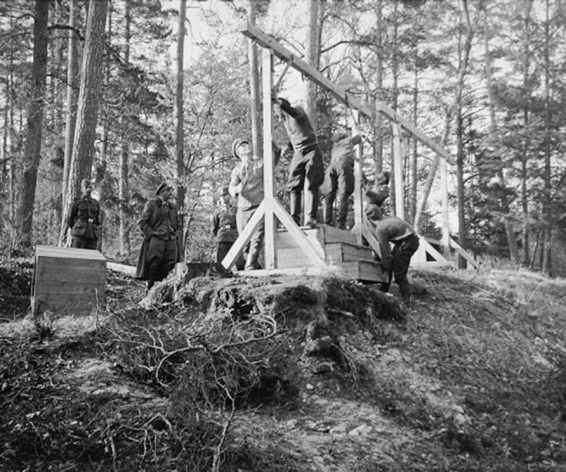
SS officers supervising the building of a gallows in the forest near the Buchenwald concentration camp. (USHMM 13138, courtesy of Robert A. Schmuhl)
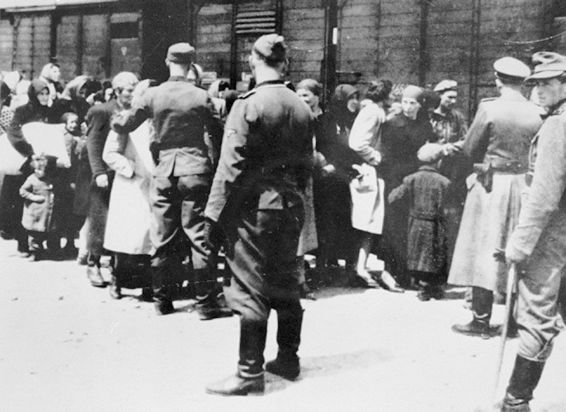
SS guards supervise the arrival of a transport of Jews from Subcarpathian Rus to Auschwitz-Birkenau. Pictured on the far right is SS-Wachmann Stefan Baretzki. During the Frankfurt trials (1963–1965) this photograph was used as evidence against Baretzki. (USHMM 77414, courtesy of Yad Vashem)
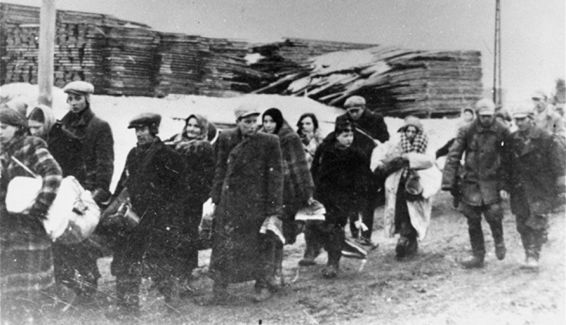
Deportation of Jews from the Lodz ghetto to the Chelmno death camp between January and March 1942. (USHMM 83503, courtesy of Yad Vashem Photo Archives)
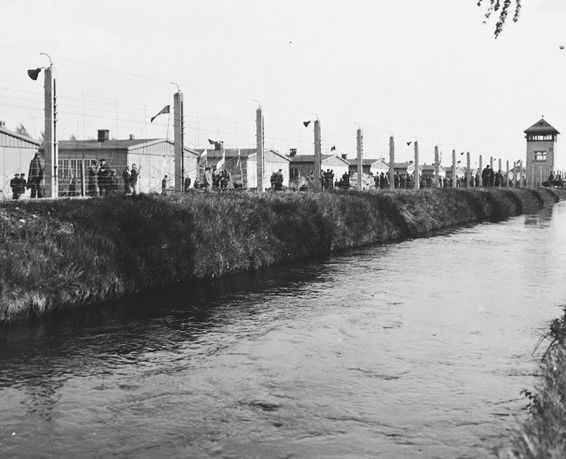
View of the moat in front of the barbed wire fence surrounding the Dachau concentration camp. (USHMM 75040, courtesy of William and Dorothy McLaughlin)
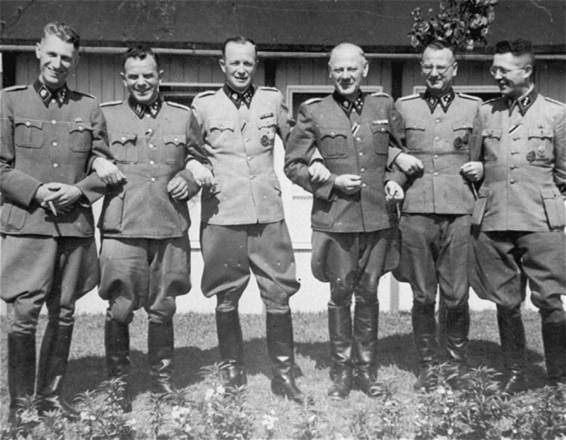
Commandant Franz Ziereis poses with members of the SS staff of the Mauthausen concentration camp. From left to right are Hauptsturmführer Erich Wasitzky (the camp apothecary); Karl Schulz, chief of ‘Politischer Abteilung’ (Gestapo office in the camp); Standartenführer Franz Ziereis (the camp commandant); Sturmbannführer Eduard Krebsbach (camp doctor); Karl Boehmichen (camp doctor) and an unidentified Obersturmführer. (USHMM 06440, courtesy of Eugene S. Cohen)
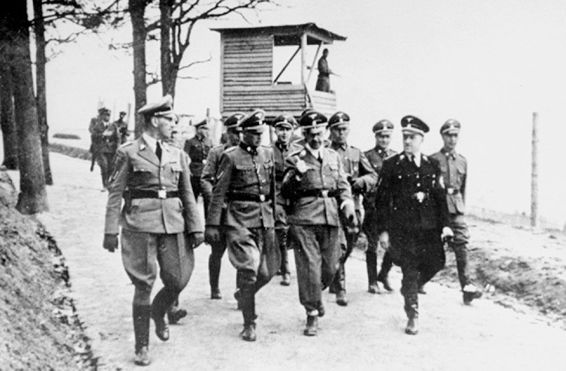
High ranking SS officials on an inspection tour of the Mauthausen concentration camp. Pictured in the front row, from left to right, are Ernst Kaltenbrunner, Franz Ziereis, Heinrich Himmler, Karl Chmielewski, and August Eigruber. At the far right in the second row is George Bachmayer. (USHMM 12057, courtesy of Instytut Pamieci Narodowej)
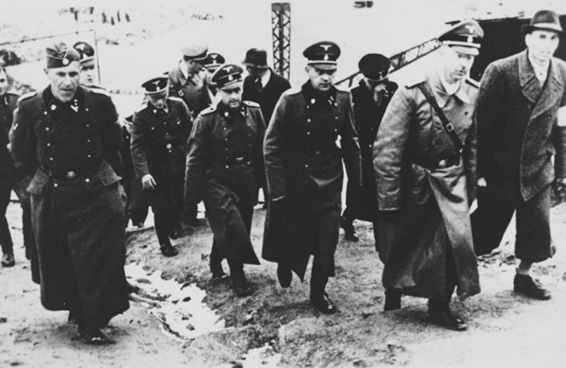
Commandant Franz Ziereis accompanies Heinrich Himmler on an inspection tour of the Mauthausen concentration camp. Heinrich Himmler is pictured second from the right. Behind him is Franz Ziereis, the Commandant of Mauthausen. (USHMM 66700, courtesy of David Mendels)