
Chapter Three
The killing success of the camps was of paramount importance to the commandants, so much so in fact that the commandant of Auschwitz, Rudolf Höss decided to journey by train to a recently built concentration camp called Treblinka in the summer of 1942 to see for himself a fully operational death camp. The camp was situated fifty miles northeast of Warsaw on the main Warsaw-Bialystok railway line near the quiet village of Treblinka.
At the gas chambers where Höss was supposed to seek inspiration he observed the killing process, and was not very impressed. He wrote that ‘small gas chambers, equipped with pipes to induce the exhaust gas from the engines, coming from old captured transport vehicles and tanks, very often failed to work. Because of that the intakes could not be dealt with according to the plan, which meant to clear the Warsaw ghetto. According to the camp commandant of Treblinka 80,000 people have been gassed in the course of half a year.’ In Höss’s view Treblinka was not a very efficient camp. His gas chambers at Auschwitz were much larger, and unlike Treblinka he would not waste valuable resources and time killing Jews with exhaust gas. The victims too that arrived at Treblinka knew their fate, whilst at Auschwitz Höss could boast that the victims were fooled into believing they were going through a delousing process.
Following Höss’s visit to Treblinka, Jews from all over Europe including Slovakia, France, Belgium and the Netherlands, men, women and children, were herded through into Birkenau like cattle and sent to their deaths. Yet in the midst of this horror Auschwitz during this period was still playing only a minor part in the slaughter of the Jews. The major killings were already established in the forests of Poland – Belzec, Sobibor and Treblinka.
Here in Treblinka, Obersturmführer Dr Irmfried Eberl, who had become the camp’s first commandant, had a restless craving for power, and an ambition to achieve the highest possible numbers of gassed victims and exceed all the other camps. The commandant indeed delivered his bosses an exceptional killing rate, but the way he organised the camp led to his dismissal. The killing process was chaotic, and this chaos led to SS-men who did not normally have a tendency to cause pain and misery on the prisoners, to suddenly become habitually cruel. In the higher reaches of the SS, they wanted Eberl prosecuted for not organising the mass murder of men, women, and children in a more effective way. In the eyes of his superiors Eberl’s crime was that he had not committed the crime of mass murder well enough.
After Eberl’s departure the camp was transformed by the new commandant SS-Hauptsturmführer Franz Stangl, an old Austrian graduate of Hartheim ‘euthanasia’ centre. Stangl was determined to reform the camp and the SS that served there. He preached the need for rooting from the ranks the disobedient, the unreliable, and the lazy. He was determined to enforce the SS concepts of elitism, toughness, and comradeship, and imposed a ruthless discipline upon his subordinates, meting out harsh and often brutal punishments for the slightest infractions of SS rules.
In other death camps, such as Belzec, Christian Wirth, commander of the camp, ruled the camp by fear and terror. Wirth had arrived at Belzec before Christmas 1941, bringing with him a group of about ten ‘euthanasia’ specialists, including the notorious chemist, Dr Kallmeyer. They had been given the task of constructing a special gassing facility and to operate it. Killing people with the use of gas was not unknown to Wirth. In 1939 he became involved in the euthanasia actions against the mentally ill and assisted in the wholesale extermination of the victims using bottled carbon monoxide. Two years later in 1941 he was dispatched to Lublin where he continued his sadistic killings. Wirth soon earned himself a reputation and was nicknamed ‘savage Christian’. At Belzec Wirth encouraged his SS personnel to commit terrible acts of brutality against their victims.
Within months of his arrival Wirth was adapting previous killing techniques with the use of gas. By February 1942 two gassing tests were undertaken at Belzec, the first with Zyklon B (hydrogen cyanide gas) and the second with bottled carbon monoxide. Among the victims of the second test were German-Jewish psychiatric patients deported from Germany and local Jews from Piaski and Izbica. As a cheaper alternative a Soviet tank engine was installed outside the chambers to produce carbon monoxide from exhaust gas which was fed into the chamber. The technique was a success and there was now no need for a constant supply of CO gas to a far distant part of Poland.
Wirth realised that because the vast majority of arrivals would be alive only for a matter of a few hours a large complex of wooden and concrete buildings, such as those found at Auschwitz would no longer be required. A death camp, unlike a concentration camp, needed only a few facilities to operate effectively. Wirth wanted to conceal the true purpose of the place from the new arrivals for as long as possible. So within the camp he had the gas chamber building camouflaged and hidden behind trees and a wire fence. He knew that by building a large gas chamber the killing process would not only spare his own men psychological suffering, but more importantly mean fewer personnel would be required to run the camp. He would employ a number of healthy Jewish slave labourers who would be selected upon arrival to the camp and put to work burying bodies, sorting the large quantities of clothing and valuables, and cleaning the gas chambers.
The Belzec death camp finally began its operations on 17 March 1942 with a transport of some fifty goods wagons containing Jews from Lublin. Between March and the end of April, thousands of Jews from the Lublin and Lemberg districts were successfully exterminated in Belzec. Himmler sent his congratulations to Wirth who had finally built a killing factory capable of murdering many hundreds of thousands of people in one single space. But Belzec alone would not be sufficient to deal with the numbers of people scheduled to be sent there.
In March while the first trainloads of Jews were being readied for Belzec, another ‘Reinhard’ death camp was being constructed. It was near the small village of Sobibor in a wooded area on the Chelmno-Wlodawa railway line a few miles south of Wlodawa. The installation was an enlarged and improved version of Belzec with the same general layout. SS-Hauptsturmführer Franz Stangl, who would later become commandant of Treblinka, was appointed commandant.
By the time Stangl received his new appointment Wirth had become commander of both Chelmno and Belzec, and was soon to oversee Stangl’s operation at Sobibor.
Stangl was shocked by the first gassing and was determined that he would try to avoid the graphic spectacle in future. When Sobibor officially became operational in mid-May 1942, he did just that. ‘At Sobibor’, he said, ‘one could avoid seeing almost all of it – it all happened so far away from the camp buildings.’ Yet, in spite in Stangl’s sensitivities about the camp operations it nonetheless accelerated its activities at tremendous pace. Within the first two months, some 100,000 people were killed there.
By the summer of 1942, both Sobibor and Belzec were running simultaneously, and despite the technical problems of machinery breaking down and the problems with body disposal, the ‘Reinhard’ camps were achieving what they had been intended for: the wholesale mass extermination of the Jews.
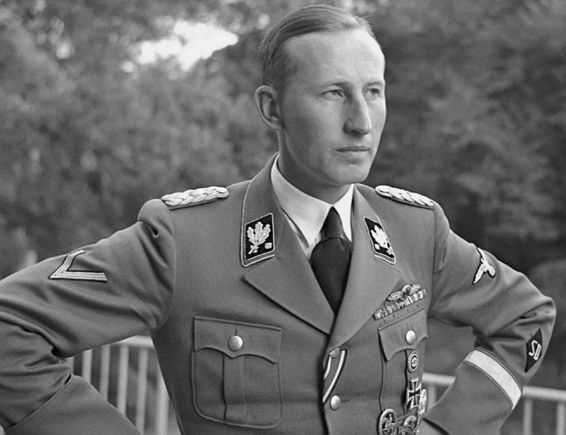

Two photographs of Reinhard Heydrich, SS-Obergruppenführer and General der Polizei, chief of the Reich Main Security Office, and Stellvertretender Reichsprotektor (Deputy/Acting Reich-Protector) of Bohemia and Moravia. It was on 20 January 1942 that Heydrich chaired the Wannsee Conference in Berlin, in which he revealed his dark plan to deport and transport 11 million Jews from all over Europe to where they would be forced into labour or destroyed in special extermination camps.
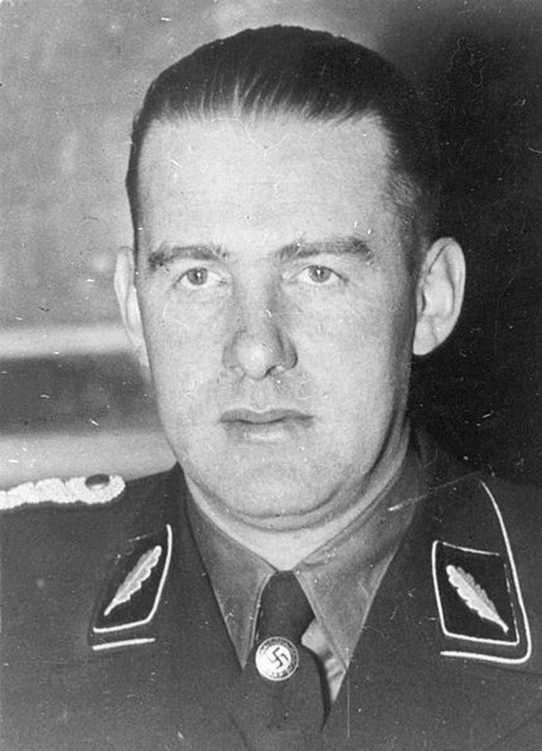
A photograph of SS-Oberstgruppenführer Odilo Globocnik. It was at the Wannsee Conference in Berlin that a special organization, later named ‘Operation Reinhard’, was established in Lublin. Operation Reinhard was the code name given for the systematic annihilation of the Polish Jews in the General Government, and it would mark the beginning of the most deadly phase of the programme: the use of extermination camps. The SS and Police Leader of the district of Lublin, SS-Oberstgruppenführer Odilo Globocnik, was appointed the commander of the operation. Globocnik was a ruthless and fanatical SS officer who believed wholeheartedly in the Nazi vision. From his office he planned and gossiped with his associates about the future SS colonization of the East and the task of preparing the extermination of Jews in the General Government. In order to undertake such an action against the Jews, killing centres were to be established. Globocnik set to work immediately. He brought in people who had been assigned to the euthanasia programme and had the knowledge and experience of setting up and operating factories for mass murder. Plans to construct three death camps were put forward, at Belzec, Sobibor, and Treblinka.
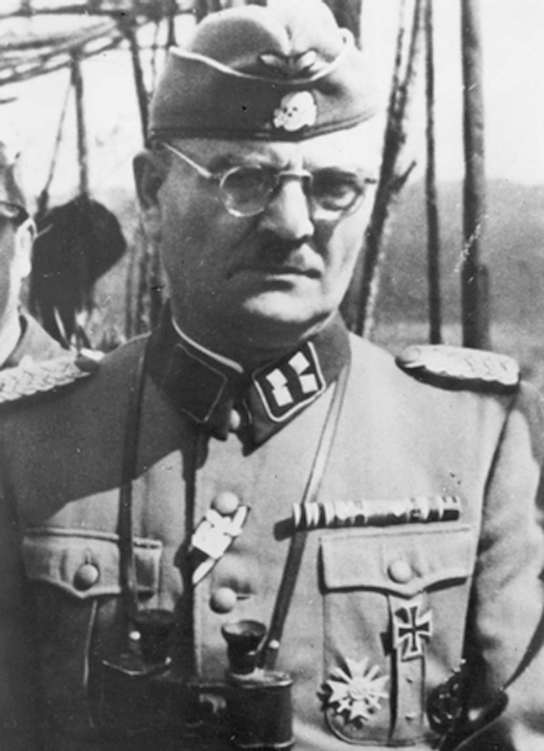
SS-Sturmbannführer Christian Wirth. In 1939 Wirth became involved in the euthanasia actions against the mentally ill and assisted in their wholesale extermination using bottled carbon monoxide. Two years later in 1941 he was dispatched to Lublin where he continued his sadistic killings. Wirth soon earned himself a reputation and was nicknamed ‘savage Christian’. At Belzec concentration camp Wirth ruled the camp with an iron fist and encouraged his SS personnel to commit terrible acts of brutality against its inmates. Within months of his arrival Wirth was adapting previous killing techniques with the use of gas. By February 1942 two gassing tests were undertaken at Belzec, the first with Zyklon B (hydrogen cyanide gas), the second with bottled carbon monoxide. Among the victims of the second test were German-Jewish psychiatric patients deported from Germany, and local Jews from Piaski and Izbica. As a cheaper alternative, a Soviet tank engine was installed outside the chambers to produce carbon monoxide from exhaust gas which was fed into the chamber. The technique was a complete success and there was now no need for a constant supply of CO gas to this distant part of Poland.
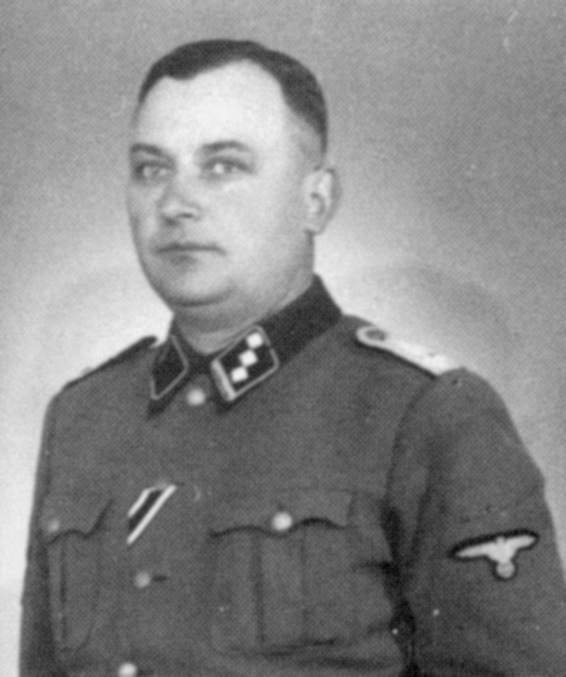
A German newspaper photograph of SS-Obersturmführer Richard Thomalla. The contractors assigned to build Treblinka death camp were the German construction firms Schönbronn of Leipzig and Schmidt-Münstermann. These firms were to receive their commissions from the Central Construction Office of the Waffen-SS and Police in Warsaw. In charge of construction was SS-Obersturmführer Richard Thomalla, who had completed the building contract at Sobibor and had been replaced there by Stangl in April 1942. For almost eight weeks Thomalla and his subordinates oversaw the construction of Treblinka. The bulk of the labour force to build the installation was Jews, who were transported there by trucks from the neighboring villages of Wegrow and Stoczek Wegrowski. There were also a number of Poles used from the nearby labour camp Treblinka I. SS-Untersturmführer Heinz Auerswald from the office of the commissioner of the Warsaw ghetto supplied much of the construction materials.
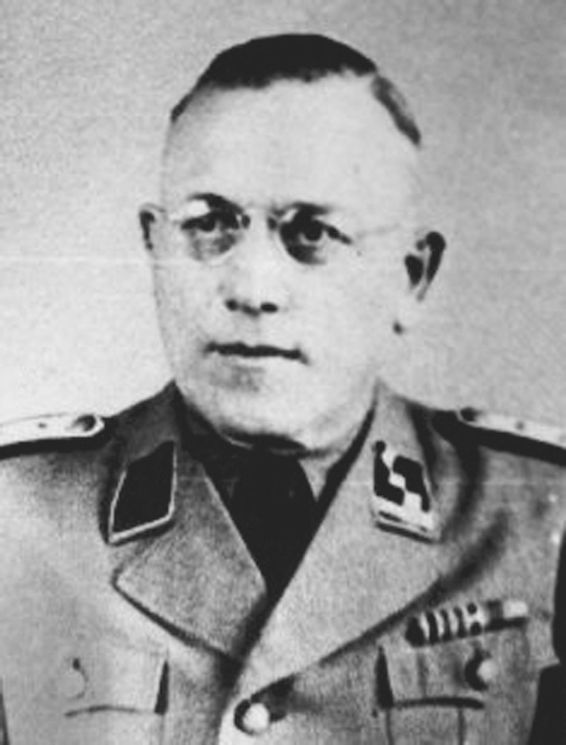
SS-Hauptsturmführer Gottlieb Hering served in Action T4 Euthanasia Programme and later as the second and last commandant of Belzec extermination camp during Operation Reinhard.
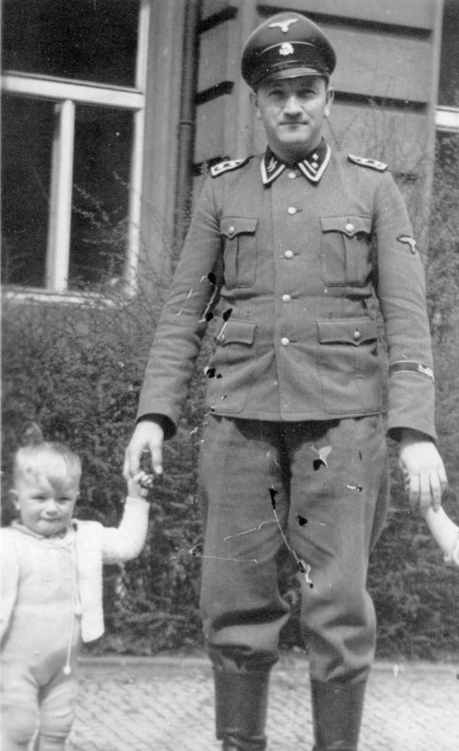
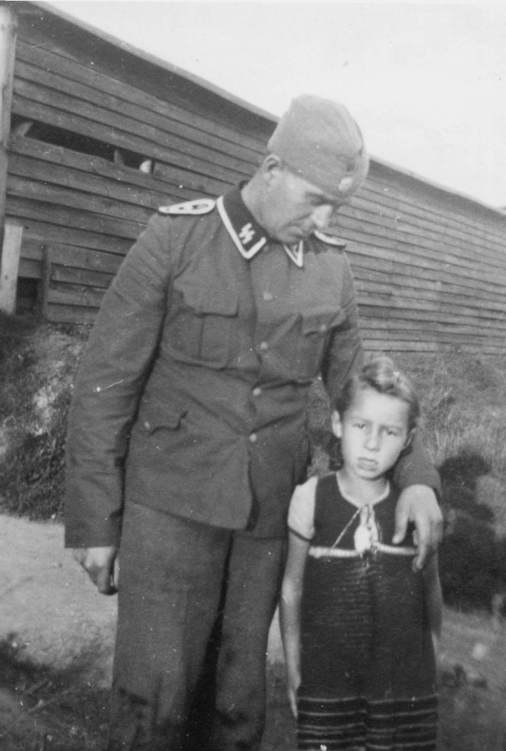
Two photographs showing off-duty SS guards posing for the camera during the summer months of 1942. For these men mass murder became a fixture in their daily routine. Being subjected constantly to camp life hardened their conscience. Many regularly watched the shipments of Jews arriving and became morbidly fascinated by the spectacle. Outwardly the SS men showed no compassion whatsoever. They just looked on with a cold indifference watching the processions going to their death, hoping that the gassing process would not cause additional problems. Perhaps for them, killing by gas was easier to deal with psychologically than murdering men, women and children face-to-face. Gassing meant that they did not have to look into the eyes of their victims as they were killed.

An SS officer with his wife poses for a portrait photograph. The original photograph was found in a small collection of artifacts in Poland near Sobibor, and it is presumed this unidentified man had a connection with the camp.
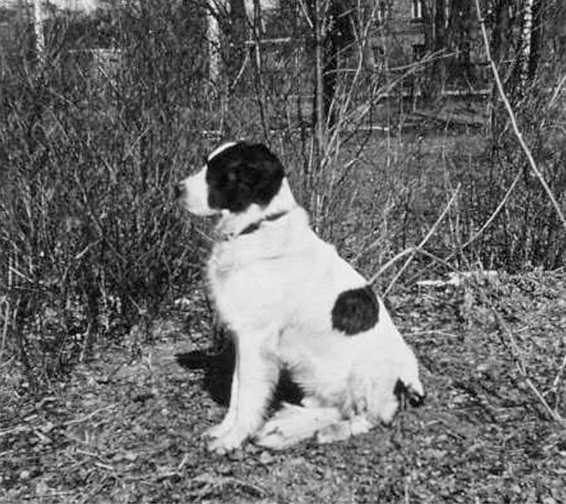
A photograph of SS-Oberscharführer Kurt Franz’s St Bernard dog called Barry. Franz was deputy commander at Treblinka death camp. It did not take long before Franz made his mark at Treblinka, and soon became one of the most dominant SS men in the camp. To the prisoners he was one of the cruelest and frightening figures there. He was nicknamed ‘Lalke’ (doll in Yiddish) owing to his baby face. Often he would be seen riding on his horse touring the camp, visiting the work sites in the Lower camp and the extermination area. When he was not roaming the camp he took part in roll calls and the meting out of harsh punishments on the prisoners. He was also seen with his dog, Barry. Barry had been trained by Franz to be ferocious, and upon his command would attack Jews, biting at their bodies and sinking his sharp teeth into the victim’s genitals, occasionally ripping them off. (H.E.A.R.T)
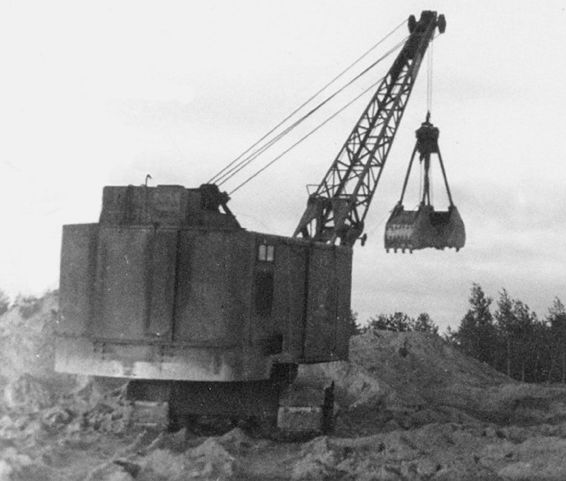

Two photographs taken of the Treblinka excavator. The excavator had been brought over from Treblinka I and was used every day to dig corpse pits and help bury the dead. The excavator was built by Menck & Hambrock, type ‘Ma’, produced between 1933 and 1944, power: 70 HP, weight: 27 tons. These photos were taken by Stangl’s deputy Kurt Franz. In one photograph two SS-men can be seen on the buckets of the excavator. These photographs were probably taken in the first half of 1943. At least two types of excavator were used in Treblinka: bucket and cable excavators. It was later realised that the bucket excavator was not very effective for digging burial pits. The photos were found in Franz’s Treblinka album which he named Schöne Zeiten (Pleasant Times). (ARC)

A posed photograph of the first commandant of Treblinka, SS-Obersturmführer Dr Irmfried Eberl. As soon as Eberl took command he was determined to deliver an exceptional killing rate that far outweighed that of any other camp in the Nazi empire. (H.E.A.R.T)

A photograph of SS-Hauptsturmführer Franz Paul Stangl, dressed in his familiar white tunic and holding an oxhide whip, seen with his deputy Franz at Treblinka death camp. Stangl had earned a good reputation in the realms of the concentration camp system and was commandant of the Sobibor and Treblinka extermination camps during the Operation Reinhard phase. (ARC)
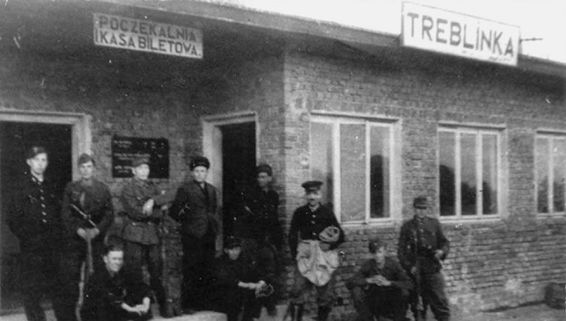
This photo was taken in August 1942 when Pötzinger visited the Treblinka cook August Hengst and his wife Augusta in Warsaw. During an interrogation after the war, Hengst talked about this visit. He was allowed to wear civilian clothes and had an apartment in Warsaw where he often welcomed visitors from Treblinka. At this time Hengst was busy getting food and other goods for the Treblinka camp staff. From time to time he had to travel to Treblinka. One day, camp commander Stangl forbade the wearing of civilian clothes. However, when Pötzinger and Pinnemann were on a visit, they decided to go to a photographic studio in the same road, where this photo was taken. (ARC)
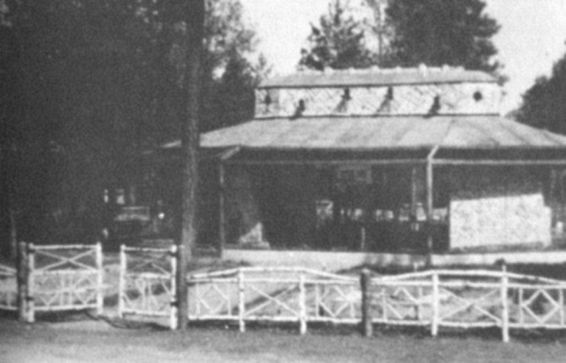
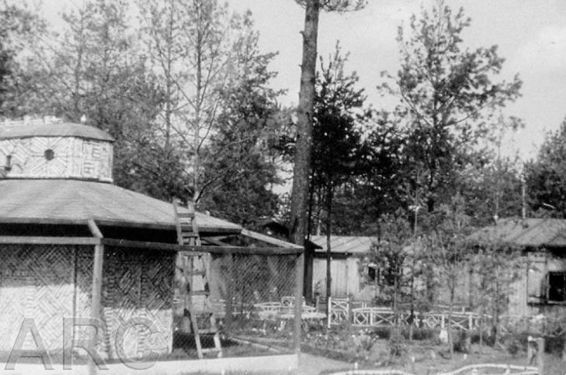
A photograph showing the zoo at Treblinka death camp. At Treblinka, commandant Stangl had a zoo constructed near the Ukrainian barracks, in the early summer of 1943. Here the SS spent their leisure time sitting on wooden benches and tables relaxing and enjoying looking at the animals. (ARC)
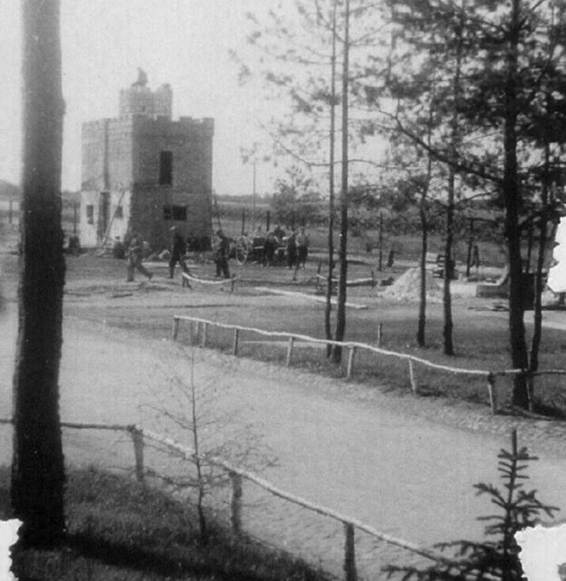
A photograph taken at Treblinka showing an ammunition storeroom. It was located between the two SS barracks, and built during the first phase of the camp as a concrete cube. In spring 1943 a second storey was added, containing a water tank to supply new showers for the SS staff. During the revolt at Treblinka, the SS barracks burned down. This photo was taken by Kurt Franz, after the revolt. (ARC)
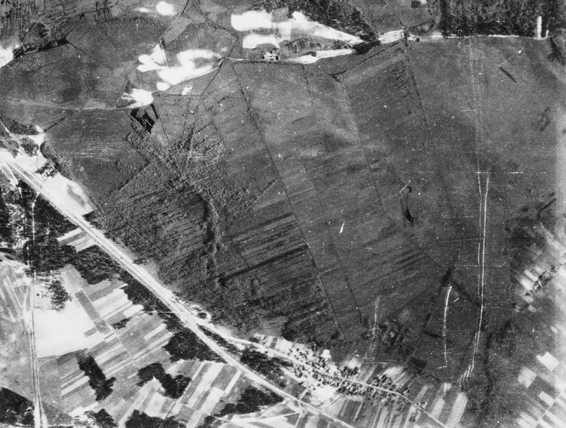
An aerial view taken during an Allied reconnaissance mission over Poland in 1944, showing the former site of the Treblinka death camp. (ARC)

A group of SS men pose for the camera during ‘Operation Reinhard’ in the summer of 1942. These men were not assigned their tasks because of any exceptional qualities they had. Their anti-Semitism was part of their culture that had been nurtured over years of intense propaganda. Most were married, and the majority did not have a criminal record. They had volunteered to serve in the SS in a death camp where they carried out their duties loyally and unquestioningly and would show terrible cruelty toward their victims. When they were not physically or mentally abusing the prisoners, they were killing them, sometimes in their thousands each day.
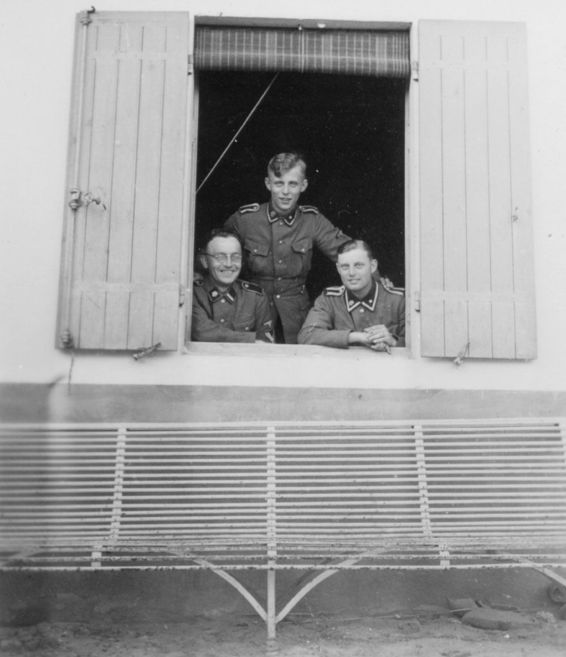
Three SS men pose for the camera. The men who were posted to Treblinka wrote about their personal experiences as if they were ‘normal’. They believed that their daily lives were predominantly very good.

Another photograph showing the same SS men. Although they were massively influenced by the propaganda of the times, it is evident they made a series of personal choices. They carried on working at Treblinka not just because they were ordered to, but because a posting to a concentration camp meant they would avoid the risks to life and limb associated with fighting on a battlefield in southern Russia. There is no record of any member of the SS refusing on moral grounds to work in the camp. They could have easily rejected the posting and got sent to the front, but all preferred to live a life in the camp, killing those they regarded as having no intrinsic right to life.
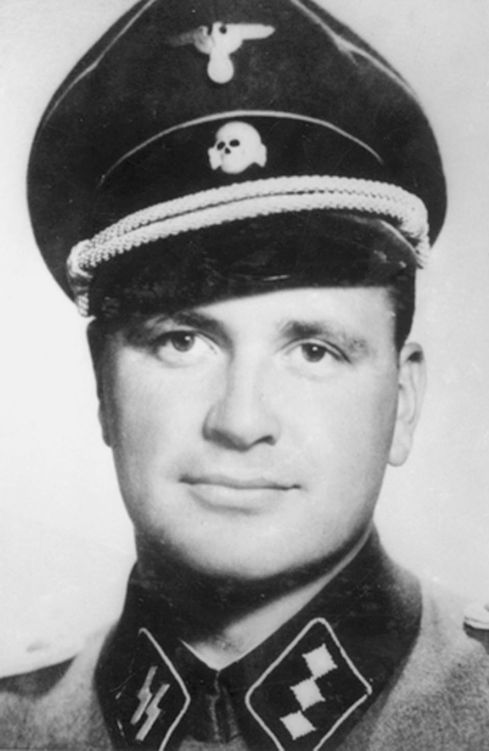
SS-Oberscharführer Kurt Franz, who had been appointed as deputy commandant at Treblinka. Before the war Franz had joined the 3rd Waffen-SS-Totenkopfstandarte Thüringen, and then later at the end of 1939 was summoned to the Führer’s Chancellery and detailed for service as cook in the euthanasia institutes at Grafeneck, Hartheim, Sonnenstein and Brandenburg. As a member of the 6th battalion he served at the Buchenwald concentration camp in 1941, and by the spring of 1942 had been ordered to the General Government where he was posted to Belzec. He worked as a cook, and trained the Ukrainian guards there before finally being given a new posting to Treblinka as Stangl’s deputy.

An SS man poses for the camera with some dogs. Many of the SS men regarded their posting to Treblinka as particularly good, and felt that what they were doing there was right. Although they were taught blind and absolute obedience to all orders from their SS superiors, there were a number of occasions when some felt able to criticize the way the camp was being run. But they never needed to fear reprisal if they criticized an order. Their superiors often allowed officers lower down the chain of command openly to use their initiative and voice their views. They knew that every SS man believed wholeheartedly in the Nazi vision, and for this reason they were relatively free to question the details of how camp management was implemented.

Two officers from Belzec death camp are seen laughing and joking whilst drinking beer. On the left is SS-Oberscharführer Heinrich Gley; SS-Hauptsturmführer Gottlieb Hering is on the right.
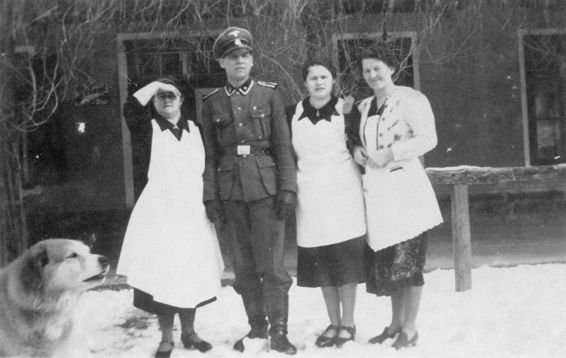
Three women pose for the camera with an SS officer during the winter of late 1942. By this period of the war Operation Reinhard was in full operation.
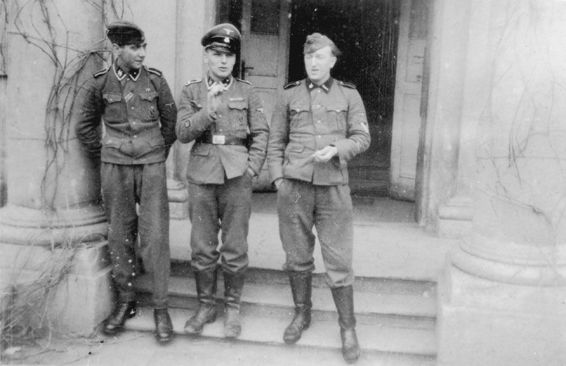
SS officers stand on the steps of a building sometime during the summer of 1942. By the summer of 1942, both Sobibor and Belzec death camps were running simultaneously, and despite the technical problems of machinery breaking down and the problems with body disposal, the ‘Action Reinhard’ camps were achieving what they had been intended for, the wholesale mass extermination of the Jews.

SS-Oberscharführer Willy Matzig was a book-keeper/ accountant at Treblinka and was one of Stangl’s two senior administrative assistants. His office was in Stangl’s quarters. He was also part of the squad which received prisoners on the platform when deportations arrived. (H.E.A.R.T)
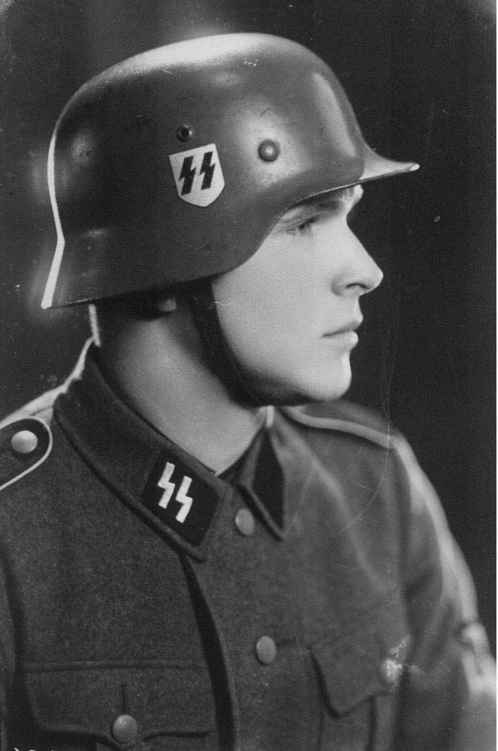
A portrait photograph of a young SS man. Almost every SS man who worked in the death camps was determined from the onset to conceal as much of the gruesome knowledge of what went on in the camps as possible. In this they were protecting their oaths, but also their own credentials as human beings.
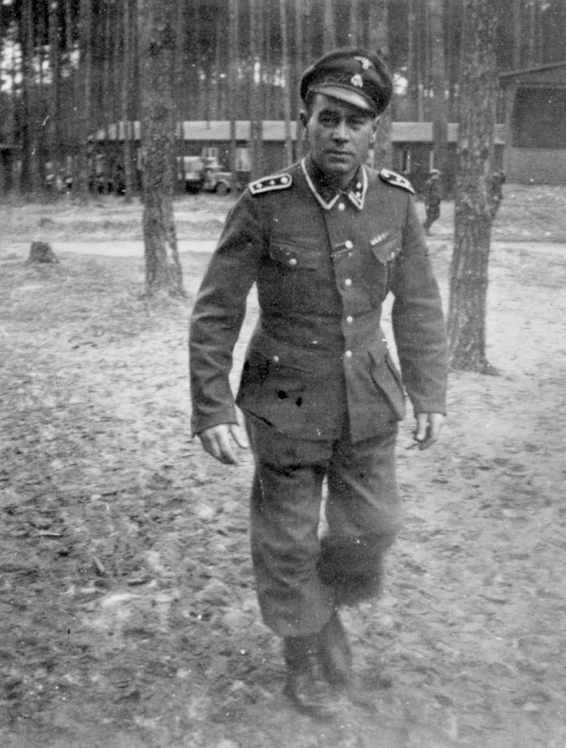
An SS officer at an unidentified camp in the summer of 1942. Many of the new recruits that were picked for Treblinka, and indeed for all the ‘Action Reinhard’ camps, were individually selected on the basis of their previous experience in the Euthanasia Programme. The main personnel had been administered directly from the officers of T4, all of which boasted an exceptional record. In total only ninety-six SS out of 400 had been chosen to run the three camps. Most of these SS men were now actively playing their part in the extermination of the Jews in Poland, whilst the remaining handful of SS recruited were sent to Treblinka, some of whom had never worked in a concentration camp before.
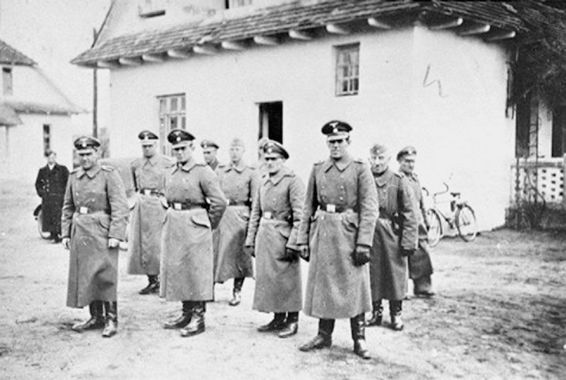
SS guards stand in formation outside the commandant’s house near the Belzec concentration camp. (USHMM 87764)

SS-Oberscharführer Hermann Erich Bauer. He had initially participated in the T4 programme, and then later in Operation Reinhard, serving as a gas chamber operator at Sobibor extermination camp.