
Chapter Four
Throughout the Nazi empire and the occupied countries, millions regarded by the Germans as ‘subhuman’ continued to be used either as a labour force, or murdered, preferably by gas. In the many thousands of labour camps that were erected, conditions on site under which the labour force had to work were appalling. Those unfortunate to be incarcerated in these camps had become slaves for the SS, and much of their work was lethal. Many died, and those that survived often suffered permanent injury. Malnourished, badly equipped, lacking protective gear, constantly harassed by the guards, the workers had little chance of surviving the arduous labour.
Under the violent reign of the camp commandant, for example the notorious SS-Sturmbannfuhrer Otto Förschner of Mittelbau-Dora concentration camp and the Dachau sub-camp of Kaufering, or SS-Hauptsturmführer Amon Goeth of the Kraków-Płaszów concentration camp in Płaszów in German-occupied Poland, many of the inmates were constantly beaten with sticks or truncheons, were shot, or suffered any imaginable form of torture. Those who were ill or too weak to continue working were ordered to be shot in front of the work-detail or dragged away and executed. The other workers were compelled to continue working without pause until the foreman blew his whistle ordering every man to lay down his tools. By the end of the day the majority of the men and women were exhausted. Many were on the point of collapsing, but those who had become too weak to work again the following morning ran the risk of being declared unfit for further work and taken away. Those that had actually died on site from exhaustion or killed for some minor infringement earlier that day were piled up in heaps ready for collection by cart. Early the next morning the foreman would take stock of his workforce. Any person he deemed was no longer able to perform to the satisfaction of the commandant was selected for death.
These commandants knew that the fear of being killed was enough to spur the workers to greater efforts and that they undertook tasks beyond their strength as a result. According to SS reports, injured or ill workers regularly refrained from seeking medical treatment out of terror of being executed. The death and injury rate of the construction gangs was mainly attributed to guards physically abusing their work force.
Camp commandant Amon Goeth was regarded as a loathsome man, even among some of the cruellest guards. Red faced and sweating, he could often be seen screaming obscenities and beating and killing Jews. Prisoners recalled that ‘he used to beat the prisoners with a completely expressionless, apathetic look on his face, as if the beatings were part of his daily routine’.
SS-Sturmbannführer Fritz Suhren was another notorious commandant who did not need any encouragement to commit terrible acts of cruelty against his victims. He was commandant of the women’s camp at Ravensbrück. His policy upon taking command in 1942 was to exterminate the prisoners through working them as hard as possible and feeding them as little as possible. He enjoyed meting out harsh and brutal punishments for the slightest infractions of camp rules. Anyone he found with smuggled valuables in their possession was either beaten or shot on the spot, in full view of other deportees. He was known among some of his comrades to be an arrogant self-righteous individual with no morals or scruples. Whilst on duty he roamed the camp in an arrogant overbearing manner and would be seen beating, kicking, slapping, and whipping prisoners ruthlessly. His posting as commandant had given him a chance to excel where his life had previously failed him. Now he was able to take great pride in the fact that his mere presence caused the women inmates to tremble with fear. He gleefully followed the policy of controlled and disciplined terror laid down during his guard training. This barbarous man would conduct his cruel beatings with a nonchalant and cavalier attitude. He regularly had the weak shot in full view of the other prisoner workers.
For Suhren, and indeed for many of the commandants, they had manufactured for themselves what they considered to be a tolerable life. Their posting was relatively easy. They had as much food and alcohol to drink as they wanted. Many of the SS camps were very much like small towns. A number of camps had vegetable shops, and you could buy bones to make broth. There was a canteen. Some had cinemas; some had theatres with regular performances. There were sports clubs, and there were dances – all fun and entertainment.
Quite often the commandants held large parties in their villas, where staff could bring members of their families or their girl friends. The relaxed atmosphere was all far removed from the horrors that were taking place elsewhere in the camp. The commandants would encourage such behaviour, almost trying to delude those around them. But they knew, as well as everyone else participating, that it was a big charade. Like so many that endured these terrible circumstances, escapism from reality meant survival.
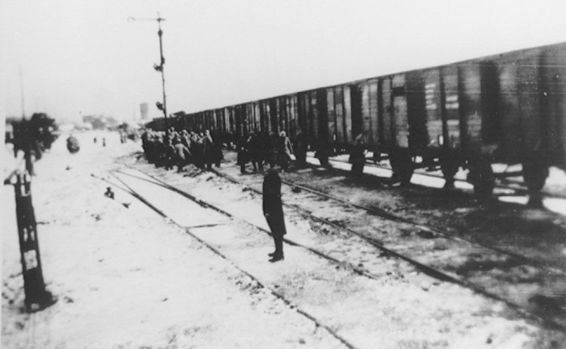
In Poland in the winter of 1942 a German stands guards on a snow-covered railroad track as a group of Jews are led to a deportation train. (USHMM 026024)
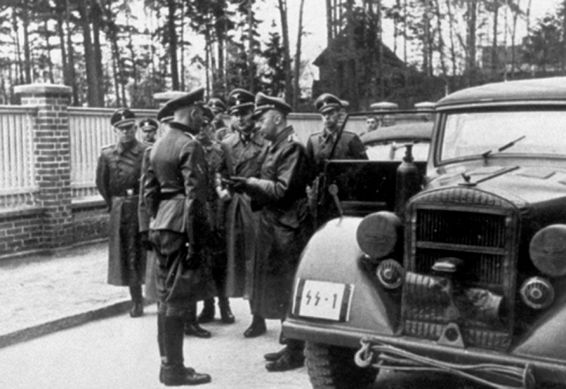
A photograph of SS-Sturmbannführer Max Pauly talking to other staff officers next to his car. Pauly was the commandant of Stutthof concentration camp from September 1939 to August 1942, and commandant of Neuengamme and its associated subcamps from September 1942 until the end of the war.
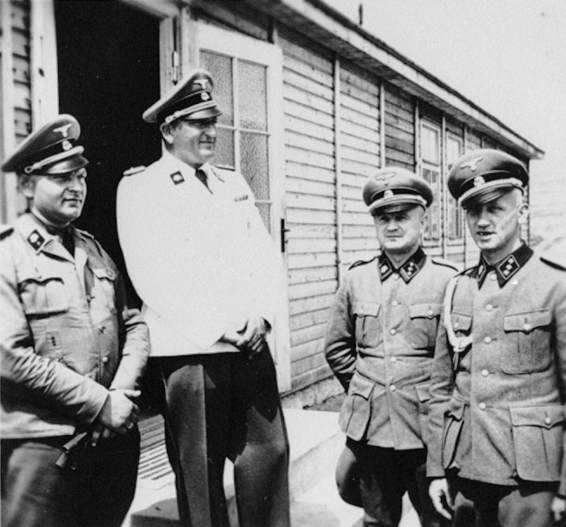
Taken in the summer of 1942, this photograph shows SS-Obersturmbannführer Arthur Rödl the commandant of Gross-Rosen (in white), in the camp with three members of the SS staff. His adjutant Kuno Schramm is on the right. (USHMM, courtesy of Martin Mansson 55780)
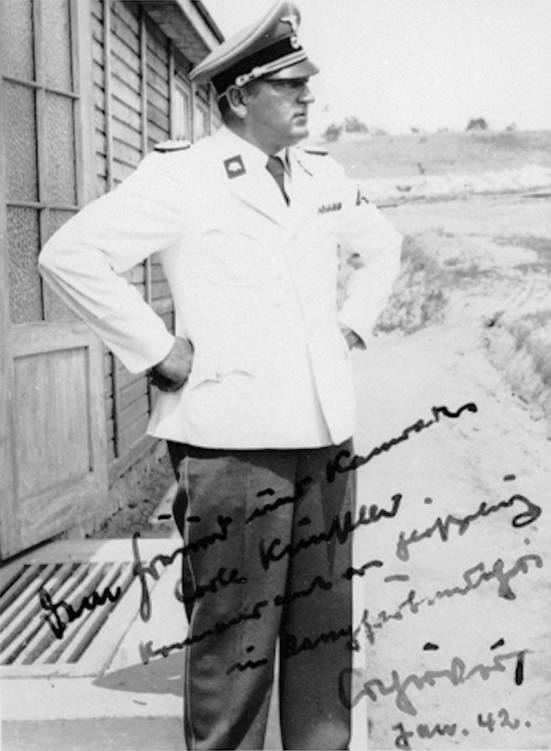
Another photograph of Arthur Rödl taken in 1942. (USHMM Courtesy of Martin Mansson 55808)

View of the Ravensbrück concentration camp. This photograph is from the SS-Propaganda-Album des Frauen-KZ-Ravensbrück 1940–1941.
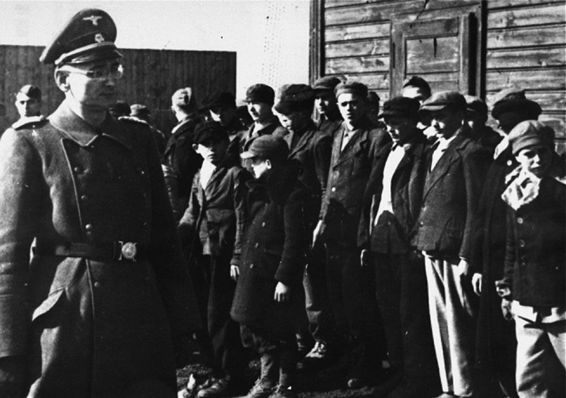
Camp commandant Karl Ehrlich reviews the child prisoners at his camp. (USHMM, courtesy of Instytut Pamieci Narodowej 00845)
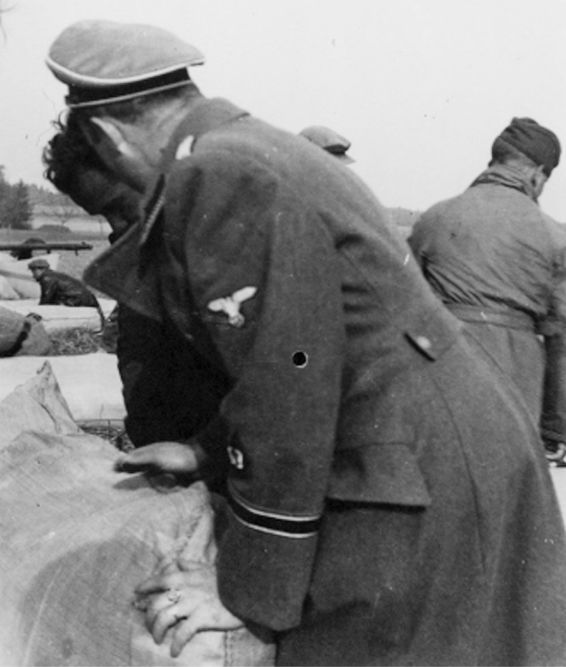
An SS guard (possibly Schmiller) supervises work in the Lipa farm labour camp. (USHMM, courtesy of Oldrich Stransky 51973)
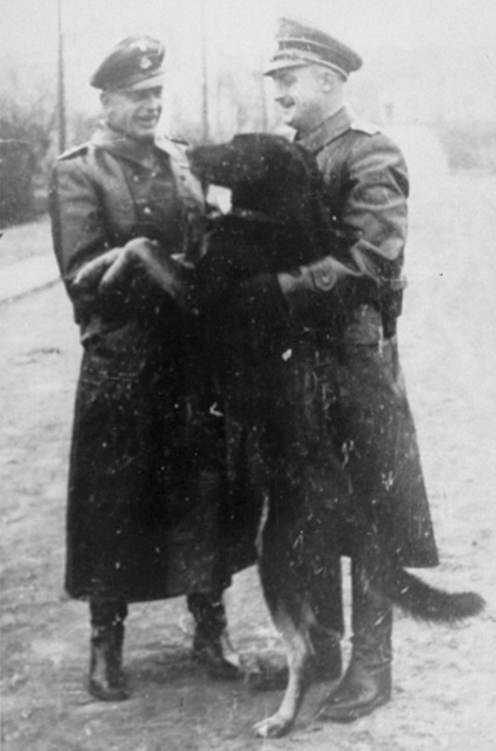
Two SS officers with a guard dog in the Janowska concentration camp. (USHMM, courtesy of Herman Lewinter 69984)

An SS man poses for the camera in the summer of 1941. Life for these men was relatively easy. Whatever thoughts some of the less susceptible SS men had on how the concentration camps were run were suppressed. They were able to bury their emotions and enjoy the camaraderie that came with being a loyal member of the SS.

An SS man relaxes while off duty. The more ambitious concentration camp guard could learn from his commandant. If they were to progress through the ranks, they needed to strengthen their belief that all the prisoners detained inside the system were inferior, and implacable enemies of the state.
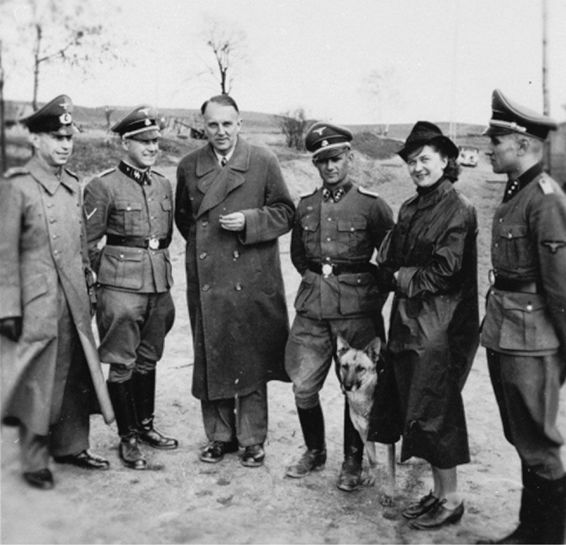
A group of SS officers, a woman and a dog stand on the grounds of the Gross-Rosen concentration camp. SS-Obersturmführer Anton Thumann is pictured third from the right. Thumann was a Schutzhaftlagerführer (Protective Custody Camp Leader) in various concentration camps. (USHMM, courtesy of Martin Mansson 36226)

Three members of the SS staff in Gross-Rosen pose holding six piglets. The adjutant to the commandant, Kuno Schramm, is standing on the left. (USHMM, courtesy of Martin Mansson 55779)
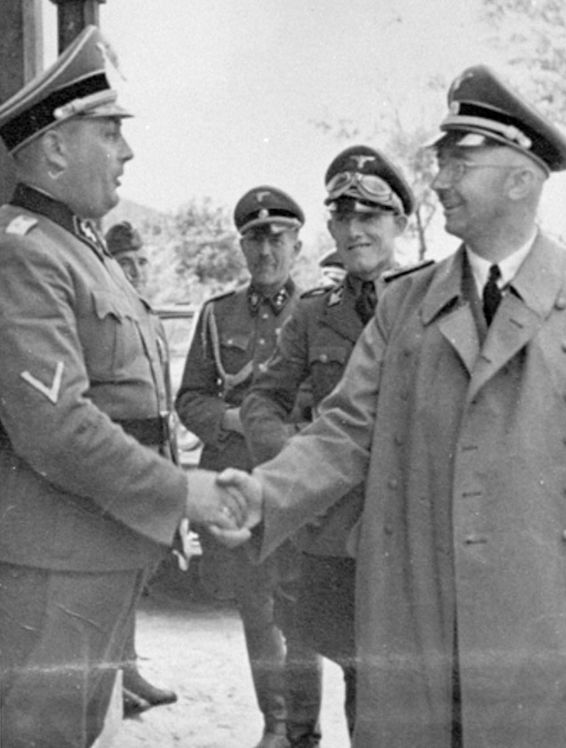
SS-Reichsführer Heinrich Himmler (right) shakes the hand of camp commandant SS-Hauptsturmführer Friedrich Warzok during an official tour of a Jewish labour camp along the main supply route in Galicia. (USHMM 82795)
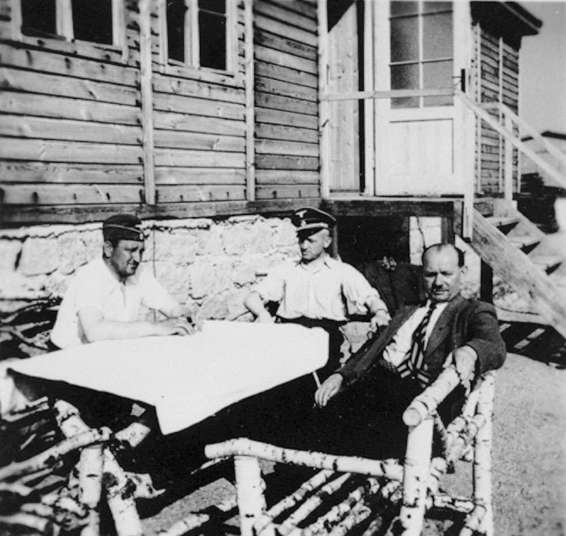
SS officers and an unidentified man sit at a picnic table outside a building at the Gross-Rosen concentration camp. Pictured on the left is the commandant, Arthur Rödl. His adjutant, Kuno Schramm is in the centre. (USHMM, courtesy of Martin Mansson 36225)

View of a wooden building and surrounding garden (probably the home of an SS officer) in the Hinzert concentration camp (sub-camp of Buchenwald). (USHMM, courtesy of Robert A. Schmuhl 23664)
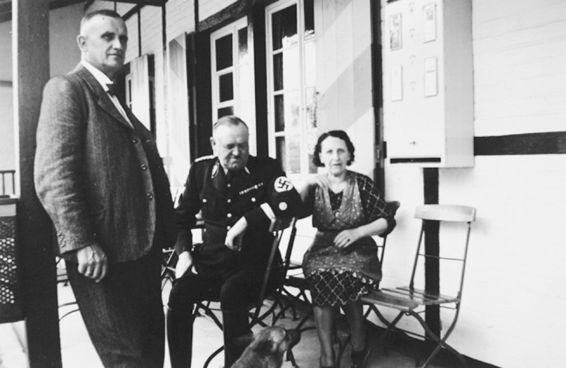
An SS officer, Commandant Hermann Pister, relaxes on the porch of a building with a woman and another man. (USHMM, courtesy of Robert A. Schmuhl 23656)

Four SS officers, including Commandant Hermann Pister, have a conversation in the grounds of the Hinzert concentration camp. (USHMM, courtesy of Robert A. Schmuhl 23666)

Camp guards beat a prisoner at the Cieszanow labour camp. (USHMM, courtesy of Jerzy Tomaszewski 05063)
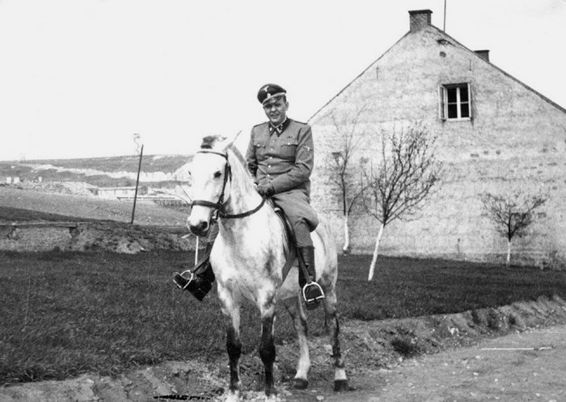

Two photographs showing the notorious SS-Hauptsturmführer Amon Goeth. He was commandant of the Krakow-Plaszow concentration camp in Plaszow in German-occupied Poland. Goeth was a loathsome commandant, and was responsible for many random and brutal killings. (M. Kaludow)

Prisoners at forced labour in the Neuengamme concentration camp. (USHMM, courtesy of KZ-Gedenkstatte Neuengamme 06031)
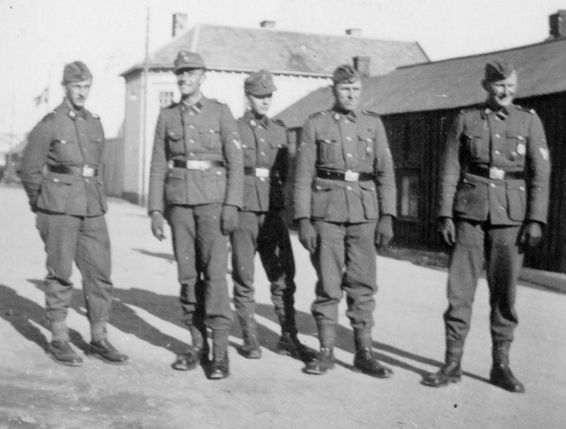
SS men sometime in 1943. By this period of the war the concentration camp system was in full operation with many millions of people regarded by the Nazi regime as hostile being shipped to labour camps, concentration camps or murdered in the death camps.

Belsen locals enjoy a beer with an SS commanding officer. Behind this façade the SS men were hiding terrible truths about their posting, and avoided ever uttering a word about them outside the camp. Local inhabitants were not aware of the barbaric measures taken against the inmates in the camp.
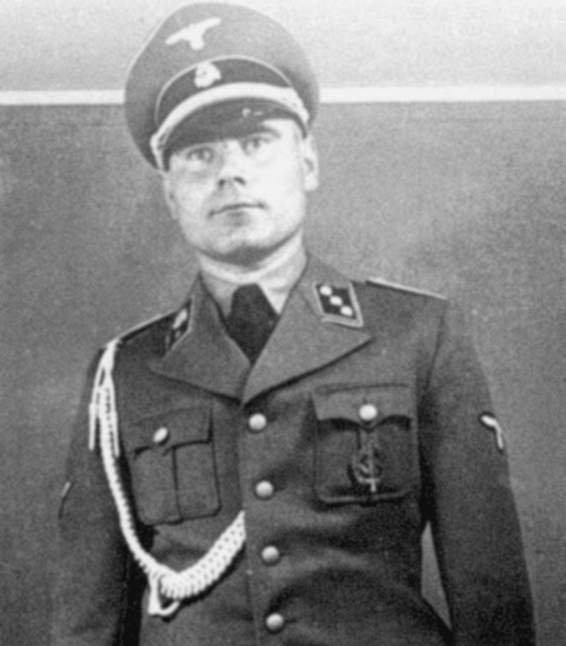
SS-Hauptsturmführer commandant Josef Kramer. In December 1944, Kramer was transferred from Birkenau to Bergen Belsen where he was promoted to commandant. Kramer’s regime was so barbaric that he became known as the ‘Beast of Belsen’. Even as the Reich became squeezed by the advance of both Soviet and Allied troops, and the administration of the camp broke down, Kramer continued his reign of terror on the inmates.

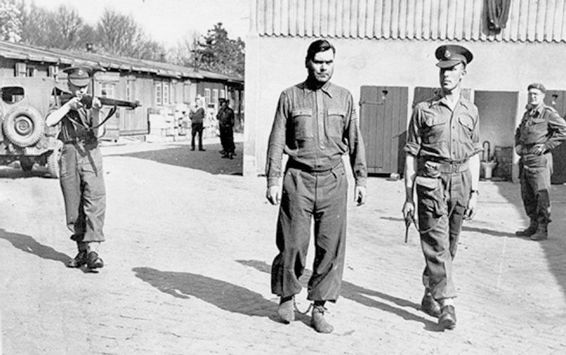
Two photographs showing a shackled Josef Kramer, commandant of Belsen, who has been arrested by British troops and is being escorted away under armed guard. Prior to the liberation of Belsen, the camp had descended into chaos, and Kramer could no longer cope with the amount of new arrivals. He became particularly scathing towards his subordinates and forced them to commit bestial acts. Now guards who had shown some degree of restraint towards the deportees would whip and beat woman and children. Some murdered them with their own hands and shot dead anyone who would not respond quickly enough to an order. (BU-3822, BU37-49, Imperial War Museum)

Kramer and Irma Grese are seen here together just before their trial. Grese was a young female guard whose name was synonymous with brutality to inmates. Hardened from working at Auschwitz she came to Belsen and continued to uphold her barbaric reputation. Strutting around the camp with her black boots, whip, and smart SS uniform, she daily looked for victims she could torture or kill. Irma’s sadistic lust for torture and murder eventually saw her being sent to the gallows in December 1945 for crimes against humanity. Kramer authorized Grese to have her permanent assignment at Belsen and was reputed to be one of her many lovers. (BU-9745, Imperial War Museum)

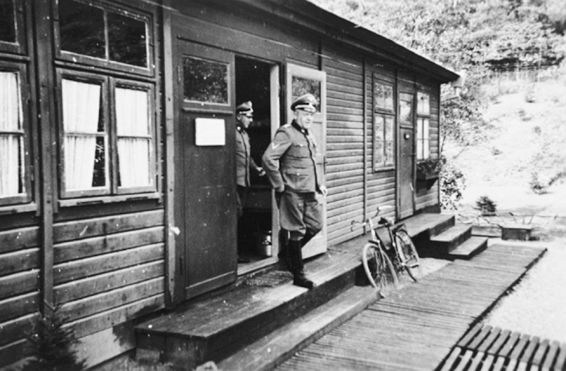

Three photographs of Commandant Hermann Pister. One photograph shows Pister overseeing a column of prisoners in Buchenwald sub-camp. The other two show him leaving what appears to be an administration building. (USHMM, courtesy of Robert A. Schmuhl)

SS-Oberführer Hans Loritz, commandant of Sachsenhausen (centre), visits the Gross-Rosen concentration camp. Also pictured are Arthur Rödl (left), Friedrich Entress (second from the left), Hans Loritz, Michl, Hubert Lauer (Administrator head of Sachsenhausen) (second from right), and Anton Thumann (far right). (USHMM, courtesy of Martin Mansson A. Haag 55778)

View of the construction of the Mauthausen-Gusen I concentration camp. Mauthausen-Gusen grew to become a large group of concentration camps in Upper Austria (National Archives)
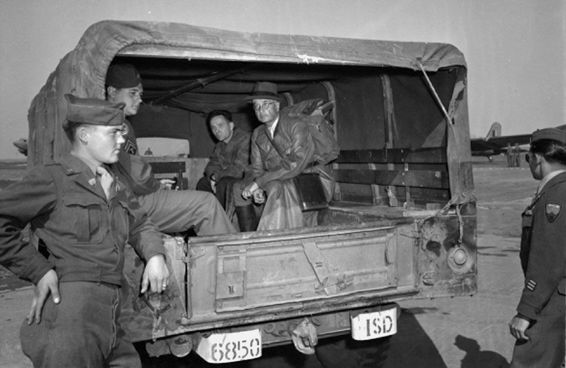
Rudolf Höss, commandant of Auschwitz from its inception in 1940 until late 1943. On 25 May 1946, Höss left Nuremberg with his wrists manacled by heavy-duty handcuffs. He was hastily driven to the airport with Dr von Burgsdorff and Josef Bühler where an American aircraft flew them to Warsaw via Berlin. When they arrived at the airport in Warsaw under armed guard they were greeted by the Press. Under the spotlight of the Press and shouts and screams of abuse from the many onlookers, they were officially handed over to the Polish authorities and escorted by car to a Warsaw prison. A year later on 16 April 1947, Höss was finally led from the prison and escorted by heavy guard to Auschwitz, to the same building where he had presided over the fate of thousands of people and hanged. Rudolf Höss had finally received retribution for all those that perished in his hands. He never made any public statement about what he had done, nor did he utter a word about the glory of the Nazi ideology that he had died for. (USHMM)

A group of SS officers stand on the steps of a building at the Gross-Rosen concentration camp. Standing on the far left is the adjutant, Kuno Schramm. Michl is standing behind him on the top left. The commandant Arthur Rödl is on the top right. Beneath him is Anton Thumann (bottom right). (USHMM, courtesy of Martin Mansson 36224)
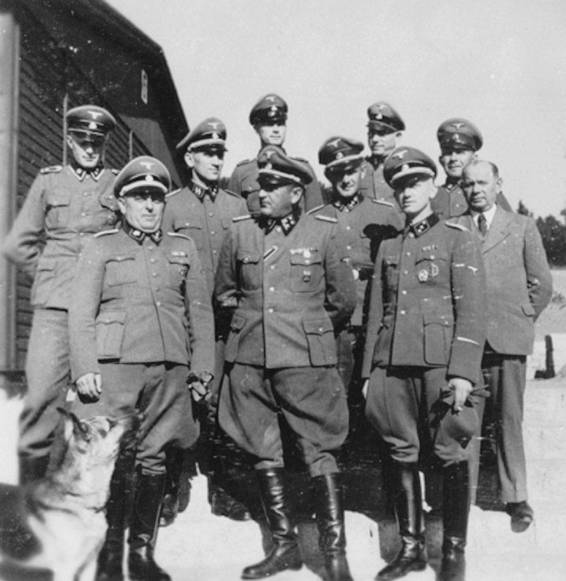
SS officers bid farewell to SS platoon squad commander Schramm at Gross-Rosen. Anton Thumann is pictured fifth from left. Artur Rödl is in the front centre. Kuno Schramm is in the first row, far right. Standing third from the left is probably Dr Friedrich Entress. (USHMM, courtesy of Martin Mansson A. Haag 55777)
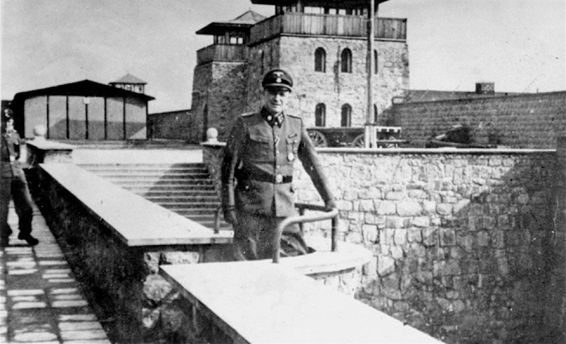
Franz Ziereis poses in front of the commandant’s headquarters on the wall overlooking the garage courtyard (Garagenhofmauer) in Mauthausen. (USHMM, courtesy of Andras Tsagatakis 76514)

Unterscharführer Lubasik, commandant of the Siemens Schuckert works at Bobrek, leans out of an open window at a barracks. (Henry Schwarzbaum 95287)

SS-Hauptsturmführer Georg Bachmaier, deputy to Commandant Franz Ziereis in Mauthausen, inspects a group of prisoners at forced labour constructing the ‘Russian camp’. (USHMM, courtesy of Archiv der KZ-Gedenkstaette Mauthausen 5062)
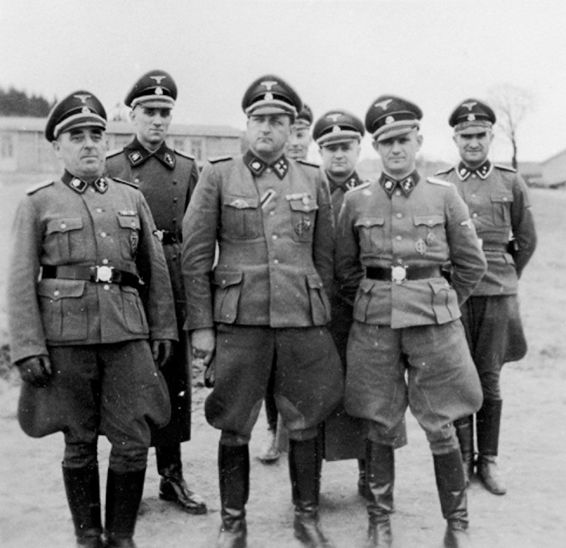
Group portrait of SS officers at the Gross-Rosen concentration camp. The commandant Arthur Rödl is in the centre. Second from the left is probably Dr Friedrich Entress. SS-Ostuf Anton Thumann is in the first row, right. (USHMM, courtesy of Martin Mansson 36221)

SS guard Schmiller walks past the barn of the Lipa farm labour camp where Jewish workers are pitching hay. Lipa concentration camp or Umschulungslager Linden bei Deutsch-Brod was established in Havlickuv Brod in 1940 by the Zentralstelle für Jüdische Auswanderung (Central Office for Jewish Emigration), an authority coordinating all activities associated with Jews after the Protectorate of Bohemia and Moravia had been constituted in March 1939. (USHMM, courtesy of Oldrich Stransky 51970)
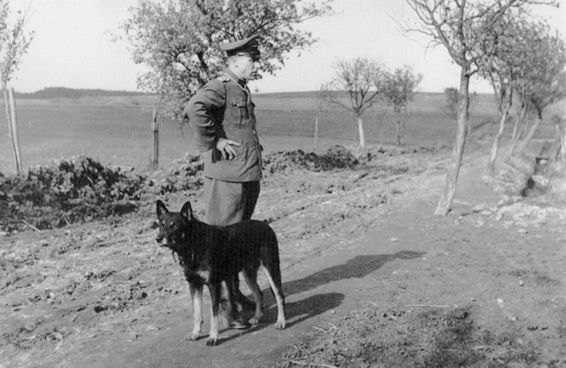
SS guard Schmiller stands on a dirt road in the Lipa farm labour camp with his dog. (USHMM, courtesy of Oldrich Stransky 51971)
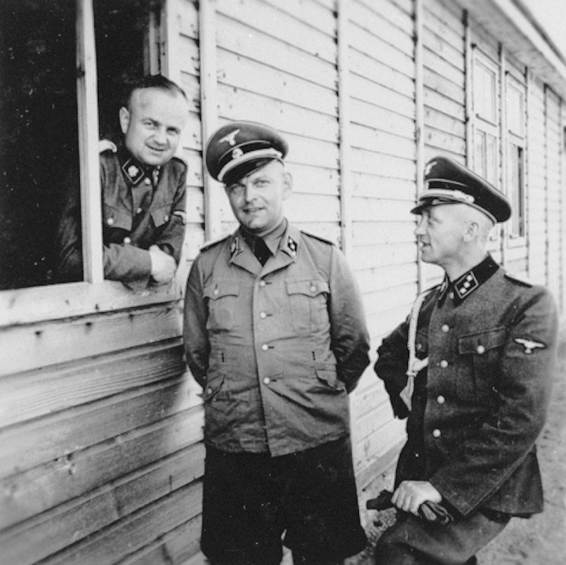
Close-up portrait of three SS officers in Gross-Rosen. Pictured on the far right is the adjutant Kuno Schramm. (USHMM, courtesy of Martin Mansson 55801)
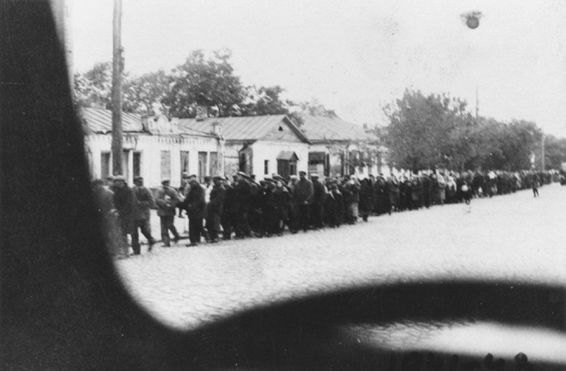
Jewish deportees under German guard march through the streets of Kamenets-Podolsk to an execution site outside the city. (USHMM, courtesy of Ivan Sved 28215)

Murdered SS men lie next to a wall at Dachau. After liberation many SS men were killed on the spot by both their liberators and their former prisoners. (USHMM)

Group portrait of four SS officers at the Gross-Rosen concentration camp. Arthur Rödl is standing on the far left. Next to him is Anton Thumann. An inscription on the back identifies one of the other two men as SS-Obersturmführer Drosenhofer. (USHMM, courtesy of Martin Mansson 55763)

SS officers sit in a classroom in the Hinzert concentration camp (a sub-camp of Buchenwald). (USHMM, courtesy of Robert A. Schmuhl 23667)
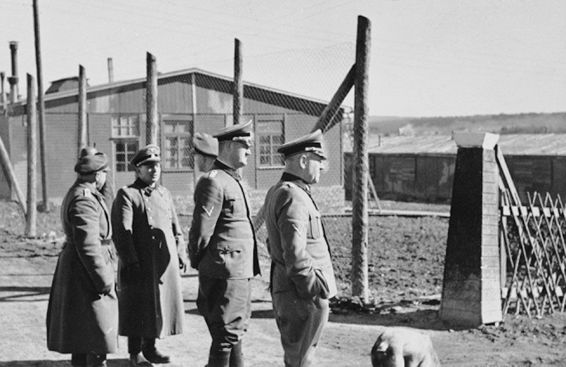
A group of SS officers tour the Hinzert concentration camp. (USHMM, courtesy of Robert A. Schmuhl 34561)
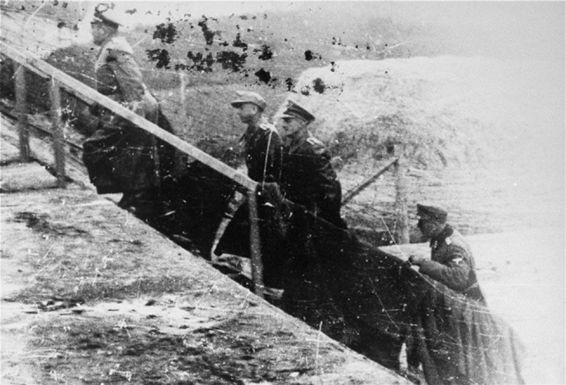
Heinrich Himmler and a group of SS officers inspecting the Janowska concentration camp. (USHMM 69979)

SS-Obergruppenführer Ernst Schmauser inspects the Gross-Rosen concentration camp in the company of other SS officers. Schmauser is pictured third from the left. Arthur Rödl is next to him in the centre. Rödl’s adjutant, Kuno Schramm is the officer on the far right. (USHMM, courtesy of Martin Mansson 36222)
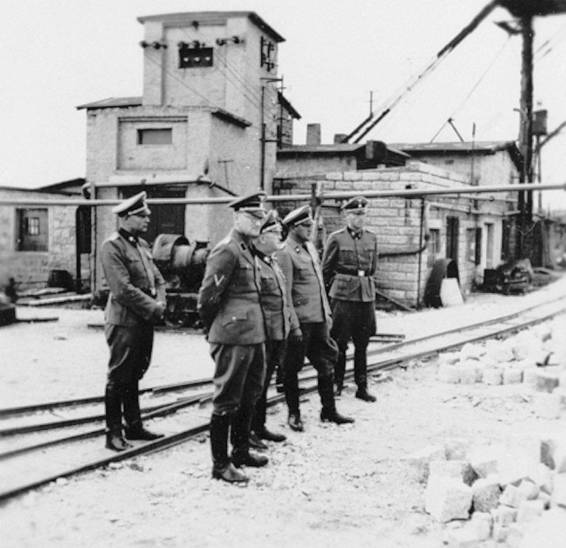
SS-Obergruppenführer Ernst Schmauser visits the Gross-Rosen concentration camp’s quarry with other SS officers. Commandant Arthur Rödl is standing next to Schmauser in the centre. (USHMM, courtesy of Martin Mansson 36223)
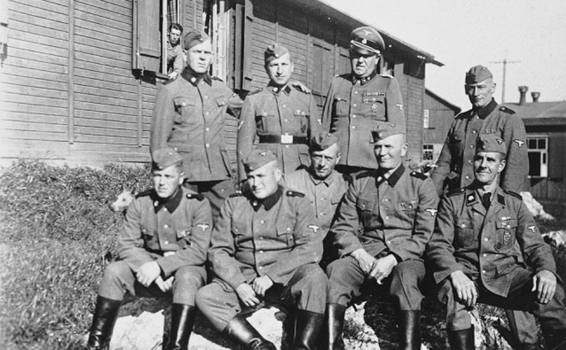
A group of SS guards with their commandant posing for the camera. (USHMM, courtesy of Robert A. Schmuhl 34559)