
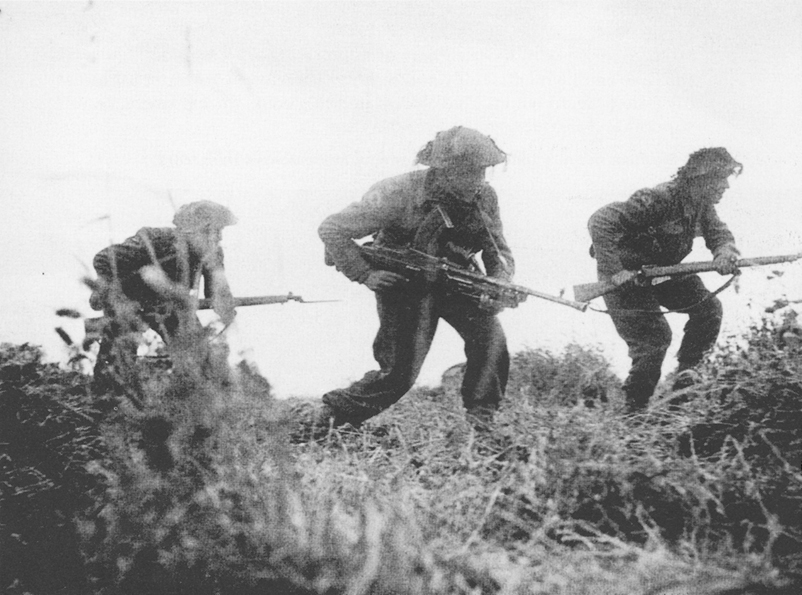
11th Armoured Division (159 Brigade) Infantrymen advancing to close with the enemy.
ACKNOWLEDGEMENTS
As is the case with every author of Second World War military history, I am indebted to those on both German side and British veterans who wrote or have been prepared to give me accounts of the battles in which they fought. Publishers and authors have been most generous in allowing me to quote from their work. Also, deserving grateful thanks are those who work in the institutions that care for and make available historical records and books to authors. Chief amongst these are the Public Record Office, the Imperial War Museum and military libraries, such as the peerless Prince Consorts in Aldershot. Regimental museums and regimental headquarters have also patiently trawled their archives for obscure details at my request. I thank them for their help and kindness. However, above all, it is the unique veterans’ contributions that makes the Battleground series a success.
I would also like to thank Roni Wilkinson, Chief Designer of the Battleground series, for his patient advice and all that he does to quietly ensure that I keep within my brief. His work in bringing pictures and maps together with the text, to enhance the value of an author’s work never ceases to amaze me. I would also like to acknowledge the part played by the other helpful, friendly and supportive staff at Pen and Sword’s offices in Barnsley. To those students of military history who are tempted to pick up the pen and write, I say, ‘share your ideas, as it will be an enjoyable and rewarding experience’.
In common with most authors of military history, I have to juggle full time employment, family and writing. Therefore, I am indebted to my wife Kate, to whom I have dedicated this book, for her tolerance, support and encouragement over the years.
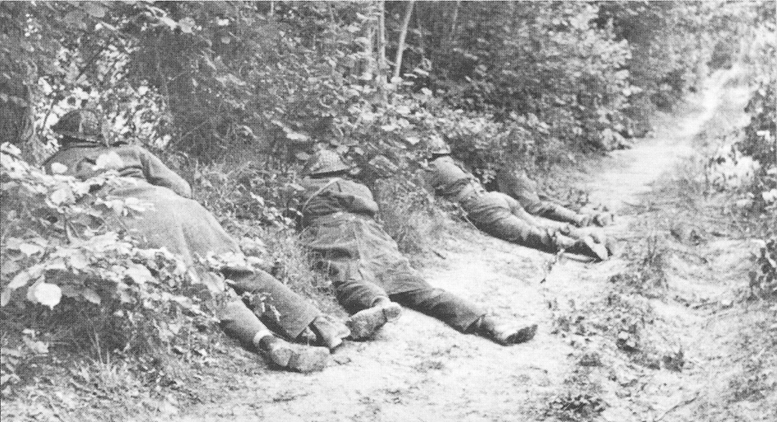
A Scottish infantry patrol lie up as enemy move across their front.
‘You will enter the Continent of Europe and, in conjunction with the other Allied Nations, undertake operations aimed at the heart of Germany and the destruction of her Armed Forces. …exploitation will be directed towards securing an area that will facilitate both ground and air operations against the enemy.’
Combined Chiefs of Staff’s instruction to General Eisenhower.
In contemplating COSSAC’s instructions above, General Eisenhower’s mission analysis would have focused his attention on seizing a sizeable lodgement in Normandy to accommodate the infrastructure of the armies and airforces. By mid June, General Montgomery who, under Eisenhower, had mapped out progress to accommodate the competing demands of the three Services, had been unable to secure as much territory as planned. On D-Day the troops had expended their energy on breaking into Continental Europe and particularly on the eastern flank, around Caen, failed to reach their objectives. During the following week the German reaction to the invasion had been swift and the Allied drive inland less emphatic than had been expected. Consequently, the Allies were contained in a tight beachhead that lacked both operational depth and real estate.
Within a week of D-Day the invasion euphoria was beginning to wear off and both the generals and air marshals in the UK were beginning to criticise Montgomery. By the end of the second week, an element of the press was becoming critical of the slow progress as the German panzer divisions ‘roped off’ the Allied lodgement. Montgomery was already under pressure to deliver Caen, space for airfields and ‘a breakout’ to the press corps. Operation EPSOM, delayed by the storm of 19 – 22 June, was to be Montgomery’s answer to his critics.
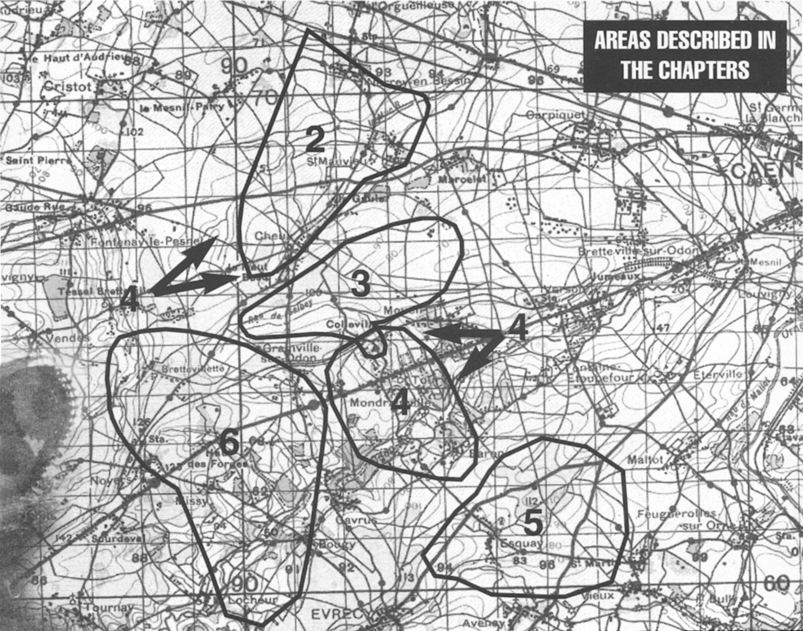
This book concentrates on the main axis of Operation EPSOM and the battles fought on it by 15th Scottish and 11th Armoured Divisions between 26 June and 30 June 1944. This covers the official EPSOM period up to and including II SS Panzerkorps’ initial counter-attack. Space precludes fully covering 49th West Riding Division’s attack on the Rauray Spur (Operation MARTLET). This operation on the western flank is covered in outline to reflect its role in Montgomery’s overall design for battle. I hope that the battle for Rauray will, in due course, become a Battleground title in it own right.
There are several other points that I would like to explain at this juncture. The first is, as is customary practice in the Battleground series, I have used the correct form of SS ranks rather than English translations or Wehrmacht ranks. Therefore, I have included a table at the back of the book (Appendix C) listing equivalent SS, British and American ranks. Secondly, I wish to alert readers to the potential for confusion between SS-Standartenführer Kurt Meyer, nicknamed ‘Panzermeyer’, the commander of the Hitlerjugend and his Chief of Staff SS-Sturmbannführer Hubert Meyer. Both of these offices, as key figures, are extensively quoted in this book. Thirdly, in most cases I have let the word ‘sniper’ stand in the text, although very few of the ‘snipers’ referred to in quotes were little more than determined ‘isolated riflemen’ taking shots at opportunity targets. Finally, it would also become tedious to repeatedly point out that the vast majority of German ‘Tiger’ tank sightings, observations and claims of kills were the result of what commanders refered to as ‘Tiger phobia’. In fact, most encounters with enemy armour were either with the most numerous Mark IVs or Panthers and that no more than ten Tigers were operational at any one time on the EPSOM/MARTLET front.
At home or on the ground, enjoy the tour. TJJS WARMINSTER
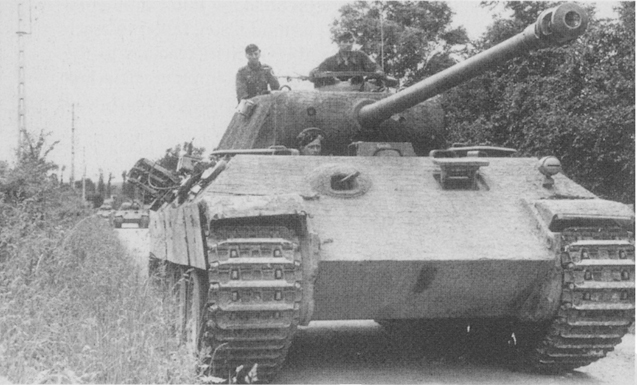
Mk V Panther.
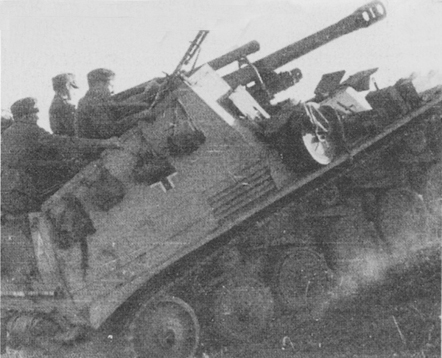
A 105mm Wespe of the type used in the self-propelled artillery batteries in SS Panzer Divisions.
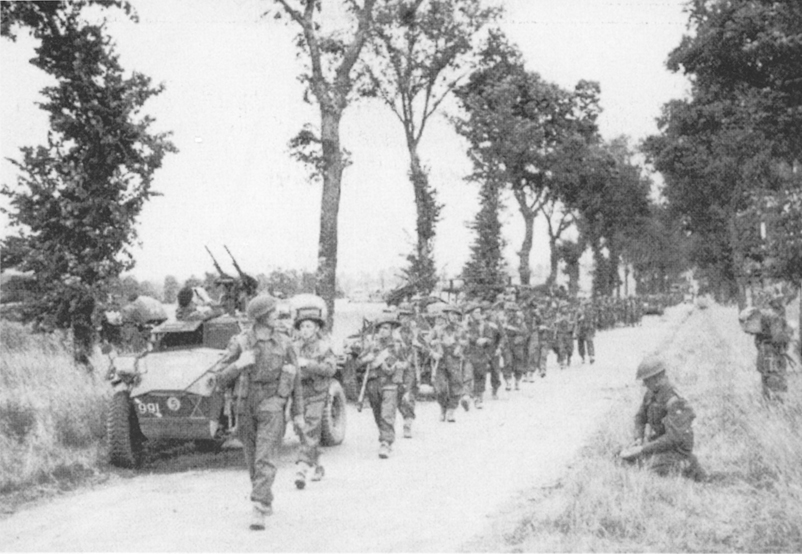
British troops moving up during Operation Epsom.
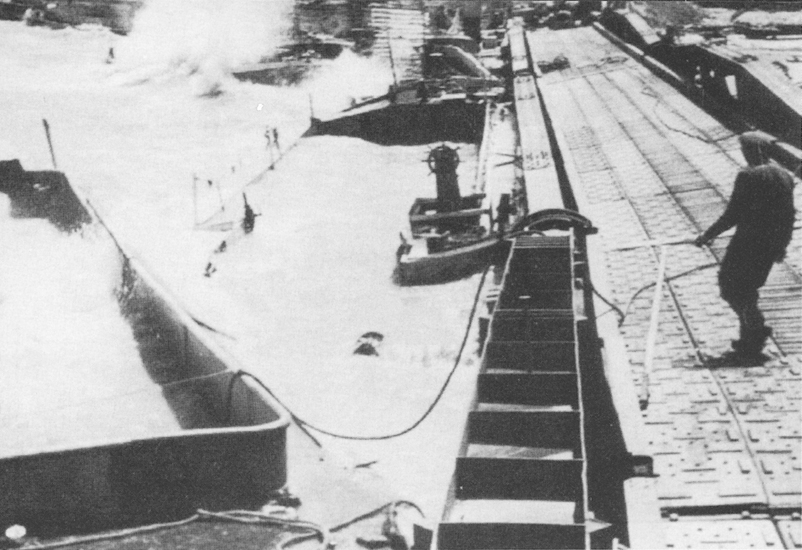
The storm of 19–22 June destroyed the American Mulberry Harbour and badly damaged the British port at Arromanches, seriously delaying the Allied build up.
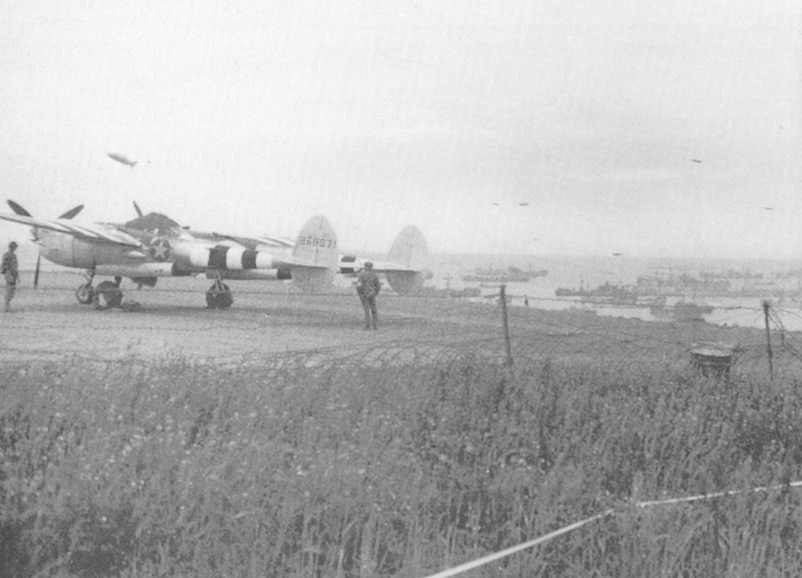
OMAHA Beach with a newly constructed airfield. Airfields were urgently required by the Allies for use by fighter bombers.