
SECTION VI
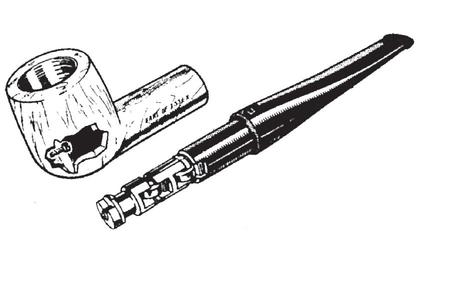
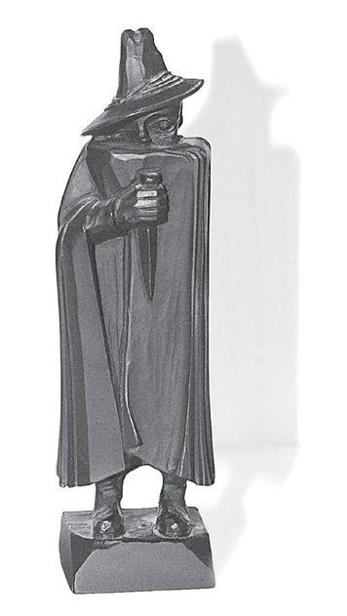
The prized OTS “Spyman” statuette was awarded to officers for honorable service while assigned to the OTS technical and engineering laboratory, 1991.
Author’s Note by H. Keith Melton: As a young naval officer returning from service in Vietnam in the late 1960s, I continued my interest in the world of espionage. The exploits of famous spies were fascinating, but my engineer’s curiosity focused on the more obscure topic of clandestine technology. Many books, almost all produced by nontechnical writers, chronicled noteworthy spy cases, but rarely could I locate details about the gadgets used to secretly photograph documents, plant listening devices, and accomplish other amazing feats. I watched the James Bond movies of the era and wondered whether there were such gadgets in the real world or was Q only part of movie magic. Finding the answers to these questions became a passion that has consumed the last forty years of my life and led me on treasure hunts around the world.
My quest began in Washington, D.C., and eventually required many trips to Russia, Germany, Poland, Czechoslovakia, Great Britain, France, Israel, and into Asia and South America. Repeatedly my travels took me to KGB headquarters in Moscow and to the Berlin study of Markus Wolf, legendary head of the East German Intelligence Service (HVA). I became a regular guest of Walter Pforzheimer, the late dean of intelligence bibliophiles and founder of CIA’s Historical Intelligence Collection, and through him a lifelong friend of his eventual successor, Hayden Peake, the noted historian, author, and intelligence bibliographer.
Eventually I discovered a commonality among all the world’s spy agencies, that each selects its intelligence officers for the ability to recruit and manage agents and not for their technological skills. Only rarely does an operations officer understand the technology inside the spy gear employed in secret operations. For this necessary technical assistance expertise and creativity, intelligence services created a cadre of specialists known as techs, to support and, at times, even conduct the operational activity.
Techs were usually recruited because they had preexisting knowledge in fields such as photography, radios, electronics, chemistry, woodworking, fabrics, or communications. Techs working for the KGB, HVA, CIA, MOS-SAD, MI6, DGSE, or DGI shared a technical language. Each intelligence service had an internal component dedicated to examining espionage devices captured or recovered from its adversaries. Analysis of “foreign finds” could identify the originator of the gadget, provide new technology and techniques, and lead to countermeasures. Over time, many of the technical tools, regardless of the nationality of the service, began to look similar. Commonality of functions resulted in commonality of forms.
In compiling my research, I also discovered that the fundamental work of clandestine intelligence could be grouped into five general categories, and within each grouping, technical support was critical. Photos and illustrations of spy gadgets used by various services appear in my previous books, Clandestine Warfare (1988), OSS Special Weapons and Equipment (1992), CIA Special Weapons and Equipment (1993), The Ultimate Spy Book (1996), and Ultimate Spy (2003). Early in the preparation of this book, the authors faced the dilemma of using tradecraft terminology in the text without having space to provide a definition and explanation each time the term appeared. The solution has been for me to write a primer that draws together explanations of the essential technical terminology used throughout Spycraft.
In this six-chapter section, I have attempted to integrate the gadgets with the doctrine of intelligence that lies behind their development and use. Chapters 20 through 24 describe the five pillars of tradecraft common to all intelligence operations. When merged with the clever devices created by innovative engineers, these pillars distinguish the professional intelligence services from those operations that are performed by quickly apprehended amateur “spies.” Chapter 25 summarizes the revolutionary changes that digital technology and a global Internet have brought to each of the pillars.
CHAPTER 20
If one attempt in fifty is successful [for recruitment], your efforts won’t have been wasted.
—British turncoat and KGB spy Harold “Kim” Philby, as quoted in The Literary Spy
Clandestine intelligence operations using human agents, whether conducted in the eighteenth century by America’s Revolutionary War spymaster, General George Washington, or in the twenty-first century by Islamic terrorists, have common characteristics. Five categories of recruitment and agent handling are so universal and fundamental that they can be called the “pillars of tradecraft.” These are:
• Assessment
• Cover and disguise
• Concealments
• Clandestine surveillance
• Covert communications
Depending on the stage of an operation, one of these disciplines will assume dominance, and every effort will be made to execute it flawlessly. For the Central Intelligence Agency, OTS had the responsibility to develop and support technical tools for each pillar that would provide U.S. officers and agents with a comparative advantage over their adversaries.
Assessment is the first step in recruiting a spy. Selecting the right target from among the thousands of individuals who could potentially help an intelligence service requires identifying the one or two with the motivation and ability to sustain the double life required by espionage. Sound tradecraft demands more than guesswork.1 Based on the experience OSS had with assessment and testing procedures, the CIA employed a small group of professionally credentialed psychologists to assist operations officers in winnowing the prospective recruitment pool and identifying the most “vulnerable” targets. Like their OSS predecessors, the psychologists of OTS employed a variety of assessment techniques and tests to gain insight into a target’s dominant personality traits and potential behavioral responses to specific situations.
Recruitment often encompassed months of patient cultivation by the case officer of a target before moving the contact into a clandestine “handler-agent” relationship. Infrequently, however, recruitment could occur during a five-minute pitch in which an unsuspecting foreign official would be asked, “Would you work with the CIA?” Operational circumstances determined whether an individual was the subject of extended development or a cold pitch, but in either case, the assessment conducted before the question was asked loaded the dice in favor of the case officer.2
Assessments provide the CIA with a good sense of the target’s likely reaction to a pitch and their long-term value to the CIA. However, under the best of conditions, acceptance of a pitch can never be assumed and sound assessments will anticipate the possibility of an angry and hostile response. If the pitch goes well, an agent is recruited. If the recruitment offer is rejected, assessment will have provided information to minimize blowback and operational compromise.
Motivations to become a spy are as complex and varied as human nature itself. Because of unpredictable individual differences and cultural variations among foreign officials identified for recruitment, identifying a target’s dominant motivator to conduct espionage became the primary function of the operational psychologists. One grouping of motivations became known as “the MICE model.” MICE, the easy-to-remember acronym of money, ideology, coercion, and ego, describes crosscultural characteristics that often translate into vulnerabilities that become a basis for recruitment.
Money holds particular attraction to targets from countries whose culture places high social value on achievement, status, and material possessions.
Ideology becomes a powerful incentive for individuals who hate the political or economic system, which they cannot otherwise escape or oppose.
Coercion represents a negative motivator that could be effective only in selective circumstances with particular personalities.
Ego frequently motivates acts of espionage by individuals who believe their talents, capabilities, and importance go unrewarded by their employers or unrecognized by professional colleagues.
CIA psychologists found three of the most significant indicators of a willingness to spy were split loyalties (potentially evidenced by extramarital affairs or intense dislike of a supervisor), narcissism (when seen as excessively self-absorbed, arrogant, and vain), and dissidence in parental relationships. Added to these were contributing circumstances such as failed careers, marriage problems, infidelity, and substance abuse. Seldom was there a single motivating factor, and most recruitments were based upon a combination of vulnerabilities. Clandestine audio operations became one of the most useful ways to gather unfiltered information about a target’s private motivations in unguarded conversations with family and friends. CIA psychologists concluded that for most agents the susceptibility to recruitment and the willingness to act is the highest between ages of thirty-five forty-five, a time of personal reevaluation and mid-life crisis commonly experienced in many cultures.3
In addition to targets who were cold pitched and those who were recruited after development, volunteers constituted a third pool of potential agents. Some of history’s best spies have been volunteers. These individuals, also known as walk-ins, sought out an intelligence service to which they could offer their information or services. Volunteers are treated with caution because many have an exaggerated sense of the value of their information or are seeking an emotional thrill of becoming part of the espionage game.4More significantly, volunteers could also be dangerous “dangles” or “plants” controlled and directed by a rival intelligence service. If the bait of a dangle is accepted, the hostile service is in a position to run a double-agent operation to either acquire information about the sources, operational methods, targets, and technology of its rival or feed false information to the enemy.
Regardless of how a potential spy came to the attention of the CIA, recruitment occurred only after a favorable judgment was made about an individual’s access, motivation, and ability to lead a clandestine existence. The process of evaluation that precedes the decision of whether or not to attempt to recruit a target is called “assessment.”
Two questions are paramount when assessing a prospective agent. The first is: What access to information of intelligence value does this person have now or will have in the future?
The level and value of an agent’s access are determined through questioning, verification of whatever personal bona fides are presented, and evaluation of the initial information the source provides. An individual’s official position, social or family contacts, career progression, skills, and the quality of information are all used to confirm the potential agent’s level of access. When Aldrich Ames gave the Soviets the names of nearly a dozen active CIA agents in June 1985, his access was confirmed and a willingness to commit espionage demonstrated.5 When the National Security Agency evaluated Victor Sheymov’s initial reporting in 1980 on Soviet communications security, the quality of information immediately established Sheymov’s access to exceptionally valuable intelligence. The Soviet and U.S. response to Ames and Sheymov demonstrated the willingness of intelligence agencies to move quickly to recruit a volunteer without lengthy assessment when access to critically important intelligence was demonstrated.
The second question considered by a recruiter is: Can a prospective agent live the life of a spy and do what is required by the task of espionage? This assessment requires insights to predict, with reasonable accuracy, the future behavior of the target. Like buying an automobile, expectations and desired outcomes at the time of the initial transaction can sometimes trump reality. If either the automobile or the agent turns sour, the frustration and expense of owning a lemon can turn into disaster. Bringing professional skill and the tools of modern psychology to the process of assessing the situational behavior and personality of would-be spies, foreign leaders, and current agents became the core work of the OTS operational psychologists.
From its beginning, OTS employed a staff of professional psychologists to conduct operational assessments of foreign targets. The assessments were based on the best psychological science available and used both commercial and specially designed psychological tests to evaluate a target’s personality, motivation, and aptitude for clandestine work. Raw data for assessments was acquired from reports of operations officers who observed personal and behavioral traits of targets. The OTS psychologists then applied their expertise to evaluating all of the information gathered on the individual.
The psychologists provided professional personality assessments of recruitment targets, individuals who volunteered to work with the CIA, and defectors. Depending on the specifics of the case, the assessments were used for guidance in building a relationship, refining a recruitment pitch, addressing agent-handling problems, minimizing issues at agent termination, preparing for agent resettlement, and framing counterintelligence judgments about assets. The assessments were frequently combined with results of polygraph testing administered by the Office of Security for the fullest possible understanding of the subject. Defectors, whose bona fides were in question, such as the high-profile cases of Yuri Ivanovich Nosenko and Anatoly Golitsyn, were assessed by the TSD psychologists both to support both counterintelligence analysis and to assist officers responsible for resettlement.6
These assessments could be either direct or indirect depending on whether or not the psychologist could personally interact with the subject. When personal meetings were not possible, assessments relied on the psychologist’s analysis and interpretation of credible, secondary data.
The most complete assessments included direct personal meetings between the OTS psychologist and the target. For security, these operational meetings usually employed various elements of clandestine tradecraft, including disguise, alias identity, and surveillance detection runs. Under normal circumstances, such meetings with the target were conducted in a manner that did not reveal either the psychologist’s true profession or intended purpose.
The psychologists conducted the assessments in whatever venues could be arranged for meeting with the target. In Germany during the mid-1980s, a leader of a terrorist cell had been an intermittent contact of a case officer, but little progress was made toward recruitment. The question of whether or not to continue recruitment operations against the individual came to OTS. Because the target frequented a nightclub that drew its patrons from the international community, an OTS psychologist was directed to make the nightclub part of her weekend activities. For her disguise, the psychologist chose a “blonde bimbo” look based on knowledge that the target’s eye gravitated to every blonde that entered the club.
On a particular Friday evening, the psychologist, with the assistance of disguise specialists, selected a slinky dress, put on a curly blonde wig, blue-tinted glasses, rosy pink lipstick, and blue eye shadow. As she walked out of her office, the psychologist passed the chief ’s secretary offering the standard “Have a good weekend” greeting. The secretary looked up with surprise to ask, “Who are you? Have you signed in?” After a moment of silence, both found amusement and appreciation for the superior work of the OTS disguise officers.
At the nightclub, the psychologist observed the movements and interaction of the target and put herself in a location to attract his notice. The ploy worked and the two engaged in a conversation that moved quickly from introductory chitchat to increasingly friendly banter. It was a good night for the psychologist, whose questions were so readily answered that she needed to periodically go to the powder room to jot notes and confirm that her disguise elements were in place. As the evening progressed, so did the personal level of their conversation. The terrorist, clearly enjoying the pursuit of his blonde prey, became increasingly familiar and uncomfortably suggestive with the psychologist. Seated in a dark corner of the nightclub, he leaned very close and whispered a well-practiced line, “I’d just like to run fingers through your blonde curly hair.” The psychologist choked back the overwhelming urge to rip off the wig, hand it to the terrorist, and in her silkiest voice reply, “It’s all yours if you will stop annoying me now.”
A direct assessment might involve pretext testing or face-to-face interviews with targets. The target would be unaware of the true purpose of the interview since the psychologist would be introduced by the case officer as a friend, colleague, or knowledgeable specialist about a common area of interest. Thereafter, the psychologist would observe and record the target’s verbal skills, interaction with the case officer, body language, temperament, and other personality and behavioral characteristics.
The “unexpected” usually became “expected” during the interviews. In support of an operational project with a cooperating service to build a new counterterrorism team, an OTS psychologist posed as the American official who would make the decision on members for the team. Over the course of several days, the psychologist administered assessment tests to several dozen candidates under the guise of “the final interview.”
After the team members had been selected, several additional individuals were nominated to become office manager for the project. As the psychologist talked with a young woman about her interest in the office manager position, it became evident that the candidate had no applicable skills for the work. She could not type, claimed no previous work in an office environment, had never done filing, acted as a receptionist, or exhibited any knowledge of office procedures.
The perplexed psychologist finally blurted the question, “Well, what are you good at?”
“Hijacking airplanes,” replied the applicant.
Inquiries about office skills ended, and further questioning by the psychologist confirmed that the woman had been part of the planning and execution of three hijackings. She was reclassified from potential office worker to possible field operative.
In situations that precluded personal interaction, OTS psychologists made discreet observations of targets at a distance. These could often be done during diplomatic receptions, social events, or while seated at an adjoining table in a restaurant. The evaluation of clandestine video or audio surveillance tapes of a target represented another quasidirect assessment technique. These clandestine observations supported both operations for assessment of recruitment targets and collection of personality information on foreign leaders.
A daring, but ultimately abandoned, plan for assessment by discreet observation occurred when Soviet Premier Nikita Khrushchev visited the United States in 1958. A TSS psychologist was directed to remain at his home on a specific day for a special assignment. The psychologist’s residence adjoined an empty field, large enough for a helicopter landing area. When he saw a helicopter land in the field, he was to climb aboard for a ride to Camp David where Khrushchev was scheduled to confer with President Eisenhower. Once at Camp David, the psychologist would be slipped into a closet in the room where the two heads of state were meeting. From a nonobvious peephole in the closet door he was to observe the Soviet leader’s demeanor, voice inflection, body language, and any other characteristic that might provide insight into his mental and psychological state. The psychologist waited throughout the day, but no helicopter appeared. In the tradition of “need to know,” no reason was ever given for scrubbing the operation.
For personality and behavioral assessment, OTS selected psychological tests and procedures applicable to the target’s position, nationality, prospective operational role, and relationship with the case officer. The tools OTS used for assessment testing fell into three classes: commercially available tests that measured intelligence, psychological characteristics, aptitude, interests, and personality traits; modified commercial tests that were adapted for particular operational purposes; and CIA proprietary in-house-developed test and evaluation procedures.
The CIA’s primary direct assessment tool, a largely culturally neutral test, was developed by TSS psychologist John Gittinger in the 1950s. The test questions could be administered openly or covertly by a case officer or psychologist in any language and the responses fed an assessment method named the Personality Assessment System (PAS).7 Gittinger, who joined the CIA in 1950, had developed his skills as the director of psychological services at the Oklahoma State Mental Hospital in Norman, Oklahoma. By interpreting data derived from patients tested against the Wechsler intelligence scale, Gittinger determined that he could make basic judgments about personality. He eventually collected Wechsler data on 29,000 subjects representing social groups ranging from hobos to fashion models, and businessmen to students. He was an early user of computers for compiling large quantities of test data to develop comparative relationships. At the CIA, he refined the methodology and built a mature PAS model. By the time he retired in 1979, Gittinger’s conscious emphasis on cross-cultural orientation for assessments and a demand for systematic, rigorous research-based judgments had become the basis for the CIA’s acceptance of operational psychology as a technical tool for agent operations.
While Gittinger’s system had detractors ranging from those who thought all psychology was suspect to professional peers who questioned the methodology, the PAS proved valuable to case officers involved in operations where time for personal contact with their targets was limited. The PAS results were so strong that the test became the standard method for assessing and predicting agent motivation and situational behavior. The insight the OTS psychologists provided about foreign targets by interpreting data from the PAS earned them the nickname “the wizards.”8
Indirect assessment involves reviewing all reporting from case officers about a target’s personal history, behavior, demeanor, and reactions to his contact with the case officer. All information available from or about the target, including public and private speeches, publications, and letters, as well as news stories and commentary by associates or relatives, are factored in. Covert audio or video transcripts, when available, also become a valuable part of the assessment package. The psychologists apply accepted analytical tools to the material and conduct an internal peer review from staff colleagues with multicultural backgrounds and foreign language skills in addition to their professional credentials. Direct assessments yielded higher quality and more extensive data for analysis than did indirect assessments, but the latter were necessary when the subject proved to be inaccessible.
During the Cold War years, when many targets lived in countries with severe travel restrictions, OTS maintained a small staff of handwriting specialists called graphologists.9 Graphology, a discipline more respected in Europe than in the United States, seeks to identify psychological characteristics of an individual based on measurable letter formations and line strokes in handwriting. The graphologists measured three dimensions (the vertical, horizontal, and depth of strokes or letters) for as many as twenty-one different characteristics of writing. Handwriting analysis has demonstrated the ability to distinguish between mentally healthy persons and those with mental illness. The OTS graphologists applied the same methodology to identify essential characteristics of persons who were unidentified, would not agree to a structured assessment (such as VIPs), were writers of anonymous letters, or were held in captivity.10
Advocates asserted that by analysis of handwriting, which in graphology is called “brain writing,” psychological characteristics and personality traits important to the CIA on otherwise unknown people can be identified.11 Although psychologists disagree on the value of graphology as a stand-alone tool, many Agency operational managers agreed that, as a supplement to direct assessment or in the absence of direct assessment opportunities, handwriting analysis done by trained graphologists contributes valuable insight into a target’s mental state .12
The best graphological analysis required a page or more of current handwriting for comparison against a similar amount of writing from some years earlier. Rarely did the graphologist have the luxury of being in possession of that much information and at times had to lower his expectations of the science. When presented with a collection of Stalin’s doodles after the dictator’s meeting with U.S. diplomats in the early 1950s, one TSS graphologist declined to provide a current psychological assessment. The sketches were clearly depictions of wolves, the graphologist commented, but he could offer nothing more than conjecture as to how those reflected Stalin’s mental state.
In another instance, during the summer of 1983 a graphologist was given the handwritten signature of Soviet Communist Party General Secretary (and former director of the KGB) Yuri Andropov. Comparing the recent signature with previous Andropov signatures, the graphologist concluded that the writer had an inflexible commitment to ideological ends and little interest in compromise. At a time when the U.S. government questioned whether Andropov represented a “new, more Western” type of Soviet leader and was uncertain whether his health would limit his tenure as the Soviet head of state, the graphologist added that the handwriting comparisons showed evidence of increasing stress and difficultly in controlling moods. Causes of the stress and the reaction could, she concluded, be related to physical health or pressure of the position or both. In fact, Andropov’s subsequent policies did not demonstrate new flexibility and, less than six months later, he died.
More recently, in the early 1990s, a classic handwriting analysis occurred when a CIA officer unexpectedly received a folded piece of silk from a fellow parishioner at a Catholic mass in Rangoon, Burma. The message, whispered the parishioner, had been written by a political prisoner who arranged to have it smuggled out of the heavily guarded prison and intended it to be given to the U.S. government. When the message on silk arrived at Headquarters, an OTS graphologist was asked to assess the writing but was given no information about the author or the circumstances of its acquisition. She studied the writing for several days, applying the standard techniques of letter and stroke measurements, and reported: “The writer possesses the genuine humility of those who are truly at peace and genuinely altruistic. Independent and individualistic, the writer is a true visionary . . . extraordinarily idealistic but at the same time sophisticated, manipulative, savvy, and subtle. Peaceful conflict resolution is a forte.”
What the graphologist did not know was that her work was playing a key role in a major foreign policy decision. The assessment request came from a presidential envoy who was considering whether to meet with Burmese prodemocracy leader Aung San Suu Kyi. The meeting eventually occurred and afterward the diplomat credited the analysis with preparing him for an encounter with “a skilled, dynamic leader with keen political instincts and a flair for the dramatic” and, who “through courage and determination had repeatedly faced down the Burmese military and endured.” Aung San Suu Kyi received the Nobel Peace Prize in 1991 and the U.S. Presidential Medal of Freedom in 2000.
The introduction to a 1954 national security assessment prepared for President Eisenhower titled “Report on the Covert Activities of the Central Intelligence Agency” asserted: “If the U.S. is to survive, long-standing American concepts of ‘fair play’ must be reconsidered. . . . We must learn to subvert, sabotage, and destroy our enemies by more clever, more sophisticated, and more effective methods than those used against us. It may become necessary that the American people will be made acquainted with, understand, and support this fundamentally repugnant philosophy.” This stark perspective, articulated in a top-secret report prepared by a special study group headed by James H. Doolittle, reflected Washington’s perceived danger from the Soviet Union in the mid-1950s.
Assessment programs developed by TSS and TSD in response would earn respect and commendation for their operational value from case officers to the most senior Agency officials.13 Yet it was precisely in the effort to understand, predict, and control the response and behavior of operational targets that the CIA has also drawn some of its harshest criticism. In the mid-1970s a series of revelations about secret CIA programs from the 1950s and 1960s created a public image of an organization flooded with research programs on mind control, behavior modification, brainwashing, hypnosis, and out-of-control drug experimentation. For five years, from 1972 to 1977, CIA Directors Helms, Schlesinger, Colby, Bush, and Turner were compelled to explain and defend programs and activities that management had begun closing down more than ten years earlier.
In April 1953 DCI Allen Dulles and Richard Helms, Assistant Deputy Director for Plans, authorized the Technical Services Staff to conduct a supersecret behavioral research program under the code name MKULTRA. Because the research involved recently synthesized drugs and pharmaceuticals (including LSD), the program became the responsibility of TSS’s Chemistry Division, headed by Dr. Sidney Gottlieb. In concept, MKULTRA descended from OSS’s World War II research and subsequent authorized CIA drug-testing programs Project BLUEBIRD (1950) and Project ARTICHOKE (1951).14
As chief of the OSS R&D organization Stanley Lovell had worked on chemical and biological weapons. After the war, the Army Chemical Corps investigated the effect of drugs on interrogation for both offensive and defensive use. At the same time, the CIA was receiving reports that the Soviets were experimenting with so-called mind-control techniques and drugs with some success. Fear that brainwashing techniques had been perfected by the Communist Chinese and the North Koreans added impetus to the mission to understand better the science of human behavior. Among the hallucinogenic drugs, LSD held a particular fascination, in part because of reports that the Soviets had shown an interest.
CIA Director Dulles had voiced public alarm over America’s limited understanding of how people’s thinking could be influenced. Speaking from a prepared text to alumni of his alma mater, Princeton University, at Hot Springs, Virginia, on April 10, 1953, Dulles asserted that the U.S. government had been “driven [by the tensions of the Cold War] to take positive steps to recognize psychological warfare and to play an active role in it.” Dulles described a “sinister battle for men’s minds” being waged by the Soviets and questioned whether America recognized the magnitude of the problem. He suggested the ongoing conflict be called “brain warfare.”
The speech accused the Soviets of attempts at mass indoctrination of the population of countries they attempted to control and the perversion of minds of selected individuals. Under the latter circumstances, Dulles commented, a person’s brain “becomes a phonograph playing a disc put on its spindle by an outside genius over which it has no control.”15 Before the month ended, the DCI had followed up on his public description of the threat by approving the ultrasecret MKULTRA research program. Its intent would be to understand the human mind in order to counter Soviet capabilities for mind control and create tools that could be used by U.S. intelligence officers for agent recruitment and handling. The project would sponsor research and experimentation with any available chemical and biological materials and tap into expertise across the disciplines of psychology, psychiatry, pharmaceuticals, and hypnosis.
During its eleven-year existence (1953-1964), MKULTRA remained a tightly compartmentalized Agency program that eventually involved 149 individual subprojects.16 The Technical Services Staff was the logical organizational location for the activity because, before 1962, TSS had the scientific research responsibility for CIA (the letters MK denoted a TSS-managed program). The initial program was aimed primarily at creating new operational defensive capabilities to protect American assets from Soviet psychological or psychopharmaceutical manipulation. Understanding the effects of drugs and alcohol on human behavior would be a major focus. MKULTRA research and development would also produce a handful of new offensive capabilities involving incapacitating and lethal toxins, which would eventually draw intense unfavorable attention and prove to be of little operational value.
After MKULTRA was approved by Dulles, Dr. Sidney Gottlieb reasonedthat any drugs or chemicals developed would be of limited value without a means of covertly administering them. Gottlieb contacted John Mulholland, one of America’s best-known and most respected magicians and an expert in sleight of hand, or “close-up” magic, for advice.17 His goal was to engage Mulholland to teach the techniques of magic, especially sleight of hand and misdirection, to case officers for delivering the MKULTRA “potions” to their targets.18
Mulholland agreed to Gottlieb’s request, and proposed an outline for a training manual that would include19:
• Background facts to correct erroneous facts about magic and enable a complete novice to “learn to do those things which are required.”
• Descriptions of the covert techniques necessary to “deliver” material [chemicals] in a solid, liquid, or gaseous form. Included would be explanations of the necessary skills and instruction on how to learn them.
• Examples and studies to explain how the techniques and mechanical aids could be employed in various operational circumstances.
Mulholland put the cost of the manual at $3,000 and agreed to write it in a manner to provide total secrecy.20 To protect against the manual falling into the wrong hands, no references were made to “agents” or “operatives”; the intelligence officers were to be called “performers” and covert actions would be referred to as “tricks.”21 His early draft of the manual contained five sections: (1) Underlying basis for the successful performance of tricks, (2) Background of the psychological principles by which they operate, (3) Tricks with loose solids, (4) Tricks with liquids, (5) Tricks by which small objects may be obtained secretly.
Mulholland noted: “As sections 2, 3, 4, and 5 were written solely for use by men working alone, the manual needed two further sections. One section would give modified tricks and techniques of performance to be performed by women and the other would describe tricks suitable for two or more people working in collaboration.”22
By the winter of 1954, the manuscript, titled “Some Operational Applications of the Art of Deception,” was complete.23 Mulholland wrote in the introduction: “The purpose of this paper is to instruct the reader so he may learn to perform a variety of acts secretly and undetectably. In short, here are instructions in deception.”24
With the first 100-page manual completed, Gottlieb invited Mulholland to work on a new project “on the application of the magician’s art to the covert communication of information.”25 The work “would involve the application of techniques and principles employed by magicians, mind readers, etc., to communicate information, and the development of new [non-electrical] techniques.”26
In 1956 Gottlieb proposed expanding the scope of Mulholland’s work “to make Mr. Mulholland available as a consultant on various problems, [for] TSS and otherwise, as they evolve. These problems concern the application of the magician’s technique to clandestine operations, such techniques to include surreptitious delivery of materials, deceptive movements and actions to cover normally prohibited activities, influencing choices and perceptions of other persons, various forms of disguise, covert signaling systems, etc.”27
Mulholland’s TSS work continued until 1958, when his failing health limited his ability to travel and work .28 The CIA’s interest in solving intelligence problems using the skills of the magician, however, continued. In 1959 TSS considered revising and adapting Mulholland’s work on “deception techniques (magic, sleight of hand, signals) and on psychic phenomena.”29
By 1962 it had become evident to CIA managers that MKULTRA had produced few operationally usable products or new capabilities. A critical 1963 Inspector General report on the value and administration of MKULTRA, combined with little support for the projects from the chiefs of the operational divisions, led to the decision to terminate the program. Before the end of the decade, all questionable subprojects had been closed, leaving only a residue of noncontroversial research contracts in place.30
At the ending of MKULTRA, Gottlieb wrote:
It has become increasingly obvious over the last several years that the general area [of biological and chemical control of human behavior] had less and less relevance to current complex operations. . . . On the scientific side . . . these materials and techniques are too unpredictable in their effect on individual human beings . . . to be operationally useful. [Operationally] the emerging group of new senior operations officers has shown a discerning and perhaps commendable distaste for utilizing these materials and techniques. They seem to realize that, in addition to moral and ethical considerations, the extreme sensitivity and security constraints of such operations effectively rule them out.31
MKULTRA had encompassed a research area that used new, untested drugs to produce unanticipated effects on humans. It had been launched in the interest of national security by a DCI with the assistance of a senior officer, Richard Helms, who would eventually become DCI. However, in the 1960s, at a time when priorities for national security began to shift and standards for conducting experiments involving human subjects were evolving, controls over the MKULTRA experiments that might have seemed appropriate in 1953 were judged inadequate.
Ultimately, the CIA was cited for a failure of “command and control” for only two MKULTRA drug experimentation projects, but both were dramatic and tainted every other activity associated with the project.32 For several years TSD retained eleven grams of shellfish toxin in CIA-classified storage despite a presidential order that all material of this type be destroyed. While the retention represented the inaction of a single officer to comply with the order rather than an organizational effort to defy policy, and although no harm to any individual occurred nor was any use ever made of the toxin, experimental or operational, the fact of its existence several years after the presidential directive reflected poorly on the CIA. In a second area of drug testing on unwitting human subjects, however, TSS’s failure to obtain required official approval before conducting an LSD experiment that went horribly bad resulted in decades of personal tragedy, legal entanglements, and official inquiries.
Dr. Frank Olson, a biochemist and researcher in biological warfare at the U.S. Army facility in Fort Detrick, Maryland, who worked on a MKULTRA subproject, died in New York City on November 25, 1953. He fell to his death from a hotel room window more than ten stories above the street below. Dr. Olson was likely suffering from delayed reactions caused by ingesting LSD several days earlier. The previous week, at a TSS-organized retreat at the Deep Creek Lodge in western Maryland, Olson and several other “researchers” had shared a bottle of Cointreau. The liqueur had been laced with 70 micrograms of LSD without their knowledge.
Due to the political and operational sensitivities of the MKULTRA program, the CIA withheld details of the circumstances surrounding Dr. Olson’s death from Olson’s family until they partially surfaced in the 1975 Rockefeller Commission investigation of CIA activities. Subsequently, the 1976 U.S. Senate Church Commission report added substantial additional details on the MKULTRA program to the public record.33
Following the CIA Inspector General’s internal report in 1963 and the 1976 Church Report, a third airing of the MKULTRA saga occurred in 1977. A few months after the Church Committee closed its investigation, some 8,000 pages of previously unidentified MKULTRA financial records were discovered in response to a Freedom of Information Act (FOIA) inquiry on the project. The newly found documents had been filed with contract and financial records at the CIA’s Records Center rather than under the MKULTRA project title.
These records had escaped the shredder in 1973 following DCI Helms’s directive to Gottlieb to destroy all MKULTRA research and operational files, and then were inadvertently missed during the records search in response to the Church Committee.34 Helms described his thinking on ordering destruction of the MKULTRA records in a taped interview with journalist David Frost in May 1978:
It was a conscious decision [to destroy the records] that there were a whole series of things that involved Americans who had helped us with the various aspects of this testing, with whom we had a fiduciary relationship and whose participation we had agreed to keep secret. Since this was a time when both I and the fellow [presumably a reference to Dr. Gottlieb] who had been in charge of the program were going to retire there was no reason to have the stuff around anymore. We kept faith with the people who had helped us and I see nothing wrong with that. 35
The 1977 find was reported immediately to the White House and the Senate Select Committee on Intelligence (SSCI) and congressional interest was rekindled. That year, the SSCI convened a joint hearing with Senator Edward Kennedy’s Subcommittee on Health and Science and called DCI Stansfield Turner as the primary witness. Appearing before the committees, Turner testified that the documents added little information to what was already known about MKULTRA’s methods, experiments, operations, and the breadth of the program. The SSCI agreed, and the joint hearings were concluded after one session.36 However, the redacted materials, subsequently released under FOIA, became the basis for John Marks’s The Search for the Manchurian Candidate, a bestselling account of CIA research in the 1950s and 1960s into human behavior.37
The negative publicity surrounding MKULTRA far exceeded its modest contribution to intelligence and the negative aspects of the program acquired undeserved legendary status in the mind of the public as well as conspiracy theorists. Secret government-sponsored mind-control research, dangerous experiments on unwitting people, covert assassination tools, and white-coated chemists mixing unknown concoctions in hidden laboratories produced vivid images in the public’s imagination. Virtually none of this was a reality, but more than five decades after Allen Dulles and Richard Helms initiated the ultrasecret program to counter what they believed to be a grave threat to free thought, MKULTRA continues to generate public intrigue and controversy. The officer chosen to carry out the program, Sidney Gottlieb, did what he understood duty demanded, and paid a heavy personal price.
The breadth of Gottlieb’s life as a scientist, CIA official, builder of enduring intelligence capabilities, humanitarian, respected office director, and patriot was obscured even at his death on March 7, 1999. The Washington Post’s headline on Gottlieb’s obituary read CIA OFFICIAL SIDNEY GOTTLIEB, 80, DIES; DIRECTED TESTS WITH LSD IN ’50S, ’60S.38 Like the headline, the first sentence mischaracterized Gottlieb and his work by focusing exclusively on “mind control experiments and administration of drugs and LSD to unwitting human subjects.” In fact, LSD, drug testing, and the procedures adopted had been a small part of the authorized MKULTRA research program in the fifteen-person chemistry branch Gottlieb headed. Like many of their scientific contemporaries of the 1950s, TSS engineers applied their talents to national security work consistent with Gottlieb’s policy: “If it is technically possible, do it and put it on the shelf. The policy maker will decide whether it is ever used or not.”
The obituary ignored Gottlieb’s remarkable contribution to America’s security during his eleven years as Deputy and Director of the Technical Services Division. Under Gottlieb’s leadership, TSD built worldwide clandestine technical capabilities critical to virtually all significant U.S. clandestine operations in the last third of the twentieth century. Eleven of the obituary’s twelve paragraphs focused on drug, poisons, and mind-control themes while ignoring the fact that with Gottlieb at its head, TSD conceived and built the technical devices that enabled the CIA to break the back of KGB counterintelligence inside the Soviet Union. Only the obituary’s closing paragraph alluded to Gottlieb’s humanitarian activities—that after retirement he worked in a leprosy hospital in India for eighteen months.
Another Washington Post story published two years after Gottlieb’s death and three months after the 9/11 terrorist attacks on America more accurately captured his life and work. The author observed that Gottlieb, the longest-serving Chief of the CIA’s Technical Services, had served his country as “the coldest warrior” while also living as a “humble and compassionate [man], an altruist eager to ease the miseries of the weak and sick.”39
Yet, regardless of Gottlieb’s public service and personal charity his name will be inextricably linked to the ten-year MKULTRA program and the sinister implications of associated words such as drugs, LSD, assassination, and mind control. No consensus is likely to emerge on how well MKULTRA and Gottlieb’s role served the national interest at a time when America’s leaders sensed a “clear and present danger” from the Soviet threat. However, whenever the question is debated, an indisputable fact, articulated in the final report of the 1976 Church Commission, remains: Under the administrations of four Presidents—Eisenhower, Kennedy, Johnson, and Nixon, “[the] CIA has been responsive to the presidency throughout. No rogue elephant.” 40