
22

THE CIVIL WAR ERA INSPIRED A VAST AND ACCOMPLISHED LITERATURE from surprisingly talented diarists whose writing ability had remained largely unknown, and undemonstrated, during peacetime. Surely the most famous diarist on the Southern side was Mary Boykin Chesnut, wife of a former U.S. senator from South Carolina and later an aide to Jefferson Davis. Mrs. Chesnut eschewed “regrets or sad foreboding” in her accounts and instead dedicated her journal to “calm determination—and cool brains.” Davis’s wartime clerk John B. Jones also maintained a diary that offered historians unique insights into the day-to-day work of the Confederate government. The London Times war correspondent William Howard Russell, who was effectively banned from covering the front after Union officials frowned on his highly critical accounts of the Battle of Bull Run, had the last laugh with a wildly popular book, My Diary North and South (1863), a publishing success on both sides of the Atlantic.
One of the most remarkable of all personal Civil War journals, however, has never received the attention or appreciation it deserves: the small pocket diary of Private William Rothert of Company D of the 9th New York Volunteer Regiment (Hawkins’s Zouaves). Rothert, who often added a sketch of one of his fellow Zouaves as an illustration, meticulously kept a daily account between August 1861 and July 1862, providing an important record of both routine life in camp and the jolting horror of battle action.
Rothert was a nineteen-year-old resident of New York when he enlisted in the flashy Zouave regiment. He did not make it past twenty. Rothert would die in action at the Battle of Antietam in September 1862. Two months earlier, inexplicably, as Robert E. Lee’s army massed for the invasion of Maryland that would later cost the young private his life, William Rothert stopped keeping his diary. We do not know why.
On the eighty-three pages on which he wrote his surviving entries and drew his little pictures, Rothert recorded meticulous details about daily weather conditions and shed light on the often boring routine of army life. Although at first he saw little action himself, he did get to see a famous general or two, spied an occasional rebel, nearly drowned, made some mischief, endured mild punishment for his transgressions, went hungry, marked his twentieth birthday amid death and a freak accident in camp, and witnessed the arrival of escaped slaves seeking safety and freedom in the Union lines—fugitives he dismissed with racial epithets typical of the time. The summer heat was brutal, the fall winds bitter, the marches exhausting, the physical labor tiresome, and the rumors rife and often exaggerated, but Rothert’s occasionally banal notations open a valuable window onto the life of a volunteer soldier on coastal duty during the first summer and fall of the Civil War—as the following excerpts show. And they culminate with a gripping account of Rothert’s first battle action during General Ambrose E. Burnside’s successful expedition to set up a Union stronghold along the coast of North Carolina. The history books show that Burnside succeeded in capturing Roanoke Island, where he seized thirty-two heavy guns and twenty-six hundred prisoners, then took New Berne, Beaufort, and Fort Macon. For these successes, Burnside earned promotion to major general. For his part, the Zouave private William Rothert gained no such acknowledgment—only the experience of a lifetime. As they say, he “saw the elephant.”
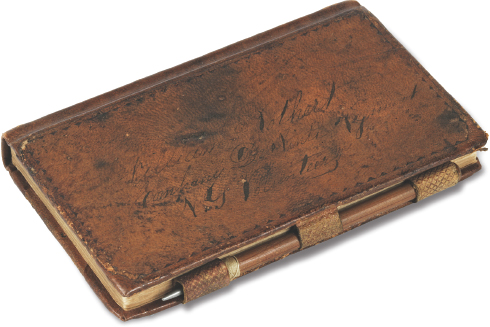
PLATE 22–1
1861
Camp Butler
Thurs Aug 1st [A]ll the liquor was thrown away by order of Gen But[ler]
Friday Aug 2nd Very fine and pleasant, warm eleven shots were fired at the pickets none of them taking effect.
Thursday Aug 8. Warm and pleasant expecting an attack 7,500 Rebels are at Little Bethel.
Monday Aug 12. Companies A and I have been so bad that the Colonel refused to give them anything to eat until they will do their duty.…Early at 3 o’clock this morning 4 niggers came from the other side of the river in a sail boat
Saturday Aug 24. Pleasant, a few rebels were seen scouting around last night. I was on the outer picket with a sergeant. Saw two rebel horsemen we both fired and they galloped off one of them was wounded tracks of blood seen on the leaves.
Camp Wool 3 miles from Fort Hatteras H[atteras] I[nlet]. N.C.
Thursday Sept 12 Building barracks
Saturday Sept 14 Had a little skirmish with about 200 cavalry none lost
Wednesday 18. Warm very heavy rain during the evening great trouble with mosquitoes
Thursday Sept 19. Warm the report is that 14000 men are to attack us
Saturday Sept. 21. Warm took 2 prisoners colored from mainland
Sunday Sept. 29 Pleasant Divine Service
Friday Oct. 4 Very warm the whole battalion started on a march this afternoon at 4 o’clock for the Light House where there were 1500 rebels landed marched until 11 o’clock when we bivouacked
Saturday Oct. 5 Got up at 3 o’clock and continued our march we arrived at the Light House but found no rebels they had retreated so we marched on our way back to camp where we reached at 9 o’clock in the evening a very tiresome sandy march
Monday Oct 7 Warm the rebels committing outrages on the inhabitants
Thursday Oct 17. Rainy buried a member of Co. G. a great many sick.
Sunday Oct 27 Chilly the party of the Indiana Regt were attacked last night
Tuesday Oct 29 Cold very heavy wind capsized in a boat had to swim a mile and a half to shore
Monday Nov 11 Steamer arrived giving the news that Charleston Beaufort and other places were taken Pleasant [The Union captured Beaufort, South Carolina, from its base at Port Royal on November 9.]
Tuesday Nov. 12 My birthday one of the member[s] of Co A died last night. One of the members of Co K Geo Bowers while attempting to draw a charge out of his musket accidentally went of[f] and shot him through the hand[.]
Thursday Nov 21 Cold we had a sham battle this afternoon a rebel steamer fired a few shells at the fort
Thursday Nov 28 Pleasant Thanksgiving day Gov [Edwin] Morgan issued a proclamation to have the Soldiers from the State of New York to rest and keep the day up with freedom
Sunday Dec 1 On Guard Warm an attack expected
Thurs Dec 5 Warm 2 Rebel steamers made their appearance this morning and after firing a few shots and taking up the Buoys left We were paid off today
Wednesday Dec 18. Warm I missed battalion drill and had to carry a Knap sack and musket for 2 hours which made me sweat
Thurs Dec 19. Warm we had a match battalion drill with the 48 Pennsylvania Regt today we beat them very badly we drilled at Camp Winfield about a mile and a half from our camp
Wednesday Dec 25 Christmas on Guard all quiet
Friday Dec 27 Warm on fatigue duty with the big launch to the Fort for provisions
Wed. Jan 1st 1862. New year I had a good square meal for the first time in a good while from on[e] of the Inhabitants which consisted of roast lamb some greens biscuit and Hoe Cakes & Coffee
Wednesday Jan 8 Warm a great many of the boys were drunk last night
Friday Jan. 24 Rain the company had to go after wood in all the rain and we got pretty well soaked there are 25 Gun Boats over the swash now[.] It is reported that 8 drowned Zouaves belonging to the 53 Regt were picked up on the bea[ch.]
Wednesday Jan 29th Warm 7 of us went out to see the fleet we stole a boat and sailed out and got back just at Retreat
Sunday Feb 2nd Warm & Pleasant. This afternoon we received orders to get ready in full heavy marching order in two hours to go on the expedition such a jumping & frolicking the boys went through was quite amusing & glad to hear they were going to leave Hatteras the Cooks and cooking 5 days ration & I spent most of the afternoon & evening in frying bacon.
Monday Feb 3. Warm Rainy We packed up this morning and marched to the Fort where we took the boat “Union” which took us over the swash to Ferry Boat “Eagle” where our quarters were in the horse road no coffee nor tea
The Gun Boat engagement Roanoke Island
Friday Feb. 7. It was rather foggy in the morning for some time but it soon cleared up & the fleet moved on The Gun Boats went up through the inlet & soon found the enemy who opened their batteries immediately When we followed up & had a splendid sight at the bombardment the engagement commenced a[t] 12 o’clock & lasted until sun down when the troops were beginning to embark We go on board the [gun boat] Union & soon took us to shore where we landed & while some of the 25 Mass Regt were landing they were fired at by the rebels killing 1 man We were all drawn up in line and stacked arms and built fires which we sat by all night There was no sleep for us that night and rained all night
Saturday Feb 8. Cloudy & a slight rain falling we were aroused in the morning by some rebels firing at our pickets. Gen Burnsides then sent out 2 Regt to go out to attack a battery which was on the road they went and the battle soon began reinforcements were sent and soon the battle was at a terrible rage we were kept for a reserve At last it was our turn to attack the enemy & so we marched on to the battlefield while we were going there they were carrying in the wounded which was very sickening to behold When we came in reach of their bullets we had the order to deploy & kept firing for a while when we had the order to charge and our good old boys did so which we succeeded in gaining the battery & driving the enemy We had a very bad place to go through the battery was at the head of the road and on both sides of the road was a swamp which we had to go through up to our waists and our boys went through the charge splendidly and the battery was ours We then formed a line and went on again after the enemy and while we were after them some of the boys went through the dead bodies of the rebels and some found watches & even money we then came to a large field and we seen some rebels running across the field we immediately gave a chase and they took to some boats and we fired into them when one of them turned back & we took 7 prisoners among them was Gov Wise’s son who was wounded We then camp & built fires in the field Then it rained all night and made it very unpleasant for us & we had nothing to eat.…[We] had 9 of our boys wounded and the Lt Col…who came up as a private in our Regt was killed instantly.…Our major says it was the biggest fight he ever saw and he was through 7 in Mexico[.]
In the dramatic days that followed the February 8 entry, Rothert and his compatriots rested a bit, went ashore to torch the town of Winton (the “fire made a great heat”), and took up a new position with the occupying force at Roanoke Island. In April, the regiment participated in a four-hour skirmish at South Mills in Camden County, North Carolina, where, Rothert wrote, the enemy “showered us with grape & cannister & musketry which was slaughtering us off like sheep & we had no support not even a man of another Regt was with us when we got the order to retreat to the woods.” Then their task turned to “picking up our dead & wounded of which the field was lined with them” and falling back in a drenching rain, leaving the dying “to the mercy of the rebels.”
Rothert made no mention of setting eyes on a female until he obtained a brief furlough to visit Edenton, the town nearest his new encampment at Fort Reno, where “the women were very afraid of us at first but they soon came & gave us flowers water &c.” In the last entry of this irresistible account of soldier life, William Rothert and his regiment returned to Fort Norfolk “& encamped in tents.” There the story—both astonishing and typical—abruptly ends.