


The devastation of the Blitz on London as evidenced by the massive fires along the River Thames and ultimately, across the heart of the city.


A fortified pillbox within sight of St Paul’s Cathedral, which received many fire bombs throughout the fifty-seven nights of the German raids on the capital.
When they went back to the stations—to Biggin Hill, or to Tangmere, or Hornchurch—they knew mostly conflicting emotions. Returning to North Weald for a television documentary in 1984, Wing Commander Geoffrey Page was conscious, primarily, of “sadness and regret,” a sense of “grass growing up through the runway and the concrete.” And at Hornchurch, the Officers’ Mess, where Old Sam, the chef, had coaxed his bone-weary pilots to eat against a background of flickering candlelight—“Try a shaving of rare roast beef—must keep up your strength, young sir”—is an Officers’ Mess no longer merely a sprawling block of anonymous flats. The site of 54 Squadron’s dispersal, where Al Deere, who retired as an Air Commodore, once skidded upside down along the drome at 100 miles an hour, is now the Mitchell School, named after the designer of the Spitfire.

Air Vice Marshal Keith R. Park
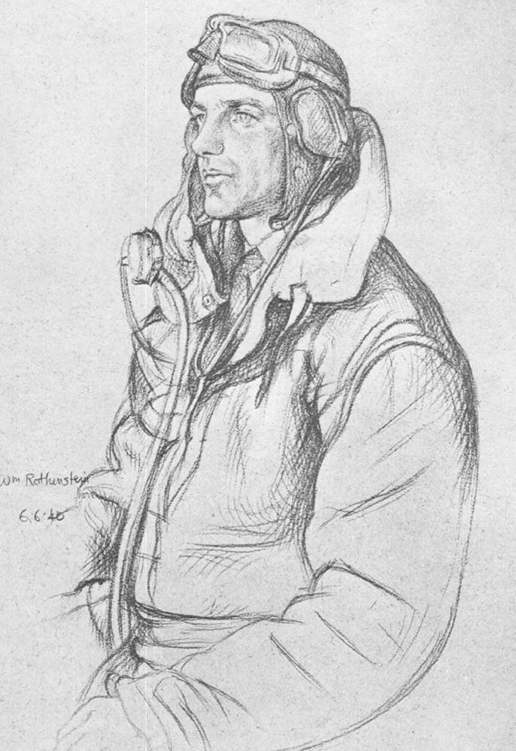
Squadron Leader J.S. Dewar

Squadron Leader W.J. Leather

Squadron Leader Whitney Straight
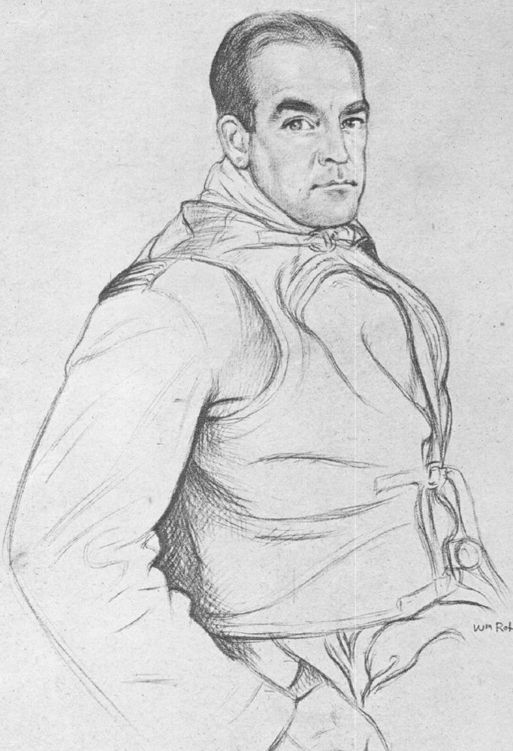
Group Captain Harry Broadhurst

Wing Commander F.V Beamish.
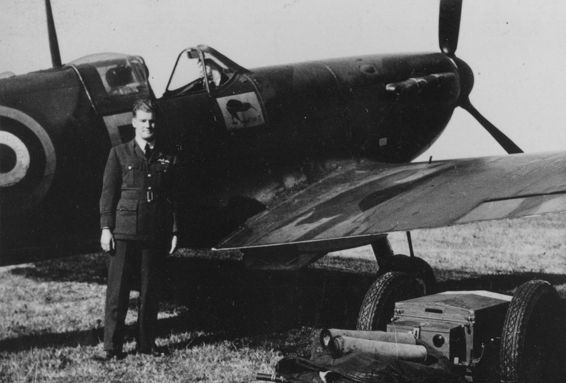
Flying Officer Alan C. Deere.
Much more than memories live on at Biggin Hill, which became an RAF crew-selection centre. In the Chapel, rebuilt in 1951 to replace the burned-out shell of the 1943 original, the oaken reredos still bore witness to the station’s great engagements: the thirty squadrons who fought there, the eleven nations whose pilots were part of it. The Officers’ Mess, where the spirited pilots of No. 32 Squadron once treated a captured Luftwaffe pilot to a binge of Westerham Ale, had not changed. “I walk with ghosts when I re-visit my old station,” admitted Group Captain Brian Kingcome, who became a furniture manufacturer “but they are friendly ones.”
Often it took little enough to evoke those ‘friendly ghosts.’ One glimpse of the Tangmere airfield and Group Captain Peter Townsend, who became a writer in France, was back in a world that vanished forever in September 1939: the long-obsolete Hawker Furies, looping and rolling against a clear blue sky, the leisurely day that ended sharp at 1 p.m., the lotus-eating life of a flying club that called for no more than twenty hours airborne a month. At Manston too, the ghosts materialised, in the shape of a new Spitfire museum, though the peacetime swimming pool, where the ‘erks’ washed and shaved at the height of the Battle, once the water mains were ruptured, has long since gone. “It hasn’t changed much,” Al Deere related. It’s never been developed, except for a big emergency runway, the biggest in the country and its used for civil and military diversions. The actual airfield itself is still grass as it used to be.”
All of The Few shared memories of what Brian Kingcome called “the strange double life, each one curiously detached from the other: One moment high above the earth, watching a sunrise not yet visible below, killing and avoiding being killed; and the next chatting with the locals over a pint of beer in a cosy country pub.” Sometimes, Kingcome recalled, a local would comment critically on the aerial activity he had witnessed that day, as though he were discussing his football team. “That sort of thing could only happen to a fighter pilot.” Looking back all those years, it was indeed the strangest of ‘double lives’. “A longish day, of course—from half an hour before dawn to half an hour after dusk … we averaged three, sometimes four sorties a day, but a sortie seldom lasted more than an hour.” That was one facet of Kingcome’s life with 92 Squadron at Biggin Hill; the other was a frenzied blur of “scooting up to London, when ten shillings (the bulk of our day’s pay of fourteen shillings) would cover an evening at Shepherd’s or The Bag O’Nails (the Four Hundred if we could raise a quid).” In leaner times, Biggin pilots flocked to Teddy Preston’s pub, The White Hart, at Brasted, “Where five shillings would keep us in beer until the local bobby moved us on at closing time.”

Fighter pilots of No. 19 Squadron at Duxford.

Pilot Officer Geoffrey Allard

The cockpit of a Spitfire under construction at the Castle Bromwich aircraft factory
At North Weald, this same unreal dichotomy was known to Geoffrey Page and all those of 56 Squadron: the breakfasts of lukewarm baked beans and tepid tea, the dawn ‘scramble’, the lunches, begun at noon, yet so interrupted by scrambles that dessert was often not served until 3 p.m. Much later, “we’d go off to a night club, and then come back in the early hours of the morning and get about an hour’s sleep … a pretty crazy sort of life.” Most often, Page too, made for Shepherd’s in Shepherd’s Market, Mayfair, “the unofficial headquarters of RAF Fighter Command,” where Oscar, the Swiss manager, “knew where every fighter pilot was… who was dead and who was alive, and who was shacked up and everything like that.”
But those based on the coastal airfields told a different tale. As Al Deere called to mind, No. 54 Squadron, fighting from the Manston satellite by day, returning to Hornchurch to eat and sleep, lived an anchorite life for weeks on end. Often Hornchurch reeled under the weight of five ‘daylights’, as the Luftwaffe sweeps were known, seven days a week. “There were no girlfriends or pubs or things,” Deere insisted. “We just didn’t get off the airfield. How could you? We were so short of pilots, that was our big thing.”
On 3 September 1940, when 54 Squadron flew north to Catterick, No. 41 Squadron, who relieved them, were appalled by the same punishing routine. “It wasn’t long,” said Group Captain Norman Ryder, then a No. 41 flight commander, “before we founded the Honourable Order of Fog Worshippers. We all bowed down, touching the ground with our foreheads three times, praying for the fog that would give us a break.”
But these were small disparities, when matched against the articles of faith that The Few held in common. “Surprising how fierce one’s protective instincts became at the sight of an enemy violating one’s homeland,” Brian Kingcome reflected, yet hatred played little part in the make-up of The Few. “The enemy was just another aeroplane that happened to be the wrong type with the wrong markings,” was how Flight Lieutenant James ‘Ginger’ Lacey, then a sergeant pilot with 501 Squadron, summed up. “I didn’t have a strong anti-German feeling.” Wing Commander Douglas Blackwood, who commanded No. 3 10 (Czech) Squadron, was more impersonal still: “The aircraft was the object. I never pictured a man in there.” Few could match the experience of Wing Commander Bob Doe, then a pilot with 234 Squadron. “We were very close,” he recorded, of one of the 14 ‘kills’ with which he was ultimately credited, “and looking at one another. He was a huge blond man wearing pale blue overalls. But he showed no fear—he knew I wouldn’t fire on him further when it was obvious the plane was about to crash.”

Squadron Leader A.A. McKellar

Squadron Leader Max Aitken

Wing Commander F.S. Stapleton
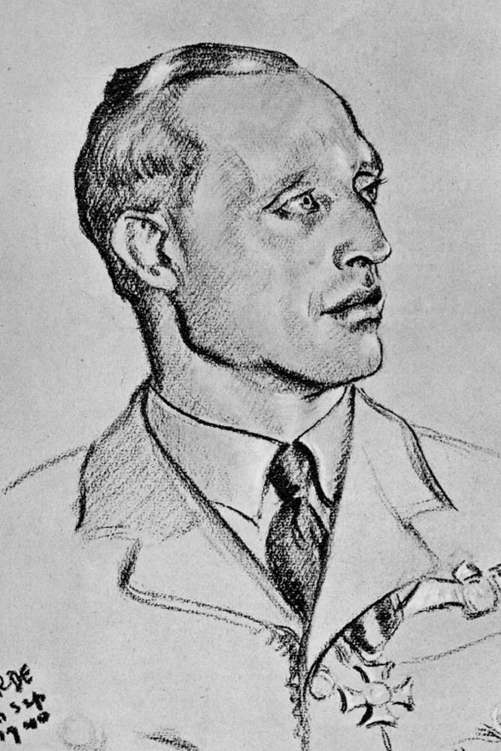
Flying Officer W. Urbanowicz

Flight Lieutenant P.H.M. Richey
Doubt was another element that never seemed to trouble them. “Never once did I ever hear a discussion that there was any possibility of ever losing the fight.” Geoffrey Page maintained. “And we didn’t see it as ‘The Battle of Britain’. The media and history have since named it that… and the thought never crossed our minds that we were being beaten.” Al Deere supported that contention to the hilt. “We knew that invasion was on and we knew that we had to somehow, not so much beat them in the air, as at least make it bloody difficult for them.” And he stressed, “Up until the last moment we expected to have to fight an air-supported invasion.”
At the annual Battle of Britain dinner, catering for the diminishing numbers each year, and sporadic reunions of ‘The Guinea Pig Club’, one common emotion is freely admitted: naked, paralysing fear. This was a state of mind that station medical officers, like Flight Lieutanant John Buckmaster, at Northolt, knew well, as squadrons returned from combat: “First of all, they were terribly excited. They leapt about on the tarmac, made as much noise as possible, shouted, never stopped talking … in less than an hour, this exuberance was replaced by exhaustion—a complete flopout.”
Geoffrey Page, perhaps, treated it more lightly than most: “Butterflies in your stomach, rather like a swimming race or tennis match … it was just a great big game, a dangerous game … but then so is Russian roulette.” Though Wing Commander Innes Westmacott, another ‘guinea pig’ from 56 Squadron never forgot a more disturbing aspect. “The fear made sociable chaps become morose—introverts who went on the grog. You got young pilot officers turning on the Station Adjutant, an RFC type, and snarling, ‘You wear wings—why the hell don’t you fly?’ “
Clinically, as if they were speaking of other men, The Few analysed that fear. “By far the worst part was the waiting at readiness” said Wing Commander Ralph Havercroft, then a sergeant pilot under Kingcome at Biggin Hill. “It felt like ten years till the telephone rang.” And Kingcome confirmed: “The inevitable stomach-churning telephone ring, and the voice from Ops—92 Squadron, scramble!” “I’ve never believed in the theory that some people don’t know fear,” Al Deere affirmed. “I just don’t believe that. You sure got frightened every time you went off. You felt quite sick and some chaps used to be sick, like that, physically sick.”
Yet, speaking on the twenty-fifth anniversary of the Battle, Ginger Lacey saw that fear as a ‘plus’. “I knew some people who weren’t frightened,” he explained gently, “and they have been dead for twenty-five years.”
A healthy contempt for non-combatants is never far from the surface. Wing Commander Gordon Sinclair, a former air attaché, then with 310 (Czech) Squadron, remembered baling out near an Army camp in Kent, unshaven, carrying his flying helmet and wearing all-too-visible pyjamas beneath his service trousers. “I’m afraid we can’t admit you here looking like that,” huffed a Colonel who did things by the book. And only with difficulty did Sinclair wheedle a railway warrant to facilitate his train journey back to Duxford. And Geoffrey Goodman recalled the time, in September 1940, when his Hurricane, attacked successively by two ME 109s, arrived back at Croydon “shot to ribbons.” With no spare planes available then, Goodman was ordered to fly “this battered wreck” to the Henlow Maintenance Unit, in Bedfordshire, to get another machine off the line. One of the first souls he encountered at Henlow was a corporal in the Service Police, truly enraged that Goodman was not carrying his gas mask. “Do you realise, Sergeant.,” he asked the speechless Goodman, “that there is a war on?”
One conundrum has continued to puzzle those who remain of The Few: how did they manage to survive? Were they good pilots? Lucky pilots? Pilots who conformed to the Medical Board’s yardstick, their reactions one-fifth of a second quicker than the next man’s? Geoffrey Page, for one, was none too sure: “There was and probably still is a theory going round that if you’re too good a pilot you were a bad fighter pilot, because if you’re doing the correct type of nicely balanced turn you’re far more likely to be shot down than someone who is ham-fisted and kicking on too much rudder.” Keen eyesight, he thought, had much to do with it, and “to be very lucky besides.”
To an extent, Al Deere concurred, though he thought endurance as equally a ‘must’—“a certain determination to keep going … too easy to turn away and too easy to give up.” Yet both men saw teamwork between a pilot and his number two as perhaps the most determinant factor of all. “We use to advise them (the number twos) to drop back to about thirty yards” noted Deere, “so you could see what was going on. I can remember saying to them, ‘What you’ve got to do is just stick with your leader. Don’t lose him at all cost.’ “
So how did they view themselves, after more than half a century, The Few who survived? As a special breed of men whose like will not be seen on this earth again? On behalf of them all, Brian Kingcome gave the lie to that. “I mourn them, but they had counted the cost and they died with regret but without surprise. They were typical of all the others. The young of all generations are the same. They may dress differently and have different rites and rituals, but give them a crisis and they are all the same.”
The cap was a fighter pilot’s badge of rank. New boys had clean, circular caps with neat, smooth peaks. Old sweats like Pip had battered caps that had been sat on, stuffed into cockpits, twisted a thousand ways, soaked by rain, baked by sun. All fighter pilots went around with the top tunic button undone, but that was just tribal swank. Men like Pip had earned the right to wear a really beat-up cap.
—from Piece of Cake by Derek Robinson
O, What a fall was there, my countryman! / Then I, and you, and all of us fell down.
—from Julius Caesar, by William Shakespeare
Character is what you are in the dark.
—from Sermons by Dwight Moody
He is with me still./The years have cast up and drifted out again;/And the memories, dried on the shore, / Have been bundled and stored / For this time, for this quiet while I am alone.
—from War Widow by J.B. Warr

Squadron Leader A.H. Boyd
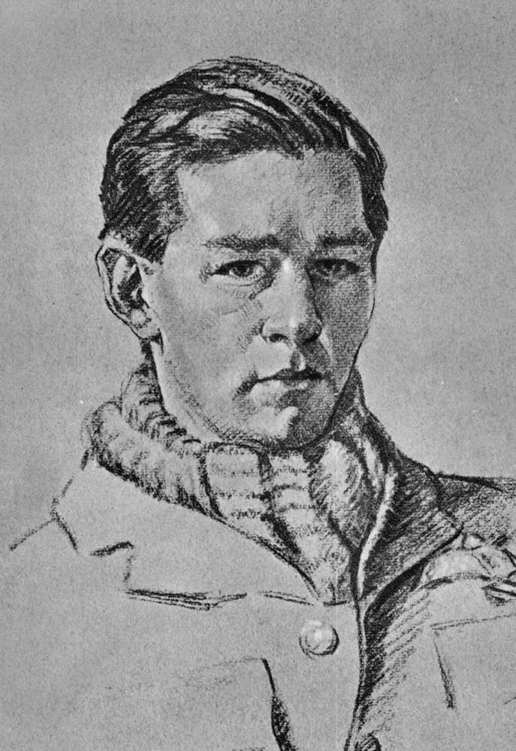
Pilot Officer J.R. Urwin-Mann

Squadron Leader T.F. Dalton-Morgan

Flight Lieutenant J.I. Kilmartin
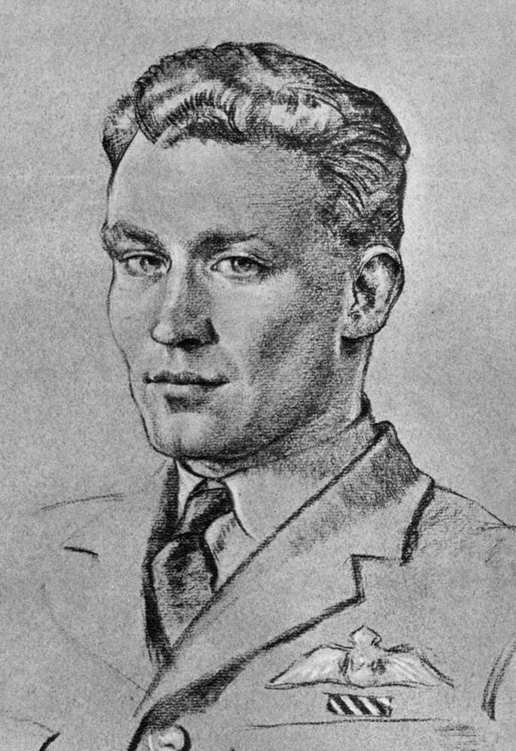
Flight Lieutenant P.H. Hugo

Squadron Leader L.M. Gaunce
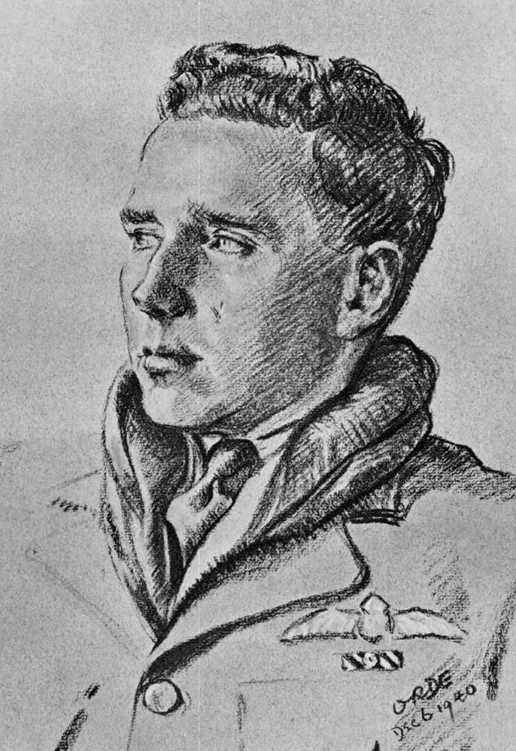
Flight Lieutenant W.D. David
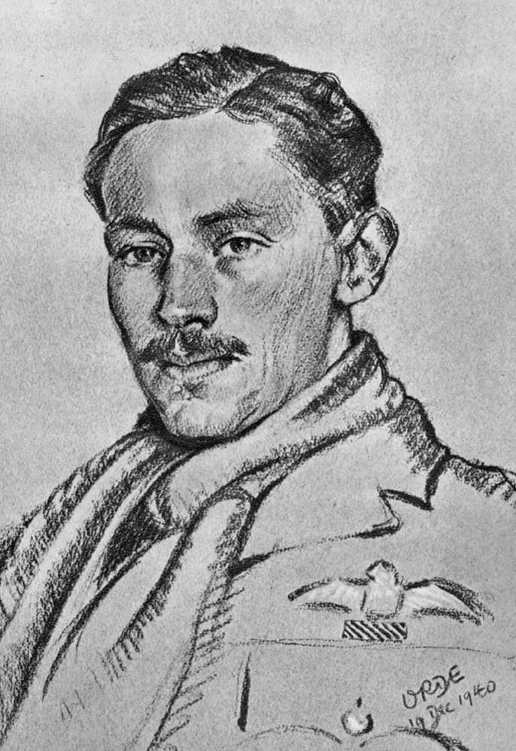
Sergeant C. Whitehead
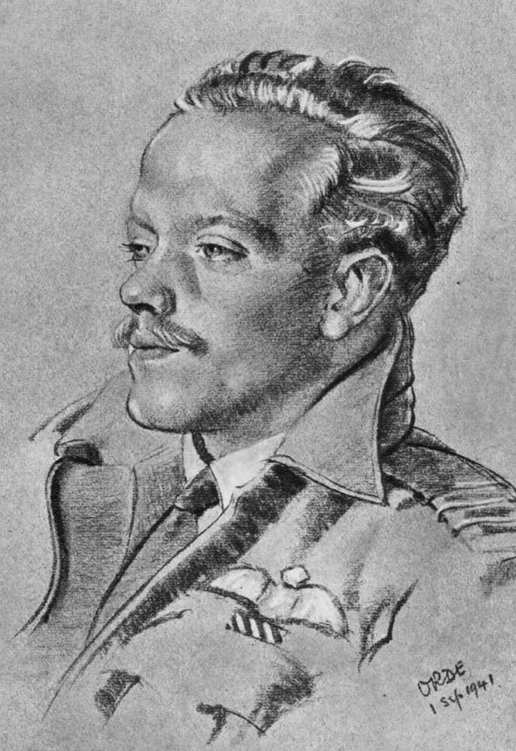
Squadron Leader P.P. Hanks

Flight Lieutenant P.A. Burnell-Phillips
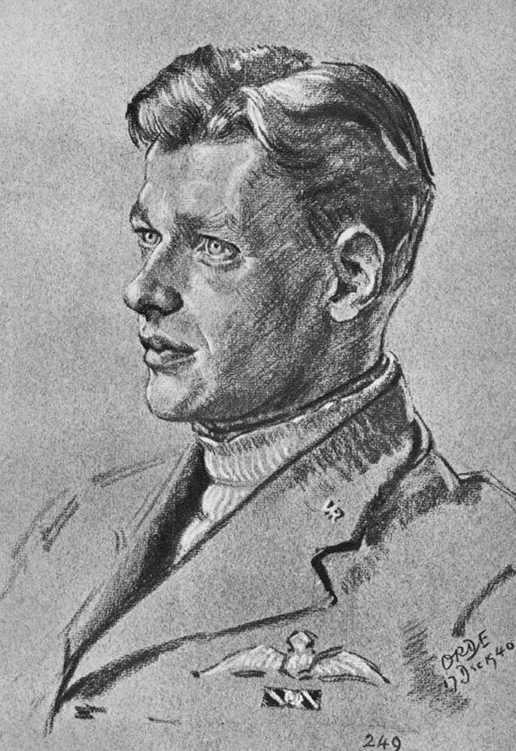
Flight Lieutenant T.F. Neil

Flight Lieutenant H.N. Tamblyn

Pilot Officer Albert Gerald Lewis of No. 85 Squadron