

Nazi Germany had seventeen field marshals, thirty-six full generals, and three thousand additional generals and admirals. More than twenty-four hundred star-shouldered officers served in the U.S. armed forces. By the end of the war, the Soviet Union had enough dead generals to fill a battalion and enough live ones to fill a brigade.
Ranking these commanders depends on criteria. For level of commitment, few can match U.S. Army air chief Henry “Hap” Arnold, who suffered three heart attacks during the war yet refused to retire. On field tactics, there was the flashy IRWIN ROMMEL. U.S. Adm. Raymond Spruance had a freakish gift of knowing when to attack and when to hold back. Despite a selfish, divisive ego, Douglas MacArthur boosted morale on the home front like no other.
The wisest among them all realized that no man was an island, that success depended on a multitude of people, from politicians and spies to mechanics and merchant marines. Following are the best commanders based on their respective achievements in directing support through logistics, morale, communications, and overall strategy. Most of all, they are measured by the magnitude of their contribution to the success of their side.
1. GEORGI ZHUKOV (USSR, 1896–1974)
He was considered by some to be cruel, egocentric, and brutal. Others suggested he was lucky, that his victories came from timely winter storms and enemy hesitation. Still others believed him to be unmatched in his will to win. All charges were true.
Georgi Zhukov was in his midforties when war erupted. Profane and blunt, he often took full credit for ideas not totally his own, demoted officers with impunity, and threatened dissenters with firing squads. Yet he told people how to fight, inspired them to use every weapon, resource, and moment at their disposal, and allowed subordinates latitude in carrying out orders. He was one of the few generals who could stand up to Stalin, and he slowly convinced the dictator to let the generals run the front. Last but not least, no commander from any country ever approached Zhukov’s phenomenal record in the war.
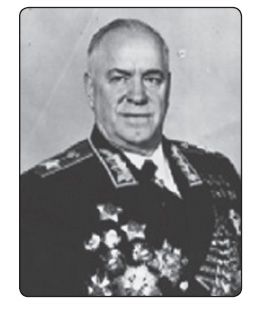
In 1939 he led the Red Army against the Japanese in the battle of Kalkhin Gol on the border of Outer Mongolia. Using superior force through armor, his battalions inflicted more than 70 percent casualties, including eighteen thousand dead. Imperial Japan never ventured against Soviet Russia again. Promoted to the general staff, he warned of an impending German invasion and called up seven hundred thousand reservists months before his prediction came true. Assigned to save surrounded Leningrad, Zhukov redoubled defenses and pulled guns off of Baltic warships and used them as artillery. He also pushed soldiers into relentless counterattacks. Aided by Hitler’s last-minute decision to lay siege rather than enter the city, Zhukov became Leningrad’s savior.29
Shuttled to Moscow while German panzers were within sight of the city, Zhukov re-formed flagging lines in the suburbs, drafted women and children to dig rifle pits and build roadblocks, and lofted balloons to snare low-flying planes. Several times Stalin expressed doubt that Moscow would hold; Zhukov assured him it would. Throwing reserves against the German center, Zhukov sacrificed thousands but spared millions in the process.30
Though not the sole architect of the plans, he helped design the counterattacks that saved STALINGRAD and KURSK. When the Red Army marched on BERLIN, Zhukov directed the middle of a three-pronged offensive, took the city, and accepted the formal surrender.31
Vaunted as “St. George,” Moscow’s patron saint, the marshal fell fast at war’s end. Burning with covetous suspicion over Zhukov’s international fame, Stalin demoted him to a backwater command and swept his name from official histories. But Zhukov’s success would not be forgotten. Though callous and vainglorious, he was at the head of affairs for every major Soviet victory. GEN. DWIGHT ESIENHOWER befriended the man and said of him: “In Europe the war has been won and to no man do the United Nations owe a greater debt than to Marshal Zhukov.”32
Like Hitler and Stalin, Georgi Zhukov was the son of a cobbler.
2. GEORGE C. MARSHALL (U.S., 1880–1959)
His was the literal translation of a soldier’s code of conduct. Humorless, cold, and formal, Marshall believed wholeheartedly in self-discipline and the pursuit of perfection. His commander in chief called him “George” once and never made the mistake again. He left no memoirs, feeling that any self-promotion was unbecoming an officer.
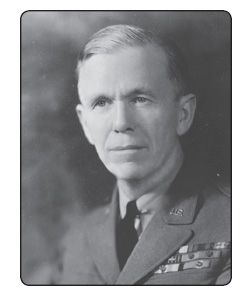
A graduate of the Virginia Military Institute, George C. Marshall performed logistical miracles in the First World War and later served as Gen. John Pershing’s top aide. Though he longed for a field command, Marshall excelled at staff work and was named U.S. Army chief of staff the day war started in Poland. Roosevelt selected him over thirty-four senior candidates.
Widely respected and utterly credible, he personally convinced an isolationist Congress to pass the first PEACETIME DRAFT in U.S. history. Before PEARL HARBOR, he helped transform a paltry army of two hundred thousand into a modern force of nearly two million. From the outset, he endorsed a cross-channel attack as the surest way to defeat Germany. He considered assaults on North Africa a waste of time and resources, if not a British ploy to maintain imperial control. But he accepted consensus and executed his orders to the utmost, regardless of whether he agreed with the directives or not.
When the time came to invade France (the strategy and tactics of which Marshall helped formulate), the general was the obvious choice to command. But Roosevelt decided against it, unwilling to part with his chief military adviser for any length of time.
Throughout the war, Marshall exacted from others what he demanded from himself: commitment, action, and accountability. Under his direction, the U.S. armed forces went from the eighteenth most powerful in the world to the first and achieved victory in large part because of his ability to direct, delegate, and inspire. Secretary of War Henry L. Stimson once said to the general, “I have seen a great many soldiers in my lifetime, and you, sir, are the finest soldier I have ever known.”33
As Truman’s postwar secretary of state, Marshall helped rescue Europe once again, coordinating the economic aid program that became known as “the Marshall Plan.” For this, he was awarded the 1953 Nobel Peace Prize.
3. HEINZ GUDERIAN (GERMANY, 1888–1954)
“When his eyes flash,” a fellow officer said of Heinz Guderian, “Wotan seems to hurl lightning.”34 Inventive, unassuming, and good to his men, Guderian was also intense and driven to the point that he became known as “Hurrying Heinz.”35
A middle-ranking officer during the reformation of the German army, Guderian pioneered the blitzkrieg concept. He envisioned the use of tank brigades as spearheads, backed by mobilized infantry and field guns, with dive bombers acting as a form of artillery. He believed the orchestra could stay in unison, as well as be flexible to new movements, by using something he had been studying since the First World War: radio communication.36
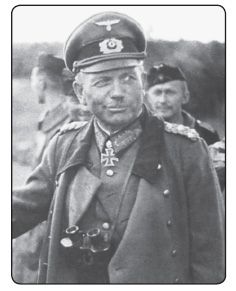
Promoted up the command chain for his initiative as well as innovations, Guderian led a panzer corps in the scything of Poland in 1939 and was one of the most successful commanders in the 1940 invasion of France, where his tactics became de facto Wehrmacht policy. He repeated his performances in leading the 1941 advance on Moscow until Hitler intervened and redirected Guderian’s divisions southward toward Kiev. Guderian’s armor helped capture six hundred thousand Soviets, but the commander was incensed at the lost opportunity to take Moscow by storm, and he let his Führer know it. Guderian was relieved of duty soon after for withdrawing troops from an exposed position without Hitler’s approval.37
For more than a year, the alchemist of blitzkrieg sat on the sidelines, until a desperate Hitler made him inspector general of armored troops. What Guderian saw repulsed him.
In the factories, tank production had slowed to a crawl, each over-complicated design worsening with endless modifications. In the field, Hitler schemed to renew the failed Russian offensive near KURSK, with neither the armor nor the right plan to accomplish the task. The general demanded an end to such wasteful practices. He streamlined tank production, endorsed gradual withdrawal from the East, and insisted on stronger defenses in the West, the front on which an Allied attack was sure to come. Yet every idea the general put forth his warlord either rejected or altered beyond recognition. The relationship ended in March 1945 when Hitler dismissed Guderian for good, just weeks before the fall of BERLIN.38
A prisoner of the Allies until 1948, Guderian spent the next two years writing his memoirs. Titled Panzer Leader for English audiences, the book became a worldwide bestseller and was translated into ten languages.
4. DWIGHT D. EISENHOWER (U.S., 1890–1969)
A no-name lieutenant colonel when war began in Europe, Dwight Eisenhower was nonetheless the owner of a pristine reputation among elite figures. Creator of the U.S. Army’s first-ever tank units during World War I, he went on to serve under Gen. John Pershing after the war and then graduated first in his class at the U.S. Army Staff College. He served in the Philippines, where he earned hard-fought admiration from his commanding officer and polar opposite, Douglas MacArthur. GEORGE C. MARSHALL only met him twice and was so impressed by his humble yet responsible demeanor that the chief of staff assigned the Kansan to the War Plans Division immediately after December 7, 1941.39
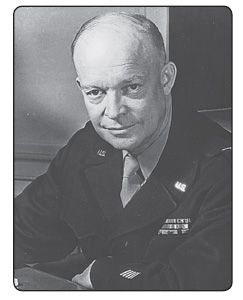
By June 1942, Eisenhower was in London as the commanding general of the European theater of operations. British officers noted that the American had never heard a shot fired in anger, a fact that vexed Eisenhower to no end. But he proved to be a quick study. When his North Africa and Sicily campaigns faltered from low morale and disunity, Ike reacted straightaway. He fired poor generals, promoted the best ones, took greater control of strategic planning, and, above all else, he forced cooperation.
Ike hit his stride with the NORMANDY invasion, to which he committed months of planning. From stubbornly independent branches of air, army, and navy, he forged a force involving more than 4,000 ships, 10,000 aircraft, and a landing force of 150,000 international troops. Despite imperfections, the invasion was an unqualified success. However, Eisenhower’s true greatness showed in the months that followed, when limited resources and a tenacious enemy nearly brought the campaign to a standstill.
His infectious smile and pleasant demeanor disappeared when he encountered infighting or defeatism. When British Gen. Bernard Montgomery pushed him one too many times, Ike scolded back, “Good will and mutual confidence are, of course, mandatory.” His frequently criticized broad-front strategy kept fragile alliances together and likely minimized casualties. Only once did he permit a diversion from his grand strategy, OPERATION MARKET-GARDEN, and it broke down with disastrous results.40
His levelheaded, meticulous nature helped prevent a similar breakdown during the BATTLE OF THE BULGE, where he turned a problem into a victory. His methodical push into Germany, also frequently criticized as too hesitant, may have prevented an armed confrontation with the Soviets, whose leader viewed the American and British presence as a threat as much as a blessing.
Overall, those who liked flash and bravado tended to dislike Eisenhower’s steady and diplomatic methods. But Eisenhower knew better than anyone else that cavalier charges did not win battles.41
Dwight Eisenhower, the supreme commander of the largest American assault force ever assembled, was raised by parents who were pacifists.
5. KONSTANTIN ROKOSSOVSKY (USSR, 1896–1968)
Konstantin Rokossovsky was brilliant and humble, clever and level-headed. In 1937 he was a Red Army corps commander when he was arrested during Stalin’s military purges. Enduring torture and imprisonment, he avoided probable execution by deftly dismantling evidence brought against him. Released after nearly three years, he returned to his command.42
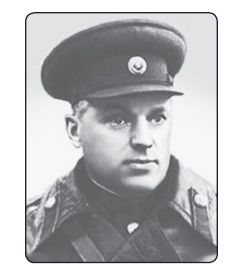
During the initial phases of the 1941 German invasion, Rokossovsky led fierce but futile opposition against the southern wing of the attack. Redeployed to the center in front of Moscow, Rokossovsky’s mechanized infantry corps again threw themselves against the Germans and greatly blunted the momentum of the assault. His troops also took part in the counteroffensive that failed to destroy the German advance but succeeded in driving it away from Moscow.
In the battle for STALINGRAD, Rokossovsky’s men led a wide northern sweep that encircled and eventually crushed the German Sixth Army. At Kursk, he commanded the successful defense of the critical salient’s northern side. In the final advance on Berlin, the general led the push through Poland and secured the right wing of the Soviet assault, eventually meeting up with U.S. troops two hundred miles northeast of the German capital.
On the whole, Rokossovsky preferred maneuver to Zhukov’s brutish pounding and counterattack to frontal assault. Considerate of the needs of his men and generally humane to captives, Rokossovsky demanded a greater level of professionalism than most commanders. Officers and enlisted respected him equally, as well as a good number of his opponents, many of whom considered him the finest general in the Red Army.43
Konstantin Rokossovsky became momentarily famous in the United States on August 23, 1943. He was on the cover of Time magazine.
6. JOSIP BROZ TITO (YUGOSLAVIA, 1892–1981)
In 1939, Josip Broz Tito became general secretary of the Communist Party of Yugoslavia, yet the title was almost meaningless. At the time the Communists were a small, illegal outfit in the constitutional monarchy. No one—including Tito (an alias he took as his permanent name in 1934)—believed he would soon be the most powerful man in the country.
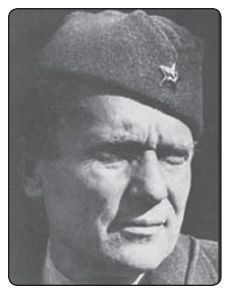
Though energetic and charismatic, Tito had only four years of primary education, was born a Catholic Croat in an Orthodox Serb–dominated state, possessed only a few weapons at the start of the war, and had at most five thousand loyal party members. He would fight not one but several enemies: the Germans who invaded in 1941 and the Bulgarians, Hungarians, and Italians who helped occupy the country. Internally, he faced a pro-Nazi puppet state in Croatia, guerrillas loyal to the Serb crown, and ethnic and religious separatists. Yet it was this fractured, chaotic environment that allowed his courage and leadership to shine.
Personally heading guerrilla sabotage operations with a few thousand supporters, Tito learned quickly to replace Communist rhetoric with a more patriotic message. As the region disintegrated into bloody civil war, Tito preached unity against the Axis and its collaborators, inviting people of all religions and ethnicities to join his “People’s Liberation Movement.” By 1943 he counted twenty thousand under his command. Recognizing his rising status as the one potential leader in Yugoslavia, both the Soviet Union and the Western Allies began lending political and material support. Tito soon had enough armor and artillery to equip several divisions.
With the help of the Red Army, Tito’s partisans liberated most of Yugoslavia by the end of 1944. He was also the head of a provisional government and commanded more than one hundred thousand troops. Yet Marshal Tito saved his strongest move for last.
Citing Red Army atrocities against his people (many Soviet soldiers were fond of murder and pillaging), Tito began to break with Moscow. Rejecting London’s support of the old royalist government, he held elections in which nearly every name on the ballot was Communist. He became prime minister, defense minister, and supreme commander of the army and began to ruthlessly hunt down potential adversaries. Years later he would declare himself “president for life,” a position he held until almost his ninetieth birthday.44
In 1944, several British special operations commandos parachuted into Yugoslavia to assist Tito’s headquarter operations. One of the officers was Randolph Churchill, son of the British prime minister.
7. CHESTER W. NIMITZ (U.S., 1885–1966)
Above Chester Nimitz was the hard-drinking, womanizing (although brilliant) Adm. Ernest King. Beneath him was a tough school of seadogs, including brash Adm. William “Bull” Halsey, the tantrum-prone Adm. Richmond Turner, and the aptly nicknamed marine, Holland “Howlin’ Mad” Smith. Before him was a smoldering Oahu, a victorious Japanese navy, and millions of square miles of Pacific Ocean. Somehow the affable and soft-spoken Nimitz took it all in stride.
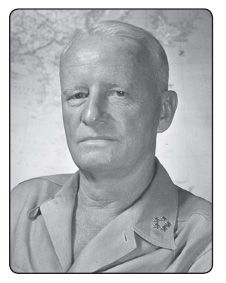
Immediately named Adm. Husband Kimmel’s replacement at PEARL HARBOR, Nimitz first set about rebuilding morale and assessing damage. He kept Kimmel’s able staff and noted that much of the naval base was either intact or salvageable, including the submarine base he helped create in the 1920s. The installation recovered quickly under his direction.45
A submariner from his early days, Nimitz instructed his modest undersea force to target merchant shipping, which nearly eliminated Japan’s surface lifelines by 1945. He understood the primacy of carriers in modern war, and many of his victories came by way of flattops. Nimitz also paid close attention to INTELLIGENCE, unlike some commanders (such as MacArthur), which enabled him to plan the attack on GUADALCANAL, stage the pivotal victory at MIDWAY against superior forces, and shoot down his adversary, Yamamoto Isoroku, the following year.
Like JOHN C. MARSHALL, he refused to write memoirs or sing his own praises. Like DWIGHT D. EISENHOWER, he pressed for calm assessment and steadfast unanimity, a necessity when many of his operations (such as OKINAWA) involved army, navy, and marine personnel. Unlike many commanders, Nimitz was able to win nearly every engagement he entered.46
Studious and disciplined, Chester Nimitz was accepted into the U.S. Naval Academy at the age of fifteen.
8. FREDERICH ERICH VON MANSTEIN (GERMANY, 1887–1973)
A general’s general, Erich Manstein was a slim, astute, dignified Prussian with a military pedigree and a talent for modern tactics. Born the tenth child of an officer, Erich was adopted by his uncle, also an officer, and entered military school in his teens. He would grow to be one of the most respected commanders in the German army.
His sharp mind was the root of his visible confidence. But he also had a vicious emotional side, which he tried to control his whole life. His orders were clear and calculated. He believed in staying adaptable in a fire fight, which endeared him to his officers. He also hated frontal assaults and refused to be trapped or overcommitted, which won the trust of his men.47
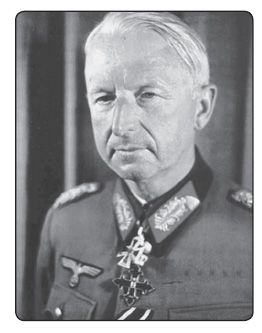
Manstein is best known for an alteration. Hitler’s initial plan for invading France involved going through Belgium and then southwest to Paris, retracing Germany’s path in the First World War. A staff officer at the time, Manstein suggested going through the heavily forested ARDENNES, catching the French by surprise, and heading northwest to cut their defenses in half. The idea appealed to Hitler, and the attack transpired nearly as Manstein suggested.48
Obviously a gifted strategist, Manstein achieved most of his victories as a tank commander on the eastern front. Assigned to take the Crimean Peninsula in the Black Sea, he succeeded, thus becoming the only German general to achieve a major objective against the Soviet Union. He also scored one of the last German victories anywhere by retaking the rail hub of Kharkov in March 1943, stemming a gradual collapse of the southern front.
By 1944 Manstein staged a series of steady withdrawals, which cost the attacking Soviets heavily and saved his own ranks from annihilation. But increasing disagreement with Hitler over battle plans eventually cost him his job, and he was permanently relieved of command in March 1944.
The Western view of Manstein is highly polished. His true image is less than gentlemanly. He heartily endorsed the Anschluss (annexation) of Austria, used Russian POWs to clear land mines, and sent thousands of prisoners to Germany as slave labor. Concerning the popular litmus test applied to all German generals, Manstein was indeed critical of Hitler, but his most adamant opposition came after 1945. During the war he was one of the most able and effective commanders at Hitler’s disposal.49
In 1949, a British tribunal sentenced Erich von Manstein to eighteen years’ imprisonment for war crimes, of which he served four. In 1956, the West German government hired him as a military adviser.
9. GEORGE S. PATTON JR. (U.S., 1885–1945)
Most of the flamboyance was for show—the ivory-handled revolvers, the vulgarity, the self-promotion. As a rule, George S. Patton ran an orderly and efficient headquarters, encouraged input from his subordinates, and planned his operations studiously. A firm believer in destiny, he shared many traits with Confederate Gen. Thomas J. “Stonewall” Jackson in that he was extremely pious and eccentric, a devout believer in discipline, unloved but respected by his men, and the most successful field commander of his country.50
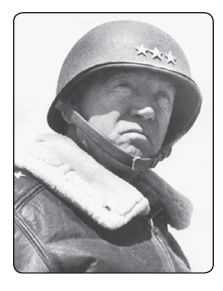
Assigned to lead the U.S. assault on Casablanca in the 1942 Allied invasion of North Africa, Patton secured the area in less than a week. He took over the U.S. Second Corps after its demoralizing defeat in Tunisia, quickly establishing discipline and morale. Leading the U.S. Seventh Army in the invasion of Sicily, Patton and his troops traveled twice as far and twice as fast as the British, securing most of the island in less than a month.
Two separate incidents in Sicily, one of which was heavily publicized, nearly wrecked Patton’s career. He verbally and physically assaulted two soldiers suffering from combat fatigue, and the public backlash greatly embarrassed the U.S. high command. Biographers commonly refer to Patton’s outbursts as temporary “meltdowns” on the general’s part. Viewed on the whole, his outbursts epitomized his character. Willful and belligerent, Patton neither understood nor tolerated hesitation in combat. His aggressiveness (which Gen. DWIGHT EISENHOWER worked diligently to harness) was a constant mental state, one that handicapped him on a personal level but empowered him in command.51
Patton redeemed himself at the head of the U.S. Third Army in France. Activated seven weeks after D-day, his men swept west and secured most of the Brittany Peninsula, then raced east on an abrupt charge to the German border. The surprise German offensive in the BATTLE OF THE BULGE failed in large part because Patton cut it off at its base. In the advance into the Third Reich, Patton’s was the most successful army in grabbing territory, plowing through southern Germany and seizing parts of Austria and Czechoslovakia before being ordered to halt. In less than a year his men advanced more than one thousand miles across enemy-held territory, moving farther and faster than any other unit in the operation.
Patton survived the war but was mortally injured in a car accident in Germany months after the peace.
Having served his country in Mexico, World War I, and World War II, George S. Patton Jr. also donned a U.S. uniform in the 1912 Summer Olympics in Stockholm, where he finished fifth in the modern pentathlon.
10. BERTRAM RAMSAY (UK, 1883–1945)
Ramsay was humble and diligent among his peers yet venomous against incompetents. A naval veteran of the First World War, Bertram Ramsay came out of retirement to serve as the ranking flag officer at Dover. It was from this channel city, from tunnels beneath Dover Castle, that Ramsay and his staff directed the emergency evacuation of British, French, and other troops from embattled Dunkirk. Prime Minister Winston Churchill, himself a former lord of the admiralty, estimated 45,000 troops could be saved. Sailors, the RAF, civilians, and Ramsay rescued more than 330,000.52
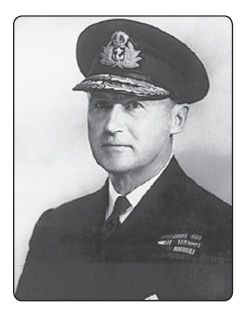
Duly knighted for his actions, Ramsay was later the deputy naval commander of the invasion of North Africa. The task was at best daunting, requiring the transfer of U.S. soldiers from New York directly to Casablanca and the passing of more than 300 British ships through the Straits of Gibraltar. Out of all the vessels, the Allies lost only one transport and landed more than 65,000 troops. Ramsay also served as deputy commander in the amphibious invasion of Sicily in 1943, involving nearly 2,600 ships tasked with escorting soldiers ashore.
In 1944, Ramsay was in charge of Operation Neptune, the naval portion of the NORMANDY invasion. Pulling together battleships, cruisers, destroyers, submarines, tugs, hospital ships, minesweepers, landing craft, and other vessels (totaling four thousand ships, mostly British), loading divisions from across the English southern coast, rendezvousing the armada in the Channel, and directing it across hostile waters, Ramsay and his subordinates delivered five divisions to the northwest shores of occupied France.
Under Ramsay’s guidance, the Allies hauled and assembled two artificial ports, laid an underwater oil pipeline, and shuttled more than seven hundred thousand men plus vehicles and supplies in a matter of weeks. Longtime friend of Winston Churchill, object of esteem among servicemen of all ranks, the steadfast Ramsay helped orchestrate the largest amphibious invasion of all time.53
Adm. Sir Bertram Ramsay did not get to see the fruition of his great efforts. The day after New Year’s 1945, en route to a meeting with Field Marshal Montgomery, Ramsay died when his plane went down over France.