
Early design
The Stuka dive bomber is one of the most iconic images of World War II, hanging like hungry vultures over the battlefields they feature in every newsreel and have come to symbolise the Nazi war machine. Never was a metaphor more apt, on the surface the Goebels propaganda machine was able to project an aura of invincibility, they were sleek, modern and numerous. Like the horse drawn Wehrmacht however, they were actually available in relatively small numbers, spread over too many fronts and in reality they were slow, unwieldy and unsuited to the magnitude of the task.
Although it was already obsolescent by 1941, the Stuka was to prove to be one of the most versatile machines of the war. Used as a night bomber, torpedo launcher, trainer, long-range reconnaissance aircraft, tank-buster and a host of other specialist tasks, it was at its most fearsome as a dive bomber. Screeching out of the sky, with its morale-sapping siren at full blast like some furious bird of prey, the Stuka’s airbrakes still allowed it to slow to a speed which enabled its bomb load to be delivered with almost pinpoint accuracy. With a virtually unopposed mobile flying artillery of this calibre, it was no surprise that it was initially so successful.
The Junkers JU-87's principal designer was Hermann Pohlmann; he held the opinion that any dive-bomber design needed to be simple and robust. His vision led to the omission of many obvious technical innovations which were being introduced at the time. One of the most obvious examples is the decision not to incorporate retractable undercarriage which was discarded in favour of an older design feature, fixed undercarriage which was to produce one of the Stuka's distinctive features; its fixed and "spatted" undercarriage. Pohlmann continued to carry on developing and adding to his ideas and those of early pioneer Karl Plauth. Plauth was killed in a flying accident in November 1927 but his ideas lived on. After Plauth's death, Pohlmann continued the development of the Junkers dive bomber. Plauth’s ideas were incorporated into the Ju A 48 which first underwent testing on 29 September 1928. The military version of the Ju A 48 was designated the Ju K 47.
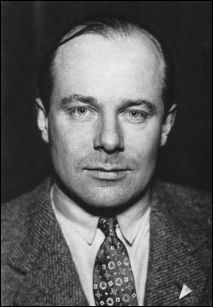
Ernst Udet; the greatest proponent of the dive-bomber and the Ju. 87
When the Nazis came to power, the design for a new dive bomber was given priority. Despite initial competition from the Henschel Hs 123, the Reichsluftfahrtministerium (RLM) - German for the "Aviation Ministry" - turned to the designs of Herman Pohlmann of Junkers and co-designer of the K 47, Karl Plauth. During the trials with the K 47 in 1932, the double vertical tail stabilisers were introduced to give the rear gunner a better field of fire. The main, and what was to be the most distinctive, feature of the Ju 87 was its double-spar inverted gull wings. The gull wing was first seen on a glider when the Weltensegler flew in 1921. Its wings were externally braced and featured swept-back wingtips. After the aircraft broke up, killing its pilot, the design feature stayed out of popular use. The gull wing made a resurgence in 1930 with Alexander Lippisch's record-breaking Fafnir. Lippisch used the configuration for its increased wingtip clearance and the ill-founded belief it improved stability in turns. The gull wing design was next adapted on Seaplanes.
During the early 1930s, as engine power increased, so did the need for large propellers that could effectively convert power to thrust. The traditional gull wing design with its raised central point allowed designers to ensure adequate propeller tip clearance over the water by placing the engines on the highest point of the wing. The alternative was placing the engine on a pylon. Possibly the first flying-boat to utilise the gull wing configuration was the Short Knuckleduster, which flew in 1933. The Dornier Do 26, a high-speed airliner and transport platform, of which 6 aircraft were built, flew in 1938. The configuration was also used on the US Navy's PBM Mariner and P5M Marlin maritime patrol aircraft. The emergence of long range, land-based jets in the 1950s and the subsequent demise of the seaplane prevented widespread use of the gull wing, although it was still used in some post-war designs, like Beriev Be-12 Chaika (the name means 'the gull' in Russian)The gull wing design found its way into landplanes in the late 1920s, with Polish inventor Zygmunt Pulawski designing the PZL P.1 in 1928. The arrangement he devised is occasionally known as the "Pulawski Wing" or the "Polish wing". The gull wing was used to improve visibility in a high wing arrangement, because such wing could be thinnest by the fuselage, and in theory should limit pilot's view no more than A-pillars of a windscreen in a car body. It was used in fighter aircraft like PZL P.11 and Polikarpov I-15. Where the Stuka diverted from its predecessors was in the introduction of the inverted gull wing.
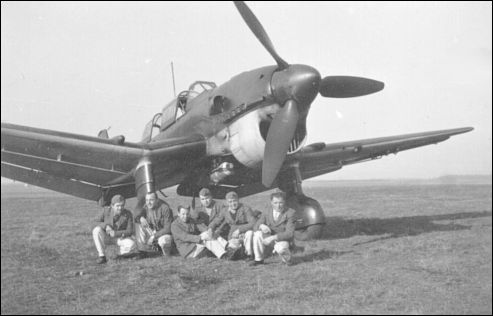
Junkers Ju 87 German ground-attack aircraft of WWII
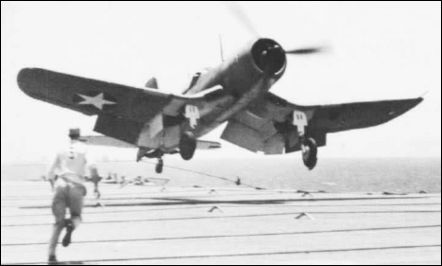
F4U Corsair landing on USS Bunker Hill
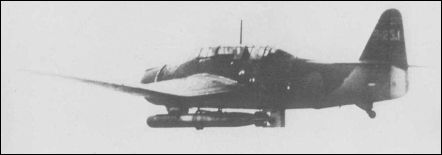
Aichi B7A carrying torpedo.
The inverted gull wing was developed at the same time and for much the same reason as its incorporation into seaplanes. More powerful engines generally require larger propellers, but clearance between the propeller tip and ground must be maintained. Long landing gear legs are heavy, bulky, and weaker than their shorter counterparts. The Vought F4U Corsair, designed from the onset as a carrier-based fighter, not only had the largest propeller of any U.S. fighter, but was also expected to face rough landings aboard a pitching carrier deck. The inverted gull wing allowed the landing gear to be short, tough, and to retract straight back, improving internal wing space. Another reason for having an inverted gull wing is to facilitate a large external bomb load as was the case with the Junkers Ju-87 Stuka.
After Plauth's death, Pohlmann continued the development of the Junkers dive bomber. The Ju A 48 registration D-ITOR, was originally fitted with a BMW 132 engine, producing some 450 kW (600 hp). The machine was also fitted with dive brakes for dive testing. The aircraft was given a good evaluation and "exhibited very good flying characteristics".
Ernst Udet took an immediate liking to the concept of dive-bombing after flying the US Curtiss Hawk II. When he invited Walther Wever and Robert Ritter von Greim to watch Udet perform a trial flight in May 1934 at the Jüterbog artillery range, it raised doubts about the capability of the dive bomber. Udet began his dive at 1,000 m (3,280 ft.) and released his 1 kg (2 lb.) bombs at 100 m (330 ft.), barely recovering and pulling out of the dive. The Chief of the Air Weapons Command Bureau, Walther Wever, and the Secretary of State for Aviation, Erhard Milch, feared that such high-level nerves and skill could not be expected of "average pilots" in the Luftwaffe. Nevertheless, development continued at Junkers, Udet's "growing love affair" with the dive bomber pushed it to the forefront of German aviation development. Udet went so far as to advocate that all medium bombers have dive-bombing capabilities.
Ju 87 evolution
The design of the Ju 87 had begun in 1933 as part of the Sturzbomber-Programm. Ironically The Ju-87 was originally powered by the British Rolls-Royce Kestrel engine. Ten engines were ordered by Junkers on 19 April 1934 at a cost of £20,514, 2/6. The first Ju-87 prototype was built by AB Flygindustri in Sweden and secretly brought to Germany in late 1934. It was to have been completed in April 1935, but, due to the inadequate strength of the airframe, construction was not completed until October 1935. However, the mostly complete Ju 87 V1 W.Nr. 4921 (less non-essential parts) took off for its maiden flight on 17 September 1935. The aircraft originally did not carry any registration, but later was given the registration D-UBYR. The flight report, by Hauptmann Willy Neuenhofen, stated the only problem was with the small radiator, which caused the power plant to overheat.
The Ju-87 V1, powered by a Rolls-Royce Kestrel V12 cylinder liquid-cooled engine, and with a twin-tail, crashed on 24 January 1936 at Kleutsch near Dresden, killing Junkers' chief test pilot, Willy Neuenhofen, and his engineer, Heinrich Kreft. The square twin tail fins and rudders proved too weak; they collapsed and the aircraft crashed after it entered an inverted spin during the testing of the terminal dynamic pressure in a dive. The crash prompted a change to a single vertical stabilizer tail design. To withstand strong forces during a dive, heavy plating was fitted, along with brackets riveted to the frame and longeron, to the fuselage. Other early additions included the installation of hydraulic dive brakes that were fitted under the leading edge and could rotate 90
The most notable feature of the Stuka was its inverted gull wings, as shown in this photograph. Also visible are the two separate sliding "hoods" of the canopy.
The RLM was still not interested in the Ju-87 and was certainly not impressed that the design relied on a British engine. In late 1935, Junkers suggested fitting a DB 600 in-line engine, with the final variant to be equipped with the Jumo 210. This was accepted by the RLM as an interim solution. The reworking of the design began on 1 January 1936. The test flight could not be carried out for over two months due to a lack of adequate aircraft. The 24 January crash had already destroyed one machine.
The second prototype was also beset by design problems. It had its twin stabilizers removed and a single tail fin installed due to fears over stability. Due to a shortage of power plants, instead of a DB 600, a BMW "Hornet" engine was fitted. All these delays set back testing until 25 February 1936. By March 1936, the second prototype, the V2, was finally fitted with the Jumo 210Aa power plant, which a year later was replaced by a Jumo 210 G (W.Nr. 19310). Although the testing went well, and the pilot, Flight Captain Hesselbach, praised its performance, Wolfram von Richthofen told the Junkers representative and Construction Office chief engineer Ernst Zindel that the Ju 87 stood little chance of becoming the Luftwaffe's main dive bomber, as it was underpowered in his opinion. On 9 June 1936, the RLM ordered cessation of development in favour of the Heinkel He 118, a rival design. Apparently, Udet cancelled the order the next day, and development continued.
On 27 July 1936, Udet crashed the He 118 prototype, He 118 V1 D-UKYM. That same day, Charles Lindbergh was visiting Ernst Heinkel, so Heinkel could only communicate with Udet by telephone. According to this version of the story, Heinkel warned Udet about the propeller's fragility. Udet failed to consider this, so in a dive, the engine oversped and the propeller broke away. Immediately after this incident, Udet announced the Stuka the winner of the development contest.
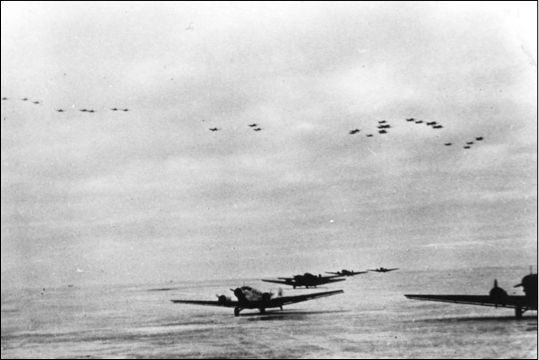
The Cherkassy pocket is re-supplied from the airfield at Korsun. On the ground are Junkers Ju 52, in the sky above can be seen a flight of Stuka Verband Ju 87.
Honing the design
Despite being chosen, the design was still lacking and drew frequent criticism from Wolfram von Richthofen. Testing of the V4 prototype (A Ju 87 A-0) in early 1937 revealed several problems. The Ju 87 could take off in just 250 m (820 ft.) and climb to 1,875 m (6,150 ft.) in just eight minutes with a 250 kg (550 lb.) bomb load, and its cruising speed was 250 km/h (160 mph). However, Richthofen pushed for a more powerful engine. According to the test pilots, the Heinkel He 50 had a better acceleration rate, and could climb away from the target area much more quickly, avoiding enemy ground and air defenses. Richthofen stated that any maximum speed below 350 km/h (217 mph) was unacceptable for those reasons. Pilots also complained that navigation and powerplant instruments were mixed together, and were not easy to read, especially in combat. Despite this, pilots praised the aircraft's handling qualities and strong airframe.
These problems were to be resolved by installing the Daimler-Benz DB 600 engine, but delays in development forced the installation of the Jumo 210 Da in-line engine. Flight testing began on 14 August 1936. Subsequent testing and progress fell short of Richthofen's hopes, although the machine's speed was increased to 280 km/h (173 mph) at ground level and 290 km/h (179 mph) at 1,250 m (4,100 ft.), while maintaining its good handling ability.
Design
Basic design (based on the B series)
The Ju 87 was a single-engined all-metal cantilever monoplane. It had a fixed undercarriage and could carry a crew of two. The main construction material was duralumin, and the external coverings were made of Duralumin sheeting. Parts that were required to be of strong construction, such as the wing flaps, were made of Pantal and its components made of Elektron. Bolts and parts that were required to take heavy stress were made of steel.
The Ju 87 was fitted with detachable hatches and removable coverings to aid and ease maintenance and overhaul. The designers avoided welding parts wherever possible, preferring moulded and cast parts instead. Large airframe segments were interchangeable as a complete unit, which increased speed of repair.
The airframe was also subdivided into sections to allow transport by road or rail. The wings were of standard Junkers double-wing construction. This gave the Ju 87 considerable advantage on take-off; even at a shallow angle, large lift forces were created through the aerofoil which reduced take-off and landing runs.
In accordance with the Aircraft Certification Center for "Stress Group 5", the Ju 87 had reached the acceptable structural strength requirements for a dive bomber. It was able to withstand diving speeds of 600 km/h (373 mph) and a maximum level speed of 340 km/h (211 mph) near ground level, and a flying weight of 4,300 kg (9,480 lb.). Performance in the diving attack was enhanced by the introduction of dive brakes under each wing, which allowed the Ju 87 to maintain a constant speed and allow the pilot to steady his aim. It also prevented the crew from suffering extreme g forces and high acceleration during "pull-out" from the dive.
The fuselage had an oval cross-section and housed a water-cooled inverted-V inline engine. The cockpit was protected from the engine by a firewall ahead of the wing center section where the fuel tanks were located. At the rear of the cockpit, the bulkhead was covered by a canvas cover which could be breached by the crew in an emergency, enabling them to escape into the main fuselage. The canopy was split into two sections and joined by a strong welded steel frame. The canopy itself was made of Plexiglas and each compartment had its own "sliding hood" for the two crew members.
The engine was mounted on two main support frames that were supported by two tubular struts. The frame structure was triangulated and emanated from the fuselage. The main frames were bolted onto the power plant in its top quarter. In turn, the frames were attached to the firewall by universal joints. The firewall itself was constructed from asbestos mesh with Dural sheets on both sides. All conduits passing through had to be arranged so that no harmful gases could penetrate the cockpit.
The fuel system comprised two fuel tanks in the center section of the port and starboard wings, each with 250 L capacity. The tanks also had a predetermined limit which, if passed, would warn the pilot via a red warning light in the cockpit. The fuel was injected via a pump from the tanks to the power plant. Should this shut down, it could be pumped manually using a hand-pump on the fuel cock armature.
The powerplant was cooled by a 10 L (3 US gal) ring-shaped aluminium water container situated between the propeller and engine. A further container of 20 L (5 US gal) was positioned under the engine. The control surfaces operated in much the same way as other aircraft, with the exception of the innovative automatic pull-out system. Releasing the bomb initiated the pull-out, or automatic recovery and climb, upon the deflection of the dive brakes. The pilot could override the system by exerting significant force on the control column and taking manual control.
The wing was the most unusual feature. It consisted of a single center section and two outer sections installed using four universal joints. The center section had a large negative dihedral (anhedral) and the outer surfaces a positive dihedral. This created the gull, or "cranked", wing pattern along the Ju 87's leading edge. The shape of the wing improved the pilot's ground visibility and also allowed a shorter undercarriage height. The center section protruded by only 3 m (9 ft. 10⅛ in) on either side.
The offensive armament was two 7.92 mm (.312 in) MG 17 machine guns fitted in each wing, operated by a mechanical pneumatics system from the pilot's control column. The rear gunner/radio operator operated one 7.92 mm (.312 in) MG 15 machine gun for defensive purposes.
The engine and propeller had automatic controls, and an auto-trimmer made the aircraft tail-heavy as the pilot rolled over into his dive, lining up red lines at 60°, 75° or 80° on the cockpit side window with the horizon and aiming at the target with the sight of the fixed gun. The heavy bomb was swung down clear of the propeller on crutches prior to release.
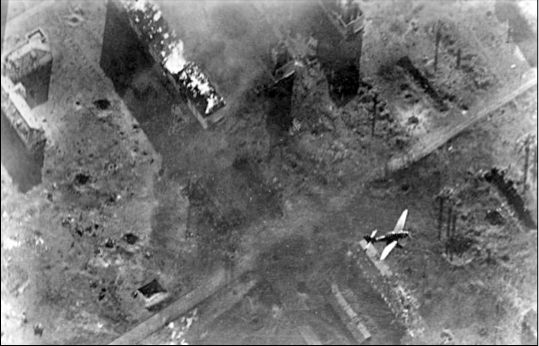
A Stuka pulling up from its bombing run in Stalingrad. The blazing ruins of the factory can be clearly seen in this fascinating air to air study.
Diving procedure
Flying at 4,600 m (15,000 ft.), the pilot located his target through a bombsight window in the cockpit floor. The pilot moved the dive lever to the rear, limiting the "throw" of the control column. The dive brakes were activated automatically, the pilot set the trim tabs, retarded his throttle and closed the coolant flaps. The aircraft then rolled 180°, automatically nosing the aircraft into a dive. Red tabs protruded from the upper surfaces of the wing as a visual indicator to the pilot that, in case of a g-induced black-out, the automatic dive recovery system would be activated. The Stuka dived at a 60-90° angle, holding a constant speed of 500–600 km/h (350-370 mph) due to dive-brake deployment, which increased the accuracy of the Ju 87's aim.
When the aircraft was reasonably close to the target, a light on the contact altimeter came on to indicate the bomb-release point, usually at a minimum height of 450 m (1,500 ft). The pilot released the bomb and initiated the automatic pull-out mechanism by depressing a knob on the control column. An elongated U-shaped crutch located under the fuselage swung the bomb out of the way of the propeller, and the aircraft automatically began a 6 g pullout. Once the nose was above the horizon, dive brakes were retracted, the throttle was opened, and the propeller was set to climb. The pilot regained control and resumed normal flight. The coolant flaps had to be reopened quickly to prevent overheating.
Physical stress on the crew was severe. Human beings subjected to more than 5 g forces in a seated position will suffer vision impairment in the form of a grey veil known to Stuka pilots as "seeing stars". They lose vision while remaining conscious; after five seconds, they black out. The Ju 87 pilots experienced the visual impairments most during "pull-up" from a dive.
Eric "Winkle" Brown, a British test pilot from the Royal Navy, and General Officer Commanding "Captured Enemy Aircraft Flight" section, tested the Ju 87 at RAE Farnborough. He remarked:
I had a high opinion of the Stuka because I had flown a lot of dive-bombers and it’s the only one that you can dive truly vertically. Sometimes with the dive-bombers, pilots claim that they did a vertical dive. What a load of rubbish. The maximum dive is usually in the order of 60 degrees. In a dive when flying the Stuka, because it’s all automatic, you are really flying vertically. You feel that you are over the top and feel you are going that a way! The Vengeance and Dauntless were both very good but could dive no more than 60 or 70 degrees. The Stuka was in a class of its own.
G-Force test at Dessau
Extensive tests were carried out by the Junkers works at their Dessau plant. It was discovered that the highest load a pilot could endure was 8.5 g for three seconds, when the aircraft was pushed to its limit by the centrifugal forces. At less than 4 g, no visual problems or loss of consciousness were experienced. Above 6 g, 50% of pilots suffered visual problems, or "grey" out. With 40%, vision vanished altogether from 7.5 g upwards and black-out sometimes occurred. Despite this blindness, the pilot could maintain consciousness and was capable of "bodily reactions". However, after more than three seconds, half the subjects passed out. The pilot would regain consciousness two or three seconds after the centrifugal forces had dropped below 3 g and had lasted no longer than three seconds. In a crouched position, pilots could withstand 7.5 g and were able to remain functional for a short duration. In this position, Junkers concluded that ⅔ of pilots could withstand 8 g and perhaps 9 g for three to five seconds without vision defects which, under war conditions, was acceptable. During tests with the Ju 87 A-2, new technologies were tried out to reduce the effects of g forces. The pressurised cabin was of great importance during this research. Testing revealed that at high altitude, even 2 g could cause death in an unpressurised cabin and without appropriate clothing. This new technology, along with special clothing and oxygen masks, was researched and tested. When the United States Army occupied the Junkers factory at Dessau on 21 April 1945, they were impressed and interested in the medical flight tests with the Ju 87.
Other designs
The concept of dive bombing became so popular among the leadership of the Luftwaffe that it became almost obligatory in new aircraft designs. Later bomber models like the Junkers Ju 88 and the Dornier Do 217 were equipped for dive bombing. The Heinkel He 177 strategic bomber was initially supposed to have dive bombing capabilities, a requirement that contributed to the failure of the design.
Once the Stuka became too vulnerable to fighter opposition on all fronts, work was done to develop a replacement. None of the dedicated close-support designs on the drawing board progressed far due to the impact of the war and technological difficulties. So the Luftwaffe settled on the Focke-Wulf Fw 190 fighter aircraft, with the Fw 190F becoming the ground-attack version. The Fw 190F started to replace the Ju 87 for day missions in 1943, but the Ju 87 continued to be used as a night nuisance-raider until the end of the war.
Specifications (Ju 87 B-2)
Data from Ju 87 B-2 Betriebsanleitung, Juni 1940 (D.(Luft) T.2335/1)
General characteristics
• Crew: 2
• Length: 11.00 m (36 ft. 1.07 in)
• Wingspan: 13.8 m (45 ft. 3.30 in)
• Height: 4.23 m (13 ft. 10.53 in)
• Wing area: 31.90 m² (343.37 ft²)
• Empty weight: 3,205 kg (7,086 lb.)
• Loaded weight: 4,320 kg (9,524 lb.)
• Max takeoff weight: 5,000 kg (11,023 lb.)
• Powerplant: 1 × Junkers Jumo 211D liquid-cooled inverted-vee V12 engine, 1200 PS (1184 hp, 883 kW)
• Propellers: Three-blade Junkers VS 5 propeller, 1 per engine
• Propeller diameter: 3.4 m (11 ft. 1.85 in)
Performance
• Never exceed speed: 600 km/h (373 mph)
• Maximum speed: 390 km/h @ 4,400 m (242 mph @ 13,410 ft.)
• Range: 500 km (311 mi) with 500 kg (1,102 lb.) bomb load
• Service ceiling: 8,200 m (26,903 ft.) with 500 kg (1,102 lb.) bomb load
Armament
• Guns: 2× 7.92 mm (.312 in) MG 17 machine gun forward, 1× 7.92 mm (.312 in) MG 15 machine gun to rear
• Bombs: Normal load = 1× 250 kg (551 lb.) bomb beneath the fuselage and 4× 50 kg (110 lb.), two bombs underneath each wing.