
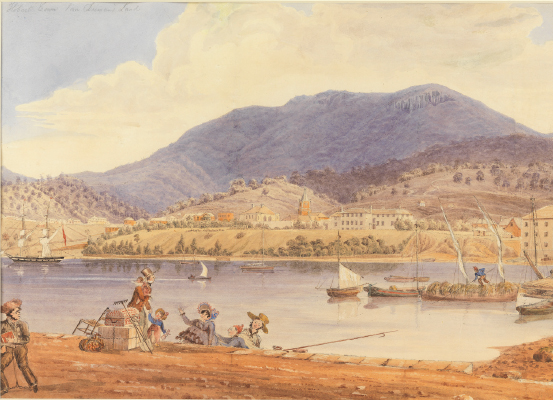
Colonial Van Diemen’s Land in the 1820s. Hobart was the largest settlement, the main seat of government, and a military base. Allport Library and Museum of Fine Arts, Tasmanian Archive and Heritage Office: Watercolour of Hobart Town Van Diemen’s Land by George Frankland.
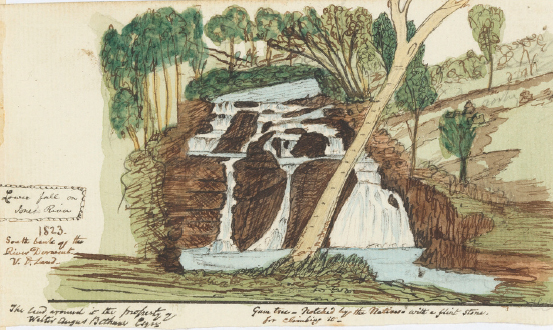
Further inland, like this spot on a tributary of the Derwent River, the landscape was called ‘settled’ but was still contested. The tree markings were made by Aboriginal people hunting possum. State Library of New South Wales: [IE1955124], Thomas Scott’s Sketches of Van Diemen’s Land.
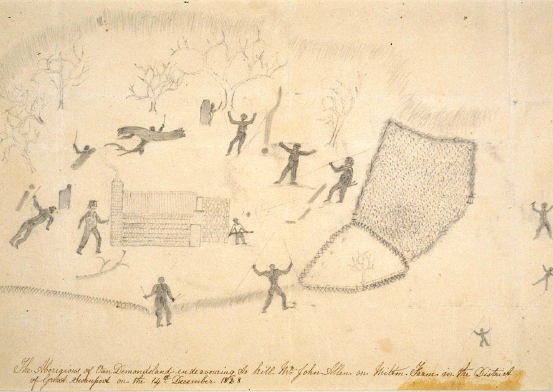
Contemporary depictions of conflict during the Vandemonian War remain rare. The war was often represented as a contest between Aboriginal aggressors and civilian settlers. State Library of New South Wales: [IE1656866] ‘Pencil drawing entitled The Aborigions of Van Demondsland endeavouring to kill Mr John Allen on Milton Farm in the District of Great Swanport on the 14th December 1828’.
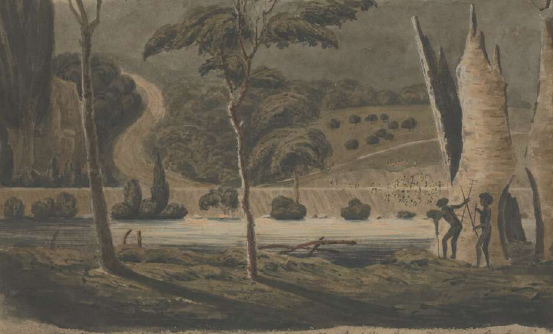
But roads like those near New Norfolk served military as well as civil needs, highlighting that colonisation was far from militarily passive. National Library of Australia: The new road leading to the northward from New Norfolk, Van Dieman’s Land.
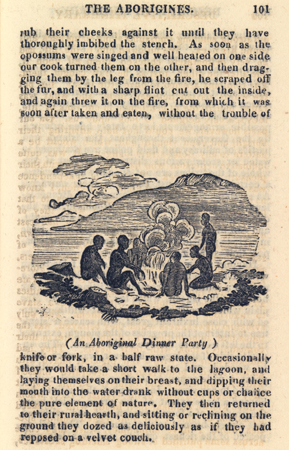
The colonial press had a complex relationship with the Vandemonian War. It provides an important record of events, but was frequently partisan and inaccurate. An 1830 description and illustration of ‘An Aboriginal Dinner Party’ is part ethnography, part parody, part propaganda. Tasmaniana Library, Tasmanian Archive and Heritage Office: Page from the Hobart Town Almanack for the year 1830.
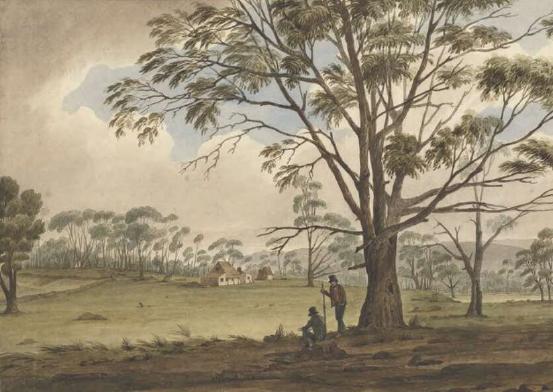
Farmsteads in the so-called ‘settled districts’ served as strong points and ration stations during the Vandemonian War. National Library of Australia: June Park, Van Dieman’s Land, the general appearance of the country in its natural state, perfect park scenery [Augustus Earle].
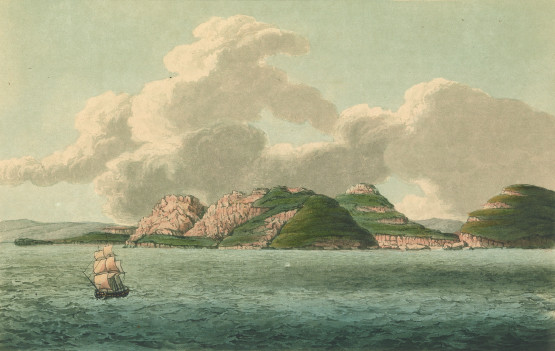
Colonists strategically used landscape features while harassing Aboriginal people, for instance utilising narrow peninsulas like the Schoutens to try to trap Aboriginal people. Many settlers were in fact ex-military. Allport Library and Museum of Fine Arts, Tasmanian Archive and Heritage Office: Joseph Lycett, View of the south end of Schouten’s Island, 1825.
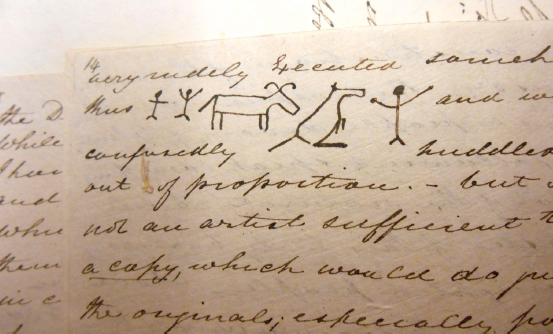
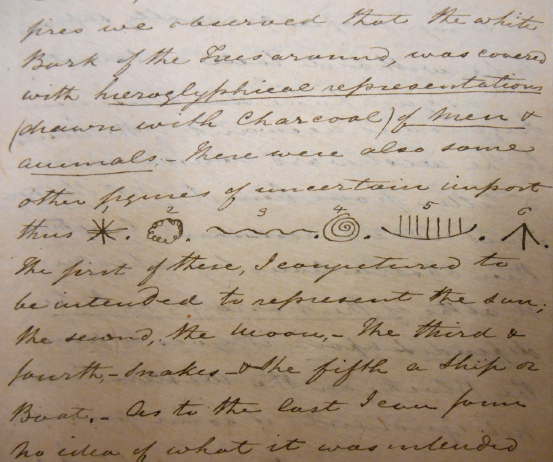
The Vandemonian War helped document what it destroyed. Colonists recorded many Aboriginal cultural practices during the war years, including these rare manuscript depictions of colonial-era Aboriginal tree art. Tasmanian Archive and Heritage Office: CSO1/1/323.
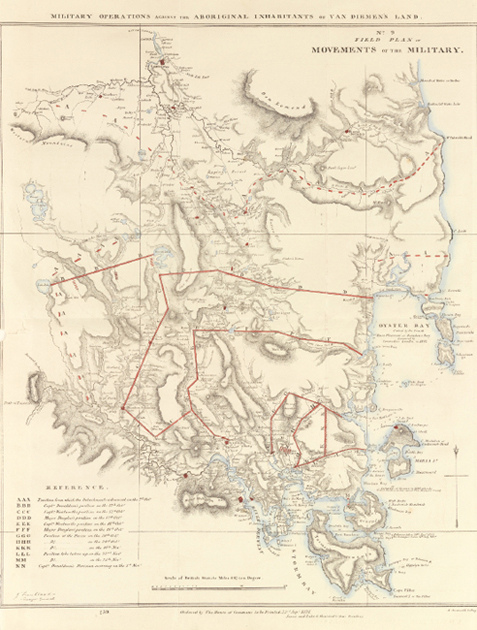
The General Movement of late 1830 was a massive military campaign designed to sweep the midlands clear of Aboriginal people. W.L. Crowther Library, Tasmanian Archive and Heritage Office: Surveyor General George Frankland’s ‘Field Plan of Movements of the Military’.
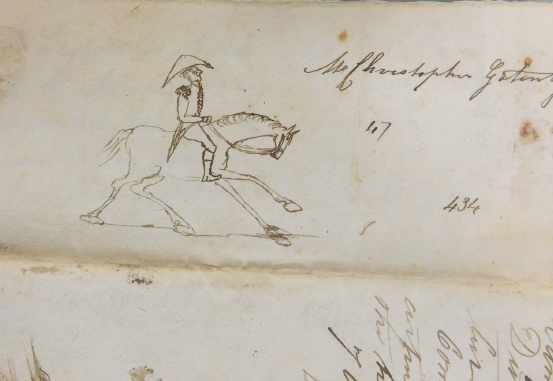
The General Movement of late 1830 was Australia’s largest domestic colonial military campaign. A list of volunteers contains a sketch of a mounted participant. Tasmanian Archive and Heritage Office: POL35/1/1.
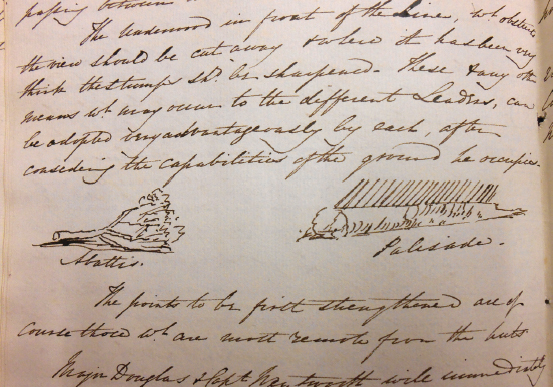
After a series of driving movements, the colonial forces established a fortified line to contain Aboriginal people while they were harassed by dedicated skirmishers. Tasmanian Archive and Heritage Office: CSO1/1/324.
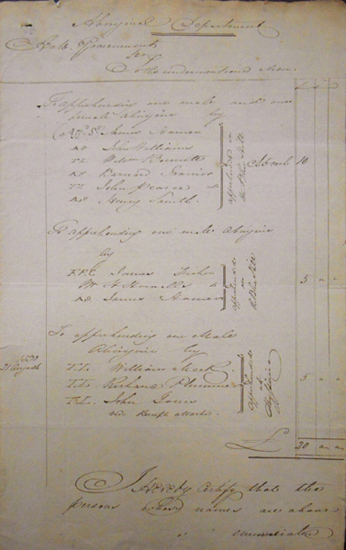
There is overwhelming evidence that Aboriginal tribes were systematically cleared from Van Diemen’s Land. This account from 1830 records colonial government payments to men who captured Aboriginal people. State Library of New South Wales: DLADD 83, Item 3: ‘Tasmania Aboriginal Department - Return, dated 16 May 1831 and signed by D. Wentworth, listing recipients of reward for apprehending aborigines’.