
Chapter 2
The yeomanry and territorial units which were stationed around Britain consisted of men who had volunteered to serve at least four years; a requirement of their service was to attend a two week Territorial camp each summer. This camp was, for the majority of the men, a rare break from the toil of their everyday working life. Many of the men were poor farm workers who could not afford to go away, and so this was an ideal opportunity for two weeks ‘holiday’ with a group of friends, and a good chance also to earn some extra cash: at that time five pounds if you provided your own horse! For men with the ability to ride, and with a horse in their possession, this was really a deal not to be missed in those days of toil and hardship, and many groups of friends enlisted for this reason.
During the years leading up to 1914, these summer camps for the Pembroke and Glamorgan Yeomanry were held throughout Wales. For example, the Pembroke Yeomanry held camps at: Garth (Brecon) in 1906, Pembrey in 1907, Penally in 1908, Llandovery in 1909, Penally in 1910, Builth Wells in 1911, Penally in 1912, Llandeilo in 1913 and Penally in 1914. The Glamorgan Yeomanry held camps at: Margam in 1906, Penally in 1907, Margam in 1908, Llandovery in 1909, Porthcawl in 1910, Builth Wells in 1911, Brecon in 1912, Llandeilo in 1913 and Porthcawl in 1914. Camp was a big part of the lives of the young men who attended, but one camp in particular, at Penally in the summer of 1914, was to remain etched in the memory of these young men for the rest of their lives due to the news they received while there.
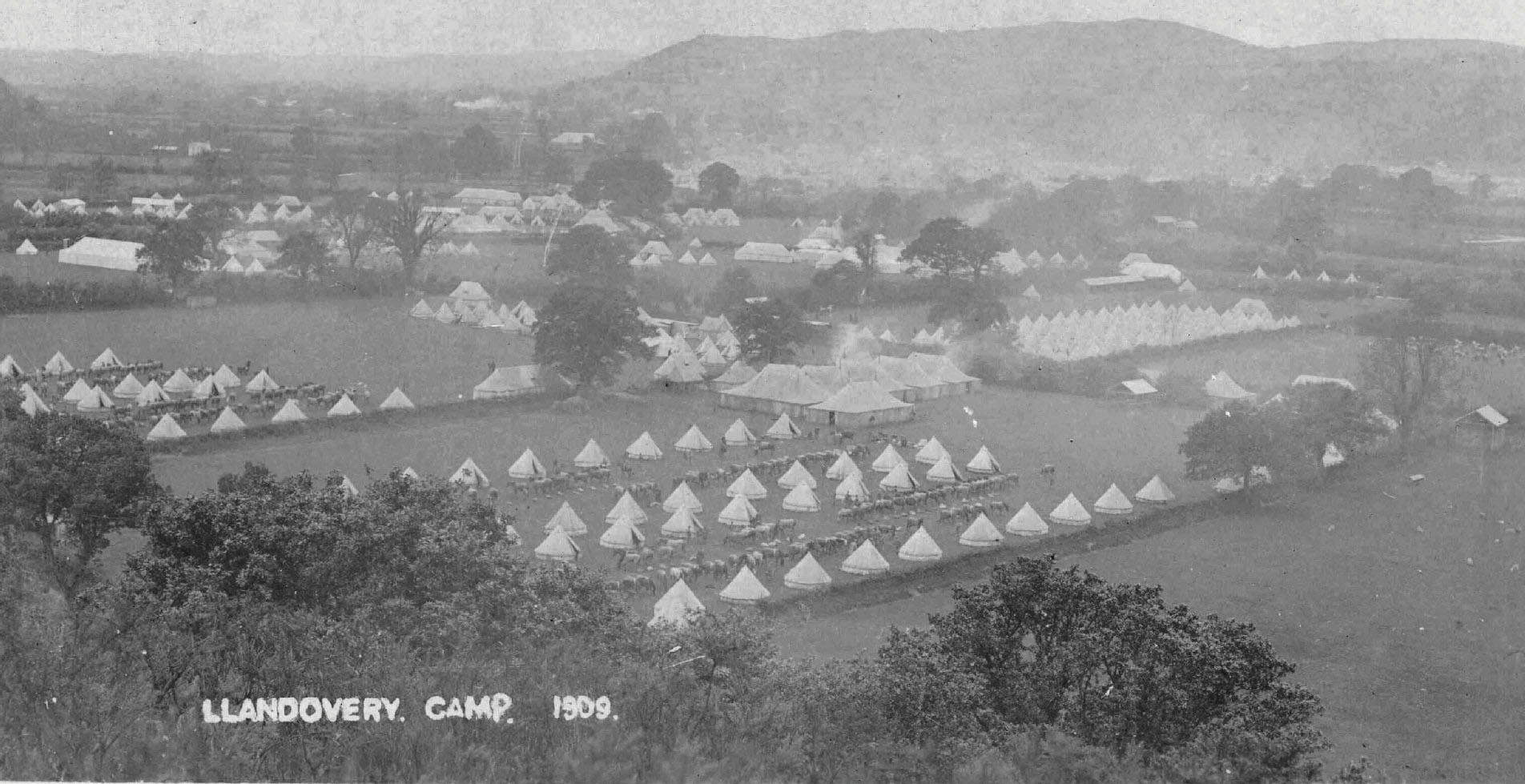
Llandovery Yeomanry Camp in 1909.
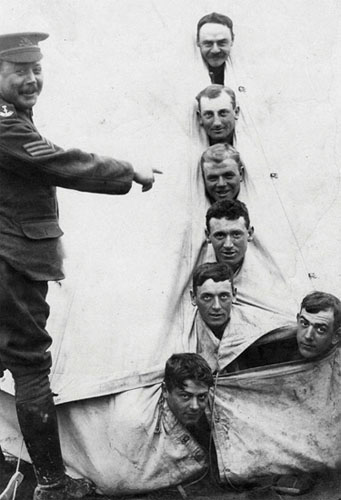
Some fun loving members of the Glamorgan Yeomanry at Llangammarch Wells Camp in 1913.
At the beginning of the twentieth century, the European powers were in the midst of a struggle for power. The mighty British Empire was at its peak, and an up and coming Germany, led by Kaiser Wilhelm II, was intent on building an empire of her own. A rapid rise in industrialisation in Germany provided the money, whilst the Kaiser devised a much stronger, deep water navy, threatening the domination of the Royal Navy. This led to an arms race, with Britain resolute in her decision to have a navy at least twice the size of her two nearest rivals combined. During the years 1908 to 1913 this arms race gathered momentum, fuelling distrust among the peoples of both countries, and unnerving France, who was still reeling from her defeat by Germany in 1871.
In mid 1914 Europe was a tinderbox of rivalries, and the spark that ignited it was the assassination of the Austrian Archduke Franz Ferdinand and his wife, on 28 June 1914 while on a visit to Sarajevo. After a great deal of gesturing by Germany, Austria-Hungary declared war on Serbia on 28 July 1914, which prompted Russia to mobilise her vast army. This in turn dragged Germany into war alongside her ally, and set into place the chain reaction which led to the British declaration of war on Germany and her allies on 4 August 1914 when the first German troops crossed the Belgian frontier.
The German plan was simple, following a concept conceived by Count Alfred von Schlieffen after the Franco Prussian War of 1870. Its aim was simply to sweep through Holland and Belgium, and enter France by its northern border, before brushing past the channel ports to Paris, where it was believed the French would capitulate. The devastating speed of the campaign would keep Britain out of the war.
The capture of key places in Belgium, vital for the maintenance and support of the advancing armies, proved to be a bigger stumbling block than had been anticipated; the cities of Liege and Namur were defended by a ring of (admittedly obsolete) forts and proved to be more than just a minor irritant. Elsewhere, the French war plan, involving an attempted push across the Rhine, fell into disarray and at the cost of vast casualties.
Joffre, the French Commander in Chief, however, understood what the Germans were trying to achieve and began to build up substantial forces on his left flank. These early battles involved numbers of men far greater than the hundred thousand or so men of the British Expeditionary Force who were despatched from home and who started to arrive just after the middle of August. The small force was despatched to join the left of the French line near Maubeuge and was to advance with them against the German right flank. By 23 August the two corps of the BEF had taken up their positions, with II Corps, under Smith-Dorrien, on the left and spread thinly along the line of the canal north of Mons.
The anticipated offensive was soon turned into an urgent need to withdraw as German forces in strength, two armies forming the left part of Schlieffen’s ‘sweep’, pushed against the British line. Thus began the long, hot days of the Retreat from Mons, ending on the Marne, south east of Paris. As well as losing significant numbers at Mons (mainly as prisoners) there was a hard fought action at Le Cateau on the 26th – again, expensive in casualties – before the BEF was able to continue to move southwards, largely unhindered by German operations.
The fight back of the allies came at the battles of the Marne and the Aisne; the German plan had been foiled. Both sides sought to outflank each other to the north. In October the BEF was moved to the northern flank once more and suffered at the battles of La Bassee and Ypres. By Christmas the front was in stalemate; but the BEF – frequently reinforced as it had been – was a shadow of its former self. With the regular army reserves almost exhausted, increasing numbers of Territorial units were sent to bolster the British army on the continent.
After the declaration of war the Pembroke and Glamorgan Yeomanry were also mobilised and, along with the Montgomery Yeomanry became part of the South Wales Mounted Brigade. The Pembroke Yeomanry, were still in their annual territorial camp at Penally on 4 August 1914, and were filled with excitement at the news.
As a mainly rural county, Pembrokeshire could not raise a full regiment, so recruiting had also taken place in Carmarthenshire and Cardiganshire. Pembrokeshire had two squadrons; A Squadron based at Yeomanry Headquarters in Tenby, with drill stations at Tenby, Maiden Wells, St Florence, Jeffreystone and Kilgetty: and B Squadron at Haverfordwest, with drill stations at Clarbeston Road, Newport and Johnston. C Squadron was based at Carmarthen, along with the 4th Welsh, and later the 15th Welsh, with drill stations at Whitland, Llandeilo, Ferryside and Llanelli. D Squadron was at Lampeter, with additional drill stations at Aberystwyth, Aberaeron, New Quay and Llandyssul. It was commanded by Lieutenant Colonel Owen Hird Spear Williams TD, and had a complement of 469 men. The Honorary Colonel of the Regiment was Colonel Sir Owen Henry Philipps Scourfield TD, a long standing Territorial officer.
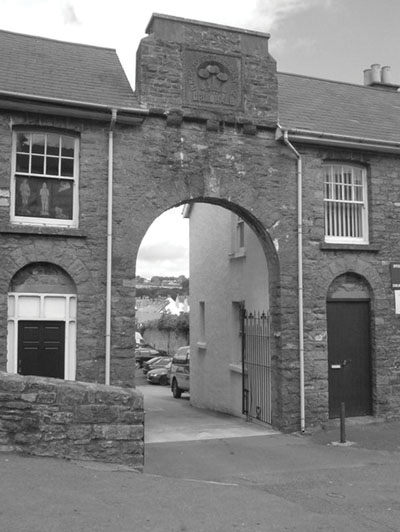
The Pembroke Yeomanry’s Drill Hall in Pembroke.
The Glamorgan Yeomanry had life a little easier, with a much larger population to draw upon. It had a complement of 596 men organised in three squadrons: A Squadron based at Swansea; B Squadron based at Bridgend; and C Squadron based at Cardiff. It was commanded by Lieutenant Colonel Charles Venables-Llewelyn, with its honorary colonel being Colonel The Right Honorable the Earl of Plymouth, CB. Not only did the Regiment quickly reach its full strength but it also had the luxury of a lengthy waiting list of men wanting to join. The officers of both regiments were recruited mainly from the county gentry, whilst other ranks were mostly farmers’ sons, tradesmen, coal miners and businessmen. Most of the officers and men of each squadron knew each other socially, as did the officers across the squadrons. This led to a much less formal relationship than in the regular army, although discipline was not generally sacrificed as a result and in reality made the yeomanry regiments a form of ‘Pals’ unit.
All of these yeomen had attested for home service only, as they were classified as Territorial soldiers. Their attestation forms required them to enlist initially for four years’ service at home, and so for the moment this is where they would be bound, although most of the men would sign disclaimers to this, stating their willingness to serve overseas. Those not willing to do so would, in the coming months, be replaced by men who were willing and so would move to the Second Line Regiments, the 2/1st Pembroke Yeomanry and the 2/1st Glamorgan Yeomanry.
Within two weeks of mobilisation, the various yeomanry squadrons in Pembrokeshire, Cardiganshire, Carmarthenshire and Glamorgan packed up, and began their move to assemble for entraining to Hereford. The Pembroke Yeomanry left their local depots for Carmarthen on 10 August 1914, with much public adulation and ceremony. Once assembly was completed at Carmarthen, the units entrained for Hereford that same day, while the men of the Glamorgan Yeomanry had assembled at Cardiff preparatory to their short train ride to Hereford. A report in the Carmarthen Journal of 12 August described the scenes in the town:
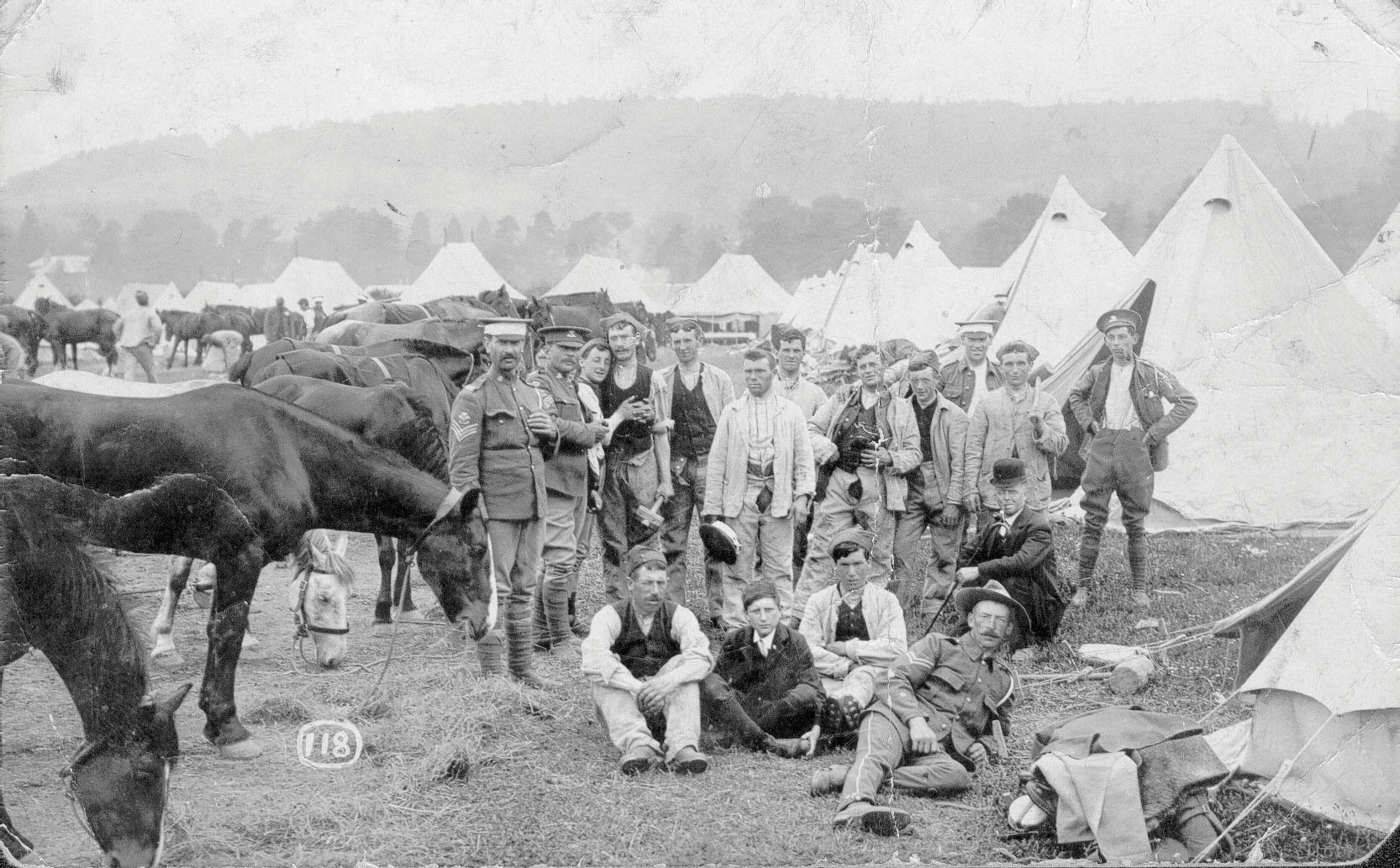
Penally Camp 1914: a group of men from the Llanddowror, St Clears and Laugharne area.
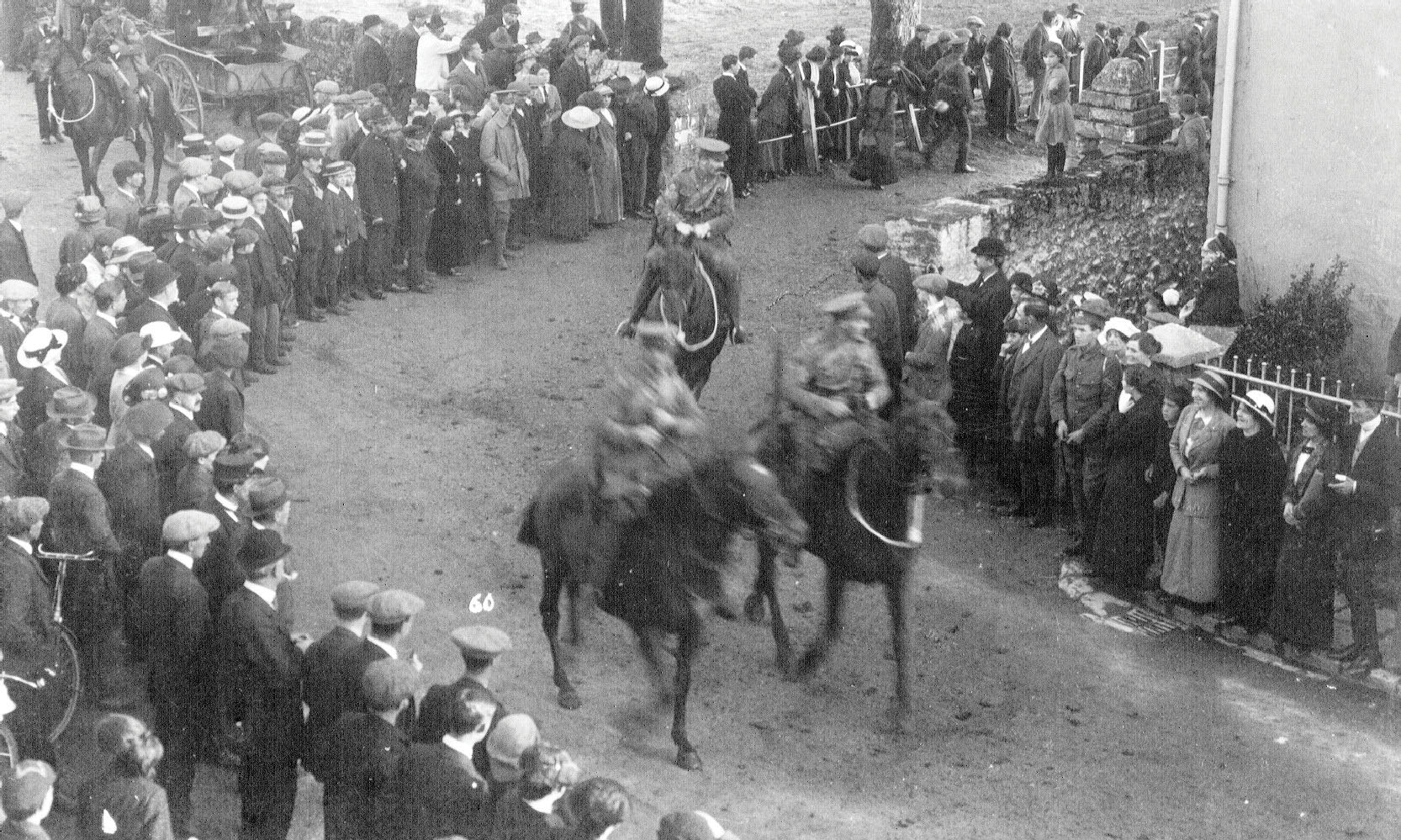
Members of the Pembroke Yeomanry leaving Penally for Norfolk (Sergeant Morgan on the left-hand leading horse).
‘The Pembrokeshire Yeomanry, who were called up last Wednesday evening, were billeted in the town until Monday morning, when they left for Hereford. At a later stage, it is believed, they will be drafted to Scotland. The men were aroused before 2 am, and by dawn the streets were ringing with the clatter of hoofs and the bustle of troops hurrying hither and thither. Half the men left on horseback, and the other half entrained to Whitland, where they rejoined their squadrons. Great activity prevailed in the town all day Sunday. The Yeomanry paraded in the morning and marched out to the country for several miles for exercise. All day long the town bore a martial aspect. Horses were continually arriving, and the work of shoeing proceeded at rapid pace. Everything seemed to be carried out with marvellous precision.’
At Hereford the men were asked to sign up for overseas service, with much speculation in local newspapers about the numbers of men who had refused. Within two days of the departure of the men, rumours were rife at Carmarthen and Haverfordwest about the lack of enthusiasm among them to attest for overseas service, and that less than 120 men had answered the call. The men of the Glamorgan and Montgomery Yeomanry reportedly attested en-masse, making matters even worse. In a very patriotic Britain, many of its people were disgusted by the grossly exaggerated stories of large numbers of yeomen who had declined to sign up for overseas service. This later prompted the second in command of the Pembrokeshire Yeomanry, Major Spence-Jones, to publish a list of the ‘non volunteers’ from within the ranks of the Pembrokeshire Yeomanry: this amounted to some forty eight men, and included their names, service numbers and addresses, causing some distress to the mens’ families. Spence-Jones wrote:
‘From time to time I have seen quoted in various South Wales papers the number of the Pembroke Yeomanry who have not volunteered for service abroad. As these numbers have invariably been incorrect I should be glad if a correct version might be made known. I enclose a roll with addresses of those men who have not volunteered, and should be glad if these might now be published. From the attached Roll it will be seen that Pembrokeshire provided 42 non-volunteers: Carmarthen 3, Cardigan 3, total 48. Any other men sent to the Reserve units are men who are medically unfit for service abroad.’
It can only be speculated what repercussions this public humiliation brought to this small band of men; in some cases, condemnation was not deserved. Some, notably Staff Quartermaster Sergeant Thomas Picton Davies, of Rhoswell, Haverfordwest, were middleaged (he was 49 years old in 1915), and had seen prior active service during the Boer War; others, such as Trooper John Henry John of Haverfordwest, were to die due to the strain of army life on home service, so would most likely not have been fit for overseas service anyway (he died on 30 October 1915, aged 37). Widespread condemnation of the publication of these names even reached Parliament. Matters were not helped when news that every single member of the 4th Welsh had volunteered for overseas service, and news of this spread throughout west Wales after the initial publication in the local press on 2 September.
While this furore was in full swing in south and west Wales, the yeomen moved from Hereford to Norfolk where, as far as they knew, they were to serve in their traditional role as cavalry, guarding the Norfolk coastline against invasion. The Pembroke and Glamorgan Yeomanry were billeted in various farms, homes and public houses at and around Heydon Hall and Haveringland Hall near Norwich. Here they were attached to the South Wales Mounted Brigade, 1st Mounted Division. This was a particularly beautiful part of England, and the yeomen enjoyed their time here, exploring the countryside on horseback, decked out in their impressive Yeomanry uniforms and regalia.
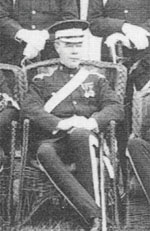
Lieutenant Colonel Owen Hird Spear Williams, Commanding Officer the Pembroke Yeomanry until his tragic death.
A local Pembrokeshire newspaper in September 1914 printed a small article on the local unit:
‘The Pembroke Yeomanry is now split up into three Squadrons around Aylsham, Norfolk. The active service squadron is quartered in Heydon Hall, near Norwich. Horses on lines and men undercover in stable yard, with plenty of wheaten straw to sleep on. Food good and well cooked. Bread limited but plenty of capital biscuits. Weather good, men drilling.’
Bad luck was to hit the Pembroke Yeomanry just weeks after settling into their duties at Norfolk. Their Commanding Officer, Lieutenant Colonel Owen Hird Spear Williams TD, was killed after he fell out of his bedroom window on the morning of 9 December, while attempting to clear out a gutter. He was fifty-two years old, and was buried with full military honours in Llawhaden Churchyard in Pembrokeshire. (Another newspaper erroneously reported that Williams was killed while riding on the estate at Haveringland.) Promoted to take his place was a member of the west Wales gentry, Cecil John Herbert Spence-Jones. He had married Aline Margaret Colby in 1908, the elder daughter of Major John Vaughan Colby, JP DL, late 4th Battalion, Worcestershire Regiment, of Ffynone, Boncath, Pembrokeshire. The marriage cemented his position in the officer ranks of the Pembrokeshire Yeomanry; he later assumed the name of Spence-Colby.
Nevertheless, the military machine ground on, preparing the volunteers for life overseas. During the coming weeks of training the men were given their first batch of inoculations. Many of the men were taken ill after these jabs and were sent home to recover. John James John travelled by train back to St Clears, where he walked the two miles back to his home at Halfpenny Furze. Here he recuperated, before saying a swift farewell to his friends and family, leaving Laugharne for the very last time at the end of October 1914.
By the time John arrived back at Thetford, other recruits had moved there. John Lewis and William Coyens of Lamphey had enlisted at Carmarthen at the outbreak of war and, after attesting for overseas service, were posted as part of a draft of ninety-five men to replace a similar number who had refused service overseas. They spent their last night in Carmarthen in relative comfort at the Lammas Hotel, before entraining at Carmarthen for Norfolk. On their arrival, the men were issued with two blankets and billeted in a massive barn on the Haveringland estate.
Trooper Bert Douglas, of Barry, a member of A Squadron, Glamorgan Yeomanry, wrote a series of long letters to his parents describing camp life in Norfolk, many of which touched on the deep impression that the Welshmen made on the locals, who must have been engrossed by the various concerts and rugby matches which took place to help entertain the men. The prowess of C Squadron, Pembroke Yeomanry, in the singing stakes was outweighed by the prowess of the Glamorgan men on the rugby field, however: a prowess that would gain a reputation that preceded the 24th Welsh to France in 1918 where the battalion rugby team became the first team to beat the Welsh Guards.
While the original groups of yeomen were busying themselves in Norfolk, the 2nd/1st Pembroke Yeomanry was being raised in Carmarthen, and the 2/1st Glamorgan Yeomanry in Bridgend. These battalions were destined to take the place of the Active Service Squadrons on their eventual move to Egypt late in 1915. Recruiting officers for the homeservice squadrons appealed for recruits: ‘All strong healthy lads 5ft 3 and upwards who can ride are eligible.’ These units were first based at Dorchester and then moved to Suffolk to join the 2nd/1st South Wales Mounted Brigade, which would take the place of the 1st/1st, which was to shortly leave for Egypt.
The Welsh yeomanry battalions were proving to be popular among young adventureseeking men. Over the coming months men entrained to the barracks at Carmarthen from Yorkshire, Manchester and London, with the intention of serving in a distinguished mounted regiment. One such volunteer, a Jew from Manchester, was Lawrence Marks, the son of Louis and Jessie Marks of Cheetham Hill. His most memorable taste of Carmarthen came in his first meal while billeted with an old lady in Lammas Street, when he was served a pie baked with pure lard: ‘strictly non-kosher’, as he later wrote in his memoirs.
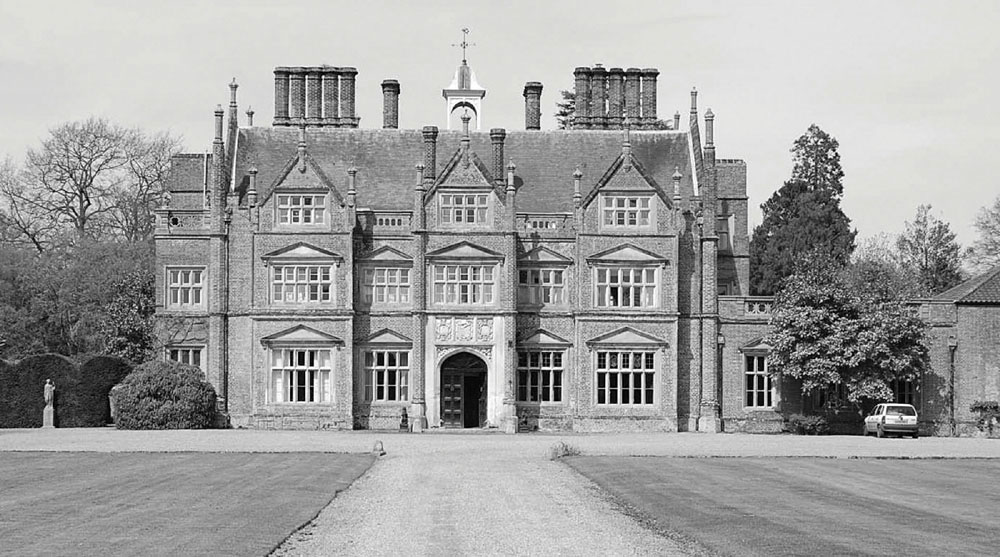
The impressive fascade of Heydon Hall, in Norfolk, a billet for many of the officers of the Pembroke and Glamorgan Yeomanry.
From October 1914 onwards the Pembroke and Glamorgan Yeomanry trained, while also providing a garrison force around the Norfolk Coast, to help shield it from the possibility of invasion. Apart from Harwich and Felixstowe, which had batteries of modern guns, the rest of the Norfolk coastline was undefended. Although it was generally accepted by the government that any invasion would be held off by the might of the Royal Navy, it was nevertheless decided to set a second line of defence in case the Germans did manage to breach the naval defences and land. As a precaution, Essex, Norfolk and Suffolk was each defended by one Infantry brigade, one mounted Yeomanry brigade, a brigade of Royal Field Artillery and two battalions of cyclists. In addition to this force, Harwich Fort had six battalions of infantry. Because large stretches of the coast were unsuitable to landings in strength, these troops were concentrated in the most likely landing places: the North Norfolk coast between Cley and Sheringham, the open beaches south of Lowestoft and the stretch of coast between Walton on Naze and the mouth of the river Colne. A series of defence lines were planned to bar the advance on London from any landings in Norfolk or Essex. The London Defence Position was put into operation in 1915 on a line from Epping to the Thames, with an outer position at Brentwood and, later, a third line, running from Chelmsford to Maldon. In 1915 an armoured train was stationed in Norfolk based at North Walsham, ready to move at a moment’s notice.
On the dawn of Christmas Day 1914, the South Wales Mounted Brigade, following news of an imminent German landing, was roused from its sleep to man the coastal defences. After a nervous day’s wait, the men were stood down as it was realised that this was a false alarm. The members of the 2/1st Pembroke Yeomanry were to get a proper taste of a German assault the following year, though, when they were stationed at Lowestoft, guarding the North Sea port. During the morning of 25 April 1916 a German fleet had positioned itself off-shore and began a heavy bombardment on the town. The main aim had been to support the Irish Easter Uprising, which it successfully carried out, causing damage to over 200 houses, before being driven off by the Royal Navy. The Pembroke Yeomanry aided in the rescue of people from collapsed houses and in stemming fires over the remainder of the day, helping to minimise the damage to the town and the disruption to an important fishing port.
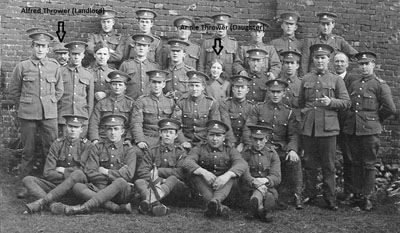
Men of the Pembroke Yeomanry from the Lampeter area posing outside the Bell Inn at Cawston, with the Landlord, Alfred Thrower, and his daughter Annie.
Back at the HQ of the South Wales Mounted Brigade at Carmarthen, recruits continued to pour in. On 29 February 1915 a young Yorkeshireman travelled by train to Carmarthen. Gerald Marston Owen had worked at a YMCA Camp at Scarborough and had keenly observed the soldiers of different regiments who frequented the hospitality of the camp, before making his mind up to join a cavalry unit. He chose the Pembroke Yeomanry and arriving at Carmarthen Station on a cold, blustery day was to have his first meeting with a Welshman:
‘After a ten hours journey I arrived at this neat little Welsh market and agricultural town. On stepping out of the train my first question was to ask for the nearest way to the recruiting office. This I asked of an old porter who took my ticket. To my surprise he stared at me in dumb amazement, at the same time shaking his head and uttering some terrible oaths. What he said I never knew, but to hear him speak made me wonder whether I had already arrived in a foreign land. This was then my first encounter with the Welsh language and I shall never forget the impression it gave me on that dark, cold night of February. Everywhere people were chattering in this awful language. I have heard many since, but never one so terrible as this.’
His experience got better as he was led to his billets with an elderly woman and her teenage daughter and Gerald tasted the best of Welsh hospitality over the coming days. Carmarthen at that time was buzzing, and absolutely packed with soldiers and men wishing to join the colours. The town was the Headquarters of the South Wales Mounted Brigade, but was also home to the local Territorial battalion, the 4th Welsh. In October 1914 it also housed recruits for one of the new Service battalions of the Welsh Regiment, the 15th Welsh, or Carmarthen Pals. Camaraderie between the men of each unit abounded, but there was also friction in the air when it was discovered that the townspeople who were billeting troops got more for a Pembroke Yeoman that they did for one of the Welsh Regiment men. (17s 6d compared to 23s 7d – The Welshman, 16 April 1915).
During February, a court case involving the Pembroke Yeomanry was headline news. At Tenby, a local newspaper proprietor, Frank B. Mason published an article in The Tenby Observer on 20 January 1915, condemning the yeomanry for remaining on home service while the future of the Empire was at stake. A similar article the following week led to the prosecution, under the Defence of the Realm Act, of Mason and his editor. Three charges were brought against them:
‘(1) That on January 20th, in the issue of the Tenby Observer of that date that the defendants made statements likely to prejudice the recruiting, training. discipline and administration of certain of His Majesty’s forces, to wit, the Pembroke Yeomanry, and did thereby contravene Regulation 27 of the Defence of the Realm refutations:
(2) That on January 20th the defendants made similar statements with regard to His Majesty’s army, and:
(3) That on the 27th January he made similar statements with regard to the Pembroke Yeomanry.’
Mason had alleged that the officers of the Pembroke Yeomanry were unwilling to go overseas and fight, and that they were falsely declaring their men as unfit for overseas service: serious and damaging allegations. However, Mason lost the case, and was heavily fined.
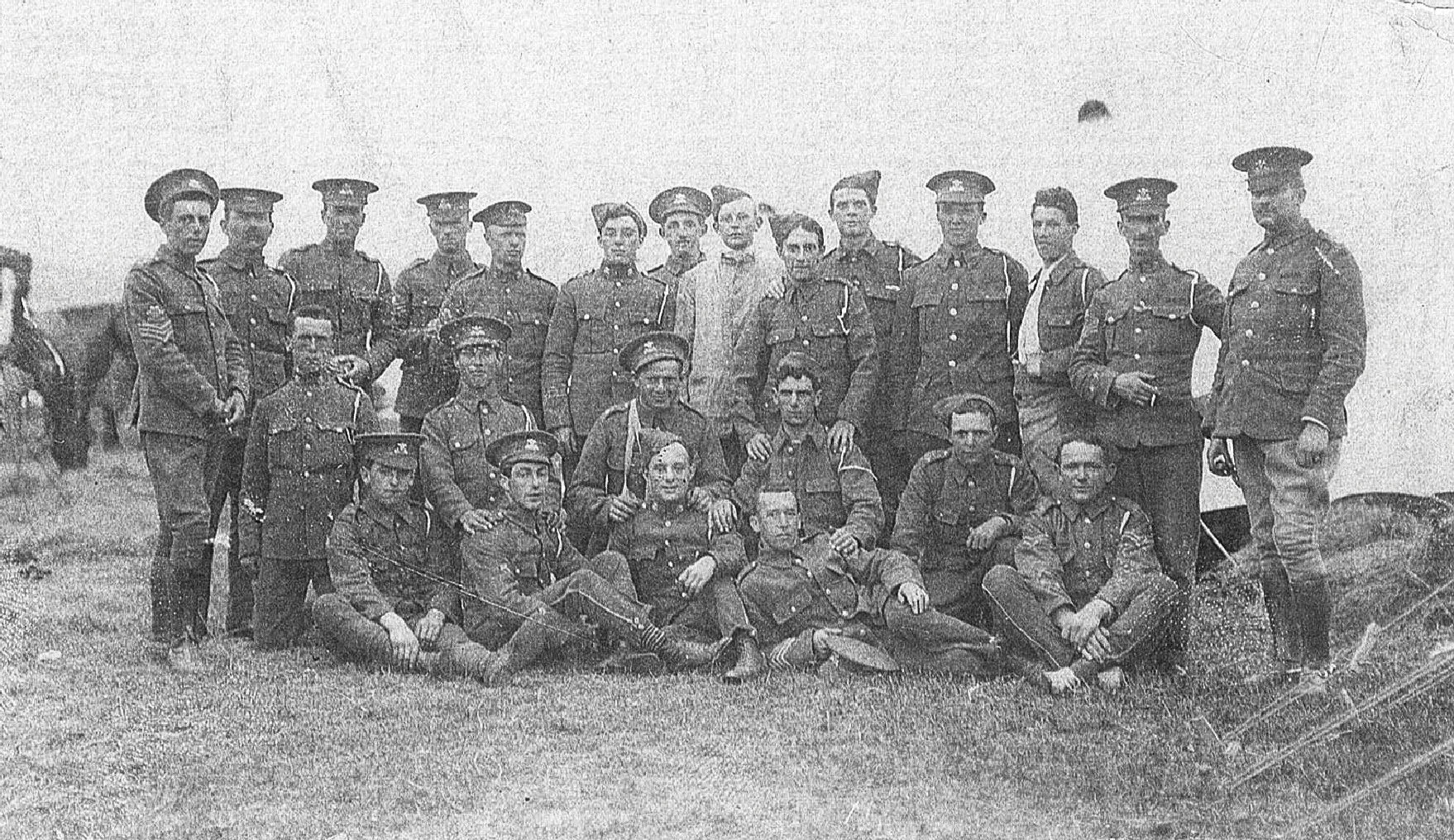
A group of Pembroke Yeomen, from the collection of W. J. Jenkins PIY.
In Norfolk, the men of the South Wales Mounted Brigade were readying themselves for a possible move overseas. On 25 April 1915 the British, Australians, New Zealanders and French landed forces on the Gallipoli Peninsula, at the mouth of the Dardanelles Straits. A fresh front had been opened here to attempt to force the passage of the Dardanelles, with the aim of sending a Royal Navy force into the Black Sea to bombard Constantinople, and force Turkey out of the war. The Turks were Germany’s ally, and had a strong influence in the Middle East, with the territory occupied by the old Ottoman Empire holding vast reserves of oil, essential to the Allied war effort. The Turkish forces were potentially powerful, ably commanded by German Officers, and so this was thought to be an easy way out of fighting a prolonged war with Turkey.
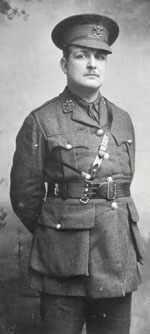
Second Lieutenant Elydyr Lewis, of Carmarthen.
In fact this easy victory was not to materialise. The Turks had been forewarned of the invasion by a failed naval bombardment of the various forts dotted on the peninsula, and had moved troops into the area as a precaution. The landing forces of that first day failed to get more than a few hundred yards from their beaches, and the campaign was to bog down into the same stagnant warfare as had the fighting on the Western Front.
As an attempt to break the stalemate, troops were diverted from the Western Front, to the disgust of Sir John French, the British Commander in Chief, and rumours spread amongst the yeomen of the possibility of their moving to the Mediterranean to reinforce the Garrison on Gallipoli. On 19 July 1915 the 53rd (Welsh) Division was sent to the Mediterranean. Amongst their units were the 4th and 5th Battalions of the Welsh Regiment, recruited in south and west Wales alongside the Pembroke and Glamorgan Yeomanry. A young officer of the 4th Welsh, Second Lieutenant Elydyr Lewis of Llanwrda, wrote home to his sister to inform her of his departure aboard the S.S. Huntsend on 19 July 1915. Among the men aboard Huntsend were friends and family of many of the Yeomanry and they were destined to cross paths in the future once more and fight together in the Holy Land.
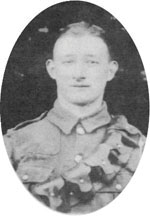
Trooper John Evan Phillips, of Robeston Wathen, who drowned in Norfolk on 12 August 1915.
Throughout the summer of 1915 the South Wales Mounted Brigade remained in Norfolk. The officers and men posed for group photos, and became well known locally, attending church services on Sundays, and taking parts in local sports events. On 12 August a party of men of the Pembroke Yeomanry machine-gun section had the afternoon off, and went swimming at Mundesley. The tide began to ebb, and Private John Evan Phillips, of Robeston Wathen, got into difficulty. A friend, James James, swam to his aid, and tried to bring him ashore, but began getting into difficulty himself and let go of Phillips, who drowned, despite the additional efforts of Lieutenants Penn and De Rutzen, who had also waded out to try and rescue him. His body was recovered several days later, and he was brought home for burial at Robeston Wathen Churchyard.
During November 1915 the 1st Mounted Division became a dismounted formation. Now the men were essentially infantry and the majority were not to use their horses again. By this time it was obvious that the Gallipoli campaign was doomed to failure, and the prospect of the evacuation of the Peninsula had been decided. After a visit by Earl Kitchener to Gallipoli, he deemed the situation impossible, and so on 6 January 1916 the final phase of the evacuation of the troops began, and was complete within three days, with the loss of just two lives.
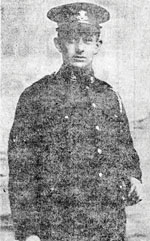
Trooper William Grove, Glamorgan Yeomanry. A survivor of the Porteynon Lifeboat disaster.
In the meantime, many of the yeomanry were given leave to return to Wales and visit their families. One of the men had a very interesting tale to tell when he returned. Private William Grove was a member of the Glamorgan Yeomanry, from Porteynon, a seaside village near Swansea, and returned home on leave at the end of December. On New Year’s Day 1916, a great storm brewed up in the Bristol Channel and a steamer, Dunvegan, ran aground at Pennard. The Cox of the Porteynon lifeboat, The Janet, Billy Gibbs, struggled to find a crew, so Grove volunteered, as two of his uncles were already part of the crew. They boarded The Janet, and after the horse team had pulled the boat into the water, the crew rowed out into Porteynon Bay, past Oxwich Point. At around 1.30 pm a huge wave struck The Janet, capsizing her, and throwing her crew into the sea. After what must have seemed like an eternity, the mast snapped off The Janet, and she righted, allowing the crew to get back aboard, however two men were missing; 2nd coxswain William Eynon and lifeboatman George Harry. The stricken lifeboat then began a frantic search for the men, but capsized again, and in the effort to right the boat, Coxswain Gibbs was washed away. The survivors spent a terrible night huddled together in the helpless Janet, and on the following day managed to land at Porteynon. The three men are commemorated on a memorial in the village.