
SIX
REMINGTON L. NEVIN
INTRODUCTION
Service members, including women, who deploy on military operations to certain tropical and subtropical areas may be at risk of contracting malaria, a serious and potentially fatal disease. An understanding of the unique challenges faced by females in the prevention of malaria is therefore an essential component of caring for women at war.
Optimal prevention of malaria in women rests on the interruption of disease transmission. As malaria is uniquely transmitted by the bite of an infected female Anopheles mosquito, prevention among women should emphasize measures intended to avoid mosquito bites. Women in deployed settings may face difficulties in the avoidance of mosquito bites; therefore, where appropriate, mosquito avoidance measures may be supplemented by the use of prophylactic antimalarial medications. In this chapter we will review considerations within the US military in both interruption of disease transmission as well as the use of prophylactic antimalarial medications, with a specific focus on the unique issues faced by female Service members.
Currently deployed antimalarials, including those developed by the US military, have been tested predominantly among men, and therefore in many cases direct human safety and reproductive hazard data are not available to inform their rational use in women. However, post-marketing surveillance and animal studies provide opportunities to understand potential sex differences in their effects.
The pharmacokinetics and pharmacologic effects of common antimalarials may vary significantly in women, potentially affecting their tolerance and safety profiles. In women, some antimalarials have been demonstrated to exhibit unique patterns of adverse events, potentially affecting compliance. Doxycycline may predispose to vaginal candidiasis. Women may experience a higher risk of neuropsychiatric symptoms from mefloquine and exhibit a higher prevalence of contraindications to its use. Although direct evidence is often lacking, information on the effects of antimalarials on fertility and risk of pregnancy loss can be derived or reasonably inferred from a combination of in vitro and animal model studies, as well as from theoretical considerations.
In counseling a female military Service member deploying to a malaria endemic area, the military clinician must consider indications for and absolute and relative contraindications to causal, suppressive, and terminal prophylaxis. The military clinician must also consider the potential deleterious effects of common pharmacological interactions. Common adverse reactions must be considered and discussed with the female Service member, with particular attention to tolerability and adherence. For some women, and in some cases where risk of malaria is low or in special circumstances, mosquito avoidance measures alone may be appropriate and must be considered by the military clinician and accommodated by policy.
In this chapter, the history and epidemiology of malaria in female US military populations are reviewed. Current strategies for the prevention of malaria are discussed, with an emphasis on mosquito avoidance and the potential complications in implementing avoidance measures in deployed settings. The chapter then discusses the history of antimalarial development in military settings, with a focus on available data on safety and tolerability in females. Information on differential pharmacokinetics, pharmacodynamics, patterns of adverse effects, and compliance is presented. This information is then used to discuss important considerations in the selection of an antimalarial or antimalarial combination appropriate for the deploying female Service member. The chapter then discusses considerations for forgoing prophylaxis in certain low-risk settings and in special circumstances, options for early diagnosis and treatment, and considerations for the medical evacuation of women in deployed settings who remain at high risk of malaria.
HISTORY AND EPIDEMIOLOGY OF MALARIA IN MILITARY WOMEN
Although malaria has been a potential threat to US military women at war since as long as women have been serving alongside men, there is surprisingly little information on the historical sex-specific epidemiology of the disease. Published reports on the role of women in World War I make no reference to malaria (Gavin, 1997). Similarly, although military historical accounts confirm that women in the World War II Army Nurse Corps were known to have contracted malaria, particularly in the Pacific Theater (US Army Center for Military History, 2003), the definitive treatise on the epidemiology of malaria in World War II excludes a specific discussion of the effects of the disease on women, and does not break down incidence figures by sex (Mowrey, 1963). During the Korean War, women were not mentioned in prominent published case studies of returned veterans with malaria (Aquilina, 1952; Hall & Loomis, 1952). The authoritative study of malaria among Korean War veterans also made no mention of disease occurring in females (Schwartz & Tuttle, 1956). A study of the history of malaria in the US Navy from World War I through the Vietnam War (Beadle & Hoffman, 1993) made no mention of malaria among women, nor did studies of imported malaria since the Korean era (Porter, 2006) or the Vietnam era (Powell, 1978). Detailed historical studies of the roles and experiences of female nurses in the Vietnam War also do not discuss malaria as a significant concern (Vuic, 2010).
US Servicewomen appear to be first mentioned in the published literature during the Somalia campaign of 1993 (Smoak, Writer, Keep, Cowan, & Chantelois, 1997), though only in relation to prophylaxis and not specifically in relation to malaria risk. Neither the definitive study of malaria among US personnel (Wallace et al., 1996) nor case series and ecological studies (Centers for Disease Control and Prevention, 1993; Sánchez, DeFraites, Sharp, & Hanson, 1993; Wallace et al., 1996) make any mention of malaria occurring in women.
With the advent of electronic medical records and automated medical surveillance systems (Rubertone & Brundage, 2002), by 1999 the US military had published its first annual review of malaria cases, reporting incident cases by sex. Of 61 cases of malaria in 1998 occurring among active duty US Army personnel, one occurred in a female Service member (Army Medical Surveillance Activity, 1999a). The following year, an expanded analysis of cases from 1997 to 1999 identified two of 108 malaria cases among active duty personnel occurring among females (Army Medical Surveillance Activity, 1999b). Automated surveillance permitted the routine publication of figures, summarized in Table 6.1, among both active duty US Army personnel and, in subsequent years, all US military personnel. Unfortunately, not all published analysis during the period commented specifically on women; a detailed study of 365 presumed Korea-acquired cases of malaria failed to stratify cases by sex (Armed Forces Health Surveillance Center, 2007). Additionally, these published reports do not provide incidence rates.
Despite these shortcomings, limited conclusions can be drawn. Overall, during the 13-year period, of 799 cases of malaria identified in these published reports, only 41 (5.1%) were among females. Considering that approximately 10% of overseas deployments during the period were among female military members (Armed Forces Health Surveillance Center, 2012a), these figures suggest that on a population level, females are at reduced risk of malaria relative to males.
TABLE 6.1 Published Summaries of Malaria Cases in the US Military, 2000–2012, by Sex
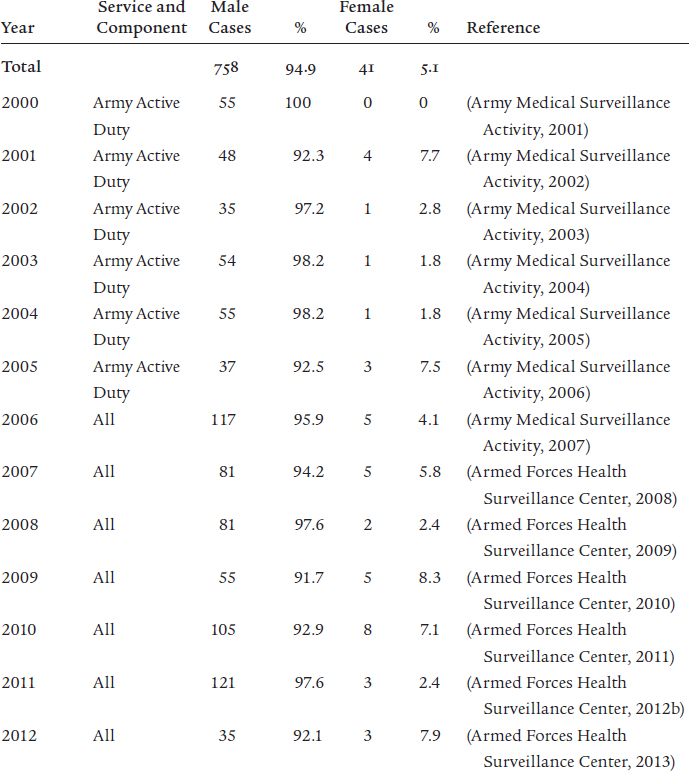
The reasons for this apparent protective effect among women is unclear from these figures, but plausibly may relate to policies in place at the time precluding the large-scale assignment of women to combat units in forward-deployed areas (Ferber, 1987) where large outbreaks occurred during the period (Kotwal et al., 2005; Whitman et al., 2010). With the full integration of women into such units (Steinhauer, 2013), it is reasonable to anticipate that future risk will be more proportional by sex, underscoring the importance of emphasizing malaria prevention among female Service members during future deployments.
STRATEGIES IN MOSQUITO AVOIDANCE
In forward-deployed areas, few obvious differences should exist in the risk of mosquito exposure by sex, and prior discussions of mosquito avoidance in the military have not noted any potentially unique needs of women in this regard (Robert, 2001). Studies of compliance with recommended mosquito avoidance measures find no significant differences by sex (Cobelens & Leentvaar-Kuijpers, 1997), and there is limited information in the published literature on sex differences in the effectiveness of these strategies.
While formal data are lacking, a long-sleeved and long-legged military uniform, properly worn by both sexes, should provide equal protection against mosquito bites. Among certain women, as with men, this measure should be supplemented either by the manual treatment and regular retreatment of military uniforms with an appropriate pyrethroid insecticide such as permethrin, or by the wear of factory-treated uniforms (Faulde, Uedelhoven, Malerius, & Robbins, 2006), such as those recently adopted for use by the US Army (US Army, 2012), and by the careful and regular application of topical insect repellants, such as DEET. During overnight hours, the proper use of bed nets is also essential. The doctrinal application of these measures (Gambel et al., 1998) should in theory provide nearly 100% protection against mosquito bites (Croft, Baker, & von Bertele, 2001; Robert, 2001) and hence disease transmission.
Unfortunately, deviations from these ideal conditions routinely occur during deployments (Kotwal et al., 2005; Ledbetter, Shallow, & Hanson, 1995), complicating prevention efforts. Regular use of topical insect repellants is uncommon (Vickery et al., 2008) and frequently occurs only in response to perceived nuisance biting (Gambel et al., 1998). Frequent doffing of the military uniform, both during off-duty hours on established bases and during reprieves from active operations in forward-deployed areas, and the increasingly doctrinal wear of military physical training uniforms, which leave significant skin exposed, may place Service members at heightened risk of direct contact with Anopheles mosquitos, particularly during evening and early morning hours, when biting activity is high (Taye, Hadis, Adugna, Tilahun, & Wirtz, 2006; Zimmerman et al., 2013). Risk of exposure during these times can be minimized by the wear of physical training uniforms with long sleeves and legs and by their pre-treatment (often overlooked during deployment planning) with an appropriate pyrethroid insecticide, as well as by scheduling physical training and other outdoor activities at times other than peak biting times. Similarly, while the widespread availability of air conditioning (National Public Radio, 2011) and containerized housing units (Myers, 2009) in many deployed environments has lessened the need for bed nets, in highly malaria endemic field settings their employment should be strictly enforced, and adequate training provided prior to deployment on their proper use.
Among pregnant women and women at risk of pregnancy during deployment, the use of pyrethroid insecticides and DEET evokes concern (Koren, Matsui, & Bailey, 2003) for potential reproductive harm and synergistic toxicity (Abu-Qare & Abou-Donia, 2003). It is known that DEET may cross the blood placental barrier (McGready et al., 2001) and may exert neurological effects (Sudakin & Trevathan, 2003). To reduce concerns of potential fetal harm, it is therefore appropriate for deployed women at risk of pregnancy to have access to an untreated military duty uniform or physical training uniform should pregnancy be diagnosed, to wear in areas such as air-conditioned living quarters, where alternative mosquito avoidance measures can be effectively implemented, while awaiting return in accordance with policies that preclude the continued deployment of women while pregnant (Grindlay & Grossman, 2013). As rates of unintended pregnancy among military women exceed 10% annually (Grindlay & Grossman, 2013; Lindberg, 2011), and rates of pregnancy during deployment exceed 2% annually (Nevin & Caci, 2013), ensuring the availability of such untreated uniforms at clinics where pregnancy is diagnosed may aid in reducing early prenatal exposure to pyrethroids, without requiring females at risk of pregnancy to deploy with these items.
ISSUES IN THE DEVELOPMENT AND TESTING OF ANTIMALARIALS IN WOMEN
As mosquito avoidance measures alone have historically been inadequate in deployed settings in preventing significant outbreaks of disease, US military policy has long emphasized supplementing these with the command-directed use of prophylactic antimalarials (McRoy, 1963). This emphasis, together with strategic shortages of the traditional prophylactic drug quinine, has historically motivated the US military to sponsor the development and testing of synthetic antimalarial compounds (Meshnick & Dobson, 2003). Such efforts, beginning formally during World War II, led to the development of primaquine and the rediscovery of chloroquine (Coatney, 1963; Pou et al., 2012); a similar effort two decades later led to the development of the quinine derivative mefloquine (Croft, 2007a). Clinical testing in such programs has traditionally been performed predominantly among men, leaving little direct evidence of safety in women, and leaving information on pharmacokinetics and reproductive hazards to be extrapolated from studies in males or laboratory animals.
Clinical drug testing during World War II was conducted primarily on two types of subjects: male prison inmates, and adult neurosyphilitic and psychiatric patients. Of five clinical testing sites employed during the effort, only one included patients of both sexes (Wiselogle, 1946). Yet owing to the sheer number of compounds tested during the war, many compounds, including chloroquine, appear to have been tested exclusively among male subjects (Berliner & Butler, 1946). In early postwar years, further testing of chloroquine (Alving et al., 1948) and primaquine also appear to have been performed almost exclusively among male subjects (Most, 1963).
A continued reliance on male prisoners and military personnel as test subjects during the development of mefloquine two decades later continued this trend (Croft, 2007a). Even studies performed among US civilian volunteers exclusively enrolled men (Reba, Barry, & Altstatt, 1983), and there were no studies involving pregnant or lactating women submitted at the time of initial US licensing of the drug (F. Hoffman-LaRoche, 1989). A subsequent US government study confirmed that 89% of subjects in pre-licensing trials of mefloquine were male (Burke, 1996). Similarly, early military-sponsored trials of tetracyclines as antimalarials conducted during the same period, including trials of minocycline, tetracycline, and doxycycline, were conducted exclusively among males (Clyde, Miller, DuPont, & Hornick, 1971; Rieckmann et al., 1971; Willerson, Rieckmann, Carson, & Frischer, 1972). In contrast, early studies of more recently licensed antimalarials, such as atovaquone/proguanil, involved significant numbers of female subjects (Looareesuwan et al., 1999; Overbosch et al., 2001; van der Berg, Duvenage, Roskell, & Scott, 1999).
Reassuringly, as antimalarial drug development and testing remains a US military priority (Peake, Morrison, Ledgerwood, & Gannon, 2011), recent military studies of previously licensed drugs have taken care to include significant numbers of female subjects (Ebringer et al., 2011; Elmes, Nasveld, Kitchener, Kocisko, & Edstein, 2008; Nasveld et al., 2010).
TOLERANCE AND SAFETY OF ANTIMALARIALS IN WOMEN
In additional to limited pre-marketing data, post-marketing studies have provided significant information on the tolerance and safety of currently deployed antimalarials when used in women.
Primaquine
Unlike the prophylactic drugs discussed in this chapter, primaquine has traditionally been used within the US military primarily as radical cure or as presumptive treatment to prevent relapsing forms of the disease. Recently, primaquine has attracted significant interest for its potential use in prophylaxis (Hill et al., 2006), although the drug lacks a formal indication for this purpose (Magill, Forgione, Maguire, & Fukuda, 2014). Although major reviews on primaquine make no reference to differential tolerance of the drug among women (Clyde, 1981; Hill et al., 2006; Weniger, 1979), limited post-marketing studies suggest that women may experience significantly higher serum concentrations with repeated (Binh et al., 2009) but not single dose use (Elmes, Bennett, Abdalla, Carthew, & Edstein, 2006), although the clinical significance of these findings is not known. Despite evidence of potential concentration-dependent brainstem neurotoxicity (Schmidt & Schmidt, 1951), and evidence of serious adverse events requiring hospitalization in approximately 1% of women (Ebringer et al., 2011), the drug is generally considered reasonably well tolerated at the current recommended daily dose of 30 mg (Magill et al., 2014), with concerns for adverse effects traditionally focused on the possibility of a potentially fatal hemolytic anemia among those with glucose-6-phosphate dehydrogenase (G6PD) deficiency. For this reason, in routine use, the drug is generally considered contraindicated among those who have not been confirmed to have adequate levels of G6PD activity, and owing to the inability to infer fetal G6PD status, the drug is therefore contraindicated during pregnancy (Hill et al., 2006).
In single dose studies, the drug appears not to significantly impact the metabolism of oral contraceptives (Back, Breckenridge, Grimmer, Orme, & Purba, 1984), but pharmacokinetic evidence exists to predict significant drug interactions (Back, Purba, Staiger, Orme, & Breckenridge, 1983), particularly within various cytochrome P450 enzyme pathways (Li, Björkman, Andersson, Gustafsson, & Masimirembwa, 2003; Louisa, Soetikno, Nafrialdi, Setiabudy, & Suyatna, 2012; Pybus et al., 2012, 2013), and no specific studies have been performed among women to rule out clinically significant interactions with hormonal contraceptives with repeated dosing, such as may occur during use as primary prophylaxis.
Chloroquine
Although considered too toxic for human use when first synthesized by the Germans (Coatney, 1963; Pou et al., 2012), chloroquine has subsequently been considered well tolerated at prophylactic doses. At high doses, chloroquine may induce visual disturbances, including difficulties in near-far accommodation and diplopia (Alving et al., 1948). Idiosyncratic cases of toxicity marked by a range of symptoms, including confusion, disorientation, agitation, aggression, persecutory delusions, and hallucinations, have been reported (Brookes, 1966; Good & Shader, 1977; Rab, 1963; Rockwell, 1968). Motor and coordination symptoms have also been reported with the drug (Singhi, Singhi, & Singh, 1979).
Despite rare case reports of congenital abnormalities including atrial flutter (Feigl, Feigl, Shem-Tov, Brish, & Rotem, 1975) and vestibular disorders (Hart & Naunton, 1964) associated with use during pregnancy, chloroquine has traditionally been recommended as the drug of choice for use during pregnancy in areas of chloroquine-sensitive malaria (Irvine, Einarson, & Bozzo, 2011). Although less commonly used today in the prophylaxis of malaria (LaRocque et al., 2012), chloroquine and its derivatives are increasingly used at low doses, predominantly among older women (Jover et al., 2012) in the chronic treatment of rheumatologic disease (Thomé, Lopes, Costa, & Verinaud, 2013). In single dose studies, chloroquine appears not to significantly impact the metabolism of oral contraceptives (Back et al., 1984), although effects on the metabolism of hormonal contraceptives during long-term use cannot be ruled out.
Doxycycline
Doxycycline is generally well tolerated by military Servicewomen, but carries a risk of potentially serious esophagitis (Morris & Davis, 2000), and less serious adverse events that nonetheless markedly impact tolerability, particularly complaints of vaginitis (Tan, Magill, Parise, & Arguin, 2011), and photosensitivity or sunburn, which may affect roughly a quarter of military users (Wallace et al., 1996). In randomized blinded trials, 3% of users discontinued doxycycline, but in retrospective studies of long-term field use, 20% reported discontinuation due to intolerance (Korhonen, Peterson, Bruder, & Jung, 2007). Although not traditionally considered a psychoactive compound, recent animal evidence suggests that doxycycline, as other tetracyclines (Dean, Data-Franco, Giorlando, & Berk, 2012), may also have significant behavioral effects (Ferreira Mello et al., 2013).
Owing primarily to concerns of permanent staining of the developing teeth, doxycycline has traditionally been considered contraindicated at all stages of pregnancy (Tan et al., 2011). Some authorities have noted that since dentition is formed only after the first trimester, this recommendation may be too strict, and they consider doxycycline “as safe as mefloquine” for use exclusively during the first trimester (Hellgren & Rombo, 2010), or provided therapy concludes prior to the fourth month of pregnancy (Irvine et al., 2011).
Conflicting historical guidance exists regarding use with hormonal contraceptives. In a well-designed pharmacokinetic study, short-term use of doxycycline did not affect the metabolism of certain contraceptives (Dogterom, van den Heuvel, & Thomsen, 2005), and prior reviews have concluded that doxycycline likely has no effect on serum levels of oral contraceptives (Archer & Archer, 2002). The pharmacokinetics of doxycycline appear unaffected by sex (Binh et al., 2009).
Atovaquone/Proguanil
The combination drug atovaquone/proguanil is considered very well tolerated among US military personnel (Armed Forces Health Surveilance Center, 2011), and is increasingly considered a preferred antimalarial agent. Since its introduction in the early 2000s, it has accounted for a rising percentage of antimalarial market share (LaRocque et al., 2012). In randomized trials, adverse events, including moderate neuropsychiatric symptoms, occur significantly less often than with other drugs (Schlagenhauf et al., 2003), and overall the drug is significantly better tolerated than mefloquine (Overbosch et al., 2001). Although generally considered safe, the drug is not without risk, and serious neuropsychiatric adverse effects, while rare, have been reported (Arznei-Telegramm, 2003).
Proguanil adversely affects fertility in animal studies during very early gestation, but atovaquone does not, and both proguanil and atovaquone have been found not to be teratogenic in animal studies (Pudney, Gutteridge, Zeman, Dickins, & Woolley, 1999). Despite a few reassuring observational reports, including post-marketing studies suggesting that proguanil monotherapy does not affect pregnancy outcomes (Boggild, Parise, Lewis, & Kain, 2007; Eriksson, Björkman, & Keisu, 1991), there is generally considered to be insufficient evidence to recommend the use of atovaquone/proguanil during pregnancy (Irvine et al., 2011).
Similarly, there is also insufficient pharmacokinetic evidence to rule out interactions of atovaquone/proguanil with hormonal contraceptives. Although atovaquone is mostly excreted unmetabolized (Pudney et al., 1999), the inactive prodrug proguanil undergoes metabolism to the active form cycloguanil mostly by the cytochrome P450 (CYP) enzyme CYP2C19 (Pudney et al., 1999). While hormonal contraceptives may significantly reduce activity of CYP2C19 (Tamminga et al., 1999), unmetabolized proguanil may also exert synergistic effects with atovaquone (Beerahee, 1999); therefore the clinical significance of this reduced activity is unclear.
Mefloquine
Although long associated with a risk of severe and often frightening neuropsychiatric symptoms (World Health Organization, 1989), including psychosis (Stuiver, Ligthelm, & Goud, 1989), amnesia (MacLean, 2013; Marsepoil et al., 1993), suicide (Croft, 2007b; Jousset et al., 2010), and violence, skepticism within the travel and preventive medicine communities as to the causal association of the drug with many of these psychiatric symptoms (Schlagenhauf & Steffen, 2000) and reluctance within the US military to acknowledge the true frequency of psychiatric effects (Schoomaker, 2009) has until recently resulted in the drug remaining commonly used within the US military (Kersgard & Hickey, 2013; Nevin, 2012b; Solano, 2011), despite falling popularity among civilian travelers (LaRocque et al., 2012). Rising recognition that the drug has been widely misprescribed to Service members, particularly female Service members, with contraindications (Nevin, 2010), that its use has been poorly documented (Woodson, 2012a), and that the neuropsychiatric symptoms caused by mefloquine could complicate the diagnosis and management of Service members with post-traumatic stress disorder and traumatic brain injury (Magill, Cersovsky, & DeFraites, 2012) has gradually led to recognition of the drug’s poor suitability for military use. A black box warning issued for mefloquine in 2013 has further clarified that permanent neurological injury may occur with its use and that psychiatric effects may last for years after dosing (US Food and Drug Administration, 2013).
Severe idiosyncratic intoxication with mefloquine is frequently preceded by subtle prodromal neuopsychiatric symptoms, which may be commonly overlooked during military operations (Nevin, 2012a; Peterson, Seegmiller, & Schindler, 2011). Many of the neuropsychiatric adverse effects caused by intoxication with mefloquine, including alterations in sleep, nightmares, anxiety, depression, and changes in behavior such as irritability, are now recognized to be prodromal symptoms of a developing limbic encephalopathy (Nevin, 2012a), and according to product labeling guidance, now mandate the immediate discontinuation of the drug.
Although severe intoxication is more common with high dose rates used in treatment of malaria or in overdose (Lobel, Coyne, & Rosenthal, 1998), likely due to significant genetic (Aarnoudse et al., 2006) and drug-mediated population heterogeneity in neuropharmacokinetics and consequent higher brain accumulation of the drug (Barraud de Lagerie et al., 2004), serious and lasting symptoms of intoxication may occur after only a single tablet (Grupp, Rauber, & Fröscher, 1994). Although the pathophysiological mechanism of these effects remains unclear, mefloquine has been demonstrated to be neurotoxic and at physiologic concentrations to cause permanent neurological injury to the brainstems of animal models (Dow et al., 2006), providing a parsimonious explanation for complaints of lasting vestibular disorder and other neurological complaints associated with the drug’s use (US Food and Drug Administration, 2012, 2013).
Potentially as a result of sex differences in pharmacokinetics (van Riemsdijk et al., 2004), women consistently experience a higher risk of prodromal symptoms of intoxication than men (Schlagenhauf et al., 1996; Schwartz, Potasman, Rotenberg, Almog, & Sadetzki, 2001; van Riemsdijk et al., 2004). As with atovaquone, a significant proportion of mefloquine is excreted in unmetabolized form (Mu, Israili, & Dayton, 1975; Rozman, Molek, & Koby, 1978), although mefloquine is also metabolized by the CYP3A enzyme system (Fontaine, de Sousa, Burcham, Duchêne, & Rahmani, 2000). While formal pharmacokinetic studies are lacking, based on accumulated experience mefloquine does not appear to affect the metabolism of hormonal contraceptives, nor has contraceptive failure been attributed in published reports to use of the drug.
Although prior product labeling had advised that women avoid pregnancy for three months after dosing (Nevin, 2012c), recent recommendations, presumably developed based on limited post-marketing surveillance (Nevin, 2012d), have suggested that the drug may be safely used in pregnancy (Irvine et al., 2011). However, mefloquine, as with chloroquine, crosses the blood placental barrier and may accumulate in the developing embryo and fetus (Nevin, 2012c) and in the developing trophoblast, where biological evidence suggests that it may interfere with successful embryonic implantation and placental development (Nevin, 2011). Early epidemiological evidence, including within US military cohorts (Smoak et al., 1997), clearly demonstrated an increased risk of pregnancy loss with use of the drug (Nevin, 2012c).
SELECTING AN APPROPRIATE ANTIMALARIAL FOR WOMEN AT WAR
Since the Korean War (Porter, 2006), in order to reduce the incidence of subsequent disease, US military policy has emphasized the practice of universal presumptive antirelapse treatment (PART) with primaquine among personnel who are not G6PD deficient (Alving, Arnold, & Robinson, 1952) upon their return from areas where relapsing malaria is prevalent. Although this policy is informally waived by reason of obvious contraindication for women evacuated or administratively redeployed from malarious areas for pregnancy (a relatively common occurrence) (Albright et al., 2007), such contraindications have not been explicitly articulated in recent deployment guidance (US Central Command, 2010). Similarly, recent military-wide policy on the use of primaquine (Woodson, 2012b) does not direct pregnancy testing prior to prescribing or dispensing of the drug. Recent insights into the potential for significant interactions of primaquine with antidepressants (Pybus et al., 2013) and other medications commonly used by female Service members (Nevin, 2010) have also yet to inform recommendations on the improved use of primaquine among military populations (Magill et al., 2014). As there are yet no effective alternatives to primaquine, such contraindications and interactions are likely to further complicate the prevention of relapsing disease among women returning from deployments where mosquito avoidance measures have proven ineffective.
Although policies for the use of primaquine in PART have remained generally unchanged (and of questionable effectiveness) (Porter, 2006) for over six decades (Hill et al., 2006), policies and recommendations for the use of prophylactic antimalarials during deployment have evolved considerably in that time. On the basis of policies and recommendations in place as of late 2013, important limitations and considerations for the use of various antimalarial drugs in prophylaxis are summarized in Table 6.2.
The weekly dosed drug chloroquine was a favored antimalarial used both during operations in Korea (Alving et al., 1952) and in Vietnam (Powell, 1978), and remains an appropriate choice for prophylaxis in areas of documented chloroquine-sensitive malaria. However, with the widespread rise of chloroquine resistance, the daily dosed drug doxycycline became the US military’s drug of choice (Sánchez et al., 1993) for operations in areas of chloroquine resistance. With the licensing of mefloquine, which had been used as an investigational new drug during US military operations in the 1980s (Arthur, Shanks, & Echeverria, 1990; Boudreau et al., 1993), doxycycline was formally replaced as the drug of choice in areas of chloroquine resistance, and mefloquine was widely adopted for overseas operations beginning in the early 1990s, including during operations in Somalia (Magill & Smoak, 1993; Newton et al., 1994). Over the next two decades, mefloquine remained a favored antimalarial within the US military, being widely used during operations in Iraq, Afghanistan, and Africa (Nevin, 2010; Ritchie, Block, & Nevin, 2013).
With rising recognition of the poor tolerance and low adherence to mefloquine in deployed settings (Brisson & Brisson, 2012; Kotwal et al., 2005; Whitman et al., 2010), official policies in the US military since 2009 have prioritized the use of safer daily antimalarials (Embrey, 2009). Subsequent evidence of improved adherence with daily antimalarials (Brisson & Brisson, 2012) and ecological evidence that rates of malaria fell 70% following the implementation of these policies have further challenged conventional beliefs in the advantages of mefloquine (Nevin, 2012b). Following the drug’s black box warning, the military subsequently reiterated that mefloquine should be prescribed only as a last resort in areas of chloroquine-resistant malaria (Kime, 2013), while certain elite US military units prohibited use of the drug altogether (Jelinek, 2013; Reactions Weekly, 2013).
Particularly since 2013, in areas of chloroquine-resistant malaria, the combination drug atovaquone/proguanil has been prioritized for use among deploying personnel (Woodson, 2013a), but owing to persistent concerns for its higher cost, the drug remains used relatively infrequently within the military as compared to doxycycline (Kersgard & Hickey, 2013). With increasing recognition that the cost of even this most expensive antimalarial constitutes a relatively small fraction of the total cost of deployment, which by recent estimates can approach $1 million annually (Nevin, 2012b), atovaquone/proguanil is positioned to emerge as a preferred antimalarial within the US military (Cockrill, Von Thun, & Fukuda, 2012).
TABLE 6.2 Policy Limitations and Considerations for the Use of Antimalarials in Command-Directed Prophylaxis Among Women in the US Military, 2013
|
Antimalarial |
Limitations |
Considerations |
|
Atovaquone/proguanil |
• None • Drug of choice for most deployments |
• Causal prophylaxis active against liver and blood forms • Must use for 7 days upon return from deployment • Uncertain safety in pregnancy; discontinue if pregnancy is suspected or diagnosed |
|
Chloroquine |
• Cannot be prescribed for use in areas of known chloroquine resistance |
• Suppressive prophylaxis active against blood forms only • Must use for 4 weeks upon return from deployment • Considered by some authorities safe for use during pregnancy |
|
Doxycycline |
• Cannot be used for deployments exceeding 3 months |
• Suppressive prophylaxis active against blood forms only • Must use for 30 days upon return from deployment • Approved indication limits command directed use to no more than 4 months • Considered by some authorities safe for use prior to the fourth month of pregnancy |
|
Mefloquine |
• Cannot be prescribed to members of certain elite units • Use restricted by DoD policy to “drug of last resort” in other units |
• Suppressive prophylaxis active against blood forms only • Must use for 4 weeks upon return from deployment • Should be initiated as early as 7–10 weeks prior to deployment to achieve steady state concentrations and to identify idiosyncratic intoxication • Must immediately discontinue medication at the onset of any neuropsychiatric reaction (may occur in one third of women prescribed the drug) • Discontinuation may mandate immediate redeployment from areas of high malaria endemicity |
|
Primaquine |
• Cannot be prescribed |
• No approved indication for prophylaxis |
Apart from improved tolerability, atovaquone/proguanil has a number of distinct advantages over doxycycline when used for prophylaxis, both among female and male Service members. Unlike atovaquone/proguanil, doxycycline is indicated only for short-term use of less than four months (Tan et al., 2011). As federal law requires that any command-directed use of pharmaceuticals be consistent with the drug’s labeled indication (Magill et al., 2014), the off-label use of doxycycline for longer than four months for prevention of malaria cannot be compelled or made mandatory by military policy. Atovaquone/proguanil, which has no labeled restrictions on duration of use, in contrast to doxycycline, is also a causal prophylaxis, active against the liver stage schizonts that precede blood stage infection (Schwartz, Parise, Kozarsky, & Cetron, 2003). The causal activity of atovaquone/proguanil permits a significantly reduced 7 days of prophylactic therapy after leaving the malaria endemic area, in contrast to the month required of doxycycline, which suppresses only blood stage infection. Owing to the long half life of the atovaquone component, and the causal nature of its prophylactic action, limited evidence suggests that atovaquone/proguanil should also be more significantly forgiving of missed doses and subsequent multiple dosing (Deye et al., 2012), in contrast to doxycycline, whose short half life and suppressive mechanism of action would preclude a similar effect (Tan et al., 2011).
Chloroquine, which remains a theoretically appropriate choice in areas of documented sensitivity, has been underutilized in recent decades for this indication. Despite the absence of significant evidence of chloroquine resistance in Iraq (Fleet & Mann, 2004), mefloquine and doxycycline were widely prescribed during early operations there (United Press International, 2004), presumably out of an abundance of caution for the remote possibility of chloroquine resistance. Some major advisory bodies also remain reluctant to recommend chloroquine (Bradley & Warhurst, 1995; Gershman et al., 2014) for travel to areas where sensitivity has clearly re-emerged (Kublin et al., 2003). Similarly, although primaquine has clear theoretical utility as a preventive medication in some settings, the lack of a formal indication for this purpose (Baird, 2013) precludes command-directed use of daily primaquine as prophylaxis in US military settings (Magill et al., 2014).
Although still indicated for prophylaxis, mefloquine should be only rarely prescribed within the US military. By current policy, mefloquine is never to be mass prescribed and is to be used only among those with true contraindications or intolerance to preferred daily medications (Woodson, 2013a). As previously discussed, true contraindications to either medicine are exceptionally rare, and while intolerance to doxycycline is commonly reported, atovaquone/proguanil is very well tolerated, with blinded trials reporting a rate of discontinuation due to adverse events of 1% (Overbosch et al., 2001) to 2% (Schlagenhauf et al., 2003) during prophylactic use. Under policies that restrict its use to “drug of last resort,” mefloquine should therefore be anticipated to be prescribed to fewer than one in 50 women deployed to malaria endemic areas, and any higher rate of use should prompt careful review of prescribing practices (Woodson, 2012a). In this respect, reports of continued overuse of mefloquine are problematic (United Press International, 2013) and may point either to lack of familiarity with policy or to poor command enforcement. As awareness grows of the drug’s toxicity and as senior leaders better enforce existing policy (Andrews & Fitzpatrick, 2013), such inappropriate use should further decrease or cease altogether.
In addition to ensuring compliance with policy restrictions on the drug’s use, military clinicians considering prescribing mefloquine to women in those rare instances where safer daily medications are precluded must also take a number of precautions to properly comply with recent product guidance (US Food and Drug Administration, 2013). Clinicians must properly inform the female patient that any neuropsychiatric symptoms may be evidence of a potentially progressive intoxication (Ritchie et al., 2013), which mandates the immediate discontinuation of the drug (US Food and Drug Administration, 2013). Although prior to the black box warning, such symptoms were commonly attributed to other causes and were poorly appreciated as evidence of toxicity (Schlagenhauf & Steffen, 2000), vivid dreams or nightmares (F. Hoffman-La Roche, 2013a, 2013b), insomnia or other sleep disturbance (F. Hoffman-La Roche, 2013c), mild anxiety or depressive symptoms, and other potentially subtle symptoms such as personality change and irritability are reason to immediately discontinue the medication (Ritchie et al., 2013). According to recent mefloquine product guidance (F. Hoffman-La Roche, 2013d), symptoms of disturbed sleep or abnormal dreaming may each develop in greater than 10% of users, and symptoms of anxiety or depression may each develop in 1%–10% of users. In randomized controlled trials, neuropsychiatric symptoms consistent with prodromal symptoms of intoxication occurred in 29% of users, independent of sex (Overbosch et al., 2001). The significantly higher incidence of neuropsychiatric symptoms among females as compared to males (van Riemsdijk et al., 2002) would imply that the rate of expected discontinuation would be even higher, plausibly exceeding one-third of women prescribed the drug.
As the prodromal symptoms of mefloquine intoxication may quickly progress to include paranoia and confusion (Ritchie et al., 2013), particularly in military settings where drug adherence has traditionally been emphasized, patients suffering from intoxication may fail to heed product insert guidance and may continue taking the medication despite evidence of toxicity (Nevin, 2012a). Patient counseling should therefore be complemented by ensuring that those within the patient’s military chain of command, particularly those in the deployed environment, are thoroughly familiar with the often subtle signs and symptoms of mefloquine intoxication, which in prior military settings have been erroneously attributed to cowardice (Benjamin & Olmsted, 2004; Benjamin, 2004; Laskas, 2004) or to malingering or factitious disorder (Nevin, 2012a).
Similarly, as many (Stürchler et al., 1990), but not all (Ritchie et al., 2013), cases of mild intoxication may be identified during early use of the drug, the clinician should consider limiting initial prescribing of the drug to a small number of tablets to be taken prior to deployment, evaluating the patient regularly and carefully during this period for the development of prodromal symptoms prior to prescribing the remaining tablets for deployment. Similarly, as mefloquine can frequently take 7–10 weekly doses to achieve steady state and protective serum concentrations (Boudreau et al., 1993; Whitman et al., 2010), where deployment dates are known in advance, a long period of pre-deployment dosing with careful observation should be considered, both to improve the efficacy of the drug and to minimize the risk of unrecognized intoxication occurring during remote deployments.
Owing to the high risk of discontinuation, and as noted in the product labeling, the clinician and the chain of command should be prepared for the need for the female Service member to immediately discontinue the medication (US Food and Drug Administration, 2013). Per US military policy, as the use of mefloquine as a “drug of last resort” implies that no other prophylactic medications are available to switch to (Woodson, 2013b), in areas of high malaria endemicity, this may mandate evacuation to minimize risks to the patient should mefloquine be discontinued. Although under such conditions, it may be tempting for the clinician or the chain of command to recommend continuing the use of mefloquine, the risk of serious and long-lasting psychiatric symptoms and permanent neurological effects with continued dosing (US Food and Drug Administration, 2013) make such a recommendation unwise.
In limited military settings, the use of prophylactic antimalarials may be omitted in favor of emphasis on mosquito avoidance measures (Ollivier et al., 2011). This is particularly true in settings of low endemicity and minimal transmission intensity, where mosquito avoidance measures can be faithfully implemented, and where early access to definitive medical care is available. In such settings, which are in fact typical of many recent US military deployments (Woodson, 2012b), relatively rare cases of malaria may be addressed through self-referral for early diagnosis and, when necessary, empiric therapy of suspected disease with treatment doses of antimalarials (Ollivier et al., 2011).
Although it has been considered heterodoxy to advocate reliance only on mosquito avoidance measures, experience teaches that non-adherence to antimalarial prophylaxis within US military populations is extremely common (Brisson & Brisson, 2012), even in areas of moderate to high endemicity (Kotwal et al., 2005; Whitman et al., 2010). Despite numerous historical episodes of widespread non-adherence, most cases of malaria that occur under such conditions are successfully managed once brought to care. Rare fatalities, while tragic and entirely preventable, would have been equally preventable with improved emphasis on mosquito avoidance measures and improved recognition of early presenting symptoms of malaria (Montgomery, 2010).
Among military women in whom the risks of antimalarial prophylaxis may clinically exceed its benefits, including women at high risk of pregnancy or in whom pregnancy has been identified and who are awaiting administrative redeployment or medical evacuation (Albright et al., 2007), and women in whom intolerance or contraindications preclude the use of safer daily antimalarials, emphasizing mosquito avoidance measures and reducing barriers to early presentation for care, including education on the early symptoms of malaria, should be considered as potential options on future deployments (Ollivier et al., 2011).
CONCLUSION
As female Service members increasingly serve in military operations in forward-deployed areas, they will find themselves progressively sharing the risk of malaria traditionally experienced by their male counterparts. To accommodate the unique needs of women at war, military clinicians and public health policymakers must ensure that knowledge and practices in regard to malaria prevention are commensurate with the unique needs of female Service members.
The insights of the present chapter emphasize the importance of flexibility in the development and implementation of malaria prevention policies, the need for a range of antimalarial medications to remain available, and the importance of careful counseling and education of the female Service member, and those in her chain of command, in relation to malaria prevention.
DISCLOSURES
Dr. Nevin has served as paid and pro bono consultant and expert witness in legal cases involving claims of antimalarial drug toxicity.
REFERENCES
Aarnoudse, A. L. H. J., van Schaik, R. H. N., Dieleman, J., Molokhia, M., van Riemsdijk, M. M., Ligthelm, R. J., . . . Stricker, B. H. C. (2006). MDR1 gene polymorphisms are associated with neuropsychiatric adverse effects of mefloquine. Clinical Pharmacology and Therapeutics, 80(4), 367–374.
Abu-Qare, A. W., & Abou-Donia, M. B. (2003). Combined exposure to DEET (N,N-diethyl-m-toluamide) and permethrin: pharmacokinetics and toxicological effects. Journal of Toxicology and Environmental Health. Part B, Critical Reviews, 6(1), 41–53.
Albright, T. S., Gehrich, A. P., Wright, J., Lettieri, C. F., Dunlow, S. G., & Buller, J. L. (2007). Pregnancy during Operation Iraqi Freedom/Operation Enduring Freedom. Military Medicine, 172(5), 511–514.
Alving, A. S., Arnold, J., & Robinson, D. H. (1952). Mass therapy of subclinical vivax malaria with primaquine. Journal of the American Medical Association, 149(17), 1558–1562.
Alving, A. S., Eichelberger, L., Craige, B., Jones, R., Whorton, C. M., & Pullman, T. N. (1948). Studies on the chronic toxicity of chloroquine (SN-7618). The Journal of Clinical Investigation, 27(3 Pt 2), 60–65.
Andrews, W., & Fitzpatrick, S. (2013, December 23). Some U.S. troops haunted by anti-malaria drug’s drastic side effects. CBS.com. Retrieved from http://www.cbsnews.com/news/some-us-troops-haunted-by-anti-malaria-drugs-side-effects.
Aquilina, J. T. (1952). Malaria in returned veterans of the Korean War: Clinical observations. Journal of the American Medical Association, 149(9), 834.
Archer, J. S. M., & Archer, D. F. (2002). Oral contraceptive efficacy and antibiotic interaction: A myth debunked. Journal of the American Academy of Dermatology, 46(6), 917–923.
Armed Forces Health Surveilance Center. (2011). Prevention, policies and priorities to reduce the impact of malaria on US Forces. Retrieved from http://afhsc.mil/viewDocument?file=Training/2011_DOD_malaria_MeetingSynopsis.pdf.
Armed Forces Health Surveillance Center. (2007). Korea-acquired malaria, U.S. Armed Forces, January 1998–October 2007. Medical Surveillance Monthly Report, 14(8), 2–5.
Armed Forces Health Surveillance Center. (2008). Update: Malaria among U.S. military members, 2007. Medical Surveillance Monthly Report, 15(2), 4–7.
Armed Forces Health Surveillance Center. (2009). Update: Malaria, U.S. Armed Forces, 2008. Medical Surveillance Monthly Report, 16(1), 8–11.
Armed Forces Health Surveillance Center. (2010). Update: Malaria, U.S. Armed Forces, 2009. Medical Surveillance Monthly Report, 17(1), 2–5.
Armed Forces Health Surveillance Center. (2011). Update: Malaria, U.S. Armed Forces, 2010. Medical Surveillance Monthly Report, 18(1), 2–6.
Armed Forces Health Surveillance Center. (2012a). Health of women after wartime deployments: Correlates of risk for selected medical conditions among females after initial and repeat deployments to Afghanistan and Iraq, active component, U.S. Armed Forces. Medical Surveillance Monthly Report, 19(7), 2–10.
Armed Forces Health Surveillance Center. (2012b). Update: Malaria, U.S. Armed Forces, 2011. Medical Surveillance Monthly Report, 19(1), 2–6.
Armed Forces Health Surveillance Center. (2013). Update: Malaria, U.S. Armed Forces, 2012. Medical Surveillence Monthly Report, 20(1), 2–5.
Army Medical Surveillance Activity. (1999a). Malaria, U.S. Army, 1998. Medical Surveillance Monthly Report, 5(1), 2–3.
Army Medical Surveillance Activity. (1999b). Malaria experience among U.S. active duty soldiers, 1997–1999. Medical Surveillance Monthly Report, 5(8), 2–3.
Army Medical Surveillance Activity. (2001). Malaria among active duty U.S. soldiers, 2000. Medical Surveillance, 7(1), 2–3.
Army Medical Surveillance Activity. (2002). Malaria among active duty soldiers, U.S. Army, 2001. Medical Surveillance Monthly Report, 8(3), 2–4.
Army Medical Surveillance Activity. (2003). Malaria among active duty soldiers, U.S. Army, 2002. Medical Surveillance Monthly Report, 9(1), 2–5.
Army Medical Surveillance Activity. (2004). Malaria, U.S. Army, 2003. Medical Surveillance Monthly Report, 10(1), 6–8.
Army Medical Surveillance Activity. (2005). Malaria, U.S. Army, 2004. Medical Surveillance Monthly Report, 11(1), 7–10.
Army Medical Surveillance Activity. (2006). Malaria, U.S. Army, 2005. Medical Surveillance Monthly Report, 12(1), 2–5.
Army Medical Surveillance Activity. (2007). Update: Malaria, U.S. Armed Forces, 2006. Medical Surveillance Monthly Report, 13(1), 11–14.
Arthur, J. D., Shanks, G. D., & Echeverria, P. (1990). Mefloquine prophylaxis. Lancet, 335(8695), 972.
Arznei-Telegramm. (2003). [Suicidal tendency and serious dermatological reaction under Malarone]. Arznei-Telegramm, 34(8), 79.
Back, D. J., Breckenridge, A. M., Grimmer, S. F., Orme, M. L., & Purba, H. S. (1984). Pharmacokinetics of oral contraceptive steroids following the administration of the antimalarial drugs primaquine and chloroquine. Contraception, 30(3), 289–295.
Back, D. J., Purba, H. S., Staiger, C., Orme, M. L., & Breckenridge, A. M. (1983). Inhibition of drug metabolism by the antimalarial drugs chloroquine and primaquine in the rat. Biochemical Pharmacology, 32(2), 257–263.
Baird, J. K. (2013). Suppressive chemoprophylaxis invites avoidable risk of serious illness caused by Plasmodium vivax malaria. Travel Medicine and Infectious Disease, 11(1), 60–65.
Barraud de Lagerie, S., Comets, E., Gautrand, C., Fernandez, C., Auchere, D., Singlas, E., . . . Gimenez, F. (2004). Cerebral uptake of mefloquine enantiomers with and without the P-gp inhibitor elacridar (GF1210918) in mice. British Journal of Pharmacology, 141(7), 1214–1222.
Beadle, C., & Hoffman, S. L. (1993). History of malaria in the United States Naval Forces at war: World War I through the Vietnam conflict. Clinical Infectious Diseases, 16(2), 320–329.
Beerahee, M. (1999). Clinical pharmacology of atovaquone and proguanil hydrochloride. Journal of Travel Medicine, 6(Suppl 1), S13–S17.
Benjamin, M. (2004, July 15). Exclusive: Army surrenders to “coward” GI. UPI.com. Retrieved from http://www.upi.com/Business_News/Security-Industry/2004/07/16/Exclusive-Army-surrenders-to-coward-GI/UPI-51631089996907.
Benjamin, M., & Olmsted, D. (2004, June 4). Malaria-drug diagnosis for “coward” GI. UPI.com. Retrieved from http://www.upi.com/Business_News/Security-Industry/2004/06/04/Malaria-drug-diagnosis-for-coward-GI/UPI-40941086385037.
Berliner, R., & Butler, T. (1946). Summary of data on the drugs tested in man. In F. Y. Wiselogle (Ed.), A survey of antimalarial drugs, 1941–1945. (Vol. 1, pp. 221–451). Ann Arbor, MI: J. W. Edwards.
Binh, V. Q., Chinh, N. T., Thanh, N. X., Cuong, B. T., Quang, N. N., Dai, B., . . . Edstein, M. D. (2009). Sex affects the steady-state pharmacokinetics of primaquine but not doxycycline in healthy subjects. The American Journal of Tropical Medicine and Hygiene, 81(5), 747–753.
Boggild, A. K., Parise, M. E., Lewis, L. S., & Kain, K. C. (2007). Atovaquone-proguanil: Report from the CDC expert meeting on malaria chemoprophylaxis (II). The American Journal of Tropical Medicine and Hygiene, 76(2), 208–223.
Boudreau, E., Schuster, B., Sanchez, J., Novakowski, W., Johnson, R., Redmond, D., . . . Dausel, L. (1993). Tolerability of prophylactic Lariam regimens. Tropical Medicine and Parasitology, 44(3), 257–265.
Bradley, D. J., & Warhurst, D. C. (1995). Malaria prophylaxis: Guidelines for travellers from Britain. Malaria Reference Laboratory of the Public Health Laboratory Service, London. British Medical Journal, 310(6981), 709–714.
Brisson, M., & Brisson, P. (2012). Compliance with antimalaria chemoprophylaxis in a combat zone. The American Journal of Tropical Medicine and Hygiene, 86(4), 587–590.
Brookes, D. B. (1966). Chloroquine psychosis. British Medical Journal, 1(5493), 983.
Burke, B. M. (1996). Tragic time-lag. New Scientist, 150(2035), 51.
Centers for Disease Control and Prevention. (1993). Malaria among U.S. military personnel returning from Somalia, 1993. Morbidity and Mortality Weekly Report, 42(27), 524–526.
Clyde, D. F. (1981). Clinical problems associated with the use of primaquine as a tissue schizontocidal and gametocytocidal drug. Bulletin of the World Health Organization, 59(3), 391–395.
Clyde, D. F., Miller, R. M., DuPont, H. L., & Hornick, R. B. (1971). Antimalarial effects of tetracyclines in man. The Journal of Tropical Medicine and Hygiene, 74(11), 238–242.
Coatney, G. R. (1963). Pitfalls in a discovery: The chronicle of chloroquine. The American Journal of Tropical Medicine and Hygiene, 12, 121–128.
Cobelens, F. G., & Leentvaar-Kuijpers, A. (1997). Compliance with malaria chemoprophylaxis and preventative measures against mosquito bites among Dutch travellers. Tropical Medicine & International Health, 2(7), 705–713.
Cockrill, J. A., Von Thun, A. M., & Fukuda, M. (2012). Optimizing preventive strategies and malaria diagnostics to reduce the impact of malaria on U.S. Military Forces. Retrieved from http://afhsc.mil/viewDocument?file=Training/2012_DOD_malaria_MeetingSynopsis.pdf.
Croft, A. M., Baker, D., & von Bertele, M. J. (2001). An evidence-based vector control strategy for military deployments: The British Army experience. Médecine tropicale: revue du Corps de santé colonial, 61(1), 91–98.
Croft, A. M. (2007a). A lesson learnt: The rise and fall of Lariam and Halfan. Journal of the Royal Society of Medicine, 100(4), 170–174.
Croft, A. M. (2007b). Developing safe antimalaria drugs: Key lessons from mefloquine and halofantrine. International Journal of Risk & Safety in Medicine, 19, 153–161.
Dean, O. M., Data-Franco, J., Giorlando, F., & Berk, M. (2012). Minocycline: Therapeutic potential in psychiatry. CNS Drugs, 26(5), 391–401.
Deye, G. A, Miller, R. S., Miller, L., Salas, C. J., Tosh, D., Macareo, L., . . . Magill, A. J. (2012). Prolonged protection provided by a single dose of atovaquone-proguanil for the chemoprophylaxis of Plasmodium falciparum malaria in a human challenge model. Clinical Infectious Diseases, 54(2), 232–239.
Dogterom, P., van den Heuvel, M. W., & Thomsen, T. (2005). Absence of pharmacokinetic interactions of the combined contraceptive vaginal ring NuvaRing with oral amoxicillin or doxycycline in two randomised trials. Clinical Pharmacokinetics, 44(4), 429–438.
Dow, G., Bauman, R., Caridha, D., Cabezas, M., Du, F., Gomez-Lobo, R., . . . Cannard, K. (2006). Mefloquine induces dose-related neurological effects in a rat model. Antimicrobial Agents and Chemotherapy, 50(3), 1045–1053.
Ebringer, A., Heathcote, G., Baker, J., Waller, M., Shanks, G. D., & Edstein, M. D. (2011). Evaluation of the safety and tolerability of a short higher-dose primaquine regimen for presumptive anti-relapse therapy in healthy subjects. Transactions of the Royal Society of Tropical Medicine and Hygiene, 105(10), 568–573.
Elmes, N. J., Bennett, S. M., Abdalla, H., Carthew, T. L., & Edstein, M. D. (2006). Lack of sex effect on the pharmacokinetics of primaquine. The American Journal of Tropical Medicine and Hygiene, 74(6), 951–952.
Elmes, N. J., Nasveld, P. E., Kitchener, S. J., Kocisko, D. A., & Edstein, M. D. (2008). The efficacy and tolerability of three different regimens of tafenoquine versus primaquine for post-exposure prophylaxis of Plasmodium vivax malaria in the Southwest Pacific. Transactions of the Royal Society of Tropical Medicine and Hygiene, 102(11), 1095–1101.
Embrey, E. (2009, September 4). Policy memorandum on the use of mefloquine (Lariam) in malaria prophylaxis (HA Policy 09-017). Office of the Assistant Secretary of Defense (Health Affairs).
Eriksson, B., Björkman, A., & Keisu, M. (1991). How safe is proguanil? A post-marketing investigation of side-effects. Scandinavian Journal of Infectious Diseases, 23(4), 489–493.
F. Hoffman-La Roche. (1989, February 15). New drug application 19-591: Lariam.
F. Hoffman-La Roche. (2013a, August 7). Lariam patient monitoring card, France.
F. Hoffman-La Roche. (2013b, July). Lariam guide to healthcare professionals, Ireland.
F. Hoffman-La Roche. (2013c, July). Lariam dear doctor letter, Ireland.
F. Hoffman-La Roche. (2013d, July). Lariam product insert, Ireland.
Faulde, M. K., Uedelhoven, W. M., Malerius, M., & Robbins, R. G. (2006). Factory-based permethrin impregnation of uniforms: Residual activity against Aedes aegypti and Ixodes ricinus in battle dress uniforms worn under field conditions, and cross-contamination during the laundering and storage process. Military Medicine, 171(6), 472–477.
Feigl, A., Feigl, D., Shem-Tov, A., Brish, M., & Rotem, J. (1975). Congenital atrial flutter. Chest, 67(5), 618–619.
Ferber, M. M. (1987). Combat exclusion laws for women in the military. GAO/T-NSAID-88-8. Washington, DC: General Accounting Office.
Ferreira Mello, B. S., Monte, A. S., McIntyre, R. S., Soczynska, J. K., Custódio, C. S., Cordeiro, R. C., . . . Macêdo, D. S. (2013). Effects of doxycycline on depressive-like behavior in mice after lipopolysaccharide (LPS) administration. Journal of Psychiatric Research, 47(10), 1521–1529.
Fleet, M., & Mann, J. (2004, May 20). Military’s use of malaria drug in question. CNN.com. Retrieved from http://www.cnn.com/2004/HEALTH/05/19/lariam.
Fontaine, F., de Sousa, G., Burcham, P. C., Duchêne, P., & Rahmani, R. (2000). Role of cytochrome P450 3A in the metabolism of mefloquine in human and animal hepatocytes. Life Sciences, 66(22), 2193–2212.
Gambel, J. M., Brundage, J. F., Burge, R. J., DeFraites, R. F., Smoak, B. L., & Wirtz, R. A. (1998). Survey of U.S. Army soldiers’ knowledge, attitudes, and practices regarding personal protection measures to prevent arthropod-related diseases and nuisance bites. Military Medicine, 163(10), 695–701.
Gavin, L. (1997). American women in World War 1: They also served. Niwot: University of Colorado Press.
Gershman, M. D., Mark D. Jentes, Emily S. Johnson, Katherine J. Tan, Kathrine R. Arguin, Paul M. Steele, . . . C. Virginia. (2014). Travel vaccines & malaria information, by country. 2014 CDC yellow book—travelers’ health, Chapter 3. Retrieved from http://wwwnc.cdc.gov/travel/yellowbook/2014/chapter-3-infectious-diseases-related-to-travel/travel-vaccines-and-malaria-information-by-country.
Good, M. I., & Shader, R. I. (1977). Behavioral toxicity and equivocal suicide associated with chloroquine and its derivatives. The American Journal of Psychiatry, 134(7), 798–601.
Grindlay, K., & Grossman, D. (2013). Unintended pregnancy among active-duty women in the United States military, 2008. Obstetrics and Gynecology, 121(2 Pt 1), 241–246.
Grupp, D., Rauber, A., & Fröscher, W. (1994). Neuropsychiatric disturbances after malaria prophylaxis with mefloquine. Aktuelle neurologie, 21, 134–136.
Hall, W. H., & Loomis, G. W. (1952). Vivax malaria in veterans of the Korean War: A preliminary report of 25 cases. The New England Journal of Medicine, 246(3), 90–93.
Hart, C. W., & Naunton, R. F. (1964). The ototoxicity of chloroquine phosphate. Archives of Otolaryngology, 80, 407–412.
Hellgren, U., & Rombo, L. (2010). Alternatives for malaria prophylaxis during the first trimester of pregnancy: Our personal view. Journal of Travel Medicine, 17(2), 130–132.
Hill, D. R., Baird, J. K., Parise, M. E., Lewis, L. S., Ryan, E. T., & Magill, A. J. (2006). Primaquine: Report from CDC expert meeting on malaria chemoprophylaxis I. The American Journal of Tropical Medicine and Hygiene, 75(3), 402–415.
Irvine, M. H., Einarson, A., & Bozzo, P. (2011). Prophylactic use of antimalarials during pregnancy. Canadian Family Physician, 57(11), 1279–1281.
Jelinek, P. (2013, September 19). Elite Army units to stop taking anti-malarial drug. Army Times. Retrieved from http://www.armytimes.com/article/20130919/NEWS/309190006/Elite-Army-units-stop-taking-anti-malarial-drug.
Jousset, N., Rougé-Maillart, C., Turcant, A., Guilleux, M., Le Bouil, A., & Tracqui, A. (2010). Suicide by skull stab wounds: A case of drug-induced psychosis. The American Journal of Forensic Medicine and Pathology, 31(4), 378–381.
Jover, J. A., Leon, L., Pato, E., Loza, E., Rosales, Z., Matias, M. A, . . . Abasolo, L. (2012). Long-term use of antimalarial drugs in rheumatic diseases. Clinical and Experimental Rheumatology, 30(3), 380–387.
Kersgard, C. M., & Hickey, P. W. (2013). Adult malaria chemoprophylaxis prescribing patterns in the military health system from 2007–2011. American Journal of Tropical Medicine and Hygiene, 89(2),317–325.
Kime, P. (2013, August 8). Top DoD doctor: Black-box malaria drug should be prescribed only as last resort. Military Times. Retrieved from http://www.militarytimes.com/article/20130808/NEWS/308080050/Top-DoD-doctor-Black-box-malaria-drug-should-prescribed-only-last-resort.
Koren, G., Matsui, D., & Bailey, B. (2003). DEET-based insect repellents: Safety implications for children and pregnant and lactating women. Canadian Medical Association Journal, 169(3), 209–212.
Korhonen, C., Peterson, K., Bruder, C., & Jung, P. (2007). Self-reported adverse events associated with antimalarial chemoprophylaxis in peace corps volunteers. American Journal of Preventive Medicine, 33(3), 194–199.
Kotwal, R. S., Wenzel, R. B., Sterling, R. A., Porter, W. D., Jordan, N. N., & Petruccelli, B. P. (2005). An outbreak of malaria in US Army Rangers returning from Afghanistan. The Journal of the American Medical Association, 293(2), 212–216.
Kublin, J. G., Cortese, J. F., Njunju, E. M., Mukadam, R. A. G., Wirima, J. J., Kazembe, P. N., . . . Plowe, C. V. (2003). Reemergence of chloroquine-sensitive Plasmodium falciparum malaria after cessation of chloroquine use in Malawi. The Journal of Infectious Diseases, 187(12), 1870–1875.
LaRocque, R. C., Rao, S. R., Lee, J., Ansdell, V., Yates, J. a, Schwartz, B. S., . . . Ryan, E. T. (2012). Global TravEpiNet: A national consortium of clinics providing care to international travelers—analysis of demographic characteristics, travel destinations, and pretravel healthcare of high-risk US international travelers, 2009-2011. Clinical Infectious Diseases, 54(4), 455–462.
Laskas, J. M. (2004, July). The coward. Gentleman’s Quarterly (pp. 106–112, 159–161).
Ledbetter, E., Shallow, S., & Hanson, K. R. (1995). Malaria in Somalia: Lessons in prevention. The Journal of the American Medical Association, 273(10), 774–775.
Li, X.-Q., Björkman, A., Andersson, T. B., Gustafsson, L. L., & Masimirembwa, C. M. (2003). Identification of human cytochrome P(450)s that metabolise anti-parasitic drugs and predictions of in vivo drug hepatic clearance from in vitro data. European Journal of Clinical Pharmacology, 59(5–6), 429–442.
Lindberg, L. D. (2011). Unintended pregnancy among women in the US military. Contraception, 84(3), 249–251.
Lobel, H. O., Coyne, P. E., & Rosenthal, P. J. (1998). Drug overdoses with antimalarial agents: Prescribing and dispensing errors. The Journal of the American Medical Association, 280(17), 1483.
Looareesuwan, S., Wilairatana, P., Chalermarut, K., Rattanapong, Y., Canfield, C. J., & Hutchinson, D. B. (1999). Efficacy and safety of atovaquone/proguanil compared with mefloquine for treatment of acute Plasmodium falciparum malaria in Thailand. The American Journal of Tropical Medicine and Hygiene, 60(4), 526–532.
Louisa, M., Soetikno, V., Nafrialdi, Setiabudy, R., & Suyatna, F. D. (2012). Co-administration of ritonavir and primaquine decreases plasma concentration of primaquine: Single- and multiple-dose study in the rats. Acta Medica Indonesiana, 44(4), 273–279.
MacLean, D. S. (2013, August 8). Crazy pills. New York Times. Retrieved from http://www.nytimes.com/2013/08/08/opinion/crazy-pills.html.
Magill, A. J., & Smoak, B. L. (1993). Failure of mefloquine chemoprophylaxis for malaria in Somalia. The New England Journal of Medicine, 329(16), 1206.
Magill, A., Cersovsky, S., & DeFraites, R. (2012). Special considerations for U.S. Military deployments. 2012 CDC yellow book—travelers’ health, Chapter 8. Retrieved from http://wwwnc.cdc.gov/travel/yellowbook/2012/chapter-8-advising-travelers-with-specific-needs/special-considerations-for-us-military-deployments.htm.
Magill, A. J., Forgione, M. A., Maguire, J. D., & Fukuda, M. M. (2014). Special considerations for U.S. Military deployments. 2014 CDC yellow book—travelers’ health, Chapter 8. Retrieved from http://wwwnc.cdc.gov/travel/yellowbook/2014/chapter-8-advising-travelers-with-specific-needs/special-considerations-for-us-military-deployments.
Marsepoil, T., Petithory, J., Faucher, J. M., Ho, P., Viriot, E., & Benaiche, F. (1993). [Encephalopathy and memory disorders during treatments with mefloquine]. La Revue de médecine interne, 14(8), 788–791.
McGready, R., Hamilton, K. a, Simpson, J. A., Cho, T., Luxemburger, C., Edwards, R., . . . Lindsay, S. W. (2001). Safety of the insect repellent N,N-diethyl-M-toluamide (DEET) in pregnancy. The American Journal of Tropical Medicine and Hygiene, 65(4), 285–289.
McRoy, O. R. (1963). War department provisions for malaria control. In E. C. Hoff (Ed.), Preventive medicine in World War II. Volume 6: Communicable diseases: Malaria (pp. 11–59). Washington, DC: United States Army Medical Department.
Meshnick, S. R., & Dobson, M. J. (2003). The history of antimalarial drugs. In P. Rosenthal (Ed.), Antimalarial chemotherapy: Mechanisms of action, resistance, and new directions in drug discovery (pp. 15–26). Totawa, NJ: Humana Press.
Montgomery, N. (2010, April 18). Navy looks for answers after Seabee dies from malaria. Stars and Stripes. Retrieved from http://www.stripes.com/news/navy-looks-for-answers-after-seabee-dies-from-malaria-1.101030.
Morris, T. J., & Davis, T. P. (2000). Doxycycline-induced esophageal ulceration in the U.S. Military service. Military Medicine, 165(4), 316–319.
Most, H. (1963). Clinical trials of antimalarial drugs. In J. D. Coates (Ed.), Internal medicine in World War II. Volume II: Infectious diseases (pp. 525–598). Washington, DC: Office of the US Army Surgeon General.
Mowrey, F. H. (1963). Statistics of malaria. In J. B. Coates (Ed.), Internal medicine in World War II. Volume II: Infectious diseases (pp. 449–463). Washington, DC: Office of the US Army Surgeon General.
Mu, J. Y., Israili, Z. H., & Dayton, P. G. (1975). Studies of the disposition and metabolism of mefloquine HCl (WR 142,490), a quinolinemethanol antimalarial, in the rat: Limited studies with an analog, WR 30,090. Drug Metabolism and Disposition, 3(3), 198–210.
Myers, S. L. (2009, August 19). Living and fighting alongside men, and fitting in. New York Times. Retrieved from http://www.nytimes.com/2009/08/17/us/17women.html.
Nasveld, P. E., Edstein, M. D., Reid, M., Brennan, L., Harris, I. E., Kitchener, S. J., . . . Prescott, W. (2010). Randomized, double-blind study of the safety, tolerability, and efficacy of tafenoquine versus mefloquine for malaria prophylaxis in nonimmune subjects. Antimicrobial Agents and Chemotherapy, 54(2), 792–798.
National Public Radio. (2011, June 25). Among the costs of war: Billions a year in A.C.? National Public Radio. Retrieved from http://www.npr.org/2011/06/25/137414737/among-the-costs-of-war-20b-in-air-conditioning.
Nevin, R. L. (2010). Mefloquine prescriptions in the presence of contraindications: prevalence among US military personnel deployed to Afghanistan, 2007. Pharmacoepidemiology and Drug Safety, 19(2), 206–210.
Nevin, R. L. (2011). Mefloquine blockade of connexin 43 (Cx43) and risk of pregnancy loss. Placenta, 32(9), 712.
Nevin, R. L. (2012a). Limbic encephalopathy and central vestibulopathy caused by mefloquine: A case report. Travel Medicine and Infectious Disease, 10(3), 144–151.
Nevin, R. L. (2012b). Falling rates of malaria among U.S. Military service members in afghanistan substantiate findings of high compliance with daily chemoprophylaxis. The American Journal of Tropical Medicine and Hygiene, 87(5), 957–958.
Nevin, R. L. (2012c). Mefloquine gap junction blockade and risk of pregnancy loss. Biology of Reproduction, 87(3), 65.
Nevin, R. L. (2012d). Limitations of postmarketing surveillance in the analysis of risk of pregnancy loss associated with maternal mefloquine exposure. Clinical Infectious Diseases, 55(8), 1167–1168.
Nevin, R. L., & Caci, J. B. (2013). Letter to the editor in response to medical evacuations from Afghanistan during Operation Enduring Freedom, active and reserve components. Medical Surveillance Monthly Report, 20(8), 24.
Newton, J. A, Schnepf, G. A., Wallace, M. R., Lobel, H. O., Kennedy, C. A., & Oldfield, E. C. (1994). Malaria in US Marines returning from Somalia. The Journal of the American Medical Association, 272(5), 397–399.
Ollivier, L., Nevin, R. L., Darar, H. Y., Bougère, J., Saleh, M., Gidenne, S., . . . Ahmed, A. A. (2011). Malaria in the Republic of Djibouti, 1998–2009. The American Journal of Tropical Medicine and Hygiene, 85(3), 554–559.
Overbosch, D., Schilthuis, H., Bienzle, U., Behrens, R. H., Kain, K. C., Clarke, P. D., . . . Chulay, J. D. (2001). Atovaquone-proguanil versus mefloquine for malaria prophylaxis in nonimmune travelers: Results from a randomized, double-blind study. Clinical Infectious Diseases, 33(7), 1015–1021.
Peake, J. B., Morrison, J. S., Ledgerwood, M. M., & Gannon, S. E. (2011). The Defense Department’s enduring contributions to global health: The future of the U.S. Army and Navy Overseas Medical Research Laboratories. Center for Strategic and International Studies. Retrieved from http://www.smartglobalhealth.org/DoDpdf.
Peterson, A. L., Seegmiller, R. A., & Schindler, L. S. (2011). Severe neuropsychiatric reaction in a deployed military member after prophylactic mefloquine. Case Reports in Psychiatry, 2011, 350417.
Porter, W. D. (2006). Imported malaria and conflict: 50 years of experience in the U.S. Military. Military Medicine, 171(10), 925–928.
Pou, S., Winter, R. W., Nilsen, A., Kelly, J. X., Li, Y., Doggett, J. S., . . . Riscoe, M. K. (2012). Sontochin as a guide to development of drugs against chloroquine resistant malaria. Antimicrobial Agents and Chemotherapy, 56(7), 3475–3480.
Powell, R. D. (1978). Chemoprophylaxis and malaria in American servicemen returning from Vietnam. The American Journal of Tropical Medicine and Hygiene, 27(1 Pt 1), 1–5.
Pudney, M., Gutteridge, W., Zeman, A., Dickins, M., & Woolley, J. L. (1999). Atovaquone and proguanil hydrochloride: A review of nonclinical studies. Journal of Travel Medicine, 6(Suppl 1), S8–S12.
Pybus, B. S., Marcsisin, S. R., Jin, X., Deye, G., Sousa, J. C., Li, Q., . . . Melendez, V. (2013). The metabolism of primaquine to its active metabolite is dependent on CYP 2D6. Malaria Journal, 12, 212.
Pybus, B. S., Sousa, J. C., Jin, X., Ferguson, J. A., Christian, R. E., Barnhart, R., . . . Melendez, V. (2012). CYP450 phenotyping and accurate mass identification of metabolites of the 8-aminoquinoline, anti-malarial drug primaquine. Malaria Journal, 11, 259.
Rab, S. M. (1963). Two cases of chloroquine psychosis. British Medical Journal, 1(5340), 1275.
Reactions Weekly. (2013). U.S. Army elite units instructed against mefloquine use. Reactions Weekly, 1471(1), 2.
Reba, R. C., Barry, K. G., & Altstatt, L. B. (1983, October). Army Drug Development Program Phase I clinical testing annual and final report, contract DAMD17-75-C-5036 (p. 86). College Park, MD: BioMed.
Rieckmann, K. H., Powell, R. D., McNamara, J. V, Willerson, D., Lass, L., Frischer, H., & Carson, P. E. (1971). Effects of tetracycline against chloroquine-resistant and chloroquine-sensitive Plasmodium falciparum. The American Journal of Tropical Medicine and Hygiene, 20(6), 811–815.
Ritchie, E. C., Block, J., & Nevin, R. L. (2013). Psychiatric side effects of mefloquine: applications to forensic psychiatry. Journal of the American Academy of Psychiatry and the Law, 41(2), 224–235.
Robert, L. L. (2001). Malaria prevention and control in the United States military. Médecine tropicale, 61(1), 67–76.
Rockwell, D. A. (1968). Psychiatric complications with chloroquine and quinacrine. The American Journal of Psychiatry, 124(9), 1257–1260.
Rozman, R. S., Molek, N. A., & Koby, R. (1978). The absorption, distribution, and excretion in mice of the antimalarial mefloquine, erythro-2,8-bis(trifluoromethyl)-alpha-(2-piperidyl)-4-quinolinemethanol hydrochloride. Drug Metabolism and Disposition, 6(6), 654–658.
Rubertone, M. V, & Brundage, J. F. (2002). The Defense Medical Surveillance System and the Department of Defense serum repository: Glimpses of the future of public health surveillance. American Journal of Public Health, 92(12), 1900–1904.
Sánchez, J. L., DeFraites, R. F., Sharp, T. W., & Hanson, R. K. (1993). Mefloquine or doxycycline prophylaxis in U.S. troops in Somalia. Lancet, 341(8851), 1021–1022.
Schlagenhauf, P., & Steffen, R. (2000). Neuropsychiatric events and travel: Do antimalarials play a role? Journal of Travel Medicine, 7(5), 225–226.
Schlagenhauf, P., Steffen, R., Lobel, H., Johnson, R., Letz, R., Tschopp, A., . . . Stürchler, D. (1996). Mefloquine tolerability during chemoprophylaxis: Focus on adverse event assessments, stereochemistry and compliance. Tropical Medicine & International Health, 1(4), 485–494.
Schlagenhauf, P., Tschopp, A., Johnson, R., Nothdurft, H. D., Beck, B., Schwartz, E., . . . Steffen, R. (2003). Tolerability of malaria chemoprophylaxis in non-immune travellers to sub-Saharan Africa: Multicentre, randomised, double blind, four arm study. British Medical Journal, 327(7423), 1078.
Schmidt, I. G., & Schmidt, L. H. (1951). Neurotoxicity of the 8-aminoquinolines. III. The effects of pentaquine, isopentaquine, primaquine, and pamaquine on the central nervous system of the rhesus monkey. Journal of Neuropathology and Experimental Neurology, 10(3), 231–256.
Schoomaker, E. (2009, February 2). Memorandum. Subject: Updated guidance on the use of mefloquine for malaria prophylaxis. U.S. Army Office of the Surgeon General. Retrieved from http://www.pdhealth.mil/downloads/DASG_Memorandum.pdf.
Schwartz, E., Parise, M., Kozarsky, P., & Cetron, M. (2003). Delayed onset of malaria: Implications for chemoprophylaxis in travelers. The New England Journal of Medicine, 349(16), 1510–1516.
Schwartz, E., Potasman, I., Rotenberg, M., Almog, S., & Sadetzki, S. (2001). Serious adverse events of mefloquine in relation to blood level and gender. The American Journal of Tropical Medicine and Hygiene, 65(3), 189–192.
Schwartz, R., & Tuttle, W. B. (1956). Malaria in veterans of the Korean war: A review of 128 admissions for malaria to a veterans hospital. The American Journal of the Medical Sciences, 232(5), 568–571.
Singhi, S., Singhi, P., & Singh, M. (1979). Extrapyramidal syndrome following chloroquine therapy. Indian Journal of Pediatrics, 46(373), 58–60.
Smoak, B. L., Writer, J. V, Keep, L. W., Cowan, J., & Chantelois, J. L. (1997). The effects of inadvertent exposure of mefloquine chemoprophylaxis on pregnancy outcomes and infants of U.S. Army servicewomen. The Journal of Infectious Diseases, 176(3), 831–833.
Solano, T. L. (2011, April 28). Doxy daily maintains APS-11 Marines’ unit effectiveness. United States Africa Command. Retrieved from http://www.africom.mil/Newsroom/Article/8259/doxy-daily-maintains-aps-11-marines-unit-effective.
Steinhauer, J. (2013, June 17). Elite units in U.S. Military to admit women. New York Times. Retrieved from http://www.nytimes.com/2013/06/18/us/elite-units-in-us-military-to-admit-women.html.
Stuiver, P. C., Ligthelm, R. J., & Goud, T. J. (1989). Acute psychosis after mefloquine. Lancet, 2(8657), 282.
Stürchler, D., Handschin, J., Kaiser, D., Kerr, L., Mittelholzer, M. L., Reber, R., & Fernex, M. (1990). Neuropsychiatric side effects of mefloquine. The New England Journal of Medicine, 322(24), 1752–1753.
Sudakin, D. L., & Trevathan, W. R. (2003). DEET: A review and update of safety and risk in the general population. Journal of Toxicology. Clinical Toxicology, 41(6), 831–839.
Tamminga, W. J., Wemer, J., Oosterhuis, B., Weiling, J., Wilffert, B., de Leij, L. F., . . . Jonkman, J. H. (1999). CYP2D6 and CYP2C19 activity in a large population of Dutch healthy volunteers: Indications for oral contraceptive-related gender differences. European Journal of Clinical Pharmacology, 55(3), 177–184.
Tan, K. R., Magill, A. J., Parise, M. E., & Arguin, P. M. (2011). Doxycycline for malaria chemoprophylaxis and treatment: Report from the CDC expert meeting on malaria chemoprophylaxis. The American Journal of Tropical Medicine and Hygiene, 84(4), 517–531.
Taye, A., Hadis, M., Adugna, N., Tilahun, D., & Wirtz, R. a. (2006). Biting behavior and Plasmodium infection rates of Anopheles arabiensis from Sille, Ethiopia. Acta tropica, 97(1), 50–54.
Thomé, R., Lopes, S. C. P., Costa, F. T. M., & Verinaud, L. (2013). Chloroquine: Modes of action of an undervalued drug. Immunology Letters, 153(1–2), 50–57.
US Army. (2012, October 16). ALARACT 289. Subject: Factory treated Army combat uniforms with permethrin.
US Army Center for Military History. (2003). The Army Nurse Corps: A commemoration of World War II service. Publication 72-14. Retrieved from http://www.history.army.mil/books/wwii/72-14/72-14.HTM.
US Central Command. (2010). Mod eleven to USCENTCOM individual protection and individual/unit deployment policy. Retrieved from http://www.cpms.osd.mil/expeditionary/pdf/MOD11-USCENTCOM-Indiv-Protection-Indiv-Unit-Deployment-Policy-Incl-Tab-A-and-B.pdf.
US Food and Drug Administration. (2012). FDA Adverse Events Reporting System (FAERS): Potential signals of serious risks/new safety information identified by the Adverse Event Reporting System (AERS) between April–June 2012. Retrieved from http://www.fda.gov/Drugs/GuidanceComplianceRegulatoryInformation/Surveillance/AdverseDrugEffects/ucm324020.htm.
US Food and Drug Administration. (2013, July 29). FDA Drug Safety Communication: FDA approves label changes for antimalarial drug mefloquine hydrochloride due to risk of serious psychiatric and nerve side effects. Retrieved from http://www.fda.gov/downloads/Drugs/DrugSafety/UCM362232.pdf.
United Press International. (2004, September 4). Responses to UPI-CNN lariam investigation. UPI.com. Retrieved from http://www.upi.com/Business_News/Security-Industry/2004/09/07/Responses-to-UPI-CNN-Lariam-investigation/UPI-13621094601600.
United Press International. (2013, December 24). Report : U.S. military still using dangerous malaria drug. UPI.com. Retrieved from http://www.upi.com/Health_News/2013/12/24/Report-US-military-still-using-dangerous-malaria-drug/UPI-27391387931392.
Van der Berg, J. D., Duvenage, C. S., Roskell, N. S., & Scott, T. R. (1999). Safety and efficacy of atovaquone and proguanil hydrochloride for the prophylaxis of Plasmodium falciparum malaria in South Africa. Clinical Therapeutics, 21(4), 741–749.
Van Riemsdijk, M. M., Ditters, J. M., Sturkenboom, M. C. J. M., Tulen, J. H. M., Ligthelm, R. J., Overbosch, D., & Stricker, B. H. C. (2002). Neuropsychiatric events during prophylactic use of mefloquine before travelling. European Journal of Clinical Pharmacology, 58(6), 441–445.
Van Riemsdijk, M. M., Sturkenboom, M. C. J. M., Ditters, J. M., Tulen, J. H. M., Ligthelm, R. J., Overbosch, D., & Stricker, B. H. (2004). Low body mass index is associated with an increased risk of neuropsychiatric adverse events and concentration impairment in women on mefloquine. British Journal of Clinical Pharmacology, 57(4), 506–512.
Vickery, J. P., Tribble, D. R., Putnam, S. D., McGraw, T., Sanders, J. W., Armstrong, A. W., & Riddle, M. S. (2008). Factors associated with the use of protective measures against vector-borne diseases among troops deployed to Iraq and Afghanistan. Military Medicine, 173(11), 1060–1067.
Vuic, K. D. (2010). Officer, nurse, woman: The Army Nurse Corps in Vietnam. Baltimore, MD: Johns Hopkins University Press.
Wallace, M. R., Sharp, T. W., Smoak, B., Iriye, C., Rozmajzl, P., Thornton, S. A., . . . Burans, J. P. (1996). Malaria among United States troops in Somalia. The American Journal of Medicine, 100(1), 49–55.
Weniger, H. (1979). Toxicity and side effects of primaquine and other 8-Aminoquinolines. WHO/MAL/79.905. World Health Organization. Retrieved from http://apps.who.int/iris/bitstream/10665/65772/1/WHO_MAL_79.905.pdf.
Whitman, T. J., Coyne, P. E., Magill, A. J., Blazes, D. L., Green, M. D., Milhous, W. K., . . . Martin, G. J. (2010). An outbreak of Plasmodium falciparum malaria in U.S. Marines deployed to Liberia. The American Journal of Tropical Medicine And Hygiene, 83(2), 258–265.
Willerson, D., Rieckmann, K. H., Carson, P. E., & Frischer, H. (1972). Effects of minocycline against chloroquine-resistant falciparum malaria. The American Journal of Tropical Medicine and Hygiene, 21(6), 857–862.
Wiselogle, F. Y. (1946). Descriptions of the various testing procedures. In F. Y. Wiselogle (Ed.), A survey of antimalarial drugs, 1941–1945 (Vol. 1, pp. 453–536). Ann Arbor, MI: J. W. Edwards.
Woodson, J. (2012a, January 17). Memorandum, Subject: Service review of mefloquine prescribing practices. Office of the Assistant Secretary of Defense (Health Affairs). truth-out.org/files/Mefloquine-QA-Memo-JAN-2012-(Signed).pdf
Woodson, J. (2012b, August 2). HA Policy Memorandum 12-11. Guidance memorandum on use of primaquine during primaquine shortages. Office of the Assistant Secretary of Defense (Health Affairs).
Woodson, J. (2013a, April 15). HA Policy Memorandum 13-02: Guidance on medications for prophylaxis of malaria. Office of the Assistant Secretary of Defense (Health Affairs).
Woodson, J. (2013b, August 12). Memorandum, Subject: Notification for healthcare providers of mefloquine box warning. Office of the Assistant Secretary of Defense (Health Affairs).
World Health Organization. (1989). Mefloquine: Acute neurological reactions. WHO Drug Information, 3(3), 140.
Zimmerman, R. H., Lounibos, L. P., Nishimura, N., Galardo, A. K. R., Galardo, C. D., & Arruda, M. E. (2013). Nightly biting cycles of malaria vectors in a heterogeneous transmission area of eastern Amazonian Brazil. Malaria Journal, 12, 262.