
Clement Attlee
(3 January 1883–8 October 1967)
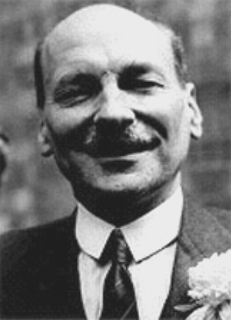
Remembered as a decent and modest man, Clement Attlee also led what was arguably Britain’s most radical government ever. Yet he had served his apprenticeship as Deputy Prime Minister to one of the most famous Conservatives of all time, Winston Churchill. During the coalition which was to govern Britain for most of the Second World War, Attlee proved a loyal and able number two. In June 1940, with Britain’s army thrown back across the Channel, Winston Churchill faced a Cabinet vote concerning peace negotiations. Churchill wanted to fight on; some in his own party disagreed. It was only with Attlee’s vote that Churchill was able to cling on.
Circumstance placed the two party leaders together. The Labour Party under Attlee had opposed Chamberlain’s appeasement policy and insisted on his resignation after the Norway debate. Attlee himself had only secured the leadership in 1935, when his predecessor George Lansbury had resigned over sanctions against fascist Italy. Until 1945, Attlee would distinguish himself as Churchill’s loyal deputy, regardless of party. As Deputy Prime Minister, he was effectively entrusted with all domestic issues – and Churchill had left them in good hands.
Attlee was a barrister from London and a teacher at the London School of Economics. He had a happy and stable marriage, with four children. Influenced by socialist writers such as Ruskin, he had joined the Independent Labour Party in 1908. He saw extensive active service during the First World War, ending the conflict as a Major, but having been seriously wounded.
After serving in local government, he was elected to Parliament in 1922. He worked as Ramsay MacDonald’s Parliamentary Private Secretary and was rewarded in 1929, when he became Postmaster General in the first Labour government. When MacDonald split the party to form a National government in 1931, Attlee stayed with Labour and became deputy to the new leader, Lansbury. As leader from 1935, he was forthright on the need to support Republican Spain and to challenge Fascism.
When the Second World War came to a close, Attlee’s party colleagues put him under pressure to insist on an early election. Loyal to Churchill, he was reluctant to do so. Once the decision was taken, however, he chose to author the party manifesto – one of the boldest in British history. Securing a landslide, Attlee’s 1945 government would introduce the National Health Service, nationalize the railways, Bank of England, coal mines and other industries, and begin decolonization with India. By the election of 1950 he was tired, and barely scraped back into office. In 1951 he lost to Churchill.
Arguably, Attlee should have retired then. He stayed on as Leader of the Opposition and lost the succeeding election to Anthony Eden. Retiring within eight months of Churchill, Attlee was given a peerage and served in the House of Lords until his death. As a parliamentarian, Attlee was known for his integrity, efficiency and brevity.
In January 1965, Attlee stood in freezing conditions for several hours in order to see Churchill’s funeral cortège. Less than three years later, his own funeral would be a more humble occasion; but for many, his achievments in office were tribute enough.
Neville Chamberlain
(18 March 1869–9 November 1940)

What became known as Britain’s ‘appeasement’ policy will be forever associated with Neville Chamberlain; however, his political record is actually a more mixed one. His relationship with Winston Churchill, too, was more nuanced than is generally reported. For Churchill had once been an ally, supporting Chamberlain when he replaced Stanley Baldwin as Prime Minister in 1937.
Chamberlain’s policy on Europe – particularly Germany – was to drive the two men apart. The genesis of appeasement lay in Britain’s attitude to the Spanish Civil War, coloured by Conservative hostility towards Communism. As Prime Minister, Chamberlain tended to dominate foreign affairs, at the expense of Eden, his Foreign Secretary. He insisted on strict neutrality with respect to the war in Spain and was instrumental in pushing France in the same direction. As that war drew to a close, Churchill saw the need to support the Republicans (despite their Communist backers) as a means of preventing a German–Spanish alliance. Along with Eden, he opposed the ensuing Munich Agreement.
Chamberlain’s motives were the genuine belief that appeasement would prevent another European war, coupled with a sense that Germany had been harshly treated at the end of First World War. There was actually some merit in both arguments. When the Germans seized the whole of Czechoslovakia and then Poland, although Chamberlain did not hesitate to declare war on Germany, he had little credibility in Parliament. Yet he stayed on as leader of his party and a member of Churchill’s national coalition, until ill health forced his retirement. During this brief period, he was to work hard to secure Conservative support for the new government.
Chamberlain came from a wealthy political family with plantations in the Bahamas. His father and brother were both prominent politicians. He spent his early career farming in the Bahamas, before working in the metal industry in Birmingham. Moving into politics, he became Mayor of Birmingham and then MP for Ladywood. Chamberlain’s central political views were philanthropic, drawing on his Unitarian religious background. He believed in improving the lot of the poor, sharing this outlook with Churchill. His record as Chancellor of the Exchequer under MacDonald underlines this, with the abolition of the Poor Law and interventionist industrial policies. He was a formidable minister, highly regarded on all sides. Yet with appeasement, he was to lose the respect of the Liberal and Labour parties.
Chamberlain died a bitter man. Lambasted by the press and in such publications as Guilty Men, he could not shake off his reputation for weakness. By 1940 he was already terminally ill with cancer, although his doctors kept this from him. Churchill delivered a tribute at the funeral in Westminster Abbey.
Clementine Churchill
(1 April 1885–12 December 1977)
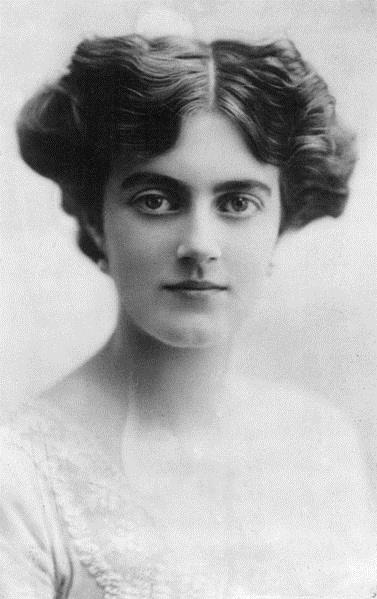
Born Clementine Hozier, the woman who was to become Winston Churchill’s wife came from straitened circumstances. Her parents separated when she was young, and she grew up in Britain and France, her mother unable to afford the university education recommended by her teachers. Like Churchill, she had aristocratic blood, though it seems possible that she was illegitimate.
They first met when she was 19, and Churchill a 29-year-old MP, noted for his radical views and wartime adventures. The occasion was a dance, at which the rather gauche Churchill failed to impress. Four years later they sat together at a dinner, and matters turned out very differently. Clementine had been engaged several times before, always to older men. The romance with Churchill might now be described as ‘whirlwind’: within a month he had proposed, while taking shelter from a rainstorm in a folly at Blenheim Palace. Even so, the marriage might never have taken place. Clementine was furious when she learnt that Churchill had visited 21-year-old Violet Asquith in Scotland, to tip her off about their engagement. It seemed that there had been some kind of romance between Churchill and Violet. After learning about Churchill’s engagement, Violet became depressed and unstable.
Clementine balanced a keen political intellect with a love of children and family life and a talent for offering her husband the support he needed. She was never frightened to speak (or write) her mind. When Winston was in the trenches during 1916, the political Clementine urged him to stay – it would reflect well on him – while the loving wife craved his return to safety. In 1936 they argued furiously about the abdication, Clementine recognizing that Churchill’s position was hopelessly out of touch with the mood of the nation. She was also totally opposed to another term of office in 1951 – a view which although ignored, was astute and prescient.
As a mother, Clementine was devoted, but at times inflexible. She was to envy her daughter Mary’s warm and relaxed relationship with her own children in years to come. She was also a woman who worried. With Winston, there were always financial concerns, despite his high earnings from writing. Before living at Chartwell they never quite settled either, and she fretted about the move from one house to another. Then there was his drinking and his gambling, and towards the end of his life, his health. Seemingly stoical, all of these challenges took their toll on Clementine.
Clementine Churchill worked hard throughout her life. Modern critics might argue that she sacrificed herself in order to support her husband, though values during her era were different. She ran his household for him, and brought up his children. It was Clementine to whom he would turn when an important dinner party needed to be arranged in a hurry. Later, as the Prime Minister’s wife, she took on significant public duties, with the ‘Mrs Churchill’s Fund’ being the most famous. Yet as far back as the First World War she had been involved in voluntary work.
There are aspects of Clementine Churchill’s personal life which are less well known. In 1918, perhaps worried about the family budget, she secretly discussed the possibility of giving her newborn child to General Sir Ian Hamilton and his wife Jean. Winston was never told about the deal, which came to nothing. Although strong and loyal, she became infatuated with an art dealer during the 1930s; some have alleged an affair, but the balance of historic opinion is that the relationship was platonic.
After her husband’s death, Clementine Churchill became a cross-bench member of the House of Lords. Increasing deafness meant that she was unable to devote as much time to politics as she had hoped – she had always had strong convictions. She enjoyed a quiet retirement, based with her immediate family, succumbing to a sudden heart attack while at home.
Lord Randolph Churchill
(13 February 1849–24 January 1895)
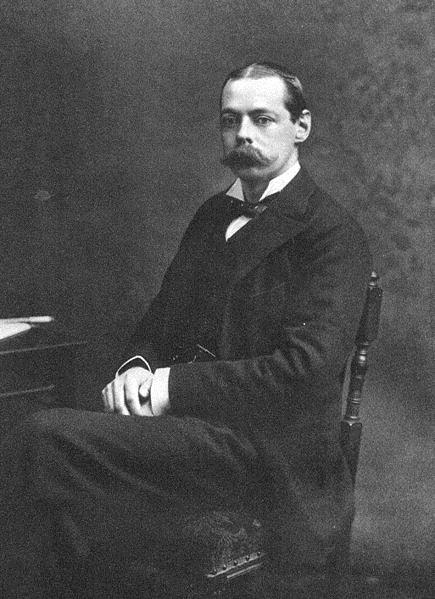
Randolph Churchill exerted a profound influence on his son Winston in a number of ways which he perhaps would not have envisaged. First, their difficult personal relationship, characterized by Randolph’s high expectations and Winston’s initial failure to meet them, clearly left its mark. Second, Randolph’s political career can be summarized as one of unmet potential. This too, coupled with Randolph’s early death, influenced his son. Close to his own death, Winston was to confide to his daughter Mary that his one regret was that his father had not seen him make a success of his life.
Active in the Conservative Party from a young age, Randolph Churchill entered Parliament in 1874, shortly after his marriage. Within a few years he had a reputation as a troublemaker – sharp-tongued, and as critical of his own party as he was the Liberals. He was impatient with what he saw as the elitism and naivety of the Conservatives. Randolph was anxious for change, arguing that the party needed to represent the ordinary members of society or face permanent opposition. Liberal reforms should be considered on merit, rather than rejected out of hand. This series of ideas coalesced into what he termed ‘Tory Democracy’, and initially made him few friends. Arguably, his most important legacy was to shift the party’s centre of gravity in this direction.
For by 1885 he could no longer be ignored. He was brought into government as Secretary of State for India. Within a year he was promoted to Chancellor of the Exchequer and Leader of the House – more or less dictating his own political terms. It seemed nothing would stop Randolph Churchill; here was a Prime Minister in the making.
By 1887, however, it was all over. In December 1886 he had overplayed his hand during a budget row with the War Ministry. He resigned, perhaps being surprised when this was actually accepted. Moving to the backbenches, Randolph’s career quickly lost its lustre. He was now beginning to show the symptoms of the illness which would kill him at the age of 45. Sometimes incoherent, his speeches in the House became embarrassing.
Debate continues about Randolph’s illness. For many years it was accepted that he had syphilis; this now seems less likely, with modern weight of opinion favouring a brain tumour. Whatever the cause, Randolph Churchill was a talented man stricken down early.
Although his academic achievements were modest, Randolph had been to Eton and to Oxford University. An attractive and self-confident young man, he married well, and controversially. Jennie Jerome was a noted American beauty from a wealthy background; but not aristocratic enough for some members of his family. He expected great things of his son, and would never know the extent to which his own achievements would be eclipsed by Winston.
Anthony Eden
(12 June 1897–14 January 1977)

When Churchill appointed Anthony Eden to be his Foreign Secretary in 1940, he secured the services of a man who had already done the job for three years. Furthermore, Eden had served an apprenticeship as a junior minister in the Foreign Office prior to that. He was also a man who had the integrity to resign over appeasement in 1938. During the war, Eden served with distinction, but mostly in an advisory capacity, leaving Churchill to conduct face-to-face diplomacy.
After the Conservative defeat of 1945 he worked as Churchill’s deputy. Taking up the foreign brief again in the 1951 government, Eden was easily Britain’s most experienced Foreign Secretary of the twentieth century. Ironic, therefore, that it was a foreign-policy decision which would later end his political career. Though loyal to Churchill during the war, by the 1950s he was anxious for the leadership himself. He made little secret of this and was instrumental in Churchill’s ultimate resignation, as well as in blocking his mission to Moscow following Stalin’s death.
With a landed background from the north of England, an Eton and Oxford education, dashing looks and impeccable tailoring, Eden was every inch the English gentleman. He had served with distinction during the First World War and from there won the Conservative seat of Warwick and Leamington in the 1923 election. By 1926, he was Parliamentary Private Secretary to Austen Chamberlain at the Foreign Office, before being given a junior ministerial position in the same department in MacDonald’s 1931 government. By 1935, when MacDonald appointed him Foreign Secretary, he had worked in the area of foreign affairs for nearly a decade. Before assuming the premiership, Eden also served more briefly as Leader of the House and Minister for War. He was the most seasoned minister in Churchill’s last Cabinet, save for the Prime Minister himself.
When Churchill resigned the party leadership (and thus the premiership), Eden was the obvious choice as his successor. Notwithstanding this, he immediately called a general election in May 1955, increasing Churchill’s slim majority to a safe sixty seats. It was the Suez crisis of 1956 which doomed Eden. He sought American endorsement of the Anglo-French invasion after the event – and failed to get it. Genuinely ill following a botched operation in 1953, Eden resigned and quickly retired from politics.
Eden was married twice, and had three sons, one of whom was killed in action. After his retirement he wrote a number of well-received memoirs. More famously, he gave incisive interviews to the landmark British television series The World at War, first screened in the early 1970s. He always denied conspiring with Israel over Suez, though it now seems certain that this was the case. Despite his persistent ill health, Eden lived until he was 79, eventually succumbing to liver cancer.
John ‘Jacky’ Fisher
(25 January 1841–10 July 1920)
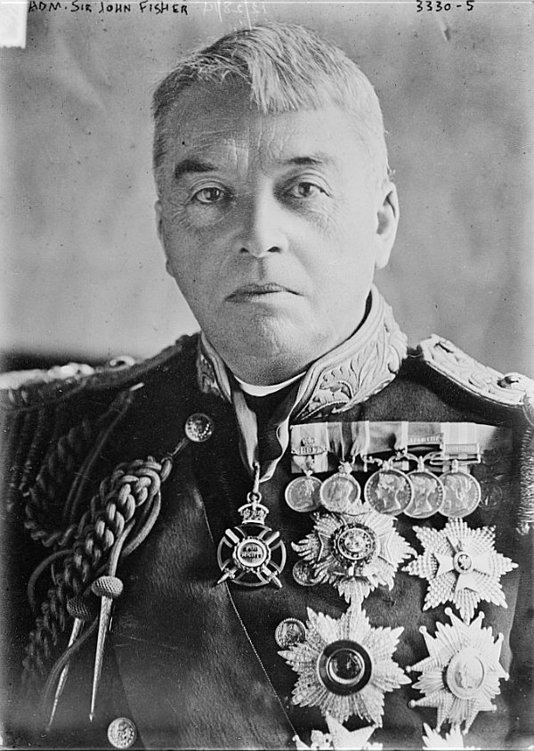
When Winston Churchill was appointed as First Lord of the Admiralty in 1911, he quickly grew to rely on the services of a former First Sea Lord, by then supposedly retired: Jacky Fisher. Between them, Fisher and Churchill were to revolutionize the Royal Navy, just in time to facilitate its successful prosecution of the First World War. Fisher had predicted a 1914 war with Germany as far back as 1911. Once war broke out, he returned to the position of First Sea Lord in a formal capacity, though he resigned after less than a year. He and Churchill had fallen out over the ill-fated Dardanelles campaign, about which he was never an enthusiast. Fisher is regarded as one of the most influential admirals of his generation. His partnership with Churchill is an often neglected aspect of the pre-war period.
Fisher came from a colonial family who had fallen into debt. He therefore joined the navy at the age of only 13, after his father had died. He grew estranged from his mother. He married, and had four children, three of whom were in turn to marry admirals. He was a forward-thinking, sometimes impatient man, frustrated by the conservatism and patronage that was rampant in the navy. He was also extremely religious, an aspect of his make-up which could sometimes affect his judgement.
His first tenure as First Sea Lord had been between 1904 and 1910. It was a period of retrenchment and transformation. Amidst much outcry, Fisher freed up resources by scrapping or mothballing dozens of elderly ships, and instead invested in new technology. Modern turreted ‘Dreadnought’ battleships and the new concept of battlecruisers were the result.
Prior to that, Fisher had served in many capacities and many theatres, working his way up through the ranks. He became a recognized expert in gunnery and naval tactics. A captain at the age of only 33, Fisher later had command of the Mediterranean Fleet and was trusted to serve at the Hague Peace Conference of 1899 – a delicate diplomatic task. He had excelled in every role he was given.
After his terminal row with Churchill in 1915, he attended a notorious meeting with General Allenby, during which he lectured the soldier for hours about the divine purpose of recapturing Jerusalem. More profitably, he chaired the navy’s research committee until the end of the war. Fisher died two years later of cancer.
Professor Frederick Lindemann
(5 April 1886–3 July 1957)
Frederick Lindemann was one of Churchill’s closest advisers during the Second World War, one of the very few people who had access to him on a daily basis. Many have queried exactly how Lindemann, who was widely disliked, managed to exert such a hold over the Prime Minister. As a scientist, he was capable, if not brilliant. It was in this area that he was to serve Churchill, as his chief scientific adviser at the Admiralty and then at Downing Street. Primarily a physicist, Lindemann often had unconventional ideas. One of his main areas of interest was air defence. This subject and, indeed, offensive air operations were those on which he was to be the most influential.
During the late 1930s he worked with Churchill on the Air Defence Committee and furnished him with some of his best ideas. He is also notorious, however, for his famous assertion that bombing German cities would knock Germany out of the war – supported by reams of statistical analysis. He made complacent and inaccurate predictions about the V2 rocket as well; but his research could be valuable – including fields such as anti-tank weaponry.
Lindemann was actually born in Germany, though educated in Britain and, like Churchill, of an Anglo-American culture. He was arrogant, opinionated and racist; he was also precocious and courageous. Famously, he learnt to fly during the First World War only to prove his theory as to how to recover an aircraft from a spin. He had associated with Marie Curie and Albert Einstein and, indeed, undertaken work to validate some of Einstein’s theories.
Churchill met him through his uncle, the Duke of Marlborough: Lindemann enjoyed mixing with the aristocracy. By the time they met, Lindemann was a professor at Oxford. Churchill gave him a peerage and the position of Paymaster General. After the Second World War, he went back to academia, but served Churchill again during the 1950s, when he headed up Britain’s nascent atomic energy programme. Lindemann has been called the ‘one-man think tank’, although Churchill himself always referred to him as ‘the prof’. Lindemann died in 1957 at the age of 71.
David Lloyd George
(17 January 1863– 26 March 1945)

For the ten years prior to the First World War, David Lloyd George and Winston Churchill struck a powerful radical partnership within the heart of British government. In many ways the men were similar – politicians of conviction, independently minded and highly skilled orators. They had been friends prior to Churchill’s resignation from the Conservative Party in 1904, and for the following few years they were to become close political allies. The older of the two, Lloyd George saw a little of himself in Churchill, who became something of a protégé. They were appointed to the government at the same time (February 1906) and immediately began to agitate for reform. In 1908, when Asquith took over as Prime Minister, Lloyd George became Chancellor of the Exchequer, an ideal position from which to introduce welfare reforms. Yet the broader financial concerns of the office were soon to cause tensions with Churchill. They argued during the negotiation of the ‘people’s budget’ of 1909, and were not so close thereafter. Churchill’s move to the Admiralty took him away from social issues, but not before the introduction of Lloyd George’s groundbreaking National Insurance Act, also of 1911. Often cited as the foundation of Britain’s welfare state, this Act alone would have secured Lloyd George’s place in history.
The First World War was to lead to a further distancing from Churchill, as Lloyd George ran the Ministry of Munitions and then the War Office. Churchill himself lost his Cabinet position. As Prime Minister from 1916, Lloyd George was unable to bring Churchill back into the centre of power, due to Conservative concerns. After the war he again refrained from appointing Churchill to high office, but recognized his talents, particularly in the areas of defence and foreign affairs. Following his own departure from office in 1922, Lloyd George was to remain friendly with Churchill, even though the two would now be MPs from different parties. In 1940, Churchill attempted to bring Lloyd George back into government. Already 77, he declined. Lloyd George was to die of cancer just before the close of the Second World War.
He had grown up in poverty in North Wales, his father having died when Lloyd George was only one. Academically gifted, he became a solicitor with a reputation for supporting the underdog. From there his Nonconformist Christianity and interest in liberal thinkers took him into local politics. He won the parliamentary seat of Caernarvon Boroughs in 1890 and was to hold it for the Liberal Party until his death, fifty-five years later.
Like Churchill, Lloyd George soon established a reputation for fiery oratory and challenging opinions. While Churchill rode with the cavalry in South Africa, Lloyd George was a staunch opponent of the Boer War.
Following his ministerial work with Churchill, Lloyd George became Prime Minister of a wartime coalition, splitting the Liberal Party in 1916. As a war leader he streamlined government, creating the modern Cabinet system still in use today. Yet strategically, he was less adept. Unconvinced by the Western Front strategy, he meddled in military affairs. He was unpopular with the army and there were plots to unseat him. His 1918 government collapsed in 1922, when the Conservatives walked out of the coalition. Never in power again, Lloyd George nonetheless wrote prolifically on the issues of the day. He was also prominent alongside his old colleague Churchill in opposing appeasement and the Munich Agreement. Ironically, he had visited Hitler in 1936, seeking to impress upon him the need for peace.
He was not a man without personal shortcomings. Married with five children, Lloyd George was a serial adulterer. After the death of his wife in 1941, he remarried at the age of 80. In 1913 he had been involved in a share scandal and in 1918 he came close to misleading Parliament about troop numbers. He was also accused of ‘selling’ peerages. A chequered character, Lloyd George remains one of the most important figures in modern British political history.
Franklin D. Roosevelt
(30 January 1882–12 April 1945)
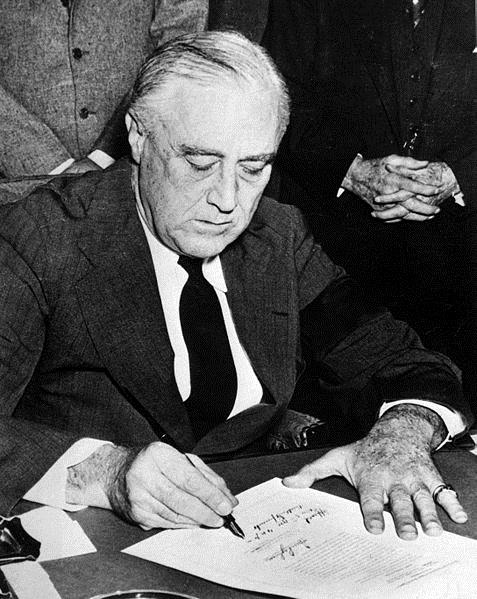
America’s longest-serving President, Franklin D. Roosevelt proved an absolutely crucial ally to Churchill and Britain during the early years of the Second World War. Later disagreements about strategy meant that the relationship between the two men cooled from 1943, and Churchill declined to attend Roosevelt’s funeral. They shared an understanding of the threat posed by Nazi Germany, although in Roosevelt’s case, operating in a society deeply isolationist in sentiment. Despite this, he facilitated American rearmament, Lend Lease, and a robust naval policy towards Germany that came very close to war.
It was Roosevelt who struck up the personal correspondence with Churchill which proved so productive. In those years they had a strong rapport, sharing an interest in naval affairs. Like Churchill, Roosevelt had been responsible for naval policy prior to and during the First World War. Hence, once he became Prime Minister, Churchill’s famous ‘former naval person’ sign-off. In fact, they were both former naval persons.
Roosevelt came from a wealthy New York family and was a lawyer by profession. Both he and his wife Eleanor were active Democrats. In 1910 he entered the New York Senate and in 1913 President Woodrow Wilson appointed Roosevelt as Assistant Secretary for the Navy. By 1920 he was on the vice-presidential ticket for the Democrats, though they lost the election. The following year he contracted the polio which was to partially paralyse him. Roosevelt tried to hide his condition whenever he could, yet it changed him psychologically as well as physically. Many around him noted a much more compassionate, less arrogant man.
As Governor of New York State during the Great Depression, Roosevelt was critical of the Hoover administration and introduced a raft of policies to actively tackle unemployment. Notwithstanding this, he fought the 1932 Presidential election on a platform of national deficit reduction. It was only once in office, confronted with the enormity of the economic slump, that Roosevelt was persuaded by his advisers to change tack. His famous New Deal measures included employment programmes, bank reform and public works. He also scrapped the Prohibition laws.
Roosevelt easily won the 1936 election and began to turn his attention to the threat from Germany and Japan. As soon as war broke out in Europe he began his correspondence with Churchill, then still at the Admiralty. Following America’s own entry into the war, Roosevelt became central to Allied strategic planning. He acquiesced to the Europe First approach, but was later critical of Churchill’s Mediterranean emphasis. Roosevelt secured a record third term in 1940, and a fourth in 1944; but he would not serve it out. His health deteriorating, he succumbed to a strokein April 1945.
Surely one of America’s greatest ever Presidents, Roosevelt was also known for his common touch. He developed the ‘fireside chat’ series of radio talks during the 1930s which were the forerunner of much modern political communication. Although the Roosevelts had six children, theirs was a difficult marriage. They stayed together, despite Roosevelt’s many affairs. Roosevelt was buried at the family estate in Hyde Park, New York. Like Churchill, he had crammed a great deal into his life – cut short at only 63.
Christopher Soames
(12 October 1920–16 September 1987)
Christopher Soames was a large, avuncular man of whom it was said that his political enemies were also his friends. His life became entwined with Sir Winston Churchill’s during the late 1940s, when he met and finally married Churchill’s youngest daughter Mary. Soames was to prove a loyal and much loved son-in-law to Churchill, and he would go on to find considerable political and diplomatic success of his own.
As a Conservative MP, Soames was a key player behind the scenes during Churchill’s final tenure as Prime Minister. He served as Churchill’s Parliamentary Private Secretary, watching out for his interests among MPs. He was also one of the inner circle who covered up Churchill’s illness and incapacity in 1953. Although Clementine Churchill was initially wary of the young military attaché who had met her daughter at the British Embassy in Paris, it was not long before he was popular with the whole family. Prior to his election to parliament, Soames worked as a farm manager for Churchill. He also introduced Churchill to horse racing – something frowned upon by Clementine. Soames and his wife Mary lived close to the Churchills’ Chartwell home for many years. They had five children.
Soames had followed his father into the army, serving with distinction in the Coldstream Guards during the Second World War. As a politician, after Churchill’s retirement he was a junior minister under Eden and then Cabinet member under Macmillan. Undoubtedly, however, Soames is best remembered for his superlative diplomatic skills.
It was in 1968 that Labour Prime Minister Harold Wilson appointed Soames as Britain’s ambassador to France. Once described as Britain’s finest ambassador of the twentieth century, Soames managed to repair the difficult relationship with de Gaulle’s France and lay the ground for Britain’s subsequent membership of the European Economic Community (EU). Soames was to remain an ardent supporter of the European Union throughout his life. Indeed, he went on to serve as vice-president of the European Commission. The culmination of Christopher Soames’ diplomatic career came in 1979, when Prime Minister Margaret Thatcher asked him to serve as Britain’s last Governor of Rhodesia-Zimbabwe. Characteristically, Soames undertook the delicate task with considerable skill and charm. Tributes poured in from around the world at his death in 1987.