
11.

WHEN ELVIRA FROMM’S HUSBAND, Salomon, and their daughter Ruth fled to England in the spring of 1939, she could not bring herself to accompany them. She was in poor health, and did not want to be financially dependent on her brother-in-law Julius. Above all, she did not want to abandon her only son, Berthold. Berthold had been born with a clubfoot and had failed to measure up to the high academic standards that Salomon had set for him, and was therefore frequently beaten by his father. Many members of this ambitious family separated themselves from its ostensibly weakest link—Berthold. “They always spoke harshly about my brother,” Ruth Fromm recalls bitterly.
So Berthold, his mother’s fretful problem child, stayed behind with her in Berlin. Until 1939 he earned his living as an optician and precision mechanic in Berlin-Schöneberg. When he was offered the opportunity to escape to Shanghai, he turned it down, because he was afraid of emigrating to the Far East all alone.

In 1939 Elvira Fromm moved into the villa on Rolandstrasse, sharing the house with Willy and Else Brandenburg. Before long, though, city officials turned it into a judenhaus (Jew house), and Elvira Fromm and the Brandenburgs were required to take in an elderly widow, Jenny Steinfeld, and a married couple, Wolf and Charlotte Malinowski, who had been forced to vacate their apartments to create more living space for Aryans. In addition, Willy Brandenburg brought his unmarried sister Lisbeth to live with them. Berthold Fromm still had his own apartment at Hohenstaufenstrasse 50, but he visited his mother as often as possible.
None of these people forced to live in such close confines in the Fromm villa left written records of their ordeal. Official files offer our only glimpse into the tragedies that befell them from 1940 to early 1943.
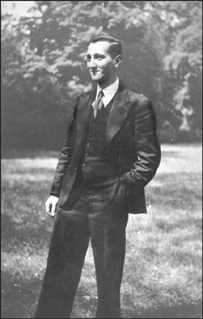
Berthold Fromm, ca. 1940
Berthold Fromm was arrested on November 20, 1941, for undisclosed reasons and brought to Sachsenhausen concentration camp near Berlin. On May 28, 1942, the civil servant on duty at the municipal bureau of vital statistics entered the notation: “Shot on command.” He recorded the time of death as seven p.m.78
At the noon roll call in the concentration camp, there had been a sudden order: “Jews, step forward!” Several hundred prisoners in this category complied, whereupon they were checked over by an SS commission that had come to the camp for this express purpose. The elderly, infirm, and frail among them were separated out; the others, as an SS man put it, “were restored to life.”
All ninety-six of those selected had to go before the firing squad in the evening in the camp’s industrial area. On the same day, 154 Jewish men—rounded up specifically for this purpose—suffered the same fate at the same spot, thus adding up to the specified quota of 250. The mass murder had been carried out on the orders of Heinrich Himmler. The record of his telephone calls from May 26 reads: “Jewish hostage execution in retaliation for the arson attack on the Soviet Paradise exhibit.” On May 18, 1942, a resistance group led by the Jewish communist Herbert Baum had staged an essentially ineffective act of arson at “The Soviet Paradise,” a propaganda exhibit at the Lustgarten in Berlin.79 In retribution, the SS executed 250 Jewish men by firing squad, among them the disabled Berthold Fromm. He was twenty-eight years old.
Lisbeth Brandenburg, born in Kolberg, Pomerania, in 1885, had been living at Rolandstrasse 4 since November 1941. On July 5, 1942, she was transported to Theresienstadt with the twenty-second Berlin Alterstransport, a transport for the elderly. The Chief Finance Authority sold the paltry possessions she had left behind (“1 suitcase with underwear and shoes, various items of clothing, lingerie, and table linen”) to E. Gartmann, a shop owner in Berlin-Kreuzberg who dealt in secondhand goods, for the price of 219.20 Reichsmarks. Wilhelm Noack, the High Court bailiff, had tallied up the value of these items, but there was still more to be gained for the German war chest from the bank account of Lisbeth Brandenburg. All in all, the national treasury was enriched by 5,638.52 Reichsmarks.80 Lisbeth Brandenburg died in the concentration camp of Theresienstadt in April 1943.
Jenny Steinfeld had to vacate her modest little apartment at Freiherr-vom-Stein-Strasse 6 on September 29, 1941—“with a heavy heart”—and move to a room in the Fromm villa. On the very same day, she drew up her will, and presciently noted that she was “most likely moving to the last place I will ever have on this earth.” She stated in the will: “I wish to be cremated and buried in the family tomb in Weissensee.”
The daily newspaper Reichsanzeiger carried the news of her demise on September 17, 1942, reporting that the assets of “Steinfeld, Jenny Sara” had been “confiscated for the benefit of the German Reich.” These assets were fairly substantial. Her family’s restitution files encompass thirteen volumes. Born Jenny Blum in 1865, she married Gerhard Steinfeld, a banker in Il” awa (then Deutsch-Eylau, part of western Prussia), and was widowed in 1915. She was driven to take her own life on August 27, 1942. The Gestapo reported to the Chief Finance Authority: “Steinfeld is a suicide.”81
Three of her children—Robert, Paul Gerhard, and Ilse Margarete (whose married name was Hamburg)—survived the Holocaust. Her daughter Hertha (whose married name was Birnbaum) was deported to Auschwitz in 1943 and murdered there. In accordance with her last will and testament, Jenny Steinfeld is buried in the Jewish cemetery in Berlin-Weissensee—near the main entrance, at burial ground J1, family tomb # 513.
Charlotte Malinowski and her husband, Wolf, an attorney, lived at Am Schlachtensee 38, not far from the Fromms. They, too, had to move to the “Jew house” on Rolandstrasse in 1942. Charlotte Malinowski, née Citron, was born in Berlin in 1890, and Wolf Malinowski was born in 1882 in Pleschen (Pleszew), near Posen (Poznan), which was under Prussian control until 1918. Prior to his deportation, Wolf Malinowski worked as a forced laborer at a company named Daimon in Berlin-Wedding. In late February 1943, the couple were told that they would have to vacate their room on Rolandstrasse. On April 21, the Gestapo informed the Chief Finance Authority: “Charlotte Sara and Wolf Isr. Malinowski, a married couple, are being evacuated shortly. Confiscation instructions to follow.” Brückenstein, the court bailiff, inspected the remaining inventory, which was only a small fraction of the assets already “secured” for the state treasury, and set its value at 3,790 Reichsmarks.
On May 18, together with about a thousand other prisoners, the two of them were forced to climb aboard a freight train bound for Auschwitz. They perished there in the gas chambers on the following day—along with more than eight hundred deportees from the same transport.
Willy Brandenburg and his wife, Else, were taken into custody on March 4, 1943. On the questionnaire they were required to fill out in the transit camp, Willy, a former businessman whose company had been taken from him, listed his profession as “worker.” He had been forced to work in the Fromms factory in Köpenick for weekly wages of twenty-six Reichsmarks. The same applied to Else, who was paid twenty-three Reichsmarks.
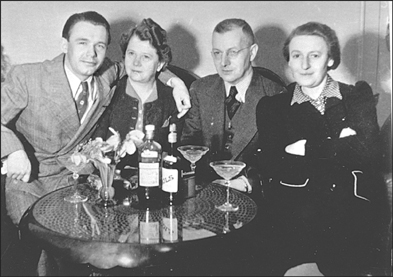
Left to right: Gerhard Fromm with his mother, Anne Fromm, and Willy
and Else Brandenburg, ca. 1940
There was evidently method to the madness of making them work in the factory that had so recently been taken away from their brother and brother-in-law. Siegmund Fromm, who had also stayed behind in Berlin, had to perform particularly hard forced labor in that very factory as well. According to witness testimony, the plan was “to humiliate” the family of the former owner by assigning them “the most menial manual labor for a paltry wage.”82 The strategy was meant to highlight the social decline of the former manufacturing family for the permanent staff at Fromms Act, and in doing so would show that the new point of pride was not wealth, but the privilege that comes with lineage in the master race.
Elvira Fromm, née Silbergleit, was born in Berlin in 1897. Her husband had left her behind in 1939, her daughter Ruth had emigrated, and her son Berthold had been executed in 1942. Her “Aryan” sister-in-law Elsbeth recalled that Elvira remained “unclear about her situation right down to the final days.” She lived “only in the hope of being reunited with her relatives” and built “her entire life on this single hope.” According to the concierge who lived next door, Elvira Fromm and her in-laws Willy and Else Brandenburg were taken away by the police early on the morning of March 3, 1943, “with nothing but a small bag and a blanket.” Afterward, tax officers sealed the doors of the villa—which did not stop neighbors from breaking in and walking off with items they found useful.83
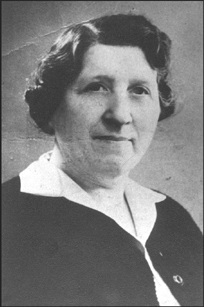
Elvira Fromm, ca. 1940
On March 6, 1943, Elvira Fromm and the Brandenburgs joined the thirty-fifth Osttransport, the transport headed east to Auschwitz. The Chief Finance Authority evidently had an unusual agenda in mind for this transport. The standard procedure was to ship about a thousand people “to the East,” but in this case there were 665 people (183 men and 482 women and children). In all probability the idea was for these deportees to move out of attractive apartments that were slated to go to special favorites of the Nazi state as quickly as possible.84 The train arrived in Auschwitz on the morning of March 7, 1943. One hundred fifty-three men and sixty-five women were assigned to forced labor, and the others perished in the gas chambers the day they arrived; among them were Elvira Fromm and Else and Willy Brandenburg.
Once the seven occupants of the Villa Fromm had been evicted and murdered, or were on their way to their deaths, the Hagemanns could settle in comfortably. On April 21, 1943, the Gestapo in Berlin informed the Chief Finance Authority: “The apartment in Berlin-Schlachtensee, Rolandstr. 4, in which the following Jews were living … has been allocated by the city planning office in Berlin to Colonel Hagemann, holder of the Knight’s Cross. There are no objections to clearing out the apartment.”85 By “clearing out,” the Gestapo officers were referring only to the remaining furniture. As described in the previous chapter, it was then auctioned off in May.
The Hagemanns fled from the advancing Red Army in the spring of 1945. The transfer of the house back to the Fromm heirs took place on January 10, 1952. Two years later, they sold it to the mother of the current owner. In 1965 Frau Hagemann rang the doorbell and requested permission to dig in the garden for gold she had previously buried there, particularly a gold statuette of Cupid. She found nothing.