
‘A Submissive Bigot’
_____________
‘I would rather earn my bread than reign like the King of England’

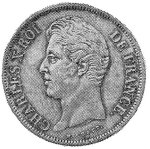
Until recently history books have dismissed Charles X—‘an impossible monarch for the nineteenth century … a typical Bourbon, unable either to learn or to forget’. In reality Charles was much more a creature of the nineteenth century than Louis XVIII, while in many ways he was not the least attractive member of his dynasty. The tragedy of this honourable, kindly and friendly man lies in the contrast between his personality and his political ineptitude—in public life he nearly always acted with almost childlike naïveté.
He was born on 9 October 1757 at Versailles, christened Charles-Philippe and given the title of Comte d’Artois, which had once belonged to Saint Louis’s brother. Artois’s father, the Dauphin Louis, died when he was eight and his mother shortly after, so there was little discipline in his childhood; the Duc de Vauguyon, who made Louis XVI’s early years such misery, could do little with his youngest brother, a naturally cheerful and unruly little boy and the one genuinely normal member of the family.
Charles grew into a handsome young man, tall, slim and broad-shouldered, with a fine, rather small head, very well set, with large brown eyes, black hair and the Bourbon nose. When he was only sixteen he was married to an equally juvenile Princess of Sardinia, Maria Theresa, daughter of Victor Amadeus III and sister to Madame. She was a dwarf, four foot high, with a grotesquely long nose, and completely characterless. They had two sons, Louis, Duc d’Angoulême, born in 1775, and Charles-Ferdinand, Duc de Berry, born in 1778; there were also two daughters who died young. But it was never more than a marriage of state.
The one responsible post given to Artois was that of Colonel-General of the Swiss Guards, and when he was seventeen he began to drill them. Maurepas, Minister for the Royal Household, rebuked him. ‘You have acquired a liking for drill, Monseigneur. That does not become a Prince. Run up debts and we will pay them.’ Charles thought this an excellent suggestion. He introduced English horse racing to France, importing English mounts and jockeys, and also started cabriolet racing, an early form of trotting in which he sometimes competed himself. The fashionable world flocked to his race meetings in the Bois de Boulogne. Charles bet heavily, but always seemed to lose, losses equalled by his card debts. In addition, he inherited the Bourbon mania for field sports; in 1785 he spent fifty-three days hunting boar, running down and personally dispatching eighty-nine animals (for a loss of eleven hounds killed and nearly 200 wounded). As might be expected, he was soon in debt, despite an income of almost £ 150,000; by 1781 it was reported that he owed 21 million livres—nearly £ 900,000. When he needed money he simply went to his brother, swearing and shouting until the King gave in.
According to the Austrian ambassador, the young Artois was frequently drunk and often violently rude. If there were spectators when he played tennis, he shouted insults until they left the court; once, after ordering ‘all Jews and bastards’ to leave, he noticed a single officer sitting calmly on the bench; asked angrily why he had not left with the others, the officer replied that he was neither a Jew nor a bastard. Charles surpassed himself at a masked ball in Paris in March 1778. He was escorting Mme Canillac, a lady of the town, when they met the Duchesse de Bourbon. After exchanging a few words, the irritated Duchess reached up and snatched off his mask whereupon he pulled her nose so hard and painfully that she wept. Her husband promptly challenged him to a duel; they met early one morning in the Bois de Boulogne, the fight being stopped after the Duke wounded Charles in the hand. Shortly afterwards, when the Bourbons went to the play they were received with such enthusiastic cheers that the Duchess again dissolved into tears.
Artois had the pathological sensuality of his house. Not only did he run through all the most famous prostitutes in Paris, but he seduced many court ladies including the Duchesse de Guiche whom, so Hézecques tells us, ‘the public long looked upon as one of his easiest conquests’. Hézecques also explains how Charles possessed ‘that fashionable ease and light amiability which please women. One can well believe the rumours that few beauties could be cruel to him.’
It was to please a woman who was a friend and not a mistress that in 1779 Artois built the Bagatelle in the Bois de Boulogne. He had bet the Queen 100,000 livres that he could build and furnish a palace within nine weeks, and with the architect Bélanger and a thousand workmen he won his bet. The tiny white palace in the Etruscan style reveals another side of Charles besides mere extravagance; he was the only member of the Royal Family in his generation to have more than a casual interest in the arts; the Bagatelle is a perfect example of Neo-Classical art, and with its furniture and decoration is one of the most representative ensembles of the period.
Charles’s rudeness was only a passing phase and he became a rather popular figure. Hézecques claims that before the Revolution ‘the Comte d’Artois was adored by the people as he was affable to everyone and had our nation’s cheerful temperament. His habit of driving about Paris and even his extravagance contributed to his popularity.’ Mme de Campan confirms this, saying that ‘the Parisians showed real affection for him’.
His one public-spirited action was to join the French army at the siege of Gibraltar in 1779. He was accompanied by his bosom friend, the Créole Marquis de Vaudreuil, and by M de Bourbon with whom he had been reconciled. They travelled in some comfort, their baggage and servants filling thirty-five carriages. He spent two months in the trenches, his visit being the routine morale-boosting tour of royalty visiting troops in the field—an affair of parades and dinner parties rather than fighting. Nevertheless Paris welcomed him home as a hero.
Otherwise Artois led a life of uninterrupted frivolity. He was fond of theatricals, acting many times in Marie Antoinette’s little theatre at the Petit Trianon, notably as Figaro. He also gave an epic performance walking the tightrope. He had become the Queen’schevalier servant, escorting her to all the smart Paris plays and balls.
Ironically, it was through his membership of the Queen’s set that in 1785 Charles met the woman who reformed him, Mme de Polastron, the sister-in-law of Yolande de Polignac. Louise de Lussan d’Esparbés, Vicomtesse de Polastron, was only twenty-one, a delicate, nervous ash-blonde with china-blue eyes, a wonderfully sweet smile and a low voice; Lamartine describes her as ‘the perfection of tenderness’. Charles and Louise fell completely and unreservedly in love. Even Hézecques admits that ‘the passion of Mme de Polastron for the Comte d’Artois was as unconcealed as it was genuine, for heartfelt affection was their only bond’. Charles confided to one of Louise’s friends, the Marquise de Lage, ‘It’s really true—in all the world I live for her alone. Never, no never, was Heaven pleased to form two hearts, two beings better suited to each other. I truly believe it, I even dare be sure of it, and you can have no idea how proud the very idea makes me. But if I deserve your friend, if my heart is worthy of making her happy, it is to her alone that I owe it. It is her advice, still more her sentiments, which have purified my soul and renewed it. Think what I owe her for teaching me how to be happy!’
Louise made Charles more responsible and he began to take a disastrous interest in public life. During the Assembly of Notables in 1787, he displayed an obvious distaste for reform, even if he did not support the révolte nobilaire. Calonne was a friend who had paid his debts twice, but when he was gone Charles attacked Loménie de Brienne, just as formerly he had attacked Necker, ‘the fornicating foreign bastard’. He then resisted the doubling of the Tiers Etat’s representation in the States General, warned the King that the country was in the throes of a dangerous revolution (though agreeing that the tax burden must be shared more fairly) and opposed Necker’s recall. By 1789 Artois was the acknowledged leader of the court party.
He had also again become one of the most unpopular men in France. It was known that he had done his best to stop the King making any concessions and the mob shouted abuse at him in the streets. The evening after the Bastille fell he tried to enlist support among the troops, buying them wine; he had a scheme for marching on the Assembly and arresting its members. Next day Louis was shown a pamphlet listing ‘enemies of the people’; Artois’s name came first. Seriously alarmed for his brother’s safety, the King ordered him to leave France.
That night Charles escaped from his flat at Versailles, through a secret door. He rode to Chantilly where he borrowed a carriage from his cousin Condé, then drove to Valenciennes and crossed the Belgian frontier. A tutor followed with his sons, whom he sent to their grandfather at Turin, but their mother stayed at Versailles. Charles, who expected to be out of France for three months at most, was soon joined by Condé, and by the Polignacs and other members of the Queen’s set (this flight by Artois and his friends later became known as ‘The First Emigration’).
The Emperor Joseph II made it plain that M d’Artois was not welcome in the Austrian Netherlands. So, after a delightful month with Louise in Switzerland, Charles presented himself to his father-in-law at Turin, where he was joined by his wife. King Victor Amadeus gave them a palace and an allowance but Charles had to be on his best behaviour, attending Mass daily and, so it was said, even sleeping with his wife; he did not dare see his mistress. In the end he informed the new Emperor—Leopold II, Marie Antoinette’s second brother, who had succeeded Joseph in 1790—that life at Turin had become unbearable. Leopold told Charles to go to Coblenz which belonged to their cousin, the Elector Clement Wenceslas of Trier. Accompanied by sixty followers, Charles arrived there in June 1791 and was given the Castle of Schonbornslust for his residence.
Louise’s friend, Mme de Lage, witnessed Artois’s entry into Coblenz. ‘Everyone was saying, “There he is, our Prince, our hope, the scion of Henri IV.” They crowded round, all wanting to touch him. He possessed the sort of charm which bewitches the French and a way of looking at you like Louis XV, or so elderly people said.’ Charles told the émigré troops that success was certain, even if not quite as near as he had hoped. Louise joined him and gave her entire fortune to help the White army.
The defeat at Valmy stunned the émigrés. On 19 November 1792 Artois wrote, ‘One needs the pen of a Jeremiah, my dear Vaudreuil, to give you a picture of the situation since you left … everything is falling to pieces and we are all starving to death.’ He hints that he might commit suicide ‘were I not attached to life by a bond which every day grows dearer, more precious and more essential … Thank God that at least my friend [Louise] is well.’
After two miserable months at Hamm, Charles set off to ask Catherine the Great for help. The Russian Empress, never indifferent to a handsome man, gave him a million francs and advised him to join the Chouans. ‘You are one of Europe’s great Princes,’ Catherine told him, ‘but there are times when you should forget it.’ His self-esteem restored, he left St Petersburg in excellent spirits that spring, in a Russian warship bound for England, where he landed at Hull in May 1793. But the English government did not respond to a letter which he brought from the Empress, suggesting that they send troops to the Vendée.
Instead of joining the Chouans, Artois idled away his time at Hamm with Louise who, terrified, held him back when a gamble might have saved the Royalist cause. At the end of 1794, at the Duke of York’s invitation, he joined the staff of the British expeditionary force in Holland, spending the winter with them at Arnhem. When the British were driven back, he wandered from Rotterdam to Osnabruck and then to Bremen in a most unprincely way; little is known of his movements at that date but it is said poverty forced him to eat in the cheapest and most squalid inns, at the public table. Finally, in July 1795, a British warship arrived at Hamburg to take him to England.
Already English and émigré troops had landed at Quiberon Bay, and had been swiftly routed by General Hoche, who shot all Royalist prisoners. The British government decided to try again, and to make use of Artois whom Louis XVIII had appointed Lieutenant-General of France. At the end of September Charles and a new expeditionary force of 4,000 men sailed from Portsmouth to land at Port-Breton on the Ile d’Yeu, just off the Vendéen coast. He contacted the Chouan leader, Charette de la Contrie, asking where he should join him on the mainland. Unfortunately Charette was cut off by General Hoche, who concentrated 50,000 men opposite the Ile d’Yeu. Frightful weather and an almost complete lack of supplies demoralized the Royalists, as more and more Republican troops arrived every day. On 18 November Artois took his expedition back to England. He was not cut out to be a Bonnie Prince Charlie.
He dared not land at Portsmouth, where he faced arrest for debts contracted in equipping the émigré armies. Eventually arrangements were made for him to travel secretly to Edinburgh, where he moved into Holyrood House in January 1796; as a royal palace Holyrood conferred immunity from arrest, but he was only able to venture outside its grounds on Sundays. The gloomy palace, in the dark and squalid Old Town which better-class people had long since abandoned, was a crumbling ruin with few habitable rooms. Much of Charles’s allowance of £ 7,000 was spent in providing for indigent courtiers who, for lack of accommodation in the palace, were forced to take wretched lodgings in the Old Town. However he was comforted by the arrival of Louise. (He had completely lost contact with his wife, who eventually died in Austria in 1808.) For all the discomfort of Edinburgh, he had had quite enough of adventures. In 1797 he forbade another Vendéen rising. He wrote, ‘I refuse to authorize an insurrection in the Western Provinces—I cannot let myself be responsible for the useless shedding of blood.’
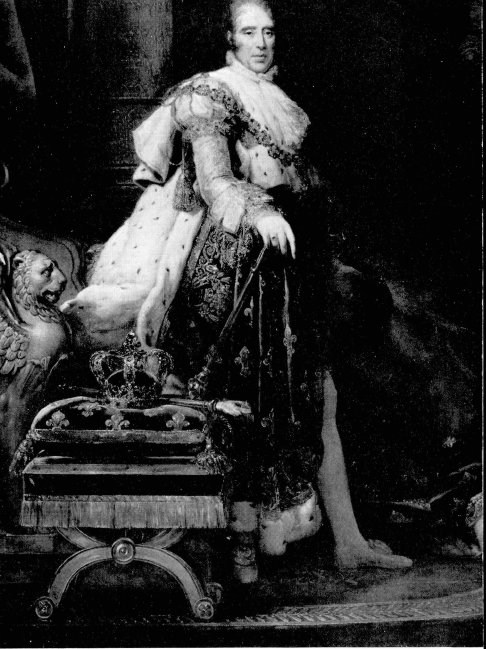
Charles X in robes of state, by Gerard
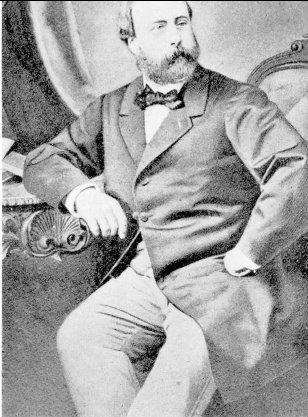
Henri V, Comte de Chambord
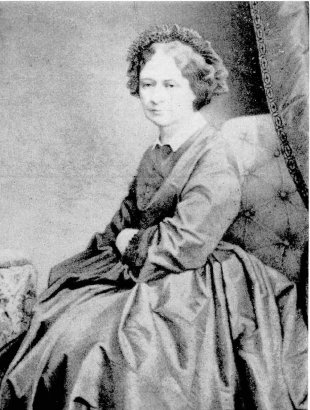
Comtesse de Chambord
In August 1799, Charles at last reached an arrangement with his creditors and left Edinburgh for London, where he rented a house, 46 Baker Street. Louise de Polastron found a little house just round the corner, 18 Thayer Street, which still exists; here Charles spent most of his time playing whist; he regarded failure to call on Louise as a personal insult. He also went into English society, Lady Harrington’s being a favourite drawing-room, where he often met the Prince of Wales. Mme de Boigne saw them both there, and says of Charles that ‘though his face was not so handsome as the Englishman’s, he had more grace and dignity while his bearing and way of dressing and manner of entering and leaving a room were incomparable.’ Not that Charles neglected the émigré community. He received once a week and gave three annual dinners—on New Year’s Day, St Louis’s Day and St Charles’s Day. He also made a point of visiting émigré schools, contributing to their maintenance. He even found time to be kind to the young Duc d’Orléans, Egalité’s son, who was shunned by most émigrés.
Mme de Polastron had developed tuberculosis. It was aggravated by the foggy Edinburgh climate, and then by her cold damp bedroom in Thayer Street; in addition, her spirits were worn down by a nagging conscience—a devout Catholic, she never ceased to worry about the irregularity of her relationship with Charles. Everyone else saw a deterioration in her appearance, but he was too much in love to notice. Finally friends called in George III’s personal physician, Sir Henry Halford. His diagnosis was: ‘The patient is in the last stage of consumption, and I fear that it is already too late to stop it.’ On his instructions, Charles at once moved her into a stable, then an accepted cure for tuberculosis, in Brompton Grove (now Ovington Square). But it was obvious that Louise was failing, so she was taken back to Thayer Street, where Charles’s chaplain, Père Latil, forbade her to see her lover and made her prepare her soul. She died on 27 March 1804, aged forty.
Louise’s final moments are described by the Duchesse de Gontaut, who was nursing her. Charles had at last been let in, to say goodbye. ‘She raised her hands to heaven and said, “A favour, Monsieur, grant me one request—give yourself to God, surrender yourself entirely to Him!” He fell on his knees and said, “As God is my witness, I swear it!” She repeated “Entirely to God!” Her head fell against my shoulder; that word was the last she uttered—she had ceased to breathe. Monsieur threw up his arms and uttered a dreadful scream.’ Charles confessed and communicated the same day, receiving the sacraments from Latil. Henceforward he was a changed man, who heard Mass daily and spent long hours in prayer.
1804 was altogether a wretched year for him. In March the last serious Royalist plot against Napoleon failed; of its leaders, the Chouan Cadoudal was shot and General Moreau exiled, while General Pichegru committed suicide. Axel Fersen met Charles that autumn and says in his memoirs, ‘He was kind enough to read me the entire account of the recent conspiracy involving Pichegru and Moreau. The whole plan had been his idea.’ In May Bonaparte proclaimed himself ‘Napoleon I, Emperor of the French’. The King had written from Mittau to condole with Artois on Louise’s death, and at the King’s suggestion he joined him in Sweden in October; they had not met for ten years and fell into each other’s arms in tears. Together they issued a formal protest at Bonaparte’s usurpation. But nobody took the Bourbons seriously any more.
Charles went back to Baker Street and his whist parties. Later he moved in with the King at Hartwell. His sons lived there too, though Berry spent most of his time with Amy Brown and their children (there were even rumours of a secret marriage which had later to be annulled by the Pope). However, Angoulême, that ugly and ungracious little man, did not stray—his wife ruled him with an iron hand. It was said that Artois looked the grand seigneur as much as his sons behaved like plebeians. None the less, London society lionized them.
Hope revived in 1813, when Napoleon’s reverses became serious. In January 1814 Artois sailed from Yarmouth, landing in Holland, and eventually entered Franche Comté by Switzerland. But most Frenchmen had forgotten the Bourbons, while the allies, who were still thinking of coming to terms with Napoleon, ignored him. However, everything changed when, on 6 April, the French Senate offered the crown to Louis XVIII.
On the morning of 12 April 1814 Artois, in his capacity of Lieutenant-General and escorted by Napoleonic Marshals, rode into Paris on a white horse, wearing the blue and silver uniform of the National Guard. Still a strikingly handsome man at fifty-seven, he made a most felicitous speech, ending with the words, ‘Nothing is changed, save that there is one more Frenchman.’ The streets rang with shouts of ‘Vive les Bourbons! Vive le Roi! Vive Monsieur!’ as he rode to Nôtre-Dame to give thanks. Some people actually embraced his knees. When Charles entered the Tuileries he was asked if he was tired; he replied, ‘Why should I be tired? This is the first happy day I have known for thirty years.’
He was ruler of France for nearly three weeks. But while he charmed the Marshals’ wives, his liking for gentlemen of the Ancien Régime and open contempt for the achievements of the past twenty years made many people uneasy. He seems to have expected to remain in power, with his brother as a mere figurehead; his motive being not so much ambition as a profound distrust of Louis’s moderate policies. But Louis XVIII, who entered Paris on 3 May, was determined to reign. The Duc de Duras asked him whether the crown was truly re-established. Louis replied, ‘It will stay in our hands if I outlive my brother. But if he outlives me, then I guarantee nothing.’
When the Hundred Days came, Charles went to the provinces to try and rally support. On hearing that the King had fled, he gave up hope and, escorted by 300 picked cavalry, rode to Belgium where he joined his brother. During the uncertain days at Ghent, he was obviously convinced that Louis’s moderation was responsible for their misfortunes. He had always considered that a show of firmness could have stopped the Revolution in 1789; now he believed that the concessions made to the Revolution had paved the way for Napoleon’s return.
After the royal family came back to Paris in 1815, Artois steadily opposed Louis XVIII’s moderate policies, though never in public. But everybody knew Monsieur’s real opinions, that he was encouraging the White Terror. However, the dissolution of theChambre Introuvable in 1816 put an end to the Ultra majority and diminished his political influence.
Artois was not quite so foolish as is generally assumed. The Ultras were much more than a mere mob of blimpish backwoodsmen; they intended to rebuild, rather than resurrect, the Ancien Régime, and their political ideas were so far removed from pre-1789 attitudes as to constitute a Revolution of the Right. They were not only men of the Emigration, but also the heirs of the Notables and Parlementaires of the revolte nobilaire of 1787; they accepted Parliamentary government readily, as a means of controlling the King and of perpetuating their own power. And Charles, far from being an Absolutist, believed that a strong monarchy in partnership with a strong ruling class offered the best hope of a lasting Restoration.
The Ultras possessed two formidable political thinkers in Louis de Bonald and Joseph de Maistre, the ‘Prophets of the Past’. Bonald, arguing that the traditional social order had been divinely revealed, proposed an alliance of ‘Throne and Altar’. The Comte de Maistre regarded the ideas of the Enlightenment and the Revolution as Satanic in origin; because of Original Sin men could not be made good simply by restructuring society; the only solution was a rigidly hierarchical society based on ultramontane Catholicism. His belief that ‘Spiritual absolutism is the sole principle of stability and continuity’ has something of Orwell’s 1984 about it, as does his grim Eulogy of the Executioner—‘take away from the world that incomparable agent and in a moment order becomes chaos.’ Bonald and de Maistre were supported by translations of Burke’s Reflections on the French Revolution, while Romanticism and the emotional Christianity of Chateaubriand supplied the enthusiasm. To be a true Ultra, one had to be a pious Catholic; as a modern historian has written, ‘Gone was the frivolous, Godless aristocracy of Ancien Régime France; in its place was a spiritually and politically regenerated caste.’
Charles was unmistakably a man of the nineteenth century, in contrast to Louis XVIII who always remained one of the eighteenth. He readily adopted the new political ideas, corresponding with de Maistre while still in exile. If he did not share his brother’s literary tastes, one need not believe that ‘he never read a book’; we know he was familiar with both de Maistre’s and Bonald’s political writings and with Scott’s novels. His weakness came not from stupidity—although admittedly he was only of mediocre intelligence—but from invariably seeing things as he wished them to be. Unfortunately this was a fault common to almost his entire circle of friends and advisers. Lady Morgan observed in 1816, ‘There appears, indeed, among these ardent royalists a resolute determination to see every object through the medium of their own wishes.’
Throughout Louis’s reign, Charles vehemently opposed any policy of compromise with the Liberals. On one occasion he threatened to leave the Tuileries with his sons, whereupon the infuriated King screamed that there were still prisons for rebellious princes. In 1818 Charles actually begged Wellington to stay with his army of occupation. In the summer of that year there were rumours that he was plotting to seize the throne, the so called ‘Conspiracy of the Water’s Edge’, but so desperate a course was out of character, though he considered the policies of Richelieu and Decazes disastrous—‘a programme which includes persecution of the King’s friends and of those of the realm and contempt for monarchical institutions.’
If he was unhappy about his brother’s government, Charles was content with his family. He quickly took to his new daughter-in-law, Caroline de Berry. After the sadness of a grandson and a grand-daughter dying in infancy, he was overjoyed at the birth of a healthy child in September 1819, Louise-Marie-Thérèse. She was given the ancient title of ‘Mademoiselle’.
Charles was heartbroken by Berry’s murder in 1820. He also realized that the dynasty faced extinction; Angoulême was impotent, while even Purs admitted that he seemed unfitted to be King, with no thoughts beyond his hounds and his chess. In tears, Charles actually discussed the possibility of remarrying with his friend Vitrolles, who suggested the sister of Ferdinand VII of Spain, the widowed Duchess of Lucca; he was sufficiently interested to ask Vitrolles what she looked like, but abandoned the idea when Caroline de Berry gave birth to her miraculous son.
His grandson became the most important person in Charles’s life. Young Henri and Mademoiselle watched constantly from the windows of the Elysée, where they lived, for the arrival of his fast little phaeton and then ran eagerly to greet ‘Bon-papa’ who was more like a father than a grandfather. He let them do literally what they wanted; when Sir Thomas Lawrence was painting his portrait, Charles refused to send his grandchildren out of the room, although they were tormenting both Sir Thomas and himself.
As a result of Berry’s murder the Ultras came to power. Although Artois asked Richelieu to take Decazes’s place as Prime Minister, he soon engineered his resignation. It was this which made the King complain angrily of Charles, ‘He conspired against Louis XVI, he conspires against me and one day he will probably conspire against himself.’ What really irritated the King was that with Villèle’s appointment as chief minister, Charles had all but taken over the government.
Artois deserves some credit for supporting Villèle; even if he was generally acknowledged by the Ultras as their leader, Villèle’s charmlessness, caution and lack of enthusiasm can hardly have appealed to Charles. Villèle was one of the most gifted finance ministers in French history, who not only put public accounting on a lastingly regular basis but directly contributed to the increase in banking, and encouraged his friend Baron Jacques de Rothschild to settle in Paris. For almost every year of his administration the budget showed a surplus. Prosperity was evident in industrial development throughout the 1820s. New coal mines were dug, the canal system was lengthened, a steamboat service was started on the Loire, and a French locomotive was constructed in 1827. Roads began to be macadamed. In Paris, the first pavements were built and omnibus services were introduced; gas lighting spread throughout the entire capital.
Prosperity was one of the two planks of Artois’s simple scheme for strengthening the monarchy. The other was glory. He shared the indignation of most Frenchmen at losing the ‘natural’ frontiers of 1792; he too had been humiliated by Waterloo, even if it had saved the Bourbons. The triumph of the French army in Spain exceeded his wildest hopes. In December 1823, at an official dinner at the Hôtel de Ville, he saluted ‘the glory of French arms’; the applause was so great that he was overcome by emotion and could not finish his speech.
The discord between Artois and the King vanished as Louis’s health deteriorated. Charles was genuinely grief-stricken at his brother’s deathbed, so much so that he did not realize Louis had gone until the Baron de Damas whispered, ‘Sire, the King is dead.’ Charles bent and kissed Louis’s cold hand. Then Damas flung open the doors to announce to the waiting courtiers, ‘Messieurs, the King is dead. The King, Messieurs.’
Next day Charles told his grandchildren, who were puzzled by the violet coat he wore in mourning, that although he was King now he would see them just as much as ever, and nothing would part them from him. Mademoiselle, who was only five, was very worried, murmuring, ‘King—that’s not the worst of it’; her governess, Mme de Gontaut, suspected the little girl thought her grandfather would henceforth be confined to a wheel-chair like poor old Louis.
According to custom, Charles was not present at Louis XVIII’s funeral when Saint-Denis, hung with black velvet but ablaze with candles, saw the ancient rites for the last time, complete even to the laying-up of the King’s helmet and spurs. Later Charles congratulated old Marquis de Dreux-Brézé, Grand Master of the Ceremonies of France, on his conduct of the service. The Grand Master apologized for any mistakes; ‘Next time we will do better.’ ‘Thank you, Brézé, but I am in no hurry,’ replied the King.
Charles X made his joyeuse entrée into his capital on Monday 27 September 1824. He refused to take precautions against assassination. ‘Why should I? They can’t hate me without knowing me and I’m quite sure that when they do know me they won’t hate me.’ It was raining, but at the barrier at the Etoile the King mounted a magnificent Arab horse, as a hundred and one guns boomed out in salute, and then began his triumphal way to Nôtre-Dame, down the Champs-Elysées and along the rue du Faubourg Saint-Honoré. At the Elysée he insisted on riding out of the procession to greet his grandchildren who were waving from one of the windows. The crowd were delirious; even that sour republican, Benjamin Constant, found himself shouting, ‘Vive le Roi’—‘Aha, I have captured you at last,’ laughed the King who heard him. When he came home at last to the Tuileries, Charles was asked if he was weary; he answered happily, ‘No, joy never tires one.’ The cheers were even louder three days later when he reviewed his army on the Champs de Mars. The King’s popularity owed something to an ordinance abolishing press censorship, but more to his undeniable charm.
Even at sixty-seven, Louis XVI’s youngest brother was the glamorous sort of Bourbon. Although his hair was white, he had the physique and bearing of a man twenty years younger and looked especially impressive on horseback. His friendliness could be overwhelming. Comte de Puymaigre says, ‘If one had been awed by Louis XVIII’s imposing manner, the same could not be said of Charles X; when strolling with him one had constantly to remind oneself that one was talking to the King of France.’ He received persons of plebeian origin in exactly the same way as he received Dukes. Indeed, Charles X deserved the title of ‘First Gentleman in Europe’ far more than George IV; his character was infinitely more honourable than that of the fat hedonist across the Channel. There were no greedy mistresses, no scandals, no ruinous extravagance.
Lamartine, who often met him, analysed the character of King Charles. ‘He had a typically French temperament—light, quick, spontaneous, always ready with an amusing reply, a friendly smile, a frank look, a hand extended, thoroughly amiable in manner; always wanting to please and be liked, a person one could confide in, with a loyalty in friendship rare in a King, genuinely modest, anxiously seeking the best advice, scrupulously conscientious and hard on himself while indulgent to others.’ But the founder of the Second Republic also saw much to criticize; he considered that—in modern terms—Charles was essentially a lightweight without the brains or the character necessary for a ruler in his circumstances. ‘Looking at him, we were attracted by the man but distrusted the monarch.’
Charles X was crowned at Rheims on Sunday 29 May 1825. A spectator, Comte d’Haussonville, noted with amusement that the King’s distinguished bearing ‘evoked a thousand little cries of ecstasy from my lady neighbours’. Clad only in a crimson satin shirt, Charles lay full length at the feet of the Archbishop-Duke, once the humble Père Latil, to be anointed with the chrism of Clovis; enough oil had been saved from the breaking of the sainte ampoule at the Revolution to suffice for just one coronation. (Louis XVIII had refused to be crowned, pleading ill-health.) The service was attended by many leading intellectuals including Chateaubriand, Lamartine who wrote a Chant du Sacre, and Victor Hugo who produced his regulation ode (‘O God! Keep always this King whom a people adore’). Hugo recalls that it was a radiant day, and how the long clear windows (the stained glass had been broken during the Revolution) let dazzling daylight into the cathedral. ‘All the light of May was in that church,’ says Hugo, ‘gilding the Archbishop and the altar with its rays.’ Doves were released, to fly in the luminous cloud of incense which filled the nave. When he had been crowned and enthroned, the cathedral doors were thrown open and the people acclaimed the Most Christian King in his diamond crown, roaring cannon and trumpets salutes, heralds throwing gold and silver medals into the crowd. Afterwards he banqueted on a dais, still wearing his crown, with the Dauphin and the Dukes of Bourbon and Orléans in their coronets. Next day he held a chapter of the Knights of the Saint-Esprit, and the day after rode on a white horse to the Hospital of Saint-Marcoul where he touched one hundred and twenty-four sufferers for the Evil.
There was a distinct lack of enthusiasm in the crowd’s welcome when Charles returned to Paris. Yet far from being an ill-considered revival, the coronation of 1825 was well suited to the prevailing mood of historical Romanticism. The period’s Liberals were inspired by a creed far more fantastic than that of the Ultras; they saw the Revolution as the culmination of a 1,300-year-old struggle by the Gallo-Romans against Frankish oppressors, whose latter-day representatives were the nobility.
The Ultras may be forgiven for thinking, in the age of Metternich and pre-Reform Bill England, that the times seemed ripe for putting their ideas into practice. The enactment of the dramatic law of sacrilege in 1825—condemning those who stole communion vessels containing the consecrated Host to lose both hand and head—was a sign and token of the new alliance between throne and altar. It was never enforced.
The law had the King’s fervent support. Guizot, a Protestant, calls Charles ‘a submissive bigot to his fingertips’, and the royal enthusiasm for taking part in religious processions—he was constantly walking round Nôtre-Dame under a canopy—might seem to confirm Guizot’s opinion. Nothing damaged Charles more than being identified with the aggressive clergy of the period; he was even suspected of being a secret Jesuit. Yet in private life he was an unusually tolerant man, who never criticized any of his courtiers for a lack of belief.
An attempt in 1826 to restore primogeniture (and end the break-up of great estates) aroused such fury throughout the entire country, even among noble families, that Villèle desisted. However, the government did succeed in indemnifying the émigrés. A thousand million francs (£ 40 million) was raised by lowering the interest on government bonds by two per cent. As over four-fifths of those indemnified belonged to the nobility and clergy, and as the majority of bond holders were bourgeois, the measure naturally outraged the middle-class. But it brought security to everyone who had purchased confiscated émigré property during the Revolution.
Charles was very fashionable in his Romantic Philhellenism. When the English Foreign Secretary, George Canning, visited Paris with his wife in 1826, the King took them to a play in the theatre at Saint-Cloud; Canning was even invited to dinner with the Royal Family at the Tuileries (it was the first time Charles had sat at the same table as a commoner since becoming King). What Charles wanted was English co-operation in working for Greek independence. He got it. In October 1827, in Navarrino Bay, a combined Anglo-French fleet sank the Turkish navy, while the following year General Maison threw the Pasha of Egypt and his troops out of the Morea.
Unlike Louis XVIII, Charles presided over all cabinet meetings. He hunted only two days a week, although so fond of his sport that Parisians nicknamed him ‘Robin des Bois’. The King’s favourite time of the year was October, when he went to Compiègne for a fortnight devoted entirely to hunting. Lamartine says that ‘a love of horses, a taste for the greenwood, the music of hounds, the thrill of following stag and roebuck, the stirring gone-away and hallali sounded on the braying horns, always excited him, just as a brave man responds to the smell of battle.’ He adds that hounds and horses were a way of life for Charles. The old King loved the open air and all its pleasures, even to just lying on his back on the grass at Saint-Cloud.
While Charles did not have favourites, he had a little circle of close friends—the Duc de Montmorency, the Duc de Doudeauville, the Duc de Blacas, the Prince de Polignac and the Baron de Damas. Their amusements were rather limited, being restricted to innumerable whist parties. Indeed, apart from cards and hunting, the King’s one indulgence was a certain love of display; the smallsword which he wore on ceremonial occasions had its hilt encrusted with diamonds (today it may be seen at the Louvre in the Galerie d’Appollon). Even this was only because he thought his subjects expected it of him. In fact he had so little time for luxury that M de Doudeauville had to remonstrate with him about the shabbiness of his bedroom.
Sometimes the King went out into society, as when he attended the Mary Stuart ball organized by Mme de Berry at the Pavillon de Marsan for the carnival of 1829. He particularly enjoyed going to the Opéra.
Charles had a pleasant taste in music. Rossini’s comic opera, Il Viaggio di Rheims, in honour of the coronation, won the composer the posts of Master of the King’s Music and Inspecteur Général du Chant en France. After the triumphant success of Le Comte Ory in 1828, the government offered Rossini an annual pension in return for six operas; Charles, who deeply admired his work, personally signed the contract. It quickly resulted in William Tell which took Paris by storm in 1829—the King awarded Rossini the Légion d’Honneur only four days after the first performance. Charles also commissioned an opera from Meyerbeer, Robert le Diable.
In February 1830 Charles gave further proof of his tolerance of new fashions. Victor Hugo’s Hernani, a play which broke every rule of French classical drama, had been put on at the Odéon and caused a pitched battle between traditionalists and Romantics. Six outraged representatives of the Académie Française waited on the King, imploring him to stop the production. To their horror he refused, laughing and saying, ‘In matters of comedy, gentlemen, I am only one of the audience.’ In the event, Hernani heralded the triumph of French Romanticism and transformed French drama.
By this time Charles was politically in very deep waters. There had been too many unpopular measures; attempts at election rigging, the total surrender of education into clerical hands, the sacking of large numbers of Imperial officers, and a new and heavy-handed press censorship. In any case the bourgeoisie resented being ruled by men who were, like Stendhal’s Marquis de la Mole, despising anyone not descended from ‘people who had ridden in the royal carriages’. Still more unsettling was the economic depression of 1826 whose effects lasted for several years. When the King reviewed the National Guard on the Champs de Mars one beautiful spring Sunday in 1827, they booed him so loudly that his horse shied and nearly threw him. To yells of ‘A bas les ministres! A bas les Jésuites!’ he answered, ‘I came here to receive homage, not to be given advice.’ With his usual elegance Charles—who was now seventy—continued his inspection, riding along the ranks, gracefully acknowledging cheers and ignoring insults. Next day the National Guard was disbanded, on Villèle’s advice.
To the King’s surprise, Villèle lost the election of November 1827. The number of Liberal and government deputies was roughly the same, about 175 each; dissident Ultras amounted to 75. Despite everything Charles could do to dissuade him, Villèle insisted on resigning. With his customary gaucheness, the Dauphin explained to him, ‘You’re too unpopular.’ The former Prime Minister answered the silly little man, ‘I hope to God I’m the only one who has become unpopular.’ The Dauphin’s wife, Mme d’Angoulême, warned the King that in letting Villèle go ‘you have just taken the first step down from your throne’.
Villèle’s successor was the Vicomte de Martignac, a lawyer from Bordeaux. He was an Ultra, though of a much more moderate kind than his predecessor. Charles disliked his anti-clericalism, and had no real confidence in him, but let him try. Like Richelieu, Martignac wooed the centre, relaxing press censorship and placing the educational activities of the Jesuits under restraint, gestures which earned his government some slight popularity. When the King toured Alsace in autumn 1828, he was cheered so enthusiastically that he exclaimed, ‘Had I known how much I was liked, I would have kept Villèle.’ The poor man believed from now on that outside Paris his people really did ‘adore’ him. Meanwhile Martignac’s supporters drifted away steadily throughout 1829.
Although Charles read all the Liberal newspapers conscientiously, he could never understand that the opposition to the Ultras was social and anti-clerical, rather than political. Neither he nor any of his narrow circle realized that the vast mass of articulate Frenchmen detested being dictated to by haughty émigrés and overbearing priests. He now chose to appoint a chief minister who was a grand seigneur, and whose mentality he found more congenial than that of petty provincial nobles like Martignac and Villèle.
In August 1829 a new government was formed with Prince Jules de Polignac as its leader. ‘Dear Jules’, who had been born in 1780, may not have been Charles’s son, as has sometimes been suggested, but with his charm and his piety and his vagueness, he undoubtedly had a good deal in common with the King. In politics, Polignac was a Pur of Purs who believed that God had chosen him to save France from atheism and revolution—he had visions like Jeanne d’Arc. His appointment was the biggest mistake of Charles’s entire life. Yet the simple old King was not the only person to be deceived; the great Duke of Wellington thought Polignac to be the ablest man that France had had since the Restoration. As for a hard line policy, even Villèle wrote to tell the King that he did not believe that the royal authority could be maintained by making concessions and ‘by looking for support to those who want to tear it down’.
There was general astonishment at the new ministry. Mme d’Angoulême told the King, ‘This is an adventure and I don’t like adventures—they’ve never brought us luck.’ Talleyrand foresaw the end of the Restoration, and M d’Orléans began to see interesting prospects, concealing his pleasure when the young Adolphe Thiers suggested in a Liberal newspaper that the older branch of the Bourbons should be replaced by the younger; Charles had always been kind to him, even granting him the coveted ‘Royal Highness’, which Louis XVIII had withheld, but Louis Philippe was not noted for gratitude. The opposition to Polignac in the press, the salons and the cafés grew frenzied, while that in the Chambers was so violent that Greville heard that ‘the King does nothing but cry’. Charles could never realize that, by employing Polignac as his chief minister, he had made himself the embodiment of vengeful reaction, and he was deeply distressed by the lack of cheering when he rode through the Paris streets.
Naively, the King believed that all would be well if sufficient military glory were forthcoming. The unrest among the Catholic Belgians, who hated their new Dutch masters, gave Charles and Polignac an intoxicating vision of regaining the Rhine frontier and even the whole of Belgium; the dream was dissipated by Prussian opposition. Luckily Dey Hussein of Algiers struck the French Consul with his fan, which was a good enough excuse to invade the pirates’ lair. In May 1830 a fleet of 469 merchantmen, escorted by 100 warships, took 38,000 troops and 4,500 horses to Africa. The army, commanded by the Minister for War, General de Bourmont (the ‘traitor of Waterloo’) entered the city of Algiers on 5 July 1830 and hoisted the Lilies over the Kasbah. The cost of the entire expedition was paid for by the Dey’s treasure.
Meanwhile at the opening of the Chambers in March 1830, Charles more or less threatened, in an extraordinary speech from the throne, that if necessary he would use force to keep his ministers. The opposition replied with an Address to the King, demanding that he appoint his ministers from the majority in the lower chamber—the Charter had never made clear how they were to be chosen. But if Charles were to accept the will of the majority, he would surrender the government of France to men who were hostile to the Bourbons and to the whole concept of the restored monarchy. Charles, believing as he did in a strong monarchy, had once exclaimed, ‘I would rather earn my bread than reign like the King of England!’ He therefore ordered new elections to take place in June and July; in a proclamation he explained to the electors that to maintain the Charter, ‘I must be able to use freely the sacred rights which are the prerogative of my crown’, ending rather pathetically, ‘It is your King who asks you, it is a father who calls on you.’ But the electorate were unmoved; out of 428 deputies returned, 274 were supporters of the Address.
As Charles saw it, in his simplicity, he now had only one course—to change the electoral system. Strictly speaking, there was provision for this in the Charter. The King told his cabinet that the men of the Left were trying to pull down the monarchy, and he reminded them how weakness had destroyed Louis XVI. ‘I remember very well what happened. The first concession made by my brother was the signal for his destruction … rather than be carted to the scaffold we will fight and they will have to kill us in the saddle.’ In his blindness, Charles saw his measures as essentially legal and in no way a coup d’état. ‘Dear Jules’, who was acting as Minister for War in Bourmont’s absence, assured him that there would be no trouble and that in 1830 Frenchmen cared more for prosperity than politics. On 26 July the King therefore issued his ‘Four Ordinances of Saint-Cloud’; these dissolved the new Chamber of Deputies before it had even met, restricted the franchise to 10,000 landowners, and called fresh elections; they also imposed the first really rigorous press censorship since the Empire.
That day Charles went hunting. As he was about to leave Saint-Cloud, Mme de Berry ran up, waving the Moniteur in which the ordinances had been published. She cried, ‘You are a real King at last! My son will owe his crown to you and his mother thanks you deeply.’
Chateaubriand wrote sadly, ‘Yet another government hurling itself down from Nôtre-Dame.’ By that evening, a Monday, the mob was in the streets and stoning ministers. On the next day the army had to be called out; most of the troops were in Algeria or on the Belgian frontier, and the effective garrison of Paris was down to 9,000 men. Polignac concealed the gravity of the situation from Charles, who was still at Saint-Cloud, telling him it was nothing but a riot, and that were he mistaken ‘I shall give Your Majesty my head in atonement’—he also spoke of a reassuring vision he had had of Our Lady. Meanwhile barricades were going up, arsenals being stormed. By Thursday 29 July the mob—mainly petit bourgeois rather than working-class, and led by Napoleonic veterans—had taken the Louvre and the Tuileries, and the army was retreating, many men deserting to the rebels. Yet few deputies had any wish to depose Charles X; they only wanted to be rid of Polignac. If the King had been at the Tuileries in the centre of Paris, instead of outside at Saint-Cloud, a compromise would have been reached.
At last, from the terrace at Saint-Cloud, through a spy glass, poor Charles saw the tricolore flying from Nôtre-Dame. He sent an emissary, promising to dismiss Polignac and withdraw the ordinances, and appointed the Duc de Mortemart as Prime Minister. But it was too late. Soon the situation at Saint-Cloud became so dangerous that the King had to move to the Grand Trianon, and then to Rambouillet. Throughout, the old monarch displayed his habitual dignity. Each time the cannon were heard, he gently flicked the cloth of his card-table as though he had seen a spot of dust. Later, with his usual simplicity, he told Mme de Gontaut that he had only tried to appear calm because it seemed the best thing to do. The Duchess says she cried when she saw his sad, resigned face and knew that he realized it was all over.
On 1 August Charles appointed the Duc d’Orléans Lieutenant-General of France. On 2 August 1830, at Rambouillet, he abdicated; for a brief moment there was a Louis XIX until the Dauphin also signed an act of abdication. Then Charles saluted his grandson as King, and presented the ten-year-old Henri V to his guards. Orléans cunningly pretended that he had no authority until the Chambers had debated the abdication; as he expected, the deputies refused to accept the boy. On 7 August Orléans, produced ‘like a rabbit out of a hat’ by the Liberals, was proclaimed ‘Louis Philippe, King of the French’.
Charles had waited trustingly at Rambouillet for the Lieutenant-General to proclaim Henri V. On 3 August, however, hearing that an armed rabble was approaching (some by the new omnibuses), he decided to leave France, although he could have cut them to ribbons. Indeed, as Chateaubriand points out, had Charles fallen back on Chartres or Tours, the monarchy would have survived, as most of the army was loyal. However, like his martyred brother, the old King was not prepared to shed French blood.
But he did not depart like Napoleon, cowering in a closed carriage, or like Louis Philippe in 1848, disguised as an English tourist. Even the sternest critics of Charles X admit that the dignity of his exit had something of the old grandeur of the House of France. Accompanied by cavalry, artillery and infantry of the guard, he marched to Cherbourg beneath the Lilies, insisting on the observance of every detail of etiquette as though he were still King. French monarchs always dined alone at a square table, and when only a round one could be found, he ordered it to be cut square. At Cherbourg, on 16 August, after saying goodbye to his guards, he boarded a ship bound for England. He wept as it set sail.
Charles landed at Weymouth, staying briefly at Lulworth Castle nearby before travelling to Holyrood which had once more been made available. To his relief, he discovered that nearly £ 500,000 in gold had been deposited in a London bank by Louis XVIII, in 1814, for just such an emergency. He spent two years in Edinburgh, much more agreeably than before as he was able to leave Holyrood and shoot with the Scots nobility; a great walker, he enjoyed strolling through the Edinburgh streets, when he was usually followed by a large and friendly crowd.
In the summer of 1832, without Charles’s permission, Caroline de Berry tried to raise the Vendée for her son. The little rising was easily crushed, and later she was captured. She was then discovered to be pregnant, and Louis Philippe arranged for her delivery to be witnessed by government officials. It was hastily explained that the Duchess had secretly married her secretary the year before, but she was completely discredited. Charles never saw her again.
In September 1832 the King left Scotland for Bohemia, where he found a suitably regal residence in the Gothic Hradschin at Prague. Chateaubriand visited him there, to be shown in by the ever-faithful Blacas, and was much moved. He wrote, ‘Charles X, if he distressed me as a monarch, always endeared himself to me as a man.’ The King still thought that he had been right to act as he had. ‘I wanted to leave my grandson a throne more secure than mine was.’ With his unquenchable optimism the old man was certain that one day the French would call Henri back, nor was his instinct entirely wrong. Meanwhile he was as charming as ever, shot a little, played cards and said his prayers.
In the autumn of 1836 a cholera epidemic made the King move his little court from Prague to Gorizia in north-eastern Italy, not far from Trieste. On the morning of 5 November it was realized that he had contracted the dreaded disease. He died the following day and, shrouded in the habit of a Franciscan, was buried in the friary of Castagnavizza, where he still lies. Chateaubriand comments that, when the thirty-fifth successor of Hugues Capet died, ‘an entire era of the world’s history went with him’.
‘Poor Charles X is dead’, King Leopold of the Belgians told his niece, the English Princess Victoria. (Leopold’s letter is often quoted, but is too important to omit.) ‘History will state that Louis XVIII was a most liberal monarch, reigning with great mildness and justice to his end, but that his brother, from his despotic and harsh disposition, upset all the other had done and lost the throne. Louis XVIII was a clever, hard-hearted man, shackled by no principle, very proud and false. Charles X an honest man, a kind friend, an honourable master, sincere in his opinions and inclined to do everything that is right.’
Indeed, in a simpler political climate Charles might have had a peaceful and prosperous reign. It is not true, as is so often alleged, that he tried to restore the Ancien Régime; never for one moment did he attempt to destroy the legal and administrative institutions which his brother had inherited in 1814, and even in 1830 he believed that he was acting constitutionally. He was particularly unfortunate in his choice of Polignac—almost anyone else could have avoided the storm. A contemporary wrote, ‘A time will come when, secretly or openly, half the French people will regret the departure of that old man and that child and will say, “If the 1830 Revolution was to be tried all over again, it would not succeed.” ’ The writer was Balzac.