
TWO
On Oranges
There can be no manner of doubt that the original home and habitat of these [orange] trees was on the eastern and southern slopes of the Himalayan massif; a fact which is reflected in the presence of the maximum number of old-established varieties in the Chinese culture-area, also in the extreme antiquity of the Chinese literary references. It is also betrayed by the considerable number of single written characters denoting particular species—not only ju for orange and you for pomelo, but also gan for certain kinds of oranges, cheng for sweet oranges, luan for the sour orange and yuan for the citron—always a sign of ancientness in the nomenclature.
—JOSEPH NEEDHAM ON THE CHINESE ORIGIN OF ORANGES, THE FRUIT FIRST MENTIONED IN THE BOOK THE SHU JING, PROBABLY DATING FROM 800 BC
From Science and Civilisation in China, Volume IV, Part 1
It was the China of which he had dreamed.
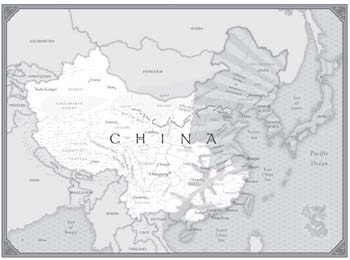
He stepped off the plane at Kunming’s military airstrip into a crisp early spring afternoon, the air cold but the sun warm, to be met by the British vice-consul and Pratt, the King’s Messenger. He was driven off to the city across a fertile plateau along roads lined with poplars and irrigation ditches and through hamlets with small cottages built of yellow mud brick, their roofs blue-tiled and with gently upturned gables and ornamental finials.
By the time he reached the ornate buildings of the consulate he was immediately and uncontrollably happy. He fancied that the consul general looked like H. G. Wells, and the architecture was instantly delightful. He was also pleased to note that a grove of bamboos had been judiciously planted outside his bedroom window; and he was particularly overjoyed when he realized that the consulate’s corps of venerable retainers—“said to be promoted coolies, solemn but nice”—actually seemed to understand his painstakingly learned spoken Chinese. The consul, Alwyn Ogden, was astonished at his ability, too, and highly impressed.
Needham spent the late afternoon unpacking, listening to the crows cawing in the consulate garden, and watching the sun inch down over the far Tibetan hills, imagining himself—as he wrote the next morning in a long letter to his old friend Margaret Mead, the anthropologist—in the Cambridgeshire village of Duxford, in the garden of the local vicarage. Throughout his subsequent life in China he would make comparisons like this, comparing obscure places in Yunnan and Hubei and Xinjiang to beloved, cozy places in the country he had left behind, or else to spots—usually in either America or France—that he especially liked. It comforted him to do so: despite his goading wanderlust he was often overwhelmed by waves of introspection and homesickness. In any case he probably suspected that the conceit added some sense of fine romance to his writings—though some of his comparisons do seem improbable: in comparing the city of Kunming to the village of Duxford he was likening a city of almost 1 million to a rural community of no more than sixty.
He recorded with fine detail his impressions of his first thirty-six hours in China, in letters to Margaret Mead and Lu Gwei-djen in America and to Dorothy—who was working in the biochemical laboratory in Cambridge. He told them all how he went for a stroll that first evening—the hills on the skyline in all directions seeming to him like the west of Scotland—and how he was charmed by the friendliness of everyone he met. People in the street smiled at him. The gardeners “in their little mongol caps” were all “amiable.” The sentry at the gate of Yunnan University may have carried a rifle with a fixed bayonet, but was “pleased to pass the time of day.” And he was charmed to be able to watch a circle of about 100 soldiers sitting on a lawn, looking on while a pair of them practiced kickboxing to the tune of a thin bamboo pipe:
As I write there are many patches of blue sky. Everything seems so strangely familiar (my having thought about China for so long), yet like a dream—e.g. the old Chinese gardener in ragged blue coat and trousers with a wispy white beard who potters around smoking one of these long pipes with a tiny bowl…and a mongol cap, periodically performing elaborate grafting techniques on the plum trees.
He had evidently stopped to watch this old gardener, and not just because of the man’s exotic appearance. He realized that in following as closely as he could the manner in which the man was splicing, tying, and grafting the plum tree, he was actually witnessing something rather important. He was watching a performance—the carrying out of a technique, a craft, a science—that was very, very different from the performance of similar techniques he remembered at home.
Later he recalled his father working on the single apple tree that grew in the back garden of the family house in London—and if he closed his eyes he could see just what his father had done one long-ago summer day when he himself was just a child, while trying to top-graft this tree to help make it stronger and bear more fruit. The more he thought back, the more he realized that what his father had done was wholly unlike what this Chinese gardener was doing here in Kunming. Perhaps, of course, the difference was simply because the family tree had been apple, and this one was plum. But he doubted it. More probably it was because in China they did things differently.
A further thought struck him. Perhaps the Chinese not only did their grafting differently but may have done this different kind of grafting very much earlier than anyone in Europe had done anything like it. Perhaps this old man’s technique was thousands of years old. Further still, quite possibly Needham could prove it was thousands of years old by researching old Chinese books on botany—which of course he could now read with ease. He could hunt down any references to fruit grafting in ancient times, and then compare these accounts with published histories of gardening in the English language.
So he made a quick penciled note about the precise nature of this gardener’s technique, and a reminder to check the ancient texts. This notation is historically important—it represents the very first piece of information that Joseph Needham ever recorded with the specific intent of one day putting it into the book he was thinking of writing. If this gardening technique was different, then maybe he would have discovered a vital piece of information showing that Chinese horticulture had an antiquity far greater than anyone in the West supposed.
He recalled once reading, in Cambridge, a treatise by the American missionary S. Wells Williams,12 which roundly declared: “Botany, in the scientific sense of the word, is wholly unknown to the Chinese.” Such a statement, Needham was to write later, “could only have been made by one of a generation totally ignorant of the history and pre-history of science.” Needham felt he needed to write his new book largely to overcome ignorance like this, and to purge the western world of prejudices against the Chinese that were based on such a wholesale lack of knowledge and understanding. Should a book ever be published, then observations like this, and the scores of others he now knew he would make—for this was only his first day in China, and he probably had chalked up one discovery already—would be sure to be included.13
Moreover, what Needham had achieved and planned while observing this gardener—watching his peculiarly Chinese uniqueness, noting down the details of his craft, researching the ancient Chinese literature on the subject, and then comparing these writings with similar literature from the rest of the world—was an investigatory technique he could apply with equal validity across the board. Everything he was about to see—how a Chinese farmer plowed, how a Chinese bridge was built, how iron was smelted in China, what pills a Chinese doctor handed out, which kinds of kites were to be found in a Chinese playground, what a Chinese siege cannon looked like, how a dam, a brick, a haystack, or a harness was built in China—was useful to him. He could see and note down all these things while he was performing his official tasks for the British government. There would in any case be plenty of overlap between his official duties of helping out the beleaguered Chinese universities, and his personal research. He could spend each day looking, searching, noting; he could spend each night reading; he would examine the foreign literature when he got home—and then, perhaps, there might well be enough material for a book.
And so even before he had reached his ultimate destination, Chongqing, the nation’s capital, where his billet—the British embassy—was sited, he was fired up with inquisitorial energy. His experience watching the gardener persuaded him to take advantage of his few days of rest in Kunming to scour the city and its hinterland for ideas—and he discovered them in abundance, together with much that astonished him, in areas of technology that were both prosaic and abstruse. The Chinese, he kept discovering again and again, had the longest imaginable history of invention, creation, and the generation of new ideas.
He found and sketched, for instance, a bucket dredger, where coolies—his word—were winding up water from a deep ditch by hand. He ferreted out a local cytologist and discussed what he knew about British cell research. He went down local caves and found to his amazement scores of the finest measuring machines and scales squirreled away there, safe from bombings, with men in white coats patiently titrating and calibrating and weighing with Zeiss lenses and Griffin and Tatlock scales, hundreds of feet below ground. He was then even more astonished to find that Chinese scientists had a fathomless capacity for “make-do-and-mend”: he noted that even in the “sylvan surroundings” of Yunnan, some students at the crystal physics laboratory were building their own radio valves, and others were making quartz crystals for receivers. Perhaps most surprising of all, technicians in one physics building were making their own microscopes and telescopes from scratch, grinding the lenses to the correctly calculated shape from blocks of raw optical glass.
On another day in Kunming he asked for and was given a history of Chinese mathematics from Dr. Hua, a man whose brilliance prompted Needham to describe him as the “Chinese Ramanujan”—until to his momentary embarrassment he discovered that Dr. Hua, like the legendary Indian scholar, had worked in Cambridge alongside G. H. Hardy, Trinity’s world-famous mathematics professor, and the two men knew each other well.
He visited a laboratory doing work on antimalarial and antidysentery drugs, and spent one entire lunch being talked to about “plant growth hormones, cathode ray oscillographs, egg respiration and what have you.” Then that same evening he gave a talk on what he knew about the history of Chinese science, later noting with evident pleasure “the extraordinary good looks of the Chinese [that] came out remarkably as they were sitting round the fire. I like their long gowns, giving a monastic look to the scene, and they put their hands in their sleeves in a quiet way which is nice.”
The very next day he decided to have a scholar’s robe made for himself. The local tailors seldom had to fashion clothing for a lao wai, a foreigner, and they were astonished at Needham’s height, which overtopped the average Chinese client by a foot at the very least. He decided on blue silk, with a black cotton lining and a lighter blue heavy silk for trim and enormous cuffs at the end of the baggy sleeves where he might hide his hands, as he had already seen Chinese merchants doing. The colors he chose denoted academia and thoughtfulness, the cutter told him.
He was fascinated by the entire two-day process—not least by the arcane system of Chinese measurement which tailors still used (and which the older ones still use today), applying as it did such units as the duan, the cun, the chi, and the zhang. They then calculated the length of the silks required and the costs—first on a pocket abacus, and then as confirmation on a desktop machine, a venerable contraption of heavy teak spheroids and worn brass fixtures, which under the clerk’s fast-flying fingers whirred like clockwork.
Needham was entranced. Here, again, was a shining example of a Chinese invention that, he imagined, probably predated any calculating engine made in the West. He sketched the machine in the tailor’s shop: it was made of twelve rods, each divided by a bar into a short upper part and a longer lower one, with two flattened teak balls on each upper part, five on each lower part, and everything enclosed in a teak frame. The Chinese name for the contraption was suan-pan, a calculating plate; wu zhu suan pan, a five-ball plate. The idea, the shopkeeper added, was probably as ancient as the hills.
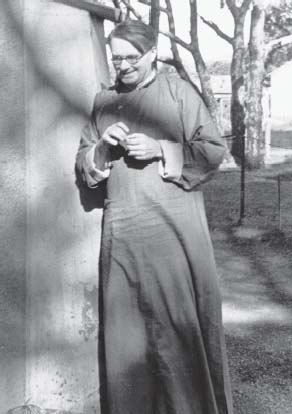
Soon after his arrival in China, Needham had a local tailor make a scholar’s robe for him, in blue silk with contrasting pale blue cuffs. By 1946 it was showing the effect of the rigors of his travels.
Just how ancient was something Needham would determine later—and by patient detective work he would discover that the abacus was not only of far greater antiquity than any calculating engine ever made in the West (Blaise Pascal is generally given the credit for making the first, a machine devised in 1642, when he was twenty-one), but far older than had previously been assumed by scholars.
Students of Chinese science working in the West had concluded from documents—most notably a picture in a book dated at AD 1436—that the abacus was a fifteenth-century invention. Not so, Needham declared after just a little more digging: a treatise written more than 1,000 years before, in either AD 190 or AD 570, had references to a calculating phenomenon which in English was translated as “ball arithmetic.” A further few days of detective work uncovered a full description, from a commentator named Chen Lun, of a device made “of a board carved with three horizontal divisions, the upper one and the lower one for suspending the travelling balls and the middle one for fixing the digit.”
Within days of his arrival in Kunming, in other words, Needham was making discoveries about China that very few—whether Chinese or foreigners—had ever managed to make before. As a result, he was becoming ever more convinced. With no more than just a little inquiry he—a biochemist! an amateur!—was finding out things about China that the Chinese themselves didn’t know, and that even the most revered members of the small corps d’élite of Chinese scholars in the West didn’t know either. He was in consequence coming to the very firm conclusion that the book about which he and Gwei-djen had spoken so many times truly deserved to be more than just a vague notion. It needed to be written, if for no other reason than to establish once and for all a just and proper reputation for China.
All this was a very long way ahead. But it was already beginning to seem as though nothing Needham would see, hear, or read over the coming years would go to waste. His late father’s often-repeated saying, quoted here yet again—“No knowledge is ever wasted or to be despised”—had obviously remained with him.
And there was one other thing: if he had begun falling in love with China while he was still in Cambridge, there was no doubt about his feelings now: this brief sojourn among the western hills of Yunnan had rendered Joseph Needham entirely and hopelessly smitten.
Toward the end of March, Needham finally reached Chongqing, the Chinese capital, where his work would really begin. It was a measure of his importance to the government at home that he was escorted there by the same King’s Messenger, Pratt, who had met him at the airport a month before. Members of the Corps of Messengers are usually employed to hand-carry secret documents to British embassies around the globe; only very occasionally are they ordered to ensure the safe passage of critical personnel.
But Needham was a critical man—he had been directed there by Winston Churchill. So it was Pratt who, on March 21, came with Needham on the excessively bumpy three-hour journey; Pratt who watched nervously as the plane put down on the sandspit in the Yangzi that was the city’s main wartime aerodrome; and Pratt who, after crossing the swaying pontoon bridge to shore clambered with Needham up the famous 480 granite steps, through the mobs of quarrelsome ban-ban men, the porters with bamboo shoulder poles eager for custom, to where the embassy motor cars were waiting. The messenger, like everyone else in the corps a former military officer, then saluted stiffly, his responsibility at an end; with the handshake from a waiting attaché, Counsellor Joseph Needham was now formally a member of the British diplomatic mission to China.
He found the embassy a welcoming sanctuary, though it was a good deal less grandiose than most other British legations he had visited around the world. There were no marble pilasters and caryatids and no gilt chandeliers here; the embassy was a ramshackle agglomeration of long, narrow buildings on a bewildering variety of levels on a steeply terraced hillside on the right bank of the Yangzi. At the center was the reasonably imposing chancery building, with a proper porte cochere and a flagpole, and rooms at the back that led to caves carved into the mountainside, in case of an air attack. The half dozen other buildings where the lesser staff worked, and which were connected to the main embassy and to each other by a network of steep staircases running through the woods, had a cheap, temporary look, all lath and plaster and with bamboo sunshades. It was as though the Ministry of Works had built a temporary welfare payment office destined for some dreary English suburb but had set it down in China by mistake.
Visitors were dismayed by the dilapidation: plaster had fallen off several of the walls, exposing the bamboo matting beneath, and some of the buildings leaned alarmingly, especially those perched at the top of fast-eroding slopes that crumbled down to the riverbank. Moreover, the humidity for which Chongqing was notorious had wreaked havoc on the equipment inside all the offices, coating leather shoes, attaché cases, typewriter covers, and the plaster walls with a greenish mold. Happily this mold burned off once the hot weather arrived—though there was no such luxury as air-conditioning; electricity for the fans was uncertain; and comfort was all too seldom the order of the day. The gardens of the embassy were home to some unfamiliar flowers, including some very fragrant ones that, Needham learned later that year, the local children turned into posies for men—selling them for one yuan at a time, to help mask the smell (like boiled meat, the Chinese complained of westerners) of their summertime perspiration.
The ambassador, Sir Horace Seymour, was a career diplomat of the old school, having come to China from Tehran, where he had been the British minister. Needham described him as self-effacing—in fact, “so shy that by a sort of mumbling he tries to prevent you hearing what he says.” He had just struck what was perhaps the most important deal of his career: a few weeks before, on January 11, he had signed a document which formally ended all British claims on Chinese territory (except for those on Hong Kong), and which abolished all rights to the curious concept of extraterritoriality.14 He was in consequence a mightily popular figure locally, being seen in the capital as the man who had given back to China its long-sought birthright. He lived high on a hill overlooking the city, in a grand mansion which had been lent to the British by Chiang Kai-shek, the generalissimo. The setting was spectacular: both the Yangzi and the Jialing could be seen from the drawing-room windows; and from the dining room the magnificent mountains of Yunnan, blue and misty, could be seen in the far distance.
Needham spent his second night in Chongqing there, in an atmosphere straight out of Tunbridge Wells, with chintz sofas and curtains in old-rose cretonne, gold-edged and royal-crested Doulton china, and silver-edged portraits of King George VI and Queen Elizabeth. No Lady Seymour was present, though: she had elected to sit out the war in Wiltshire. But Needham did meet one of British diplomacy’s dashing characters, the flamboyantly enigmatic explorer-cum-special agent Sir Eric Teichman, who had been at Needham’s college, Caius, and had won a Blue15 in 1903 for steeple-chasing.
Teichman had been invited along to describe for Needham the challenges of travel in remote corners of China. Few were better qualified. Like other Central Asian luminaries of the turn of the century, men like Aurel Stein, Sven Hedin, and Sir Francis Younghusband, Teichman was a traveler of enormous resourcefulness and courage. In 1935, despite having severe arthritis and still suffering the lingering effects of a youthful riding accident, he traveled by truck thousands of miles across the Tarim basin to the far western Chinese market town of Kashgar, then pressed on with a pony and on foot across the Pamirs and the Karakoram ranges to Gilgit, before finally reaching New Delhi. He said that this journey was his swan song as a traveler in Asia—for it was the last, the longest, and the most ambitious of his solo expeditions. He had been doing this sort of thing, disappearing on “special missions” and “fact-finding journeys” into this forbidding corner of the planet, since before the Great War.
The advice he gave that night proved invaluable, as would become clear during Needham’s later epic voyages through China. And Needham was hugely impressed—as much by Teichman’s oddities as by his offer of assistance. Teichman, he wrote home, “is bent almost double, has a face reminding one of E. M. Forster, [and] comes out with a voice like a kind of harsh bell, extremely definite and clear and imitable.”
The dinner over and the socializing eventually done with,16 Needham promptly found his office, assembled such staff as he had been allotted, and got down to work. At first nearly all his tasks involved his official duties for the Sino-British Science Cooperation Office, of which he was the director, and which was housed in a tiny prefabricated building at the top of the riverbank. He enjoyed the assistance of only a driver, a part-time secretary from India, and one older man of uncertain responsibilities. The organization would grow, and mightily; but at the beginning, Needham and these three did all the work.
And the work, at least in the early days, was grueling. By Easter Needham was grumbling to his diary, if reasonably amiably, about both the scale of the task ahead of him and the practical exigencies of performing it in the still besieged wartime city. While others might be taking their ease during the dawn hours on the Monday holiday after Easter, for example, Needham had not gone to bed at all: he was still up, writing in his journal—in part to get his frustrations off his chest, in part to offer up an illustration of the duties he had to perform.
On the Saturday before, he wrote, he had had an “exhausting” two-hour interview with China’s minister for war, and had then had to return to his office and write letters to a variety of bodies—one being the Potteries Trade Research Association in England—as well as to several local addresses. He then rushed out to dinner with “medical people”; came back and worked until past midnight; then slept fitfully until the moment when, very early the next morning, Easter Sunday (a day not celebrated by the Chinese):
word is brought that the secretary of the vice-director of the National Resources Commission has called, so he has to wait while I dress. Hardly have I had breakfast before I am called to a two-hour meeting with the Ambassador concerning the anti-malaria situation, including claims by several varieties of commercial crooks of various nationalities. On return, with anxiety to get something done, find piles of unopened letters waiting….
The telephone service is very dim and the cars also. Thus, five minutes before an important meeting with some minister, I go along to the car park with the wooden paizi, or token, indicating the right to use a Chancery car, to find that Sir Eric Teichman or somebody has gone off with it, paizi or no paizi, whereupon I return to blow up Blofeld in his office, whereupon he flies round to the military or air attaché’s office begging for a car, but when we get to it we find that a tyre is flat, or the driver isn’t there, or that it hasn’t got any more petrol, or that it is using power alcohol from molasses so that it stalls on some awkward hill.
Chongqing is a city defined by its hills. It rises like the prow of a ship, a great pyramid of jumbled rock and humanity, at the meeting point of two of China’s mightiest rivers, the Yangzi and the Jialing. Even though it is fully 1,500 miles from the sea, the Yangzi is still immense here—a great gray winding-sheet of a stream, littered with sailing junks, in places a quarter of a mile wide, in parts boiling with currents, in others slow and limpid, roaring imperturbably down from the Tibetan hills to where it pauses here in Chongqing, heavy with mud, on its passage through the great Red Basin of central Sichuan.
The confluence of any two gigantic streams often provides a natural place to build a city; and so Chongqing is understandably ancient, having first been settled in the fourth century BC, and it has been one of the country’s greatest inland cities for at least 1,000 years. Foreigners were permitted to settle there from the beginning of the 1890s—it was the first of China’s interior cities to be obliged by treaty to provide concessions for traders and diplomats. Most of them liked the place—it was always lively; the people were peppery and amusing; the food was spicy; the women were said (except by supporters of a rival claim from the eastern city of Suzhou) to be the prettiest in the nation. The major problem was the weather: Chongqing is one of China’s three “great furnaces,” blisteringly hot from April until November, the air like bundles of heated cotton-wool, thick and barely breathable.
In the early spring of 1943 the weather was not the major issue. The ruin and depredation caused by two years of nearly continuous Japanese bombing had pounded the city almost to death, and it was only now struggling painfully back to life, the people emerging from their underground shelters, blinking, into the smoky sunlight. Between 1939 and 1941 there had been no fewer than 268 bombing raids, much of the central city had been gutted by firestorms, and thousands had died—more than 4,000 in one terrible two-day raid at the very beginning of the Japanese campaign.
The Chinese behaved with memorable stoicism during the bombing—which was arguably more sustained and terrifying than any other aerial bombardment inflicted on any other city in history. Robert Payne, a writer and teacher who befriended Needham in China—and who came briefly on one of Needham’s great expeditions—talked in 1943 to an elderly Chinese professor who managed to put the campaign into the kind of perspective that Needham would have welcomed. Payne was discussing the American bombing raids on Tokyo the year before, somewhat approvingly, and the Chinese sage was nodding his head in a way that Payne assumed signified complete agreement. It was only after the man began to speak that he realized “for the thousandth time since I came to China that a man who nods his head may actually be expressing the most profound disagreement:
“I was in Chongqing during the bombardment,” he said. “I have no wish that the Japanese should share the same fate. Nothing is so terrible, nothing is so remorseless, nothing so revolting to the soul as a bombardment. The soul cannot suffer in peace after such indignities. Only now, two years afterward, can I think coolly of what happened, and I now praise God that China for centuries refused to harbour such things. The Chinese knew all about poison gases fifteen centuries ago; we invented an airplane, and quite rightly executed the inventor; we are the only nation that has thought continually of peace. I have no malice against the Japanese, who killed my parents and my brothers. I have pity, but it is not Christian pity, I’m afraid—it is the pity that burns.”
Such conversations fascinated Needham, and as with the grafting of the plum tree and the making of the abacus, he avidly noted the details. But it turned out that he was not so interested in whether or not the Chinese felt pity for the Japanese, or in their views on the supposed indignity of bombing campaigns. It was the old man’s idea that a Chinese inventor had come up with an airplane, and that other Chinese scientists knew all about poison gas—and so these two nuggets of information, two Chinese “firsts,” if they were provable, went into the notes he was preparing, and also went into his ledger with a simple notation: “Research this further.”
The mission, which was officially to occupy Needham’s next four years, was defined in all its aspects by the mechanics of the war that raged through China. By the time he arrived in Chongqing it was a conflict that had already steadied itself into an uneasy stalemate, and with the arithmetic pointing to one pitiless conclusion: Japan was going to lose.
Everything had changed after the attacks of December 1941 on Pearl Harbor, Hong Kong, and Singapore, when the Chinese government had at last declared itself officially at war with the invading armies from Tokyo. The Allies’ coolheaded military analysts swiftly concluded that as a consequence the eventual outcome was inevitable: insofar as China was concerned, Japan had embarked on a war that for one simple reason—China’s immense size—was absolutely unwinnable. China, 4,000 miles from Shanghai to Kashgar, 3,000 from Hainan Island to the Gobi Desert, was like a vast, shapeless sponge for any invading army: it could soak up, enfold, and suffocate endless supplies of men and matériel and still itself remain healthy, whole, and intact.
Joseph Needham remarked on this years later. There had evidently come a point in the conflict, he said, when Tokyo also reached the same very simple realization: that even after it had fought over and then secured some town or village somewhere in China, its commanders would be obliged to leave behind sentries to guard bridges and culverts and tactically important sites: “and have you any idea how many bridges and culverts there are in China? Do you think Tokyo ever thought of this? Uncountable thousands. More men would be needed than Japan has in her entire army. The fact is, China is just too big, too complicated, for any other people in the world to come and dominate and control it. Japan was on a fool’s errand, and by 1941, it had come to recognise that.”
The Nationalist government in Chongqing had therefore decided to spend less of its time and effort in the early 1940s fighting the Japanese, and instead let the sheer size of China wear the invaders down. Chiang Kai-shek had chosen the redoubt of Chongqing as his capital deliberately, with this very fact in mind. Even if China were to lose fifteen of its eighteen provinces, he once famously said, “if we hold on to Yunnan, Guizhou and Sichuan,” where Chongqing lies, “then we could defeat any enemy, recover the lost land, restore our country, and accomplish our revolution.”
There was an additional reason for Chiang’s optimism. Because the Allies would be fighting Japan on the other fronts that had opened up since their attack on Pearl Harbor, Tokyo would be obliged to detach soldiers from its garrisons in China, weakening its presence in and its hold on China and so reducing the likelihood that China would lose any more territory. Therefore, a military policy of containment and survival became Chiang Kai-shek’s priority—that and defeating Mao Zedong and Zhou Enlai and their Communist battalions, whose own ideological power had been growing steadily during the first four years of the war.
However, one major problem remained for the government in Chongqing—the supply of critically necessary food, weapons, and ammunition.
A fair amount percolated through the 2,000-mile frontier between free and occupied China, with Japanese troops sometimes colluding in the smuggling. However, since the Japanese had attacked and occupied the northern part of French Indochina, the main railway between Hanoi and Kunming—which had been China’s lifeline, used for bringing in huge quantities of badly needed supplies from India—had been severed. The only other supply routes passed along the immensely difficult caravan trails from Russia into the deserts of Xinjiang, and were seen as wholly impracticable. China—and its army—thus faced a real risk of being slowly starved to death.
In an attempt to remedy this the Allies constructed the legendary Burma Road and the Ledo Road, hacked through well-nigh impenetrable jungles between India and China, in one of the most heroic engineering feats of any war, anywhere. They also arranged—most relevantly to this story—the air bridge over the Hump, the bridge by which Needham had traveled into China in February, and by which he would now want to bring in supplies for his own official mission. To do that, he would need permission. For his was a rather different task. The Allies were concerned most of all with keeping China’s body alive, fed, and in as fair a shape as could be expected. Needham’s duties were much more concerned with keeping the Chinese mind in good health, too—with making sure that the finest brains in the eastern world, legatees to the greatest civilization on the planet, were kept nurtured and in good spirits during all the trials of battle.
The specific official task of his Sino-British Science Cooperation Office—later called SBSCO—was to bring succor and comfort to China’s academic community. He was to “cheer them up a bit” as Jimmy Crowther of the British Council had put it in London. He was to remind them they were not alone, that the world was thinking of them. But fine words butter no parsnips: what was really needed, Needham discovered as he made his first rounds of the ramshackle capital city, was supplies—laboratory equipment, reference books, and scientific journals. The universities inside free China needed to know what was going on in the world outside, and thus informed, they needed to begin their own research all over again. Such considerations were uppermost in Needham’s mind as he settled in at his new billet.
Once he had got its measure, he found that the city was not at all as he had imagined. He wrote:
To start with, it is an extremely sprawling place, running along at different levels for several miles, so that there is plenty of green about everywhere, and the sound of cocks and hens even in the midst of the city. Hence there is a certain resemblance to Torquay, which the reddish earth and some of the masonry makes you think of, but the hills are higher…. At night, when the lights are out, and you hear the sirens of the river steamers (an ever-present sound, though not so frequent as in New York), the place is said to resemble Hong Kong. It also resembles Harpers Ferry, where the Shenandoah joins the Potomac, and the sirens of the B & O trains redound…but the scenery is on a larger scale here. It seems that the city contains nothing old and beautiful architecturally, but rather masses of jerrybuilt structures put up after the bombings had destroyed everything that was there before.
Some people might suggest that Needham was wearing rose-colored glasses, since most visitors to Chongqing in wartime, even though they liked its hugger-mugger spirit and zest, found it much less congenial and terribly dirty. It had dingy steps, slime-slippery alleyways, the stink of sewage, rats the size of small dogs,17 piles of rubbish spilling down the hillsides, scrofulous children, a million people crowded into a space originally meant for a third that number, and a cluster of immigrants and refugees so impossibly varied that communication was difficult, commerce frustrated, and service all but unobtainable. Moreover, the telephone service was virtually nonexistent, the electricity supply was fitful, there were no taxis, and living conditions generally were only tolerable. Because this was China, it was wartime, and everyone sent off to live in the capital had been forewarned that a stiff upper lip was a sine qua non, stoicism was part of the furniture, and fatalism went with the territory.
But soon after Needham arrived he was able to effect an escape. Late in May the ambassador asked him to drive 200 miles to the west, on a first mission to practice the art of spreading good cheer in the capital city of Sichuan, Chengdu. It was a journey he anticipated with some eagerness—not least because one of the secretaries at the embassy, picking up quickly on his fondness for pretty young things, had written to tell him of the attractive women he might meet there. “If you like to see a beautiful girl, Lettice Huang…. Miss Kimmie Gao is also beautiful…. Don’t bother to see her unless you are inclined to have some female company.” He left the weary old ruins of Chongqing for the foothills of Chengdu with a certain spring in his step.
His route went west through the fields and paddy terraces of Sichuan to the city in the foothills of the Tibetan plateau. Nowadays, on a seamless superhighway, it is a trip of less than three hours, but in the 1940s it was a three-day journey. On his way, Needham found that, to his great delight, he was once again able to indulge his academic curiosity as he had done so freely in Kunming. He dropped in on an alcohol factory (where he was able to speak in fluent German to the senior manager, who had trained in Frankfurt), he inspected a brine works, he gave lectures at two local universities, and he ferreted around in shops for old books—collecting on this first expedition a grand total of nine venerable volumes, including treatises, unavailable in any library back home in England, on the history of Chinese mathematics and astronomy, as well as books on Daoism and alchemy. After studying them, he slipped the volumes into the weekly diplomatic bag—the privileged embassy postal system—and eventually they made their way to Cambridge to await his return.
When he reached Chengdu, the situation was precisely as the secretary at the embassy had told him. He enjoyed his stay hugely—in part because he did indeed find beautiful women there. Wielding his two techniques of flattery and breathtaking directness, which would soon become familiar to their many victims, he flirted, and not infrequently he pounced. “I can’t help writing to say what a charming person I think you are!” he wrote to one young woman, Zhu Jingying:
I was much impressed when I first met you in the laboratory, and that was why I asked you to my party this evening, which certainly went with a swing. I have a good instinct about people: I know the right sort the first moment I see them. At the party I was more charmed than ever, for you seemed an enchanting mixture of seriousness and gaiety, reminding me of a girl I met in Kunming who drank a toast to Li Po in a way I shall never forget. With something so bright, so intelligent, something (and this is rare in women) so witty. Being easy to look at too. A Polish woman biologist (who afterwards became one of my greatest and most intimate friends) said to me once Je suis tout envahie de ton personalité, and that is rather how I feel about you. You are not ordinary.
The reason I write like this is because in wartime life is rather uncertain and it may be that we shall never meet again: so I wanted you to know the admiration I felt.
Don’t bother to answer this letter. Of course I do hope you’ll look me up at the British Embassy if you are in Chongqing; and I shall look you up when I come back here in August.
There is no record that he ever met Miss Zhu again; nor is there any record of her reaction to this declaration. We shall never know whether she saw it as an honest and innocent expression of admiration, or as an artfully devised mash note.
Whatever the fate of that particular meeting, a much more significant encounter took place during Needham’s brief stay in Chengdu. On this first westward venture, Joseph Needham met the young man who would be his secretary, confidant, and constant companion during most of his subsequent years of travel—and who would produce one entire volume of Science and Civilisation in China more than half a century later.
He was Huang Hsing-tsung, generally known as H. T., and at the age of twenty-three he was working as a science teacher at a technical school just outside the city. He had been there for two years, after a somewhat dramatically interrupted career.
He had been born in 1920 into the Chinese community of Malacca, on the south coast of the Malayan peninsula, and had gone to Hong Kong University to take a degree in chemistry. Shortly after he graduated, however, Japanese soldiers invaded and overran the tiny British colony—whereupon Huang decided to escape.
He was first smuggled in a boat up the Pearl River. Then he managed to get himself, by walking or by begging lifts in passing carts, into the uncertain and ever-shifting no-man’s-land between the Japanese and the Nationalist Chinese lines. Then, after almost a year of wandering and considerable privation, and by managing all the while to stay one step ahead of the invaders, he fetched up in the far western city of Chengdu, and comparative safety. He presented himself at the closest local boys’ school, which was known as a Baillie School, after the Scots-American founder. Here, since he had a degree, spoke good English, and was evidently a man of considerable courage and initiative, he was hired as a teacher, almost on the spot.
A few months later, and quite unexpectedly, he received a letter from Chongqing—a letter that was notable chiefly, he said, “for its prominent seals and stamps, one which stated ‘Sino-British Science Cooperation Office,’ and which endowed it with an undeniable air of authority.” It was from Needham, and it was brief and to the point. He wanted a secretary, desperately.
The contact had been made by way of Gordon King, a Scottish professor of obstetrics from Hong Kong who was one of Huang’s former teachers, knew of Needham’s towering academic reputation, and was now himself in China. He had suffered through a hair-raising adventure, leading more than 100 Hong Kong students through the Japanese lines to where he was now teaching at one of Shanghai’s universities currently quartered in Chongqing. He found himself with Needham at an embassy event, and learning that Needham wanted help, promptly told him of Huang—a brilliant young man, he said, currently boxing well below his weight at a boys’ school across in Chengdu. It might profit Needham to make use of him in some capacity, King said—perhaps even as the very secretary he needed.
So, without further ado, Needham wrote to this apparently very clever refugee. Could he type? Could he drive? Might he like to wander around China for a while—perhaps in fact for a rather long while? Might he, in short, take the job? Needham would be coming across to Chengdu—he might even already be there by the time this letter arrived. He would be staying with a local family named Luo. Perhaps in the next day or so Huang might drop in?
The offer, said Huang, sounded “awfully attractive.” He had no doubt. He went to the Luos’ house with indecent haste, arriving before breakfast, and asked for their distinguished foreign visitor. It turned out that he was far too early. But still,
after ten minutes Needham appeared. Wearing a loose blue Chinese gown, with his hair slightly disheveled, he loomed large and forbidding, but his manner softened as soon as he started to speak. I introduced myself. He took a blank card from his desk and proceeded to write my name in Chinese. After a couple of starts he wrote down all three characters correctly. He took out his date book, said he would be tied up all day, but he would be able to see me the next morning.
The next day, at a more civilized hour, Huang presented himself again, this time for the interview itself. He was fretful. Though the idea of wandering across China with a man so evidently remarkable and curious was highly alluring, the truth was that he could neither type nor drive, and he doubted that he would be hired. Moreover, when he turned up, two others were waiting.
Needham appeared, this time in an army khaki shirt and shorts—he seemed in a good temper, not least because he had had his breakfast.
After what seemed an interminable wait, the visitors departed and my interview with Needham began. I told him about my background, education and interests. I confessed I did not know how to drive a car, but played down the fact that my typing skill was negligible. Fortunately he did not seem particularly concerned about these issues. He talked about the circumstances under which he had become interested in Chinese culture and language, the influence his younger Chinese colleagues at Cambridge had on him, his appreciation of the accomplishments of Chinese scientists under trying wartime conditions, and his effort to set up an organisation to help them obtain books, journals, equipment and materials from abroad. He expressed the hope that such an organisation could become the forerunner of an international science cooperation network after the war. An hour quickly passed.
He said the job was mine if I wanted it.
By the middle of May the embassy had confirmed Huang in his post, a dream job with a good salary and diplomatic privileges. He gave in his notice at the school and prepared to move to permanent digs in Chongqing. But the matter wasn’t quite as simple as that. Needham, perhaps inevitably, suggested that the two of them journey back to the capital together, by a route that would be as complicated and as scientifically fulfilling as possible. It was to be a dry run for the much more ambitious journeys that lay ahead. Excerpts from the two men’s diaries over the next twenty days of half-planned meandering provide an illustration of the manner in which Needham tried, relentlessly, to find out as much as he could from every encounter he ever made in China.
So they headed south out of Chengdu, not east, as the direct route home would take them. They first made their way by road down the Min River valley, to a point where the Min joins the Dadu River at Loushan, an otherwise undistinguished mountainside town that was the temporary wartime home of the University of Wuhan, normally 600 miles away. They spent five days here—looking over the department of physics, which had been housed in an old pagoda; investigating the colleges of art and law, which were in a Confucian temple; visiting a forestry research station, which was in yet another temple; and looking over, at its temporary housing in a godown several miles away from Loushan, the only microbiology laboratory then existing in free China. In Loushan Needham met a plant physiologist named Shi who fashioned apparatuses of bewildering complexity out of scrap metal. Needham described Shi as very “Cambridgeish”—an apparent compliment.
Needham was constantly delighted by the ability of the Chinese, at least in wartime, to improvise, which would have been a guiding principle of his late father’s. He was invited by the BBC to give a talk a few weeks after this journey, and he related what he had found:
One may see, for example, a coal carbonization plant in which all the piping, scrubbing towers and metal parts have been constructed out of old gasoline drums. Or one may find a steel rolling mill operated by a salvaged river-steamer engine, and an excellent blast-furnace made with steel plates from sunken river steamers. When a university laboratory ran out of elements for their electric heaters they found that gunborings from a nearby arsenal would do very well as a substitute, and when microscope cover-glasses could not be had, they used slips of natural mica.
Needham gave two hastily arranged lectures in Loushan, one of them followed by a short speech in Chinese, his first ever, which his listeners rather dutifully said they were able to understand “quite well.” He also gave a dinner party—one of the “cheering up” duties with which London had saddled him—and said he found it hilarious, partly because of the good Sichuan orange wine; partly because Needham loved playing the host, and ganbei-ing—making toasts—each time the bottle was poured; but mostly because of the number of women he was able to round up, far more than at a customary Chinese banquet.
To Needham—with his wife in Cambridge and his mistress in New York—an abundance of women was an eternal delight, and their presence cheered him up enormously after a hard day at work. After this dinner he took the whole party, who were by then well in their cups, off to see a Sichuan opera, which he said later he found amusing but rather too noisy, and “sorely lacking in violins.”
He and H. T. then pressed on south toward Yibin, stopping en route to see, at various places, a 360-foot carved stone Buddha, a new salt well, a factory for making ethanol out of grain, something called a wood dry carbonization plant (no explanation given), and a monastery. At the monastery they were introduced to and then had lunch with a group that included a “living buddha,” three itinerant Tibetan monks dressed in russet red robes, some rather sobersided Chinese monks kitted out in black, and the Australian ambassador to China, Sir Frederick Eggleston, who happened to be nearby, and hungry. Needham said he found it rather amusing that so austere a community was suddenly invaded by an antipodean diplomat and a fellow of the Royal Society, but imagined later that the monks had been less impressed than he, and had taken it all with properly spiritual equanimity.
Later that day he and Eggleston went to a teahouse and sat outside in the sun chatting idly about the beauty of their situation. It was perfectly safe for them to do so. Long gone were the days when foreigners were subject to the kind of vilification and hostility that had marked Boxer times: in the 1940s the very few lao-wais who journeyed into the Chinese heartland were greeted with great warmth, the only inconvenience being, then as today, the occasionally overfriendliness of popular curiosity. Since Needham took great care to treat every Chinese he met with the same polite solicitude he would show to his own kinsmen in Cambridge—or perhaps with more reverence, considering the antiquity of their civilization—he was always well treated in return. Moreover, he remarked to Eggleston, in a conversation so notable that he would write about it fifty years later, there was little evidence of harshness in the conduct of China’s everyday civil affairs. Chinese villages might be poor, but their inhabitants were generally happy, and people went about their business knowing full well their particular standing in society, but never having to be overtly reminded of it or warned about it. Bureaucracy was deeply embedded in every aspect of Chinese civil life, and it underpinned all aspects of their society, evidently in a peaceable way:
Seeing the common drain running down the middle of the village street, Sir Frederick exclaimed how mediaeval everything was, and said: “You could almost expect a knight and men-at-arms to come by.” I replied yes, indeed—but pointed out that it wouldn’t have been a knight, but a civilian official, and the men-at-arms would have been represented by unarmed servitors carrying his titles and dignities on placards. It did not mean that the ultimate sanction was not force, as it has been in all human societies—but it was force much better concealed by the Chinese bureaucracy.
Everywhere he traveled, Needham later said, he would see village walls covered with an inscription that, he felt, quite deftly summed up the Chinese people’s attitude toward their government: “May the Heavenly Officials Grant Peace and Plenty!” This is what both sides wanted. Authority was there, of course; and it could at times be exceptionally cruel. But to most Chinese the bureaucracy that sustained it was a benevolent entity, made up of men whose wisdom, tested in examinations, was accepted; whose propensity for corruption was kept within acceptable limits; and whose professed intentions for the common good and for the good of the nation were generally thought to be credible.
It was sixty more miles by road to Yibin city, where they would meet the Yangzi and take a riverboat home. Rather than continuing along the highway, which was rutted and uncomfortable, Needham suddenly thought—in an impetuous moment of a kind that was later to be all too familiar—that it might be more amusing and valuable to go to Yibin by boat. So he persuaded Professor Shi, the “Cambridgeish” plant expert, who had connections—what in China are known as guanxi—to whistle up two of the river barges normally used for transporting salt and press them into service as temporary personal ferries.
Needham, Huang, and a somewhat bewildered Professor Shi were the only passengers, and their trip downstream was thrilling. The Min is a furious river at the best of times, and in early June, with the Tibetan snowmelt beginning to run off, it was in dangerously full spate. While Needham sketched the design of the craft (three covered sections—one for the salt, one for passengers, one in the stern for the owners—and a sternpost rudder of a unique type that the Chinese first invented), H. T. watched the men rowing. There were four of them, and they stood in the bow, he wrote later, two on each side “like ancient Egyptians,” and used ultra-long trireme-size oars to help the steersman keep the boat straight in the rapids. They chanted lustily as they pulled away, the rhythm of their chantey reminding Needham of the first bars of the Song of the Volga Boatmen. The captain wore a long gray gown and a white turban and looked, wrote Needham, like Sinbad the Sailor.
The journey down to the junction with the Yangzi, though only sixty miles or so, took two days, and it alternated between being an idyll and being a nightmare. Their companion boat was wrecked on the rocks and had to be repaired. Rapids, gigantic whirlpools, and boils terrified Needham, as did the constant threats of bandits, who were suspected of smuggling themselves aboard among the would-be river hitchhikers who swarmed onto the deck every time the craft stopped. And as if this were not enough, the weather, although it was almost midsummer, turned unexpectedly cold and rainy.
Thereupon Professor Shi—a tall, lean figure with a wide range of interests and knowledge—decided that the passengers’ morale was falling, and that he ought to amuse them. He turned out to have an astonishing memory for poetry of the Tang and Song dynasties, and so he recited from memory stanzas which would amuse everyone—and which Needham immediately translated.
One of the poems was cheerful and rollicking, about wine and women and good times, and in terms of its art, thought Needham, rather slight. The other, though, which had been written by the tenth-century poet Jiang Jie, had a peculiar melancholy about it that, in Needham’s off-the-cuff translation, seemed entirely appropriate to their present adventure. He managed to render the classic in better than passable English, and what he achieved stands as an impressive reminder of his growing skill with the language:
As a young man, listening to the girls in a tower
I heard the sound of the rain,
While the red candle burned dim in the damp air.
In middle age, travelling by boat on a river,
I listened to the rain falling, falling:
The river was wide and clouds drifted above;
I heard the solitary cry of a teal borne on the west wind.
And now in a cloister cell I hear the rain again,
My hair is grey and sparse;
Sadness and Happiness, separation and reunion, all seem one,
They move me no more.
Let the rain drop all night on the deserted pavement
Till the day dawns.
Finally they reached Yibin, a grubby little city known today for little else than a distillery that makes a disgusting Chinese version of Scotch whisky. It is here that the Min River joins the Yangzi, at a point that sailors generally think of as the effective head of navigation for the greater river. Yibin lies 1,800 miles from Shanghai and the East China Sea; and the Yangzi above the city turns menacing, with narrow, steep-sided canyons and a ferociously fast stream. Only a very few shallow-draft ferries with skippers who are courageous or foolhardy or both ever venture beyond the city limits. Needham prudently instructed his bargees to turn their boats smartly to the left as they entered the Yangzi, and to head with the current, downriver.
Here they said farewell to the remarkable professor, who returned to Loushan by road. He left behind one testament to the pervasive marvels of Chinese culture: it turned out that during the still of the previous night, after his poetry recital, he had prepared two scrolls with the texts of the two poems he had taught his companions, each poem written in a calligraphic style appropriate to its mood. He also left a Chinese couplet of his own composition, which Needham for some reason translated in the style of Alexander Pope: “Nature from growing trees we best discern, And man’s estate from social order learn.”
“Very Cambridgeish,” wrote Needham in his diary once again, as Professor Shi strode away to the bus stop. Shi was the kind of figure who is all too rare anywhere in the world, and who is nevertheless met almost at random in the Chinese countryside. “Really, China is an extraordinary place!” Needham exclaimed, neither for the first time nor for the last.
Huang and Needham then caught a succession of steamers down the Yangzi toward Chongqing—and yet even on this journey, brief and quite routine though it might have been (traveling on one of the bustling ferryboats on the navigable Yangzi is for the Chinese as unexceptional as taking a public bus), Needham managed to sift a good selection of pearls from the commonplace.
In the small town of Lizhuang, for example, they discovered a particular treasure. Nestled in the old town—a tiny area almost 2,000 years old, with classical temples and pagodas, courtyard houses, and narrow lanes paved with curious blue stones leading down to the river—there was a small German-Chinese University, whose professors positively fell on Needham as soon as they discovered he knew their language. (There was a Belgian embryologist on the staff, too, and Needham further impressed everyone by talking to him, in French, about the morphology of the developing human egg.)
He also discovered, totally unexpectedly, an Institute of History in Lizhuang, an outpost of the Academia Sinica—an organization much like London’s Royal Society, or the Russian Academy of Sciences—whose offices turned out to be filled with the most amazing delights. And although one might easily say that Needham’s entire experience in China was made up of a series of epiphanies, this particular find was of a quite exceptional importance, for two reasons.
The first can be discerned from his diary account of this unforgettable day, June 10, 1943:
You wouldn’t believe the treasures they have there.
The Archaeological section has plenty of Han-time bronze and jade objects, but the marvel is the famous oracle-bones of Shang time from the tombs at Anyang (1300–1100 BC) which have the most ancient writing on them. The people here are running out of tissue paper on which to make their rubbings, so I shall try to get some from India for them.
Then the Historical section has lots of the bamboo tablets on which the Classics were written in Confucius’ time, and also marvelous Imperial Archives from the early Qing dynasty, including letters to the Jesuits and decrees to Tibet and a document from the Chinese court appointing the Japanese shogun as King of that country. The Linguistic section has gramophone records of the dialects of every province. And so on and so on. The libraries are wonderful—authentic specimens of Song dynasty movable block printed books and the like….
My numerous inquiries about the History of Science problems caused a general stir and various members of the Institute were running about digging out interesting stuff they’d come across, e.g. passages about firecrackers in 2nd century AD; accounts of great explosions; and decrees forbidding the sale of gunpowder to the Tartars in AD 1076, i.e. two centuries before Berthold Schwartz’s alleged original discovery in the west.
His search for the Chinese origin of just about everything—the central obsession of his life, as both critics and admirers would later say—had thus been rewarded by this one visit to a small Yangzi-side town in central Sichuan. The Chinese invention of gunpowder was far older, he now suspected, than had hitherto been assumed.
The second reason for the importance of the visit to Lizhuang was his discovery of a remarkable man, a chemist named Wang Ling. Wang had come to the impromptu lecture Needham had given on the history of Chinese science—and without waiting to be asked, he immediately set about “digging out interesting stuff” for the visitor. He sensed exactly what was needed, setting himself to find out once and for all what had never before been explained—the entire complex saga of his country’s discovery of and manufacture of explosives.
Needham, when he was eventually told, promptly asked Wang to help him more generally with his research, and in particular to help him prepare the very first volumes of his great book. And so the name Wang Ling of the Academia Sinica appears on the first title page of the first volume of Science and Civilisation in China, and there is a long, fervent appreciation in the first preface—and all thanks to a chance encounter on a Yangzi riverbank in June 1943, and a lecture that, in one small sense, changed everything.
Three days later Huang and Needham were back in Chongqing—though not before visiting a local military arsenal and seeing a variety of plants that made, among other items badly needed by the soldiery, gun cotton, liquid oxygen, glycerol, phosphoric acid, and protective clothing. The most extraordinary thing about the arsenal was that almost all the production units were housed inside a vast network of natural caves—prompting the two men to wonder out loud, as their steamer sailed the last few miles downriver to the capital, how on earth all those immense machines, pipes, and distillation columns could have been moved through the gorges and across the fearsome rapids to be assembled in this remote riverside site. It was a further illustration of the imperturbable persistence of the Chinese people, for whom almost any task, it seemed, was ultimately possible.
Once he returned, Needham found on his desk at the embassy a telegram from London, a message that in his view vindicated all the travels he had just undertaken.
For the authorities had granted him permission at last to make use of the air bridge over the Hump to bring in supplies for the scientists who needed them. He had been allotted space on the inbound planes, and an acceptable tonnage, at least once a week, for a generous number of boxes that would be assembled in Calcutta on the basis of his requests. And so if a physicist in Chongqing needed copies of Nature, or a biologist in Chengdu wanted scalpels and a dissecting table, if the geologists at the Chinese Survey needed thin sections of rocks18 or a list of the poisonous plants of the Shan states, if a chemist in Kunming wanted the ninth edition of Kaye and Laby, and if the archaeologists at the Academia Sinica in Lizhuang needed the special brand of tissue paper that would enable them to transcribe the calligraphy from the old oracle bones—Joseph Needham could now get it all for them, and have the items flown in by the American military, all transportation costs to be borne by the British government.
He was overjoyed by the news. It meant that real, tangible scientific cooperation was now beginning to take shape, and that the universities of free China would soon feel the benefits of the largesse of the faraway British. The intellectual communities of the world’s oldest civilization, lately almost comatose, would now soon begin to flicker back into life.
Needham would say later that one of the greatest pleasures of performing the tasks he had been assigned in China was that he was enabled to understand the country’s culture and civilization without being constrained by the conventions of the type of people who in those days infested the country—the businessman, the missionary, the expatriate bureaucrat, and worst of all the “old China hand.” The scientists were very different: pure science itself was a neutral calling; the topics of study were invariably detached from the trivial political squabbles of nationhood. So the work that Needham performed brought him into direct, unmediated contact with men and women in laboratories and libraries who managed to be both aloof from the arguments of the day and yet fully aware and tenderly solicitous of the ancient culture of their country. No one to whom he spoke seemed to have an ax to grind—a situation he found gratifying and endlessly stimulating.
Moreover, his endlessly open-minded and unaffected curiosity about China brought him into contact with people whom it might ordinarily have been difficult to meet—Zhou Enlai, for example, who would later become China’s first premier and foreign minister under the leadership of Mao Zedong, became a close and good friend.
Zhou and the Eighth Route Army Bureau—the larger of the two main Communist armies—happened to be based in Chongqing at the same time as Needham. Needham had been given contacts in London, which early that same summer brought him a meeting with Zhou—and Zhou made it abundantly clear soon after their encounter that he liked Needham’s guileless interest in his country, that he admired his knowledge of and fascination with its past, and, most important, that he delighted in this Briton’s enthusiasm (albeit discreetly expressed, since the Briton was a serving diplomat of the crown) for China’s possible socialist future.
Needham made little secret of the left-wing leanings for which he was so notorious in Cambridge. In his letters home, he remarked frequently on the economic inequities he was already witnessing in China, an unfair system that seemed to be fostered or ignored by the evidently morally flexible government of Chiang Kai-shek.
It haunted him, for instance, that he had to pay so very little—477 yuan—for those nine extraordinary volumes he had bought in May in the bookshop on the Chongqing–Chengdu road. What he had spent would have bought him five pounds of rice at the local market. Inflation was appalling. Wages in 1943 bought just one-tenth of what they would have bought at the beginning of the war in 1937. Single men could barely survive on their salaries; men with families became desperate. And yet the widespread corruption meant that many senior government officials lived very well indeed—Needham wrote to Gwei-djen that he would often see senior officials with silk-gowned mistresses cruising through the streets of Chongqing in chauffeured American limousines, on their way to extravagant banquets, or to stores from which they would stagger with French perfumes, American cigarettes, butter, oranges, and imported coffee beans. While all this was happening, ordinary workers teetered on the brink of abject poverty.
Those in the academic world were particularly hard-hit. Students and their professors alike in the cities of free China lived in cramped squalor; their food was limited, their illnesses were chronic, and their morale was low. And if, in those cities that had academic communities and thus libraries, rare books occasionally and mysteriously appeared on sale, and for inexplicably low prices, then one did not inquire too closely as to their provenance. Human survival was important, and if some potential purchasers who were in the happy position of being paid in foreign currencies—diplomats and foreign soldiers, mostly—were able to afford to buy those books, and if the purchases permitted the former owners of the books and artistic treasures to live, then what of it? The loss of a book was a trifling price to pay if it could be exchanged for the survival of a family.
Small wonder, Needham remarked later, that once the war was over so many in China’s academic community who had experienced such inequity willingly offered their support to Chinese Communists. For many who experienced the harshness of those wartime years, Chongqing would remain a bitter memory. That so many of China’s cleverest and most creative men and women had to sell their books and their most precious carvings and family seals to keep themselves alive, while corpulent Nationalists and their friends dined well in local banquet halls, gave them some right to schadenfreude.
Zhou Enlai, delighted that Needham shared at least the economic views of the party, made certain that Mao Zedong himself soon came to see Needham as an intellectual ally, someone with whom to keep in contact in the event that the Communists should ever win power.
Come October 1949, on the declaration of the People’s Republic, Joseph Needham could well say to himself that in Chongqing, by cultivating his friendship with Zhou—and keeping his distance from the more obviously powerful associates of Chiang Kai-shek’s Nationalist government—he had indeed backed the winning horse.
He became, in short, a true friend of China. He loved its past; and he believed in the trajectory of its future. And yet his fondness for the place transcended politics—it was more subtle, deeper, and more lasting. He once said he was genuinely and profoundly touched in later years when a famous Chinese meteorologist said of him that his work in Chongqing and his unalloyed support in later years, when China was going through trying times, exemplified the truth of an ancient Chinese definition of real friendship—that Needham was to China like “one who brings fuel in snowy weather.”