
ONE DAY, without warning, Mithradates and his companions suddenly reappeared at the gates of Sinope—to the shock and distress of Laodice and her lovers. But the citizens of Pontus joyfully welcomed their king home after such a long absence. Except for a few significant details, we are left in the dark about Mithradates’ homecoming. Here is a reconstruction of how things may have gone, based on the facts recorded by Justin.1
THE HONEYMOON’S OVER
Someone, neglecting to do the arithmetic, tactlessly congratulated the king on the birth of another son by Queen Laodice during his absence. He had been gone too long for the child to be his. Hiding his rage, Mithradates embraces his wife and then visits the harem nursery to count his children. Festive banquets are being prepared to welcome him. Making the rounds of the palace, the king calls in at the royal kitchens to check on preparations, chatting amiably with the cooks, maids, and serving women. All are flushed with excitement at the return of their king.
But two of the serving women seem uneasy. Mithradates draws them aside, escorting them to a shady portico, out of sight and hearing of the others. We know that the women informed on Laodice. Let us suppose they were flaxen-haired Gauls from the Danube tribes, whose goodwill Mithradates cultivated. The maids’ pale eyes widen when the king speaks in their dialect. He explains that he has been learning it from his friend and bodyguard, Bituitus, a strapping chieftain of the Allobroges, whose land had been annexed by Rome.
Mithradates’ penetrating stare and questions elicit the women’s terrible secret. Words tumble out, confirming his suspicions. Queen Laodice had became pregnant by one of his “friends.” Laodice “thought she could conceal her unfaithfulness by an even greater crime.” The servants warned Mithradates that his sister and wife, the mother of his heirs, was planning to slip poison into his food at the feast. They also named the queen’s coconspirators.2
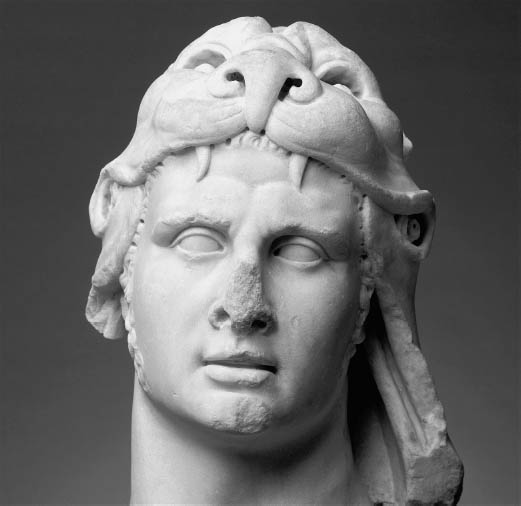
FIG. 6.1. Mithradates as Hercules, wearing a lionskin cap. Marble, 13 inches high. Alexander the Great was often depicted in the same manner. Louvre. Réunion des Musées Nationaux/Art Resource, NY.
Cursing his dead mother for raising such a treacherous daughter, Mithradates immediately executed Laodice and her collaborators. Was Laodice trying to replicate her mother’s scheme, to take over the kingdom and rule as regent of a young crown prince? We are not told how Laodice was killed. When it was necessary to do away with someone, Mithradates almost always chose indirect means, usually poison (with the exception of two spectacular public murders, described later). Perhaps, in cold scientific mode, the king and his botanist Krateuas used this opportunity to test and compare some quick-acting poisons on Laodice and her cohorts. The bastard boy was allowed to live; perhaps he would come in handy someday.3
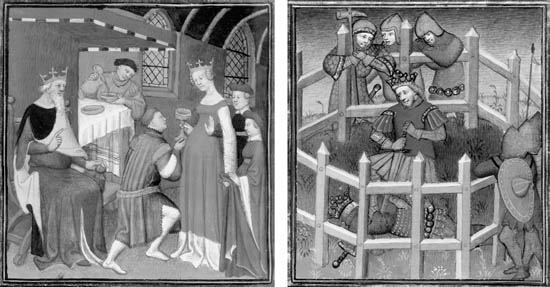
FIG. 6.2. (Left) Mithradates poisons Laodice, his wife/sister; (right) Mithradates wins a duel. Tresor des Histoires/Mithridate fait boire du poison/ MS 5077 res, folio 194v. and Cas des nobles hommes et femmes/Mithridate, Roi, MS 5193, folio 241v, Bibliothèque Nationale de France.
After the execution, we learn that Mithradates vowed never to marry again. Queens—especially queens named Laodice—spelled trouble. He had three legitimate male heirs now and a large harem filled with lovely, replaceable courtesans with no claims on him. Why should he ever take another official wife?
After Laodice’s betrayal, the king threw himself into athletic training and building up his army and treasury. In his early thirties now, Mithradates was fit and competitive; he enjoyed wrestling and boxing tournaments, javelin throwing, martial arts contests, hand-to-hand duels, weight lifting, and other tests of strength. He competed in horse and chariot races around Anatolia and the Aegean; marble inscriptions from Chios and Rhodes name Mithradates as victor in equestrian events.4 In Sinope, there were banquets with raucous entertainments by jesters, acrobats, Median fire jugglers, snake handlers, magicians, and contortionists. Mithradates appreciated refined cultural entertainments too. His court attracted the best musicians, actors, and poets to declaim Homeric verses.
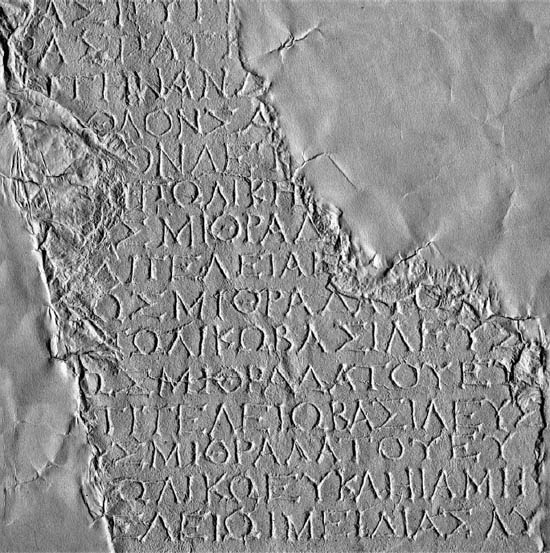
FIG. 6.3. Inscription found on the island of Chios listing victors in equestrian and chariot events. Mithradates’ name appears four times.
A well-known “inconvenience of greatness” is that toadies are drawn to power as iron filings cling to a lodestone. Mithradates was surrounded by opportunists and flatterers. One man in particular, a conjurer named Sosipater, has come down in history as the most shameless sycophant in Mithradates’ court. During times when the king was beset by doubts and suspicion, sycophants swooped in, accusing others of plotting against the king. Plutarch, who wrote an essay on how to distinguish friends from flatterers, remarked that some of Mithradates’ courtiers were so keen to curry favor that they would offer themselves as guinea pigs for his medical experiments.5
Mithradates sponsored drinking contests in Sinope, offering a fabulous prize—one talent of silver—to the winner. A popular athlete from Cyzicus, Kalomodrys, nearly matched Mithradates’ capacity for wine. The king himself usually won, gallantly awarding the honors to the runner-up. There were gargantuan eating competitions too. But no one could surpass Mithradates in his ability to devour platter after platter loaded with slabs of meat and bread. Mithradates even earned a place (number eight) in antiquity’s Top Twelve Gluttons of All Time! Half of the men on the list hailed from Anatolia, where eating and drinking vast quantities was a folk tradition demonstrating wealth and manly vigor. Mithradates’ massive physique and energy may have accounted for a huge appetite, but his capacity also harked back to his ancestors. Darius I boasted of his ability to hold his liquor as one of his great achievements. And people still shook their heads in awe over Alexander’s ability to imbibe two dozen toasts to his companions’ health in one night—and his vicious two-day hangovers after rowdy drinking bouts with his hard-living Macedonians.6
When he was not chariot racing, or showing off his superior strength and cast-iron constitution, Mithradates was recruiting soldiers for Pontus’s expanding army. A serious scholar of military history, he studied the strategies and tactics of famous commanders. Mithradates and his engineers attached scythe blades to his war chariot axles, a long-forgotten innovation of Cyrus the Great. To toughen his infantrymen, cavalry soldiers, and chariot drivers, Mithradates ordered all to participate with him in rigorous daily calisthenics and field exercises. “Like King Mithradates himself,” wrote Justin, “his army became inured to hardship and invincible. Soon, he had created an unbeatable military force.” Mithradates had gathered the intelligence he needed about his neighbors, and a large, capable army stood ready. It was time to complete his Black Sea Empire by taking over Cappadocia, Bithynia, and Paphlagonia. But this would entail direct confrontation with Rome.7
BITHYNIA
Sometime in 108–104 BC, Mithradates made an alliance with the crafty King Nicomedes III of Bithynia. Nicomedes, like his father, had been an ally of Rome. But, after Bithynia had helped to suppress Aristonicus’s revolt, its request for part of Phrygia was denied in favor of Mithradates’ father. So Nicomedes III had good reasons to resent Pontus, and he was adept at treading the diplomatic tightrope with Rome.
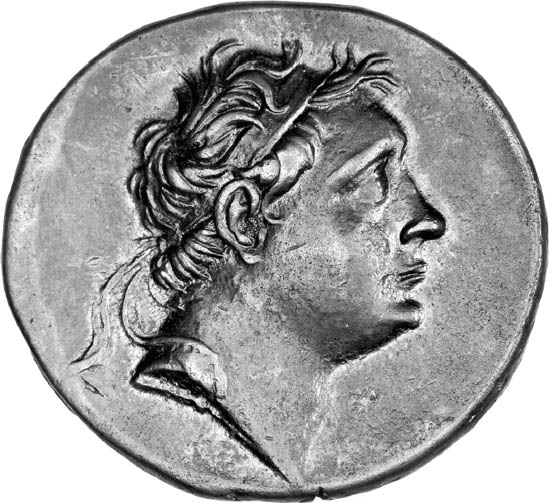
FIG. 6.4. Mithradates’ nemesis Nicomedes of Bithynia (similar portraits were used for Nicomedes III and IV). 1944.100.41904, bequest of E. T. Newell, courtesy of the American Numismatic Society.
When the Roman commander Gaius Marius requested troops from Bithynia to help subdue Germany, Nicomedes’ bold retort had made a good impression on Mithradates. Nicomedes declared that he had no army to send because all of Bithynia’s free men had fallen into debt and were sold into slavery by greedy Roman tax collectors. This reply had forced the Senate to pass a law forbidding the enslavement of the free citizens of Rome’s allies.
Mithradates’ alliance with Nicomedes was well timed: Roman armies were spread thin, embroiled in war with King Jugurtha of Numidia and staving off the Germanic tribes. Mithradates and Nicomedes agreed to invade weak Paphlagonia. All went smoothly. But when the news reached Rome, the Senate sent ambassadors demanding the restoration of Paphlagonia’s king. In a defiant retort, Mithradates asserted that Paphlagonia had actually belonged to his father by inheritance. I’m surprised, Mithradates claimed, that Rome would question this now, since they had never doubted my father’s right to Paphlagonia before. Taken aback by this arrogant response, the ambassadors failed to call Mithradates’ bluff, and turned to Nicomedes.
Nicomedes took a sneakier tack. He contritely promised to restore Paphlagonia to its rightful ruler. Then he renamed one of his own sons with the traditional name of ancient Paphlagonian kings: Pylaemenes. Nicomedes boldly installed this pseudo-Pylaemenes on the throne. The Romans were tricked into approving this new king. When they finally figured out the ruse, the embarrassed Roman dignitaries hurried home. Nicomedes III emerged as the real ruler of Paphlagonia.
Mithradates, impressed by Nicomedes’ slick trick, responded by seizing part of Galatia. He built a major fortress there, Mithradateion. Meanwhile, he considered his options in Cappadocia.8
MURDER IN CAPPADOCIA
Cappadocia was ruled by Mithradates’ older sister Laodice, through her husband, King Ariathes VI. They had two sons (confusingly, both boys were also named Ariathes, reflecting their Persian blood). According to the historian Appian, the original kings of Cappadocia and Pontus had shared a royal bloodline, and Mithradates the First had possessed both Galatia and Cappadocia. This history had justified Mithradates’ father’s indirect control of Galatia and Cappadocia, and Mithradates intended to do the same.
Gordius, a Cappadocian noble in Laodice’s court, was Mithradates’ good friend. Presumably, it was Gordius who informed Mithradates that Laodice’s young husband was beginning to assert himself. An independentminded Ariathes was troublesome for both Laodice and Mithradates. Mithradates gave Gordius orders to eliminate King Ariathes VI. We are not told the means, but poison comes to mind. This favor made Mithradates’ older sister Laodice the regent for her firstborn son, Ariathes VII, Mithradates’ nephew. With this move, Mithradates expected to manipulate Cappadocia—provided his sister cooperated with him.9
But the ploy backfired. After Gordius’s murder of Ariathes VI, the devious Nicomedes III of Bithynia saw an opening. Without informing Mithradates, his ally, Nicomedes suddenly invaded Cappadocia (ca. 103/ 102 BC). Taken by surprise, Mithradates rushed with his army to rescue his sister. But when he arrived, he discovered that the resourceful widow Laodice had agreed to marry Nicomedes. His sister in bed with that odious backstabber! It occurred to Mithradates that she had probably invited Nicomedes to “invade.” This unexpected alliance meant that she and Nicomedes would manage Cappadocia together, through her pliable son Ariathes VII.
Mithradates quickly shifted gears. He proceeded with the rescue mission to place his nephew Ariathes on the Cappadocian throne. In the battle, Mithradates overcame Nicomedes’ army and sent him and Laodice packing, back to Bithynia. Mithradates’ nephew, Ariathes VII, became the new boy-king of Cappadocia. The young man’s portrait was included in Mithradates’ circle of friends in the Delos Monument. But the inexperienced young prince needed a handler, if Mithradates was to control Cappadocia indirectly, without arousing the Roman Senate. Uncle Mithradates suggested that his nephew invite Gordius—the murderer of the youth’s own father—to be his adviser! Young Ariathes VII recognized the trap. If he accepted Gordius, he would become an expendable puppet. If he refused, Uncle Mithradates would have a pretext for war. Ariathes refused and resolutely led his army onto the battlefield.
Foiled again! Not only had the boy inherited Laodicean defiance from his mother and grandmother, but Mithradates’ spies reported that Nicomedes was sending support. His scheme thwarted, Mithradates now faced a dubious outcome in battle with a stubborn teenager. Exasperated, Mithradates drew up his formidable army: 80,000 infantrymen, 10,000 cavalry, and 600 scythed chariots. These numbers are likely somewhat exaggerated; still, Mithradates’ impressive forces demonstrate his wealth and popularity. But how he hated to waste his army to achieve what should have been a bloodless takeover. Mithradates prepared another decisive plan of action.
He sent for his eight-year-old stepson, his dead wife Laodice’s bastard. What happened next was reported by Justin in graphic detail, perhaps because there were so many witnesses. Relying on Justin’s vivid account, we need only fill in a few minor details and the scene takes on a cinematic quality.10
At sunrise, the two armies marched out on the battleground. We hear the clink of weapons being readied and war banners snapping in the wind. Suddenly, King Mithradates strides out to a hillock between the armies, visible to all. He calls for a meeting on the middle ground with his nephew. Mithradates ostentatiously lays down his bow and arrows, his javelins, and unbuckles his sword. Ariathes, suspicious, sends a guard over to search his uncle for concealed weapons. The soldier nervously begins to pat down Mithradates from his powerful shoulders to his leather boots. As the man’s hands grope Mithradates’ trousers “somewhat too attentively,” the king interrupts with a crude joke: “Watch out! You might find a weapon quite different from what you are seeking!” The guard backs off, flummoxed.
Ariathes approaches the grassy knoll between the armies where Mithradates stands alone, smiling pleasantly. The supporters and soldiers in the front ranks on each side look on, tense, silent. Mithradates takes his nephew’s arm, asking him for a private word. As they turn to walk together, Mithradates quickly reaches into his trousers and pulls out a stiletto concealed alongside his penis. With one brutal stroke, the blade slices the young man’s throat.
Mithradates reaches down to pick up his dead nephew’s crown from the dust. Walking in a stately fashion over to the terrified young boy on the sidelines, he places the crown with a flourish on his head and shouts out his new name: All hail Ariathes, King of Cappadocia! On cue, grim Gordius steps forward and leads the dazed new ruler of Cappadocia away. Shocked at the pantomime of violent succession they have just witnessed, and now with no king to fight for, the real Ariathes’ commanders and men fell into confusion and impotence. In only one other instance would Mithradates violently kill a man in public for the shock value.
Gordius’s rule, with Mithradates’ stepson Ariathes, was popular in Cappadocia. But a few years later, in about 96 BC, Nicomedes III staged a revolt. He had sent for the younger brother of the murdered king. This hapless pawn was hailed as Ariathes VIII. Mithradates dispatched his army and quelled the rebellion. What happened to Ariathes VIII? The story was that the boy died of “a disease brought on by grief.” Mithradates’ bastard son, now dubbed Ariathes IX, continued to rule with Gordius as the true power behind the throne.11
Meanwhile, Mithradates opened lines of communication with the anti-Roman rebels in Italy, courted the Danube Gauls, and showered the northern nomads with largesse. He was a beloved patron of the Greeks and sent embassies to North Africa, Egypt, and Parthia. He also dispatched envoys bearing gifts to Rome. The historian Diodorus characterized these as “large sums of money with which to bribe the Senate.” At any rate, his envoys, philosopher-statesmen from Anatolia, were gravely insulted by officials in Rome—a capital offense in Roman diplomacy, as Mithradates knew. His ambassadors immediately pressed charges in a public trial.12
Mithradates was consolidating his holdings and expanding his influence, although both Nicomedes III’s cleverness and Roman retaliation would soon test the solidarity of his empire. Not long after murdering his nephew Ariathes, Mithradates had a chance to meet one of the most famous representatives of Roman power in person.
A PARLEY WITH MARIUS
In about 99/98 BC, Gaius Marius, the great plebeian war hero struggling to maintain his power in Rome, arrived in Anatolia. His Popular faction had just lost an election amid a murderous uprising inside the city. Old clan feuds were erupting into violence; it was the beginning of the bloody civil wars that would consume Rome for the next two generations. Leaving his loyal army of veterans behind, Marius sailed to Cappadocia and Galatia.
Marius, about fifty-eight, more than twenty years older than Mithradates, was a tough, courageous leader, beloved by his soldiers. He dug trenches, ate rations, and slept on the ground like them. Marius had served with distinction in Spain and Africa, and in Germany his legions had slaughtered more than 300,000 and enslaved more than 150,000 people. In physical strength, military skill, and ruthlessness, Marius was a Roman whom Mithradates could admire and learn from.
Mithradates would have been eager to hear Marius’s version of the capture of Jugurtha, rebel king of Numidia. There were reports that the ambitious patrician officer Lucius Cornelius Sulla was taking all the credit for Marius’s victory in North Africa. Sulla was now in Rome with his own army, poised to seize total power. Civil war between these two bitter foes—the older Marius and his one-time protégé Sulla—loomed. The two enemies were vying to win command of the army that the Senate would soon have to send to subdue Mithradates. Would it be Marius or Sulla who would become his greatest challenge?
Marius claimed he had come to fulfill a sacred vow, to consult the oracle of the great Anatolian mother goddess Cybele in her sanctuary at Pessinus. Like most great Roman and other leaders of his day, Marius was not only personally superstitious; he also grasped the value of religion in politics. As a boy, Marius had rescued some baby eaglets; his soothsayers interpreted this as a sign that he would achieve supreme authority in Rome. In Libya, an omen of two scorpions fighting had allowed him to escape death. Marius was always accompanied by a covey of Etruscan augurs who interpreted portents, and he was not above creating his own positive omens on campaigns. In Germany, for example, his soldiers captured a pair of vultures, fed them well, and then fitted them with bronze collars. The tame raptors could always be seen soaring above Marius’s armies. The idea that Marius’s vultures would soon feast on dead Germans made his men confident of victory.
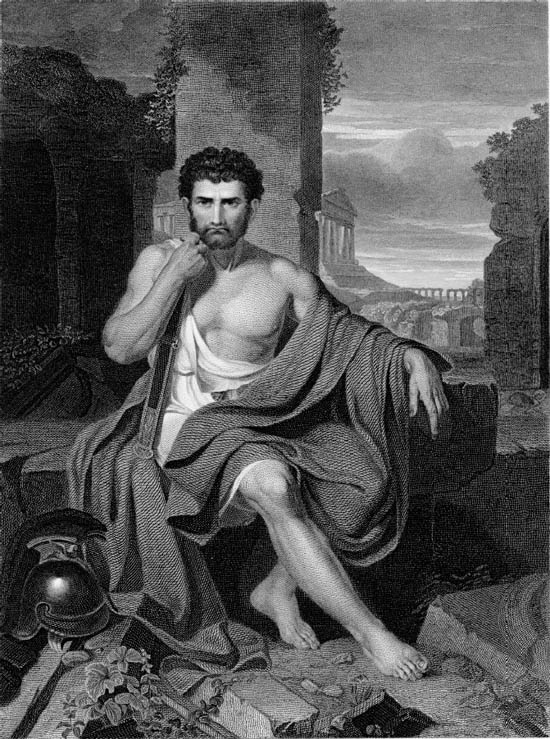
FIG. 6.5. Marius Meditates on the Ruins of Carthage, J. Vanderlyn, engraving, 1842.
In the turbulent years just before Marius’s trip, frightening omens of flaming spears and shields in the heavens were observed over Italy. In 104 BC, Roman seers reported that “weapons in the sky had suddenly rushed together from east and west, and those from the east overcame those of the west.” During his meeting with Marius, Mithradates may have conversed in Aramaic about these omens with Marius’s Syrian prophetess, Martha. She had been discovered at the gladiatorial games in Rome, accurately predicting which men would be victors. Now Marius claimed that he “followed Martha’s advice in all undertakings.” She accompanied him everywhere, carried in a fancy litter by tall slaves from her own native Syria. Dressed in a crimson robe fastened with a golden brooch and waving a little spear decorated with ribbons, Martha directed Marius’s theatrical religious sacrifices.13
If Mithradates was eager to learn about Marius, so, too, Marius sought to know more about the king of Pontus. From his seers and Martha of Syria, Marius was aware of the oracles surrounding Mithradates’ birth. He wanted to meet this ambitious, popular ruler and gauge his character, figure out his intentions. For Marius had really come to investigate the Cappadocian situation. How imminent was war? How could Marius arrange to win glory in the conflict already brewing over Mithradates’ growing power?
This was Mithradates’ first face-to-face audience with a charismatic Roman warlord. Both leaders were consumed with curiosity yet eager to appear strong and confident.14 Mithradates received Marius “with great attention and respect.” With his ramrod posture, permanent scowl, and commanding voice, Marius was an imperious presence. His deep distrust of aristocratic luxury and erudition was well known; Mithradates could shift into a rustic, soldierly persona for the parley. Perhaps they met on the royal exercise grounds. Marius was proud of his expertise with weapons and his horsemanship; he exercised daily with much younger soldiers. Mithradates loved to show off as well—they were well matched, and in another life they might have been friends.
The tough old warrior’s parting words to Mithradates are famous: “Either make yourself stronger than the Romans, or obey them!” Modern historians are divided on the subtle meaning of Marius’s imperative. Was this a friendly warning? Was Marius daring Mithradates to take on Rome? Marius’s stern sound bite was reported in Rome and enhanced his stature in the Senate.15
The face value of Marius’s message was banal. “Overcome or surrender” could be standard advice for anyone, anytime. As both men well knew, “Be stronger or submit” also applied to Marius’s own position vis-à-vis Rome and his enemy Sulla. Mithradates’ calculated actions so far showed that he already intended to become so strong that he would never have to obey Rome. Sizing each other up, weighing the other’s steel will, each man privately acknowledged the truth behind the cliché: there was no middle way for either man. But were they destined to be friends or foes? We cannot replay the body language, facial expressions, tone of voice, or gestures that must have conveyed so much at this meeting. I imagine that as the simple sentence was uttered, the two men locked eyes in perfect understanding.
FACE-OFF WITH ROME
Thanks to the interference of Nicomedes III, the Cappadocian circus began spinning out of Mithradates’ control, inciting the anger of Rome, dashing Mithradates’ preference for oblique action. When Laodice’s younger son, Ariathes VIII, died of “grief” and Mithradates secured Cappadocia, Nicomedes feared that Mithradates would turn on Bithynia next. To incite the Romans against Mithradates, Nicomedes and Laodice found a handsome young man and slyly coached him to pretend to be a “lost third son” of the murdered King Ariathes VI, Laodice’s previous husband. Laodice accompanied this new impostor to Rome and won an audience with the Senate, as queen of Bithynia and Cappadocia. Laodice swore that this youth was her son and the rightful heir of Cappadocia.
Mithradates immediately dispatched his aide Gordius to Rome. The regent of Cappadocia delivered a spirited countermessage to the Senate. This boy was an impostor! Gordius revealed that the youth was really the son of a supporter of the notorious enemy of Rome, the rebel Aristonicus. It is striking that Mithradates and Gordius raised the specter of the revolt of the Sun Citizens (133–129 BC). That popular Anatolian insurgency—some thirty years earlier—still had the power to alarm the Senate and to galvanize Mithradates’ followers.
Gordius also tried to bribe Roman officials. The senators’ response was measured. Both Nicomedes and Mithradates were ordered out of the kingdoms they had attempted to dominate. The Senate officially liberated Paphlagonia and commanded the Cappadocians to chose a new king, since their royal family was now extinct.
At this time, Sulla, the new praetor of Rome, was on his way to Cilicia with a legion (about five thousand men). His orders were to suppress the pirates there. But Sulla made a detour to Cappadocia. This was Mithradates’ first indirect encounter with Sulla, who was a few years his senior. Sulla’s army overcame the troops protecting Gordius and his young charge, commanded by Mithradates’ general Archelaus. Gordius and young Ariathes IX had to return to Pontus, as Sulla personally crowned the new Cappadocian ruler, Ariobarzanes (ca. 95 BC). Sulla’s threatening presence was matched by his words. He warned the “minor kings” of Anatolia to withdraw from their recent landgrabs or else.16
Mithradates observed with disgust the acquiescence of the Bithynian weasel, Nicomedes III. Nicomedes and Laodice were bankrupt: they clutched at an alliance with the Roman Republic as though it were a lifeline. Mithradates, hemmed in by Roman troops in western Anatolia, offered no resistance. He withdrew his armies and bided his time.
KING TIGRANES OF ARMENIA
Mithradates turned his attention east, to Armenia, far from Rome’s notice. He needed a strong, reliable ally. For the time being, he wanted to avoid confrontations with Rome. In about 96 BC, Tigranes II of Armenia returned from the Parthian Empire (ancient Persia, modern Iran), where he had lived for the past thirty years, to assume his father’s throne.
As a boy, Tigranes (Persian for the planet Mercury) was sent as a royal hostage to be raised in the Parthian court. In Ctesiphon, he was educated in Parthian culture, a melding of nomadic and ancient Iranian traditions. Persian influence was very strong in Armenia, and Tigranes’ mother was an Alan princess from beyond the Caucasus. Like royal marriage alliances of this period, the practice of sending a prince as a hostage was a way to ensure civil relations between distrustful allies. (Other examples were Philip of Macedon, educated in Thebes, and Cyrus the Great, raised in Media.) When Tigranes’ father died, the Parthians allowed Tigranes, at age forty-six, to don the Armenian royal tiara with the understanding that he would abide by Parthia’s wishes, as his father had. But Tigranes harbored big ideas for building an Armenian empire.
In about 94 BC, Gordius rode to Tigranes’ court in Artaxata as Mithradates’ envoy. Tigranes’ high ambitions were matched by keen intelligence. He would have been familiar with the oracles about Mithradates and the comets of 135 and 119 BC, and the Magi’s blessing of the long-awaited “savior-king” of Pontus. He kept abreast of Mithradates’ conquests. An alliance with this rising emperor of the Black Sea could be useful. Tigranes was in a position to protect—and also profit from—trade on the northern Silk Route from China to the Black Sea.17 Tigranes listened to Mithradates’ side of the story, as Gordius filled him in on the Romans’ imperial machinations in western Anatolia.
Gordius had a proposition. He suggested that Tigranes attack weak Cappadocia and remove the Roman puppet Ariobarzanes. In exchange, King Mithradates of Pontus offered His Majesty the hand of his beloved daughter, Princess Cleopatra, age sixteen. The ancient writers agree that Mithradates cared deeply for all his daughters, and they returned his love. Indeed, his genuine attachment to them made his daughters all the more valuable in marriage alliances.
Tigranes agreed to the alliance. Armenia had fought against the Romans on the side of Antiochus the Great and had given refuge to Hannibal, who had designed Armenia’s capital city. But Tigranes had lived most of his life in distant Parthia, far from Roman reach. According to Justin, Tigranes knew little of Rome and did not anticipate that the Romans would object so strongly to a regime change in Cappadocia. Tigranes presented Gordius with some fine Armenian steeds for his journey back to Cappadocia, to prepare the way for Tigranes’ attack (see plate 5).18
Mithradates was about forty in 94 BC, a few years younger than his new son-in-law. After the royal wedding sealed their treaty, the two monarchs became friends and natural allies, respecting each other as equals. Both were strong-willed, rich, ambitious, energetic, and popular. Both loved to ride spirited horses and lived for the chase, savoring the spartan outdoor life as much as they basked in luxury at court. They hunted deer, boar, and lion together, staying at Tigranes’ hunting lodges in his forest and mountain estates. Although both spoke Greek, Mithradates quickly picked up Parthian and Armenian. In court, the pair dressed in complementary traditional Persian-style garb, Tigranes in dark purple and a tiara, Mithradates in gleaming white with a simple purple diadem. As was his practice, Mithradates would have presented Tigranes with an agate ring bearing his portrait.
Traditionally, Armenian monarchs wore a distinctive tiara studded with stars, but Tigranes’ was unique. His was decorated with a comet trailing a long curving tail, an image that appeared on some of Tigranes’ coins (see fig. 2.2). Mithradates would have taken this comet design as a signal of Tigranes’ allegiance to Pontus, as an allusion to the spectacular comets heralding the long-awaited savior. Mithradates considered himself the “King of Kings,” Shahanshah, the ancient title for the most powerful ruler in Persian-influenced lands.19
But Armenia’s first great king, Tigranes, had his own agenda. The older monarch did not see himself as doing Mithradates’ bidding. Their mutual support furthered Tigranes’ own goals of unifying and expanding his kingdom. Tigranes had already annexed part of Cappadocia and was extending south, taking over the weak kingdom of Syria. He also bit off a big chunk of territory from the Parthians, who were fighting nomadic invasions on their eastern frontier. In time, Tigranes’ supreme armies would ravage Mesopotamia and occupy Syria, Phoenicia, and Cilicia. The Armenian conqueror rewarded cities that joined him, laid waste to those that resisted, and moved whole populations around as though they were game pieces. While Mithradates was engaged in the coming wars with Rome, Tigranes would begin building his fabulous new city, Tigranocerta. Intended to rival the magnificence of Susa and Babylon, the city was populated with the displaced citizens of towns that Tigranes leveled. Encouraged by his victories—and perhaps by the appearance of Halley’s Comet later during his reign—Tigranes would even begin referring to himself as “King of Kings.”
But when he first allied with Tigranes in 94 BC, Mithradates was unaware of his new son-in-law’s grand plans. After Tigranes wed Cleopatra, the two friends struck another bargain. In their joint campaigns in Cappadocia and elsewhere, they agreed that Mithradates would take the cities and the land. All captives and treasure would belong to Tigranes. The arrangement indicates that Mithradates’ flow of revenue was already copious and reliable. He returned to Sinope, having set things in motion to regain indirect control of Cappadocia. Tigranes’ attack would be a way of testing the Roman resolve. Mithradates’ preparations for war included very heavy coin minting in 93–89 BC, to pay for large armies and arms.20
The tangled situation in Anatolia became even more complex, and the chronology of events is hopelessly confused. We know that when Tigranes’ army, led by generals Mithras and Bagoas, invaded Cappadocia (in about 93 BC), the new puppet king Ariobarzanes panicked. He fled, sailing to his protectors in Rome. According to plan, Tigranes then recalled Ariathes IX and Gordius from Pontus to rule Cappadocia on Mithradates’ terms.
Tigranes had kept his part of the bargain. He had no interest in making war on Rome, and, anyway, Cappadocia was impoverished from years of despoiling armies. Tigranes took more captives than plunder. The Armenian army slipped away, back to Artaxata, to pursue Tigranes’ own grand strategies.21
A TRAP FOR AQUILLIUS
Around this time, Mithradates learned that his old foe, Nicomedes III of Bithynia, had died. He was succeeded by his weak son, Nicomedes IV, a brutal tyrant. Mithradates’ spies informed him that Nicomedes’ half brother, Socrates the Good, had popular support. Mithradates sent an assassin named Alexander to murder Nicomedes IV, but the plot failed.22
Next, Mithradates gave Socrates command of a Pontic army. It seems that Mithradates also promised Socrates the hand of his daughter Orsabaris, a traditional way of sealing an alliance and maintaining indirect control of the throne (her name appears on Bithynian coins at this time). The Bithynian people welcomed Socrates as he marched across the countryside of Bithynia. But when Socrates approached the capital, Nicomedia, there was a stalemate, with Nicomedes IV barricaded inside his castle.
Meanwhile, to distract the Romans, Mithradates sent envoys to the tribes north and west of the Black Sea (Thracians, Cimmerians, Bastarnae, Sarmatians, Roxolani). Offering rewards, he urged them to attack the Roman garrison in Macedonia, northern Greece.23
Soon, however, the Roman Senate, having staved off the war with the Italians for a while by offering them citizenship, turned its attention back to Provincia Asia. Cappadocia and Bithynia were supposed to be passive client kingdoms. Now both were in crisis again, with the puppets Ariobarzanes and Nicomedes IV cowering in Rome, begging for aid. Troubled by the new developments, but unable to spare any more troops, the Senate dispatched Manius Aquillius to impose order in Anatolia. By senatorial decree, Aquillius’s dual mission in 90 BC was to restore Nicomedes IV’s rule in Bithynia and return Ariobarzanes to the Cappadocian throne. Both client kings understood that they ruled at Rome’s pleasure. Aquillius would be backed up by Lucius Cassius, governor of Asia, and one Roman legion stationed in Pergamon.
Aquillius was an ill-considered choice for this sensitive diplomatic mission. He was the son of Manius Aquillius the elder—detested throughout Anatolia as the notorious Roman governor who had destroyed the Sun Citizens with poison. Infamous for his corrupt government in Pergamon, Aquillius senior had been tried in Rome for gross avarice, profiteering, and bribery, but escaped punishment. His son would not be so lucky. Aquillius junior—unaware of the ghastly fate in store for him—sailed to Bithynia, expecting to make a fortune as his father had, by raking in bribes and skimming exorbitant taxes.24
With his ally Tigranes of Armenia occupied in the east, and with the Senate sending threatening envoys like Sulla and Aquillius, Mithradates had to reframe his strategy and remain flexible, without losing face. Conveniently, Socrates the Good suddenly died of an unknown cause. Apparently he ate or drank something that disagreed with him, as did so many whose earthly existence had become inconvenient for the Poison King. Orsabaris returned home to Pontus, and Mithradates recalled the Pontic army. As a result, the military crisis in Bithynia sputtered out just as Aquillius and Cassius arrived with the Roman legion, reinforced with draftees from Phrygia and Galatia. Nicomedes IV scrambled back onto the throne of Bithynia.
But Nicomedes IV had been compelled to borrow heavily from Roman backers to finance his restoration. Not only had he mortgaged his kingdom to his financiers, but he had promised big payoffs to senators who returned him to power. Mired in blackmail and debt, stripped of free will, Nicomedes was—to put it in terms familiar to Mithradates and his Persian-influenced followers—sucked into the abyss, forced to do the bidding of the forces of Darkness and Deceit.
Aquillius and his gang of Roman legates paid a visit to Nicomedes in Bithynia. Aquillius reminded the client king of his overdue financial obligations. But Nicomedes complained that the Bithynian countryside had been plundered by Socrates’ troops, sent by Mithradates. Bithynia’s royal treasury was empty. How, Nicomedes whined, could he possibly pay off his debts?
Aquillius had a cunning plan. Bithynia was broke? Well, Pontus was rich. Mithradates had supported the pretender Socrates the Good, who tried to steal Nicomedes’ crown. Roman informers reported that Mithradates’ entire navy was in the northern Black Sea. Aquillius instructed Nicomedes to send his fleet to raid Mithradates’ unprotected port cities. At the same time, Nicomedes’ army should make incursions over the border, pillaging towns of western Pontus. While Nicomedes collected the money he owed, Aquillius promised that Cassius’s Roman legion would defend Bithynia from retaliation. Nicomedes had no choice. He capitulated and followed Aquillius’s orders. Nicomedes, who had come from a long line of collaborators, became Rome’s creature for the rest of his days.25
And thus began the war with Rome that would last all of Mithradates’ life.
In late 89 BC, Nicomedes IV sent his ships to assault Mithradates’ ports as far east as Amastris, and he ordered his troops to attack western Pontus. Nicomedes did return with plenty of booty to repay his outstanding debts to the Roman senators, generals, and other creditors. Nicomedes’ master, Aquillius, assumed the raids would teach the arrogant “minor king” Mithradates a lesson. But fear gripped Nicomedes’ heart. For during all his incursions, his men had met no resistance at all. It was like raiding an unguarded candy store. Where were the local garrisons? This eerie silence from Mithradates could not bode well.
Mithradates was far from ignorant of Aquillius’s provocations; his friends in Bithynia must have informed him of Aquillius’s plan. Mithradates’ army and navy, all his forces, were in readiness, but he held off. Instead, he sent his navy on exercises in the northern Black Sea. He dispatched messengers to Pontus’s rich ports and the towns on the frontier to warn them of the coming attack and to inform them of his strategy. Accordingly, the populations of the places targeted by Nicomedes had withdrawn to safety, leaving behind enough valuables to be grabbed up by the Bithynians. No Pontic troops were in sight during the invasion.
Mithradates “wanted to have a good and sufficient cause for war,” says Appian. He understood that the Romans distrusted and covertly sought to destroy the great Black Sea Empire he was creating. Nicomedes was a weakling, impelled by his Roman masters to attack Pontus. This confrontation had been building for a long time. Mithradates saw that Rome, preoccupied with the Social War in Italy, could not afford to send any more legions to Anatolia.26 Nicomedes’ invasion allowed Mithradates to set a trap. The Roman generals in Bithynia and their reluctant coalition had walked right in. Now, before all the world, Mithradates was the innocent, unsuspecting victim of an aggressive, unprovoked attack on Pontus, instigated by the rapacious Roman wolf.
Until now, Mithradates’ policy had been to probe and test, goad and withdraw, constantly assessing Rome’s reactions. He “orchestrated crises here and there, sowing confusion and ambiguity in Rome,” remarks historian Brian McGing, “all the while observing carefully, making Pontus invincible and prepared for war, so that when the situation exploded, the chips would all fall to his advantage.” Mithradates had already sent the eminent orator Xenocles of Adramyttion and other envoys to Rome, to plead Anatolia’s complaints before the Senate. Until Aquillius and Nicomedes invaded Pontus, the king’s actions had been patient and opportunistic.27
MITHRADATES MAKES HIS CASE
Now Mithradates seized the opportunity to make his case against Rome in a very public manner. He dispatched an eloquent Greek statesman named Pelopidas to a high-profile debate with Nicomedes’ spokesmen, to be judged by Aquillius, Lucius Cassius, and Quintus Oppius at their camp in Bithynia. Appian, who had access to imperial archives and the memoirs of some who were present, recounts what was said by each party. One of Appian’s sources was P. Rutilius Rufus, a former friend of Marius who later wrote a history of the Mithradatic Wars (now lost). An honorable and sympathetic provincial official in 105 BC, Rutilius had attempted to restrain ruthless tax collectors but was condemned in Rome for his efforts in 92 BC. After that, Rutilius remained in Anatolia, where he was a popular figure. Another source for these meetings was Lucius Cornelius Sisenna, a Roman soldier-historian of the Mithradatic Wars, whose multivolume chronicle is now lost but was consulted by surviving historians like Appian and Sallust.28
Modern historians accept the speeches recorded by Appian as accurate reflections of the grievances that Mithradates communicated to the Roman representatives, even if their actual words have been lost. Mithradates, master of propaganda, would have disseminated these speeches to friends and allies in Anatolia and Greece. Mithradates also intended to present his case before the Senate, so his arguments probably existed in written form, consulted by ancient historians.29
As an astute student of traditional Roman foreign policy, Mithradates assumed that the Senate would not approve of Aquillius’s decision to start a war. Yet Mithradates had to prepare for every contingency, since it was becoming obvious that developments in Italy were undermining the Senate’s power to control ambitious military commanders like Sulla, Marius, and Aquillius.
Pelopidas began by reminding the Romans that Mithradates’ father had been an official Friend of Rome—and that Mithradates himself had maintained this peaceful friendship. In return, said Pelopidas, “Phrygia and Cappadocia were wrested away from Mithradates. Cappadocia had always belonged to Pontus. It was recovered by Mithradates’ father, with no opposition from Rome.” Pointing at Aquillius, Pelopidas said, “Your own Roman general, your father, Manius Aquillius, gave Phrygia to Pontus, as a reward for the victory over Aristonicus and the Sun Citizens.”
Now, Pelopidas told the Romans, “you allow Nicomedes’ navy to threaten the security of the Black Sea trade. You let Nicomedes overrun Pontus and carry off plunder—in quantities of which you are well aware.” The clever juxtaposition of peaceful trade with illicit plunder cast the Romans as pirates, while depicting Mithradates as the peaceful protector of Black Sea commerce.
“My king was not unprepared to defend himself from these attacks,” continued Pelopidas. But he “held back from war, so that you might be eye-witnesses to these events.” Pelopidas concluded his speech simply, alluding to Rome’s tendency to betray its allies. “Mithradates, Rome’s friend and ally, calls upon you to defend us against the aggression of Nicomedes, or at least restrain him.”
Nicomedes’ ambassadors countered Pelopidas’s plea. Mithradates had plotted against Nicomedes to place Socrates the Good on the throne by force of arms, they claimed. The late and lamented Socrates, once a peaceful prince, had fallen under Mithradates’ evil influence. In fact, they declared, “All of Mithradates’ plots are really aimed at you Romans!”
“All his actions are examples of Mithradates’ arrogance and hostility, and his disobedience of your orders. Just look at his preparations for war! Mithradates stands in complete readiness for the great war he is planning.” The Bithynians cataloged the vast armies under Mithradates’ command. The Pontic army includes “a great force of allies, Thracians, Scythians, and all the other neighboring peoples, now that Mithradates has taken over the Crimea and northern Black Sea. Mithradates has even formed a marriage alliance with Armenia, and he is sending envoys to Egypt and Syria!” His navy already has three hundred warships, and he has even hired expert sailors from Phoenicia and Egypt. “Mithradates is not just gathering these forces to fight Nicomedes,” they warned. “These preparations are aimed at Rome!”
Nicomedes’ envoys outlined Mithradates’ strategy. “He pretends to have an argument with Bithynia, but his real target is you! If you are wise,” intoned the ambassadors, “you won’t wait until he declares war on you. Look at his deeds, not his words. Bithynia is your true friend and ally; don’t sacrifice us to this hypocrite who feigns friendship.” Mithradates is not just our enemy, they thundered, Mithradates threatens Rome itself!
Pretending to be objective, the Romans allowed Pelopidas a rebuttal. “Well, if Nicomedes wants to complain about past events, we bow to Rome’s judgment,” drawled Pelopidas. “What we are concerned about are the wrongs that have just occurred, right before your eyes: the ravaging of Mithradates’ territory, the interruption of trade in the Black Sea, the carrying away of vast plunder from Pontus.” Pelopidas repeated his simple—and reasonable—request: “Again, we call upon you Romans! Either prevent such outrages or help Mithradates regain his losses from Bithynia. At the very least, stand aside and allow Mithradates to defend himself!”
The generals were already committed to Nicomedes IV. But Pelopidas’s eloquent speech “put them to shame,” reminding them that Pontus’s old alliance with Rome was still in force, and that Aquillius’s own father had given Phyrgia to Mithradates’ father, and pointedly contrasting Roman violent disruption with Mithradates’ protection of free trade. Indeed, Mithradates had complied and withdrawn his armies; he had done Rome no harm. The Senate had not commissioned Aquillius to make war on Mithradates. The generals were “at a loss for some time about what answer to make.”
Finally, after a long consultation, they came up with this “artful response”: “We would not wish Mithradates to suffer harm at the hands of Nicomedes. Nor can we allow Mithradates to make war on Nicomedes. It is not in Rome’s best interest for Bithynia to be weakened.”
Pelopidas reported back to Mithradates in Sinope. The Romans’ brusque denial of justice, in such a public manner, gave Mithradates no other option.30 He immediately called for his stepson Ariathes IX, invested him with a large army, and sent him to take Cappadocia. Ariathes drove Ariobarzanes back to Rome and regained Cappadocia’s throne.
Then Mithradates dispatched Pelopidas back to the Roman camp on a very important mission. Appian reported the speeches at these meetings, too, with details that convey the gist of Pelopidas’s orations and demonstrate Mithradates’ genius for diplomacy and propaganda. The speeches show how cleverly Mithradates must have built his case against the Romans in Anatolia, revealing Aquillius as the aggressor driven by pure greed, thereby justifying Mithradates’ defensive reaction.
“O Romans, how patiently King Mithradates has borne the wrongs done to him,” began Pelopidas. His heavy gold and agate ring with the portrait of his king glinted as he gestured. “Not only did you deprive Pontus of Phrygia and Cappadocia. You stood by and watched while Nicomedes invaded Mithradates’ sovereign territory. We appealed to your friendship, but instead you treated Nicomedes as the victim and Mithradates as the accused.”
The next portion reflects Mithradates’ excellent understanding of Roman constitutional law. “You will be held accountable to the Roman Republic for what has just taken place in Cappadocia!” Pelopidas warned Aquillius not to start such a major war without an official senatorial decree. If you do, “you generals will be called to defend your actions in Rome when Mithradates lodges a formal complaint against you before the Senate.”
Then the ambassador described exactly what the Romans would be up against, should they make war on the most powerful ruler in the East. “Bear this in mind, Romans. My king Mithradates rules his ancestral domain of Pontus. He also rules many neighboring lands: the Colchians, a very warlike people; all the Greeks around the Black Sea; and all the barbarian tribes beyond. Mithradates has allies ready to obey his every command: Scythians, Taurians, Bastarnae, Thracians, Sarmatians, and all those tribes in the regions of the Don, the Danube, and the Sea of Asov! King Tigranes of Armenia is Mithradates’ son-in-law and he counts King Arsaces of Parthia as his ally. My king already has a large number of ships, and many more are being built as we speak. We possess war materiel of every kind in abundance.”
Pelopidas predicted that the rulers of Egypt and Syria would rush to Mithradates’ aid. Then he raised a chilling image sure to alarm the Senate: “Your newly acquired provinces in Asia, in Greece, in Africa, and in Italy itself will come to our side. Your Italian colonies are waging a relentless war against you right now, because they cannot endure your greed. You can’t even subdue your colonies in Italy, yet you attack Mithradates and set Nicomedes on him! You treat us like an enemy, yet you still pretend to be our friend!”
Mithradates had instructed his ambassador to conclude by presenting the Roman generals with an insult wrapped in a threat wrapped in an ultimatum. If they accepted his request for justice, Mithradates would win; if they fell for the bait, he was prepared for war. “Come now, choose!” exclaimed Pelopidas. “Restrain Nicomedes from harming Pontus, your old ally. If you do this, King Mithradates promises to help you put down that troublesome rebellion in Italy. Either throw off the deceitful mask of friendship—or let us go together to Rome and settle the dispute there.”
The Roman generals reacted as Mithradates expected. Aquillius ordered Mithradates to stay out of Bithynia and announced that they would restore Ariobarzanes to Cappadocia’s by now rather rickety throne. Roman centurions then forcibly escorted Pelopidas to the border of Pontus, for fear that he would be able to rally the Bithynian countryside to Mithradates’ cause. This detail suggests that popular hostility to Rome and support for Mithradates must have been palpable.
“Without waiting to hear what the People of Rome and the Senate would decide about such a great war,” writes Appian, Aquillius immediately prepared to invade Pontus. Mithradates had goaded him into starting a major war with a Friend of Rome without senatorial approval. Aquillius’s decision was a sharp break from traditional Roman foreign policy at the end of the Republic. Powerful, rogue commanders could now make war for their own gain, as the Senate’s power waned.31
Aquillius ordered ships to block the entrance to the Black Sea. According to Appian’s figures, the invasion force totaled 176,000 men (12,000 were Roman legionnaires). The three commanders took up positions in early 89 BC. Aquillius’s 40,000 massed on the border of Pontus south of the Olgassy Mountains. Cassius’s 40,000 marched to the frontier of Bithynia and Galatia, Oppius’s 40,000 held the route through Cappadocia. Aquillius instructed Nicomedes IV that his 56,000 Bithynians would lead the invasion of Pontus.32
Mithradates was more than ready for them.