
AS Mithradates and his friends ride toward Sinope, they reap the rewards of their years in the countryside. A self-assured young man now, Mithradates has cultivated the trust of the commanders of forts, local leaders, and the people of Pontus, as well as warlike groups in the hinterlands.
The ancient sources say only that Mithradates returned to Sinope and took back his throne, leaving us to imagine how these events actually came to pass. As Mithradates headed home, in about 115/114 BC, garrison soldiers and armed bands probably joined his original company, fired by the young king’s mission to avenge his father’s murder. Made up of people from all ranks of society and from all corners of Pontus, this modest militia foreshadowed the large armies that the king would summon in the coming wars with Rome. This was the first demonstration of Mithradates’ remarkable appeal to elites and ordinary folk of diverse backgrounds.
Rumors (or secret messages) may have prepared some for the return of the beloved prince. Then, one morning, Mithradates’ noble companions ride into Sinope, led by Dorylaus. The young men radiate confidance. Excitement surges through the crowd as the citizens recognize the long-lost boys of prominent families. Anticipation mounts as lookouts on the ramparts sight an army approaching. Mithradates, mounted on a fine horse, finally appears inside the gates of his city.
The citizens behold their prince, tall and muscular, his handsome face framed by dark hair like a lion’s mane in the style of the great Alexander. Mithradates’ imposing height, powerful physique, and self-assurance were impressive. His complexion may have been noticeably pale, from minute doses of arsenic.1 A luminous, translucent quality would set him apart from his companions, suntanned from years living outdoors. For those who recalled the oracles, the divine lightning, and the bright comets, the sudden reappearance of Mithradates would evoke the idea of the long-awaited savior-king emerging in an aura of light.
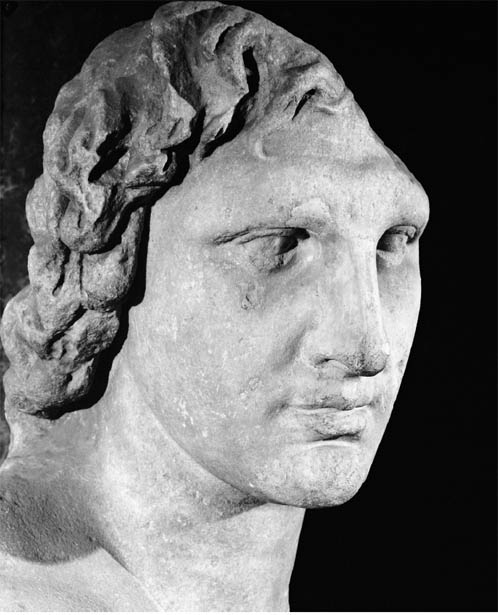
FIG. 5.1. Mithradates VI Eupator, large marble head (95 cm, ca. 3 feet high), found in Inopus spring near the Mithradates Monument, Delos. Louvre, Erich Lessing/Art Resource, NY.
It was a bloodless coup, with little resistance from his mother and her coterie. Queen Laodice died mysteriously while confined in prison; Mithradates the Good did not survive her. Some sources state that Mithradates killed his mother and his brother. Modern historians struggle to sort out the “impossibly compressed” and tangled chronology of Mithradates’ early career.2 Exactly how did he assume power, neutralize his adversaries, and select a wife? Here is a plausible scenario of Mithradates’ revenge and first marriage, taking into account what is known from ancient sources and filling in missing details with reasonable conjecture.

FIG. 5.2. (Left) Hellenistic bust of Alexander. Many similar copies were made from Alexander’s death in 323 BC through the time of Mithradates, as well as coin portraits. (Right) leonine portrait of Alexander on silver tetradrachm, Macedonia, 90–75 BC, issued during Mithradates’ reign. Note strong resemblance to bronze statue said to be Mithradates from the same era, fig 4.6. Bust, Alexandria, Egypt, British Museum, GR 1872.5–15.1, photo by Andrew Dunn, www.andrewdunnphoto.com, wikicommons cc-by-sa-2.0. Coin courtesy of Joseph Sermarini, Forum Ancient Coins, www.forumancientcoins.com.
Mithradates, we can assume, had already begun to organize the web of informants that we know he relied on as king. These sources kept him apprised of the whereabouts of his mother and her retinue, and any roving Roman officials. His goal was to orchestrate a seamless assumption of power. The logical approach would have been to time his surprise return to Sinope to coincide with Queen Laodice’s absence.
The queen often stayed in her new capital, Laodicea—entertaining guests at her palatial villa at Lake Stephane and luxuriating in the hot baths. Let us guess that the pampered princeling Mithradates the Good would be at his mother’s side, while Mithradates’ little sisters, Nyssa, Roxana, and Statira, remained in the nursery at Sinope, guarded by eunuchs. While Laodice idled at her retreat, no Romans would visit Sinope. Courtiers loyal to his mother would be left in charge there, with his teenage sister, Princess Laodice the Younger. Was she still as clever and pretty as Mithradates remembered?
In the season of ripening apples, Mithradates gives the order to march to Sinope. At Amasia, he dispatches an armed contingent to Laodicea. Security at Laodice’s villa was lax; Mithradates already knew that the place was not easily defended. In the carefully planned velvet coup, his men overcome the queen’s guards and occupy Castle Icizari and her villa. Laodice and her young son are locked inside. After all, upon his return to the throne, it is perfectly proper for King Mithradates to ensure the “security” of his mother, younger brother, and their friends. Now Queen Laodice and her circle are prisoners in their gilded palace, while Mithradates makes his triumphal reentry into Sinope.
Confining the queen at her villa was more subtle than publicly throwing her into the dungeon at Sinope. But it would be dangerous to let his treacherous mother, his feckless coheir, and other enemies live on while Mithradates established his new government. After he dismissed his mother’s cooks and royal tasters, the way was clear for Mithradates to plan a last lavish banquet at her villa. We can imagine him overseeing the preparation of extravagant dishes, the most luscious fruits, the most expensive wines—and for dessert, her favorite honey cakes.
Arsenic—poison of kings and king of poisons—was almost certainly the secret ingredient. Colorless, odorless, flavorless, arsenic could be added to any drink or dish. Mithradates knew that just sixty parts per million (ppm), or less than a tenth of an ounce, would be deadly in a goblet of rose-perfumed water or red wine. But why not allow his mother’s guests to enjoy their sumptuous last supper without interruption? Mithradates, recalling the paradox of poisonous honey, savors the irony of creating a bittersweet treat. He stirs the arsenic powder into a pot of honey and drizzles it over the syrupy-sweet cakes.
After dessert, the guests withdraw to admire the sunset. Within half an hour, the queen and her son sense a faint, metallic taste on their tongues. Beads of sweat glisten on their clammy brows as they become aware of impending nausea and stomach cramps. Saliva fills their mouths, but it is impossible to swallow. Their eyes take on an uncanny reddish sparkle. Suddenly the royal pair begin clawing at their throats, drooling and moaning. After an hour or so of vomiting and diarrhea, Mithradates’ mother and his only rival are writhing in convulsions. Shock follows. By midnight, both are dead.
THE KING TAKES A WIFE
At the royal funeral for the queen and his brother, Mithradates observes the beauty and composure of his sister, Laodice the Younger. They are practically strangers; she was a spoiled little girl in the nursery when he last saw her: now she is sixteen or seventeen. To continue our plausible scenario, let us imagine Laodice fawning over her older brother Mithradates, so handsome and strong and bold. Life was so insipid and her mother’s rule so vexing while he was away. How she missed him all these years!
Laodice teases: Who will her brother take as a bride? King Mithradates VI Dionysus Eupator must have a proper queen, not just a harem of frivolous beauties. Mithradates agrees. The new sovereign of Pontus must select a worthy wife. She will be the mother of his legitimate sons, ensuring his succession. The royal spouse must be perfect, and her bloodline should complement Mithradates’ illustrious Greco-Persian heritage. Who could possibly fulfill that role? At last, Mithradates announces his decision. The king of Pontus will marry his own sister, Princess Laodice the Younger.
It was an unexpected choice, but probably no one was shocked. Egyptian pharaohs and the Macedonian rulers of Egypt routinely practiced incestuous marriage; two kings of Egypt married their sisters during Mithradates’ reign. Mithradates was aware of many such pairings in other Hellenistic courts; for example, Mithradates’ great-uncle, Mithradates IV (160–150 BC), had married his sister, also named Laodice, and Antiochus I of Syria had married his stepmother (280 BC). In Armenia, Tigranes IV married his half sister Erato (6 BC). Marriage between royal half siblings was common in ancient Greece, too, and full-sibling royal marriage (hvaetvodatha) was an ancient Zoroastrian practice. Marrying relatives was accepted as a way to preserve the purity of the royal blood. Mithradates’ choice may also have reflected his knowledge of the “mythic hero” script. After defeating a powerful enemy, a traditional hero marries a princess, often the daughter of his enemy or his predecessor. Princess Laodice was all three.3
So, not long after he reclaimed his crown, when he was about twenty-one, Mithradates wed his own sister. But Mithradates carried the logic of sibling marriage to an eccentric—and egocentric—degree. If no other family was grand enough to marry into such a distinguished royal line, then who was worthy to marry his other sisters? Only Mithradates. And what if Laodice the Younger did not give him sons?
To control the genetic legacy of his family and in case he might need to marry another sister later, Mithradates, the ancient sources state, decided to keep his younger sisters—Nyssa, Roxana, and Statira—virgins forever. They would never produce troublesome pretenders. Spinsterhood was almost unheard-of in antiquity, except for virgin priestesses. Like Rapunzel in her tower, the three sisters were totally secluded under guard for life, but no fairy-tale prince ever rescued them. This decision to lock away his young sisters is one of the earliest indicators of Mithradates’ cruel, calculating side. As we shall see, all of Mithradates’ siblings met wretched fates, victims of their brother’s extraordinary pride and paranoia.
QUIRKS OF THE KING
There were other eccentricities. Mithradates’ childish obsessions with invincibility matured and intensified. Like mad King Attalus of Pergamon, Mithradates cultivated poison gardens of blue monkshood, polemonia (“plant of a thousand powers”), deadly nightshade, henbane, and the like, with his Greek “root-cutter” Krateuas, also of Pergamon. The first ethnobotanist and the father of botanical illustration, the Poison King’s fellow experimenter, Krateuas wrote two influential treatises that were among the king’s treasures brought to Rome after Mithradates’ death. The natural historian Pliny the Elder (AD 23–79) described these books, now lost. One was the first to include realistic colored paintings of hundreds of medicinal plants; the other was a detailed pharmacology manual. Mithradates “was the first to discover several different antidotes to poisons,” noted Pliny, and “some of these plants even bear Mithradates’ name.” Krateuas named several plants after his patron—for example, pink Mithridatia (liliaceous Erythronium) and feathery-leaved Eupatorium.4
Krateuas collaborated with the royal physician Papias and a team of healers. The ancient authors say Mithradates was always accompanied by a group of shamans from a Scythian tribe north of the Sea of Azov, called the Agari. Many in the court must have found these shamans frightening, but the weird snake charmers knew how to transform viper venom into medicine (a feat only recently discovered by modern medicine). They could also have known the secrets of poisonous agaric mushrooms, named for the Agari region in Scythia.5
Mithradates tended flocks of Pontic ducks, feeding them the baneful plants they preferred and harvesting their eggs, blood, and flesh for his experiments. Hoping to exploit their “ability to live on poisons,” Mithradates “mixed the blood of the Pontic ducks into his antidotes,” wrote Pliny.6 It’s likely that Mithradates’ medicinal gardens were in secret locations at several royal residences. In his laboratories, under heavy guard, the Poison King would have stocked a variety of deadly minerals and biotoxins—arrow drugs, crystallized snake venoms, stingray spines and jellyfish, scorpions from Mesopotamia and Libya, poison fish from Armenia, poisonous plants and toadstools, rhododendron honey, realgar and other toxic pigments—along with alexipharmic antidotes from near and far.
These royal treasures seem very different from the tributes collected by Mithradates’ royal ancestors. They prized such things as water from the Danube and sand from Egypt, to advertise the vast reach of their kingdoms. But Persian kings also kept exotic poisons in their treasuries. The Roman natural historian Aelian described dreadful—and rare—natural biotoxins that could be obtained from India. One poison, derived from Purple Snake (Azemiops) venom, was so lethal that a drop the size of a sesame seed would kill.
The most prized Indian poison was the mysterious dikairon, said to be excreted by a tiny orange “bird” that nested in the Himalayas. A few grains of dikairon, it was said, would bring a dreamy death in a few hours, ideal for suicide. I have suggested elsewhere that dikairon might have been pederin, exuded by large orange blister beetles of Asia, often found in bird nests. It is one of the most powerful biotoxins known to modern science, more potent than cobra venom. According to Aelian, this precious substance was “given exclusively by the kings of India to the kings of Persia.” Mithradates may have acquired some for his own pharmacy.7
Mithradates collected scientific treatises on pharmaka and corresponded with scholars about poisons and antidotes. His linguistic talents meant he could decipher scientific texts in many languages, from Old Persian to Sanskrit. It is quite possible that Mithradates obtained copies of ancient Hindu texts, such as the Arthashastra by Kautilya, adviser to King Chandragupta in the time of Alexander. This manual spelled out numerous recipes for creating poisons and antidotes. Another Hindu treatise, the Laws of Manu (500 BC), not only advised maharajas to employ tasters, but also counseled them to “mix all their food with medicines that are antidotes against poisons.”8 Was it this ancient Indian concept that led King Attalus—and Mithradates—to “mix tiny amounts of poisons with remedies” to protect themselves and their friends? We’ll never know, but it was Mithradates who gained notoriety for applying scientific methodology to this ancient principle. Experimenting tirelessly to perfect his universal antidote, Mithradates started each day by ingesting the best concoction he and his doctors had devised so far (see plate 4).
Another eccentricity was Mithradates’ appearance. One of the few Hellenistic kings to wear his hair long, Mithradates sported a curly mane that recalled Alexander’s. It was also a strong political statement. Long hair for men in this era was distinctly un-Roman, a “barbarian” attribute.9 The king maintained his youthful habit of wearing old-fashioned royal Persian costume—long-sleeved tunic of white linen edged in purple over trousers gathered at the ankle. Mithradates was a connoisseur of agate rings, and his simple diadem of purple and white ribbon may have been complemented with golden earrings. And everyone understood that Mithradates was always armed, even inside the palace at banquets. No one could ignore his impressive dagger, lying along his thigh at all times.

FIG. 5.3. Mithradates’ Persian-style garments may have been similar those of his contemporary Antiochus I of Commagene (69–43 BC) (left) on tomb at Nemrud Dagh (modern Turkey), wearing Greek and Persian clothing—Persian tiara and crown, Greek cloak, Persian riding tunic studded with stars, Persian trousers. He accepts the symbol of sovereignty from the Sun god Mithra-Ahuramazda holding a Zoroastrian barsom, a wand of myrtle twigs, wearing the traditional Phrygian-Persian cap decorated with stars (this “liberty cap” became a symbol of freedom in the Roman era). (Right) King Darius I, sixth-century BC, in Persian khilat or robe of honor embroidered with medallions, trousers, and a tiara-crown. Dover.
Mithradates would have favored a curved Persian-style dagger or short sword (acinaces; Old Persian, akinaka; Latin, sica) like those of his Iranian ancestors. Xenophon described the short dagger carried by Cyrus the Great. By Mithradates’ day, the sica, scimitar, had become associated with pirates and bandits (dubbed sicarii by the Romans). A crescent blade still carries a swashbuckling cachet today. Mithradates’ dagger was probably about sixteen inches long, keenly sharp on both edges, with a short cross-guard and a hilt encrusted with jewels. Recalling the ring with the secret poison that saved Hannibal from Roman captivity and execution, Mithradates had his sword maker customize his dagger. We are told that the hilt had a removable pommel and a hollow compartment for poison. The ornate scabbard hung from a richly decorated belt, at Mithradates’ right hip. This was a thrusting, stabbing blade that could be drawn blade-down in a surprise attack. It was widely known that the great Alexander had murdered two enemies bare-handed with a similar dagger.10
The king wore his dagger while dining with friends, and the cold blade rested under the silk cushions whenever he slept or took pleasure in bed with Laodice or one of his lovers. He owned other personal weaponry, too, of course: wicked short knives that could be concealed on his body, javelins for hunting and war, and his bow and arrows. Everyone noticed that Mithradates’ bow and quiver were always hanging where he could see and reach them.
These precautions, like the phobia about poisoning, reflected a justifiable need for self-defense since childhood. Popular stories exaggerated Mithradates’ reputation for hypervigilance. One tale claimed that he was so paranoid that he devised a bizarre zoological alarm system to protect himself while asleep. The king’s slumber was guarded by a stag, a horse, and a bull. Staked around his tent on campaigns, these animal bodyguards were trained to detect the breathing of anyone who approached and alerted him with a clamorous alarm—bleating, whinnying, and bellowing. The image is amusing, yet not inconceivable when one remembers that a gaggle of noisy geese guarded the Capitol in Rome.11
When he was a baby, lightning had burned Mithradates’ cradle, scarring his forehead. Early in his reign, he survived another lightning strike. This time it struck his quiver, hanging beside his bed, burning up the arrows. The royal seers were summoned. According to Plutarch, they pronounced this an excellent omen, foretelling that his archers would win important victories.12
PRIORITIES
In exile, Mithradates had pondered strategies as ruler of Pontus. The first priority was to reverse the damages done by his mother to Pontus’s military strength and economic independence. The next step was to restore and extend the territory and status that his father had gained. He had to avoid becoming a Roman satellite. The Senate’s removal of Greater Phrygia from Pontic control (116 BC) had enraged Mithradates. How dare they take what belonged to Pontus, an official Friend of Rome?
Through cunning diplomacy, intrigue, and judiciously applied military might, Mithradates planned to solidify alliances and expand his influence in the entire Black Sea region. Roman foreign policy was unstable, with civil unrest and slave revolts in Italy and crises in Germany, Spain, and North Africa, all demanding military commitments. Mithradates intended to make his Kingdom of Greater Pontus powerful enough to stand up to the aggressive, treacherous Romans. But it had to happen without attracting their attention.
Could he convince Rome to share power, to be content with hegemony in the West, while he, the divinely anointed King Mithradates, ruled the East? Other powerful leaders before Mithradates—Hannibal, Antiochus the Great, Jugurtha—had attempted to negotiate or grapple with Rome as equals, or at least to achieve a kind of equilibrium, but Rome could tolerate no other superpowers. Yet, as he observed the crises engulfing the Republic from his vantage point in Pontus, Mithradates hoped to convince the Romans that it was in their best interest to withdraw from Anatolia, to confine their empire to what they already possessed in the western Mediterranean, Europe, and North Africa, while he—the rightful inheritor of the great Macedonian-Persian kingdom, ruled Greece, the Black Sea, and the Near East.
Mithradates’ early reign was marked by a series of rapid and brilliant conquests. The precise chronology is debated, but within the first two decades Mithradates tripled the territory of Pontus, winning important resources and allies. He tamed the “wild” Scythians and intervened to control or ally with neighboring kingdoms around the Black Sea. The ancient sources offer some historical landmarks, but it is up to us to guess how these events unfolded. How, for example, did Mithradates manage to deflect Rome’s disapproval of his actions, turning their reactions to his own advantage? How was he able to entice the Romans to play the aggressor, while he accrued power and attracted followers? What were his long-range plans? How would he orchestrate the unavoidable showdown with Rome?
First, Mithradates needed to learn everything he could about the Republic’s recent history and current situation. Who were the most powerful men in Rome, the rising stars? How much manpower could Rome afford to post to the Asian Province? What weaknesses could be exploited? Upon his arrival in Sinope, we know that Mithradates recalled his father’s advisers and gathered informants to help him assess the situation across the Mediterranean. His most trusted adviser was his boyhood companion, Dorylaus. As the highest-ranking military officer and chief of the royal bodyguards, Dorylaus was a key member of the “King’s Friends,” an inner circle of Greeks, Anatolians, Persians, and foreign allies from all social ranks. Dorylaus was now also high priest of the Temple of Love at Comana Pontica, a lucrative, luxurious posting that automatically made him second in command.
A mutilated portrait of Dorylaus, inscribed with his name and titles, was discovered by French archaeologists in the 1930s. It was one of twelve marble busts of the King’s Friends displayed in the Mithradates Monument on the island of Delos. A statue of Mithradates undoubtedly stood in the center. In the eighteenth century, a badly damaged marble head and torso from a larger-than-life statue, made in about 100 BC, had been found in the Inopus streambed beside the Mithradates Monument. The identity of the idealized king, wearing a metal diadem and draped in a cloak, was debated. The statue is now thought to portray Mithradates; the features strongly resemble his portraits on coins of this period (see fig. 5.1).13
From the inscriptions inside the monument, archaeologists identified ten of the twelve friends and allies that Mithradates wished to publicize. The frieze of busts is unique because it was the first public monument from antiquity to depict Greeks and Persians (as well as Syrians and Parthians) as colleagues, and it proves that Mithradates was allied with Syria and Parthia at an early date. The labeled portraits—which might have been realistically painted—were Dorylaus; Gaius son of Hermaeus; Mithradates’ private secretary, son of Antipater (name defaced); Papias son of Menophilus (Mithradates’ physician); Asclepiodorus of Delos (father of a priest); Diophantus (Mithradates’ general who subdued Scythia); two unnamed officials from the Arsacid Kingdom of Parthia; King Ariathes VII of Cappadocia (Mithradates’ young nephew, son of his older sister Laodice); and King Antiochus VIII Grypos (“Hook-Nose”), the last Seleucid king of Syria. Grypos, a fascinating figure, and Mithradates had much in common. Grypos, too, had mastered poisons at a young age, after his older brother was poisoned by his scheming mother. Around the time that Mithradates was evading his own mother’s plots (about 125 BC), Grypos was reclaiming his throne by tricking his mother into drinking a goblet of poison that she had prepared for him.14
The Mithradates Monument, dedicated in 102/101 BC, on behalf of the Roman People, Delos, and the Athenians, shows how popular Mithradates was in Greece. He was also considered a Friend of Rome: the monument included a statue of Mithradates dressed—improbably—as a Roman legionary. The head is missing, but the inscription identifies it as Mithradates. The statue may have been a mass-produced body in legionnaire garb topped with a head of Mithradates, a common expedient in an era when the fortunes of Rome’s “friends” fluctuated wildly.15
MEANWHILE IN ROME
The chaotic, blood-soaked events in the last decades of the Roman Republic, before, during, and after the Mithradatic Wars, have been extensively described by modern historians, based on multiple histories and commentaries by ancient Roman authors. Since we are in Pontus with Mithradates, looking through his eyes, relying on his spies, informants, and advisers, and their interpretations of events, this section considers what he could have known about Roman history and current events, and identifies significant individuals destined to tangle with Mithradates.16
Among Greek and Persian-influenced cultures, Rome was viewed as a brash, uncivilized newcomer, dangerous and powerful but with an impoverished cultural history—even their language seemed crude and rigid compared to Greek. And Rome’s worst enemies could not have invented a more negative origin story. Mithradates understood how easy it was to turn their sacred myth about the fierce lupa, she-wolf, who nurtured Romulus and Remus, into lurid propaganda against the Romans. According to the Romans’ own myth, the she-wolf’s children were murderers: Romulus killed his own brother, and the first Romans were violent fugitives and rapists. Anyone who knew Latin could joke that lupa was slang for “whore.”
In antiquity, wolves were feared as bloodthirsty marauders, killers of flocks. Rome’s opponents in Italy and the provinces often cited the old proverb “You Romans send as guardians of your flocks, not dogs or shepherds, but wolves.” As early as the fifth century BC, indigenous Italians had likened the Romans to crazed wolves. Later in his reign, Mithradates would ally with Italian rebels, who declared war on the Roman Wolf, vowing to destroy its “lair,” the city of Rome. The rebels issued coins showing the Italian Bull goring the Roman Wolf. Archaeologists have also discovered gold Italian coins similar to Mithradates’ Pontic coins, showing Dionysus, an allusion to Mithradates’ nickname and a symbol of rebellion against Rome.17
Mithradates studied Roman history, from a Greek and Anatolian perspective, of course. These views can be glimpsed in the writings of Strabo, a native of Pontus. Strabo pointed out that the Romans had “enlarged their own country by the dismemberment of that of others,” a policy that led to frequent revolts. Ancient Greek historians and philosophers hostile to Rome argued that if Alexander had lived, there would be no Roman Empire, a view that surely influenced Mithradates. He attracted many philosophers and statesmen to his entourage, among them Pelopidas, Xenocles, Diodorus of Adramyttion, and Metrodorus of Scepsis (near ancient Troy). An inventor of memory devices and a dazzling new rhetorical style, Metrodorus’s acid criticism of Rome earned him the nickname Misorhomaios, “Rome-Hater.” Mithradates bestowed exceptional honors on Metrodorus, even referring to him as “father.” Metrodorus was appointed as a kind of “supreme court” judge whose decisions were independent of the king. Mithradates’ speeches include many touches that suggest the hand of Metrodorus the Rome-Hater.18
Mithradates learned how Rome’s monarchy had been replaced by a republic, governed by patricians, aristocratic clans who had received special political powers under the old kings. In the early Republic, the poor citizens had suffered great debt, loss of land, and food shortages. The poor plebeians, plebs, had banded together in the fifth century BC and created their own organization, a kind of parallel state, electing tribunes to improve their circumstances. The plebs gained some debt relief and land grants in newly acquired territories. As they won more political power, some ambitious, rich citizens joined forces with them. The exclusive privileges of the old noble families began to decline, precipitating direct conflict between patricians and plebs. This “struggle of the orders” brought about the rise of a new elite, made up of old families and wealthy allies of the plebs. This new elite ruled Rome through its domination of the Senate. Mithradates’ actions and speeches reveal that he had an excellent understanding of how the government by the Senate and “People of Rome” functioned.
After the indigenous people of Italy were subdued, Rome had embarked on overseas adventures. Rome’s challenge to the great Carthaginian Empire in North Africa for control of Sicily began the Punic Wars, 264–146 BC. Hannibal invaded Italy in the Second Punic War, but his splendid victories came to naught. Hannibal was defeated in 202 BC, but, as Mithradates and his allies knew, the Carthaginian kept up the fight in Anatolia until his death in Bithynia. Ever after, Rome feared that another powerful enemy of Hannibal’s caliber might arise. Mithradates recognized that this anxiety kept them intolerant of independent-minded monarchs.
After the defeat of Hannibal, Rome’s image was admired—until they began a series of ferocious wars to conquer Greece, Spain, and Gaul. The violent Roman culture of war and strife had bred generations of steadfast men and women of great physical and moral courage. Many in the ancient world respected the traditional Roman values and were impressed by rousing narratives describing unwavering loyalty, patriotism, and integrity.19 Mithradates and his allies knew the life stories of Rome’s greatest military leaders, such as Scipio Africanus, as well as they knew the stories of the Romans’ noble enemies, like Hannibal and Jugurtha.
Tales of valor and glory continued to coalesce around Roman war heroes and their powerful opponents. But more and more accounts of Roman atrocities and savage behavior began to circulate as the old Roman order began to morph into a relentless engine of imperial expansion and resource extraction. Well before Mithradates assumed his throne, events in Rome seemed to overflow with every human passion, virtue, and vice. There were mountains and valleys of emotion, volcanic rage and cruelty, springs of mercy, abysses of terror. Mithradates appreciated that some Roman statesmen deplored the corruption of the traditional Latin virtues—austerity, bravery, justice, piety, mercy, and moral rigor.
By the beginning of the first century BC, people from the Senate House in Rome to far-flung marketplaces across the Mediterranean were discussing frightening portents casting shadows over the empire and its ruthless—and superstitious—leaders driven by lust for power. For every glorious battle and triumph, it seemed that some Roman commander sat brooding amid the ruins of another great city and wept over the desolation his army had wrought—or over his own shattered ambitions.
By the time Mithradates assumed his throne, Rome had transformed itself into a war machine, oiled with blood and plunder, ravenous for more slaves, more land, more riches: too much was not enough. By the first century BC, Rome had become a predator driven to survive by attacking and devouring. Plebs, patricians, new citizens, tax collectors, warlords, all had grown fat on the prey gobbled up by the beast of war. Each victory sharpened the appetite and the killer instincts of the predator. For Mithradates and other outside observers, Rome was a wolf that must kill to live and lives to kill. Recently, this same lupine image was used by modern historians to explain Rome’s success, likening the late Republic and Empire to a voracious predator for whom there can be no rest, no turning back. The scholars point out that, compelled by the logic of the predatory imperial state, it was impossible for Rome to stop attacking and consuming in every direction.20
In the decades just before Mithradates’ reign, the Great Wolf’s attention swung toward Greece and the eastern Mediterranean. Conquests in Macedonia and Greece drew Rome to invade Asia Minor, in 191–188 BC, with the ultimate defeat of King Antiochus the Great of Syria at Magnesia. Uprisings in freedom-loving Greece were savagely crushed in the 140s. The Roman army’s destruction of Corinth in 146 BC by fire, with unprecedented looting and the methodical slaughter of the populace, was a horrific event.21 In Mithradates’ day, it was still a searing, living memory. In that same year, Roman legions had utterly destroyed Carthage and sold the Carthaginians into slavery, ending the Third Punic War. Greece and North Africa became Roman provinces. In 133 BC, Rome inherited Phrygia, bestowed by Attalus’s dubious last will and testament.
Rome’s conquests delivered great wealth from plunder and taxes and a glut of human captives. But the chasm widened between rich and poor, especially in Italy, as the rich grabbed more and more land holdings, monopolized resources, raked in lucrative investments in the provinces, and choked newly conquered territories with taxation and debt.22 In 133 BC, murderous political violence broke out in Rome over land distribution and the unfair burdens of hard fighting in Spain, opening the floodgates of unrelenting civil wars. The next year, in 132, a massive slave revolt had to be crushed in Sicily. That same year Aristonicus’s Sun Citizens rebelled in Anatolia: his cities were finally broken in 128 BC.
News of Italy’s current civil uprisings and overseas wars reached Mithradates in Sinope via travelers, traders, Roman exiles, Greek and Celtic refugees, spies, ambassadors, and pirates. Mithradates followed the careers of the main players and studied the characters, words, and deeds of the leaders emerging in the tumultuous period of the late Roman Republic. These were men like the bitter rivals Marius and Sulla; the courageous cavalry officer Sertorius who would lead a rebellion in Spain; the merciless Manius Aquillius, poisoner of cities; and Lucullus, Sulla’s resourceful young lieutenant.
KING JUGURTHA’S DOWNFALL
Of particular interest to Mithradates was Rome’s long war with King Jugurtha of Numidia, once a trusted ally. Jugurtha’s kingdom, inhabited by Berber nomads, lay between the Roman province that had once been Carthage and the kingdom of the nomadic Moors (Mauretania). Numidia provided the lions, leopards, and bears for circuses in Rome. Jugurtha had originally hoped to coexist with Rome but found all his diplomatic efforts blocked. After a series of vacillating decisions and conflicting diplomatic signals, and in the wake of poor military leadership, Rome declared war on Jugurtha in 112 BC.
Mithradates surely observed the progress of the Jugurthine War, and what it might mean for his own confrontations with Rome. North Africa’s flora, fauna, and medical knowledge were also of great interest. There were reports of a mysterious tribe, the Psylli, immune to poisonous serpents and scorpions. According to the Romans, the Psylli were so “habituated to snake bites that their saliva was an effective antivenin” (antivenin is derived from human antibodies to live snake venom). Mithradates would have been fascinated to learn that Roman army doctors collected the saliva of Psylli nomads to counteract snakebites suffered by legionaries on the African campaigns. Roman writers railed against Psylli and other “professional poisoners” who set up shops in Rome around this time. Mithradates may have invited some Psylli to join his medical team.23
The Roman campaigns against Jugurtha held practical military lessons for Mithradates. A series of incompetent Roman generals managed to win numerous battles, but could never deliver victory, in a war of dubious motivation. During a lull in the war, the Numidian population of Vaga set upon a Roman garrison during a festival. In a massacre with similarities to the large-scale one Mithradates would order in 88 BC, they slaughtered the unarmed soldiers and their women and children.
In about 107 BC, five years into the war, Marius took the Roman command. Vowing to overcome the Numidians, he reorganized the legions to include proletarian soldiers. But victory still eluded Marius. Whenever Jugurtha and his son-in-law, King Bocchus of Mauretania, appeared to be pressed to the wall, they slipped away into the hinterlands and recruited fresh warriors among the nomads. Mithradates might possess a similar advantage, if Pontus could control or ally with the nomadic groups around the Black Sea and beyond Armenia. Indeed, in the coming wars with Rome, Mithradates and his son-in-law Tigranes of Armenia would elude Roman pursuers by melting back into uncharted nomad territory, where they raised fresh armies.
Finally, Marius’s lieutenant, Sulla, bribed Bocchus to betray his kinsman Jugurtha. Shrewd, calculating Sulla promised Bocchus part of Numidia and the dubious status of “Friend of the Roman People.” Bocchus turned over Jugurtha. Marius celebrated a Triumph, dragging the mighty King Jugurtha bound in chains through the streets of Rome. Marius’s procession displayed incredible booty: 3,000 pounds of gold, 6,000 pounds of silver, and 300,000 drachmas.
After the procession, following Roman custom, Marius’s thugs stripped off Jugurtha’s royal robes. In the struggle to seize his golden earring, they tore off his earlobe. The king of Numidia was thrown down into the Tullianum, the same dark dungeon where Aristonicus, leader of the Sun Citizens, had been strangled. That was a fate Mithradates intended to avoid. The once-proud Jugurtha went mad and starved to death in 106 BC. That same year saw the birth of a Roman boy who would become Sulla’s protégé, nicknamed the “Bloodthirsty Teenager,” later known as Pompey the Great.24
To Marius’s disgust, his rival Sulla seized credit for the victory. Sulla loved to show off a gold signet ring with a carved gem depicting himself accepting Jugurtha’s surrender. Coins were issued showing Sulla on a throne above Jugurtha bound in chains. The Senate even approved a marble statue group showing Jugurtha kneeling before Sulla. According to the historian Plutarch, this final insult “almost drove Marius insane with rage.” During the first rounds of the battle to the death between Marius and Sulla, Marius himself visited Mithradates in 99 BC. Mithradates could have heard details of the Jugurthine War then and probably learned more about Sulla too.25
Mithradates watched Roman manpower stretching to the breaking point, despite the innovations of Marius to recruit poor men into the army. Marius’s military reforms inadvertently ushered in the rise of private armies made up of battle-hardened plebeian veterans wholly dependent on spoils and loyal only to their commanders. Such commanders could be played off against one another, as one hungry predator might attack a rival. The events shaking Rome’s foundations just before and during Mithradates’ early reign seemed to suggest that the awesome machine was juddering. Perhaps the Great Wolf was not so invincible after all.
THE REIGN BEGINS
The Pontic army had dwindled under his mother’s rule. To avoid becoming a passive client of Rome, Pontus needed a strong army. Mithradates started modestly, recruiting an army of 6,000 Greek mercenaries, about the equivalent of a Roman legion. This force of traditional Greek hoplites, armed with shields and spears, was trained to fight in very close formation. Roman military organization, in this period, was based on legions (about 5,000 men), each legion made up of ten cohorts of about 480 soldiers in three ranks, armed with light javelins and wicked machetes, supported by about 300 cavalry.26
In Pontus, Mithradates paid assiduous attention to training cavalry and war chariot drivers. He recruited experienced Greek seamen from around the Black Sea, organizing a large, efficient navy. The Romans had manned a big navy during the Punic Wars, but they had allowed it to decline. Mithradates’ ships now dominated the Black Sea, and the roaming pirate fleets were his allies. Early in his reign, Mithradates annexed Trapezus in eastern Pontus. Its hidden pirate coves made Trapezus the perfect home base for his navy. These early activities marked the beginning of Mithradates’ grand plan for a Black Sea Empire.
MITHRADATES’ FAMILY
Meanwhile Mithradates attended to domestic responsibilities. If he followed traditional Persian custom, his honeymoon began on the first night of spring and he fasted that day, eating nothing but an apple and a dish of camel marrow. Roughly a year later, in about 113 BC, Mithradates and his sister Laodice had their first son. Predictably, they named him Mithradates. Laodice had two more sons with Mithradates, named Arcathius (Greek, “ruler”) and Machares (“warrior”). In 110, a daughter was born. Instead of naming her Laodice, as might be expected, Mithradates chose a traditional Macedonian name, Cleopatra.
Mithradates enjoyed sex with many women who caught his eye. The names of several of Mithradates’ lovers were recorded: besides Laodice, there were Adobogiona (Galatian), Monime (from a Milesian family settled in Stratonicea), Berenice (Chios), Stratonice (Pontus), and Hypsicratea (Caucasia). Mithradates fathered numerous offspring. I found the names of nineteen children born to women other than Laodice in the ancient sources, bringing the total number of Mithradates’ known, named progeny to twenty-three.
The boys born to concubines were named after illustrious Persians: Cyrus, Xerxes, Darius, Artaphernes (one of Darius III’s generals), Oxathres (a brother of Darius who became Alexander’s general), Pharnaces (Mithradates’ grandfather), and Xiphares. Other sons mentioned in the ancient sources were Mithradates of Pergamon, Phoenix (son of a Phoenician or Syrian concubine), and Exipodras. A man named Archelaus was raised as the son of Mithradates’ general Archelaus, but he claimed that his real father was Mithradates. That is not implausible—but he might have been a maternal grandson of Mithradates, who may well have married one of his daughters to his favorite general.
Mithradates’ daughter Adobogiona’s name was Galatian; other girls’ names were Greek: Nyssa, Eupatra, Athenais, and Cleopatra the Younger. He called his most devoted daughter Drypetina, the diminutive form of the name of Darius’s daughter Drypetis. The king’s last two daughters received Persian names, Mithradatis and Orsabaris (from berez, “brilliant Venus”). All of Mithradates’ children were said to be extraordinarily attractive, with one exception. Poor Drypetina’s appearance was marred by an accident of nature: her baby teeth never fell out, so she had a double set of teeth.27
CASTLES, GOLD, ALLIES
Mithradates initiated an intensive—and expensive—fortress-building program. He constructed seventy-five castles in Pontus and his eastern lands during his long rule. That’s more than one castle a year. Each new stronghold contained hidden cisterns, weapons caches, trapdoors and stone steps to an underground treasury carved out of bedrock, like the older castles of Pontus and Armenia. In these secret vaults were stacked bronze caskets bound with iron, filled with gold and silver, highly strategic in the coming campaigns. The construction projects were signs of Mithradates’ foresight and obsession with security, but they also indicate his ready supply of money.28
What was the source of Mithradates’ seemingly unlimited stores of gold? The question must have puzzled the Romans and his neighbors as much as it nags modern historians. We know that Pontus’s prosperity came from trade and rich natural resources, gold, silver, iron, and precious minerals. Mithradates’ affluent forefathers had hidden away coin hoards in castles throughout the realm (unavailable to Queen Laodice as regent). How Mithradates the Great became so very rich remains a mystery. Somehow he was never short of cash, throughout the long wars with Rome. Not only could the king raise an army on short notice, but he always had plenty to pay his soldiers well.
Mithradates drew substantial revenues from tributes and his control of Black Sea trade in grain, salt fish, wine, olive oil, honey, wax, gold, iron, minerals, dyes and pigments, leather, furs, wool, linen, and other goods. His tax policies must have been wisely calculated to enable him to profit from commerce without suppressing it, a policy that would have differed radically from Rome’s at that time.
Mithradates’ Scythian allies controlled rich gold fields. The nomads also looted kurgans, grave mounds, that dot the steppes around the Sea of Azov and the Black Sea. Modern archaeologists have discovered that many of the elaborate graves had been plundered in antiquity—some even contain the skeletons of ancient would-be robbers. The evidence suggests that successive waves of nomads dug for treasure in the kurgans of newly conquered lands.29 Some of this gold may have found its way to Pontus as tribute and in trade agreements.
Mithradates also profited from overland trade with India and China. The Silk Route had opened during Mithradates’ childhood; the first camel caravans arrived in Parthia bearing Chinese silk in exchange for fine Parthian horses in 106 BC. As Chinese armies pressed westward into the Tarim Basin, and as Parthia began to clash with its neighbors in the Middle East, caravans shifted from the southern to northern routes through Colchis and Pontus to the Black Sea. Again, Mithradates would have encouraged this trade without overtaxing it.30
Yet another stream of wealth may have been related to the extensive black market in slaves and plunder carried on by pirates based in Crete, Cilicia on the coast of Syria, and the Black Sea. Piracy in the first century BC was not small-scale thievery and robbing ships at sea. This vast shadow navy constituted a political power in its own right, a terroristic paramilitary force, controlling the sea-lanes of the eastern Mediterranean and the Black Sea. Pirate harbors in Crete and Cilicia were protected by invincible fortresses. The corsairs not only looted ships’ cargoes and held rich passengers for ransom; they made bold raids inland to capture droves of slaves, and they even besieged walled cities. Pirates offered mercenary services to warring parties during the late Hellenistic period. As a matter of war strategy and for profit, Mithradates continued and built upon his father’s lucrative relations with the pirate admirals.31
Mithradates also maintained his father’s friendships and lucrative trade links with Athens and the Greek islands. He cultivated the Greek and Persian-influenced cities of western Anatolia, and established amicable terms with Armenia, Syria, Media, Parthia, and Egypt.32
If Mithradates could also befriend the Scythians, annex lands around the Black Sea, secure good relations with independent Greek and indigenous ports, and ensure a peaceful trade climate, the entire Black Sea could become Mithradates’ own personal lake. Everyone would profit, especially Pontus. Before Mithradates, the Greeks and Romans held a negative notion of the Black Sea. They compared its shape to a fearsome Scythian bow, with its distinctive double curve—a particularly ominous image, since Scythian archers were dreaded for their unholy skill at shooting poison arrows. Before Mithradates, the Black Sea was seen as an obstacle instead of an opportunity. His decision to control and develop the entire Black Sea region was a creative, brilliant new strategy.33
BLACK SEA EMPIRE
The Greek cities on the north coast of the Black Sea were in constant conflict with the steppe nomads. They paid tributes to buy protection from one tribe of Scythians, Sarmatians, Tauri, Thracians, Roxolani, or others (commonly referred to collectively as “Scythians”), only to see them superseded by another, stronger group, which demanded yet another ransom.34 Early in his reign, Mithradates received an embassy from the strategic Kingdom of Cimmerian Bosporus (Crimea). King Parisades asked Mithradates to intervene to protect the northern Black Sea from the marauders. Seizing the opportunity, Mithradates immediately sent his army and navy, led by his Greek general Diophantus and admiral Neoptolemus.
After an arduous campaign, Diophantus was eventually victorious. In the end the nomads agreed to be independent allies of Mithradates, promising tribute, mutual protection, and aid. Scythian and other nomad warriors often enlisted as mercenaries in armies of foreign leaders they respected. An intelligent commander with great diplomatic skills, Diophantus negotiated a peace with the Scythians, the Sarmatians, and the Bosporan Kingdom, all to Mithradates’ advantage.
In 1878, near Pantikapaion, Russian archaeologists discovered a long inscription on a statue of Diophantus. It is a detailed summary of the Scythian campaign, naming the fortresses erected for Mithradates, and hailing Diophantus as the “first foreign invader to subdue the Scythians,” praising the commander’s courage, wisdom, and kindness. Another honorific inscription (published in 1982) graced a statue of Mithradates himself here. This inscription is highly significant because it refers to Mithradates as the “King of Kings.” This was a coveted ancient Iranian title (Persian, Shahanshah) that could be held by only one supreme Near Eastern ruler at a time.35
Mithradates’ own forceful personality, illustrious ancestry, and generous terms of diplomacy, along with his horsemanship, prowess with bow and arrow, knowledge of the nomads’ dialects, and respect for their culture, impressed the Scythians and other northern tribes.36 Mithradates betrothed some of his daughters to the nomad chieftains and promised glory and riches to the groups who joined him.
No one had ever really vanquished the fiercely independent nomads. Mithradates was extremely proud of his success in the north. He liked to point out that his new allies, the expert mounted archers of central Asia, had bested the armies of Cyrus, Darius, and Alexander. Pontus’s new, powerful influence in this northern region apparently passed under the Roman radar. Even if the Senate took notice, it would have approved stability that ensured grain, salt fish, and other goods bound for Italy in exchange for olive oil and wine. Diophantus’s pacification and reorganization of the northern Black Sea region was a remarkably successful military and diplomatic mission. Mithradates now enjoyed almost inexhaustible supplies of men, grain, gold, and raw materials.
By 106 BC, Mithradates had absorbed the Crimea and the Taman Peninsula into the Kingdom of the Bosporus. The fortresses of this strategic region and the wealthy cities of Phanagoria and Pantikapaion became his royal residences. The bulk of Mithradates’ agate and gem collection probably came from this region, which was also known for pomegranates, figs, apples, and pears. It is interesting to learn from Pliny that Mithradates sent gardeners to transplant and cultivate laurel (bay trees) and myrtle in the Crimea. These two sacred plants, native to the Mediterranean, were important in Greek mythology, medicine, and religious rituals signifying victory. Despite the botanists’ best efforts, however, the plants failed to thrive in the north.37
After three seasons of ferocious fighting, Colchis, a strategic land on the remote eastern Black Sea, also pledged allegiance to Mithradates. He annexed the rugged western part of Armenia as well, forging good relations with independent Anatolian and Persian chieftains there. On the western Black Sea, Mithradates allied with the war-loving Thracians and the powerful Iranian-influenced Bastarnae and Roxolani, again after tough fighting. The Germanic Gauls (Celts) who strongly resisted Roman military advances also supported Mithradates. The king now ruled or was allied with all the lands around the Black Sea, except for northwest Anatolia and the mountainous coast north of Colchis.38
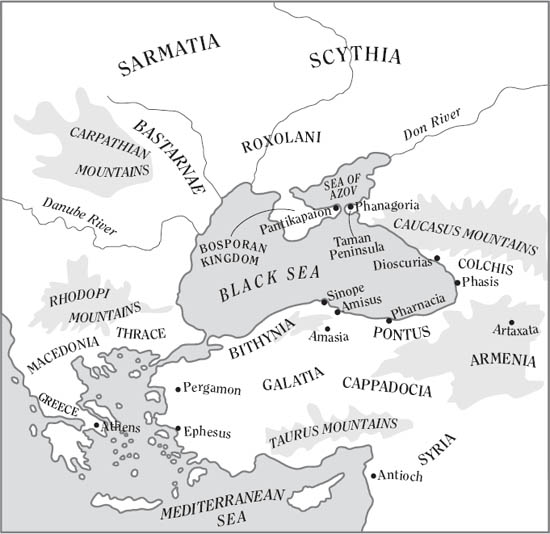
MAP 5.1. Eurasia; lands surrounding the Black Sea. Map by Michele Angel.
Mithradates’ grand strategy for the Black Sea was coming into being (see maps 1.2 and 5.1). The idea was to secure a coprosperity trade zone and tax it fairly. The plan would benefit everyone, including the Scythians, who were beginning to settle into towns, and even the Romans, who depended on grain from the steppes. Mithradates could recruit Black Sea pirate sailors to join his legitimate navy for regular pay, and reward others to prey on the rich ships of holdout states that declined to join his coprosperity plan. Mithradates, as organizer, enforcer, and duty collector of this Black Sea Empire, would profit greatly, of course. But he could promise that everyone else would grow rich too. Indeed, the immense and surprising wealth that archaeologists are uncovering in the northern Black Sea region—not just in urban areas but in the chora—reveals the great success of Mithradates’ concept.39
Mithradates’ farsighted vision offered a positive alternative to Rome’s rapacious greed and violent resource extraction in its early period of conquest. Instead of continual war, Mithradates offered peace. Instead of imposing bloodsucking taxes and debt, Mithradates would tax moderately and reinvest taxes in military measures to ensure security. Mithradates stood for a new vision of mutual prosperity, while the Romans of the late Republic pursued corruption, selfish profit, and plunder. It is easy to see the strong attraction of such a strategy and the deep loyalty it could generate. Mithradates’ Black Sea would become the central pivot, the benevolent middleman in a grand Eurasian trading community. As long as Mithradates Eupator (the “Good Father”) ruled, all could expect to live long and prosper.
But what about his neighbors, Cappadocia, Bithynia, Paphlagonia, Galatia? Mithradates’ intrigues in the Roman-controlled sphere west of Pontus would require stealth and delicacy. Phrygia and western Anatolia presented even more problems. The heart of Provincia Asia was occupied by Roman troops, colonial administrators, tax farmers, and tens of thousands of Roman settlers. Mithradates needed the most up-to-date information about these lands.
Despite his successes in empire building, Mithradates was beginning to feel restless. He missed the invigorating outdoor life he had enjoyed with his companions in exile. Justin commented, “Mithradates would rather spend his time in the open plains and mountains instead of at the dinner-table.” He longed to be “training with his brothers-in-arms in the field, instead of relaxing at court with his cronies. He preferred to compete in foot-races and horse-racing and tournaments of strength” than to make small talk with Queen Laodice and the courtiers.40 How could he recapture the exhilaration of his youthful rambles in Pontus and further his long-term goals at the same time?
THE FACT-FINDING MISSION
Justin tells us that Mithradates set off again from Sinope with close friends, this time on an extensive reconnaissance expedition. The timing of this grand tour is not certain, but it may have been around 110/108 BC. Traveling incognito, the group roamed Galatia, Paphlagonia, Cappadocia, and Bithynia, gathering information for future campaigns. “No one was aware of their presence,” writes Justin. What better way to gain deep knowledge of Pontus’s neighbors, lands that the king intended to absorb into his kingdom? Mithradates was always thinking ahead, like his heroes Cyrus and Alexander.41
Mithradates reconnoitered Anatolia’s cities and scouted defenses. Exercising his remarkable memory, he took note of the natural resources, roads, people, and terrain. In Bithynia especially, says Justin, Mithradates “boldly surveyed all the areas that would favor his victory there, already imagining himself master of Asia.” As Reinach pointed out, this intelligence-gathering trip surely reinforced the ambitions of the young king.42 Wherever the royal band did identify themselves, in Greek and indigenous towns and villages, they were greeted enthusiastically. The oracles surrounding Mithradates’ birth were not forgotten among anti-Romans; his conquests of Persian-influenced lands around the Black Sea had made him “King of Kings.” It was valuable for Mithradates to hear local complaints about Roman settlers, and to learn where he could rally support and recruit soldiers.
The royal companions probably engaged in contests of skill and stamina on the road. If Mithradates and his band attempted to match Alexander’s endurance in riding and marching long distances, for example, they would have to have made successive marches of 400 stades (a total of about 150 miles). Mithradates was a strong horseman: ancient writers say that he was able to ride about 1,000 stades (110–25 miles) in a single day with fresh horses.43
They visited isolated fortresses in Bithynia, Galatia, and Paphlagonia. In Paphlagonia, Mithradates surely visited Cimiata, the fort built by Mithradates I of Pontus. Not far from here, near Pimolisa, lay the gloomy, deep caverns of Mount Realgar Mine, with its deadly mother lodes of arsenic-laden minerals. Mithradatic strongholds also existed in Cappadocia; in Galatia lay the hidden castles Blucium and Peium, where great treasures were stored. These places were dominated by powerful local outlaws and chieftains—people who could be of great value in the coming war.44
The group may have visited historical sites of special interest to Mithradates, such as Troy, site of the legendary war between the Greeks and Priam’s vast armies of Trojans and barbarians. In Lydia, Mithradates could hang a pendant or bracelet on the ancient plane tree revered by Xerxes in 480 BC. The Persian monarch had honored the venerable tree with expensive ornaments, golden necklaces, copper bracelets, and even a fine embroidered robe. Ever since, travelers draped their own offerings on the branches. Gordium in Phrygia was another venerated landmark: here the brash young Alexander had slashed his sword through the Gordian Knot.45
We know that Mithradates made pilgrimages to places where Alexander stopped. At Ephesus, for example, where Mithradates enlarged the sanctuary by shooting an arrow as Alexander had done, he sought out an inn honored by the Macedonian’s presence. In Priene, one could visit another house where Alexander had stayed. Bedding down where Alexander once slept, Mithradates—like many an ambitious conqueror since—must have compared his own accomplishments to those of his hero, who had died knowing he was master of the world at age thirty-two.
On this grand tour, Mithradates called in at Cyzicus and Heraclea, two independent, strongly fortified Greek cities that would later defy him. Mithradates also visited Pergamon, the capital of the Romans’ Asian Province; here he heard many complaints of corrupt government and gross overtaxation. Cilicia, with its harsh landscape and rocky coast, was another important stop. This was the headquarters of the dashing Syrian pirate admiral Seleucus, a good friend of Pontus.
We also hear that Mithradates sailed to the island of Rhodes, a powerful independent Greek city-state with its own navy. The island was celebrated for withstanding a great seige in 305/304 BC, by Demetrius Poliorcetes of Macedonia, who had failed on a magnificent scale. He left behind his gigantic seige towers, which Rhodians used to create a huge statue of the Sun god Helios, the Colossus of Rhodes, one of the Seven Wonders of the Ancient World. The Colossus had toppled in the earthquake of 222 BC. Mithradates and his men could marvel at the enormous bronze limbs still scattered around the harbor, keeping an eye out for the island’s poisonous vipers and giant lizards. The mission in Rhodes was mainly political. Might Rhodes, an ally of Rome that controlled part of Lycia, agree to become a friend of Pontus? Mithradates bestowed generous gifts to the city, and the Rhodians erected a marble statue of Mithradates in their agora, marketplace.
Next Mithradates sailed to the little island of Delos. Italian merchants dominated wealthy Delos, which the Romans had turned into a vast slave depot. The small Greek community there welcomed Mithradates as a patron of the island and friend of Athens. Mithradates gave votive tablets to the Temple of Asclepius and to Zeus on Mount Kynthos, and he inscribed two tablets in the Temple of Serapis, the Egyptian god of healing and dream interpretation. This commercial nexus of the Aegean was crucial for winning Greek support and gathering news from Italy.46
While he was away, Mithradates had left his wife, Queen Laodice, his eunuchs, and some of the King’s Friends in charge. Even though it was always dangerous for a ruler to leave home, for security reasons Mithradates did not advise anyone of his travel plans or when to expect his return. Mithradates and his companions were gone so long—at least a year, maybe longer—that it was believed that they had perished.47 Embracing the role of the tragically widowed queen of Pontus, anticipating ruling the kingdom as her mother had done after her father’s murder, Laodice publicly mourned the death of her brother-husband. The grieving young widow consoled herself by having love affairs with Mithradates’ friends in Sinope.