
WHILE he eagerly awaited the news from Greece, Mithradates was also following developments in Italy. His takeover of Provincia Asia appeared to be the least of Rome’s problems now. Roman legions were battling the Italian insurgents in the countryside, and civil war had broken out in Rome. Sulla, Marius’s rival, had been elected to a consulship. Gangs of Sulla’s Oligarch faction were at war with Popular party mobs loyal to Marius. Sulla was driven out of the city by the Populars; he took command of a Roman legion fighting Marsi rebels. Encouraged by a dream in which Cybele, the great mother goddess, gave him a divine thunderbolt, Sulla stormed Rome and occupied the city, with murderous street fighting. Sulla posted a reward for the head of Marius, who fled into hiding, but many Romans remained loyal to the old warrior.
Now master of Rome, Sulla was nevertheless in a precarious situation. Sacred treasures from Rome’s temples had already been sold to finance Sulla’s war chest for the Mithradatic War. After Mithradates’ victories in Anatolia and Greece, his influence was gaining momentum; he had promised to aid the Italian insurgents. Rome’s power in the East would be lost forever if Sulla failed to defeat Mithradates. A decisive triumph over the Republic’s deadliest threat since Hannibal would elevate Sulla’s status from civil warrior to heroic conqueror. But would Sulla dare to leave Italy? How could he fight Mithradates and still maintain control in Rome?
In 87 BC, the horns of Sulla’s dilemma sharpened when Cinna, loyal to Marius, won a consul seat. That summer, Halley’s Comet appeared, a portent of disaster for Rome. Cinna swore an oath to keep peace with Sulla’s aristocratic party, but his promise rang hollow. Marius’s gangs were poised to fall on Sulla’s supporters, and the lives of Sulla’s wife and children were in grave danger.1
What course would Sulla take? Mithradates assumed that Sulla, the Senate, and the Roman People intended to try to avenge his killing of Italians in Anatolia. But he believed the chaos in Italy would tie their hands for some time. After his liberation of the Greek world became a fait accompli, he could hope that Rome would have to accept the new division of power, and respect Mithradates the Great, King of Kings, as the new Alexander at the helm of a reborn Greco-Persian empire.2
THE LIBERATION OF GREECE
While war ravaged Rome, Mithradates gloried in the victories of the Greek campaign. Halley’s Comet was taken as a good omen by Mithradates’ Magi and by his allies. In Athens, the philosopher Aristion succeeded Athenion, elected on a pro-Mithradates platform; Aristion’s name appeared with Mithradates’ on Athenian coins of 87–86 BC.
Mithradates’ own handsome coins featured his idealized portrait—looking very much like his hero Alexander, with parted lips and luxuriant hair. Imagery evoking Mithradates’ Persian connections appeared on the reverse, such as winged Pegasus and the star and crescent. Other coins displayed Dionysus the Liberator (associating him with opposition to Rome by slaves and rebels in Italy). Mithradates made sure his portrait was known to everyone. He employed the best Greek artisans, and he understood the propaganda value of aesthetically pleasing currency. His coinage conveyed the message that Mithradates was the great unifier—and protector—of Greek and Persian civilizations. Knowing that his unsurpassed coins would be admired, collected, and selected for hoards of buried treasure, Mithradates also designed them for posterity. Indeed, Mithradates’ portrait coins are considered by numismatic experts to be the most beautiful of all ancient coins. Mithradates also commissioned numerous seal rings bearing his portrait, which he presented to friends and allies. Such rings bestowed political authority on the wearer. They also carried propaganda messages, as we saw with Sulla’s signet ring depicting his victory over Jugurtha, and the ring with Mithradates’ likeness flaunted by Athenion in Athens.
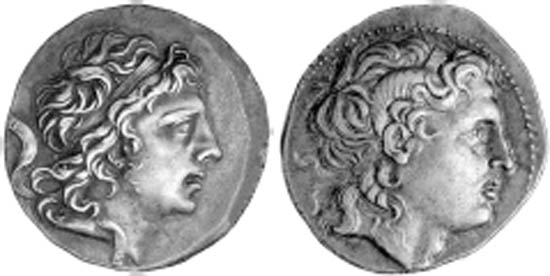
FIG. 9.1. (Left) Mithradates’ portrait, silver tetradrachm, 86/85 BC, idealized profile, similar to Alexander’s coin (right), with tousled hair and parted lips. Mithradates’ coins are distinctive for artistic excellence and sense of dynamic movement. 1980.109.66, bequest of A. J. Fecht, and 1944.100.45726, bequest of E. T. Newell, courtesy of the American Numismatic Society.
In 87 BC, Mithradates’ generals Archelaus and Metrophanes stormed Roman-controlled Delos. The destruction was devastating: the city was sacked and burned to the ground. Thousands of able-bodied slaves, suddenly freed from Roman chains, joined the Greek liberation army. Mithradates’ generals killed virtually all the unarmed Italian merchants of Delos and sold their wives and children into slavery. The estimated number killed on Delos was 20,000, bringing the death toll of noncombatant Roman citizens in 88–87 BC to at least 100,000, perhaps more.
Metrophanes and Archelaus took possession of the island’s valuables and seized the coffers inside the great Temple of Apollo. They stored most of the plunder on the little wooded island of Skiathos, Metrophanes’ naval base and hospital. But what should be the fate of Apollo’s sacred hoard, stored over the centuries in his temple? Traditionally, Apollo’s treasure on Delos had been safeguarded by Athens. Mithradates decided that the treasure would be delivered to Aristion in Athens by a contingent of 2,000 handpicked soldiers. This grand gesture sealed Mithradates’ promise to liberate all Hellas from Rome.3
Aristion used the treasure to finance the revolution begun by Athenion. The 2,000 Pontic soldiers sent by Archelaus probably completed the purge of Romans and pro-Romans remaining in Attica. They also trained the mainland Greeks, whose armies had long ago been disbanded by the Roman overseers. Then, in the words of one modern historian, “with absurd and sublime devotion” to its old ideals, Athens declared war on Rome and announced its alliance with the savior-king Mithradates the Great. Athens still enjoyed prestige throughout Greece and the non-Roman world. The once great, now ghostly city-states of Sparta and Thebes set aside their ancient rivalry with Athens and joined the Pontic Alliance, anticipating the arrival of Mithradates’ liberation army. General Archelaus’s troops, mostly Gauls from Galatia, were welcomed with joy in the Peloponnese, Attica, and Boeotia. As they marched north, bands of eager but ill-trained and poorly armed citizen-soldiers from Sparta, Athens, and other Greek towns joined the liberated slave auxiliaries in Archelaus’s ranks.4
Mithradates divided his forces into a three-pronged operation. One prong moved across Thrace to Macedonia, led by his favorite son Arcathius (who had proved himself in the battles against Aquillius and Nicomedes) and General Taxiles (named for an Indian prince who had welcomed Alexander the Great). They commanded about 100,000 barbarian foot soldiers (called the Bronze-shields) and 10,000 horsemen from Thrace, Sarmatia, Scythia, and Armenia. Once Arcathius and Taxiles took control of Amphipolis on the border, Macedonia came to Mithradates’ side. This victory meant they could ship plentiful food supplies to Archelaus in Piraeus, Athens’ port.5
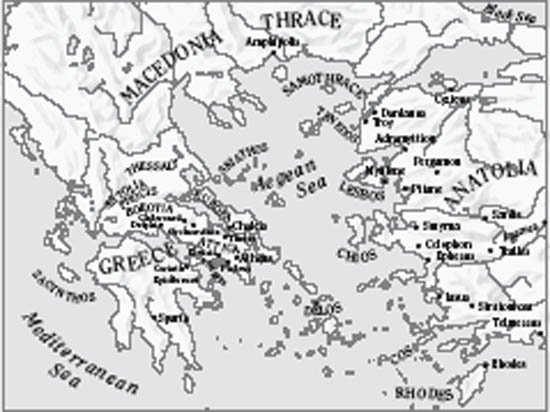
MAP 9.1. The First Mithradatic War: Anatolian, Aegean, and Greek campaigns. Map by Michele Angel.
Archelaus had secured southern and central Greece; now he and Aristion occupied Attica, the territory of Athens and Piraeus, making up the second prong. The third prong was led by Metrophanes, who took Euboea, establishing headquarters at Chalcis. His fleet was advancing up the coast of Thessaly. (Meanwhile Neoptolemus and Dromichaetes were sailing with more men from Anatolia to Chalcis, and Dorylaus stood ready with another highly trained army of 80,000 reinforcements in Pontus.) Mithradates’ three armies were to converge on Macedonia. If all went according to plan, the small, isolated Roman garrison there would be pinned beneath the trident by the summer of 87 BC.
But the commander of the Roman outpost in Macedonia decided on a bold preemptive strategy to blunt Mithradates’ three-pronged assault. He sent troops out to meet Arcathius’s barbarian horde and ordered his legate Bruttius to engage Metrophanes at sea. Bruttius’s small fleet was successful—Metrophanes had to watch helplessly as his sailors flailed in the waves, begging for mercy. Bruttius’s men killed them one by one.
Bruttius chased Metrophanes back to Euboea, forcing him to leave his hospital and depot on Skiathos unprotected. Bruttius overran the island, grabbing up loot and capturing thousands of soldiers. The prisoners of war—many of them wounded or sick—might have hoped for humane treatment at the hands of the Romans. In the campaign for Rhodes, Admiral Damogoras had treated Mithradates’ captives honorably. Even Mithradates had famously granted amnesty to Roman soldiers and their allies in earlier battles. But the Roman Bruttius meted out revenge for the Italian victims in Provincia Asia and Delos. He separated the prisoners into two groups: freeborn men and Roman slaves who had joined Mithradates. Bruttius’s centurions announced that the free men would be released. But first, they methodically lopped off the prisoners’ hands. The maimed soldiers were free, but would never lift a sword or shield again. And the runaway slaves? All were crucified, nailed to rough crosses and left to die on Skiathos.
Although elated with his success, Bruttius could not follow up with a direct attack on Euboea. Even with a thousand reinforcements drafted from Macedonia he was still outnumbered. Instead, he marched through Boeotia to try to stop the middle prong, led by Archelaus. The armies met at Chaeronea, the broad plain surrounded by rocky hills that controlled the route between northern and southern Greece. So many battles had been fought at Chaeronea that the plain was known as the “dancing ground of Ares,” god of war. This was the same battleground where Alexander’s father, Philip, had defeated the Greeks in 338 BC.
Bruttius and Archelaus clashed here for three days. As Alfred Duggan commented, Bruttius was actually holding his own until a “typically Roman piece of red tape compelled him to break off the campaign.” A communiqué arrived from Sulla’s young lieutenant, Lucius Lucullus, informing Bruttius that Sulla alone was commissioned by the Roman People to conduct the war on Mithradates. Bruttius was ordered to return to Macedonia. Bruttius obeyed. That allowed Archelaus to occupy Boeotia and set up winter quarters in Piraeus. Meanwhile Aristion’s citizen army battened down in Athens. They felt secure inside the great walls and fortifications protecting the city and its port.6
MEANWHILE IN PERGAMON
Mithradates must have been annoyed by the losses at Skiathos, but he could glory in his spectacular successes so far. He was popular, prosperous, victorious. The grand future foretold by the oracles and comets was coming true at last. He had wrested Asia from Rome’s grip, and he ruled Bithynia, Cappadocia, Paphlagonia, and Anatolia. The Romans were driven out of Asia. His general Archelaus was master of the Aegean and mainland Greece. Mithradates’ son Machares was viceroy of Pontus and Bosporus, including the Scythian lands beyond the Sea of Asov. His beloved son Arcathius, steamrolling south, overcame Bruttius’s small garrison in Macedonia. Arcathius had subdued northern Greece and was already appointing satraps to govern what was to become his kingdom.
As ambassadors from rebel cities in Italy, North Africa, Egypt, Parthia, and Syria sang Mithradates’ praises, the savior-king amassed more gold and dispensed riches, principalities, and satrapies to his friends. Cities allied with Mithradates issued grateful decrees, minted coins with his name and image, and dedicated portrait statues to him in their agoras. The king commissioned impressive statues of himself. Large silver and gilded images of the Mithradatic ancestors decorated the palace in Sinope, but those of Mithradates were even more grandiose. We know of at least two statues cast in solid gold, one life-sized, the other ten feet tall. Not only was gold impressively expensive; its color was sacred to fire, the Sun, and Mithra.7
In Pergamon, a splendid festival was planned to celebrate Mithradates’ successes. In the Theater of Dionysus, where Aquillius’s gruesome last supper had been served, the royal engineers put the finishing touches on an immense mechanized statue of Nike, the goddess of victory, suspended on cables behind curtains high above the royal box.
On the day of the celebration, King Mithradates and Queen Monime, dressed in lavish finery, nodded and beamed at the audience from their silk-canopied, cushioned thrones as choirs sang, officials orated, and actors representing various lands thanked the liberator-king for his benevolence. The pageant was to climax with the appearance of Winged Victory bearing a real crown in her outstretched hands. By means of pulleys and levers, the goddess would majestically descend to place this crown on Mithradates’ brow and then magically rise up to the heavens again. If there were any witnesses of the awful collapse of the colossal sambuca at Rhodes in the audience, they must have collectively held their breath, trying to suppress premonitions of disaster.
Their fears were justified. Just as the stagehands were lowering the heavy statue in front of the royal box, the cables broke. Winged Victory crashed to the ground, the victor’s crown dashed to pieces. Shocked silence, then pandemonium. Crowd and king shuddered in horror. The royals were hustled away from the scene of the terrible omen.
Mithradates, naturally, fell into a depression. But not for long. The king emerged from seclusion a few days later, summoning his seers, the Magi, his advisers, and spies. He pored over all the dispatches from the front, questioned everyone closely, demanded the freshest intelligence. He was certain that some disaster must have befallen one of his armies in Greece or Asia at the very moment that Victory had come crashing down in Pergamon. His inquiries revealed nothing but sunny reports from his command posts. But he did hear a scrap of ominous news. On that very day, Lucius Cornelius Sulla had set sail from Italy, bringing five Roman legions to Greece.8
SULLA
This report must have sent an icy sliver of anxiety into Mithradates’ already troubled mind. Far from the action, he could not personally supervise his armies in Greece. But he had great confidence in his excellent generals. And after all, how could Sulla’s mere thirty thousand troops prevail against Mithradates’ myriads?
But Sulla’s men were battle-hardened, disciplined professionals. These tough veterans would fight ferociously for Sulla—as long as they were paid handsomely in plunder. What sort of man was their commander? The Roman biographer Plutarch paints a portrait of an arrogant, repellent character, with a hypnotically commanding presence and fathomless hunger for power. From an obscure patrician family without wealth, Sulla (b. 138 BC) spent his youth carousing in the company of theatrical lowlifes. A rich courtesan financed his political career. At age fifty, Sulla retained his louche habits, but cultivated a love of art and literature and won a reputation as a hard-driving, brave military leader. Shrewd and calculating, Sulla could also be rash and unpredictable. As Sulla and many other leaders well understood, capricious behavior made one seem godlike, and it kept friends and foes off balance. Alternating clemency with sudden brutality was a tried-and-true power trip, practiced by autocrats of all eras, including Mithradates.

FIG. 9.2. Lucius Cornelius Sulla, Roman bust, 80–75 BC, Museo Archeologico, Venice. Scala/Art Resource, NY.
Sulla was distinguished by red-blond hair, pale gray eyes, and very fair skin. According to Plutarch, the name Sulla (“Pimples”) was an insulting reference to his unfortunate complexion. Perhaps because of some dermatological affliction, his skin was spotty with coarse, bright red patches. Jesters joked that Sulla’s face resembled a purplish-red mulberry mash sprinkled with white flour; today the cruel expression might be “pizza-face.” Yet Sulla’s imperious personality and his piercing gray eyes gave him a fearsome expression.
Years before, when Sulla had bested Tigranes’ army in Cappadocia, to reinstate Ariobarzanes, a Babylonian seer had cast Sulla’s fortune. Staring into the Roman’s cold, pinpoint pupils, taking account of his haughty bearing, his striking red hair and odd skin markings, the holy man predicted that Sulla was bound to rise to great power. In his own memoirs (lost, but quoted by Plutarch and others), Sulla proudly recounted how a chasm had opened up in the earth, belching forth huge gouts of flames to the sky. Interpreting this omen, the soothsayers predicted that “a brave man of rare valor and surpassing appearance would take charge of Rome.” Sulla identified himself as that man, because of his “golden hair and his great and noble deeds.”
As soon as Sulla’s ships set sail across the Adriatic Sea, his political rival Cinna broke his promise of peace. Cinna issued a People’s Decree nullifying Sulla’s command and proclaiming Sulla Public Enemy of Rome. Thus it happened that Rome’s Public Enemy Number One marched out to battle Rome’s Most Dangerous Enemy.9
Cut loose from Rome, Sulla now had to provision his five legions in a hostile land, with no supply lines or money from Italy. The year’s delay since the massacre meant that instead of sailing directly to Anatolia to crush Mithradates and retake the Province of Asia, Sulla had to defeat the vast and victorious Pontic army occupying Greece. Upon landing in Greece, Sulla demanded money, reinforcements, horses, mules, and food from Aetolia, Thessaly, and Boeotia. At Sulla’s approach, the city of Thebes got cold feet about its alliance with Mithradates and promised to supply iron, catapults, and weapons to the Romans. Dispatching half of his legions to attack Aristion in Athens, Sulla marched to Piraeus. He could have simply laid siege and waited for starvation and thirst to wear down Piraeus and Athens. But he was too worried about the events out of his control in Rome, impatient to return to Italy as supreme war hero.
THE BATTLE FOR PIRAEUS
Like the great walls surrounding Athens, Piraeus’s walls were constructed of limestone blocks with upper courses of brick and wood. Sulla immediately sent his men to try to scale the high walls, but Archelaus’s defenders inflicted heavy casualties. Sulla’s legions dragged themselves to safety, taking over the nearby towns of Eleusis and Megara.
As hardware and materiel began to arrive from Thebes, Sulla scoured the countryside for mules. He needed at least ten thousand draft animals to operate his huge siege engines and towers. To build those machines, he ordered his men to hack down all the beautiful olive trees in the vicinity, ancient groves sacred to Athena. A bolt of lightning killed one of Sulla’s soldiers cutting trees—but his soothsayers insisted it was a good omen because the man had fallen with his head pointing toward Piraeus. Next, Sulla’s soldiers set about demolishing Piraeus’s Long Walls connecting the harbor to Athens. They piled stones, timber, and dirt into a great mound for his catapults and siege machines.10
Inside Piraeus, two men conspired to betray Archelaus and help Sulla. Ironically, despite Mithradates’ well-publicized liberation of the enslaved, these plotters were Athenian slaves. Were they, as Plutarch speculated, “simply looking out for their own safety in the emergency”? Perhaps the men suffered under cruel masters. At any rate, the pair secretly inscribed messages about Archelaus’s plans onto lead sling balls and hurled them to land harmlessly near the Roman workers. After many volleys of these oddly aimed balls, Sulla noticed and picked one up. It read: “Tomorrow Archelaus’s soldiers will sally out to attack your workers, while his cavalry attacks both flanks of your army.” Thus warned, Sulla ambushed and killed Archelaus’s assault force.
As Sulla’s mound rose, Archelaus erected numerous catapult towers on Piraeus’s ramparts, and sent for Dromichaetes’ reinforcements (Neoptolemus’s army remained in Chalcis). In this tense period before the battle, Archelaus armed all his oarsmen and distributed bowmen and slingers to defend his fire-archers and catapults on the walls. Other men massed inside the gates with torches, ready to dash out and burn the enemy’s machines.
Appian and Plutarch recount how the first battle for Piraeus raged for many days. Archelaus led an all-out attack that sent the Roman legions reeling. Sulla’s lieutenant, Murena, desperately screaming out orders, managed to drive the Romans forward, although the odds were against them. But just then, another Roman legion returned from a wood-gathering detail. Dropping the logs, these legionnaires barreled into the battle. The Romans managed to kill more than two thousand of Archelaus’s men and forced the rest back inside the walls. Archelaus, hoarse and possessed, urged his men to keep fighting. Appian reports that Mithradates’ valiant commander stood his ground so long—even after the city gates slammed shut behind him—that he barely escaped. At the last moment, he was hoisted over the wall by ropes.
Archelaus could inform his king in Pergamon that Piraeus stood fast against Sulla. Up in Athens, however, starvation loomed. Piraeus had abundant grain supplies, because Sulla could not stop ships in the fortified harbor. Archelaus attempted to deliver wheat to Athens under cover of night. But the two informers in Piraeus alerted Sulla by lobbing more messages on lead balls. Sulla ambushed several supply trains. Just as Archelaus realized that there were traitors in his city, he received miserable news from Neoptolemus in Chalcis. One of Sulla’s officers had attacked there, killing fifteen hundred soldiers and capturing twice as many prisoners.
Work on Sulla’s siege mound continued outside Piraeus. All winter, Archelaus kept up constant pressure, slamming the Roman workers with catapult boulders, lead balls, stones, javelins, and fire arrows. Unseen, Archelaus’s sappers secretly tunneled under the mound, carrying away tubs of earth. Suddenly the mound collapsed, killing Romans and toppling war machines. The Romans rebuilt the mound and dug a counter-tunnel. The tunnelers met underground. Swords and spears clashed in the dark passage; above, Sulla pounded Piraeus’s walls with battering rams until a section fell away. He directed volleys of fire bolts at Archelaus’s catapult towers.
But Piraeus’s towers were oddly impervious to fire. Archelaus knew a secret method. He had coated his walls and towers with alum, an opaque crystal formed by the vapors of volcanoes, imported from Smyrna, Syria, and Egypt. Alum was used in tanning, dyeing, and medicine; mixed with water it hardened plaster and strengthened rope. Painted on wood it is an effective fire retardant. Sulla’s men, unfamiliar with alum, were stymied. Finally, the Romans lit an enormous bonfire of pine logs under the wooden beams of the damaged wall. Copying a tactic invented by the Spartans in the Peloponnesian War, Sulla tossed sulphur and pine resin onto the flames, which burst into a raging conflagration, spewing toxic gases. The burning wall crashed down, killing many defenders.11
Pressing his advantage, Sulla sent men to scale the walls in the middle of the night. They snuffed the sleeping guards, but Archelaus’s soldiers hurled the attackers over the wall and ran out to set fire to Sulla’s towers. A full-scale battle raged in the dark, lit by fires and flaming missiles. A great many defenders of Piraeus died, killed by fire from Sulla’s siege towers, each of which could catapult twenty heavy lead balls and bolts at once, at a range of four hundred yards. In 2004, an exceptional archaeological discovery in Greece—the skeleton of a soldier killed instantly by a catapult bolt—graphically illustrates the kind of massive damage that was inflicted by Sulla’s machines.12
The demoralized and jittery troops on the walls “could only offer feeble resistance to Sulla’s relentless assault.” Sensing weakness, Sulla pushed harder, continually sending in fresh divisions and cheering them on: This is our main chance! But Archelaus met Sulla’s challenge, bringing up fresh troops to replace the discouraged ones, and imploring his men to fight on. Casualties were extremely high on both sides. Appian’s sources agreed that it was again Mithradates’ general Archelaus who “surpassed all others in endurance and valor.” Relief flooded his men when they heard Sulla sound the retreat. They labored several nights to repair their walls. Sulla tried one last attack, with his entire army. But the Romans fell back under a heavy rain of missiles from the restored walls.13
Archelaus honored his men with tokens for their bravery. A remarkable discovery of one of these tokens brings the battle for Piraeus alive for us more than two thousand years later—and it indicates the ethnic diversity of Mithradates’ liberation army in Greece. The silver bracelet, presented to a soldier in 86 BC, is inscribed with the words “In Piraeus, the General Archelaus gives this to Apollonius . . . a Syrian, as a reward for his courage.”14
Forced to abandon any idea of taking Piraeus by assault, Sulla had to settle in for a very long siege. But he still had no way to blockade the harbor and deny Archelaus food and reinforcements arriving by sea. Mithradates’ strategy of occupying Euboea and Macedonia and dominating the Aegean Sea was paying off.
SHIPS AND TREASURE
Seething with hatred for the Greeks, anxious to win this damnable war and return to Rome, Sulla knew he needed a lot of money and a navy to destroy Mithradates’ forces in Greece. But as Rome’s Public Outlaw, he could expect nothing from the Senate. Sulla got a message through to Rhodes demanding ships, but to no avail. Rhodes had the ships, but pointed out that Mithradates’ navy and pirate fleets controlled the entire Aegean. So Sulla sent his aide Lucullus on a daring secret mission. Sail to Rhodes and Alexandria to procure ships and sailors. Then somehow escort these fleets, evading Mithradates’ navy, back to Sulla.
Lucullus embarked at night on a swift vessel. Taking evasive action, changing ships frequently, Lucullus managed to slip past Mithradates’ blockade and roving pirates. He spent the winter in Rhodes, and in early 85 BC he arrived in Alexandria. But his success so far was unknown to Sulla.
Sulla, in the meantime, solved his financial problem. He seized the sacred treasures of Greece, plundering the temples of Zeus at Olympia and Asclepius in Epidaurus. Selecting the most beautiful, precious art objects for himself, he melted down massive amounts of silver to pay his men and buy supplies.
Delphi was the most ancient and richest treasury of antiquity, its integrity traditionally guarded by distinguished citizens from around the Greek world. Wealthy monarchs had dedicated magnificent riches and artworks to Apollo’s Delphic Oracle over the centuries. In the sixth century BC, for example, King Croesus of Lydia had donated 117 enormous ingots of gold, many solid gold statues including a lion weighing more than five hundred pounds, immense silver urns and golden bowls, and other fabulous artifacts, jewels, and weaponry. The guardians at Delphi were horrified to receive Sulla’s blunt command: Apollo’s treasures were to be transferred to him for “safekeeping.” If he found it necessary to melt down the god’s property, Sulla assured them the “loan” would be repaid.
Sulla sent a Greek, Caphis, to take possession, with orders to record the weight of each valuable object. But once inside the temple, Caphis burst out crying. He could not bring himself to touch Apollo’s treasure, which had escaped even Xerxes’ Persian looters in 480 BC and marauding Gauls two centuries later. He sent a desperate message to Sulla, swearing that the god could be heard playing his lyre in the inner sanctum. Sulla’s reply: “Don’t you understand? The music signals Apollo’s approval! Bring me the treasure immediately.”
Delphi’s treasures were packed onto mules. Only one item remained, one of the Royal Gifts of King Croesus described by the historian Herodotus: a huge, repoussé silver jar with a capacity of five thousand gallons. The tearful guardians were forced to cut the beautiful jar into pieces to be loaded on the mules. Plutarch, who later served as a priest at Apollo’s Delphic Oracle, felt their anguish. In the past, he exclaimed, more honorable, disciplined Roman commanders had not only spared Greece’s sanctuaries; they had bestowed important gifts to the gods themselves. “But those generals were lawful, self-restrained, incorruptible Romans from olden days,” wrote Plutarch, nothing like the grasping and brutal Sulla “who paved the way for horrors” in Greece and Italy.
From the treasures of Delphi, Sulla again picked out choice artifacts for himself. One of the dedications became his personal amulet, an exquisite little golden figure of the god Apollo. From that day on, says Plutarch, Sulla always wore this image around his neck. Before battles, it was his habit to ostentatiously pull out the little statuette and kiss it, admonishing the god to bring a speedy victory.15
THE FALL OF ATHENS
While Lucullus negotiated for ships in Egypt, Sulla set up camp outside Athens. From the Dipylon Gate, the Athenians watched aghast as Roman soldiers hacked down the venerable groves of Plato’s Academy and Aristotle’s Lyceum. The logs were hammered into enormous siege engines on the very spot where an unbroken line of philosophers had taught since Socrates. Sulla took personal possession of the precious library of works by Aristotle and Theophrastus, which had been rescued from a moldy cellar in Scepsis (near Troy) and stored in Athens. A gifted Athenian student named Lenaeus may have been taken as Sulla’s slave at this time—many years later he would find himself translating Mithradates’ toxicological notes into Latin.16
The citizens of Athens, delirious with starvation, defiantly took to the ramparts, deriding the Romans, mocking Sulla’s ugly mulberry face, and belting out obscene songs about his wife. Their leader, the philosopher Aristion, put on his bronze helmet and breastplate and danced about on the walls with them, shouting out insults. Against Aristion’s orders, a party of councilmen ventured out to beg Sulla for mercy. They began by reminding the Roman warlord of Athens’ heroic ancient history, from the mythic Theseus to the great panhellenic victory in the Persian Wars. Sulla interrupted, “Stop rambling!” He sent them away: “I’m not here for a history lesson. Rome sent me to subdue you Athenian rebels!”
Roman intelligence, probably wrung from famished Greeks attempting to forage herbs outside the walls, had informed Sulla that the Athenians were starving. All the sheep, goats, cattle, rabbits, chickens, tortoises, and other animals had disappeared long ago. There was no oil; even Athena’s sacred lamp was extinguished in the Parthenon. A shower of black ashes the year before had been a very bad omen, and still no rain fell to fill the cisterns. There was no wheat or barley, no fruit or olives. The people devoured weeds that grew on the Acropolis. Sulla’s sources revealed that the trapped citizens were boiling down cow hides and leather sandals in cauldrons, “licking up whatever sustenance they could.” There were even rumors of cannibalism.
With wolfish pleasure, Sulla directed his men to strangle the city by digging a deep trench around the walls. Plutarch wondered, Why was Sulla “possessed by such a dreadful and inexorable passion to punish Athens?” Was Sulla so resentful of Athens’ former glory? Was he “provoked by the scurrilous abuse showered on him and his wife by Aristion and the Athenians on the walls?” Appian, writing centuries later, believed that Sulla’s wrath stemmed from Greece’s brazen loyalty to Mithradates and the “Athenians’ violent animosity toward himself.” Every day the Athenians held out was a day wasted, while Sulla’s enemies grew strong in Rome and Mithradates gloated in Pergamon.17
Plutarch’s description of Sulla’s destruction of Athens is vivid. A native of Chaeronea, Plutarch (b. AD 46) interviewed some elderly Athenians whose grandparents had survived Sulla’s siege; his other details came from Sulla’s own journals and soldiers serving with him. Appian and Pausanias add further information. Sulla commanded his army to raze Athens’ walls. He had learned that the weakest area, between the Agora and the Kerameikos cemetery, was not well guarded. Evidence of Sulla’s attack is still visible today; several of his stone catapult balls can be seen in the ruins of the Kerameikos cemetery.
The citizen-soldiers defending the walls were courageous, fully committed to Mithradates and freedom, but they were no match for five Roman legions. The starving people wandering or dying inside were too frail to fight. At midnight, Sulla himself led the charge. Screaming war cries, the Roman soldiers vaulted over the walls and rammed through the gates. They ran through the dark streets swords drawn, lusting to carry out their leader’s explicit orders to pillage, rape, and massacre. No one, not even women and children, was to be spared. One exception was slaves—they counted as loot, at least as profitable as the hidden Athenian valuables the Romans dragged up from the wells.
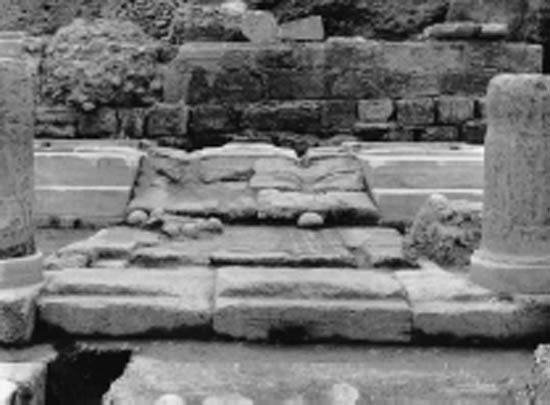
FIG. 9.3. Catapult balls, from Sulla’s siege of Athens, still visible in the Kerameikos cemetery outside the Dipylon Gate. Deutsches Archaologisches Institut, photograph, Hedwig Brueckner.
“A great and pitiless slaughter” swept through Athens, gem of ancient Greek civilization. The city of Athens, which had survived burning by Xerxes nearly five hundred years earlier, the Peloponnesian War, and the Macedonian conquest, was utterly destroyed. Amid terrifying trumpet blasts and bloodcurdling cries, many of the hopeless mustered their last wisp of energy to rush onto the enemy swords. Others, “expecting no humanity from Sulla,” killed their families and themselves. As the Roman soldiers went about their bloody business, they found evidence of human flesh prepared as food in the houses. “In this way,” laments Appian, “did Athens have her fill of horrors.” Plutarch’s sources described blood coursing from the Agora to the Kerameikos cemetery. The only way to gauge how many died that night was to measure how much ground was soaked in blood, wrote Plutarch.
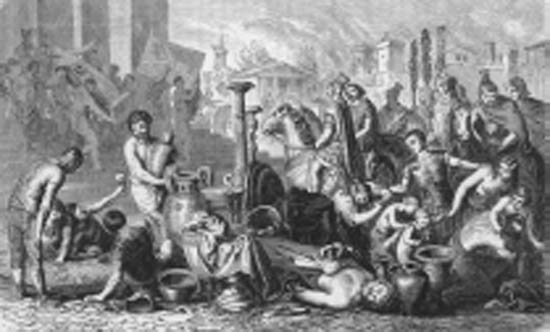
FIG. 9.4. Athens pillaged by Sulla’s invading Romans, by Leutemann. Media Storehouse.
When the attack came, Aristion and company “made their feeble way up to the Acropolis,” the citadel where the last Athenians would make their last stand. On the way, Aristion stopped to set fire to the timbers of Pericles’ famous concert hall, the Odeon, to deny Sulla wood for storming the sacred hill.18
The next day, Sulla was busy auctioning off captive slaves, while his officers laid siege to Athens’ last garrison on the Acropolis. Thirst compelled Aristion and his companions to surrender some days later. Sulla seized the Acropolis treasure, six hundred pounds of silver and forty pounds of gold. He gave a curt speech praising the Athens of antiquity, boasting that he had spared the city from burning, and pardoned some citizens who had survived on the Acropolis. Then, as the skies opened up and poured down rain, too late to save the holdouts, Sulla executed Aristion, the last elected leader of democratic Athens.
Nearly three centuries later, the Greek historian Pausanias decried the merciless destruction inflicted in 86 BC on Athens by Sulla, whose “cruelty surpassed even what you might expect from a Roman.” Athens did not begin to flourish again until two hundred years later.19
Unable to wait any longer for besieged Piraeus to surrender, Sulla now brought all his troops, catapults, battering rams, and siege towers to strike Archelaus with savage force. Sulla led the attack himself, riding his large white warhorse among the troops, shouting encouragement, promising lavish rewards. His men, “spurred to their work by love of glory and pride in the idea that it would be a splendid thing to conquer such impressive walls as Pericles’ fort at Piraeus, pressed on like madmen.”
The Romans’ frenzied surge astounded Archelaus. A wise tactician, and eager to fight another day, he ordered his men to abandon the walls and run for their ships in the fortified harbor. Behind them, the enraged Sulla ravaged the city of Piraeus, setting fire to Philo’s magnificent Arsenal, the navy yard, and all the other buildings admired since antiquity. Victory was finally his, yet Sulla had nothing to show for it but loot, ashes, and ruins. He had no ships to pursue Archelaus. Burning with frustration, Sulla watched as Mithradates’ intrepid general escaped with his army of ten thousand.20
CHAERONEA
When Archelaus joined Mithradates’ other forces in Thessaly, he learned tragic news from Arcathius’s cocommander Taxiles, news that would deal a grievous blow to Mithradates in Pergamon. The king’s beloved son Arcathius had fallen ill in Macedonia and died near Mount Tisaion, Thessaly. Despite his untimely death, I think Arcathius was the happiest of Mithradates’ many sons. His father placed absolute confidence in him. He died a victorious war hero who knew nothing but pride and love from Mithradates—unlike his brothers, who would end up enmeshed in betrayal and suspicion.
The combined Mithradatic army was now 120,000 strong, with 90 scythed chariots. Each nationality in this polyglot mass had its own general, with Archelaus as supreme commander. This horde marched south as Sulla advanced north. In late summer of 86 BC, the two armies converged in Phocis. Archelaus led out his multitudes again and again, trying to provoke a battle. But Sulla held back. According to Appian, Sulla’s troops numbered only about 30,000 or 40,000.
As Archelaus anticipated—and Sulla understood—the sight of Mithradates’ milling throngs of warriors from so many unfamiliar lands presented a fearsome spectacle for the Roman soldiers. The sheer opulence of the barbarians’ equipment awed the Romans. “Huddled in their trenches,” the soldiers eyed the fine swords inlaid with precious gems, flashing armor “embellished with silver and gold, the rich colors of the Median and Scythian corselets and mail, all intermingled with gleaming bronze and glinting steel.”21
The clamor of dozens of different languages filled the air. Mithradates had gathered recruits from a vast area: joining the former Roman slaves, Greeks, and pirates were Thracians, Macedonians, Bastarnae, Sarmatians, Scythians, Taurians, Maeotians; from the Caucasus came Colchians, Heniochoi, Albanoi, Iberi; there were Pontians, Bithynians, Phrygians, Paphlagonians, Cappadocians, Chaldeans, Cilicians, Galatians, Turret-Folk, Chalybians, Tibarnae, Armenians, Medes, and Syrians. Some of the Eastern groups brought camels, presenting the Romans and their horses with strange sights and stranger smells. Many of the barbarians wore their hair long and adorned themselves with golden, copper, and silver earrings, wristlets, and necklaces. Warriors from Thrace, Sarmatia, Scythia, Trapezus, and Colchis proudly sported extensive tattoos as signs of manhood and battle prowess—a confusing concept for the Romans, who inflicted tattoos to brand slaves and punish runaway soldiers. Swaggering about and shouting out insults and boasts, the barbarian multitude intimidated the Roman soldiers—even though no one could understand their speech.22
Indeed, so many language and culture differences posed problems for Mithradates’ generals. The unruly barbarians often ignored the chain of command and even raided towns and villages in Boeotia while they waited for the battle to commence.
Sulla hunkered down and set onerous tasks to distract his nervous soldiers: digging ditches and taking over forts in the area. He reasoned that they would soon tire of the drudgery and be eager to fight. Meanwhile he sent out spies, communicating with them secretly. One of Sulla’s methods was to inflate a pig bladder like a balloon and dry it out. A message was written on the inflated bladder, dried out, and stuffed into an oil jar. Oil carefully poured into the neck of the bladder caused it fill and adhere to the inside of the jar. The recipient broke open the jar and replied by the same method.23
Sulla’s spies informed him that Archelaus’s army had moved southeast and camped in the rocky hills above Chaeronea. It seemed a clever choice—defensible high ground with a good view of the plain below. Obviously Archelaus did not expect to fight here. Two pro-Roman Greeks from Chaeronea, Anaxidamos and Homoloichos, approached Sulla with a plan. They knew a hidden path high above Archelaus’s encampment. They proposed to sneak up this trail and rain down stones on the enemy tents, forcing the army out onto the plain in disorder. Sulla agreed. While the raiders set off, Sulla moved to occupy a broad meadow with an advantageous slope facing the cramped enemy encampment. If he could force Archelaus to muster his army in haste on uneven ground, they would be hedged in by boulders and outcrops, unable to maneuver or retreat.
The sneak attack worked! Suddenly boulders crashed down on the unsuspecting barbarians. Crowded together, they stumbled in confusion down the steep cliffs, some falling on their own spears. The attackers leaped down and finished off at least three thousand men. The survivors rushed down to the lower main camp, causing a domino effect of terror and chaos. This was Sulla’s chance—he immediately charged Archelaus’s snarled army.
Archelaus’s advantage of higher numbers was lost. There was a cacophony of shouted commands in many languages, as Archelaus sent out cavalry to meet Sulla’s attack. But his horsemen were driven back onto the rocks. Desperate now, Archelaus launched sixty scythed chariots to rip through Sulla’s legions. The goal was to replay the shock charge that had routed Nicomedes in 89 BC. But the situation was far from ideal. War chariots require a very long start on smooth ground, a target in disarray, and the element of surprise. The chariots failed to get up enough speed in the confined, rocky space and everyone saw them coming. Plutarch says the Romans burst out in guffaws and simply stepped aside, mimicking the evasion used by Alexander’s army in 331 BC. Scythes whirling impotently in the empty air, the chariots passed through the openings. All the chariot drivers were cut down by the javelins of Sulla’s rear guard. Applauding uproariously, the Romans shouted for more chariots, as if they were at the races in the circus at Rome.
As Sulla’s forces steadily advanced, Archelaus organized his remaining men in the craggy cliffs. The barbarians resolutely locked their shields together and held their spears out before them. As the Romans marched forward, they were astonished to see that Archelaus’s front lines consisted of fifteen thousand Roman slaves! These men, freed by Mithradates’ proclamations since 88 BC, were probably identified by their slave tattoos and a special standard. Jeering in rage, the Roman soldiers dropped their javelins and drew their short swords, ready to slash through the wall of lowly slaves to get to the “real” soldiers. But Plutarch reported that the dense ranks of former slaves, boiling with hatred of everything Roman, demonstrated tremendous courage and grace under pressure.They held steadfast for a very long time. At last they fell back under the storm of fire bolts and javelins unleashed by Sulla’s rear guard.
Now Archelaus himself led a cavalry charge. It was a wild success, cutting the Roman formation in half. Slashing at the surrounded Romans, inspired by their commander at their side, the barbarians fought “at the highest pitch of valor.” Mithradates’ general Taxiles led his Bronze-shield barbarians into the fray. In the din of men, horses, and weapons echoing off the hillsides, Sulla plunged into the maelstrom, yelling out directions. His cavalry struck with an impetuous charge, joined by Murena’s cohorts.
Both wings of Archelaus’s army gave way. In the constricted space, blinded by swirling dust and fear, many of his men ran headlong into the Roman lines; others scattered into the hills. Archelaus desperately tried to rally, but there was no room to regroup. The cheering Romans crushed the fleeing troops against the rocks. Hacking and stabbing, Sulla’s men demolished the enemy. Mithradates’ Greek liberation army was shredded. The Romans took thousands of prisoners, and only 10,000 men of the original 120,000 escaped. The survivors straggled to Archelaus’s ships and retired to Chalcis, their haven in Euboea.
Few believed Sulla’s preposterous claim to have lost fewer than twenty men at Chaeronea. But he still commanded a sizable body of troops. His men piled up a mountain of barbarian weapons, scythed war chariots, and spoils. After selecting the best things for his Triumph in Rome, Sulla “burned the heaps of spoils as a sacrifice to the gods of war.” He planned his victory festival in Thebes—but to punish the city for its earlier support of Mithradates, he seized half its territory and dedicated it to the gods. With this cynical act, Sulla claimed to have paid back the treasures he had “borrowed” from the gods at Delphi, Epidaurus, and Olympia.24
Sulla erected two victory monuments at Chaeronea, one of the greatest battles in ancient history. To celebrate the two decisive moments in the battle, Sulla’s monument followed the archaic Greek style of a battle trophy (Greek tropaion, from trophe, “turning point”), a branching tree festooned with the armor, shields, and weapons of the vanquished. The exotic arms and armor of Mithradates’ colorful barbarian warriors, carved in marble, made an especially striking display.
Plutarch, who lived his whole life overlooking the “dancing ground of Ares,” saw the Roman victory monuments himself (and they were still standing in the time of Pausanias, in AD 180). Sulla placed his first trophy on the precipice where the rolling stones had routed the barbarians. The base was inscribed with the names of Mars, Zeus, and Aphrodite, and those of the two Chaeroneans who masterminded that exploit. The other monument stood on the battlefield by the brook where Archelaus’s troops first gave way.
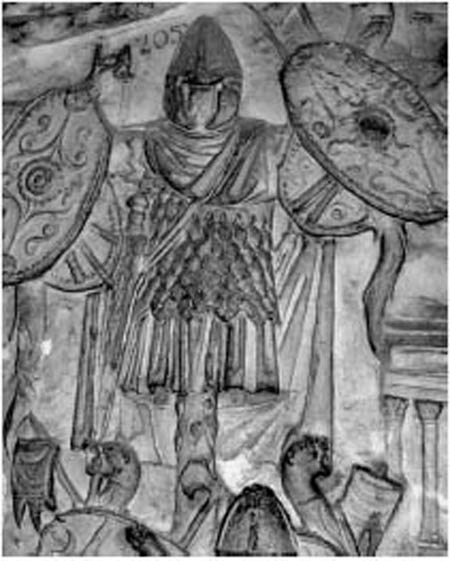
FIG. 9.5. Sulla’s marble victory monuments at Chaeronea and Orchomenus took the form of a typical Roman trophy, a tree draped with barbarian armor and weapons, in this case of the Dacians. Cast of Trajan’s Column, Victoria and Albert Museum, London.
Sulla’s first monument was discovered in 1990, by archaeologist John Camp and students of the American School of Classical Studies in Athens. Their discovery allowed modern historians to pinpoint for the first time the precise location of the ambush with stones. The Greek inscription matches Plutarch’s account. Just below the monument, Camp found a crude rubble wall, the remains of the barbarians’ crushed encampment, still known in Plutarch’s day as “Archelaus.”25
Sulla featured his two trophies on coins issued in Greece (and later in Rome). After his triumph at Chaeronea, Sulla began to refer to himself as Felix (“Lucky”) and bragged in his memoirs that Greek oracles predicted another great victory soon in the same neighborhood. But Mithradates’ wily general Archelaus was still free, with a substantial army and navy. Sulla, still lacking a fleet, was helpless to pursue him. Archelaus sailed here and there among the Greek islands—venturing as far west as Zacynthos across from Italy—requisitioning and raiding more supplies and money at will. Appian remarked that Archelaus and his men returned to their headquarters in Chalcis “more like pirates than soldiers.”26
ORCHOMENUS
Meanwhile, bad news from Rome overshadowed Sulla’s battlefield victory. Under Cinna and Marius, there was a mass slaughter of Sulla’s supporters in 86 BC. Cinna’s newly elected coconsul, Flaccus, was officially named as Sulla’s replacement in the war against Mithradates. Flaccus, inexperienced and unpopular with his troops, was accompanied by a young officer named Fimbria. They were hurrying to Greece with two legions to take over Sulla’s command—and they had orders to make war on Sulla if he resisted. Compelled to turn his back on Mithradates, Sulla had to prepare to fight his Roman rivals. The fortunes of Sulla the “Lucky” were seesawing wildly. As he marched west to meet Flaccus and Fimbria, Sulla received equally alarming news from the Greek front he’d just left behind. Somehow, Mithradates’ forces had regained Boeotia.
In Pergamon, by all ancient reports, Mithradates was appalled to hear the bad tidings from Chaeronea. The disaster took him by surprise and struck fear into the heart of a father already grieving over the death of his son Arcathius. Some in his court suggested that only treachery could account for such lopsided losses. But Mithradates reacted quickly and forcefully. For the first time, he collected taxes in Anatolia. Gathering another enormous army from all his subject lands, he sent his most trustworthy friend from Pontus, Dorylaus, to the rescue.
Dorylaus sailed to Chalcis with a large fleet and 80,000 fresh, highly trained, disciplined soldiers, eager to take back Greece and get even with Sulla for the humiliating losses at Chaeronea. Behind Sulla’s back, Dorylaus and Archelaus, with a combined army of about 90,000 soldiers, secured Boeotia. The two generals decided to camp at Orchomenus, east of Chaeronea. For an army like theirs, with a superior cavalry of 10,000 horsemen, the sweeping, treeless plain along the River Melas was the best battleground in Boeotia. But they made notes to avoid the reedy swamps at the margins of the plain.27
Sulla was forced to turn away from Flaccus and Fimbria and rush back to Orchomenus. Observing the landscape’s advantages and disadvantages, Sulla immediately dug wide trenches that would funnel the enemy into the treacherous marshes. But Archelaus and Dorylaus responded with a bold cavalry charge that sent the edgy Romans into flight. Sulla rode back and forth in the mad dash, but his soldiers were terrified of Mithradates’ fearsome nomad horsemen. Finally, Sulla leaped off his horse, grabbed up a standard, and pushed past his soldiers, bellowing: “Romans, I’ll win an honorable death here without you! When they ask where you betrayed your commander, you’ll have to tell them about Orchomenus!”
His words spurred his men to surge back. In the ferocious fight, both sides struggled bravely. Archelaus’s son Diogenes, a cavalryman, was cut down. The barbarian archers were so hard-pressed by the Romans at close quarters that they couldn’t draw their bows. Grabbing handfuls of arrows, they wielded them like swords to hold off the Roman soldiers. But Archelaus and Dorylaus passed a dismal night collecting their dead. Incredibly, they had lost fifteen thousand men.
Tasting blood, Sulla fell upon the decimated enemy camp the next morning, exhorting his men to finish the job once and for all. He had to make certain that Archelaus could not escape yet again and raise yet another army. Archelaus roused his men and the terrible last battle began. His defenders leaped down from a wooden parapet and stood with their swords drawn against a cohort of Romans, advancing behind their shields. For an excruciatingly long moment no one moved.
The standoff seemed to last forever. Suddenly the spell was broken—a daring Roman soldier dashed out and chopped down the man in front of him. Then all hell broke loose. “There was a great rush and shouting on each side, followed by many valiant deeds,” wrote Appian. Mithradates’ second grand army was driven into the marshes that Archelaus strove to avoid. Many barbarians fell into deep pools and drowned. Others perished as they pleaded for mercy in their strange tongues, mocked by their slayers. The corpses of Mithradates’ warriors choked the stagnant ponds where the Boeotians used to gather reeds for their famous flutes. Their commander, Archelaus, was presumed dead.
Two hundred years after the battle, Plutarch and his fellow Chaeroneans often dragged up from the mud bows and arrows, embossed helmets, bronze shields, fragments of fine armor, and decorated spears and swords, all of barbarian manufacture. Even today, metal remnants emerge from the soggy ground, the only memorial to Mithradates’ Greek liberation warriors from distant lands.
Sulla’s tactical skills and amazing personal power over his troops were factors in the spectacular upsets in Boeotia; his battle-hardened legions’ loyalty and courage constituted another. Mithradates’ infantry was just as valiant and determined, but they suffered from significant disadvantages. The ancient historian Memnon reported that the barbarians did not understand how to manage supply lines; Sulla ambushed them when they carelessly foraged for food. Each barbarian group had its own dialect and distinctive style of fighting. Managing such diverse cultures, groups that had never fought together before, presented problems of coordination and discipline. Dorylaus’s units trained in old-fashioned Greek hoplite combat proved cumbersome and slow in the face of the efficient, fast, and flexible new Roman formations, part of Marius’s military legacy.
Sulla erected another monument to mark this victory at Orchomenus, won against daunting odds. He also minted coins depicting his three victory monuments. And on his meaty, freckled fingers, the signet ring commemorating Sulla’s triumph over Jugurtha was joined by another large agate ring carved with a design depicting his three trophies.28
In 2004, a Greek farmer plowing his cotton field at Orchomenus uncovered Sulla’s victory monument of 86 BC. The farmer scooped up the marble column and broken pieces with a bulldozer and deposited them anonymously at the local archaeological institute. Eventually the farmer was located, and Greek archaeologist Eleni Koundouri unearthed the rest of the trophy. This monument from another of the most spectacular battles in Greek history was more extravagant and much more complete than the one found at Chaeronea in 1990. Standing twenty-three feet high, it also took the form of a branching tree draped with the defeated enemy’s arms and armor. The marble fragments represent a pair of greaves, a breastplate, spears, and other weapons and equipment, including a chariot wheel to commemorate Mithradates’ scythed chariots. The inscription celebrates Sulla’s victory over King Mithradates and his allies, and thanks Aphrodite for the victory.29
After his victory, Sulla spitefully ordered his men to ravage Boeotia, cutting down olive groves and burning vineyards and crops. He did this to take further revenge on the Greek population for supporting Mithradates. But the war was far from over. Sulla still had no idea whether Lucullus had succeeded on his dangerous mission to get a fleet. He also needed to monitor Flaccus and Fimbria’s two legions, coming to take over his command. Sulla’s plan was to set up winter quarters in northern Greece and spend the season building his own ships.
As Sulla had retired exhausted but exultant from the battlefield at Orchomenus, his greatest victory, he was unaware of furtive movement at the edge of the swamp still red with blood of the defeated army. In the waning light of dusk, a shadowy form emerged from the muddy stand of reeds. It was Archelaus. The crafty general had survived the slaughter, hiding for two days in the marshes. Now he headed for the seashore, found a small boat, and rowed alone to Chalcis, his headquarters. Archelaus summoned all the detachments of Mithradates’ army stationed around the Aegean and Anatolia.30