
LIKE a wrestler ready for another bout,” marveled Plutarch, Mithradates “had risen to his feet, despite the blow Sulla had dealt him.” And now, wrote Appian, after his resounding victory over Murena, Mithradates “was at leisure.”
The war for Greece had ended in disaster, with terrible casualties and the destruction of Athens. Yet in a way, the result was an ancient forerunner of what modern military strategists call the “Tet Offensive effect.” The phenomenon was named after a massive assault by the North Vietnamese in 1968 during the Vietnam War. The offensive failed on a grand scale—but the nominally victorious U.S. and South Vietnamese forces were demoralized by the strength and determination of the enemy. The North Vietnamese gained international support and eventually won the war. The “Tet effect” describes a disastrous major military campaign against a more powerful enemy, which nevertheless becomes a public relations victory, with renewed support for what is seen as a righteous cause. The concept of glorious failure, noble defeat, was well known in antiquity: the Spartans at Thermopylae, Hannibal, Aristonicus, and Spartacus are some famous examples. Justin described a Tet-like effect for Mithradates, who “went down in defeat before the greatest generals . . . only to rise again all the more redoubtable for his losses.” In Rome, Cicero sought to account for Mithradates’ remarkable ability to draw reinforcements after so many losses. Somehow, exclaimed Cicero, Mithradates “has done more by being defeated, than if he had been victorious!”1
Sulla’s reign of terror continued in Rome. A great many of Marius’s Populars fled Italy. These exiles—veterans and statesmen who had held high offices under Popular rule—regrouped on the eastern and western frontiers of the empire and raised banners of revolt. Some went to Spain to join Sertorius, the Roman commander leading an insurgent army of native Spaniards. Others joined Mithradates in Pontus. These experienced Roman officers brought six thousand soldiers—a full legion—and trained Mithradates’ new armies in Roman discipline and tactics.
From now on, Mithradates’ war chest no longer paid for ostentatious equipment—which had simply provided rich booty for the enemy. No more lavishly decorated ships with silk canopies and luxurious pools on the decks for entertaining concubines; no more armor, shields, and weapons inlaid with gold tracery and precious stones.
Mithradates maintained peaceful coexistence under the Peace of Dardanus, which he knew he had been lucky to win from a very distracted Sulla. But he was determined to keep his Black Sea Kingdom secure. According to Appian, Mithradates took an army to subdue the Achaeans of northern Colchis. A fierce tribe that claimed descent from Greek heroes of the Trojan War, the Achaeans were notorious for luring ships to wreck on their rocky shores and then sacrificing the sailors to their gods. Fighting in their mountainous terrain was harsh. Mithradates lost a great many men to ambushes and freezing snow. The Achaeans were never defeated; their allegiance could not be counted upon, although some Achaeans later joined Mithradates’ army, and the experience of mountain warfare was valuable.2
Mithradates remained ever vigilant for both opportunity and threat. But for nearly a decade, he ruled in relative peace.
AGATES FOR MY MEAT, STRYCHNINE IN MY CUP
Mithradates loved spectacle and theatricality—he often staged dramatic performances to demonstrate his remarkable ability to dine on poison-laced meat and wine. Such evenings not only provided entertainment but enhanced the Poison King’s carefully crafted reputation of invincibility. And, of course, the morbid proceedings also furthered his experimental research.
Let us imagine one of these banquets. The evening might feature the poisoning of someone condemned to die for a heinous crime—Mithradates followed the “ethical” approach of Attalus III of Pergamon, experimenting only on criminals. In the Greek world, capital punishment was usually carried out with poison hemlock. But Mithradates was systematically studying the effects of known and rare pharmaka, and men on death row were his scientific subjects. In at least one instance, we know that Mithradates received a messenger carrying a letter and package from his friend Zopyrus, the royal physician in Alexandria. Zopyrus’s letter informed Mithradates that the messenger was sentenced to death, and invited the king to test the accompanying antidote on him.3
So, as the guests take their places on couches, turbaned Hindus might charm cobras with sinuous flute music, and Psylli serpent handlers allow themselves to be bitten by Libyan adders. Scythian shamans milk venom from the fangs of a steppe viper. Dipping an arrowhead in the poison, a Scythian archer shoots the criminal, the arrow zipping over the heads of the guests. On another evening, the old root-cutter Krateuas might measure out some dread plant poison. With a flourish, he sprinkles it atop a tasty dish and serves it to another condemned man. Mithradates provides learned commentary as everyone observes the result of the poison. Suspense builds as servants proffer the same dish to the guests—minus the poison, of course. Meanwhile, the dying victims were quickly carried out of sight for secret experiments with antidotes (see plate 1).
With grand gestures and banter, Mithradates awes the guests by swallowing a drop of snake venom. For the climax of the evening, the Poison King invites the guests to salt his own plate of roast lamb or his winecup with arsenic or belladonna. Mithradates was not only a toxicologist; he was a Magus, a magician. Both skills came into play in creating his image of invincibility. With a debonair smile, the Poison King raises his goblet in a toast.4
The reactions of the courtiers and foreign dignitaries to Mithradates’ sensational demonstrations of immunity fascinated the poet and classical scholar A. E. Housman. This verse from his 1896 poem about Mithradates became famous:
There was a king reigned in the East:
. . . . . . . . . . . . . . . . . . . . .
With poisoned meat and poisoned drink
He gathered all the springs to birth
From the many-venomed earth;
First a little, thence to more,
He sampled all her killing store;
And easy, smiling, seasoned sound,
Sate the king when healths went round.
They put arsenic in his meat
And stared aghast to watch him eat;
They poured strychnine in his cup
And shook to see him drink it up:
They shook, they stared as white’s their shirt:
Them it was their poison hurt.
—I tell the tale that I heard told.
Mithridates, he died old.
It was his mastery of poisons and his long life that made Mithradates a household word in Western literature and popular culture. His name is memorialized in the term mithridatism, the practice of systematically ingesting small doses of deadly substances to make oneself immune to them. With some toxins, the process is effective. It is possible to acquire tolerance for levels of arsenic that would kill others, for example, and it was observed in antiquity that some people in Libya, Armenia, or Egypt were unaffected by local venomous insects, scorpions, and vipers. Mithradates also grasped the little-known fact that snake venom can be safely digested if swallowed—it is deadly only if it enters the bloodstream.5
The rising popularity of poisoning in the Roman Empire inspired the Roman satirist Juvenal to joke that murder weapons of “cold steel might make a comeback if people would take a hint from old Mithradates and sample the pharmacopia till they are invulnerable to every drug.” Nearly two millennia later, in “Mithridates,” the poet-philosopher Ralph Waldo Emerson (1803–82) visualized the Poison King calling for more and more poisons to test on himself, from blister beetles (cantharids) to cyanide (prussic acid):
Give me agates for my meat,
Give me cantharids to eat,
. . . bring me foods,
From all zones and altitudes.
From all natures, sharp and slimy,
. . . wild and tame,
Tree, and lichen, . . .
Bird and reptile be my game.
. . .. . .. . .. . .. . .. . .. . .. . .. . .. . ..
Hemlock for my sherbet cull me,
And the prussic juice to lull me.6
MITHRADATES’ SECRET ANTIDOTE
In antiquity, every natural poison—animal, plant, or mineral—was believed to have a natural antidote. Mithradates combined both toxic and beneficial pharmaka into his personal theriac (later called Mithridatium). Traditionally, theriacs combined substances thought to counter poisons. Some common ingredients were cinnamon, myrrh, cassia, honey, castor musk from beaver testicles, frankincense, rue, tannin, garlic, Lemnian earth, Chian wine, charcoal, curdled milk, centaury, aristolochia (birth-wort), ginger, iris (orris root), rue, Eupatorium, rhubarb from the Volga, Hypericum (Saint-John’s-wort), saffron, walnuts, figs, parsley, acacia, carrot, cardamom, anise, opium, and other ingredients from the Mediterranean and Black Sea, Arabia, North Africa, Eurasia, and India. Modern science reveals that some of these substances can counteract illness and toxins. For example, the sulfur in garlic neutralizes arsenic in the bloodstream. Charcoal absorbs and filters many different toxins. The chemical composition of Lemnian earth was recently analyzed and shown to contain toxin-absorbing and antibacterial minerals. Garlic, myrrh, cinnamon, and Saint-John’s-wort are antibacterial. Recent scientific studies of many common Mithridatium ingredients reveal alexipharmic bio-activities in the immune system. Certain plants traditionally used by folk healers in Africa and India can actually neutralize cobra, adder, and viper venoms.7
Building on the work begun by Attalus III, Nicander of Colophon, and others, Mithradates recorded the properties of hundreds of poisons and antidotes in experiments on prisoners, associates, and himself. “Through tireless research and every possible experiment,” says Pliny, he sought ways to “compel poisons to be helpful remedies.” We can imagine Mithradates and his team (Krateuas, Papias, the Magi and Agari healers, and Timotheus, a specialist in war wounds) wearing protective masks made from pig bladders (used by ancient alchemists) and testing, say, the colorless “fiery poison” of Egypt, created by fusing natron (sodium carbonate, common in Egypt) with realgar or orpiment (arsenic). Health-giving essences were compounded with minute amounts of poisons into an electuary, a paste held together with honey. The paste was molded into a pill the size of an almond. The king began each day by chewing his secret theriac tablet with cold spring water. Apparently the concoction caused no serious physical problems and promoted his immune system, since ancient sources agree that Mithradates enjoyed excellent health and sexual vigor throughout his long life.8
After his death, Mithradates’ personal library and papers were taken to Rome, and translated into Latin by Pompey’s secretary Lenaeus (95–25 BC). Pliny, who studied Mithradates’ own handwritten notes, praised his erudition. “We know from direct evidence and by report,” wrote Pliny, that Mithradates “was a more accomplished researcher into biology than any man before him. In order to become immune to poison by making his body accustomed to it, he alone devised the plan to drink poison every day, after first taking remedies.” At the height of his reign, Mithradates “amassed detailed knowledge from all his subjects, who covered a substantial part of the world.” His international library of ethnobotanical and toxicological treatises may have described drugs used by the Druids of Gaul, Mesopotamian doctors, and the works of Hindu ayurvedic (“long-life”) practitioners. The theriac of Sushruta (ca. 550 BC) boasted eighty-five ingredients, and the Mahagandhahasti of Charaka (300 BC) had sixty.9
Mithradates could have studied the alchemical writings of Democritus of Egypt, drawing on King Menes who cultivated poisonous and medicinal plants in 3000 BC, and we know Mithradates corresponded with Zopyrus in Egypt, who shared his “universal remedy” of twenty ingredients. Another scientific colleague was Asclepiades of Bithynia, who founded an influential medical school in Rome. He declined Mithradates’ invitation to work in Sinope but dedicated treatises to the king and sent him antidote formulas.
Perhaps Mithradates sought out the last living members of the Ophiogenes (“Snake people”) near Troy, to learn the secrets of venoms. The Marsi of Italy, whose envoys met with Mithradates in 88 BC, were also known for venom-based pharmaka. We know that the king’s Agari doctors milked the venom of steppe (Caucasian) vipers to make antidotes and medicines. Recently, scientists studying traditional healing practices using Caucasian vipers in Azerbaijan (ancient Baku) discovered that tiny doses can stop life-threatening hemorrhage (as we shall see, this fact, known to the Agari more than two thousand years ago, would save Mithradates’ life). Crystallized Caucasian viper venom is now a valuable medical export.10
The key principle of Mithradates’ theriac was the combination of beneficial drugs and antitoxins with tiny amounts of poisons, the approach followed by Attalus and Hindu doctors. Myriad poisons were known in antiquity, from vipers, scorpions, and jellyfish venoms to the deadly sap of yew trees and crimson crystals of cinnabar. Pliny described about seven thousand venific substances in his encyclopedia of natural history and listed scores of plants (some toxic themselves) said to counter them, such as scordion, agaric mushrooms, artemesia, centaury, polemonia, and aristolochia.11
Arsenic—the notorious “powder of succession”—would have been the first poison Mithradates sought to defend against. Arsenic interferes with essential proteins for metabolism. In small doses, however, enzymes produced by the liver bind to and inactivate arsenic. Taking minuscule amounts over time causes the liver to produce more enzymes, allowing one to survive a normally lethal dose. Might a similar process work with plant poisons? Mithradates had observed tolerances to poison plants in rats, insects, birds, and other creatures. Pliny and Aulus Gellius stated that the poison blood of Pontic ducks was included in his Mithridatium. It is now known that some species of ducks, larks, and quails eat poison hemlock without harm. Because they do not excrete the toxic alkaloids, their blood and flesh are poisonous.12
What other poisons were included in the original Mithridatium? Perhaps toxic honey from Pontus—bees were immune to the poison nectar, and in tiny amounts it was considered a tonic. Reptiles—toxic skink, salamander, or viper—were said to be part of Mithradates’ recipe, based on the ancient belief that all poisonous creatures produce antidotes to their own toxins in their bodies. Recent scientific experiments show that nonfatal doses of snake venom can stimulate the immune response and allow humans to withstand up to ten times the amount of venom that would be fatal without inoculation. A similar process works with some insect stings and a variety of toxins. Surprising new studies of a “counterintuitive” process called hormesis show that very low doses of certain toxins activate a protective mechanism, so that when a larger dose is encountered, it is not as damaging. As the scientists describe this new concept—remarkably akin to Mithradates’ own hypothesis—minute doses of poison substances can be beneficial, analogous to a vaccine.13
Saint-John’s-wort, Hypericum, listed in many Mithridatium recipes, might help solve the ancient riddle of Mithradates’ immunity to poisons. Molecular scientists have recently discovered Hypericum’s astounding antidote effect. This herb activates the liver to produce a potent enzyme that can neutralize literally thousands of potentially dangerous chemicals. The scientists suggest that if Saint-John’s-wort was included in Mithradates’ antidote, it would have stimulated a powerful “chemical surveillance system” on “high alert,” able to sense and break down “otherwise deadly doses” of many different toxins.14
After Mithradates’ death, imperial doctors in Rome claimed to possess the top-secret Mithridatium formula. Poisonings and fears of poisoning had become rife in Rome—as dictator, Sulla had enacted strict laws against poison sellers. “If you want to survive to gather rosebuds for another day,” commented Juvenal, “find a doctor to prescribe some of the drug that Mithradates invented. Before every meal take a dose of the stuff that saves kings.”15
How might Mithradates’ recipe have come into the hands of the Roman emperors? One possibility is that Mithradates entrusted the secret to his friend Asclepiades, the most famous doctor in Rome. A doctor named Aelius prescribed Mithridatium for Julius Caesar, who was in Pontus only sixteen years after Mithradates’ death. Aelius was a colleague of Asclepiades and perhaps knew Mithradates himself.16
An intriguing inscription from the time of Augustus, Rome’s first emperor (b. 63 BC), was discovered near the Appian Way. It describes one L. Lutatius Paccius (a non-Roman name) as an “incense-seller, from the family of King Mithradates.” Reinach assumed that L. Paccius was a liberated slave or relative of Mithradates who was the king’s “chief perfumer.” But there is little doubt that Paccius, like other ancient apothecaries, sold more than aromatics; why else might an “incense” purveyor advertise his relationship to the legendary Poison King? (Poisons had been strictly regulated since Sulla’s legislation, which explains why an apothecary might advertise only aromatics for sale.) Many of Mithradates’ family and friends ended up in Italy. The inscription suggests that Paccius might have known (or claimed to know) the original Mithridatium recipe and produced this famous “trademark” antidote in Rome. In fact, another Paccius, probably this man’s son, later made a fortune selling a very special medicine in Rome. This Paccius family formula was a profound secret, and Paccius the Younger bequeathed it to the Emperor Tiberius, Augustus’s successor in AD 14.17
Was the Paccius family formula the basis for the later imperial Roman recipe, said to improve on Mithradates’ original, compounded by the imperial doctor Andromachus for Nero? Andromachus’s Mithridatium had 64 ingredients; he replaced minced lizards with venomous snakes and added opium poppy seeds. Italian archaeologists made an exciting discovery at a villa near Pompeii (AD 79) in 2000. Analysis of the residue inside a large vat consisted of reptile remains and several medicinal plants, including opium poppy seeds. The archaeologists concluded that the vat might have been used to prepare Andromachus’s Mithridatium.18
After Nero (d. AD 68), every Roman emperor religiously ingested what his doctor claimed was a version of the Poison King’s own personal antidote. Recipes multiplied—more and more costly and rare ingredients were added along the way. A century after Mithradates’ death, Celsus in Gaul listed 36 ingredients mixed into a concoction weighing nearly three pounds, good for about six months’ worth of pills, to be taken with wine. In AD 170, Galen of Pergamon, who prescribed a liquid Mithridatium for the emperor Marcus Aurelius, added more opium and fine vintage wine, improving the flavor and ensuring that his patient drank his medicine every day. Later medieval recipes contained as many as 184 ingredients.19
Arabic (tiryaq-i-faruq, mithruditus) and Persian (daryaq) theriac recipes in ancient and medieval Islamic toxicology manuscripts followed Mithradates’ concept of combining poisons with antidotes. In his treatise on tiryaq, Averroes, the learned Spanish-Arabic philosopher-physician (b. 1126), cautioned against the prolonged use of theriac by a healthy person, warning that it “could actually transform human nature into a kind of poison,” an allusion to paranoid despots of his day who were obsessed with poisoning. In AD 667, Islamic ambassadors from Rum (or Rumieh, the Byzantine Roman Empire) presented the Tang emperor of China with a gift of the Mithridatium theriac (Chinese tayeqie, diyejia). It was described as a dark red lump the size and shape of a pig’s gall bladder. Chinese manuscript illustrations show foreigners wearing Persian-style clothing offering these Mithridatium pills as tribute to the emperor.20
In Europe, from the Middle Ages on, Mithridatium was eagerly ingested. European laws required apothecaries to openly display all the precious, expensive ingredients and to concoct Mithridatium in the public squares. For more than two millennia after the death of Mithradates, aristocrats and royalty, from Charlemagne and Alfred the Great to Henry VIII and Queen Elizabeth I, swallowed some version of the Mithridatium faithfully every day of their lives. The royal mixture was kept in ornate apothecary jars illustrating scenes from the life of Mithradates (see fig. 15.3, plate 4). There were also cheaper versions of Mithridatium for the poor. The Poison King’s universal antidote became the most popular and longest-lived prescription in history, available in Rome as recently as 1984.21
Most of the surviving recipes for theriacs in Latin, Greek, Hebrew, Indian, Arabic, and early Islamic medical writings include an array of plant, animal, and mineral pharmaka to counteract toxins and disease. Aside from Andromachus’s addition of chopped vipers for Nero’s antidote, however, most of these theriac recipes did not deliberately include poisons. Yet the ancient writers agreed with Pliny that Mithradates achieved immunity to poisons by ingesting deadly substances along with a cocktail of specific or general antidotes. In Pliny’s words, he “thought out the plan of drinking poisons daily, after taking remedies, in order that sheer habit might render the poisons harmless.”22
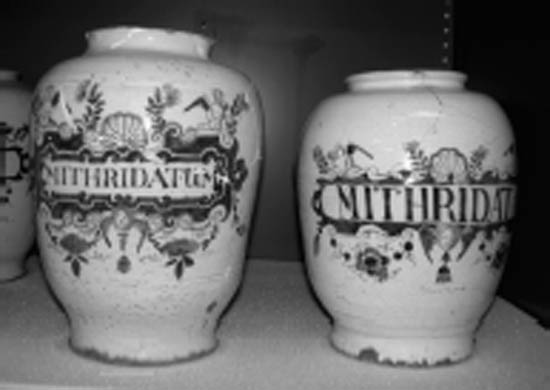
FIG. 11.1. Mithridatium jars, sixteenth–seventeenth century. Wellcome History of Medicine Museum collections, London, photo courtesy of Christopher Duffin.
Although we can guess some of the counteracting drugs that Mithradates is likely to have put in his formula, his method of calibrating minuscule doses of poisons and exactly what they were remain a mystery. Mithradates worked in secrecy. The original lost recipe was believed to contain more than fifty ingredients, many of them expensive substances from faraway lands. Oddly, however, the notes translated after his death revealed only a few commonplace ingredients, with the exception of the blood of Pontic ducks. Even the learned naturalist Pliny expressed surprise at the lack of arcane or toxic substances in the Mithradatic notes he studied. He ridiculed a scrap of paper in the king’s handwriting: “Pound together two dried walnuts, two figs, and twenty leaves of rue with a pinch of salt: he who takes this while fasting will be immune to all poison for that day.” As Pliny remarked, this mundane recipe cannot be taken seriously; some modern scholars suggest it was a forgery or hoax.23
So what happened to Mithradates’ formula? Several possible explanations come to mind. The archives taken to Rome may have recorded only Mithradates’ earliest experiments, superseded by successful tests whose records we do not have. The genuine records could have been lost or hidden during the chaos of the Mithradatic Wars. The documents may have been encrypted. Ancient alchemists wrote in codes or obscure languages; Mithradates possessed the linguistic skills to facilitate this. Perhaps the real formula was kept secret by the imperial Roman doctors who inherited Mithradates’ papers or Paccius’s recipe, but was later forgotten or lost. Maybe written versions of the perfected formula were destroyed on Mithradates’ orders, or entrusted only to closest friends and allies, such as Tigranes, who, like Mithradates, enjoyed robust health and an extremely long life. Perhaps it was destroyed when Callistratus, Mithradates’ personal secretary, was murdered by Roman soldiers. Pompey might have burned some of Mithradates’ archives, as he did with Sertorius’s papers. Or—as suggested by historian Alain Touwaide—maybe Pompey obtained the recipe but kept it secret within his circle.24 Finally, the instructions for the Mithridatium may never have been written down; perhaps they were recorded only in Mithradates’ prodigious memory.
Unless new evidence emerges—say, a verifiable recipe on papyrus or stone, or sealed jars of the king’s own Mithridatium containing residue, or Mithradates’ mummified corpse sufficiently preserved to allow an autopsy and hair and bone sampling—the Poison King’s universal antidote is irretrievable. Yet Mithradates’ ambitious goal of creating a “universal antidote” lives on. Serguei Popov, a top scientist in the ultrasecret Soviet bioweapons program (based in the homeland of the Agari), defected to the United States in 1992. Popov now seeks to perfect a broad-spectrum biodefense, a “universal” antidote to promote immunity to a wide range of biotoxins and “weapons-grade” pathogens. Like the Janus-faced pharmaka of the Mithridatium, the materials Popov works with carry the potential for great harm or great good.25
Mithradates took further precautions against assassination by poison, employing guards in his kitchens and royal tasters. Some metals and certain other crystals and stones were said to detect—even neutralize—poison in wine or food. Mithradates and his best friends surely owned “poison cups,” chalices of electrum, a gold and silver alloy. A goblet of electrum revealed the presence of poison when iridescent colors rippled across the metallic surface with a crackling sound, apparently the result of a chemical reaction. Red coral, amber, “adamas,” and glossopetra (“tongue stones”) were thought to have magical properties against poison. Tongue stones (fossilized giant shark teeth from limestone deposits) would “sweat” or change color on contact with poison; ground into power, they deactivated poison. In fact, the calcium carbonate in fossils does react with arsenic. In a chemical process called chelation, the arsenic molecules are mopped up by the calcium carbonate.26
Mithradates tested the nature of poisons for many reasons besides immunity. Which poisons were best for efficient, undetectable assassination? What if one found oneself in the situation of Hannibal or Jugurtha, with enemies closing in and no escape route? Which poison was ideal for suicide? We know that Mithradates carried suicide capsules and distributed them to Dorylaus, his generals, and close friends. Those capsules, concealed in rings, bracelets, amulets, or sword hilts, obviously contained an extremely fast-acting, relatively gentle, lethal poison with no known antidote.27
AGATES AND ART
Mithradates’ dominions were rich in mineral resources. Perhaps toxic pigments such as red cinnabar, yellow orpiment, blue azurite, and green malachite led to his fascination with gemology, the magical properties of precious metals and gems. Mithradates himself wrote a treatise on the powers of amber, sacred to the Sun. He corresponded with the leading gemologist of the day, Zachalias, a Jew in Babylon who dedicated his treatises to the king. Mithradates was especially fond of agates, beautiful translucent forms of chalcedony. Gazing on agates’ colored bands and speckled, swirling patterns was thought to bring pleasant dreams; agates from Sicily were said to repel scorpions; and the Magi advised athletes to wear red agates ro become invincible. Zachalias recommended wearing a ring of heliotrope (“sun reflecting,” a green jasper agate flecked with red iron oxide) to make one a convincing speaker. Mithradates often gave agate rings with his likeness to his ambassadors, to help them argue his case before the Romans and others.28
Mithradates’ vast dactylotheke—collection of agate rings—was renowned. In his love of carved gemstones, Mithradates followed Alexander, the first to inspire the popularity of glyptics, the intricate art of engraving animals, mythic scenes, and other images on intaglio seals and cameos (reliefs on sardonyx, a multilayered agate). The only artist permitted to create gem portraits of Alexander was his personal engraver, Pyrgoteles. Like Alexander, Mithradates patronized his own highly skilled engravers and artisans.
A connoisseur of precious objets d’art, Mithradates owned thousands of cups, pitchers, plates, and bowls of polished agate from the Rhodopi Mountains, Crimea, and Colchis, and onyx and rock crystal from Cappadocia. His treasury at Talaura alone held two thousand onyx and gold drinking cups, wine kraters, and drinking horns. A precious burnished agate pitcher now in the Louvre was believed to have belonged to Mithradates. Artisans achieved its unique dark brown coloring by slowly heating Rhodopian agate in honey.
The rare beauty of Mithradates’ collection inspired a fashion for agates among the Roman aristocracy. Mithradates’ dactylotheke ended up in Roman hands after his death in 63 BC. Pompey dedicated several large chests of his carved gems to Rome’s Temple of Jupiter; Julius Caesar placed six of Mithradates’ agate rings in the Temple of Venus; and other rings were dedicated to the Temple of Apollo. Some of Mithradates’ agates and miniature gem portraits have survived. During the Crusades, the Venetians plundered Constantinople, dispersing many fine Mithradatic agates among European royalty. Agates from rich hoards and royal tombs of Mithradates’ friends, envoys, and concubines, and some belonging to Mithradates himself, found their way into Catherine the Great’s personal dactylotheke of ten thousand ancient cameos. The Hermitage Museum in St. Petersburg now stores a large collection of exquisite cameos, many taken from wealthy Mithradatic-era tombs around the Crimea.29
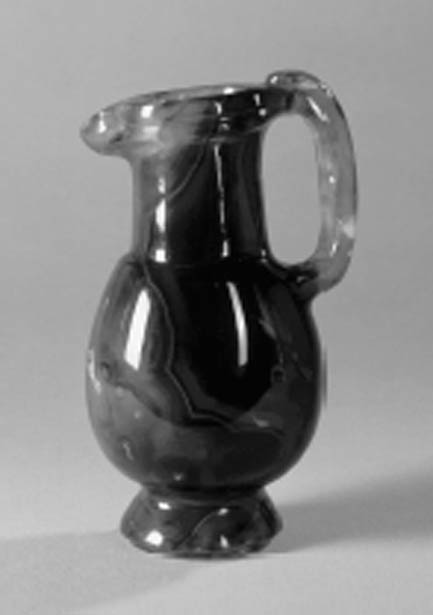
FIG. 11.2. The Mithradates vase. Polished and carved sardonyx (Rhodopian agate), 7 inches high. The burnt-caramel coloring was achieved by heating with honey. Louvre. Réunion des Musées Nationaux/Art Resource, NY.
Mithradates also amassed bejeweled caskets, golden horse trappings, curios and ornaments, armor and weapons set with precious stones, jewelry, vintage robes, carpets and tapestries, and unique scientific instruments. He inherited antique couches and chairs from Darius I, and Mithradates himself enjoyed making furniture of maple and nut woods. On state occasions, the king sat on a fancy throne under a silk canopy, carried an ornate scepter, and rode in a chariot studded with gems. The opening of the Silk Road from India and China (120 BC) to the Black Sea meant that he could acquire silks, brocades, jade, cinnabar, rare spices, exotic drugs, and hardy camels from Bactria and Margiana (Afghanistan and Turkmenistan). An admirer of fine art, Mithradates could afford the highest quality and the best artists (Reinach believed that Mithradates himself had the “soul of an artist”). His coin portraits are remarkable for their clarity and beauty, vigor and kinetic energy. Their superb artistic quality advertised Mithradates as a discerning patron of high culture. Some coin profiles, with windswept hair, evoke a futuristic illusion of speed and progress, hinting at Mithradates’ ability to escape danger (see figs. 9.1, 12.1, 13.2).30
A handsome bronze krater, over two feet high, shows off the skills of Mithradates’ craftsmen—and reveals the complex destinies of his treasures. Part of his largesse to supporters in Greece, this inscribed krater was given to a gymnasion (college, probably in Athens) early in his reign. The members called themselves the Eupatoristai after their patron Eupator, who promised to liberate Greece. During the First Mithradatic War, this krater was apparently plundered by Sulla and taken to Rome. Two hundred years later, the krater belonged to the emperor Nero, who kept it in his luxurious seaside villa at Antium (Anzio). Unearthed from the villa’s ruins by Pope Benedict XIV in the eighteenth century, the krater is now a centerpiece in Rome’s Capitoline Museum.31
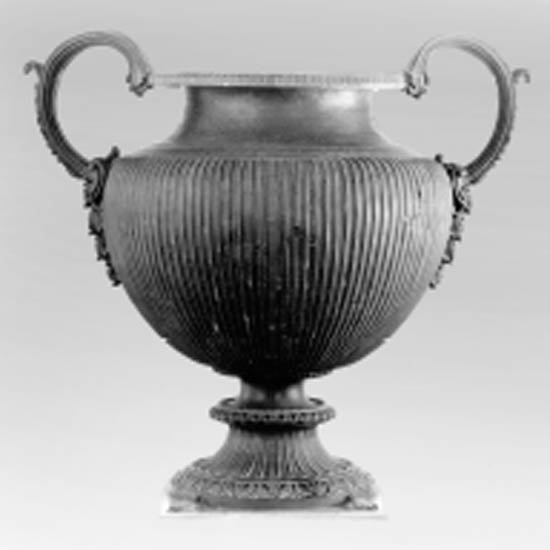
FIG. 11.3. Bronze krater of Mithradates, 27 inches high, 120–63 BC, discovered in Nero’s Villa, Anzio, eighteenth century, Benedict XIV donation MC1068. Capitoline Collection, Rome.
During Mithradates’ reign, cosmopolitian Pontus on the Black Sea became the intellectual and cultural capital of the ancient world, drawing sophisticated artists and scholars from many lands. A lover of Greek poetry, literature, music, and theater, Mithradates sponsored plays, dramatic readings, and musical contests. Tyrannio the Grammarian, a leading poetic orator, was one of many stars in Mithradates’ court. The modern Greek poet Constantine Cavafy (b. 1863) imagined the private thoughts of a Cappadocian poet in Mithradates’ retinue. In Cavafy’s poem, this poet is penning an epic about Darius I, commissioned by Mithradates. Suddenly he is interrupted by a servant shouting that the Roman army is coming. The terrified poet realizes that Mithradates’ interest in poetry will be set aside in favor of war. Before taking cover, the poet searches for the perfect phrase to describe the Persian king and, by implication, Mithradates. The final words on the page: “arrogance and exultation.”32
A MUSICAL INTERLUDE
As we’ve seen, an evening with the king might feature any manner of entertainments, from rowdy drinking contests and shocking poison pageants to elegant cultural events. At one of the royal banquets, a musician brought along his pretty daughter. She played the cithara for Mithradates while he was savoring a mellow old wine. Female harpists were unusual. Mithradates was charmed, perhaps recalling that Aristonicus’s mother had played the cithara. The girl’s Macedonian name, Stratonice, was a good omen (“Victory in War”). Plutarch says that Stratonice made “such a swift conquest that Mithradates immediately took her away to his bed,” without a word to her father.
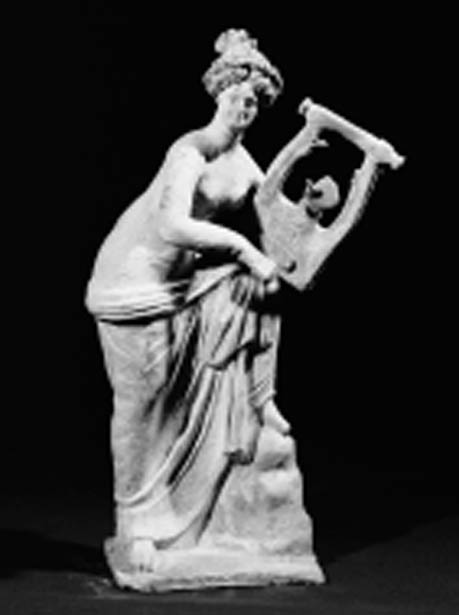
FIG. 11.4. Stratonice may have resembled this flirtatious cithara player, Greek terracotta, ca. 200 BC. Erich Lessing/Art Resource, NY.
The next morning the distraught father awoke to find his tables laden with silver beakers and golden dishes. Servants and smiling eunuchs held out beautiful garments. Outside his humble house stood a fine horse caparisoned like those of the king’s knights. Assuming the fairy-tale trappings were a mean practical joke, the man tried to run away. The retainers explained the situation. Stratonice was now Mithradates’ favorite concubine, held in such high esteem that the king was bestowing the estate of a rich, recently deceased friend upon her father. The dubious musician was finally convinced. To the good-natured amusement of Mithradates and the townspeople, Stratonice’s father donned his new purple robe and rode through the streets on his handsome horse, shouting “All this mine! Mine! I’m mad with joy!”33
KABEIRA
Doctors, pharmacologists, botanists joined the artists who flocked to Pontus, along with architects, scientists, and military engineers, such as Niconides of Thessaly and Callimachus, who designed fortifications, catapults, siege machines, and other innovative projects. Not all of these scientists’ bold technological experiments were successful—remember the collapsing sambuca at Rhodes and the catastrophic Nike deus ex machina at Pergamon. But the ambitious construction projects at Kabeira were striking examples of Mithradates’ scientific interests and unlimited wealth.
Young Mithradates had been struck by the natural beauty and defensibility of Kabeira, surrounded by steep mountains and forests of beech, maple, walnut, pine, and spruce, on the Lycos River. There were important cinnabar mines (toxic mercury ore used for pigments). Perhaps the Poison King knew a useful toxicological fact that modern scientists have only recently discovered, that mercury in the soil here taints the local wild mushrooms. On a remote rocky peak, Mithradates constructed Kainon Chorion (“New Castle”), a fortified treasury for precious valuables. The vaults contained not only gold and silver and priceless artworks, but also Mithradates’ private papers, court archives, and personal correspondence. Strabo, who traveled there, said it was about 200 stades (about 25 miles) north of Kabeira. In 1912, the ruins of this citadel were discovered, complete with underground stone staircases.34
At Kabeira, Mithradates built towers to confine his younger sisters Nyssa, Roxana, and Statira, sentenced to lifelong spinsterhood. The king’s new lover, the cithara player Stratonice, became the lady of Kabeira: perhaps their son Xiphares was born here. Mithradates loved to relax at this luxurious, secure residence. The well-watered grounds, with willows, poplars, grape arbors, and apple trees, were surrounded by extensive gardens where the royal botanists tended plants and ducks nibbled hellebore and hemlock. Mithradates maintained a large zoological garden and game park at Kabeira, for rare creatures from far-flung allies and trading partners: ostriches, cobras and scorpions, crocodiles, pheasants from Colchis, Bactrian camels, perhaps an Indian elephant and tigers. Mithradates and Dorylaus and their friends stayed at the hunting lodge and chased rabbit, partridge, quail, fox, lynx, bear, and boar. The king modeled these lavish features on the Persian gardens, zoos, and hunting parks created by Cyrus, Xerxes, and Darius. He was also following the example of Alexander, who kept an exotic menagerie of lions, bears, mongooses, and ostriches.
One of the most striking features of Kabeira was a very high waterfall. The prodigious force and volume of the waterfall inspired Mithradates and his engineers to harness the rushing water. They constructed the first water-powered mill. It was described by Strabo, who observed the mill or its ruins after the Mithradatic Wars. Until this invention of the water mill, humans and oxen had laboriously turned heavy grindstones to mill grain. After Strabo wrote his description of Mithradates’ mill at Kabeira, water-mill technology spread to Italy and Europe.35
MASTER OF LANGUAGES
Mithradates’ dazzling memory and facility with languages were legendary in his own time (and a book in several languages is still called a “mithridates”). The king was naturally endowed with these gifts from childhood. But he may also have benefited from special memory techniques taught by the leading philosopher in his court, Metrodorus the Roman Hater. Metrodorus invented a memory device based on the Zodiac and mythological stories. The twelve constellations were subdivided into 360 storage compartments, each “box” a category of information. This technique could be invaluable for toxicological experiments and languages.
Mithradates far excelled Cyrus the Great, who knew the names of all his officers and satraps. Only one other individual in antiquity had linguistic abilities that even approached those of Mithradates. According to Plutarch, Queen Cleopatra of Egypt “spoke many languages and gave audiences to most foreign ambassadors without the help of interpreters.” She knew Greek and Latin, and some Ethiopian, Coptic, Hebrew, Median, Arabic, Syrian, and Persian. Mithradates was reportedly so fluent in the languages of his subjects and soldiers that he never required interpreters. Aulus Gellius remarked that “he was thoroughly conversant in the dialects of the 25 nations that he ruled, and spoke each language as if it were his native tongue.” Pliny, who personally studied Mithradates’ library and letters, declared, “Mithridates spoke or read the languages of 22 nations; he could address and listen to the petitions of all of his subject peoples without interpreters.” Valerius Maximus cited Mithradates’ linguistic proficiency as a shining example of “industrious study.”36
Mithradates’ international court, allies, and armies presented unique opportunities. Consider Colchis: this region was said to have more than 100 tribes, each with a different dialect—Roman traders in Colchis required the services of 130 interpreters, according to Pliny. In the lands south of Colchis, 26 different tongues were spoken. It is unlikely that Mithradates learned every single dialect of these remote places, but he could make himself understood by most of his subjects.
Which languages did Mithradates speak or read with ease? These are certain: Greek, Macedonian, Persian, Latin, Aramaic/Hebrew, Parthian, Armenian, Old and New Phrygian, Cappadocian, and the Gaulish dialect of his Galatian lover Adobogiona. Other languages may have included Avestan (Old Iranian, used in Zoroastrian prayers); Sanskrit (Hindu medical texts); Egyptian and Punic; Celtic/Gallic (perhaps Allobrogesean, the language of his bodyguard Bituitus). He knew some Anatolian tongues, such as Carian, Mysian, Isaurian, Lydian, Lycian (and Pisidian), and maybe had a smattering of Syriac, Elamite, and Sumerian (used in religious texts of the Seleucid era). He could have learned Italian dialects, Marsic, Oscan, and Umbrian; Thracian (spoken by many of his cavalry regiments; and Getic (spoken in Tomis on the Danube). Other possibilities include vestigal forms of Assyrian or Hittite and dialects of Colchis, Sarmatia, and Scythia.
Mithradates’ ease with languages meant that he could receive and send messages in private, without risking wide knowledge of his dealings. In the peaceful interlude after the treaty of Dardanus, the king reigned uneventfully, shoring up his Black Sea Empire, building new strongholds, training armies, seeking new allies, and considering strategies vis-à-vis Rome.37 Meanwhile, what were his friends and foes up to?
TIGRANES THE GREAT, KING OF KINGS
The Romans now controlled Bithynia and western Anatolia. To collect the massive fine of 20,000 talents imposed by Sulla, tax collectors returned to prey on Anatolia. Plutarch compared them to “harpies, stealing the food of the people,” causing “unspeakable and incredible misfortune.” In fact, Sulla’s fine had been paid off. Roman creditors had already made a profit of 20,000 talents—their exorbitant interest rates had inflated the total public debt to an astronomical 120,000 talents. Anatolian families were forced to sell their young sons and virgin daughters into prostitution and slavery; towns sold sacred statues and temple dedications. The Roman creditors were vicious, torturing debtors before selling them into bondage. The land was also oppressed by the greed and violence of the two occupying Roman legions who had run wild under Fimbria and Murena.38
Just as Mithradates had anticipated, Galatia, the buffer zone between Pontus and Bithynia, allied with Rome. Cappadocia remained uneasily divided between Mithradates and Ariobarzanes, who owed his crown to Sulla. Mithradates’ ally and son-in-law Tigranes of Armenia had taken over Syria. After violent intrigues among the Syrian king Grypos and his murderous relatives, the Syrians looked abroad for a stable monarch. They wanted to invite Mithradates to rule Syria, but others (perhaps Mithradates himself) worried that this might attract the attention of Rome. In 83 BC, the Syrians chose Tigranes of Armenia to be their king.
Tigranes was powerful and imperious. After the Peace of Dardanus, the title “King of Kings” was up for grabs. Tigranes took it. He now ruled a kingdom that stretched from Syria to the Caspian Sea, from Artaxata to Mesopotamia. Tigranes’ armies swelled with divisions from Arabia, Caucasia, and central Asia, but Rome had paid little attention since Sulla turned Tigranes out of Cappadocia in 95 BC. The new King of Kings was building a magnificent fortified city for himself on the Tigris River, Tigranocerta, “City of Tigranes.”39
SULLA: THE PERFUMED CORPSE
In about 80 BC, Mithradates sent ambassadors to Rome, hoping to sign the peace agreement of five years earlier. But Ariobarzanes had complained to Sulla that Mithradates still held part of Cappadocia. Sulla ordered Mithradates to give it up, as agreed at Dardanus. Mithradates complied and withdrew his army. He dispatched his ambassadors back to Rome, ready to formalize the treaty.
But in the meantime Sulla had unexpectedly resigned his dictatorship. The man so feared as a monstrous tyrant resumed his old lifestyle, drinking and carousing with musicians and prostitutes. At age sixty, Sulla succumbed to a mysterious, gruesome disease (78 BC). According to Plutarch, Sulla’s bowels rotted, corrupting his entire body into a mass of worms. Relays of servants worked to scrub away the teeming maggots. Sulla spent hours in the baths, “but the vermin defied all purification.” Upon Sulla’s death, his young associate Pompey took the body to Rome for cremation. To mask the stench, Sulla’s female friends contributed vast quantities of spices and perfumes: these alone required 210 litters in the funeral cortege. A large figure of Sulla himself was molded out of frankincense and cinnamon and placed next to the corpse on the pyre. On the day of the funeral, glowering clouds dumped heavy rains. According to Plutarch, everyone heaved a sigh of relief when the rain lifted long enough for the flames to consume the repulsive remains.40
Mithradates’ reaction to the news of Sulla’s dreadful affliction and death is unknown, but his feelings must have swung between schadenfreude and apprehension. Mithradates’ envoys came home again with no official agreement with Rome. The Senate was too preoccupied to meet Mithradates’ ambassadors—or were they hostile? In fact, many in Rome considered the Mithradatic Wars unfinished. Mithradates may have compared his uncomfortable situation to the tragedy of Jugurtha in North Africa. Jugurtha had struggled in vain to reach a viable peace with Rome, but the Senate repeatedly refused to sign the terms of his surrender, and in the end he was betrayed to Sulla and murdered.
By all accounts, Mithradates had lived up to the terms of the Peace of Dardanus. He had made good-faith efforts to formalize the treaty with the Senate in Rome.41 He complied with Sulla’s last demand to leave Cappadocia. His actions certainly appear to have been those of a man desirous of peaceful equilibrium. Trying to deal with the Republic as it was thrashing about in its death throes was frustrating, nerve-wracking. But the situation also presented interesting possibilities for a man as ambitious, resourceful, and opportunistic as Mithradates.

FIG. 11.5. This Roman portrait of Sulla seems to express cruelty and corruption. Staatsliche Antikensammlungen und Glyptothek, Munich
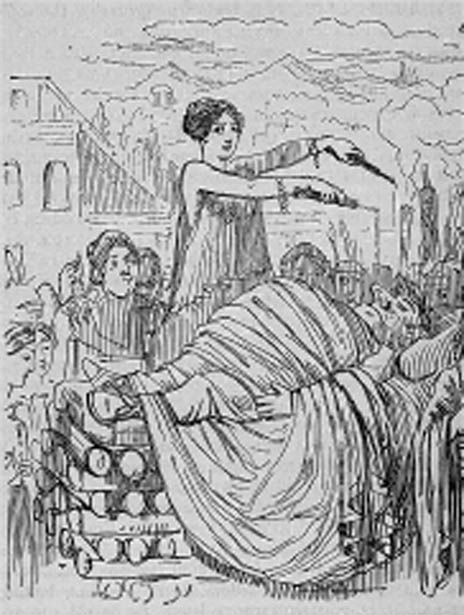
FIG. 11.6. Perfuming the corpse of Sulla. Caricature by John Leech, in The Comic History of Rome by Gilbert Abbott A Beckett, 1852.
CAPPADOCIA
Mithradates conferred with his old ally Tigranes. With Sulla dead, Rome was in no position to enforce the still-unsigned treaty. The two monarchs agreed that Tigranes should invade Cappadocia. This time, they intended to succeed.
The Armenian army was massive. Tigranes drew up 120,000 foot soldiers and many ranks of war chariots. His general Mithrobarzanes led a hard-core cavalry, 12,000 strong. Tigranes’ Ayrudzi (“horsemen” in Armenian) were mostly Parthian-style cataphracts, knights in chain mail riding large, heavily armored Nisaean horses. The historian Sallust praised Armenia’s cavalry as “remarkable for the beauty of its steeds and armor.” Tigranes also commanded 12,000 mounted archers, deadly accurate at more than two hundred yards—and their arrows were tipped with poison for good measure.
Jewish historian Josephus gave the figure of 500,000 for Tigranes’ entire army, which included all the camp followers: men who tended the camels and mules loaded with baggage, weapons, provisions, and chests of gold and silver; trailing families and servants; shepherds with herds of cattle, sheep, and goats to feed the thousands. Tigranes’ multitudes were likened to a “swarm of locusts or the dust of the earth.”
Tigranes marched into Cappadocia: he met no resistance. According to the terms of Tigranes’ agreement of 95 BC with Mithradates, the land of Cappadocia fell to Pontus, while Tigranes seized all the spoils and captives. Tigranes’ army rounded up 300,000 Cappadocian men, women, and children. They were not harmed and families were kept intact; they were even allowed to keep a few possessions and animals. This great mass of uprooted people was herded south to populate Tigranes’ fabulous new city on the Tigris. Tigranes also moved captive populations of Greeks from Cilicia, Jews from Palestine, and nomadic Arabs to Tigranocerta. This forced transfer of whole populations was a very large-scale example of an age-old practice of powerful conquerors.42
SERTORIUS AND THE WHITE FAWN
The disintegration of Rome’s foreign policy during the civil wars had allowed the pirate fleets to “multiply by tens of thousands” in the Mediterranean Sea. The pirates—always seeking loot and now a great military force—were allied with Mithradates and with Sertorius in Spain. No Roman ships were safe, a significant advantage for both men. In one of his orations in Rome, Cicero described how Mithradates and Sertorius corresponded through intelligence couriers aboard pirate corsairs.43
Sertorius sent two military strategists to Pontus, Lucius Magius and Lucius Fannius. They encouraged Mithradates to imagine a scenario in which the rebellions in Spain and Anatolia could succeed. They painted a rosy future of a reasonable Roman empire, led by Marius’s moderate Populars, an empire that would be content to rule the western Mediterranean while Mithradates ruled his Black Sea Empire.
The last hope of the Populars, Sertorius was a master of ambush, disguise, and guerrilla warfare. He had won military honors (and lost an eye) in Gaul and helped put down the Marsi revolt in Italy. As rebel governor of Spain, Sertorius established a Senate-in-exile for fugitive Marius supporters. Even though he dreamed of retiring to the idyllic Canary Islands, “far from tyranny and endless wars,” he agreed to head the Spanish resistance movement and was winning battles against legions sent from Rome. Good at languages, Sertorius was a courageous revolutionary leader beloved by his soldiers and the Spaniards.
One day, a Spanish hunter presented Sertorius with a pure white fawn. Wearing a garland of blossoms, the fawn followed the stern general around camp, to the delight of his men. This little albino doe was sent by the goddess of war, Diana (Artemis), declared Sertorius. She slept in his tent and whispered to him, warning him of dangers. Whenever his spies reported a victory, Sertorius kept it secret. He brought out his white doe, assuring his soldiers that she had predicted success. The next day, he would publicly announce the victory to his men, thereby fulfilling her forecast.44
THE THIRD MITHRADATIC WAR BEGINS
Sertorius was in many ways a Roman counterpart to Mithradates. The civil wars had “filled Sertorius with venom” against oligarchic Rome. As governor of Spain, Sertorious had become disillusioned with the greed and harshness of Roman tax officials. Like Rutilius Rufus in Anatolia, Sertorius sympathized with the native peoples embittered and oppressed by Rome’s administration of the province. Because he reduced taxes and governed mildly, the Spaniards invited him to lead their revolt against Sulla. As Plutarch described Sertorius, his charismatic personality mirrored that of Mithradates. Sertorius “inspired his followers with fresh hopes, offered them new adventures, and kept them united in spite of hardships.”
Sertorius’s prestige had spread throughout the Mediterranean world. Traders, pirates, and envoys from Spain regaled Mithradates with tales of Sertorius’s victories. Mithradates’ Roman advisers compared Sertorius to Hannibal and convinced Mithradates to ally with him. “If you, the most powerful king in the world, were to combine your strength with the world’s most successful general,” they promised, then Rome, destabilized by civil wars and slave uprisings in Italy, would be paralyzed by an unstoppable attack on two fronts.45
In 76 BC a severe earthquake shook Italy. That year Sertorius won great victories over Roman armies. The next year, 75 BC, Sertorius and Mithradates began negotiating in earnest. Mithradates promised to supply ships and money for a joint war on Rome. In return, Mithradates asked Sertorius to confirm him as sovereign over the former Province of Asia, restoring the land he had given up under the treaty with Sulla. Sertorius told Mithradates that he was welcome to Bithynia, Cappadocia, Galatia, and Paphlagonia, but insisted that western Anatolia should remain a Roman province. Sertorius’s audacity surprised Mithradates. Plutarch records the king’s response: “This Sertorius was driven to the shores of the Atlantic Ocean, and yet he dares to mark out the frontiers of our kingdom! Can you imagine what he will demand when he is master of Rome?”46
Despite some arm wrestling over Anatolia, Sertorius and Mithradates drew up a treaty and swore oaths to uphold it. Sertorius agreed that Mithradates should resume possession of eastern Anatolia, and sent his general, Marcus Varius, with an army to Pontus. Mithradates sent Sertorius forty ships bearing 3,000 talents of silver—half again the penalty of 2,000 talents he had paid Sulla in 85 BC. In 76–74 BC, Mithradates’ mints issued gold and silver coins at a great rate, in anticipation of war.
Sertorius’s general M. Varius and Mithradates together “captured certain cities in Asia.” Plutarch does not name the towns, but presumably they were places that had been harshly punished by Sulla for supporting Mithradates, yet without Roman garrisons. Mithradates graciously—wisely—allowed Sertorius’s general to enter these Anatolian cities as their liberator. The towns were declared free and exempt from taxation, on the authority of Sertorius, Mithradates’ new, compassionate Roman ally. Suddenly, wrote Plutarch, the downtrodden people of Anatolia “were inspired anew by the prospect of better days to come,” and they longed for the benign rule of Mithradates and Sertorius to begin.47
In Bithynia, Rome’s “miserable puppet” Nicomedes IV died childless in 75/74 BC. In a suspicious déjà vu move—calling to mind the last testament of Attalus III willing Phrygia to Rome—Nicomedes bequeathed his kingdom to Rome. The Senate sent a governor, Cotta, to organize the new province. This was the spark that kindled the Third Mithradatic War. Mithradates immediately declared the will phony. The alliance with Sertorius had given Mithradates new capacities and new hope. The unilateral Roman takeover of Bithynia was, as Reinach commented, “tantamount to a declaration of war—it ruptured the equilibrium established by the Peace of Dardanus.”48
The king of Pontus threw himself into feverish preparations to recover his empire. He stored a huge amount of grain from the steppes in granaries all around the Black Sea. Scythia normally sent 180,000 medimni of grain and 200 talents of silver a year as tribute. But this year, according to records cited by Appian, Mithradates received an astonishing 2 million medimni of grain, enough to feed about 300,000 people for a year. All summer, fall, and winter, Mithradates cut great swathes of timber to build ships and purchased well-trained, strong horses. His arms-makers forged Roman-style spears, swords, and shields; his engineers constructed siege engines; his recruiters gathered up mobs of new soldiers to be trained by Roman officers.49
Mithradates called up armies from Cappadocia, Colchis, Armenia, and Scythia and beyond. From the remote territories of the Amazons, along the Thermodon and Don rivers to the Caspian Sea, mounted women warriors joined their male counterparts, the iron-mining Chalybes and Heniochi, Taurians of the Crimea, and Leucosyrians of eastern Cappadocia. Sarmatian men and women warriors joined the warlike tribes of the Basilidae, Dandarians, and the Iazyges around the Sea of Azov, the Coralli and hordes of Thracians of the Danube and Rhodopi and Haemus mountains. The ancient sources agree that the bravest of Mithradates’ barbarians were the Bastarnae of Carpathia.
Altogether, says Appian, Mithradates recruited a fighting force of 140,000 infantry and 16,000 cavalry, attended by milling crowds of beasts of burden, baggage carriers, road makers, supply agents, and other camp followers. He had doubled his navy to 400 ships. Archelaus, Mithradates’ former mercenary general, had gone over to Rome. But Mithradates’ lineup of commanders was impressive: the Romans M. Varius, L. Magius, and L. Fannius joined Dorylaus, Gordius, Neoptolemus, Diophantus, Taxiles, Hermocrates, Alexander of Paphlagonia, Dionysius the Eunuch, Eumachus (former satrap of Galatia), Konnakorix (a Galatian), Metrophanes, and Aristonicus.50
Sertorius was about fifty years old and Mithradates was about sixty in 74 BC. Without ever meeting in person, they had recognized their similar spirits and common interests. Despite their personal longing for peace and security, the two leaders swore to make war on the mighty Roman juggernaut. A very great deal was at stake for each man.