
Chapter 5
There are any number of crucial players in the life of the early Christian movement. One thinks of Timothy and Titus, of Matthew, Mark, and Mary Magdalene, of Barnabas, Silas, Luke, and James, of Philip and John. But the two indispensable people, the ones without whom the church never would have emerged and survived, are Peter and Paul. Why these two? Peter was the head of the apostles, the one appointed by Jesus to lead the new Israel; he was the unwavering witness to the resurrection, the rock. And Paul was the first Christian theologian, the one who grasped the full implication of the resurrection of Jesus from the dead and who therefore helped the Christian movement to become a worldwide phenomenon. Due to their centrality, Peter and Paul are not merely of historical interest; they live on as determining archetypes in the community of Jesus to the present day. Every five years each Catholic bishop in the world is required to make what is called an ad limina visit to Rome. In the course of that pilgrimage the bishop visits with the pope, but the primary purpose of the visit is to pray at the tombs of the two great apostles Peter and Paul and to draw strength from them. The church has intuited that these two saints remain, two thousand years after their deaths, the indispensable men.
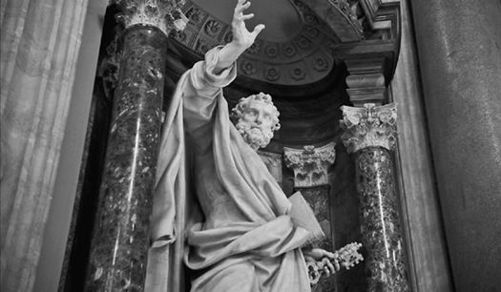
Saint Peter, Basilica of St. John Lateran, Rome. WORD ON FIRE
Saint Peter was born Shimeon Bar Johannon, Simon the son of John, in the town of Bethsaida on the northern shore of the Sea of Galilee. He was, like his father, a fisherman (indeed “Bethsaida” is Aramaic for “house of fishing”), and because of his trade though he certainly was not aristocratic he was not poor. We have records that show that Galilean fishermen shipped their product across the Roman world. Simon was not well educated, but he probably spoke some Greek for business purposes along with his native Aramaic and perhaps some Hebrew for liturgical prayer. We know that he was married, for the Gospels speak of his mother-in-law, and some traditions (probably legendary) even name his son and daughter. The Gospel of Mark tells us that Jesus of Nazareth was one day walking along the shore of the Sea of Galilee when he spotted Simon and his brother Andrew “casting their nets into the sea” (Mk 1:16). Jesus said to them, “Come after me, and I will make you fishers of men,” and “Then they left their nets and followed him” (Mk 1:17–18). Mark is certainly communicating to us the compelling, even mesmerizing, charisma of Jesus—on display in a number of other Gospel narratives as well—but he is also telling us something about these two brothers. Though established in their careers, they were willing to abandon everything to follow an itinerant preacher whom they had just met.
We see this almost reckless readiness to respond to the divine summons in many of the stories of Simon, including one from chapter 5 of Luke’s Gospel. Because of the press of the crowd, Jesus got into Simon’s boat and put out a little from the shore and preached from there. When he had finished speaking, he said to Simon, “Put out, into deep water and lower your nets for a catch” (Lk 5:4). The experienced fisherman responded that they had been hard at it all night and had caught nothing, but something in the command of Jesus was irresistible, so Simon added, “but at your command I will lower the nets” (Lk 5:5). What followed was the miraculous catch of fishes, a catch so impressive that it threatened to sink two boats. Simon’s immediate reaction was to fall to his knees before Jesus and to protest his own unworthiness: “Depart from me, Lord, for I am a sinful man!” (Lk 5:8). There are overtones of the call of Isaiah in this passage. The Old Testament prophet saw the glory of the Lord in the Temple but then admitted his profound imperfection: “I am a man of unclean lips, living among a people of unclean lips” (Is 6:5). The proximity of the divine light does not diminish our sense of sin; it enhances it, much as bright light on a window brings out the smudges and marks that are otherwise concealed. Once Isaiah admitted his sin, God cleansed him and then sent him on mission. In the very same way, the penitent Simon was forgiven and commissioned: “Do not be afraid; from now on you will be catching men” (Lk 5:10). Here, in Luke’s rendition of the commissioning, Simon emerges as the archetype of the church, which will always be a community of forgiven and empowered sinners.
Simon, whom Jesus renamed Peter, did indeed leave his home and his livelihood in order to join the company of Jesus’s intimate followers, and he was with the Lord at some of the key moments of his life. He was present on the mountain, along with James and John, when Jesus was transfigured and spoke with Elijah and Moses. It was Peter who said, “Rabbi, it is good that we are here! Let us make three tents: one for you, one for Moses, and one for Elijah” (Mk 9:5). Thomas Aquinas wondered why those three disciples in particular were privileged to witness this event, and he speculated that James was there because he would be the first of the apostles to be martyred, and that John was there because he was the disciple whom Jesus specially loved, and Peter was on the mountain because, of all the apostles, he loved Jesus the most. There is a most important spiritual lesson here: precisely because the person of Jesus, rather than a set of convictions or ideas, stands at the heart of Christianity, falling in love with him is a sine qua non. Peter was in the boat with the other disciples when Jesus came walking toward them over the stormy sea. Thinking they were seeing a ghost, the disciples cried out in terror, but Jesus calmed them: “Take courage, it is I; do not be afraid” (Mt 14:27). Peter said, “Lord, if it is you, command me to come to you on the water,” and Jesus said, “Come” (Mt 14:28–29). As long as he kept his eyes fixed on the Lord and not on the danger, Peter walked successfully on the waves, but when he looked about at his precarious situation, he began to sink. Once again, Peter functions as a symbol of the church, which is obliged to make its way through the stormy waters of history, and which will find its courage precisely in the clarity of its focus on Christ.
After Jesus’s arrest, when the dark powers were gathering round, Peter found himself in the courtyard of the high priest’s house. While he warmed himself by a fire, a woman confronted him: “You too were with the Nazarene, Jesus” (Mk 14:67). But Peter denied it: “I neither know nor understand what you are talking about” (Mk 14:68). Then a cock crowed. Moving away from his accuser into the forecourt, Peter met a servant girl who recognized him and told the bystanders, “This man is one of them” (Mk 14:69), but again Peter denied it. Then another person joined the scapegoating crowd: “Surely you are one of them; for you too are a Galilean” (Mk 14:70). Swearing an oath, Peter cried out, “I do not know this man about whom you are talking” (Mk 14:71). At that moment, a cock crowed a second time, and Peter recalled Jesus’s prediction: “Before the cock crows twice you will deny me three times” (Mk 14:72). The head of the apostles then broke down and wept. After the resurrection, Peter and the other disciples returned to Galilee to ply their fishermen’s trade once again. While they were fishing, they spotted Jesus on the far shore. The Gospel, curiously enough, tells us that Peter was naked (gymnos in the Greek) and threw on some clothes before going to the Lord. This detail is meant to remind us of the story of Adam in the book of Genesis. Prior to the fall, Adam walked in easy and unself-conscious nakedness before God, but after the primal sin, he hid himself, ashamed of his nudity. So Peter, still deeply regretting his denial of Christ, covers up his nakedness in the presence of Jesus. Then we witness a beautiful act of spiritual direction, as Jesus draws Peter back into his circle of intimacy. Three times the Lord asks Peter whether he loves him, and three times Peter affirms it: “Lord, you know that I love you” (Jn 21:15, 16, 17). Saint Augustine was the first to comment that the threefold statement of love was meant to counteract the threefold denial. Perhaps most tellingly here, Peter emerges as the archetype of the forgiven and commissioned church, for after each of his reaffirmations, Peter hears the command to “tend my sheep.” Once we are brought back into friendship with Jesus, we necessarily love those whom he loves.
In chapter 1 I put a special emphasis on the peculiarity of the question that Jesus posed in the vicinity of Caesarea-Philippi, “Who do people say that I am?” But I would like now to return to that place in order to examine the answers that Jesus received, especially the one proffered by Simon. In response to Jesus’s extraordinary inquiry, the disciples said, “John the Baptist, others Elijah, still others one of the prophets.” We can easily imagine that Jesus, like any celebrity, had excited a buzz of interest and that there must have been many such opinions and interpretations bandied about. But what all of those readings—reflecting the popular consensus—had in common was that they were wrong. Having heard the results of this popular opinion survey, Jesus turned to his inner circle, the twelve, and asked, “But who do you say that I am?” (Mk 8:29; Lk 9:20; Mt 16:15). It is most instructive that silence ensued. Not even the intimate company of the Lord knew the answer. Finally, Peter alone spoke: “You are the Messiah, the Son of the living God” (Mt 16:16). He would have said Mashiach, “the anointed,” the one who would gather the tribes and cleanse the Temple and defeat Israel’s enemies, but then he added that startling phrase, “the Son of the living God” (Mt 16:16). Somehow, even at this relatively early stage in Jesus’s ministry, Peter intuited that Jesus was much more than a prophet or rabbi or seer, however significant. He knew that there was something qualitatively different about his master.
Jesus responded to this confession of Peter with some of the most extraordinary language in the New Testament: “Blessed are you, Simon son of Jonah. For flesh and blood has not revealed this to you, but my heavenly Father. And so I tell you, you are Peter, and upon this rock I will build my church, and the gates of the netherworld shall not prevail against it” (Mt 16:17–18). Neither the crowds nor the aristocratic circle around Jesus knew who he was—only Peter knew. And this knowledge did not come from Peter’s native intelligence or from an extraordinary education (he didn’t have one) or from his skill at assessing popular opinion. It came as a gift from God, a special charism of the Holy Spirit. Because of this gift, given only to the head of the twelve, Jesus called Simon by a newname, in Aramaic kephas (rock or rocky), rendered in Greek as Petros and in English as Peter. On the foundation of this rock, Jesus declared that he would build his ekklesia, his church. Though it was fashionable some years ago for scholars to deny that Jesus ever intended to found a church, most scholars now hold that it would be hard to imagine a Messiah without a messianic community, that is to say, without a renewed Israel. And Jesus insists that this society, grounded in Peter’s confession, would constitute an army so powerful that not even the fortified capital of the dark kingdom itself could withstand it. It is fascinating to me how often we construe this saying of Jesus in precisely the opposite direction, as though the church is guaranteed safety against the onslaughts of hell. In point of fact, Jesus is suggesting a much more aggressive, even offensive, image: his church will lay successful siege upon the kingdom of evil, knocking down its gate and breaching its walls. And notice, too, how Jesus uses the future tense—“I will build my church” (Mt 16:18). Therefore he cannot be speaking simply of Peter personally but of all those who will participate in his charism throughout the centuries—a theme to which I will return in a later chapter. The integrity of this ekklesia will be guaranteed up and down the centuries, not through appeal to popular opinion (as instructive as that might be), nor through the ministrations of an institutional or theological elite (as necessary as those might be), but rather through the pope’s charismatic knowledge of who Jesus is.
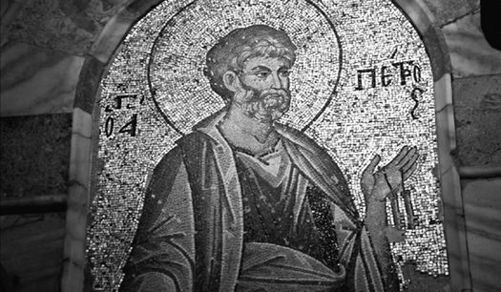
Saint Peter, Chora Church, Istanbul. WORD ON FIRE
One of the most consistent claims of the New Testament is that Peter was the definitive witness to the risen Jesus. Again and again, we hear, “The Lord has truly been raised and has appeared to Simon!” (Lk 24:34). After Pentecost the often wavering apostle became a tower of strength and resolve, and his proclamations center consistently on the resurrection. His speech in Jerusalem on that first Pentecost is a masterpiece of persuasive evangelism and perhaps typical of his kerygmatic preaching. Speaking to the throngs from many nations who had come to Jerusalem for the Feast of Booths, Peter quoted the prophet Joel: “It will come to pass in the last days, God says, that I will pour out a portion of my Spirit upon all flesh. Your sons and your daughters shall prophesy, your youngmen shall see visions, your old men shall dream dreams” (Acts 2:17). Peter knew precisely where his generation stood in the great story of Israel: they were living at the time of fulfillment, the time when the promises of the prophets were being realized, precisely through the resurrection of Jesus from the dead. He goes on: “You who are Israelites, hear these words. Jesus the Nazorean was a man commended to you by God with mighty deeds, wonders, and signs … This man, delivered up by the set plan and foreknowledge of God, you killed … But God raised him up … Therefore let the whole house of Israel know for certain that God has made him both Lord and Messiah” (Acts 2:22–36). So powerful was this speech that the audience, Luke tells us, was “cut to the heart” (Acts 2:37). The successors of Peter have always had the fundamental task of witnessing in just this way to the resurrection of Jesus.
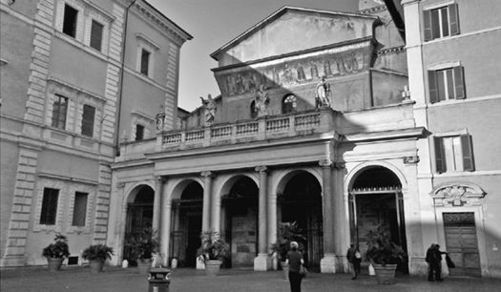
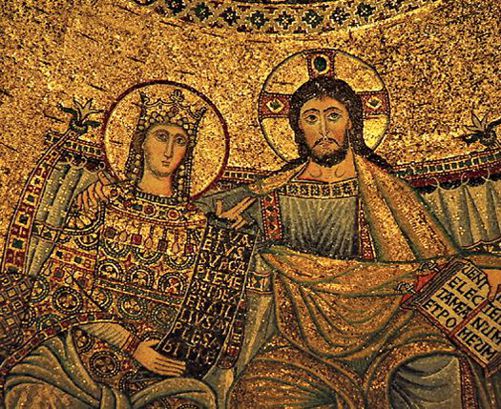
Santa Maria, Trastevere, Rome. WORD ON FIRE
About two decades after Pentecost, sometime in the late fifties or early sixties of the first century, Peter went to Rome. His exact reasons for going are lost to us, but we can certainly speculate that he had journeyed to this center of world empire because it was the natural place to declare that the whole world had a new Lord. He settled probably in the Jewish quarter of Rome, today’s Trastevere and the neighborhood just across the Tiber from there. Ancient sources tell us that Mark, the author of the first Gospel, was Peter’s secretary and translator—and indeed the Gospel of Mark includes an extraordinary number of stories concerning the chief of the apostles. Peter died around the year 65, the most prominent victim of Nero’s persecution of the Christians in Rome. Tradition tells us he was crucified upside down—since he was unworthy to die in the same manner as his Lord—in the circus of Nero, which was situated between the Vatican and the Janiculum hills outside the city proper. In the center of spina, the spine that ran down the middle of the circus, there stood a great obelisk that the emperor Augustus had brought back from Egypt. It was likely one of the last things that Peter saw as he hung dying. After Peter died, they cut down his body and buried him in a little cemetery on the Vatican Hill. For the first three centuries of the church’s life that spot was remembered and reverenced by local Christians. In the fourth century the first Christian emperor, Constantine, built on the site a magnificent basilica, which endured until the end of the fifteenth century, when it was torn down and replaced by the present basilica of St. Peter’s. In the mid-twentieth century, Pope Pius XI ordered an excavation of the area beneath the high altar of St. Peter’s and archeologists unearthed the first-century cemetery in a remarkably good state of preservation. Amid the grave markers and monuments they found a stone that bore a fascinating graffito: Petros eni (Peter’s inside). When they opened that grave they found the bones of a sturdily built man between the ages of sixty and seventy. What the bones of Peter impress upon us is a point I’ve been stressing throughout this book—namely, that Christianity is not a philosophy or an abstract set of convictions. It is about this Jesus, the friend of Simon Peter and the other disciples, these first-century men who knew the Lord. In his first letter Saint John says, “What was from the beginning, what we have heard, what we have seen with our eyes, what we looked upon and touched with our hands concerns the Word of life—for the life was made visible; we have seen it and testify to it and proclaim to you the eternal life that was with the Father” (1 Jn 1:1–2). Simon Peter, whose bones lie beneath the basilica in Rome that bears his name, touched the risen Jesus. It is upon that witness, rock-like in its concreteness and surety, that the church is built.
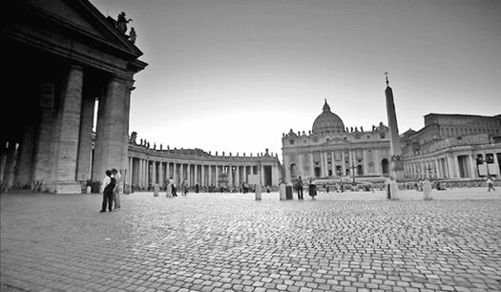
St. Peter’s Basilica, Vatican City. WORD ON FIRE
THE APOSTLE TO THE GENTILES
The second of the indispensable players in the early church was Paul, born Shaul (Saul) in the town of Tarsus in the southeast quadrant of Asia Minor around the year 10, making him a younger contemporary of Jesus. A child of Diaspora Jews, Saul was born into a mixed culture, Jewish and Greek, and he became at some point in his early life a Roman citizen. Therefore he combined in his person the three great cultures of his time and place, and this made him, when the propitious moment arrived, a particularly apt bearer of the message of the God of Israel to the wider world. Young Saul probably received a fairly decent classical education, reading Plato, Aristotle, Aeschylus, Sophocles, and Homer. We can glean from his letters, for example, that he had a good knowledge of the norms of Greek rhetoric. But Saul’s most significant intellectual formation came through his immersion in the world of the Hebrew Scriptures, which began when he was very young and which intensified when he was sent, probably as a teenager, to Jerusalem in order to study at the feet of Gamaliel, one of the leading rabbis of the time. In Jerusalem with Gamaliel, Saul searched out the Scriptures and participated in the liturgies and rituals of the Temple. Though Gamaliel was known to be relatively broad-minded in his reading of classical Judaism, Saul moved in the opposite direction, becoming, as he would later put it, “a zealot for my ancestral traditions” (Gal 1:14).
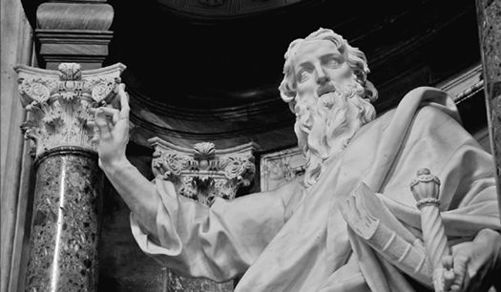
Saint Paul, Basilica of St. John Lateran, Rome. WORD ON FIRE
As he grew into his twenties, what bothered this young Jewish zealot most was the emerging Christian movement, and, indeed, how could it not? The claim that a crucified carpenter was the Messiah of Israel ran counter to all of the expectations of pious Jews. There was no more compelling piece of counterevidence to a messianic pretention than execution at the hands of Israel’s enemies. And thus Saul set out, with fanatic passion, to persecute the early Christian community, which he undoubtedly saw as a group of renegade and unfaithful Jews. There is a chilling passage in the Acts of the Apostles that describes Saul as “breathing murderous threats” (Acts 9:1) against Christians and entering their homes to drag them away in chains to prison. The very first reference to Saul in the New Testament is in connection with the stoning of Stephen, the first Christian martyr. As a stone-throwing mob is putting Stephen to death, Saul is said to be looking on with approval.
Conversion and Mission
Saul received permission from his superiors to root out Christians in far-off Damascus, so he set out with firm purpose. On the way something happened that changed Saul and changed the world. What took place on the road to Damascus so fascinated the first Christians that we find five separate accounts of it in the New Testament. Here is Luke’s laconic telling in chapter 9 of the Acts of the Apostles: “On his journey, as he [Saul] was nearing Damascus, a light from the sky suddenly flashed around him. He fell to the ground and heard a voice saying to him, ‘Saul, Saul, why are you persecuting me?’ He said, ‘Who are you, sir?’ The reply came, ‘I am Jesus, whom you are persecuting’ ” (Acts 9:3–5).
In the Cerasi Chapel of the church of Santa Maria del Popolo in Rome, Caravaggio’s masterpiece The Conversion of Saint Paul hangs in a side chapel. Due to the influence of thousands of pictures, we tend to imagine Saint Paul as an old, bearded man, but Caravaggio correctly depicts him in this painting as a man in his twenties. Saul’s arms are lean and muscular; he wears the armor of a warrior, bears a menacing sword, and around his shoulders is a fine Roman-style red cape. We can easily picture him—armed and dangerous—galloping with a soldier’s confidence into Damascus. How wonderfully Caravaggio captures the moment of transformation. The soldier lies on his back, disempowered, while his arms gesture helplessly upward and his eyes are closed. His confidence and directionality gone, he gropes, physically and intellectually, to find his way. Caravaggio shows us the moment when invisible grace knocked Saul to the ground, stripped him of his sword, and shut his eyes—and thus prepared him for a new journey, a new kind of fighting, and a new way of seeing.
Blind and helpless, Saul was led into Damascus, and after a few days he was baptized by a Christian disciple named Ananias. When Ananias laid hands on Saul, “things like scales” (Acts 9:18) fell from the former persecutor’s eyes and he was able to see: it was a physical manifestation of an inner transformation. After this life-altering experience Saul—and here we pick up his own account in his letter to the Galatians—went away at once into Arabia and then back to Damascus. Only three years later did he venture to Jerusalem to visit with Peter and the other “pillars” of the church. What was he doing during this time? Some speculate that he was preaching and doing missionary work, but I think it is much more plausible that he was simply trying to figure out what in the world had happened to him and how he could reconcile his encounter with the living Jesus and the traditions of Israel that he loved. He was striving to rethink ancient Israel in relation to the figure of Jesus, or better, to understand Jesus as the climax of Israel’s story. Out of these meditations the first Christian theology emerged.
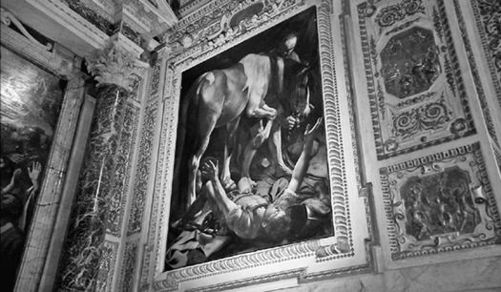
The Conversion of Saint Paul by Caravaggio, Santa Maria del Popolo, Rome. WORD ON FIRE
At some point at the culmination of those three years, Paul realized that his mission was to declare to everybody—Jew and Gentile alike—that they had a new king. Through the power of the resurrection, Jesus had been revealed as the fulfillment of all of the promises that God had made to Israel and therefore he was the light to the nations, and Paul felt commissioned by Christ himself to be the bearer of this message. The second half of the Acts of the Apostles tells the story of Saul (now called Paul) scurrying furiously around Asia Minor, Palestine, Greece, and Italy for around twenty years proclaiming this Lordship of Jesus. Perusing these breathless pages, one is struck by the boundless energy and unremitting focus of the man. On his first missionary journey he preached his way through the island of Cyprus, coming finally to Sergius Paulus, the Roman proconsul, whom he converted to the faith. Next he lighted in Antioch in Pisidia, where he preached in the synagogue, delivering a magnificent speech in which he summed up Israelite history and identified the risen Jesus as the culmination of God’s dealing with his chosen people: “We ourselves are proclaiming this good news to you that what God promised our ancestors he has brought to fulfillment for us, [their] children, by raising up Jesus” (Acts 13:32–33). And then he made the theological move that he would repeat continually throughout his ministry. He reached deep within the Jewish tradition to find the promise that the revelation given to Israel was meant, in the last days, to become a message of liberation for all the world: “I have made you a light to the Gentiles, that you may be an instrument of salvation to the ends of the earth” (Acts 13:47).
Next he traveled to Lystra, another town in Asia Minor, and he cured a man who had been unable to walk from birth, demonstrating thereby that Christ was now at work in the church, remaking his creation. In the wake of this miracle, the people of the town were convinced that Paul and his companion Barnabas were gods and they endeavored to offer sacrifices to them. Upon hearing this, the two Christians tore their clothes and confronted the crowd, shouting, “Men … we are of the same nature as you, human beings. We proclaim to you good news that you should turn from these idols to the living God, ‘who made heaven and earth and sea and all that is in them’ ” (Acts 14:15). This rejoinder shows clearly that the whole purpose of Paul’s preaching and healing was to proclaim thetrue God, the story of whose dealing with human beings had reached its climax in the death and resurrection of Jesus. I think it is fair to say that Paul was only mildly successful in this effort since, just days later, certain Jews arrived in Lystra and turned the people against the Christian evangelists. The crowd, which had wanted to declare Paul a god, now stoned him and “dragged him out of the city, supposing that he was dead” (Acts 14:19). When some of Paul’s Christian disciples surrounded his prostrate body, Paul calmly got up and, undaunted, went back into the town.
One of the most decisive events in the history of Christianity took place not long after this. Paul, Barnabas, and a number of the other leaders of the early Christian movement gathered in Jerusalem to discuss a potentially explosive issue, namely, whether the new converts to the faith that Paul and others were attracting from among the Gentiles should be required to follow all the demands of the Mosaic law, including circumcision, abstaining from unclean foods, and so on. The question was a vexatious one, because Christianity was at one and the same time deeply Jewish yet also something altogether new. Apart from the story of creation, the fall, the formation of a people Israel, and the promises made through the patriarchs and prophets, the proclamation of Jesus and hisresurrection made little sense. Still, in the brilliant light of the resurrection Paul and others saw that certain forms of Jewish life, though signposts of the truth to come, were now obsolete and no longer strictly necessary.
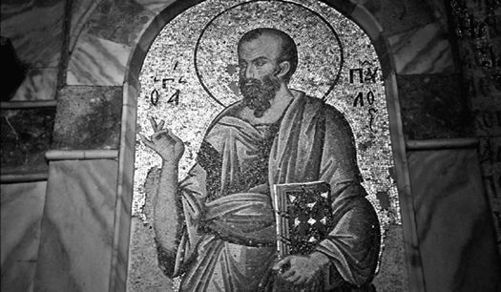
Saint Paul, Chora Church, Istanbul. WORD ON FIRE
After “much debate” and after having heard the stories that Paul and Barnabas told of their Gentile conversions, Peter spoke: “My brothers, you are well aware that from early days God made his choice among you that through my mouth the Gentiles would hear the word of the gospel and believe. And God … bore witness by granting them the holy Spirit just as he did us” (Acts 15:7–8). What is clear from this intervention is that Peter had come to understand things along Paul’s lines: as long as the Gentiles have received the spirit of the risen Christ, why should they be burdened with all of the regulations and directives that Jews themselves had never been able to keep? It was then decided that the new converts should not be “troubled” with the Mosaic law, except for the prohibition against idolatry (which was essential to the Christian proclamation of the Lordship of Jesus) and fornication (which disrespected the dignity of the body). The Gentiles would be, to use Paul’s own language, “grafted” on to Israel (Rom 11:17), but they would not be compelled to follow all of the practices that set Jews off ethnically from the rest of the world. With that, Paul found his commission from the risen Christ to be an apostle to the nations now formally ratified by the church. And from that moment on the ambition of Christian evangelism knew no bounds.
After this first “council” of Jerusalem, Paul and Barnabas returned to Asia Minor in order to encourage the churches they had established. While in Troas, a coastal town, Paul had a dream of a man from Macedonia, the land of Alexander the Great, beckoning him to come and preach the word. This prompted Paul to take the short journey from Asia to Greece. The Catholic historian Christopher Dawson observed that the entry of Paul into Macedonia, certainly unnoticed by any of the bien-pensant commentators of the time, was in fact one of the most momentous happenings of the past two thousand years, since it represented the beginning of European Christianity and hence of a revolution in culture that would eventually affect all the world.
Paul’s first important stop in Europe was in the Roman colony of Philippi, named for Alexander the Great’s father, Philip of Macedonia, and the site of the decisive battle between Antony and Octavian and their nemeses Brutus and Cassius, the murderers of Julius Caesar. Outside Philippi, Paul met a woman named Lydia, who was a dealer in purple goods (we would say a buyer and seller of upscale garments), and, we are told, “the Lord opened her heart to pay attention to what Paul was saying” (Acts 16:14). Lydia was a “worshipper of God,” which meant a Gentile who was nevertheless affiliated with the synagogue and cognizant of the story of Israel. In the course of his ministry Paul dealt sometimes with Jews, sometimes with Gentiles, and often with people like Lydia, using different means of persuasion and argument with each group, demonstrating the flexibility of an effective evangelist. After he baptized Lydia and her family, Paul was making his way to prayer when he was accosted by a young slave girl who had a “spirit of divination” and hence made her owners a good deal of money. Paul drove the demon out of her, which presumably benefited the young woman but infuriated her owners, who had just lost their principal source of income. They hauled Paul before the local magistrate and accused him of “advocating customs that are not lawful for us Romans to adopt or practice” (Acts 16:21). The apostle was stripped, beaten, and shackled in the innermost cell of the prison. That night, while he was singing hymns with his companion Silas (a wonderful thing for a beaten and imprisoned man to be doing!), an earthquake struck and the doors of the prison were thrown open. Supposing the prisoners had escaped, the jailer drew his sword in order to impale himself on it, but Paul stopped him: “Do no harm to yourself; we are all here” (Acts 16:28). The shaken man then asked what he must do to be saved. The simple and magnificent answer of Paul and Silas was: “Believe in the Lord Jesus and you and your household will be saved” (Acts 16:31).
There, in nuce, is the whole Gospel that Paul preached: submit to the Lordship of a new king, Christ crucified and risen. The letter that Paul would later write back to the community of Philippi—one of the gems of the Christian tradition—contains a hymn that Paul adapted to his purposes and that also provides a pithy encapsulation of his teaching: “Christ Jesus, Who, though he was in the form of God, did not regard equality with God as something to be grasped. Rather he emptied himself, taking the form of a slave … Because of this, God greatly exalted him and bestowed on him the name that is above every name, that at the name of Jesus every knee should bend, of those in heaven and on earth and under the earth, and every tongue confess that Jesus Christ is Lord” (Phil 2:5–7, 9–11). First, we notice that the divinity of Jesus is clearly affirmed: he is in the form of God and he has the name above any other name. And second, we see the consequence of this affirmation: Jesus is the kyrios (the Lord) to whom final allegiance is due within the political and cultural sphere and indeed throughout the cosmos and the invisible order as well.
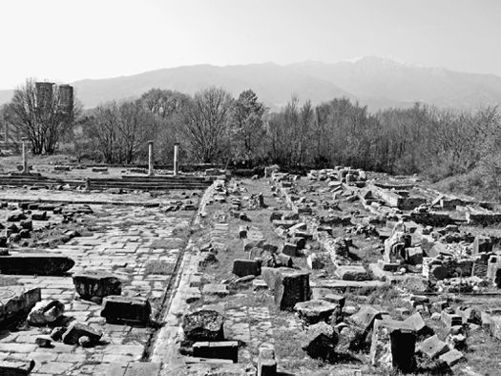
Philippi, Greece. WORD ON FIRE
Having left Philippi, Paul journeyed to Thessalonica and immediately went to the Jewish synagogue to proclaim the good news. As he laid out his story, some were persuaded, but others were enraged and managed to stir up a mob that “set the city in turmoil” (Acts 17:5). The formal charge brought against Paul and his Christian companions is fascinating: “These people who have been creating a disturbance all over the world have now come here … They all act in opposition to the decrees of Caesar and claim instead that there is another king, Jesus” (Acts 17:6–7). Quite right. Paul’s message was indeed designed to turn the world upside down, precisely because it was the proclamation of a new king and therefore of an entirely new way of organizing things. The dark powers—at work, for example, in the girl with the “spirit of divination” in Philippi—have been overthrown, and both Jews and Gentiles have to look at the world afresh. I don’t think it is the least bit accidental that when Paul wrote back to the community at Thessalonica (the earliest Christian document we have), his major motif was the end of the world as we know it and the longing for Christ to come to remake the cosmos. When Paul speaks in that text of Christ arriving on the clouds and of Christians going up to meet him in the air, he is not predicting a great escape from the world of matter; he is envisioning a welcome committee of believers moving out to escort into the world its new king. N. T. Wright relates the wonderful story of an Anglican bishop who said, “when Paul preached, there were riots; when I preach, they serve me tea.” If our teaching of the faith is too often tepid and uninspiring, authentic Christian proclamation is as subversive and explosive as the earthquake that shook the prison walls in Philippi.
Resurrection
Paul’s next stop on his missionary journey was Athens, and the speech that he gave there on the Hill of Mars (the Areopagus), the public forum just below the Acropolis and the Parthenon, provides an occasion for exploring the foundational theme of Paul’s preaching: the resurrection of Jesus from the dead. After complimenting the Athenians for their religiosity, evident in their many shrines and altars, Paul drew their attention to a particular altar he had seen inscribed “To an Unknown God” (Acts 17:23). The nature of this God—unknown obviously to the philosophers of Athens—will be the subject, he says, of his proclamation. The true God, he tells them, is the maker of the universe in its entirety and therefore “does not dwell in sanctuaries made by human hands,” nor is he “like an image fashioned from gold, silver, or stone by human art and imagination” (Acts 17: 24, 29). Speaking those words within sight of the Parthenon, in which a magnificent statue of the goddess Athena was worshiped, Paul was being typically provocative. This God has, furthermore, “established a day on which he will ‘judge the world with justice’ through a man he has appointed, and he has provided confirmation for all by raising him from the dead” (Acts 17:31). There is the heart of it. The resurrection of Jesus was the validation of his messianic claim and therefore the ground for Paul’s declaration that Christ is Kyrios of the world. When the learned debaters on the Areopagus heard this, “some began to scoff, but others said, ‘We should like to hear you on this some other time’ ” (Acts 17:32).
If those few interested people had listened further, what would they have heard? There were many viewpoints among thoughtful people of the time concerning what happens after we die. The Jewish Sadducee party, for example, held the view, which is on display in many ancient biblical texts, that the dead simply return to the earth and decay. Other Jews believed that the dead entered the shadowy realm of Sheol, a place of sadness and boredom, not unlike the underworld of the Greek imagination. Still others—the author of the book of Daniel is an example—thought that the righteous dead would exist somehow in fellowship with God. By the time of Jesus, the Pharisees had come to believe in the resurrection of the bodies of all the righteous at the end of time, at “the close of the age.” In Greek thought, of course, there was the mythic view alluded to above as well as in the more sophisticated philosophical account of Plato, according to which the intellectual energy of the individual escaped at death from its bodily prison. Paul, a Jew with deep roots in the Hellenistic world, would have been acquainted with all of these perspectives, but his message of resurrection was something completely different. He did not say that Jesus had gone to Sheol or that he was vaguely “with God”; nor did he express a mere hope that one day he would rise along with the saints; and he most certainly did not claim that Jesus’s soul had escaped from his body. He declared that the crucified Jesus of Nazareth rose bodily from the realm of the dead and exists now in a transfigured physicality. The risen Christ presented himself as very much an embodied person, and yet his bodiliness was not limited by the ordinary constraints of space and time. He had flesh and bones, yet he passed through walls and appeared and disappeared at will. His was a physicality at a higher pitch of perfection and attainment.
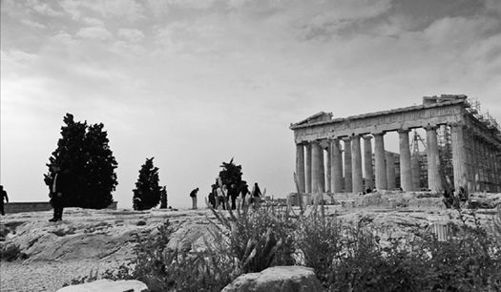
Parthenon, Athens, Greece. WORD ON FIRE
In the fifteenth chapter of his first letter to the Corinthians, Paul lays out this central teaching: “Now I am reminding you, brothers, of the gospel I preached to you … For I handed to you as of first importance what I also received: that Christ died for our sins … that he was buried; that he was raised on the third day” (1 Cor 15:1, 3–4). But notice how he specifies the claim by naming the very particular people to whom Jesus appeared after his resurrection: “he appeared to Kephas [Peter], then to the Twelve. After that, he appeared to more than five hundred brothers at once, most of whom are still living … After that he appeared to James, then to all the apostles” (1 Cor 15:5–7). This is not the way someone who is trading in vague religious hopes, myths, or philosophical speculation speaks. He mentions very real and specific persons to whom Jesus appeared and who could, in principle, be interrogated on the matter. How important is the bodily resurrection for Paul? “[I]f Christ has not been raised, your faith is vain” (1 Cor 15:17), he said, and, “If for this life only we have hoped in Christ, we are the most pitiable people of all” (1 Cor 15:19). This is true because a dead man who stayed in his grave would be, necessarily, a false messiah, and his teaching, however inspiring, could never hold off the power of death.
Participation in Christ
Paul became convinced that the risen Jesus—the bearer of God’s promises and the rightful king of the world—is like a force field, like an energy, or to use one of his favorite words, a power. If ancient Israel was taught to follow the law, Paul now says, “enter into Christ” who is himself the embodiment and fulfillment of the law. If the Jews were instructed to enter into the covenants made with Abraham, Moses, and David, Paul now says, “live in Christ” who is in person the fulfillment of the covenants. If the chosen people were commanded to offer sacrifice to Yahweh in the Temple, Paul now says “trust in Christ” who through his crucifixion became the new and definitive sacrifice. In the tenth chapter of his first letter to the Corinthians, Paul is discussing the Eucharist celebrations of the early Christian community, and he makes this crucial observation: “The cup of blessing that we bless, is it not a participation in the blood of Christ?” and “The bread that we break, is it not a participation in the body of Christ?” (1 Cor 10:16). The Greek word behind “sharing” is koinonia, which means, in ordinary usage, “communion,” but which has, as Paul is using it, the overtone of mystical participation. The community of Christ is much more than a congregation of like-minded people; it is, as Paul’s metaphor of the body suggests, an organism of interdependent cells, all of which derive their life from the primal energy of Jesus.
It is only against this background that we can approach the famously vexed question of justification in the writings of Paul. In the sixteenth century the Christian church in the West tore itself apart over this question, and those wounds are very far from being healed. At the feet of Gamaliel, Paul would have frequently heard the Hebrew term Mispat, which means “justice” or “right order.” Mispat was, first, a quality of God and, by extension, a quality of those who were in proper relation to God. Paul uses the Greek rendering of this term—dikaiosyne (righteousness)—with great frequency in his letters, but what precisely does he mean by it? He saw that in Christ Jesus, faithful Yahweh has finally met faithful Israel. Though the Temple, the law, and the covenants were meant to bring God and his people together, the sin of Israel always rendered those means ineffective, and hence the Mispat of God was never successfully transferred to humanity. But now through the obedience of Christ, the divine righteousness is on full offer to Israel and through Israel to the world. And therefore participation in Jesus, koinonia with him, is the path to salvation, a path that is, in principle, open to everyone, Jew and Greek alike. How is this participation effected? Paul could not be clearer that the first step is faith. The Greek term he used here is pistis, which means much more than acquiescing to certain intellectual propositions. It carries the connotation of deep, personal trust. We trust in Jesus Christ, relying on the power of his cross and resurrection, and we thereby enter into his force field, the space of justification. But there is more, for Paul knows that once we’ve entered into the adventure of faith, we are invited to swim in the energy and power of Christ, to “put on the Lord Jesus Christ” (Rom 13:14), to become conformed in mind, will, and body to him. In a word, we are invited to embrace the love that follows upon faith.
One of the very best summaries of Paul’s spiritual and theological thought on this score is verse 13 of his first letter to the Corinthians, a text that also ranks as one of the most beautiful in the Western literary tradition. I’m speaking of the “hymn to love.” Paul is addressing a Corinthian Christian community that was captivated by the more spectacular manifestations of the spiritual life: speaking in tongues, trading in words of knowledge, engaging in prophecy. He wanted to bring them back to what is fundamental, so he insisted on the superiority of love. “If I speak in human and angelic tongues but do not have love, I am a resounding gong or a clashing cymbal. And if I have the gift of prophecy and comprehend all mysteries and all knowledge; if I have all faith so as to move mountains but do not have love, I am nothing” (1 Cor 13:1–2). Paul himself spoke in tongues and confessed to having had an extraordinary mystical experience of the “third heaven,” and he certainly sang the praises of faith, but he asserts here that these gifts count for nothing unless they are accompanied by, and give rise to, love. Why should this be true? It is true because love is what God is; love is the divine life—and the entire purpose of spirituality is to get that life in us. If I have the accompaniments of the divine life but not the thing itself, I am indeed nothing. And what is love? As I’ve said previously, love is not primarily a feeling or emotion (though love can be accompanied by feelings and emotions); it is willing the good of the other as other. When we love, we escape the black hole of our own clinging egotism and live for someone else; to love is to leap ecstatically out of the self.
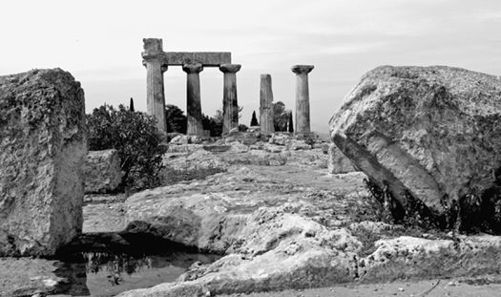
Corinth, Greece. WORD ON FIRE
And this is why, Paul explains, “Love is patient, love is kind” (1 Cor 13:4). Many of us are good or just to someone else so that he or she, in turn, might be good or just to us. This is not love, but rather indirect egotism. When we are caught in the rhythm of that sort of reciprocal exchange, we are very impatient with any negative response to a positive overture that we have made. If someone responds to our kindness with hostility or even indifference, we quickly withdraw our benevolence. But the person characterized by true love is not interested in reciprocation but simply in the good of the other, and therefore he is willing to wait out any resistance. He is long-suffering and kind. This is also why, as Paul insists, “[love] is not jealous, [it] is not pompous, it is not inflated” (1 Cor 13:4). Gore Vidal, the American novelist, described with admirable honesty the feeling of envy this way: “when a friend of mine succeeds, something in me dies.” True love hasn’t a thing to do with this sort of resentment, for it wants the success of the other. And the person who loves is not conceited, because she feels no need to raise herself above the other. Just the contrary: she wants the other to be elevated, and hence she takes the lower place with joy. Once we understand the nature of true love, we know why “It bears all things, believes all things, hopes all things, endures all things” (1 Cor 13:7). Because the one who loves is not focused on himself but on the object of his love, he is not preoccupied with his own weariness or disappointment or frustration. Instead he looks ahead, hoping against hope, attending to the needs of the one he loves.
Paul concludes his encomium with the observation that “Love never fails” (1 Cor 13:8). In heaven, when we are sharing the divine life, even faith will end, for we will see and no longer merely believe; hope will end, for our deepest longing will have been realized. But love will endure, because heaven is love. Heaven is the state of being in which everything that is not love has been burned away. And that is why “faith, hope, love remain, these three; but the greatest of these is love” (1 Cor 13:13). Paul here has named the essence not only of his own theology but of the Christian life itself. Everything else is commentary.
THE SPIRIT OF PETER AND PAUL
Hans Urs von Balthasar, one of the greatest theologians of the twentieth century, said that Peter and Paul are enduring archetypes in the life of the church. Peter, who led the original band of the twelve, stands for office, structure, hierarchy, and headship—all those ways that the church is ordered to achieve its purpose. Every priest, bishop, pastor, and pope is, in this sense, a descendant of Peter. And Paul, who went out to the nations as an evangelist to the Gentiles, stands, Balthasar says, for mission, the engagement of the culture, and proclamation. Every missionary, teacher, preacher, and theologian is, in this sense, a son or daughter of Paul. Without the Petrine discipline, the Pauline work would be unfocused and continually in danger of dissolution. Without the Pauline energy, the Petrine work would devolve into cold management and ecclesiastical bureaucracy. The two together, in tensive harmony, have propelled the church through the centuries and around the world.
The spirit of Peter and Paul led Saint Francis Xavier to journey from Portugal to India, Goa, and Japan—indeed to the very doorstep of China; it compelled Matteo Ricci, the great Jesuit missionary, to carry the faith to the court of the Chinese emperor; it brought missionaries to the Philippines in the sixteenth century; Paraguay and Brazil in the seventeenth century; Hawaii, Australia, New Zealand, and sub-Saharan Africa in the nineteenth century. One of the most extraordinary fruits of the African mission was the witness of the vibrant and youthful church of Uganda in the face of terrible persecution. In 1885 a particularly wicked Ugandan king sought sexual favors from certain young Christians in his court. When the young men refused, they were brutally put to death and joinedthereby the great company of martyrs. One of the most festive liturgies on the African continent today takes place on the feast day of these courageous and faithful witnesses.
In 1933, on the nineteen-hundredth anniversary of the redemption, Pope Pius XI invited Christian missionaries to take the Gospel literally to the ends of the world, to ensure that the message was heard everywhere. The Missionary Oblates of Mary Immaculate took up the challenge. A small group was sent to the northern reaches of Canada, where they proclaimed Jesus Christ risen from the dead. Then they asked, “Are there any people further north?” When the answer came back in the affirmative, they set out, found the more distant community, and proclaimed Jesus to them. This process continued until they came, finally, to a tiny gathering of people who said, “No, we’re the last ones.” When the Oblates had preached to this little band, they went back to Rome with the message: “We’ve announced Jesus Christ to the ends of the world.” That kind of evangelical panache, that playful spiritual adventurousness, would have been unthinkable apart from Peter and Paul.
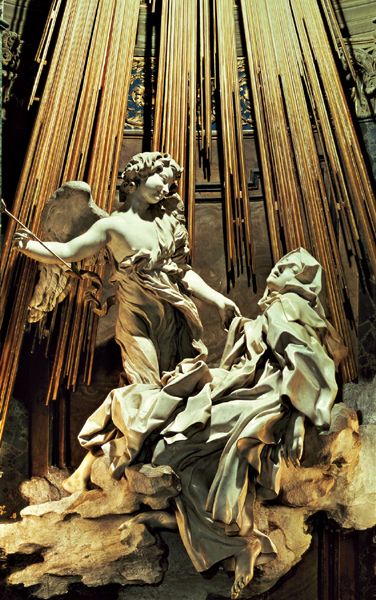
Ecstasy of St. Teresa. Bridgeman Art Library
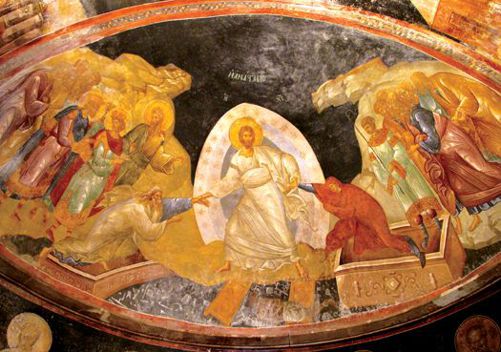
Chora Church (apse). Word On Fire
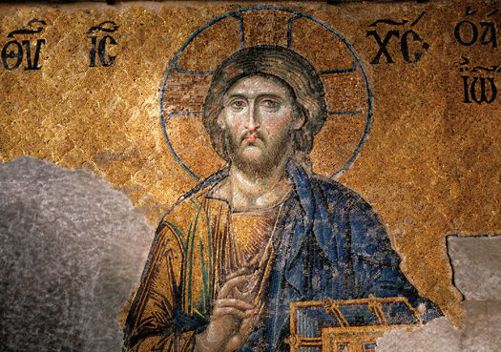
Hagia Sophia (interior). Ayse Topbas
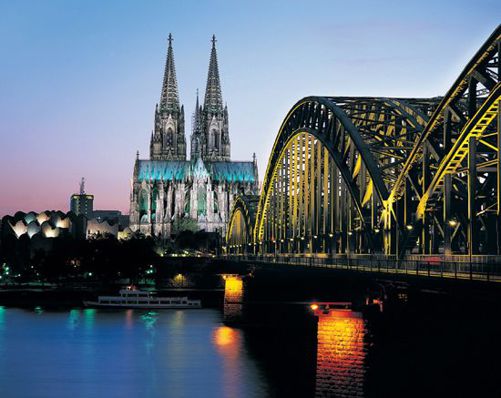
Cologne Cathedral. Robert Harding
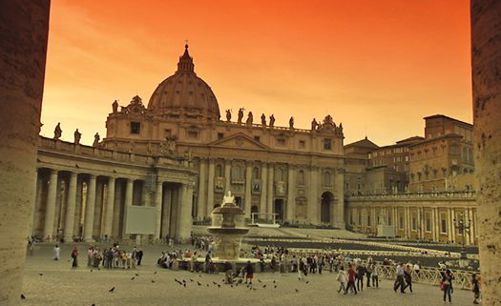
St. Peter’s Square and Basilica. Word on Fire
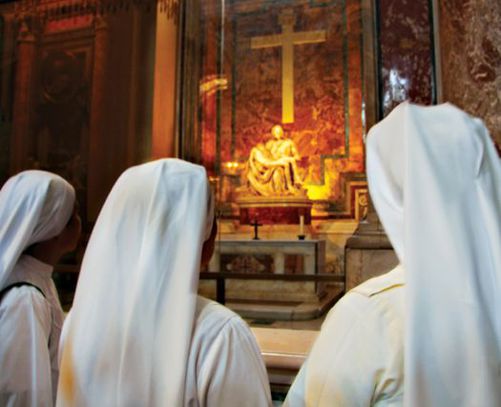
La Pietà by Michelangelo. Nino H. Photography
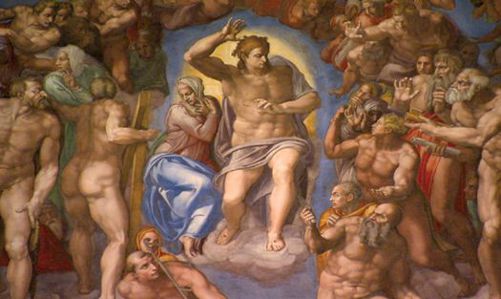
The Last Judgment (Sistine Chapel, Vatican City). Word On Fire
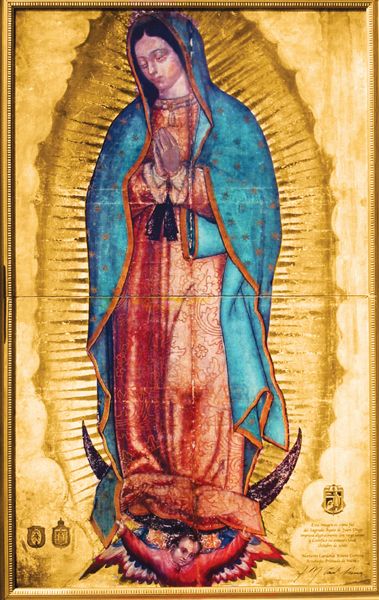
Our Lady of Guadalupe. The Basilica of Guadalupe, Mexico City
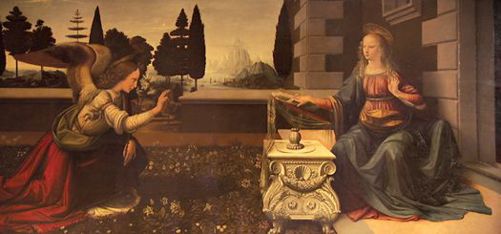
Annunciation (Leonardo da Vinci). Word On Fire
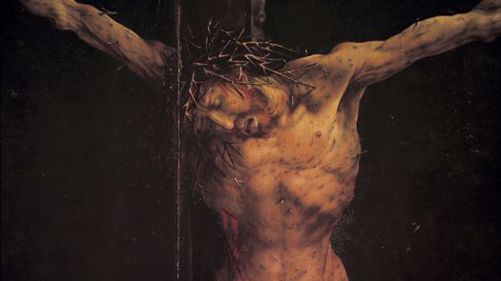
Isenheim Altarpiece (detail). Word On Fire
Santa Maria in Trastevere. Word on Fire
Church of the Holy Sepulchre, Chapel of Calvary. Medioimages/Photodisc