
CHAPTER 15
Two iconic structures, the Eiffel Tower and the Brooklyn Bridge (each built in the closing years of the nineteenth century), symbolize the inventions, discoveries, and innovations of the newly begun twentieth century. Both structures impose themselves on the landscape, bold in appearance, and stand as feats of engineering. Many other twentieth-century occurrences followed in the same spirit. In 1903, the Wright brothers made their maiden powered flight, and Henry Ford established the Ford Motor Company, soon to mass-produce the Model T. That same year, Madame Curie won the Nobel Prize in Physics, becoming the first woman so honored. A few years later she was awarded a second prize, this time for chemistry. And, pertinent to our story of quantification as a general mindset, Albert Einstein published his theory of special relativity in 1905. The world memorized the equation E = mc2, although almost no one could explain it. Due to its universal recognition, however, Einstein plays an important role in cementing numeracy as a worldview of ordinary people. In this chapter, we explore some of his remarkable accomplishments to see how they advanced this perspective.
To set the context, however—and following Pearson’s admonition that “it is impossible to understand a man’s work unless you understand something of the environment”—I describe some features of the era, if only briefly.
To begin, this period was the age of the explorers. These daredevils (as they were called then) sojourned to every untouched corner of the earth, from the Himalayas, to the South Pole, to South American jungles, and elsewhere. We saw already that the half-cousins Darwin and Galton traveled (separately) to the Galapagos Islands and the Kalahari Desert in the middle of the nineteenth century. That spirit continued, propelled by many others.
The exploits of these explorers captured the public’s attention on both sides of the Atlantic. Like waiting for the next installment of a Dickens novel, people looked for the next missive from Cook, Perry, Shackleton, or Teddy Roosevelt to be published on the front pages of newspapers from London to New York. The treks and adventures were commonly described as scientific explorations. Many were sponsored by the Royal Geographical Society. We know already that this society was a group of learned men (although now women can also join) who also had the bug for adventure. Founded in 1830, the prestigious society continues today and now declares itself with the statement, “We are the UK’s learned society and professional body for geography, supporting geography and geographers across the world” (Royal Geographical Society 2018).
One early explorer was a man on a British government mission. Sir George Everest was the surveyor general of India and was the first to map the meridian arc, an area from the southernmost point of India north to Nepal, providing the first real maps of the area. He began his surveys at the turn of the nineteenth century and continued them for nearly his entire career, up to the middle of the twentieth century. He mapped the general region of the Himalayan mountains and was later honored by having its highest peak named in his honor.
Credit for being the first to climb Mount Everest (in 1953) originally went to New Zealander Sir Edmund Hillary and his Sherpa guide Tenzing Norgay (who was hailed as a hero in Nepal and throughout India). But, almost immediately, questions arose about whether two other climbers, George Mallory and Sandy Irvine, had actually conquered it much earlier, in 1923. For many years, the dispute was unresolved and held as legend among adventurers, because both Mallory and Irvine died on the climb and their bodies had not been found. Only relatively recently (in 1999) were their bodies finally discovered, trapped on a side glacier. Still, the questions remained: had they reached the mountain’s summit, making them truly the first to climb to the top? Did they die while summiting or descending the mountain? Forensics could not determine their direction of travel, but on the basis of other evidence, such as the track of rips in their clothing and wear on the hemp ropes, experienced climbers now believe they died on the descent, making them truly the first to have summited Mount Everest.
Many of the explorers of this era were mariners. Their nautical adventures were genuinely dangerous, because weather forecasts were unavailable for most of the oceans and what forecasts were available were not long range. Still, oceanographic maps were relatively accurate and sextants (still in use at the time) could be synchronized with chronometers, making direction of travel generally known.
One maritime event in particular evoked massive public interest, but it was not an expedition by explorers at all. It is the curious case of a double-masted schooner named the Mary Celeste. On a clear day in the seas east of the Azores, a thousand miles east of Portugal, a merchant ship came upon the Mary Celeste. It was adrift and abandoned. There was no visible damage to the vessel, and a six-month supply of food was found intact. Most ships of the day carried a yawl (a rowboat that could double as a lifeboat) lashed to the main hull, but if the Mary Celeste had one at the start, it was now gone. Where was the crew? And why had they apparently abandoned a sound vessel? Public interest was rampant, and speculation ran wild. An inquiry came up empty. Stories of all sorts arose: pirates, mutiny, sea monsters … you can imagine that it was great fun at the time to offer a theory. Sir Arthur Conan Doyle wrote a short story about the mystery of the Mary Celeste, and a movie featured its explanation of a deranged madman who killed everyone and then rowed off in the missing lifeboat, committing a watery suicide. The truth is, to this day, no one knows what happened.
The most famous explorer of the day was David Livingstone, a young Scottish missionary and doctor. He was the first to traverse the African continent, and the first European to see Victoria Falls, one of the true natural wonders of the world. Indigenous Africans led him there in canoes, calling it “the smoke that thunders” because of the heavy mist and deafening sound. In one of his adventures, he sought to find the headwaters of the Nile River, a trek that took more than four years. He was out of contact for so long that the New York Herald newspaper (which had sponsored much of his journey) sent Henry Stanley to look for him. In 1871, Stanley finally found the missing missionary and approached him in a village with the immortal question, “Dr. Livingstone, I presume?” The quote ran in banner headlines, and people loved it.
Many of these adventurers were interested in advancing science, something we saw earlier in the adventures of Darwin and Galton. The Royal Geographical Society sponsored Sir Richard Burton, a famous intellectual–explorer of the time, although he is less well known today. Handsome, muscular, and rugged, he was also very intelligent. He read voraciously and spoke several languages fluently, including Arabic, which was quite unusual for the period. He seems to have been a true Renaissance man. He has been described as an explorer, a geographer, a translator, a writer, a soldier, an orientalist, a cartographer, an ethnologist, a spy, a linguist, a poet, a fencer, and a diplomat. Whew! Burton traveled extensively throughout India and eastern Africa; he often went to the Middle East, disguising himself as an Arab to gain entry to several cities forbidden to Westerners. His writings were very popular in England and across the Continent. He was genuinely scientific in approach and was one of the first to conduct valid ethnographic studies. A prolific author, he penned forty-three volumes about his trips. Later in life, while an attaché in Trieste, Burton translated all sixteen volumes of The Tales of the Arabian Nights. These stories enchanted children across the globe. I remember reading many of them as a child (probably in Burton’s translation). Burton was knighted by Queen Victoria in 1886.
The most popularly anticipated adventure, however, was the race to the South Pole. This race to be the first was the last great explorer’s prize, and it captured the public’s interest beyond anything else. People followed the explorers in dramatic newspaper accounts, and when the explorers were back home, their public lectures were very popular. The South Pole prize was ultimately captured in December 1911 by Norwegian Roland Amundsen, and word went out across the globe. He was an instant celebrity. But news at the pole itself was (obviously) nonexistent, and, only thirty-four days later, in January 1912, a rival British team led by Robert Falcon Scott arrived, thinking they were the first—that is, until the last mile when Scott looked across the ice and spotted Amundsen’s flag at the pole. Scott’s spirit immediately fell flat for he suddenly realized he was too late. It was a chastening defeat. To make the defeat more cruel, vicious storms arose, and Scott and five others died on the return trip to their ship.
But possibly the greatest adventure story of all time is the true tale of the Anglo-Irish explorer Sir Ernest Shackleton with his trans-Antarctica expedition of 1914 to 1917 on the ship Endurance.
I suspect many readers know the story already—if not, it is wonderfully entertaining and humbling to realize the bravery and determination Shackleton exhibited to save his men.
Prior to this famous trek, Shackleton had led three expeditions to Antarctica and was well respected as a leader and scientific explorer. Soon after Amundsen conquered the pole, Shackleton sought a slightly different prize: to make the first sea journey across the icy continent. It is widely reported that he recruited a crew by placing the following advertisement in the local newspaper, although no archival copy has been found to verify its authenticity.
MEN WANTED: FOR HAZARDOUS JOURNEY. SMALL WAGES, BITTER COLD, LONG MONTHS OF COMPLETE DARKNESS, CONSTANT DANGER, SAFE RETURN DOUBTFUL. HONOUR AND RECOGNITION IN CASE OF SUCCESS.
— SIR ERNEST SHACKLETON
What is known, however, is that Shackleton sailed on the day before WWI broke out, after receiving a telegram of encouragement from Winston Churchill. He headed to the Weddell Sea and began to push forward. At first, all appeared normal, although the ice pack was unusually heavy. Over the next six weeks, they slogged forward through the ice, progressing a thousand miles. But, on January 18, 1915, at 76° 34´ S, Endurance got stuck. One crew member is said to have described the Endurance’s plight as being stuck “like an almond in toffee” (PBS 2002).
The journey’s official photographer took a picture of Endurance trapped in the ice (Figure 15.1). At first, Shackleton and his crew thought it would be no problem, because they had provisions and so they believed they could just wait until the spring thaw. Twenty-eight men were trapped on the drifting ice pack. To pass the time, they performed skits and told one another tall tales. Remember, at this time, there was no communication to any mainland, so no one knew of their predicament. But, after a while, things took a turn for the worse. Slowly and relentlessly, the ice closed in on the ship, breaking her apart one board at a time. The crew’s mood changed, as shown in their journals. After eleven months, in November, the ice took the last bits of the Endurance under.
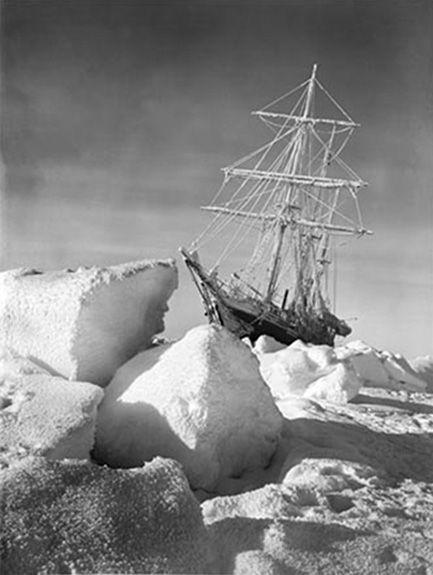
Figure 15.1 Endurance trapped in ice while on the 1914 Imperial Trans-Antarctic Expedition
(Source: http://commons.wikimedia.org/wiki/Category:Public_domain)
Describing their situation on New Year’s Eve 1915, Shackleton wrote:
Thus, after a year’s incessant battle with the ice, we had returned to almost the same latitude we had left with such high hopes and aspirations 12 months previously; but under what different conditions now! Our ship crushed and lost and we ourselves drifting on a piece of ice at the mercy of the winds. (Shackleton 1919, 95)
By this time, they were desperate. Their supplies had run out, including oil for lamps and cooking, and they were forced to eat their sled dogs. Then, as a last-ditch effort, using the three lifeboats they were able to recover from Endurance, the party struck out to sea and made it to Elephant Island, where they waited for a miracle rescue. But that was unlikely, given that no one knew where they were and they didn’t know whether anyone was looking for them. They waited and waited, sleeping under the lifeboats and clubbing seals and birds for food.
After nearly another half-year, in a desperate move, Shackleton and two of the crew set out to sea in search of dry land. After an incredible lifeboat journey, they finally reached South Georgia. They landed on the uninhabited side of the island, coming upon steep cliffs. It took unbelievable strength and determination to reach the small whaling station on the other side, but they finally made it, collapsing on the doorstep of the small shacks. Shackleton spent only days recuperating before he started his efforts to get back to Elephant Island to rescue the remaining crew members. Obstacles abounded, but he never quit. It took him many months and four attempts, but he finally made it back to his stranded shipmates, in another adventure story all its own. Yet, he finally got to his crew—he had rescued them! In the end, everyone on the expedition survived.
In a 1956 address about the ill-fated expedition, another explorer and contemporary of Shackleton, Sir Raymond Priestley, made a telling statement that cemented Shackleton’s reputation as a man of courage and endurance:
As a scientific leader give me Scott; for swift and efficient polar travel, Amundsen; but when things are hopeless and there seems no way out, get down on your knees and pray for Shackleton. (Wordie 1957, 25)
(The quote is possibly a paraphrase of a more lengthy mot from Cherry-Garrard’s preface to the second English edition of The Worst Journey in the World (see Croome 1958)). I am omitting many important twists and turns in the incredible story—it is one of the most astonishing journeys of all time—a tale well told by Alfred Lansing in Endurance: Shackleton’s Incredible Voyage (2014).
Interestingly, another, more recent explorer, the American astronaut Scott Kelly, wrote a personal memoir about his adventures in space after having spent a year on board the International Space Station that he pointedly titled Endurance (Kelly 2017).
In the opening years of the twentieth century, people were fascinated by these explorers and their scientific adventures. They are a significant step to quantification, as we near our own journey’s end. First, they represent that science in the broadest sense is pervading society and culture—new exploration, new experiences, and answers to unknowns are sought. Second, these explorations are a common interest experienced across all social classes and lands. Regardless of wealth and irrespective of locale, from Asia, to the Continent, to America, there was widespread public interest in these science-based adventures. Quantification had been broadly accepted and embraced.
America experienced a parallel public interest in the 1960s with excitement over the US space program and the quest to put a man on the moon, another scientific adventure, albeit massively more sophisticated. As we all know, this astonishing feat was finally accomplished on July 20, 1969, when Neil Armstrong lightly jumped off the last step of the lunar module of Apollo 11 and onto the gray, dusty lunar surface. It was shared quantitative experience. Ask anyone over a certain age where they were on that date, and nearly all can recall exactly—many will even remember seeing that step on a black-and-white TV, as it was broadcast worldwide. It is science in the extreme, and there was broad interest, evidence that science and numeracy was by then a part of normal life—as they still are.
* * * * * *
A single remarkable lecture, delivered in the summer of 1900 at the Sorbonne in Paris by a bright young German named David Hilbert, ushered quantification into the twentieth century. At the time, Hilbert was a promising mathematician (he received his education at the famous Gauss institution, the University of Göttingen), and his famous lecture catapulted him into mathematical history. In the lecture, he presented twenty-three mathematical problems that set the agenda for theoretical exploration from then to now. “Hilbert’s problems,” as they have come to be called, have dominated theoretical mathematics for more than a hundred years and set mathematicians across the globe on a quest to solve them.
Prior to presenting his problems, however, Hilbert defined a modern philosophy for mathematics, stressing especially the relationship between mathematics and science. He broadened the discipline to place in perspective the role of proofs with axioms and formulas. Until then, Euclidian geometry and Newtonian calculus stressed axioms and formulas with strict expectations for an accompanying mathematical proof. Hilbert allowed that less-tangible concerns with symbolic algebra and abstract concepts were also legitimate areas for interest. To give a flavor of his argument, some of the celebrated problems are shown in Table 15.1.
Table 15.1 Selected problems from Hilbert’s set of unsolved problems in mathematics
|
Problem No. |
Problem Description |
|
1 |
Cantor’s problem of the cardinal number of the continuum |
|
2 |
The compatibility of the arithmetical axioms |
|
3 |
The equality of volumes of two tetrahedra of equal bases and altitudes |
|
4 |
Problem of the straight line as the shortest distance between two points |
|
6 |
Mathematical treatment of the axioms of physics |
|
8 |
Problems of prime numbers (the Riemann hypothesis) |
|
9 |
Proof of the most general law of reciprocity in any number field |
|
11 |
Quadratic forms with any algebraic numerical coefficients |
|
12 |
Kroneker’s theorem on abelian fields to any algebraic realm of rationality |
|
16 |
Problem of the topology of algebraic curves and surfaces |
|
17 |
Expression of definite forms by squares |
To date (two decades into the twenty-first century), of the original twenty-three problems, ten have been solved, seven more have partial solutions, two (Problems 8 and 12) remain unsolved, and four others are abstractions that have no definitive proof. For the mathematically curious, Hilbert’s original lecture is widely available in both its original German and the English translation (Hilbert 1900b, Newson 1902). Also available is a shortened version of the problems and description of current progress on their solutions (Hilbert 1900a).
Hilbert’s problems helped to set the stage for the remarkable accomplishments of another famous German who is also known for his influence on the philosophy of science: Albert Einstein.
* * * * * *
Albert Einstein’s life and accomplishments make up the final milestone on our road to quantification. As we know, he was a beloved public figure for most of his life, and one of the most recognized individuals on the global stage. In figurative terms, his very presence evokes scientific achievement, and his wild white hair and rumpled clothing hanging on a relatively thin frame are physical icons of professorship.
Einstein’s life events are chronicled in more than fifty full biographies and thousands of shorter pieces. His theories and intellectual accomplishments are described—with varying degrees of sophistication and accuracy—in innumerable publications and other sources. Among the best books about Einstein’s life are Abraham Pais’s Subtle Is the Lord: The Science and the Life of Albert Einstein and its sequel, Einstein Lived Here (Pais 1982, 1994).
He left no autobiography in the conventional sense of recounting the facts of his life, but he did write something about himself that is perhaps even more valuable: his Autobiographical Notes, shown in Figure 15.2. It is a very personal reflection on the thoughts and emotions he had while developing his theories (Einstein 1949). With warmth and insight, he begins his “scientific self-portrait” (Einstein’s words) with this reflection:
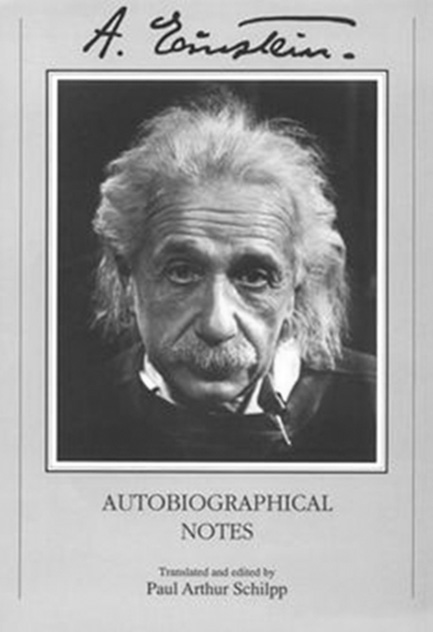
Figure 15.2 Cover of the English-language edition of Einstein’s Autobiographical Notes
Here I sit in order to write, at the age of 67, something like my own obituary. I am doing this not merely because Dr. Schlipp [his friend and translator] has persuaded me to do it, but because I do, in fact, believe that it is a good thing to show those who are striving alongside of us how our own striving and searching appears in retrospect. (Einstein 1949, 9)
Due to this surfeit of Einstein materials, then, I will be brief in my description of his life and accomplishments, mentioning just a few things that highlight his contribution to quantification as a worldview for ordinary people.
Certainly, Einstein’s fame, both during his life and after, underscores the very notion of quantification to the general populace. Despite the fact that few understand his theories even superficially, and even fewer are those who can follow their logic and substance, any thought one has about Einstein virtually demands reference to quantification. As illustration, think of the E = mc2. We immediately recognize this notation, and while we cannot explain it, we nonetheless associate it with the frazzled hair and endearing look of Albert Einstein. More importantly, we realize that it is mathematically significant. It imbues public consciousness with an impression parallel to that of Newton’s Principia in the late seventeenth century. These quantifying events suffuse the daily thoughts and impressions of everyday folks.
A lesser-known fact of Einstein’s life is that, in 1952, he was offered the presidency of the then-young state of Israel, following the death of its first president, Chaim Weizmann. Some considered the offer a publicity stunt, as Einstein had no previous political or administrative experience and the offer specified that he could still focus on his scientific work. The offer came from the Israeli ambassador to America, Abba Eban, who wrote:
Professor Einstein:
Prime Minister Ben Gurion asked me to convey to you, namely, whether you would accept the Presidency of Israel if it were offered you by a vote of the Knesset. Acceptance would entail moving to Israel and taking its citizenship. The Prime Minister assures me that in such circumstances complete facility and freedom to pursue your great scientific work would be afforded by a government and people who are fully conscious of the supreme significance of your labors. (American-Israeli Cooperative Enterprise 2018)
Einstein, it seems, was not only brilliant about the stars “out there” but was also aware of his own inner nature. He declined, saying,
All my life I have dealt with objective matters, hence I lack both the natural aptitude and the experience to deal properly with people and to exercise official functions. For these reasons alone I should be unsuited to fulfill the duties of that high office. (American-Israeli Cooperative Enterprise 2018)
Certainly, he was a celebrity, both among the general public and within the scientific community. The world’s most notable physicists and chemists meet quadrennially at the International Conference on Electrons and Photons to discuss recent advances. Perhaps the most famous conference was the fifth conference of the Conseil du Physique Solvay (located in Brussels), held in October 1927; there they discussed the newly formulated quantum theory, mostly advanced by Werner Heisenberg. Marie Curie (in Figure 15.3, first row, third from the left) alone among them had won Nobel Prizes in two separate scientific disciplines, although seventeen of the twenty-nine attendees had been honored once, including Einstein, Niels Bohr, Werner Heisenberg, and Max Plank. Possibly at no other time in history has such a group of intellectuals been gathered together. Even today, this famous photograph has a following.
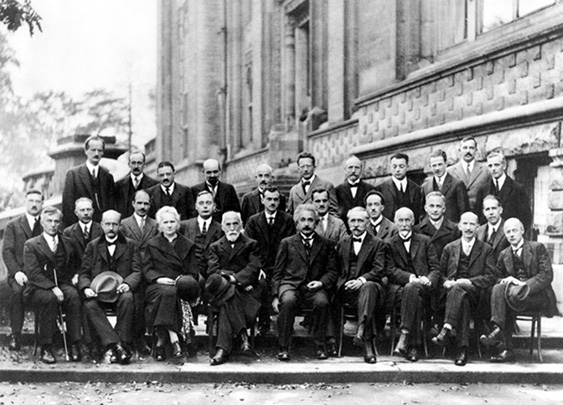
Figure 15.3 Madame Curie, Albert Einstein, and other participants at the fifth conference of the Conseil du Physique Solvay, October 1927
(Source: http://commons.wikimedia.org/wiki/Category:Public_domain)
As a young man in Switzerland, Einstein applied for a job at the Bern Patent Office. Evidently, there was some gap before the job began, so to earn money he offered tutoring in mathematics and physics. He recruited students through an advertisement he placed in the miscellaneous section of the local Bern newspaper. This is shown in Figure 15.4. Imagine being tutored by Albert Einstein. But, of course, that was before he was … Einstein!
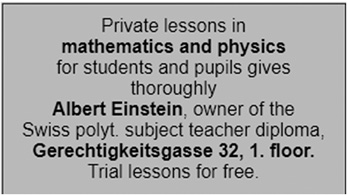
Figure 15.4 Einstein advertising for students in 1901 in the Anzeiger der Stadt Bern (Newspaper of the City of Bern)
(Source: http://www.einstein-website.de/z_biography/print/p_olympia-e.html)
Einstein’s time in Bern was an especially productive time in his life, for, during his employ at the patent office, he worked evenings on his theory of special relativity, which he published in 1905 along with two other important papers. Einstein’s thinking and production that year represents a touchstone in modern astronomy and astrophysics.
Also during this period, he made the acquaintance of two men, Conrad Habicht and Maurice Solovine, who remained his lifelong friends and colleagues. As we saw earlier, together they founded the Akademie Olympia to discuss books and scientific ideas, starting with Pearson’s delightful and informative Grammar of Science. Biographers of Einstein extol his time in Bern as a seminal period for both his personal growth and his intellectual development.
Although Einstein worked on several facets of quantum mechanics and thermodynamics, he is most often associated with the theory of relativity. We examine this only superficially because anything more is outside our scope. Even an elementary understanding of the theory, however, requires a bit of background, so we begin by going back to Newton’s Principia. In it, Newton outlines his three laws of motion, including:
Law No. 1:Objects in motion (or at rest) remain in motion (or at rest) unless an external force imposes change.
Law No. 2:Force is equal to the change in momentum per change of time. For a constant mass, force equals mass times acceleration.
Law No. 3:For every action, there is an equal and opposite reaction.
For nearly 200 years, astronomers held these laws to be immutable. But, in 1865, they came into question when a Scottish physicist named James Clerk Maxwell established the speed of light as 186,000 miles per second. This led two others—Austrian physicist Ernst Mach and French mathematician Henri Poincaré—to question how light travels. Their discoveries did not conform to the required physics of Newton’s laws of motion. In fact, Mach and Poincaré discovered that the laws only hold under certain circumstances. Their work engendered more questions than answers, often the sign of solid scholarship.
The problem of how light travels fascinated Einstein from his earliest days. While yet a teenager, he imagined that he was an explorer—akin to the explorers racing to the South Pole, but with a twist: standing on a beam of light while observing another light beam traveling next to him. Newtonian laws of physics specified that since light travels uniformly, the two beams of light would be parallel in all respects, and hence the beam he was observing would have a relative speed of zero. But this was not supported by Maxwell’s work. Einstein knew that something was amiss, and he sought to find out what. He came to the realization that, by the laws of electromagnetism, the relative speed depended upon your vantage point.
He developed a simple but profound scenario to describe this point. Einstein imagined two people, one inside a moving train and the other some distance off, observing the train. The train was equidistant between two trees, with one behind it and the other in front of it. Suppose, Einstein said, that lightning struck both trees at exactly the same instant. The person inside the train would see the lightning strikes at different times, due to his being in motion, while the person outside would observe the lightning strikes simultaneously. Einstein concluded from this illustration that time is relative to one’s state of motion.
This led him to several profound realizations, one being his special relativity equation, E = mc2: energy equals mass times the speed of light squared. By it, energy and mass are one and the same, albeit in different states. He realized, too, that if the mass can be exploded, the amount of energy released is enormous. Inadvertently, Einstein had discovered a theoretical basis for the atomic bomb. Later, he shared this information with Wernher von Braun and others, who put it to use in making the first atomic bomb. Einstein, however, famously held pacifist views regarding the bomb throughout his entire life.
Also, from his train scenario, Einstein concluded that time is relative to the observer. Because the person inside the train saw the lightning strikes separately whereas the outside observer did not, time has a “dilation effect”—it moves more slowly for the person at motion than the one at rest. It has been noted that we have a real-life illustration of this effect in the US space program. Astronaut Scott Kelly and his twin brother Mark aged at different rates when Scott was in orbit for nearly a year (from 2015 to 2016) and hence traveling much slower than Mark. When Scott returned to Earth, he greeted his now slightly older brother. By some mathematics, it can be figured that if a fifteen-year-old traveled near the speed of light for five years and then returned to Earth, the individual would be about twenty years old whereas his earthbound contemporaries would be over sixty-five!
Another practical implication of this effect discovered by Einstein is that the clocks on GPS satellites move 38 microseconds faster than do clocks on the ground. Thanks to Einstein and his theory of relativity, we know about this and can make accommodations for our GPS systems to preserve their accuracy.
Later, in 1915, Einstein expanded this “special theory” into his “general theory,” the more useful of the two today. This general theory is widely described as the most beautiful of all existing physical theories. It gives a geometric perspective on gravity, relating a “space–time curvature” to the energy and momentum for some mass. This means that a coordinate system, like that shown in Figure 15.5, is a continuum of space and time—the space–time continuum—with varying effects at different distances from an object and relative to its mass. Einstein’s general theory of relativity provides the mathematics that explain the phenomenon.
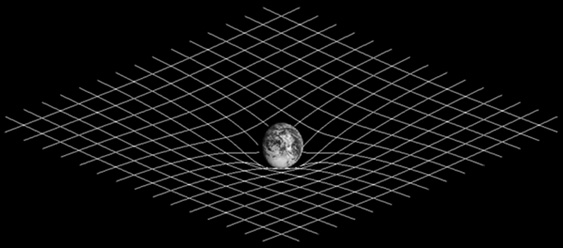
Figure 15.5 Illustration of Einstein’s theory of relativity, showing geometric curvature of the space–time continuum
(Source: from CC BY-SA 3.0, http://commons.wikimedia.org/w/index.php?curid=86682)
As a way to describe the space–time continuum, consider the following scenario given by NASA. This space–time stretch means that a heavy celestial body like Earth (although a relatively small planet, it’s nonetheless heavy enough) tends to push down on space and time, causing it to bend downward—but not equally everywhere. The curvature is larger when it is closer to an object and progressively less as the distance expands. This is a kind of distortion from our linear envisaging of space and time. Imagine dropping a baseball onto a trampoline. It causes the fabric to curve inward around it, even if only slightly. Space and time have changed, as illustrated by the depression. Now, imagine dropping a bowling ball, with its much greater mass, onto the trampoline. It would cause an identically shaped but much larger depression in the fabric. The space–time continuum with the larger mass is greater.
As humans, we cannot see this depression, and even our most sensitive and sophisticated instruments cannot directly detect it. Yet, we know it exists because we see its effects when measuring space and time. The space–time warp explains many phenomena in our world, both here on Earth and “out there” in infinite space. Einstein describes this in a set of equations known as the “Einstein field equations,” a full system of differential equations. While his ideas for space and time are theoretical physics, they are also our practical reality.
The standard scholarly work on explaining gravitation and Einstein’s space–time continuum is the textbook Gravitation by Charles Misner, Kip Thorne, and John Wheeler (Misner, Thorne, and Wheeler 1973). We will look more closely at this important book momentarily. For now, however, imaginably, reading it is demanding and requires some background in theoretical physics and calculus; nonetheless, it is a masterpiece of explanation and thoroughness. Two other excellent books that explain Einstein’s theories and what they mean for us are by Stephen Hawking (formerly, Lucasian [Newton’s] Chair in Physics at Cambridge University): The Future of Space Time, which includes an excellent introduction by Richard Price (Hawking et al. 2003); and the long-popular A Brief History of Time (Hawking 1988).
Most compelling of all, however, is a book about relativity written for the general reader by Einstein himself. The book is entitled Relativity: The Special and the General Theory and has recently been reprinted in a hundredth-anniversary edition (Einstein 2015). In it, Einstein said that the book was “intended, as far as possible, to give an exact insight into the theory of Relativity to those readers who, from a general scientific and philosophical point of view, are interested in the theory, but who are not conversant with the mathematical apparatus of theoretical physics” (Einstein 2015, 10). When originally published in 1905, it was immediately popular and has been translated into at least sixteen languages since. This is an excellent read for people with a worldview of quantification and who are eager for new information, particularly because it may reinforce numeracy as the route for exploring the unknown.
Even a genius like Einstein makes mistakes. In what Einstein called the “biggest blunder of his life,” he proposed a cosmological constant in his universal equations to make the force of gravity null (i.e., equal across the universe). He labeled it with the Greek lambda (Λ), and it is often referred to as “Einstein’s lambda.” Einstein’s lambda represented a static and unchanging universe, although, within its sphere, there were orbital movements for the planets, stars, and other celestial bodies. When working on his general theory of relativity, he employed his lambda constant in his calculations. To Einstein and other astronomers of his day, the unchanging force of gravity across the universe was a given fact of astrophysics.
But Edwin Hubble, working at the same time on similar astronomy problems, realized that the stars furthest away were actually traveling faster than those closer to the sun. By this reasoning, gravity’s force was not equal everywhere but relative to a source, which for the planets in our galaxy is the sun. The force of gravity is relative to the distance from it. This meant that the universe was not static after all, but was, in fact, expanding. Hubble reasoned, too, that Einstein’s constant could not be correct. Hubble’s discovery of an expanding universe is considered one of the most momentous discoveries in all astronomy, right up there with Newton’s realization of gravity.
Einstein accepted Hubble’s idea and made his admission of having “blundered.” He was also frustrated with himself because he had stuck so long with including his constant in his calculations that he had missed the chance to be first to discover that the universe was expanding. Had he been more flexible in his thinking, he felt he would have been first to discover the expanding universe. This disappointment haunted Einstein for the rest of his life.
But, more recent thinking about the cosmos has come to include something that no one can describe except to say it exists—the so-called dark matter of the universe. Contemporary astronomers now believe that dark matter (whatever it is—its atoms move so fast and either explode or disappear before any measurements can be obtained) exists everywhere in the cosmos. In fact, it is thought to be the most common of all substances in the universe, despite our having no notion of what dark matter is. Now, for the best part: in modern astrophysics, dark matter is thought to be a static substance, and, in formulas, it can best be represented by Einstein’s lambda! Thus, it seems Einstein was right all along to include a constant in his equations, but he just didn’t know it. His blunder may not have been one, after all—he was right, even if for the wrong reason.
* * * * * *
Probably the foremost scholar today advancing theories of gravitation is Kip Thorne, the Richard P. Feynman Professor of Theoretical Physics (emeritus) at Caltech (the California Institute of Technology), one of the most selective universities in the world (fewer than 2 percent of applicants are accepted) and a center for theoretical physics. Thorne is known for his contributions to gravitational physics and astrophysics. He is equally renowned for mentoring future physicists and for making his difficult topic comprehensible to a lay public. In 2017, he was awarded the Nobel Prize in Physics along with Rainer Weiss and Barry C. Barish for “decisive contributions to the LIGO (Laser Interferometer Gravitational-Wave Observatory) detector and the observation of gravitational waves,” according to the Nobel Committee statement (Nobel Media AB 2018). Imagine the privilege of having Dr. Thorne as your doctoral adviser!
Thorne’s seminal book is the aforementioned Gravitation (written with Charles Misner and John Wheeler)—often just called MTW after the initials of its three authors. Widely acknowledged as a landmark text, it is not light reading in any sense. More than 1,200 pages long, the preface promises that students can use this book to “grasp the laws of physics in flat spacetime, predict orders of magnitude … understand Einstein’s geometric framework for physics, and explore applications, including pulsars” (Misner, Kip, and Wheeler 1973, v). Learn these, and you’re all set!
The cover itself is creative. As seen in Figure 15.6, it is a line drawing by the artist Kenneth Gwin to show geodesics in general relativity. (Recall we saw this—a straight line bending to conform to a curved surface—earlier in Figure 8.1 in the projection for the orthodrome problem.) Unexpectedly, however, the curved surface in the book’s artwork is not Earth or another celestial body; rather, it is an apple, which itself recalls the tale of Newton’s apple in his “discovering gravity.” The drawing shows a simple magnifying glass divided into ten parts reflecting onto forty-four sections of the apple, conforming to the organization of Gravitation, which was written in ten parts and forty-four chapters.
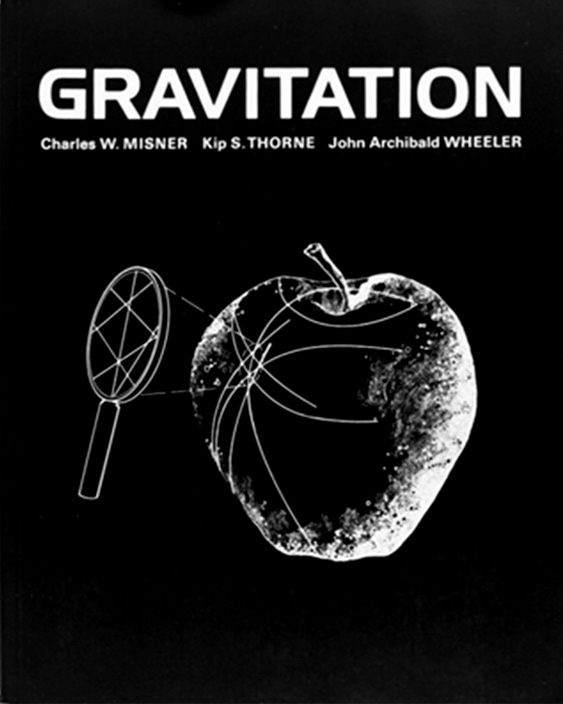
Figure 15.6 Cover art by Kenneth Gwin for MTW’s Gravitation
Following Einstein’s lead of writing a popular book, Thorne offers an excellent read in Black Holes and Time Warps: Einstein’s Outrageous Legacy with an engaging foreword by Stephen Hawking (Thorne 1994); Thorn writes,
Gravitational-wave detectors will soon bring us observational maps of black holes, and the symphonic sounds of black holes colliding … Supercomputer simulations will attempt to replicate the symphonies and tell us what they mean, and black holes thereby will become objects of detailed experimental scrutiny. What will that scrutiny teach us? There will be surprises. (Thorne 1994, 524)
* * * * * *
While all the central characters in our story of quantification were very bright, a few of them stand out, such as Bayes, Quetelet, and Laplace, and some others. Among these elites, some possessed an astonishing intellect, notably Newton and Gauss. Nearly all these individuals were men, owing to the lack of opportunity for women to participate in scholarly pursuits during much of the time of our story. Notwithstanding the obstacles, some women prevailed over their circumstances to exhibit their own exceptional intelligence and accomplish the remarkable. One such woman was Madame Marie Curie.
About 1891, a young girl named Maria Skłodowska was experiencing a troubled and difficult childhood in the Prussian section of Warsaw, in part because of the harsh circumstances of the foreign occupation. Yet, she was a very bright child and possessed a determined personality. While still young, she and her sister took the chance to move to Paris, although it meant leaving the rest of their family behind. In Paris, she enrolled in the University of Paris (then, “the Sorbonne”) to study medicine and chemistry; there, she was recognized as a very able student with a strong work ethic.
Her life difficulties remained, but she single-mindedly continued her studies in the new field of radiology and eventually earned her doctoral degree, the first woman to do so in that field. Soon thereafter, she met Pierre Curie, and they married—per custom, she assumed his surname: Curie. Pierre called her Marie, and she thereafter used Marie as her Christian name rather than Maria. Hence, she became Madame Marie Curie. Pierre asked Marie to marry him, and she agreed to the marriage, believing it would help her keep her laboratory position. But, it seems that Pierre was an agreeable sort, and she eventually grew to love and cherish him as not only as a fellow scientist but also as a good husband. They had two children, both girls. Marie had at last realized a degree of happiness in her life. But later, Pierre was killed in a tragic accident. Marie remained devoted to her work and succeeded her husband as head of the Physics Laboratory at the Sorbonne campus. She was promoted to full professor, the first woman to hold that prestigious position.
Her pioneering research was on radioactivity (she herself coined the term after discovering the element radium) and isolating radioactive isotopes. Eventually, her work led to a Nobel Prize (for physics, in 1903). The prize was first proposed for her male collaborator, but a Swedish committee member insisted that Marie be included since she had done most of the work. Again, this was a first for a woman. Later, she was awarded a second Nobel Prize (for chemistry, in 1911)—yet another first. By then, she was famous as Madame Curie. She went on make several other momentous discoveries, including a new element that she named polonium after her native Poland. Polonium is highly radioactive, and, at the time, its danger was not fully recognized. With overexposure to radiation, she contracted radiation poisoning. She died of it at a sanatorium in 1934.
The list of Madame Curie’s firsts, both as a woman and as a pioneering scholar, is quite astonishing. Throughout her life, she received numerous awards and recognitions. Holding two Nobel Prizes in different fields is testament to both the depth and the breadth of her work. As noted earlier, she was also a member of the prestigious Conseil du Physique Solvay (see Figure 15.3).
Another remarkable woman working in more recent times was Maryam Mirzakhani, an Iranian mathematician and a professor of mathematics at Stanford University. Her research focused on pure mathematics, sometimes called “theoretical mathematics,” as opposed to “applied mathematics.” In pure mathematics, the focus is on the basic concepts and structures that underlie the entire mathematical domain. The goal of pure mathematics is to seek a deeper understanding of these structures so that mathematics may be more broadly applied. This is the level of exploration in which earlier giants such as Euler and Newton operated. Often, new theories and formulas arise from pure mathematics. Pure mathematicians study such difficult concepts as Teichmüller and ergodic theories and hyperbolic and symplectic geometry.
Mirzakhani was the first woman to win the prestigious Fields Medal for Mathematics (the highest prize for mathematics, awarded only once every four years—there is no mathematics category for the annual Nobel Prize). Clearly, she was woman of remarkable intellect and one who had much to offer. In a misfortune for us all, she died of breast cancer in 2017 at just forty-seven years old while still in her prime productive years—a true loss for humankind.