
CHAPTER 17
This chapter provides the capstone to this book’s argument that humankind has adopted quantification as a worldview. Up to now, I have advanced a reasoned (and coherent, I hope) argument of how this came to be; namely, it is primarily explained by the intersection of the circumstances of history with mathematics. Here, we take a look at quantification in two directions not yet addressed. First, we explore quantification across various disciplines such as art and music; and second, I briefly mention quantification in our current twenty-first century, an era I call the “Age of the Chip.”
Both areas of exploration are replete with elements of mathematics—and quantification explains the why and the how for each of them. Philosophers use terms like “ontology” and “aesthetics” to describe this framework. I do not advance my argument using the language and conventions of that discipline because I am not a philosopher. Regardless, we will explore how several domains not yet addressed are part of quantification.
Of course, art, music, and virtually all other disciplines are influenced by mathematics, some directly. My point, though, is more fundamental and subtle—maybe even profound—than simply calling attention to something so obvious. By mentioning the connection between mathematics and other disciplines, I hope to illustrate how quantification is our current reality. We perceive things quantitatively without consciously evoking our powers of perception; rather, quantification is part of our mental, automatic response system.
Admittedly, my selection of topics and examples here is arbitrary, but it is decidedly not capricious: all have something to do with advancing the quantification argument. There are many other examples you could choose. The point remains.
* * * * * *
To start, let us look at quantification in art. Of course, the connection between mathematics and art has been recognized since antiquity. As far back as Plato (and certainly this point was made even earlier by others), aesthetics was suggested in the plane geometry of line and angles. According to Plato, Socrates said:
I do not mean by beauty of form such beauty as that of animals or pictures … but … straight lines and circles, and the plane or solid figures which are formed out of them by turning-lathes and rulers and measurers of angles; for these I affirm to be not only relatively beautiful, like other things, but they are eternally and absolutely beautiful. (Plato (360–347 bce) 2013)
This declaration reminds us of the elemental beauty in the symbols used to represent numbers and math operations. This is seen throughout all numeric representations, from the basic symbols of elementary arithmetic, moving through those for higher mathematics and into the dimensional spaces of geometry. A few of the many hundreds of such symbols are shown in this line:

Here, reflect on their form rather their meaning in mathematics. They are like basic line drawings: simple and pleasing in form. A person with no mathematical knowledge—say, someone who just walked out of a cave and had never seen these symbols—would, nonetheless, likely perceive them as pleasing, and maybe even beautiful.
As an even more beautiful example, the Greek alphabet is the epitome of visual grace in its symbols. Consider these letters as a visual experience:

The aesthetic quality of mathematics formulas is considered by Clara Moskowitz in “Images: The World’s Most Beautiful Equations.” She writes, “Mathematical equations aren’t just useful—many are quite beautiful. And many scientists admit they are often fond of particular formulas not just for their function, but for their form, and the simple, poetic truths they contain” (Moskowitz 2013). She explains the beauty of Einstein’s relativity equation and Lagrange’s “standard model” equation for physics, the fundamental model of calculus (recall that, in Chapter 4, we explored one application of an integral calculus formula in the central limit theorem), and even the Pythagorean theorem, and the balanced beauty of a very simple equation which states that the quantity 0.999, followed by an infinite string of nines, is equivalent to 1: that is, 1 = 0.999999 ….
The grace of mathematics is, of course, not only visual, but literary, too. Lord Byron, the eighteenth-century Romantic poet (and father of Ada Lovelace, whom we saw earlier was possibly the first computer programmer by coding actual machine language for Babbage’s Difference Engine) completed the intersection between quantification and poetry in these well-known lines, as
When Newton saw an apple fall, he found
… … … … … … … … … … ….…
A mode of proving that the earth turn’d round
in a most natural whirl, called “gravitation,”
And this is the sole mortal who could grapple
Since Adam, with a fall or with an apple.
(Byron, “Don Juan,” “Canto the Tenth,” Part I)
The notion of numeric symbols as art is extended, too, by looking at an example of mathematics in art from a long time ago, around the fifteenth century. This one is from the work of Leonardo da Vinci. Of course, we all know his Mona Lisa (and, upon seeing the actual painting in its frame on a solitary wall in the Louvre Museum, most are surprised by its small size) and The Last Supper, the single most reproduced religious painting of all time.
Further, most also recognize his drawing Vitruvian Man (Figure 17.1). This pen and ink drawing shows the anatomical view of two slightly superimposed male figures. They are upright, muscular men, with arms outstretched. A circle surrounds one of them, and a square the other, meant to accentuate the body’s proportions, which are mathematically defined by da Vinci in text below the image; for example, he says, “The length of a man’s outspread arms is equal to his height. …, from the bottom of the chin to the top of the head is one eighth of his height (Richter, 1970, vol. 1, 182)” According to da Vinci, there was a “medical equilibrium” to the parts of the body, reflecting God’s symmetry to man’s purpose.
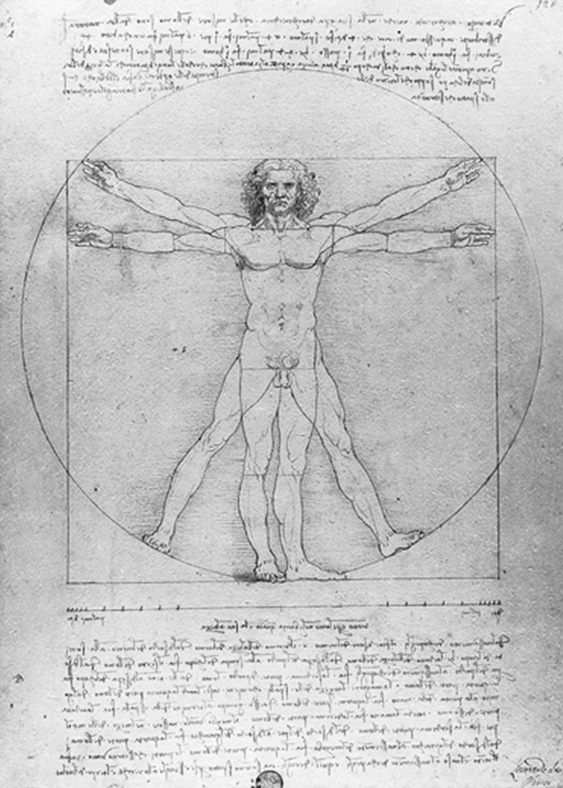
Figure 17.1 Vitruvian Man by Leonardo da Vinci
(Source: http://commons.wikimedia.org/wiki/Category:Public_domain)
Da Vinci was as much scientist as artist; he was especially interested in mathematics, as reflected by the words of one art critic who said, “Vitruvian Man is a study of the human form visually perfected through the application of mathematics” (Beyer, 2018). Vitruvian Man is the very quintessence of mathematics in art.
Less well known is the fact that da Vinci’s illustration appeared in one of the best-known books on mathematics of the day: De Devina Proportione (On the Divine Proportion), written by Luca Pacioli sometime around 1498. It is a book on proportions in mathematics, such as the golden ratio. One scholar explains the work as follows.
In his study of Divine Proportion, Pacioli first dealt with current thinking on theology, philosophy, and music in the light of mathematics as expressed in the golden ratio (golden section or golden mean). He turned to a study of Euclid’s Elements and then to a consideration of regular and dependent polyhedrons. (Codices Illustrates 2018)
Da Vinci provided more than sixty line drawings, each to illustrate a particular proportional view of some mathematics. Figure 17.2 displays two pages from this work, both of which show a three-dimensional object, called an “icosidodecahedron,” that is mathematically defined. The book is replete with these interesting drawings.
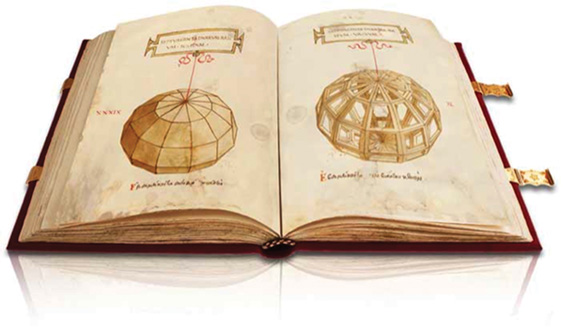
Figure 17.2 Dimensional drawing by da Vinci in Pacioli’s De Devina Proportione
(Source: http://commons.wikimedia.org/wiki/Category:Public_domain)
Pacioli was not himself an artist but a Franciscan teacher of mathematics, especially interested in both architecture and how money was recorded in business. In fact, he introduced double-entry accounting, and because of this invention, he is sometimes called the “father of accounting.” It is known that he taught da Vinci elementary geometry; da Vinci, in turn, informed Pacioli of the application of geometry to art and architecture. Although Pacioli is listed as the book’s only author, the book is clearly the result of a close collaboration by these two Renaissance scholars.
As important as the work of Pacioli and da Vinci may be, the relationship between art and mathematics can be seen in many other art periods and styles, too, such as cubism, which Pablo Picasso (along with Georges Braque) introduced to the art world around 1905. This style emphasizes angles and applies a hard, one-dimensional structure to the human form. It was a wholly new perspective on art (rejecting the impressionism of predecessors) and brought a fresh worldview reflecting quantification in this discipline.
During his life, Picasso was the archetypal Parisian artist, always nonconformist and bohemian during the Gertrude Stein expatriate era. Like many other artists, he was fascinated by the world of mathematics. For him, though, mathematics was not a discipline for studying formulas and seeking solutions, but rather an art form unto itself—a kind of unexplored reality that became an outlet for his creativity. And, for Picasso, there was always ever more creative work. In what is an astonishing level of productivity, he produced a huge number of works—at least 20,000 pieces of art, both in painting and in ceramics. I have a friend who owns a small, simple line drawing by Picasso. My friend was disappointed to learn that his prized artwork was worth only a modest amount, due to the sheer volume of similar Picassos.
Picasso enjoyed a lifelong friendship with Henri Matisse, who had an opposite view of art and deliberately steered his work away from the lines and angles of cubism. They often dueled through their art, with the two geniuses of the art world working in contrapuntal effort. Together, though, they show an influence of mathematics in art. Unconsciously, quantification became a part of their art lives, and it leaves its impression for us to interpret.
A plethora of books and studies highlight the connection between mathematics and art. A fairly recent pertinent work is titled Mathematics and Art (Gamwell 2015). The book is both a coffee table piece and—more relevant to us—a scholarly treatise that explores associations between mathematics and art, looking at their relationship from antiquity to the Enlightenment during much the same period as our story. Concepts such as number form and infinity are explained as mathematics and then illustrated in one sumptuous image after another. The book’s link to mathematics is further highlighted by having a noted astronomer, Neil deGrasse Tyson, contribute the foreword.
* * * * * *
Almost instinctually, we realize there is a strong relationship between mathematics and music. Common to every genre—classical, blues, country, rock, and nearly all others—is the fact of an underlying mathematical structure. All of them can be quantitatively analyzed. Further, virtually any sound within the human range of hearing (and far beyond) can be reproduced in intensity, duration, frequency, and timbre with relatively simple electrical engineering, at first with analog circuits but now by digital signal processing. It is interesting (and we are thankful), however, that we can immediately detect whether a sound is produced by electricity or by an instrument—regardless of whether the instrument produces its sound by percussion (like a piano or a drum), with wind (such as blowing directly into a horn or over a reed, as in a clarinet), or by using strings (like a violin or a guitar).
For the interested musicologist or mathematician, music as engineered sounds governed by the laws of physics is explored in a two-volume scholarly work titled Musimathics: The Mathematical Foundations of Music (Loy 2007).
Music notation illustrates the mathematics of sound. Consider the single measure shown in Figure 17.3, from J. S. Bach’s The Well-Tempered Clavier. This measure contains only six principal notes of rhythm (the others are complementary), yet it can be described mathematically in at least a dozen different ways. One of its descriptions is with simple addition, while another “solves” it with a set of complex linear equations. It is simultaneously simple and complex. It is beautiful to realize its sophistication, and even more luxurious to listen to it.
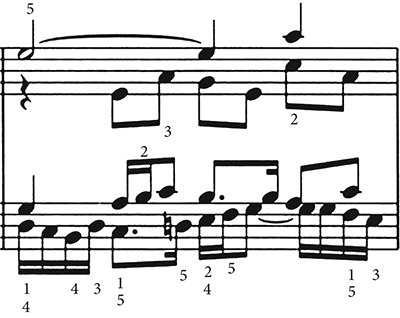
Figure 17.3 A measure from Bach’s “Fugue no. 17 in A-flat major, BWV 862” from Book 1 of The Well-Tempered Clavier
(Source: http://commons.wikimedia.org/wiki/Category:Public_domain)
Following this systematic arrangement of tones on a musical scale is the more complete music theory, which is wholly mathematical. Much of music theory can be summarized in the “circle of fifths.” One depiction of the circle of fifths is displayed in Figure 17.4.
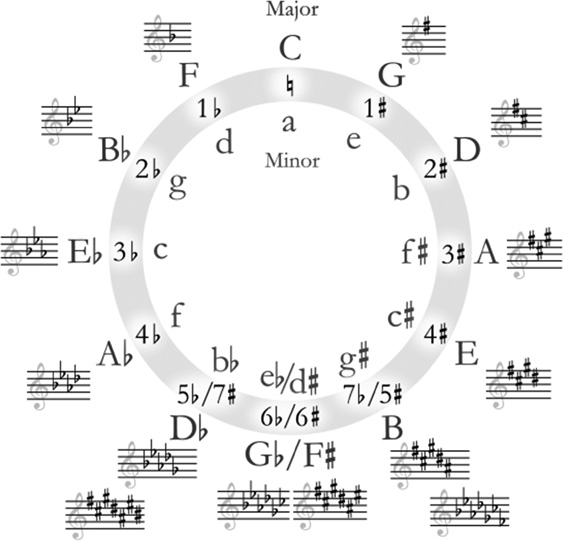
Figure 17.4 The circle of fifths in music theory
(Source: http://commons.wikimedia.org/wiki/Category:Public_domain)
Some of music’s structure—but certainly not all of it—is organized into major and minor keys. The circle of fifths is a simple depiction of the relationship between them. When a major and minor key use the same sharps and flats, they are said to be in the same “signature.” The circle of fifths shows this signature: a major key is on the outside, and its relative minor key is correspondingly on the inside. This musical representation can be read in either direction, clockwise or counterclockwise. Jazz musicians generally read it counterclockwise.
Most often, composers follow the pattern of the circle of fifths, but there are notable exceptions. Serial music, for example, deliberately violates the traditional pattern. Igor Stravinsky’s ballet score The Rite of Spring is a jarring example of this. Appreciated for its sophistication, it is nonetheless not for the inexperienced listener. It brings to mind the quote about opera music by Mark Twain (in his Autobiography): “Wagner’s music is better than it sounds!”
There is much more to music theory than is shown in the circle of fifths, and nearly all of it relates to mathematics. For example, you are probably aware of the Pythagorean theorem. The name of the ancient mathematician and philosopher Pythagoras occurs in music, too, in a special circumstance in music theory called the “Pythagorean comma.” It is the interval (hence, “comma”) between two enharmonically equivalent notes, as between C♯ and D♭. All of the black keys on a piano keyboard are enharmonically equivalent, defining that small space. Imagine (or actually look at) a piano keyboard. Here, we see the Pythagorean comma in all of the black keys.
Apparently, too, when tuning a musical instrument, the Pythagorean comma can be calculated to find an angle for harmonic tones and has a certain harmonic frequency ratio, and is defined as the ratio of twelve “just perfect” (theoretically perfectly tuned) fifths and the seven octaves:

The “cent” is a log value used in music to convey meaning for these very small values. Of course, cent is the root word for one hundred, as in centimeter, percentile, centurion, and centipede. For us, this mathematical underpinning of music is yet another idea that brings us ever closer to quantification, extending to and influencing every aspect of every person’s worldview: Everyman.
Of course, literary descriptions of music and mathematics abound. I can think of none better than Leo Tolstoy describing its power in his story The Kreutzer Sonata. Here, he gives a literary description of music that captures an emotion felt by all of us:
How shall I say it? Music makes me forget my real situation. It transports me into a state which is not my own. Under the influence of music, I really seem to feel what I do not feel, to understand what I do not understand, to have powers which I cannot have. … And music transports me immediately into the condition of soul in which he who wrote the music found himself at that time. I become confounded with his soul, and with him I pass from one condition to another.
(Tolstoy and Katz 2008, 134)
I imagine we can each relate to Tolstoy’s words, regardless of whether listening to Chopin, Eric Clapton, or an old man with a penny whistle.
Today, we see quantification most obviously in the technology of integrated circuitry in microchips. These little silicon and copper devices are so much a part of our daily activities that we do not even think of them as unusual or remarkable. Among just my kitchen appliances, I count more than a dozen that are controlled by microchips: even the toaster has a microchip built into it. (As a personal aside, I recall my own father who, drawing from his Swedish heritage, always referred to our refrigerator as an “ice box”—persons of his generation could not imagine this common kitchen necessity eventually having a microchip.) My car, too, probably has another dozen (at least), and individually some them are many times more sophisticated than the early programming language used by the Apollo Guidance Computer that Apollo astronauts relied on to carry them to the moon and back. Clearly, we live in the “Age of the Chip.”
Further, unlike almost any other invention in history, the chip can be found worldwide. Even those living in countries cited in the latest United Nations’ Human Development Report as the most repressive and poorest in the world—such as the communist nations of Cuba, Libya, North Korea, and Somalia, as well as Russia’s Chechnya (United Nations Development Programme 2015)—have the microchip in their daily experiences. While most persons living in these countries have far fewer electronic devices than we consider common, their water treatment plants, electricity-producing sources, and essential aspects of transportation and medicine all rely on the chip.
If you view these facts as humdrum and promptly ask, “So, what else is new?” … well, that response is itself telling, because the microchip is a relatively recent invention, around just since the 1960s. The two pioneers usually credited with inventing the technology are Jack Kilby and Robert Noyce. In 1959, each of them was granted a patent for his remarkable invention: one to Kilby for a miniaturized electronic circuit, and another to Noyce for a silicon-based integrated circuit. (Noyce went on to found Intel, which is the world’s largest producer of microchips, far ahead of Samsung, Taiwan Semiconductor, Qualcomm, and a host of smaller companies.) Some places where the chip was first used in a practical application (also in the 1960s) were the US Air Force’s Minuteman II missile and NASA’s Apollo project.
Recounting more examples of the technology quickly overplays the point, so I will not do so—you know them already. But I do call attention to one area where the technology of integrated circuits might become our new reality: in artificial intelligence, commonly known as “AI.”
A precise definition of AI is hard to come by, doubtless due to its constantly changing status. We may think it as the capacity of a machine to perform a task that would require some degree of intelligent reasoning if it were performed by a human or an animal. This broad definition includes almost any activity, from simple mechanical grasping of an object to some level of logical reasoning. One feature of AI that makes it distinct from a robot is that AI employs a level of decision-making independent from human direction. A robot, on the other hand, is merely (!) able to carry out a mechanical activity through direct programming, although often even that requires a level of adaptation, such as when it spots a defective part on a manufacturing line (e.g., comparing each can of soup with a picture of what that can should look like).
Early efforts at AI had machines playing checkers, wherein a fairly small number of binary choices exist. But they quickly outgrew that. Today, they calculate conditional probabilities of Bayesian thinking so as to make decisions in many thousands of real-world circumstances, as in disease diagnosis; manufacturing processes, as well as in many applications in physics, engineering, and statistics. One example affects people more significantly than they may be aware: AI is at the very heart of control systems for the modern autopilot mode in airplanes.
Two early pioneers in the field of AI were Marvin Minsky and John McCarthy (who coined the term “artificial intelligence”). Both were professors at the Massachusetts Institute of Technology (MIT; McCarthy also taught at Stanford and Princeton). From the very beginning, they envisioned a machine that could perform tasks that humans would consider to be dependent on “common sense,” such as deciding when to open a door or to not place your hand on a hot stove. They even wanted a machine that would appropriately say, “Good morning.” Of course, today, even a smartphone can do that—but, meaning it is still, apparently, some ways off. As humans, we say, “Good morning,” and imply a myriad of meanings and emotions. For the moment, then, humans are ahead.
Regardless, today AI is very advanced (relative to, say, the average home computer). These systems have “brains” with supercomputing power that can perform many thousands of calculations every second. The fastest computer today (at the time of this publication) is the Titan Supercomputer at the Oak Ridge National Laboratory of the US Department of Energy. However, a new version of the Titan Supercomputer is now being built that will have a theoretical peak performance of more than 20 petaflops: over 20,000 trillion calculations per second. Recall that, less than 200 years ago, Babbage’s early Difference Engine could produce only a few calculations by each hand crank.
AI generally employs probabilistic reasoning for uncertain information, where things are known only incompletely, and the available information is often contradictory. It uses Bayesian networks, hidden Markov modeling, and obtuse technologies called Kalman filters and particle filters, as well as the more expected ideas of decision theory and utility theory.
Most significantly, AI systems learn progressively; that is, AI advances its knowledge on the basis of its own prior learning, independent of human intervention. We do not know what this means for its future capability or even how we should respond. But, given the progress made already, such infinite learning is already upon us—awaiting only faster processing units and mechanical advancements, such as moving electricity itself ever faster. In reality, developments in AI are coming along at a quicker pace than nearly anybody imagined. Within just the past five years, the progress has been astonishing. It is unsettling to think about what progress may take place in the next five years.
A Swedish futurist named Nick Bostrom leads a school of thought which holds that the near-fact of a computer having a “superintelligence” poses a supreme danger to humanity. He says, “The first ultraintelligent machine is the last invention that man need ever make, provided that the machine is docile enough to tell us how to keep it under control” (Bostrom 2014, 20). This is sobering to think—especially coming from Bostrom, a philosophy professor at Oxford University and founding director of the Future of Humanity Institute and of the Program on the Impacts of Future Technology.
Bostrom carefully elaborates his ideas with percipient insight in an engaging book titled Superintelligence: Paths, Dangers, Strategies (Bostrom 2014). The book is endorsed by Bill Gates and Elon Musk. I wonder how we will view his prescience in ten years.
Another brilliant Swedish intellect, Max Tegmark—an MIT physics professor and cosmologist—explores the same questions in his recent book Life 3.0: Being Human in the Age of Artificial Intelligence. He titles his first chapter “Welcome to the Most Important Conversation of Our Time” (Tegmark 2017). I believe Tegmark has posed the question correctly, and with the appropriate gravity implied.
Tegmark explores the outermost extension of quantification as a worldview in his role as cosmologist. In a physics-cum-philosophy argument, he posits a universe that is entirely mathematical. Arguing an extreme point of view, Tegmark says of his parallel universe, “There is only mathematics; that is all that exists” (Tegmark 2014, 124). Recall that, in Chapter 9, I described the numerical relationship between the nautilus shell and Bernoulli’s logarithmic spiral and, similarly, for the mathematically based music of Mozart. The point made there is that many things in nature can be described mathematically because, in essence, they have a dimensional structure. Certainly, Tegmark would agree. Most of this current chapter is an elaboration of the same point, as we consider mathematical structures in art, music, and elsewhere.
In his thinking, Tegmark goes much further than to merely suggest the influence of mathematics. He postulates that there is another universe beyond our own, but not just one wherein all contents have a mathematical structure; rather, his is a universe that is itself mathematical, wholly and exclusively. Hence, his quote in the previous paragraph: the only reality is of math itself.
Certainly, Tegmark would embrace Galileo’s opinion that “the universe … is written in the language of mathematics” (quoted in Drake 1957, 238). But I do not think Galileo meant it in the same literal sense as Tegmark. Rather, Tegmark theorizes that there are four levels to these universes, three of which have been explained by others. He says that he merely adds the fourth: the mathematical universe. Further, it is a level that subsumes all previous levels of universes. In this, he offers a taxonomy for levels of alternate universes beyond just this one universe that we can observe, at least in part.
He does not deny the existence of accepted physical laws or of an infinite ergodic universe. For instance, he believes in the Big Bang theory, which suggests a start for our universe of about fourteen billion years ago. But, to Tegmark, that explanation is not complete enough. There are other universes, as well. In fact, there exist an infinite number of them, something he calls a “multiverse.” Accordingly, he surmises that there must also be another Earth out there somewhere:
But if space goes on forever, then there must be other regions like ours—in fact, an infinite number of them. No matter how unlikely it is to have another planet just like Earth, we know that in an infinite universe it is bound to happen again.
(Quoted in Frank 2008)
This means, too, that if he is correct, you have an exact doppelgänger (fully identical twin) in this parallel universe. This is a heady thought, indeed.
Apparently, cosmologists are split on whether there are parallel universes or not. Tegmark is the leading proponent for the multiverse side of the argument, and he has attracted a number of followers, both cosmologists and others, in a sort of cult following. Tegmark’s “maths-is-a-reality” theory is his idea alone among astrophysicists. His ideas seem as much philosophical ontology as cosmology or physics because they focus on the concept of reality itself. For his “out-there” ideas and his engaging personality, some call Tegmark “Mad Max.” I would say he is a twenty-first-century Allen Ginsberg (a San Francisco beat poet of the ´60s; he also had a cult following, but his was for counterculture).
Tegmark does proffer some sophisticated physics arguments as support of his ideas. He explains them in a number of technical papers and a book for the lay audience titled Our Mathematical Universe: My Quest for the Ultimate Nature of Reality (Tegmark 2014). I can recommend it as an engaging read.
* * * * * *
Through these various disciplines, we realize more fully how we view things and what we accept as true—the Truth described in the early chapters of this book. The pieces to this worldview with quantification at its core are fully drawn together in the next—and final—chapter.