
Humanism and empiricism between ‘ratio’ and ‘revelatio’
Many Europeans shared the critical attitude towards all kinds of scriptural knowledge shown by such men as Abelard and Erasmus. This became increasingly obvious from the late fifteenth century onwards, as printing and epistolary networks intensified the dissemination of knowledge and the ensuing debate. It has been frequently suggested that the emphasis on texts, originating from or based on the classical tradition, combined with the great influence of the Church(es) on education hindered the development of the modern, more experimental sciences. However, this is certainly not the case. It was precisely the interaction between the empirical research methods of philology as used in the study of religious and literary texts and the fundamental problems which philosophy continued to formulate with regard to the nature of man and the cosmos that actually stimulated experimental scrutiny in other areas, for instance, in the natural sciences.1 Thus, the Venetian Daniele Barbaro translated the work of Dioskurides which codified Greek botanical thought, yet to this text, which was not based much on empiricism, he added many an empirical observation of his own. Indeed, in the centuries of Humanism, a way of thinking developed which more than ever before raised profound questions concerning reality as it could be observed; inevitably, in the long run, the answers to these questions created a growing gulf between the real, that is to say physical, world which people now thought could be understood and explained rationally, and the world of the invisible, whose existence was acceptable only on the basis of arguments of authority and belief. The lives and works of the Polish astronomer Nicolaus Copernicus (1473–1543) and the Italian astronomer and physicist Galileo Galilei (1564–1642) are a good case in point.
Copernicus – Niklas Koppernigk, born in the Polish city of Torun, studied at the great university of Krakow, specializing in both philosophy and medicine, and in astronomy and mathematics. In the tradition of the academic peregrination, he then travelled to the Italian universities of Bologna, Ferrara and Padua, to continue his studies there, finally returning to his homeland to take up the practice of medicine. Afterwards, he became the administrator of the bishopric of Frauenburg. However, always continuing his studies, in 1543, shortly before his death, Copernicus – his Latinized name – dared publish his principal work, De Revolutione Orbium Caelestium (On the revolution of the heavenly spheres).2
The text bears witness to great intellectual courage because it went against everything that the sixteenth-century Church and State saw as the established order of man and God, of earth and heaven. Thus, it laid the foundation for the modern, western world-view. A few notions exemplify how revolutionary Copernicus’s concepts were. In the foreword, addressed to Pope Paul III, it said:
After long research I am finally convinced:
That the sun is a fixed star, surrounded by planets which turn around it and of which it is the centre and the torch.
That besides the major planets there are planets of the second order which circle around these major ones like satelites, and, all of them together, around the sun.
That the sun is a major planet, subject to threefold movement.
That all the phenomena of these daily and annual movements, such as the periodic return of the seasons, all the vicissitudes of light and the temperature of the atmosphere which accompany these movements, are the result of the rotation of the earth and its periodic revolution around the sun.
That the seeming orbit of the stars is nothing but an optical illusion, the product of the actual movement of the earth and the oscillations of its axis.
I do not doubt that the mathematicians will agree with me, if they will take the trouble to study, not superficially, but in a sound manner, the proofs I will give in this work.
If some people, of a superficial and ignorant mind, want to use some passages of Holy Scripture against me, distorting their sense, I reject their attacks: mathematical truths can only be judged by mathematicians.3
The text clearly shows that the author was prepared for criticism from those who, adhering to a literal interpretation of the Bible, would always reject empirical considerations such as his as irrelevant or even godless. Actually, Copernicus only called into question the Bible’s authority as a book from which scientific knowledge could be deduced. Moreover, he maintained that there are certain forms of science the uninitiated cannot judge: the ability to do so rests with those who have mastered mathematics. Thus, his book marks the growing division between an old and a new world-view, stressing the importance of mathematics as a ‘new language’, as a medium of communication that turned the technical sciences into a territory unintelligible to the ordinary literate person. In the long run, this division – basically between ‘the Humanities’ and ‘the Sciences’ – came to characterize the culture of Europe.
In 1623, a century later, this was echoed by the Italian astronomer Galileo Galilei, who wrote:
Philosophy is written in the big book, the universe. But one cannot understand the book unless one first learns the language and the signs in which it is written. It is written in the language of mathematics, and the signs in which it is written are: triangles, circles and other geometric figures; without knowledge of these, a person cannot understand anything about the universe; without knowledge of these, one wanders lost, as in a dark maze.
Consciously or unconsciously citing the words of the great, twelfth-century Islamic scholar Ibn Rushd, whose work had done so much to re-introduce Greek science to Europe, Galilei, too, felt he needed to stress that the Bible, however sacred a book, was an allegory only, and, moreover, one specifically meant for those who could not read that other book, the book of nature, the book that, if read with an empirical eye, would disclose reality.4
Meanwhile, rather than concentrating on the discovery of the mysteries of the heavens, other scientists literally dug into the earth in order to discover the chemical basis of life. The sixteenth century saw the rise of mineralogy, of research into the secrets hidden in caves and held by fossils, but also an increased interest in alchemy, the quest for the elixir of life, and for the Stone of Wisdom that was thought to disclose all knowledge. Moreover, well into the seventeenth century, the belief in sorcery and witchcraft, in black magic and the stars, which, to the present-day mind, smacks of pseudo-science or sheer deception, was strongly present in literate, even scholarly environments and, indeed, among the very people who showed the greatest interest in the new, empirical sciences. Thus, life at the courts of Emperor Rudolph II, of Pope Urban VIII and of King Louis XIV was profoundly influenced by people claiming insight and power from these sources.
Inevitably, the contradiction hidden in the fusion which men like Augustine and Thomas had hoped to create between the rational views of the world and man as developed in antiquity, and Christian revelation and cosmology became ever more apparent. In the long run, the new view of nature as a complex but understandable machine of which man was only a small part led to conflicts with institutionalized religion. Until the 1630s, the papal court in Rome was a centre of the new sciences, where research in every field was welcomed. It was only when the Catholic authorities realized the doubts that would result from Galilei’s speculations on the nature of matter – which touched upon the central doctrine of transubstantiation, rather than on his ideas about the universe – that he was silenced – and perhaps only then because the reigning pope himself, Urban VIII, who had protected the Florentine scientist, no longer felt able to manoeuvre between the Church’s major religious orders, which were warring about power issues rather than scientific theories.5
Meanwhile, Galilei’s predecessor Nicolaus Copernicus and his follower Johannes Kepler (1571–1630) – who had given a mathematical-mechanical explanation of the working of the universe and the movements of the planets in it – had been squarely condemned already by protestant leaders. Martin Luther, confronted with Copernicus’s heliocentric views, had called the Polish scholar ‘an ass who wants to pervert the whole art of astronomy and deny what is said in the book of Joshua [i.e. one of the books of the Old Testament], only to make a show of ingenuity and attract attention’. With his theologian friend, Philip Melanchton, he vehemently defended the geocentric model as the only one that conformed to the Bible, whose literal truth could not be questioned.6
For even though men like Copernicus, Galilei and Kepler and a host of other scholars advocated the study of the ‘book of nature’ as being just as pleasing to God as the reading of the Bible, arguing that it was nature which revealed God’s greatness, the new science and the new reasoned and reasonable language of ‘numbers and figures’, incomprehensible to ever larger groups within the intellectual elite, endangered the Christian tradition. Many felt that if nature were a power in itself and if, moreover, man could by his own capacity understand it, God and his saving grace would have completely lost their power and significance. The contradiction between ‘reason’ and ‘belief’ – to many a seeming one only, to others a very fundamental one indeed – continues to haunt many scientists as well as the ordinary literate public up to the present day.
Not surprisingly, besides the mainstream science that now started increasingly to influence people’s lives in all its aspects, there were those who wanted to re-establish a central role for man in God’s creation. In this period, Giordano Bruno (1548–1600) and Jacob Boehme (1575–1624) represented positions which returned to earlier attempts to narrow the abyss between belief and reason.
The Italian Bruno replaced the Platonic and Christian view of a transcendent God who, while having created the universe, no longer influenced it, with the idea that the universe itself is a living being, the soul of which is God; to him, God and nature are almost inseparable. It took the gentlemen of the Inquisition of the Catholic Church, which, because of its dogmas, could never accept such pantheistic proposals, eight years of deliberations before they condemned Bruno to death at the stake, an indication that these judges were not without intellectual scruples. Bruno was burnt in Rome, on Campo dei Fiori, in 1600. In the nineteenth century, he was adopted as the ‘martyr’ of science.
Meanwhile, the south German cobbler Jacob Boehme argued that there was no opposition between God and nature; to him, heaven and hell, good and evil, light and darkness were the essential characteristics of nature, and thus of God, and, of course, of man who, after all, is the manifestation of God. It had all started in a ‘Nothingness’ where space and, thus, time were absent. Substance, nature was formed in this:
We understand that without nature there is only an eternal immobility and stillness, that is to say, Nothingness; and then we understand that in the Nothingness an eternal Will exists, which wants to form the Nothingness into Something, because the Will can know, feel and behold itself.7
Thus, God, man, the other organic creatures and the inorganic things had come into existence. Good and evil are the two options open to man because they represent a ‘Will to Something’ and a ‘Will to Nothing’.8
Although the thoughts of these men for whom the virtù of man, his creative capacity, became united with nature, with God, certainly did not gain as wide an influence as the ideas of their empiricist contemporaries if only because, soon, these enjoyed the added prestige of technological success, they have yet helped people who otherwise would have been shattered by the choice between their faith and their reason. Indeed, not surprisingly, a considerable part of philosophical debate in Europe up until today has beenconcentrated on precisely these issues and the various positions taken by the men introduced above.
From (scientific) empiricism to new visions of man and society
Although most people tend to identify empiricism with the sciences, it has to be understood that as an attitude to and a vision of reality it existed outside and indeed before ‘science’ as we now understand it became a feature of European culture.
Thus, in the sixteenth century, both Martin Luther and Ignatius of Loyola (1491–1556), one the symbol of Protestantism, the other of Catholic reform, had induced the believing Christian to look at himself and his place in the world in an empirical way, albeit with the ulterior motive that, in doing so, he would best understand his position in relation to God. For example, the so-called ‘spiritual exercises’ (1548) of Loyola, designed specifically for the members of the Society of Jesus, forced them to daily, methodically deconstruct themselves – on paper, of course – into the tiniest details of their emotions, thoughts and actions; in thus examining and analysing themselves, they actually reached a state of self-awareness that truly constituted them as individuals.9 Protestants, too, were supposed to account daily for their sins, which entailed a similar process of individuation. Thus, the ‘idea of the self’, now one of western man’s constituent characteristics, was already introduced in Europe in the sixteenth century.10 Slowly, the concept of an ‘inner self’ with its own self-consciousness was now twinned with – at least in Christian, European culture – a new preoccupation with the physical body, with one’s own flesh.11 While many saw the body – especially the female body – as the prime vehicle of sin, in the eighteenth century people increasingly engaged in multifarious sexual experiments, doing so, moreover, in all sorts of places.12 Indeed, the more comprehensive attitude towards sex that is common today originated in this period, including, perhaps, the notion of a homosexual identity – a notion, of course, that was totally different from homosexual activity as such.
Most scholars tried to carry out their scientific research without openly wondering whether they were acting in conformity with the basic values propagated by the Churches, without, that is, asking whether their ideas somehow impaired the traditional views of God, man and the world and the relationship between them. Inevitably, however, many who read their texts did ask these questions, because they touched upon the foundations of their culture.
Two men, specifically, influenced the attitude towards science in the early seventeenth century, precisely because, unlike Copernicus, Kepler and Galilei, they addressed the problems involved in ‘natural’ language rather than in mathematical equations. They were, of course, the Englishman Francis Bacon (1561–1626) and the Frenchman René Descartes (1596–1650).
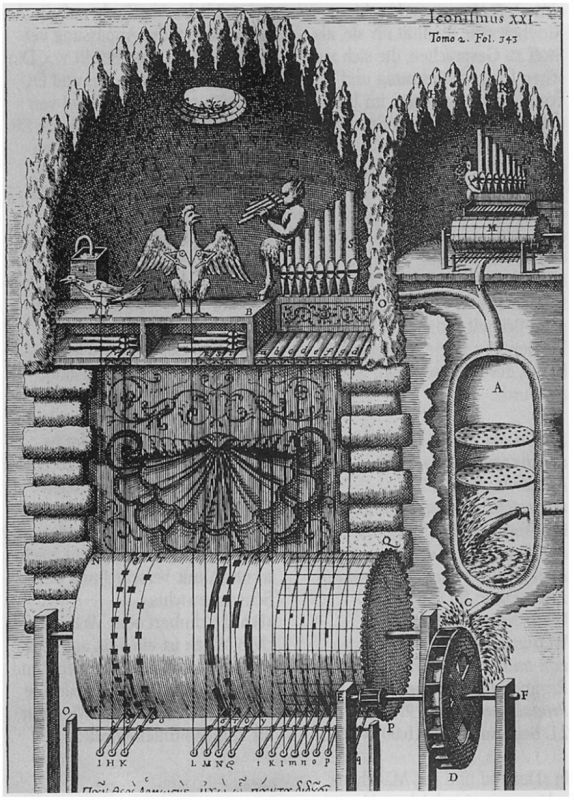
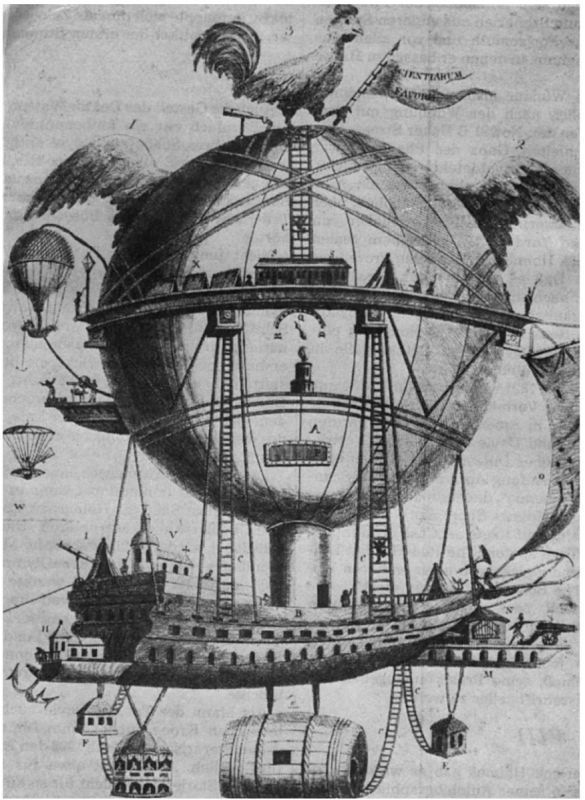
Plates 12.1 and 12.2 Europe enters an era of expanding technology, between dream and reality. The spirit of the age is well illustrated by the enormous number of mechanical gadgets one encounters in contemporary publications. Some of them were actually realized, such as the water-driven organ-cum-automata devised by the learned Jesuit Athanasius Kircher (1602–80), from A. Kircher, Iconismus, Rome, vol. II, f. 343 (top). To many, the new ideas seemed farfetched and impractical, as is shown in an eighteenth-century print making fun of science, in a vision of an air-borne world (bottom).
Source: Centre for Art Historical Documentation, Nijmegen, the Netherlands

EUROPE, THE EARLY SEVENTEENTH CENTURY: VIEWS ON THE SCIENTIFIC METHOD OF FRANCIS BACON AND RENÉ DESCARTES
Sir Francis Bacon, scholar and statesman, contributed to the development of modern scientific thought with a number of wide-ranging discussions clearly aimed at a general, literate audience rather than at specialist scientists. In particular, he propagated the essential value of the inductive method:
XIV A syllogism consists of propositions, propositions consist of words, words are tokens for ideas. If therefore the ideas themselves (the foundation of the matter) are confused and rashly deduced from things, there is no sort of firmness in the superstructure. Therefore, the only true hope lies in induction.
XVIII All that has so far been discovered in the sciences pretty well remains subject to vulgar notions; if we are to penetrate to the heart and limits of nature, we shall have to find a more certain and better fortified way of inferring both ideas and axioms from things. Altogether, a better and more certain method of reasoning will have to be brought into use.
XIX There are, and can only be, two methods of enquiry and the discovery of truth. One flies upward from the sense-data and particulars to extremely general axioms and causes, and discovers from these principles and their unchanging truth the intermediate axioms; this is the method now in use. The other deduces axioms from sense-data and particulars by steadily and gradually climbing higher, coming at last to the most universal generalisations; this is the true method, but one not yet tried.
XXI The intellect, left to itself, in a sober, patient and serious condition (especially if not impeded by received teaching), tends markedly towards the second and right way, but at a very slow rate of progress; since the intellect, unless directed and assisted, is an inadequate weapon and altogether unable to overcome the obscurity of things.
XXII Both methods begin with sense-data and particulars, and culminate in generalisations of a universal order, but they nevertheless differ enormously. For the one only just touches on experiment and the particular, while the other employs these properly and by rote; the one from the first posits certain abstract and useless generalisations, while the other by stages arrives at the truly knowable aspects of nature.
XXVIII Anticipation [Bacon’s word for hypothesis] is not the least more useful for the establishment of agreed facts than is interpretation [of phenomena]. Gathered from a few facts – and those as a rule the ones that occur familiarly – it only dazzles the intellect and stimulates the fancy. Interpretation, on the other hand, gathered all over the place from very varied and far separated data, cannot strike the mind with such sudden force; the facts must be treated, like opinions, as hard and discordant, not unlike the mysteries of the faith.
XCV All practitioners of science have been either empiricists or dogmatists. Empiricists, like ants, only collect and put to use; dogmatic reasoners, like spiders, spin webs from within themselves. The bee’s is the middle way: it extracts matter from the flowers of garden and field, but, using its own faculties, converts and digests it. The true operation of philosophy is not unlike this. It neither relies exclusively on the powers of the mind, nor simply deposits untouched in the memory the material provided by natural history and physical experiment. Rather it transforms and works on this material intellectually. Therefore we may have hopes of great results from an alliance so far unconcluded, between the experimental and rational methods.13
Against Bacon’s proposition that only the experimental, inductive method can lead to valid knowledge, the Frenchman René Descartes proposed a mathematical and, moreover, deductive style of argumentation as the basis of all science. The resulting ‘Cartesianism’ subsequently influenced the western way of thinking for centuries, even if the actual results of Descartes’s own scientific thought, for example in physics, were quickly overshadowed by empirical research and other theories. Descartes tells about his quest for the perfect method in an autobiographical way:
When I was younger, I had devoted a little study to logic, among philosophical matters, and to geometric analysis and to algebra, among mathematical matters three arts or sciences which, it seemed, ought to be able to contribute something to my design.
But on examining them I noticed that the syllogisms of logic and the greater part of the rest of its teachings serve rather for explaining to other people the things we already know, or even … for speaking without judgement of things we know not, than for instructing us of them … as to the analysis of the ancients and the algebra of the moderns, besides that they extend only to extremely abstract matters and appear to have no other use, the first is always so restricted to the consideration of figures that it cannot exercise the understanding without greatly fatiguing the imagination, and in the other one is so bound down to certain rules and ciphers that it has been made a confused and obscure art which embarrasses the mind, instead of a science which cultivates it.
This made me think that some other method must be sought, which, while combining the advantages of these three, should be free from their defects … I believed that I should find the following four [precepts] sufficient, provided that I made a firm and constant resolve not once to omit to observe them.
The first was, never to accept anything as true when I did not recognize it clearly to be so, that is to say, to carefully avoid precipitation and prejudice, and to include in my opinions nothing beyond that which should present itself so clearly and so distinctly to my mind that I might have no occasion to doubt it.
The second was, to divide each of the difficulties which I should examine into as many portions as were possible, and as should be required for its better solution.
The third was, to conduct my thoughts in order, by beginning with the simplest objects, and those most easy to know, so as to mount little by little, as if by steps to the most complex knowledge, and even assuming an order among those which do not naturally precede one another.
And the last was, to make everywhere enumerations so complete, and surveys so wide, that I should be sure of omitting nothing.
The long chains of perfectly simple and easy reasons which geometers are accustomed to employ in order to arrive at their most difficult demonstrations had given me reason to believe that all things which can fall under the knowledge of man succeed each other in the same way, and that provided we only abstain from receiving as true any opinions which are not true, and always observe the necessary order in deducing one from the other, there can be none so remote that they may not be reached, or so hidden that they may not be discovered…. What satisfied me most with this method, was that by it I was assured of always using my reason, if not perfectly, at least to the best of my power.14
In fact, in his Discours sur la Méthode (1637), Descartes studied his own thought processes; he concluded that man frequently starts from the wrong suppositions because he fails to systematically take into account all the factors which influence a thought, perception or action. Descartes therefore introduced the concept of fundamental doubt: before one departs from a particular position, which one wants to assume as a relative certainty, one must examine one’s own thoughts about it as thoroughly and impartially as possible. However, Descartes still left open the possibility that it is God who instils these particular references in man, his creature. So, while he had to erode the function of all authority that could not be made acceptable on the basis of reasonable arguments, the concept of God remained as unquestionable for him as it had been for St Augustine and St Thomas Aquinas. The debate over the Cartesian position was waged all over Europe. By the end of the seventeenth century, it was incorporated into mainstream scholarship and science by the ‘journalist’ and cultural commentator Pierre Bayle. In his widely read and highly influential compendium of European knowledge, the Dictionnaire Historique et Critique (1697), he adopted the Cartesian attitude of radical doubt which, in his view, would inevitably lead to both reliable knowledge and to tolerance.
In the same years, John Locke proceeded one step beyond Descartes, without acknowledging or denying God. In his Essay concerning Human Understanding (1690) he argues that, for example, observing children teaches us that man has no inborn ideas or principles. Everything he thinks and does during his life results from or builds on ideas and principles he has learnt or which are otherwise ‘taught’ him within his cultural context. Thus, man is not ruled by ‘universal ideas’ – from which the reader might infer that, if God, or another, perhaps platonic, agency existed, it did not determine man.
Meanwhile, the ‘new science’, now often characterized, in the Baconian way, as experimental physics, produced new findings almost every day. The invention of the microscope in the 1620s had opened up an ‘invisible world’ that showed the gradual development of many life forms from eggs or semen. Some argued that putting a slice of nature under the microscope would hardly contribute to a greater understanding of such a complex whole – and in a way they were right. Others, however, rejoiced in the idea that the realities of nature could now be seen beneath the surface of nature, which gave them a powerful weapon against the occultists who, for so many centuries, had used the book of nature only as a text full of secret signs.15
By the later decades of the seventeenth century, the concepts of the empiricists, whose thought was guided by the study of the cosmos and of the visible world, had become a new philosophy.16 This was most clearly demonstrated in the writings of the physicist Isaac Newton (1642–1727), whose life shows a phenomenon that characterized European culture until the end of the eighteenth century, i.e. that science was not a ‘professional career’ but rather something people did while taking on other tasks as well. Newton himself was first a professor at Cambridge and later master of the Royal Mint of England.17
In 1704, Newton published his great work Opticks, or the ‘Optica’. In this he explains the true method for attaining knowledge and insight, the right way to look at man and the world:
analysis consists in making experiments and observations, and admitting of no objections against the conclusions but such as are taken from experiments or other certain truths. For hypotheses are not to be regarded in experimental philosophy, and although the arguing from experiments and observations by induction be no demonstration of general conclusion, yet it is the best way of arguing which the nature of things admits of, and may be looked upon as so much the stronger by how much the induction is more general. And if no exception occurs from phenomena, the conclusion may be pronounced generally.
The way of thinking adopted by Newton and his generation shows both a Baconian trust in the value of empirical research and in the use of the Cartesian method of ‘fundamental doubt’, resulting, for many, in a clear optimism with regard to the human capacity to know the world and even the universe. People now felt the cosmos was governed by general laws that one could uncover and understand through careful observation. This new epistemology was codified, so to speak, in Newton’s Philosophiae naturalis Principia mathematica, published in 1687 with the support of the Royal Society. The book unleashed a revolution precisely because, as the title indicates, it was more than a treatise on physics. Let Newton speak for himself:
I offer this work as the mathematical principles of philosophy, because the whole content of philosophy seems to exist in this – from the phenomenon of movement to the study of natural forces, and from these forces to the demonstration of other phenomena … I am induced by many reasons to suspect that (the phenomena of nature may) all depend upon certain forces by which the particles of bodies, by some causes hitherto unknown, are either mutually impelled towards each other and cohere in regular figures, or are repelled and recede from each other; which forces being unknown, philosophers have hitherto attempted the search of nature in vain. But I hope the principles here laid down will afford some light either to that or some truer method of philosophy.18
Elaborating on the speculations of Copernicus, Kepler and others concerning the movement of the planets, Newton wanted to present a sound system based on quantitative, physical arguments. To this end he used integral and differential calculus through which it was possible to establish the position of a body at a particular moment if the relation between the position and the speed of the body or the change in speed at another time were known. When Newton subsequently reflected on the existing concepts concerninggravitation in his general study of gravitation, he was able to describe the cosmos mathematically as a system in which the celestial bodies moved eternally in set positions determined by the relative gravitational force of sun, earth and planets.
The consequences were profound, for there now occurred a definite break with the Aristotelian cosmology of the Christian world, in which the Creator always had to be present because movement supposed the constant exercise of force. According to Newton, creation, made up of atoms, was, once God had brought it into existence, a dynamic mechanism that worked in accordance with a simple law of nature. Newton confirmed what many had already suspected, or feared: God does not continuously interfere in man’s life. Yet, Newton was also continually searching for more intangible knowledge, through all kinds of chemical, some would say alchemical experiments, hoping even to find the ‘philosopher’s stone’.19 It is an important reminder of the fact that what has been termed the ‘Age of Reason’ was, in fact, a time in which people, as always, were torn between the conviction that rational thought would uncover all the world’s secrets and the conviction that there might yet be a truth behind the one thus revealed.
By the end of the seventeenth century, many Europeans who followed the developments in the world of learning may well have felt they were now thrown back on themselves. The Frenchman Blaise Pascal (1623–62), who formulated striking thoughts on many questions in his famed Pensées, had already voiced the ‘angst’ evoked by a new insecurity, writing:
When I consider the brief span of my life absorbed into the eternity which comes before and after – as the remembrance of a guest that tarrieth but a day – the small space I occupy and which I see swallowed up in the immensity of spaces of which I know nothing and which know nothing of me, I take fright and am amazed to see myself here rather than there: there is no reason for me to be here rather than there, now rather than then. Who put me here? By whose command and act were this time and place allotted to me? … the eternal silence of these infinite spaces fills me with dread.20
Many still share this fear. Nevertheless, many others, especially those who experienced the power and authority of the Churches as a hindrance to a more rational world-view, rejoiced. To them, through Newton, Europe seemed at last to have seen the light: the universal explanation of the universe had been found. Of course, the fact that science, or rather the sciences, now became a power system, too, demonstrating its use through the public presentation of all kinds of experiments with, preferably, spectacular instruments, gave it increased standing in society.
However, empirical, rational observation not only began to dominate research in the natural or physical sciences, whose importance to the European economy and society increased especially though the stream of technological innovations it produced. The new attitude now began to affect and even direct the way people thought about themselves and about their position in the cosmos as well. Thus, the political philosopher Thomas Hobbes (1588–1679) analysed and described society as if it were a physical phenomenon. In his famous work Leviathan, or the Matter, Form and Power of a Commonwealth, Ecclesiastical and Civil (1651), he established that all citizens are separate bodies, individual entities, only; if they continue to act like swirling particles, they will be unable to avoid collision. Therefore, man has created the State, as an instrument to avoid calamity and to realize the highest attainable good for the greatest number of people, for ‘we make the common wealth ourselves’.21
By the beginning of the eighteenth century, Newtonian physics and other scientific concepts had gained considerable influence over various non-physical domains of human thought, varying from practical aspects such as time and distance measurements on land and at sea to economic and political philosophies about man as an individual citizen, as an individual entrepreneur. Indeed, the new sciences began to change the way people observed their environment and interpreted the nature, the organization and functioning of society and politics.22
From Humanism to Enlightenment: a long dawn
A growing confidence in the results of man’s capacity to know himself and his world, which was widely felt throughout the Republic of Letters, came to characterize European learned culture in the late seventeenth and early eighteenth centuries. Many people considered themselves and their time as ‘enlightened’, namely by the light of ‘Reason’, of solid common sense, which led them to collect data, analyse them and only then conclude their meaning and significance. Many educated Europeans felt less and less inclined to accept as truths ideas that could not be reduced to empirical observations. Consequently, they also began to doubt all claims to authority and power that were not founded on logically reasoned and thus acceptable principles. In short, people threw off the shackles of tradition.
Increasingly, people now argued that man should free himself of the paralysis of the past, of the authoritarian, unreasoned imposition of tradition used as an argument for the ideas and structures that, specifically, Church and State had created to hold their power over society and, even, man’s soul. Inevitably, faith, by its very nature un-reasonable, was thought to deny the very qualities in man that must be the basis of his thinking and acting, namely, reason and tolerance. In short, people became critical, sceptical even, and judged the world around them accordingly. A more empirical, individual and secular way of thinking, which had begun during the Renaissance, now achieved its provisional completion in a vision of man and the world that has been called ‘the Enlightenment’, because its main champions were convinced that the world finally was ready to be illuminated by the light of reason.
This enlightened culture was increasingly governed by concepts that, though sometimes centuries old, were once more instrumental in distancing man from the traditional vision of God and his presence in creation, in the universe. For some, as for the French author La Mettrie, who voiced his widely discussed but, to many, abhorrent thoughts in a tract called L’Homme machine (The Machine-Man) (1747), the universe contained no God, but physical, moving bodies only. The most complex body ever evolved was man, a self-regulating machine that, in order to function, depended upon its fuel, food – if this man-machine lacked fuel, it would not function or, in human parlance, it would become ‘ill’.23 Such thoughts were naturally influenced by technological inventions and the consequent view of man, of the world, as mechanical instruments.
Yet, though a strongly materialist philosophy did now develop – continuing to the present day – in the long run most people adopted a mainly Christian ‘enlightened’ view, which allowed them to somehow reconcile the opposing ideas of religion and science. This ‘moderate’, religion-tinged enlightenment came to affect the minds of most educated Europeans well into the twentieth century, the more so as it became prevalent in Europe’s major cultural institutions – for instance, in education and science. Obviously, this occurred because both the various Christian churches and the governments of the European states – for reasons of principle and of pragmatism – tried to hold on to their traditional power, eschewing revolutionary notions that would only cause upheaval.
The Enlightenment – whether radical or Christian – was to a large extent an urban phenomenon, as can be shown from the example of late-eighteenth-century Edinburgh. This was the town where, in the late seventeenth century, Presbyterian ministers had roamed the streets on Sundays to ensure that everyone attended divine service, using force if necessary, and, of course, they would sit in church both in the morning and the afternoon. It was the town where, at that time, witches were still being burnt, as, indeed, they were all over Europe.24 Yet, a century later, all that was changing, and not only in Edinburgh but also in eighteenth-century Amsterdam and Middelburg, in ‘enlightened’ circles in Madrid and Valencia under the reign of Charles III, and in the bourgeois milieus of north Italian cities like Milan. In Great Britain, this ‘Enlightenment’ was embodied in scholars like George Berkeley (1685–1753) and David Hume (1711–76). In the German states, it found expression in the works of Gotthold Ephraim Lessing (1729–81) and, perhaps most of all, in Gottfried Wilhelm Leibniz.
Leibniz has rightly been called the last ‘universal scholar’. Admittedly, he never developed the all-embracing scientific system he longed for, with a language to match it, based on the irrevocable logic of mathematics – though with Newton he shares the honour of having developed differential calculus. Yet he contributed seminal ideas to a wide variety of fields, ranging from linguistics to philosophy, from library science to political theory. His cosmology has influenced people up to the present day. It was built on the notion of the ‘monad’ as the essential, basic, conscious element of the universe, matter and spirit in one, on which all more complex structures are built including, somewhere in the range of complexity, man himself, but culminating in the all-encompassing structure that is God.25
Indeed, the problem of God weighed heavily on the enlightened mind. To a greater or lesser degree, most Enlightenment thinkers wrestled with the relation between physics, between the world of matter, a natural world, that could be known, and meta-physics, a world that one could speculate about but not know in the same way as the physical world. Obviously, the debate centred around the relation between matter and spirit. In the seventeenth century, the Jewish-Dutch philosopher Baruch de Spinoza had already decided that man, in an age of scepticism and doubt, needed scientific proof of God’s existence, and he duly proceeded to give it.26 In his highly complex but still very readable Tractatus Theologico-Politicus (Amsterdam 1670), he created an image of God very unlike the personal God who had been essential to Jews and Christians for some 2,000 years. Spinoza’s God was a primeval force, of which all men, indeed all creatures were, in a way, part. In this concept of God, the opposition of matter and spirit dissolved. But to be able to conceive of such a God, Spinoza stipulated freedom. To him, liberty was the essential precondition both for public peace and for private piety, and both were the basic preconditions of a humane society.27
Ultimately, the major minds of the eighteenth century, too, were unable to really distance themselves from some sort of vision of God as an uncreated substance, as creator outside and above the world. Even the German philosopher Immanuel Kant (1724–1804) had to address the question. Admittedly, in his Kritik der reinen Vernunft (Critique of Pure Reason) (1781), he reasoned that all experience was realized only in rational categories and that ideas such as the soul, the world and God could certainly be thought but were not provable through reason, nor, however, were they refutable; in short, the world of belief, of faith, begins beyond the borders of theoretical reason. Yet in his Kritik der praktischen Vernunft (Critique of Practical Reason) (1788), he strongly argued for an acceptance of religion on ethical grounds, as a human and social necessity that, of course, implied some notion of belief as well.
In the 1760s, Kant had a fascinating discussion with the Swedish mining engineer and philosopher Emmanuel Swedenborg (1688–1772), which clearly articulates the eternal tension in European-Christian thought. In a series of works, of which the Arcana Caelestia (The Celestial Secrets) of 1749–56, and De Caelo et Inferno (On Heaven and Hell), were the most important, Swedenborg had developed a vision of man and the universe which made Kant his opponent but won him many adherents even in our own age. For the Swede, attempting to prove God’s existence, the mind, the spirit is a substantial, organic whole in which man and God coincide in its successive stages of awakening. To him, churches and religions are irrelevant, and he unhesitatingly rejects the universal claims of Christianity: ‘Everyone whose heart is enlightened can see that not a single person was born for hell’ and ‘the Church of the Lord is spread over the whole world and is therefore universal: all are members of it who live a life of brotherly love, in accordance with their own religion’.28
For others, the world and everything in it – including the most solid material objects – were merely projections of the human mind. So it was for Arthur Schopenhauer (1788–1860). In his Die Welt als Wille und Vorstellung (The World as Will and Idea) (1819) he accepted that man can acquire knowledge through experience but he questioned what man can reliably say and know about the nature of things. His answer was: not much, for each man is an object, a body, ‘an idea’, and at the same time, a subject, a self-awareness, a ‘will’. To survive in this world, each man assumes that the same counts for all other humans:
Wenn also die Körperwelt noch etwas mehr seyn soil, als bloss unsere Vorstellung, so müssen wir sagen, dass sie äusser der Vorstellung, also an sich und ihrem innersten Wesen nach, Das sei, was wir in uns selbst unmittelbar als Willen finden.
Therefore, if we want to maintain that the material world is more than merely our idea of it, we must conclude that beyond idea it is, in its essence and according to its own innermost self, that which we, in ourselves, immediately will it to be.
Schopenhauer concludes that a world of sorts does exist but that, actually, though we have the illusion of its manifoldness, it is nothing but the projection of one essence: ‘Jeder erkennt nur ein Wesen ganz unmittelbar: seinen eigenen Willen, im Selbstbewustseyn’ (‘Everybody is able to know only one essence immediately: his own will, in his own consciousness of it’).29
Among the countries of continental Europe during the seventeenth century the Northern Netherlands, or the Dutch Republic, was arguably the most tolerant. Public debate, at least amongst the cultured elite, showed a remarkable degree of openness about the tenets held dear and defended by both religious and secular authorities. Consequently, all kinds of established truths were questioned. Since the Republic was perhaps the major European centre of publishing – both of books and, increasingly, journals – new ideas were spread far and wide, reaching other European countries as well. Nevertheless, in traditional historiography eighteenth-century France is always portrayed as being, perhaps, most open to ‘enlightenment’,30 though the arguments given, viz. that French society was characterized by innovation and diffusion, by production and distribution, by circulation and mobility are the very ones that explain intellectual developments in the Northern Netherlands as well. In both countries, books and ideas acted on social mores, practices and artefacts, and together they were interwoven in an ever tighter network of communication and, indeed, of change.31In France, enlightened thinkers such as Voltaire (1694–1778) reasoned that if their principles were widely disseminated – by making knowledge accessible in dictionaries and encyclopedias, through education and reading, by displaying nature and culture in museums and visualizing it in experiments – they could actively propel society along the road to progress.
Consequently, many ideas considered characteristic of the Enlightenment evolved mainly in France. Though some of them might have been very old already, they were now described and advocated more convincingly than ever before. In his Du Contrat Social(On the Social Contract) (1762), Jean-Jacques Rousseau (1712–78) reasoned his way towards revolutionary ideas about freedom, equality and fraternity. However much his notion of popular sovereignty was based on his rather limited experiences of a small city-state – his native city of Geneva – and was therefore difficult to apply to larger societies, Rousseau’s ideals of political and social change impassioned many, in part because the rhetoric he used was appealing in its emotional variety. Indeed, it was precisely the inconsistency of his views that allowed everyone to interpret them as they pleased. However, few French philosophes were as radical as he was: many sought a middle course between existing economic and social structures and the necessity to effect change gradually, especially through politics.32
All over educated Europe, French writers were read and commented on,33 even if their more extreme concepts were more admired than applied. In many countries, people soon felt a moderate version of enlightened thought might go a long way to effect change. Consequently, the notions that were most successful were those that, having been developed in earlier Humanist and cosmopolitan thinking, now accentuated growing tolerance, especially regarding freedom of expression, and showed an increasing confidence in the civilizing value of reason.34
Although the non- or even anti-religious aspect of ‘enlightened’ thinking was not shared by the majority of educated Europeans, both the Enlightenment itself and the many debates that were essential to it inevitably contributed to a quickening erosion of Christianity as the all-powerful normative framework of European culture. Following the division between the Churches in the sixteenth century, it was now the Enlightenment that reinforced the process which went on to deconstruct a way of thinking, a world-view that, regardless of one’s judgement of its morals and practices, had formed Europe’s most fundamental claim to unity.
Meanwhile, cosmopolitan thinking not only became less Christian, but also claimed to comprehend and understand the entire world rather than just Europe. The new belief, the new ‘faith’ now vested in the power of reason increasingly proclaimed ideas about man and society that heavily emphasized a universal morality; indeed, humankind, or so people now believed, was intrinsically imbued with a morality that, if applied in its pure form, would of itself result in such values as a sense of public responsibility and the search for beauty.35 Obviously, the body of knowledge about the non-European world which had grown tempestuously in the two preceding centuries was at the basis of these new ideas. On the one hand, ethnology had engendered cultural relativism, affecting European thought about man and the world, about Europeans and others, and had often resulted in finding ‘proof’ of Europe’s cultural superiority.36 On the other hand, the universal values now envisaged were equally the result of a European vision of humankind, and indeed, imposed upon it a set of values specifically European, specifically enlightened.
In the development of this vision, one single text – pretending to encompass all knowledge – played a central role. Preceded, in 1728, by the English Cyclopaedia of Ephraim Chambers, it was, of course, the French Encyclopédie, which was published in 28 volumes between 1751 and 1772,37and was soon seen as the fundamental repository of Enlightenment culture. In thousands of articles it described, and often also judged ‘the world’: its geography, its history, its religions, its philosophies, its languages, its inventions – indeed, its all and everything. But though it was a monumental, radical and hugely influential text, that did much to spread enlightened views, it is perhaps characteristic of the new divisions in Europe that the Parisian scholars who produced it were unaware of the German enterprise of J.M. Zedler, who had been publishing his Grosses Vollständiges Universal-Lexicon aller Wissenschaften und Künste (Great and Complete Universal Dictionary of all Sciences and Arts) from 1732 onwards; it may not have been as critical, as enlightened as its French competitor, yet it was influential in the world of German culture. The situation indicates the limits of communication between the regional languages now that Latin had lost its position as Europe’s lingua franca.
Enlightenment and Romanticism: poles apart?
Paradoxically, the process by which a mainly moderate, Christian version of the Enlightenment filtered down to wider circles of the educated population of Europe at the end of the eighteenth and in the first decades of the nineteenth century was reinforced by considerable criticism of some of the more far-reaching ‘enlightened’ concepts, the more so when these became connected to political and social revolution. This happened when, all over Europe, people outside the circle of those who called themselves progressive – first and foremost French-orientated intellectuals – reacted negatively to the ‘spirit’ of the political and social revolution that shook France from 1789 onwards, resulting in the fall of the monarchy and the institution of a dictatorship. According to them, the blatant secularism and the bloody chaos that characterized French politics in this period had been the inevitable outcome of those aspects of the Enlightenment which, they said, embodied materialism and inhumanity. At the same time they saw the revolutionary developments as proof positive that they were right in rejecting the Enlightenment altogether. They were strengthened in their conviction by the actions of General Bonaparte, later the Emperor Napoleon; specifically by his large-scale attempt to unite the whole of Europe politically, at first with the help of the youthful zest of the French revolutionaries but soon by means of destructive wars. To better understand what was happening around the turn of the eighteenth to the nineteenth century, it is necessary once more to look back.
Actually, something of a ‘counter-Enlightenment’ – some might prefer to call it a Christian Enlightenment – had been developing long before the revolutionary horrors of the 1790s dawned upon Europe. During the late seventeenth and the eighteenth century, in the complicated process of cultural transmission and borrowing between different social groups, a symbiosis had been growing in which the culture of Humanism, having gained a new stimulus in the (pre-)enlightened institutions of the Republic of Letters – a cosmopolitan culture though elitist both in its origins and essence – acquired a far broader social base. One of the explanations for this process can be found in the fact that learned, scientific culture in general had slowly been adopted by the various European states and, consequently, had been presented as the result of a national effort,38 the more so since governments had decided that the new scientific, technological achievements should be harnessed to their own goals. Increasingly, the middle classes, who basically carried this culture, were imbued with an ethic that told them that serving the State was to be their prime objective. Significantly, while all over Europe people continued to admire classical civilization, Europe’s common heritage, in the reading societies and debating clubs which now became the hotbeds of bourgeois cultural life39 – the counterpart of the aristocratic salons – thought and action now focused on the cult of one’s nation’s own past.
This tendency, which grew during the eighteenth century, became much stronger in the aftermath of the French Revolution. For, now, a widespread aversion developed to all those ideas and other forms of culture that, in the wake of the Enlightenment, had been presented as generally valid. People only continued to accept enlightened, universal ideas if these could be fitted into more traditional, controllable frameworks. Instead of relying on the general, the universal, which was threatening in its vagueness and offered little security, people fell back on the particular, the local, regional or national that gave structure to their own country – its religion, its language, its customs and morals, which, unlike the high-flung, so-called universal philosophical principles, could function as the recognizable, comforting anchors of identity in an ever wider, threatening world.
Specifically in those countries where French culture in its eighteenth-century, strongly secular form had been less influential – parts of the German Empire, the Netherlands and Scotland but also Spain and Italy – traditional, and also religious, concepts fused with new scientific ideas influenced by although not always acknowledged as part of the Enlightenment. In a sense, the Enlightenment and the ‘counter-Enlightenment’ merged in these places. A strongly personal faith, frequently of a devout, pietistic nature, and a moderate form of progressive thinking interacted fruitfully with growing pride in the achievements of one’s own state. Although all over Europe, on the local-regional level, certain forms of communal thinking had a long tradition, the search for common roots now became more crystallized; soon, the governing elites of the European states took care that this evolved into a well-defined national feeling.
What remained was admiration for the great achievements of Europe’s classical civilization, which were experienced, at least by the more educated, as part of their identity, and indeed, as their own roots. It was an emotion greatly reinforced by the spectacular discovery and subsequent excavation (1738–48) from the ash and lava of Mount Vesuvius of the splendours of the Roman cities of Herculaneum and Pompeii. At the same time, and perhaps understandably in view of the growing tendency to idealize only Europe, or, indeed, only one’s own nation, the undeniable Afro-Asian components of that classical civilization were gradually written out of ancient Greek and indeed European history by the guardians of tradition, the scholars, precisely to ensure that this tradition could be presented as uniquely ‘European’.40 Also, in response to the French Revolution and, even more so, the imperialistic politics of Napoleon, many European states expressed their disapproval of imperial aspirations; consequently, the ‘popularity’ of ancient Rome decreased, while that of classical Greece grew. Greece, where no one ruler had ever subdued the towns; Greece, where democracy had been born; Greece, where the intellectual had been able to claim a far more powerful position than in imperial Rome, became very popular indeed until the end of the nineteenth century, both in the German states and in England,41 both of which claimed to be the true heirs not only of Greek culture but of the Greek ideal.
Meanwhile, in Greece itself, for several hundred years a backward province of the Ottoman Empire, as was the greater part of the Balkans, the ideas of the Enlightenment had taken hold as well, if only among a small urban elite. One such intellectual, Iosipos Moisiodax (c.1725–1800), boldly came forward to claim that the peoples of the Balkans should remodel their societies on European ‘enlightened’ lines. One of the main instruments should be a re-organization of education, wherein vernacular Greek, the ‘national’ language, should be the medium.42 Soon, all over Europe, people enthusiastically flocked to Greece to help it gain independence from its non-European, Islamic, and therefore backward and tyrannical, rulers in Istanbul.
Inevitably, as European culture was slowly being nationalized, appreciation grew of that part of the past that could convincingly be argued as explaining the nature and uniqueness of one’s own state and society. By this process, trends that had set in during the late seventeenth century now became more pronounced.
In England, in the 1750s, the composer Thomas Arne had produced a masque to be acted before the crown prince’s court called King Alfred – along with the rather more mythical Arthur, Alfred was considered to be the founder of England’s independence; it contained the rousing nationalistic song ‘Rule Britannia’. In his Ossian Poems of 1761, James Macpherson harked back to an even more distant past, singing the praises of Celtic culture as a basic element in the formation of Britain. In the German states, Johan Wolfgang von Goethe (1749–1832) and Friedrich Schiller (1759–1805), while still inspired by classical Greece, also delved deeply into their ‘own’ Germanic past. Remarkably, in Spain, for the first time in its history, intellectuals, and, moreover, monks like Benito Feijóo and Martin Sarmiento pointed to the influence of Islamic civilization on Spanish culture, although, of course, they tended to concentrate on Spain’s glorious Siglo de Oro, the ‘golden’ sixteenth century.
And yet, as if to prove that such appreciation of the past need not result in stultifying conservatism but could be a creative influence, many of these men also strongly voiced the need for change, to recapture the erstwhile grandeur of the nation. Even in Spain, considered by most northern, Protestant Europeans to be almost as backward as the Balkans if only because it was judged to be ‘priest-ridden’, enlightened monks and other thinkers, often from the provincial bourgeoisie, contributed to a climate wherein, for the first time in more than 100 years, part of the ruling elite did indeed consider and even implement new policies; in the economic and educational sectors, ideas from England and France were discussed and adopted.43 The same occurred in Italy, especially in Milan and the other economically prosperous towns of Lombardy, where the rule of the Church was less oppressive than in the papal states. Intellectuals from the clergy as well as from the secular bourgeoisie and innovative entrepreneurs discussed both the past and the future, proposing reforms to restore Italy’s ancient cultural and economic pre-eminence. In doing so, they created a situation wherein, by the end of the eighteenth century, northern Italy was on its way to becoming one of Europe’s most enlightened and, also, most prosperous areas.
All the while, indeed, from the mid-seventeenth century onwards, another phenomenon had become increasingly manifest in European culture and now began to interact with the growing tendency to reduce the space of meaningful experience to one’s own nation, and to glorify it, partly through its past greatness. This was the glorification of spontaneous, ‘natural’ feeling and, inextricably mixed with it, the cult of nature, of harmonious growth – though in the new fashion of natural garden architecture it had to be artfully arranged to achieve the desired effect. Feeling and growth, both seen as characteristics of nature, became elements of a new awareness, a new sense of life. Instead of the mathematically cold lines of classicist architecture, of a totally controlled society and environment as epitomized in the denatured court and also gardens of Versailles, people stressed the value of organic growth, both in art and architecture and in society and nature. Significantly, the woods, once the abode of the uncivilized, the wild, and of the old, pagan gods, now became the natural habitat of a man at ease, a man communicating with his roots and with the cosmos; indeed, while many still felt this cosmos was ruled by a personal, omnipotent God, others now, again, stressed that the cosmos, nature, was the ultimate force of life itself. This cultivation both of nature and of the past coincided in a vision of society as an organism that had grown ‘naturally’ through the ages, with time nurturing it and hallowing its results. The sum total of these complex sentiments has been termed Romantic. The term itself had already been in use for a long time; indeed, the famous English diarist Samuel Pepys had applied it in the 1660s to characterize an extraordinary contemporary of his, Margaret Lucas, duchess of Newcastle, precisely because she, in her dress, lifestyle and even emotions, indicated a tendency to reject fashion, to follow no rules, to be her own self.
The new, romantic views had a wide resonance. In the imperial capital, Vienna, Franz Joseph Haydn (1732–1809) was avidly reading the works of contemporary philosophers and other scholars.44 He also travelled, to England among other places, in 1791 and again in 1794, because his music was greatly appreciated there. While in London, he acquainted himself with Handel’s great choral works which inspired in him the wish to create something comparable. Back home, the baron Gottfried van Swieten, one of the Empress Maria Theresa’s courtiers and her librarian, presented Haydn with the text of the Englishman John Milton’s poem Paradise Lost (1658–67), depicting man’s creation and life in paradise, which he had translated and adapted. Haydn set it to music in 1798. But paradise was not lost to these eighteenth-century musicians and thinkers. From an intriguing nexus of cultural lines reaching through time and space, the oratorio The Creation became a paean of praise to God’s work, a joyous song about the sheer variety and life of nature. It is a vocal résumé both of Europe’s continued Christian vision of its origins and development, and of its optimism for God’s future achievements as ruler of the earth.
Yet, even in a vision like Haydn’s, in which the overture depicting the seven days of creation should definitely be labelled Romantic, the idea of Europe’s shared ideals inevitably receded into the background. Perhaps this is one of the most important elements distinguishing the Enlightenment from Romanticism.
Even while enlightened thinking had been gaining a firm foothold all over Europe by the end of the eighteenth century, reactions against it already started appearing, denouncing its so-called dehumanizing tendencies. Indeed, from the late eighteenth century onwards, many have found problems choosing between what by then were significantly termed the poles of positivism and poetry. In these years, Goethe conceived his greatest play, Faust, a ‘scholar’s tragedy’ in which he, through Faust, empirical thinker and doubter, articulated weighty questions about the limits of knowledge and thus about the position and purpose of man in the world. Not surprisingly, both in Germany and, for example, in the Netherlands, Baruch de Spinoza was rediscovered, by some as the anti-Christian, atheistic philosopher of a scientific, secular culture, but by others as the prophet of a convincing pantheism.
Indeed, it was in Germany, in the milieu of Jena University, that a new or rather an old philosophy using new terms and ideas was now preached. This ‘Naturphilosophie’, embodied in Friedrich-Wilhelm Schelling (1775–1854) but strongly present in the scientific and the poetic writings of men like Goethe and other Romantic authors as well, sought to reunite nature and culture, in the sense, too, that to them nature implied feeling, faith even, and culture stood for man’s rational capacities and technological achievements. To reunite the two worlds, the new philosophy developed dynamic and even organic explanations for natural phenomena using both chemistry and mathematics and applying such concepts as polarity and complementarity, metamorphosis and identity. Although this philosophy did not go in for experiment, it did, in fact, generate important scientific results, precisely because such concepts as unity and polarity led to discoveries in the fields of contact-electricity and electro-magnetism. However, in the end, the largely deductive character of this approach was felt to be technically, materially unproductive; hence, in the 1830s, people once more embraced a very positivistic, inductive view of science which, for the time being, eschewed philosophical reflection. Yet the idea of a more holistic interpretation of nature lingered on, resurfacing every now and then, as, for example, in Germany itself, where, at the end of the nineteenth century, a new call was heard: ‘zurück zu Goethe’, meaning back to a humanizing science. It was a call that can be heard even now, reflecting both scientists’ and the general public’s feelings that the modern world should address ‘the unfinished business of our times’;45 it is, in fact, a call heard by all those who, whether scientists or ordinary educated people, argue that a purely positivistic and moreover technological bias would be damaging to human culture.
It is necessary to consider these developments precisely because criticism of the Enlightenment and its consequences has echoed up to the present day, being voiced, specifically, by those who feel that the culture of ‘modernity’, of progress promised by the enlightened thinkers – a culture that, indeed, materialized in the highly technological, consumption-driven world of nineteenth- and twentieth-century Europe – has not become the humane world it also promised to be, a world of reason and tolerance. Consequently, depending on the extent to which one experiences the effects of that which initially developed in the Enlightenment as positive or negative, one will consider this period as a blessed or a cursed phase in European history.
In retrospect, many have judged the period between c.1650 and 1820, in which the Enlightenment slowly became manifest and, subsequently, triumphant, as a period that showed a growing awareness of the position of man as a free agent, an individual who should be the central point of reference in society, as well as a period of increasing rationalism. Undoubtedly, between them, these phenomena signalled a definite break with the ‘harmonious universe’ that most intellectuals had tried to maintain one way or the other since the union of the classical and Christian world-views sought and achieved in the Middle Ages. Together, humanism – by which I do not mean the scholarly Humanism of the fifteenth and sixteenth centuries – and rationalism greatly contributed to the decline of a European culture that had been determined by institutional religion and marked the transition to a more secular view of man and the world. To many, both then and now, the situation was aggravated precisely because the prevailing organic world-view had been supplanted by a mechanistic vision that was to hold an almost absolute sway over Europe until the middle of the twentieth century.
Undoubtedly, though Enlightenment ideas at first only affected a small group of intellectuals and the better educated, they were soon taken up by the middle class, during the nineteenth century, and then became the basis of European thought about man and the world in the twentieth century.
However, this happened only because the Enlightenment was certainly not as diametrically opposed to Romanticism as is often argued. The Enlightenment glorified empiricism, but it was an empiricism not only of reason but also of the senses! Thus it bore the fruit of the seeds that had already been sown in early Humanism and the subsequent Renaissance. The difference became manifest mainly in the more secular character of the Enlightenment. Yet, recent research has abundantly shown that in this very period innumerable creative combinations of reason and religion remained or even came into existence: from the esotericism of such secretive and indeed secret societies as the Rosecrucians and the Freemasons, to the Catholic ‘Aufklärung’.46 In particular, the moderate, bourgeois version of Romanticism continued to pose many of the questions which people in the Christian Enlightenment had asked too, even though these questions were now clothed in other words. Maybe one must conclude that it was only the extent to which the answers to a number of fundamental questions betrayed a clear return to a more religious, metaphysical view of the world that really differentiated Romanticism from the Enlightenment. Indeed, the two often seem to have fused, especially in the first decades of the nineteenth century.
Dossier: Cosmos, nature, man
The three spires of Lichfield cathedral dominate a cluster of old houses, amongst which there is an attractive one of mellowed brick. It is a place largely forgotten, if only because most people who think ‘Darwin’ will think of, or even go to, Down House, in the county of Kent, where the most famous bearer of that name, Charles Darwin (1809–82), spent the better part of his life. But one could argue that the inhabitant of the Lichfield house, his grandfather Erasmus Darwin (1731–1802), though a ‘mere’ country doctor was, perhaps, the more creative mind.
Erasmus Darwin spent most of his mature years in the small Midlands town. When not caring for his patients, he received guests who, like him, were part of the educated bourgeoisie. Indeed, many of his circle belonged to the so-called ‘Lunar Society’, which represented Enlightenment culture in this part of England. The group included men such as Matthew Boulton who, with the engineer James Watt, another visitor, was a driving force behind the Industrial Revolution, marketing the steam machine and a great number of other technical innovations; the inventor Josiah Wedgwood, founder of the later world-famous pottery factory – the Wedgwoods and the Darwins repeatedly intermarried; and the weapons manufacturer Samuel Galton Jr. Another luminary, Benjamin Franklin, from Philadelphia, crossed the ocean to meet these learned men.47
Darwin was, in a way, a typical eighteenth-century erudite. Reading voraciously, he ‘philosophized’ about the questions that interested him, and came up with a series of very interesting texts that presented his readers with some fascinating speculations concerning the workings of nature.
Of course, to the great majority of Europeans – mostly orthodox or, at least, non-questioning Christians – nature was God’s work, and studying it would, primarily, imbue man with ever greater awe of the supreme being that had made it. The process which the ‘prime mover’ had chosen was described in the first book of the Old Testament, Genesis; it described the six days during which God had crafted his great work, culminating in the creation of man, and, subsequently woman out of one of Adam’s ribs. All this, or so learned men had calculated in the seventeenth century, had begun at nightfall preceding Sunday, October 23, of the year 4004 before the birth of the Christ.
This vision of cosmos, world and man as a complex but essentially static system had prevailed for centuries, and was at the basis of nearly all European science and scholarship, from astronomy and physics to biology, and, also, history. Yet, from the beginning, these views – or, rather, the views held by the majority of theologians – had been challenged, although not openly so. There were people who either speculated about other possibilities, especially concerning the universe, time and the process of creation, or actually,though not systematically, observed the natural world around them, and found enough to make them doubt accepted wisdom, without, it should be added, necessarily losing their belief in God.
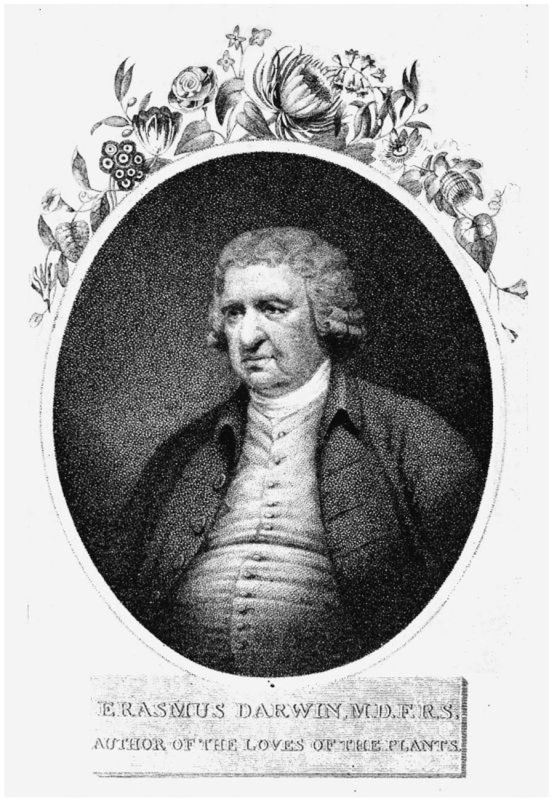
Plate 12.3 Engraved portrait of Erasmus Darwin.
For example, in the early 1440s, Nicholas of Cusa – a cardinal of the Holy Roman Church – suggested that the earth was a star like other stars, rather than, as Rome taught, the centre of the universe. Nor did it remain at rest, or have fixed poles. As all other celestial bodies, Cusa said, it was not strictly spherical, and it did not move in a circular orbit around the sun. To explain the difference between theory and appearance, he pointed to relative motion. A century later, the Brabantian physician Andreas Vesalius revolutionized medical science almost by himself. In 1543, he publishedDe Humani Corporis Fabrica. The seven-volume book, with lavish and very detailed plates, was based largely on systematic human dissection, up till then unheard of, and transformed anatomy into a science that relied on direct observation. However, Vesalius explained to his students and colleagues not only human anatomy, incidentally also disproving the common belief that the male human had one rib fewer than the female. He also gave accurate descriptions both of the blood and the nervous systems, asserting that the brain rather than the heart directed the functions of the nerves. Inevitably, these notions caused people to create a new, ‘mental’ image of themselves.
By the eighteenth century, many educated Europeans had ceased to accept Biblical stories about creation as literal truth, trying to find other explanations not only for the myriad forms of nature, but also for the time of their genesis and, indeed, for the creative force behind them. Most did so privately, for making oneself publicly heard one risked problems with the established Churches, not only that of Rome, but also the many Protestant ones in Northern Europe. Moreover, in consequence of the close links between the religious and the political establishments, one might then discover that many career possibilities remained closed.
Erasmus Darwin stood within this variegated tradition. He assisted in the English translation of the Systema Naturae, the great work of the eighteenth-century Swedish botanist, Carl Linnaeus, and tried to popularize the ideas about the ‘sexuality’ of plants contained therein by explaining them in a long, didactic poem. He went on to publish his own views, mainly in his two-volume 1794 Zoönomia, or the laws of organic life, that dealt with anatomy, pathology and psychology. In a chapter titled ‘Generation’, he wrote, speculatively:
Would it be too bold to imagine, that in the great length of time, since the earth began to exist, perhaps millions of ages before the commencement of the history of mankind, that all warm-blooded animals have arisen from one living filament, which THE GREAT FIRST CAUSE endued with animality, with the power of acquiring new parts, attended with new propensities, directed by irritations, sensations, volitions, and associations; and thus possessing the faculty of continuing to improve by its own inherent activity, and of delivering down those improvements by generation to its posterity, world without end!
Darwin also thought about the ways this process of continuity was structured, and about the factors that drove it. He stated that every living, sentient being was propelled by ‘three great objects of desire, [(viz.)] lust, hunger, and security’. Yet not every specimen of a species would thus ensure its survival, Erasmus argued, for only ‘the strongest and most active animal should propagate the species, which should thence become improved’. In a poem published posthumously, The Temple of Nature, Darwin sketched an even grander vision, tracing the progression of life from micro-organisms to civilized society.
However revolutionary, Darwin’s ideas did not reach a large readership. Nor did he even try to scientifically prove them through laboratory tests or other forms of empirical research. Therefore, the Anglican Church which, of course, had most to lose from a challenge to the credibility of its age-old teachings, did not seek to censure his writings.
During the first decades of the nineteenth century, others began to adduce thoughts that had the same subversive potential. Thus, for example, the geologist Charles Lyell, studying published data but also taking long walks through the British countryside to personally examine its stratigraphy, finally arrived at his famous ‘attempt to explain the former changes of the Earth’s surface by reference to causes now in operation’, expounded in his Principles of Geology (1830–3). Though Erasmus Darwin had suggested something similar, Lyell was one of the first to publicly state that, contrary to the biblical time-line, the earth had originated at least 300 million years ago and, rather than being static, was still changing.
Lyell’s first two volumes were a revelation for Erasmus’s grandson, young Charles Darwin, who read them after he had boarded the ship Beagle in 1831 to serve as its scientific officer. Given his own background – of course he knew the works of his grandfather, but he had also studied biology and geology at Cambridge – he could not but be influenced by this scholar’s views, too. Yet, it took far more reading, as well as analysing the enormous amounts of notes taken during his five-year voyage around the world before, during the subsequent more than 20 years of quiet study and empirical experimentation, Darwin became ready to articulate his own views of creation. In 1836, he had read Thomas Malthus’s Essay on the Principles of Population (1798) and wrote in his diary:
being well prepared to appreciate the struggle for existence which everywhere goes on … it at once struck me that under these circumstances favourable variations would tend to be preserved, and unfavourable ones to be destroyed. The result of this would be the formation of new species. Here, then, I had at last got a theory by which to work.
This, and many other texts, constantly drove Darwin to reformulate his ideas. He might not even have published them were it not for a letter the botanist Alfred Russell Wallace, travelling in the East Indies, sent him in 1858, in which he explained his views about natural selection, thus forestalling Darwin’s conclusions. Consequently, in 1859 Darwin rather rapidly published his On the Origin of Species. In the book which, well-written and also cleverly marketed, became an almost instant best-seller, he argued that all species descended, over time, from common ancestors, in a pattern of transmutation determined by a process of natural selection, for in the continuous struggle for life those individual specimens who were the strongest would survive, and reproduce. But Darwin’s Origindealt only with the animal world. And it did not use the word ‘evolution’ at all. It took Darwin another decade to address the implications of his and, by that time, other people’s findings, writing the Descent of Man, which he published in 1871.
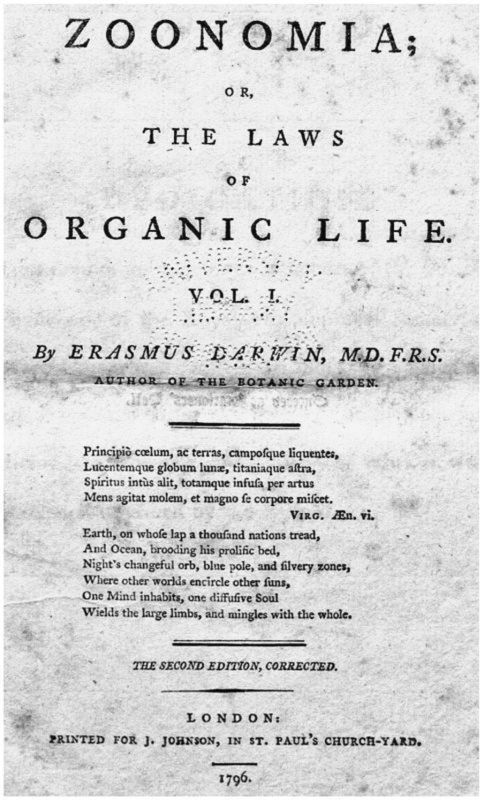
Plate 12.4 Erasmus Darwin’s ground-breaking Zoönomia (1796).
Darwin’s ideas often aroused vehement discussions about man’s genesis. They took another direction after the discovery of the laws of genetic heredity in the late nineteenth century and, from the 1960s onwards, the great progress made in DNA-research. However, Darwin’s ‘evolution theory’ also caused debates about the role of a ‘creator’ that run on unabated till the present, as do the even more problematic questions about man’s ‘right’ to manipulate what he sees as the negative outcome of human procreation – specifically now that ever fewer people accept an external force to steer and judge the decisions they themselves want to take.
Most recently, nanotechnology, which, broadly speaking, is the engineering of functional systems at the molecular scale through such approaches as nanorobotics or bionanotechnology, is opening up all kinds of possibilites within a field that, though potentially of great impact, is certainly not yet entirely explored.