
Part IV
Freedom and consumption for all?
Material culture and conspicuous consumption: Europe’s process of consumer change until the end of the eighteenth century
Until well into the eighteenth century and, in some areas of Europe, up until the end of the nineteenth century, most families, especially in the countryside, possessed little more than a dozen household goods – those that were absolutely necessary: some simple stools, a plank table, some cooking utensils, perhaps two or three beds and mattresses, and a few blankets. The fact is borne out by an investigation organized in the German countryside at the end of the nineteenth century. According to the survey:
The bed was a wooden plank with a straw mattress; there was a cupboard, a rough-hewn wooden table, a few stools, all of which a carpenter could make in a few hours. In my youth the first stoves were introduced; before, we only had an open fire with a kettle hanging above it. Around 1860/1870 my father bought such a stove…. In the old house … we had an oven, which my parents had purchased when they married, a pump, and a sofa. We ate and lived in the kitchen, with its wooden floors, its scrubbed table, its settee and cupboard, all made by Father … The few clothes we had were hung on pegs, maybe behind a curtain. Mostly, two children shared a bed.1
In order to know whether this situation prevailed all over Europe and, moreover, whether it applied to the non-agrarian population as well, a cultural historian must delve into the archives. For the answers are, at least partly, given by the inventories enumerating the possessions of citizens and farmers in towns and villages. Research into the material culture of Europe is a fairly recent branch of scholarship. Formerly, most historians were more interested in the traces left by the great thinkers and artists, the ramifications of political intrigues and dynastic affairs, the mechanisms of social processes. But these certainly do not suffice in writing cultural history. We also want to know how ordinary people lived, what their houses looked like, what they ate and how they dressed in their daily lives; the culture of Europeans was shaped fundamentally by its basic material conditions.
One of the first results of this new type of research has been that we now know that all over western Europe the average number of household items gradually increased between the late fifteenth and the late eighteenth centuries. In the same period, material possessions were perceptibly, if slowly, more evenly spread across the social classes. Both developments were undoubtedly caused by the economic changes produced, in particular, by the growth of trade and industry.
Yet, up until the end of the eighteenth century, only a single social group lived a life resembling our modern consumer society. Only a single social group was always well fed, always able to buy luxury foods it did not need and, moreover, able to buy any amount of material objects which, judged from a survival perspective, were unnecessary as well. This group, of course, was Europe’s elite, composed both of the old nobility, its wealth largely based on landed income, and of a small number of top bureaucrats grown rich in the service of the State as well as of plutocrats who had amassed their fortunes in trade and banking. What did their material culture look like?
Their houses were big, even very big, boasting an amount of space far and above what was needed to give simple shelter: it showed society that its owners had the money to buy ‘superfluous’ space, space that was luxury and thus gave status to its proprietor; in short, it showed wealth and the social position usually associated with power. The rooms in these houses were filled with objects that were useless, too: sculpted wooden chests, huge armoires, Persian or other oriental carpets, richly embroidered tapestries, pictures large and small. The chests and cupboards stored rich clothes, and caskets full of jewellery, as well as china and plate. All these objects shared the function of the space they occupied, displaying wealth, distinguishing their possessor, referring to his power.
But the ideology behind it went deeper: the wealth of the elite, the money that did not have to be spent on life’s bare necessities, was still put to good use. Building or buying the splendid mansions, castles and palaces, commissioning the beautiful and costly objects that filled them meant that the elite cared for culture and showed that the society of which they were the leaders was a truly civilized society. This argument was prevalent already in the sixteenth and seventeenth centuries. The mentality it expressed has been described as society’s need for ‘conspicuous consumption’. The function of spending money on luxury was to underline the privileged position of the possessors. Of course, the phenomenon also included not only luxury goods, but leisure too, as it indicated that those who were thus able to do nothing had, indeed, no need to work to stay alive – obviously because there were others who worked for them, others over whom they held power. Hence, leisure was a luxury as well, and one that gave status. But for leisure to have this function, it had to be as publicly displayed as the elite’s material possessions.
Hence, the nobles and high officials of France, England and Sweden, of the Burgundian and the Spanish-Habsburg courts frequently organized hunt parties and tournaments that lasted for days. Dressed in their splendid clothes and decked with jewellery, theyattended princely or aristocratic weddings that were often celebrated with week-long festivities. They were the guests at banquets that might last an entire day, if only because more than 100 different dishes were served. It was ‘conspicuous consumption’, both of money and of time, that achieved its very function because it was played out before an audience; if maximum visibility was ensured – often, the common people were invited to watch their ‘betters’ eat and feast – power was not only represented but, in that very moment, created.
One can still see them, these aristocrats, in their costly garments of velvet and silk, threaded with gold and silver and stitched with pearls and gems, for they had themselves depicted in all their finery by such painters as François Clouet, Hans Holbein and Titian (Tiziano Vecelli), who portrayed the princes and nobles of fifteenth- and sixteenth-century Europe. And we know what they ate, too, because the banquets were often recorded for posterity, in written or even printed descriptions that tell us they ate dishes composed of the most exotic and therefore the most expensive ingredients like peacock tongues and salmon cheeks. The food was served on tables groaning under the weight of richly worked gold and silver vessels, crystal goblets and plate cutlery. While fountains spouted wine, musicians and dancers entertained the guests.
Both the events themselves, and their painted or printed records meant to display money and power, power and money. And, indeed, these events, and the visual and written records thereof, reproduced power: through these manifestations of power, the public was strengthened in its belief that the existing order was, indeed, the natural one. No more so, of course, than in the royal processions, when splendidly decorated floats passed under triumphal arches richly painted with all kinds of classical or mythological scenes, usually presenting a political and dynastic message. At such a moment, even such a cynical and critical observer as the Scotsman James Boswell, keeping a diary of his 1763 London sojourn, felt he had to note:
This day being the Queen’s birthday, I was amused by seeing multitudes of rich-dressed people driving in their splendid equipages to Court. Really, it must be confessed that a court is a fine thing. It is the cause of so much show and splendour that people are kept gay and spirited.2
Indeed, for a long time, the courts of the European princes were the very centres and even the motors of this ‘system’ that effectively taught people to equate consumption with power.
At the French court at Versailles, not only the power of France was concentrated, it was also a theatre where immense wealth and opulence were displayed. There, the French aristocracy were positively worn out by a continuous orgy of feasts that left some of them physically exhausted every day.3 Some 3,000 to 4,000 nobles attended the court. Together, they made up approximately 1 per cent of the c.400,000 people who constituted the nobility of France. In their turn, this entire group constituted only 2 per cent of the country’s population of some 20 million people. Surrounding this court elite were, of course, armies of servants, but also the French state’s top bureaucrats, for the palace was the seat of government as well.
The court nobles lived a life of fierce competition. They all wanted to gain the king’s favour, for the power and the riches it could bring. Flatteringly emulating the king’s example, everybody wanted to show himself in as advantageous a light as possible. Man andwife dressed luxuriously, following the fashions set by the king and the queen, or rather, in this case, the king’s official mistress. People felt forced to spend fortunes on festivities, hoping the king might deign to attend. They decorated their own house as a little Versailles. Indeed, they went out of their way to show they understood what it meant to be a courtier, to impress the world with the fact that they belonged to the centre of power. No wonder the Duke of Saint-Simon, who in his diaries left a surprisingly cynical description of life at court and of the ‘Sun’ who reigned over Versailles, writes that Louis deliberately urged his nobles to spend their fortunes, by making luxury a matter of honour, crippling them with debts and, thus, increasing their dependence on him.4
To judge by the many descriptions of foreign visitors, in the last quarter of the seventeenth century, Versailles did indeed become the stage where Europe’s culture of ‘conspicuous consumption’ was daily enacted, precisely by the costly and time-consuming ceremonies and rituals that served to display and cement the power of royalty and aristocracy. The message was that people who could afford to live this kind of life, to spend so much money on such futile things and futile pastimes, were placed far and above the solid burgher, the industrious artisan and the hard-working farmer. Those who lived in this way belonged to the political, social and cultural elite.
Because the court aristocracy were the leaders of society in most of the states of Europe, other people seeking status, wanting to climb the ladder of social and political success, tried to live as the aristocrats did. Indeed, Saint-Simon indicated as much, concluding that the ‘vice’ of overspending spread from Versailles to Paris, and finally infected the general public. More specifically, the rich members of the bourgeoisie, who, though not born to this culture, yet had reached positions of considerable economic power by virtueof their own work, began to imitate the court nobility. Their number increased in the course of the seventeenth and eighteenth centuries. By 1800 the bourgeoisie made up some 10 per cent of the European population. Admittedly, most of them could not afford to spend their lives in a continuous dolce far niente, as did the leading nobles. However, they endeavoured to emulate the aristocratic lifestyle by publicly demonstrating as much leisure as they could afford to and, moreover, by surrounding themselves with all the trappings of riches and power, with as many luxury goods as possible. Thus, the upper echelons of the bourgeoisie aped the lifestyle of the aristocracy precisely through ‘conspicuous consumption’.5
Inevitably, there were those who condemned these developments. Many even voiced moral objections to increasing consumption as luxuria, a sin destroying public harmony because it made people want to break the restrictions imposed upon them by the divine, by nature and by society. These critics maintained that all this luxury was but waste, turning people away from the real values of life and, hence, inducing moral decadence. At least from the fifteenth century onwards, governments, often using such moral arguments but also because they wanted to preserve class boundaries and, thus, the traditional order of society, repeatedly proclaimed so-called ‘sumptuary laws’, forbidding those of the middle and lower classes who were so inclined to indulge in various forms of luxury. Bourgeois women were not to dress in costly velvets or furs, and the ever-longer tips of shoes, which sometimes had to be tied to the knee to prevent a person from tripping over them, were denied to non-noble people. Also, the number of attendants at funeral processions was regulated in accordance with one’s position in society, and so was the number of chimneys and, for that matter, street-facing windows one’s house might boast. Still, such laws were hardly ever successful, if only because at the same time governments found it highly expedient to incite their subjects to spend as much as possible, precisely to profit from the taxes on production and consumption they imposed.6
No wonder, perhaps, that a clear-minded, non-moralizing philosopher like the Frenchman Voltaire, and a clear-minded, non-moralizing economic theorist like the Anglo-Dutchman Bernard Mandeville tried to counter the moral arguments. They argued that ‘conspicuous consumption’, though perhaps decadent from a moral point of view nevertheless did contribute to economic and social progress. Without this powerful stimulus, the European economy would have no motor, and Europe’s progress would come to a standstill. Mandeville’s was the most incisive comment. In his Fable of the Bees: Private Vices and Public Benefits (London 1714), which, essentially, is a debate on the morality of capitalism and consumerism, he showed that both the European economy and, in a specific sense at least, European society thrived on the unbridled spending of certain groups, even though that same society continued to condemn a spendthrift way of life as utterly sinful.7
Production and reproduction: a process of economic and demographic change until the end of the eighteenth century
Until the seventeenth century, in western Europe the ‘normal’ structure of the basic unit of social organization, the family, was not that of the so-called ‘extended family’ or clan, of several generations living together under the authority of a patriarch or matriarch. Indeed, in this part of Europe such clans probably never were the common type of family at all, unlike in other regions of the world. Instead, the conjugal family was well established: when children married, they went to live by themselves, creating their own household. They might take in one or more of their parents or elderly relatives when advanced age made them unfit to provide and care for themselves, and in this way the image of a three-generation household became common, but its nucleus was still the couple with its children.8
Outside of the aristocracy – the group most likely to forge marriage ties at an early age to secure the preservation of power and wealth for the next generation – people married rather late: well into adulthood, i.e. in their late twenties. Also, many never married at all, for marriage depended heavily on a future couple’s potential to support themselves financially. In Europe’s largely agricultural society this meant that, if they did not inherit a plot of land, both had to work before they could acquire a farm of their own. In trade and industry, too, people had to work for a long time before they were able to start their own business. As most boys and young men went out to work if they were not employed in the family business, so did the girls, even though their opportunities were fewer. By far the most common job for a girl was to serve in another household, whether in the country or in town. There, however, their plight often was not easy, what with being beaten by their mistresses and sexually harrassed by their masters. Normally, if they got pregnant, they had to leave the house. This often meant they had no alternative but to become a prostitute. In addition to those who freely entered the profession or, more likely, were forced to do so by sheer destitution, these girls account for the enormous number of prostitutes who populated European cities in the seventeenth and eighteenth centuries, amounting to many thousands in such capitals as London, Paris and Vienna.
Meanwhile, all kinds of sexual relations were practised both before and outside the marriage, as is shown by the many rules devised to regulate mating behaviour, and reflected in all kinds of popular customs connected with courtship. They all indicate a rather daunting measure of social control, especially in this area of life. Although lawful wedlock was propagated by both the Churches and the State, one should certainly not view European society at that time as even remotely as sexually restricted and, indeed, priggish as the picture conjured up by ideals developed and enforced in the nineteenth century. Thus, for example, the sexual allusions used in the very popular catches of seventeenth- and eighteenth-century England were broad indeed. Samuel Ives made his public sing along lustily to such texts as the following:
Come pretty wenches more nimble than eels,
and buy my fine boxes, my stones and my steels;
let me touch but your tinder and you would admire
how quickly my steel and my stones will give fire …
take my steel in your hand, wench, and try but a blow:
i’faith I dare warrant ’tis true touch and go.9
The sexual fulfilment of women, as well as of men, was openly discussed – a situation that would begin to change only by the end of the eighteenth century when, once more, the Churches embarked on a campaign to make marriage the only venue for sex, and procreation its sole justification.
Once married, birth control was, if not uncommon, not very effective, due to the lack of foolproof contraceptive devices. Though all kinds of ingenious devices did exist, still the most common and obviously not very reliable practice was coitus interruptus, the withdrawal of the penis before ejaculation. Hence, abortion flourished, though the methods used were highly primitive and, consequently, the death rate among the women appallingly high. It was, however, illegal and, moreover, condemned as a mortal sin, especially by the Churches.
While both Church and State tried to control marriage as the tie that secured the position of family as society’s basic moral and legal unit, they tried to prevent some people from marrying at all: if allowed to procreate freely, the poor especially would only produce more children who were then abandoned, to die or to be brought up in an orphanage, to finally become paupers themselves who would roam and ravage the countryside, or make life in the towns unsafe and procreate again. Also, though quite extensive programmes of poor relief did exist, the authorities disliked spending too much money that way.
It is not unlikely that the pattern of marriage and family that characterized Europe during these centuries contributed to a mentality that differed considerably from that found in other cultures. At least in western Europe, couples of mature men and women formed the essential basis of society, people with a spirit of self-reliance and self-responsibility, which may have translated itself into forms of creativity both in the individual and in the community.
By the middle of the eighteenth century, a number of factors combined to effect profound demographic and consequently cultural changes. A ‘rural revolution’ took place when the three-course system was abandoned and farmers started working their entire property, expanding the yield through new systems of crop rotation and the use of new fertilizers. In the same period, the economy altered because people began using the opportunities increasingly offered by the cottage industry and, later, by more complex forms of industrialization. Especially in the more industrialized regions, marriages were now concluded earlier and, what is more, they were no longer dictated only by economic motives, but, as a romantic culture slowly spread even among the middle and the lower classes, also by sentiment. However, the number of illegitimate children rose sharply as well, especially in urban areas. This indicates a sexual, indeed, a cultural transformation, which ties in with the greater mobility of life in Europe in general and with the declining social control of closed communities in particular. It can also be explained by a general dissatisfaction with prevailing living conditions, with people turning against economic restrictions, against a society wherein legal separations divided the classes, against laws that forbade the poor to marry at all.
These changes coincided with an exceptionally long period of peace between 1763 and the end of the century, as well as with improving hygiene conditions: for example, as the paving of streets and the collection of refuse were introduced in the main towns of western Europe, and cures for some of the more devastating illnesses were finally found; thus for example, a smallpox vaccination was introduced in 1796. With the death rate considerably reduced, these changes resulted in what has been labelled ‘the demographic transition’.
Yet, the life expectancy of newborn children remained dismal. Infant mortality was still very high: one in five children died before their first birthday, mostly from infectious diseases. The practice of breastfeeding – by the natural mother in the lower classes, by a wet nurse among the bourgeoisie and the aristocracy – did at least provide babies with a good diet. It also helped to reduce the birth rate, as it interfered with ovulation. Nevertheless, the practice of wet-nursing was, necessarily, a bad one. Not because of the commonly held belief, spread in many folk tales, that a woman employed to suckle a baby might change its character for the worse or even be inclined to kill the newborn left to her care in order to then take on the care and the money for another one, but because it was a business, after all, and most children tended to receive less care than they needed.
While the Christian Church at a very early stage of its existence had declared criminal one of the common practices of antiquity, infanticide, which was made punishable by death, Europeans, mostly for economic reasons, continued to kill their offspring – especially in the countryside. In towns, leaving children on the doorstep of one of the numerous churches was a less cruel solution for many parents. The number of foundlings in a major city ran into many thousands a year. Mostly, either church authorities or, increasingly, private charities or the State began to take care of these children as well the many orphans, who were the result of the high death rate among the adult population. Life inside these foundling hospitals and orphanages was less than healthy, for all their, sometimes palatial, external splendour, still visible in the huge buildings erected in London, Paris, Venice or Rome. Malnutrition, disease and only the most basic medical care led to an appallingly high mortality rate in these institutions, especially in times of economic or political crisis in the outside world.
Those children who survived faced a hard world. As to parental attitudes towards their children before the cult of the family became established in the bourgeois world of the nineteenth century, historians differ greatly in their judgement.10 True, some of the visual evidence – especially the more intimate conversation pieces produced by Jan Steen and other Dutch painters of the seventeenth century, the ‘Golden Age’ of Dutch painting, or by that accomplished Frenchman Jean-Baptiste Chardin in the eighteenth century – seems to suggest harmonious family lives in which well-fed infants played contentedly with their toys or pet animals. Yet mostly, life for children in all socio-economic groups was emotionally harsh from a present-day point of view, even though their material circumstances might differ considerably.
A process of social and cultural change: the convergence of elites until the end of the eighteenth century
The growing influence of and interaction between the various means of communication, especially the printing press and travel, reinforced the cosmopolitan culture that, from the late fifteenth century onwards, came to characterize European court culture and, soon, also influenced the life of the educated in general, since their background in humanist education was now strengthened by a wide variety of mediated cultural stimuli. In a ‘civilization process’ that, in chronological order, was marked by influences from Italian, Spanish and finally French court culture and by the humanist culture which developed partly within and partly outside these circles, a distinct European elite culture was evolving.11
Yet, well into the sixteenth century, the Europeans who participated in this culture – the ‘great tradition’ – still belonged to two socially separate elite groups. On the one hand there was the intellectual, scholarly elite, recruited increasingly from the middle class, from people who, partly because they chose learning as a career, or profession, sought to improve their position. On the other there was the elite made up both of the land-owning nobility, whose power base was the European countryside, and of the non-noble, ‘bourgeois’ urban patriciate; together these latter two constituted a political and socio-economic upper class whose members definitely did not look upon culture – artistic and learned culture – as a career opportunity but nevertheless fostered culture in the widest sense, either from genuine interest in the arts and sciences or because it gave them distinction and status.
Now, from the sixteenth century onwards, the highest reaches of the well-to-do middle class increasingly came to form a distinct, largely urban elite consisting both of the established ‘notables’ or ‘patricians’, who had been slowly gaining influence and wealth in the service of the State, more specifically in state bureaucracy and the military, and of people working in the professions as well as in trade and industry.12 Indeed, in the whole of western Europe this group began to play a more important role in society, both economically and politically. Yet socially and culturally it continued to orientate itself on the norms and values of the traditional upper class culture of courts and nobles.
However, in the course of the sixteenth and seventeenth centuries, the old aristocracy lost its role as the principal carrier of the ‘new’, bureaucratic, centralized states, which needed new instruments of power for the effective exercise of that power. The connection between growing state power and an economy, a fiscal system increasingly directed by and tied to the State, was reflected in the fact that both successful entrepreneurs and powerful government officials now came mainly from the middle class. Since people now realized that ‘knowledge’ actually meant ‘power’, it was mainly the prosperous bourgeoisie who underpinned and consolidated its economic and political power and the social advancement associated with it through increased emphasis on education and knowledge. These were considered useful as well as ‘dignified’ because they were effective in helping to achieve position and wealth.
Thus, inevitably, members of the old aristocracy, too, realized that service to the state with its ‘modern’, bureaucratic-technical government was the means to maintain their economic, political and social position. For them, too, education, specialization even, became necessary. Thus, culture, especially in its form of useful knowledge, of science, of technology, was increasingly respected and fostered.
One of the places where the sociocultural process outlined above became visible were the ‘salons’ of seventeenth- and eighteenth-century Paris. There, daughters of the rich middle class, who had been able to marry into the nobility on the strength of their dowries, now received artists and scientists from the middle class in their aristocratic mansions, mixing them with the lords from the court nobility of Versailles.13 At the innumerable courts in the German states the process was visible, too. In a cosmopolitan milieu like eighteenth-century Weimar, on winter evenings the reigning duchess and her noble courtiers might be observed sitting around the table with their learned advisers, among whom was Johan Wolfgang von Goethe – a commoner raised to the nobility, since the aristocracy remained, socially, the most desirable order – and with educated citizens from the town’s leading circles.
Slowly but inevitably, middle-class norms and values started filtering through to the aristocracy who, in order to maintain their position economically and politically, no longer shunned people from other social groups. As a result, this group’s composition, character and culture started to change. Even though the two groups never merged completely, they did come to share a common lifestyle and a cosmopolitan attitude, on the basis of which the English politician and thinker Edmund Burke could observe at the end of the eighteenth century that ‘No European can feel completely like an exile anywhere in Europe’.14 But of course he was still describing an elite, people who had been well educated and could afford to travel.
Perhaps the collision as well as the fusion of aristocratic and bourgeois elite cultures can best be observed in the learned periodicals that constituted the Republic of Letters. At first, in the seventeenth century, these principally aimed to further the ‘correspondence’ between scholars15 or to help the economic-political elite to gain an informed opinion of the issues of the day. However, by the end of the seventeenth century, a different type of periodical was being published, which intended to popularize all manner of information and knowledge; significantly, instead of using the languages of the scholars and the court elite, i.e. Latin and French, they were now published in the vernacular: German, English, Dutch. A new reading public devoured such new periodicals as the ‘European Library’ or Boekzaal van Europe, which first appeared in the Dutch Republic in 1692.16 The Spectator was very influential both in and outside England from 1712, and the fascinating Biedermann was widely read in the German-speaking region. In the eighteenth century, the number of such journals increased spectacularly: by 1780, in the German states alone approximately 1,000 different periodicals were being read. Many show signs indicating that the authors – and, thus, one may surmise, at least part of their readership –wanted to change or even abolish a culture, a set of traditional norms and values too distinctly associated with, and propagated by, the old aristocracy. The Spectator fulminated against the waste of money and time displayed by the nobility, and Biedermann, scathingly referring to the absentee parenthood practised in many an aristocratic household, asking its readers whether children raised by servants instead of by their own mothers would ever become worthy citizens. Indeed, the concept of responsible citizenship was central to this new culture.
Rather than listen to the elevated but, to many, unrealistic and outdated aristocratic conflicts between honour, love and duty articulated in the tragedies of seventeenth-century French playwrights like Pierre Corneille and Jean Racine and given musical expression in the allegorical and mythological operas of such eighteenth-century composers as André Campra and Jean-Philippe Rameau, people now read novels that dealt with the vicissitudes of ‘real’ men and women – that is to say, the inhabitants of comfortable bourgeois households, but not, of course, the labouring classes. It would take another century before they entered the mainstream of European cultural consciousness. By disseminating the principles of the happy family, of a sober, virtuous life – expressed in and achieved by proper education and the reading of elevating books, by applying utilitarian science, by a stable relationship between man and wife, parents and children – these often weekly papers aimed to civilize society on the basis of middle-class rather than aristocratic values.17 Soon, this ‘civilizing offensive’ proved quite successful.
All over Europe, members of the bourgeoisie now felt the wish to search for knowledge, for truth; also, they knew they wished to do so in a sociable way, that is, in the context of a group of like-minded, well-educated, ‘reasonable’ people. Indeed, this sociability was now experienced as a road to virtue not only by members of the affluent middle class but also of the aristocracy.18 Consequently, this sociability, expressed in gatherings that might choose salon, café, or reading circle as their venue – the latter because it helped shoulder the costs of reading material, still an obstacle to many – became a characteristic of the cosmopolitan culture of the eighteenth-century European elites. And yet, in many other ways, the lives of the people sharing in this culture might be very different, for while one member might return home to his town house in a private carriage, another was, perhaps, forced to walk.
Parallel to and soon in combination with this culture of sociability another development occurred, soon to become the single most important factor in the process that now shaped the increasingly dominant ‘middle class’ self-consciousness. It was the rise of voluntary associations, in which well-to-do burghers organized for all kinds of civic-social and sociocultural purposes and where, increasingly, a culture of free speech was fostered, irrespective of rank, wealth or even their legally circumscribed position in society. These associations became a kind of ‘subscriber democracy’.19The many thousands of clubs that, by the end of the eighteenth century, dominated life in the towns of western Europe soon developed into miniature civil societies, characterized by self-government through their constitutions, elections and representatives. Constituting part of the growing power of bourgeois culture, they also became a hotbed of new ideas about social and political organization, and became the training ground for practices which people now thought they might also want to introduce into society at large.20
Two ‘revolutions’: one political, one economic, both cultural
All over Europe, control over political power had always been an issue that threatened the stability cherished by the rulers and the ruling elites alike.
In many states during the seventeenth and eighteenth centuries, the inevitable reaction to the growing power of the princes and their top bureaucrats tended to marginalize the consultative role which had been claimed by the ‘estates’ since the twelfth century; that reaction now took the form of constitutionalism. This was certainly not democracy in the present-day sense of representational government based on universal suffrage, in which the franchise, or right to vote, is given to all adults. Yet it was one step in this direction. Many people felt a growing revulsion at princely claims to ‘absolute’ power – a power that, theoretically at least, was not restricted by any other laws than those made by the sovereigns themselves, and by the general, ‘natural’ laws which God had instilled in his creation. People now argued there should be some balance of power, between government on the one hand, embodied in the sovereign, and the rights of subjects on the other, especially of those subjects who visibly contributed to the continued prosperity of the State, as did, in their own view, the cities and, of course, the nobles.
Since the fourteenth century, political groups all over Europe, exploring the limits of the balance between king and country, had tried to force their rulers to accept some kind of constitution that would bind them to laws made, preferably, by the traditional representative assemblies rather than by the prince only.
However, in their turn these assemblies had become instruments of power coteries. Inevitably, ‘new men’, especially those who had acquired power in new sectors of the economy from the sixteenth and seventeenth century onwards and now felt their stake in the State’s economy warranted greater participation in its government as well, made themselves heard. Since elites were never unified groups, the wealthy representatives of the business and entrepreneurial classes in the European towns soon succeeded in manoeuvring themselves into positions that allowed them either to establish their own power – as, for example, they had done in the seven rebellious Dutch provinces in the 1570s and 1580s – or, if the political force field made this more viable, they sought alliances with, or were invited to ally themselves with, sections of the ruling elite dissatisfied with the current distribution of power, and of the populace, who expected, of course, to hold the balance themselves. Thus, in many states a more broadly based political system was achieved. But changes came only slowly. Much depended on the willingness or necessity experienced by princes and ruling elites to alter the existing political and social system. Not everyone agreed that traditional society – still largely organized along the lines of the ‘three estates’ – was obsolete. Indeed, for the time being, most monarchs only sought to increase their power.
Yet, in England, the Stuart monarchs’ bid for ‘absolute’ power in the seventeenth century was checked by an uneasy alliance between part of the nobility, who largely dominated the country’s constituencies and, thus, the majority of the seats in the House of Lords and in the House of Commons, and part of the non-noble elite, both land-based and town-based, the latter being the representatives of the influential banking and mercantile interests of the City of London and other commercial towns. In 1688, a coup d’état was staged, soon named the ‘Glorious Revolution’ by its winners. Its major importance lay in the fact that a new monarch was put on the throne, the Dutch stadholder William III of Orange, who, ruling with his wife Mary, the daughter of the deposed king James II, accepted a number of restrictions on royal authority; on the other hand, the successful alliance accepted its share in the responsibility for the State: now allowing government to systematically tax their wealth, they began to bear a considerable part of the increasingly burdensome state expenditure. Soon, the novelty and the advantages of this system were discussed all over Europe. One should realize, however, that post-1688 England was far from democratic. Indeed, the new political system was decidedly oligarchic. However, the fusion of old and new elites did help to prevent serious social and political unrest for more than a century to come. It also assured considerable though not total tolerance, especially of those who held alternative religious opinions.
One man who was deeply influenced by the apparent advantages of the new English system and now became an advocate of redressing the balance between state and citizen was the French nobleman Charles de Montesquieu (1689–1759). After travelling extensively in various European countries, he published his De l’esprit des lois (1748). In it, he proposed that at least the powers of the judiciary should be separated from those of the legislature and the executive, to prevent the concentration of power in a few hands, as this would lead only to corruption and abuse. His book was avidly read and commented upon in political circles all over Europe as well as in more liberal circles in the English and even the Iberian colonies on the other side of the Atlantic.
A prince who did think that change was necessary and might even be possible without, perhaps, conceding too many of his own rights, was King Frederick II of Brandenburg-Prussia, who ruled from 1740 to 1786. He wanted to create a more modern, efficient state which could rely on the support of all its citizens, instead of precariously navigating between hostile socio-economic groups. He greatly favoured agricultural innovations and experiments, as witnessed by the introduction of the potato,21 but also furthered the various branches of industry. As a fervent friend of Voltaire – whom he admired as one of the most outspoken advocates of a more ‘enlightened’ society which would create equality of all before the law, a more rational and humane system of criminal justice, etc. – the king decided to act accordingly. In 1740, he decreed:
His Royal Majesty in Prussia has, for weighty reasons, decided that in His States torture will be totally abolished in the Inquisition, except in cases of Crimen Laesae Majestatis and high treason, as well as in murder cases which involve the death of many people, and when it is deemed necessary to determine the accomplices of serious delinquents. In all other cases, criminals will be punished according to the law, after hearing the strongest possible evidence of reliable witnesses, even if they do not confess of their own free will.22
Frederick II also made clear that he would heavily punish those landowners and government officials who ill-treated the taxpayers – the farming population, mostly. In 1750 he declared:
As up until now various officials have ill-treated the farmers by having them beaten with sticks, and We cannot possibly tolerate such tyranny against Our subjects, We declare it to be Our will that when it can be proven that someone has beaten a farmer with a stick, he will immediately, and without any possibility of reprieve be imprisoned for six years, even if such an official were well in advance with paying the farm of his taxes.23
Noblemen and noblewomen who maltreated their servants were to be thus punished as well. But while things changed in England and Prussia, albeit in very different settings and with different intentions, it has to be admitted that few princes in western Europe entered into politics as enlightened and as forcefully as Frederick did.
In monarchic states like France, Spain and Sweden, but also in the Dutch Republic, to name but a few, traditional views lingered on considerably longer. This may have been one of the reasons why tensions built up there, eventually exploding in revolutions of varying degrees of violence which created great upheaval in European society in the decades from 1770 onward.
The case of France must be cited specifically, not only because it represented to the full the economic, social and political problems that characterized most European states, but also because the revolution that was the people’s answer to these problems greatly influenced developments elsewhere in Europe. In France, the clergy and the nobility, the first two of the three traditional estates, were ‘privileged’ in, among other things, that from the sixteenth century onwards they had been allowed to pay little or no taxes. Thus, though economically they represented the better part of the country’s tax capacity, they refused to bear the financial burden of the State which, consequently, was devolved to the mass of the urban and the rural population. The price that these two groups paid for their exemption was that, though individually they might rise to positions of great power, especially if they loyally served the king at Versailles, as a class they could not determine the course of government. Actually, the French kings retained the almost absolute authority they had won during the sixteenth and seventeenth centuries in their continuous struggles with the nobility, the Church and the towns. In the end, however, this situation proved the undoing of the ancien régime.
In the later decades of the eighteenth century, it became obvious that France lacked a sound financial base, provided by a fiscal system that could tap the entire nation’s wealth instead of mainly taxing the peasantry and the towns. In the 1780s, a grave financial crisis induced the advisers of King Louis XVI to suggest fundamental fiscal changes. The king let himself be persuaded but the nobility fiercely resisted. To be able to introduce reforms after all, Louis then felt forced to convene the States-General, the representative body of the three ‘estates’ which had not met since 1614. Not surprisingly, both the country and the townspeople now rose to make themselves heard. Their political leaders, who mainly hailed from the educated rural and urban middle classes, had been profoundly influenced by the often critical texts about the position of man in political society published by such men as Thomas Hobbes, John Locke and the baron De Montesquieu, and by the advocates of a reasonable, enlightened society; conversely, their willingness to uncritically accept the words of authority as spoken by the State and, even more so, the Church had greatly diminished.24 Now they demanded that the representative system be changed drastically. Instead of convening and voting in the three estates which actually left out the great majority of the French people, they demanded that general elections should be held, to create a convention of true representatives, each to be given one vote, each to voice his own opinions according to his own responsibility to those who had elected him. These demands resulted, in 1789, in a veritable revolution which, during the following years, took on increasing momentum, resulting in fundamental political but soon also socio-economic changes.
The French Revolution articulated a number of principles in the form of a ‘credo’ which, with adaptations suiting other situations, was used to gradually restructure society in many European states in the period between 1790 and 1850. In these decades, all over western Europe, slowly but inexorably the power of the old elites, the first and second ‘estates’, was broken, in the sense that they lost their legally privileged position. Gradually, in most countries, every citizen – that is to say the educated, taxpaying, male citizen – was given the vote and legal barriers between social classes were demolished. Thus, the process of individualization that had become increasingly manifest in European thinking about man from the Renaissance onwards was now translated into the political, social and economic sphere, at least for the well-to-do male part of the population. As yet, women, of whatever social class, were given no such rights – it would take another 100 years before the first European states were willing to introduce female suffrage. Nor, it has to be added, did the revolutions help women acquire full legal rights in other fields. In most countries, their fathers and, if they married, their husbands continued to administer whatever property they might possess until well into the nineteenth century.

PARIS, 27 AUGUST 1789: THE CULTURAL IMPORTANCE OF THE ‘DÉCLARATION DES DROITS DE L’HOMME ET DU CITOYEN’
On 27 August 1789, the members of the newly elected French Assemblé Nationale voted to adopt the so-called ‘Declaration of the Rights of Man and Citizen’. Not only did they hope to end centuries of what they felt had been the oppression of the French people at the hands of the country’s aristocrats, they also hoped to rally all well-intended Frenchmen behind a new vision of society. The text of the declaration, though originating in a European and, moreover, very specific sociopolitical situation, yet had universal pretensions, presenting man as being born with inalienable rights. These, of course, for the past two centuries have continued to resound in every discussion about the democratic relationship between state and individual. For this reason alone, the ‘Déclaration’ is a major monument of European culture which, through European imperialism, has found wider application as well, now even determining the global political debate. It reads as follows:
The representatives of the French people, organized in National Assembly, considering that ignorance, forgetfulness, or contempt of the rights of man are the sole causes of public misfortunes and of the corruption of governments, have resolved to set forth in a solemn declaration the natural, inalienable, and sacred rights of man, in order that such declaration, continually before all members of the social body, may be a perpetual reminder of their rights and duties; in order that the acts of the legislative power and those of the executive power may be constantly compared with the aim of every political institution and may accordingly be more respected; in order that the demands of the citizens, founded henceforth upon simple and incontestable principles, may always be directed towards the maintenance of the Constitution and the welfare of all.
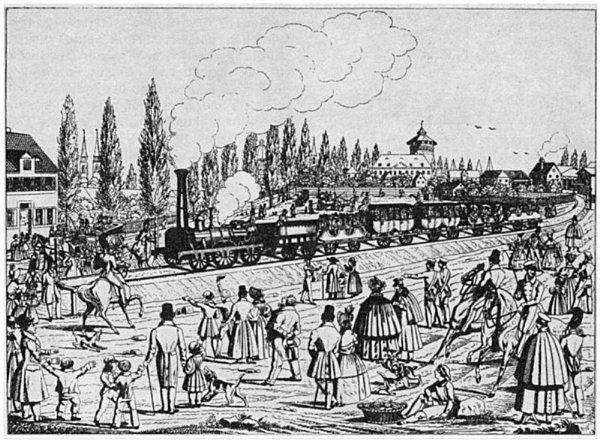
Plate 13.1 The first German railway, between Nuremberg and Fürth, was inaugurated in 1835.
Source: Centre for Art Historical Documentation, Nijmegen, the Netherlands
Accordingly, the National Assembly recognizes and proclaims, in the presence and under the auspices of the Supreme Being, the following rights of man and citizen:
1 Men are born and remain free and equal in rights; social distinctions may be based only upon general usefulness.
2 The aim of every political association is the preservation of the natural and inalienable rights of man; these rights are liberty, property, security, and resistance to oppression.
3 The source of all sovereignty resides essentially in the nation; no group, no individual may exercise authority not emanating expressly therefrom.
4 Liberty consists of the power to do whatever is not injurious to others; thus the enjoyment of the natural rights of every man has for its limits only those that assure other members of society the enjoyment of those same rights; such limits may be determined only by law.
5 The law has the right to forbid only actions which are injurious to society. Whatever is not forbidden by law may not be prevented, and no one may be constrained to do what it does not prescribe.
6 Law is the expression of the general will; all citizens have the right to concur personally, or through their representatives, in its formation; it must be the same for all, whether it protects or punishes. All citizens, being equal before it, are equally admissible to all public offices, positions, and employments, according to their capacity, and without other distinction than that of virtue and talents.
7 No man may be accused, arrested, or detained except in the cases determined by law, and according to the forms prescribed thereby. Whoever solicit, expedite, or execute arbitrary orders, or have them executed, must be punished; but every citizen summoned or apprehended in pursuance of the law must obey immediately; he renders himself culpable by resistance.
8 The law is to establish only penalties that are absolutely and obviously necessary; and no one may be punished except by virtue of a law established and promulgated prior to the offence and legally applied.
9 Since every man is presumed innocent until declared guilty, if arrest be deemed indispensable, all unnecessary severity for securing the person of the accused must be severely repressed by law.
10 No one is to be disquieted because of his opinions, even religious, provided their manifestation does not disturb the public order established by law.
11 Free communication of ideas and opinions is one of the most precious of the rights of man. Consequently, every citizen may speak, write, and print freely, subject to responsibility for the abuse of such liberty in the cases determined by law.
12 The guarantee of the rights of man and citizen necessitates a public force; such a force, therefore, is instituted for the advantage of all and not for the particular benefit of those to whom it is entrusted.
13 For the maintenance of the public force and for the expenses of administration, a common tax is indispensable; it must be assessed equally on all citizens in proportion to their means.
14 Citizens have the right to ascertain, by themselves or through their representatives, the necessity of the public tax, to consent to it freely, to supervise its use, and to determine its quota, assessment, payment, and duration.
15 Society has the right to require of every public agent an accounting of his administration.
16 Every society in which the guarantee of rights is not assured or the separation of powers not determined has no constitution at all.
17 Since property is a sacred and inviolable right, no one may be deprived thereof unless a legally established public necessity obviously requires it, and upon condition of a just and previous indemnity.
In the course of the late eighteenth century, and with increasing speed during the early years of the nineteenth century, European society changed rapidly and drastically. Many of the traditional political, economic and social structures that had conditioned life in Europe for centuries now swiftly disappeared. For the political changes that culminated in the French Revolution and its successor movements had been embedded in and influenced by an equally fundamental Industrial Revolution which had slowly altered life in Europe between c.1750 and c.1850. Together, these two revolutions resulted in a veritable and almost complete transformation of European culture, making it, basically, into the culture we now know.
Of course, one should not think of the Industrial Revolution as one in which, over night, a dramatic reversal occurred in the European economy. It was actually a very slow process in which – in some regions of Europe – the existing, mainly agricultural communities turned into a mainly industrial society.25
The process had its roots in the beginnings of commercial capitalism and, therefore, was fundamentally related to Europe’s ever-more important economic relations with Asia, the Americas and Africa. However, it was accelerated when agricultural prices started falling in the seventeenth century as related to industrial prices. Especially from the 1650s onwards, the demand for industrial goods increased and the cottage industries together with domestic commerce, rather than foreign trade, sustained an expansion of manufacturing in those regions where people had easy access to markets: England, the Dutch Republic, northern France, parts of Germany and so on. It was a complex interaction between a supply creating its own demand and a demand-initiated growth process. Essentially, in these regions households changed their attitude to labour and started to specialize: men, but increasingly also women and children, filled a growing number of hours per day, and days per year with work instead of leisure; significantly, this was the period when the traditionally large number of Christian holidays was progressively reduced to raise the number of working days.
Self-exploitation as well as a marked rise in output per worker increased the household income and altered the demand pattern in the direction of manufacturing. The growing income was spent on consumption, on a market supplying both goods and services. This resulted in an ‘industrial revolution’ avant la lettre. It also resulted in a gradual and complex sociocultural change: more and more, women obtained a strategic position in the household economy, taking on the role of consumers, spending money on clothing and the home, in short on consumer goods.
The first country to properly industrialize was England. There, the surplus wealth created in agriculture, the cottage industries and trade during the early eighteenth century sought an outlet in new investments. Also, the surplus labour that resulted from increased agricultural productivity because a smaller percentage of farm labourers now sufficed to realize a greater yield, freed up men and women for other kinds of work. If only because there were often no longer sufficient jobs in agriculture and the closely related industries, people became more mobile, moving to places where they could more easily earn their wage, even if this meant they were forced to work and live in miserable conditions.
Spinning and weaving, which had been part of (western) Europe’s small-scale, agriculture-related industry for a very long time, now became increasingly profitable alternatives, especially so when various technical improvements were introduced, such as the flying shuttle which facilitated the operation of a loom, and the spinning jenny, a kind of mechanized spinning wheel. The technological preconditions for a major economic revolution were created when, in the 1780s, Richard Arkwright started using the steam engine to drive his wheels. Soon, the new technology was applied in manufacturing everywhere where fuel – especially coal – and infrastructure – especially waterways – encouraged people to invest their money in factories – in the southern Netherlands and northern France, in the Rhineland area of Germany and northern Italy.
These developments occurred over several decades and resulted in the Industrial Revolution proper, a mainly organizational and technological restructuring of production in the factory system. Its effects were to be deeply felt first in the period c.1780–1830 – while, in subsequent decades, the new system spread to wider parts of Europe as well. Of course, to answer a growing demand, coal and iron mining now expanded into large, mechanized industries as well, providing employment for many.
At the beginning of the nineteenth century, the cultural consequences of both revolutions, the political-legal and the industrial, began to really show, first of all in their material aspects. A letter written in the 1830s by the German aristocrat Prince von Pückler-Muskau to his wife, narrating his observations during his trip through England, is quite revealing:
Birmingham is one of the most prominent and at the same time most ugly towns of England. It numbers 120,000 inhabitants, two-thirds of whom must be factory workers; indeed, it looks like one huge workshop.
Immediately after breakfast I went to the factory of Mr. Thomasson, our consul, the second largest as to size and extent; for the biggest, where 1,000 labourers are at work each day and where a steam engine with a strength of eighty horses produces an infinite amount of products, including buttons and needles, has been hermetically closed to all foreigners since the visit of the Austrian prince (some of whose suite are told to have stolen some important secrets). Here, I spent a number of hours, albeit in horrible, filthy and smelling holes serving as work rooms, and was mighty interested; I even made a button…. On the ground floor, in the better rooms, all products made by the factory are exhibited: things made of gold, silver, bronze, sheffield plate, lacquer (which even surpasses the Chinese originals), steel of every sort, et cetera, to a number, and of an elegance which really astonish…. Here, I got to know a great number of new and pleasant luxuries, both small and big.26
In a nutshell, this letter summarizes many of the characteristics of the new industrial society and its culture. The increase in population that cities like Birmingham experienced was the result both of greatly improved hygiene and the discovery of simple but effective remedies for some of the most destructive diseases. In turn, the population increase resulted in a rapid growth of the old towns, and in the foundation, in the industrially profitable areas, of new ones that fast became populous and wealthy as well. In these industrial centres, the factory owners settled their labourers, initially recruited from the mass of the agricultural poor but soon from the expanding urban proletariat itself. Soon, the very different circumstances of town life and factory labour as opposed to agriculture and rural life influenced the reproductive patterns of the industrial parts of European society. Sexual mores became less strict and marriages were now concluded earlier. This, in its turn, not only led to further population growth but also to different attitudes in the area of family relationships. The economic and social ties that had given cohesion to a peasant society became loosened or were severed altogether.
During the course of the nineteenth century, many Europeans became the dependants of the machine that enslaved them within the horrible working conditions of the industrial centres, where new forms of solidarity were called for. Factory workers started organizing themselves in fraternities to plead their rights with the owners – if necessary enforcing these pleas with strikes, although the political elite, by now partly consisting of wealthy industrialists, tried to make this action illegal. Both in England, which had the advantage of a quick start and, initially, flooded the European continent with its industrial products, and in other parts of industrialized Europe, people criticized the economic and social consequences of the new developments, using both economic and socio-ethical arguments. The Kölnische Zeitung of 1818 published an article that argued along the following lines:
A steam engine often renders a thousand people jobless, and brings the profit which otherwise would be divided between all labourers into the hands of one person. Each new perfection introduced into a machine robs new families of their daily bread; each new-built steam engine increases the number of beggars, and one may expect that soon all money will be in the hands of a few thousand families, and that the rest of the population will be begging to serve them.
Indeed, many people rose in protest against what they saw as a huge plot to rob them of their labour, blaming the new machines for all the evil in European society. Soon, too, new ideologies were being formulated, voicing the demands of those who now depended on the jobs provided by factories, precisely because working conditions were often dismal. Meanwhile, the market economy came to rely increasingly on technological progress. Industrial espionage developed as factories realized the importance of new inventions. Technical colleges were founded and laboratories established, funds were given and prizes offered. Indeed, the technical sciences gained an ever more central position in society and culture. People wondered whether Europe’s universities were not backward in adhering to a curriculum that mainly stressed the humanities. Others even wondered whether the success of science did not prove that the very methodology of the humanities was faulty because, unless it were based on empirical evidence, it would never be able to produce factual, ‘positive’, objective data. Knowledge that was not ‘positive’ would never benefit the new economy, the new society. Soon, the various branches of the humanities, primarily history, were trying to redefine both their objectives and their methods.
For the first time in human history, culture – in this case Europe’s new, post-revolutionary, industrial culture – was a culture that, at least in its material aspects and, consequently, in its social outlook, began to level the differences between the various social groups without, however, necessarily altering the real power balance between these groups. One of the most influential long-term consequences of industrialization was the production of ever more consumer goods, rightly described by Pückler-Muskau as ‘luxury’. The first to profit were the bourgeoisie: the industrial economy gave them not only increased wealth and power, but also numerous products that enhanced and facilitated their life. All kinds of household goods and knick-knacks, patent medicines and preserved foodstuffs that contributed to their comfort became available. Agricultural machinery also helped to supply provisions for their towns and trains brought them from their quiet, as yet unpolluted residential neighbourhoods to their shops and offices, or to their holiday destinations. And, of course, weapons that helped them win the wars that ensured their colonial possessions, from which they extracted the raw materials for their factories and to which they exported many of their products. In one ‘symbolic year’, the year 1851, all this materialized when, preceded and indeed inspired by a number of comparable, very successful French ventures, the British government organized London’s ‘Great Exhibition’, staged in the so-called Crystal Palace, a mainly factory-built structure consisting entirely of iron and glass. It was a celebration of the new age, the machine age. Thousands of exhibitors from all over Europe, and also the USA, showed tens of thousands of products to a public that, within a few months’ time, amounted to millions – with many travelling to London by train or steam ship for the first time in their lives. Indeed, many who went there had never left their village or town before. By now, Europe had entered its ‘age of movement’, with all the increased communication it entailed, and the cultural changes that would, inevitably, result from it.
The steam-driven machine that caused both a significant reduction in production time, and thus in wages, and an enormous increase in production volume, soon resulted in a markedly wider distribution of consumer goods across the various income groups. Just as, from the sixteenth century onwards, the invention of printing had resulted, through cheap, mass produced texts, in the spread of knowledge within groups previously denied access to it, now the mechanization that allowed for mass production in all kinds of fields made a wide range of cheap consumer goods available to an ever wider public.27 Indeed, even printing itself was industrialized, with the introduction of the rotation press – that supplanted the hand press – and, soon, of colour printing. As in the sixteenth century, this again revolutionized education, allowing for cheap manuals and textbooks to be printed.
It was not long before ‘the machine’ was able to execute a number of techniques that gave its products a highly refined appearance. Machines made wooden furniture adorned with sculpted scrolls and flourishes closely resembling pieces made at far greater cost by the slow and judicious use of a hand-operated lathe. Mass-produced pottery was artistically decorated with intricate patterns that were stencilled instead of painstakingly painted by hand. New chemical processes enabled the factories at Sheffield and Solingen to turn out cutlery and other luxury metalwork that resembled hand-made silverware in everything but its price. In short, many products had an aristocratic air, exuding status, but nevertheless were within the reach of many. In short, luxury was democratized.
Developments in other fields contributed to the process as well. Precisely because the political upheaval in France, followed by comparable changes elsewhere, was closely linked to, not to say caused by, the Industrial Revolution – historians do not agree on this – the old society, which was now denounced as feudal, began to crumble. Most visibly, the old aristocracy had lost its constitutionally or otherwise legally guaranteed power. Although the right to vote was still restricted, being tied to a person’s ability to pay taxes, with the advance of democracy, the way to the top, to power, was now open to practically all. Not surprisingly, the great entrepreneurs, who dominated the mercantile and now also the industrial economy, hastened to ensure that they would also dominate politics. Thus, once more, a new elite came into being. The older elites, desperately trying to hold on to their position, were now joined by a new upper class formed by these entrepreneurs: bankers, factory-, ship- and railway-owners, mining tycoons, men engaged in international trade.
As before, this new elite, too, tried to show off and enhance their new-found status, following the example set by the older elites: to demonstrate their wealth and power and to acquire the social and cultural positions that were considered its logical corollary, they surrounded themselves with its outward symbols, with luxury consumer goods. The more luxury objects, manifestly useless, one could show, the more people would think, or know that one ‘belonged’ – as a character in Oscar Wilde’s novel The Picture of Dorian Gray (1891) says: ‘We live in an age when unnecessary things are our only necessities’. But in other ways, too, this new, industrial elite aped the lifestyle of the older aristocracy, for, as the same Oscar Wilde told his readers: ‘the middle classes are not modern’.28
For example, as one of the consequences of the sociopolitical revolutions, the master chefs, the ‘cuisiniers’, and the couturiers who had worked for princely courts and aristocratic households had lost their patrons, and, if not exactly out of work, did feel the financial impact of the new situation. They now entered the market and thus one sees, at the beginning of the nineteenth century, the genesis of the fashionable restaurant and the great fashion shop; competing with one another for the favour of a new clientele, they offered the trappings of a luxurious lifestyle to a public that was quite willing to pay handsomely, but perhaps not as extravagantly as the old nobles had been. The food, the clothes, the furniture, the jewels, in short the luxury once reserved for the happy few could now be enjoyed by the new rich as well.
The revolutions also resulted in the abolition of the guilds that were felt to have imposed unacceptable restrictions on the free play of economic forces, limiting progress and continuing inequality. People were now free to set up shop and establish their business wherever they wanted, and to engage in competition as best they could. Now, well-trained artisans vied with one another for customers, creating a new, free market, less expensive than before. Indeed, many products whose prices had once been kept artificially high now came within the reach of a far greater group of customers and consumers.
During the course of the nineteenth century, both through continuing industrialization and through the enormous growth of state bureaucracy, another considerable group of well-to-do people emerged. Lacking inherited wealth, they could not aspire to the upper-class status of the old aristocracy, nor were they as wealthy as the new, industrial elite. Nevertheless, through solid education and solid, well-salaried jobs, they came to form a distinct addition to the middle class.
Soon, this group, too, adopted elements of the lifestyles of those they considered their social superiors. Hence, the culture of the aristocracy that had been democratized by wealthy traders and entrepreneurs in the seventeenth and eighteenth centuries, and by the new industrialists in the early nineteenth century, now found an even broader diffusion among a growing middle class.
Urban, industrial culture: the regulation and consumption of time
Increasingly, the Industrial Revolution visibly changed the aspect of Europe. Most visible were, perhaps, the consequences of the massive migration of people from the countryside to the towns, where a growing number of Europeans now came to live and work: Paris, for example, which had some 600,000 inhabitants at the turn of the eighteenth century, grew to a population of 1 million by 1851, and of 2.7 million by 1900.
The French painter Eugene Delacroix (1798–1863) witnessed the process. He saw numerous Frenchmen leaving their fields and villages to work in the factories and live in the towns. In his diary, he painted a very gloomy, sometimes one-sided picture of the changes resulting from this mass migration. His well-meant concern was shared by many all over Europe. However, they too easily forgot that agrarian life was far from a rustic idyll and that many farmers followed the call to a new life simply because it held a promise that their present conditions would never fulfil. Indeed, most of these cultural commentators were intellectuals, who had never handled a spade. In 1853, Delacroix noted in his diary:
Will steam stop before churches and cemeteries? And will the Frenchman, returning to his fatherland after some years, be reduced to asking where it was that his village stood, and where the grave of his forebears was? For villages will be useless as the rest: villagers are those who cultivate the soil, for they have to stay in the place where their care is required at every moment. It will be necessary to build cities big enough to harbour this workless and disinherited mass of people, who will no longer find anything to do in the fields; it will be necessary to construct for them immense barracks where they will lodge pell-mell. And when they are there, the Fleming beside the man from Marseilles, the man from Normandy besides the man from the Alsace, what will they have to do but read the quotations in the newspaper, not to see if, in their region, on their beloved fields, the harvest has been good, whether they can advantageously sell their wheat, their hay, or their grapes, but to see whether their stocks in the unanimous universal property are going up or down? They will have paper instead of land! They will go to the billiard-rooms to gamble with this paper against their unknown neighbours, different in customs and in speech.
O unworthy philanthropists! O philosophers without heart and without imagination. You think that man is a machine, like your other machines. You degrade him from his most sacred rights…. Instead of transforming the human race into a vile herd, let it retain its true heritage – its attachment, its devotion even to the soil…. And then, when new invasions of barbarians threaten what they still call their fatherland, they will rise with joy to defend it. They will not fight to defend the property of the machines….
Alas, poor peasants, poor villagers…. They are already abandoning the work of the field in haphazard fashion and with the most ill-founded hopes; they are rushing headlong into the cities, where nothing but disappointment awaits them … there, they complete the perversion of those feelings of dignity offered by the labour of love, and the more your machines feed them, the more they will become degraded! What a noble spectacle in this best of centuries – human cattle fattened by the philosophers.29
Quite obviously, Delacroix’s fears concern the decline of the old, regional cultures with their agrarian economy, their distinct customs and their linguistic identity. He and his urban contemporaries witnessed two worlds, the rural and the urban which, for millennia, had been separate worlds, finally merging through the joint influence of continuing industrialization and the cultural integration brought about by the nation-state, which, in its turn, would not have succeeded without the wealth created by that very industrialization.30
In the process, both European material culture and, more specifically, the ways in which Europeans thought were deeply changed. Many now traded a life in the country, conditioned by the static work in the fields, by the rhythm of day and night and the inexorable change of the seasons, for a job in town. It would be a job in a factory, or in one of the growing number of shops and other businesses that catered for new consumer demands. Provided one had received some education, it might even be an office job, in the ever-growing bureaucracy that was needed to help the State control this increasingly complex society. It might also be a job in one of the numerous affluent bourgeois households, for the middle classes, aping the aristocracy, hired more and more servants. A well-to-do family of five or six easily employed an equal number of staff, and the really wealthy would be surrounded by dozens of servants. In c.1800, some 30 per cent of London’s population was made up of those who served in the houses of the richest citizens, who comprised less than 20 per cent. A very considerable proportion of these domestic servants would be unmarried young females, coming in from the rural areas.
As did all people coming in from the countryside, they would soon notice that townspeople no longer reckoned their days from sunrise to sunset. The houses, the factories, the shops and the offices were artificially lit. Moreover, to remind people that time was money, clocks were introduced everywhere. In the towns, the bio-rhythms of Europeans started changing as the traditional sense of time slowly disappeared.31 Soon, the clock reigned supreme, regulating work both in factories and offices, dictating the long hours – ten, eleven, twelve daily, far more than were ever worked on a farm – now put in by men, women and children alike, under conditions that were, often, horrific. Women especially now constituted a huge, flexible workforce: underpaid, liable to be fired without any warning, they often had to leave their children, their ageing or sick parents and other relatives unattended to go out to work. For to survive in the city, in the new economy, with its allure of cheap luxury, everybody had to work. However, besides being performed inside, town labour was both far harder and far more monotonous than in the countryside. Everything became routine, conditioned by the motions and the speed demanded by the clock-watching machines.
By 1838, the firm of Krupp, already one of the oldest and biggest industrial groups in Germany, set its workers the following rules:
Each workman has to be faithful and unquestioningly loyal, behave himself decently both within and outside the factory, keep, exactly, the hours set for his task, and show by his diligence that he intends to work for the common good of the factory. In so acting, he may expect to be paid according to the value of his labour. Whosoever unintentionally or consciously forgets his duties, will be punished. Drinking spirits on the premises is not tolerated. Who spoils a piece of goods, or an instrument, will have to pay for it. Who arrives at the job 5 minutes after the bell has sounded, will lose ¼ day; who of his own desire stays away for ¼ day, will lose ½ day; for ½ day, ¾ will be subtracted from his wages, et cetera.32
Slowly, the outlook of the European towns changed as well. The division between rich and poor neighbourhoods became more visible than ever. The outskirts of most towns, such as the northern fringe of Paris, became the areas of poverty, immorality and vice where the police often did not dare enter when riots broke out. People living in these quarters were termed the ‘dangerous classes’. For the well-to-do, propertied classes, a visit to these parts of town was like going into another world. Or, as a French politician claimed:
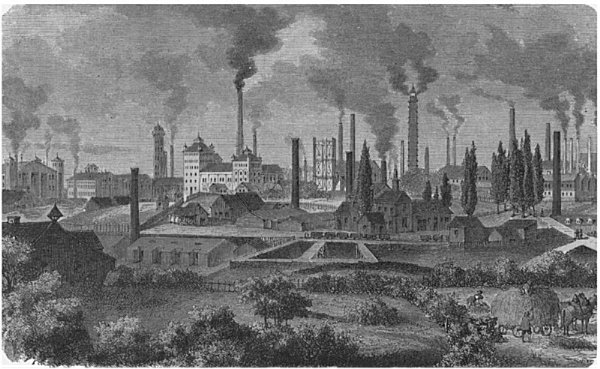
Plate 13.2 A view of the Krupp firm’s factories at Essen, Germany, in a (coloured) engraving of c.1860. Living conditions in the industrial centres were often appalling.
Source: Centre for Art Historical Documentation, Nijmegen, the Netherlands
Workers are outside political life, outside the city. They are the barbarians of modern society. They should enter this society, but be admitted to it only after passing through the novitiate of owning property.33
Property, of course, was the very thing most people did not have. And it was precisely the reason why that other world encroached upon the more affluent neighbourhoods as well, as witnessed by the huge numbers of beggars, and the many unlicensed prostitutes roaming the streets day and night. For prostitution greatly increased with the massive influx of labour from the provinces, with the poverty that prevented men and women from marrying, and with the need for women to make ends meet, or even to survive.34 As in the eighteenth century, when a child was born, infanticide was still an option. Of course, many women could not bring themselves to do this. One of them said, presenting her baby to an orphanage:
Why do I send this little child to the [foundling] hospital? Because I am without any resources…. But I don’t want him to be lost for good…. I beg you to have the kindness to keep him there, so I can see him again when I can, because I am not married.35
In most towns, for those who had little money for food, the diet was considerably less varied than in the country. Despite the hygienic and sanitary improvements of the late eighteenth century, diseases now increased again, not only because of insufficient or bad nutrition, but also because of the poor living conditions. During the nineteenth century, towns, especially the regional and national capitals and industrial centres, evolved into huge clusters of mostly filthy tenements where five, six or seven people were often packed into one small room totally lacking in sanitary conveniences. Both outside and inside, everything was coated in the soot produced by the coal that was the fuel of progress. The English novelist Charles Dickens famously evoked the misery of the poor who lived in his country. While England was the first nation to fully show the effects of industrialization, all over Europe its consequences were felt, providing inspiration to artists and writers, philosophers and politicians to reflect on both the positive and the negative aspects of this new world.
Dossier: Machines that alter(ed) the world
In the last two centuries before the Christian era Alexandria – today a big, though not very cosmopolitan town – was the most prosperous and culturally diverse metropolis of the western hemisphere. Amongst other things, it housed what was mankind’s first museum, although, in fact, the complex of buildings thus described also included a university and a hospital: it was, indeed, a place where all the Muses gathered.
One of the many objects displayed in the museum proper – all of them now lost – was an ‘aeolipyle’, a ‘wind-driven ball’. First invented in perhaps the third century BC, it was a cauldron filled with water. When heated, steam – or, as Vitruvius’s description dating from the first century AD has it: wind – built up within it and was emitted through a number of tubes into a hollow, pivoted ball which would then start rotating. In short, it was a steam-engine, with the heat generated by, of course, wood combustion. Whether it was ever put to practical use, rather than simply showing an interested audience some of the properties of nature, is unclear. Given the availability of cheap slave labour, its transformation into a more complex, labour-saving device would perhaps not have been of any real profit.36
Since the beginning of agriculture, man has sought to create machines to carry out procedures that were either too heavy or too costly to be performed manually, by transforming the direction or magnitude of a force. Thus originated the lever, the windlass, the pulley, the screw and, later, the wheel and the axle, etc. Mostly, the dynamics of nature, such as gravity, as on an inclined plane, falling water and wind were used to power engines – from ‘ingenium’, ‘invention’ – which would replace or at least facilitate human manual labour.
Thus, during the European Middle Ages – a period not usually credited with much mechanical inventiveness – all kinds of water-powered mine hoists were used to raise ore. There were also other experiments such as the organ for the cathedral at Rheims, reputedly powered by water and devised by Gerbert of Aurillac, who, in 999, became Pope Sylvester II. Due to constant pressure, Gerbert’s organ, also provided with mathematically constructed pipes, gave a steady level of sound rather than emitting the uneven noise produced by an assistant pumping a large bellows. Gerbert, incidentally, was one of the Christian world’s most versatile scholars, producing, amongst other things, a newly organized abacus using the Arab numerals 1 to 9 and, also, the zero to enormously facilitate high-speed and accurate calculation, with foreseeable results for the world of commerce and finance.
Later, Europeans started experimenting with heat and air again as, for example, proven by Leonardo da Vinci’s design for a steam-powered cannon. In the sixteenth and seventeenth centuries, rudimentary, small steam turbines worked machines such as a spit or a pestle and mortar to facilitate work in large kitchens, but could not be put to large-scale use since most of the energy produced was actually wasted through lack of concentration.
Only when the problems of creating a more complete vacuum were solved during the second half of the seventeenth century did the first successful industrial engines become a possibility. Thus, Thomas Savery’s steam pump, designed in 1698, effectively raised water out of inundated mines in southern England, although the safety of the pressure vessel remained a problem. As to fuel, this was, mostly, coal rather than wood, especially in those regions where forests were being depleted – partly, of course, through clearances for the sake of agriculture.
In 1712, Thomas Newcomen patented a steam-driven pump that, improved by others, was soon being used in coalmines all over England. Yet, the steam was mostly wasted rather than providing equivalent motive force. In 1756, however, James Watt was able to produce a machine that greatly reduced the loss of energy. Using venture capital, he succeeded in commercially releasing it in the 1770s. Nevertheless, it took a few more decades before versions were constructed that were both high-pressured – and, thus, smaller and less expensive to build – and ran with the steady speed necessary to efficiently power such intricate applications as, for example, a spinning machine in the expanding textile industry.
To explain the rise of mechanized production that now replaced manufacture in Europe, and soon resulted in large-scale industrialization, one must study the relationship between the capital needed to produce and operate the engine and the profit generated by it. However, far more elements were involved. These have partly been clarified in a scholarly debate about developments in China as compared with Europe.
In the early 1950s, the English biochemist and sinologist Joseph Needham started a large-scale research project to prove that, contrary to what so many historians always had argued, viz. that most of the technical inventions of mankind had been made in the West, they either originated in, or were, at least, also created in ancient China. In the resulting seven-volume series Science and Civilization in China, which has been running since 1954 and by now amounts to 28 books, he has given the world a huge panorama of every aspect of Chinese technology and its significance for wider culture. Nevertheless, it still is clear that, by the end of the eighteenth century, Europe overtook China in producing technology that truly altered the economy, as well as society and culture in its widest sense.
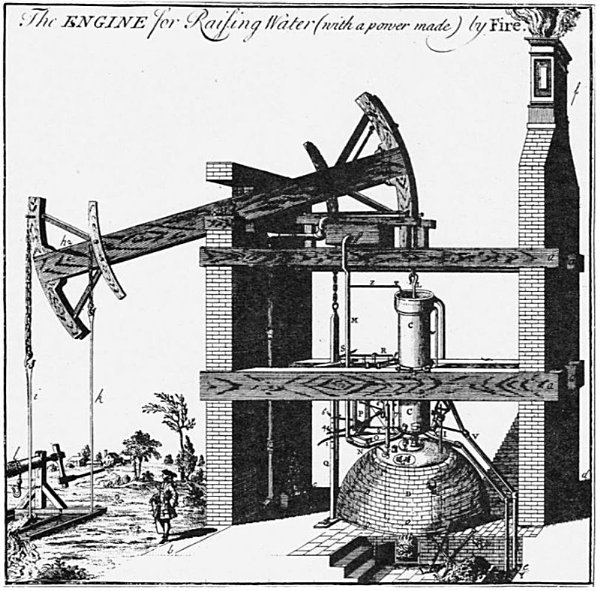
Plate 13.3 A schematic representation of one of the first Newcomen engines.
The Chinese situation was what Mark Elvin has called a ‘high-level equilibrium trap’, arguing that the economy had reached a state of sufficiency that gave no profit incentive to capitalist investment in technical improvements – though, for example, the mechanical spinning wheel had at one time been used. Moreover, labour remained cheap unlike in large parts of (western) Europe. Also, a culture formerly interested in the study of nature by and large had taken to the study of social philosophy and morality, a change which had not occurred in Europe. All this explains what some scholars have termed the ‘European Miracle’, or, perhaps seen more objectively, the ‘great divergence’ between the ‘West and the Rest’.
During the nineteenth century, not only were European machines greatly improved technically, the need and effectiveness of other kinds of fuel than wood and coal were also being researched – if only to keep an increasingly consumerist, capitalist economy running smoothly. Scientific study resulted in the discovery of the possibility of using electricity rather than steam for some kinds of machines, though this form of energy still had to be generated by the combustion of solid, fossil fuel – mostly coal. However, the chemical principles underlying the properties and possibilities of a battery already were understood as well. Consequently, in 1859, the invention of the lead-acid battery by the Frenchman Gaston Planté paved the way for the introduction of rechargeable batteries that could store electricity on board a vehicle, which then enabled, in the 1880s, the production of electric cars both in England and in Germany.
Already by the late nineteenth century, people also knew that liquid fuel – fossil as well, derived from petroleum – could be used to power all kinds of machines. Though the electric cars were fuel-efficient, clean and quiet, during the early twentieth century theywere replaced by automobiles driven by gasoline combustion motors, since these could be more quickly refuelled and afforded a greater range. Sparkplugs powered by a battery ignite the fuel. Besides gasoline, diesel came into use when, after some experiments by a few Englishmen, its advantages were most convincingly demonstrated by the German inventor Rudolf Diesel. In 1892, he filed for patents in Germany, Switzerland, the United Kingdom and the United States for his ‘Method of and Apparatus for Converting Heat into Work’, which in fact was an internal, self-igniting combustion engine. It soon replaced the coal-driven steam locomotive. Only with the energy crises of the 1970s and 1980s, and the concomitant call for a reduction in air pollution – specifically by the so-called ‘Club of Rome’ in its momentous reports from 1972 onwards – did the interest in and, indeed, the economic incentive for the development of electric cars re-emerge.
In fact, the findings of the Club’s first two reports were based on a complex simulation model run on probably the most sophisticated machine to date, the ‘computer’.
Mechanical calculating, i.e. information processing devices have existed since Greek antiquity. However, the most ingenious one to date was devised in 1833, by the English engineer Charles Babbage, who based his idea on the concept that all information input could be reduced to the binary positions 1 and 0; he envisaged the input of data by punched cards, and the output in the form of prints. Babbage even provided his machine with an integrated memory. Due to technical and financial difficulties, his prototype was not actually produced.
By the early twentieth century, physics research on electrical circuits resulted in the control of electron flows and the amplification of weak signals. Soon, older electromechanical computers were replaced by machines using purely electronic circuit elements to process the data – a text, a drawing, a photograph, etc. – needed for the computation desired, according to the program that was running. Nowadays, a (micro) processor, or ‘chip’, an integrated circuit of millions of minute switches, translates the data input (text, figures, images) into binary data, i.e. groups of ‘bits’ – the positions of 1 and 0; its small size has enabled the construction of the personal computer and its diminutive progeny – the laptop, the palmtop, etc. These data are processed to the desired output with the help of the chosen application. The outcome can be stored on a memory chip or a hard disk, whose capacity is calculated in ‘bytes’: units of 8 bits.
In the 1950s it was not yet clear how computers could usefully be employed beyond the world of science. One of the first important new applications was the Internet. Though first designed in the 1960s to enable data communication between the computers of universities, both in the USA and in various parts of Europe, it soon became a global network connecting millions of computing devices used for all kinds of services. Meanwhile, European as well as American engineers were exploring the computer’s other potential uses, if only for the commercial profit these might yield. Amongst these were the British Conway Berners-Lee and his wife Mary. They, in turn, had a son, the physicist Timothy. Working for CERN, the Geneva-based facility of the ‘Conseil Européen pour la Recherche Nucléaire’, the European Council for Nuclear Research established in 1954, he, together with the Belgian scientist Robert Cailliau, in 1989–90 designed the by now ubiquitous ‘World Wide Web’.
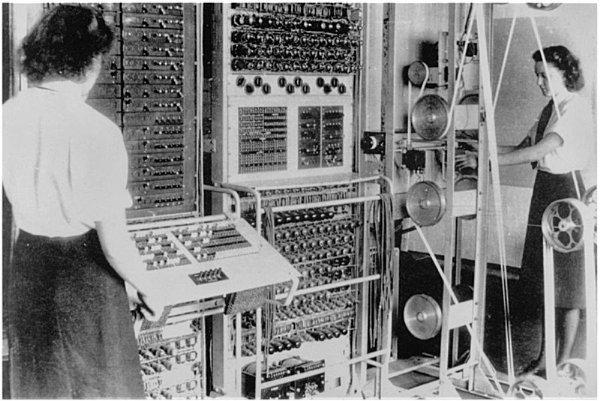
Plate 13.4 The first electronic, digital and programmable computer, used during World War II to break German codes. It was, appropriately, called ‘Colossus’. Typically, as in the early telephone exchange offices, the operators were mostly female.
Source: SSPL via Getty Images
Basically, it was the realization of an idea suggested by the possibilities of the Internet: the Web is a specific collection of hypertext, of interconnected documents. In addition to the Web, a multitude of other services are implemented over the Internet, including the transfer of e-mail, of all kinds of files (textual as well as visual), the playing of on-line video, games and music, remote computer control and so forth.
By now, not only science, but also business, entertainment and, indeed, all kinds of general information needs rely on the computer and the Internet: they have without doubt altered not only European – and, indeed, global – culture, but also communication processes themselves and, some would argue, even the ways of thinking that govern our lives. On another level, the use of microprocessors in chemistry and in molecular medicine is a field that yet has to reveal its full potential.