
Too Hot to Handle is a fairly forgotten romantic comedy from 1938. It is passable entertainment for most viewers, and no more. But this unassuming distraction is a rumination on how movies lie, and how people who lie tend to make movies. Like Georges Méliès’s faked coronation of King Edward VII, these are newsreels that lie—documentaries that are secretly fictional (which is the sort of thing we had on our minds at that very first film show in 1895, with the Lumière Brothers’ very first film being a staged “documentary”). The film in question is by Jack Conway, and is a quasi-remake of a Buster Keaton silent classic—one that calls into question the conventional wisdom of what happened to the silent clowns when the movies started to talk.
The thing you have to know going in, though, is that while Too Hot to Handle is a solidly entertaining action-comedy from Hollywood’s Golden Age, in which two top movie stars (Clark Gable and Myrna Loy) frolic their way through some expensive stunt-addled set pieces, I’m not necessarily calling your attention to this film purely for its own modest merits. Now, Arsene Lupin, Next Time I Marry, Modern Love, The Window—those are movies to climb mountains for. If you miss those films when they come along, that’s when you have to seriously question whether watching classic movies is really your thing. If you miss Too Hot to Handle, what you’re really missing is a chance to wrestle with the curious legacy of Buster Keaton. But that’s going to take a while to explain.
OK, now the first place to start with 1938’s Too Hot to Handle is actually 1950’s Watch the Birdie, but it won’t make sense to start there so instead let’s go to 1928’s The Cameraman instead and work our way out logically.
The Cameraman is a silent classic by Buster Keaton in which a bunch of wonderful things happen, all of them gorgeous and thrilling. But to boil that film down to a plot summary we can say this about it: Buster wants to impress a girl, so he takes up filming newsreels. During his escapades, he unwittingly and accidentally films something secret and powerful, but he does so while also screwing up a bunch of things he was supposed to get right—and it is during a screening of his screw-ups that his other, secret footage is also shown.
The Cameraman was arguably Buster’s biggest commercial hit in its day—but I have to put an emphasis on the word “arguably.” For people who track these things, the data is a bit of a mess. The Cameraman was Buster’s first film for MGM, a professional outfit that knew what it was doing, as compared to Keaton’s own former indie venture which made great movies and then fumbled their distribution. Comparing apples to apples is hard here, because part of what MGM a more professionally run company was that it kept better records—and another part of what MGM a professionally run company was that it strangled artistry, which gives Keaton’s fans an incentive to try to interpret the imperfect distribution data in ways that make his solo efforts look better.
Either way, this was a high-water mark in Keaton’s career. He followed it up with Spite Marriage, which was the title of a movie. But Buster was also suffering in the throes of a real-life spite marriage—one that was headed to divorce, scandal, and heartbreak. Losing his wife was one thing (they hadn’t been close in years) but when she left she took the kids, and renamed them so they were no longer Keatons. Buster spiraled into depression and alcoholism—
OK, you’ve heard this story before. Fine. It has a happy ending—Keaton lived a long and happy life in which he ended up richer, more beloved, and busier than he had ever been back in the glory days of the silent era. So there.
But along the way, Keaton’s alcoholic slide cost him his stardom, but he found other employment with MGM, wherein he migrated behind the scenes to serve as a comedy consultant and gag writer on other projects. This resulted in some legendarily misguided gigs, like his begotten stint working with the Marx Brothers. They were each brilliant, genius comedians—but as different as chalk and cheese. And so it went, until Buster started working with Red Skelton. Red was a true physical clown with an elastic body and a willingness to do anything for a laugh. And between 1943 and 1950 he collaborated with Buster Keaton on three remakes of Keaton comedies. Spite Marriage became 1943’s I Dood It; The General became 1948’s A Southern Yankee; and The Cameraman became 1950’s Watch the Birdie.
Keaton readily admits that the films were adapted so comprehensively that “if you sat through them back to back you wouldn’t know it was the same picture.” Of the three, Watch the Birdie is the strongest, and the most Keaton-y.
And, for that matter, I bet if you watched them back to back, you would peg the similarity in plot: Red Skelton takes up movie cinematography to impress a girl; he unwittingly and accidentally films a nefarious plot by the bad guys; that footage is screened in a surreal mishmash of filmic screw-ups…
That’s not to say that the Skelton version isn’t substantially different, but the source material is recognizable underneath. Keaton said of the three remakes, “in every case, in those three remakes, the second picture didn’t compare to the original for laughs or entertainment. Now, all for one reason: the writers there today and the producers insisted on improving the originals. So, all three pictures died of improvement.”
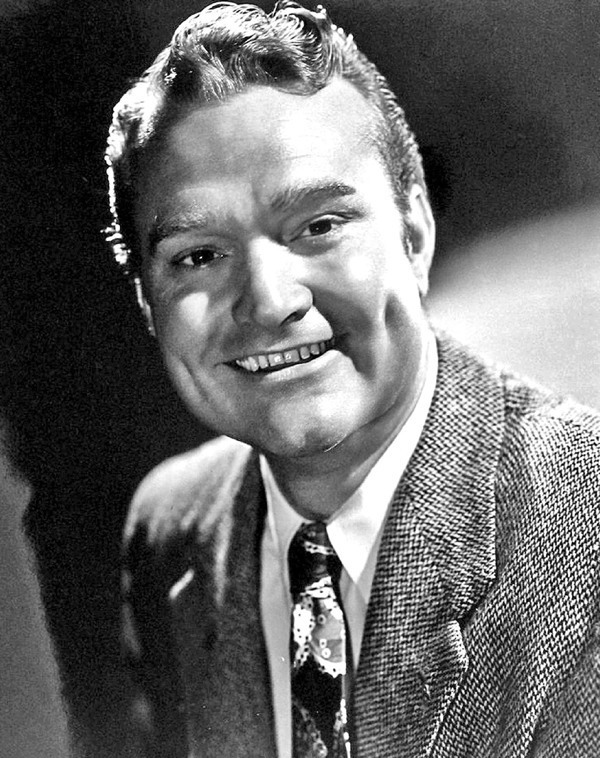
Red Skelton starred in a series of 1950s comedies remade from Buster Keaton’s silent classics.
That’s not to say Keaton had a low opinion of Red Skelton—in fact, he always went out of his way to praise Skelton as a natural clown, and someone who could have thrived in the silent era (that was Keaton’s highest praise). He called Skelton his “pet.”
Which is actually a trifle odd—Skelton was indeed a physical clown capable of Keatonish slapstick, but the similarity ends there. Buster Keaton’s comedy was as dry as a martini, and Skelton is wet like a slobbery dog kiss. That’s not a normative judgment—different strokes for different folks. Slobbery dog kisses aren’t for me, I prefer Keaton’s intellectual, existentialist comedy, but your mileage may vary.
Which at last brings us to 1938—you thought we’d never get there. In fact we’ve already been here. This was the point when Keaton’s bad slide turned around—his divorce was final, his run of sound shorts for Educational Pictures had ended, his alcoholism had bottomed out, and he had returned to MGM to accept a lowly uncredited job as a gag writer.
And one of the first projects to which he was assigned as a consultant was a film about a newsreel photographer who unwittingly and accidentally films some compromising footage, which is later screened by mistake … wait a minute!
Too Hot to Handle follows the adventures of a roguish and unprincipled newsreel jockey named Chris Hunter (played by Clark Gable), whose reputation for snagging the most iconic images of any situations rests almost entirely on his habit of just faking them. In an effort to entrap him, Hunter’s competition (Walter Pidgeon) sets up an even bigger fake, involving the intrepid pilot Alma (Myrna Loy), daringly flying medical supplies into a war-zone. Things go wrong, and Chris ends up crashing Alma’s plane and nearly killing her in the process—but this disaster produces multiple alternate realities as a result.
Alma misunderstands the incident as Chris saving her from certain death, and it serves as their “meet cute” for an intense romance to follow. But … Chris filmed the whole thing, and that filmed record not only clearly shows his culpability in causing the plane wreck, but also records Alma’s confession as being involved in a staged event that never involved any real medical supplies at all.
Just to make things more complicated, this film clip is then edited in such a way as to create one version that makes the two of them seem like heroes, and an uncut “director’s edition” version that smears them. (The consequence of the eventual public screening of that uncut version is the source of the movie’s title.)
We’re barely 20 minutes into the movie and already we’ve got some heady stuff going on—the rest of the movie has a lot to live up to. But one thing should be obvious already—this isn’t a strict remake of The Cameraman.
What connects it most strongly to The Cameraman is Keaton himself, who worked on Too Hot to Handle as a gagman. However, we aren’t entirely sure what parts Keaton shaped or not. Educated guesswork is all we have. Complicating the matter is that even though Buster was just a lowly uncredited MGM gagman at one the lowest points in his life, which would strongly suggest his contribution to the project would have been minor, the resulting production feels informed by Keaton on a great many levels.
For example, the complex recursions of that “rescue” footage, which shift in meaning throughout the film as the context changes. Too Hot to Handle could have treated its film-within-a-film aspects as a mere gimmick—but instead the cinematic nature of film is never far from view.
In 1958, Buster Keaton sat down with Christopher Bishop of Film Quarterly, and clarified his idea of how the tradition of silent comedy ought to have progressed into the talkie age:
Q: You felt that you could function just as well in sound?
BK: Why sure. The only thing we did in laying out our material was to deliberately look for action laughs, not dialogue laughs. That has always been my fight with the brass. There were all these writers, and all these writers could think about was funny sayings and puns.
Q: I wonder how you feel about making a sound comedy—whether they are silent comedies with music and sound effects added.
BK: I wouldn’t want to do that today…. [H]ere’s what I’m going to do. We go ahead and talk—put all the dialogue in the first fifteen minutes—let ’em try for little laughs as we go—but for the second fifteen minutes deliberately go for places that just don’t call for dialogue. In other words, we don’t go out of our way to avoid them, but it is just a natural thing that two people busy building something—there’s no reason to talk, you just go ahead and build.
Setting aside the delicious irony that Keaton became one of those teams of MGM writers he so excoriated (and as one he sat around cooking up physical gags for films while his fellow gag writers thought up “funny sayings and puns”), the thing that interests us today is the fact that Too Hot to Handle actually follows Keaton’s paradigm—it is a film that is in places a rapid-fire dialogue comedy of the screwball tradition which also comfortably lets the dialogue stop to give room to elaborately choreographed and awe-inspiring set-pieces.
This is an A-list production from MGM starring two of their top stars. Money was spilled on this thing—it is proof that MGM was willing to adopt Keaton’s model. This is important to remember in terms of the debate over how silent clowns fared into the talkie age—the story is usually told of the great geniuses of silent comedy like Keaton facing unrelenting intransigence from studio brass in the 1930s, and being unable to function as physical comedians in an age dedicated to “funny sayings and puns.” But the thing is, Too Hot to Handle isn’t a slapstick comedy. It may be reminiscent in places of a Keaton comedy, contain comedy sequences invented by Keaton, and reflect Keaton’s philosophy of comedy filmmaking overall—but it isn’t the kind of movie Keaton himself would ever have made. There is something else in its DNA.
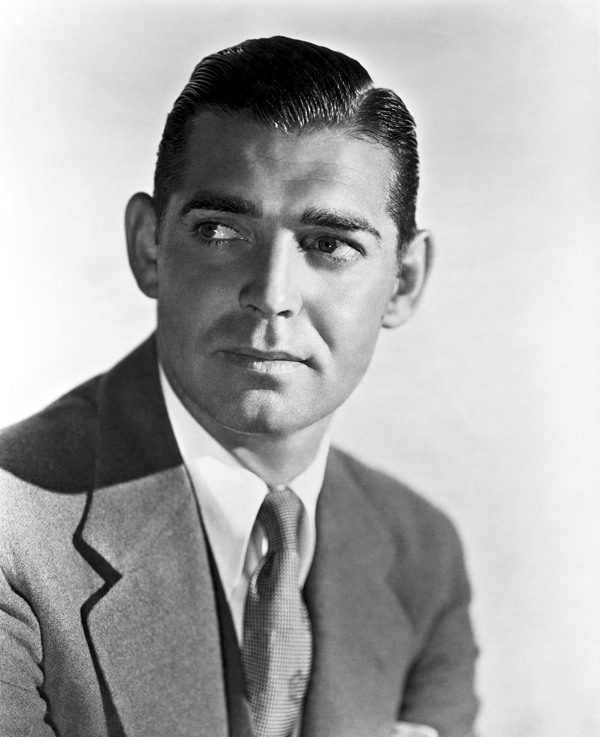
Clark Gable plays the rugged but unethical lead in Too Hot to Handle (1938), a loose remake of Keaton’s The Cameraman (1928).
If you were to go looking for this film’s closest relatives, you wouldn’t look among the works of Keaton and Lloyd—you’d look at screwball. The closest relatives are His Girl Friday and Nothing Sacred—films about unscrupulous journalists and the not-entirely-upstanding women they love. Well, for that matter, why stretch things? Clark Gable played a similarly roguish reporter in the movie that put screwball on the map—Frank Capra’s It Happened One Night, the film that allegedly “invented” screwball.
Here is where we pause to note that the so-called inventor of screwball, Frank Capra, got his start at Mack Sennett making movies with Harry Langdon. Who are the other key directors of screwball? Well, there’s Leo McCarey—who got his start at Hal Roach making movies with Charley Chase. Ernst Lubitsch was himself a silent clown in two-reelers before switching over to romantic comedy.
But how much of a switch was that, really? The vast majority of silent comedies are at least nominally romantic comedies—they have a base-level plot about boy-meets-girl and then a bunch of absurd physical gags are layered on top of that. What separates slapstick from screwball isn’t silence versus speech—there are silent romantic comedies in the proto-screwball mode and there are talkie-era slapstick throwbacks. What distinguishes one species from the next is the extent to which they took their respective romantic aspects seriously.
Or, put more precisely, the extent to which they took their female characters seriously.
I’m not just talking about Buster Keaton treating his female co-stars as props to be thrown around. I mean it across the board—the slapstick clowns rarely left much room for any co-stars, male or female, to compete for screen time or audience affection. Even Harold Lloyd, the most conventionally handsome of the silent clowns and a filmmaker whose movies are most overtly about boy-meets-girl, did not allow his female leads to develop meaningful personalities or characteristics. They were objects to be won, interchangeable all.
One of the few silent comedians to give priority to his costars was Charley Chase—and if he’d been allowed to have his way, his plan was to permanently bring on Thelma Todd as a co-star. Thelma Todd, mind you, was a bankable comedy star in her own right—in fact, her stardom was the reason Hal Roach refused Chase’s idea. Roach wasn’t keen on paying two stars to make just one set of films. In their few co-starring films, they are true co-stars—Thelma is allowed to be funny, interesting, and distinctive.
Even without Thelma Todd, Chase was atypically generous to his co-stars—at times his shorts seem more like ensemble comedies. It is therefore not coincidental that Chase survived into the talkie era unbruised by the transition. This is the point where we should be talking about Charley Chase’s Modern Love. If we want to identify a “missing link” between slapstick and screwball, it is a better candidate than Too Hot to Handle—Too Hot to Handle was made in 1938, long after even Charlie Chaplin gave up the ghost and abandoned the old model. But Modern Love emerged in 1929.
Modern Love is a hybrid in several senses: it is a silent film retrofitted with talkie scenes, and it is a screwball romantic comedy made out of the raw stuff of slapstick. When silent comedy fans talk of Charley Chase’s career, they grumble about how he never got to make a starring feature—and they can say this in flagrant denial of Modern Love because, to be precise, Modern Love is not a Charley Chase vehicle—he shares the stage fully with Kathryn Crawford, just as you’d expect from a romantic comedy. It is a signpost of how Chase could have survived into the screwball era, had his life turned out differently. Wouldn’t you have paid to see Charley Chase and Claudette Colbert in something (anything) directed by Preston Sturges? I know I would.
The key, though, is that in that above hypothetical the presence of Claudette Colbert is at least as important as Chase or Sturges. The screwball comedies that took over from slapstick let their female leads be as nutty, sexy, and unruly as the men. The biggest flaw of Too Hot to Handle is its failure to fully utilize Myrna Loy. She’s capable of playing a wilder sort of woman than the script lets her—and as such, she fails to come across as a worthy adversary/love interest for the wily Clark Gable. And perhaps this is the last vestige of Buster Keaton’s handiwork, still haunting the edges of the film. The stray references to The Cameraman, the Keatonish action set-pieces, the Keaton commitment to physical action over dialog … and the Keaton habit of sidelining the female costars. Tut tut.
Frank Capra, Leo McCarey, Ernst Lubitsch, and the other leading lights behind the transition to screwball and romantic comedy all proved their mettle in the days of physical comedy, but they saw room for improvement. They took the existing structure—a rudimentary romantic plot on top of which sits a bunch of looney stuff—and allowed the understructure to become more fully developed. The looney stuff on top was now held up by a more substantial foundation. The fact that the looney stuff started to drift away from elaborate physical comedy into situational comedy needn’t distract us—Modern Love and Too Hot to Handle can serve as examples that the slapstick traditions could be maintained within a screwball context, at least in theory.