
CHAPTER 16

“John Wesley Powell was a formidable and dictatorial director of the Smithsonian Institute, Bureau of Ethnology, who in the century before last set down dictum which has ruled the academic roost in American anthropology for more than a hundred years”…Powell put forth the idea “that all early immigrants to North America and South America came by way of the hypothetical Bering Sea Land Bridge.”145
Powell adopted theories of Morgan’s that attempted to answer the many questions being raised about the origins of the Indian populations found in the Americas. The tenets of this scientific philosophy have their basis in kinship and evolutionary hypotheses developed by Lewis Henry Morgan and Charles Darwin. Powell’s adoption of Morgan’s supposition of kinship relationships between the Indian tribes of India as the place of origin of the American Indian ancestors, became carved in flinty stone as it has been handed down to generations of anthropology and archaeology students who have been trained to conform to its dogma.
Some mainstream theorists believe that the American Indian has always been here, while others believed that they have migrated over the Bering Sea Land Bridge at some distant point in time. This has left society with a very unsettling dichotomy, because for several hundred years Indian populations of North America have been referred to as “Native Americans,” which terminology suggests that all Indian ancestry originated in the Americas. Using consistently the words ‘native’, ‘aboriginal’ and ‘indigenous’ interchangeably, begs the question as to how they could be native, aboriginal or indigenous, if they migrated from some other land?
In the production of The Lost Civilizations of North America documentary our production team discovered that in todays anthropological community, as in the time of Powell and Morgan, there are found very divergent views. Those who have studied the findings of the origin of the Mound Builders are often teetering between evolutionary thought and diffusionist philosophies, as one finds anthropologists in the same breath referring to the Indians as Native or Aboriginal Americans, yet still holding to the theory that they migrated to the Americas across the Bering Straits some 40,000 plus years ago. Others in the mainstream of anthropological thought, having to acknowledge that there were other cultures that came and went by way of ships to the shores of America. They seemed confused in trying to incorporate the advancements of Darwin’s evolutionary thought and Morgan’s kinship theories, which has added to the confusion as to how society views and values the American Indians and America’s ancient mound-building cultures.
Even Cyrus Thomas of the Bureau of Ethnology at the Smithsonian, who was credited with putting to rest the argument as to the origin of the Mound Builders, would wrestle with how to classify the many artifacts that were being recovered from the mounds. For if one was to stipulate that the Indians built the mounds, then they must also have to conclude that they were at one time living in a more advanced, civilized state than first observed. Ample artifacts have been uncovered that show signs of advanced cultures in North America; cultures that understood crop cultivation, the mining and refining of metals, higher mathematics, advanced engineering and an understanding of the Cosmos.
So who were and what happened to the people who built these ancients monuments? Demographers may argue that when a culture experiences a major population decline, as was the case with the Indian populations of America due to disease and war, often the remaining population regresses to a more savage and primitive state as ‘hunter gatherers.’
Diffusionists argue that foreign diseases were introduced into early American Indian populations, as a host of visiting foreign cultures made it to the shores of America at various times throughout history, and that progress towards civilization, which most often comes as a result of the diffusion of many ideas as cultivated by the interaction with other cultures from around the world.
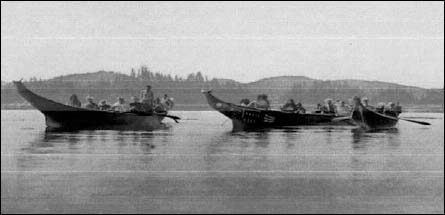
Indians use of watercrafts in navigating the rivers and lakes of North America
What has been handed down over the past two centuries in the scientific community is the idea that America has been virtually isolated from the rest of the world. However, while trans-cultural diffusion is an accepted principle within the tenets of cultural anthropology, those who believe that there were other cultures that made it to the shores of North America across the oceans, diffusing ideas and knowledge of their cultures to the Americas, have been labeled “Diffusionist,” a term that is not highly regarded in America’s anthropological and archaeological communities. Even today, the idea that other cultures sailed to the shores of America is not widely accepted, even though there is ample evidence —artifacts in particular—that show that many sea faring cultures such as the Norse, Phoenicians, Hebrews, Greeks, Romans, Egyptians, Chinese, Japanese, and Vikings all had ships capable of traversing the oceans to America.
Charles Mann referenced this idea, as he referred to Ales Hrdlicka, (1869-1943) who regarded himself as the conscience of physical anthropology and made it his business to set boundaries. So thoroughly did he discredit all purported findings of ancient Indians that a later director of the Bureau of Ethnology admitted that for decades it was a career-killer for an archaeologist to claim to have discovered indications of a respectable antiquity for the Indian.146 Ales would follow the lead of Morgan and Powell in the defense of physical anthropology in which he became renowned for his studies of Neanderthal man and his theory of the migration of the American Indians from Asia.
In a lecture on “The Origin of Man,” delivered for the American Association for the Advancement of Science, at Cincinnati, Ohio, Hrdlicka said that the cradle of man is not in Central Asia but in Central Europe as European human skeletal remains have been found. Hrdlicka [who migrated from Central Europe to the US in 1881] was almost alone in his views. The European hypothesis fell into decline and is now considered an obsolete scientific theory, which has been replaced by the multiregional hypothesis and/or the out of Africa theory. 147
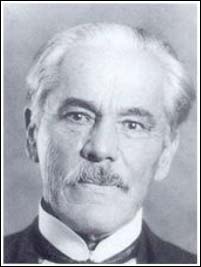
Ales Hrdlicka
In doing research for the documentary The Lost Civilizations of North America, we were looking for questions that could be asked of authors and scholars who had researched the mound building cultures and other cultures that had claimed they made it to the shores of North America. We quickly learned that there are sensitive questions that shouldn’t be asked of academics in the American archaeology and anthropology communities. There still remains in America’s academic culture, an understanding that diffusionist theories as to the origin of the Native American Indians are still seen as a taboo topic that is better left alone, without discussion.
As our production crew soon learned, there is a politically correct line that many scholars knew of, which they were afraid to step over. The most sensitive of our questions, were always those relating to the origin and the populating of ancient North America. To imply that other cultures came to the shores of America by way of ships from the East, prior to Columbus, is seen as stepping over the line and, as such, risking being labeled a diffusionist. It was a label that many didn’t want attached to their name if they wanted to advance professionally in the scientific or academic community.
Other “don’t ask” or politically sensitive questions were:
•Did any of the Indian tribes of North America ever have contact with outside cultures prior to Columbus?
•Were the Mound Builders a lost race or were they the Native American Indians who were influenced by outside cultures?
•Were the Native American Indians the Mound Builders, who were at one time a more advanced culture than first observed?
•Were all the American Indian tribes indigenous or does their ancestry DNA show a mixture from other cultures worldwide?
•Did all the tribes of Indians evolve from a few families chasing Wooly Mammoths’ across the Bering Strait some 40,000 plus years ago?
•Why weren’t the antiquities of the Mound-Building cultures better preserved?
•Why don’t we read more about these early American civilizations in our early American history textbooks?
•What knowledge could we learn from these ancient mound-building cultures?
•Was there a mixed race or a lost race culture that was killed off?
•Did inter-marriages occur between the various tribes and cultures found in North America?
•If all the Indians are from the same origin, why are there so many different Indian languages?
•Were there more advanced and sophisticated civilizations existing in America than the early men of sciences would have society believe?
•Did decisions made in the 1800s concerning the Mound Builders have an impact on how history has been handed down to our day?
What we learned by asking such questions was that there were mainstream historians, anthropologists, and archaeologists who did not want to upset the proverbial apple cart of academic tradition. They understood well that they had to tailor their comments, in an effort to be politically correct. Reminding us of other instances in history, where politically sensitive lines had been crossed, and in so doing, individuals jeopardized their employment and their opportunity to advance in academia professionally.
As a result, there has been a vast amount of pseudoscience that has been handed down to our day. Not only by those outside the employment of the sciences, but from those who have been hired from within. These guardians of the gate into the fields of the evolutionary sciences understand well, the implications of how a view into the origin and evolution of man can change how society views and values God, faith based organizations, children, marriage, family and even the founding documents of America.
These evolutionary sciences of anthropology and ethnology have been politically charged since the early 1800s. Even today, in many academic circles, to explore questions into the origin of man and the pre-Columbian Mound Builders of North America is as politically charged as taking a contrary position to that of the Washington scientific community on such topics as global warming, evolution, intelligent design and creationism.
In my naiveté, as a young man, I thought that in the sciences one could pursue the truth wherever it might lead. As I have matured, I have come to understand that within the sciences there are a number of very politically charged issues dealing with the evolution and origin of man, which have been used as a social engineering tool to address a myriad of science and political issues. However, in understanding this, one must also acknowledge that in many fields of science that is not the case. As such, the American scientific community and the Smithsonian Institution have advanced many noble and great innovative works, which have greatly enriched and blessed the whole of society.

_______________________
145 Rydholm, 403-404.
146 Mann, 148
147 See: Matt Cartmill, Fred H. Smith; The Human Lineage, (2009) 295