
CHAPTER 18

It was during this time, in the first few years following the creation of the Bureau, that the debate began to escalate regarding the interpretation of the many bird and animal carvings that were coming out of the mounds. Many artifacts being recovered from the Hopewell and Adena mounds appeared to be birds and mammals that only exist in the southern tropical regions of the world. M. C. Read in Archaeology of Ohio, pointed out: “Of the animal that is supposed to represent the seacow, seven carvings have been found. This inhabitant of tropical waters is not met in the higher latitudes of North America.”162 Many carvings of birds, and animals from tropical climates such as the manatee, large seal-like animals, elephants and tropical birds like the big-beaked toucan and parrot-like carvings were found, all of which were raising questions as to a possible connections with peoples from these tropical regions.
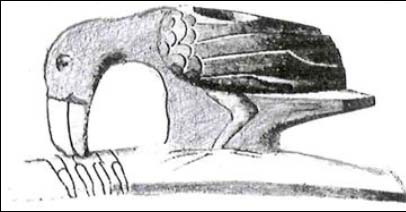
Ancient Monuments Figure 178
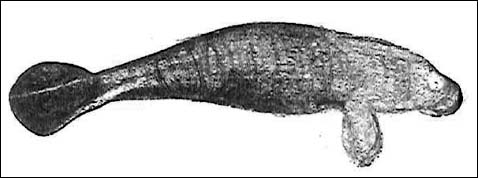
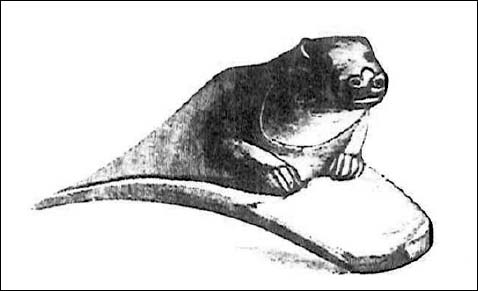
A sampling of tropical birds and mammal carvings found in the mounds
The Third Annual Report of the Bureau of Ethnology, published in 1884, included for the first time a brief section entitled, Explorations in Mounds. It discusses work done in West Virginia, Ohio, Tennessee, Arkansas, and Florida, …by 1883, Cyrus Thomas’s Division of Mound Explorations included three full-time assistants and five temporary helpers, and work was under way in Tennessee, Arkansas, Illinois, Iowa, Georgia, Alabama, North Carolina, and Missouri. Some 4,100 artifacts had been collected for the National Museum in Washington. They included elegant pipes and pendants of polished stones and such humbler things as hoes, scrapers, diggers, axes, and hammers. Some of the mounds had yielded clear evidence of contact with European civilizations: bits of hammered iron in North Carolina; silver bracelets, brooches, and crosses in Wisconsin, and fragments of copper plate bearing the marks of machinery in Illinois. All this served to back Powell’s original belief that “a few, at least, of the important mounds of the valley of the Mississippi had been constructed and used subsequent to the occupation of the continent by Europeans, and that some at least, of the mound builders were therefore none other than known Indian tribes.163
In the early annual reports of the Bureau of Ethnology public documents, one finds that it is not what they included in their reports, but what they have obviously excluded. The discussions and findings that were explored and addressed in the Bureau’s publications followed a prescribed agenda, pointing out that Indian populations and America’s ancient cultures were never highly advanced, with little to no discussions as to their cultural achievements. Lost from these studies were acknowledgements that the Indians were at one time more advanced than first perceived. As evidence in the construction of their communities, fortifications, smelting of metals and their construction of watercrafts capable of navigating the many rivers and lakes of the northeast. Also distinctively missing were the findings that show that these ancient mound-building cultures possessed knowledge of mathematics, astronomy, written language and engineering, as shown in the building of earthwork structures, which were comparable to any achievements of any ancient culture in the world of their day.
So where did the Mound Builders’ knowledge of these skills come from and why was so much of this knowledge not celebrated or passed on to our day and to their descendants?
“The fourth Annual Report contains an essay by Garrick Mallery on the picture-writing of the Indians, in which he discusses the various inscribed tablets found in mounds. Most of these he dismisses as frauds.” Such was the case of the Holy Stones found by David Wyrick of Newark, Ohio,) “…discovered in 1860 a tablet bearing on one side a truculent likeness of Moses with his name in Hebrew.”164 It is interesting to note that these early men of the Bureau of Ethnology described and defined these artifacts as picture-writings of the Indians or frauds without giving any real consideration to the potential of other visitor, to the America’s prior to Columbus.
_______________________
162 Read, 48.
163 Silverberg, The Mound Builders, 136-137.
164 Silverberg, 137-138.