
CHAPTER 30

In the 1800s, English theorists in the disciplines of evolution, anthropology and economics would have a profound influence on the young American anthropological and archaeological communities. Theories developed by Thomas Malthus, Charles Darwin, J. McLennan, Sir John Lubbock, and Herbert Spencer would influence the writings of Lewis Henry Morgan, Daniel Brinton and John Wesley Powell. These men took the concept of socio-cultural evolution and added racial overtones to the theories as a way of explaining different rates of social and cultural development. Theories by Morgan and Powell on the development of human societies were rooted in the collective works of these English pioneers who claimed that humanity arose to civilization through a series of gradually developing lineal stages towards the alleged perfection of civilized society.
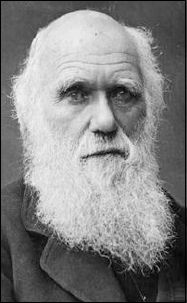
Charles Darwin
“With the publication of Descent of Man, Darwin tied humans to the natural world governed by evolution and not by divine creation. By the early 1870s, anthropologists had already begun to apply evolutionary theory to human culture and society. The ideas of the cultural evolution and biological evolution of humans developed in parallel.”244 “Darwin himself made use of social evolution to explain why colonization “seemed to drive the 'lower' races into a decline towards extinction.”245
Man’s evolution from a primitive life form to a civilized being, was a concept that both Lewis Morgan and Herbert Spencer took up in advancing social evolution. “In his [Darwin’s] July [9,] 1877 letter to Lewis Henry Morgan to ‘merely thank him,” Darwin mentions that all his time is being consumed with his work on plants. His botanical work described the “evolution of structure and function from primitive to more advanced forms.” His book on plants “sold an average of 2200 copies (annually).”246
Charles Darwin would also go on to express his disillusionment with the conventional Christian doctrines of his day, as featured in the great revivalism. He declared that the accounts in the Book of Genesis, particularly as they related to the Fall of Man, are myths. Darwin confessed that by the late 1830’s he realized that the Old Testament “was no more to be trusted than the sacred books of the Hindus, or the beliefs of any barbarian.”247 “And when Marx proposed to dedicate to him Das Kapital, he firmly refused the honor, explaining that it would pain certain members of his family if he were associated with so atheistic a book. It was only in his autobiography that Darwin gave free expression to his religious opinions.”248
Foundational in the doctrine of most fundamentalist religions is the Biblical credence of a Divine Creation. Darwin and Morgan’s theories of linear evolution as it has been advanced in science are a formative challenge to those foundational religious beliefs. In no region of the country were the debates into the origin of mankind more acute than the northeast region of the United States. There the debates over religion, evolution and the origin of man, and the ancient mound-building cultures of North America were being waged.
In a paper that Morgan read at the 13th meeting of the American Association for the Advancement of Science in August 1859, titled “System of Consanguinity of the Red Race and Its Relations to Ethnology,” he affirmed his view that the American Indian had never reached any of the higher levels of civilization.
Morgan’s notoriety, views, and voice were being heard by those most closely associated with mound-builder exploration. Morgan ridiculed any claim that the Indians of North or South America had advanced to higher levels of civilization. “Lewis Henry Morgan insistent exponent of linear social evolution,” for when Hubert Bancroft wrote of the “magnificence of Aztec Tenochtitlan, of its aristocratic ruler and formidable army. Morgan would have none of that, accusing Bancroft of naiveté.” As Morgan pointed out that “no American Indian ever reached a degree of civilization comparable to that of even early-sixteenth-century Europe. The cramped adobe apartment blocks of the historic Pueblos were the best architecture achieved by Indians.”249 In these statements we see that Morgan either didn’t believe that the Indians built the giant earthworks that give evidence of an understanding of high math, engineering and astronomy. Or he didn’t have an understanding and appreciation of the magnitude of what had been constructed. Or, he had a political or social agenda, which would persuade him to marginalize what had been accomplished by the ancient Indian populations.
“There is a direct connection between (Morgan’s) opinions and the development of professional American archaeology in the early twentieth century.” As stated by a preeminent archaeologist of that generation, Alfred Vincent Kidder, “America’s Indian past was constrained within the poor existence of the decimated, conquered nineteenth-century Indians.” “An American Indian tribe is a very simple, as well as humble organization.”250Alfred Kidder was a mining engineer who had assisted Morgan in his studies.
Major John Wesley Powell, founder and director of the Bureau of American Ethnology in 1879, shared some of Morgan’s same views, seeing the Indians as savages and some religious fundamentalists as barbaric, viewing them in the early stages of man’s progression towards civilization. Morgan would describe the American continent as a wilderness occupied by savage tribes, who obtained subsistence by hunting, fishing, and by gathering vegetable products by way of rude garden cultivation. He viewed, “archaeology [as] the one best body of evidence to support the ideological premise of human progress crowned by the western nations’ awesome machines-the railway train in motion.”251
“No one could fail to see the principle which has wrought out civilization by assiduous application from small beginnings; from the arrow head, which expresses the thought in the brain of a savage, to the smelting of iron ore, which represents the higher intelligence of the barbarian, and finally, to the railway train in motion, which may be called the triumph of civilization.”252 “What we must remember is that the issues were not just academic in nature. The very foundations of the nineteenth-century conception of humanity were at stake.”253
_______________________
244 Nora Barlow ed..The Autobiography of Charles Darwin, 1809-1882 (New York: W.W. Norton & Company, 1958) 191-2. Sue Prince, The American Mind, (Univ. of Rochester Special Collections)
245 Ibid., 189.
246 William B. Thesing, Dictionary of Literary Biography, vol. 57, "Victorian Prose Writers after 1867" (Detroit: Gale Research Company, 1987) 67
247 James Moore, and Adrian Desmond, Darwin the Life of a Tormented Evolutionist:, 274.
248 Gertrude Himmelfarb, Darwin and the Darwinian Revolution, (W. W. Norton & Company, Inc., New York, 1962) 383
249 See: L. H. Morgan [1877] 112 and L.H.M., Science Boldly Predicts. 32
250 L. H. Morgan [1877] Ancient Society, 1985, 112
251 Lewis Henry Morgan, Science Boldly Predicts: 32: Quote from L. H. Morgan [1877] 1985, 553
252 Edward J. Chamberlin and Sander L. Gilman (1985) The Dark Side of Progress: Preface and Introduction vii-xiv
253 Meyer Fortes, Kinship and the Social Order: The Legacy of Lewis Henry Morgan, (Chicago: Aldine Publishing Company, 19969) 6.