
CHAPTER SEVEN

YOU DON’T HAVE to add lots of holes and hooks to your home to be able to own trailing house plants. Perching a plant on a fireplace, bookshelf or on a bathroom cabinet will still allow your plant to trail and fill your space with greenery without upsetting a landlord or damaging your property. Hanging plants give you the option to add greenery in hard to reach spots and there are plenty of lowmaintenance options to choose from. If you are short on floorspace or have children or pets that may knock over free-standing plants, then creating a hanging plant shelf by layering in a choice of hanging plants is a good option. There are plenty of trailing plants to choose from and I have listed a few of the easiest ones to care for here to help you get started.
STRING OF HEARTS (Ceropegia woodii)
It makes sense for me to focus on the String of Hearts first as it is probably my all-time favourite plant (if I absolutely had to choose one). This is down to its extremely flexible nature: you can keep it in all sorts of spots in the home as it can tolerate humidity, so it can be positioned in the kitchen and bathroom as well as keeping it in a living room or a bedroom. Caring for String of Hearts is very simple. It is a jungle succulent, so whilst it doesn’t need lots of water (like a regular desert succulent) it also doesn’t require lots and lots of direct light, so you have more choice of where to place it.
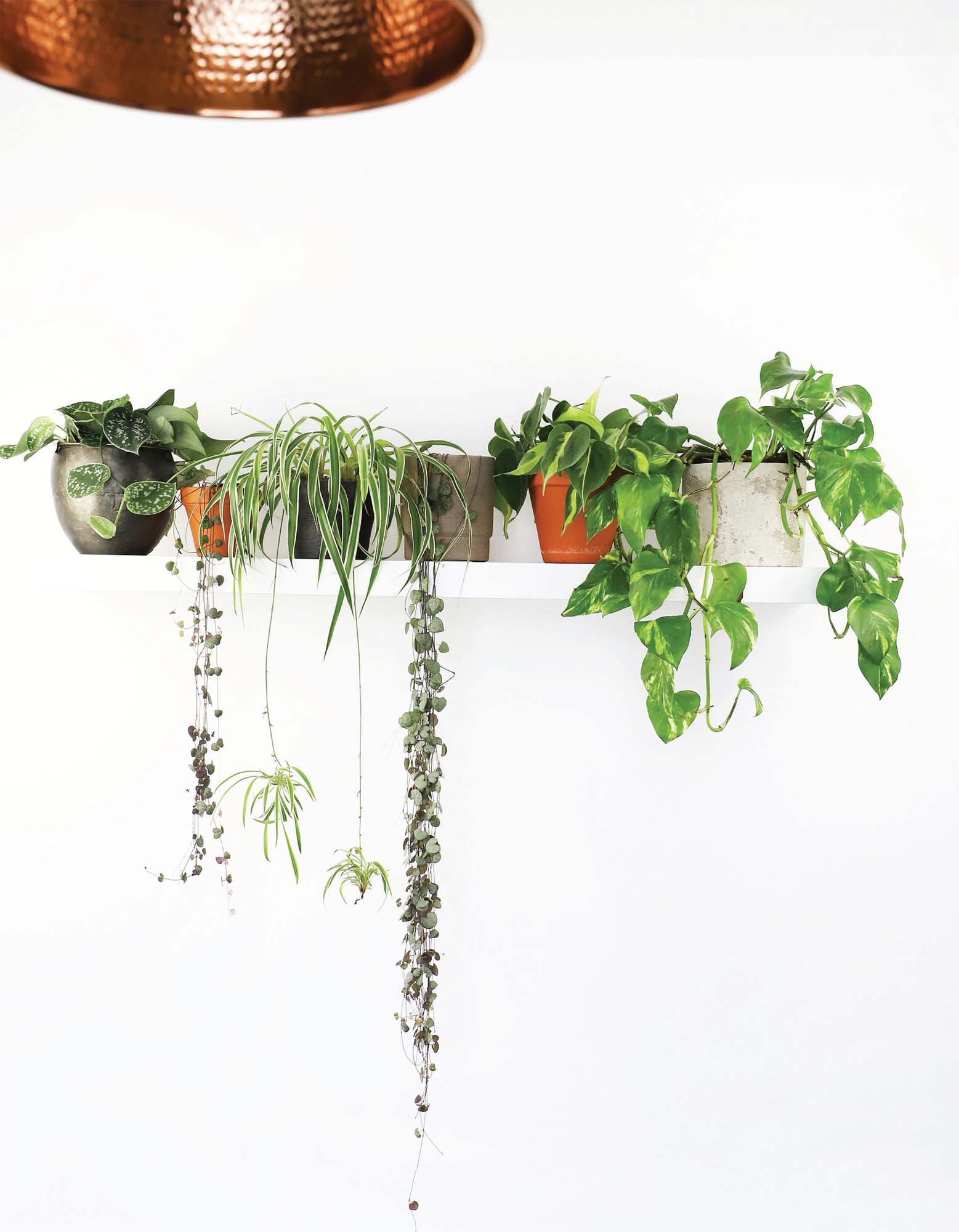
Grouping hanging plants on a shelf is an effective way to display them.
Care
Water
The roots on these plants are very skinny so can easily rot if you water the plant too frequently. I recommend watering them only when the soil is completely dry. You are fine to water them from the top of the plant too. In terms of frequency, it depends on where your plant is positioned as to how often you water it. For mine in my bathroom, I tend to water once a fortnight, but in my living room they need slightly more frequent watering, so once every ten days. As always, give the soil a poke to check how dry it is to determine if you need to water your plant. If you under-water them they will stop growing and you will get dry frazzled ends at the end of the stems. If you over-water them, then the leaves will turn yellow and drop off. You can easily fix your plant by giving it a ‘haircut’ to remove straggly stems or dead leaves and resume the correct water routine. I’ve often found that a trim encourages new green growth and gives the plant a fresh lease of life.

String of Hearts plant has heart-shaped leaves.
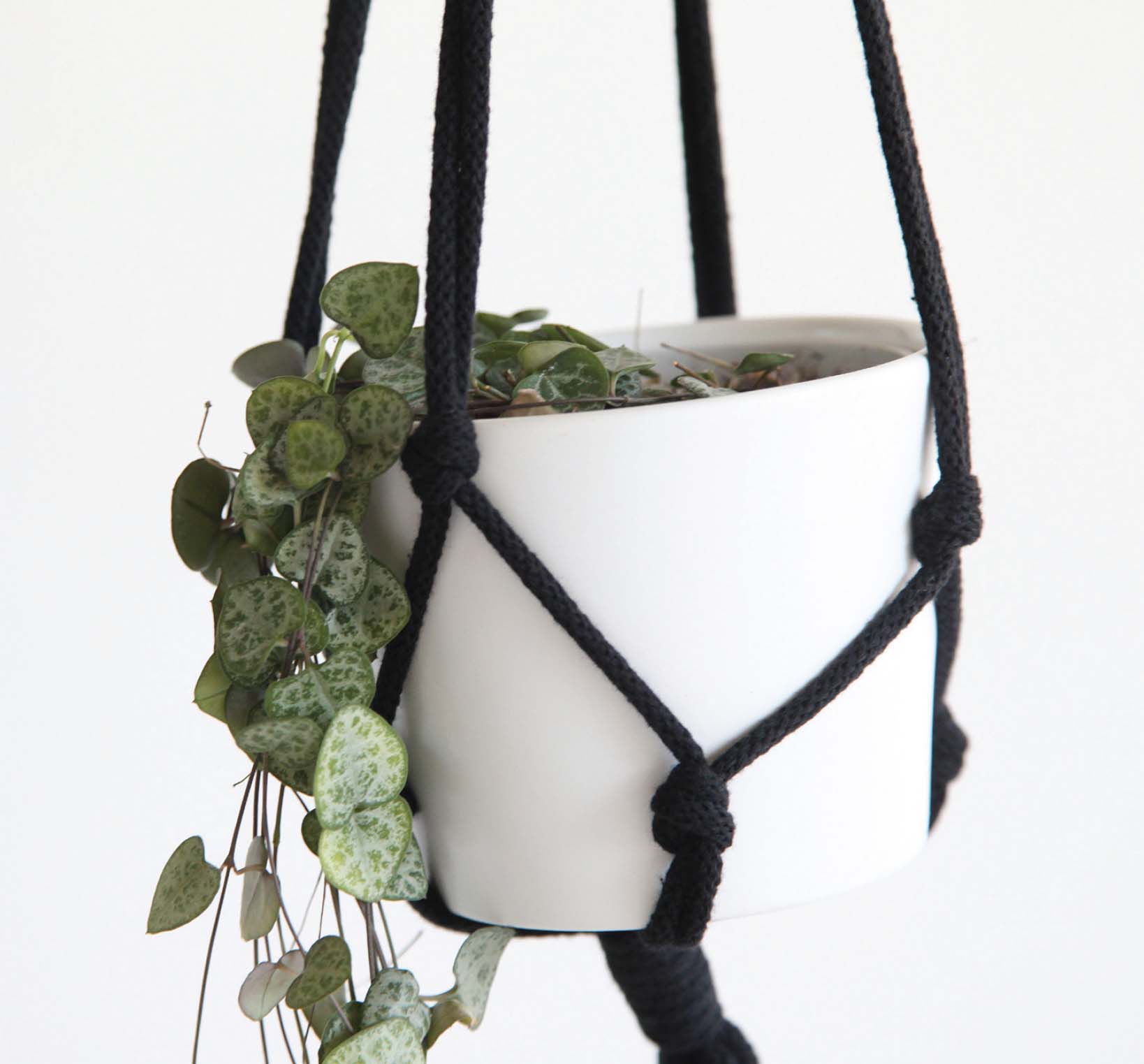
String of Hearts in a macramé plant hanger.
Light and Temperature
In terms of light, String of Hearts plants like to be facing a window and receiving decent light levels, and whilst they can also survive being placed on a windowsill in direct sunlight you will need to move them if the light is too bright or scorching. You will know if they are getting too much light as they get a bit straggly. Temperature-wise they can tolerate changes of temperature without too much fuss, which again is why I love them so much; they very rarely need you to move their position in your home due to not liking a space.
Soil and Feeding
As they are hanging succulents, I would always use a cactus and succulent soil for these plants. This helps the roots keep away from root rot as the soil is so free-draining. Feed these plants once a month in summer months. In the spring you may be lucky enough to see delicate white flowers on your String of Hearts. You can display in a macramé hanger or on top of a fireplace, bookshelf or bathroom cabinet. Repot every few years.

Devil’s Ivy will let you know when it needs watering as the leaves begin to droop.
DEVIL’S IVY (Epipremnum aureum)
This plant is also one I recommend for people starting a plant collection; it is great for beginners and busy plant owners. Nicknamed Devil’s Ivy as it is a ‘devil to kill’, these plants can withstand poor care levels and bounce right back. They also clean the air of toxins so are great to have around the home.
Care
Water
Water these no more than once a week. You can keep these in humid rooms, or mist them a couple of times a week too. When these are feeling parched, you will see that the leaves start to droop, however, after watering they tend to bounce back. If the leaves go yellow you can pull them off, as this is a sign that you are over-watering your plant. Brown and crispy leaves are a sign that the plant is not getting enough water.
Light and Temperature
Devil’s Ivy can survive indirect sunlight and can also survive being in slightly gloomier spots too. As long as they are facing a window then they will grow towards the light; this means that you can keep them in corners and spots in rooms where the light doesn’t always reach.
Soil and Feeding
These plants are fine in regular house plant soil. You can feed them once a month between spring and autumn. You can prune these to keep them the length you need and you can try and propagate from the cuttings that you take (see Chapter 12 for more details on this).
SPIDER PLANT (Chlorophytum comosum)
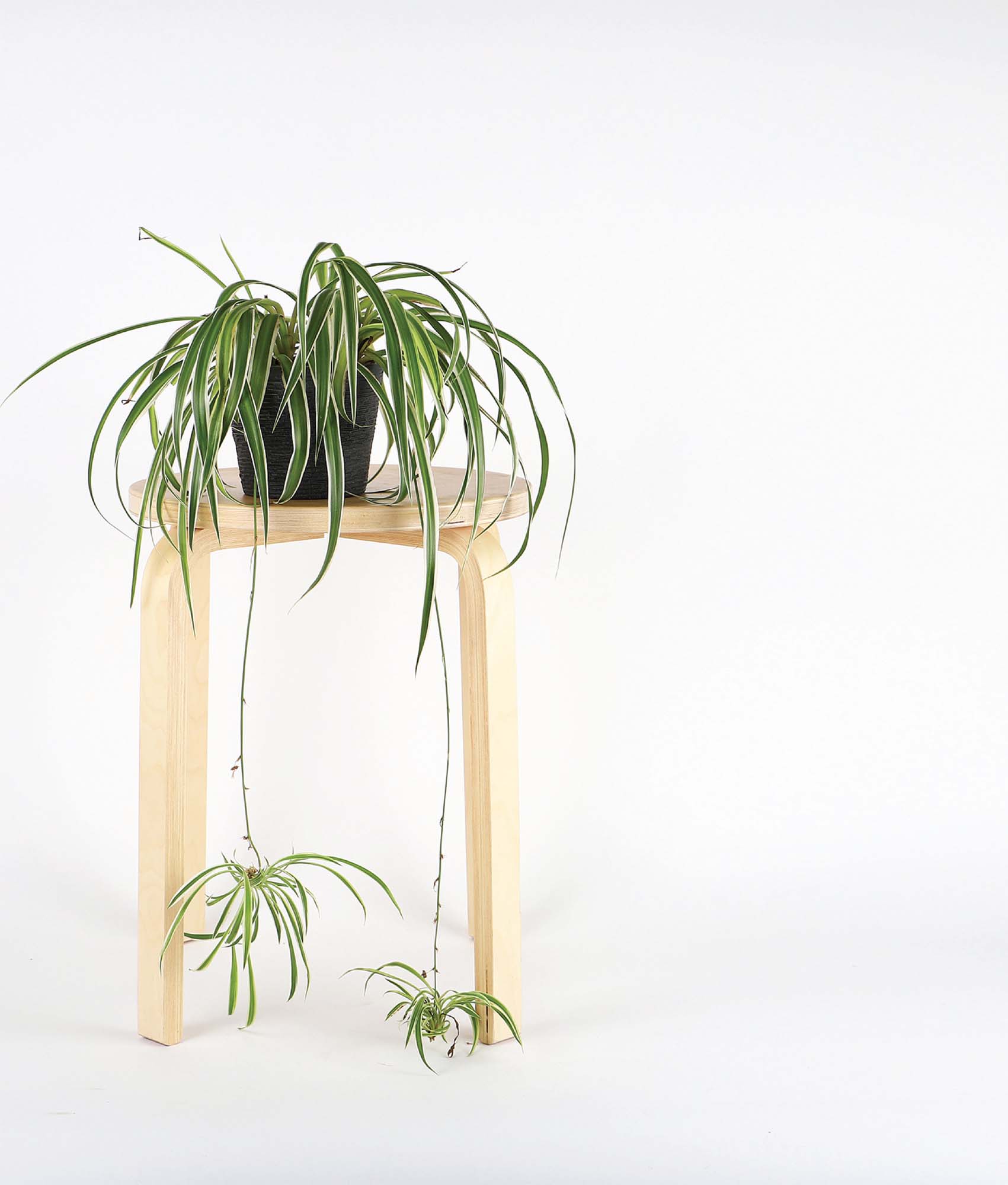
Yes, Spider Plants are a throwback to the 1970s, but these plants are popular for a reason. Mainly that they are extremely easy to care for, they regularly reproduce spider babies so that you can fill your home with many more spider plants and therefore clean the air in all rooms, or you can pass on to a friend or loved one. My local online ‘sell or swap’ group often has people giving away Spider Plant babies and lots of people wanting to take them on.
Care
Water
I’ve heard people tell me they rarely water their Spider Plants, but for best practice water at least once a week in spring and summer and then slightly less often in winter. The leaves will droop when the plant needs a water, and the ends will go brown at the tips if they are getting too much light and not enough water. You can chop off any damaged or brown leaves.
Light and Temperature
Place the Spider Plant in a well-lit room away from direct sunlight. Too much light will make the leaves go brown. If you have this plant in a gloomier spot then the leaves may become faded and less green. They are also less likely to produce baby plants in gloomier spots. They are tolerant of most spaces in the home and can withstand some neglect in terms of draughts and temperature changes.
Soil and Feeding
Well-draining house plant soil is best for this plant. Feed every two weeks in summer months. Repot baby plants when you see a root at the end of the plantlet. Keep the soil moist to encourage the plant to root properly when you first move it to a new pot.
Spider Plant was a popular plant in the 1970s.
MISTLETOE CACTI (Rhipsalis baccifera)
Often mistaken for samphire by my customers, Rhipsalis is a striking trailing cactus without any spikes. In the wild it grows in rainforests and jungles. Adding this plant to any collection adds interest down to its unique texture and appearance.
Care
Water
In the wild, Rhipsalis grows in humid conditions so you can mist it every few days. Water this when the soil runs dry as you would any other cactus or succulent: around once every ten days should be about right.
Light and Temperature
As this is used to receiving light through the leaves of bigger trees, then indirect and dappled light is best for this plant. Some people think it needs to be in direct light due to the fact that it is a cactus, but this is not true. It is best to avoid scorching light levels and place it facing a window. They do not like to get too cold and avoid draughty spots.

Rhipsalis is a hanging succulent with interesting texture.
Soil and Feeding
Rhipsalis needs cactus and succulent soil to encourage drainage. Feed it once a month in summer months and trim the leaves if they get too long. This plant is very fuss-free.
SATIN POTHOS (Scindapsus pictus)
This trailing plant is very pretty with a silvery pattern on the leaves. I often choose it as it offers an alternative shade of green when creating a plant display. It likes to trail downwards from a shelf or hanging Satin Pothos has a silvery planter. Although the pattern of the leaves gives an impression of pattern on the leaves. delicacy, this plant can withstand some elements of neglect.

Satin Pothos has a silvery pattern on the leaves.
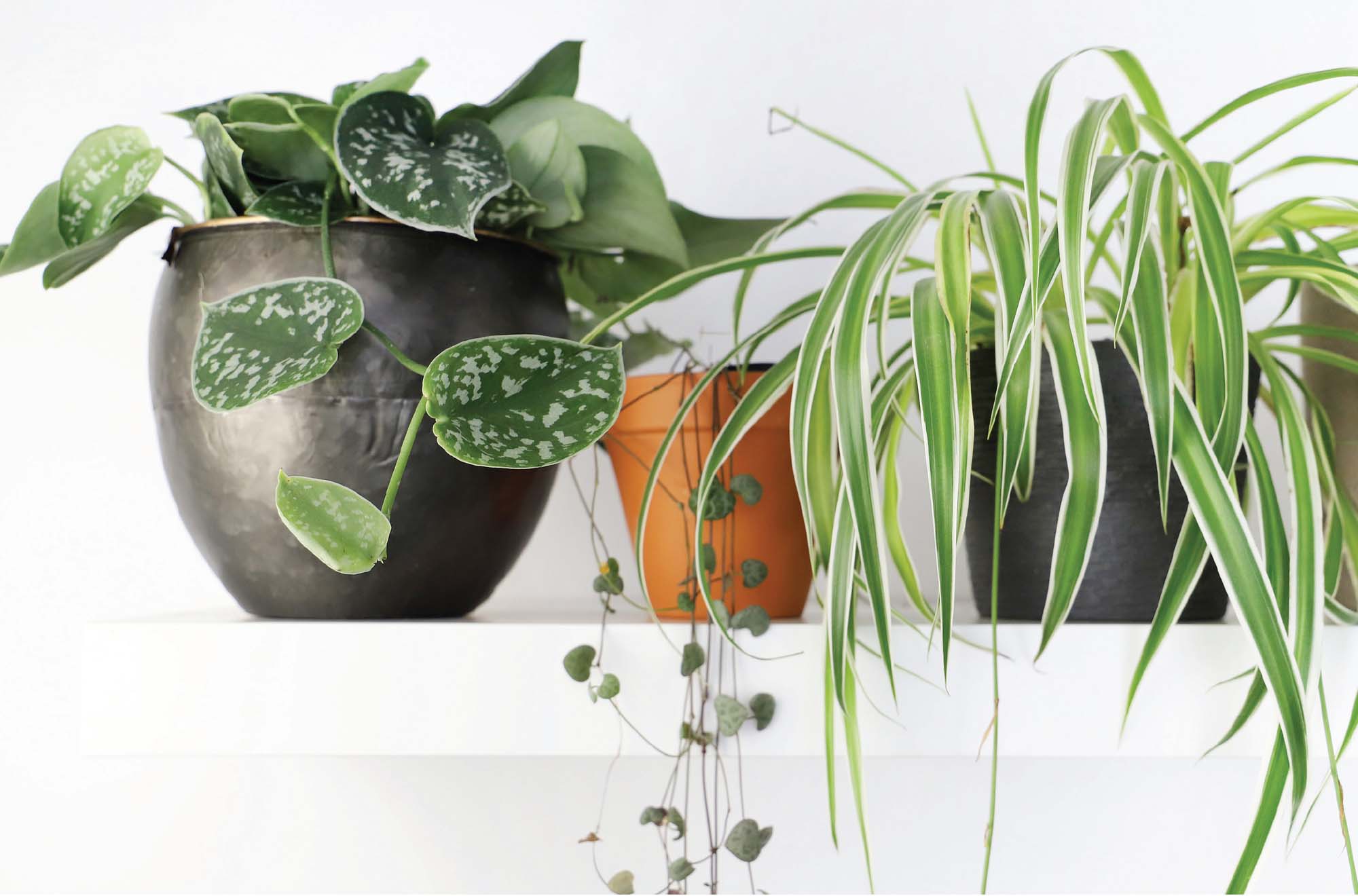
Satin Pothos, String of Hearts and Spider Plant.
Care
Water
Water once a week. However, if you do forget to water this plant then it will tell you as the leaves start to curl up. Give it a drink and you should see them uncurl. This also enjoys humidity so can be placed in a bathroom or misted regularly.
Light and Temperature
Place in filtered or indirect light and this plant will be happy. It prefers to be warmer so does not like draughty spots or sudden drops in temperature.
Soil and Feeding
Use a regular house plant soil for Satin Pothos, and feed it once a month in summer months.