
Chapter 5
In This Chapter
 Getting the tools you need to understand older poetry
Recognizing the importance of knowing about the poet’s life and historical background
Mastering unfamiliar language
If you close your mind to all the great poetry written before your own time, you’re missing out on a lot. And more important, you have only a partial idea of what poetry is. So why not be open to the poetry of all ages and peoples? Reaching out to the great poetry of the past is a fine way to educate yourself about the history of the human spirit. What you’ll find, with just a little work, is that what’s human is always interesting. Much of what’s in ancient Sumerian, Hebrew, Greek, Egyptian, Chinese, and Indian poetry will speak to you. You’ll have much to laugh and cry with in the poems of the Italian Renaissance and the English Romantic Period.
In this chapter, we offer guidelines on working with older poetry. After all, the 20th century represents only one of the 50 centuries from which we possess poetry, and each one of those centuries has wonderful things to offer. Keep an open mind, and you’ll find greatness before you.
Gathering the Tools You Need

When reading poetry, try to have the following resources by your side:
 Anthologies of literature. Many publishers offer good anthologies of various cultures, periods, and genres. Historical surveys have good introductions and give background information on certain periods as well.
An encyclopedia. You don’t have to buy a set of multiple volumes; you can get an encyclopedia on CD-ROM or a one-volume book instead.
A good dictionary. Many readers have both a modern dictionary and an etymological dictionary — one that traces the history of words. Both can come in handy when reading older poetry.

You may also want to have several of these helpmates nearby, especially if you want to dig a little deeper into the poems you read:
A dictionary of classical allusions, references based on the literature and mythology of the ancient world.
A companion to literary study, such as the Oxford Companion to English Literature or the Cambridge History of Literature.
A dictionary of poetic biography, which offer short biographies of poets throughout the ages. One good example is the Oxford Companion to Twentieth Century Poetry.
What about the poet’s times? What about his or her life? What about this unfamiliar language? We visit each of these questions separately in the following sections.
Facing the Challenges of Older Poetry
Older poetry poses special challenges for you in three areas, each of which we can state as a question for you, the reader:
Biographical background: Who was this poet?
Historical context: What was the world the poet lived in and referred to in his poems?
Language: What are these unfamiliar words, allusions, and turns of phrase?
These are interesting questions for poetry of any period. So be methodical as you read. Before reading older poetry, till the field a little. Get to know the poet and his or her world. And dig for this kind of information every single time, because it always helps.
Discovering the historical context behind a poem
The more you find out about history and how it affects poetry, the more you’ll become interested in it. And the more you’ll probably want to discover. Kenneth Fields, a fine poet and teacher, is fond of telling his students that “poets and readers of poetry have to know more about more than ever before.” Poetry is about life, and life includes lots of things: language, botany (have to know the names of those plants!), fashion (dost thou know what a wimple is? or a buskin? or chopines, jodhpurs, or cravats?), architecture (naves, buttresses, Doric columns?), mythology (Eros, meet Cupid; Zeus, meet Jove), science, and just about everything else.
When you read poetry of the past, you are reaching out to the past itself. So, when you’re reading a piece of older poetry, find out immediately:
When the poem was written and when it was published. The two dates could be quite different. Poems tend to be written at one time and not published until later — sometimes much later.
What was happening in the world when the poem was written. This includes the historical currents, the politics, anything that could shed light on the poem. If you’re reading some of Walt Whitman’s Civil War poetry, reviewing what you know of the Civil War makes sense. If you’re reading Dante’s Divine Comedy, knowing the background of politics in Florence, Dante’s native city-state, and why he was kicked out would make sense.
This information helps you appreciate the poem better, because poems are very much influenced by the times in which they’re written.
Finding out about the poet
When reading older poetry, do everything you can to lessen the difference between you and the poet. You are likely to have less in common with a poet who wrote many years ago than you are with a poet of your own time. So because the poet you’re reading can’t make the introductions, reach out yourself and offer a hearty, “Howdy, neighbor!”
For example, if you’re interested in reading one of Shakespeare’s plays or a poem by Emily Dickinson, know the birth and death dates of these poets: Shakespeare, 1564–1616; Dickinson, 1830–1886. If the books you own don’t already have good introductions to these poets and their lives, go out and find one at your local library — they’ll be there.
When you do your research, you find out that Shakespeare was an Englishman of the Elizabethan and Jacobean era, that he moved from his provincial town of Stratford to London, that he was a playwright and a stockholder in a theater company called The Globe. If you research Dickinson, you’ll find that she lived in Amherst, Massachusetts, in the mid- to late-19th century, that she was well educated, she never married, she lived her whole life in her father’s house, and she was somewhat reclusive (though a witty and passionate letter-writer) and a big reader.
When you’re reading Shakespeare or Dickinson, you also need to know that both were Christians (rather original Christians) well-versed in their religion. A detail like that may explain why Hamlet hesitates to commit suicide (his life is pretty painful — why not end it all?), or why, at the end of Dickinson’s poem “Because I Could Not Stop for Death,” the “Horses’ heads / Were toward Eternity.” A Buddhist reader might be puzzled, but a Christian (or a reader prepared for Christianity by reading up) would feel some resonance.
Practicing what we preach
Here’s a piece of older poetry, “To Lucasta, Going to the Wars,” written by the 17th-century poet Richard Lovelace. Here’s a tip: It’s not Lucasta going to the wars — it’s the speaker.

Tell me not, Sweet, I am unkind
That from the nunnery
Of thy chaste breast and quiet mind,
To war and arms I fly.
True, a new mistress now I chase,
The first foe in the field;
And with a stronger faith embrace
A sword, a horse, a shield.
Yet this inconstancy is such
As you too shall adore;
I could not love thee, Dear, so much,
Loved I not honor more.
The differences between the language of Lovelace and modern English are gentle and slight. Tell me not means Don’t tell me. And that means because (as it still does sometimes today).
Now you have to rearrange words a little. In modern English, this would be, “Don’t tell me, Sweet, that I am unkind because. . . .” Why? Look for the verb — there it is, at the end of the stanza. Now rearrange it: “Don’t tell me, Sweet, that I am unkind because I fly.” And you may already know that fly can mean leave. What is the speaker leaving? “The nunnery / Of your chaste breast and quiet mind.” But what’s a nunnery? Nunnery was a word with various meanings, including “an abode for nuns,” or more generally, “a place of retreat.” So he calls his beloved’s “chaste breast and quiet mind” a place of retreat. That’s what he’s leaving to go to war. He’s asking her not to call him unkind.

Nunnery may have rhymed with the word fly in 1649; or Lovelace may just be using a sight rhyme on the y in the two words.
In the next line, slide I chase next to True, and you’ll get the thoroughly modern “True, I chase a new mistress now.” The speaker is toying with the notion of war as his new beloved, so the “first foe in the field” is his new mistress. That’s why you get “And with a stronger faith embrace” in line 7. “Stronger than what other faith?” you may ask. What other faith does the poem deal with? The faith between the speaker and his “Sweet.” In leaving her and going to the wars, he (the poet pretends) is changing one faith (one pledge of love) for another. Now he loves his horse and shield more than his Sweet.
This, by the way, is called a conceit — a comparison that runs throughout the whole poem. Lovelace’s conceit compares a man’s faithfulness to a woman with his faithfulness to the demands of honor.
Look up inconstancy in line 9, and you’ll find out it means faithlessness. The speaker is inconstant because he is leaving his human mistress for his new mistress of war. Yet he claims that his human mistress, too, will “adore” this inconstancy. Not many people like “inconstancy” in their lovers, so why would Lucasta? Lovelace, clever poet, has brought us right up against a paradox. The answer lies in the last two lines. “I could not love thee, Dear, so much” is easy. But the next line — “Loved I not honor more” — may seem confusing. Loved I not is the same as If I didn’t love or Unless I loved. Now try it:
I could not love you, Dear, so much,
Unless I loved honor more.
The meaning is clever, and full of paradoxes. This little poem also measures the difference between Lovelace’s world and the reader’s. His speaker loves honor more than he loves his Sweet, and furthermore, he expects her to adore that fact. And, most likely, she would. After all, honor was the measure of a man in Lovelace’s time. If he showed cowardice by not going to the wars, he wouldn’t be worth loving. His love of honor is what gives value to his love of her. He expects her to know this, and to realize that he goes, partly, to prove that his love for her is worthwhile.
Taking it up a notch
After spending some time with this poem, you can see that it’s a well-turned piece, with unexpected elements. But don’t stop there. Reach out. Hit that encyclopedia and find out what was happening in England in 1649. You’ll find out that “To Lucasta” was published at the end of the great Civil War in England (1641–1649), which overthrew King Charles I (he was beheaded) and led to rule by the Puritans (1649–1660). So war was definitely in the air.
Knowing something about the poet definitely pays off as well. Seek, and ye shall find that Lovelace was the son of a wealthy family in the county of Kent. He supported the King against the rebels, and he was indeed a brave soldier, being wounded, captured, imprisoned, and exiled. The sad thing is that Lovelace fought on the side of the King — and Lovelace’s side lost. By the time he was released, he was a ruined man. This poem was published eight years before Lovelace’s death.
Hit your friendly anthology or history of English literature, and you’ll discover that Lovelace, as a poet, is said to belong to a group called the Cavalier Poets, who strove to write short, compressed poems of a glittering clarity — both of which “To Lucasta” certainly has.
And what can you make of the name Lucasta? There’s a story even there. Lovelace was engaged to a woman named Lucy Sacheverell. His pet name for her was Lux Casta, which means “chaste light.” (Aha! Remember “thy chaste breast”?) Alas, when a rumor got out that Lovelace had been killed, Lucy married someone else. While he was in prison, Lovelace wrote a series of poems to Lucy, giving her the name of Lucasta; this poem is one of them.
Now the poem has a great deal more meaning than it did when you first read it. You understand that Lovelace personally experienced the hardships of war and personally upheld the honor of which this poem speaks. At first, “Lucasta” may have appeared to be a slight poem — but now you see more tenderness, resolve, and nobility in it because you know that Lovelace suffered for his ideals.
Is this poem autobiographical? Apparently — but it also could stand for many men’s departures for war. Its brevity, its elegance, its wit, and the burst of clarity at the end, are an affecting package. The extra work, we hope you agree, is more than worth it.
Know the poet, and you’ll get to know the poem better.
Mastering unfamiliar language
Poets of the past write in the traditions of their times, which may differ from the traditions of our own time. They may also write in older language. And, because the poets aren’t going to change, we must reach out to them and master their language as well as we can. This task usually isn’t that difficult, and lots of nice people (known as editors) have done the work for you. Your book of Homer, Dante, Shakespeare, or Dickinson probably contains:
Introductions written by the editors of these books, offering biographical information, historical background, and evaluations of the poets’ work.
Glosses (translations of unfamiliar words) in the margins.
Notes either at the bottom of the page or in the back of the book. The notes explain historical or biographical issues arising in the text.
Use these guides well; they’ll help you as you journey through the poem. If a note in the back of the book is interesting — for example, if you want to learn more about the English Civil War — follow your interests and read up on the subject. You may also consider taking a class to increase your mastery.
Older language poses three kinds of challenges: allusions, inversions, and vocabulary. In the following sections, we take a look at each.
Allusions: Have you heard the one about. . . .
Poets allude (make references) to things outside the poem all the time — things in the world, in history, in other literature, in popular culture, anything that will help them create metaphors or vivify their work. But they were then, and you are now, which means you have to do a little work to find out what their allusions are about and how they work.
Looking it up: When poets want you to do a little legwork
In his epic poem Paradise Lost, John Milton wanted his readers to feel the gentle sweetness of Adam’s words to Eve. So he wrote that Adam spoke

A little research will tell you that Zephyrus is the Western wind, which blows in spring and brings long-dormant nature to life. Flora is the goddess of the world of flowers and plants; she often stands for flowers in general. The poem has, fittingly enough, a male god breathing on a female god. Adam breathes sweetly on Eve, and she comes to life — a gorgeous moment, and ambiguous, too, because of what happens later between Adam and Eve!
Tying one work to another
Allusions also can be shorthand for larger stories and contexts the poets’ readers may know; they help set the material of the poem on a larger stage. Here’s a passage from William Shakespeare’s The Merchant of Venice. Lorenzo, a young Christian man from Venice, is wooing Jessica, who is a Jew and by law not allowed to marry him unless she converts to Christianity. It’s a forbidden, thrilling love. Lorenzo says:
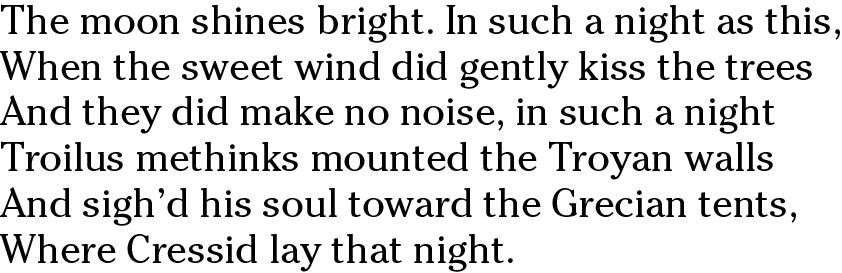
Shakespeare obviously thought his allusion to Troilus and Cressid would help his audience enjoy this moment between the two lovers. But you won’t enjoy it until you find out who Troilus and Cressid are! Their names appear in many classical and mythological dictionaries. Cressid is the short form of the name Cressida, belonging to a widow living in the city of Troy during the Trojan War, which lasted nine years. The Greeks were attacking Troy because Paris, the son of Priam, King of Troy, had stolen Helen, the wife of Greek King Menelaus.
Cressida, in this story, falls in love with Troilus, a brave knight of Troy. They have a secret, passionate affair, all while the Trojan War grinds on. For the Renaissance, these two were the defining type of the passionate, doomed lovers. You think of Romeo and Juliet; the Renaissance audience thought of Troilus and Cressida.
At one point in the story, Troy trades Cressida to the Greeks, in return for some prisoners. Poor Troilus can’t say anything about it. All he can do is pine away, after his beloved, whom he’ll never see again. Why won’t he? Ever heard of the Trojan horse? Troilus will die as his city falls, and Cressida will be taken away by the Greeks. Their story is awfully sad and beautiful. Geoffrey Chaucer wrote a wonderful poem (and Shakespeare an equally wonderful play) about it.
Now you can see why Lorenzo and Jessica, a Christian and a Jew, may see Troilus (a Trojan) and Cressida (now with the Greeks) as a fitting comparison. And, knowing the hopeless frustration of Troilus, you can sympathize and empathize more closely with Lorenzo as he pictures Troilus climbing the walls of Troy and sighing at the Greek tents where his beloved is being kept. Knowing this allusion makes this passage much richer and binds you more closely to the characters because you better understand their feelings — which is what allusions are supposed to do!
The same kind of reference to stories or characters from the past is happening in this, the first stanza of John Keats’s “The Eve of St. Agnes”:
St. Agnes’ Eve — Ah, bitter chill it was!
The owl, for all his feathers, was a-cold;
The hare limped trembling through the frozen grass,
And silent was the flock in woolly fold:
Numb were the Beadsman’s fingers, while he told
His rosary, and while his frosted breath,
Like pious incense from a censer old,
Seemed taking flight for heaven, without a death,
Past the sweet Virgin’s picture, while his prayers he saith.
After dealing with a few old-time turns of phrase — a-cold for cold, the inversion censer old for old censer (and you may look up censer, to find out that it is an implement of the Church from which incense is dispensed), and saith for says — you have three things to figure out: who St. Agnes is, what a beadsman is, and who the Virgin is.
Most books containing this poem will have a note telling you the following:
St. Agnes is a saint of the Roman Catholic Church.
She was a martyr who died at age 13 in the fourth century A.D.
Her feast day is January 21, so “St. Agnes’ Eve” would be January 20, usually a fairly cold time. That explains the trembling hare and the chilly owl.
St. Agnes was the patron saint of virgins. If a virgin performed the correct rituals on St. Agnes’s Eve, tradition had it, she would dream of the man she would marry. That may make St. Agnes a fairly popular saint.
The dictionary will tell you that a beadsman is a person paid to pray for someone else’s soul. That’s what this fellow is doing. The word Virgin, when capitalized, usually refers to Mary, the mother of Jesus Christ. She is often called the Blessed Virgin Mary, and it is her picture the beadsman’s breath wafts past.
These references help set the stage for a superbly strange poem. You know the time of year in which the poem is set. And the mystical environment, of martyrs, incense, rosaries, and blessed virgins, is brought to intense life. See how important chasing down allusions can be?
Inversions: Confused you are?
Older poetry was comparatively forgiving when it came to word order. The conventions of the time (the generally agreed upon rules for writing poetry) allowed poets to bend sentences so they’d fit the poetic line. Consider this anonymous line from the English Renaissance:
My mind to me a kingdom is
Now, you may ask yourself, “Why didn’t the poet just write, ‘My mind is a kingdom to me’?” Excellent question. Here are a couple of answers:
The poet has chosen to write in iambic tetrameter, in which each line rolls out in four iambs. An iamb is a rhythmic unit that goes duh-DUH, so four of them are duh-DUH, duh-DUH, duh-DUH, duh-DUH. The second line has no such regular rhythm: “My mind is a kingdom to me” rolls out duh-DUH duh-duh-DUH-DUH-duh-DUH. It’s nice — and clear enough — but it won’t fit the form.
The inversion allows the word kingdom to get a special stress, which the “straightened out” version doesn’t have.
You’re dealing with differences in poetic taste and convention. Renaissance readers apparently liked a little inversion. They found inversion a mark of the poet’s ingenuity as a craftsman. A plain English line like “My mind is a kingdom to me” appeals to readers today, but it may not have struck many Renaissance readers as poetic.
Straightening out a phrase like “My mind to me a kingdom is” certainly isn’t very difficult. Your mind to you not too twisted by it is — is it? That’s about how hard it is to straighten out most inversions.
Vocabulary: Methinks thou doth protest too much
When languages change, vocabulary changes. New words are created (such as Internet or wannabe), old ones fall into disuse (like rumble-seat), and some words change meaning (the word perspective was used to mean telescope in Shakespeare’s time). So older poetry in your own language may challenge you to uncover unfamiliar words — or older meanings of familiar ones — and create your own understanding of the poetry as you move along. Discovering new words makes reading a poem a little slower — but much more rewarding.
Three Steps to Reading Older Poetry
When you approach poems from the past, if you use the right tools, the poems open their worlds to you. We recommend three steps for reading older poetry. It’s not necessarily a 1-2-3 affair — you can and will take these steps in any order, and repeat all of them as you get to know a poem. But they are phases in the process of understanding a poem from the past:
1. Do a cold reading of the poem.
Sit down and read what’s in front of you. Read it aloud (because poetry is meant to be read aloud). Reading aloud tends to slow you down (which is always good), revealing answers to quandaries and other difficulties.
2. Translate the poem’s meaning.
As you read the poem the first time, take into account any glosses or notes. What you’re doing here is creating your own version of the poem, one you can understand. Translation involves three activities:
• Mapping the poem: Here, you determine the parts you do understand and identify the parts you don’t. We refer to the parts you don’t understand as the blanks.
• Filling in the blanks: When you’ve identified the words, phrases, or facts you need to uncover, go find the definitions, the information, the understanding, and apply what you find out to each blank in the poem until every blank is filled.
• Creating your own version of the poem: You’ve made unfamiliar language familiar, and you’ve discovered enough about the poet’s life and times to illuminate the poem. Now you un-invert the inversions and put unfamiliar material into your own words. Note:This is just an interim, provisional version. When you’ve created this version, you’re better able to return to the original and experience it for itself.
3. Reread the original aloud in its original form.
You now let the original words snap back into place, so to speak. Returning to the poem and rereading it in its original glory is crucial, because that, and only that, is the poem itself.
Here are six lines of Middle English poetry, from “Complaint to His Purse,” written by Geoffrey Chaucer around 1400. Try reading the poem at one go.
To you, my purs, and to noon other wight,
Complaine I, for ye be my lady dere.
I am so sory, now that ye be light,
For certes, but if ye make me hevy cheere,
Me were as lief be laid upon my beere;
For which unto youre mercy thus I crye:
Beeth hevy again, or elles moot I die.
When you map these lines more closely, you see that they contain exactly eight words a modern speaker probably couldn’t figure out; the rest are simply spelled a little differently. If you “blank out” the passage (and replace unfamiliar spellings with modern-day ones), you might get:
To you, my BLANK, and to BLANK other BLANK,
Complain I, for you are my lady dear.
I am so sorry, now that you are light,
For BLANK, but if you make me heavy cheer,
I were as BLANK be laid upon my BLANK;
For which unto your mercy thus I cry:
Be heavy again, or BLANK BLANK I die.
Not bad. Out of 57 words, you’re probably unfamiliar with only 8. (Note:We changed “ye be” to “you are.”) Some of the blanks fill in fairly easily.
Chaucer’s English was pronounced very differently from modern English. Mastering the pronunciation of older forms of language may require a teacher. What we’re trying to do here is to help you piece together an understanding of the passage as well as we can.
You can navigate most of the first line with a little imagination. Purs is simply the word purse without an e. Noon other is just no other in a slight disguise. But what is wight? That’s the first blank for which you may need a dictionary or some other help. And that’s what we’re here for: It means man or person.
You’re halfway through, and here’s what you have so far:
To you, my purse, and to no other person
I complain, for you are my lady dear.
I am so sorry, now that you are light
Wouldn’t you be sorry if your purse didn’t have anything in it? Notice that the word light is being used playfully. The speaker is pretending his purse is his lady. In Chaucer’s day, women were called “light” if they were unfaithful, promiscuous, or hurtful. And his purse, having nothing in it, is definitely causing him pain.
Look up Certes, and you’ll find it means Certainly or surely. And but if means unless:
For surely, unless you make me heavy cheer
Chaucer continues his fun with the light/heavy idea. The purse is light, causing him pain. So now he wants his purse to make him heavy cheer — cheer him up, so to speak, by getting heavier.
The next line — “Me were as lief be laid upon my beere” — is tough: You’ll find that Me were as lief be laid means “I’d just as soon be laid,” and beere is an unfamiliar spelling of the word bier, meaning the platform on which a coffin is laid for a funeral. In other words, unless his purse gets heavy, he’d just as soon die.
The next line is almost modern — “For which unto your mercy thus I crye.” And the word Beeth means Be. It’s a command, hurled pleadingly at his purse — “Be heavy again!” A little imagination may reveal that elles is our modern else. But moot is a tough one: It means must.
You’ve now made your own version of Chaucer’s stanza:
To you, my purse, and to no other person
I complain, for you are my lady dear.
I am so sorry, now that you are light,
For surely, unless you make me heavy cheer,
I’d just as soon be laid upon my bier,
For which, unto your mercy now I cry:
Be heavy again, or else I must die.
And you can more easily understand what the poem says. But the stanza you’ve created isn’t Chaucer. It’s your version of Chaucer (or the one we helped you create). Now, knowing his stanza much better, return to the original and reread it. Your understanding will (we hope) be much greater than it was after your initial reading.
If you reach out, you can connect with poets across many centuries. Cultivate your skills with older poetry, and the emotions, insights, and stories in that verse will strike you as fresh as this morning’s news.